
Liguria · La Spezia
Castelnuovo Magra
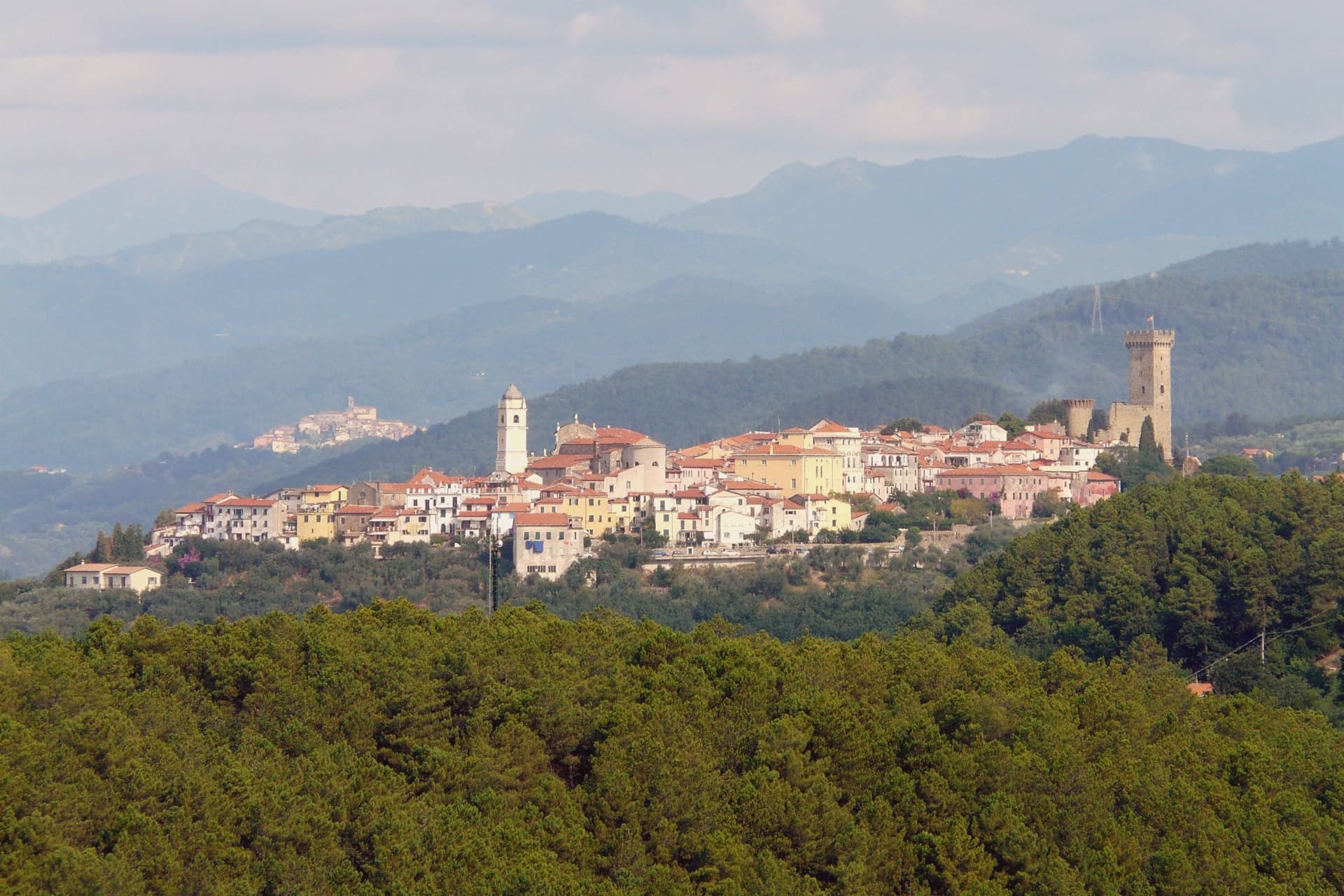
A ridge village on the Liguria-Tuscany border where a marquisate treaty ended decades of conflict with the bishops of Luni.
- Best time
- Apr–Oct
- By car
- 59 min from Pisa
- Population
- 8,262
Known for
PACE DI DANTE
Dante Alighieri signed the 6 October 1306 Peace of Castelnuovo here on behalf of the Malaspina, ending the long war with the bishops of Luni.
VERMENTINO COLLI DI LUNI
DOC white wine grown on the terraces below the village, the signature pour of the Liguria-Tuscany border.
TURRIS MAGNA
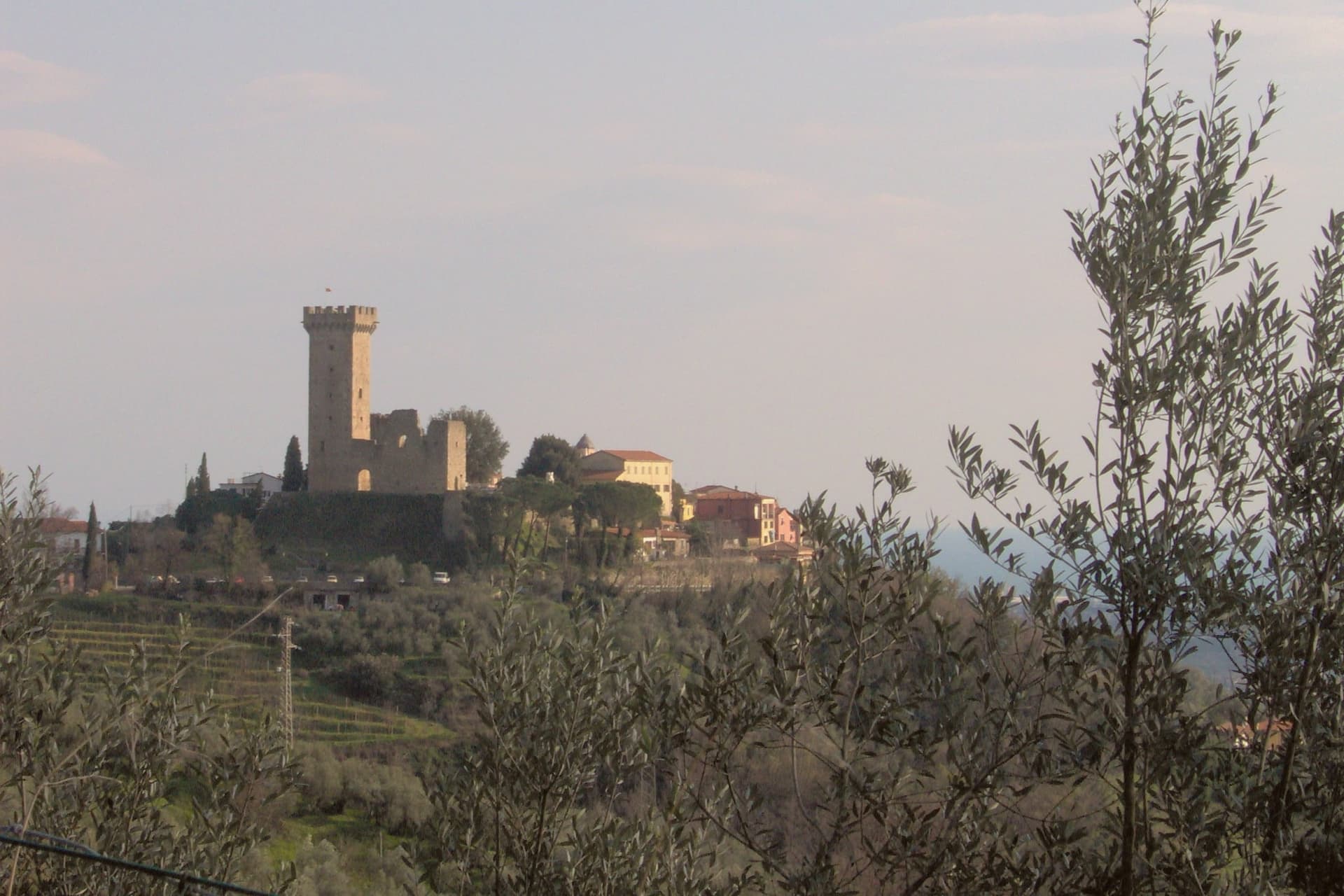
Surviving tower of the bishop-counts' castle-palace, the medieval anchor of the centro storico and the silhouette visible from the Magra plain.
When to visit
Best · Apr–Oct
- J11°
- F13°
- M14°
- A17°
- M21°
- J25°
- J28°
- A29°
- S25°
- O20°
- N16°
- D12°
- Best
- Hot or crowded
- Quiet
- Mostly closed
Daytime averages, 2020–2024. Weather data by Open-Meteo.com.
The festa: Fedele di Como, 24 April
Why come
Castelnuovo Magra sits on the last ridge of Liguria before the Magra river marks the Tuscan border. The bishop-counts of Luni built their stronghold here between the twelfth and thirteenth centuries, choosing the ridge for the view it commanded over the river crossing and the plain below. The village grew around that fortified seat, with the centro storico still gathered close to the tower and castle ruins while the vineyards spread out below on the terraced slopes, the same ground that now carries the Colli di Luni Vermentino down toward the Magra.
The Via Francigena skirts the ridge on its way down to Sarzana, threading olive groves rather than the village center itself, so the pilgrim route and the fortified hilltop have always belonged to slightly different lines of movement through this stretch of the border. A reenactment in period costume, La Pace di Dante, marks the October anniversary of the 1306 treaty each year. What the ridge amounts to is a border post twice over: a line the bishops and marquises once fought to hold, and the line, still visible in the tower and the terraces, between the fortified hill and the vine-growing slopes it has always overlooked.
Read on
Castelnuovo Magra in our articles
How to get there
From Florence / Pisa (PSA), about 1h 8m by car.
Genoa (GOA) is about 1h 38m away.
By car from the centre of Pisa 59 minutes or Parma 1h 39m.
Coming by train into Livorno Centrale? Castelnuovo Magra is about 1 hour away by road.
What to see
Turris Magna
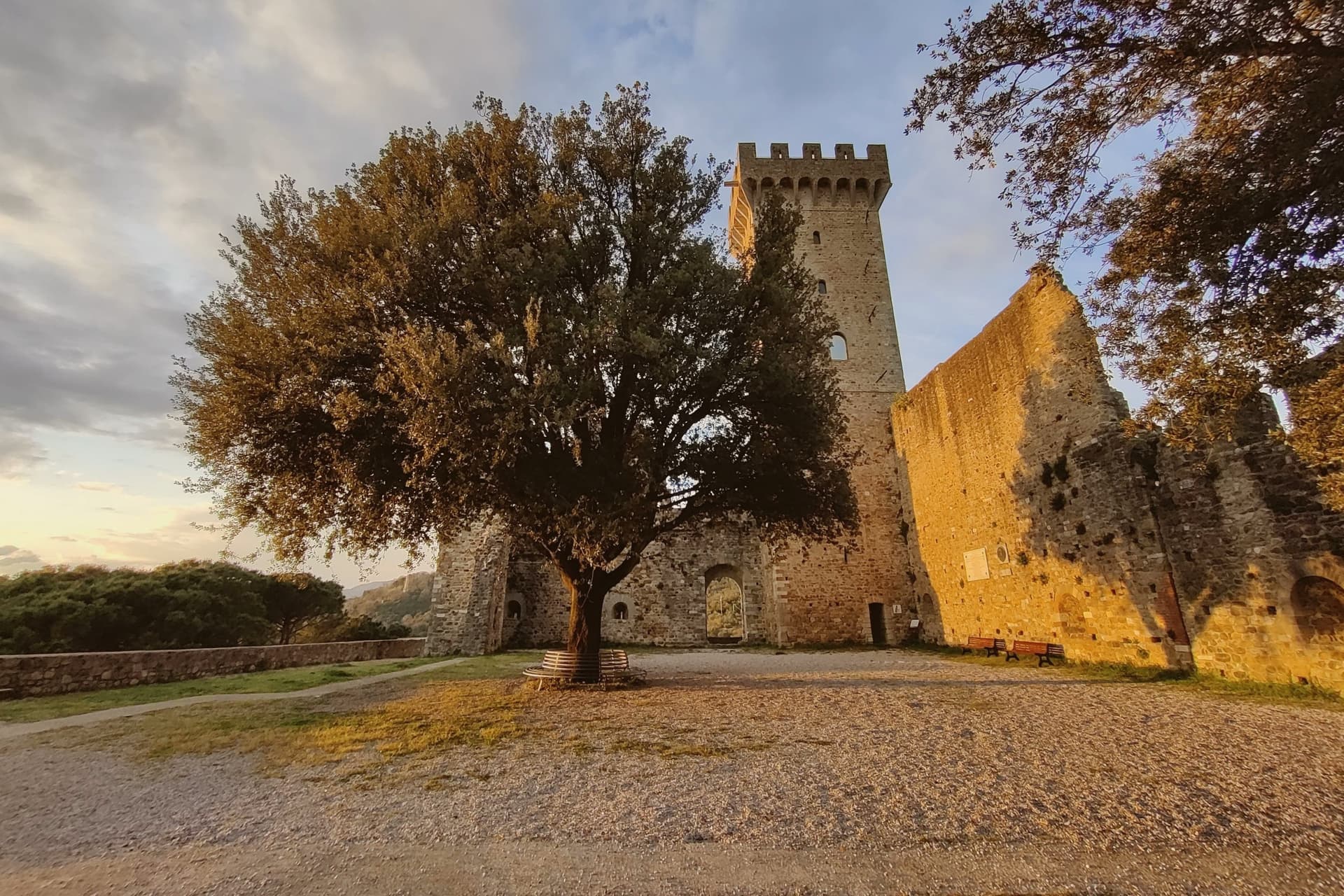
Twelfth-century tower standing over the centro storico, the one built fragment left of the counts' fortifications that once ringed the ridge.
Castello dei Vescovi di Luni
Ruins and a surviving wing of the bishop-counts' fortified residence. The room where the Peace of Castelnuovo was signed in Dante's presence in 1306 can still be traced among the standing walls.
Chiesa di Santa Maria Maddalena
Parish church of the centro storico, holding a fifteenth-century Calvary attributed to the Brueghel circle.
Via Francigena
The Sigeric route passes the ridge on its descent toward Sarzana and the Magra crossing, with marked sections through olive groves.
Vigneti Colli di Luni
Terraced vineyards on the slopes below the village, producing Vermentino DOC Colli di Luni.
The slow-trip planner
Building a trip? Find where Castelnuovo Magra fits in a slow Italy circuit.
Answer five questions. We will shape a geographically coherent slow trip from the 1,000 Italian towns most travelers skip. Yours to save and share.
Through the year
What happens here
Feasts and festivals that come back year after year. We give the month rather than the date, because the date moves and the month rarely does. Check with the source before you plan a journey around one.
Sapori D'Autunnofood festival
usually held in October. Eventi Autentici Liguri (UNPLI Liguria calendar)
The Sunday letter
Castelnuovo Magra got its letter. One town every Sunday, free. The photo, the food, the festa.
Living here
- Population 8,262
- In-betweeni
- Pharmacy in town
- High school within a 30-minute drive
- Nearest airport Florence / Pisa, 1 h 8 min drive
- Regional capital Genova, 1 h 29 min drive
Common questions
- What is Castelnuovo Magra known for?
- Castelnuovo Magra is a ridge village on the Liguria-Tuscany border where a marquisate treaty ended decades of conflict with the bishops of Luni.
- Where is Castelnuovo Magra?
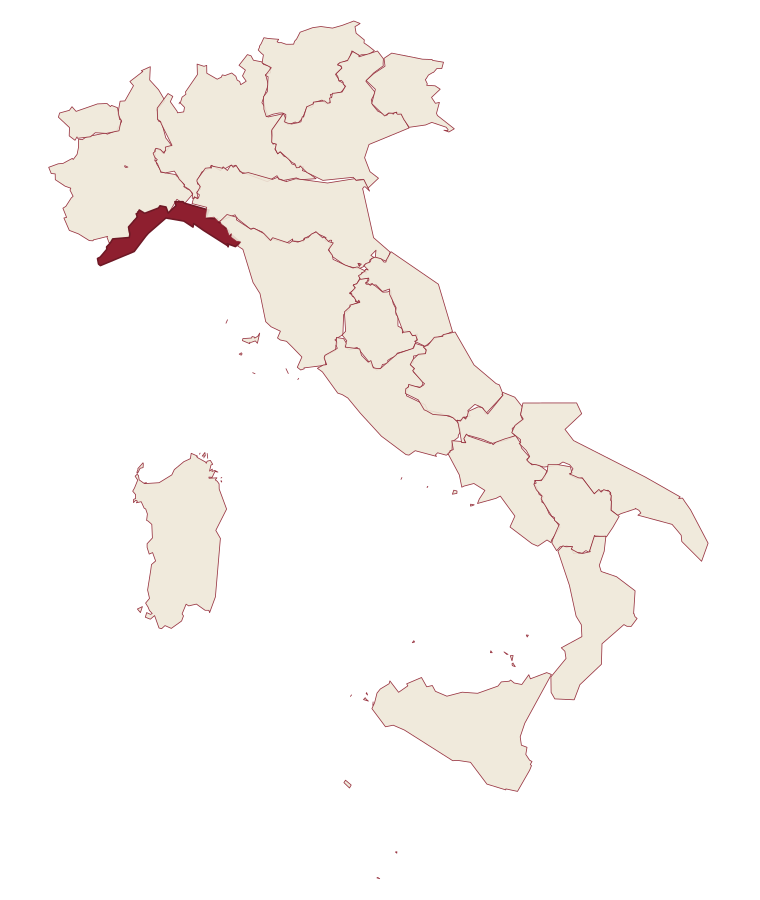
- Castelnuovo Magra is a comune in the province of La Spezia, in Liguria, at 188 meters above sea level.
- What is the nearest airport to Castelnuovo Magra?
- Florence / Pisa (PSA), about 1h 8m by car.
- How long is the drive from Pisa to Castelnuovo Magra?
- About 59 minutes by car.
- When is the best time to visit Castelnuovo Magra?
- Best in Apr–Oct. August is the warmest month, averaging 29 degrees, and December the wettest, with about 15 rain days.
- Is there a sagra or a festival in Castelnuovo Magra?
- Yes. Sapori D'Autunno. October is when the first of them falls.
- Which other towns are like Castelnuovo Magra?
- Santo Stefano Belbo, Vicopisano and Peccioli.
- How many people live in Castelnuovo Magra?
- 8,262 at the 2023 count.
Tags & datadesignations · numbers · sources
Recognised as
The numbers
- Elevation: 188 m
- Population: 8,262
- Surface area: 15.02 km²
These figures were compiled from public directories: ISTAT, OpenStreetMap and Wikidata, and from the official listings of the guides named on this page. Town details change; verify with official sources before you travel.
Similar
Towns like Castelnuovo Magra
Santo Stefano Belbo
Province: Cuneo
both inland, away from the coast · both between 3,000 and 10,000 people
Vicopisano
Province: Pisa
both inland, away from the coast · both between 3,000 and 10,000 people
Peccioli
Province: Pisa
both inland, away from the coast · both between 3,000 and 10,000 people
Montecarlo
Province: Lucca
both inland, away from the coast · both between 3,000 and 10,000 people
Montecassiano
Province: Macerata
both inland, away from the coast · both between 3,000 and 10,000 people
Fossombrone
Province: Pesaro e Urbino
both inland, away from the coast · both between 3,000 and 10,000 people
🟠 Bandiera Arancione
More Bandiera Arancione towns in Liguria
Apricale
Province: Imperia
A medieval hill village in the Nervia Valley, named for the Latin apricus, sunny, with a tenth-century castle shaped like a lizard on the rock.
Badalucco
Province: Imperia
A medieval village wrapped in a bend of the Argentina torrent, with murals on its caruggi and a Slow Food bean on its terraces.
Brugnato
Province: La Spezia
The medieval ecclesiastical capital of an inland Ligurian valley, seat of a diocese from 1133 to 1820, with a co-cathedral built over a Columban monastery.
Castelvecchio di Rocca Barbena
Province: Savona
A stone village of 130 residents at 420 meters, built into the southern foot of a 1,142-meter limestone outcrop.
Dolceacqua
Province: Imperia
A two-banked medieval village split by a single-arch bridge from 1400, the one Monet came to paint in 1884.