
The best towns with a serious restaurant that sit on a walking route within 90 minutes of Pisa
The walking country inland from the Tyrrhenian coast is built from marble, sandstone and river gravel, and it eats accordingly. Autumn brings white truffle to the hills above the Arno, chestnut flour to the Apuan valleys, and lardo cured in marble basins to the tables below the quarries. The old pilgrim road crosses all of it, dropping out of the passes into walled towns where the evening meal is the point of the day rather than an afterthought. Spring and late September are the kind seasons for walking here, warm at midday, cool enough by dusk to want a plate of tordelli and a glass of something red from the Colline Lucchesi.
Most people arriving in this corner of Tuscany go straight to the Piazza dei Miracoli, photograph the leaning tower, and move on to Florence by lunchtime. The coaches park in the same place, the queues form at the same hour, and the restaurants nearest the walls have long since worked out that nobody is coming back tomorrow. It is a remarkable set of buildings and it deserves its crowd. It also absorbs almost every visitor who passes within an hour of it.
The same road that reaches Pisa keeps going, north through the Versilia towards the Magra and east through the hills towards Siena, and the towns strung along it are where the serious cooking sits. These are stages on the historic route, places with a hostel and a bell tower and a kitchen worth changing your plans for, reached on foot or by regional train from the coast. Fewer walkers stop overnight than the food would justify. That is the reason for this list.
Of the 23 communes we have mapped within 90 minutes of Pisa, 6 qualify as towns with a serious restaurant on a walking route: each holds a restaurant listed by the most demanding of the guides, and each is a stage on one of the long historic walking routes. The smallest, Sarzana, has 21,650 residents.
Elsewhere in the catalogue: The best towns you can reach by train that have a serious restaurant within 90 minutes of Pisa and The best coastal towns that eat well within 90 minutes of Pisa.
Sarzana
Why visit Sarzana
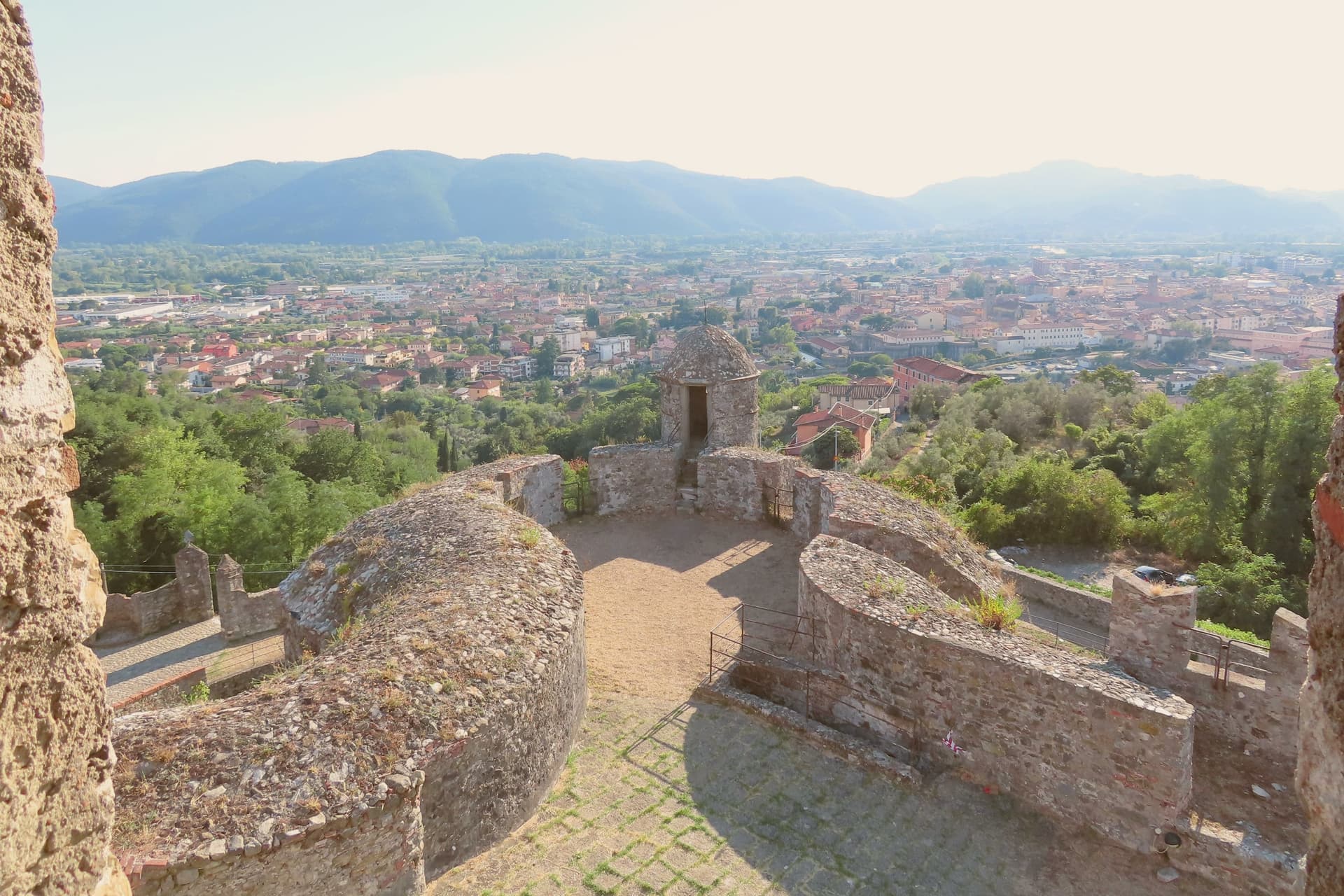
Sarzana sits on the Magra plain at the Liguria-Tuscany border, eighty kilometers from Parma and thirteen from the sea at Portovenere. The town inherited the episcopal seat of Luni in 1204, when Pope Innocent III moved it here away from the malarial plain, and the cathedral built for that new seat still anchors the centro storico.
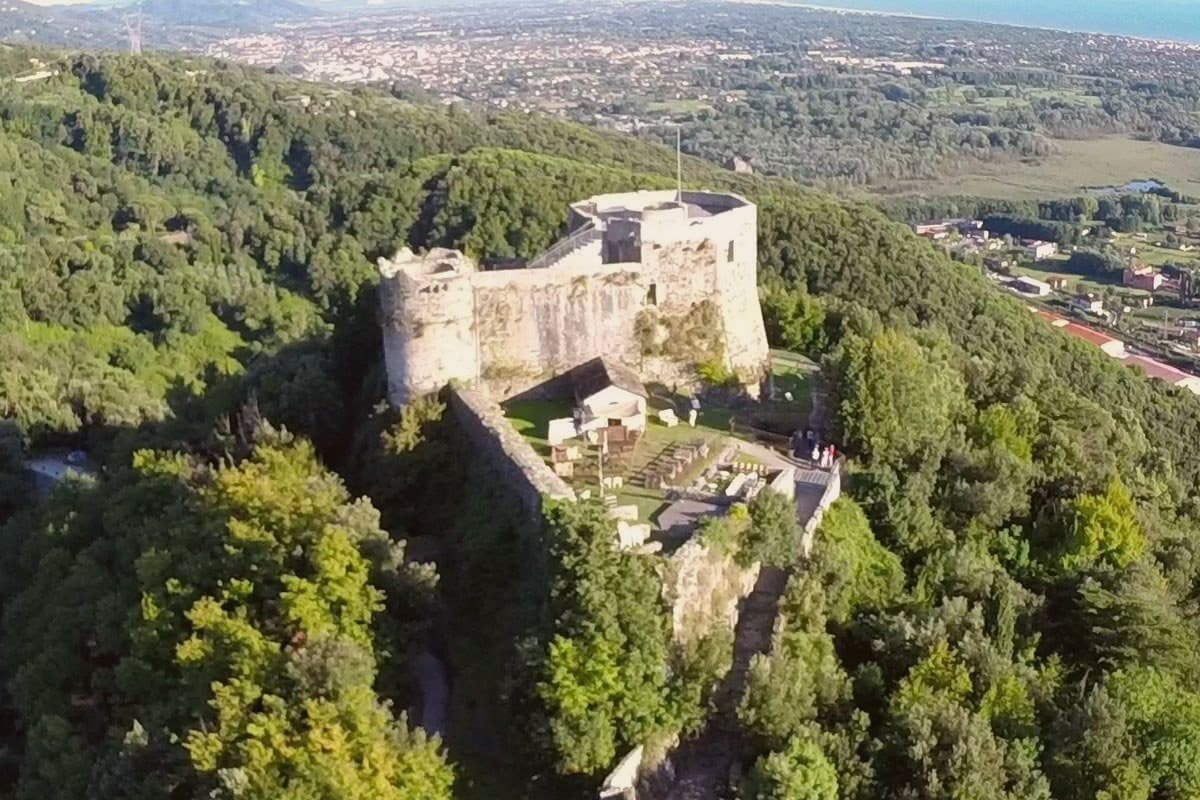
The walled center keeps its grid plan, with Via Mazzini and the cathedral square running through it and the Palazzo Roderio still doing duty as the town hall. Above the town, on a ridge, a second fortress with a triangular plan looks down on the plain and the older one below.
A future pope was born here in 1397. Between the hill fortress from the fourteenth century, the Renaissance rebuilding of the lower cittadella, and a cathedral that changed hands with a diocese, the town's layout reads as a record of who controlled the Magra plain and when.
Pasticceria Gemmi il Loggiato, Il Cardinale Vino e Cucina, Piccolo Ristorante and 1 more have been named by a guide.
What to see in Sarzana
- Fortezza Firmafede. The fortress replaced a medieval cittadella on the same ground. Giuliano da Sangallo's plan survives largely intact, with the bulk and angles of the walls still readable from the approach into town.
- Cattedrale di Santa Maria Assunta. Late Gothic Tuscan cathedral, elevated to minor basilica in 1947. A cardinal born in the town, half-brother to a native-born pope, left his mark on the later additions.
- Croce di Mastro Guglielmo. The cross hangs inside the cathedral it has occupied since the seat moved here. Signed by its maker, it is the object the town's Romanesque reputation rests on.
How to get to Sarzana
There is a railway station in the town, so you can arrive without a car and never need one while you are here. Pisa is roughly 54 minutes away by road.
Our tip
April through June and September into October are the strongest months for the centro storico, with the Festival della Mente filling the squares at the end of August. July and August are hot on the Magra plain, often 32 to 35 degrees; the Fortezza Firmafede holds courtyard concerts in the evenings. The town stays open year-round because it is a working provincial center of 21,650 residents, with daily markets and trains to La Spezia, Pisa, and Parma. Marinella Fish Festival falls in August.
Pietrasanta
Why visit Pietrasanta
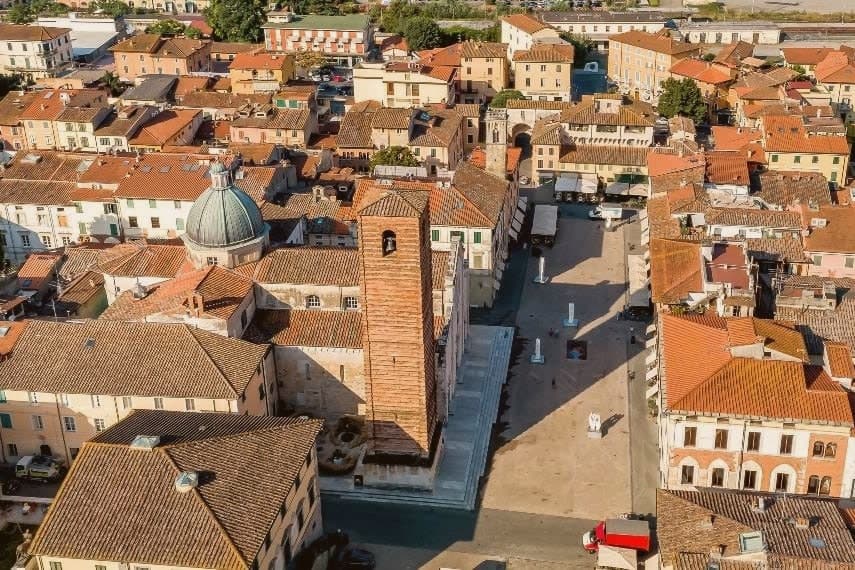
Pietrasanta sits at 14 meters at the foot of the Apuan Alps, two kilometers from the Tyrrhenian, close enough to the quarries behind it and the coast in front of it that stone and sea both shape the town. It was founded in 1255 by Luca Guiscardo da Pietrasanta on the older fortress that already stood on the hill, and it grew through the fifteenth century into the processing center for marble cut from the mountains at its back.
The centro storico, where the studi and foundries still work, sits inland; the beachfront with its pinewood park lies on the coast, a separate register of the same town, one built for stone and one for summer. Michelangelo arrived in the early 1500s to work the local stone, and Henry Moore, Joan Miró and Damien Hirst followed in the twentieth century, drawn by the same studios and foundries that cut marble for the Duomo's façade centuries earlier.
The Mariani foundry on the outskirts now casts work for sculptors who order remotely from New York and Beijing. What began as a quarry town for one church has become a place where the working of stone, not the display of it, is the thing on view.
Alex, La Martinatica, Filippo and 6 more have been named by a guide.
What to see in Pietrasanta
- Duomo di San Martino. White-marble façade on the collegiate church, first documented in 1223 and enlarged in 1330 and 1387. It faces the square that still functions as the town's civic center.
- Piazza Duomo. Main square with the Marzocco column celebrating Florence's 1513 reacquisition and a statue of Grand Duke Leopold by Vincenzo Santini.
- Museo dei Bozzetti. Civic museum holding 700 plaster models and clay sketches from sculptors who have worked in the local studios since the 1960s, a record of process rather than finished work.
How to get to Pietrasanta
There is a railway station in the town, so you can arrive without a car and never need one while you are here. Pisa is roughly 41 minutes away by road.
Our tip
May through September brings the Versilia season: Marina di Pietrasanta fills, the Versiliana festival programs concerts and theatre in the pinewood from late June, and the centro storico restaurants spread tables across Piazza Duomo. June and September are the calmer brackets. July and August push the beach to capacity and the inland piazza into evening-only rhythm. Pietrasanta Medievale a Pietrasanta falls in October.
San Miniato
Why visit San Miniato
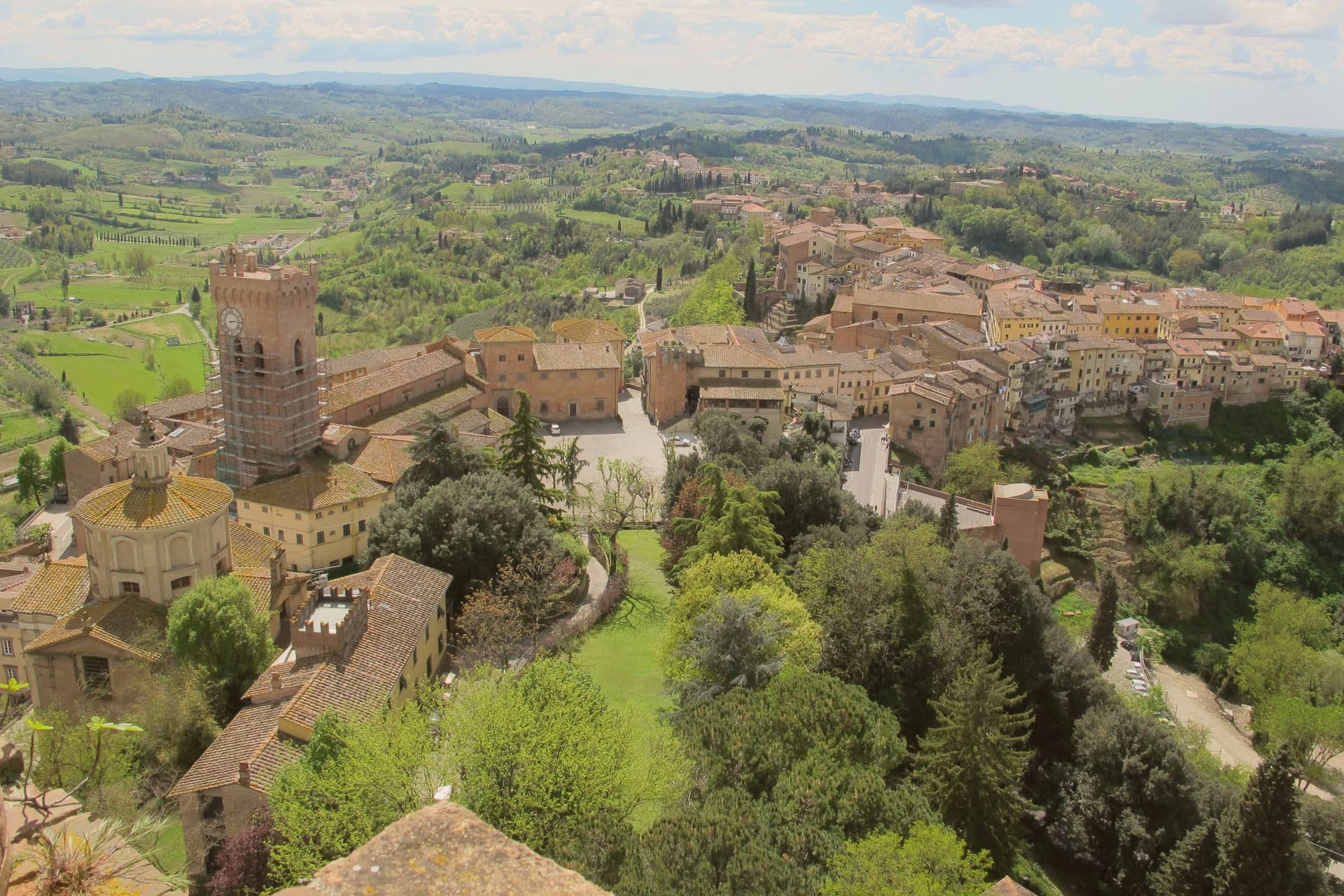
San Miniato runs along three hills at 150 meters above the lower Arno, halfway between Pisa and Florence. In 962, Otto I of Saxony made it one of the seats of imperial administration in central Italy; in 1218 Frederick II turned it into a tax collection point, and the brick tower he built between 1217 and 1223 still rises above the town, rebuilt in 1958 after the retreating Germans mined it in 1944.
The Via Francigena passes through. The Duomo, dedicated to Sant'Assunta and Santo Genesio, holds the asymmetrical clock tower called the Matilde.
What the town is mainly known for today comes from the woods around it. San Miniato produces roughly a quarter of Tuscany's white truffles, including a tuber of over two kilos found in 1954.
The National White Truffle Exhibition, running through the last three weekends of November, has been held in Piazza del Duomo since 1969.
Papaveri e Papere, Pepenero, Antico Ristoro Le Colombaie and 1 more have been named by a guide.
What to see in San Miniato
- Rocca di Federico II. Thirty-meter brick tower built by Frederick II between 1217 and 1223, destroyed by retreating Germans in 1944 and rebuilt in 1958.
- Duomo di Santa Maria Assunta e San Genesio. Originally Romanesque cathedral with Gothic and Renaissance additions, dedicated to two patrons, with the asymmetrical Matilde clock tower as campanile.
- Palazzo dei Vicari dell'Imperatore. Medieval palace of the imperial vicars who governed San Miniato when it was an imperial administrative seat.
How to get to San Miniato
There is a railway station in the town, so you can arrive without a car and never need one while you are here. Pisa is roughly 49 minutes away by road.
Our tip
April through June brings the long Tuscan spring, mild on the ridge with views clear to the Apennines. September and October are dry and gold, the same colors painters come for. November is the truffle month: the National White Truffle Exhibition fills Piazza del Duomo across three weekends, hotel rates double, restaurants book out weeks ahead. Fiera Mercato del Tartufo Bianco di Corazzano falls in the season.
Camaiore
Why visit Camaiore
Camaiore stretches from the Apuan Alps to the Versilia coastline, the only Versilia commune with substantial territory in both. The town center sits at 34 meters on the alluvial plain, named Campus Maior by the Romans for a military encampment on the road from Lucca to Luni.
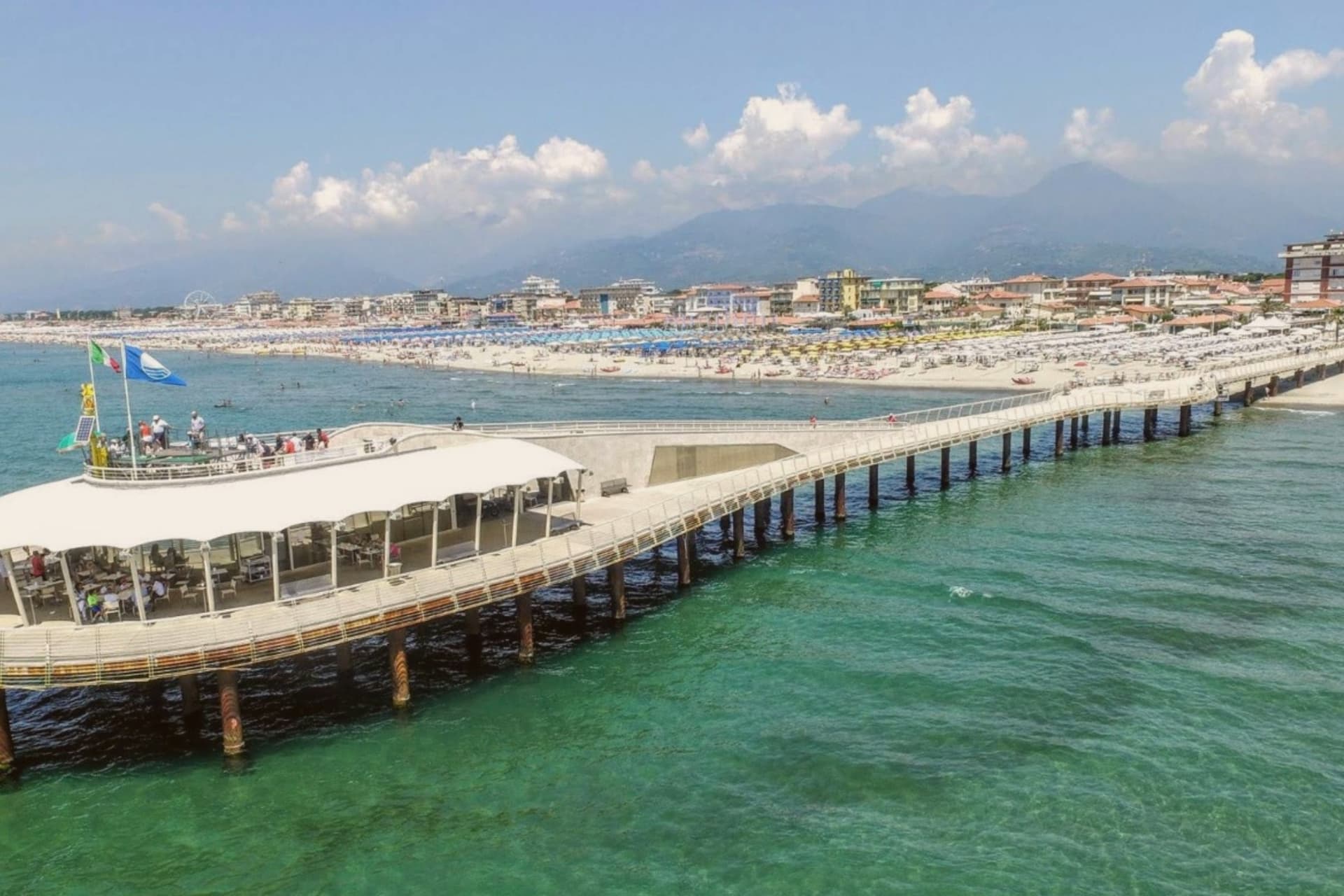
That name and that road explain the town's shape: a fixed inland center built around the Collegiata and the medieval grid, connected by the Via Francigena to a coast six kilometers away that the Romans never had reason to build toward. The inland town and the beach at Lido di Camaiore function as two settlements under one name, joined by the road rather than by contiguous streets, with the Apuan Alps visible from the shore as the backdrop to both.
A commune this shape, mountain territory, a Roman road town, and a beach at the end of it, holds together not because its parts resemble each other but because each has stayed distinct while remaining reachable from the others.
Il Merlo, Quinto Quarto, La Dogana and 1 more have been named by a guide.
What to see in Camaiore
- Collegiata di Santa Maria Assunta. Thirteenth-century parish church with a fourteenth-century bell tower, the central religious building of the inland town.
- Badia di San Pietro. The church stands alone now, a single Romanesque nave where a monastery once stood, its stone unadorned in the way that marks the Lombard-era Benedictine houses of the region.
- Lido di Camaiore. Fine sand six kilometers from the town center, with the Apuan Alps rising directly behind it, mountain and shoreline visible in the same view.
How to get to Camaiore
There is a railway station in the town, so you can arrive without a car and never need one while you are here. Pisa is roughly 44 minutes away by road.
✷ We have written about Camaiore
“I watched eight old men stand up at once, and something in me quietly rearranged itself. They had been sitting at Caffè Celero on Piazza San Bernardino for most of an hour, maybe longer, doing what men over sixty do on an Italian piazza, which is nothing, but nothing done carefully and particularly.”
Read our piece on Camaiore →I Could Get Old Here
Our tip
May through September runs the Versilia season at the Lido and gives the inland town its share of light evenings. June and September are the quieter brackets: warm enough for the sea, cool enough to walk the Francigena stages without losing the morning. July and August fill the Lido with families from Lucca and Milan, parking gets tight, and the inland piazze stay calmer than the seafront.
Carrara
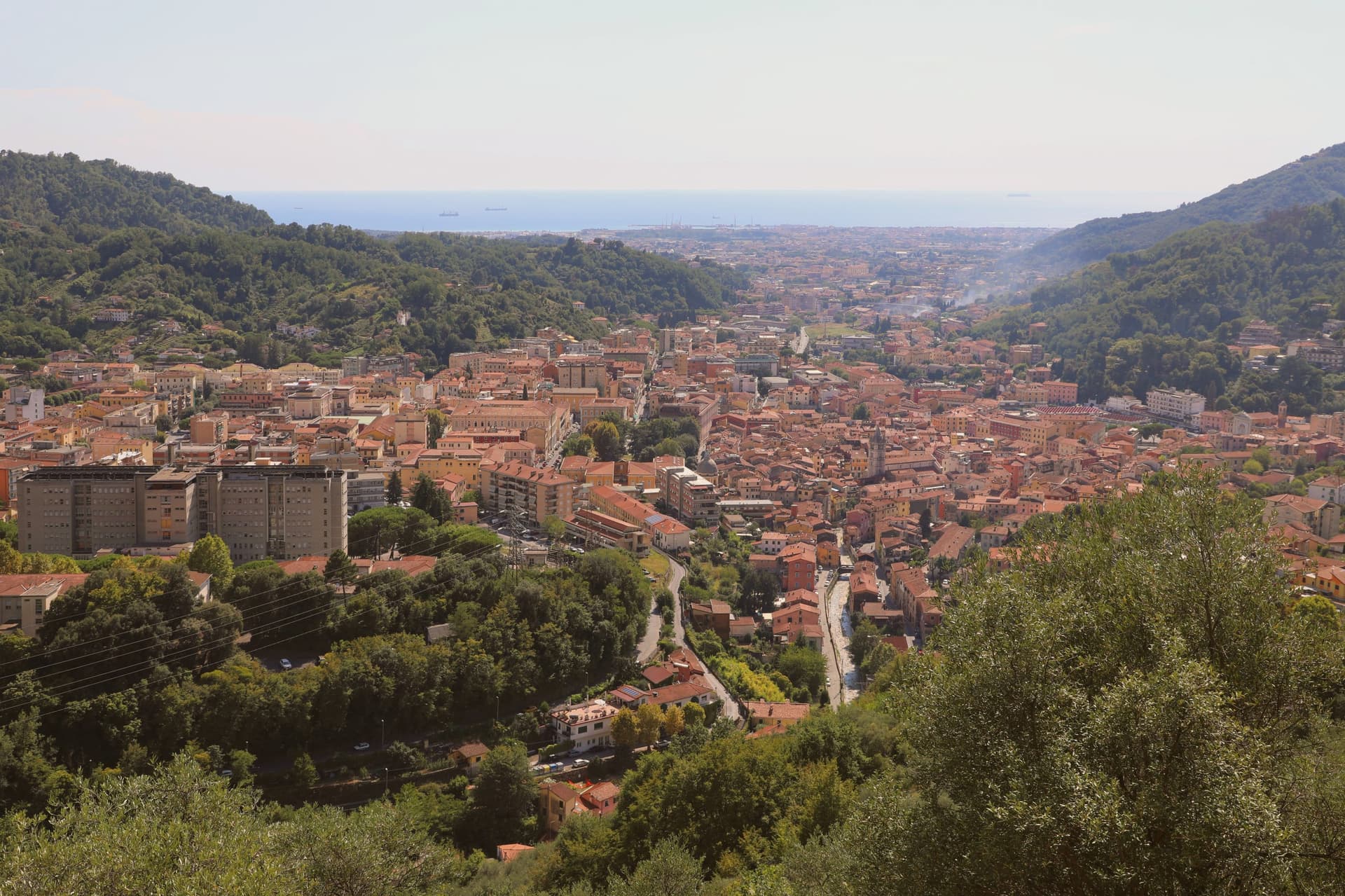
Why visit Carrara
Carrara sits at 80 meters in the narrow plain where the Apuan Alps drop to the Tyrrhenian. The 650-plus marble quarries in the three valleys above the town, Torano, Fantiscritti and Colonnata, have produced more marble than any other place on earth, worked since Roman times.
The white and blue-grey stone went into the Pantheon and Trajan's Column. Michelangelo first came in 1497 to find marble for his Pietà and kept returning until he opened his own quarry in the Polvaccio above Torano, still called Cava di Michelangelo.
The Duomo di Sant'Andrea, begun in the eleventh century, was the first medieval church built entirely of the local stone, with a bichrome marble façade. The city's Accademia di Belle Arti has trained sculptors since 1769 and the surrounding studi still work commissions for sculptors who never set foot in Italy.
Extra, Il Narciso, Enoteca Velia have been named by a guide.
What to see in Carrara
- Duomo di Sant'Andrea. Eleventh-century cathedral, the first medieval church built entirely of Apuan marble, with a Romanesque-Gothic bichrome façade finished in the fourteenth century.
- Cave di Marmo. Over 650 quarry sites in the Torano, Fantiscritti and Colonnata valleys, worked since Roman times and visible on cave tours from the town.
- Piazza Alberica. Sixteenth-century square built by Alberico I Cybo Malaspina inside the expanded city walls, ringed by marble façades and a central statue of Maria Beatrice d'Este.
How to get to Carrara
There is a railway station in the town, so you can arrive without a car and never need one while you are here. Pisa is roughly 55 minutes away by road.
✷ We have written about Carrara
“The road that goes up to Colonnata ends at Colonnata, and you understand this only when you arrive, because the village sits on a shelf of the mountain that the road was built to reach, and there is nowhere else for the road to go. I had driven up from the coast on a Tuesday in late spring with the windows open. I had come up to eat fat.”
Read our piece on Carrara →Colonnata, Carrara, and the Marble Mines | The White Mountain And The Fat
Our tip
May through September is when the cave tours run reliably and the seafront frazione of Marina di Carrara fills with families from Lombardia and Emilia. June is the best month for the quarries: long light, stable weather, and the white-on-white-on-grey of the cuts is visible at the Fantiscritti viewpoint without the August haze. July and August add heat and tour buses, particularly at Colonnata where the lardo cellars stay cool.
Lucca
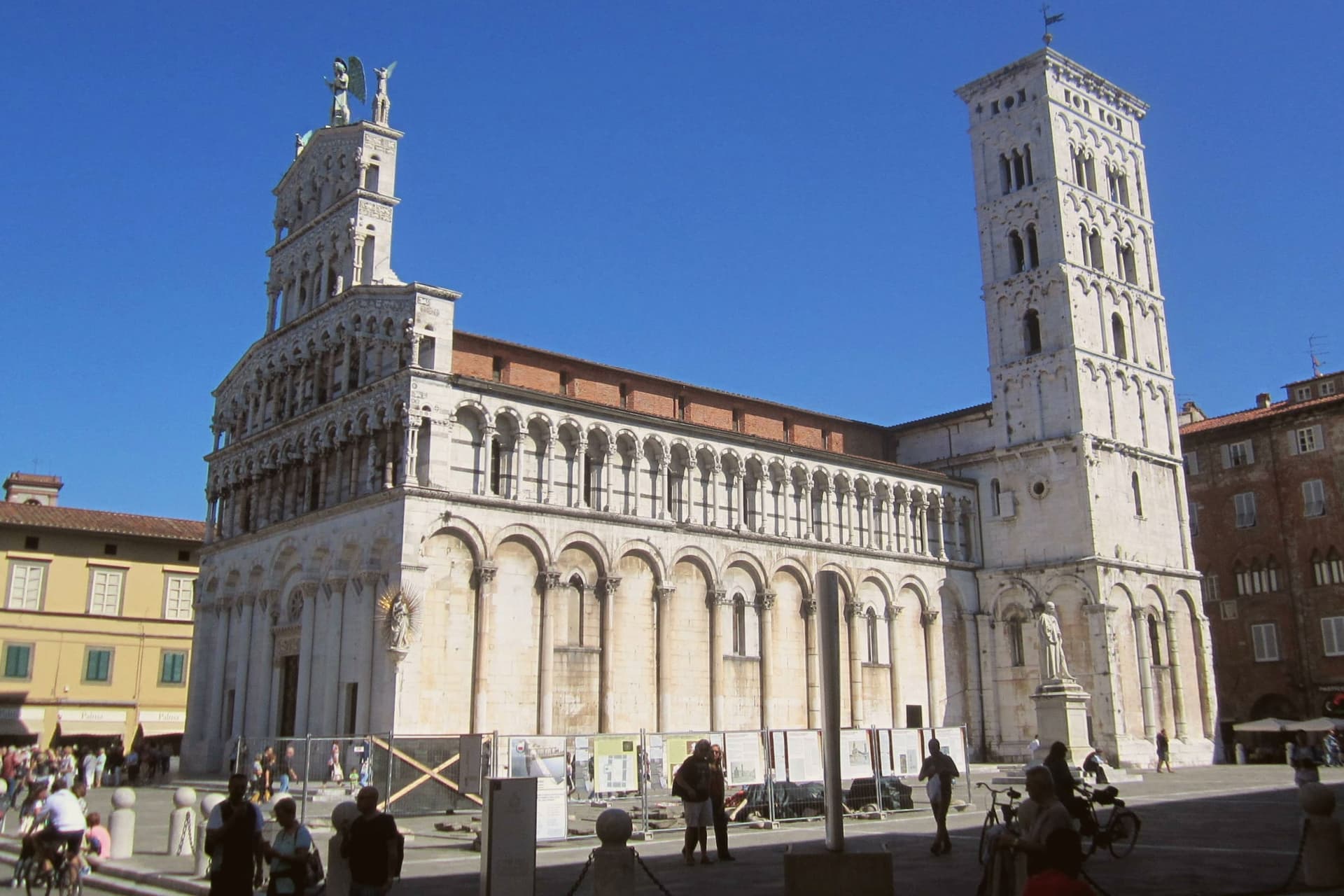
Why visit Lucca
Lucca sits at 19 meters on the Serchio plain, a Roman colony from 180 BC laid out in a grid still visible in the centro storico. The current walls run four kilometers around the city, twelve meters high and thirty meters wide, built between 1513 and 1645 and never breached.
They are now a tree-lined elevated promenade circling the old city, and one of the only complete Renaissance city walls left in Italy. The Piazza dell'Anfiteatro preserves the elliptical footprint of a second-century Roman amphitheater that once held ten thousand spectators; the ring of houses follows the arena's exact shape.
The Cattedrale di San Martino holds the Volto Santo crucifix and Jacopo della Quercia's tomb of Ilaria del Carretto. Giacomo Puccini was born here in 1858.
The town gets the Lucca Comics & Games festival every October-November, the largest comics convention in Europe at 300,000 attendees.
Antica Locanda di Sesto, Nida, All'Olivo and 8 more have been named by a guide.
What to see in Lucca
- Mura di Lucca. Four kilometers of intact sixteenth-century walls, 12 meters high and 30 meters wide, built 1513-1645, now an elevated tree-lined promenade.
- Piazza dell'Anfiteatro. Elliptical square preserving the footprint of a second-century Roman amphitheater that once seated ten thousand.
- Cattedrale di San Martino. Eleventh-century cathedral with a Romanesque-Gothic façade, the Volto Santo crucifix and Jacopo della Quercia's tomb of Ilaria del Carretto from 1406.
How to get to Lucca
There is a railway station in the town, so you can arrive without a car and never need one while you are here. Pisa is roughly 34 minutes away by road.
✷ We have written about Lucca
“We came in through Porta Santa Maria on a Tuesday afternoon in February, with the sun low and the wind off the Apuane sharp enough to flatten Sophia's coat against her, and there was nobody there. A man in a green trench was walking a dog. Two old women were having a conversation on a bench inside the wall, slowly, in dialect, with long pauses.”
Read our piece on Lucca →Lucca | The City You Cannot Photograph
Our tip
April through June and September through October bracket the year. May is the Lucca Classica music festival and the Lucca Biennale Cartasia in even years. October-November brings Lucca Comics & Games and the centro storico fills with around 300,000 attendees; book a year ahead. Rievocando Lucca falls in May.
More from Anywhere Italy
 The best towns you can reach by train that have a serious restaurant within 90 minutes of Pisa
 The best coastal towns that eat well within 90 minutes of Pisa
 The best coastal towns you can reach by train within 90 minutes of Pisa
 The 6 best towns with a serious restaurant in the province of Lucca
 The best beach towns within 90 minutes of Pisa
 The best coastal towns within two hours of Parma