
Emilia-Romagna · Parma
Busseto
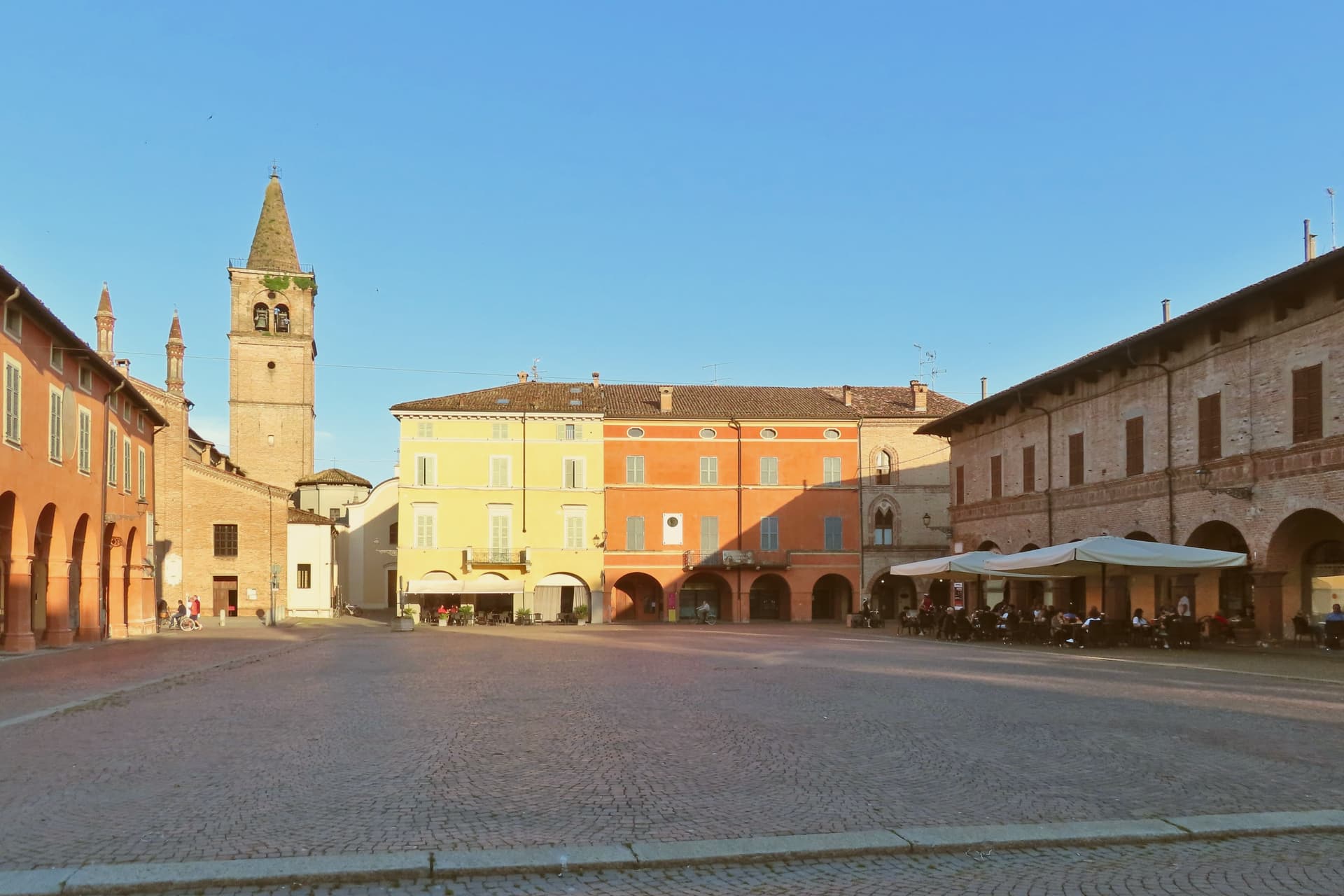
A 40-meter town where Giuseppe Verdi grew up, with a 300-seat opera house in the Rocca he refused to enter.
- Best time
- Apr–Jun, Sep–Oct
- By car
- 38 min from Parma
- By train
- Station in the comune
- Population
- 6,763
Known for
VERDI
Born at Roncole in 1813, the composer grew up in Busseto and bought Villa Sant'Agata north of town in 1848, where he lived until 1901.
CULATELLO
The cured pork from the surrounding Bassa Parmense holds DOP status; eight nearby communes form the small Zibello production zone.
TEATRO VERDI
Three-hundred-seat opera house in the Rocca, opened 1868; the composer funded it, kept a box, and is reputed never to have entered.
When to visit
Best · Apr–Jun, Sep–Oct
- J8°
- F12°
- M15°
- A19°
- M23°
- J28°
- J32°
- A31°
- S26°
- O20°
- N13°
- D8°
- Best
- Hot or crowded
- Quiet
- Mostly closed
Daytime averages, 2020–2024. Weather data by Open-Meteo.com.
The festa: Bartolomeo, 24 August
Why come
The town sits twenty-five kilometers northwest of Parma, in the flat farming country of the Bassa Parmense between the Po and the Apennine foothills. It was the capital of the Stato Pallavicino for almost five hundred years before the territory was absorbed into the Duchy of Parma, and the fortress built for that state still anchors the main piazza today. Roncole, the frazione where Verdi was born, lies three kilometers east; he moved into Busseto proper as a boy in 1824, and Villa Sant'Agata, the house he later bought and kept until his death, lies five kilometers north of the center.
The three places trace a line outward from the town: birth to the east, boyhood at the center, and the household of his adult life to the north. The Bassa around the town is also farming country in a more literal sense, producing the Culatello di Zibello and the Parmigiano Reggiano that the local consortium has aged here since the nineteenth century. A small provincial capital, in other words, whose built center was shaped by one family's rule and whose long afterlife has been shaped by one composer's, with the surrounding plain supplying the food economy underneath both.
The Sunday letter
Busseto is on our list. Its letter is still to come.
We are writing about all 1,000 of these towns, one at a time, in a free letter every Sunday: the photo, the food, the festa. That is our mission. Sign up and you will be there when Busseto comes up. By Peter & Sophia, from Pietrasanta.
Read on
Busseto in our articles
 The best towns that cure their own meat within two hours of Verona6 towns, Busseto among them.
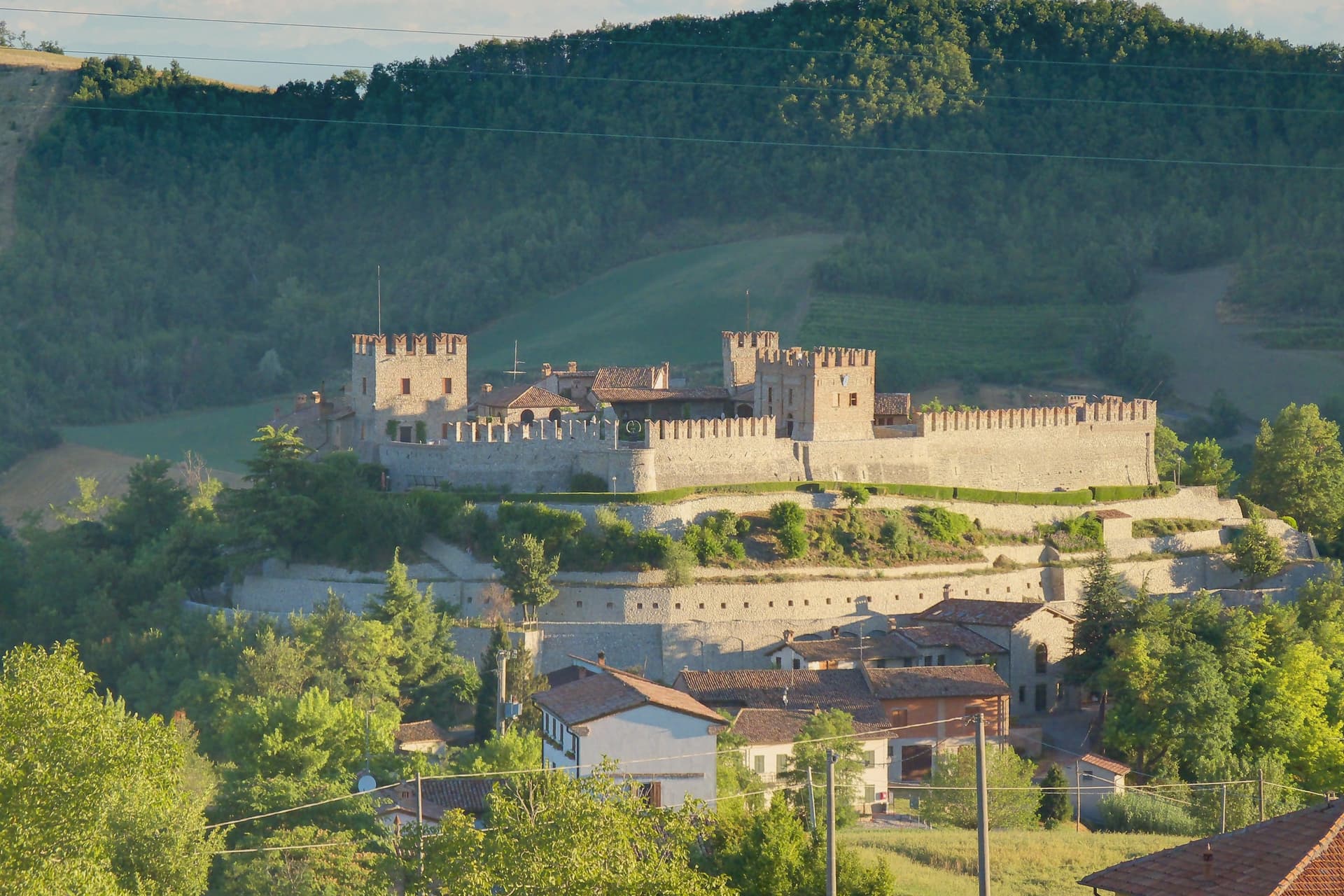 The best towns that cure their own meat within two hours of Brescia7 towns, Busseto among them.
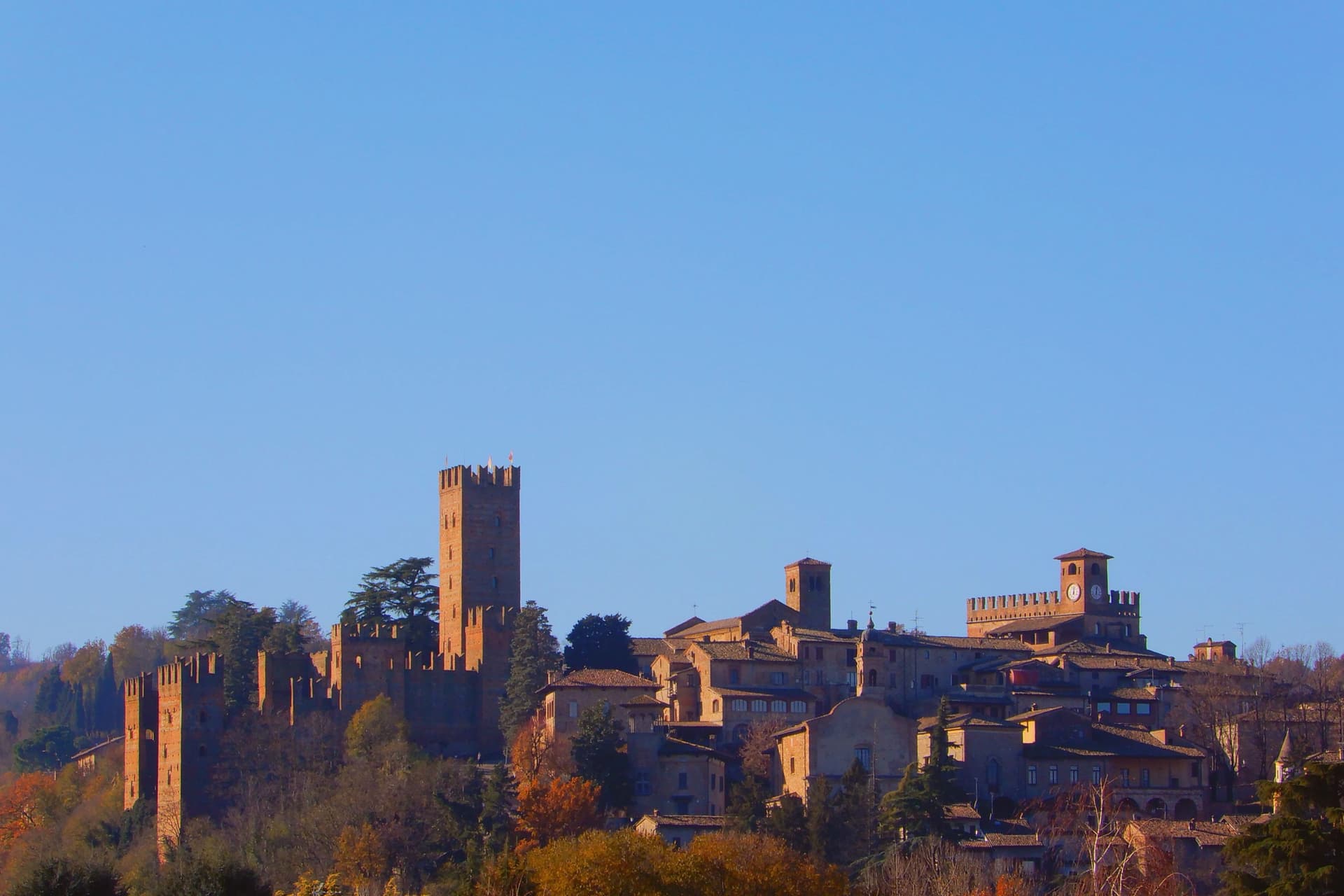 The best towns that eat well within 75 minutes of Parma7 towns, Busseto among them.
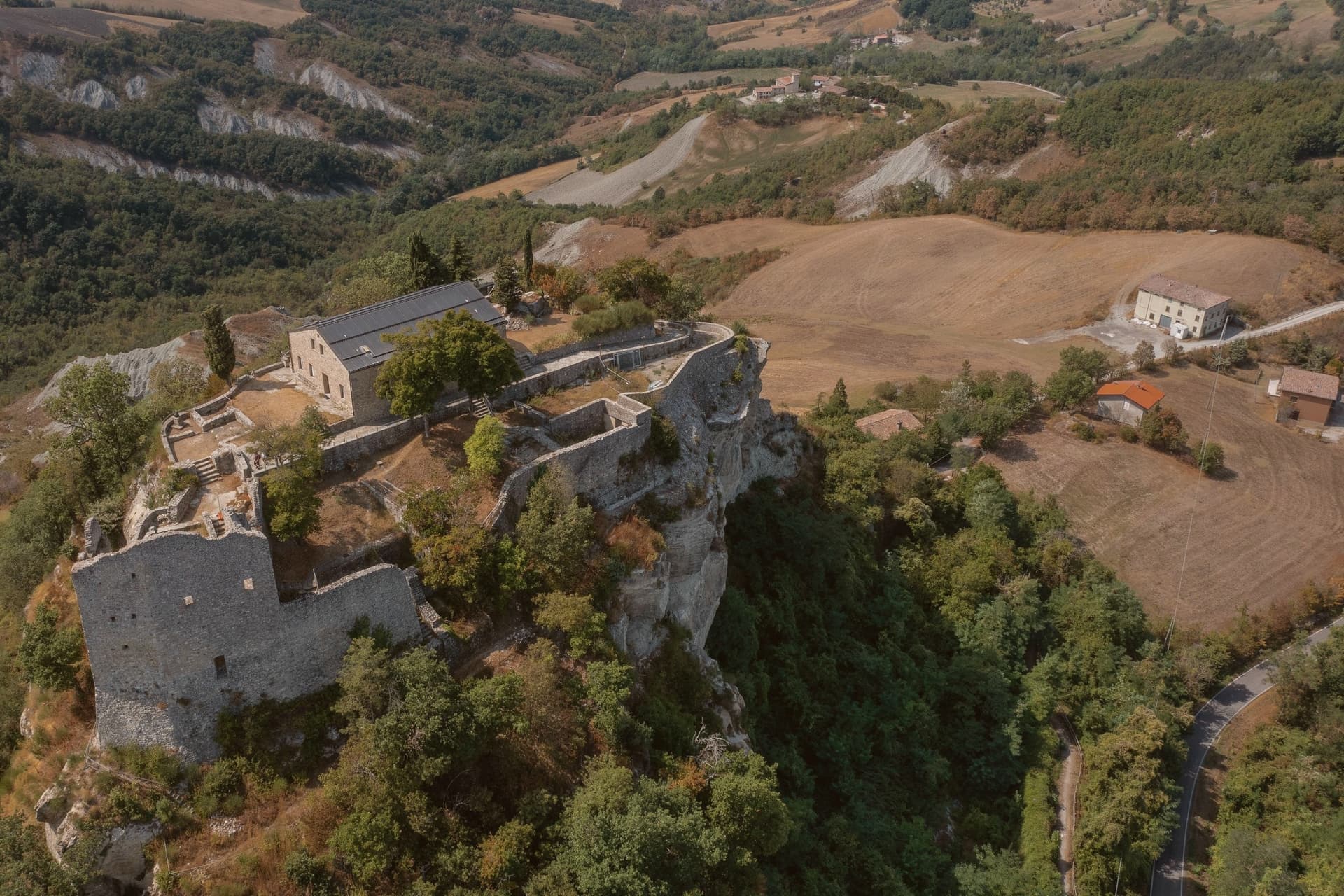 The best hidden towns you can reach by train in Emilia-Romagna10 towns, Busseto among them.
How to get there
From Bologna (BLQ), about 1h 28m by car.
Milan (BGY) is about 1h 32m away.
By car from the centre of Parma 38 minutes or Brescia 1 hour.
There is a railway station in the comune, so you can arrive without a car.
Coming from Milan, Bologna or Verona?
Coming by train into Parma? Busseto is about 36 minutes away by road.
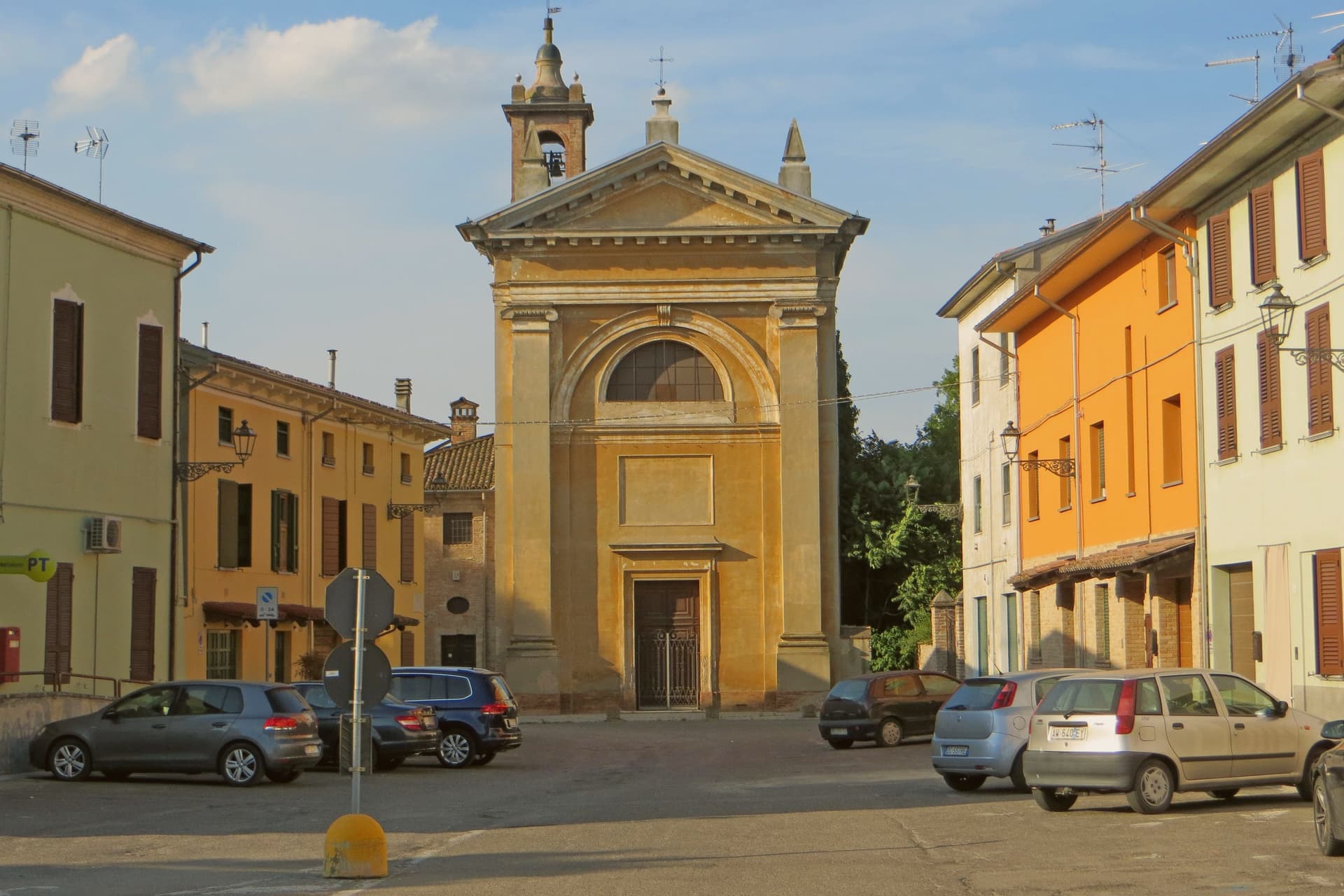
What to see
Teatro Giuseppe Verdi
The stage sits inside the fortress walls, reached through the courtyard rather than a freestanding facade. The empty box he kept is still pointed out.
Rocca dei Pallavicino
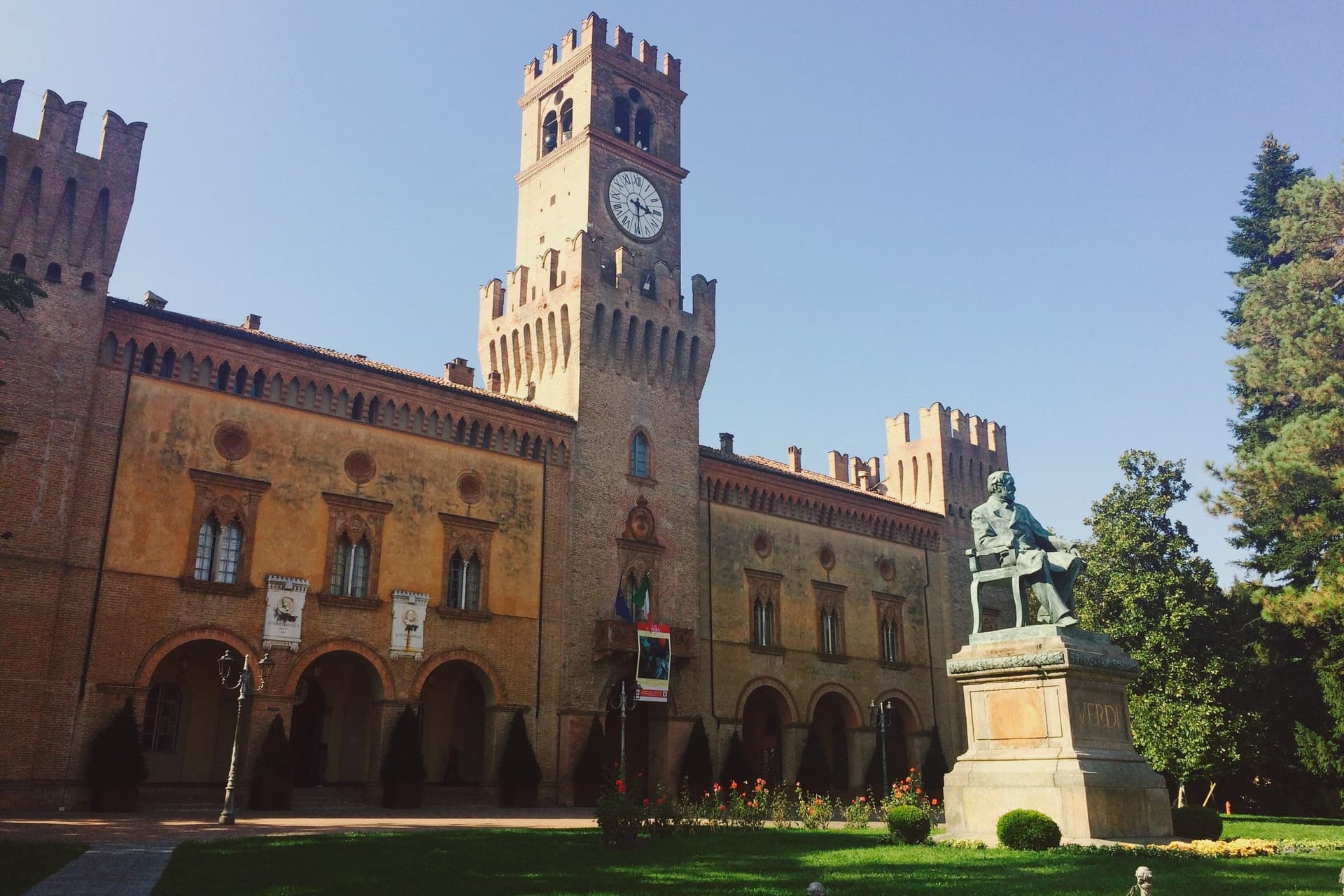
Fifteenth-century fortress on the main piazza, seat of the Stato Pallavicino for centuries. It now holds the theatre in one wing and the town hall in another.
Casa Natale di Verdi
A modest house at Roncole, three kilometers east, kept much as it would have been, with the rooms where a child grew up rather than the trappings of later fame.
Villa Verdi a Sant'Agata
The rooms hold the original furnishings, and the garden outside was laid out by Verdi himself rather than a hired hand.
Piazza Giuseppe Verdi
The square is framed by the fortress on one side and the Collegiata di San Bartolomeo on the other, with a seated bronze of the composer, cast by Gilio Monteverde in 1913, watching over both.
The slow-trip planner
Building a trip? Find where Busseto fits in a slow Italy circuit.
Answer five questions. We will shape a geographically coherent slow trip from the 1,000 Italian towns most travelers skip. Yours to save and share.
We recommend
Where to eat
Not our picks, but places the guides put their name to: a Michelin star, a Gambero Rosso fork, a Slow Food snail, a Michelin Key for the hotels. Worth a table, a counter, or a night when you pass through.
CampaniniTrattoria
Campanini has two Gambero Rosso prawns and a Slow Food snail.
Signature product
Culatello di Zibello DOPDOP
Verdi's hometown is also one of the eight Culatello di Zibello producing communes.
See the towns we cover in the zone of Culatello di Zibello DOP.
Living here
- Population 6,763
- Commuter belti
- Pharmacy in town
- High school within a 30-minute drive
- Train station in the comune
- Nearest airport Bologna, 1 h 28 min drive
- Market day Tuesday
- Regional capital Bologna, 1 h 33 min drive
Common questions
- What is Busseto known for?
- Busseto is a 40-meter town where Giuseppe Verdi grew up, with a 300-seat opera house in the Rocca he refused to enter.
- Where is Busseto?
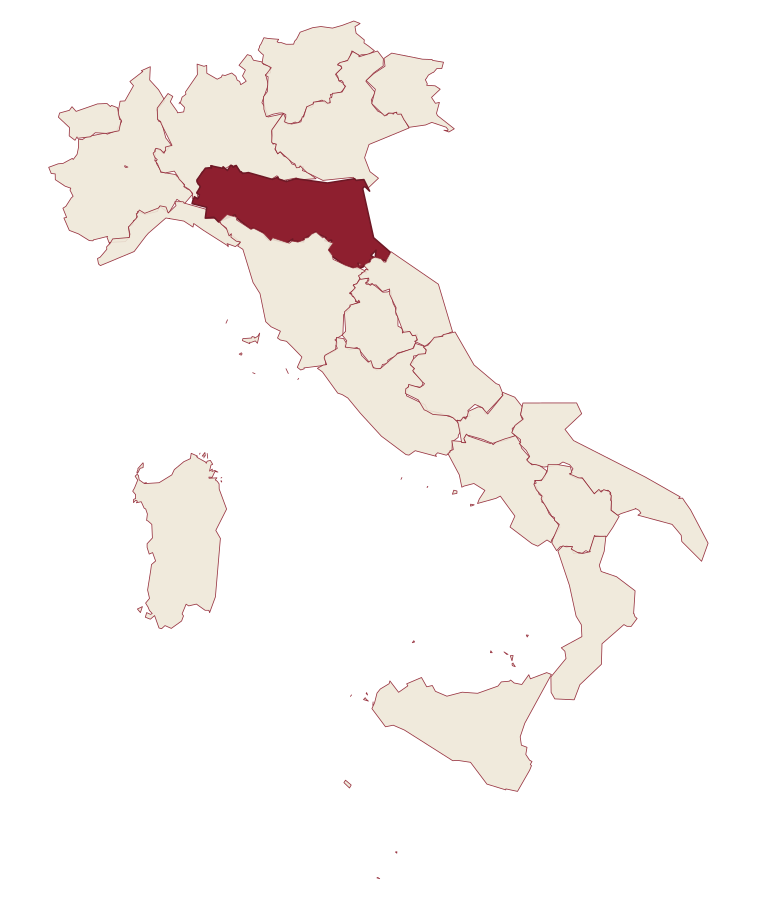
- Busseto is a comune in the province of Parma, in Emilia-Romagna, at 40 meters above sea level.
- What is the nearest airport to Busseto?
- Bologna (BLQ), about 1h 28m by car.
- Can you get to Busseto without a car?
- Yes. There is a railway station in the comune, so you can arrive by train.
- How long is the drive from Parma to Busseto?
- About 38 minutes by car.
- When is the best time to visit Busseto?
- Best in Apr–Jun, Sep–Oct. July is the warmest month, averaging 32 degrees, and May the wettest, with about 13 rain days.
- Is there a sagra or a festival in Busseto?
- The town keeps its patron saint's day: Bartolomeo, 24 August.
- Which other towns are like Busseto?
- Pizzighettone, Soncino and Montagnana.
- How many people live in Busseto?
- 6,763 at the 2023 count.
Tags & datadesignations · numbers · sources
Recognised as
The numbers
- Elevation: 40 m
- Population: 6,763
- Surface area: 76.59 km²
These figures were compiled from public directories: ISTAT, OpenStreetMap and Wikidata, and from the official listings of the guides named on this page. Town details change; verify with official sources before you travel.
Similar
Towns like Busseto
Pizzighettone
Province: Cremona
both in the Po valley · both between 3,000 and 10,000 people
Soncino
Province: Cremona
both in the Po valley · both between 3,000 and 10,000 people
Montagnana
Province: Padova
both in the Po valley · both between 3,000 and 10,000 people
Fontanellato
Province: Parma
both in the Po valley · both between 3,000 and 10,000 people
San Benedetto Po
Province: Mantova
both in the Po valley · both between 3,000 and 10,000 people
San Giovanni in Marignano
Province: Rimini
both in the Po valley · both between 3,000 and 10,000 people
🟠 Bandiera Arancione
More Bandiera Arancione towns in Emilia-Romagna
Bagno di Romagna
Province: Forlì-Cesena
A 491-meter thermal town at the head of the Savio valley, drawing on springs that have run at 47 degrees since Roman times.
Bobbio
Province: Piacenza
A 272-meter Trebbia-valley town built around an abbey founded in 614, named Borgo dei Borghi by RAI in 2019.
Brisighella
Province: Ravenna
A Lamone-valley borgo at 115 meters under three selenite hills crowned by a fortress, a clock tower, and a sanctuary.
Castell'Arquato
Province: Piacenza
A 224-meter hilltop borgo in the Val d'Arda, kept intact since the tenth century and crowned by Luchino Visconti's 1342 fortress.
Castelvetro di Modena
Province: Modena
A 152-meter hill borgo south of Modena whose checkerboard piazza sits above the slopes that grow Lambrusco Grasparossa.