
Veneto · Padova
Montagnana
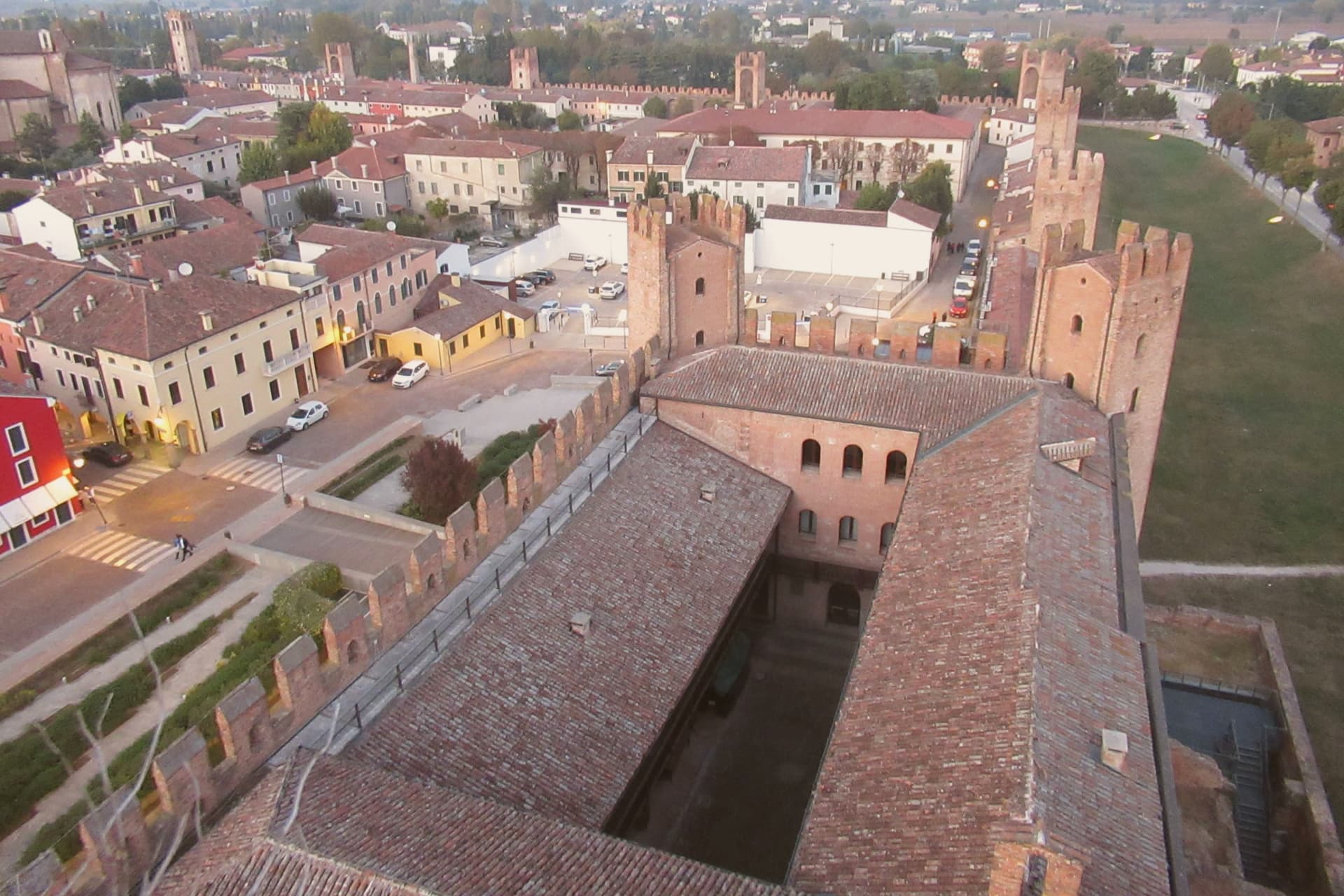
A walled town on the lower Padova plain, its two kilometers of ramparts studded with 24 hexagonal towers.
- Best time
- Apr–Jun, Sep–Oct
- By car
- 53 min from Verona
- By train
- Station in the comune
- Population
- 8,937
Known for
MEDIEVAL WALLS
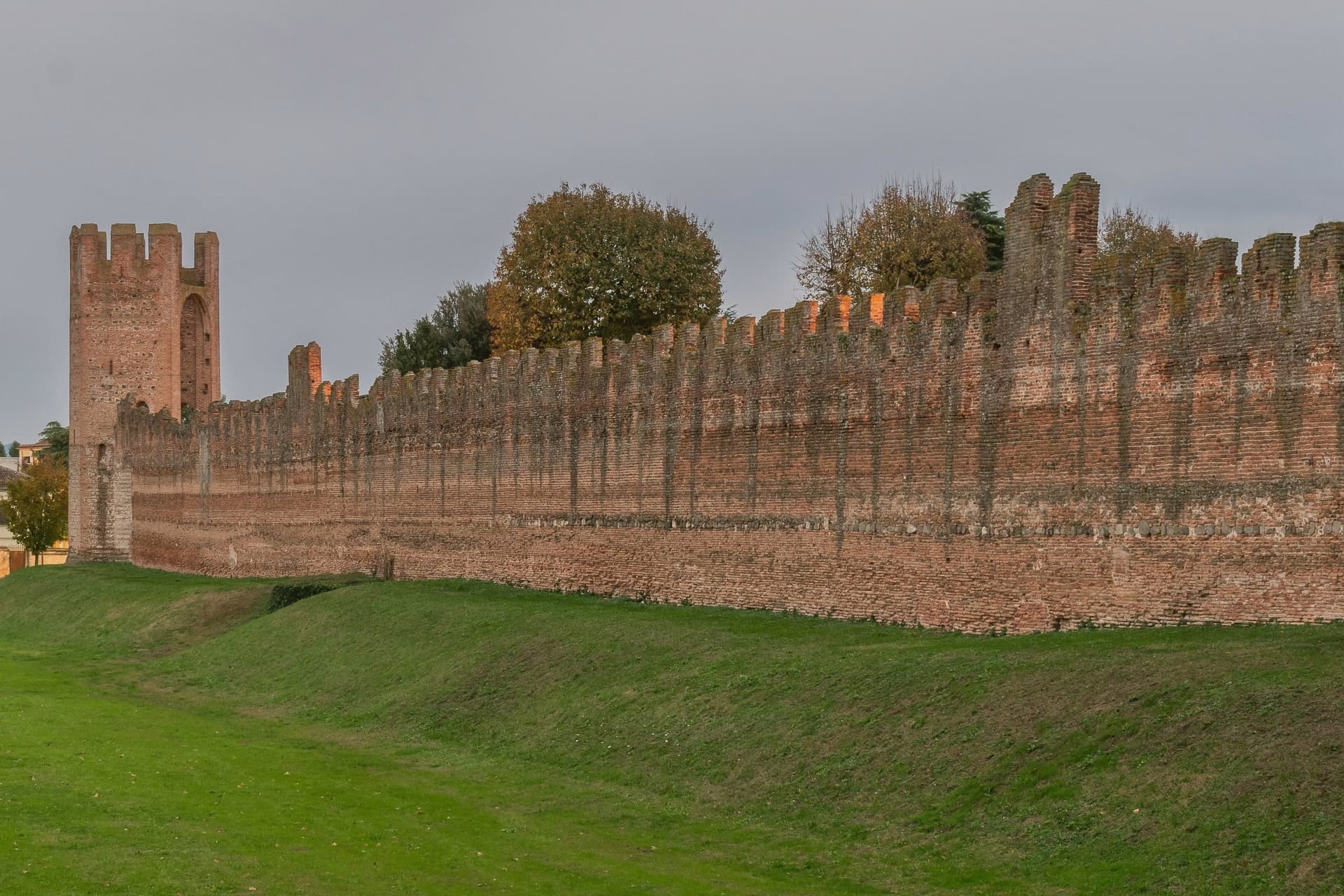
Two kilometers of intact fourteenth-century brick ramparts with twenty-four hexagonal towers and four gates, one of the best-preserved rings in Europe.
VILLA PISANI
Andrea Palladio's villa for Cardinal Francesco Pisani, built around 1552 outside the eastern gate, a hybrid of urban facade and country plan.
PROSCIUTTO VENETO DOP
The Consorzio del Prosciutto Veneto Berico-Euganeo DOP was founded in Montagnana in 1971; the town hosts the May Festa del Prosciutto each year.
RADICCHIO DI VERONA
The commune also lies inside the Radicchio di Verona IGP production zone.
When to visit
Best · Apr–Jun, Sep–Oct
- J8°
- F12°
- M15°
- A18°
- M23°
- J28°
- J31°
- A31°
- S26°
- O21°
- N13°
- D8°
- Best
- Hot or crowded
- Quiet
- Mostly closed
Daytime averages, 2020–2024. Weather data by Open-Meteo.com.
The festa: Assunzione di Maria, 15 August
Why come
Montagnana sits on the lower Padova plain, thirty-five kilometers southwest of Padova, on the watershed between the Adige and the Bacchiglione. The wall ring is unbroken enough that the town's whole plan still reads as the fortification that produced it: the castle anchors the eastern gate, the rocca anchors the western one, and the road to Verona runs between them through what was once contested ground between Ezzelino's garrison and the Carraresi who came after. Inside the walls, the center holds the Duomo and the two flanking palazzi around Piazza Maggiore, while the villa built for the cardinal stands deliberately outside the gate, a country house that still shows its face to the town. The May festival now fills the same ground the walls were built to defend, the modern economy of the place staged inside its medieval perimeter.
The Sunday letter
Montagnana is on our list. Its letter is still to come.
We are writing about all 1,000 of these towns, one at a time, in a free letter every Sunday: the photo, the food, the festa. That is our mission. Sign up and you will be there when Montagnana comes up. By Peter & Sophia, from Pietrasanta.
Read on
Montagnana in our articles
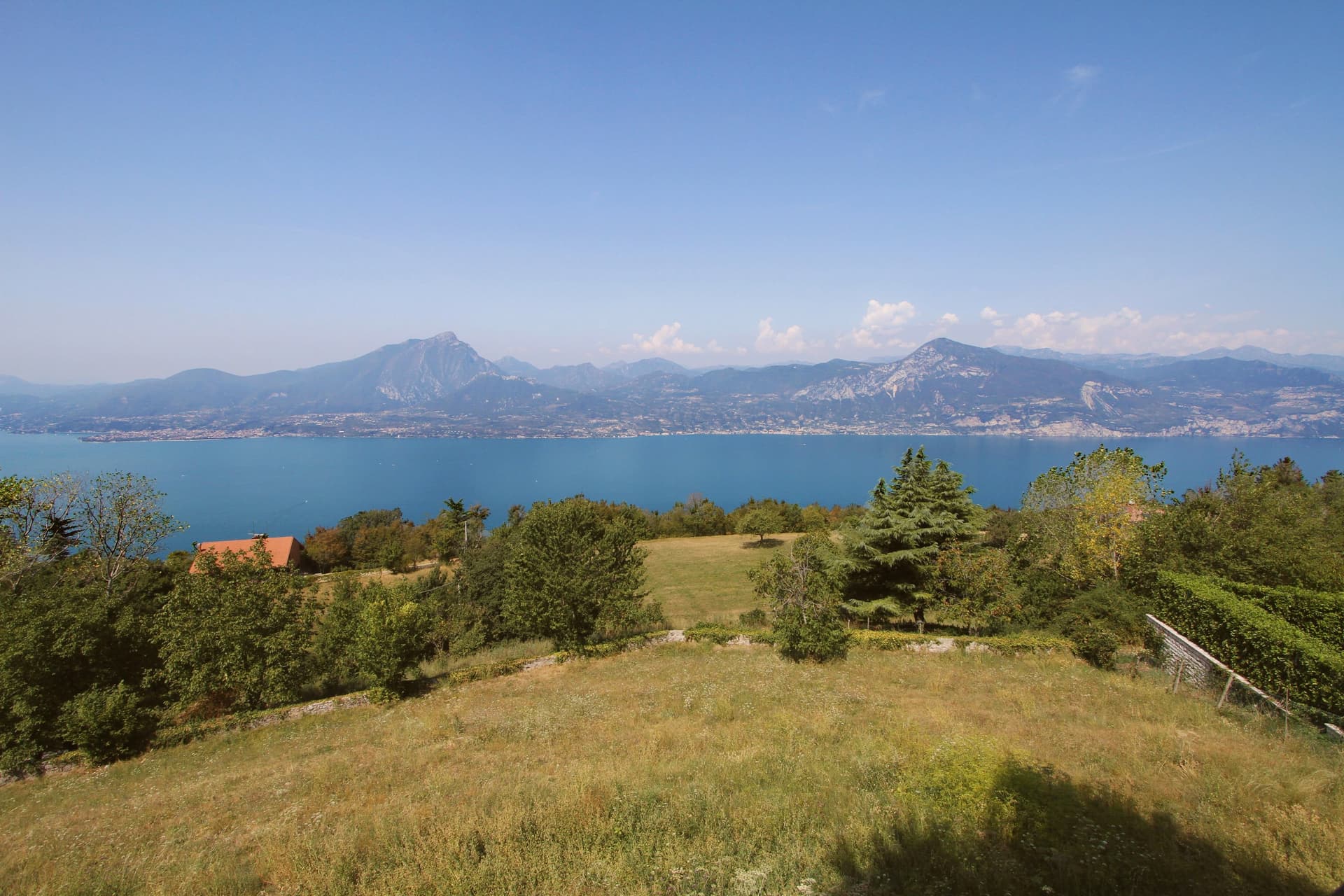
 The best towns known for what they grow within 75 minutes of Padua6 towns, Montagnana among them.
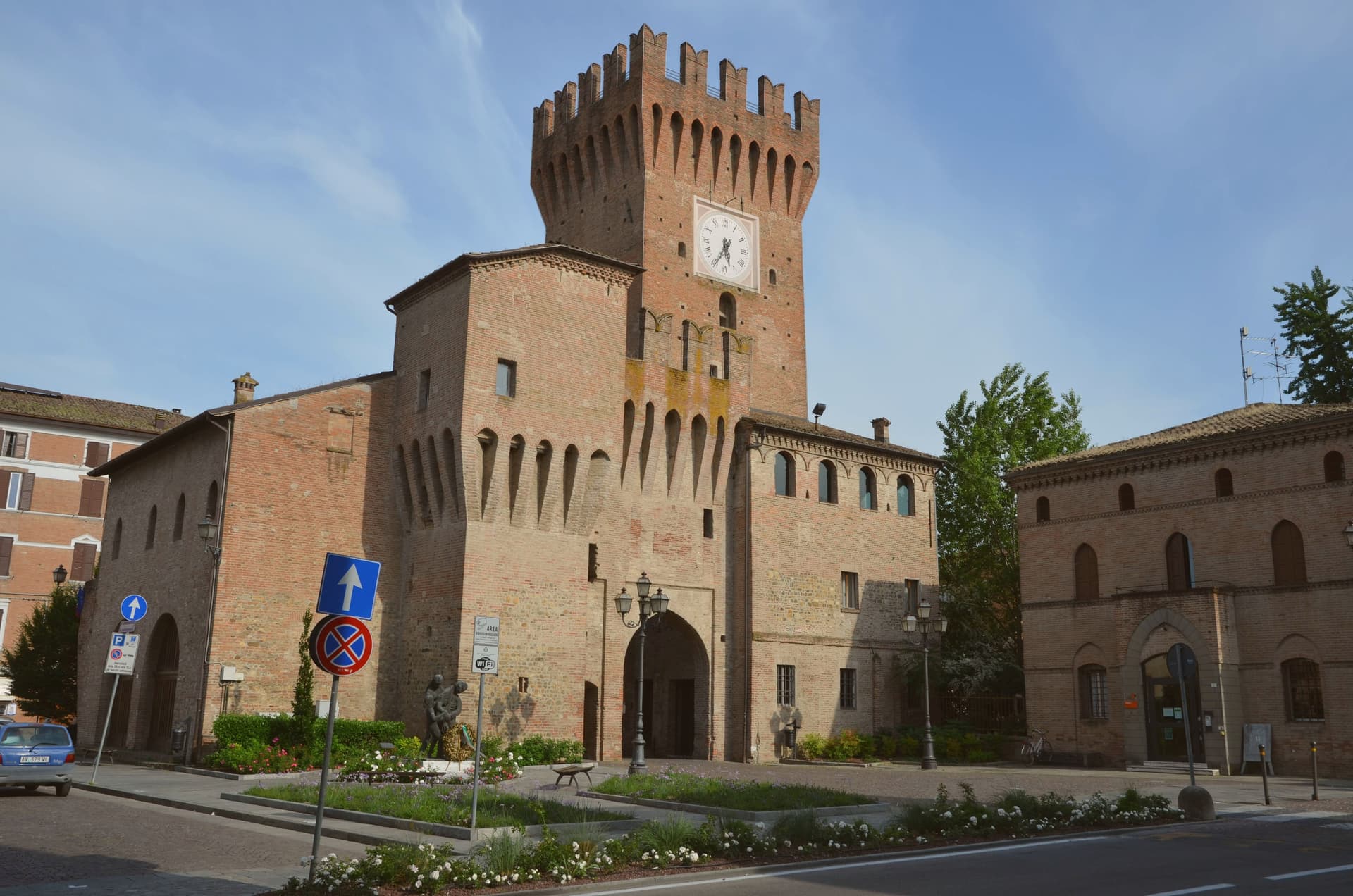
 The best towns known for what they grow within an hour of Verona6 towns, Montagnana among them.
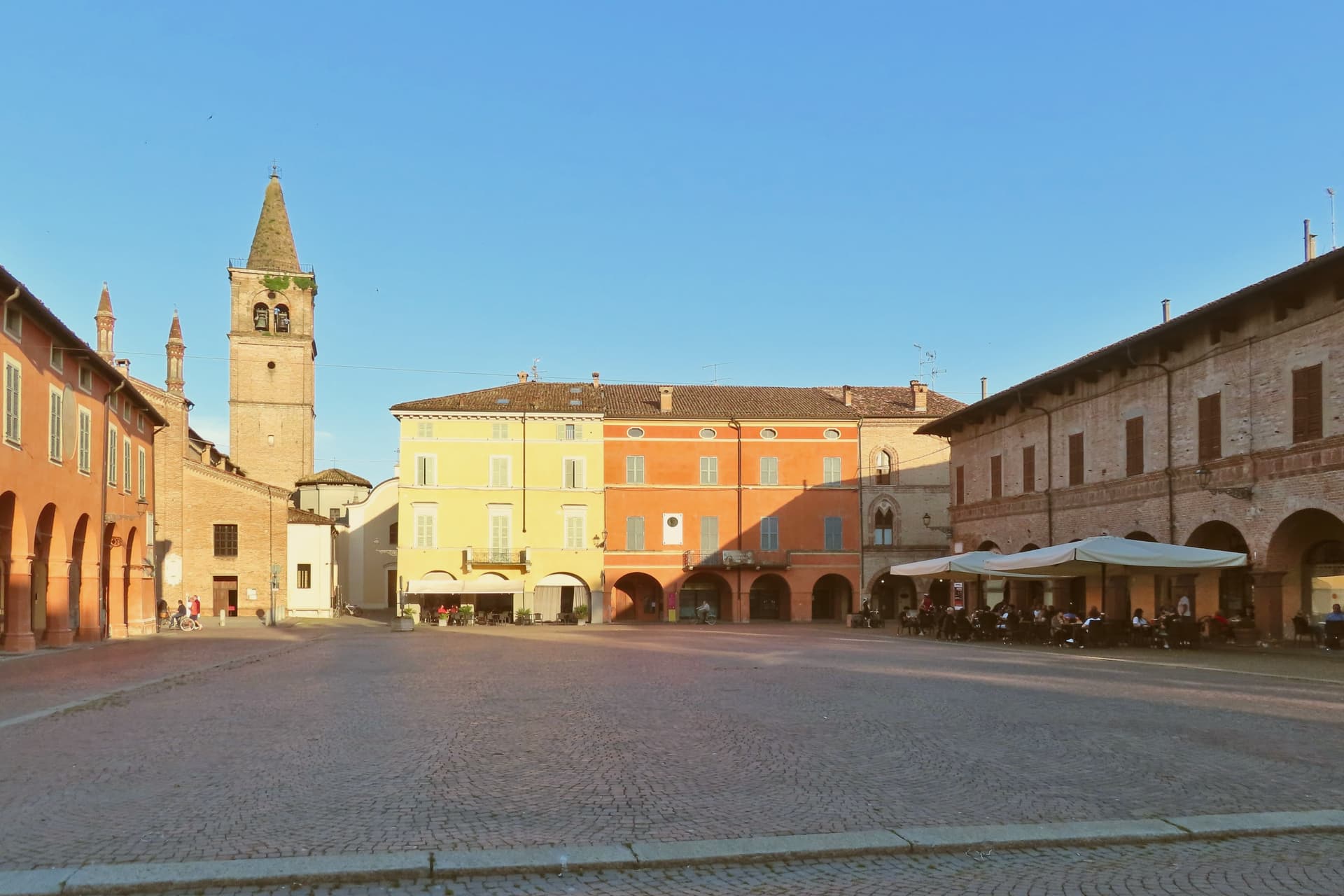
 The best towns that cure their own meat within two hours of Padua6 towns, Montagnana among them.
 The best towns that cure their own meat within two hours of Verona6 towns, Montagnana among them.
How to get there
From Verona (VRN), about 1h 9m by car.
Bologna (BLQ) is about 1h 26m away.
By car from the centre of Padua 57 minutes or Venice 1h 16m.
There is a railway station in the comune, so you can arrive without a car.
Coming from Verona, Venice or Bologna?
Coming by train into Vicenza? Montagnana is about 46 minutes away by road.
What to see
Cinta muraria
Six to eight meters high and ninety-six centimeters thick, the rampart carries a continuous parapet walk, so the towers can be counted from above rather than just from the road.
Castello di San Zeno
Fortress at the eastern gate, built by Ezzelino III da Romano in 1242, with the Mastio tower 38 meters high and a civic museum inside.
Rocca degli Alberi
Western gate fortress built by the Carraresi between 1360 and 1362, with a moat and double drawbridge defending the road to Verona.
Duomo di Santa Maria Assunta
Gothic cathedral on Piazza Maggiore, holding a Transfiguration altarpiece by Paolo Veronese and a fresco of David and Goliath attributed to Giorgione.
Villa Pisani
Designed by Andrea Palladio for Cardinal Francesco Pisani, the villa stands outside the walls at the eastern gate, its facade built for the town side and its plan for the country.
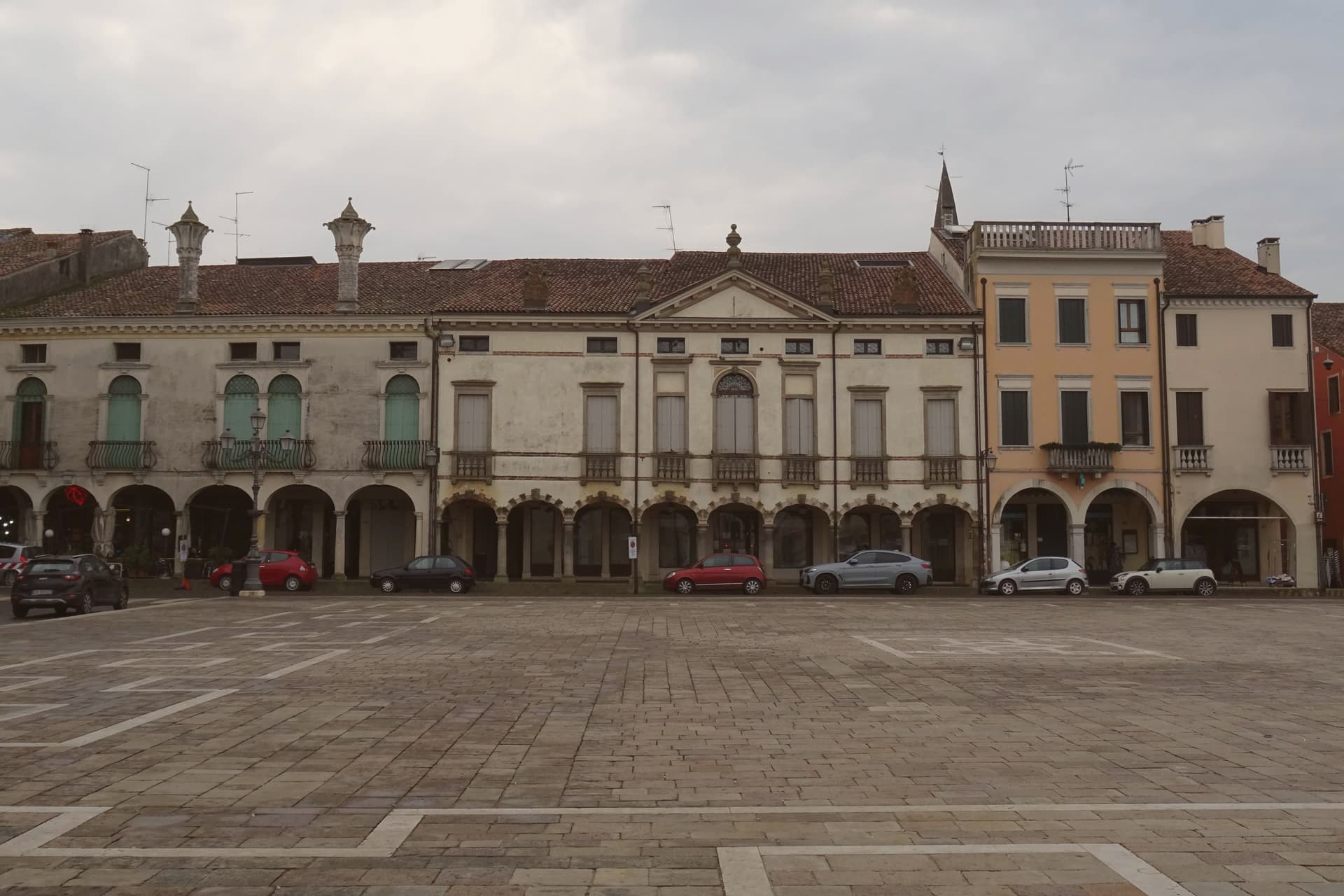
Piazza Maggiore
Central square inside the walls, bordered by the Duomo, Palazzo del Monte di Pietà and Palazzo Magnavin-Foratti, with the Loggia dei Magistrati on the north side.
The slow-trip planner
Building a trip? Find where Montagnana fits in a slow Italy circuit.
Answer five questions. We will shape a geographically coherent slow trip from the 1,000 Italian towns most travelers skip. Yours to save and share.
Living here
- Population 8,937
- Commuter belti
- Pharmacy in town
- High school within a 30-minute drive
- Train station in the comune
- Nearest airport Verona, 1 h 9 min drive
- Regional capital Venezia, 1 h 16 min drive
Common questions
- What is Montagnana known for?
- Montagnana is a walled town on the lower Padova plain, its two kilometers of ramparts studded with 24 hexagonal towers.
- Where is Montagnana?
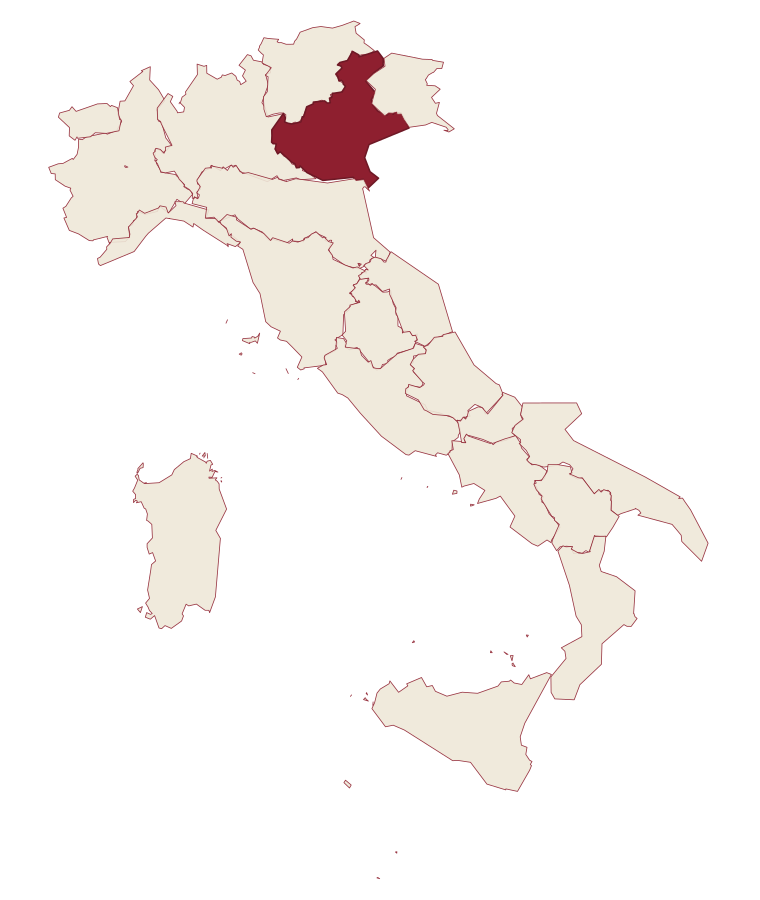
- Montagnana is a comune in the province of Padova, in Veneto, at 16 meters above sea level.
- What is the nearest airport to Montagnana?
- Verona (VRN), about 1h 9m by car.
- Can you get to Montagnana without a car?
- Yes. There is a railway station in the comune, so you can arrive by train.
- How long is the drive from Padua to Montagnana?
- About 57 minutes by car.
- When is the best time to visit Montagnana?
- Best in Apr–Jun, Sep–Oct. July is the warmest month, averaging 31 degrees, and May the wettest, with about 14 rain days.
- Is there a sagra or a festival in Montagnana?
- The town keeps its patron saint's day: Assunzione di Maria, 15 August.
- Which other towns are like Montagnana?
- Busseto, Soncino and Pizzighettone.
- How many people live in Montagnana?
- 8,937 at the 2023 count.
Tags & datadesignations · numbers · sources
The numbers
- Elevation: 16 m
- Population: 8,937
- Surface area: 45.03 km²
These figures were compiled from public directories: ISTAT, OpenStreetMap and Wikidata, and from the official listings of the guides named on this page. Town details change; verify with official sources before you travel.
Similar
Towns like Montagnana
Busseto
Province: Parma
both in the Po valley · both between 3,000 and 10,000 people
Soncino
Province: Cremona
both in the Po valley · both between 3,000 and 10,000 people
Pizzighettone
Province: Cremona
both in the Po valley · both between 3,000 and 10,000 people
Soave
Province: Verona
both in the Po valley · both between 3,000 and 10,000 people
San Benedetto Po
Province: Mantova
both in the Po valley · both between 3,000 and 10,000 people
Volta Mantovana
Province: Mantova
both in the Po valley · both between 3,000 and 10,000 people
🎨 Borghi più belli d'Italia
More Borghi più belli d'Italia towns in Veneto
Arquà Petrarca
Province: Padova
The Euganean Hills village where Francesco Petrarca spent his last four years and died in 1374, renamed in his honor in 1868.
Asolo
Province: Treviso
A walled hill town at 205 meters that Caterina Cornaro ran as her court after trading Cyprus to Venice in 1489.
Borgo Valbelluna
Province: Belluno
Veneto's youngest comune, a 13,410-resident fusion of three lower-Belluno towns formed in 2019, wrapped around an old borgo in the pre-Dolomite Piave valley.
Cison di Valmarino
Province: Treviso
A Prosecco hills borgo at 261 meters under the dolomite rock of CastelBrando, the largest inhabited castle complex in Europe.
Follina
Province: Treviso
A Prosecco-hills borgo at 191 meters around the Cistercian Abbey of Santa Maria, with a cloister finished in 1268.