
Lombardy · Mantova
San Benedetto Po
A former river island whose entire existence traces back to the Benedictine abbey founded on it in 1007.
- Best time
- Apr–Jun, Sep–Oct
- By car
- 53 min from Verona
- By train
- Station in the comune
- Population
- 6,648
Known for
POLIRONE
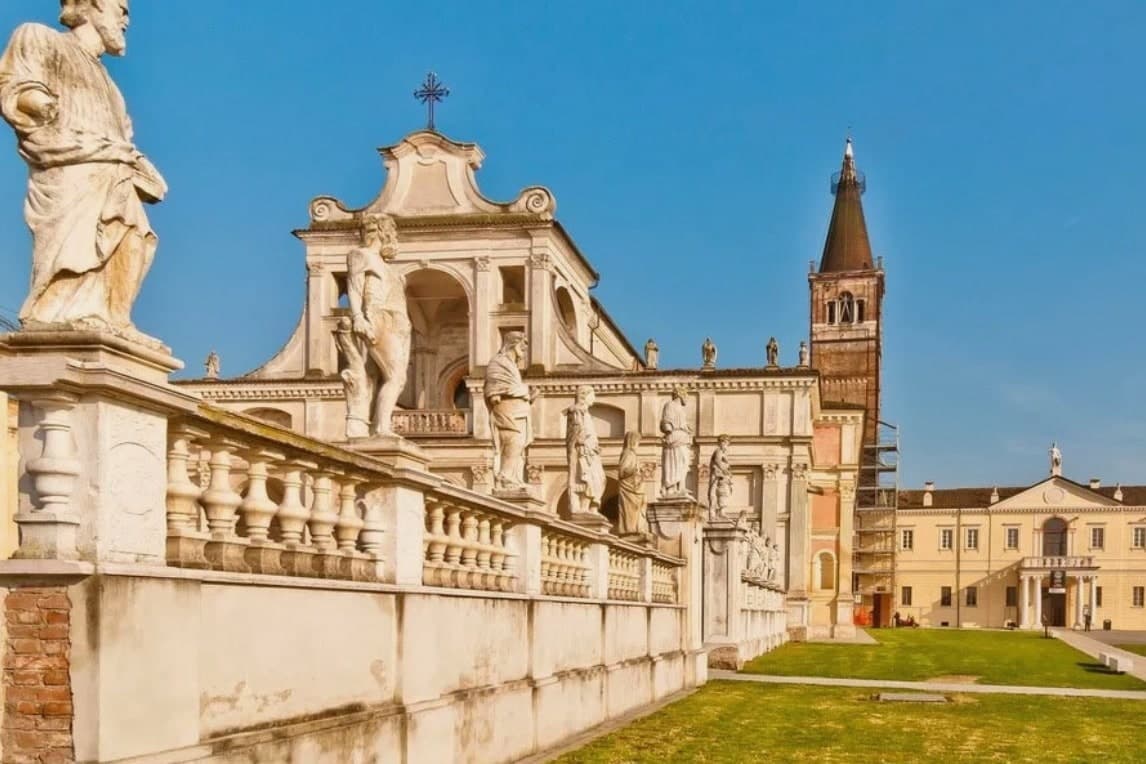
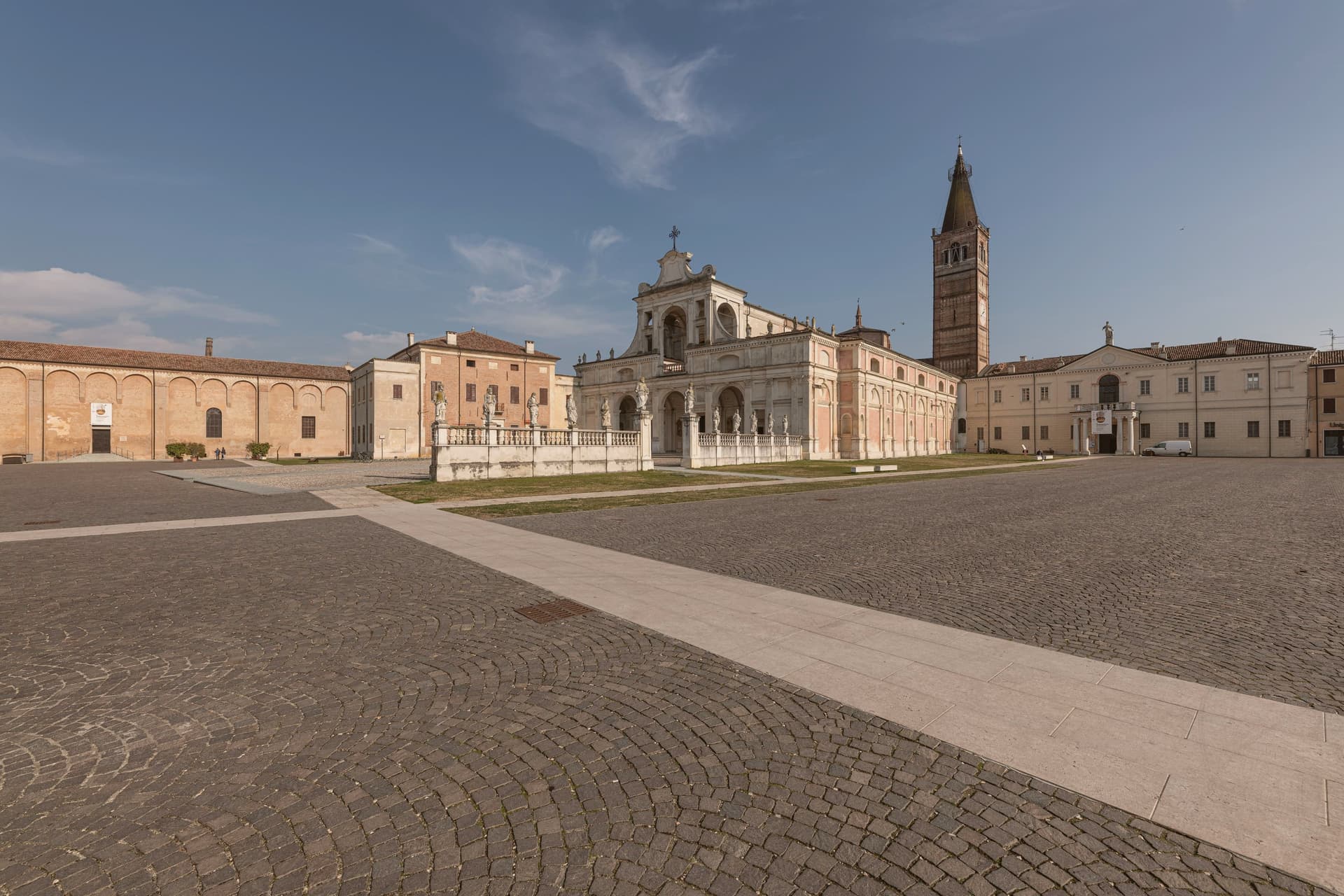
The Benedictine abbey founded in 1007, one of the largest monastic complexes in Italy, restructured by Giulio Romano.
MATILDA OF CANOSSA
The countess of Tuscany was buried here from 1115 to 1632, when her remains were transferred to Saint Peter's in Rome.
THE PO
The town sits at 19 meters between the Po and the former Lirone, on what was once an island in the river.
IGP ZONES
The commune lies inside the Melone Mantovano and Pera mantovana IGP production zones.
When to visit
Best · Apr–Jun, Sep–Oct
- J8°
- F12°
- M15°
- A19°
- M23°
- J29°
- J32°
- A31°
- S26°
- O21°
- N13°
- D8°
- Best
- Hot or crowded
- Quiet
- Mostly closed
Daytime averages, 2020–2024. Weather data by Open-Meteo.com.
Why come
San Benedetto Po sits in the flat Po plain, 22 kilometers southeast of Mantova, on what was once an island between the Po and the Lirone rivers. The town has no origin apart from the abbey: in 1007 Tedald of Canossa, grandfather of Matilda, granted half his land between the two rivers to the Benedictines, and the resulting monastery became one of the principal centers of the Gregorian Reform in northern Italy. Matilda herself, the countess who hosted the emperor's penance at Canossa in 1077, was buried within it for five centuries before her remains went to Rome.
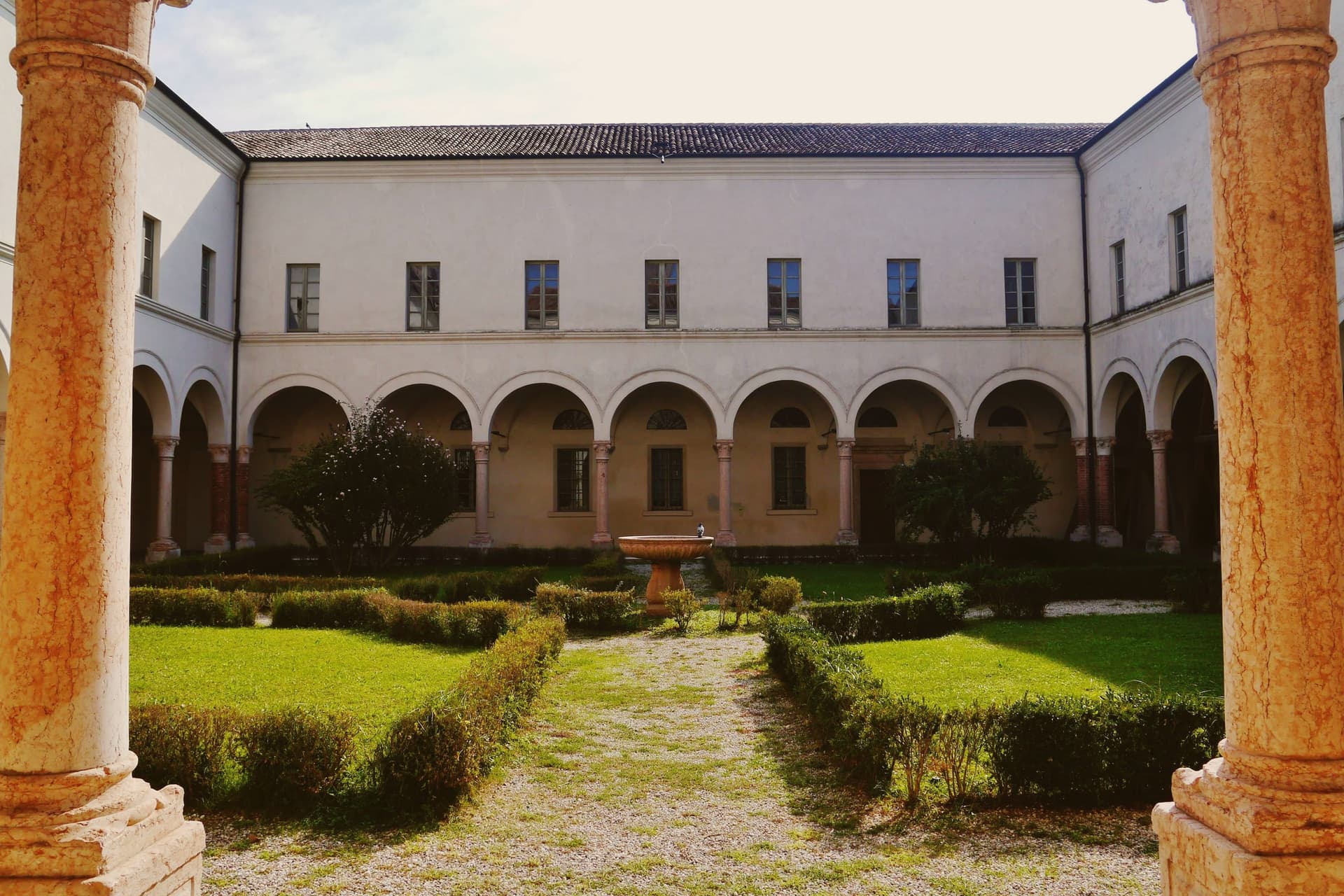
The abbey held its position from its founding until the Napoleonic suppression of 1797 emptied the community out, by which time it had grown its church, its three cloisters, its refectory and infirmary. What is left standing today is essentially the monastery's own floor plan with the town arranged around it. A place built entirely by and for a religious institution, still legible as such long after the monks themselves are gone.
The Sunday letter
San Benedetto Po is on our list. Its letter is still to come.
We are writing about all 1,000 of these towns, one at a time, in a free letter every Sunday: the photo, the food, the festa. That is our mission. Sign up and you will be there when San Benedetto Po comes up. By Peter & Sophia, from Pietrasanta.
Read on
San Benedetto Po in our articles
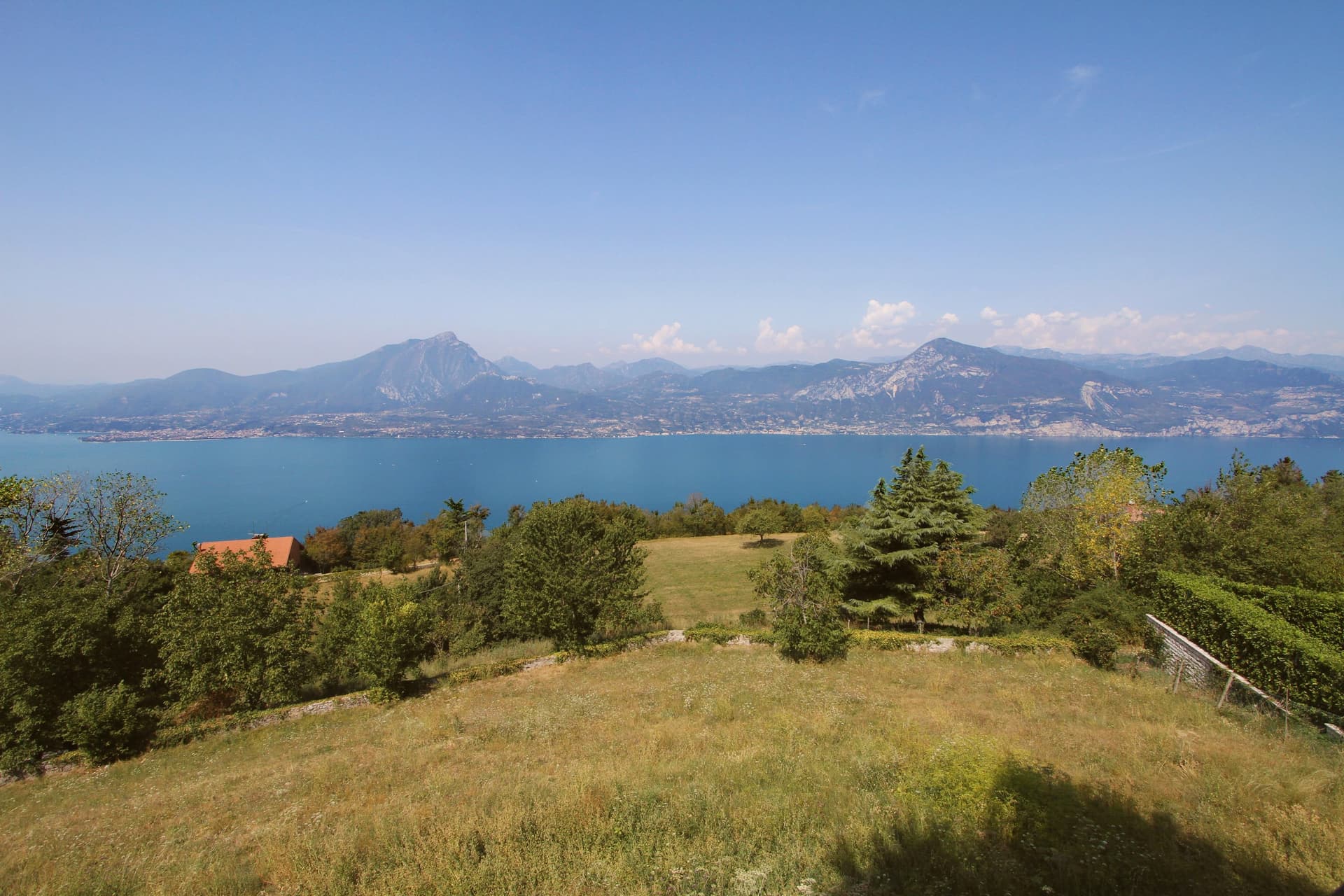
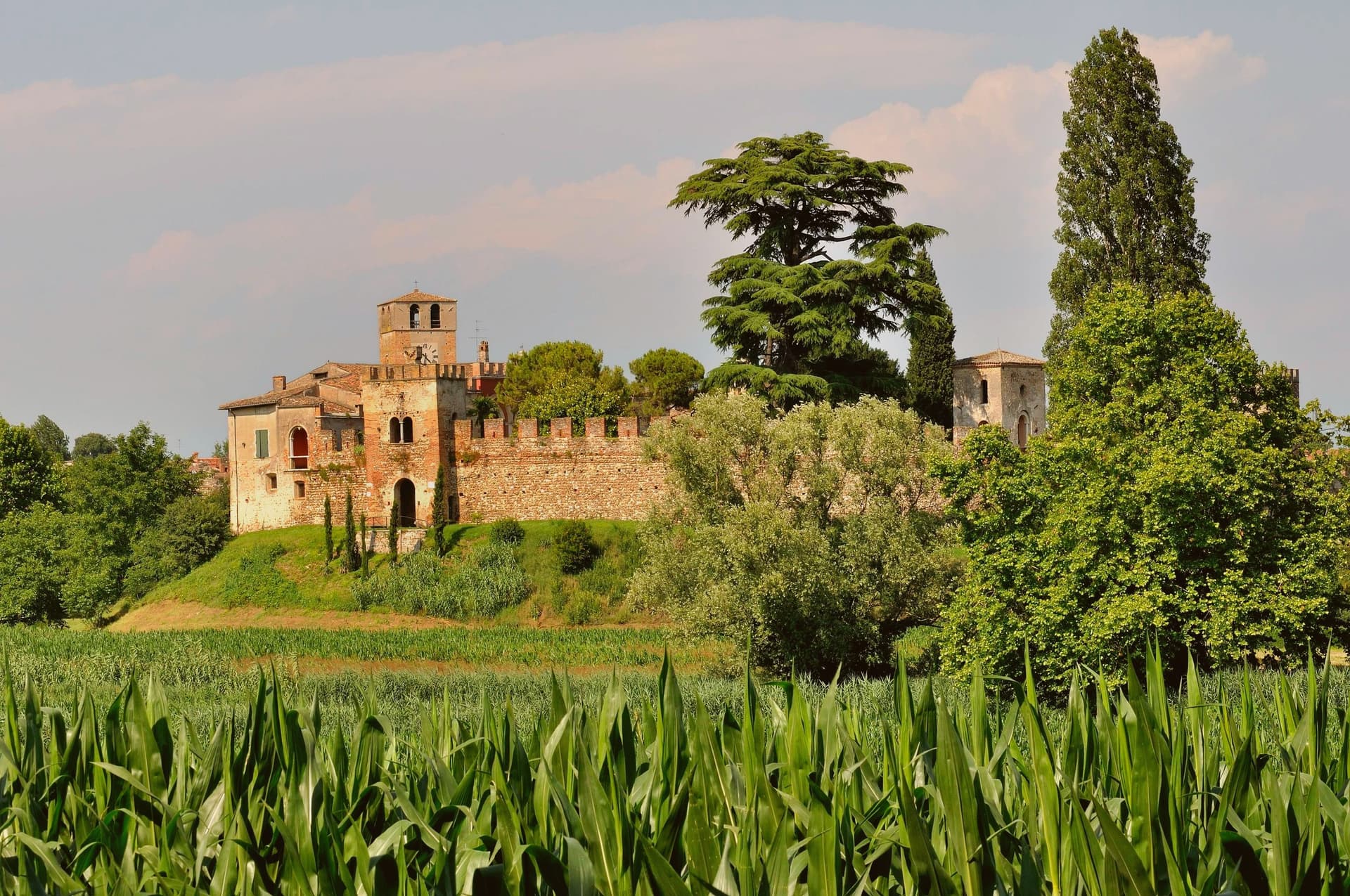 The 6 prettiest villages in the province of Mantova6 towns, San Benedetto Po among them.
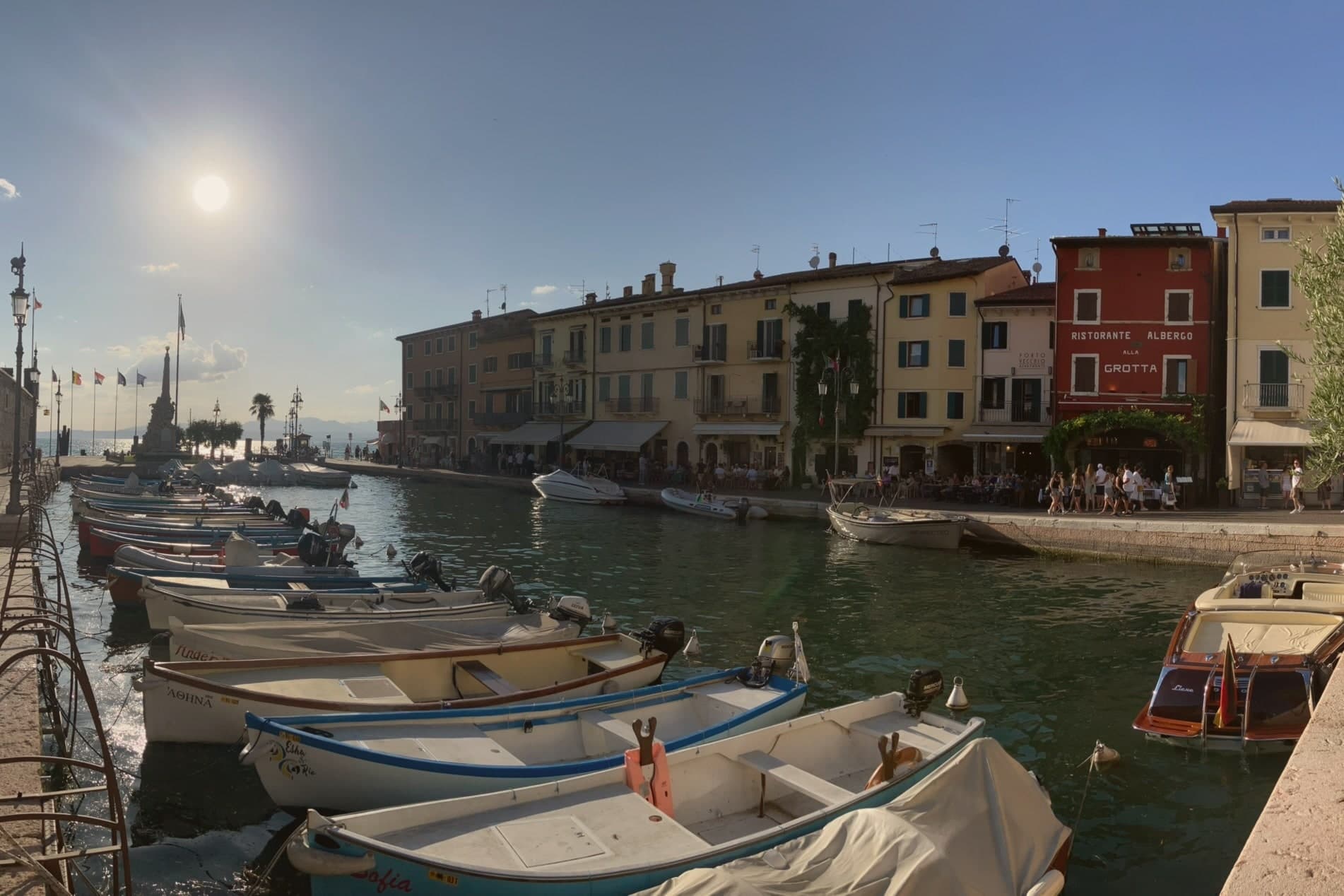
 The best towns known for what they grow within 90 minutes of Brescia6 towns, San Benedetto Po among them.
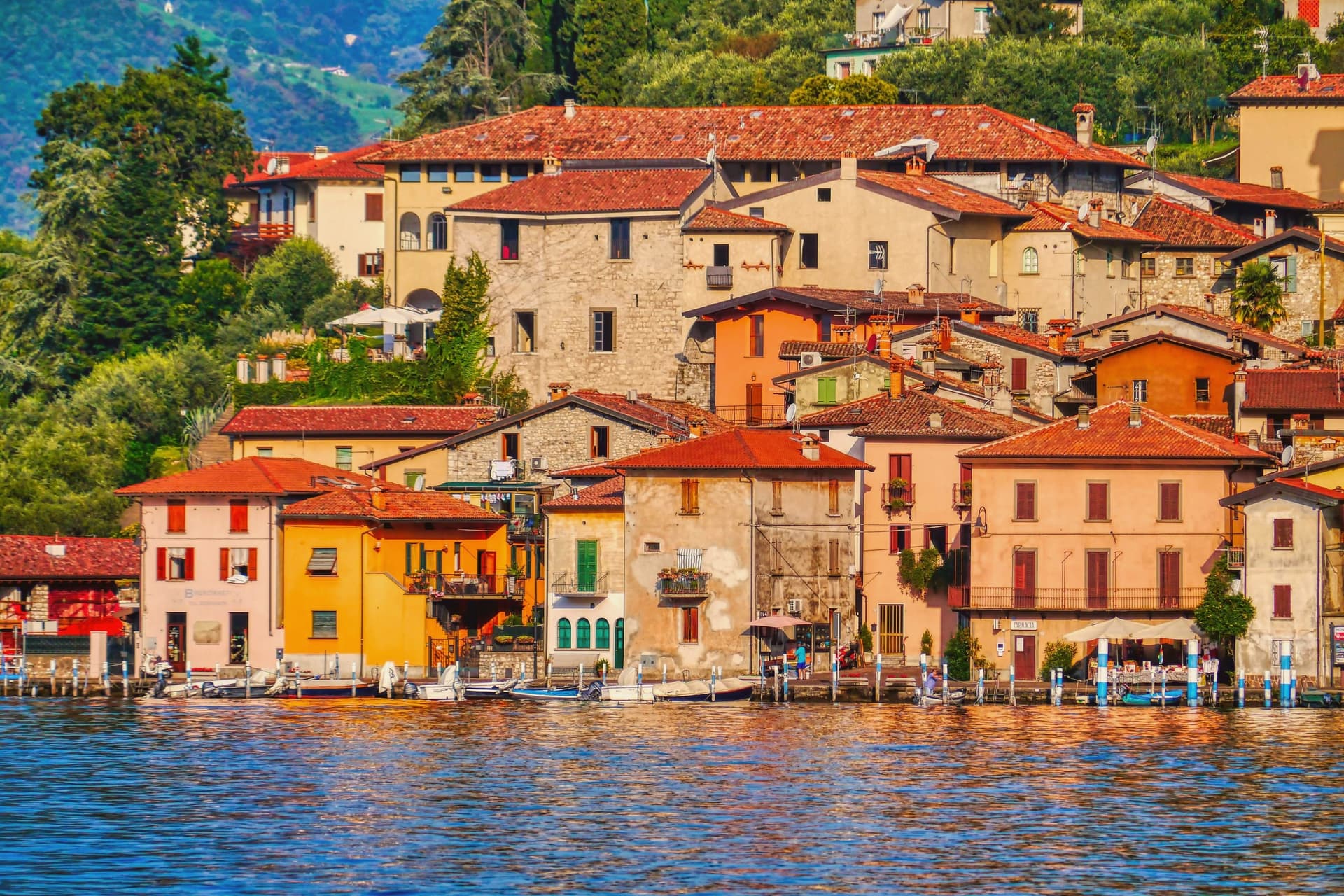
 The best towns known for what they grow within an hour of Verona6 towns, San Benedetto Po among them.
 The 7 prettiest villages you can reach by train in Lombardia7 towns, San Benedetto Po among them.
How to get there
From Verona (VRN), about 1 hour by car.
Bologna (BLQ) is about 1 hour away.
By car from the centre of Parma 1h 9m.
There is a railway station in the comune, so you can arrive without a car.
Coming from Verona, Bologna or Venice?
Coming by train into Modena? San Benedetto Po is about 48 minutes away by road.
What to see
Abbazia di San Benedetto in Polirone
The complex holds frescoes by Correggio and statues by Begarelli, added when Giulio Romano restructured it between 1540 and 1547.
Basilica di San Benedetto
The church Giulio Romano redesigned stands at cathedral scale, the visual center around which the rest of the monastery is arranged.
Chiostri di Polirone
Three cloisters, one for each major building phase from medieval through Renaissance, forming the working spine of the monastery behind the church.
Refettorio e infermeria
The dining hall and the infirmary of the working monastery, plain rooms that outlasted the 1797 suppression when the rest of the community's life here ended.
Piazza Teofilo Folengo
The open square before the abbey, named for the Benedictine poet who lived within its walls in the sixteenth century.
The slow-trip planner
Building a trip? Find where San Benedetto Po fits in a slow Italy circuit.
Answer five questions. We will shape a geographically coherent slow trip from the 1,000 Italian towns most travelers skip. Yours to save and share.
Living here
- Population 6,648
- In-betweeni
- Pharmacy in town
- High school within a 30-minute drive
- Train station in the comune
- Nearest airport Verona, 1 h 1 min drive
- Market day Tuesday
- Regional capital Milano, 2 h 23 min drive
Common questions
- What is San Benedetto Po known for?
- San Benedetto Po is a former river island whose entire existence traces back to the Benedictine abbey founded on it in 1007.
- Where is San Benedetto Po?
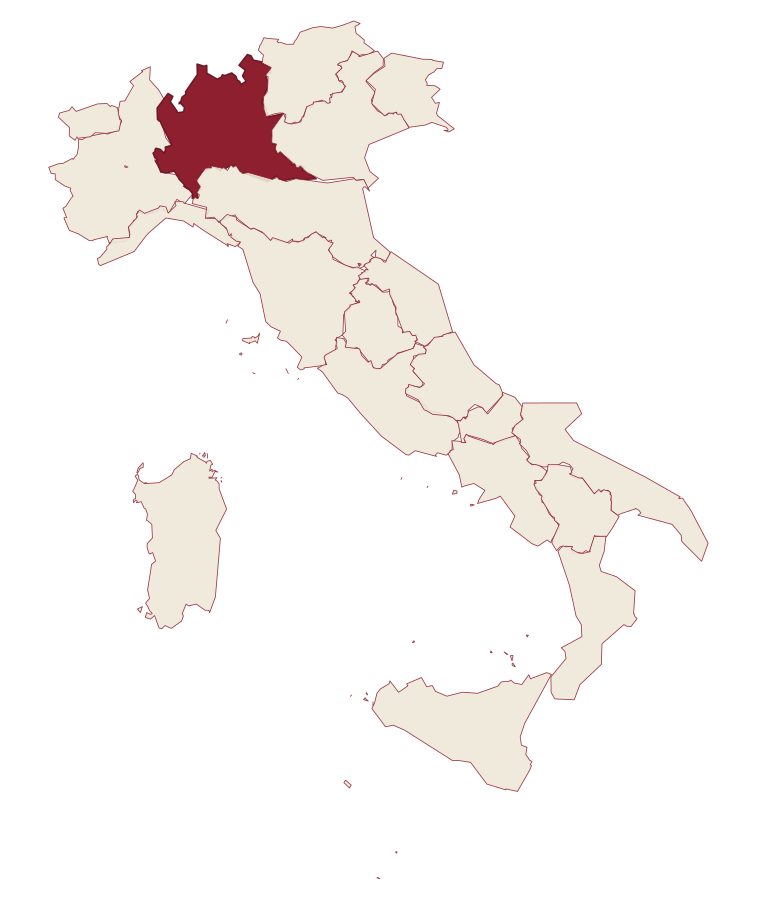
- San Benedetto Po is a comune in the province of Mantova, in Lombardy, at 19 meters above sea level.
- What is the nearest airport to San Benedetto Po?
- Verona (VRN), about 1 hour by car.
- Can you get to San Benedetto Po without a car?
- Yes. There is a railway station in the comune, so you can arrive by train.
- How long is the drive from Parma to San Benedetto Po?
- About 1h 9m by car.
- When is the best time to visit San Benedetto Po?
- Best in Apr–Jun, Sep–Oct. July is the warmest month, averaging 32 degrees, and May the wettest, with about 14 rain days.
- Which other towns are like San Benedetto Po?
- Montagnana, Sabbioneta and Pizzighettone.
- How many people live in San Benedetto Po?
- 6,648 at the 2023 count.
Tags & datadesignations · numbers · sources
Recognised as
The numbers
- Elevation: 19 m
- Population: 6,648
- Surface area: 69.94 km²
These figures were compiled from public directories: ISTAT, OpenStreetMap and Wikidata, and from the official listings of the guides named on this page. Town details change; verify with official sources before you travel.
Similar
Towns like San Benedetto Po
Montagnana
Province: Padova
both in the Po valley · both between 3,000 and 10,000 people
Sabbioneta
Province: Mantova
both in the Po valley · both between 3,000 and 10,000 people
Pizzighettone
Province: Cremona
both in the Po valley · both between 3,000 and 10,000 people
Soncino
Province: Cremona
both in the Po valley · both between 3,000 and 10,000 people
Busseto
Province: Parma
both in the Po valley · both between 3,000 and 10,000 people
Gualtieri
Province: Reggio nell'Emilia
both in the Po valley · both between 3,000 and 10,000 people
🎨 Borghi più belli d'Italia
More Borghi più belli d'Italia towns in Lombardy
Bagolino
Province: Brescia
A mountain village at 778 meters in the Valle del Caffaro, with a three-day February carnival of masked dancers and violins.
Bellano
Province: Lecco
An eastern shore town where the Pioverna cut a gorge through fifteen million years of rock before reaching the water.
Bienno
Province: Brescia
A medieval ironworking village where water hammers driven by the Grigna stream have shaped wrought iron since the 1200s.
Cassinetta di Lugagnano
Province: Milano
A commune west of Milan with fifteen surviving ville di delizia and Italy's first zero-growth urban plan, adopted in 2007.
Castellaro Lagusello
Province: Mantova
A walled medieval borgo south of Lake Garda, ringed by 13th-century stone walls and overlooking a small heart-shaped natural lake that gives the village its second name and most-photographed silhouette.