
Campania · Napoli
Ercolano
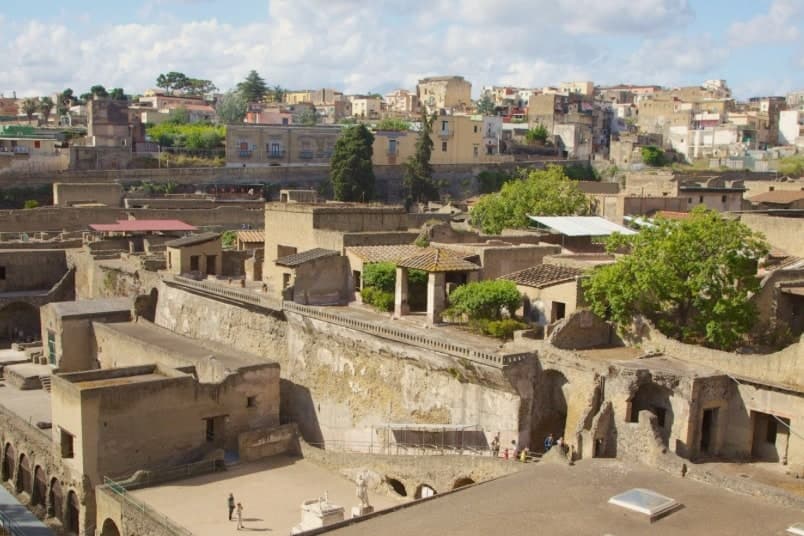
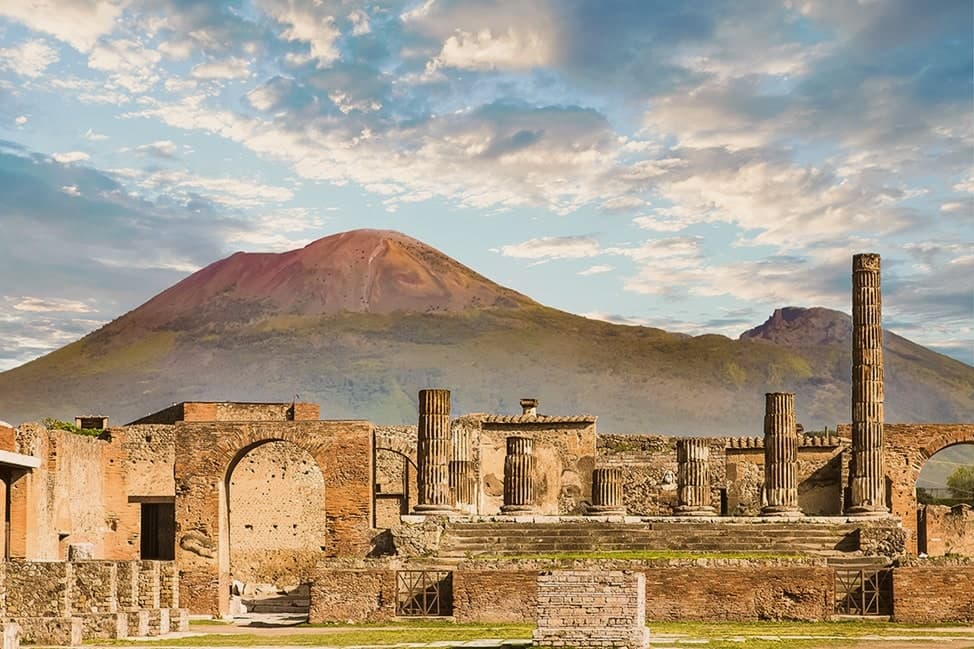
Ercolano is the modern town built directly over Herculaneum, the Roman seaside resort buried under 25m of pyroclastic mud in AD 79 rather than the ash that fell on Pompeii, which is why its wood, papyrus, and upper floors survive when no other Roman site's do.
- Best time
- Mar–Jun, Sep–Oct
- By car
- 16 min from Naples
- By train
- Station in the comune
- Population
- 50,124
Known for
UNESCO HERCULANEUM
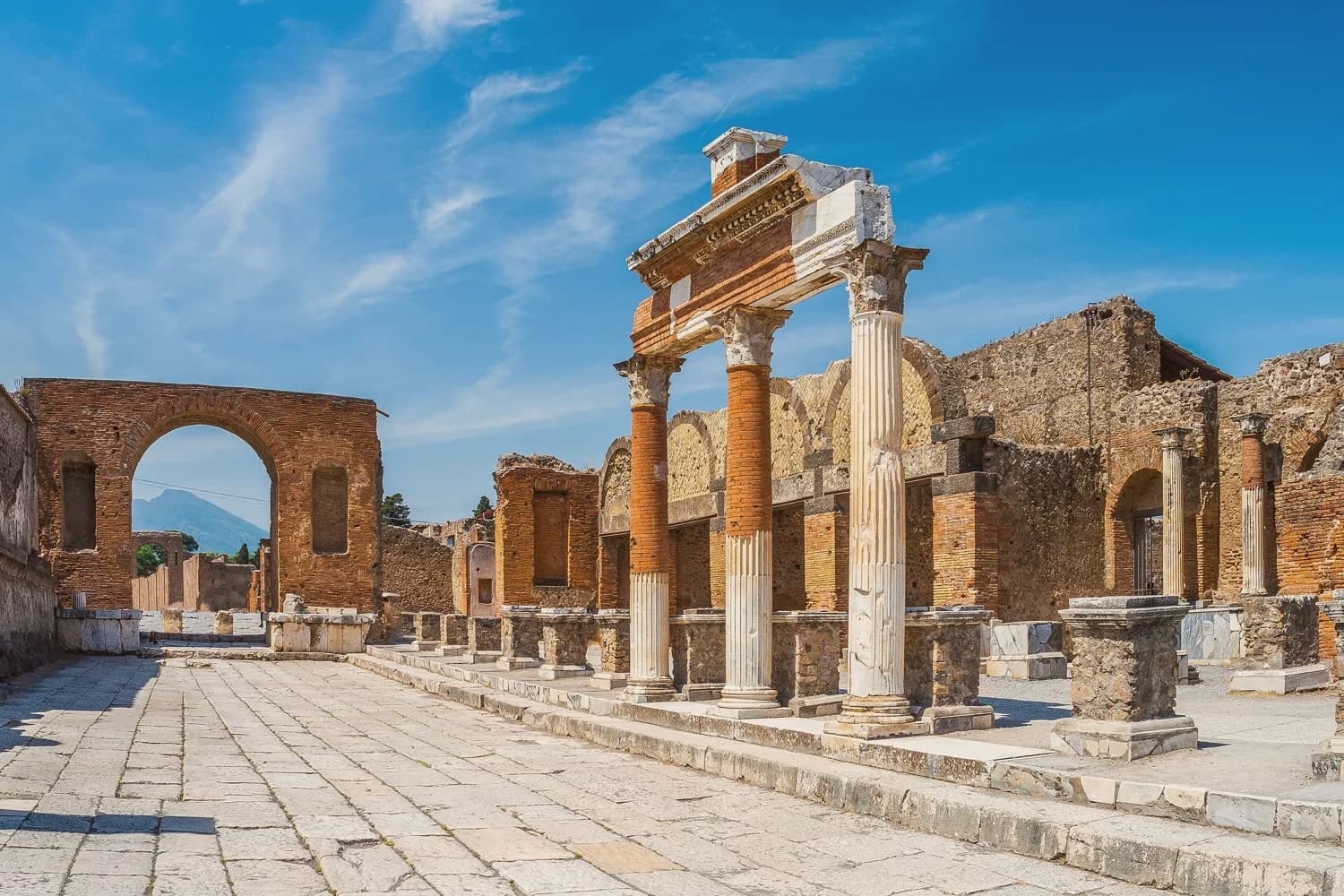
The only Roman site where wood, papyrus, and textiles survive, preserved under 25m of pyroclastic mud from AD 79. Smaller, denser, and more intact than Pompeii.
VILLA DEI PAPIRI LIBRARY
1,800 carbonised papyrus scrolls, the largest single ancient library ever recovered. Still being unrolled with multispectral imaging. The Getty Villa is its 1:1 replica.
VESUVIO PARK GATEWAY
Eastern entrance to the Parco Nazionale del Vesuvio. Gran Cono crater hike is the standard half-day from the upper car park.
MIGLIO D'ORO VILLAS
122 Bourbon-era aristocratic villas line the SS18 from Ercolano to Torre del Greco. Vanvitelli's Villa Campolieto (1763) is the headline open one.
When to visit
Best · Mar–Jun, Sep–Oct
- J13°
- F15°
- M16°
- A18°
- M23°
- J27°
- J31°
- A31°
- S28°
- O23°
- N18°
- D15°
- Best
- Hot or crowded
- Quiet
- Mostly closed
Daytime averages, 2020–2024. Weather data by Open-Meteo.com.
Why come
The eruption of AD 79 treated the two Roman towns differently. Pompeii took 3 to 4 metres of ash, hot enough to scorch organic material but not to seal it. Herculaneum, closer to the mountain and down at the shore, was hit by repeated pyroclastic surges and ended up under a mud flow that cooled hard around everything it touched: roofs, furniture, scrolls, upper floors.
That difference in burial is the reason one site kept its wood and the other did not: the carbonised wooden screen of the House of the Wooden Partition, the wooden bed in the House of the Carbonised Furniture, and the second-storey overhangs are all here because the mud sealed rather than scorched them. The site was named UNESCO World Heritage in 1997, jointly with Pompeii and Torre Annunziata. The suburban villa attributed to Julius Caesar's father-in-law, Lucius Calpurnius Piso, once stood on the ancient seafront, now buried well inland under the weight of the deposit.
Inside it, roughly 1,800 carbonised papyrus scrolls were recovered, including the entire Epicurean philosophical library of Philodemus of Gadara. That find, the largest single ancient library ever recovered, is still being unrolled with multispectral imaging at the Officina dei Papiri Ercolanesi in Naples, and it is the building the J. Paul Getty Museum in Malibu replicated 1:1 as its main structure.
Along the old shoreline nearby, the arched boathouses hold the remains of 300 fugitives killed by the 500 degree pyroclastic surge while they waited for a rescue that never reached them, discovered in the 1980s and 1990s and now the most-photographed image of that moment. The modern town sits directly on top of the ancient one, 50,000 people on the lower slopes of the volcano, with the excavated ruins sunk below current street level in a pit at the centre of things. Excavation has gone on since 1738, when Charles of Bourbon began it, and continues piecemeal now.
To the east, the ground rises toward the national park and the Gran Cono crater, reached by a half-day hike from the upper car park with reservation required. To the west, the road along the old Golden Mile strings 122 Bourbon-era villas, built between the 1730s and 1820s by the Naples aristocracy, toward the coast; Villa Campolieto, designed by Vanvitelli in 1763 and now a cultural centre, and Villa Favorita, a former royal residence, are the ones open to visitors. Upper slope, buried town, and shoreline road are three bands of the same landscape, each shaped by proximity to the same mountain.
The town's food follows the same geology: spaghetti alle vongole, mozzarella di bufala, pomodorino del piennolo del Vesuvio DOP grown on the volcanic slopes, and Lacryma Christi del Vesuvio DOC red and white from vineyards on the same soil. What holds the place together is that the volcano is not backdrop here. It is the reason the ruins are intact, the reason the villas needed a gateway road, and the reason the food tastes the way it does.
The Sunday letter
Ercolano is on our list. Its letter is still to come.
We are writing about all 1,000 of these towns, one at a time, in a free letter every Sunday: the photo, the food, the festa. That is our mission. Sign up and you will be there when Ercolano comes up. By Peter & Sophia, from Pietrasanta.
Read on
Ercolano in our articles
 The best towns that eat well within 45 minutes of Naples6 towns, Ercolano among them.
 The best towns you can reach by train within 45 minutes of Naples7 towns, Ercolano among them.
 The 9 best towns you can reach by train in the province of Napoli9 towns, Ercolano among them.
 The best towns with a World Heritage site within 45 minutes of Salerno10 towns, Ercolano among them.
How to get there
From Naples / Salerno (NAP), about 22 minutes by car.
Rome (FCO) is about 3 hours away.
By car from the centre of Naples 16 minutes or Salerno 45 minutes.
There is a railway station in the comune, so you can arrive without a car.
Coming from Naples?
Coming by train into Napoli Centrale? Ercolano is about 15 minutes away by road.
What to see
Parco Archeologico di Ercolano (UNESCO)
Wooden screens, beds, and second-storey balconies stand in place, sealed by the mud rather than reduced by it. Walking the excavated streets means walking below the level of the modern town, which sits on top of what the mud buried.
Villa dei Papiri
A 100m-long suburban villa attributed to Caesar's father-in-law, its rooms opening onto what was once the ancient seafront, now well inland of the shore under the weight of volcanic deposit.
Boathouse skeletons
300 fugitives killed while sheltering in the arches along the old shoreline, waiting for a rescue that the surge outran. Found in the 1980s, the arches are left much as they were uncovered.
Vesuvio National Park + Gran Cono
The Gran Cono crater hike climbs to 1,281m, thirty minutes from the upper car park, with reservation required. From the rim, the line between the buried town below and the volcano above becomes legible.
Miglio d'Oro Ville Vesuviane
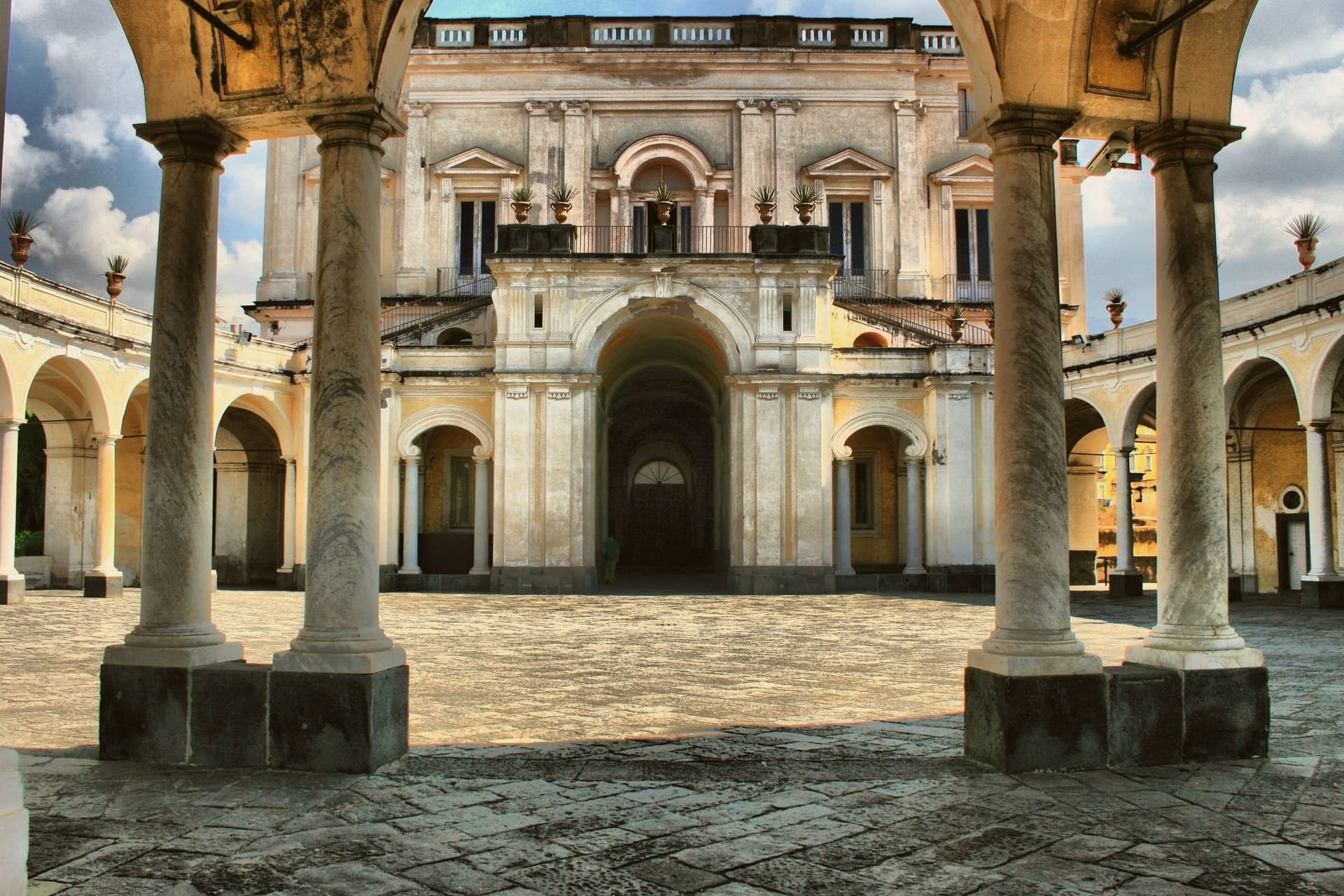
Villas built between the 1730s and 1820s face the road rather than the sea, laid out as a run of aristocratic addresses rather than isolated estates. Villa Campolieto and Villa Favorita are open to visitors.
The slow-trip planner
Building a trip? Find where Ercolano fits in a slow Italy circuit.
Answer five questions. We will shape a geographically coherent slow trip from the 1,000 Italian towns most travelers skip. Yours to save and share.
We recommend
Where to eat
Not our picks, but places the guides put their name to: a Michelin star, a Gambero Rosso fork, a Slow Food snail, a Michelin Key for the hotels. Worth a table, a counter, or a night when you pass through.
Viva lo ReWine Bar
Viva lo Re carries two Gambero Rosso bottles, plus a Slow Food snail.
Living here
- Population 50,124
- Commuter belti
- Pharmacy in town
- High school within a 30-minute drive
- Train station in the comune
- Nearest airport Naples / Salerno, 22 min drive
- Regional capital Napoli, 16 min drive
Common questions
- What is Ercolano known for?
- Ercolano is the modern town built directly over Herculaneum, the Roman seaside resort buried under 25m of pyroclastic mud in AD 79 rather than the ash that fell on Pompeii, which is why its wood, papyrus, and upper floors survive when no other Roman site's do.
- Where is Ercolano?
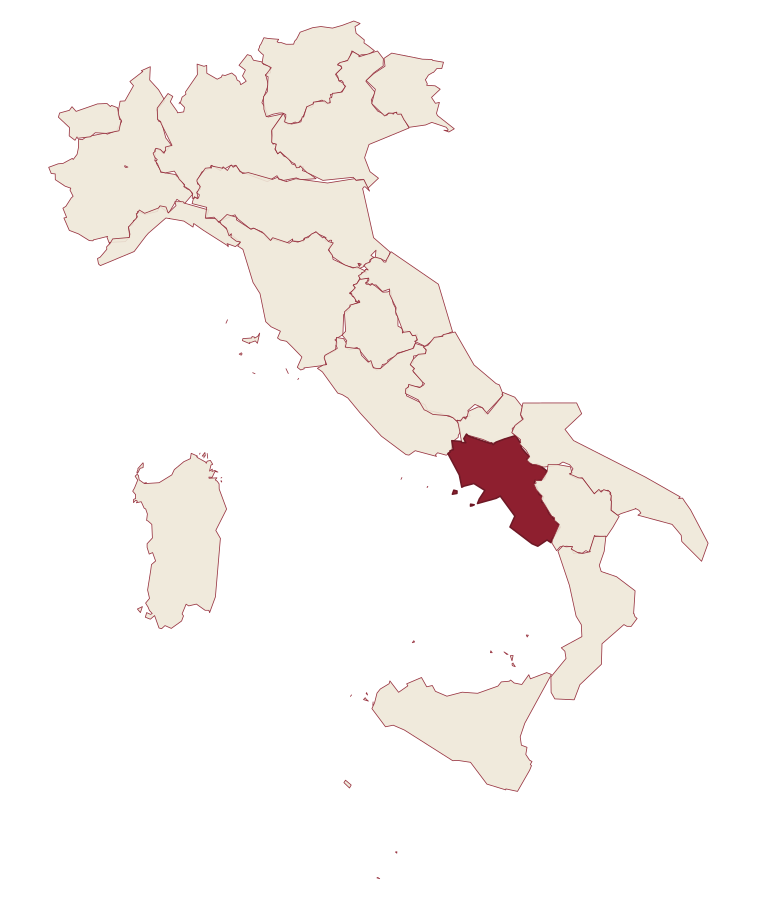
- Ercolano is a comune in the province of Napoli, in Campania, at 44 meters above sea level.
- What is the nearest airport to Ercolano?
- Naples / Salerno (NAP), about 22 minutes by car.
- Can you get to Ercolano without a car?
- Yes. There is a railway station in the comune, so you can arrive by train.
- How long is the drive from Naples to Ercolano?
- About 16 minutes by car.
- When is the best time to visit Ercolano?
- Best in Mar–Jun, Sep–Oct. August is the warmest month, averaging 31 degrees, and November the wettest, with about 15 rain days.
- Which other towns are like Ercolano?
- Bacoli, Pompei and Vico Equense.
- How many people live in Ercolano?
- 50,124 at the 2023 count.
Tags & datadesignations · numbers · sources
Recognised as
The numbers
- Elevation: 44 m
- Population: 50,124
- Surface area: 19.89 km²
These figures were compiled from public directories: ISTAT, OpenStreetMap and Wikidata, and from the official listings of the guides named on this page. Town details change; verify with official sources before you travel.
Similar
Towns like Ercolano
Bacoli
Province: Napoli
both over 10,000 people · both near sea level
Pompei
Province: Napoli
both over 10,000 people · both near sea level
Vico Equense
Province: Napoli
both over 10,000 people · both near sea level
Piano di Sorrento
Province: Napoli
both over 10,000 people · both near sea level
Fondi
Province: Latina
both over 10,000 people · both near sea level
Gaeta
Province: Latina
both over 10,000 people · both near sea level
🏛️ UNESCO
More UNESCO towns in Campania
Amalfi
Province: Salerno
The first Italian maritime republic and the coast it named, six meters above the sea between cliffs that close around the duomo's steps.
Ascea
Province: Salerno
Two villages, a hilltown at 230 meters and a Cilento marina, with Parmenides and Zeno's Eleatic school in the ruins of Greek Velia below.
Atrani
Province: Salerno
The smallest commune in Italy by area, twelve hectares of stacked houses where the Amalfi Coast pinches shut around a single piazza.
Benevento
Province: Benevento
Sannio capital at the Calore-Sabato confluence, with a 114 AD Trajan arch and a Lombard rotunda on the UNESCO list.
Capaccio Paestum
Province: Salerno
Three Doric temples of 550 to 450 BC on the Sele plain, with mozzarella di bufala DOP on the buffalo flats below.