
The 7 prettiest villages you can reach by train in Lombardia
Lombardia rewards anyone willing to sit on a regional train with a window seat. North of Milano the line to Lecco and up the eastern arm of Lake Como runs so close to the water that the platforms feel like jetties, past villages of grey stone and dark slate roofs where lake perch is fried and served with rice. Further south the landscape flattens into the Po plain, all brick and poplar and rice fields, with pumpkin tortelli, Grana Padano and the sweet crumbling sbrisolona of the Mantovano. Spring and early autumn are the best of it, when the lake haze lifts in the morning and the plain is not yet under its winter fog.
Almost everyone arriving in the region does the same thing: Milano, then a day trip to Como or Bellagio, the ferries full, the lakefront gelato queues long, the same photograph taken from the same wall. There is a reason for it, and the reason is genuine, but the Centro Lago has been the standard Italian lake itinerary for as long as there has been organised tourism, and in July it shows. The buses along the western shore road crawl. The hotels price accordingly.
The same water carries on north and east, and the same trains carry on with it, up the quieter eastern shore and out to Iseo, then south towards Mantova and Cremona where the villages are made of brick rather than stone. Fewer people go to these, though each has passed the national assessment of Italy's most beautiful villages, and we have confirmed each can be reached without a car. They are the ones on this list.
Of the 65 communes we have mapped in Lombardia, 7 qualify as prettiest villages you can reach by train: each has passed the national assessment of Italy's most beautiful villages, and we have confirmed each is reachable without a car. The smallest, Monte Isola, has 1,620 residents.
Elsewhere in the catalogue: The 10 best small towns you can reach by train in Lombardia and The best hidden lake towns you can reach by train in Lombardia.
Monte Isola
Why visit Monte Isola
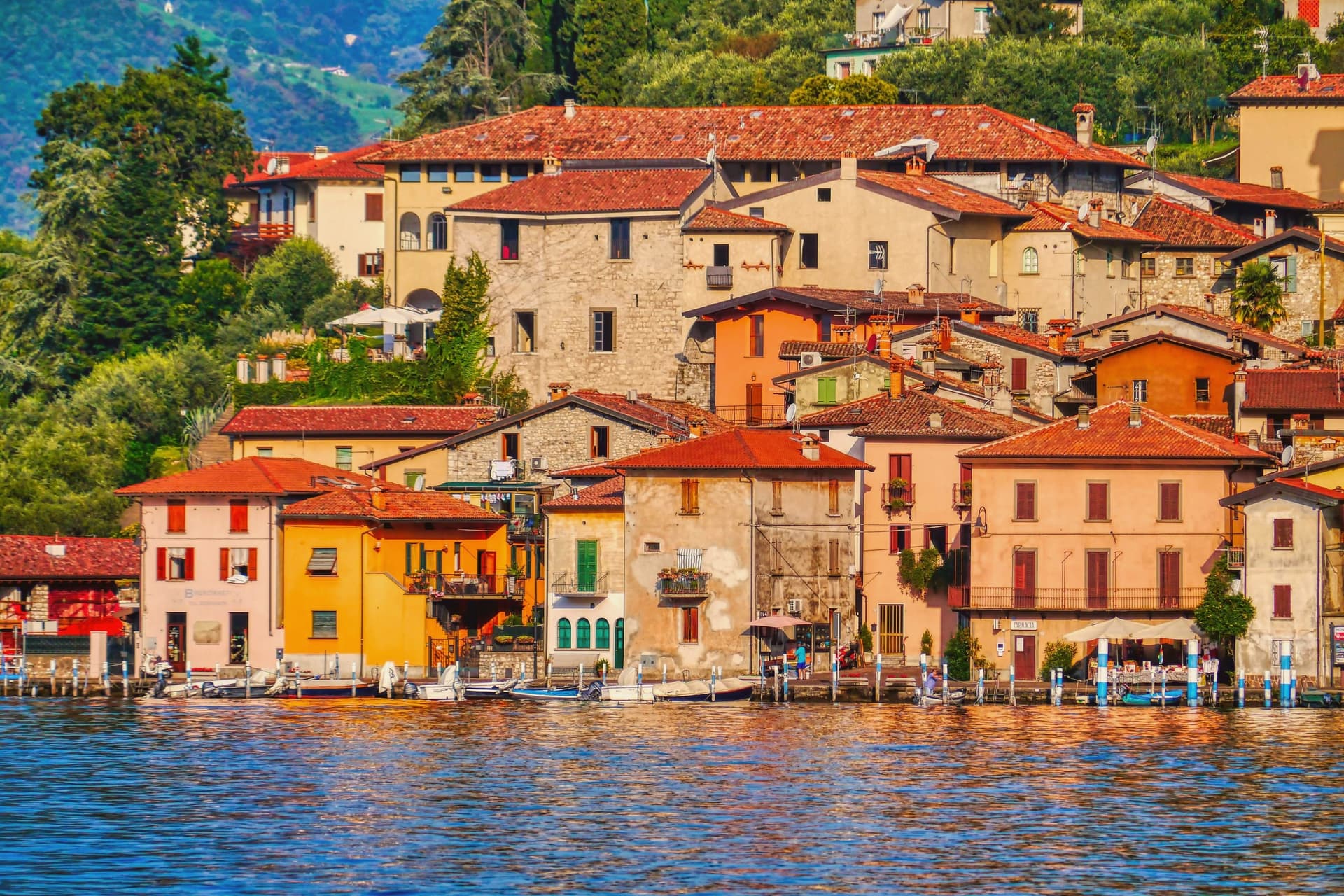
Monte Isola covers 4.5 square kilometers in the middle of Lake Iseo, the largest lake island in southern and central Europe. Eleven villages and hamlets line the shore and climb the slopes: Peschiera Maraglio and Sensole on the south, Siviano on the north, with smaller settlements between.
The Madonna della Ceriola sanctuary stands at 600 meters at the summit, documented in 1410 but built older, holding a twelfth-century wooden sculpture of the Virgin and Child. No private cars are allowed on the island; mopeds, bicycles and feet are the way around.
The Comune still keeps the small island of San Paolo and the privately owned Loreto as part of its territory. Fishing nets are still woven here by hand for use across the lakes of northern Italy, and wooden boats are still built by a handful of craftsmen in Peschiera Maraglio.
In summer 2016, Christo and Jeanne-Claude floated their orange piers from Sulzano to the island, drawing 1.2 million visitors in sixteen days.
We confirmed you can reach this one by train.
What to see in Monte Isola
- Santuario della Madonna della Ceriola. Pilgrimage church at the summit, 600 meters above the lake, holding a twelfth-century wooden Virgin and Child and reached only on foot from Cure.
- Peschiera Maraglio. Main lake-side village on the south of the island, with the ferry landing, the boatyards and the long stone lakefront facing San Paolo.
- Siviano. Capital of the comune on the north of the island, a fortified medieval hamlet with tower houses, narrow streets and the parish church.
How to get to Monte Isola
There is a railway station in the town, so you can arrive without a car and never need one while you are here. Brescia is roughly 48 minutes away by road.
Our tip
April through October is the season Monte Isola is built for. May, June, September and early October are the best months: ferries run on schedule, the perimeter road is open to bikes, the Ceriola climb is dry. July and August bring weekend day-trippers from Brescia, Bergamo and Milano, especially Sundays; the ferries fill and Peschiera Maraglio is at capacity by mid-morning.
Cassinetta di Lugagnano
Why visit Cassinetta di Lugagnano
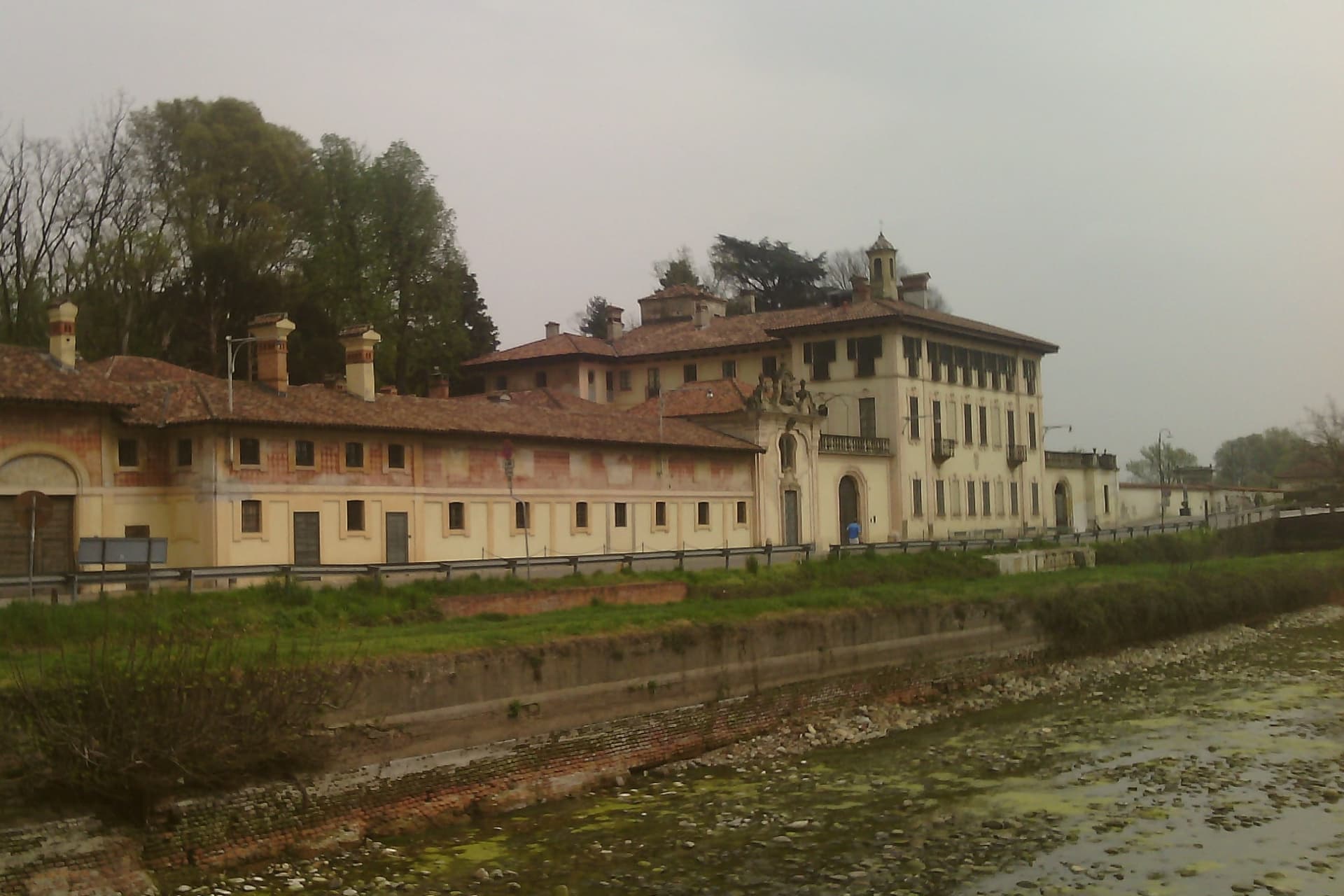
The commune was formed from two older settlements on opposite banks of the canal: Lugagnano, Roman in origin and once called Lucanianus, and Cassinetta, dating to the fourteenth century. The humpbacked bridge that joins them carries the 1584 statue of San Carlo Borromeo.
The town sits at 120 meters, twenty kilometers west of Milan and just outside Abbiategrasso, on the route the Naviglio Grande traces between Milan and the Lago Maggiore, the reason Milanese nobility chose this stretch of water for their country houses from the sixteenth century on. That same 2007 decision to refuse new building and force reuse of existing stock brought the town into the Borghi più belli and Comuni Virtuosi networks.
A town built by families adding country houses along a single waterway, then choosing, four centuries later, to stop building and preserve what stands.
We confirmed you can reach this one by train.
What to see in Cassinetta di Lugagnano
- Villa Visconti Castiglioni Maineri. Formal Italian garden fronting the canal, partly attributed to Ruggero Bascapè.
- Villa Negri-Morosini. Country villa of the Negri-Morosini family on the canal bank, with frescoed interior rooms and outbuildings around a courtyard.
- Villa Trivulzio. Trivulzio family country residence, one link in the chain of aristocratic retreats strung along the water.
How to get to Cassinetta di Lugagnano
There is a railway station in the town, so you can arrive without a car and never need one while you are here. Novara is roughly 37 minutes away by road.
Our tip
April through June and September into October are the months Cassinetta works best. The Naviglio runs full, the towpaths to Abbiategrasso and Robecco sul Naviglio are open to walkers and cyclists, and the villas keep regular visiting hours during the open garden seasons. July and August are humid on the plain; mosquitoes off the canal pick up in late afternoon and the towpath sun gets heavy without shade.
Dervio
Why visit Dervio
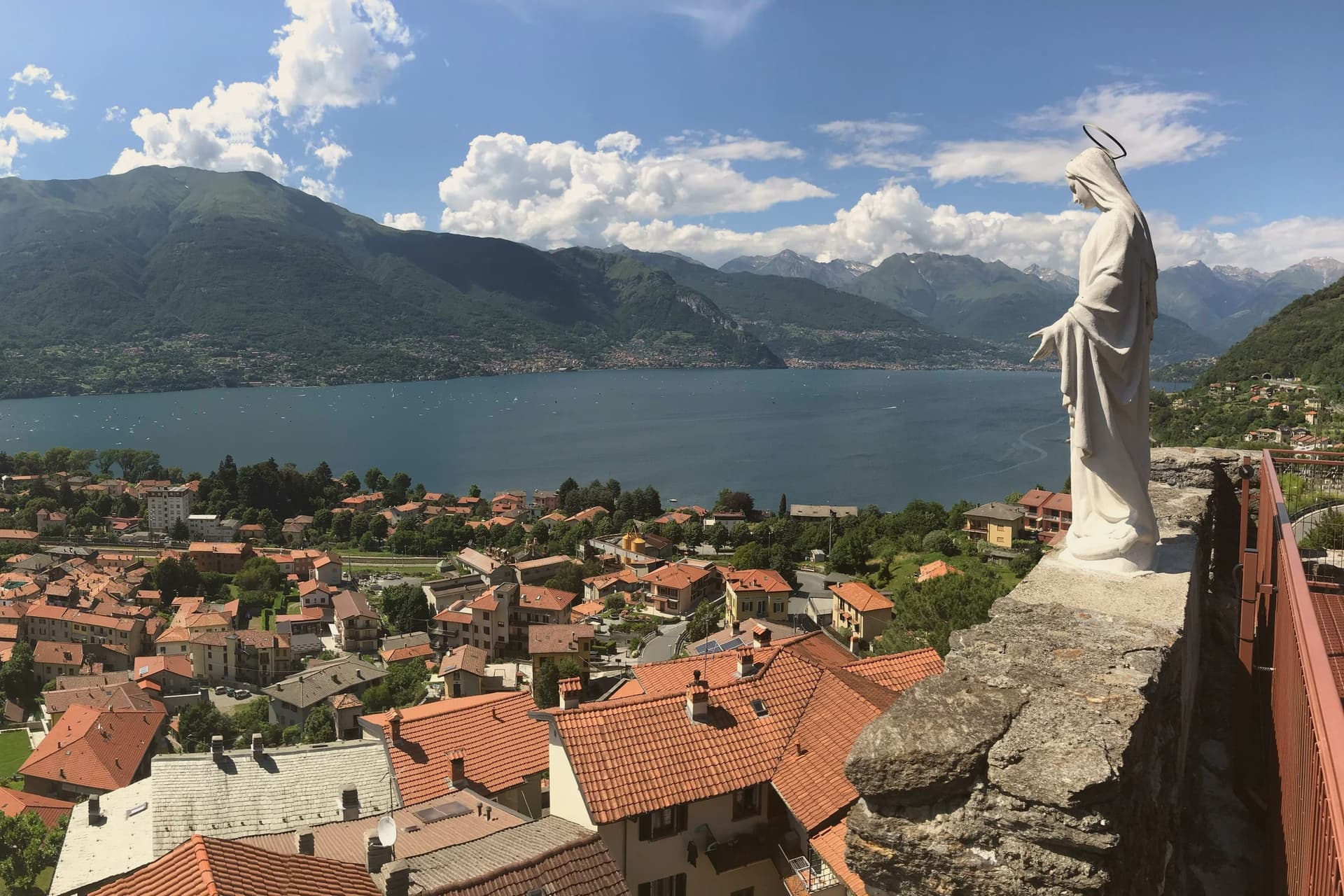
Dervio sits on a small peninsula on the eastern shore of upper Lake Como, where the Varrone torrent emerges from its valley and pushes a delta into the lake. The Romanesque bell tower of the Chiesa di San Quirico e Giulitta, attached to a church first mentioned in 814 and rebuilt around 1080, is the oldest structure in the commune.
Above the village, on a cliff that once blocked the road into the Valvarrone, stand the ruins of the Castello di Orezia, raised in the late Middle Ages and recorded in 1039 during a long siege by three Larian parishes. Dervio's reputation today rests less on its monuments than on its wind.
The position at the peninsula tip funnels the Breva and Tivano onto the lake in a way racing sailors learn to read. The commune draws sailing schools from April through October, and its lakefront promenade extends north toward Dorio along a stone path called the Sentiero del Viandante.
We confirmed you can reach this one by train.
What to see in Dervio
- Campanile di San Quirico e Giulitta. Romanesque stone bell tower from around 1080, attached to one of the oldest churches on Lake Como, first cited in 814.
- Torre del Castello di Orezia. Late medieval tower on a cliff above Dervio, part of a fortress blocking the Valvarrone road, with documented siege in 1039.
- Chiesa dei Santi Pietro e Paolo. Eleventh-century parish church on the lakeshore, with a Romanesque bell tower and later interventions.
How to get to Dervio
There is a railway station in the town, so you can arrive without a car and never need one while you are here. Monza is roughly 62 minutes away by road.
Our tip
April through October works on this part of Lake Como. May and June bring stable winds, mild temperatures, and the alpine slopes still green. July and August are the busiest months; the peninsula fills with sailing crews and Italian families with second homes, and the lake-facing villages hold their summer festas.
Bellano
Why visit Bellano
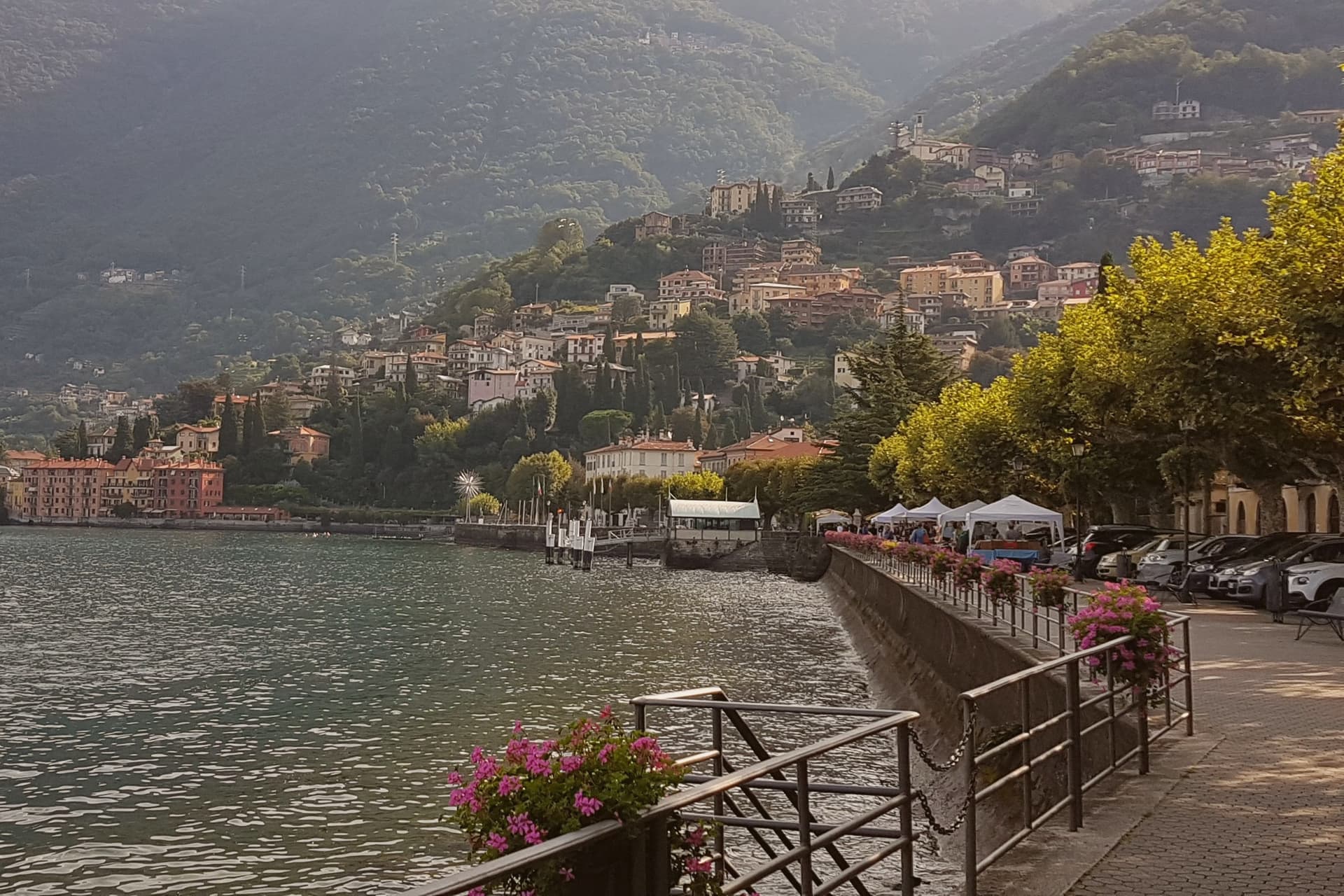
Bellano sits at the outlet of the Valsassina, on the eastern shore of Lake Como, the point where a inland valley meets the water. By 905 the town was under the Archdiocese of Milan; the Torriani and then the Visconti held it through the Middle Ages, long before the gorge became a destination or the mill brought industry.
The commune joined the Borghi più belli network in 2021, and in 2020 absorbed Vendrogno, a former commune higher up Monte Croce di Muggio, so the modern boundary reaches from the lakefront up into the mountain behind it. The town's identity comes from this stacking of inland and shore: a valley torrent cutting down through the rock, a medieval settlement governed from Milan, a nineteenth-century industrial mill at the gorge mouth, and a lake promenade with ferries to the far shore.
Each layer sits on the last without replacing it, which is why a walk from the pier to the gorge and up toward Vendrogno crosses centuries of the town's uses in a short distance.
We confirmed you can reach this one by train.
What to see in Bellano
- Orrido di Bellano. A slot canyon a few hundred meters long, the catwalks bolted directly into the cliff face so the water runs beneath the visitor's feet on both sides at once.
- Chiesa dei Santi Nazaro e Celso. Fourteenth-century parish church on Piazza San Giorgio, with a rose window and façade in alternating black and white stone.
- Cotonificio Cantoni. The brick chimney still stands at the gorge mouth, the one surviving marker of the mill that once made this a working lakeside town rather than a resort.
How to get to Bellano
There is a railway station in the town, so you can arrive without a car and never need one while you are here. Monza is roughly 82 minutes away by road.
Our tip
April through June and September into October are the months Bellano works best. The lake light is sharp, the Orrido catwalks are open, and the ferry to Varenna and Menaggio runs every half hour. July and August fill the eastern shore with day-trippers from Milan and Bergamo, and the lakefront cafés take an hour to seat.
Lovere
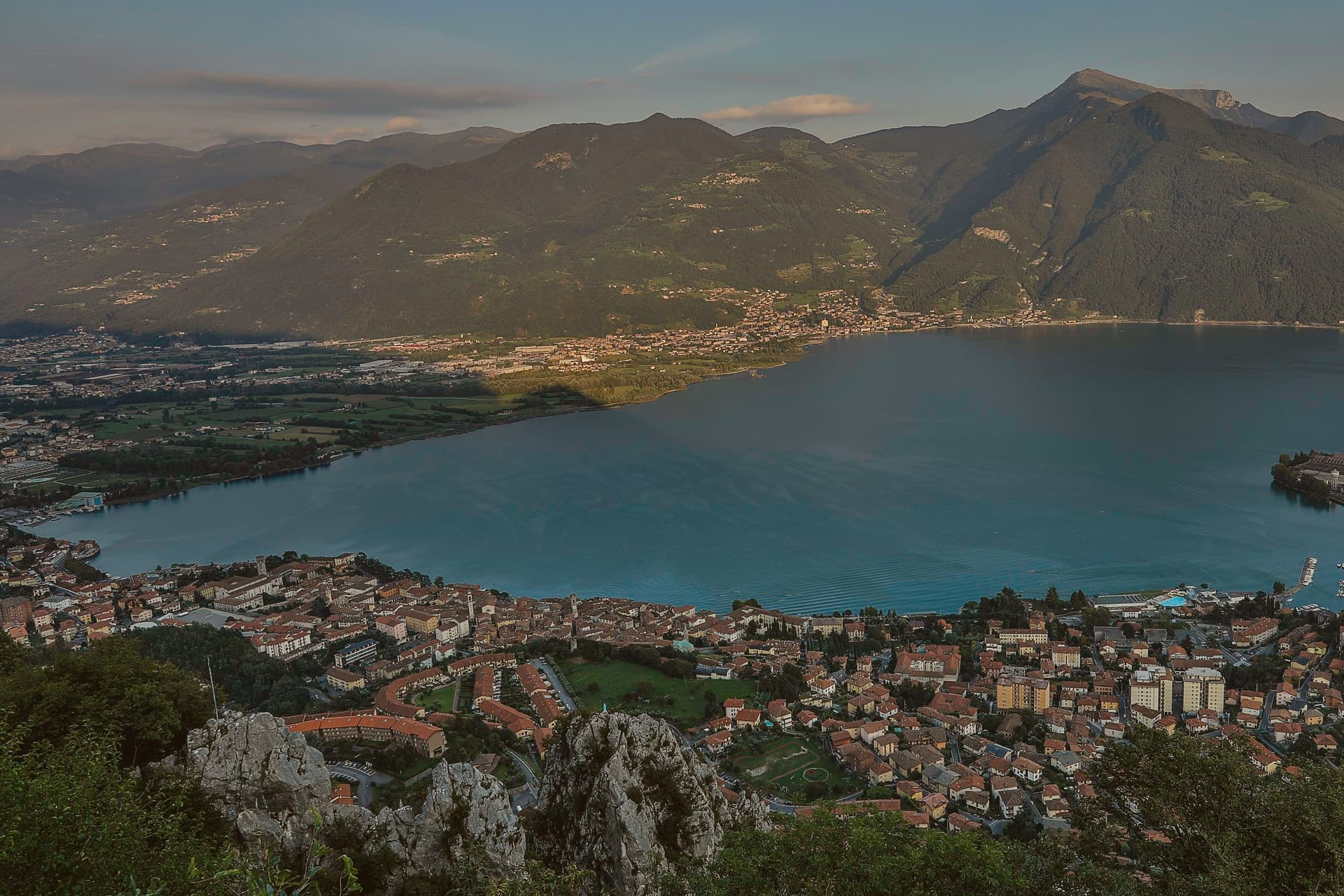
Why visit Lovere
The lake here is known locally as Il Sebino, and the town sits at 200 meters at its northwest corner, where the shore curves between the water and the Bergamasque foothills before rising into the lower and upper parts of the borgo. The lower town holds the fortified medieval core, its towers still visible above the rooftops, while the centro storico below fills out with the palaces of a later, richer period.
That wealth came under the Republic of Venice, built on wool cloth production and trade, and it paid for the basilica and the family chapel that would later hold the Tadini collection. The first settlement on this shore goes back to the fifth and fourth centuries BC, with a Celtic core, long before any of what stands here now.
Lady Mary Wortley Montagu, writing from here in the eighteenth century, called it the most romantic place she had ever seen, and the town has been in I Borghi più belli d'Italia since 2003, the only Lombardia commune to finish in the top twenty of the 2018 Borgo dei Borghi ranking. What these facts add up to is a town shaped in layers, Celtic shore, medieval fortress, Venetian wealth, each still legible in the ground it left behind.
We confirmed you can reach this one by train.
What to see in Lovere
- Accademia Tadini. The Amorino Alato stands among the plaster models, alongside a Lombard-Venetian painting collection housed in the same neoclassical rooms.
- Basilica di Santa Maria in Valvendra. The basilica sits over a diverted stream, its Venetian-influenced classical façade facing the street it was built to reroute water for.
- Piazza XIII Martiri. Main lakefront square, anchored by colored façades and arcades, the central social space of the centro storico.
How to get to Lovere
There is a railway station in the town, so you can arrive without a car and never need one while you are here. Bergamo is roughly 53 minutes away by road.
Our tip
April through October is the active season on the upper end of Lake Iseo. May and June bring stable weather, full ferry schedules to Monte Isola, and the spring Tadini exhibitions. July and August are the busiest, with Italian families filling the lakefront and the Festa di San Giorgio holding the calendar.
San Benedetto Po
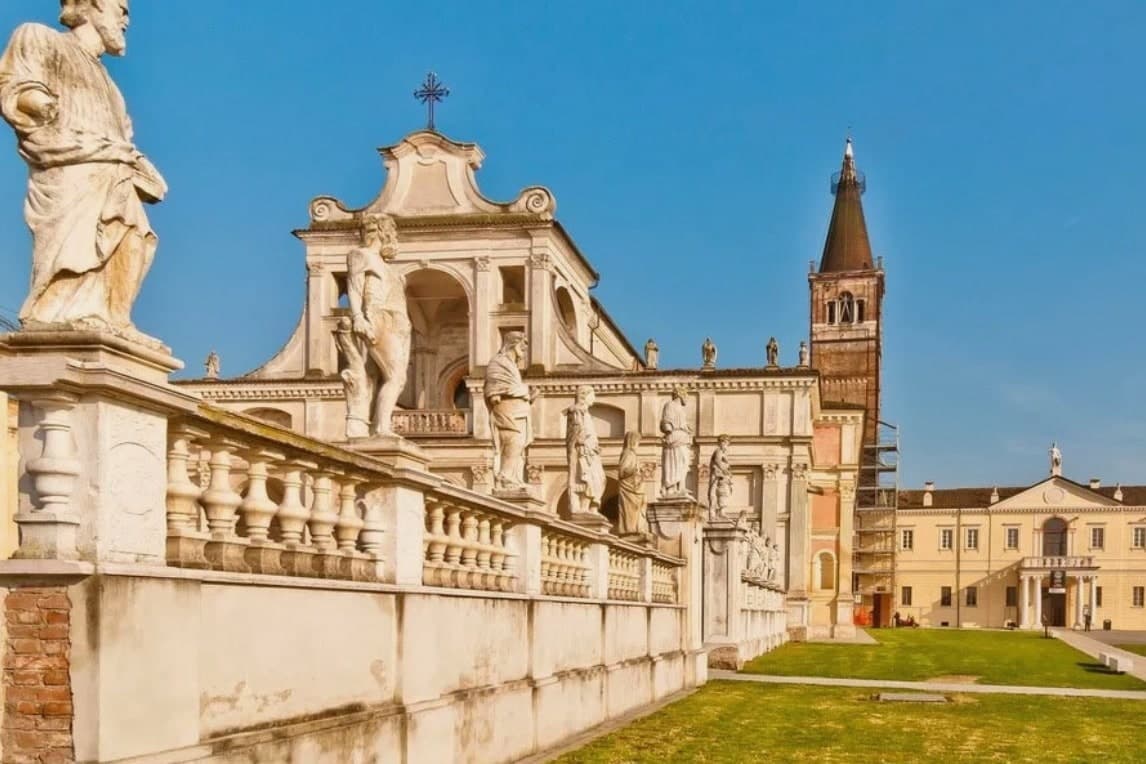
Why visit San Benedetto Po
San Benedetto Po sits at 19 meters in the flat Po plain, 22 kilometers southeast of Mantova, on what was once an island between the Po and the Lirone rivers. The town has no origin apart from the abbey: in 1007 Tedald of Canossa, grandfather of Matilda, granted half his land between the two rivers to the Benedictines, and the resulting monastery became one of the principal centers of the Gregorian Reform in northern Italy.
Matilda herself, the countess who hosted the emperor's penance at Canossa in 1077, was buried within it for five centuries before her remains went to Rome. The abbey held its position from its founding until the Napoleonic suppression of 1797 emptied the community out, by which time it had grown its church, its three cloisters, its refectory and infirmary.
What is left standing today is essentially the monastery's own floor plan with the town arranged around it. A place built entirely by and for a religious institution, still legible as such long after the monks themselves are gone.
We confirmed you can reach this one by train.
What to see in San Benedetto Po
- Abbazia di San Benedetto in Polirone. The complex holds frescoes by Correggio and statues by Begarelli, added when Giulio Romano restructured it between 1540 and 1547.
- Basilica di San Benedetto. The church Giulio Romano redesigned stands at cathedral scale, the visual center around which the rest of the monastery is arranged.
- Chiostri di Polirone. Three cloisters, one for each major building phase from medieval through Renaissance, forming the working spine of the monastery behind the church.
How to get to San Benedetto Po
There is a railway station in the town, so you can arrive without a car and never need one while you are here. Modena is roughly 50 minutes away by road.
Our tip
April through June and September into October are the months that suit the Po plain. The basilica is open without summer heat, the cycling routes along the river are dry, and the cloisters hold their cool morning shade. July and August push past thirty-two degrees in the valley and the humidity off the river makes midday heavy.
Soncino
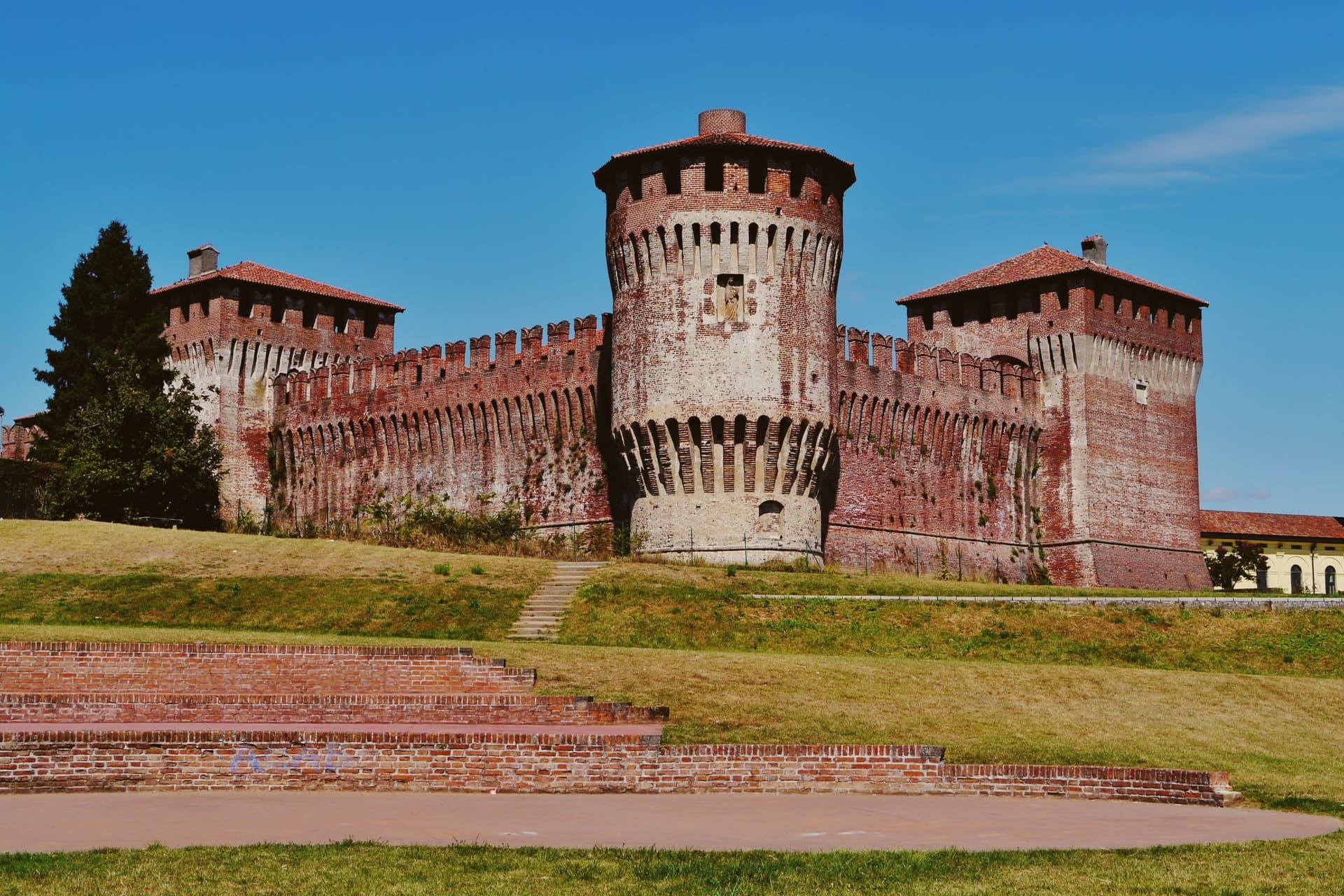
Why visit Soncino
Soncino sits on the Oglio river at the point where the provinces of Cremona, Brescia, and Bergamo meet, a position on the Lombard frontier that kept the town militarized through the medieval centuries and explains the walls and the fortress alike. Inside the circuit, the town's religious center predates its military architecture: the parish church at the heart of the centro storico served the borough from the twelfth century, while the frescoed church nearby belongs to the later Renaissance layer of building.
The fortress itself, raised in brick rather than stone, took only two years to complete and is unusually whole for its age. The other thread running through the town is the press, worked by a family who later carried the town's name across Europe when they dispersed, leaving behind the house where they worked and, in it, the object that made the town briefly a center of Hebrew printing.
What Soncino adds up to, then, is a frontier garrison town whose walls and castle speak to centuries of defense, cut through by one short episode of printing that gave it a different kind of reach entirely.
We confirmed you can reach this one by train.
What to see in Soncino
- Rocca Sforzesca. Built by Galeazzo Maria Sforza in the space of two years, using brick rather than stone to speed the work. The keep and towers stand largely as built, with little of the wear or later rebuilding common to castles of the period.
- Casa degli Stampatori. The house where the printers worked still stands, its rooms now given over to the Museo della Stampa, tracing the mechanics of the press rather than the book it produced.
- Chiesa di Santa Maria delle Grazie. Late fifteenth-century church whose interior is covered floor to ceiling in Lombard Renaissance frescoes, a density of painted surface unusual for a town this size.
How to get to Soncino
There is a railway station in the town, so you can arrive without a car and never need one while you are here. Brescia is roughly 38 minutes away by road.
Our tip
April through June and September into October are the right months. The Rocca and the Pieve are open, the frescoes at Santa Maria delle Grazie read cleanly in shoulder-season light, and the Oglio walk is dry. July and August reach thirty-three degrees with valley humidity; the borgo empties between two and six. Sagra delle Radici falls in October.
More from Anywhere Italy
 The 10 best small towns you can reach by train in Lombardia
 The best hidden lake towns you can reach by train in Lombardia
- The best small lake towns you can reach by train in Lombardia
- The best hidden towns with a serious restaurant that you can reach by train in Lombardia
 The 6 prettiest small villages that eat well in Lombardia
- The best towns inside a nature park that you can reach by train in Lombardia