
The best hidden towns with a serious restaurant that you can reach by train in Lombardia
Lombardia is the region where Italian cooking stops being rustic and starts being technical, and it does this in small places as readily as in the city. Rice grows in flooded fields south of Milan and turns up as risotto finished with butter and marrow; the lakes give perch, shad and whitefish; the Valtellina contributes buckwheat, bitto cheese and long-aged Nebbiolo grown on terraces held up by dry stone walls. The building material shifts as you travel: brick and river cobble along the Adda and the Po, plaster and wrought iron on the lake fronts, dark timber and slate up in the mountains. Autumn is the strongest season for eating here, when the mushrooms, the game and the new wines all arrive at once.
Almost everyone who comes for the food eats in Milan, and the reasons are good ones: the concentration of ambitious kitchens is the highest in the country, the wine lists are deep, and the trains out of Centrale and Cadorna go everywhere. The result is that the tables that matter are booked weeks ahead, the bill reflects the postcode, and the room around you is largely other visitors. The same is true of the Navigli on a Saturday evening, where the queue for an aperitivo is longer than the walk along the canal.
The kitchens do not stop at the ring road. The regional railways run out along the Adda and the Po, up the western shore of Lario, around Sebino and into the Valtellina, and there are towns on those lines with a restaurant serious enough to be listed by the most demanding of the guides. Fewer people go, the booking is easier, and the walk from the station to the door takes minutes.
Of the 65 communes we have mapped in Lombardia, 10 qualify as towns with a serious restaurant you can reach by train: each holds a restaurant listed by the most demanding of the guides, and we have confirmed each is reachable without a car. This list is the hidden ones, 6 in all, ordered smallest first. The smallest, Varenna, has 693 residents.
Elsewhere in the catalogue: The best towns with a serious restaurant that you can reach by train in Lombardia and The best hidden lake towns you can reach by train in Lombardia.
Varenna
Why visit Varenna
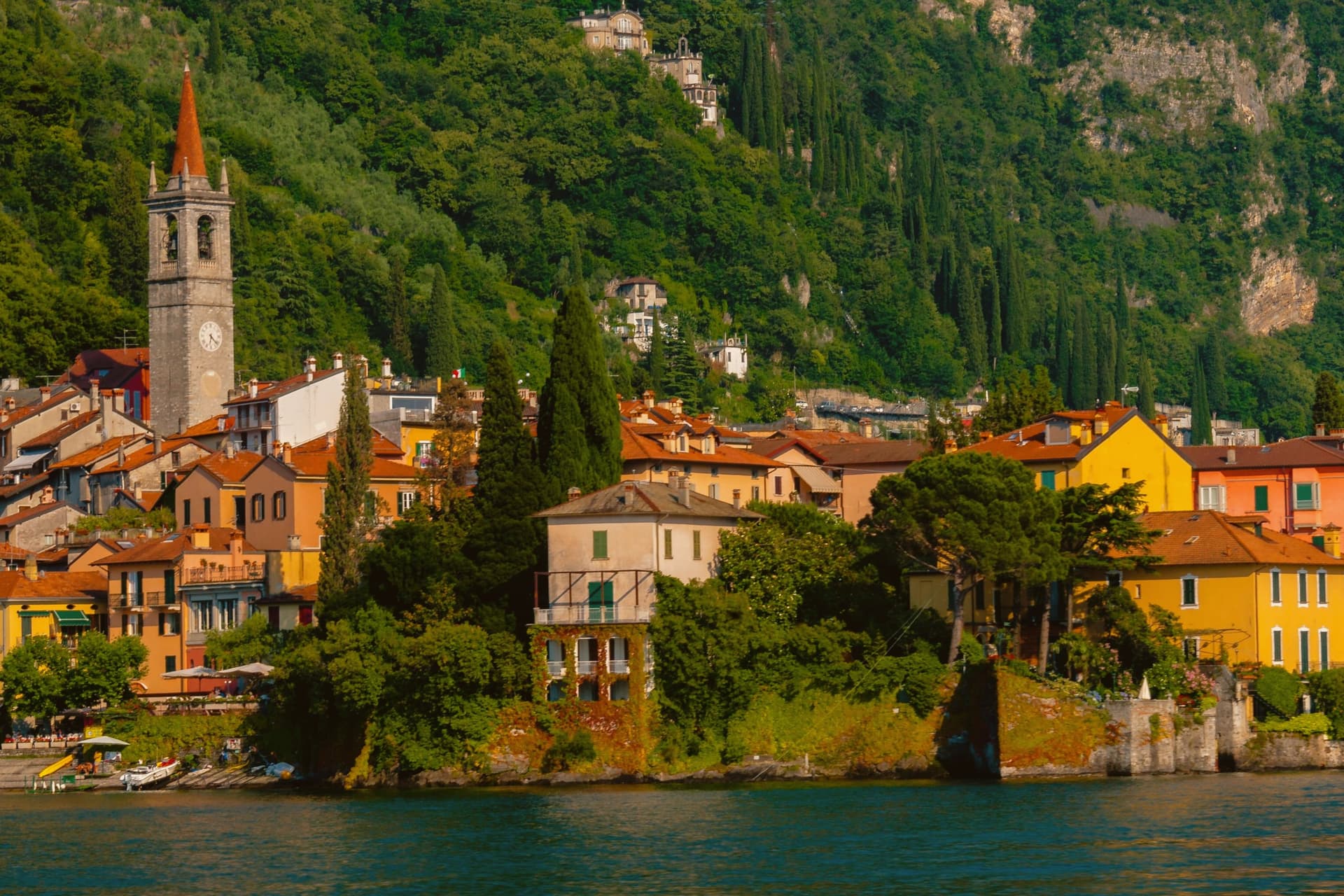
Varenna sits on the eastern shore of Lake Como at the point where the lake forks into the Como and Lecco branches, opposite Bellagio and Menaggio. Local fishermen founded the village in 769.
In 1126 it was destroyed by Como during the wars between the lake's communes, and in 1169 it absorbed the refugees from the destroyed Isola Comacina. The streets fall in a steep grid toward the water, with the lakefront passerella running between the houses and the lake.
The Castello di Vezio, above the village on a spur reached by a 30-minute climb, was a Lombard watchpost reused through the Middle Ages. Villa Monastero, on the lakefront, started in the 12th century as a Cistercian convent and now runs a two-kilometer botanical garden along the shore.
The frazione of Fiumelatte hosts one of the shortest rivers in Italy, 250 meters from spring to lake.
We confirmed you can reach this one by train.
What to see in Varenna
- Castello di Vezio. Lombard-era watchpost on a spur above the village, reached by a 30-minute climb with 160 meters of elevation gain.
- Villa Monastero. Former 12th-century Cistercian convent on the lakefront, now a museum and convention center with a 2-kilometer botanical garden along the shore.
- Villa Cipressi. Sixteenth-to-nineteenth-century lakefront villa next to Villa Monastero, with terraced gardens descending to the water.
How to get to Varenna
There is a railway station in the town, so you can arrive without a car and never need one while you are here. Monza is roughly 62 minutes away by road.
Our tip
April through October is the working season. The ferries from Bellagio and Menaggio run frequently, the villa gardens open in late March, and the lake stays mild enough to swim from June onward. July and August are crowded: 693 residents host thousands of day visitors, and the lakefront fills with photo tripods at sunset.
Cassinetta di Lugagnano
Why visit Cassinetta di Lugagnano
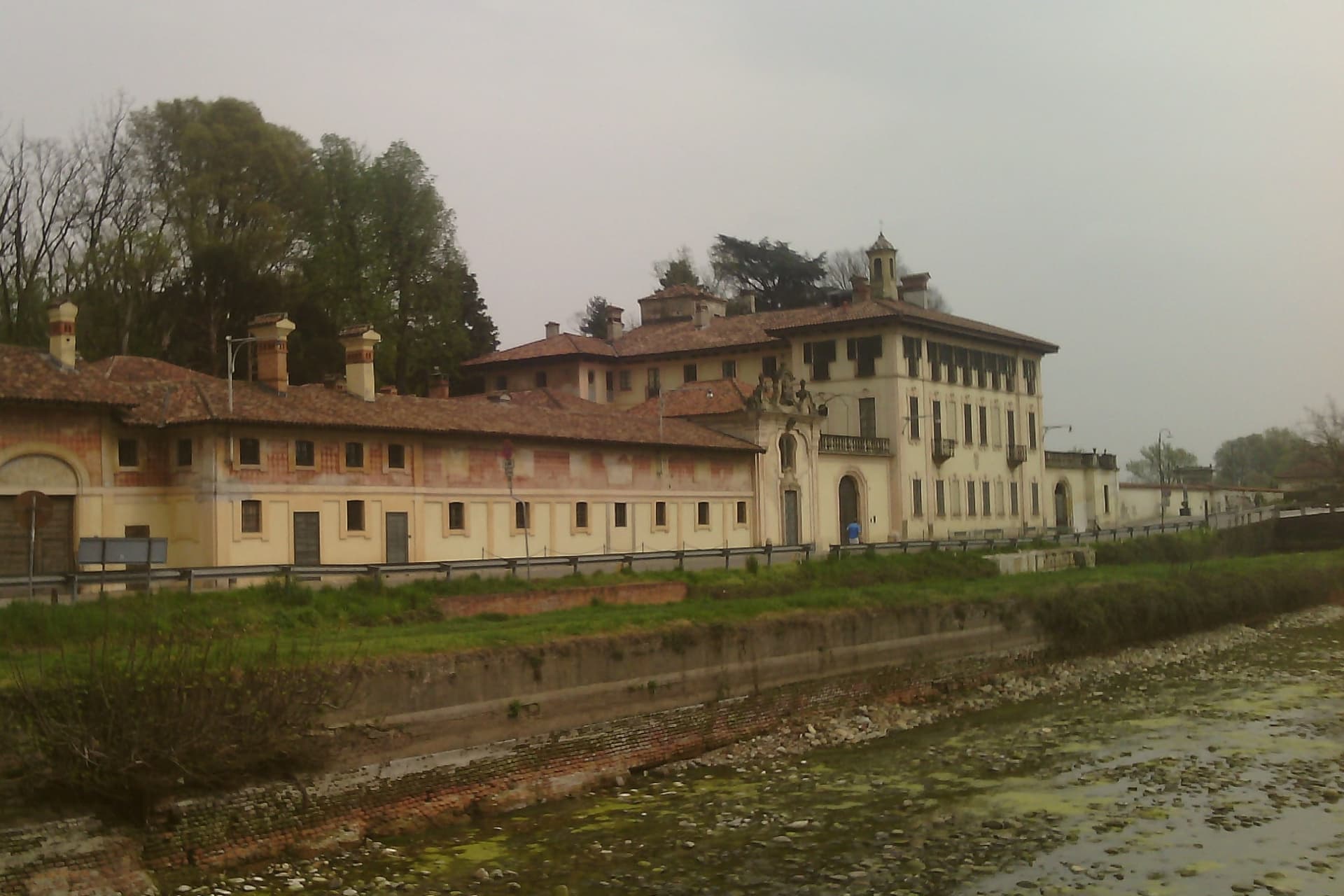
The commune was formed from two older settlements on opposite banks of the canal: Lugagnano, Roman in origin and once called Lucanianus, and Cassinetta, dating to the fourteenth century. The humpbacked bridge that joins them carries the 1584 statue of San Carlo Borromeo.
The town sits at 120 meters, twenty kilometers west of Milan and just outside Abbiategrasso, on the route the Naviglio Grande traces between Milan and the Lago Maggiore, the reason Milanese nobility chose this stretch of water for their country houses from the sixteenth century on. That same 2007 decision to refuse new building and force reuse of existing stock brought the town into the Borghi più belli and Comuni Virtuosi networks.
A town built by families adding country houses along a single waterway, then choosing, four centuries later, to stop building and preserve what stands.
We confirmed you can reach this one by train.
What to see in Cassinetta di Lugagnano
- Villa Visconti Castiglioni Maineri. Formal Italian garden fronting the canal, partly attributed to Ruggero Bascapè.
- Villa Negri-Morosini. Country villa of the Negri-Morosini family on the canal bank, with frescoed interior rooms and outbuildings around a courtyard.
- Villa Trivulzio. Trivulzio family country residence, one link in the chain of aristocratic retreats strung along the water.
How to get to Cassinetta di Lugagnano
There is a railway station in the town, so you can arrive without a car and never need one while you are here. Novara is roughly 37 minutes away by road.
Our tip
April through June and September into October are the months Cassinetta works best. The Naviglio runs full, the towpaths to Abbiategrasso and Robecco sul Naviglio are open to walkers and cyclists, and the villas keep regular visiting hours during the open garden seasons. July and August are humid on the plain; mosquitoes off the canal pick up in late afternoon and the towpath sun gets heavy without shade.
Teglio
Why visit Teglio
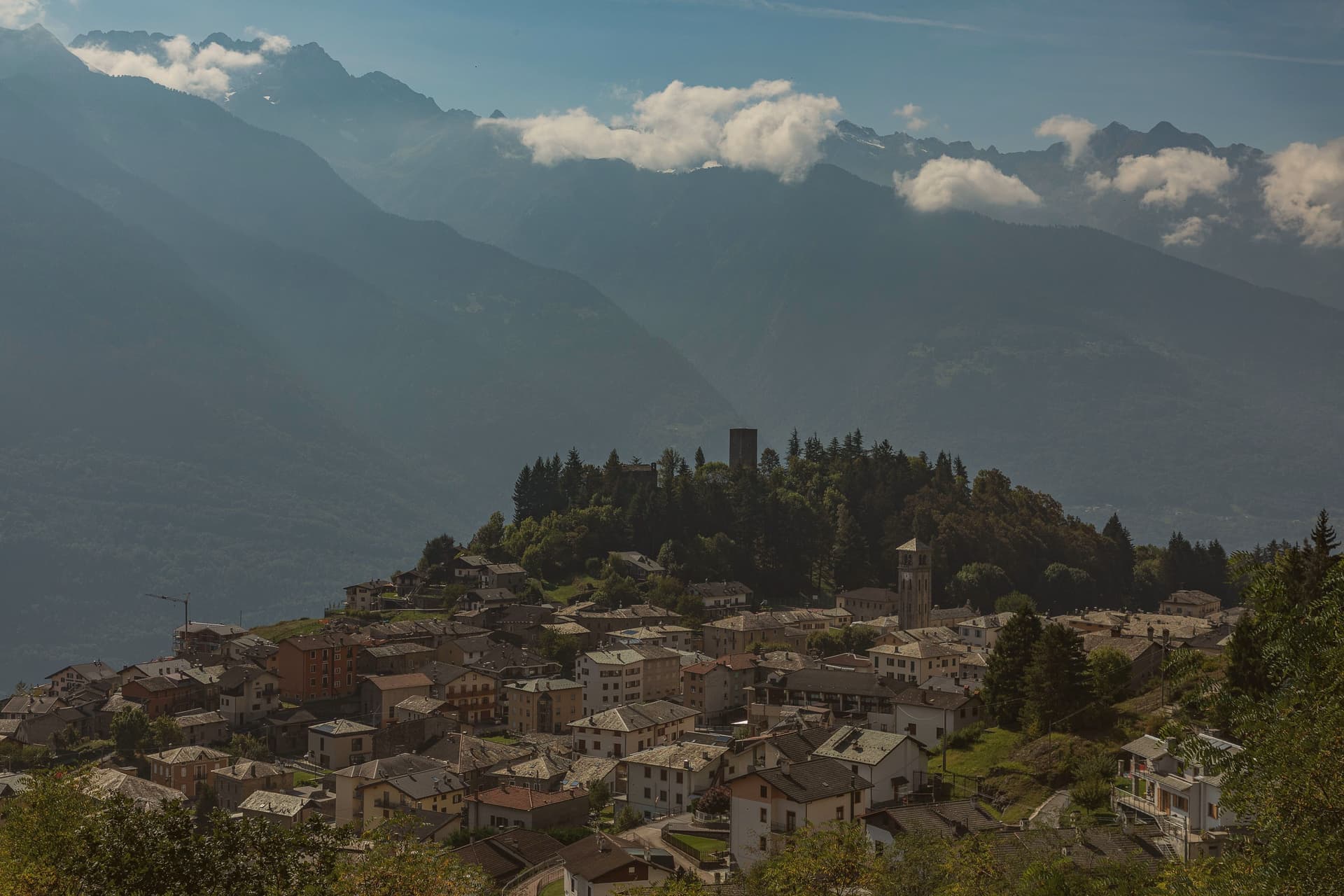
Teglio sits on the south-facing slope of the Valtellina, terraced vineyards dropping toward the Adda below the village and pine forest climbing behind it to the Orobie ridge. The Latin Tellina Vallis, valley of Teglio, gave the whole Valtellina its name, and the comune's own records reach back to the 9th century, when the village held the strategic centre of the valley.
The upper village keeps that older, defensive character; the vineyards and the valley floor below are where the food and wine culture of the place plays out, the two halves of the town facing different directions in what they do. Pizzoccheri, buckwheat tagliatelle with savoy cabbage, potato, garlic-and-butter sauce and casera cheese, has its official home here, and Teglio holds Cittaslow status on the strength of that food culture together with the terraced viticulture below the village.
A hill town that named a valley, still turned toward the river and the vines that keep its economy going, while its height and its records point back to why it was worth holding in the first place.
We confirmed you can reach this one by train.
What to see in Teglio
- Palazzo Besta. The courtyard cycle depicts Virgil's Aeneid; the upper salons hold further biblical and mythological scenes. The Antiquarium Tellinum inside holds Iron Age and Roman material from the valley.
- Accademia del Pizzocchero. The body that certifies trattorie and holds the recipe to its original form: buckwheat tagliatelle with savoy cabbage, potato, and a butter-garlic sauce alongside the cheese.
- Vigneti terrazzati della Valtellina. South-facing terraces stepping down toward the Adda, part of a viticultural landscape under UNESCO candidacy, producing Sforzato and Inferno Nebbiolo.
How to get to Teglio
There is a railway station in the town, so you can arrive without a car and never need one while you are here. Brescia is roughly 142 minutes away by road.
Our tip
May through October is the open season at 856 metres — Palazzo Besta open daily, terraced vineyards green, and the Valtellina wine route in full operation. June and September are the best months for both architecture and wine: long warm light, fewer tourists than peak summer, and the Sforzato and Inferno harvests just preparing in September. July-August stay temperate at this elevation and the trattorie are at full pizzocchero output.
Pizzighettone
Why visit Pizzighettone
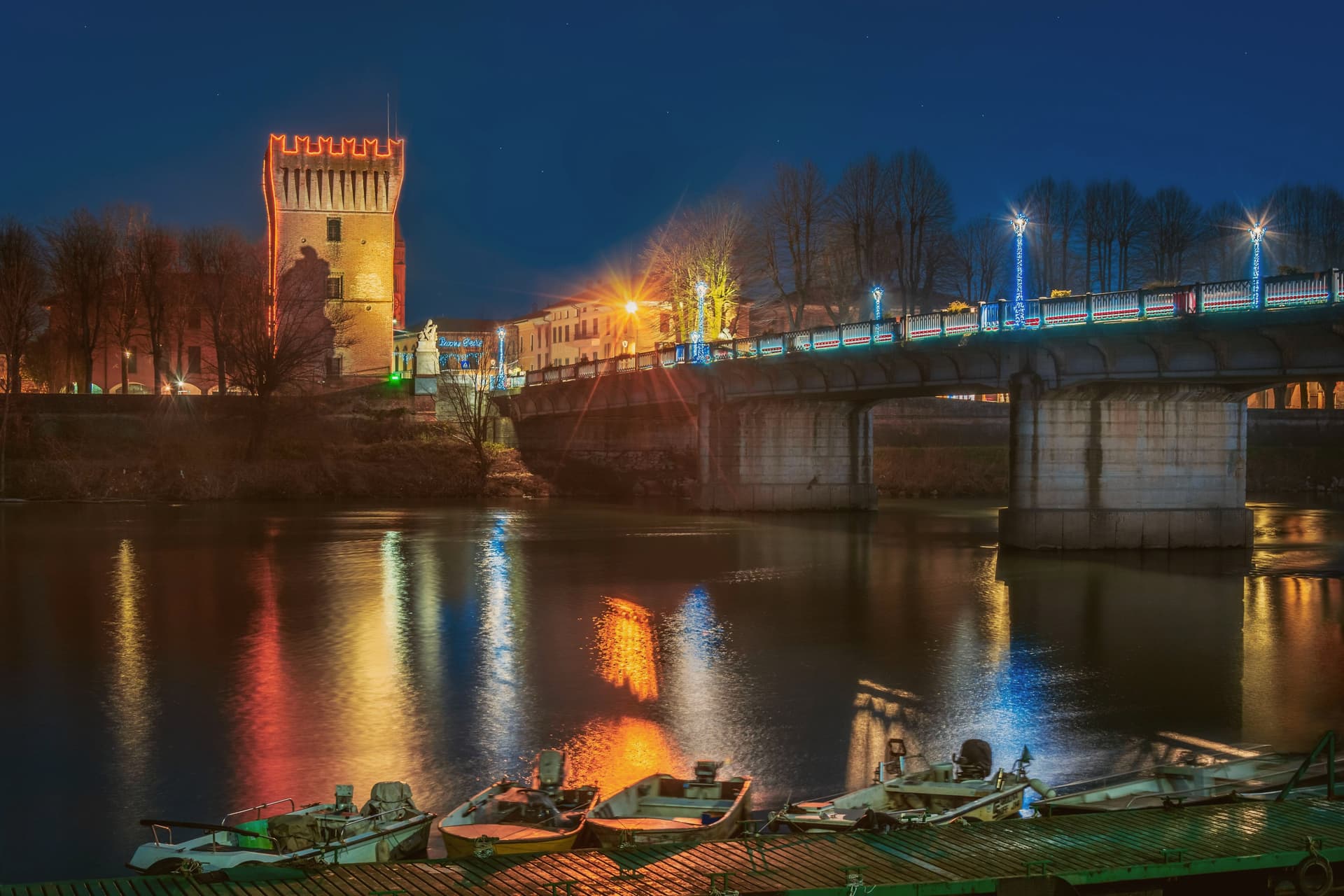
Pizzighettone sits on the river Adda in the Po valley at 46 metres above sea level, half an hour west of Cremona and an hour southeast of Milan. The Adda cuts the town in two: Pizzighettone proper on the east bank, the smaller Gera on the west, joined by a single bridge.
The 16th-century walls run two kilometres around the historic centre, twelve metres tall and three and a half thick, and they hold a network of guardhouses called Casematte that visitors can walk through with a guide. The Torre del Guado, part of the older Rocca fortress, held the captured King Francis I of France for roughly fifty days in 1525 after his defeat at Pavia, before the Spanish transferred him to Madrid.
Most of the medieval Rocca was demolished after Italian unification; the tower is one of two that survived. The Bandiera Arancione recognises the walls and the colourful interior of the Chiesa di San Bassiano in Gera.
We confirmed you can reach this one by train.
What to see in Pizzighettone
- Mura e Casematte. 16th-century walls, two km long, twelve m tall, with a network of vaulted Casematte guardhouses open to visits.
- Torre del Guado. Surviving tower of the Rocca, where Francis I of France was imprisoned in 1525 after his capture at the Battle of Pavia.
- Chiesa di San Bassiano. Parish church in the Gera quarter, known for its richly painted interior, claimed locally as the most colourful church in Italy.
How to get to Pizzighettone
There is a railway station in the town, so you can arrive without a car and never need one while you are here. Piacenza is roughly 30 minutes away by road.
Our tip
Pizzighettone runs on the Po valley calendar. April through June and again in September and October are the working months, when the walls dry out, the Casematte tours run regularly, and the Adda lowers from its winter levels. July and August are heavy: humidity sits in the valley, the river attracts mosquitoes, and afternoon temperatures push past thirty-five. Fasulìn de l'öc cun le cùdeghe falls in October.
Laveno-Mombello
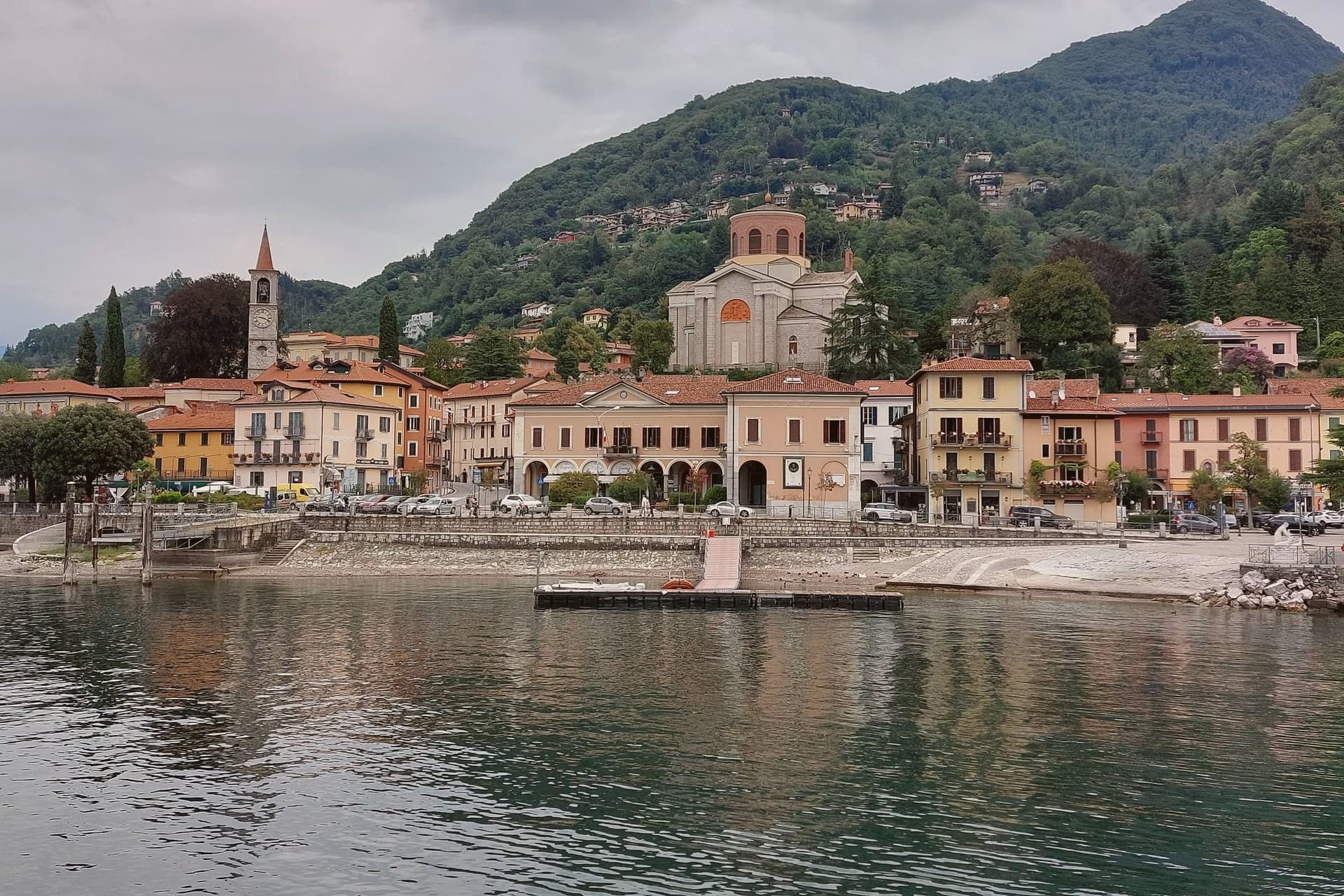
Why visit Laveno-Mombello
Laveno-Mombello sits on Lake Maggiore's eastern shore in the province of Varese, where a limestone wall drops directly to the water at the town's back. The ferry here crosses to Verbania and the Borromean Islands on the opposite shore, making the town as much a hinge point between Lombardia and Piemonte as a destination in itself.
Cerro, the lakefront hamlet folded into the town, kept the workshops after the ceramics factories closed in the 1990s, and its Palazzo Perabò now holds the museum that charts that industry from 1856 forward. South along the shore, a fifteen-minute drive reaches the monastery built into the cliff face, reachable by stairs, lift or boat where the road does not reach directly.
The town's shape follows the lake and the rock in equal measure: industry and transit at the shoreline, the mountain rising straight behind it, and the monastery holding on to the cliff a short way south as if the same geology that made Laveno a port also made it a place for building into stone.
We confirmed you can reach this one by train.
What to see in Laveno-Mombello
- MIDeC – Museo Internazionale Design Ceramico. Ceramics design museum in the sixteenth-century Palazzo Perabò at Cerro, covering Laveno production from 1856 to the 1990s.
- Sasso del Ferro. Limestone summit reached by the bucket funicular, with a terrace looking across Lake Maggiore to Lago d'Orta and the southern Alps.
- Santa Caterina del Sasso. Fourteenth-century monastery clinging to a cliff above Lake Maggiore, fifteen minutes south, reached by stairs, lift or boat.
How to get to Laveno-Mombello
There is a railway station in the town, so you can arrive without a car and never need one while you are here. Novara is roughly 74 minutes away by road.
Our tip
April through October covers the working calendar. The Sasso del Ferro funicular runs most days from spring through autumn, weather permitting, and is unreliable in winter. May, June, September and October are the calmest weeks on the eastern shore.
Iseo
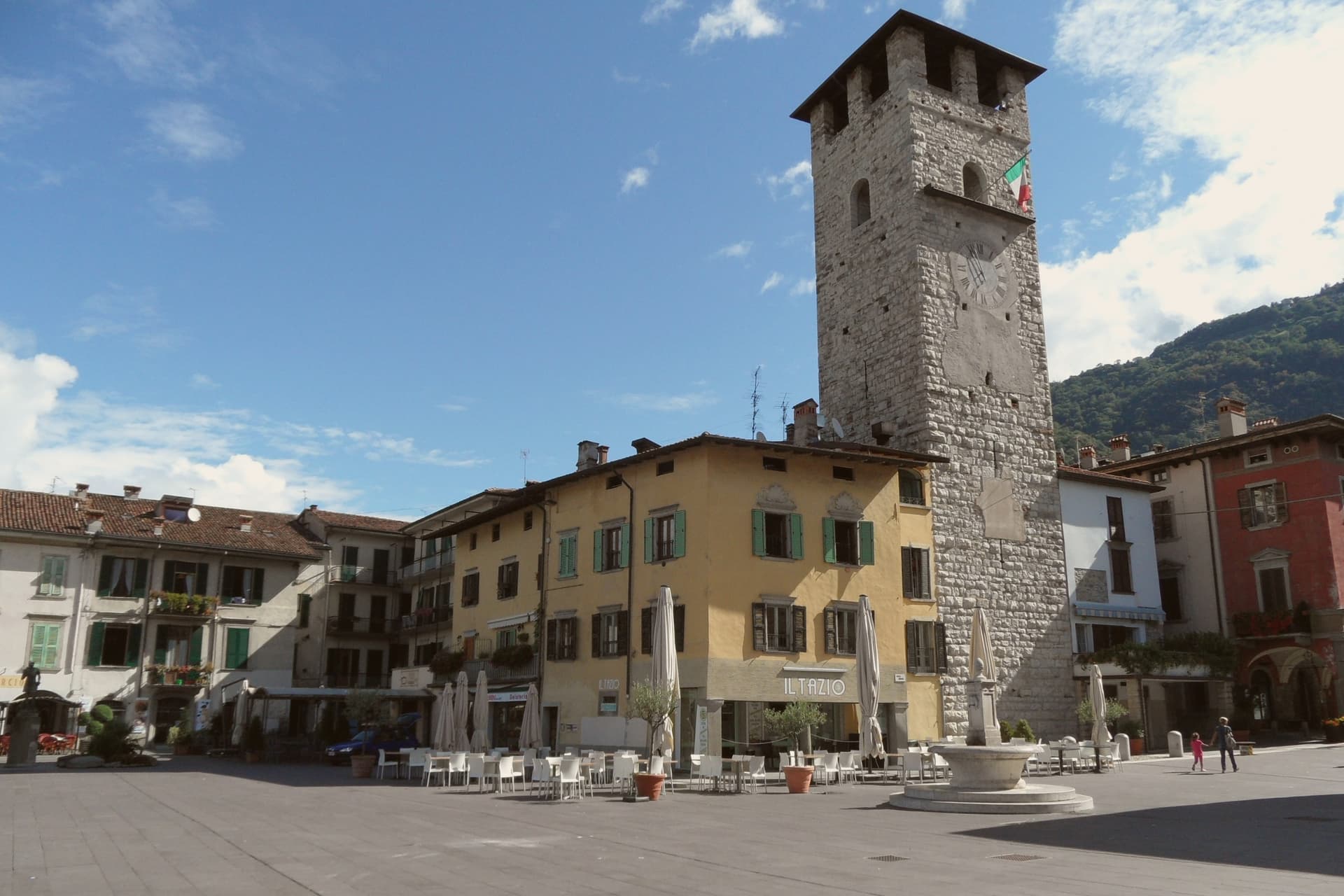
Why visit Iseo
Iseo sits at 198 meters on the southeast shore of Lake Iseo, the fourth-largest lake in Lombardia, fed by the Oglio. The town was founded around a monastery in the 900s and grew under the Sozzi, the Isei, and finally the Oldofredi.
From 1428 to 1797 Iseo was part of the Republic of Venice. The lakefront and the vineyards to the south form the town's two working halves: one facing the water and the ferries that cross it, the other rising into the Franciacorta hills where the metodo classico grapes are grown.
Ferries from the lakefront connect to Monte Isola, the largest lake island in southern Europe, and to Sarnico across the water in Bergamo province. A lake town that turned its inland edge to wine and its waterfront to the island: the two directions, water and vineyard, still define how the town is used.
We confirmed you can reach this one by train.
What to see in Iseo
- Castello Oldofredi. The stone fortress stands above the lakefront, its walls facing the water rather than the town center, a reminder that it was built to watch the lake approach.
- Pieve di Sant'Andrea. Founded by Bishop Vigilio, the church keeps its bell tower set into the middle of the façade rather than beside or behind it, an arrangement rare among Lombard Romanesque buildings.
- Piazza Garibaldi. Main lakeside square with the first Italian statue of Garibaldi, erected in 1883, the year after his death.
How to get to Iseo
There is a railway station in the town, so you can arrive without a car and never need one while you are here. Brescia is roughly 28 minutes away by road.
Our tip
April through October runs Iseo's lake season. April and May open the ferries to Monte Isola, the Franciacorta wineries reopen for tastings, and the lakefront fills on weekends. June through August is the peak window: warm enough to swim, hot enough that the centro empties between 14:00 and 17:00, and the lake breeze keeps evenings comfortable.
More from Anywhere Italy
- The best towns with a serious restaurant that you can reach by train in Lombardia
- The best hidden lake towns you can reach by train in Lombardia
 The best small towns with a serious restaurant in Lombardia
 The 10 best small towns you can reach by train in Lombardia
 The best towns with a serious restaurant that eat well within 90 minutes of Novara
- The 9 best towns with a serious restaurant that sit inside a nature park in Lombardia