
The best towns inside a nature park that you can reach by train in Lombardia
Lombardia protects more land than travellers expect: river parks along the Adda and the Oglio, the reed beds and lakes around Mantova, the wooded ridges above the Sebino. The building material shifts as you cross the region, brick and terracotta on the plain, grey prealpine stone as the ground rises. Spring brings mist off the water and asparagus and river fish on menus; autumn brings polenta, lake shad, the cheeses that made these provinces famous, and the smell of woodsmoke in the porticoed squares. Best of all, much of it lies on working railway lines, so the parks are reachable on a regional ticket rather than a hire car.
Most visitors to the region get as far as Milan and then take the train to Como, which is the obvious move and a good one. Como is beautiful, well connected and heavily booked, and in high summer the ferry queues and the lakefront promenade absorb the greater part of everyone who came to Lombardia for water and mountains. The paths above the town see the same crowd. Prices on the lake follow the demand.
The same water and the same hills carry on well past that stretch. Rivers cut north to south across the whole region, the lakes have quieter arms and southern shores, and the plain holds walled towns surrounded by protected farmland and wetland. Fewer people go to these places, and every one of them sits inside a regional nature park with a station in reach.
Of the 65 communes we have mapped in Lombardia, 6 qualify as towns inside a nature park you can reach by train: each sits inside a regional nature park, and we have confirmed each is reachable without a car. The smallest, Varenna, has 693 residents.
Two more lists worth reading alongside this one: The 9 best towns with a serious restaurant that sit inside a nature park in Lombardia and The best lake towns inside a nature park in Lombardia.
Varenna
Why visit Varenna
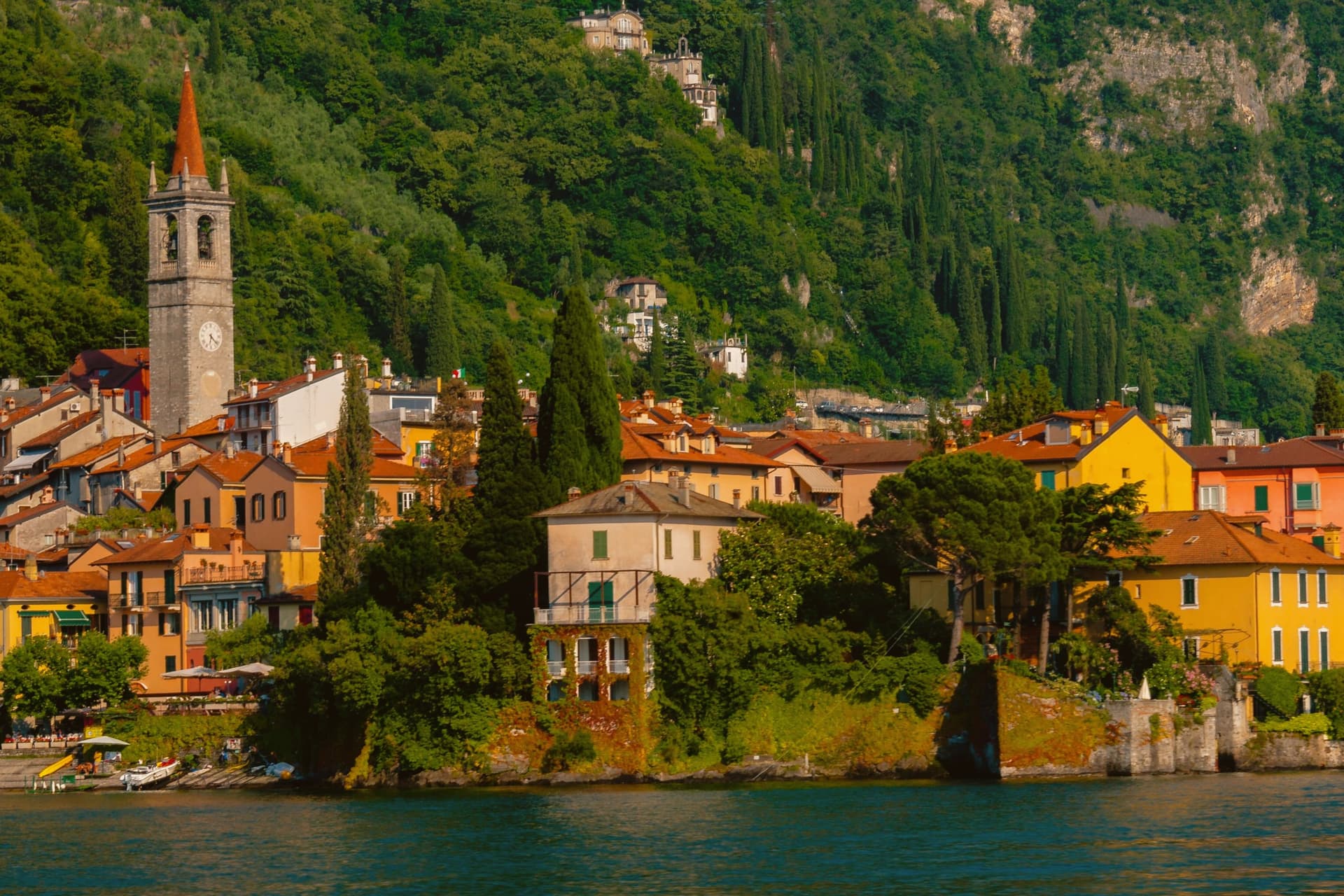
Varenna sits on the eastern shore of Lake Como at the point where the lake forks into the Como and Lecco branches, opposite Bellagio and Menaggio. Local fishermen founded the village in 769.
In 1126 it was destroyed by Como during the wars between the lake's communes, and in 1169 it absorbed the refugees from the destroyed Isola Comacina. The streets fall in a steep grid toward the water, with the lakefront passerella running between the houses and the lake.
The Castello di Vezio, above the village on a spur reached by a 30-minute climb, was a Lombard watchpost reused through the Middle Ages. Villa Monastero, on the lakefront, started in the 12th century as a Cistercian convent and now runs a two-kilometer botanical garden along the shore.
The frazione of Fiumelatte hosts one of the shortest rivers in Italy, 250 meters from spring to lake.
We confirmed you can reach this one by train.
What to see in Varenna
- Castello di Vezio. Lombard-era watchpost on a spur above the village, reached by a 30-minute climb with 160 meters of elevation gain.
- Villa Monastero. Former 12th-century Cistercian convent on the lakefront, now a museum and convention center with a 2-kilometer botanical garden along the shore.
- Villa Cipressi. Sixteenth-to-nineteenth-century lakefront villa next to Villa Monastero, with terraced gardens descending to the water.
How to get to Varenna
There is a railway station in the town, so you can arrive without a car and never need one while you are here. Monza is roughly 62 minutes away by road.
Our tip
April through October is the working season. The ferries from Bellagio and Menaggio run frequently, the villa gardens open in late March, and the lake stays mild enough to swim from June onward. July and August are crowded: 693 residents host thousands of day visitors, and the lakefront fills with photo tripods at sunset.
Sarnico
Why visit Sarnico
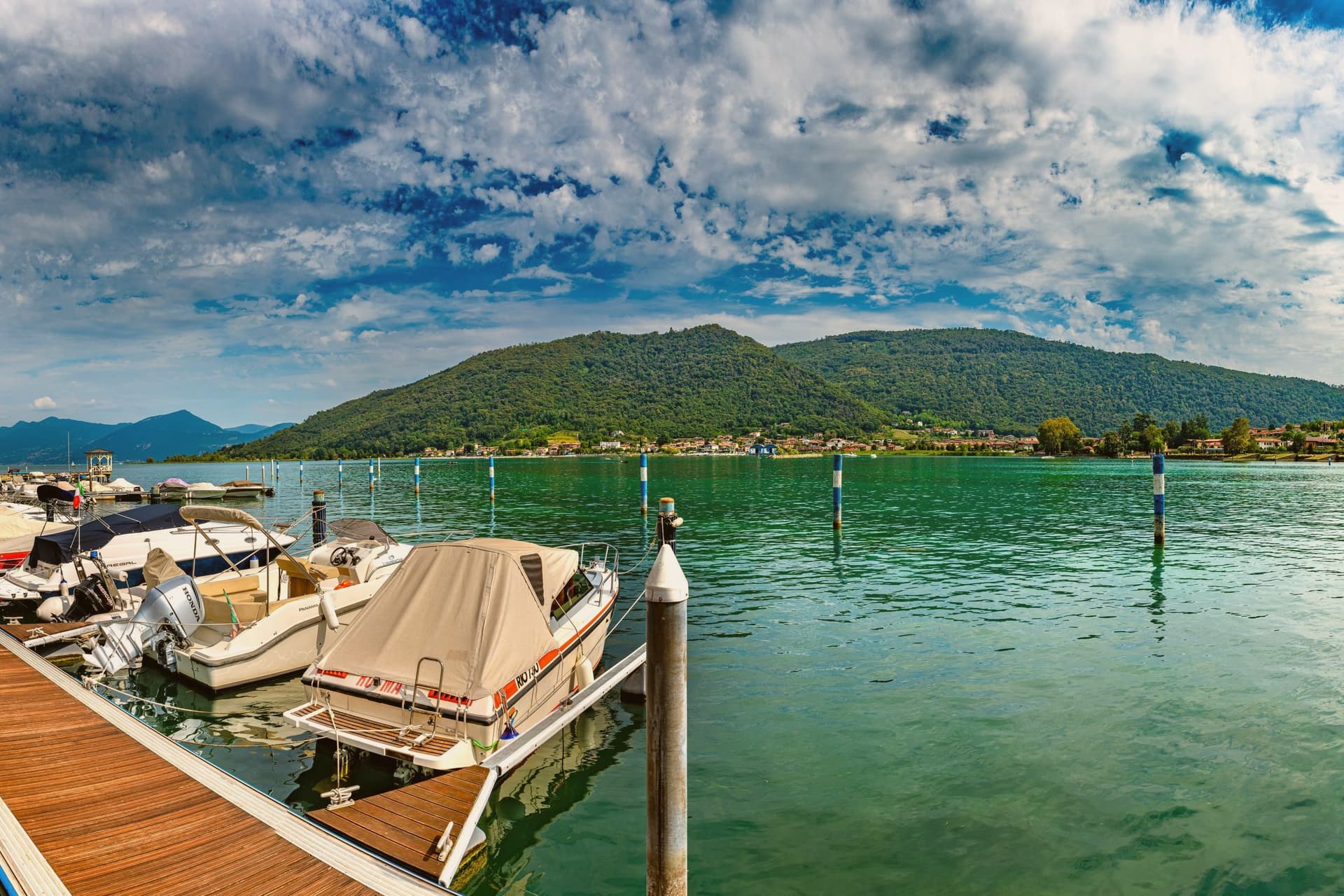
Sarnico sits at the southern end of Lago d'Iseo, where the Oglio river drains the lake toward the Po valley, twenty-five kilometers east of Bergamo. A document from 861 records the emperor Ludwig II donating the local piscaria to the monastery of Santa Giulia in Brescia, which makes Sarnico's fishing trade older than most things on the lake.
The medieval centro storico still reads as a market town. The second layer arrived in the early twentieth century, when the Faccanoni family commissioned Giuseppe Sommaruga to build a string of Liberty villas along the shore road toward Predore.
Villa Faccanoni, Villa Surre and the family mausoleum are among the most coherent stretches of Italian Art Nouveau outside Milan. The Riva shipyard, founded here in 1842, still builds wooden motor yachts on the lakefront.
Most weekenders come from Bergamo and Brescia for the lake; the buildings are why architecture students come.
We confirmed you can reach this one by train.
What to see in Sarnico
- Villa Faccanoni. Giuseppe Sommaruga's 1907 Liberty villa on the lakefront, one of the finest Art Nouveau buildings in Lombardia.
- Villa Surre. Sommaruga villa built for Luigi Faccanoni on the road toward Predore, a complete early-modernist composition.
- Centro Storico. Medieval lakeside core with porticoed lanes, the old fish market site, and the lungolago promenade.
How to get to Sarnico
There is a railway station in the town, so you can arrive without a car and never need one while you are here. Bergamo is roughly 32 minutes away by road.
Our tip
April through June and September through October are the calmest months on Lago d'Iseo: mild temperatures, low water traffic, and the Faccanoni villas open for guided visits. July and August bring weekenders from Bergamo, Brescia and Milano, and the ferries run full. The Wine Festival in late spring fills the piazza. Gli Ambulanti di Forte dei Marmi falls in August.
Soncino
Why visit Soncino
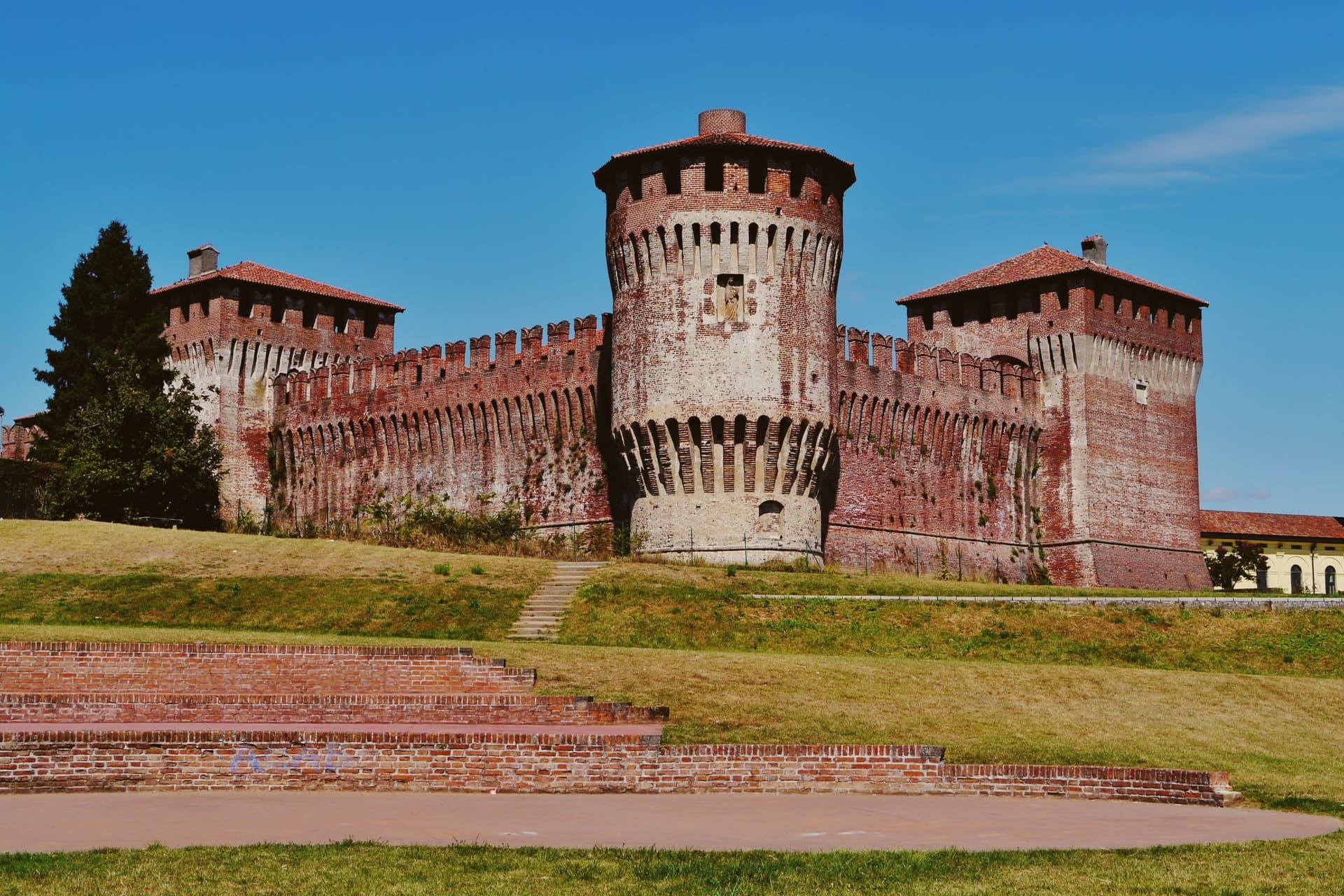
Soncino sits on the Oglio river at the point where the provinces of Cremona, Brescia, and Bergamo meet, a position on the Lombard frontier that kept the town militarized through the medieval centuries and explains the walls and the fortress alike. Inside the circuit, the town's religious center predates its military architecture: the parish church at the heart of the centro storico served the borough from the twelfth century, while the frescoed church nearby belongs to the later Renaissance layer of building.
The fortress itself, raised in brick rather than stone, took only two years to complete and is unusually whole for its age. The other thread running through the town is the press, worked by a family who later carried the town's name across Europe when they dispersed, leaving behind the house where they worked and, in it, the object that made the town briefly a center of Hebrew printing.
What Soncino adds up to, then, is a frontier garrison town whose walls and castle speak to centuries of defense, cut through by one short episode of printing that gave it a different kind of reach entirely.
We confirmed you can reach this one by train.
What to see in Soncino
- Rocca Sforzesca. Built by Galeazzo Maria Sforza in the space of two years, using brick rather than stone to speed the work. The keep and towers stand largely as built, with little of the wear or later rebuilding common to castles of the period.
- Casa degli Stampatori. The house where the printers worked still stands, its rooms now given over to the Museo della Stampa, tracing the mechanics of the press rather than the book it produced.
- Chiesa di Santa Maria delle Grazie. Late fifteenth-century church whose interior is covered floor to ceiling in Lombard Renaissance frescoes, a density of painted surface unusual for a town this size.
How to get to Soncino
There is a railway station in the town, so you can arrive without a car and never need one while you are here. Brescia is roughly 38 minutes away by road.
Our tip
April through June and September into October are the right months. The Rocca and the Pieve are open, the frescoes at Santa Maria delle Grazie read cleanly in shoulder-season light, and the Oglio walk is dry. July and August reach thirty-three degrees with valley humidity; the borgo empties between two and six. Sagra delle Radici falls in October.
Gorgonzola
Why visit Gorgonzola
The commune sits in the Milan metropolitan periphery, its centre a short walk from the water. The canal that runs through it was built between 1457 and 1463 under Filippo Maria Visconti to connect the Adda river to Milan, and the town grew along its banks as a stop on that route rather than as a self-contained settlement.
By the 11th century 'gorgonzola' was already traded across the Po valley; by the 14th the cheese had a documented brand identity; by the 19th it was exported in industrial quantities to Britain via the new Milan-Treviglio railway. Gorgonzola DOP itself is no longer produced inside the comune.
The modern DOP zone covers all of Lombardia and Piemonte and is concentrated around Novara and Lecco. What remains here is the symbolic centre: the abbey where the accidental find happened in the surplus summer milk, the small museum that keeps the chain of dates, and the September fair that draws producers from both regions back to the place their cheese is named for.
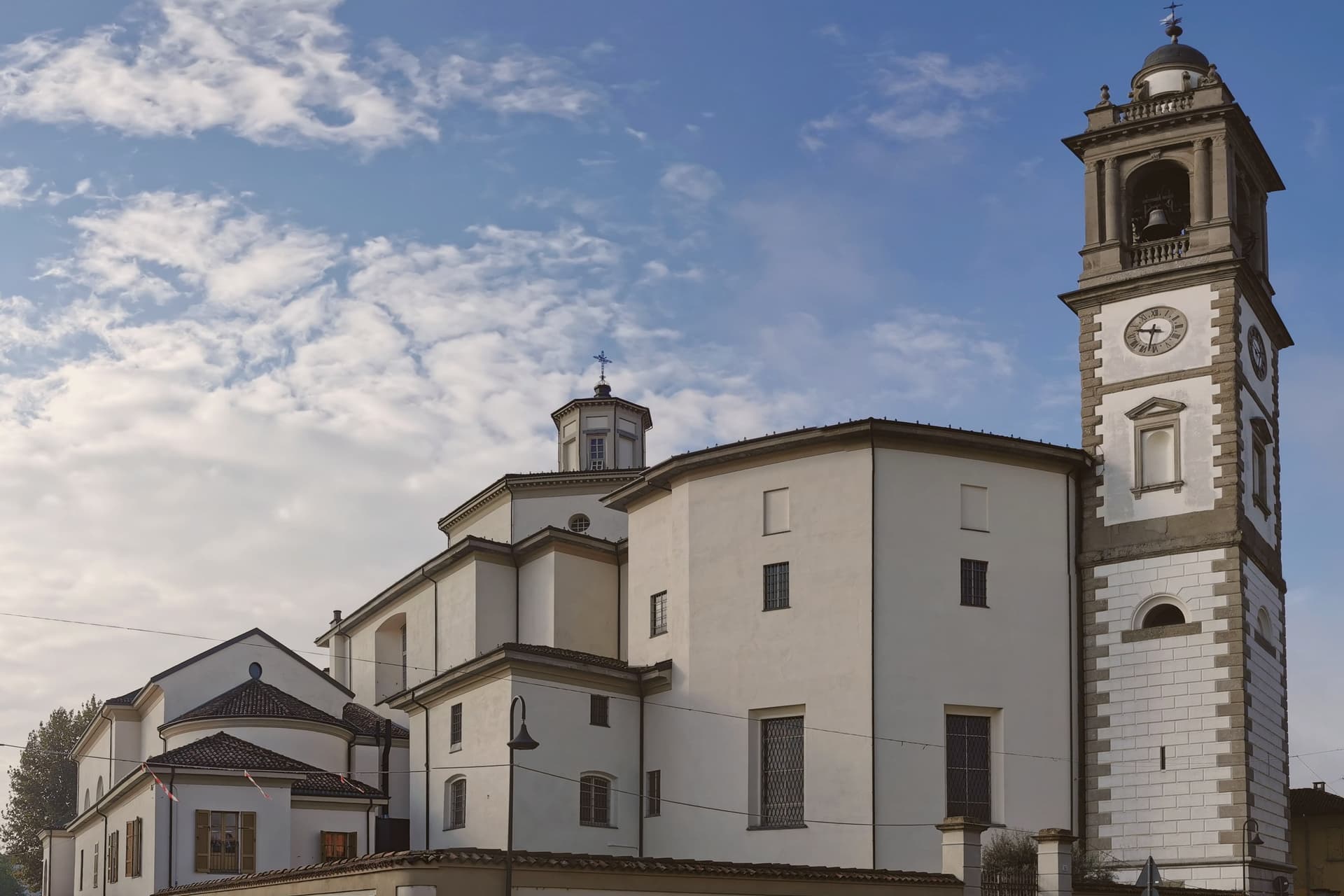
The centro storico, the abbey ruins at the town's edge, and the canal towpath form the three fixed points of the town, close enough to walk between in an afternoon: the church anchors the piazza, the ruins mark where the monks once cooled their surplus milk in caves, and the water ties the two together on its way toward Milan. The food follows the same Lombard-northeast line as the history: risotto alla milanese, polenta uncia, ossobuco, the cheese itself in its sweet or aged forms, and Bonarda from the Oltrepò Pavese to the south.
A town that exported its name centuries before it stopped producing the thing itself, and that now keeps the record of that history closer than the cheese itself.
We confirmed you can reach this one by train.
What to see in Gorgonzola
- Museo del Gorgonzola + Sagra. Small museum tracing the cheese's history through documents and objects. Annual Sagra del Gorgonzola in mid-September gathers 25+ DOP producers from across Lombardia and Piemonte for tastings.
- Naviglio della Martesana (Greenways). A navigable 38-km stretch of water running through the town, now a Greenways-protected cycling path. The towpath is flat and shaded in places, and the water level stays close to the fields it passes.
- Chiesa Prepositurale + Abbey ruins. 1820 neoclassical parish church on the central piazza. The Abbey of San Pietro's 11th-century ruins sit at the edge of town, the site where the monks aged the original cheese in cool caves.
How to get to Gorgonzola
There is a railway station in the town, so you can arrive without a car and never need one while you are here. Monza is roughly 22 minutes away by road.
Our tip
Gorgonzola is best April–June and September–October — the Po valley summer is hot and sticky, the canal ride is best in shoulder seasons. Mid-September brings the Sagra del Gorgonzola (4 days of producer tastings) and is the year's main event. Winter is foggy but the centro stays accessible and the M2 makes any-weather access trivial. Sagra Nazionale del Gorgonzola falls in September.
Mantova
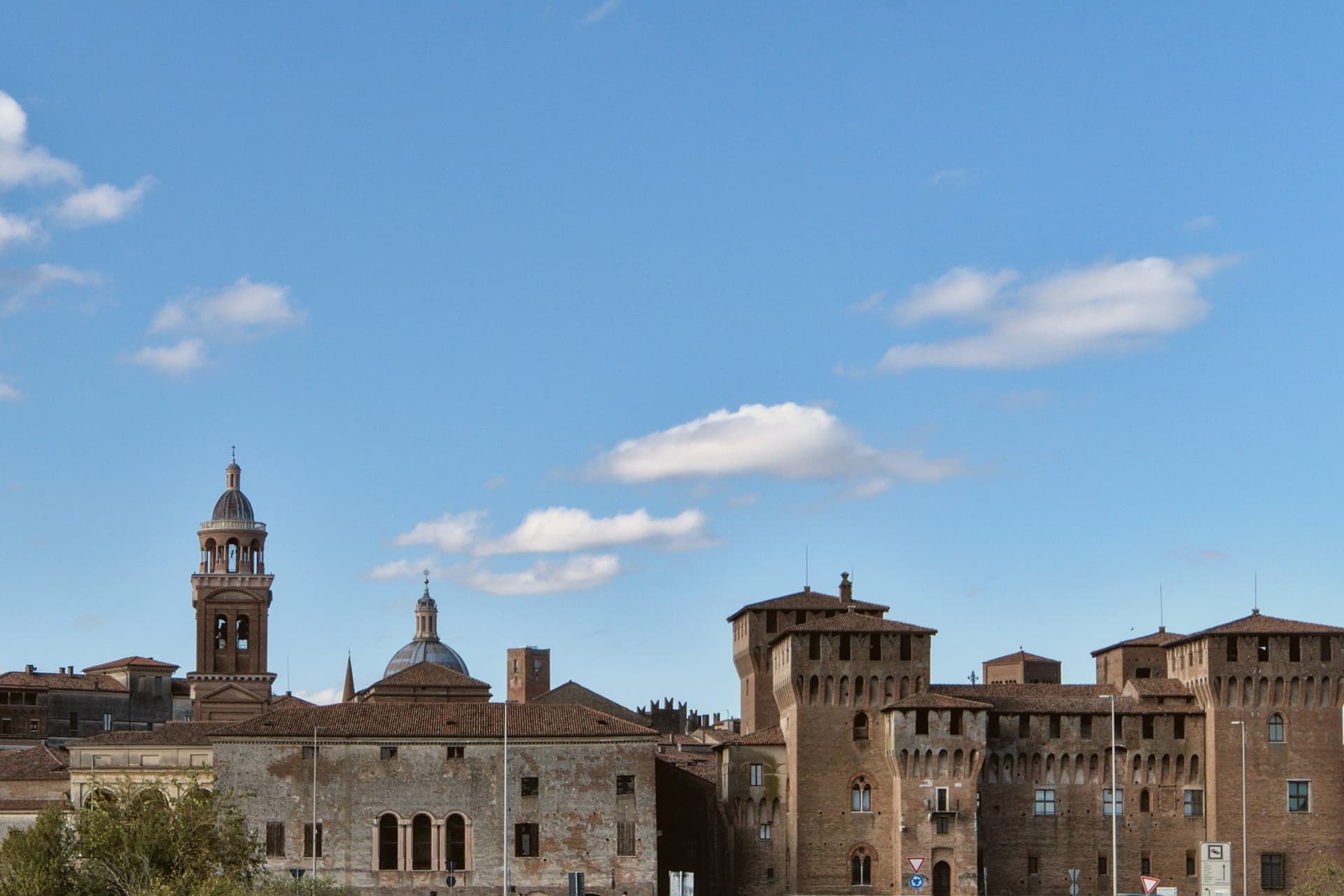
Why visit Mantova
Mantova sits at 19 meters on a peninsula in the Mincio, halfway between Milan and Venice. In the twelfth century the river was dammed into three artificial lakes, Superiore, di Mezzo and Inferiore, which still ring the city on three sides and worked as its defence for six centuries.
From 1328 to 1707 it was the seat of the Gonzaga. The Palazzo Ducale they assembled across that span covers 34,000 square meters between Piazza Sordello and Lago di Mezzo, with over a thousand rooms; the Camera degli Sposi, frescoed by Andrea Mantegna between 1465 and 1474, is the heart of that complex.
Outside the walls, Federico II Gonzaga commissioned Giulio Romano to build Palazzo Te between 1525 and 1535: a pleasure villa with the Sala dei Giganti, whose painted Olympus collapses on the viewer from every wall. Mantua and Sabbioneta were jointly inscribed by UNESCO in 2008.
The city was Italian Capital of Culture in 2016.
We confirmed you can reach this one by train.
What to see in Mantova
- Palazzo Ducale. Gonzaga ducal complex of 34,000 square meters between Piazza Sordello and Lago di Mezzo, with over a thousand rooms across four centuries of additions.
- Camera degli Sposi. Frescoed chamber by Andrea Mantegna inside the Palazzo Ducale, painted between 1465 and 1474, with an illusionistic oculus on the ceiling.
- Palazzo Te. Suburban pleasure villa built between 1525 and 1535 by Giulio Romano for Federico II Gonzaga, with the Sala dei Giganti and Sala di Amore e Psiche.
How to get to Mantova
There is a railway station in the town, so you can arrive without a car and never need one while you are here. Verona is roughly 39 minutes away by road.
Our tip
April through June and September into October are the months Mantova works best. The lakes hold light all day, the Palazzo Ducale is walkable without summer queues, and the surrounding bike paths to Peschiera del Garda run sixty kilometers along the Mincio. July and August get humid and still on the plain, with mosquitoes off the lakes and afternoons that empty the centro storico. Festival della sbrisolona e dei dolci italiani falls in October.
Bergamo
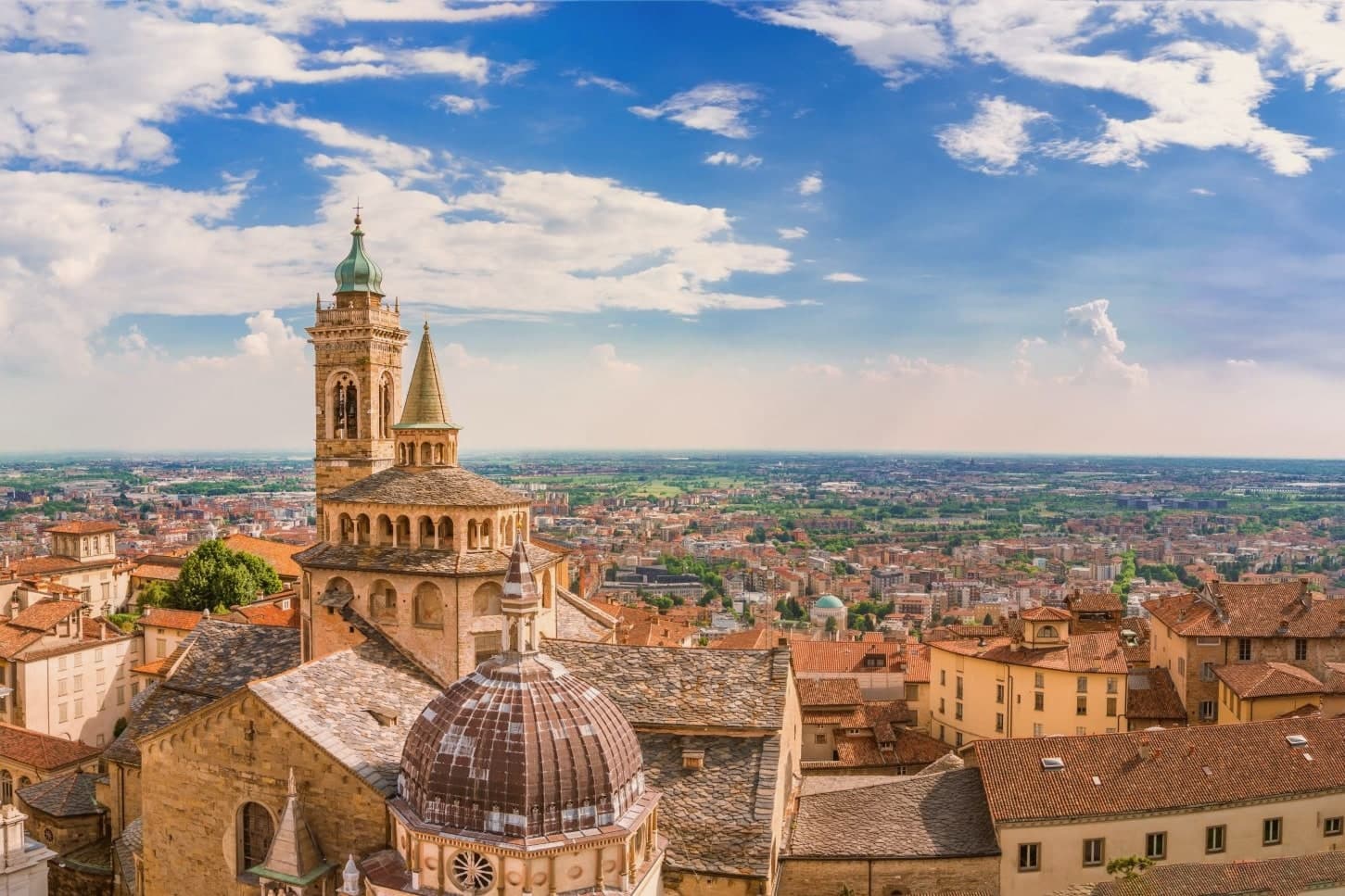
Why visit Bergamo
Bergamo's upper town occupies a spur of the Bergamasque foothills, and the lower town spreads onto the plain that runs southwest toward Milan. The walls that ring the hilltop cost the old town more than 250 buildings, including the original cathedral of Sant'Alessandro, demolished to clear ground for the defenses.
The circuit was built as part of a much larger Venetian project, inscribed together with the fortifications at Peschiera, Palmanova and sites on the Dalmatian coast: one defensive system spread across the Republic's frontier, of which this hilltop was the western anchor. The two halves of the city keep their own centuries.
The walled hilltop holds its medieval and Renaissance fabric inside the fortifications, reached by a funicular that has run the same route since the nineteenth century. The lower city is the newer half, built up through the nineteenth and twentieth centuries on the flat ground below.
Bergamo works as a place because that separation stayed intact instead of being built over: a fortified hill town and a modern city sharing one name but occupying two distinct centuries.
We confirmed you can reach this one by train.
What to see in Bergamo
- Mura Venete. Eight bastions and four gates carry the circuit around the ridge of Città Alta, the walkway open along most of its length with views down over the lower town and the plain.
- Piazza Vecchia. Ringed by the Palazzo della Ragione, the Campanone tower, the Contarini fountain and the Biblioteca Mai, this is the square at the top of the funicular climb, the meeting point of Città Alta's streets.
- Basilica di Santa Maria Maggiore. The Romanesque exterior gives no hint of the Baroque interior inside, gilded and heavy with stucco, where the composer's tomb sits among the furnishings.
How to get to Bergamo
There is a railway station in the town, so you can arrive without a car and never need one while you are here. Bergamo is roughly 3 minutes away by road.
Our tip
April through June and September into October are the months Bergamo works best. Città Alta is walkable, the walls open at dawn, and the Accademia Carrara is uncrowded on weekday mornings. July and August are hot on the plain and full on the hill; the funicular waits stretch on weekends.
More from Anywhere Italy
- The 9 best towns with a serious restaurant that sit inside a nature park in Lombardia
- The best lake towns inside a nature park in Lombardia
- The best towns with a serious restaurant that you can reach by train in Lombardia
 The best towns with a food festival in Lombardia
- The best towns you can reach by train within 45 minutes of Brescia
 The best small towns inside a nature park in Lombardia