
The 6 prettiest small villages that eat well in Lombardia
Lombardia's kitchen runs on butter, rice and slow-cooked meat, and it changes completely depending on which part of the region you stand in. On the lakes it is lavarello and perch, olive oil pressed from groves that should not survive this far north, capers growing out of stone walls at Limone. In the Oltrepò Pavese it is salami cured in cellars, bitter greens, red wine from the hills that lean towards Piedmont. Down on the plain south of Milan the water table is high, the rice fields flood in spring, and the abbeys sit in the mist among poplars and cascine of brick and river stone.
Most people meeting Lombardia meet Milan and then Como, which is reasonable in both cases and crowded in both. The lakefront at Como town, the ferry queue at Bellagio, the ordinary summer scrum along the Varenna promenade: these are places doing exactly what they are famous for, at volume, in July. The food follows the crowd, and a lakeside terrace with a view will always price the view first.
The same water and the same hills carry on past the postcard. Villas and lemon terraces continue up the western shore of Garda and around the arms of Como well beyond the ferry stops, the rice plain south of Milan holds Cistercian abbeys and canalside inns within a short drive of the city, and the Oltrepò hills keep producing salami and wine with barely a coach in sight. These are the smaller places along those same routes, chosen because they are worth looking at and because someone in each of them cooks properly.
Of the 65 communes we have mapped in Lombardia, 8 qualify as prettiest villages that eat well: each has passed the national assessment of Italy's most beautiful villages, and a dining guide has named a table in each. This list is the small ones, 6 in all, ordered smallest first. The smallest, Morimondo, has 1,007 residents.
If you are still choosing, we have also written The best small towns with a serious restaurant in Lombardia and The best small lake towns that eat well in Lombardia.
Morimondo
Why visit Morimondo
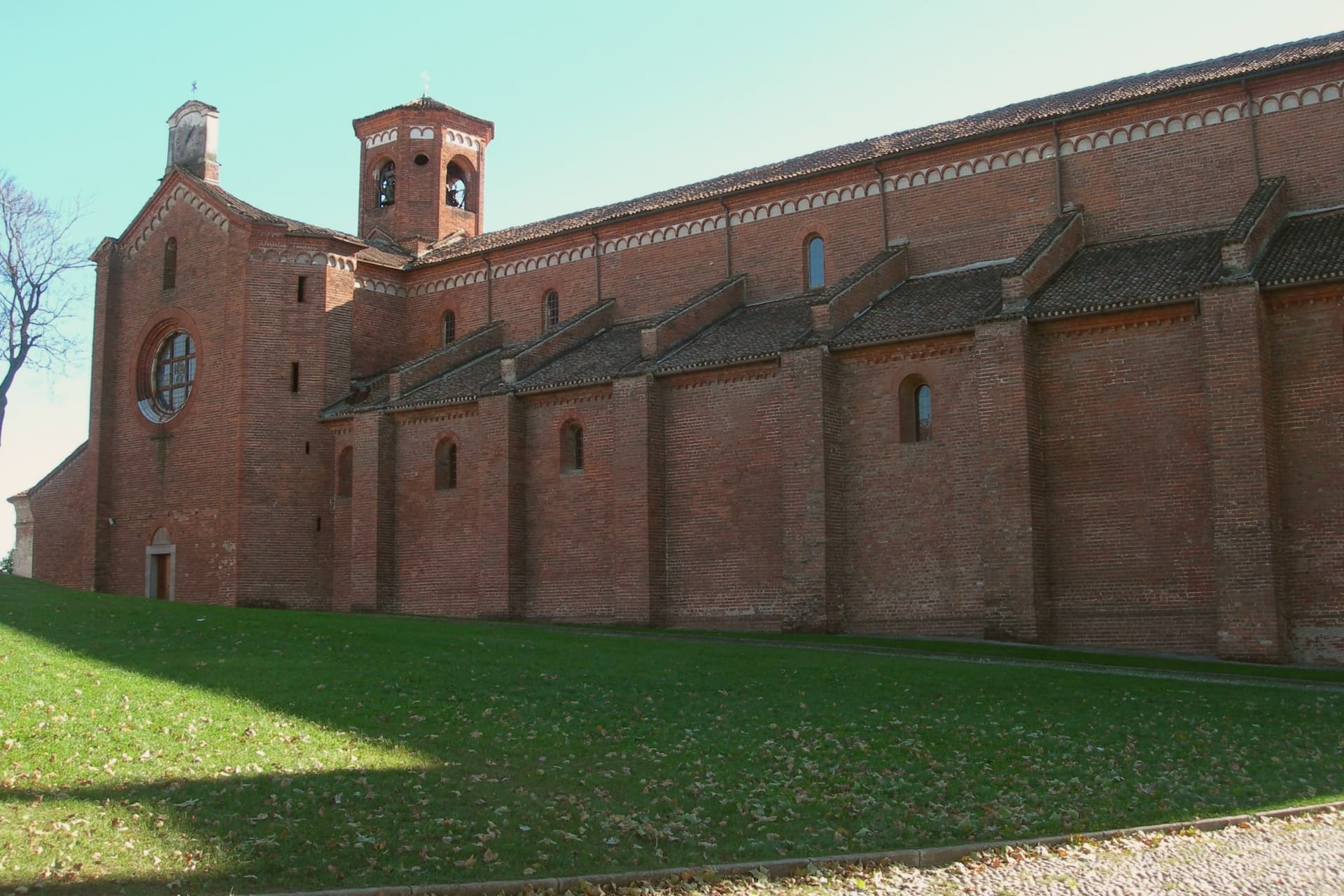
Morimondo sits at 109 meters above sea level on the eastern edge of the Ticino Valley Park, twenty-five kilometers southwest of Milano. The village owes its name and its existence to the Abbey of Santa Maria di Morimondo, founded in 1134 by Cistercian monks sent from the mother house of Morimond in Burgundy.
The community moved in on 11 November 1136, the first Cistercian foundation in Lombardy. Construction on the abbey church began in 1182 and continued until 1296, an evolution from Romanesque toward early Gothic that the abbey still wears in its brick walls.
The introduction of the commendatory system in 1450 sent the community into decline; Giovanni de' Medici, later Pope Leo X, sent eight monks from Settimo Fiorentino in 1499 to revive it. Saint Carlo Borromeo turned the abbey into a parish in 1564, and the French suppression of 1798 dispersed the library's illuminated manuscripts.
The village around the cloister remains small, 1,007 residents, with rice fields, the Naviglio Grande and the Ticino woods on three sides.
Trattoria di Coronate have been named by a guide.
What to see in Morimondo
- Abbazia di Santa Maria di Morimondo. Cistercian abbey founded in 1134, with a church begun in 1182 and finished in 1296, cloister, chapter house and refectory of the original complex.
- Borgo abbaziale. Small medieval village around the abbey, with brick houses, the old monastic mill and the buildings that grew up to serve the community.
- Parco del Ticino. Regional natural park covering the woods, rice fields and oxbow lakes along the river west of the village, walkable from the abbey gate.
How to get to Morimondo
Milano is roughly 60 minutes away by road.
Our tip
April through June and September into October are the months Morimondo earns. The Po Valley around the abbey is green and walkable, the rice paddies of the Ticino fill and drain, the abbey brick warms in afternoon light. July and August bring humid heat and mosquitoes in the rice country, with temperatures crossing thirty-two degrees on bad weeks.
Limone sul Garda
Why visit Limone sul Garda
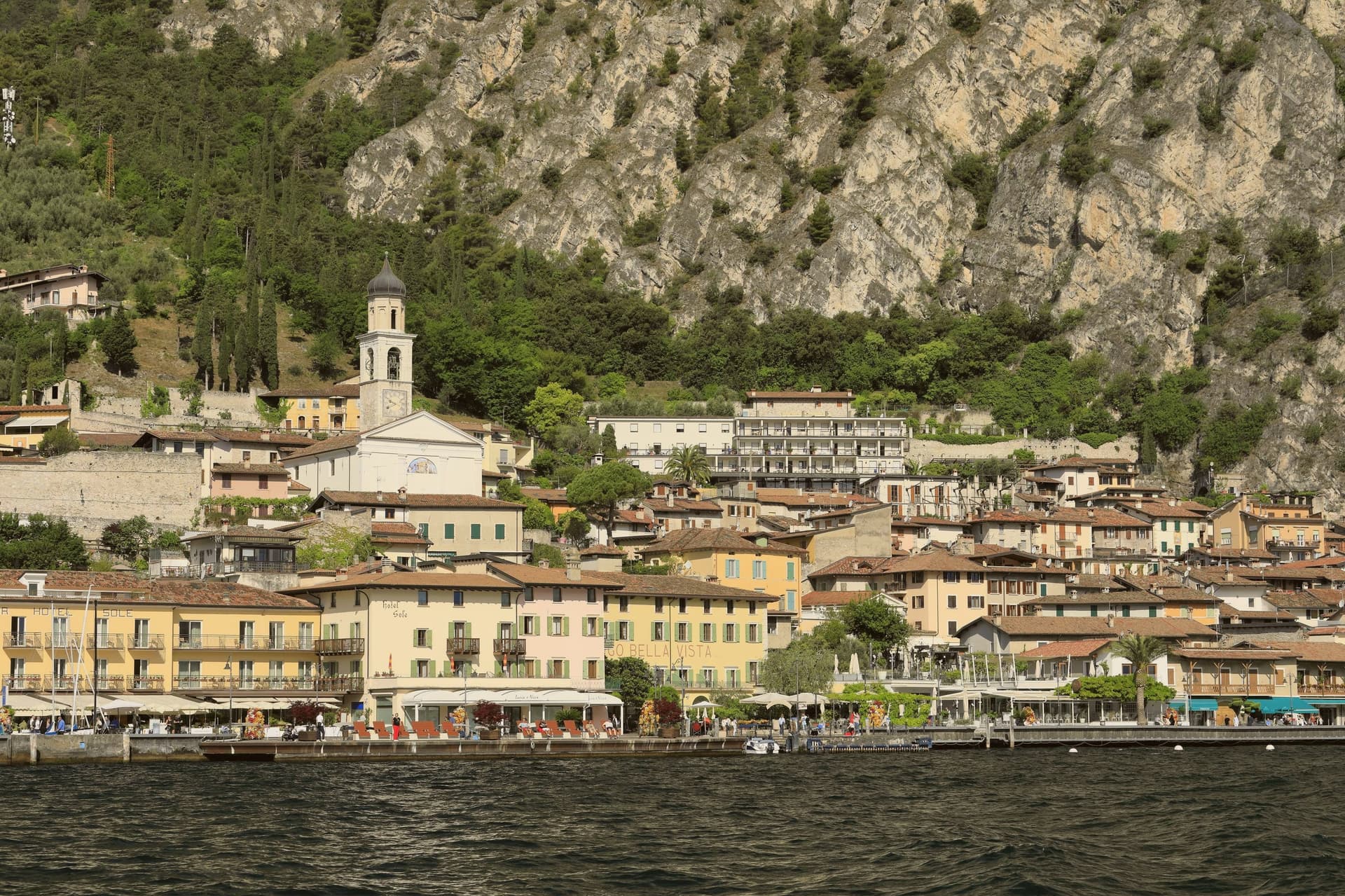
Limone sul Garda sits on the western shore of Lake Garda at the foot of vertical limestone cliffs, the northernmost commercial lemon-growing town in the world at almost 46 degrees north. The Latin limes, meaning border, gave the place its name; the Bettoni counts gave it its industry.
From the seventeenth century, limonaie, stone-pillared greenhouses heated and covered through winter, allowed lemons to be exported to Austria, Germany, Poland and Russia. The road to Riva del Garda, the Gardesana Occidentale, was carved into the cliff and finished in 1932; until then the town reached the outside world by boat or mule track.
In 1974 a Milanese pharmacologist traced a mutant apolipoprotein, ApoA-1 Milano, to a single eighteenth-century resident, Giovanni Pomarelli. Roughly forty of his descendants in town carry the variant, which suppresses cardiovascular disease and helps a handful of residents past one hundred.
Senso Lake Garda Alfio Ghezzi have been named by a guide.
What to see in Limone sul Garda
- Limonaia del Castèl. Restored seventeenth-century lemon greenhouse on stone pillars above the lake, demonstrating the heated wooden cover that protected the trees through winter.
- Chiesa di San Benedetto. Eighteenth-century parish church on the lake front, with a single nave and Baroque altars rebuilt over an older medieval foundation.
- Centro storico. Tight grid of stone alleys between the old harbour and the cliff, with narrow porticoes that survive from the pre-road fishing and citrus village.
How to get to Limone sul Garda
Trento is roughly 57 minutes away by road.
Our tip
April through June and September into October are the months that suit Limone. The lake holds spring temperatures, the lemons flower, the cliff above the town keeps morning shade until noon. July and August fill the lakefront and the cycle path, with peak crowds on weekends drawn from Verona, Milano and German-speaking Europe.
Cassinetta di Lugagnano
Why visit Cassinetta di Lugagnano
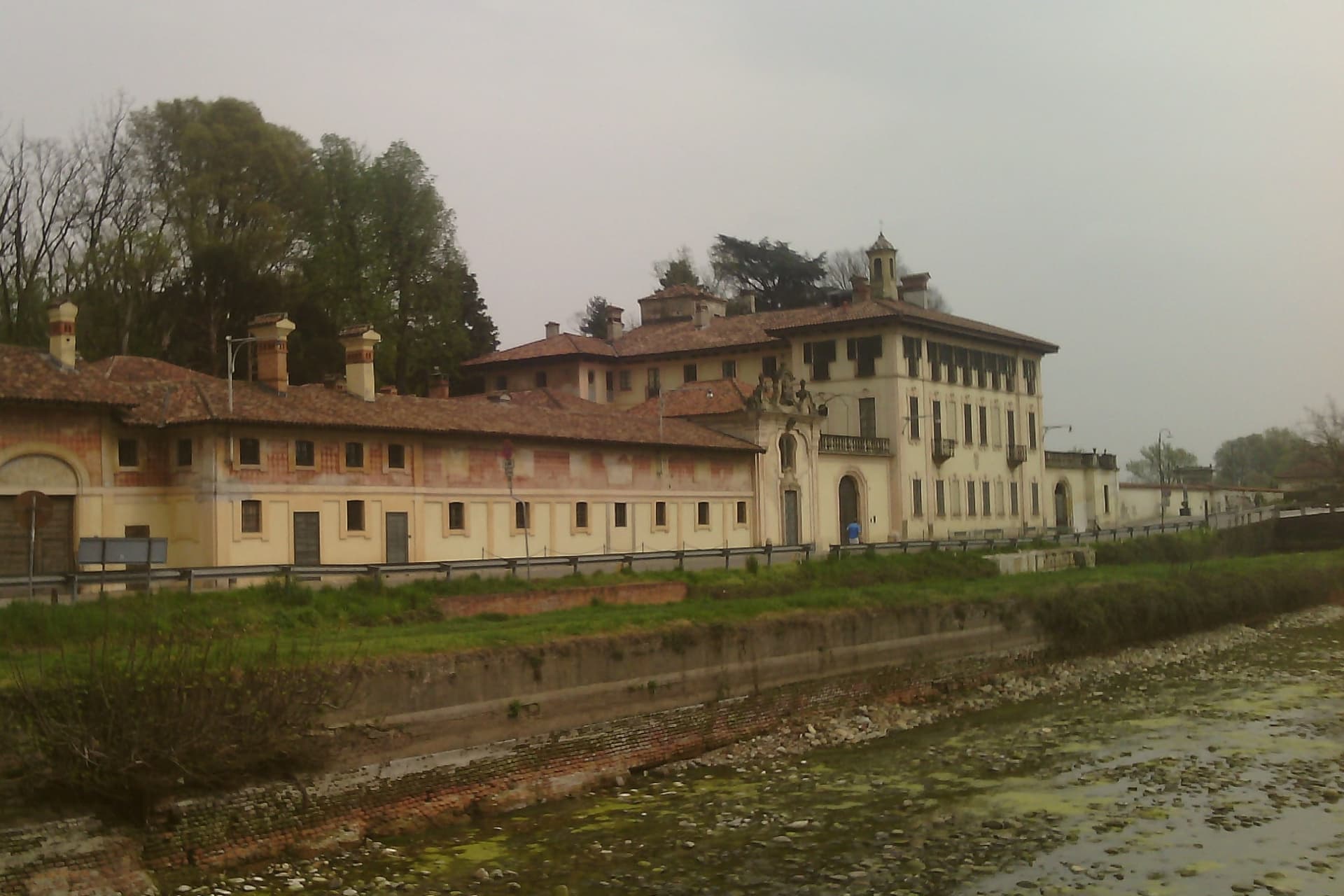
The commune was formed from two older settlements on opposite banks of the canal: Lugagnano, Roman in origin and once called Lucanianus, and Cassinetta, dating to the fourteenth century. The humpbacked bridge that joins them carries the 1584 statue of San Carlo Borromeo.
The town sits at 120 meters, twenty kilometers west of Milan and just outside Abbiategrasso, on the route the Naviglio Grande traces between Milan and the Lago Maggiore, the reason Milanese nobility chose this stretch of water for their country houses from the sixteenth century on. That same 2007 decision to refuse new building and force reuse of existing stock brought the town into the Borghi più belli and Comuni Virtuosi networks.
A town built by families adding country houses along a single waterway, then choosing, four centuries later, to stop building and preserve what stands.
Antica Osteria del Ponte have been named by a guide.
What to see in Cassinetta di Lugagnano
- Villa Visconti Castiglioni Maineri. Formal Italian garden fronting the canal, partly attributed to Ruggero Bascapè.
- Villa Negri-Morosini. Country villa of the Negri-Morosini family on the canal bank, with frescoed interior rooms and outbuildings around a courtyard.
- Villa Trivulzio. Trivulzio family country residence, one link in the chain of aristocratic retreats strung along the water.
How to get to Cassinetta di Lugagnano
There is a railway station in the town, so you can arrive without a car and never need one while you are here. Novara is roughly 37 minutes away by road.
Our tip
April through June and September into October are the months Cassinetta works best. The Naviglio runs full, the towpaths to Abbiategrasso and Robecco sul Naviglio are open to walkers and cyclists, and the villas keep regular visiting hours during the open garden seasons. July and August are humid on the plain; mosquitoes off the canal pick up in late afternoon and the towpath sun gets heavy without shade.
Gardone Riviera
Why visit Gardone Riviera
Gardone Riviera sits at 71 meters on the western shore of Lake Garda, in the province of Brescia. The lake here runs deep against the wall of Monte Pizzocolo, and the climate stays mild enough that lemons, olives and bamboo grow within walking distance of each other.
The town divides between the lakefront and the hill above it. Along the water, Gardone Sotto holds the promenade and harbour; above the centro storico, the ground rises toward the estate grounds and, further up, toward the garden that has drawn on the same mild hillside climate since the start of the twentieth century.
The boathouse on the estate holds a torpedo boat from a 1918 wartime raid, alongside the villa called the Prioria, an amphitheatre and a circular mausoleum. The garden above town spent six decades being arranged, one man working a single hillside into bamboo groves, alpine ravines, Japanese ponds and waterfalls.
The lakefront promenade carries the Bandiera Blu. What holds the town together is that division of altitude: a working lakefront below, and above it two hillside projects, one architectural and one botanical, each built slowly and by a single hand over decades on the same slope.
Il Fagiano, Osteria Antico Brolo, Villa Fiordaliso and 2 more have been named by a guide.
What to see in Gardone Riviera
- Vittoriale degli Italiani. Nine-hectare hillside estate occupied by Gabriele D'Annunzio from 1922 to 1938, with villa, amphitheatre, mausoleum and the cruiser Puglia.
- Nave Puglia. Protected cruiser of the Regia Marina set into the slope above the lake, gifted to D'Annunzio in 1923 and assembled on land at the Vittoriale.
- Giardino Botanico Hruska (Heller Garden). Botanical garden begun around 1901 by Arturo Hruska, with bamboo, Japanese ponds, alpine ravines and waterfalls on a single hillside.
How to get to Gardone Riviera
Brescia is roughly 53 minutes away by road.
Our tip
April through June and September into October are the months western Garda works best. The Vittoriale grounds are walkable, the Heller Garden is in full bloom, and the ferry between Salò and Riva del Garda runs regular service. July and August fill the lakefront with day-trippers and the Vittoriale amphitheatre hosts its summer opera season; afternoons get warm but the lake breeze holds steady.
Varzi
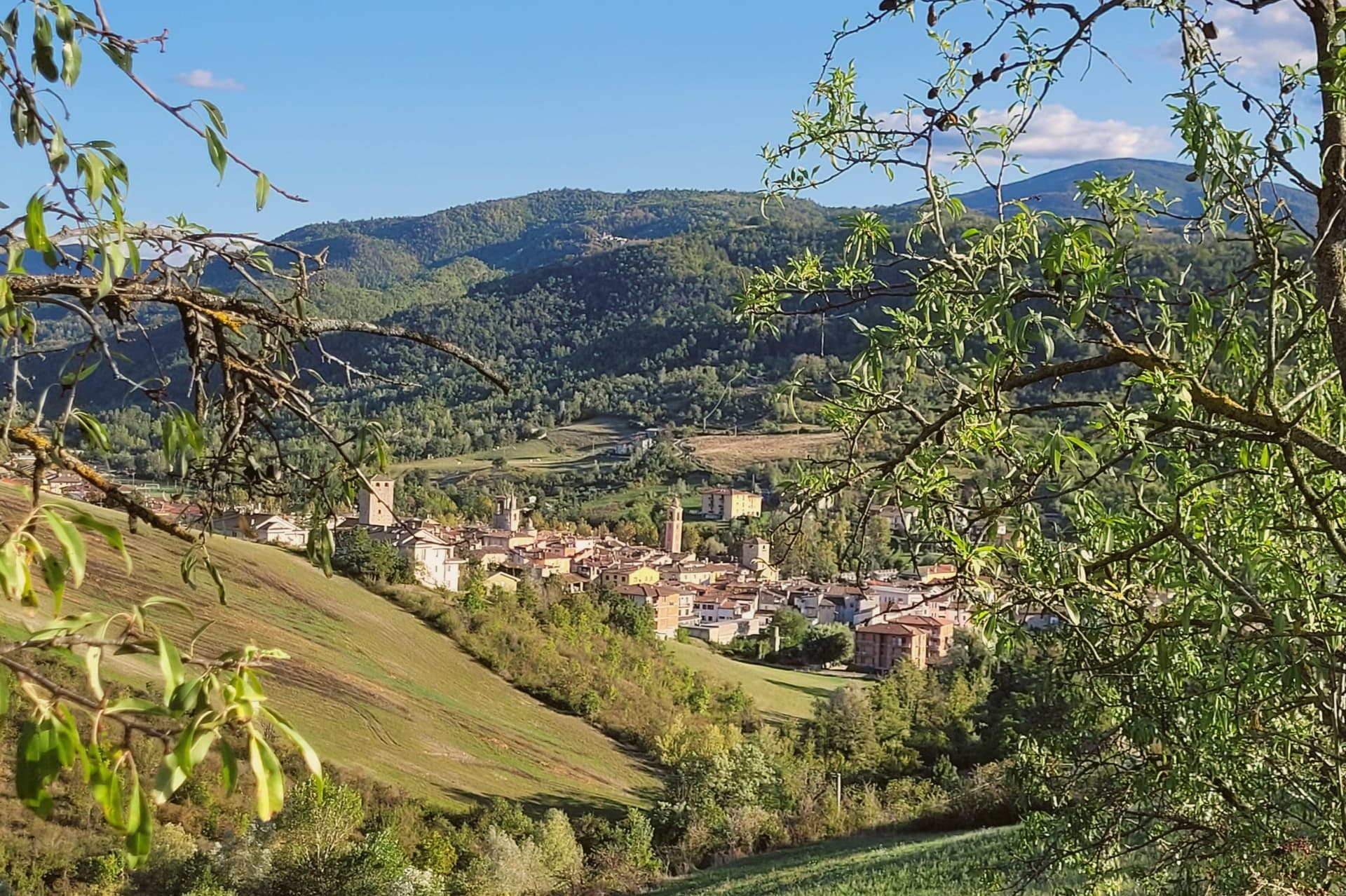
Why visit Varzi
Varzi sits at 416 meters in the Staffora valley of the Oltrepò Pavese, a strip of Lombard Apennine that runs south toward Genova rather than north toward Milano. The name comes from the Ligurian root Var, meaning torrent.
In 1164 the village fell under the Malaspina, the Apennine feudal family who held it as part of their network of upland fiefdoms; the Malaspina tower, called the Torre delle Streghe, dates to the thirteenth century. The Via del Sale ran through Varzi from the Po plain to the Ligurian coast, and the salami invented to feed traders on that route is now one of Italy's first DOP cured meats: Salame di Varzi, recognized by Europe in 1996, produced by a handful of small companies in and around the town.
The 2023 production was 503,561 certified salami. The second Sunday in June, the Sagra del Salame fills the medieval streets.
The Sant'Alberto di Butrio hermitage, fourteen kilometers south through the Apennine, is the older religious anchor of the valley.
Buscone have been named by a guide.
What to see in Varzi
- Torre delle Streghe. Thirteenth-century Malaspina tower in the centro storico, also called the Witches' Tower, the surviving keep of the medieval defenses.
- Castello dei Malaspina. Remains of the Malaspina castle, the seat of the feudal family that held Varzi from 1164 onward.
- Centro storico medievale. Stone streets and arched passages of the medieval borgo, with the surviving village gates from the defensive walls.
How to get to Varzi
Piacenza is roughly 78 minutes away by road.
Our tip
April through October is the right window for the Staffora valley. Mild evenings, dry trails into the surrounding Apennine, and the salami shops in full production. The Sagra del Salame on the second Sunday of June fills the centro storico. Festa della Birra e della Salamella falls in July.
Tremezzina
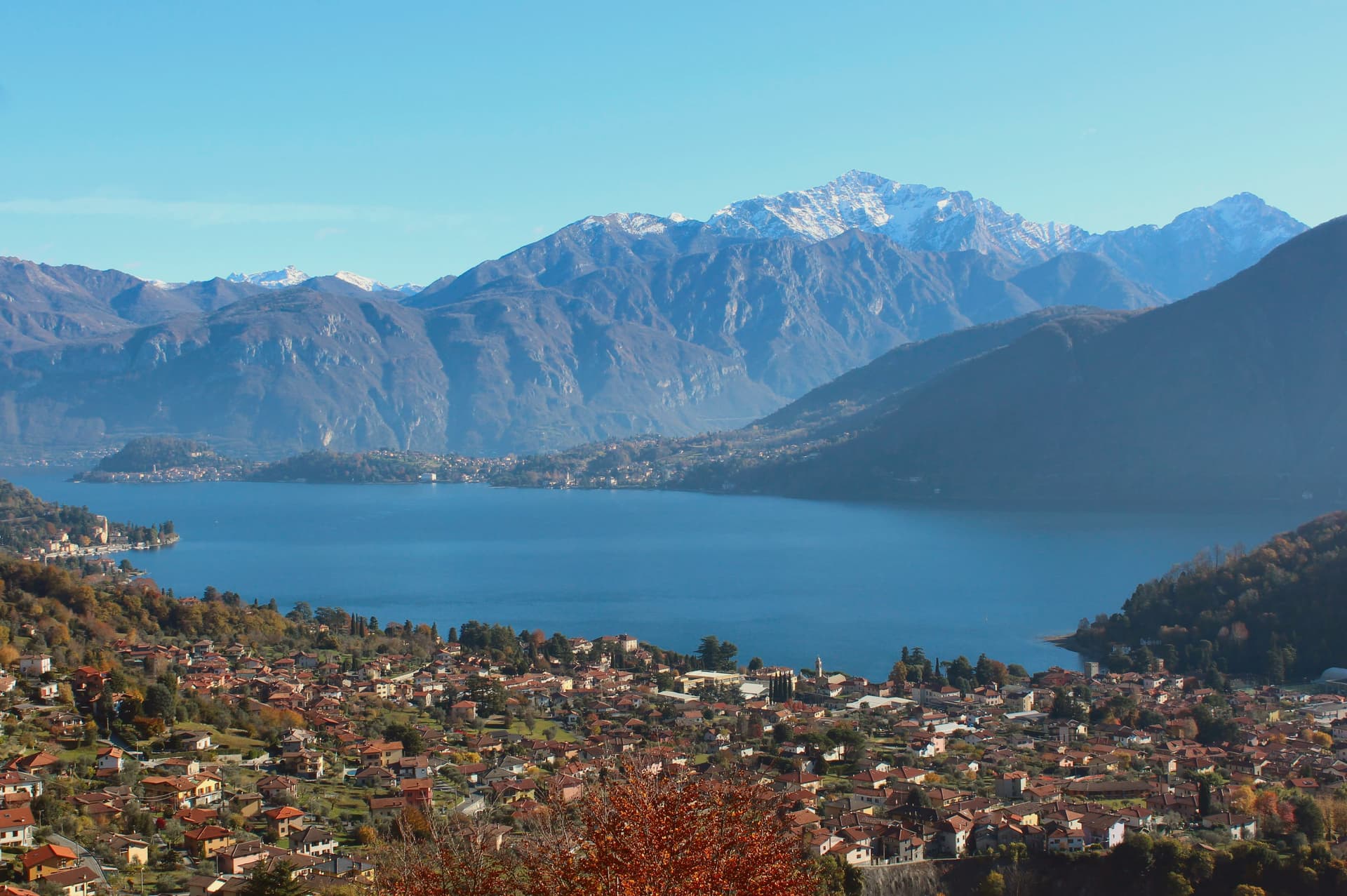
Why visit Tremezzina
Tremezzina was created on 25 May 2014 from the merger of Lenno, Mezzegra, Ossuccio and Tremezzo, four villages along the central western shore of Lake Como facing Bellagio. The new comune holds Villa Carlotta, built in the late 1600s for the Marquis Giorgio Clerici and later named for Princess Carlotta who received it in 1850, with seventeen acres of gardens and one of the great rhododendron collections in Italy.
Isola Comacina, the lake's only island, was the wealthiest place on the lake before Como's destruction of it in 1169; nothing has been built there since, and it is now an archaeological site. The Sacro Monte di Ossuccio is one of nine Lombard and Piedmontese Sacri Monti inscribed by UNESCO in 2003: fourteen Baroque chapels built between 1635 and 1710, climbing the prealpine slope two hundred meters above the lake to a sanctuary of 1532.
Mussolini was captured in Dongo north of here and shot in Giulino di Mezzegra on 28 April 1945; the black cross by the road still marks the spot.
La Terrazza Gualtiero Marchesi del Grand Hotel Tremezzo have been named by a guide.
What to see in Tremezzina
- Villa Carlotta. Late seventeenth-century villa built for the Marquis Giorgio Clerici, with seventeen acres of gardens, more than 150 rhododendron and azalea species, and a sculpture collection.
- Isola Comacina. Lake Como's only island, the wealthiest medieval settlement on the lake until its destruction by Como in 1169, now an archaeological site.
- Sacro Monte di Ossuccio. UNESCO site of fourteen Baroque chapels built 1635-1710, climbing two hundred meters above the lake to the Beata Vergine del Soccorso sanctuary of 1532.
How to get to Tremezzina
Monza is roughly 83 minutes away by road.
Our tip
April through October is the working season on the central lake. April, May and September into October are the strongest: the rhododendrons and azaleas of Villa Carlotta peak in late April, the lake holds afternoon warmth without humidity, the Greenway is open and dry. July and August are full: ferries between Bellagio and Tremezzo run at capacity, parking near Villa Carlotta is gone by ten, and the Sacro Monte climb sits in the afternoon shade.
More from Anywhere Italy
 The best small towns with a serious restaurant in Lombardia
 The best small lake towns that eat well in Lombardia
 The 8 best small towns worth staying overnight in Lombardia
- The 8 best lake towns worth staying overnight in Lombardia
- The 8 best hidden towns that eat well in the province of Brescia
 The best small towns inside a nature park in Lombardia