
Hill towns
Hill towns in Sardinia
16 towns
The ridge and hilltop borghi, sitting around 400 metres. Vineyards below, one road up, walkable once you are there. Good in almost any season.
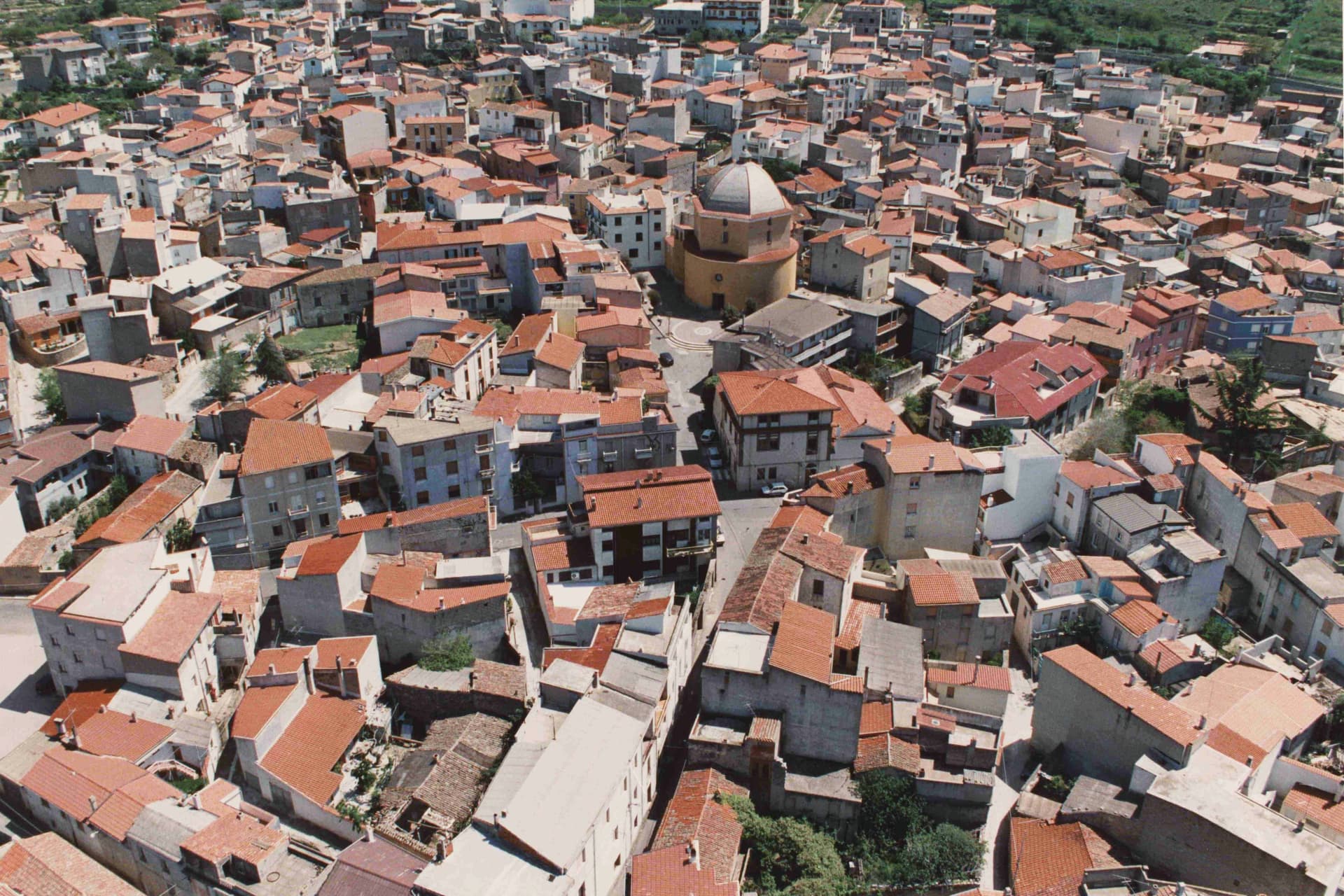
Mamoiada
Province: Nuoro · 644 m
The Barbagia village where the Mamuthones come out on January 17, twelve men in black sheepskins carrying thirty kilos of cowbells.
Tempio Pausania
Province: Sassari · 566 m
The granite capital of Gallura at the foot of Monte Limbara, known for cork, Vermentino DOCG and the largest Carnival in northern Sardinia.
Atzara
Province: Nuoro · 553 m
A Mandrolisai wine village on the western Gennargentu, painted in the early twentieth century by Spanish costumbristas and the Sardinian Scuola di Atzara.
Orroli
Province: Sud Sardegna · 550 m
A Sarcidano village at 550 meters on the Pranemuru basalt plateau, home of the Nuraghe Arrubiu, the only five-tower nuraghe in Sardinia.
Aggius
Province: Sassari · 514 m
A Gallura granite village at 514 meters under the Monti di Aggius, with the largest ethnographic museum in Sardegna and three centuries of bandit history.
Santu Lussurgiu
Province: Oristano · 503 m
A Montiferru village at 503 meters where the Carnival horse race runs through a steep stone street and saddlery has been made since 1923.
Baunei
Province: Nuoro · 480 m
A village at 480 meters on the Monte Santo limestone ridge, its territory holding a national-monument beach and a trek regularly called Italy's hardest.
Jerzu
Province: Nuoro · 450 m
The Cannonau capital of Ogliastra, perched at 450 meters in the eastern Ogliastra interior.
Cuglieri
Province: Oristano · 428 m
A Montiferru town at 428 meters, with the first minor basilica in Sardegna above it and the ruins of Punic Cornus below.
Montresta
Province: Oristano · 405 m
A Planargia hill village of 438 people founded in 1746 by Maniot Greek families who left Corsica for new land in Sardinia.
Dorgali
Province: Nuoro · 387 m
A Supramonte town at 387 meters, with a coastal frazione, a Nuragic village hidden in a sinkhole, and a limestone gorge cut through the massif to the south.
Oliena
Province: Nuoro · 380 m
A Supramonte village at the foot of the massif's highest peak, source of Cannonau Nepente, base camp for Tiscali and the Lanaitto valley.
Samugheo
Province: Oristano · 380 m
Sardinia's textile-weaving capital: a 2,757-resident Mandrolisai borgo where the MURATS regional textile museum, the Tessingiu woven-art biennale, and an active community of weavers on traditional looms keep a knot-stitch tradition alive.
Seneghe
Province: Oristano · 305 m
An olive-oil village on the eastern slope of Montiferru, 25 km from Oristano, that doubles as Sardegna's poetry capital each September.
Barumini
Province: Sud Sardegna · 202 m
A Marmilla village whose nuraghe became Sardegna's first UNESCO site.
Iglesias
Province: Sud Sardegna · 200 m
Sardinia's medieval mining capital: a 25,000-resident Pisan-Aragonese walled town in the Sulcis-Iglesiente metalliferous district, with an intact Gothic centro storico and UNESCO-recognised mining heritage at Monteponi just outside town.
The slow-trip planner
Plan a slow trip across the towns travelers skip.
Answer five questions. We will shape a geographically coherent slow trip from the 1,000 Italian towns most travelers skip. Yours to save and share.
From elsewhere in Italy
Five more towns to discover
Visso
Province: Macerata
The northern Sibillini gate at 607 meters where the Nera meets the Ussita, holding one of two surviving manuscripts of Leopardi's L'Infinito.
Goriano Sicoli
Province: L'Aquila
At 720 meters in the Subequana valley, a medieval village drawn by M.C. Escher in 1929 keeps a May ritual folklorists trace to Demeter.
Ugento
Province: Lecce
A Messapian-Roman town five kilometers from the Ionian, where a Baroque castle sits on the walls of the ancient city of Ozan.
Fontanellato
Province: Parma
A Parma-plain town built around the Rocca Sanvitale, the moated fortress at its center.
Pescina
Province: L'Aquila
A Marsica town at 735 meters, on the rim of the drained Fucino basin, that lost five thousand of six thousand people in a single morning in 1915.