
Sardinia · Oristano
Samugheo
Sardinia's textile-weaving capital: a 2,757-resident Mandrolisai borgo where the MURATS regional textile museum, the Tessingiu woven-art biennale, and an active community of weavers on traditional looms keep a knot-stitch tradition alive.
- Best time
- Apr–Jun, Sep–Oct
- By car
- 1 h 48 min from Cagliari
- Population
- 2,757
Known for
SARDINIA'S TEXTILE CAPITAL
The MURATS regional textile museum plus 20 active weaver workshops. Pibiones knot-stitch tradition continuous for 500+ years.
BORGO AUTENTICO
Italian small-village quality mark for community life and authenticity. The traditional-costume Festa di San Basilio 2 January is the proof.
MANDROLISAI DOC
Granite-soil Cannonau-Monica-Bovale blend across 7 villages. Samugheo holds the largest production share. Distinctive mineral profile.
TESSINGIU BIENNALE
Most important Italian woven-arts contemporary exhibition. Next edition 2026 at MURATS.
When to visit
Best · Apr–Jun, Sep–Oct
- J12°
- F14°
- M15°
- A19°
- M23°
- J29°
- J34°
- A32°
- S27°
- O23°
- N17°
- D14°
- Best
- Hot or crowded
- Quiet
- Mostly closed
Daytime averages, 2020–2024. Weather data by Open-Meteo.com.
The festa: San Sebastiano, 20 January
Why come
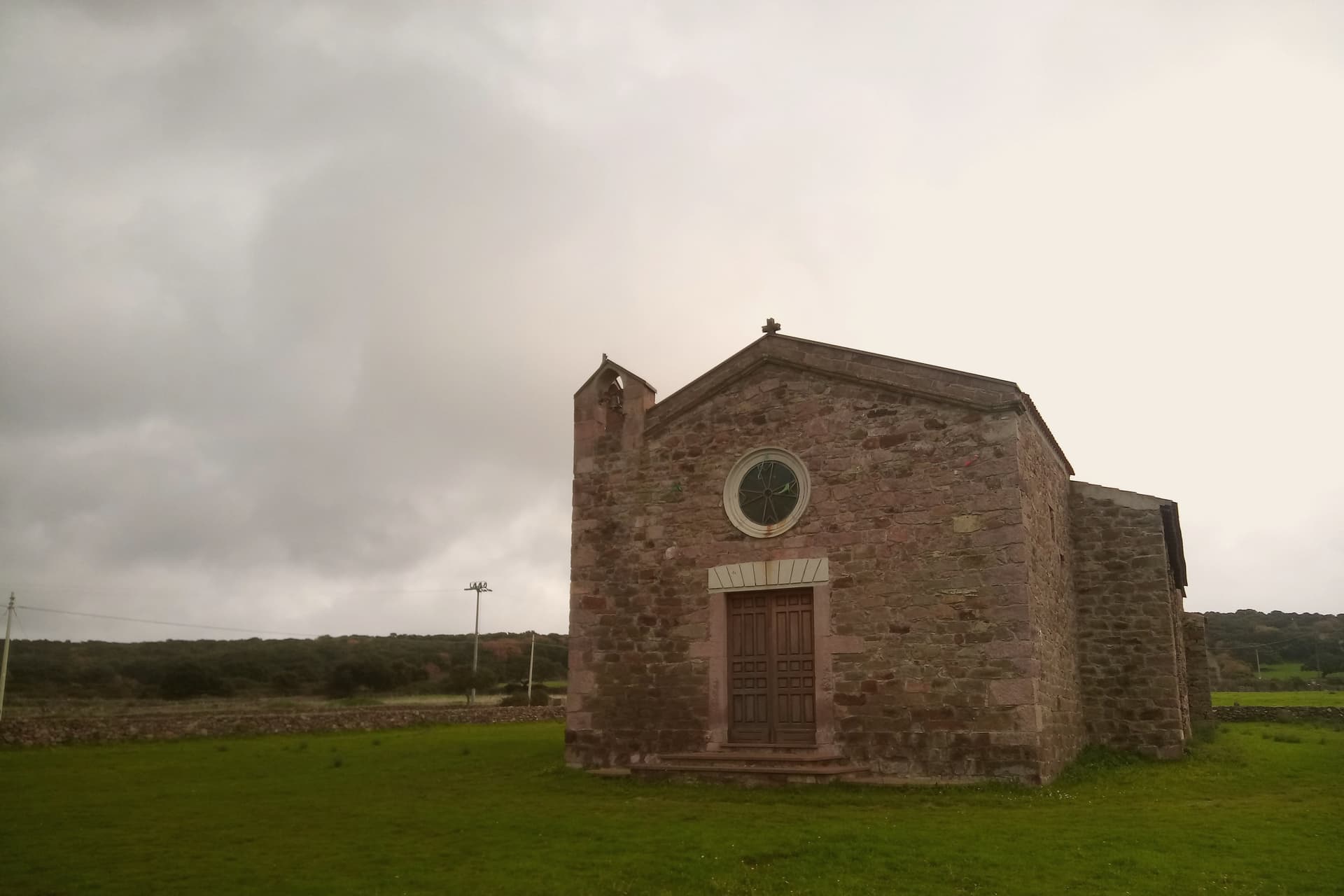
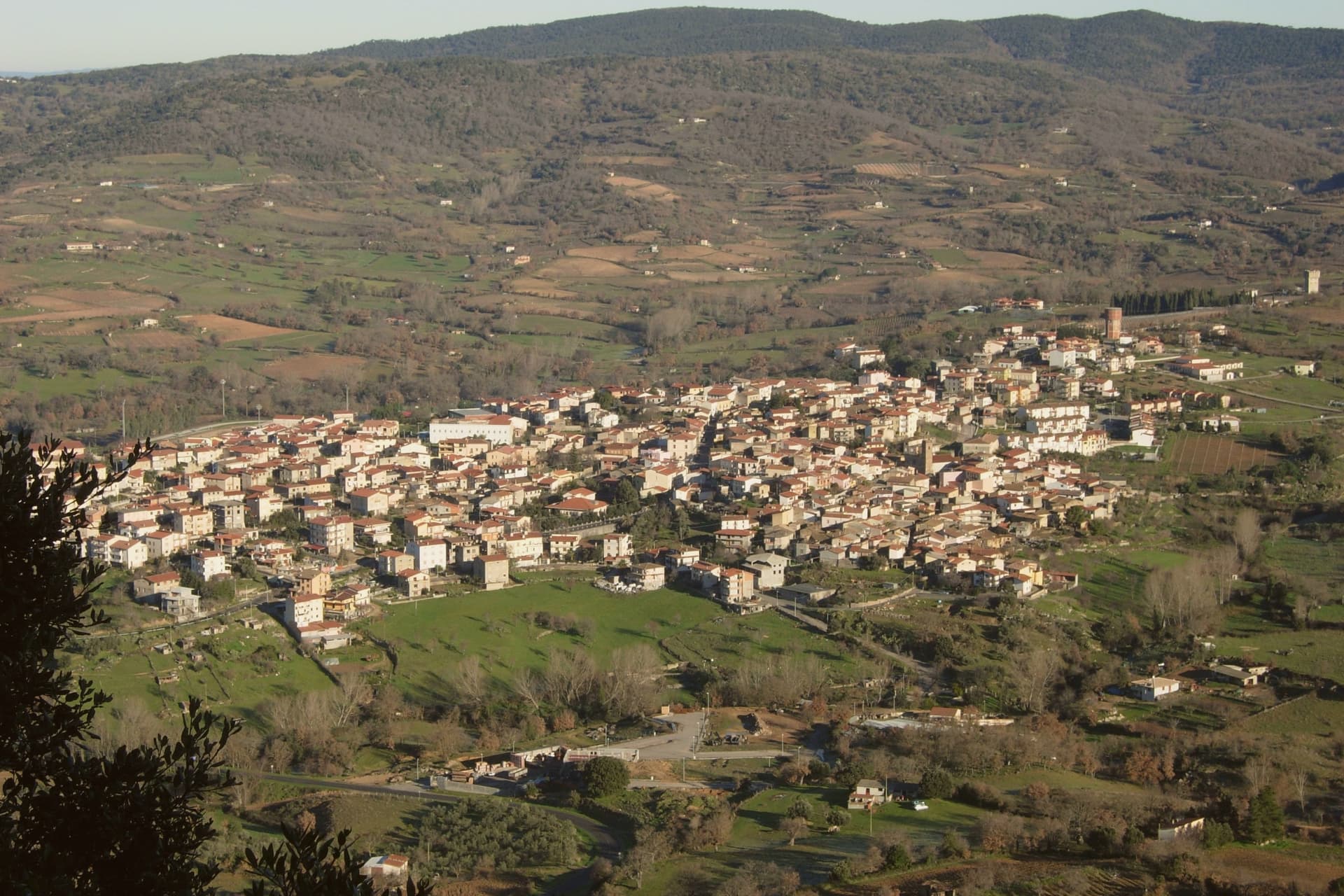
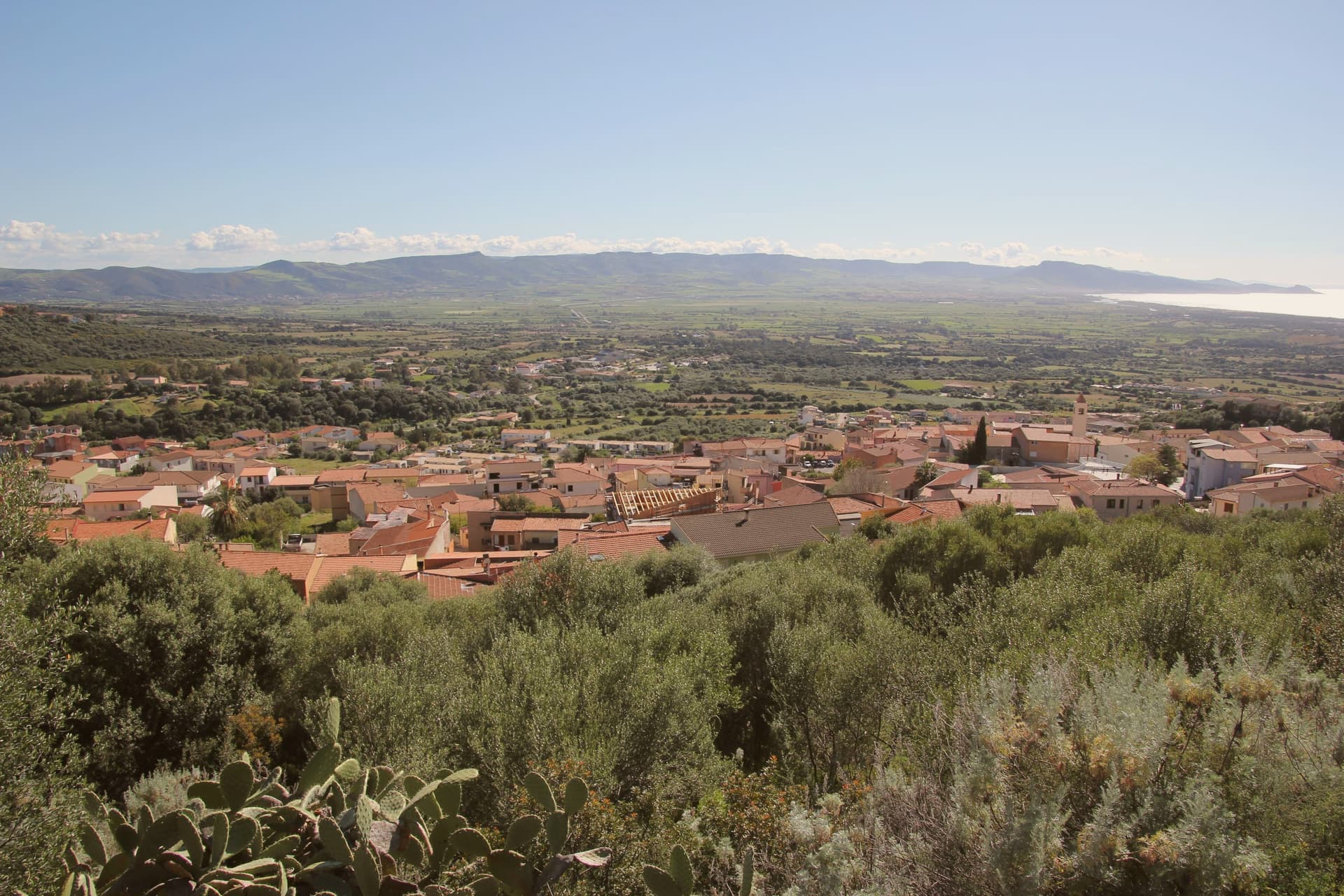
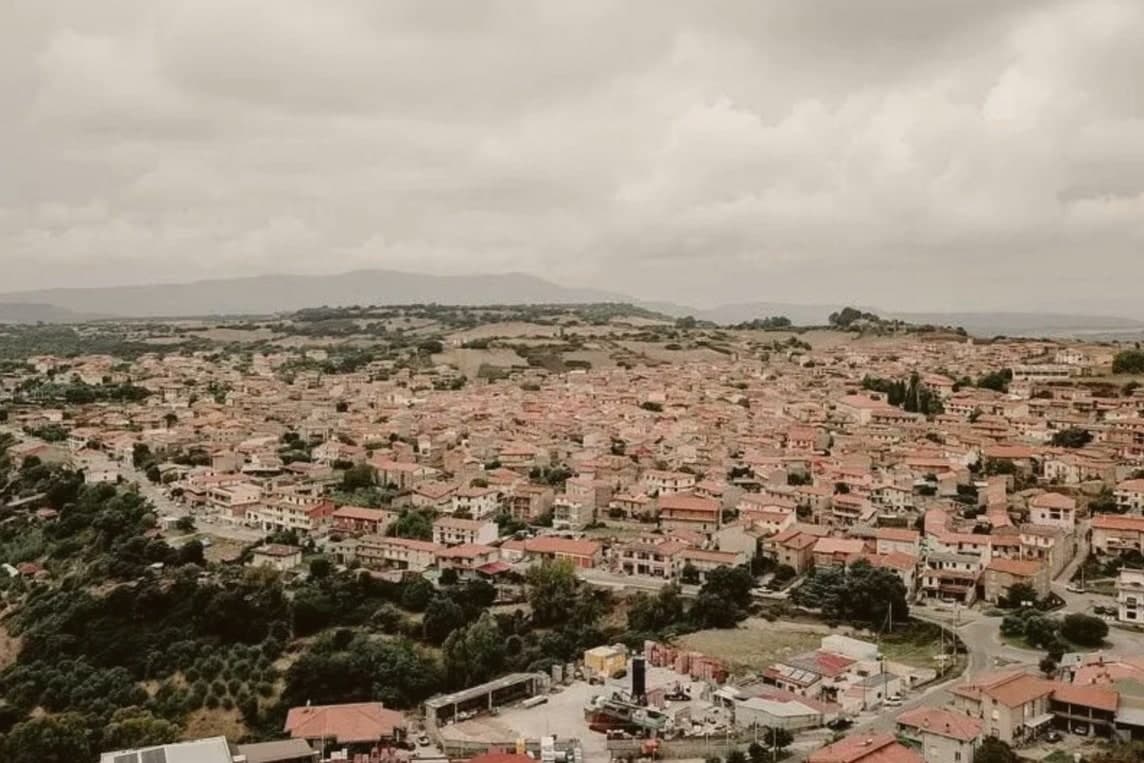
Samugheo sits 35 km east of Oristano, in the granite-soil heart of inland Sardinia, in the Mandrolisai district. The centro is built of granite-stone houses, and within it stand the Chiesa di San Sebastiano and the parish church of Santa Maria Assunta, which underwent restoration of its own. Both churches give the weaving quarter a frame that is older than its textile institutions, a reminder that the borgo's civic and religious life ran well before the museum and the biennale arrived.
The surrounding Mandrolisai DOC zone reaches across seven villages, among them Atzara, Sorgono, Tonara and Desulo, with Samugheo holding the largest share of the zone's production by volume: a wine town as well as a weaving one, and a Città del Vino to match its Borgo Autentico standing. To the east the land rises into the Barbagia di Belvì and the Gennargentu mountains; to the west the Tirso river valley opens toward the Sinis coast, where the Tharros site and the Cabras Bronze Age statues lie some 50 km distant, a different Sardinia of sea and ruins set against the inland granite the town is built from. The table follows the same inland logic: porceddu, pane carasau, su gattou, seadas and pecorino sardo, with the Mandrolisai DOC red the standing accompaniment, poured from vines rooted in the same ground the weavers' houses stand on. The museum documents the wider island's weaving traditions as much as the town's own, the biennale pulls in makers from outside Sardinia, and the January procession puts the local weave on the street rather than behind glass: three different ways the same craft is kept in circulation, institutional, international, and lived.
The Sunday letter
Samugheo is on our list. Its letter is still to come.
We are writing about all 1,000 of these towns, one at a time, in a free letter every Sunday: the photo, the food, the festa. That is our mission. Sign up and you will be there when Samugheo comes up. By Peter & Sophia, from Pietrasanta.
How to get there
From Cagliari (CAG), about 2 hours by car.
What to see
MURATS — Museo Regionale Arte Tessile Sarda
Housed in the former Convento dei Cappuccini, with pieces ranging from historical weaving to contemporary commissions covering the full spread of Sardinian textile traditions, not only Samugheo's own knot-stitch but lace, carpet and sail-weaving styles from elsewhere on the island.
Active weaver workshops
Pedal looms still running in workshops scattered through the centro, open to visits and direct commissions rather than confined to a museum setting.
Tessingiu biennale (next 2026)
Opens biennially in the MURATS spaces with international invited weavers and works commissioned for the occasion, drawing exhibitors from outside Sardinia into the same rooms that hold the permanent collection.
Mandrolisai DOC and Cannonau cellars
Cellars and tastings in town, set among the granite-soil vineyards that ring the centro, giving a direct look at the ground that produces the DOC's mineral character.
Festa di San Basilio Magno (2 January)
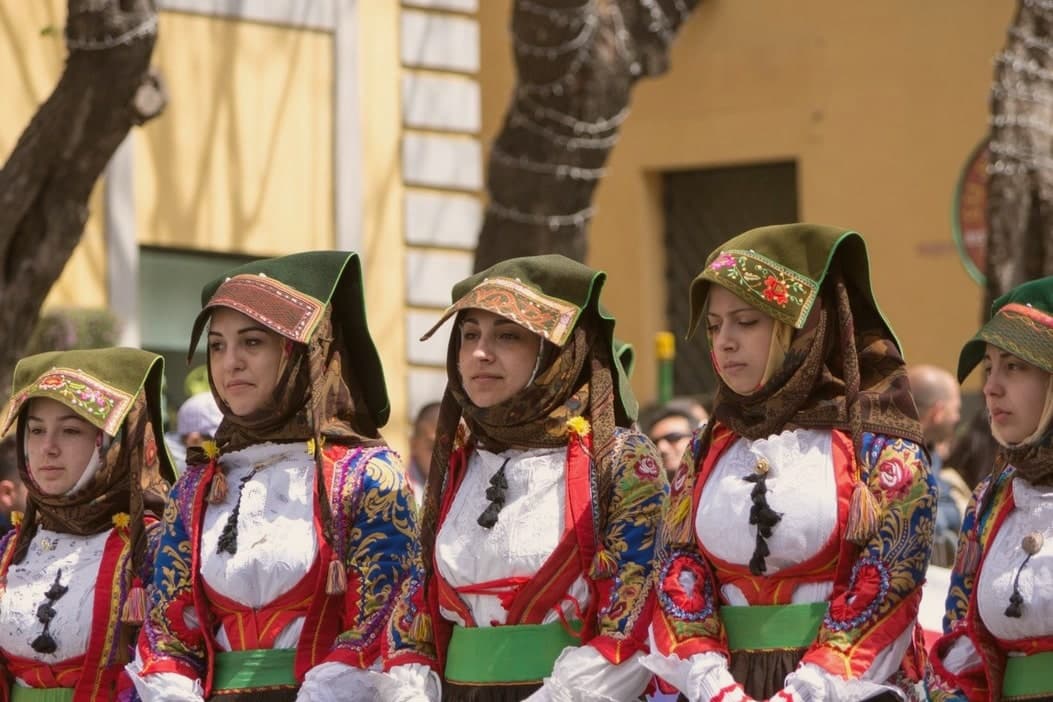
The Sa Pippia de Maju procession brings the whole community out in costume, the woven pieces from the local workshops worn rather than displayed, the town's one day where the textile tradition is on the street instead of behind glass.
The slow-trip planner
Building a trip? Find where Samugheo fits in a slow Italy circuit.
Answer five questions. We will shape a geographically coherent slow trip from the 1,000 Italian towns most travelers skip. Yours to save and share.
Through the year
What happens here
Feasts and festivals that come back year after year. We give the month rather than the date, because the date moves and the month rarely does. Check with the source before you plan a journey around one.
Tessingiu - Mostra dell'artigianato sardomarket
usually held between July and September. Eventi in Sardegna (eventiinsardegna.it)
Living here
- Population 2,757
- In-betweeni
- Pharmacy in town
- High school within a 30-minute drive
- Nearest airport Cagliari, 2 h 2 min drive
- Regional capital Cagliari, 1 h 49 min drive
Common questions
- What is Samugheo known for?
- Sardinia's textile-weaving capital: a 2,757-resident Mandrolisai borgo where the MURATS regional textile museum, the Tessingiu woven-art biennale, and an active community of weavers on traditional looms keep a knot-stitch tradition alive.
- Where is Samugheo?
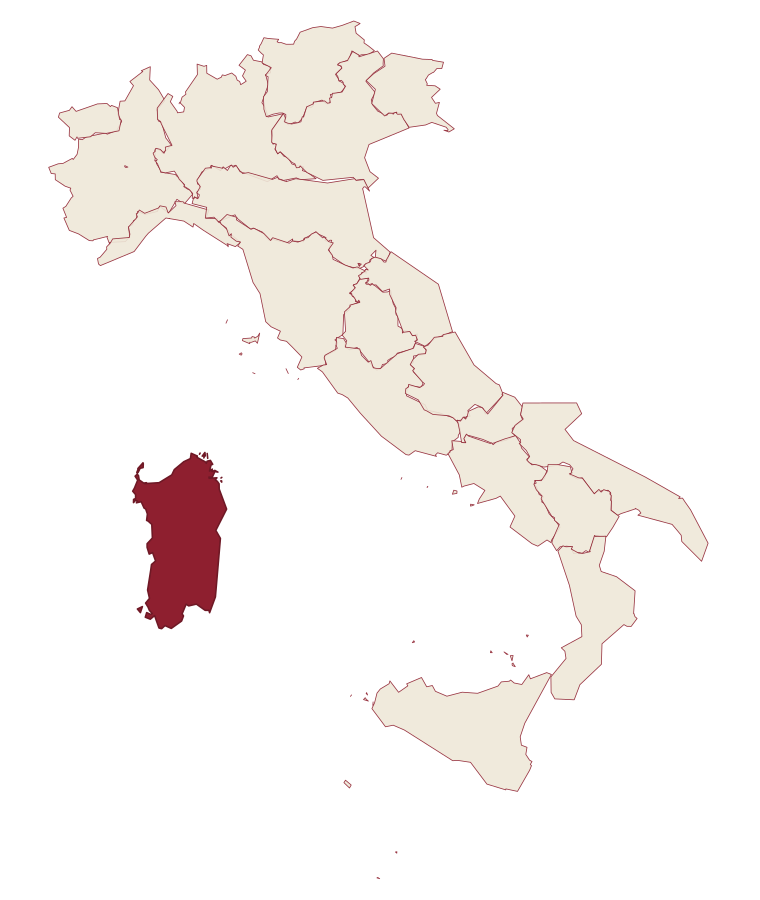
- Samugheo is a comune in the province of Oristano, in Sardinia, at 380 meters above sea level.
- What is the nearest airport to Samugheo?
- Cagliari (CAG), about 2 hours by car.
- When is the best time to visit Samugheo?
- Best in Apr–Jun, Sep–Oct. July is the warmest month, averaging 34 degrees, and January the wettest, with about 12 rain days.
- Is there a sagra or a festival in Samugheo?
- Yes. Tessingiu - Mostra dell'artigianato sardo. July is when the first of them falls.
- Which other towns are like Samugheo?
- Santu Lussurgiu, Barumini and Campo Ligure.
- How many people live in Samugheo?
- 2,757 at the 2023 count.
Tags & datadesignations · numbers · sources
Recognised as
The numbers
- Elevation: 380 m
- Population: 2,757
- Surface area: 81.28 km²
These figures were compiled from public directories: ISTAT, OpenStreetMap and Wikidata, and from the official listings of the guides named on this page. Town details change; verify with official sources before you travel.
Similar
Towns like Samugheo
Santu Lussurgiu
Province: Oristano
both under 3,000 people · both hill towns
Barumini
Province: Sud Sardegna
both under 3,000 people · both hill towns
Campo Ligure
Province: Genova
both under 3,000 people · both hill towns
Montefiore Conca
Province: Rimini
both under 3,000 people · both hill towns
Stazzema
Province: Lucca
both under 3,000 people · both hill towns
Castroreale
Province: Messina
both under 3,000 people · both hill towns
💎 Borghi Autentici
More Borghi Autentici towns in Sardinia
Aggius
Province: Sassari
A Gallura granite village at 514 meters under the Monti di Aggius, with the largest ethnographic museum in Sardegna and three centuries of bandit history.
Aritzo
Province: Nuoro
A Mandrolisai mountain village at 800 meters in chestnut and hazelnut forest, where snow once travelled out in straw and came back as lemon sorbet.
Cuglieri
Province: Oristano
A Montiferru town at 428 meters, with the first minor basilica in Sardegna above it and the ruins of Punic Cornus below.
Galtellì
Province: Nuoro
Grazia Deledda's 'Canne al vento' set: a 2,354-resident Baronia borgo in Sardinia's northeast, with the entire centro recognised as the Parco Letterario Grazia Deledda for being the literal setting of her 1913 Nobel-trajectory novel.
Masullas
Province: Oristano
A Marmilla village at 129 meters where a 17th-century Capuchin convent houses fossils, minerals, and volcanic history.