
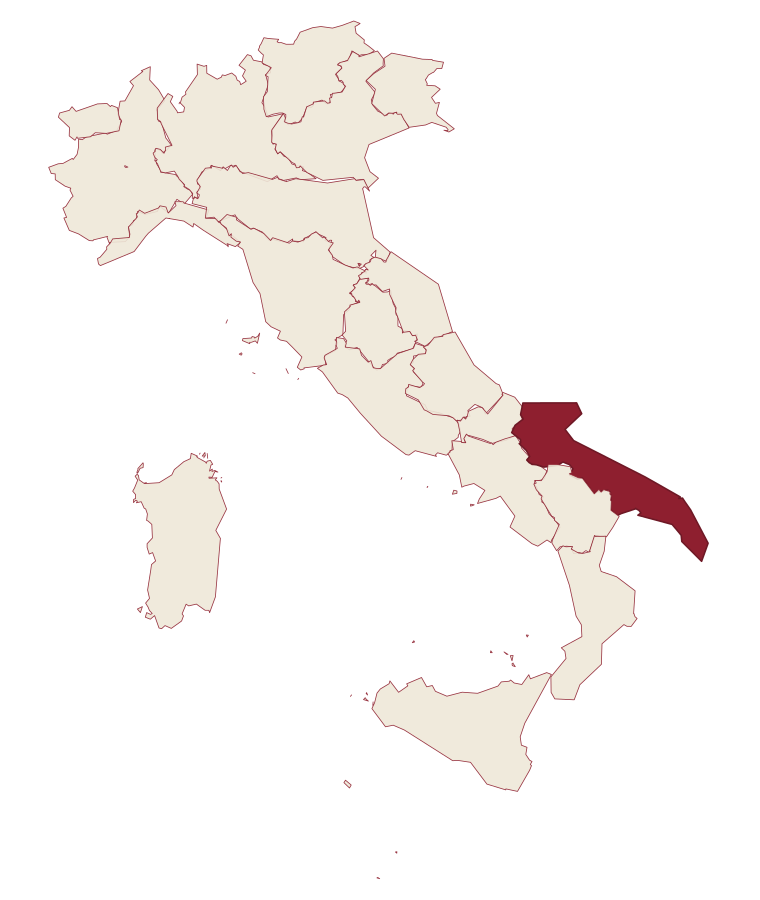
Apulia · Lecce
Vernole
A Salento commune ten kilometers from Lecce whose frazione of Acaya is the only Renaissance fortified town in southern Italy.
- Best time
- May–Sep
- By car
- 18 min from Lecce
- Population
- 6,730
Known for
ACAYA
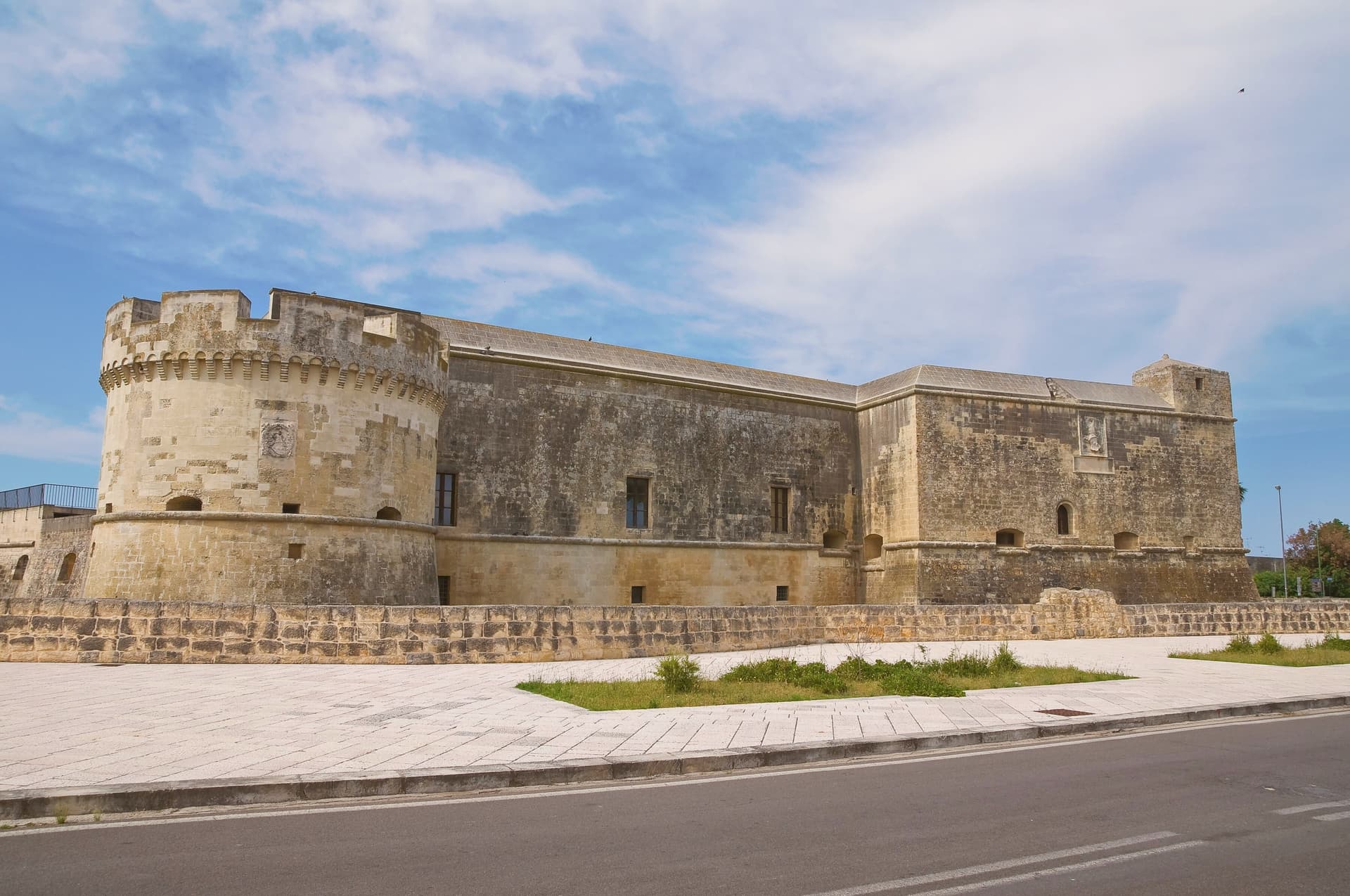
Sixteenth-century Renaissance fortified town, the only surviving example in southern Italy, with castle, moat and orthogonal street grid intact.
LE CESINE
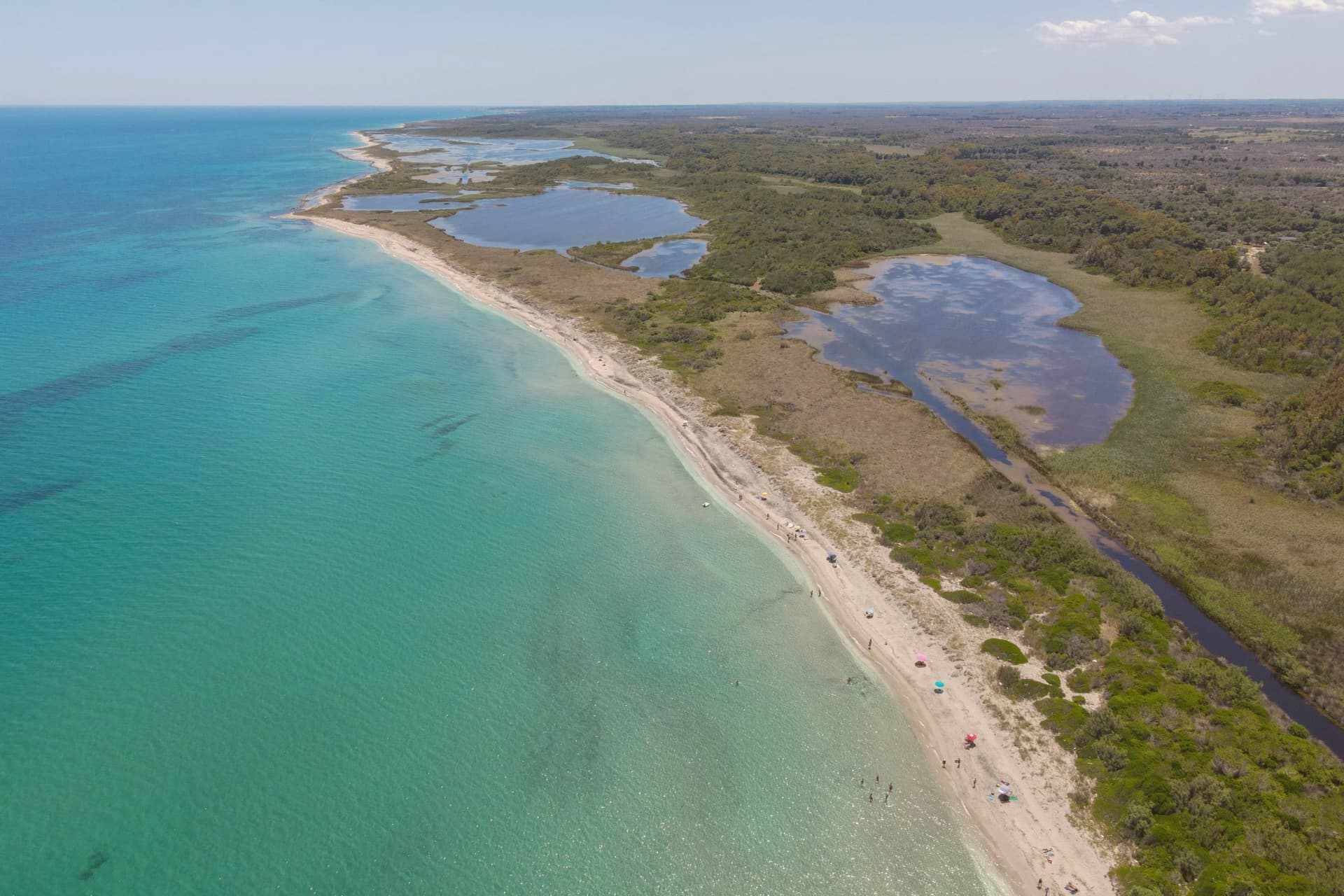
WWF coastal wetland reserve on the Adriatic, with dune ridges, brackish lakes and migratory bird populations between the two seas of the Salento.
DELL'ACAYA
The barony of Gian Giacomo dell'Acaya, royal engineer to Charles V, who built the citadel as a forward bastion against Ottoman raids on the Salento.
When to visit
Best · May–Sep
- J14°
- F15°
- M15°
- A18°
- M23°
- J28°
- J31°
- A31°
- S27°
- O23°
- N19°
- D15°
- Best
- Hot or crowded
- Quiet
- Mostly closed
Daytime averages, 2020–2024. The sea is warmest in August at 28° and coldest in February at 14°. Weather data by Open-Meteo.com.
The festa: Sant'Anna, 25 July
Why come
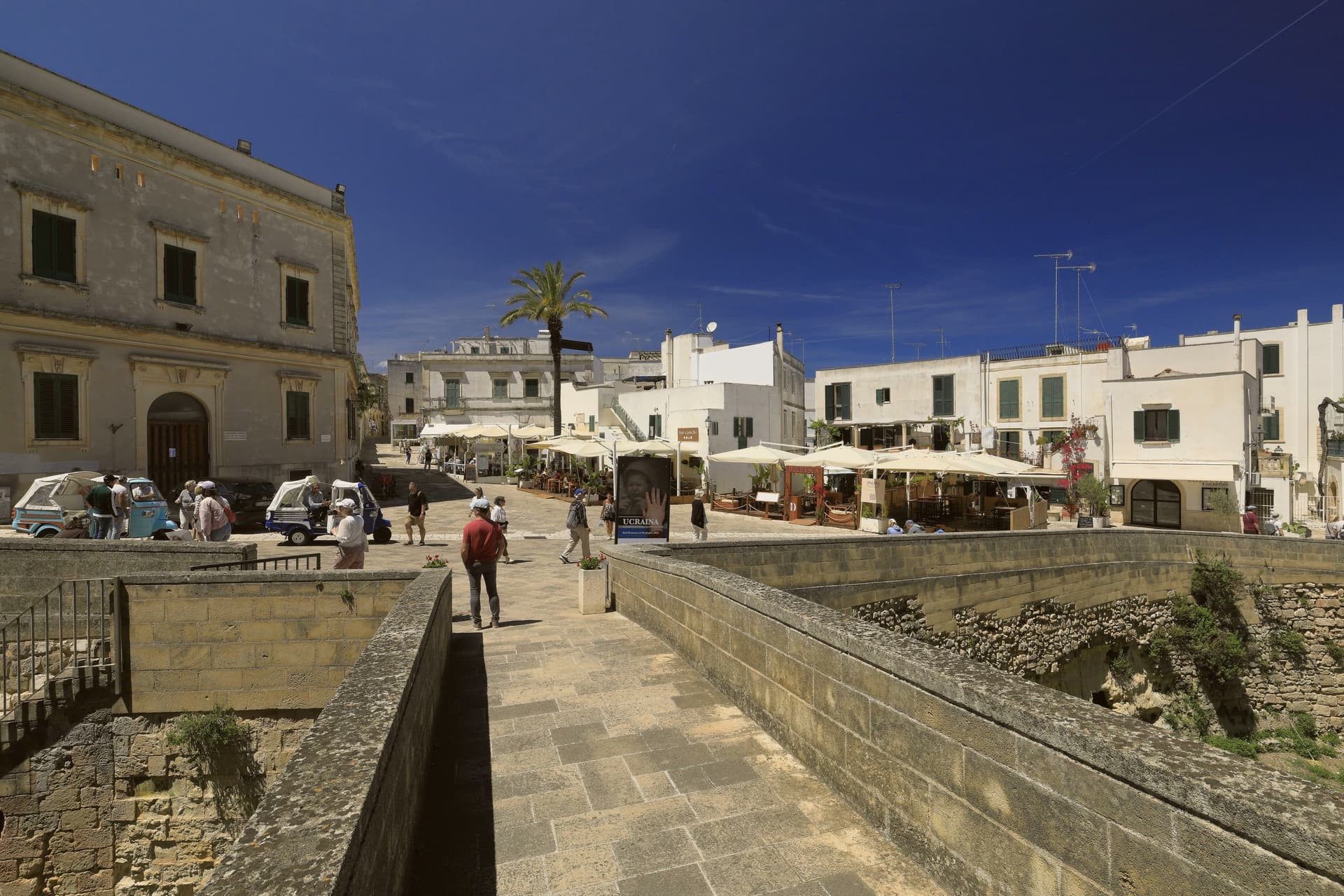
Vernole sits ten kilometers southeast of Lecce, on the line between the city and the Adriatic, with a small stretch of coast of its own and a string of frazioni that includes Strudà, Pisignano, Vanze and Acaya. The village at Acaya was originally called Segine and was granted as a fief in 1294 by Charles II of Anjou to Gervasio dell'Acaya, well before its Renaissance rebuilding. That earlier history is easy to miss standing in the citadel today, where the grid of streets and the walled perimeter read as a single sixteenth-century act rather than a place with a medieval name underneath it.
The commune itself is split between this inland fortified core and the coast, where the Cesine reserve holds the dune system ten kilometers east of the citadel. Vernole's own centro, with its rebuilt mother church, sits apart from both, the administrative middle point between a Renaissance curiosity and a wetland on the Adriatic. The three parts, town, citadel and coast, rarely overlap in a visitor's day: whichever draws people to the commune, the other two are reached separately, not passed through.
The Sunday letter
Vernole is on our list. Its letter is still to come.
We are writing about all 1,000 of these towns, one at a time, in a free letter every Sunday: the photo, the food, the festa. That is our mission. Sign up and you will be there when Vernole comes up. By Peter & Sophia, from Pietrasanta.
Read on
Vernole in our articles
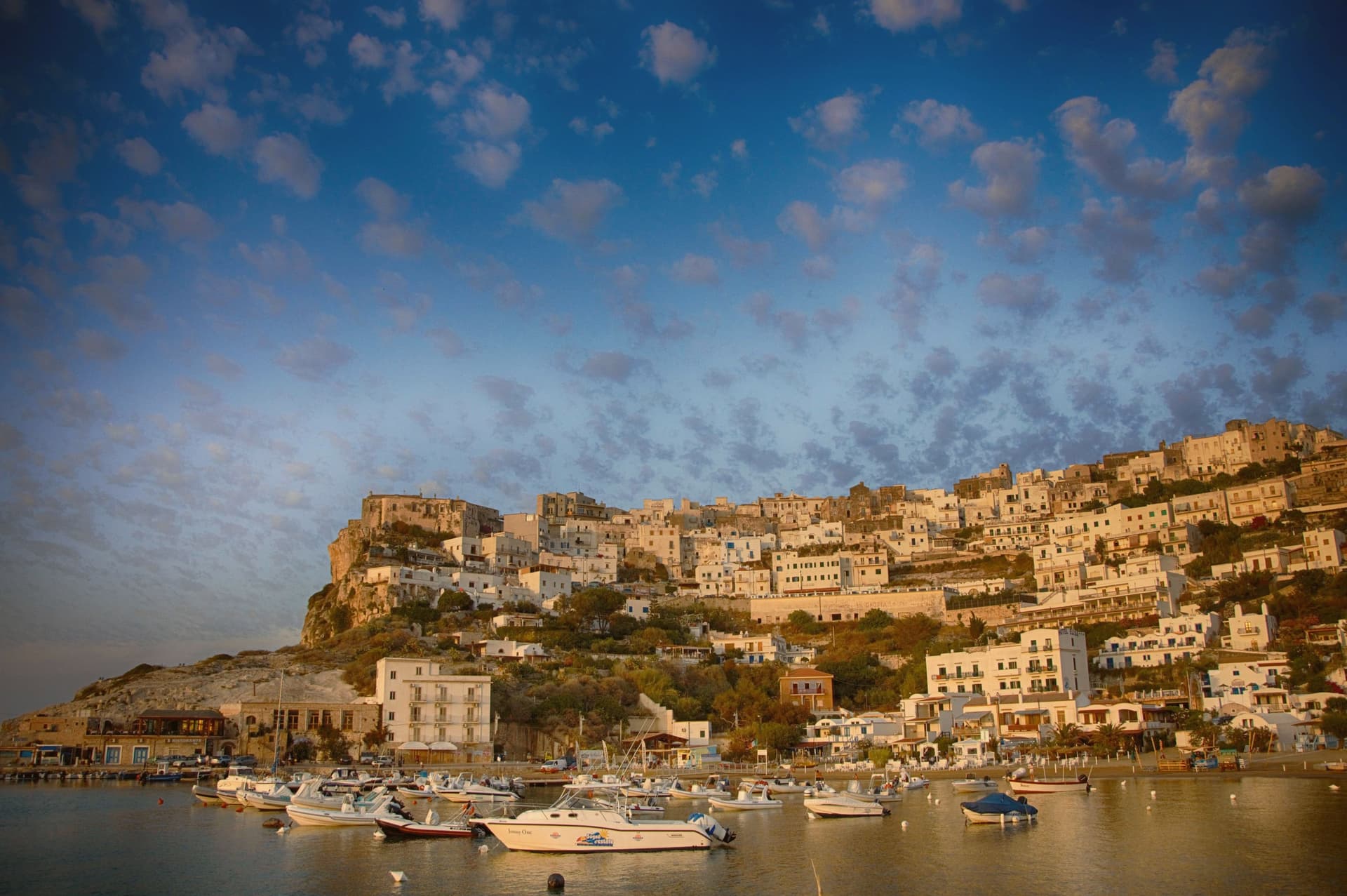
 The best coastal towns within an hour of Lecce6 towns, Vernole among them.
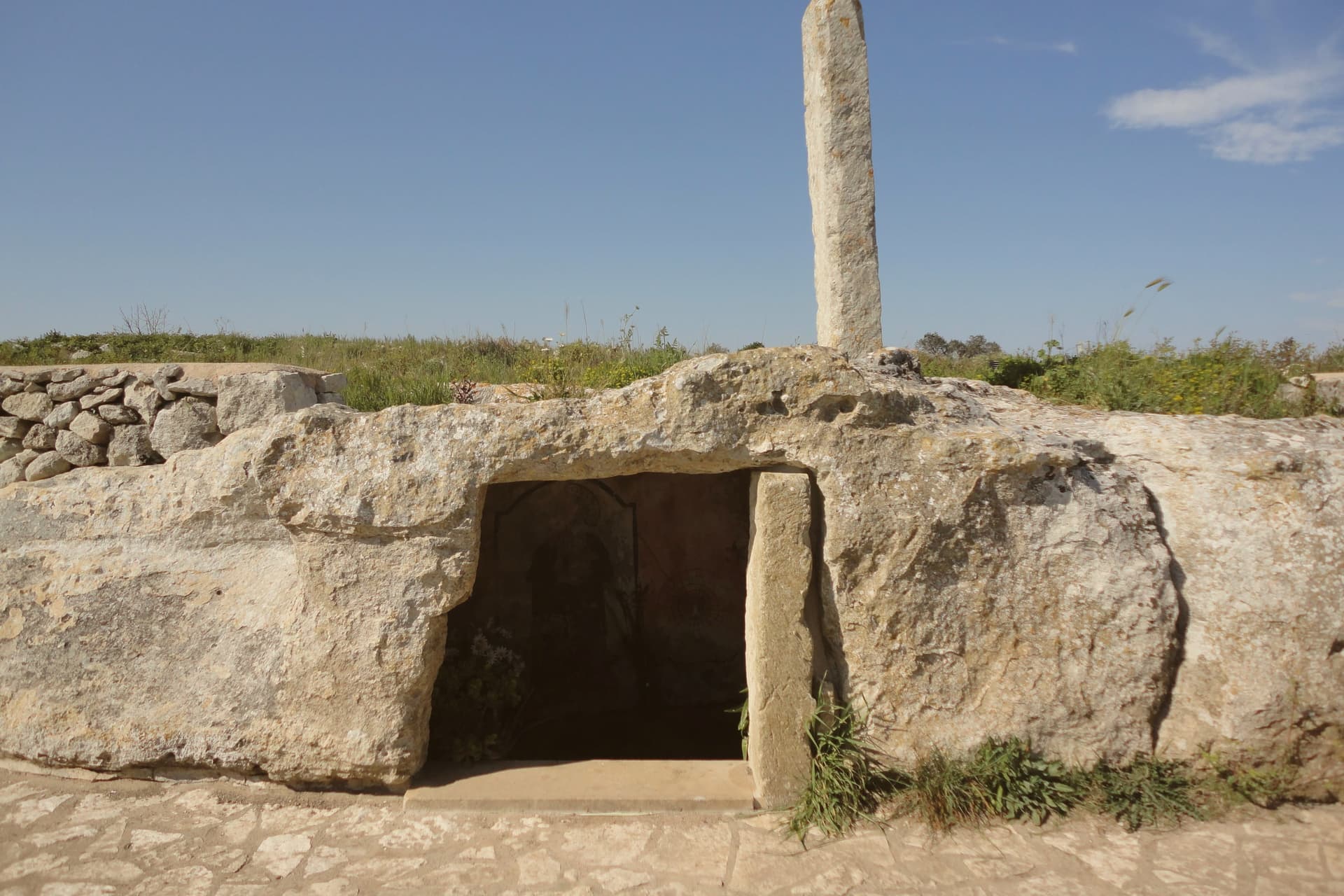
 The best hidden coastal towns that eat well in Puglia6 towns, Vernole among them.
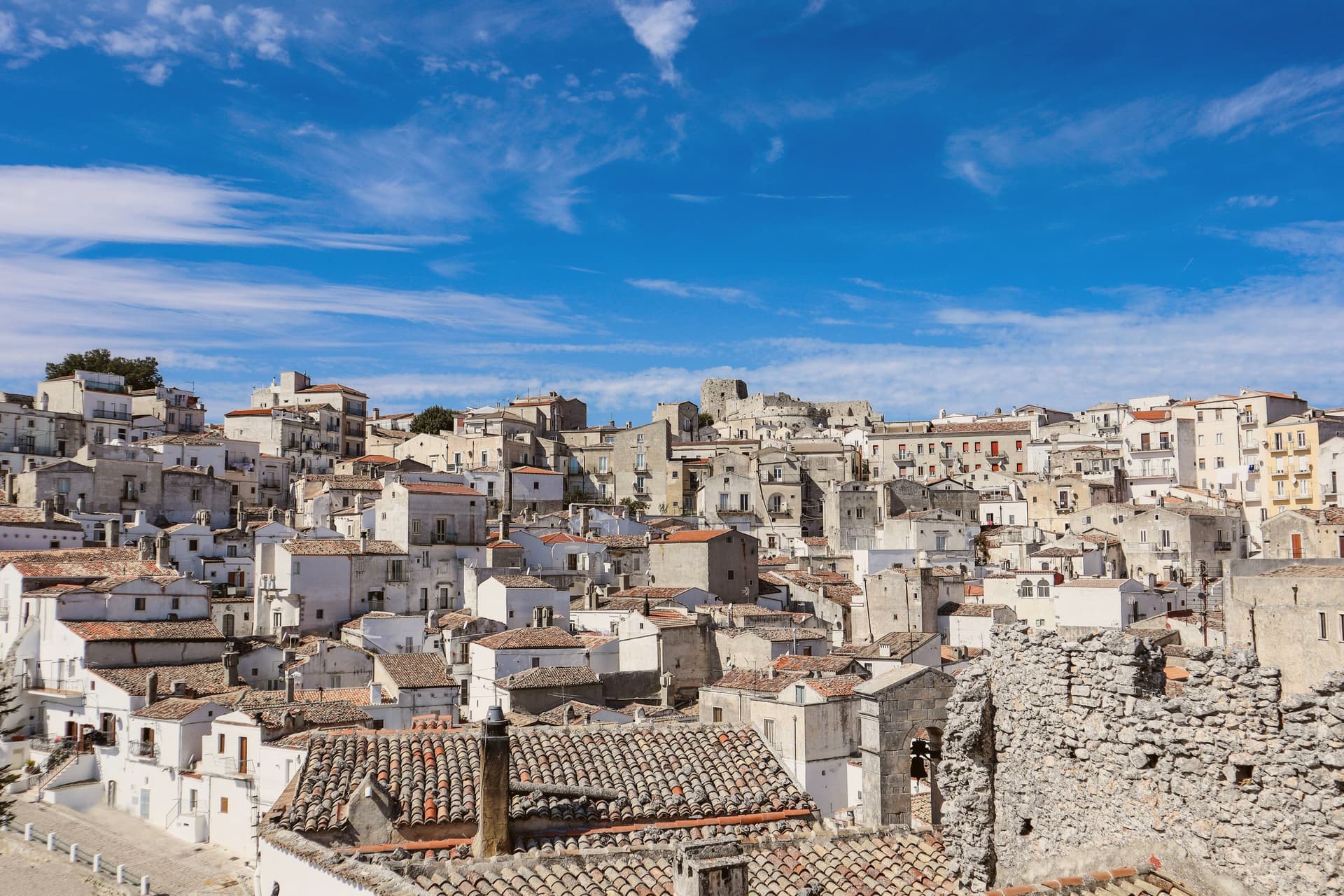
 The best towns that eat well in the province of Lecce8 towns, Vernole among them.
 The best towns on a walking route in Puglia10 towns, Vernole among them.
How to get there
From Bari / Brindisi (BRI), about 2h 23m by car.
Naples / Salerno (NAP) is about 5h 16m away.
By car from the centre of Lecce 18 minutes, Bari 2h 11m or Salerno 5 hours.
What to see
Castello di Acaya
Renaissance fortress of 1535-1536 by Gian Giacomo dell'Acaya, trapezoidal with a wet moat, one of the best examples of sixteenth-century defensive architecture in Terra d'Otranto.
Borgo fortificato di Acaya
Walls, gates and a grid of stone streets laid out between 1521 and 1536, still readable underfoot as the plan the engineer drew.
Riserva Naturale Le Cesine
Dune systems and pine groves along the longest stretch of protected lower-Salento coast, on the Adriatic edge of the commune.
Chiesa Matrice di Vernole
Eighteenth-century mother church in the centro of Vernole, rebuilt on an earlier medieval foundation, with Salento Baroque altars in the side chapels.
The slow-trip planner
Building a trip? Find where Vernole fits in a slow Italy circuit.
Answer five questions. We will shape a geographically coherent slow trip from the 1,000 Italian towns most travelers skip. Yours to save and share.
We recommend
Where to eat
Not our picks, but places the guides put their name to: a Michelin star, a Gambero Rosso fork, a Slow Food snail, a Michelin Key for the hotels. Worth a table, a counter, or a night when you pass through.
LilithRistorante
A Gambero Rosso listing, at Lilith.
Living here
- Population 6,730
- Commuter belti
- Pharmacy in town
- High school within a 30-minute drive
- Nearest airport Bari / Brindisi, 2 h 23 min drive
- Regional capital Bari, 2 h 11 min drive
Common questions
- What is Vernole known for?
- Vernole is a Salento commune ten kilometers from Lecce whose frazione of Acaya is the only Renaissance fortified town in southern Italy.
- Where is Vernole?
- Vernole is a comune in the province of Lecce, in Apulia, at 38 meters above sea level.
- What is the nearest airport to Vernole?
- Bari / Brindisi (BRI), about 2h 23m by car.
- How long is the drive from Lecce to Vernole?
- About 18 minutes by car.
- When is the best time to visit Vernole?
- Best in May–Sep. July is the warmest month, averaging 31 degrees, and November the wettest, with about 11 rain days.
- Is there a sagra or a festival in Vernole?
- The town keeps its patron saint's day: Sant'Anna, 25 July.
- Which other towns are like Vernole?
- Campi Salentina, Grado and Gabicce Mare.
- How many people live in Vernole?
- 6,730 at the 2023 count.
Tags & datadesignations · numbers · sources
Recognised as
The numbers
- Elevation: 38 m
- Population: 6,730
- Surface area: 61.28 km²
These figures were compiled from public directories: ISTAT, OpenStreetMap and Wikidata, and from the official listings of the guides named on this page. Town details change; verify with official sources before you travel.
Similar
Towns like Vernole
Campi Salentina
Province: Lecce
both on the Adriatic coast · both between 3,000 and 10,000 people
Grado
Province: Gorizia
both on the Adriatic coast · both between 3,000 and 10,000 people
Gabicce Mare
Province: Pesaro e Urbino
both on the Adriatic coast · both between 3,000 and 10,000 people
Gradara
Province: Pesaro e Urbino
both on the Adriatic coast · both between 3,000 and 10,000 people
Miglianico
Province: Chieti
both on the Adriatic coast · both between 3,000 and 10,000 people
Numana
Province: Ancona
both on the Adriatic coast · both between 3,000 and 10,000 people
💎 Borghi Autentici
More Borghi Autentici towns in Apulia
Acquaviva delle Fonti
Province: Bari
A Murge town at 300 meters between Bari and the Itria valley, named for its springs and a DOP red onion.
Biccari
Province: Foggia
A Subappennino Dauno borgo at 450 meters under Monte Cornacchia, the highest peak in Puglia at 1,151 meters, with a Byzantine tower at its core.
Campi Salentina
Province: Lecce
A Salento plain town fifteen kilometers north of Lecce, rebuilt after the Saracen raids of 926 and later raised to a marquisate.
Casamassima
Province: Bari
The blue town of the Murge, twenty kilometers south of Bari, its centro storico painted with copper-blue lime after the 1658 plague spared its residents.
Cassano delle Murge
Province: Bari
A Murge foothills town at 341 meters at the gate of the Alta Murgia park, with the 1,300-hectare Foresta Mercadante mostly inside its territory.