
Lazio · Roma
Tivoli
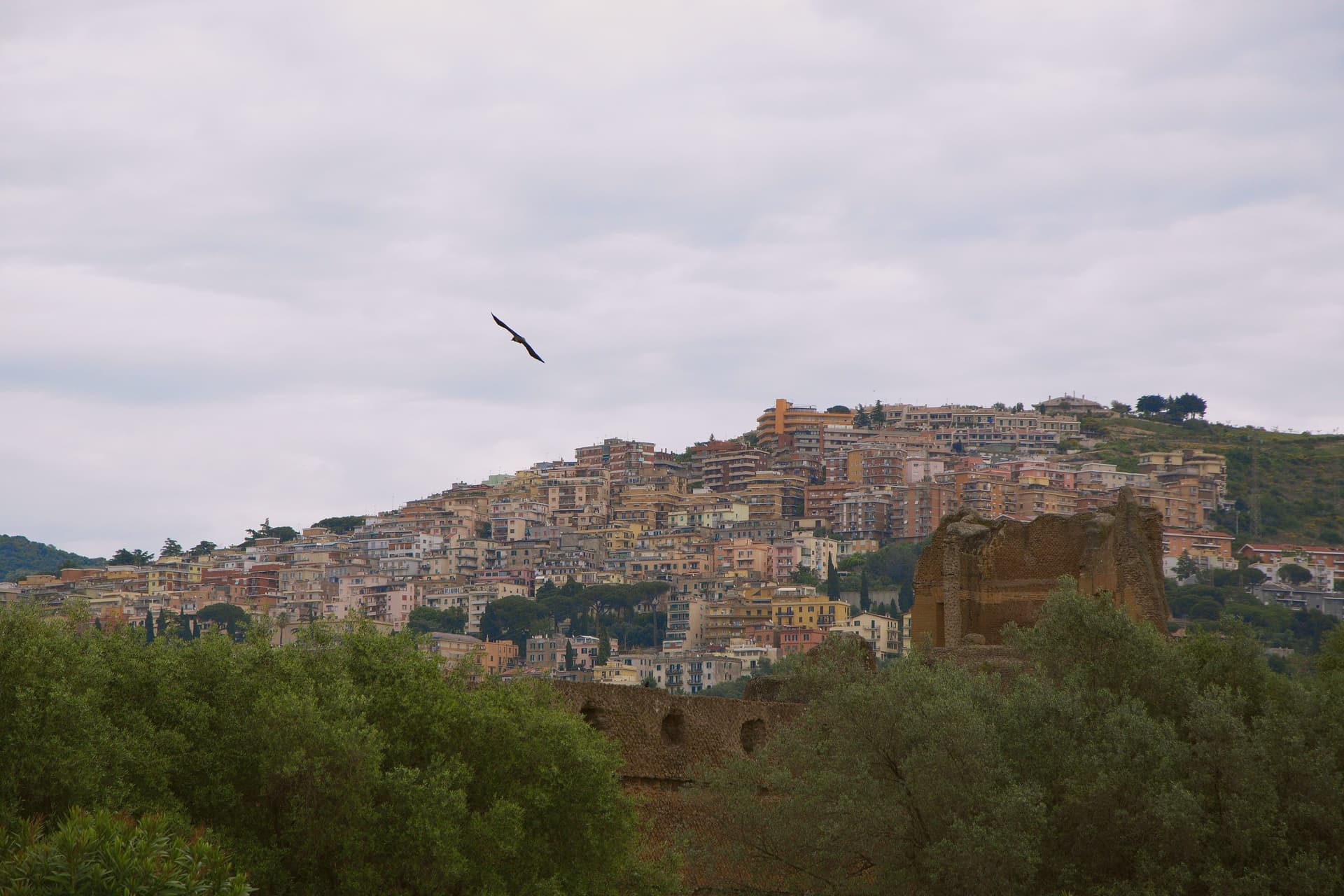
A travertine town on the Aniene falls twenty-five kilometers east of Rome, holding two separate UNESCO sites: Hadrian's villa below and the Villa d'Este above.
- Best time
- Apr–Oct
- By car
- 31 min from Rome
- By train
- Station in the comune
- Population
- 54,916
Known for
VILLA D'ESTE
Renaissance garden with 51 fountains, all gravity-fed from the Aniene, designed by Pirro Ligorio from 1550 for Cardinal Ippolito d'Este.
VILLA ADRIANA
Hadrian's 120-hectare imperial estate, the emperor's architectural collage of Egypt, Greece and Asia Minor on the Tiburtine plain.
TRAVERTINE
Tivoli's quarries supplied the white travertine for the Colosseum, St Peter's colonnade and most of Rome's monumental construction.
OLIVA DI GAETA
The commune lies inside the Oliva di Gaeta DOP production zone.
When to visit
Best · Apr–Oct
- J11°
- F13°
- M15°
- A18°
- M23°
- J28°
- J33°
- A32°
- S26°
- O21°
- N16°
- D12°
- Best
- Hot or crowded
- Quiet
- Mostly closed
Daytime averages, 2020–2024. Weather data by Open-Meteo.com.
The festa: San Lorenzo, 10 August
Why come
Tivoli sits on the Aniene where it drops 120 meters off the Tiburtini hills, twenty-five kilometers east of Rome. The Romans called it Tibur and built it up as their summer station; the moneyed classes carried on building here for two thousand years afterward. Two of those projects became UNESCO sites, listed separately despite standing close together.
Hadrian's estate, four kilometers below town, covers 120 hectares with the remains of thirty monumental buildings the emperor built between 117 and 138 AD to recreate the architectural memories of Egypt, Greece and Asia Minor. The Renaissance garden inside the upper town was laid out from 1550 onward for a cardinal of the Este family; its grounds carry 51 fountains powered entirely by gravity from the Aniene. The cardinal stripped much of the marble from Hadrian's estate to decorate his own grounds, so the imperial villa on the plain and the garden in the upper town are bound together by more than proximity: one was quarried to build the other.
Below them both, the Villa Gregoriana park drops into the gorge where the river was diverted in 1832 to create the 120-meter Cascata Grande. The travertine quarries that built Rome are still working in the plain below. The upper town, the lower estate, and the gorge between them form a single continuous cut through two thousand years of building, borrowing, and quarrying around the same fall of water.
The Sunday letter
Tivoli is on our list. Its letter is still to come.
We are writing about all 1,000 of these towns, one at a time, in a free letter every Sunday: the photo, the food, the festa. That is our mission. Sign up and you will be there when Tivoli comes up. By Peter & Sophia, from Pietrasanta.
Read on
Tivoli in our articles
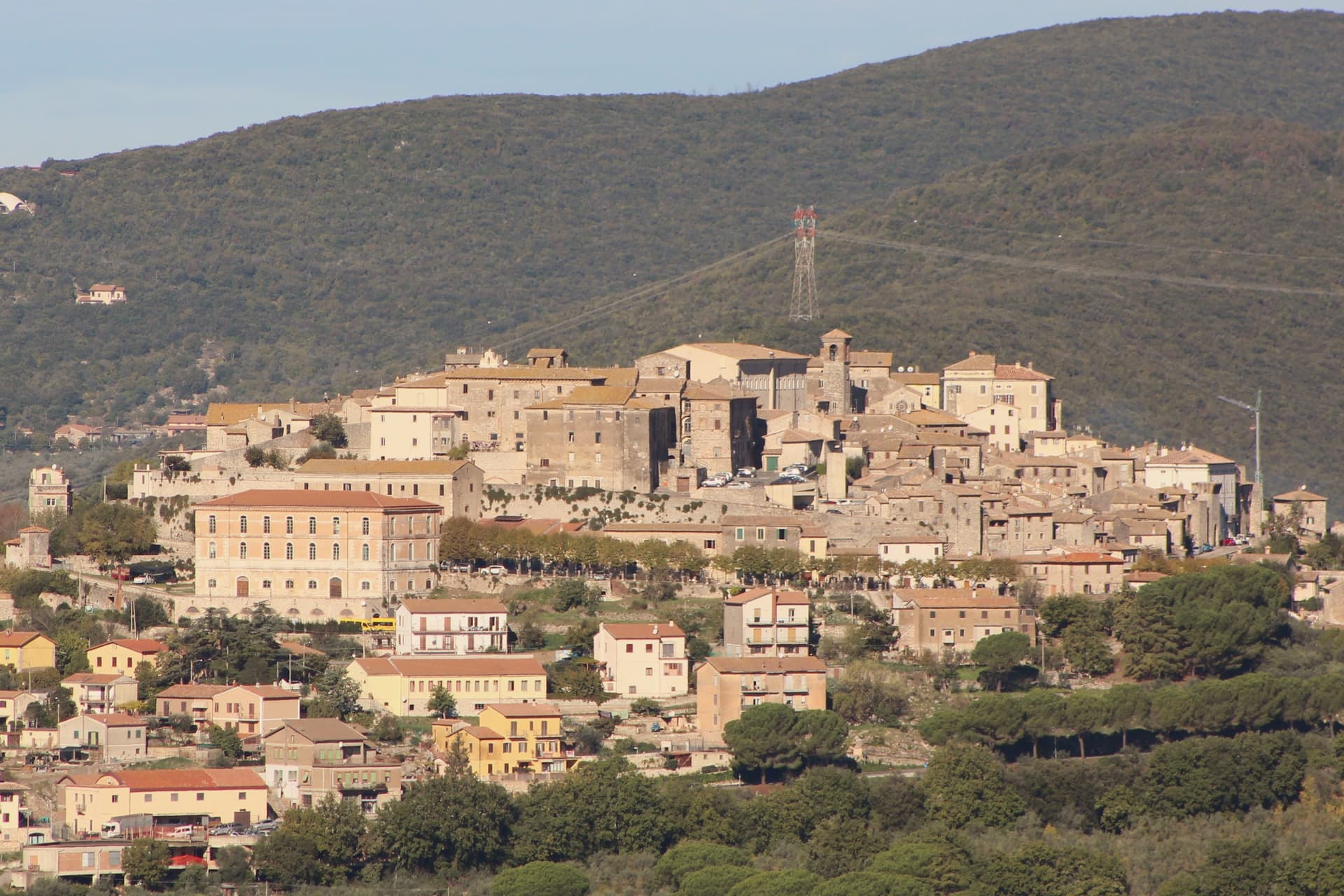
 The best hill towns that eat well within 90 minutes of Roma6 towns, Tivoli among them.
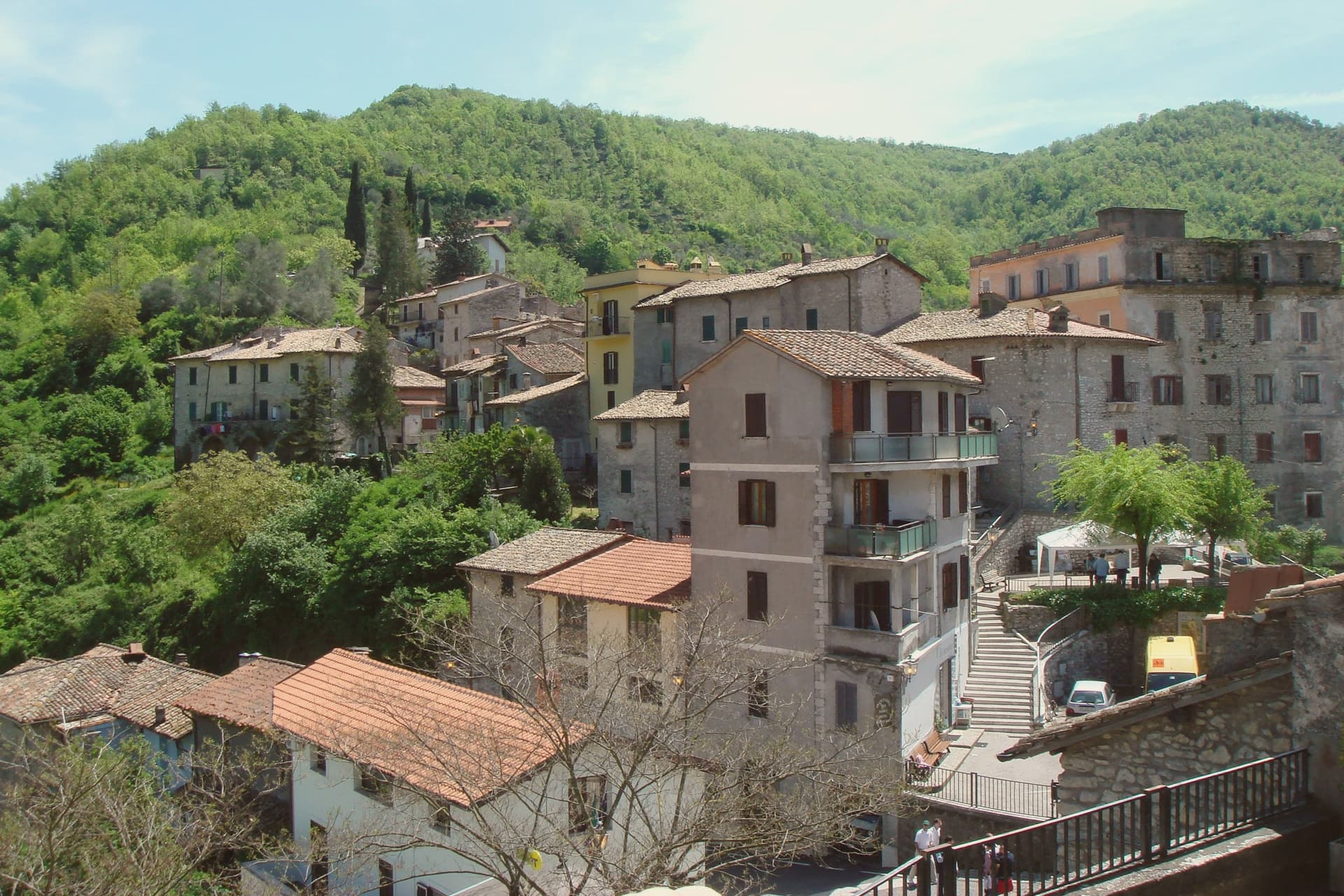
 The best hot-spring towns within two hours of Rome6 towns, Tivoli among them.
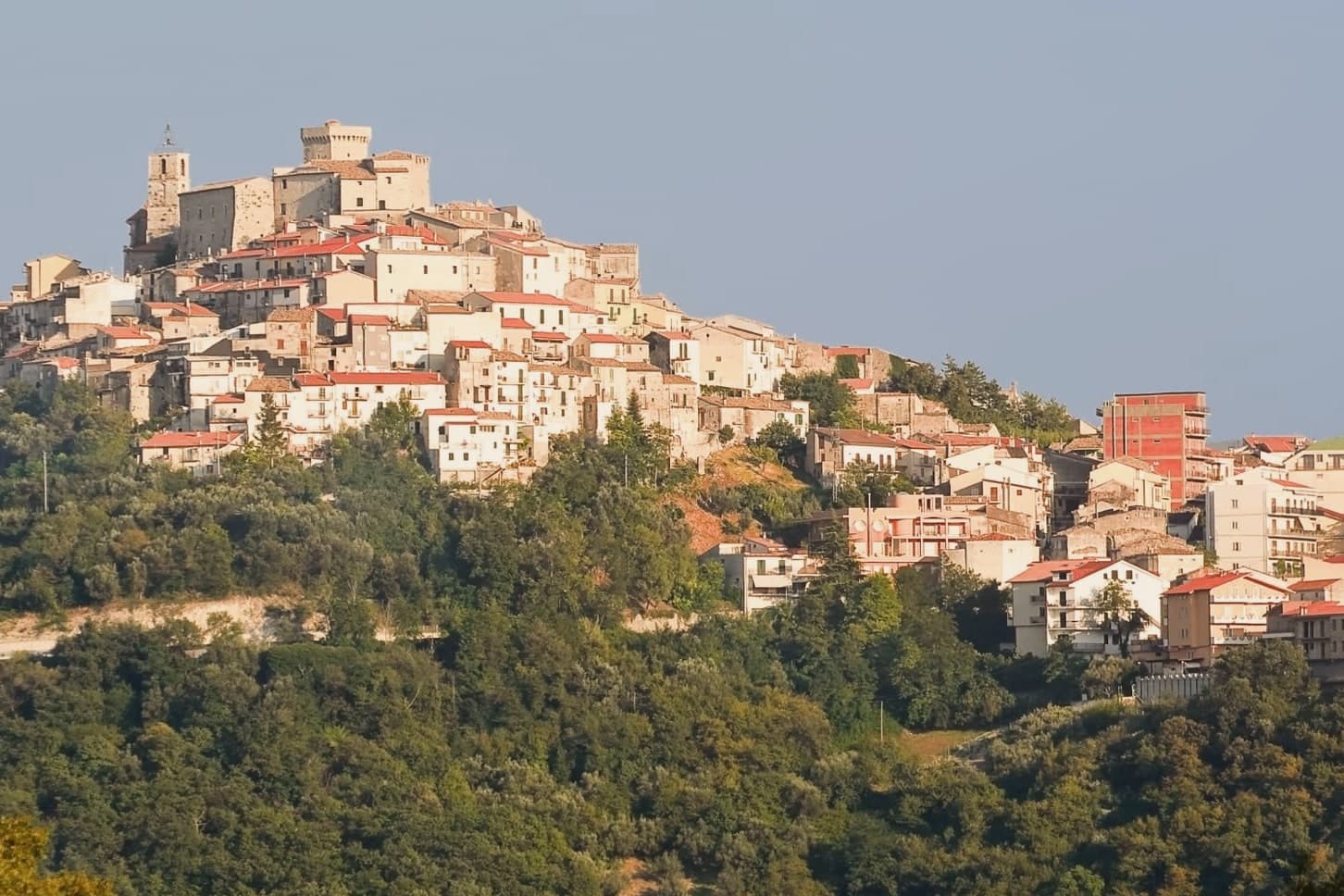
 The best hill towns in the province of Roma7 towns, Tivoli among them.
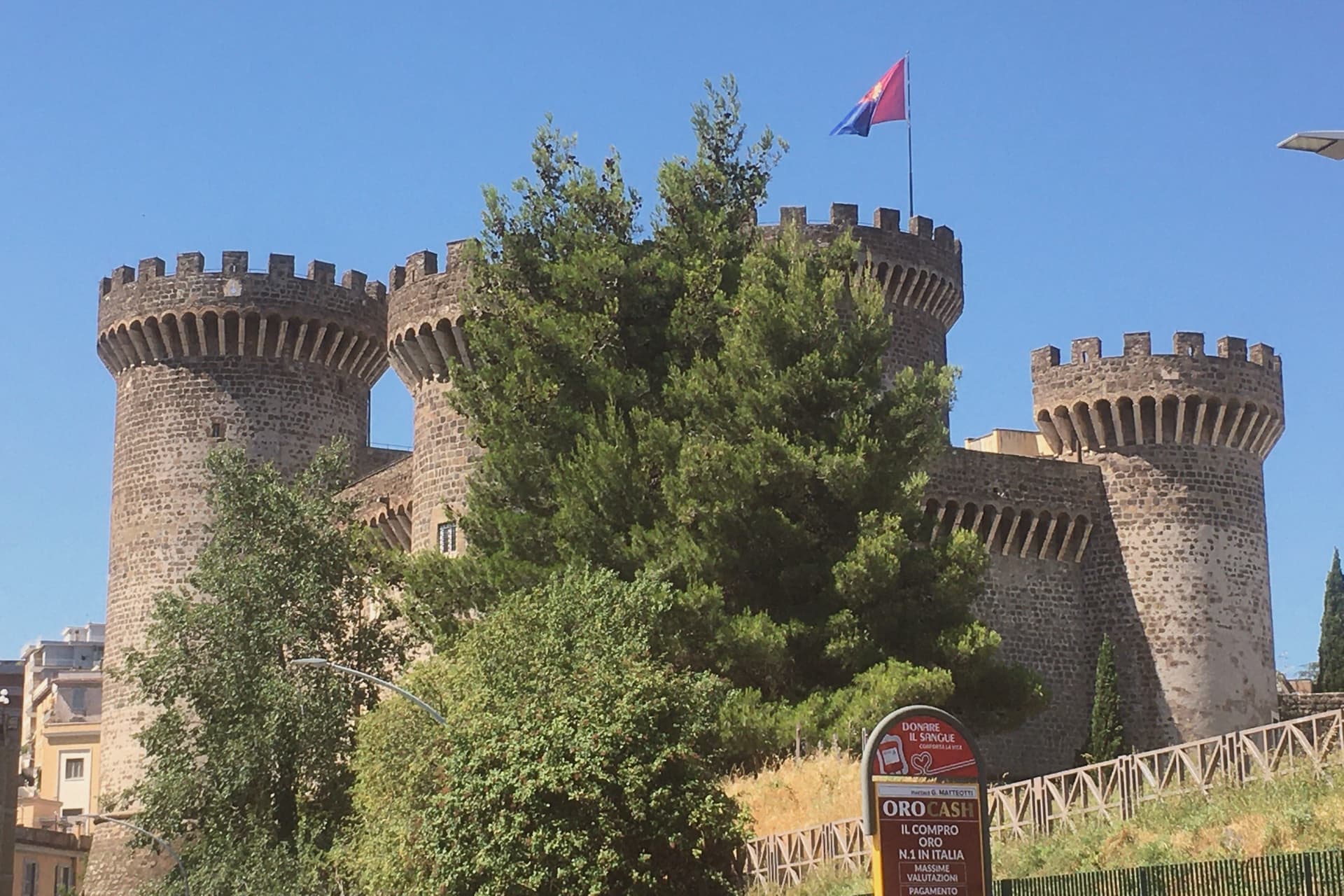
 The best towns with a serious restaurant that eat well within 90 minutes of Roma7 towns, Tivoli among them.
How to get there
From Rome (FCO), about 1h 12m by car.
Naples / Salerno (NAP) is about 2h 12m away.
By car from the centre of Pescara 2 hours or Perugia 2h 8m.
There is a railway station in the comune, so you can arrive without a car.
Coming by train into Roma Termini? Tivoli is about 30 minutes away by road.
What to see
Villa d'Este
The fountains step down the hillside in tiers, fed by nothing but gravity, so the sound of falling water carries through the whole garden. Cardinal Ippolito d'Este stripped much of the marble for it from Hadrian's villa down the hill.
Villa Adriana
The remains of thirty monumental buildings spread across the Tiburtine plain, among them the Canopo and the Teatro Marittimo, a walled island retreat inside the larger estate.
Villa Gregoriana
The park drops into the gorge cut by the Aniene, where the river was diverted through Monte Catillo to feed the fall below town.
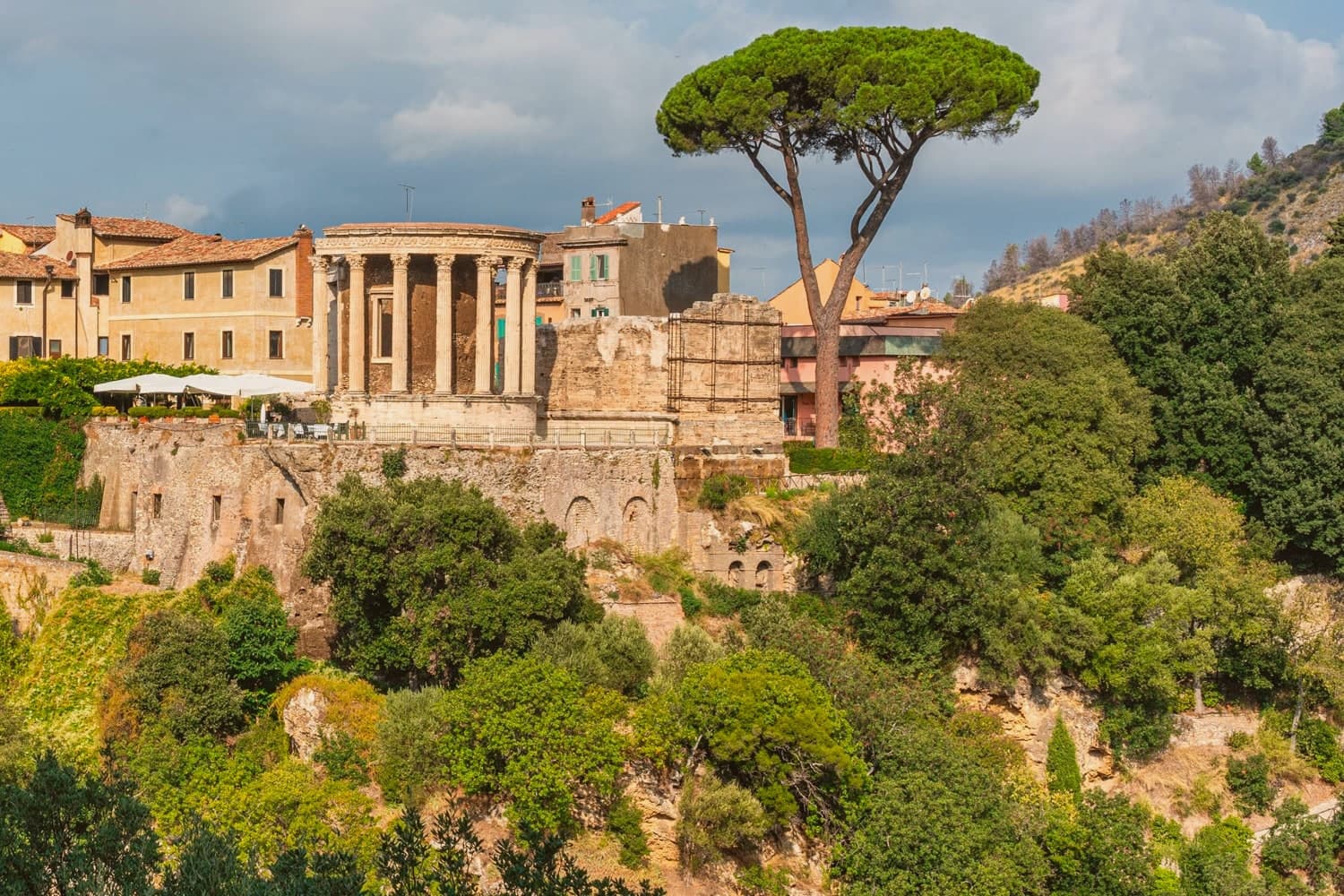
Tempio di Vesta e Tempio della Sibilla
Two small Roman temples stand on the acropolis above the falls, one circular and one rectangular, overlooking the drop in the river.
Rocca Pia
A four-towered fortress in the upper town, built to hold down a population the papacy did not trust.
Terme di Roma Acque Albule
Sulphurous baths on the plain below the town, still in use, giving the area its standing as a thermal destination.
The slow-trip planner
Building a trip? Find where Tivoli fits in a slow Italy circuit.
Answer five questions. We will shape a geographically coherent slow trip from the 1,000 Italian towns most travelers skip. Yours to save and share.
We recommend
Where to eat
Not our picks, but places the guides put their name to: a Michelin star, a Gambero Rosso fork, a Slow Food snail, a Michelin Key for the hotels. Worth a table, a counter, or a night when you pass through.
Al MadrigaleRistorante
One Michelin star for Al Madrigale, along with two Gambero Rosso forks (80/100) and a place in L'Espresso's Top 300.
Li SomariTrattoria
Li Somari has a Michelin Bib Gourmand, two Gambero Rosso prawns and a Slow Food snail.
NUH Osteria ContemporaneaRistorante
A spot in the Michelin Guide, at NUH Osteria Contemporanea.
Osteria La BriciolaRistorante
Osteria La Briciola holds one Gambero Rosso fork (75/100).
SibillaRistorante
A spot in the Michelin Guide, at Sibilla.
Through the year
What happens here
Feasts and festivals that come back year after year. We give the month rather than the date, because the date moves and the month rarely does. Check with the source before you plan a journey around one.
Festa dell'Inchinatapatron saint's feast
usually held in August. TrovaSagre
Living here
- Population 54,916
- A local hubi
- Pharmacy in town
- High school within a 30-minute drive
- Train station in the comune
- Nearest airport Rome, 1 h 12 min drive
- Regional capital Roma, 31 min drive
This is a thermal town: terme operate here.
Common questions
- What is Tivoli known for?
- Tivoli is a travertine town on the Aniene falls twenty-five kilometers east of Rome, holding two separate UNESCO sites: Hadrian's villa below and the Villa d'Este above.
- Where is Tivoli?
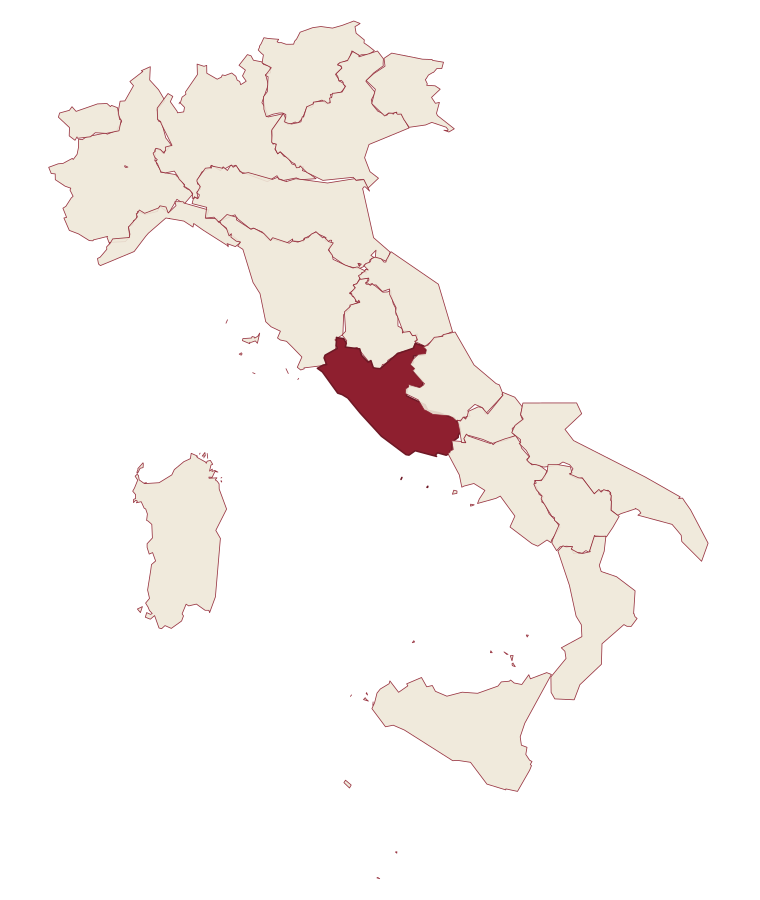
- Tivoli is a comune in the province of Roma, in Lazio, at 235 meters above sea level.
- What is the nearest airport to Tivoli?
- Rome (FCO), about 1h 12m by car.
- Can you get to Tivoli without a car?
- Yes. There is a railway station in the comune, so you can arrive by train.
- How long is the drive from Pescara to Tivoli?
- About 2 hours by car.
- When is the best time to visit Tivoli?
- Best in Apr–Oct. July is the warmest month, averaging 33 degrees, and May the wettest, with about 14 rain days.
- Is there a sagra or a festival in Tivoli?
- Yes. Festa dell'Inchinata. August is when the first of them falls.
- Which other towns are like Tivoli?
- Velletri, Rieti and Orvieto.
- How many people live in Tivoli?
- 54,916 at the 2023 count.
Tags & datadesignations · numbers · sources
Recognised as
The numbers
- Elevation: 235 m
- Population: 54,916
- Surface area: 68.65 km²
These figures were compiled from public directories: ISTAT, OpenStreetMap and Wikidata, and from the official listings of the guides named on this page. Town details change; verify with official sources before you travel.
Featured on
Tivoli appears on this themed pick from our Collections:
Similar
Towns like Tivoli
Velletri
Province: Roma
both inland, away from the coast · both over 10,000 people
Rieti
Province: Rieti
both inland, away from the coast · both over 10,000 people
Orvieto
Province: Terni
both inland, away from the coast · both over 10,000 people
Foligno
Province: Perugia
both inland, away from the coast · both over 10,000 people
Siena
Province: Siena
both inland, away from the coast · both over 10,000 people
Rovereto
Province: Trento
both inland, away from the coast · both over 10,000 people
🏛️ UNESCO
More UNESCO towns
Matera
Province: Matera
Cave dwellings carved into limestone since the Paleolithic, called the shame of Italy in the 1950s and made European Capital of Culture in 2019.
Amalfi
Province: Salerno
The first Italian maritime republic and the coast it named, six meters above the sea between cliffs that close around the duomo's steps.
Ascea
Province: Salerno
Two villages, a hilltown at 230 meters and a Cilento marina, with Parmenides and Zeno's Eleatic school in the ruins of Greek Velia below.
Atrani
Province: Salerno
The smallest commune in Italy by area, twelve hectares of stacked houses where the Amalfi Coast pinches shut around a single piazza.
Benevento
Province: Benevento
Sannio capital at the Calore-Sabato confluence, with a 114 AD Trajan arch and a Lombard rotunda on the UNESCO list.