
The best towns that eat well within an hour of Rome
The countryside around Rome eats on volcanic soil, and it shows. Vines and olives grow on the rims of old craters at Castelli Romani, artichokes come up in the coastal plain in spring, and the hill towns are built from the same porous tufa the Etruscans cut their tombs into, warm brown blocks that hold the heat well into October. Autumn brings chestnuts, wild boar and the first oil, pressed cloudy and green and eaten on bread with salt. The tables here run to pasta cut by hand, pork roasted whole with rosemary and pepper, and white wine from the crater slopes that travels badly and is therefore best drunk on site.
Most visitors eat in Rome and stay there, which is understandable given Testaccio and Trastevere, and then take a day trip that starts and ends at a coach park. Lunch on those days is usually a set menu near a famous entrance, priced for people who will not come back. The Roman restaurants that guides do name are booked out weeks ahead and full of other travellers reading the same list. The city is a great eating town, but it is not the only one within an hour of it.
The same soil, the same pork, the same crater vineyards continue past the last suburb, and the cooking gets cheaper and slower as the traffic thins. Regional rail and the via Cassia and via Tiburtina reach hill towns where the dining room is attached to the family that runs it, and where a guide inspector has been through and left a name behind. These are the places on that list, close enough to Rome for lunch and far enough to be worth the drive back after dark.
Of the 17 communes we have mapped in a one-hour drive of Rome, 8 qualify as towns that eat well: each holds a table a guide put its name to. The smallest, Carsoli, has 5,007 residents.
Elsewhere in the catalogue: The best towns you can reach by train within an hour of Rome and The best towns you can reach by train that eat well within 90 minutes of Roma.
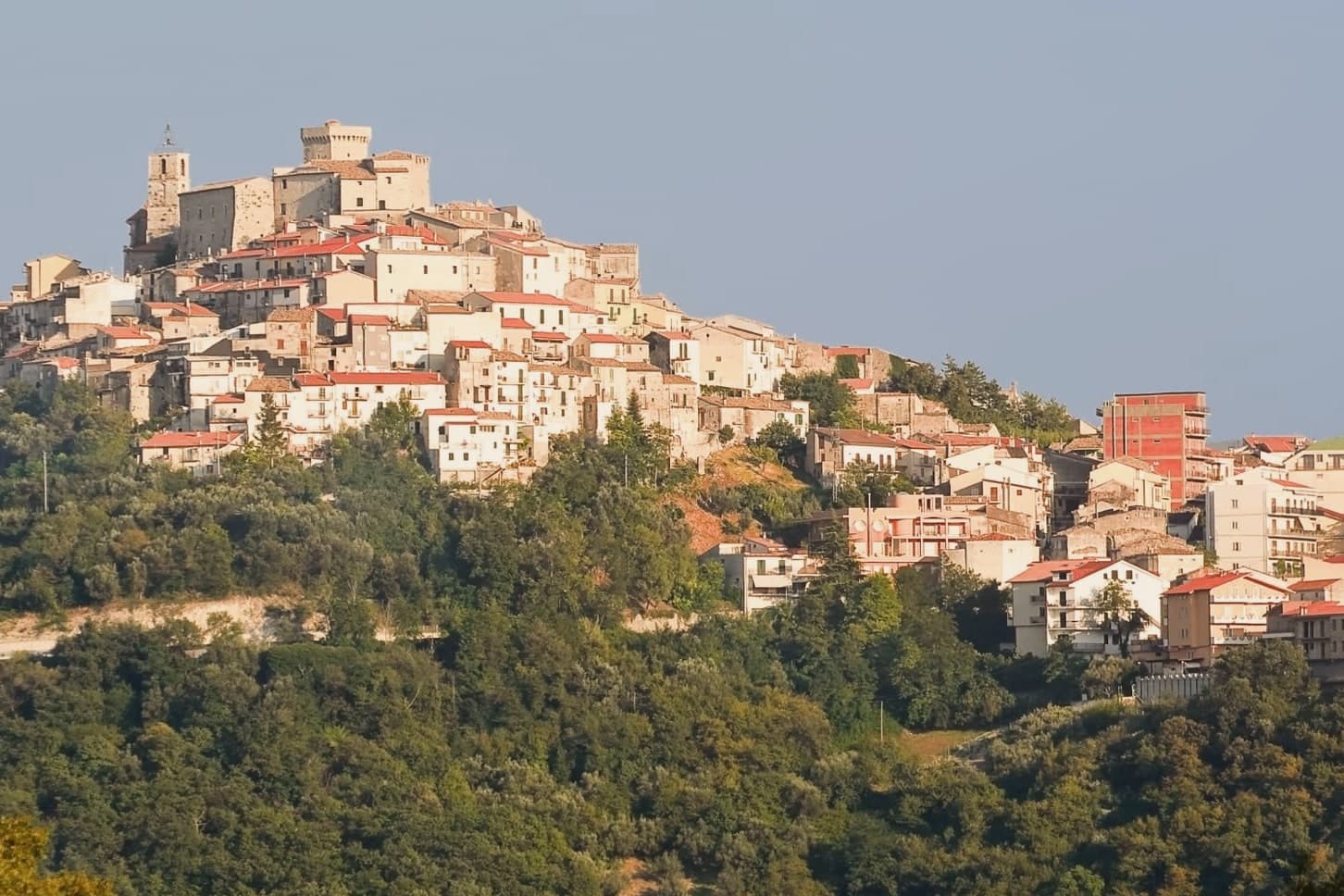
Carsoli
Why visit Carsoli
Carsoli sits at 616 meters in the Marsica, between the plain of the former Fucino lake and the valley of the Turano river, with Monte Velino and Monte Calvo both rising above 2,000 meters on its skyline. The modern town stands four kilometres northeast of Alba Fucens's neighbor Carsioli, the Roman colony founded between 302 and 298 BC as a stronghold to guard the road to Alba Fucens; walls and an aqueduct still stand at the locality of Muro Pertuso, surveyed in 1901 by the archaeologists Pfeiffer and Ashby.
The town's religious and military history sits closer to the modern centre than the Roman ruins do. The Castle of Colle Sant'Angelo, raised around the year 1000 by the Counts of the Marsi, stood until later wars, and ruins of its adjoining church remain near the site.
Carsoli's autumn season runs on chestnut and polenta fairs with deep peasant roots, and the patron-saint feast of Santa Vittoria fills the streets with procession and stalls. The town's layout traces its own history: a Roman garrison post relocated over centuries into a medieval and then modern settlement, so that walking from the modern centre outward means walking backward through the different periods that built it.
L'Angolo d'Abruzzo, V'Incanto Osteria Moderna have been named by a guide.
What to see in Carsoli
- Sito archeologico di Carsioli. The city walls and aqueduct still stand at the site, four km from the modern town, surveyed by archaeologists in 1901.
- Chiesa di Santa Maria in Cellis. The church stands on the edge of town, with a rose window set over the main portal.
- Chiesa di Sant'Antonio. 16th-century church inside the centro storico, used as a hospital and later as a nursery, with a frescoed altar inside.
How to get to Carsoli
There is a railway station in the town, so you can arrive without a car and never need one while you are here. Roma is roughly 60 minutes away by road.
Our tip
May through October is the strong window for Carsoli. Spring brings clear views toward Monte Velino and the high Marsica meadows in flower. June and September are the most comfortable months at 616 meters, with cool nights and dry days.
Sutri
Why visit Sutri
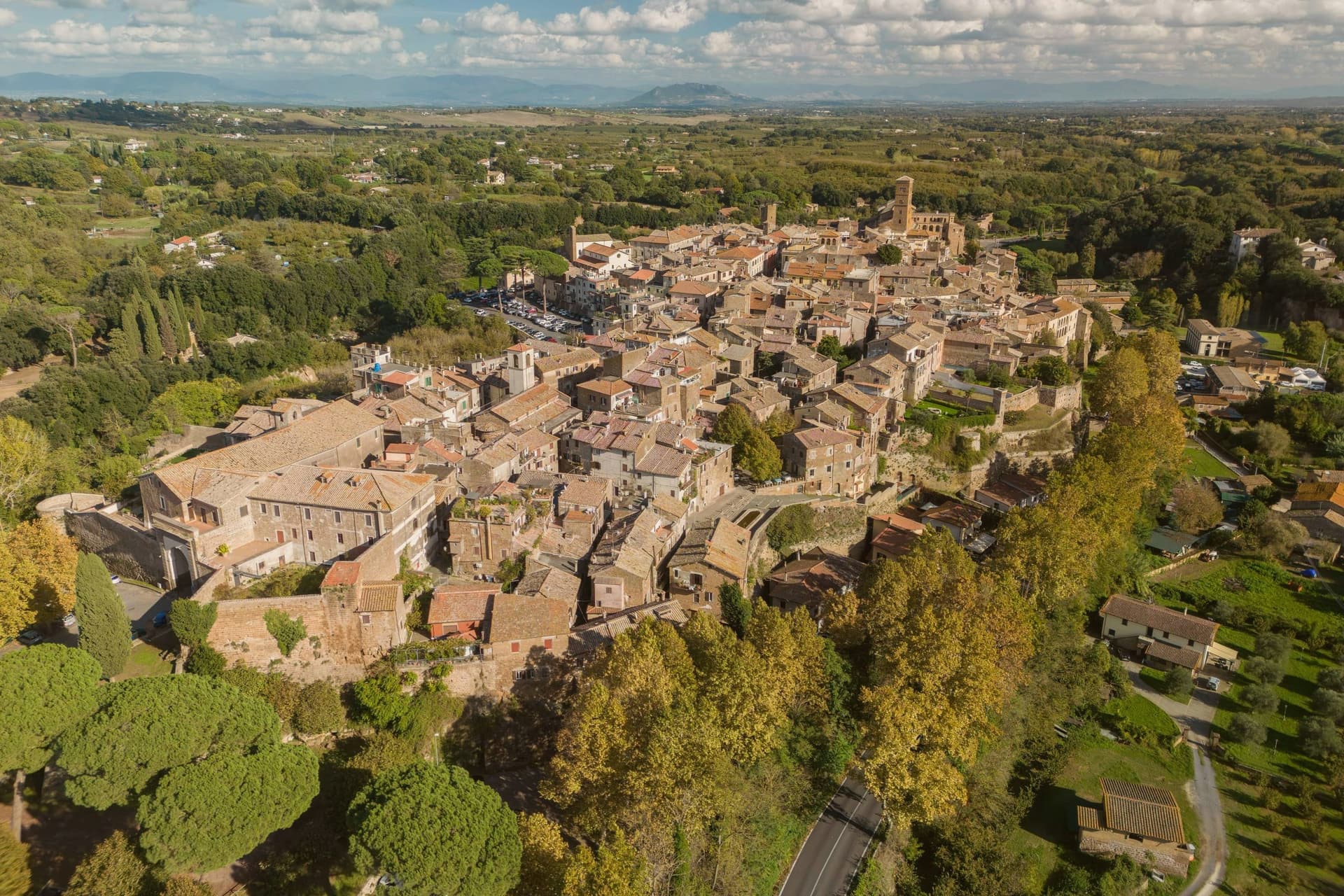
Sutri sits at 291 meters on a narrow tuff spur, fifty kilometers north of Rome on the old road linking the two. The Etruscans held it before the Romans took it in the fourth century BC, and it was among the colonies that refused further military contributions to Rome during the Second Punic War in 209 BC.
The rock-cut monuments that define the town, the arena, the temple turned sanctuary, the chamber tombs, all come from the same tuff spur the town is built on, so the stone that gives Sutri its ground is also what its Etruscan and Roman residents carved into. The high ground above, where the eighteenth-century villa and its gardens sit, looks down over that older excavated town rather than sitting apart from it.
Local tradition ties the town's beans to Charlemagne, who passed through and was supposedly relieved of an attack of gout by Sutri's variety. What the place adds up to is a settlement where the town and its excavation are the same rock: nothing was built so much as removed.
N'uovo Vino e Cucina have been named by a guide.
What to see in Sutri
- Anfiteatro Romano. Elliptical amphitheater about forty-nine by forty meters, carved directly out of the tuff rock rather than built on it.
- Mithraeum / Madonna del Parto. Roman temple to Mithras hewn into the tuff and reused as a Marian sanctuary, accessed through the medieval rock-cut church.
- Necropoli rupestre. Etruscan necropolis with dozens of rock-cut chamber tombs in the cliff face along the Via Cassia.
How to get to Sutri
Roma is roughly 57 minutes away by road.
Our tip
April through June and September into October are the best months in the tuff country, when the amphitheater grass is green and the gardens of Villa Savorelli are open. July and August push afternoons into the mid-thirties; the rock-cut Mithraeum and tomb chambers stay cool and become the part of the visit that doesn't need to be timed. November through March is quiet. Sagra del Fagiolo falls in August.
Castel Gandolfo
Why visit Castel Gandolfo
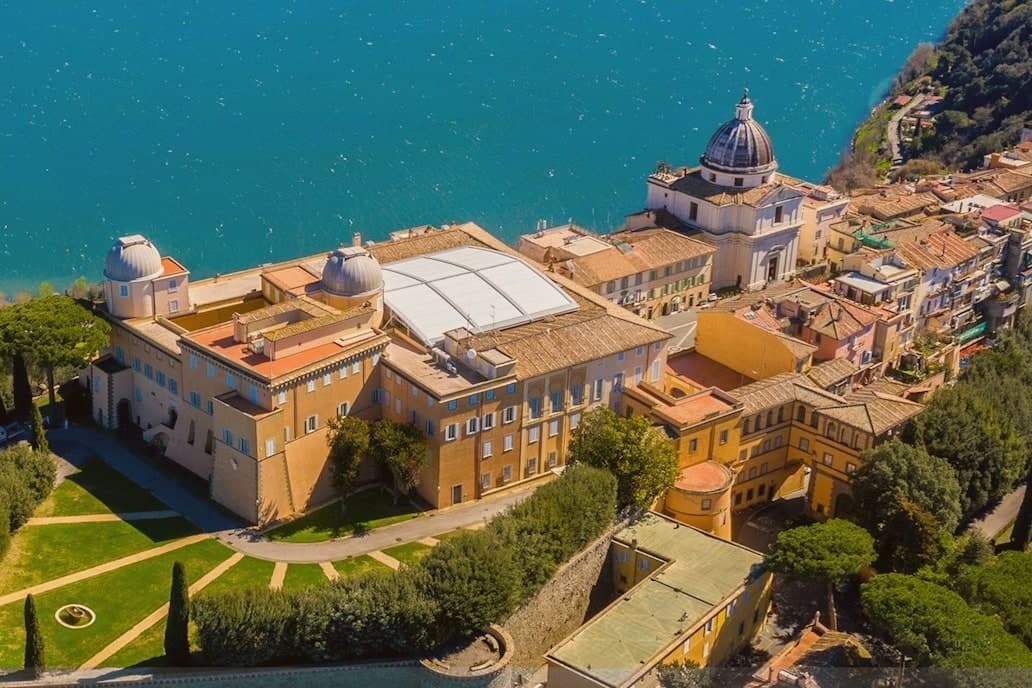
The town sits at 426 meters on the rim of the Lake Albano crater, twenty-five kilometers southeast of Rome among the Castelli Romani. It stands on the site of Alba Longa, the city Aeneas's son Ascanius is said to have founded.
The lake below was formed by the fusion of two volcanic craters and reaches 170 meters deep. The Villa Barberini stands adjacent to the palace, acquired by Taddeo Barberini in 1631, its gardens running down toward the water.
Pope Francis kept the palace as a museum after 2016; Leo XIV restored it to residential use in June 2025 and resides in the Villa Barberini next door, while the Borgo Laudato Si', created by Francis in 2023, carries ecological education across 55 hectares of the same estate. A town built on legend, given over for a time to public viewing, and returned to private residence: three uses of the same ground, laid one on top of the other without erasing what came before.
Tinello Bistrot, Antico Ristorante Pagnanelli have been named by a guide.
What to see in Castel Gandolfo
- Palazzo Apostolico. The palace Carlo Maderno raised between 1623 and 1626 stood open as a museum from 2016, its rooms given over to display cases and visitors. In June 2025 it returned to residential use, the museum arrangement dismantled to make way for a household again.
- Ville Pontificie e Giardini Barberini. Fifty-five hectares of papal villas and gardens running down to Lake Albano, with the seventeenth-century Villa Barberini at their center.
- Lago Albano. The crater lake sits at 293 meters above sea level and covers five square kilometers, its rim shared between this town and Albano Laziale.
How to get to Castel Gandolfo
There is a railway station in the town, so you can arrive without a car and never need one while you are here. Roma is roughly 35 minutes away by road.
Our tip
April through October is the open season for Castel Gandolfo, with the gardens open and the lake at swimming temperature from June. June and September are the calmer months and the historic papal-residence weeks. July and August fill with Roman day-trippers and Vatican tourists; the lake shore is busy.
Ariccia
Why visit Ariccia
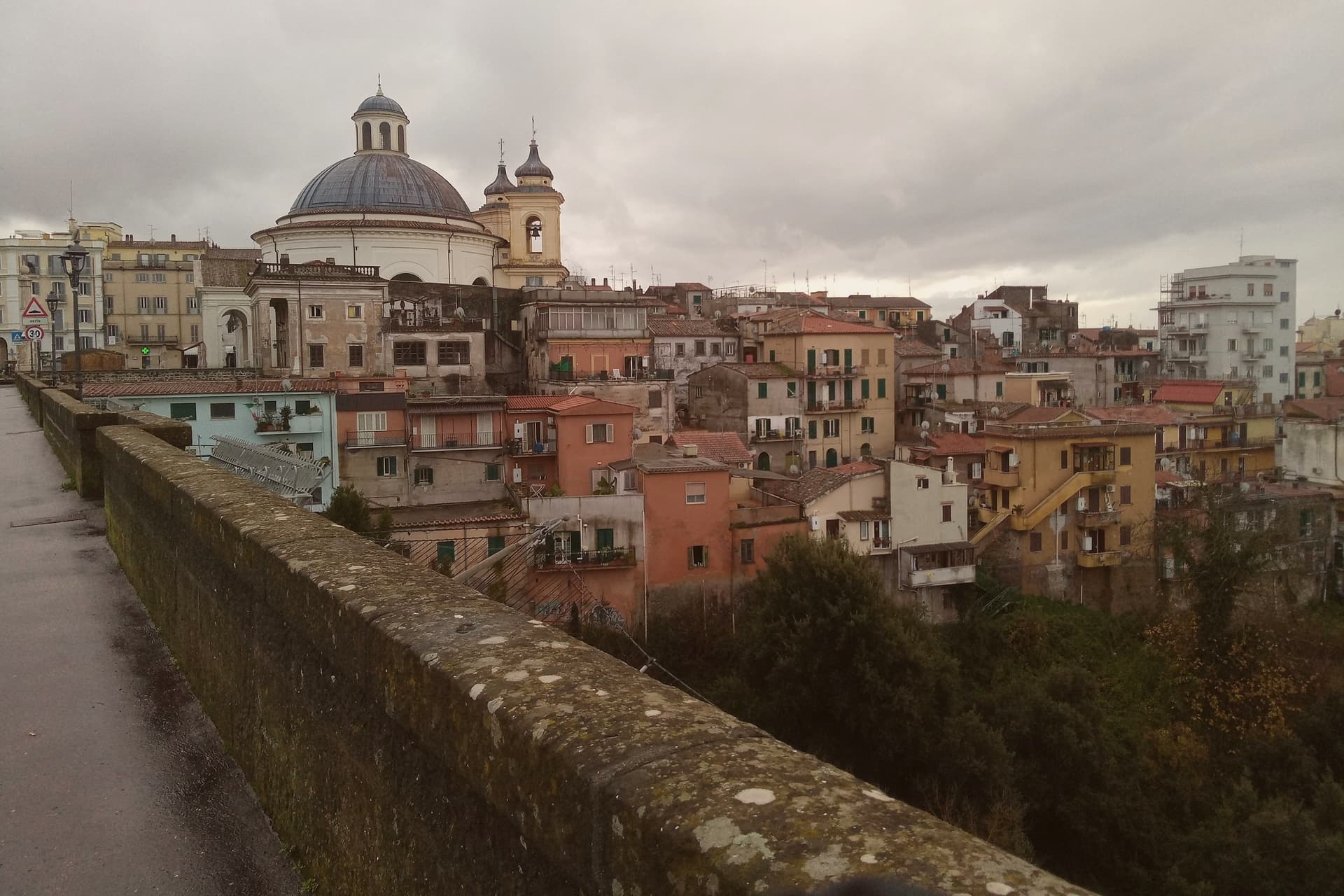
Ariccia sits on the rim of the Alban Hills volcanic complex, and the crater geography organizes everything about the place. The town centre occupies the ridge; below it on the eastern side the ground drops into the deep crater valley of Vallericcia, crossed by the viaduct linking the town to the next ridge.
The gorge itself became notorious after a series of suicides in the 1990s, now blocked with high railings. Further east and below, the volcanic lakes and the papal estate sit in a cluster within a few kilometres of the town centre, part of the same crater system that shaped Ariccia's position in the first place.
The Roman past predates the Baroque town by centuries: Aricia was the southern terminus of the original Via Appia, laid out in 312 BC, and the neighbouring lake was the site of the Latin League's federal sanctuary of Diana Aricina. The porchetta tradition is separate again: whole pork loin, deboned and seasoned with rosemary, garlic, pepper and wild fennel, slow-roasted on rotating spits in wood-fired ovens and served at room temperature in panini or by the etto.
The fraschette that serve it were originally outdoor wine vendors, marked with frasche, branches, as signs, and the town's status as a Città del Vino within the Frascati zone explains why the wine on the table is local rather than incidental. What makes Ariccia distinct among the Castelli towns is that these layers, Roman road terminus, crater rim settlement, unified Baroque set piece, and porchetta town, sit on top of each other in one small place rather than being scattered across the region.
Sintesi have been named by a guide.
What to see in Ariccia
- Palazzo Chigi + Piazza di Corte (Bernini). The Chigi family's Baroque summer residence. The palazzo, the piazza and the church facing it were designed as one ensemble. The palazzo is preserved as a 17th-c interior museum.
- Santa Maria dell'Assunzione (Bernini). Bernini's circular church, domed and modelled on the Pantheon: small, perfect, often empty.
- Ponte Monumentale. 1854 triple-tier brick viaduct spanning the 312m-deep Vallericcia crater. Walk across for the panoramic view; the gorge below is wooded and undeveloped.
How to get to Ariccia
There is a railway station in the town, so you can arrive without a car and never need one while you are here. Roma is roughly 41 minutes away by road.
Our tip
Ariccia is year-round — the Castelli Romani are Rome's cooler escape in summer (400m altitude buys 5-7 degrees off the city heat) and the porchetta is cold-served so it works in any weather. October–November is the Sagra dell'Uva and the Sagra della Porchetta (first weekend in September) — fraschette spill into the streets. Saturday lunch in any season is the locals' main event.
Bracciano
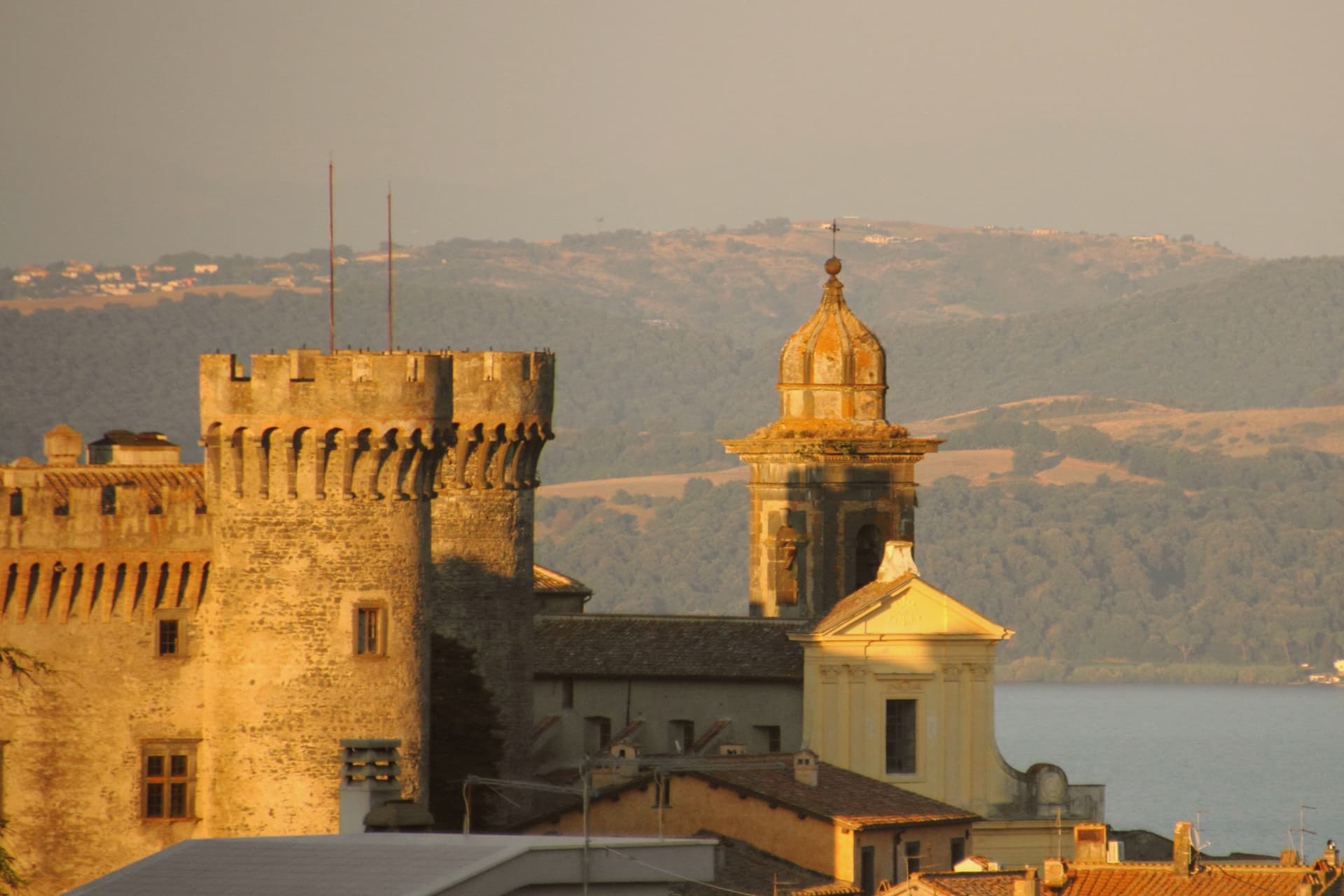
Why visit Bracciano
Bracciano stands at 280 meters above the southern shore of Lago di Bracciano, the volcanic crater lake known historically as Sabatino, the eighth largest in Italy. The Castello Orsini-Odescalchi was begun by Napoleone Orsini in 1470 and completed by his son Virginio Gentile in 1485; the architect was Francesco di Giorgio Martini.
It is one of the better-preserved examples of Renaissance military architecture in Italy, a five-towered pentagon on a polygonal base, with frescoes by Antoniazzo Romano and the Zuccari brothers. The Orsini lost it through debt in 1696 to Livio Odescalchi, nephew of Pope Innocent XI; the Odescalchi still own it.
Bracciano supplies a significant part of Rome's drinking water through the aqueduct that begins in the lake. The town is also a hazelnut commune, member of the Città della Nocciola network.
Tom Cruise married Katie Holmes in the castle in November 2006, which is how most people outside Italy heard of the place.
Cucina ai Monti, ErbacceLab, Percørsi al Vecchio Ponte have been named by a guide.
What to see in Bracciano
- Castello Orsini-Odescalchi. 1470-1485 Renaissance castle, five round towers on a pentagonal plan, frescoes by Antoniazzo Romano and the Zuccari brothers.
- Lago di Bracciano. Volcanic crater lake, eighth largest in Italy at 57 square kilometers, source of part of Rome's drinking water.
- Centro storico. Medieval town below the castle walls, organized in concentric rings around the rocca, with two surviving medieval gates.
How to get to Bracciano
There is a railway station in the town, so you can arrive without a car and never need one while you are here. Roma is roughly 58 minutes away by road.
Our tip
April through October is the lake season. May and June bring the warmest weather without the August crowd from Rome; the shore villages of Anguillara and Trevignano fill on weekends and empty mid-week. July and August are hot and busy.
Cerveteri
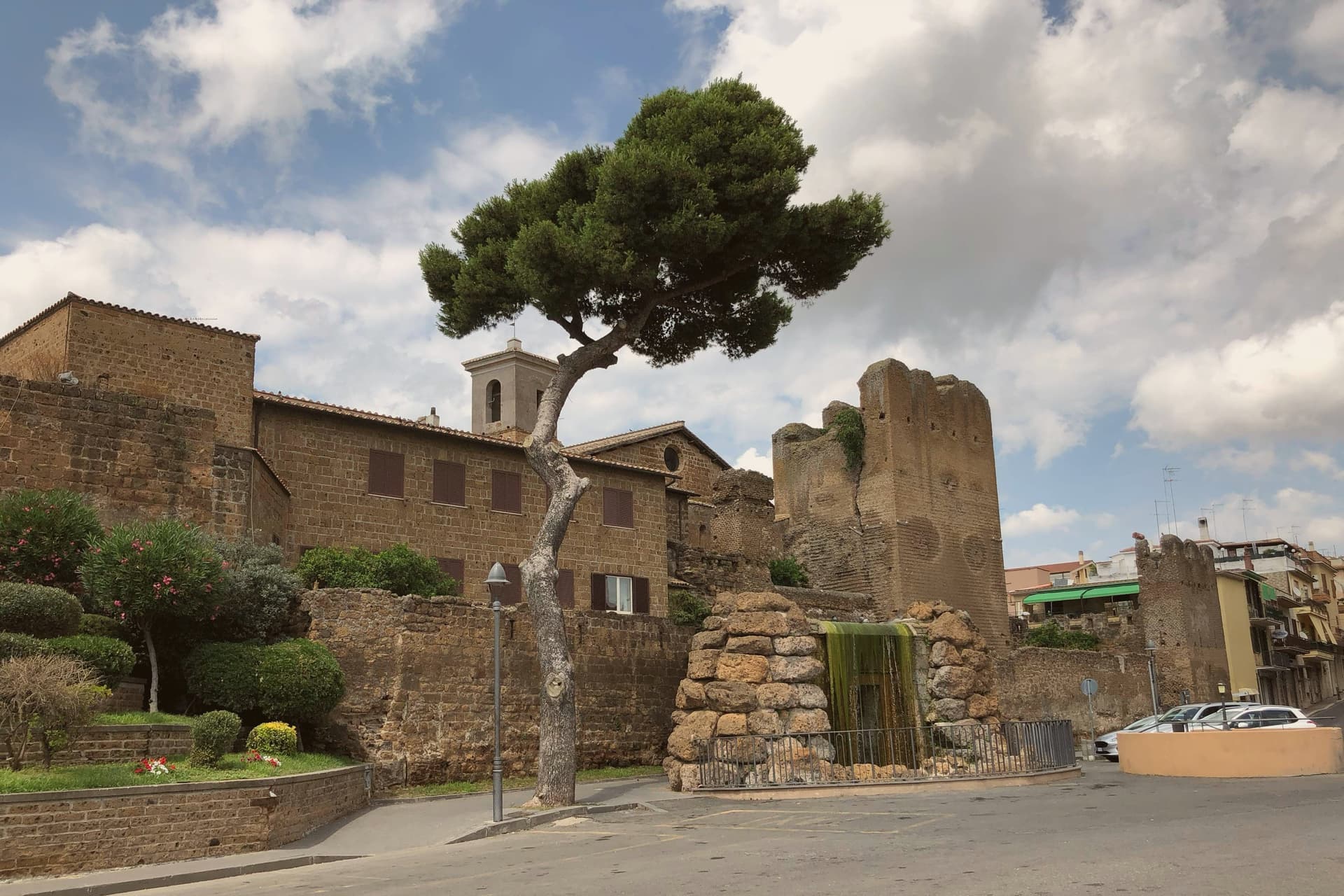
Why visit Cerveteri
Cerveteri sits on a tufa outcrop at 81 meters above the coastal plain, seven kilometers inland from the Tyrrhenian and thirty-five northwest of Rome. The Etruscans called it Caisra, the Greeks Agylla, the Romans Caere; at its height around 600 BC it covered fifteen times the area of the modern town and held an estimated 25,000 to 40,000 people, the equal of Tarquinia at the peak of Etruscan power.
The medieval town inherited the central plateau and was renamed Caere Vetus, the Old Caere, to distinguish it from the coastal Caere Novum that no longer exists. The Castello Ruspoli at the centre of the medieval town encloses sections of fourth-century BC Etruscan walls in its base.
Two kilometers north, the Banditaccia necropolis covers 400 hectares of which 10 are visitable, with around 1,000 rock-cut tombs and the great earth tumuli that gave Etruscan funerary architecture its most concentrated expression. It joined the UNESCO list with Tarquinia in 2004.
Arià Osteria di Fuori Porta have been named by a guide.
What to see in Cerveteri
- Necropoli della Banditaccia. UNESCO Etruscan necropolis 2 km north of town, covering 400 hectares with around 1,000 tombs and the great earth tumuli that defined Etruscan funerary architecture.
- Museo Nazionale Cerite. National Etruscan museum inside the Castello Ruspoli, with sarcophagi, ceramics and grave goods recovered from the Banditaccia tombs.
- Castello Ruspoli. Medieval Orsini-Ruspoli fortress at the centre of the old town, with fourth-century BC Etruscan walls preserved in its base.
How to get to Cerveteri
There is a railway station in the town, so you can arrive without a car and never need one while you are here. Roma is roughly 50 minutes away by road.
Our tip
May through September is the strongest window. The Banditaccia tumuli need open ground and clear weather; April and October are workable but rain blurs the rock-cut interiors. Summer crowds concentrate on the coastal section of the comune around Marina di Cerveteri and Cerenova, leaving the necropolis quieter than the dates would suggest. Festa della Birra falls in August.
Velletri
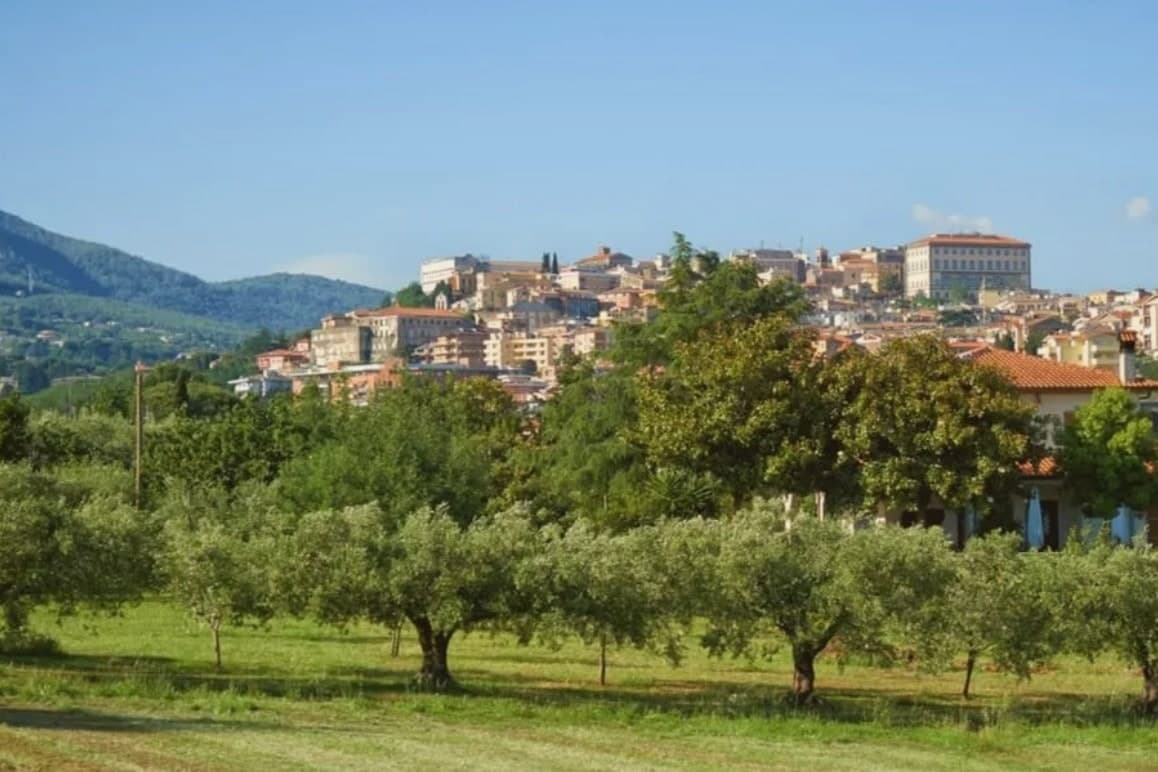
Why visit Velletri
The town sits at 332 meters, thirty-five kilometers from Rome, on the southeastern rim of a volcanic ring of craters and lakes. Before it was a papal possession and a diocesan seat, it was a Volscian stronghold, and before that the home ground of the Octavii, the paternal family of the man who became Augustus: Suetonius records a street here called Octavian and an altar consecrated by an Octavius, and the future emperor passed his childhood in the town under its old name, Velitrae.
That layering, Volscian settlement, imperial family seat, papal diocese, is what the center still shows once the war is accounted for: an army broke through a German defensive line here in May 1944, and much of the town was destroyed in the process. What stands now above the old piazza and around the rebuilt town hall is largely reconstruction fitted around what survived, with a wine trade going back to the volcanic soil that predates all of it.
A town whose name changed twice, whose family produced an emperor, and whose center was rebuilt from a battle line, but whose vineyards on the same slopes never stopped being the constant.
Benito al Bosco have been named by a guide.
What to see in Velletri
- Torre del Trivio. 50-meter Romanesque bell tower from the 14th century, the only structure to come through the 1944 bombing intact, still the shape by which the town is recognized from a distance.
- Palazzo Comunale. Renaissance town hall designed by Giacomo Della Porta, rebuilt after wartime damage, facing the piazza named for the emperor born to the town.
- Cattedrale di San Clemente. Cathedral seat of the suburbicarian Diocese of Velletri-Segni, a title held today by the Dean of the College of Cardinals.
How to get to Velletri
There is a railway station in the town, so you can arrive without a car and never need one while you are here. Latina is roughly 35 minutes away by road.
Our tip
April through June brings the Alban Hills at their greenest, vineyards in leaf, and mild evenings on the piazzas. September and October are the wine months: the Festa dell'Uva, one of the oldest grape festivals in Italy, runs in the first week of September. July and August are hot in the lower town and at their best after sunset, when the volcanic slopes hold the breeze. Calici sotto le stelle falls in August.
Tivoli
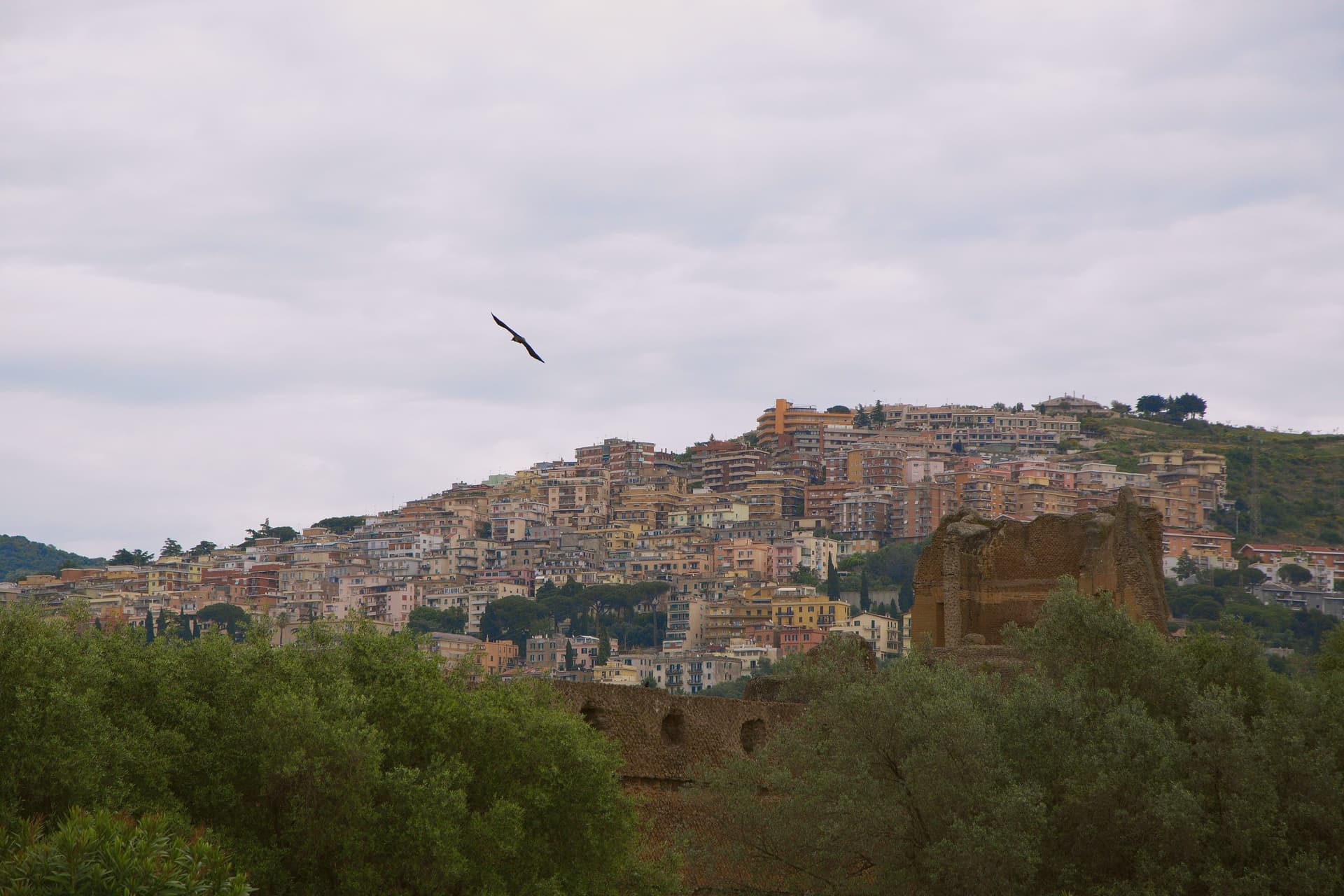
Why visit Tivoli
Tivoli sits at 235 meters on the Aniene where it drops 120 meters off the Tiburtini hills, twenty-five kilometers east of Rome. The Romans called it Tibur and built it up as their summer station; the moneyed classes carried on building here for two thousand years afterward.
Two of those projects became UNESCO sites, listed separately despite standing close together. Hadrian's estate, four kilometers below town, covers 120 hectares with the remains of thirty monumental buildings the emperor built between 117 and 138 AD to recreate the architectural memories of Egypt, Greece and Asia Minor.
The Renaissance garden inside the upper town was laid out from 1550 onward for a cardinal of the Este family; its grounds carry 51 fountains powered entirely by gravity from the Aniene. The cardinal stripped much of the marble from Hadrian's estate to decorate his own grounds, so the imperial villa on the plain and the garden in the upper town are bound together by more than proximity: one was quarried to build the other.
Below them both, the Villa Gregoriana park drops into the gorge where the river was diverted in 1832 to create the 120-meter Cascata Grande. The travertine quarries that built Rome are still working in the plain below.
The upper town, the lower estate, and the gorge between them form a single continuous cut through two thousand years of building, borrowing, and quarrying around the same fall of water.
Li Somari, NUH Osteria Contemporanea, Sibilla and 2 more have been named by a guide.
What to see in Tivoli
- Villa d'Este. The fountains step down the hillside in tiers, fed by nothing but gravity, so the sound of falling water carries through the whole garden. Cardinal Ippolito d'Este stripped much of the marble for it from Hadrian's villa down the hill.
- Villa Adriana. The remains of thirty monumental buildings spread across the Tiburtine plain, among them the Canopo and the Teatro Marittimo, a walled island retreat inside the larger estate.
- Villa Gregoriana. The park drops into the gorge cut by the Aniene, where the river was diverted through Monte Catillo to feed the fall below town.
How to get to Tivoli
There is a railway station in the town, so you can arrive without a car and never need one while you are here. Roma is roughly 31 minutes away by road.
Our tip
April through June and September through October are when the Aniene gardens look the way Cardinal Ippolito wanted them to. The Villa d'Este fountains run hardest in spring after the winter rains; the Villa Adriana hectares are walkable in shoulder weather without burning. July and August touch the upper thirties and the unshaded ruins at Villa Adriana become punishing by mid-morning; the gorge at Villa Gregoriana stays cooler. Festa dell'Inchinata falls in August.
More from Anywhere Italy
- The best towns you can reach by train within an hour of Rome
- The best towns you can reach by train that eat well within 90 minutes of Roma
- The best towns with a serious restaurant that eat well within 90 minutes of Roma
 The best towns you can reach by train in the province of Roma
- The best hill towns that eat well within 90 minutes of Roma
 The best towns inside a nature park in the province of Roma