
Liguria · Imperia
Taggia
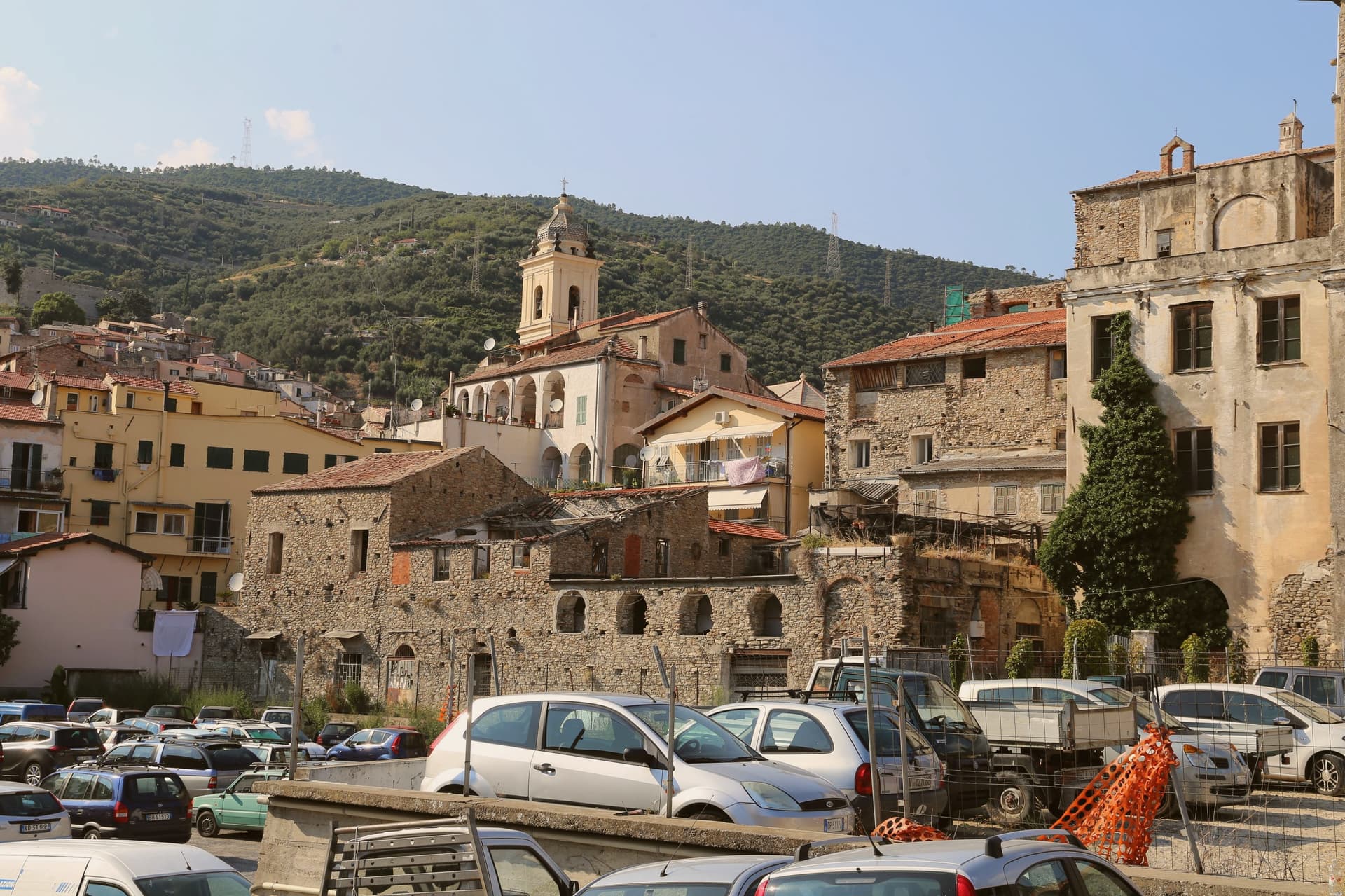
The Argentina valley's medieval seat above the Riviera dei Fiori, the town that gave its name to the Taggiasca olive grown across western Liguria.
- Best time
- Apr–Oct
- By car
- 1 h 56 min from Genoa
- By train
- Station in the comune
- Population
- 13,760
Known for
TAGGIASCA
Small black olive cultivar brought by Benedictines from Lérins in the eighth century, now the dominant olive of western Liguria.
BREA AT SAN DOMENICO
The Dominican convent holds the largest collection of Ludovico Brea panels in Liguria, the most important antique-painting collection in the district.
PONTE ANTICO
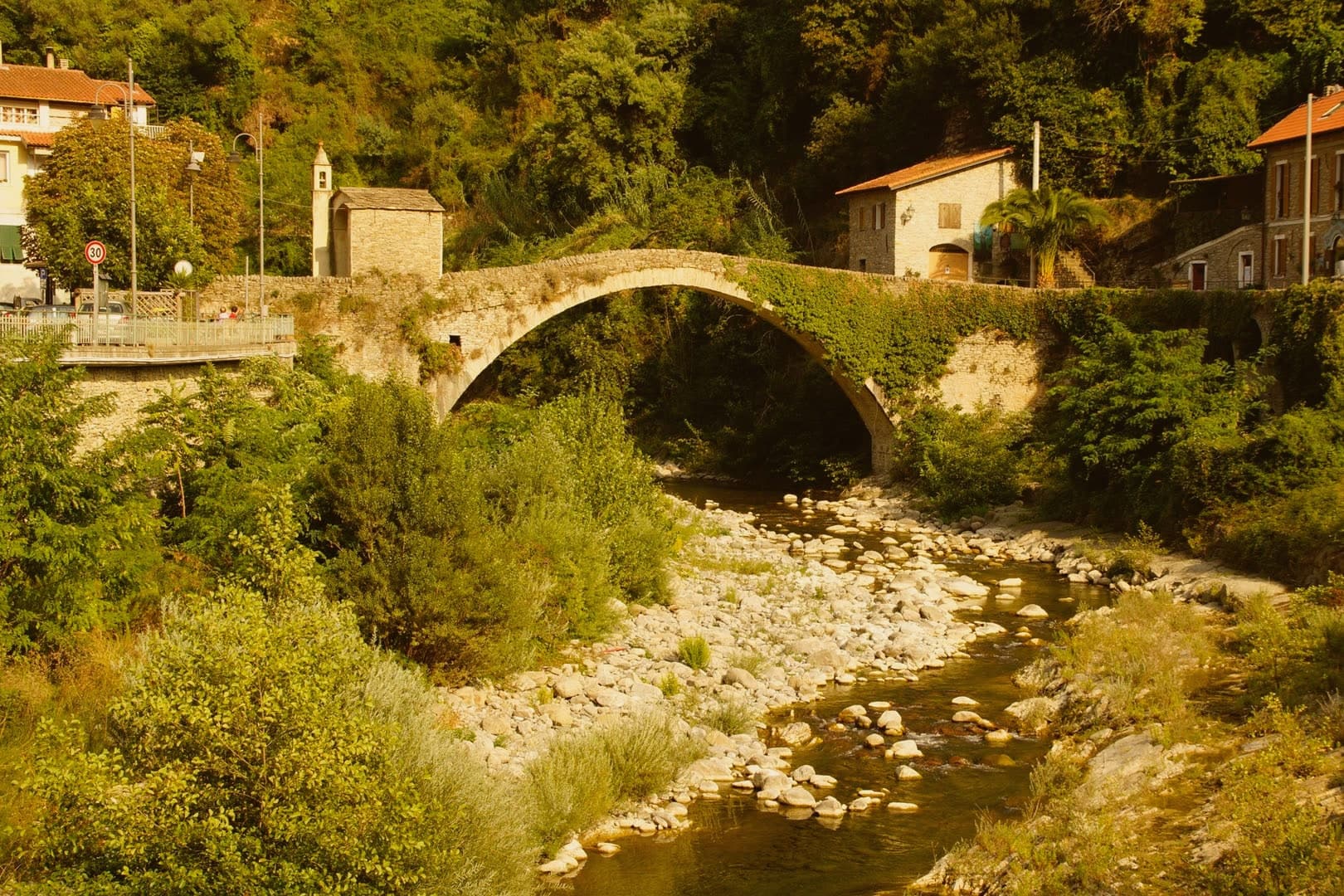
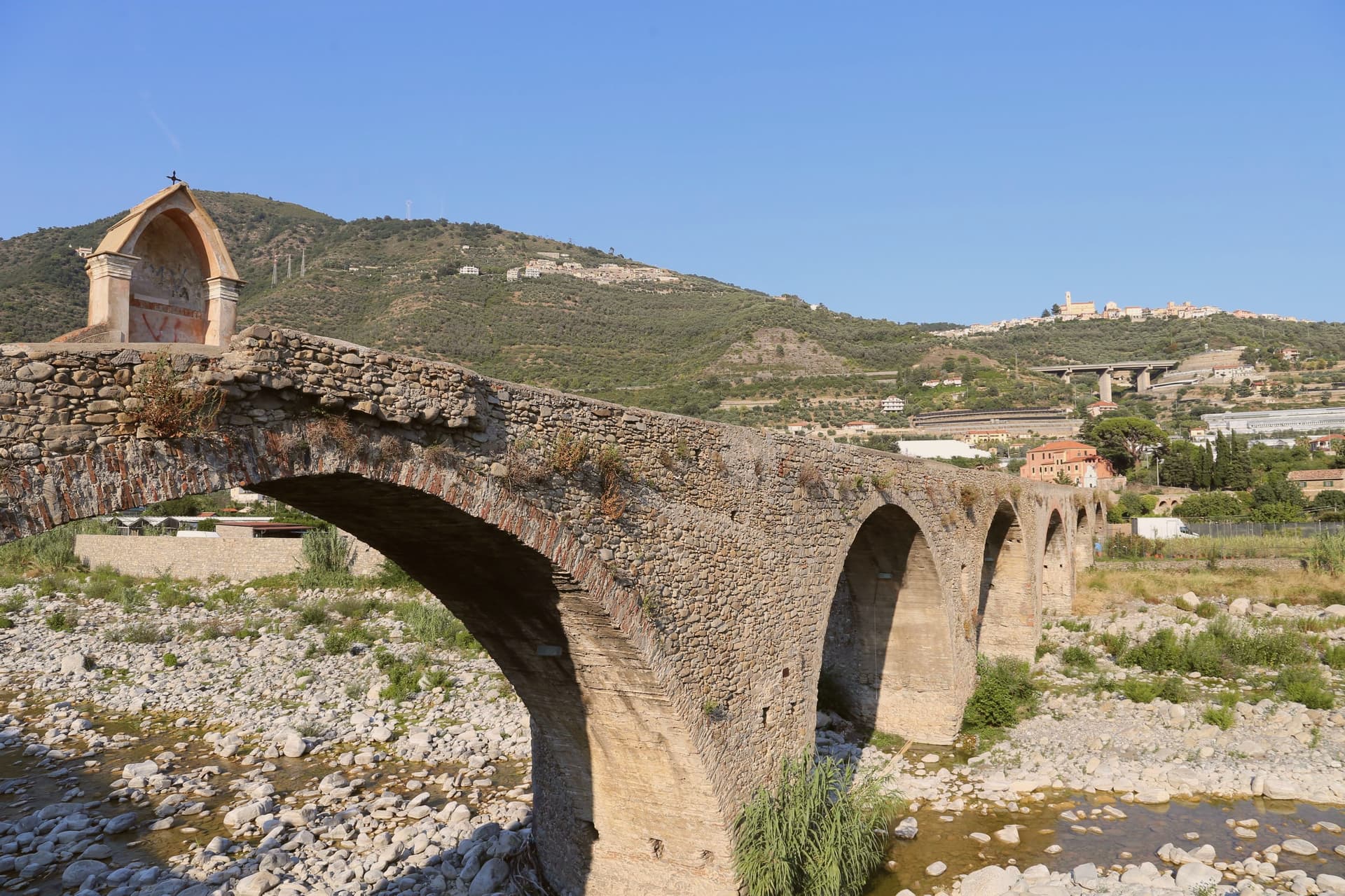
275-metre stone bridge across the Argentina, sixteen arches added between the 1200s and 1700s, the longest medieval bridge in Liguria.
When to visit
Best · Apr–Oct
- J12°
- F14°
- M15°
- A17°
- M21°
- J25°
- J28°
- A29°
- S25°
- O21°
- N17°
- D13°
- Best
- Hot or crowded
- Quiet
- Mostly closed
Daytime averages, 2020–2024. The sea is warmest in August at 27° and coldest in February at 14°. Weather data by Open-Meteo.com.
Why come
Taggia sits where the Argentina valley narrows toward the Ligurian coast, fifteen kilometers west of Imperia. Iron Age tombs have been found in the territory, and the small port at the mouth was called Costa Balenae in antiquity, a coastal settlement distinct from the medieval town that grew up along the river above it. The Benedictine monks of Lérins came in the seventh and eighth centuries and, by tradition, brought the olive cultivar that took the town's name and now covers most of western Liguria's hillsides.
The medieval centro storico runs along three parallel streets above the river, and sixteenth-century walls fortified the town against Ottoman raids that struck the coast in 1560 and 1564, the same period that produced the bridge's later arches and the walled gates still standing. Taggia carries the Borghi più belli badge and the Città dell'Olio designation as the source of the Taggiasca name. The valley town, the coastal port, and the olive-covered hillsides are really one settlement pattern read at three scales: a river crossing fortified against the sea, feeding an oil that carried the name outward long after the raids stopped.
The Sunday letter
Taggia is on our list. Its letter is still to come.
We are writing about all 1,000 of these towns, one at a time, in a free letter every Sunday: the photo, the food, the festa. That is our mission. Sign up and you will be there when Taggia comes up. By Peter & Sophia, from Pietrasanta.
Read on
Taggia in our articles
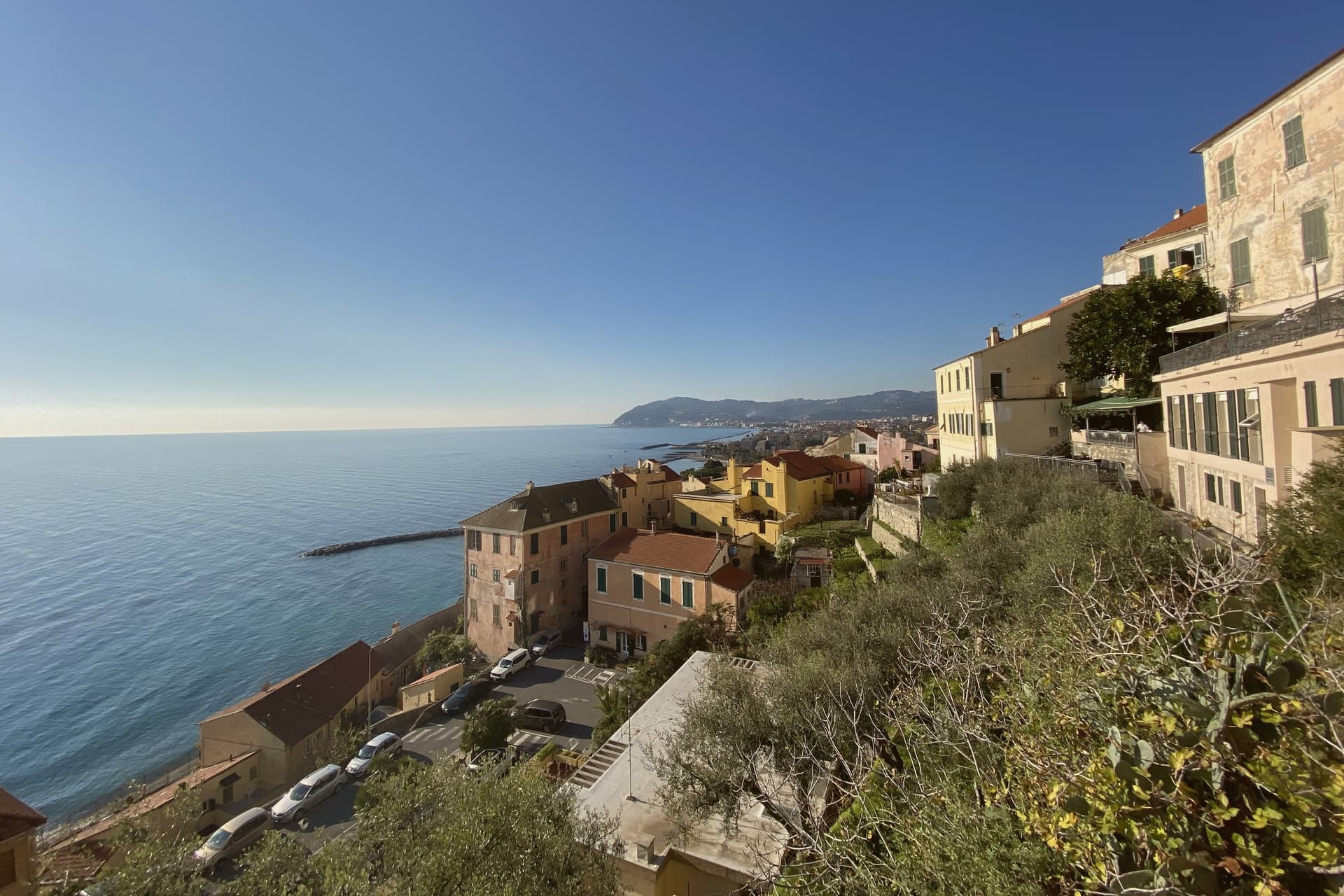 The best coastal towns in the province of Imperia6 towns, Taggia among them.
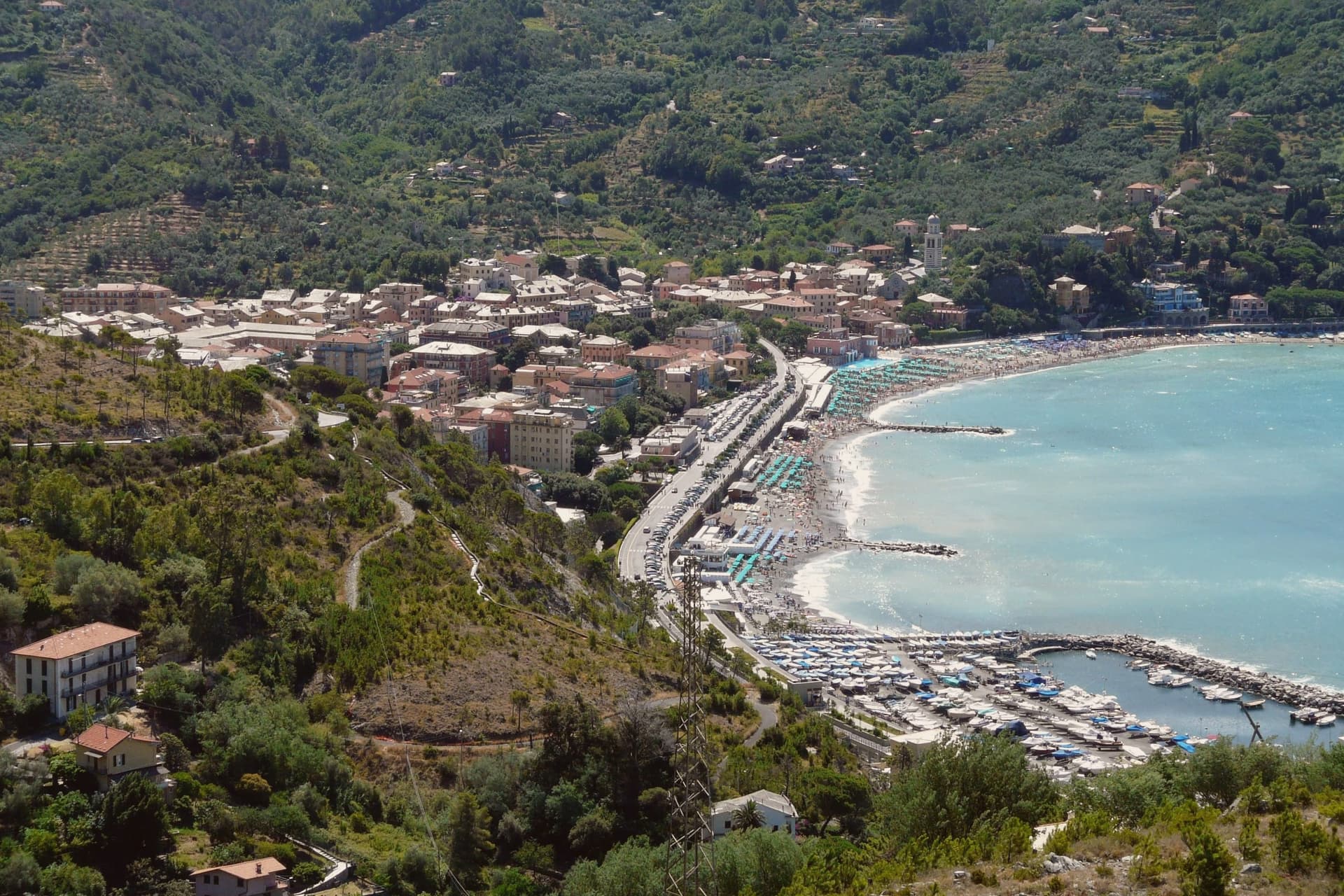 The best olive oil towns you can reach by train in Liguria7 towns, Taggia among them.
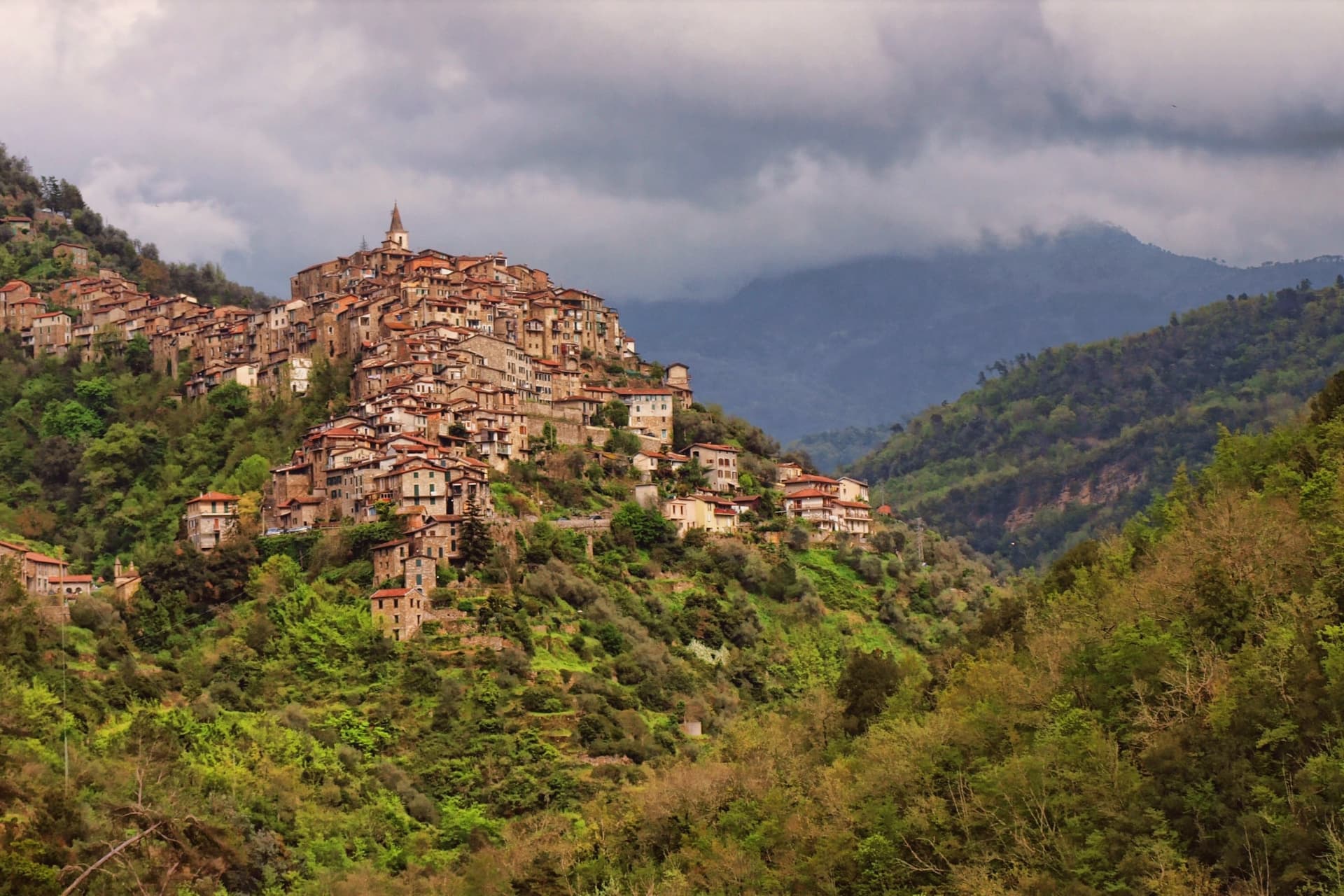
 The best olive oil towns that eat well in Liguria8 towns, Taggia among them.
 The best olive oil towns in the province of Imperia9 towns, Taggia among them.
How to get there
From Genoa (GOA), about 1h 51m by car.
Turin (TRN) is about 3 hours away.
By car from the centre of Milan 3h 14m.
There is a railway station in the comune, so you can arrive without a car.
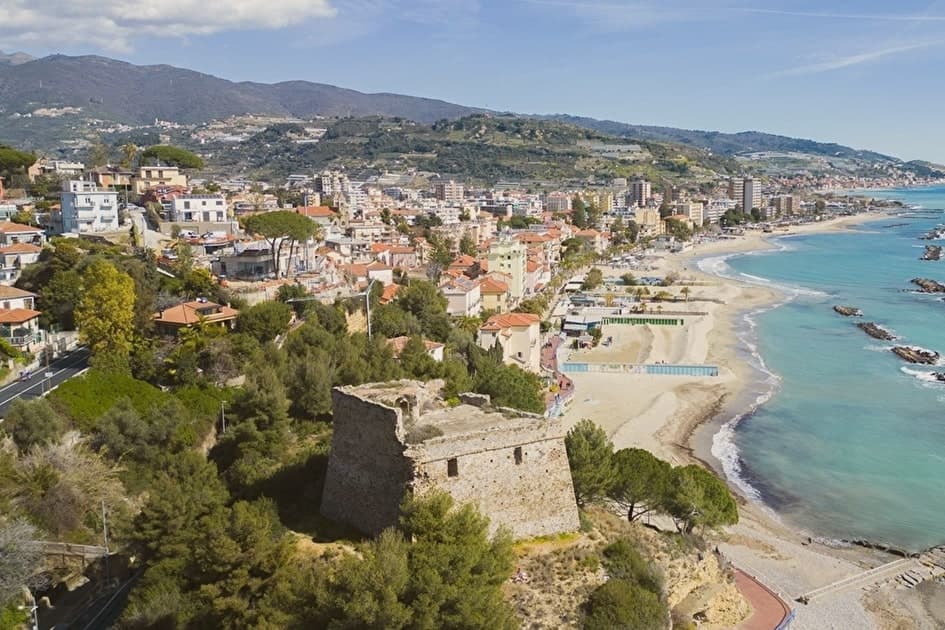
Coming from Genoa?
What to see
Convento di San Domenico
Founded in 1490. The Brea panels hang alongside works of the Nice school, four centuries of west-Ligurian painting gathered in one cloister.
Ponte Antico
The arches step unevenly across the river, the earliest sections centuries older than the latest, a bridge built by accretion rather than plan.
Centro storico di Taggia
Three parallel medieval streets above the river, sixteenth-century walls and gates intact from the era of Saracen and Ottoman raids.
Chiesa dei Santi Giacomo e Filippo
Sixteenth-century collegiate church at the centre of the borgo, Baroque retables, restored after damage in the 1887 Ligurian earthquake.
Castello di Taggia
Ruined fortress on the hill above the village, originally Clavesana, occupied in turn by Grimaldi, Doria and Savoia forces.
The slow-trip planner
Building a trip? Find where Taggia fits in a slow Italy circuit.
Answer five questions. We will shape a geographically coherent slow trip from the 1,000 Italian towns most travelers skip. Yours to save and share.
We recommend
Where to eat
Not our picks, but places the guides put their name to: a Michelin star, a Gambero Rosso fork, a Slow Food snail, a Michelin Key for the hotels. Worth a table, a counter, or a night when you pass through.
La ConchigliaRistorante
La Conchiglia has a place in L'Espresso's Top 300 and a Gambero Rosso listing.
Signature product
Olio Riviera Ligure DOPDOP
Olive oil from the Taggiasca cultivar, the small black olive that defines Ligurian cuisine.
See the towns we cover in the zone of Olio Riviera Ligure DOP.
Living here
- Population 13,760
- Commuter belti
- Pharmacy in town
- High school within a 30-minute drive
- Train station in the comune
- Nearest airport Genoa, 1 h 51 min drive
- Regional capital Genova, 1 h 56 min drive
Common questions
- What is Taggia known for?
- Taggia is the Argentina valley's medieval seat above the Riviera dei Fiori, the town that gave its name to the Taggiasca olive grown across western Liguria.
- Where is Taggia?
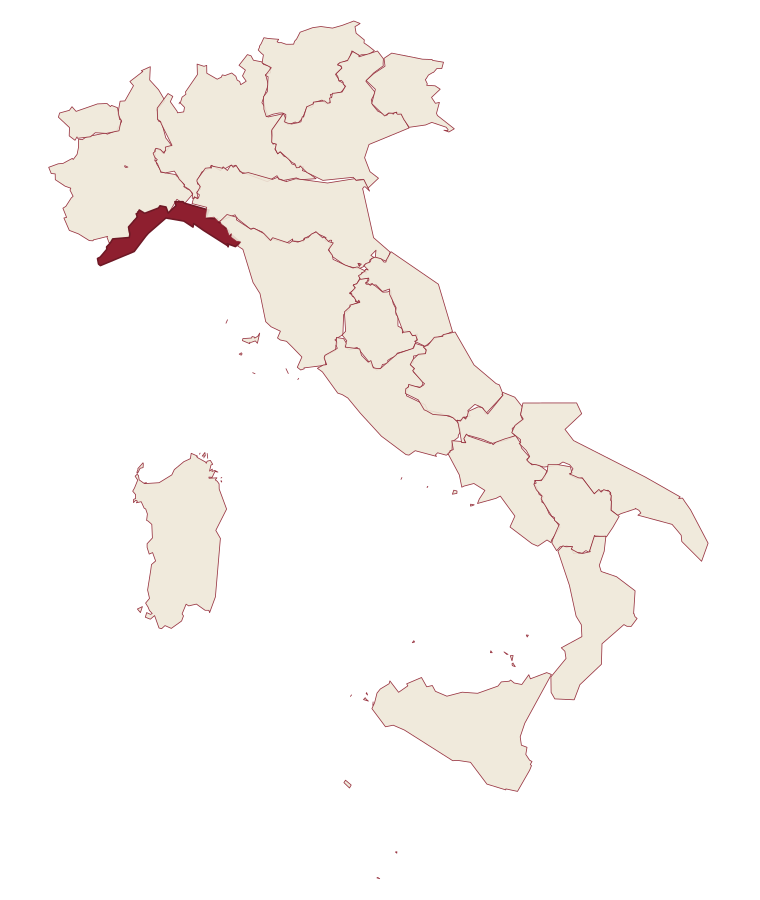
- Taggia is a comune in the province of Imperia, in Liguria, at 40 meters above sea level.
- What is the nearest airport to Taggia?
- Genoa (GOA), about 1h 51m by car.
- Can you get to Taggia without a car?
- Yes. There is a railway station in the comune, so you can arrive by train.
- How long is the drive from Milan to Taggia?
- About 3h 14m by car.
- When is the best time to visit Taggia?
- Best in Apr–Oct. August is the warmest month, averaging 29 degrees, and May the wettest, with about 11 rain days.
- Which other towns are like Taggia?
- Varazze, Finale Ligure and Arenzano.
- How many people live in Taggia?
- 13,760 at the 2023 count.
Tags & datadesignations · numbers · sources
Recognised as
The numbers
- Elevation: 40 m
- Population: 13,760
- Surface area: 31.36 km²
These figures were compiled from public directories: ISTAT, OpenStreetMap and Wikidata, and from the official listings of the guides named on this page. Town details change; verify with official sources before you travel.
Similar
Towns like Taggia
Varazze
Province: Savona
both on the Ligurian coast · both over 10,000 people
Finale Ligure
Province: Savona
both on the Ligurian coast · both over 10,000 people
Arenzano
Province: Genova
both on the Ligurian coast · both over 10,000 people
Sestri Levante
Province: Genova
both on the Ligurian coast · both over 10,000 people
Trinitapoli
Province: Barletta-Andria-Trani
both over 10,000 people · both near sea level
Muggia
Province: Trieste
both over 10,000 people · both near sea level
🎨 Borghi più belli d'Italia
More Borghi più belli d'Italia towns in Liguria
Ameglia
Province: La Spezia
A hilltop borgo at 89 meters above the mouth of the Magra, the Lunigiana edge of Liguria where the river meets the Gulf of Poets.
Apricale
Province: Imperia
A medieval hill village in the Nervia Valley, named for the Latin apricus, sunny, with a tenth-century castle shaped like a lizard on the rock.
Badalucco
Province: Imperia
A medieval village wrapped in a bend of the Argentina torrent, with murals on its caruggi and a Slow Food bean on its terraces.
Borgio Verezzi
Province: Savona
Two villages joined under one comune in 1933: Borgio on the coast below, Verezzi on the pink-stone hill above.
Brugnato
Province: La Spezia
The medieval ecclesiastical capital of an inland Ligurian valley, seat of a diocese from 1133 to 1820, with a co-cathedral built over a Columban monastery.