
Veneto · Verona
Sant'Ambrogio di Valpolicella
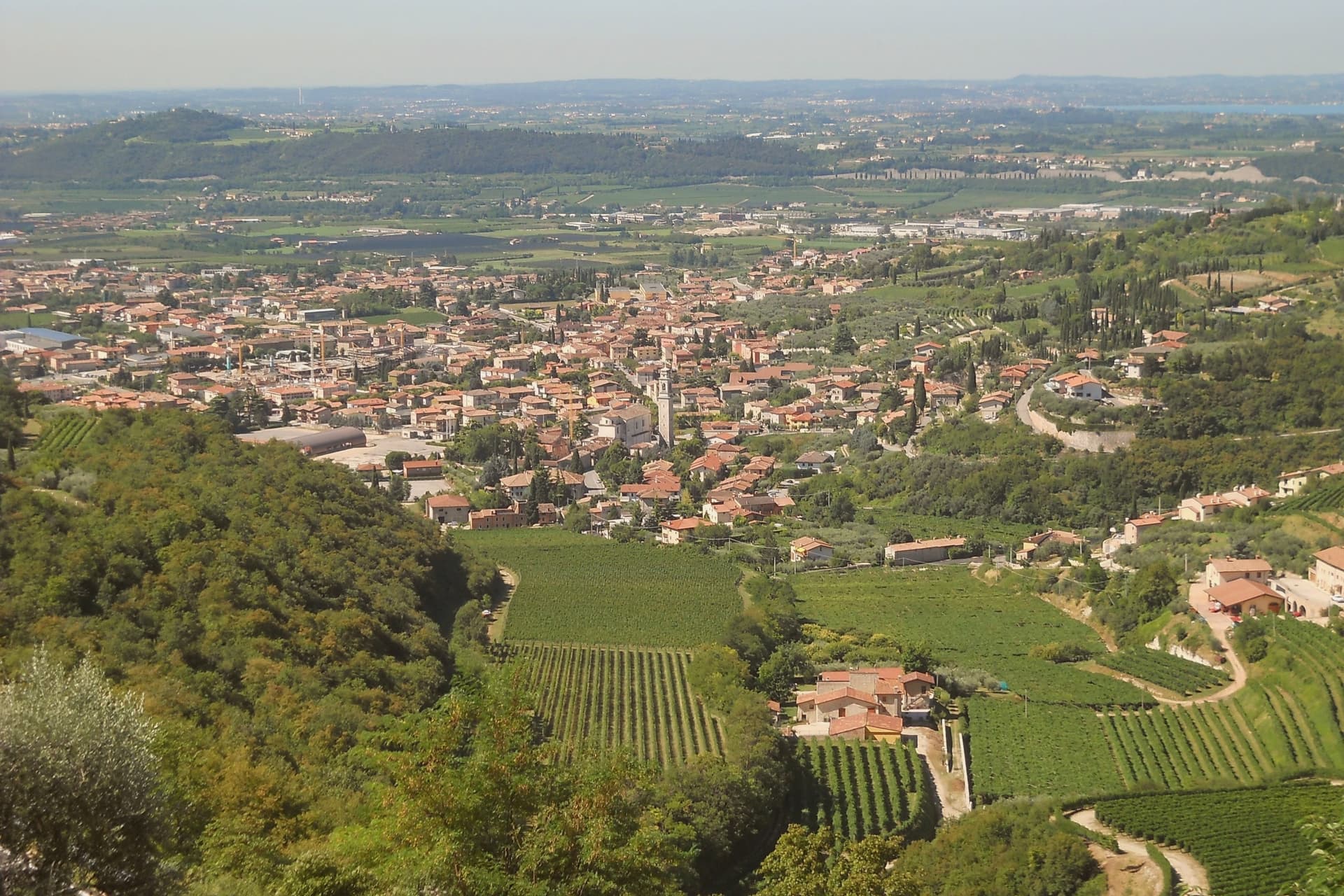
The Valpolicella DOC gateway northwest of Verona, where the Gargagnago frazione anchors Amarone production and a hilltop frazione holds a Lombard-era pieve.
- Best time
- Apr–Oct
- By car
- 34 min from Verona
- By train
- Station in the comune
- Population
- 11,846
Known for
AMARONE
Gargagnago is the historic seat of Amarone production, with Corvina, Rondinella and Molinara dried at least 100 days before vinification.
INGANNAPOLTRON
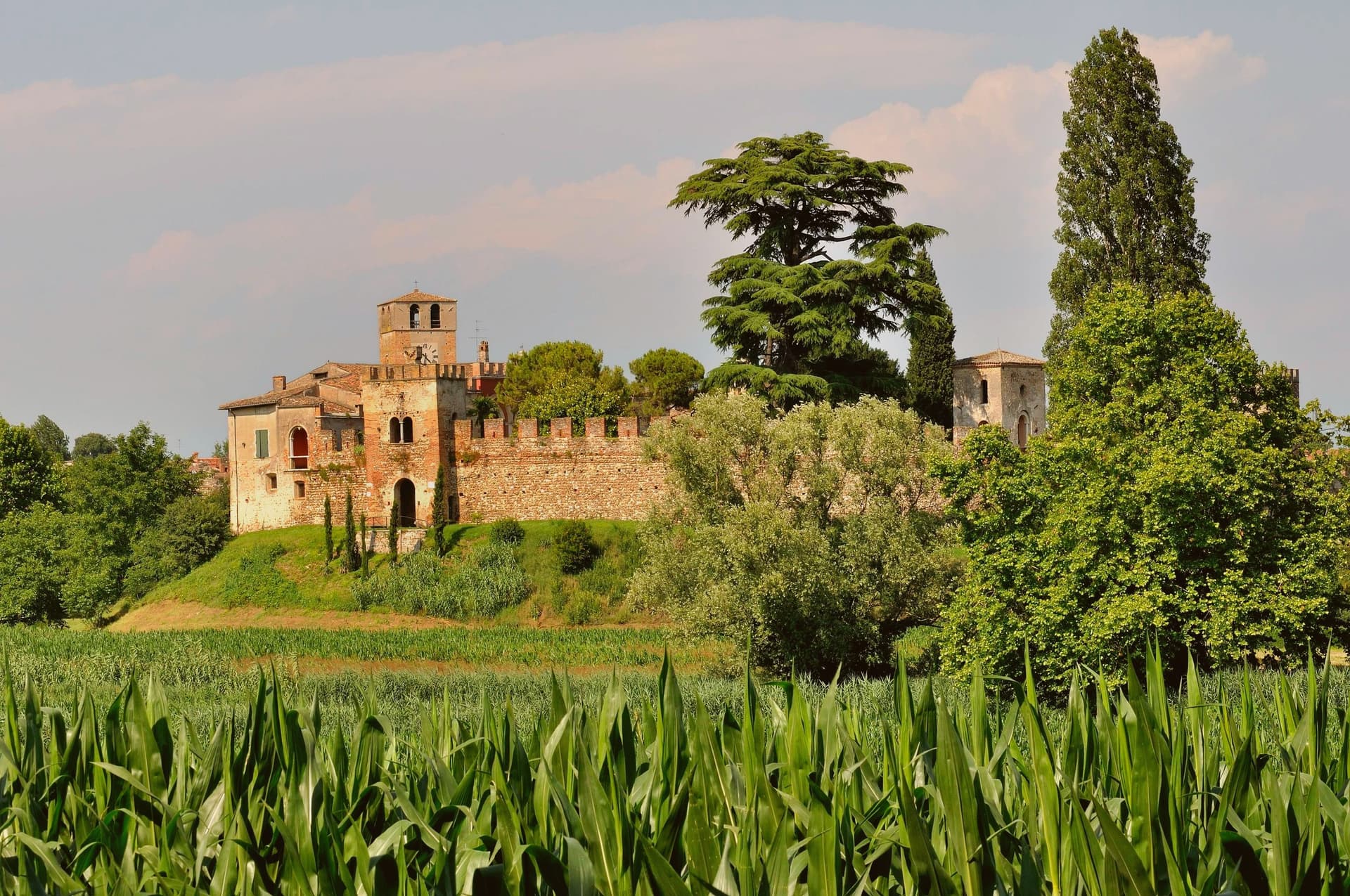
The Lombard-era pieve at San Giorgio, with eighth-century ciborium columns from the reign of King Liutprand.
ALIGHIERI
Pietro Alighieri, Dante's son, bought the Serego estate in 1353; descendants still run it as a working winery.
PROTECTED PRODUCTS
The commune also lies inside the Recioto della Valpolicella DOCG and Pesca di Verona IGP production zones.
When to visit
Best · Apr–Oct
- J8°
- F11°
- M14°
- A17°
- M21°
- J26°
- J29°
- A28°
- S24°
- O19°
- N12°
- D8°
- Best
- Hot or crowded
- Quiet
- Mostly closed
Daytime averages, 2020–2024. Weather data by Open-Meteo.com.
The festa: Sant'Ambrogio, 7 December
Why come
Sant'Ambrogio di Valpolicella sits in the heart of the Valpolicella DOC, fifteen kilometers northwest of Verona, on the rolling hills that close the eastern shore of Lake Garda. The commune groups five frazioni around the main village: Domegliara, Gargagnago, Monte, Ponton and the ridge settlement above them. Gargagnago sits at the foot of the hills, its cellars closest to the valley floor; the ridge frazione occupies the higher limestone ground, reached by a climb steep enough to have earned the church its nickname.
Between them the Serego Alighieri estate has worked the same parcels since Pietro Alighieri, son of Dante the poet who had followed his father into exile in Verona, bought the property in 1353, and the family still grows Corvina, Rondinella and Molinara there, with the Vaio Armaron Amarone counted among the appellation's cru benchmarks. The pattern of the commune is one of a valley economy and a hill economy sharing a single administrative roof: wine pressed and aged below, an older, stiller settlement kept above it, with the quarries that once supplied Verona still worked on the slopes that join the two.
The Sunday letter
Sant'Ambrogio di Valpolicella is on our list. Its letter is still to come.
We are writing about all 1,000 of these towns, one at a time, in a free letter every Sunday: the photo, the food, the festa. That is our mission. Sign up and you will be there when Sant'Ambrogio di Valpolicella comes up. By Peter & Sophia, from Pietrasanta.
Read on
Sant'Ambrogio di Valpolicella in our articles
 The best hill towns within 75 minutes of Brescia6 towns, Sant'Ambrogio di Valpolicella among them.
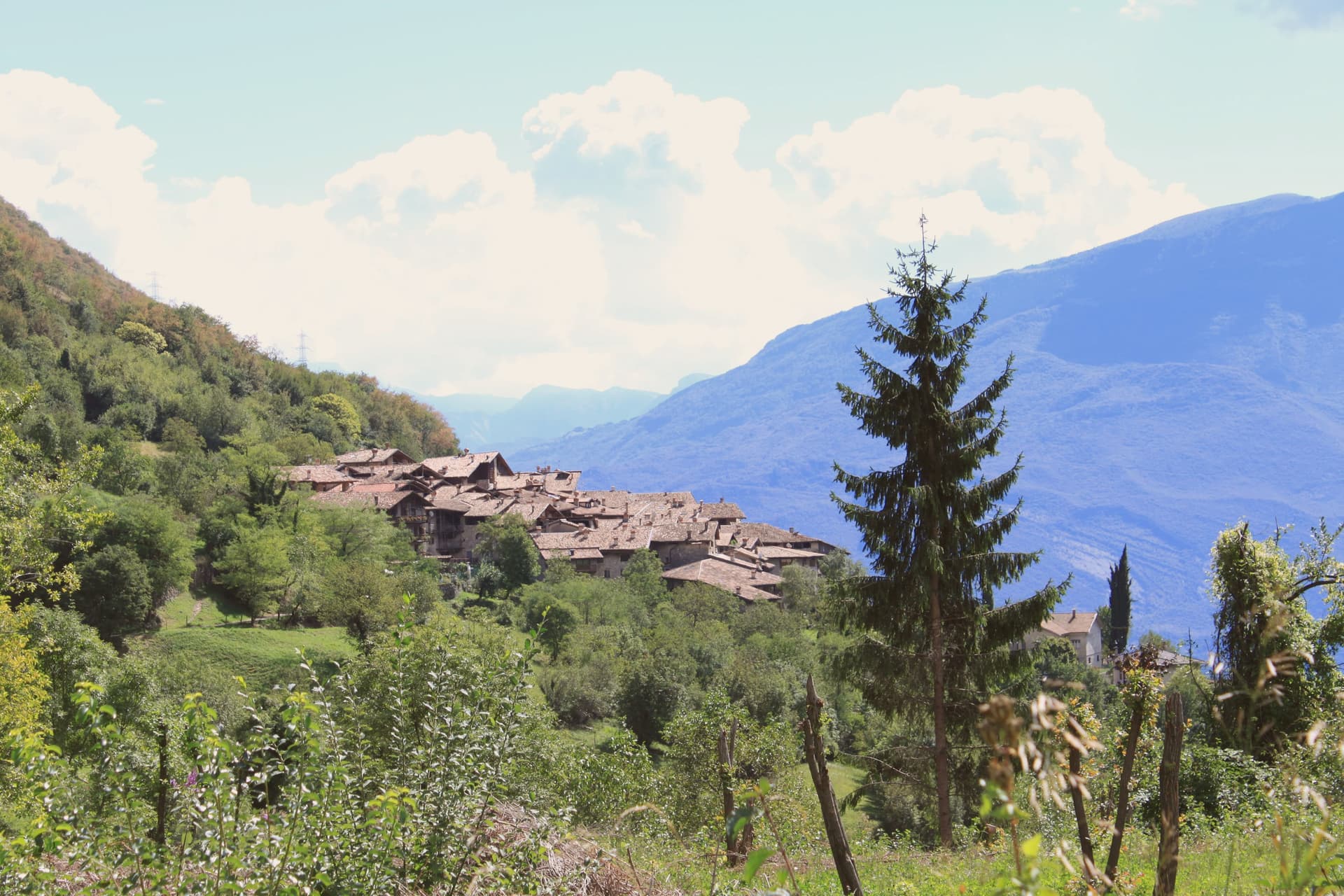 The best hill towns within 75 minutes of Trento6 towns, Sant'Ambrogio di Valpolicella among them.
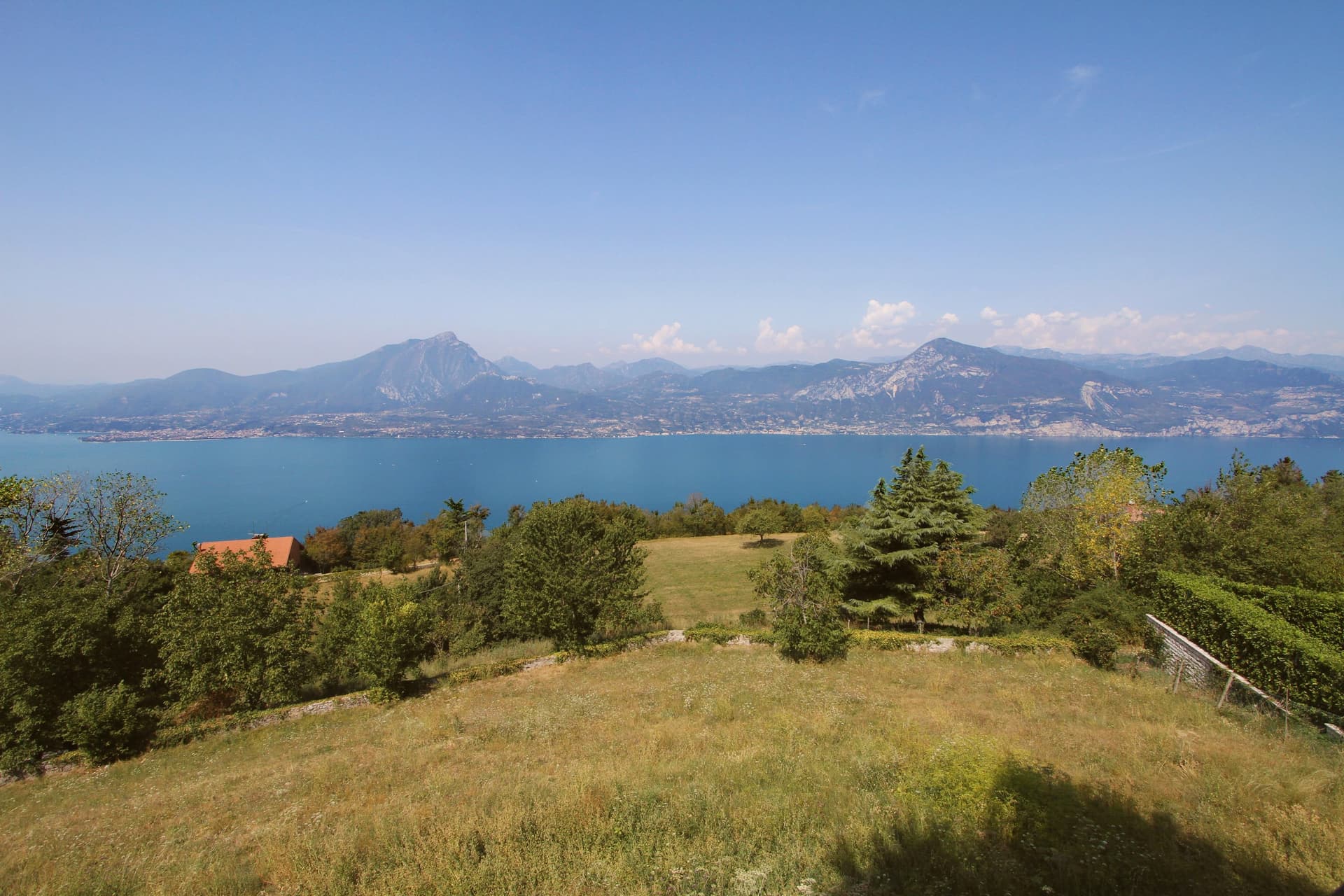 The best towns known for what they grow within 90 minutes of Brescia6 towns, Sant'Ambrogio di Valpolicella among them.
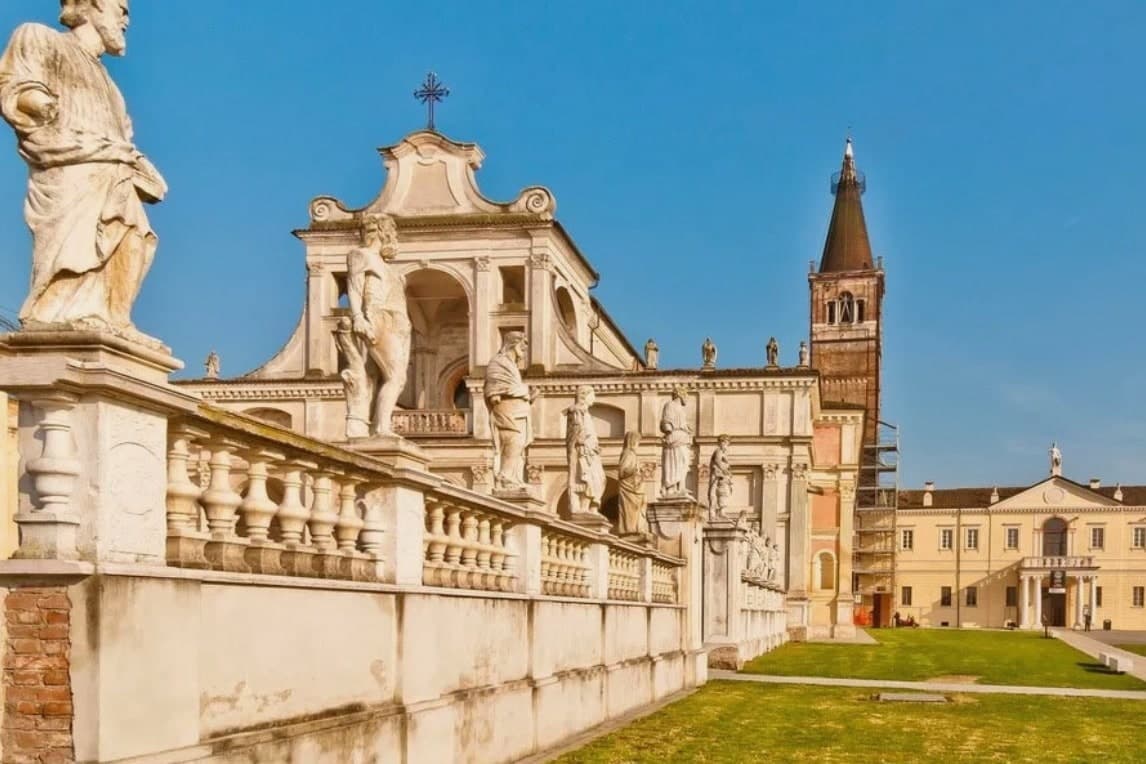 The best towns known for what they grow within an hour of Verona6 towns, Sant'Ambrogio di Valpolicella among them.
How to get there
From Verona (VRN), about 42 minutes by car.
Milan (BGY) is about 1h 33m away.
By car from the centre of Brescia 1h 9m or Trento 1h 10m.
There is a railway station in the comune, so you can arrive without a car.
Coming from Verona, Venice or Bologna?
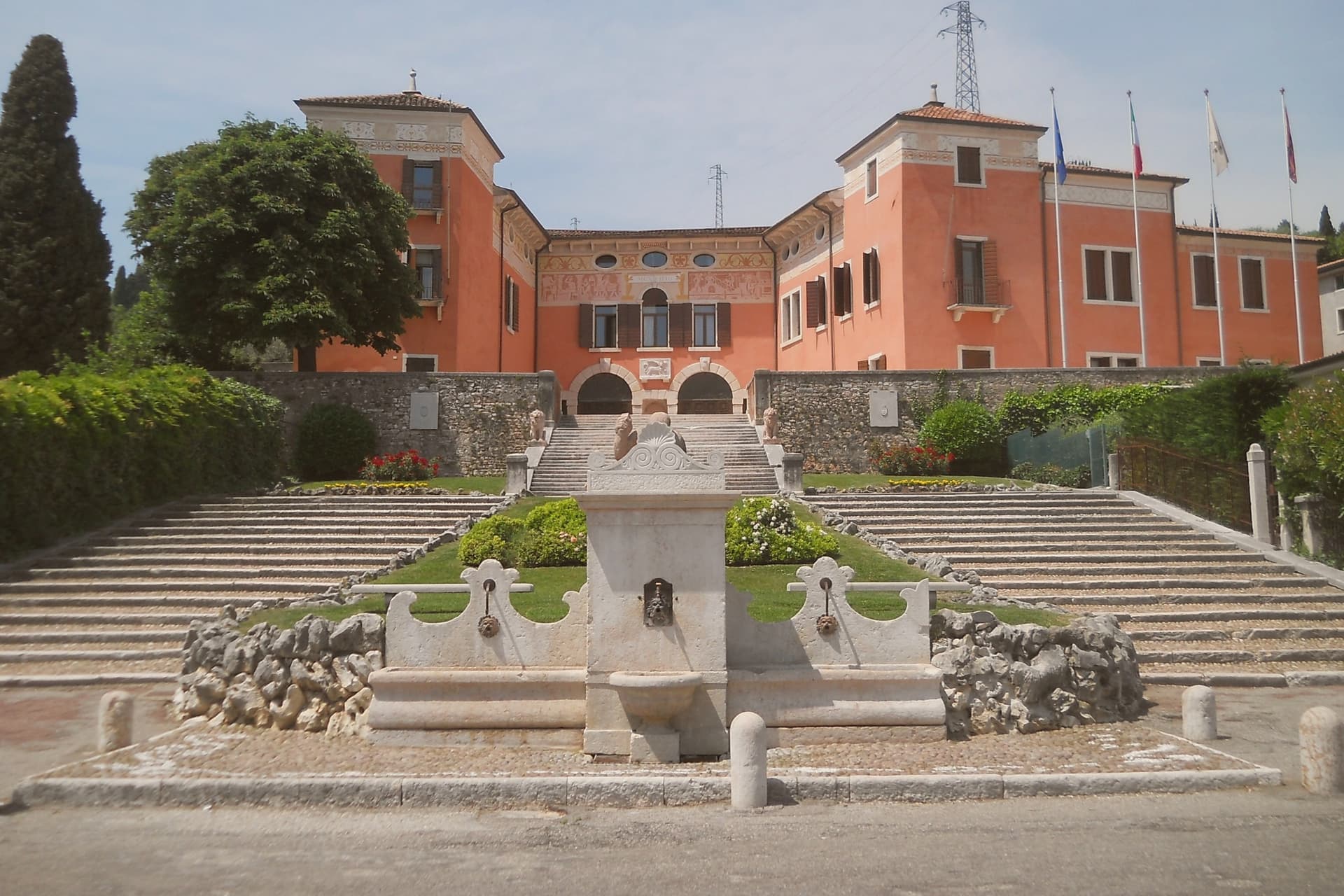
Coming by train into Verona Porta Nuova? Sant'Ambrogio di Valpolicella is about 31 minutes away by road.
What to see
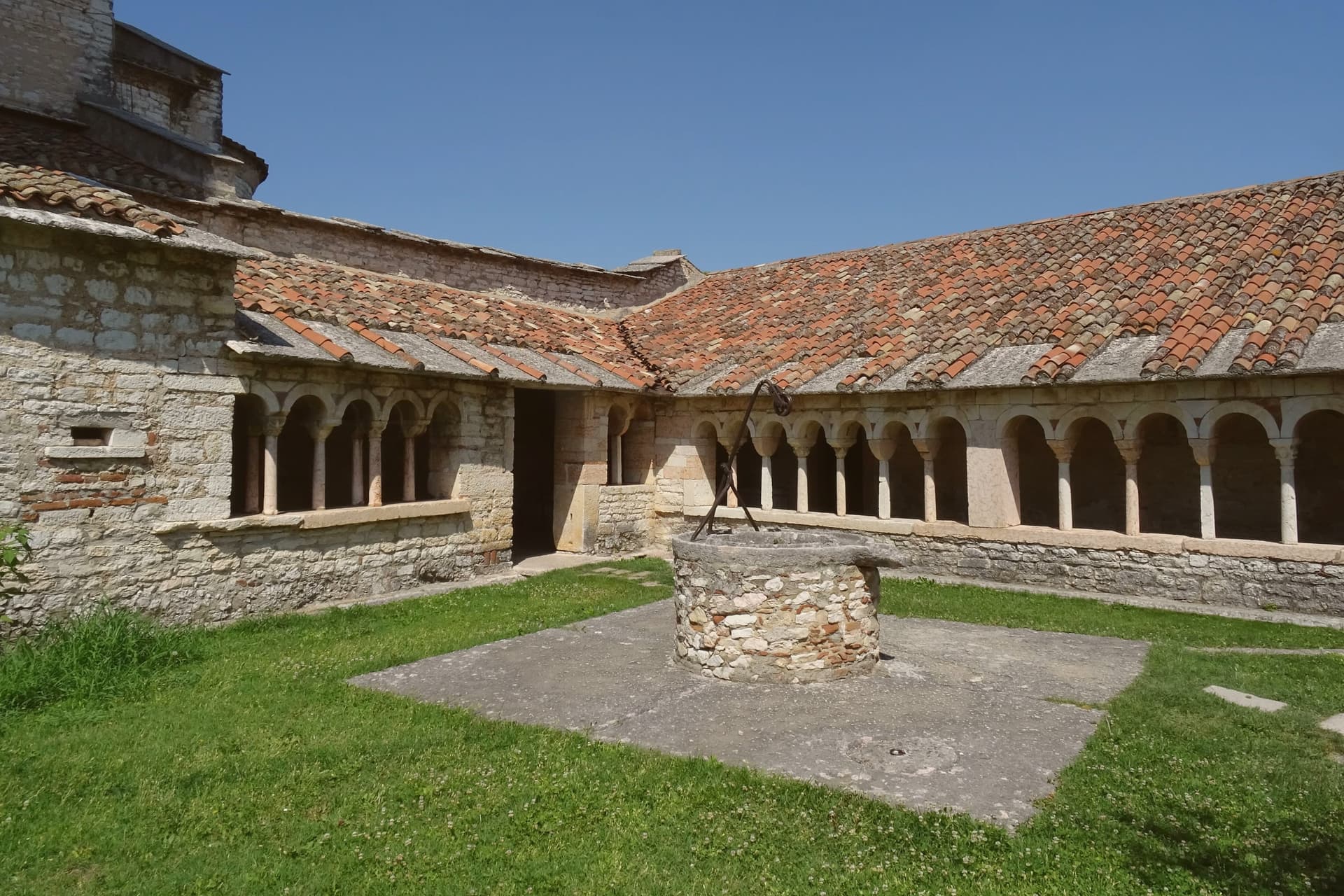
Pieve di San Giorgio Ingannapoltron
Romanesque parish church whose ciborium columns carry an inscription naming the master builder Orso and his disciples Juventino and Juviano.
San Giorgio di Valpolicella
Frazione on the limestone ridge above the valley, in the Borghi più belli d'Italia network, nicknamed Ingannapoltron for the steep climb up to it.
Villa Serego Alighieri
Estate still owned by the Alighieri descendants; produces Vaio Armaron Amarone from Corvina, Rondinella and Molinara grown on the same parcels the family has worked.
Gargagnago
Amarone borough at the foot of the hills, with cellars working Corvina dried for at least 100 days before vinification.
Marble quarries of Sant'Ambrogio
Red and pink limestone quarries that supplied Verona since Roman times, still worked on the slopes between Domegliara and the ridge frazione.
The slow-trip planner
Building a trip? Find where Sant'Ambrogio di Valpolicella fits in a slow Italy circuit.
Answer five questions. We will shape a geographically coherent slow trip from the 1,000 Italian towns most travelers skip. Yours to save and share.
We recommend
Where to eat
Not our picks, but places the guides put their name to: a Michelin star, a Gambero Rosso fork, a Slow Food snail, a Michelin Key for the hotels. Worth a table, a counter, or a night when you pass through.
Dalla Rosa AldaRistorante
Dalla Rosa Alda carries a Michelin Bib Gourmand.
Masi AgricolaCantina
Masi Agricola has a top-100 spot on the World's Best Vineyards to its name.
Living here
- Population 11,846
- A local hubi
- Pharmacy in town
- High school within a 30-minute drive
- Train station in the comune
- Nearest airport Verona, 42 min drive
- Market day Wednesday
- Regional capital Venezia, 1 h 45 min drive
Common questions
- What is Sant'Ambrogio di Valpolicella known for?
- Sant'Ambrogio di Valpolicella is the Valpolicella DOC gateway northwest of Verona, where the Gargagnago frazione anchors Amarone production and a hilltop frazione holds a Lombard-era pieve.
- Where is Sant'Ambrogio di Valpolicella?
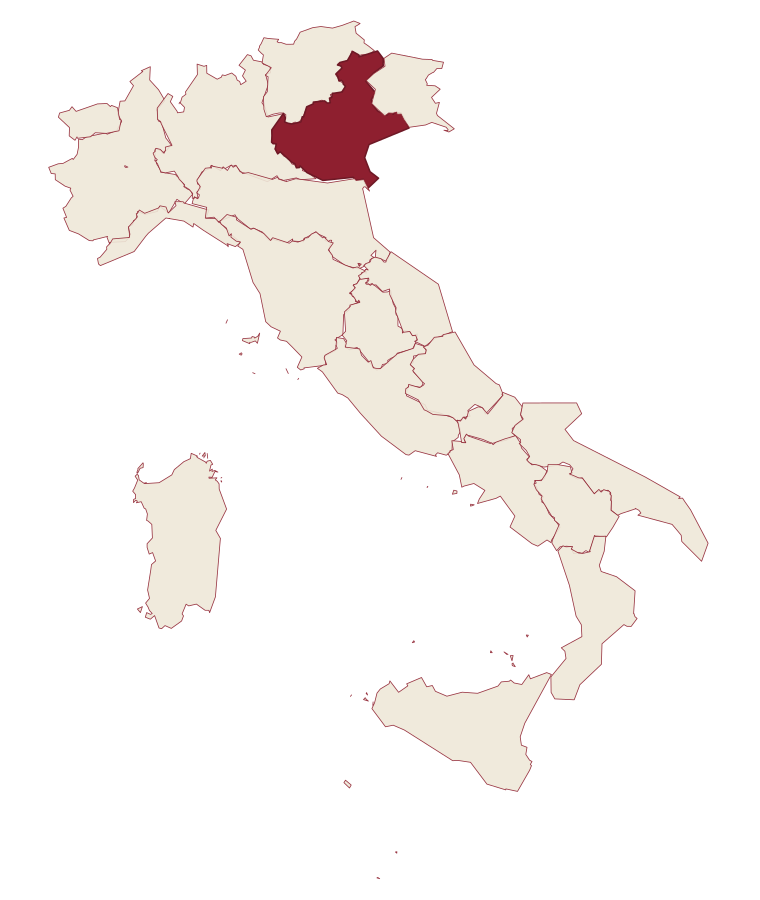
- Sant'Ambrogio di Valpolicella is a comune in the province of Verona, in Veneto, at 174 meters above sea level.
- What is the nearest airport to Sant'Ambrogio di Valpolicella?
- Verona (VRN), about 42 minutes by car.
- Can you get to Sant'Ambrogio di Valpolicella without a car?
- Yes. There is a railway station in the comune, so you can arrive by train.
- How long is the drive from Brescia to Sant'Ambrogio di Valpolicella?
- About 1h 9m by car.
- When is the best time to visit Sant'Ambrogio di Valpolicella?
- Best in Apr–Oct. July is the warmest month, averaging 29 degrees, and May the wettest, with about 17 rain days.
- Is there a sagra or a festival in Sant'Ambrogio di Valpolicella?
- The town keeps its patron saint's day: Sant'Ambrogio, 7 December.
- Which other towns are like Sant'Ambrogio di Valpolicella?
- Trento, Vittorio Veneto and Ovada.
- How many people live in Sant'Ambrogio di Valpolicella?
- 11,846 at the 2023 count.
Tags & datadesignations · numbers · sources
Recognised as
The numbers
- Elevation: 174 m
- Population: 11,846
- Surface area: 23.5 km²
These figures were compiled from public directories: ISTAT, OpenStreetMap and Wikidata, and from the official listings of the guides named on this page. Town details change; verify with official sources before you travel.
Similar
Towns like Sant'Ambrogio di Valpolicella
Trento
Province: Trento
both inland, away from the coast · both over 10,000 people
Vittorio Veneto
Province: Treviso
both inland, away from the coast · both over 10,000 people
Ovada
Province: Alessandria
both inland, away from the coast · both over 10,000 people
Cividale del Friuli
Province: Udine
both inland, away from the coast · both over 10,000 people
Canelli
Province: Asti
both inland, away from the coast · both over 10,000 people
Tarquinia
Province: Viterbo
both inland, away from the coast · both over 10,000 people
🎨 Borghi più belli d'Italia
More Borghi più belli d'Italia towns in Veneto
Arquà Petrarca
Province: Padova
The Euganean Hills village where Francesco Petrarca spent his last four years and died in 1374, renamed in his honor in 1868.
Asolo
Province: Treviso
A walled hill town at 205 meters that Caterina Cornaro ran as her court after trading Cyprus to Venice in 1489.
Borgo Valbelluna
Province: Belluno
Veneto's youngest comune, a 13,410-resident fusion of three lower-Belluno towns formed in 2019, wrapped around an old borgo in the pre-Dolomite Piave valley.
Cison di Valmarino
Province: Treviso
A Prosecco hills borgo at 261 meters under the dolomite rock of CastelBrando, the largest inhabited castle complex in Europe.
Follina
Province: Treviso
A Prosecco-hills borgo at 191 meters around the Cistercian Abbey of Santa Maria, with a cloister finished in 1268.