The prettiest villages that eat well in Veneto
Veneto builds its villages out of what is nearby: pale river stone from the Piave, brick from the plain, Prun limestone in the Valpolicella hills. Above them run terraces of Glera vines around Conegliano and Valdobbiadene, olive slopes falling to Lake Garda, and beech woods climbing towards the Grappa massif. The food follows the ground it grows on, radicchio from Treviso in winter, bigoli with duck in autumn, tortellini in brodo where the Mincio runs, amarone braised beef in the stone villages north of Verona. Spring and early autumn are the good months, when the vines colour and the trattorie put tables outside without the summer coach traffic.
Most visitors arrive with Venice on the itinerary and stay there, then add Verona for an evening at the Arena. The two cities absorb almost everything, which is why the queues at Rialto and the restaurant prices around Piazza Bra are what they are. It makes sense as a first trip. It also means the region gets read as two set pieces with countryside in between.
That countryside is the point. The same hills that make the Prosecco, the same lakeshore that makes the olive oil, the same limestone that makes Valpolicella carry on well past the places on the poster, and the villages along them have kept both their architecture and their kitchens. These are the smaller ones, where a guide-listed table sits inside a village the national assessment has already judged one of Italy's most beautiful. Fewer people go, and they eat better for it.
Of the 41 communes we have mapped in Veneto, 6 qualify as prettiest villages that eat well: each has passed the national assessment of Italy's most beautiful villages, and a dining guide has named a table in each. The smallest, Cison di Valmarino, has 2,463 residents.
Elsewhere in the catalogue: The 10 prettiest hidden villages in Veneto and The 7 best small towns that eat well in Veneto.
Cison di Valmarino
Why visit Cison di Valmarino
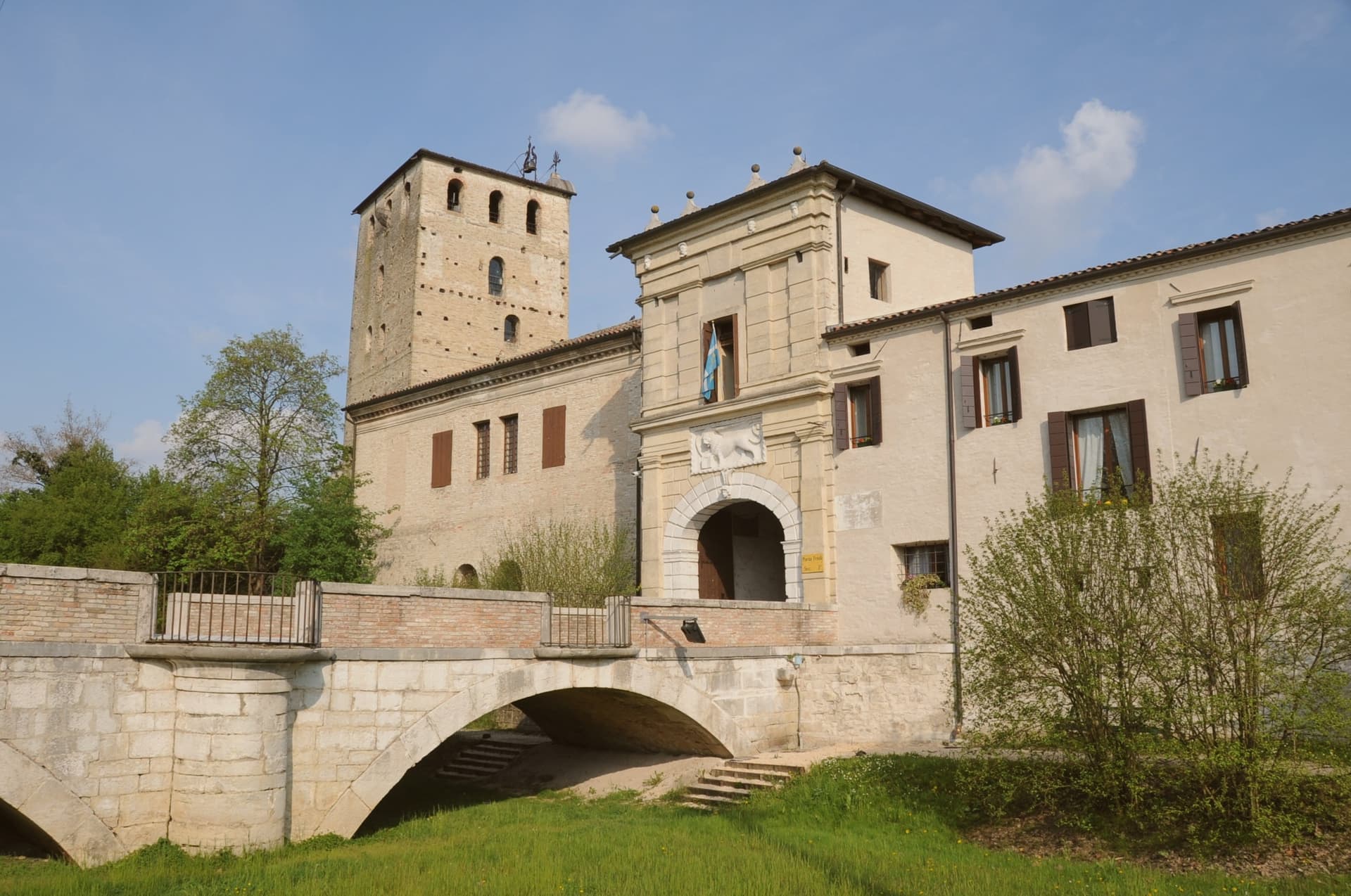
Cison di Valmarino sits at 261 meters at the foot of CastelBrando, the medieval fortress that rises 370 meters above the village on a dolomite spur. The castle is one of the largest in Europe, with origins as a Roman watch post on the Via Claudia Augusta and an unbroken occupation that runs through the Da Camino, the Brandolini, and into the present-day hotel and conference complex that opened in the 1990s.
The borgo below kept the layout the Brandolini gave it after they took the fief from Venice in 1436. Via XXIV Maggio runs through stone houses with arched portals; Piazza Roma holds the eighteenth-century Loggia.
The municipal territory carries four institutional signals at once, the maximum cluster in the eastern Prosecco hills, and the parish church of Santa Maria Assunta anchors the upper village. The Artigianato Vivo fair fills the streets for ten days each August, with around three hundred craft stalls drawing fifty thousand visitors and ranking among the largest artisanal events in Veneto.
La Muda di San Boldo have been named by a guide.
What to see in Cison di Valmarino
- CastelBrando. Medieval fortress on a dolomite rock at 370 meters above the village, with Roman foundations and continuous occupation, now hotel and conference center.
- Piazza Roma. Main square of the borgo with the eighteenth-century Loggia and the Palazzo Barbi, the historic seat of municipal administration.
- Chiesa di Santa Maria Assunta. Parish church in the upper village, rebuilt in the eighteenth century on an earlier medieval structure, with frescoes from the Tiepolo school.
How to get to Cison di Valmarino
Venezia is roughly 79 minutes away by road.
Our tip
April through October is the working window. April and May fill the hills with green and the Prosecco vineyards with flowering vines; September and October bring harvest and the gold light the Rive di Rolle hamlet has built its reputation on. The Artigianato Vivo runs the second and third weeks of August, with around 300 stalls along Via XXIV Maggio and parking for the surrounding villages used to capacity.
Follina
Why visit Follina
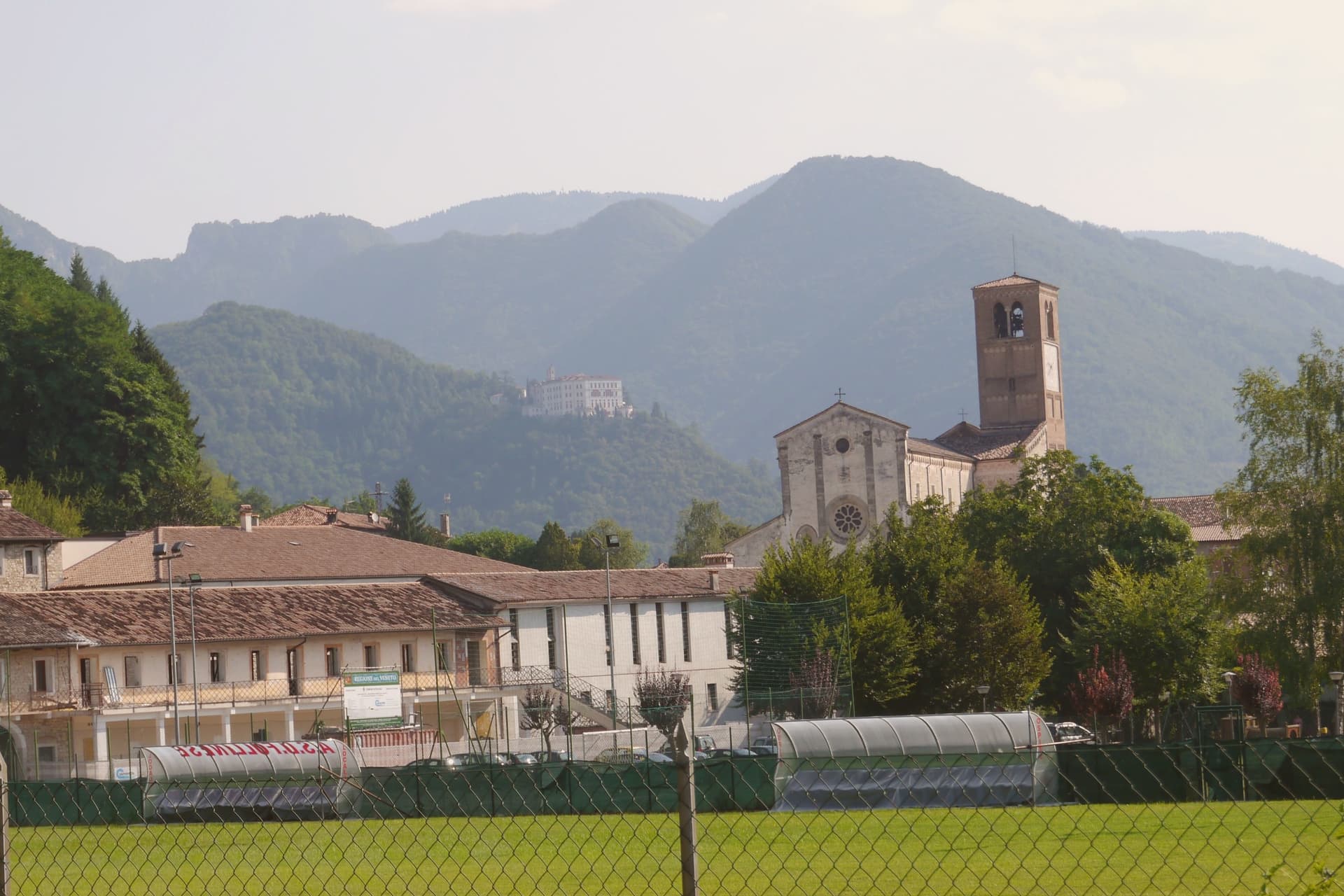
Follina sits at 191 meters where a stream cuts out of the Treviso Prealps into the upper Prosecco hills, sixty-five kilometers northwest of Padova. The name comes from follare, to full wool, and the Sanavalle stream powered fulling mills here from antiquity through the nineteenth century.
A monastic complex existed before the Cistercians arrived in the mid-twelfth century, likely a Benedictine house dependent on San Fermo di Verona. The Cistercians built the Abbey of Santa Maria from 1170; the cloister was completed in 1268.
The abbey is now a minor basilica and parish seat, a national monument since 1921, with frescoes of the Veneto-Byzantine school in the chapter house and a thirteenth-century stone Madonna inside the church. The Brandolini family, lords of nearby Cison di Valmarino, used Follina as a textile center through the Venetian period.
The borgo carries five institutional signals at once. The frazione of Pedeguarda holds the older parish church; the centro of Follina runs along the abbey wall and the stream that powered the mills.
La Corte, Osteria dai Mazzeri, Al Castelletto have been named by a guide.
What to see in Follina
- Abbazia di Santa Maria. Cistercian abbey built from 1170, with the cloister completed in 1268, raised to minor basilica and a national monument since 1921.
- Chiostro dell'Abbazia. Cistercian cloister of 1268, with twin colonnettes, sculpted capitals and a central well, intact in its medieval form.
- Sala del Capitolo. Abbey chapter house with frescoes of the Veneto-Byzantine school from the late thirteenth and early fourteenth centuries.
How to get to Follina
Venezia is roughly 73 minutes away by road.
Our tip
April through October is the working season. April and May bring the abbey gardens into bloom and the Prosecco hills into green; September and October bring harvest and the gold light the Rive belt is built on. July and August push into the low thirties and the centro empties in the afternoon, though the cloister stays cool.
Malcesine
Why visit Malcesine
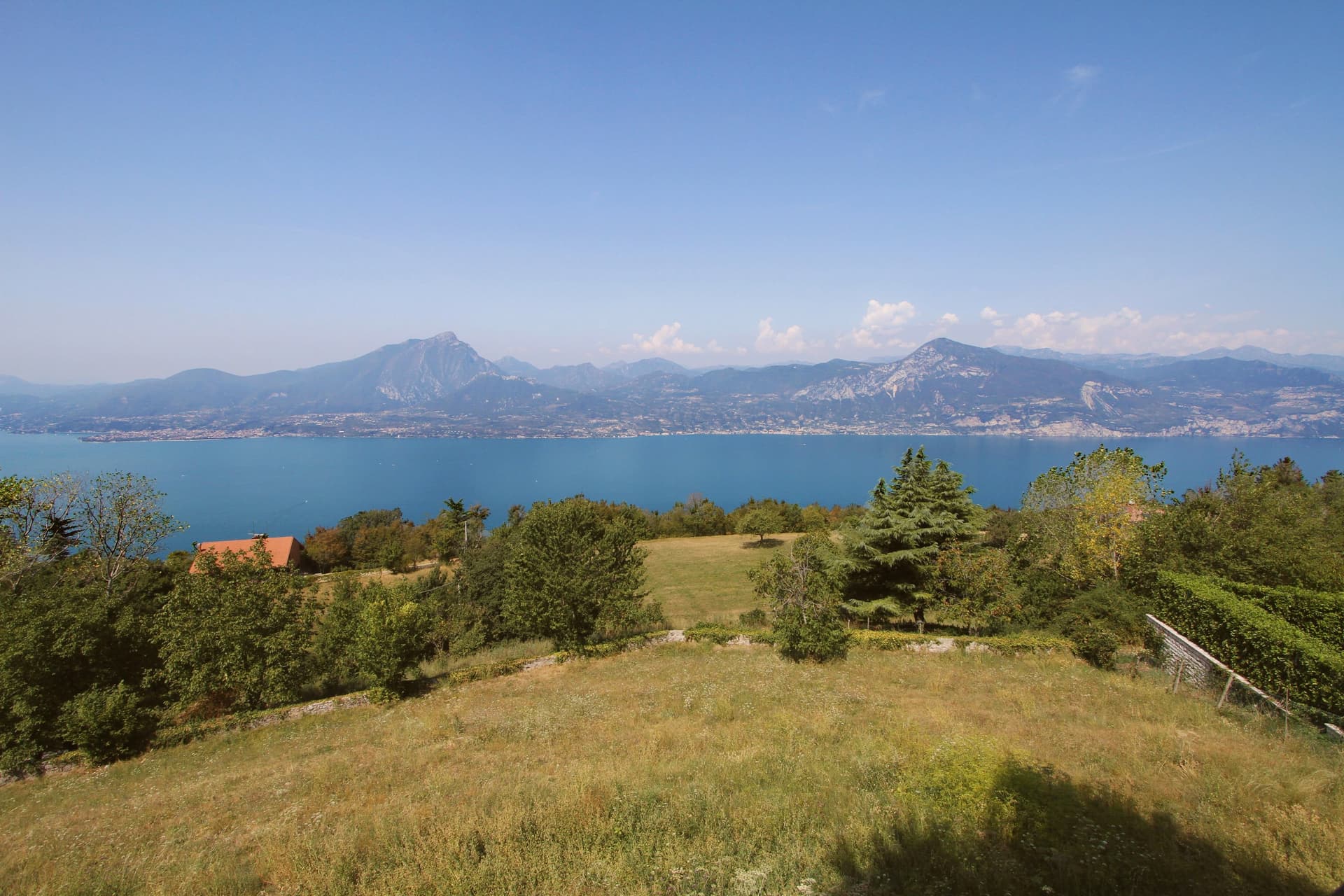
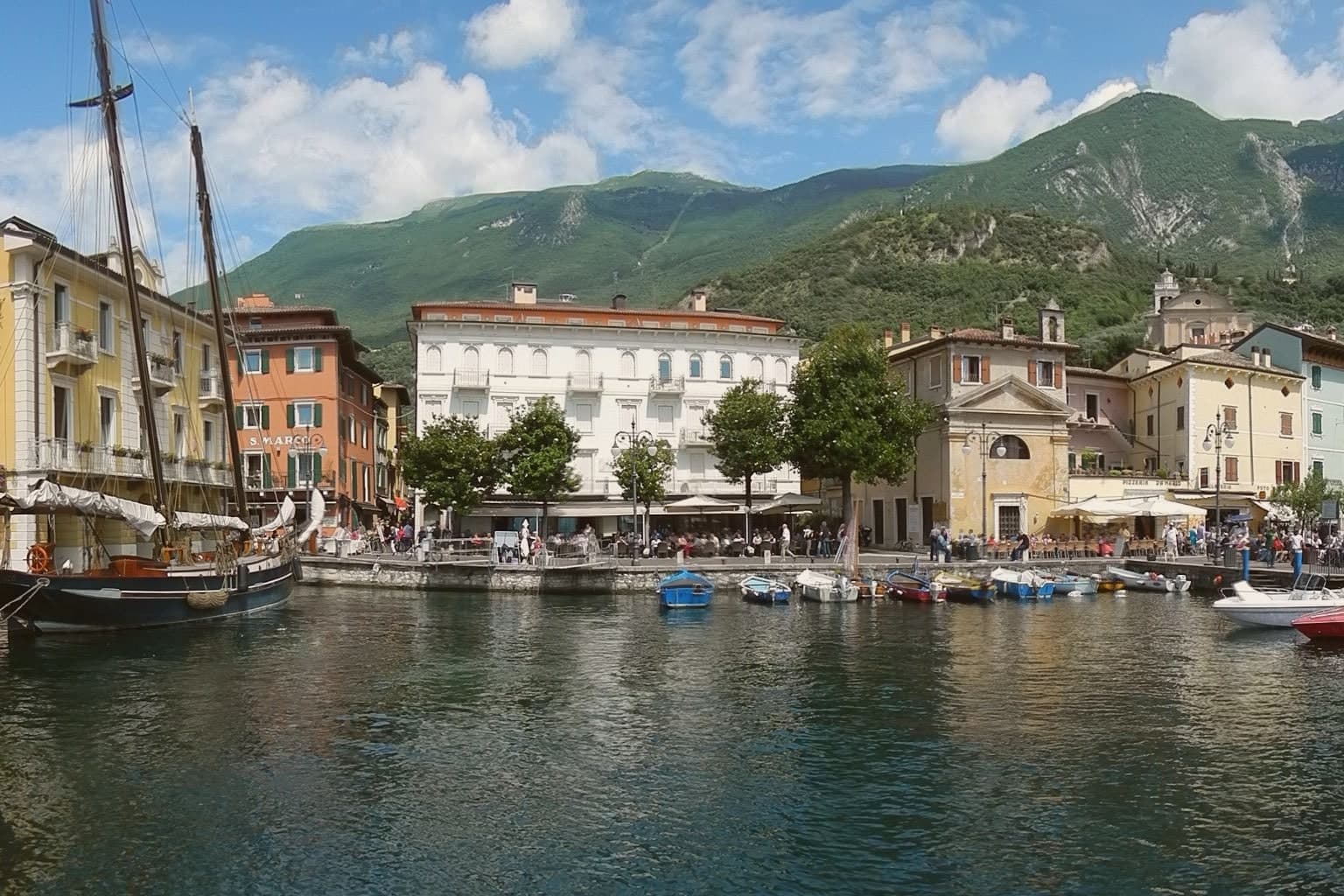
Malcesine sits at 89 meters on the eastern shore of Lake Garda, forty kilometers northwest of Verona and immediately south of Trentino-Alto Adige. The town strings together five lakeside frazioni between Navene and Cassone, pinched between the water and the slopes of Monte Baldo, which rises to 2,218 meters behind the rooftops.
The Castello Scaligero, built by the della Scala family of Verona in the thirteenth century around an older white-stone keep, is the defining building. On 14 September 1786 Johann Wolfgang Goethe was questioned in front of it on suspicion of being an Austrian spy after drawing sketches; he later devoted several pages to the episode in Italienische Reise.
The Monte Baldo cable car, opened in 1962 and rebuilt with rotating cabins in 2002, lifts walkers and paragliders to 1,750 meters in ten minutes. Olive groves along the lower slopes carry the Garda DOP olive oil designation.
Vecchia Malcesine have been named by a guide.
What to see in Malcesine
- Castello Scaligero. Thirteenth-century Scaliger fortress on a rock above the lake, with an older white-stone keep, the rooms where Goethe was held briefly in 1786 and a museum on Monte Baldo flora.
- Palazzo dei Capitani. Fifteenth-century Venetian palazzo on the lakefront, residence of the Captains of the Lake during the Republic of Venice, with a lakeside loggia and gardens.
- Monte Baldo. 2,218-meter ridge behind the town, reached by a two-stage cable car with rotating cabins; the summit is a botanical reserve known since the sixteenth century as Hortus Europae.
How to get to Malcesine
Trento is roughly 65 minutes away by road.
Our tip
April through June and September through October are the months Malcesine is built for. The cable car runs to Monte Baldo through clear spring and autumn air, the windsurfers fill Val di Sogno when the Ora picks up at midday, and the centro storico is busy but walkable. July and August push past thirty degrees on the lake and the village queues for the cable car from eight in the morning; many German and Austrian families have rented apartments here for generations.
Asolo
Why visit Asolo
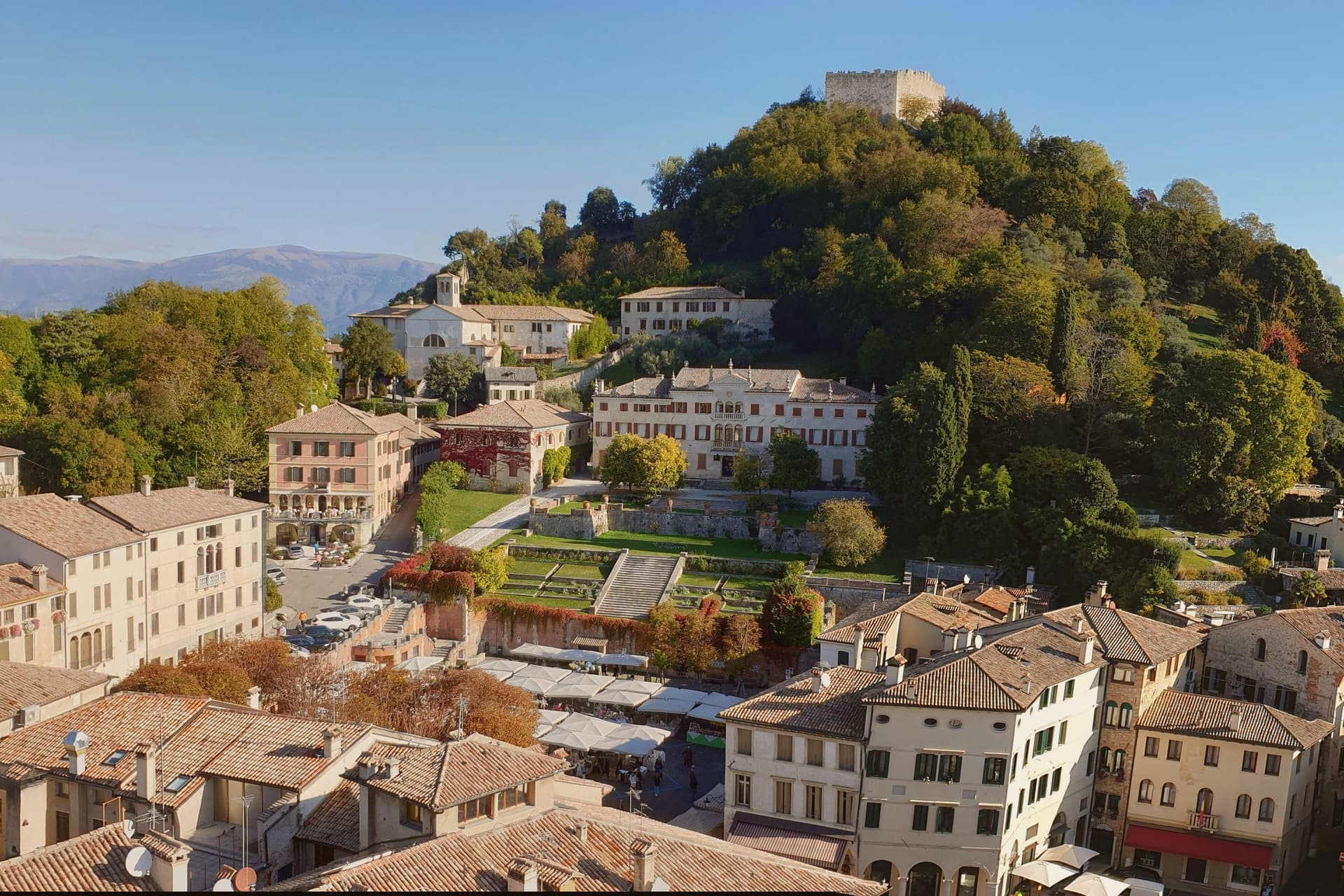
Asolo perches at 205 meters on a ridge between the Asolan hills and the Veneto plain, forty kilometers north of Padova. Pliny knew it as Acelum.
The Ezzelini family held it in the early Middle Ages; the Rocca on the hill above town dates from the late twelfth and early thirteenth centuries and was restored in 2020 after a 2016 storm damaged the walls. The defining episode came in 1489, when the Republic of Venice gave Asolo as a fiefdom to Caterina Cornaro, the deposed Queen of Cyprus, in exchange for her island.
She kept a court here for twenty years until the League of Cambrai sacked the town in 1509. Her circle included Gentile Bellini, the humanist Pietro Bembo and the poet Andrea Navagero.
Robert Browning wintered in a villa here from 1838 onward, and the actress Eleonora Duse retired to Asolo and is buried in the local cemetery. The town carries six institutional signals at once.
Caffè Centrale Asolo, La Terrazza, Locanda Baggio have been named by a guide.
What to see in Asolo
- Rocca di Asolo. Late twelfth and early thirteenth-century fortress on the hill above the town, restored in 2020 with €300,000 in ministry funding.
- Castello di Caterina Cornaro. Medieval castle in the town, court of the Queen of Cyprus from 1489 to 1509, now home to the Eleonora Duse theater.
- Duomo di Asolo. Cathedral rebuilt in 1747 with an Assunta altarpiece by Lorenzo Lotto, standing on the foundations of a Roman bath complex.
How to get to Asolo
Vicenza is roughly 57 minutes away by road.
Our tip
April through June and September through October are the right months. The ridge stays a few degrees cooler than the plain, and the views north to Monte Grappa are clearest in spring and autumn. July and August are warm and busy; weekend traffic from Venice and Padova fills the Piazza Garibaldi car park by ten.
Sant'Ambrogio di Valpolicella
Why visit Sant'Ambrogio di Valpolicella
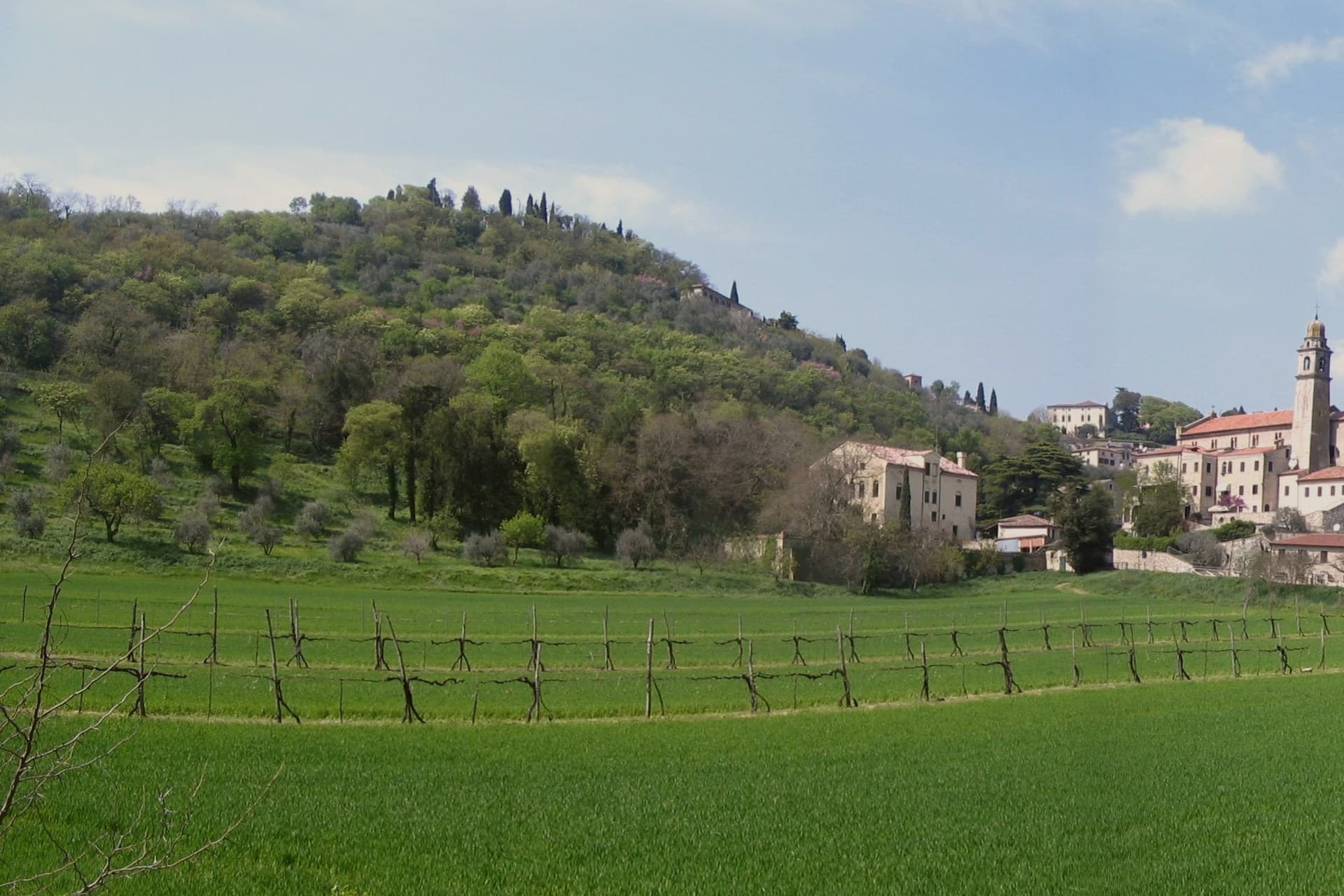
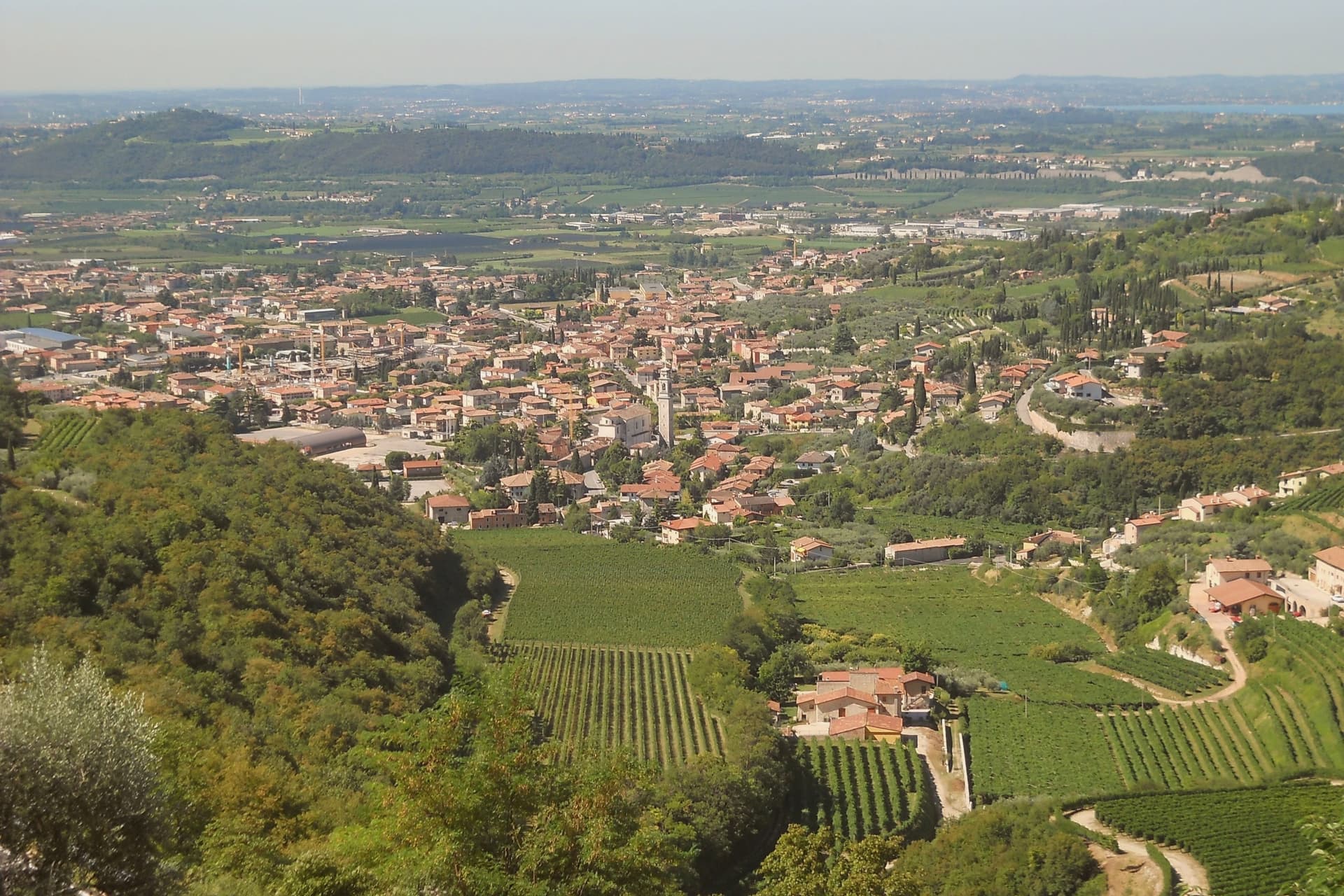
Sant'Ambrogio di Valpolicella sits at 174 meters in the heart of the Valpolicella DOC, fifteen kilometers northwest of Verona, on the rolling hills that close the eastern shore of Lake Garda. The commune groups five frazioni around the main village: Domegliara, Gargagnago, Monte, Ponton and the ridge settlement above them.
Gargagnago sits at the foot of the hills, its cellars closest to the valley floor; the ridge frazione occupies the higher limestone ground, reached by a climb steep enough to have earned the church its nickname. Between them the Serego Alighieri estate has worked the same parcels since Pietro Alighieri, son of Dante the poet who had followed his father into exile in Verona, bought the property in 1353, and the family still grows Corvina, Rondinella and Molinara there, with the Vaio Armaron Amarone counted among the appellation's cru benchmarks.
The pattern of the commune is one of a valley economy and a hill economy sharing a single administrative roof: wine pressed and aged below, an older, stiller settlement kept above it, with the quarries that once supplied Verona still worked on the slopes that join the two.
Dalla Rosa Alda, Masi Agricola have been named by a guide.
What to see in Sant'Ambrogio di Valpolicella
- Pieve di San Giorgio Ingannapoltron. Romanesque parish church whose ciborium columns carry an inscription naming the master builder Orso and his disciples Juventino and Juviano.
- San Giorgio di Valpolicella. Frazione on the limestone ridge above the valley, in the Borghi più belli d'Italia network, nicknamed Ingannapoltron for the steep climb up to it.
- Villa Serego Alighieri. Estate still owned by the Alighieri descendants; produces Vaio Armaron Amarone from Corvina, Rondinella and Molinara grown on the same parcels the family has worked.
How to get to Sant'Ambrogio di Valpolicella
There is a railway station in the town, so you can arrive without a car and never need one while you are here. Verona is roughly 34 minutes away by road.
Our tip
April through June and September through October are the months for Valpolicella. The vineyards green up in spring, harvest runs from mid-September into October, and the appassimento drying begins in the cellars while the leaves turn. July and August push past thirty degrees in the valley and the village empties between two and six in the afternoon; cellar visits move to morning slots.
Valeggio sul Mincio
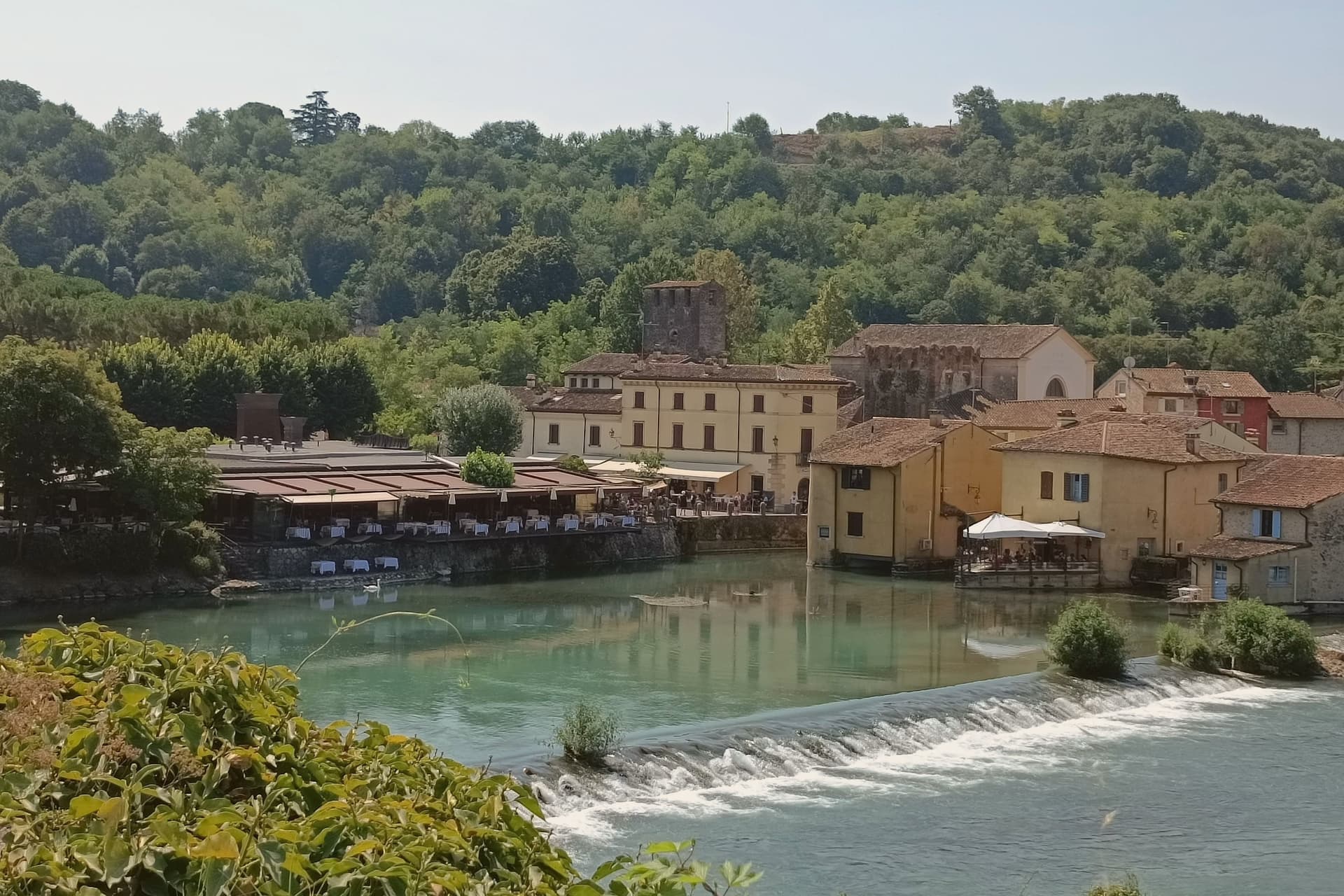
Why visit Valeggio sul Mincio
Valeggio sul Mincio sits at 88 meters on the morainic hills shaped by the Garda glaciers, twenty kilometers southwest of Verona and ten kilometers from the southern end of Lake Garda. The Mincio cuts north-south through the commune and was the Veneto-Lombardy military frontier for centuries.
The frazione of Borghetto on the river is one of I Borghi più belli d'Italia, a single line of houses and water mills along the left bank under the Castello Scaligero. The fortified Ponte Visconteo, built in 1393 by Gian Galeazzo Visconti of Milan as part of the sixteen-kilometer Serraglio defensive line, is 650 meters long and 25 meters wide and still spans the valley above the village.
The local pasta is the Nodo d'Amore, an oversize hand-rolled tortellino with meat filling; the third Tuesday of June it is served to four thousand diners at a single table laid across the Visconti bridge. The Parco Giardino Sigurtà, a sixty-hectare landscape garden two kilometers north, draws over half a million visitors a year, peaking with the Tulipanomania bloom in April.
Ristorante Antica Locanda Mincio, Alla Borsa have been named by a guide.
What to see in Valeggio sul Mincio
- Borghetto sul Mincio. Riverside hamlet on the left bank of the Mincio, one of I Borghi più belli d'Italia, with surviving water mills and a single arcaded line of houses.
- Ponte Visconteo. Fortified bridge-dam built in 1393 by Gian Galeazzo Visconti, 650 meters long and 25 wide, anchor of the Serraglio defensive line.
- Castello Scaligero. Della Scala fortress on the hill above Borghetto, built in the thirteenth century as the southern hinge of the Verona defensive line.
How to get to Valeggio sul Mincio
Verona is roughly 34 minutes away by road.
Our tip
April through June and September through October are the working months. April brings Tulipanomania at Parco Sigurtà and Borghetto on the river at its quietest. May and June fill the gardens and the bridge with weekend visitors; the Festa del Nodo d'Amore on the third Tuesday of June draws four thousand diners onto the Visconti bridge.