
The best towns known for what they grow within 90 minutes of Brescia
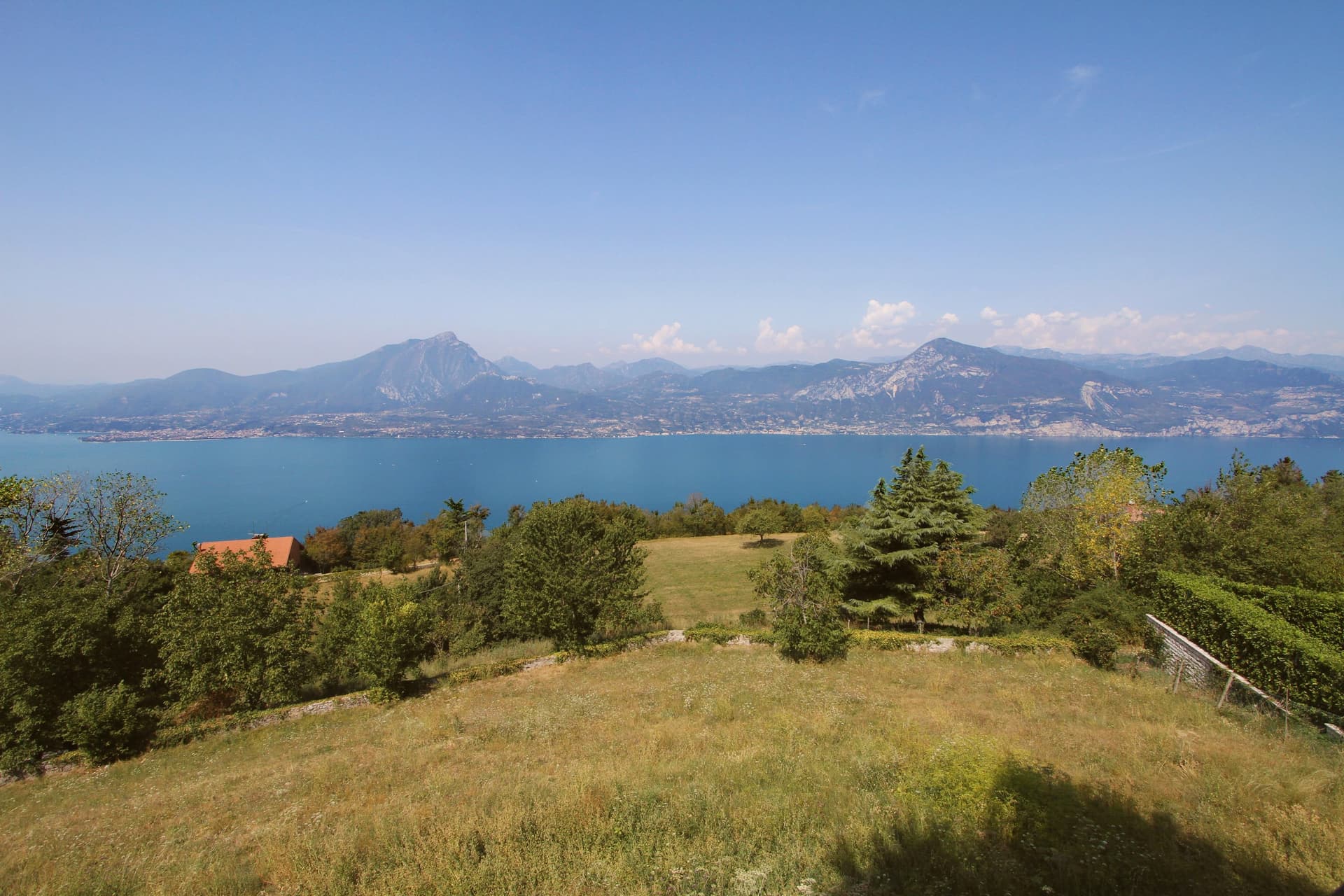
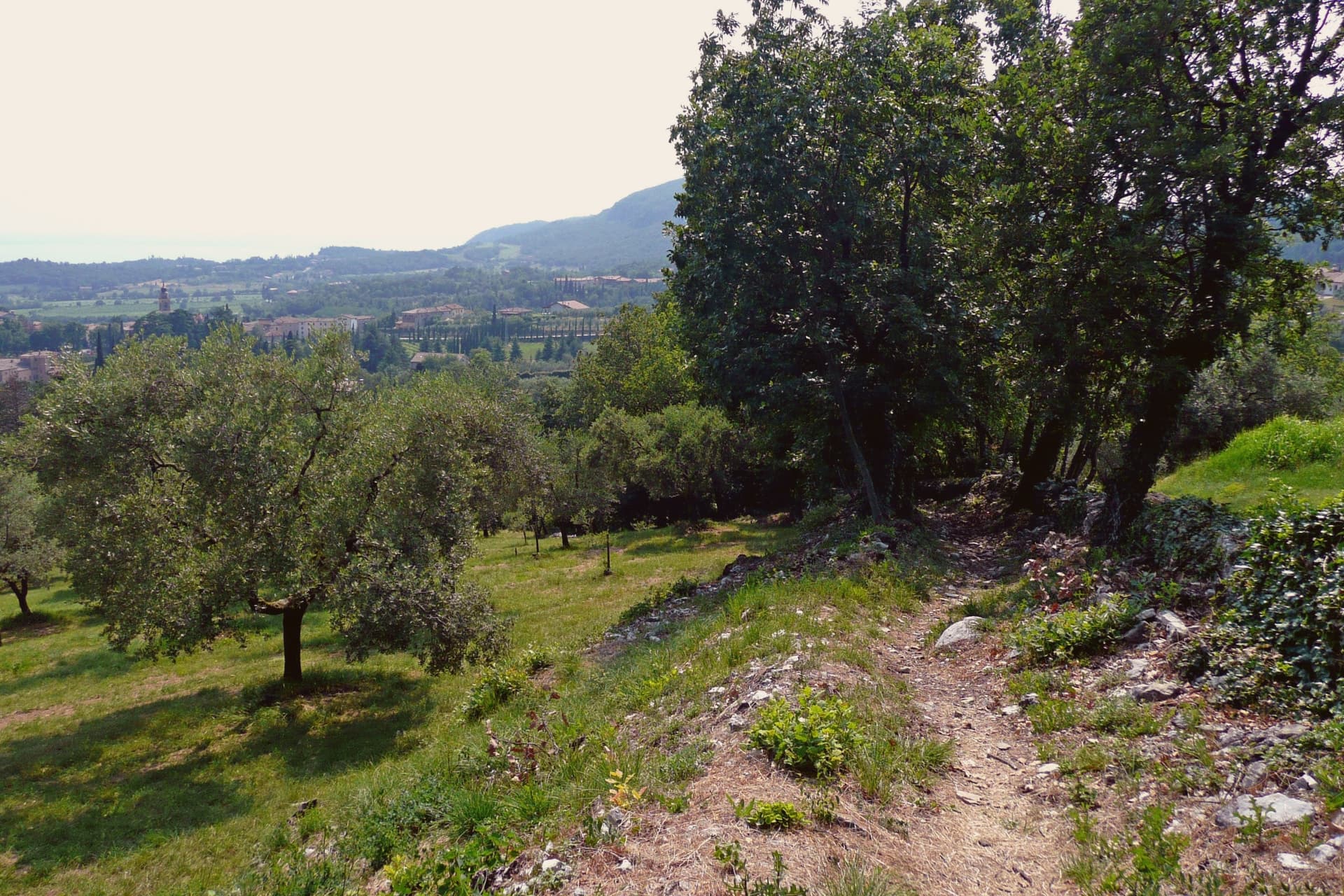
Drive east or south from Brescia and the farming changes with the soil. On the high shoulders above Lake Garda the ground is stony and cool, good for chestnuts that get dried in stone huts and roasted in October. Down on the Po plain the fields are dark and heavy, and the crop is pumpkin, sweet and dense, baked and mashed into pasta filling with mostarda and grated cheese. On the limestone slopes of the Valpolicella side, olives and cherries share the terraces with vines, and the villages are built from the same pale stone as the walls holding the rows in place. Spring and autumn are the seasons that matter here, because that is when something is being picked.
Most people arriving in this corner of the north go to Lake Garda's resort strip or push on to Verona for the arena and the balcony, and both fill up from Easter onwards. Sirmione in particular takes the weight of it, its bridge and thermal baths and gelato queues absorbing coach parties all summer long. The lake is worth the attention it gets. It is simply that the attention arrives in one narrow band of shoreline and rarely moves inland.
The same hills, the same water and the same fields carry on past the busy part, and the growing happens there. Each of these towns sits inside the recognised production zone of a protected fruit or vegetable, which in practice means a named local crop, a co-operative that handles it, and an autumn festival built around eating it. Some are on the Garda hills, some sit on the Mincio or out in the Po lowlands near the abbey country. Fewer people go, and the tables are mostly local.
Of the 49 communes we have mapped in a 90-minute drive of Brescia, 6 qualify as towns known for what they grow: each sits inside the production zone of a protected fruit or vegetable. The smallest, San Zeno di Montagna, has 1,464 residents.
If you are still choosing, we have also written The best towns known for what they grow within an hour of Verona and The best towns known for what they grow within two hours of Trento.
San Zeno di Montagna
Why visit San Zeno di Montagna
The village sits thirty kilometers northwest of Verona. It took its current name in 1871, after unification, borrowing the name of Verona's patron saint; before that it was called Montagna di Monte Baldo, a plainer name tied directly to the mountain above it.
Pastoralism here goes back to the Copper and Bronze ages, when small communities drove herds up from the plain in summer along routes that still cross the mountain. Sheep and goats gave way to cattle as the dominant economy in the seventeenth century.
The frazione of Prada, reached by cable car from the lakeshore, holds the longest of these pasture terraces, its Church of San Bartolomeo built for the shepherds who worked the ground seasonally rather than for a settled parish. Below, the chestnut groves that ring the village are a separate, older layer of the economy, worked at lower altitude while the herds went up.
What emerges is a village organized on a vertical axis: lake view at one elevation, chestnut groves at another, pasture and summer huts higher still, each belonging to a different rhythm of use rather than to a single center.
Taverna Kus have been named by a guide.
What to see in San Zeno di Montagna
- Balcone del Garda. The viewpoint that names the commune, a place to stand at the edge of the ridge and take in the water and the opposite shore at once.
- Monte Baldo. Regional park rising above the village, its slopes still worked as pasture, with the old herding paths climbing through it toward the grass terraces higher up.
- Prada. Three-kilometer grass terrace on the mountain, reachable by cable car from the lakeshore, with the Church of San Bartolomeo standing among the summer pasture huts.
How to get to San Zeno di Montagna
Verona is roughly 51 minutes away by road.
Our tip
April through June and September through October are the months the commune works best. The chestnut groves green up in spring, the Baldo opens for walking, and the lake below stays cool enough to swim in by June. October brings the Festa delle Castagne over three weekends, with roasted Marrone di San Zeno and the woods turning to ochre and rust.
Sabbioneta
Why visit Sabbioneta
Sabbioneta sits at about 25 meters on a sandy bank of the Po, north of Parma and southwest of Mantova. Vespasiano I Gonzaga, a cadet of the Mantuan line, founded it in the late sixteenth century along the Roman Via Vitelliana as his personal fortress and ducal seat, built almost in one campaign between 1554 and 1591.
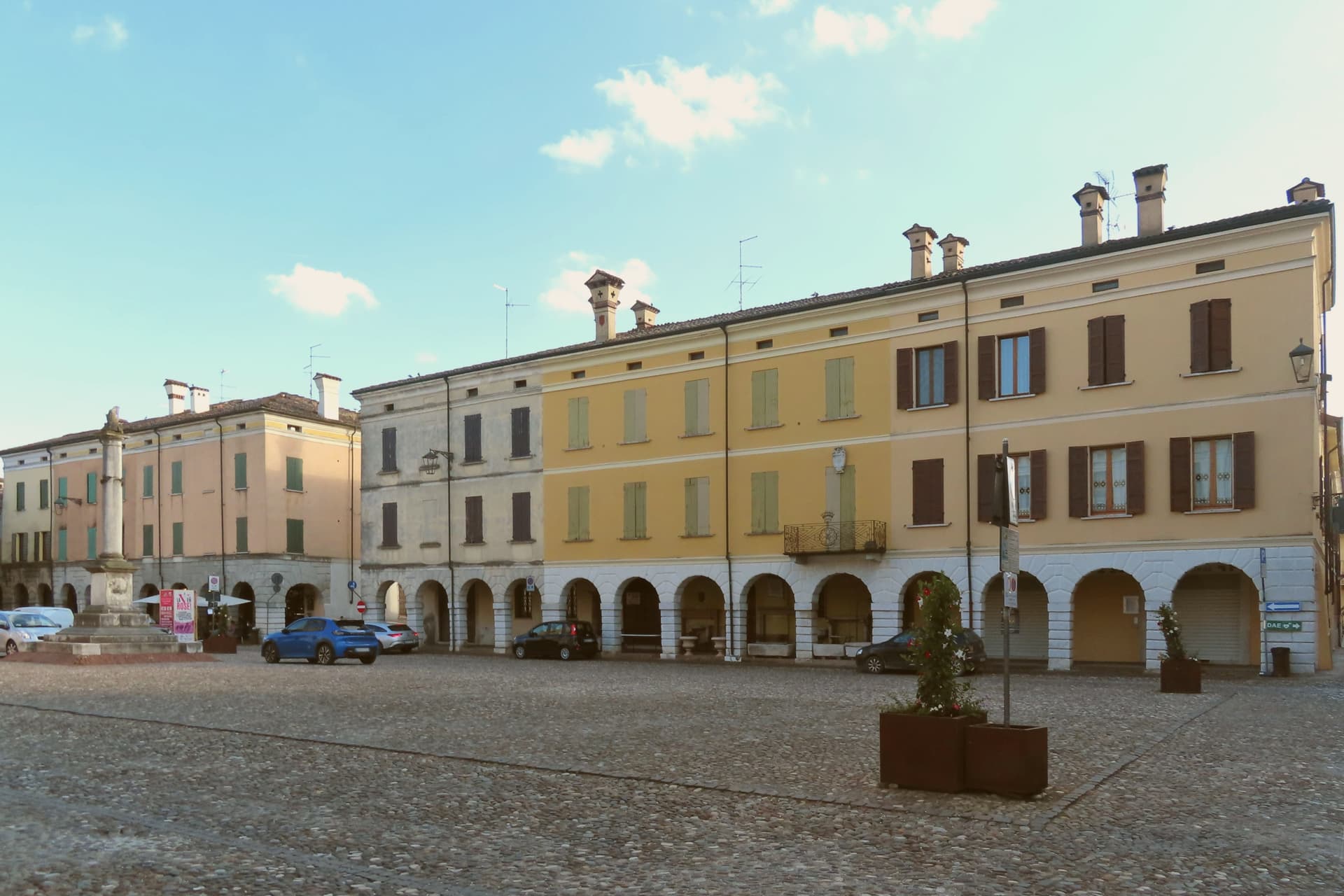
The town is organized around two main axes and two squares, with the star walls set at a fixed distance from that grid so the fortification and the street plan read as a single design rather than a wall added to an existing settlement. Vespasiano commissioned the theatre, the gallery, and the two palaces in sequence, each filling a distinct role in the ducal seat: a residence, a pleasure palace, a display case for his marbles, a place for performance.
The church holds his tomb, closing the set with a mausoleum built to the same scale as everything else he raised. What results is a town where every set piece was planned as part of one court rather than accumulated over generations, which is the quality that put it alongside Mantua as the planned counterpart to the organic city.
What to see in Sabbioneta
- Teatro all'Antica. Designed by Vincenzo Scamozzi with a raked wooden cavea and a painted false loggia opening onto a sky that never changes. It still stands as it was built for the Gonzaga court.
- Galleria degli Antichi. 97-meter arcaded gallery built to display Vespasiano's collection of ancient marbles, the longest such gallery of its period. The arcade runs in a single unbroken line, a corridor meant to be walked past statues rather than stood in.
- Palazzo Ducale. Vespasiano's main residence on Piazza Ducale, with frescoed rooms, wooden equestrian statues of the Gonzaga ancestors and gilded ceilings.
How to get to Sabbioneta
Parma is roughly 40 minutes away by road.
Our tip
April through June and September into October are the months Sabbioneta opens up. The Teatro all'Antica and the Galleria degli Antichi keep regular hours, the Po plain is green or gold depending on the half, and the bike path along the Oglio is rideable. July and August are humid and still: shade on the Piazza Ducale stays in short supply, and afternoons empty the centro storico.
San Benedetto Po
Why visit San Benedetto Po
San Benedetto Po sits at 19 meters in the flat Po plain, 22 kilometers southeast of Mantova, on what was once an island between the Po and the Lirone rivers. The town has no origin apart from the abbey: in 1007 Tedald of Canossa, grandfather of Matilda, granted half his land between the two rivers to the Benedictines, and the resulting monastery became one of the principal centers of the Gregorian Reform in northern Italy.
Matilda herself, the countess who hosted the emperor's penance at Canossa in 1077, was buried within it for five centuries before her remains went to Rome. The abbey held its position from its founding until the Napoleonic suppression of 1797 emptied the community out, by which time it had grown its church, its three cloisters, its refectory and infirmary.
What is left standing today is essentially the monastery's own floor plan with the town arranged around it. A place built entirely by and for a religious institution, still legible as such long after the monks themselves are gone.
What to see in San Benedetto Po
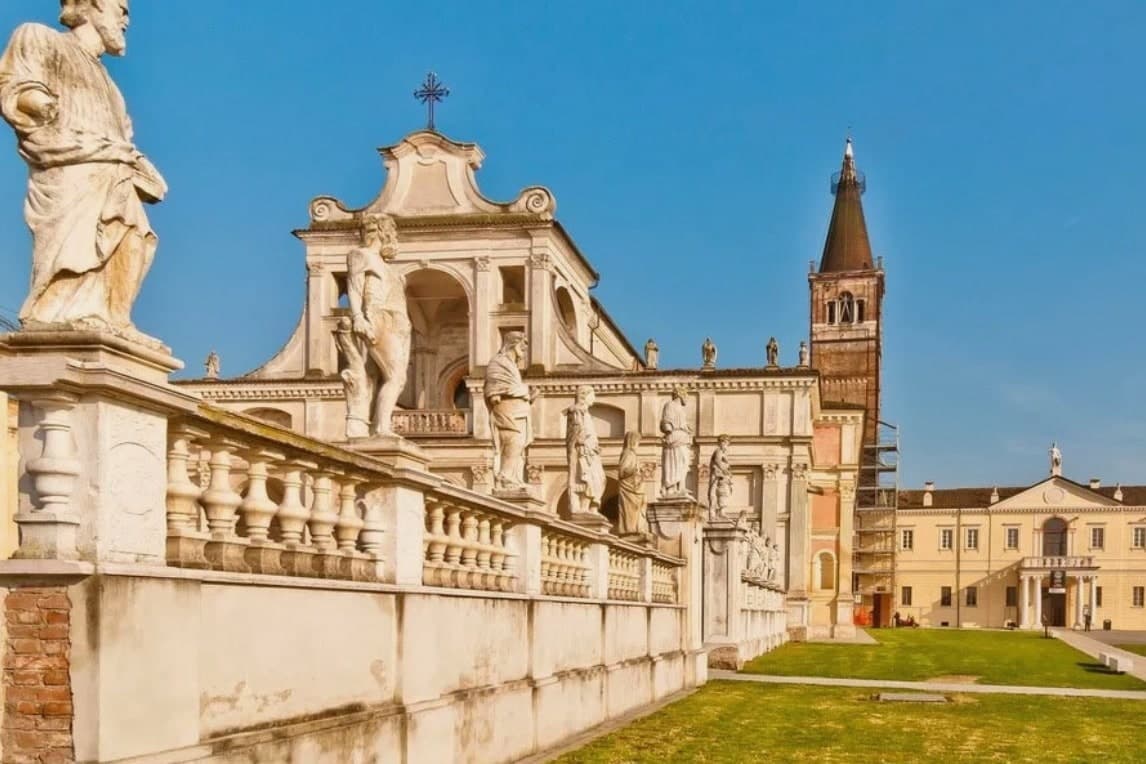
- Abbazia di San Benedetto in Polirone. The complex holds frescoes by Correggio and statues by Begarelli, added when Giulio Romano restructured it between 1540 and 1547.
- Basilica di San Benedetto. The church Giulio Romano redesigned stands at cathedral scale, the visual center around which the rest of the monastery is arranged.
- Chiostri di Polirone. Three cloisters, one for each major building phase from medieval through Renaissance, forming the working spine of the monastery behind the church.
How to get to San Benedetto Po
There is a railway station in the town, so you can arrive without a car and never need one while you are here. Modena is roughly 50 minutes away by road.
Our tip
April through June and September into October are the months that suit the Po plain. The basilica is open without summer heat, the cycling routes along the river are dry, and the cloisters hold their cool morning shade. July and August push past thirty-two degrees in the valley and the humidity off the river makes midday heavy.
Lazise
Why visit Lazise
Lazise sits at 76 meters on the southeastern shore of Lake Garda, twenty kilometers northwest of Verona. The first walls went up shortly after the 983 charter; Venice took the town in 1405 and held it until Napoleon arrived in 1796, and Porta Lion, on the south, still carries the winged lion of Saint Mark from that period of rule.
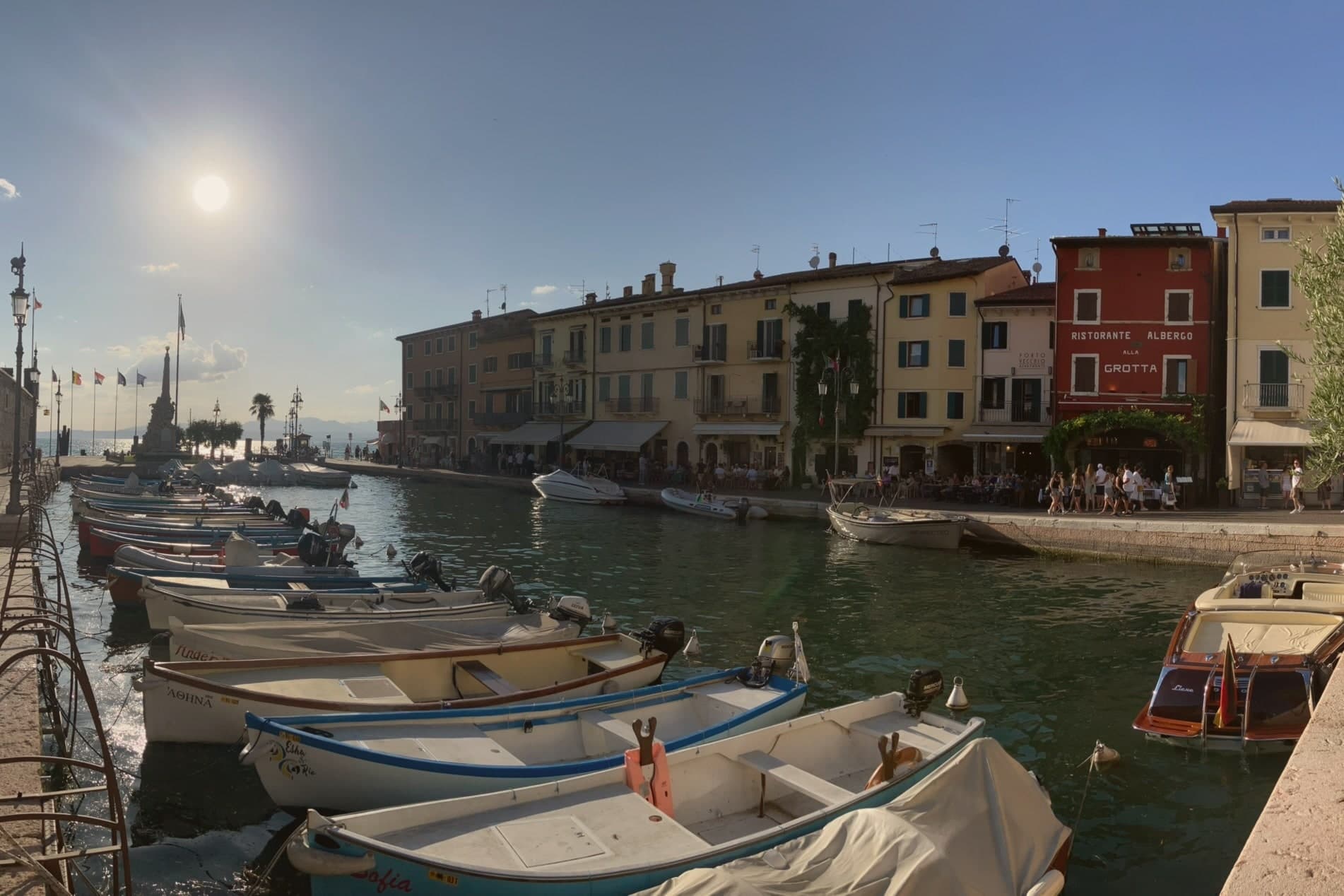
The castle anchors the southern corner of the fortifications while the harbor sits enclosed within their reach, and the church and the customs house both face onto that same stretch of water, one built for worship and later pressed into use as a warehouse, the other built outright for Venice to tax what passed through the port. Behind the town, the morainic hills carry the vines of the Bardolino DOC, and Lazise counts itself among the Veneto's wine and honey communes.
The town reads, in short, as a small fortified port whose walls, harbor and customs works were all built to serve and guard the same trade on the same shore.
What to see in Lazise
- Castello Scaligero. Rectangular fortress at the south corner of the walls, with five square towers and a fortified dock built for the lake galleys, facing Lake Garda.
- Mura medievali. Thirteen surviving towers and three gates, San Zeno, Nuova and Lion, ring the old town along the shore of Lake Garda.
- Chiesa di San Nicolò. Romanesque church on the harbor, with frescoes attributed to the Giotto school and a former function as a customs warehouse.
How to get to Lazise
Verona is roughly 36 minutes away by road.
Our tip
April through June and September through October are the right months for Lazise. The walled centro storico stays cool from the lake breeze, the harbor fills with sailboats, and the Bardolino hills behind the town are green in spring and gold in October. July and August are warm and very crowded: the southern Garda shore concentrates more than half of the lake's tourist beds, and the gates of Lazise queue from morning.
Sant'Ambrogio di Valpolicella
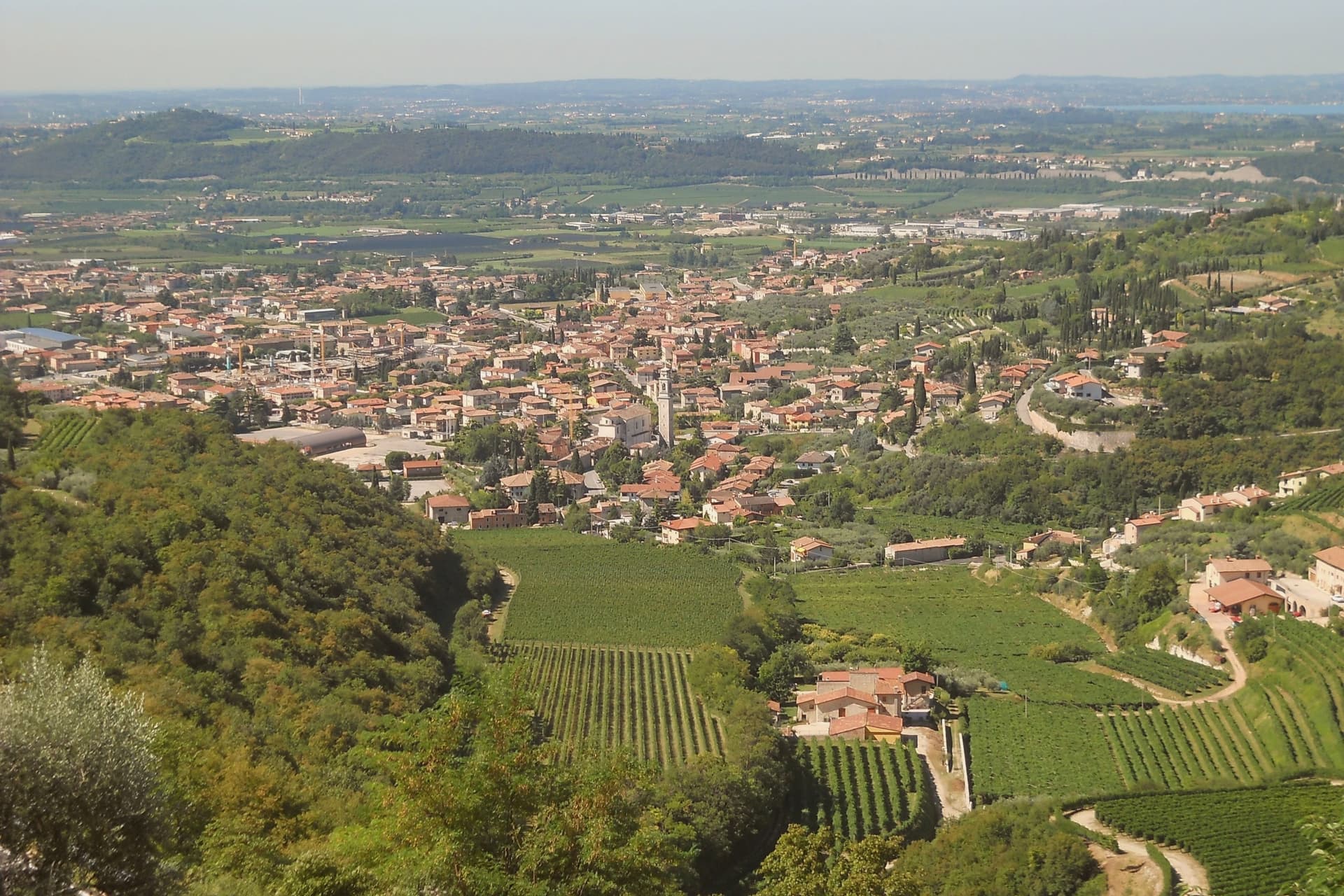
Why visit Sant'Ambrogio di Valpolicella
Sant'Ambrogio di Valpolicella sits at 174 meters in the heart of the Valpolicella DOC, fifteen kilometers northwest of Verona, on the rolling hills that close the eastern shore of Lake Garda. The commune groups five frazioni around the main village: Domegliara, Gargagnago, Monte, Ponton and the ridge settlement above them.
Gargagnago sits at the foot of the hills, its cellars closest to the valley floor; the ridge frazione occupies the higher limestone ground, reached by a climb steep enough to have earned the church its nickname. Between them the Serego Alighieri estate has worked the same parcels since Pietro Alighieri, son of Dante the poet who had followed his father into exile in Verona, bought the property in 1353, and the family still grows Corvina, Rondinella and Molinara there, with the Vaio Armaron Amarone counted among the appellation's cru benchmarks.
The pattern of the commune is one of a valley economy and a hill economy sharing a single administrative roof: wine pressed and aged below, an older, stiller settlement kept above it, with the quarries that once supplied Verona still worked on the slopes that join the two.
Dalla Rosa Alda, Masi Agricola have been named by a guide.
What to see in Sant'Ambrogio di Valpolicella
- Pieve di San Giorgio Ingannapoltron. Romanesque parish church whose ciborium columns carry an inscription naming the master builder Orso and his disciples Juventino and Juviano.
- San Giorgio di Valpolicella. Frazione on the limestone ridge above the valley, in the Borghi più belli d'Italia network, nicknamed Ingannapoltron for the steep climb up to it.
- Villa Serego Alighieri. Estate still owned by the Alighieri descendants; produces Vaio Armaron Amarone from Corvina, Rondinella and Molinara grown on the same parcels the family has worked.
How to get to Sant'Ambrogio di Valpolicella
There is a railway station in the town, so you can arrive without a car and never need one while you are here. Verona is roughly 34 minutes away by road.
Our tip
April through June and September through October are the months for Valpolicella. The vineyards green up in spring, harvest runs from mid-September into October, and the appassimento drying begins in the cellars while the leaves turn. July and August push past thirty degrees in the valley and the village empties between two and six in the afternoon; cellar visits move to morning slots.
Valeggio sul Mincio
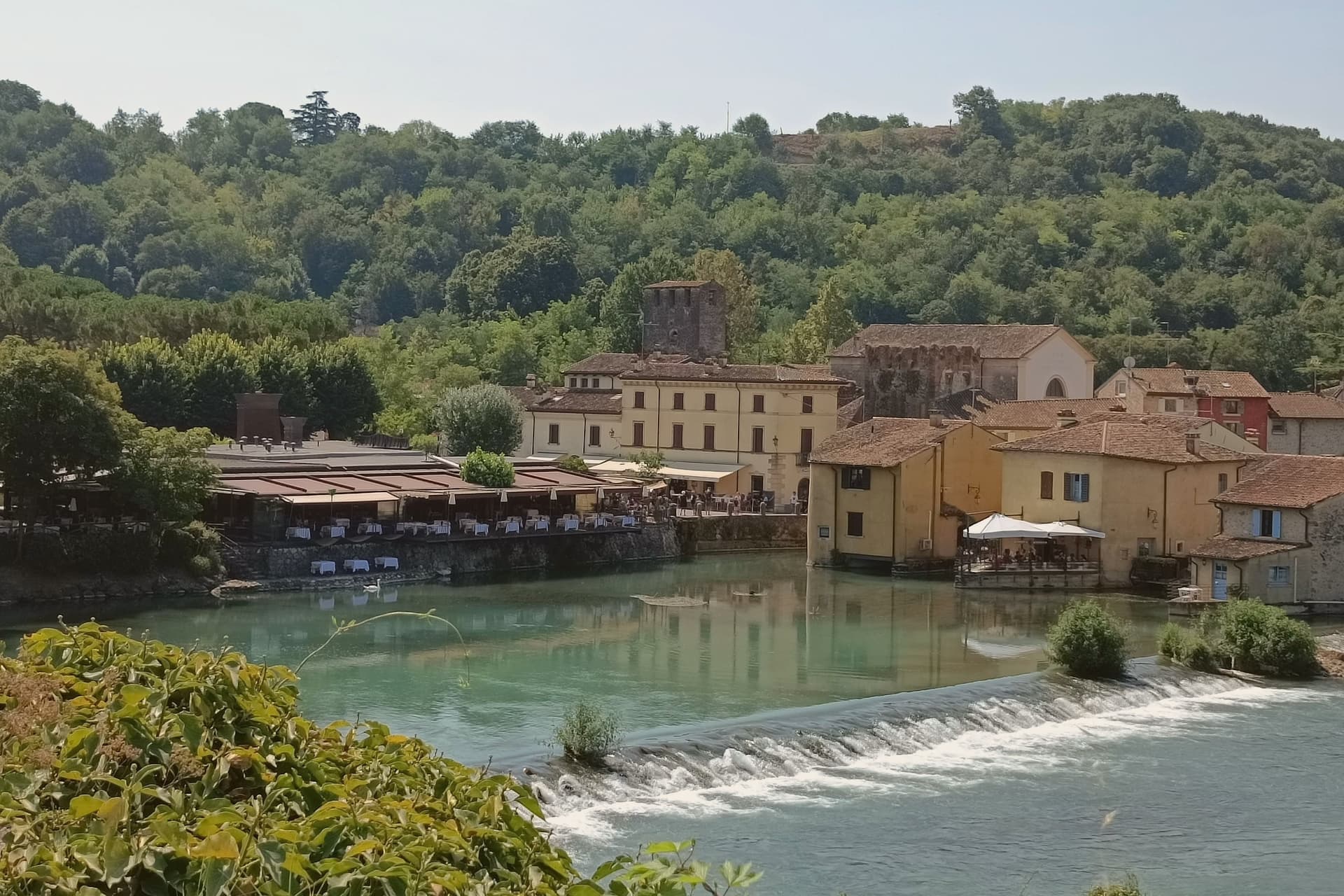
Why visit Valeggio sul Mincio
Valeggio sul Mincio sits at 88 meters on the morainic hills shaped by the Garda glaciers, twenty kilometers southwest of Verona and ten kilometers from the southern end of Lake Garda. The Mincio cuts north-south through the commune and was the Veneto-Lombardy military frontier for centuries.
The frazione of Borghetto on the river is one of I Borghi più belli d'Italia, a single line of houses and water mills along the left bank under the Castello Scaligero. The fortified Ponte Visconteo, built in 1393 by Gian Galeazzo Visconti of Milan as part of the sixteen-kilometer Serraglio defensive line, is 650 meters long and 25 meters wide and still spans the valley above the village.
The local pasta is the Nodo d'Amore, an oversize hand-rolled tortellino with meat filling; the third Tuesday of June it is served to four thousand diners at a single table laid across the Visconti bridge. The Parco Giardino Sigurtà, a sixty-hectare landscape garden two kilometers north, draws over half a million visitors a year, peaking with the Tulipanomania bloom in April.
Ristorante Antica Locanda Mincio, Alla Borsa have been named by a guide.
What to see in Valeggio sul Mincio
- Borghetto sul Mincio. Riverside hamlet on the left bank of the Mincio, one of I Borghi più belli d'Italia, with surviving water mills and a single arcaded line of houses.
- Ponte Visconteo. Fortified bridge-dam built in 1393 by Gian Galeazzo Visconti, 650 meters long and 25 wide, anchor of the Serraglio defensive line.
- Castello Scaligero. Della Scala fortress on the hill above Borghetto, built in the thirteenth century as the southern hinge of the Verona defensive line.
How to get to Valeggio sul Mincio
Verona is roughly 34 minutes away by road.
Our tip
April through June and September through October are the working months. April brings Tulipanomania at Parco Sigurtà and Borghetto on the river at its quietest. May and June fill the gardens and the bridge with weekend visitors; the Festa del Nodo d'Amore on the third Tuesday of June draws four thousand diners onto the Visconti bridge.
More from Anywhere Italy
- The best towns known for what they grow within an hour of Verona
- The best towns known for what they grow within two hours of Trento
- The best towns known for what they grow within two hours of Milan
 The best towns known for what they grow within 75 minutes of Parma
 The best wine towns within 75 minutes of Trento
 The best wine towns within an hour of Brescia