
The best towns you can reach by train within 75 minutes of Parma
Emilia is a landscape of long horizons and short walks. Beyond the plain of poplars and irrigation ditches, the land tilts into the first Apennine hills, where sandstone and brick houses sit above vineyards of Lambrusco Grasparossa and woods that give up chestnuts and porcini in autumn. The food changes station by station: culatello from the misty riverlands near the Po, cured pork and Parmigiano from the foothill dairies, traditional balsamic aged in casks under the roof tiles. Spring and early autumn are the seasons to travel here, when the fog has lifted and the trattorie put tortelli d'erbetta and gnocco fritto on every table.
Most people arriive in Emilia and go straight to Bologna, which absorbs the coach parties, the food tours and the queues under the Two Towers along Via dell'Indipendenza. It earns the attention, with its porticoes and its market stalls, but its centre in high season is a slow shuffle, and the tagliatelle costs more than it does an hour away by regional service. The same is true of the ceramic and mosaic circuit further east, where the itineraries are fixed and the coaches park where the buses do.
The regional lines carry on past the famous stops. The same hills, the same cellars and the same cured meats continue along the Milan line, the Modena line and the track that climbs towards the Cisa pass, and the towns along them have stations you walk out of straight into the old centre. These are the smaller places, where fewer people arrive, and where a train ticket is the whole plan.
Of the 20 communes we have mapped in a 75-minute drive of Parma, 11 qualify as towns you can reach by train: we confirmed a station you can arrive at. This list is 10 of them. The smallest, Canossa, has 3,759 residents.
Two more lists worth reading alongside this one: The best hidden towns you can reach by train in Emilia-Romagna and The best hill towns within 75 minutes of Parma.
Canossa
Why visit Canossa
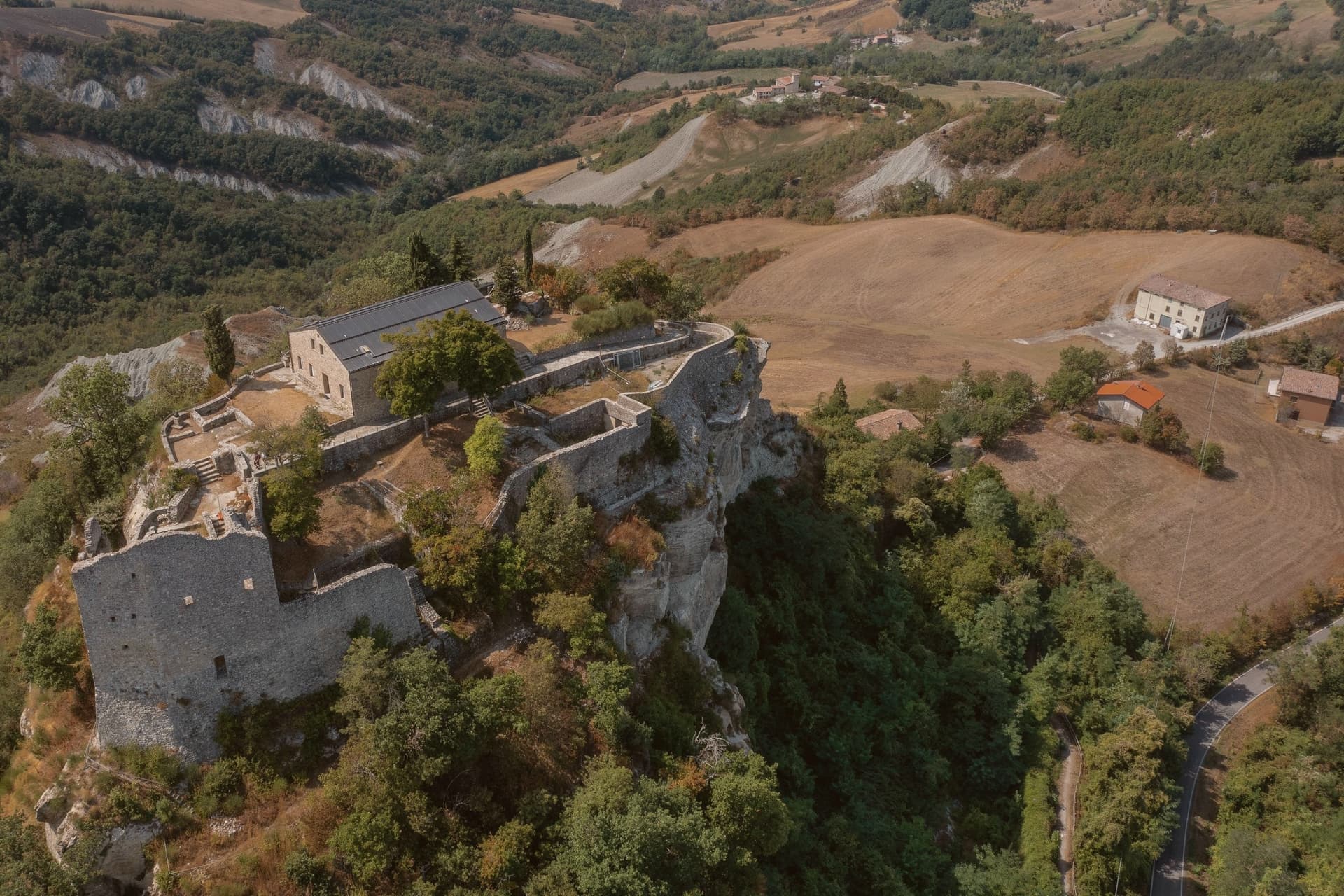
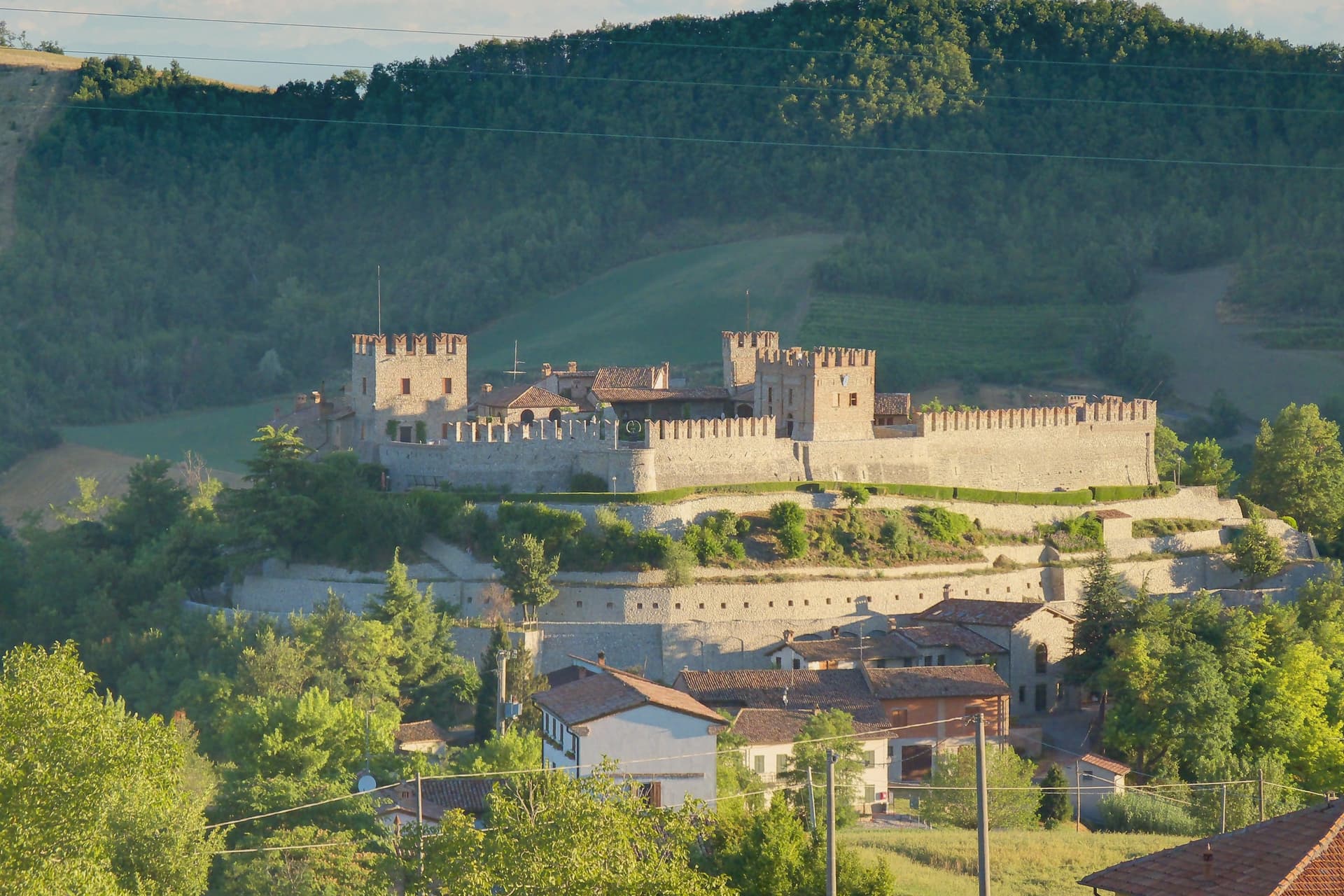
Canossa sits on the Apennine slope thirty kilometers south of Parma and twenty-five southwest of Reggio Emilia, at 219 meters at the seat in Ciano d'Enza. The commune is named for the ruined fortress on a white limestone outcrop eight kilometers east, built before 950 by Adalbert Atto of Lucca and held by Matilde di Canossa until her death in 1115.
The fortress was destroyed by Reggio Emilia in 1255. The commune was itself called Ciano d'Enza until 1992, when it took the older name back, so the seat in the valley and the ruin on the hill now share one name across two places.
Vineyards on the surrounding slopes produce Lambrusco and the Spergola white grape, and the path between Ciano and the castle ruin remains the Sentiero Matilde, the same climb that once carried Henry IV to the gate where Gregory VII made him wait. A commune this small holds an outsized memory: a valley seat, a demolished hilltop stronghold, and a name discarded and then reclaimed, all turning on three days that happened at the top of the path.
We confirmed you can reach this one by train.
What to see in Canossa
- Castello di Canossa. Fortress on a white sandstone outcrop, its walls reduced to a ruin standing over the valley since the demolition of 1255. The site now houses the Museo Nazionale Naborre Campanini.
- Castello di Rossena. Best-preserved of the Matildic castles, built in the tenth century on volcanic rock to guard the western approach to the ruin on the neighboring hill.
- Torre di Rossenella. Square watchtower a kilometer from Rossena, built on a separate basalt pinnacle as a forward observation post for the defensive system below.
How to get to Canossa
There is a railway station in the town, so you can arrive without a car and never need one while you are here. Reggio Emilia is roughly 43 minutes away by road.
Our tip
April through June brings green hills, Spergola flowering, and clear views from the castle ruin down to the Po plain. September and October dry the slopes into gold for the harvest of Lambrusco and Spergola, the busiest weekends at the Matildic castles. July and August touch thirty-four degrees and the path up from Ciano empties between two and five.
Pizzighettone
Why visit Pizzighettone
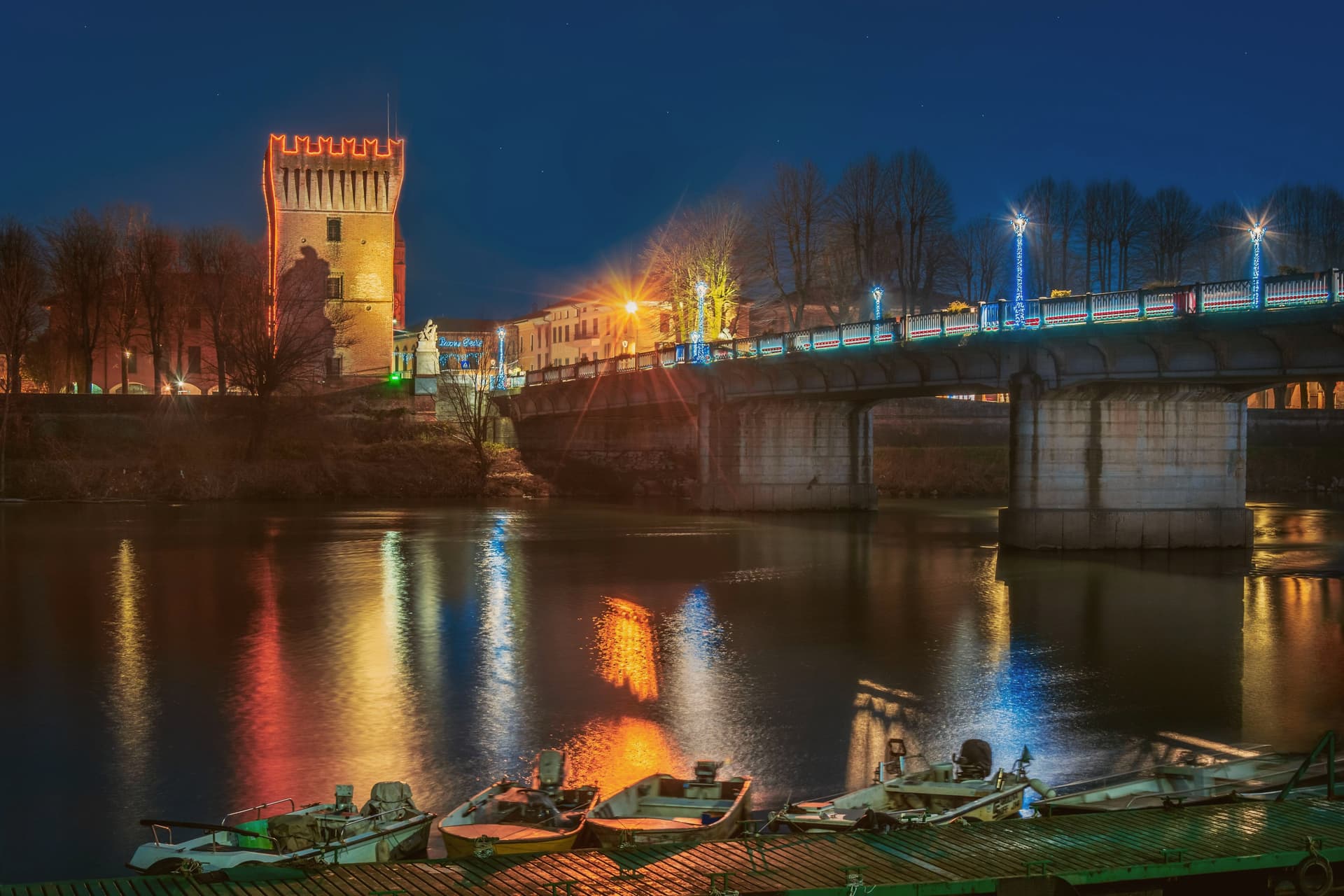
Pizzighettone sits on the river Adda in the Po valley at 46 metres above sea level, half an hour west of Cremona and an hour southeast of Milan. The Adda cuts the town in two: Pizzighettone proper on the east bank, the smaller Gera on the west, joined by a single bridge.
The 16th-century walls run two kilometres around the historic centre, twelve metres tall and three and a half thick, and they hold a network of guardhouses called Casematte that visitors can walk through with a guide. The Torre del Guado, part of the older Rocca fortress, held the captured King Francis I of France for roughly fifty days in 1525 after his defeat at Pavia, before the Spanish transferred him to Madrid.
Most of the medieval Rocca was demolished after Italian unification; the tower is one of two that survived. The Bandiera Arancione recognises the walls and the colourful interior of the Chiesa di San Bassiano in Gera.
We confirmed you can reach this one by train.
What to see in Pizzighettone
- Mura e Casematte. 16th-century walls, two km long, twelve m tall, with a network of vaulted Casematte guardhouses open to visits.
- Torre del Guado. Surviving tower of the Rocca, where Francis I of France was imprisoned in 1525 after his capture at the Battle of Pavia.
- Chiesa di San Bassiano. Parish church in the Gera quarter, known for its richly painted interior, claimed locally as the most colourful church in Italy.
How to get to Pizzighettone
There is a railway station in the town, so you can arrive without a car and never need one while you are here. Piacenza is roughly 30 minutes away by road.
Our tip
Pizzighettone runs on the Po valley calendar. April through June and again in September and October are the working months, when the walls dry out, the Casematte tours run regularly, and the Adda lowers from its winter levels. July and August are heavy: humidity sits in the valley, the river attracts mosquitoes, and afternoon temperatures push past thirty-five. Fasulìn de l'öc cun le cùdeghe falls in October.
San Benedetto Po
Why visit San Benedetto Po
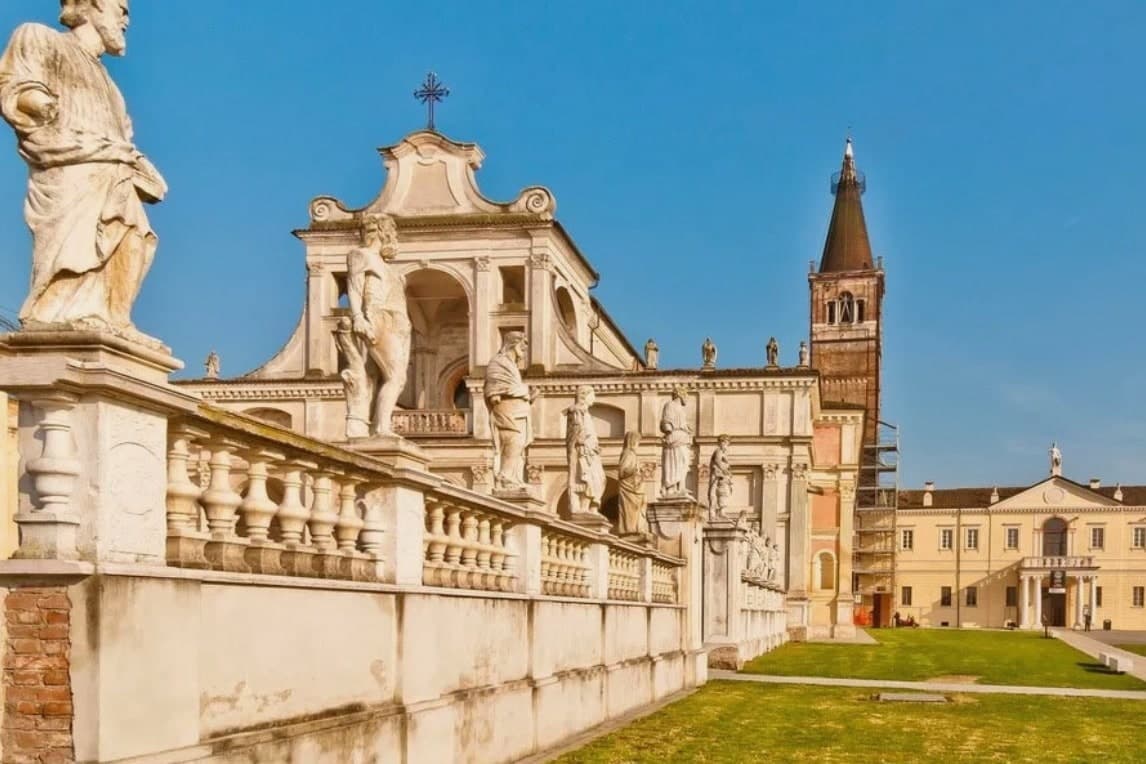
San Benedetto Po sits at 19 meters in the flat Po plain, 22 kilometers southeast of Mantova, on what was once an island between the Po and the Lirone rivers. The town has no origin apart from the abbey: in 1007 Tedald of Canossa, grandfather of Matilda, granted half his land between the two rivers to the Benedictines, and the resulting monastery became one of the principal centers of the Gregorian Reform in northern Italy.
Matilda herself, the countess who hosted the emperor's penance at Canossa in 1077, was buried within it for five centuries before her remains went to Rome. The abbey held its position from its founding until the Napoleonic suppression of 1797 emptied the community out, by which time it had grown its church, its three cloisters, its refectory and infirmary.
What is left standing today is essentially the monastery's own floor plan with the town arranged around it. A place built entirely by and for a religious institution, still legible as such long after the monks themselves are gone.
We confirmed you can reach this one by train.
What to see in San Benedetto Po
- Abbazia di San Benedetto in Polirone. The complex holds frescoes by Correggio and statues by Begarelli, added when Giulio Romano restructured it between 1540 and 1547.
- Basilica di San Benedetto. The church Giulio Romano redesigned stands at cathedral scale, the visual center around which the rest of the monastery is arranged.
- Chiostri di Polirone. Three cloisters, one for each major building phase from medieval through Renaissance, forming the working spine of the monastery behind the church.
How to get to San Benedetto Po
There is a railway station in the town, so you can arrive without a car and never need one while you are here. Modena is roughly 50 minutes away by road.
Our tip
April through June and September into October are the months that suit the Po plain. The basilica is open without summer heat, the cycling routes along the river are dry, and the cloisters hold their cool morning shade. July and August push past thirty-two degrees in the valley and the humidity off the river makes midday heavy.
Borgo Val di Taro
Why visit Borgo Val di Taro
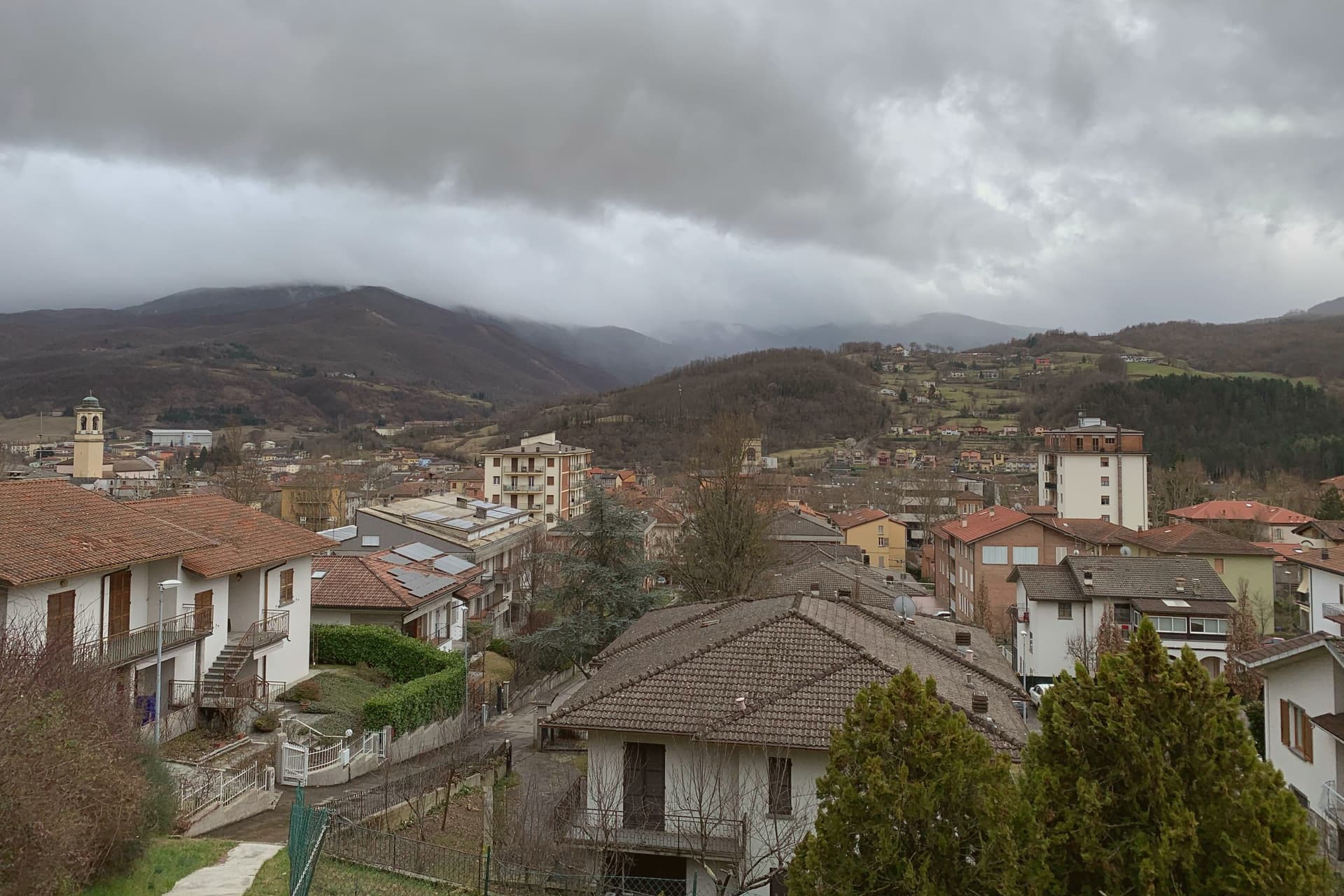
Borgo Val di Taro sits at 411 meters in the upper Taro valley, sixty-three kilometers southwest of Parma at the point where the province meets Liguria and Tuscany on the Apennine ridge. The town was a Roman waystation, then a possession of the Bobbio abbey, then of the Landi and Doria-Landi families through the medieval centuries.
Modern Borgotaro built itself around the porcini trade: the Boletus mushrooms gathered in the surrounding chestnut woods were already famous in the nineteenth century, exported by emigrants to the Americas, and in 1996 the European Union granted the Fungo di Borgotaro Protected Geographical Indication status, the first European recognition for a wild mushroom. The Consorzio per la Tutela del Porcino di Borgotaro was founded the same year.
The Cittaslow movement admitted the town in the 2000s. The September Fiera del Fungo di Borgotaro is the calendar event; population has dropped under seven thousand but the porcini trade still anchors the local economy.
We confirmed you can reach this one by train.
What to see in Borgo Val di Taro
- Centro storico. Medieval town center along the Taro, with the Palazzo Tardiani, the Piazza Manara, and the porticos lining the old market street.
- Chiesa di Sant'Antonino. Sixteenth-century parish church with a Baroque interior, holding a fifteenth-century crucifix and a wooden image of the Madonna del Carmelo.
- Palazzo Tardiani. Eighteenth-century palace on the main street, now housing the municipal library and the cultural offices.
How to get to Borgo Val di Taro
There is a railway station in the town, so you can arrive without a car and never need one while you are here. Parma is roughly 67 minutes away by road.
Our tip
April through June brings the Taro at full water and the chestnut woods in early green. September and October are the working months: the porcini emerge after the autumn rains, the Fiera del Fungo fills the centro on the last two weekends of September, and the trade carries the town's economy into November. July and August touch thirty degrees and the centro empties between two and five, though the river is cold enough for swimming. Porcigatone in festa falls in August.
Castelvetro di Modena
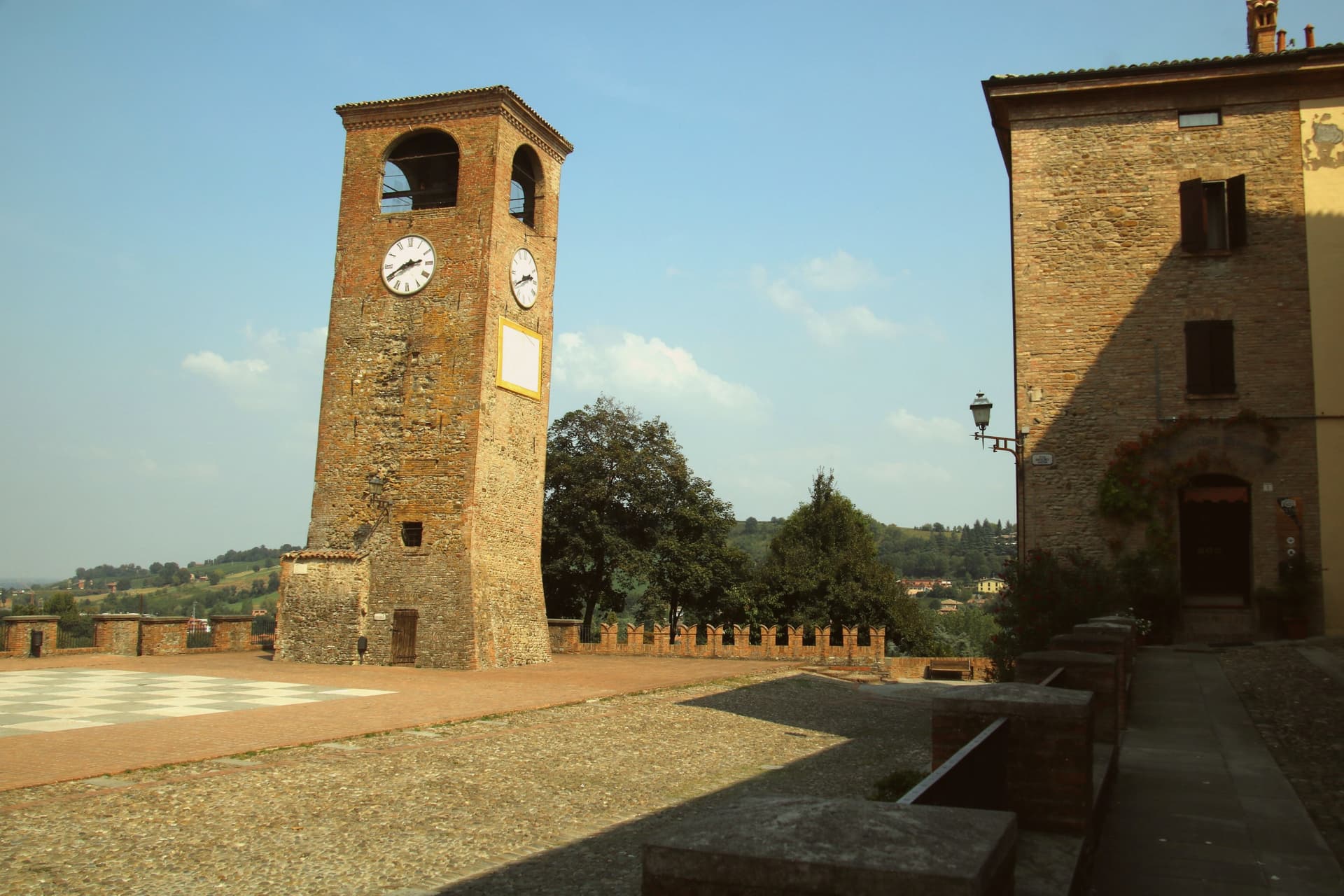
Why visit Castelvetro di Modena
Castelvetro di Modena sits on a hill at 152 meters, eighteen kilometers southeast of Modena and at the northern edge of the Apennine foothills. The medieval centro storico rises around the Piazza Roma, paved in alternating white and black stones that earned it the name Piazza della Dama, the checkerboard piazza, framed by the four surviving towers of the old castle.
The Grasparossa grape grows on the clay slopes around the town, the sandy soil and the south-facing aspect producing the deepest, most tannic of the three main Lambruschi; Lambrusco Grasparossa di Castelvetro received DOC status in 1970. Above the piazza, the Palazzo Rinaldi houses the Museo del Vino and the Museo dell'Aceto Balsamico, the second tracing the same Modenese tradition that nearby Spilamberto codifies.
The municipality holds three institutional signals: Borghi più belli, Bandiera Arancione, Città del Vino. The Sagra dell'Uva e del Lambrusco runs the last weekend of September, when the streets fill with the chess players from the surrounding Lambrusco towns dressed as living pieces on the piazza.
We confirmed you can reach this one by train.
What to see in Castelvetro di Modena
- Piazza Roma. Checkerboard piazza paved in alternating white and black stones, framed by the four surviving towers of the medieval castle.
- Castello di Levizzano Rangone. Tenth-century fortified frazione four kilometers north, with a tower built in the 990s and a fully preserved medieval village.
- Museo del Vino. Wine museum inside the Palazzo Rinaldi, tracing the Grasparossa production cycle and the DOC zone established in 1970.
How to get to Castelvetro di Modena
There is a railway station in the town, so you can arrive without a car and never need one while you are here. Modena is roughly 28 minutes away by road.
Our tip
April through June and September through October are the Castelvetro months. The hills around the borgo turn green in spring and red in autumn when the Grasparossa vines colour up before the harvest. July and August are hot, thirty-five degrees in the valley, less in the hills above, and the cantine slow down. Sagra dell'Uva e del Lambrusco Grasparossa di Castelvetro falls in September.
Spilamberto
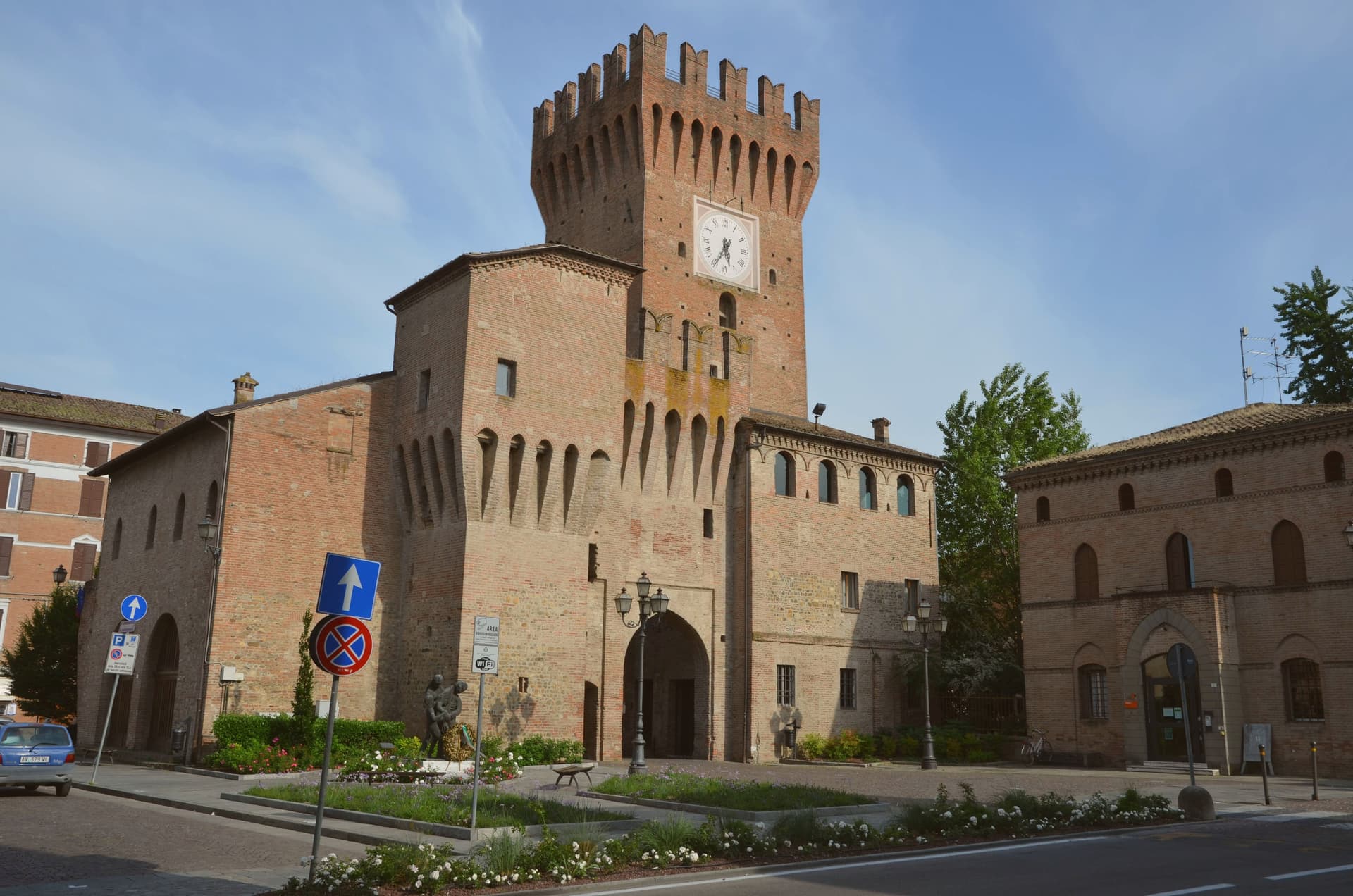
Why visit Spilamberto
Spilamberto sits at 69 meters on the right bank of the Panaro, fifteen kilometers southeast of Modena, on the line of the ancient Via Romea that ran from northern Europe to Rome. The town is documented from 776.
The Rangoni family of Modena held it for more than 650 years, and the fortress they built still anchors the centro storico, with the medieval bell tower at the edge of the borgo holding both an archaeological museum and the headquarters of the walnut liqueur order. In 1967 a group of local enthusiasts founded the Consorteria dell'Aceto Balsamico Tradizionale di Modena here, and it still certifies the twelve- and twenty-five-year-aged DOP product through annual blind tastings.
An eighteenth-century Este road that ran from Modena to Massa leaves the town heading south, a reminder that Spilamberto has always sat at a crossing point: the old route running through it toward the north and Rome, another road departing from it toward the south, the river marking its edge. A plain town that became, almost by local initiative rather than geography, the place where a regional product got its rules written down.
We confirmed you can reach this one by train.
What to see in Spilamberto
- Rocca Rangoni. The fortress anchors the centro storico, its walls facing onto the streets that grew up around it rather than set apart from them.
- Torrione. Medieval bell tower at the edge of the borgo, housing the Antiquarium museum and the headquarters of the Ordine del Nocino Modenese.
- Museo dell'Aceto Balsamico Tradizionale. Museum at Villa Fabriani laying out the production cycle in physical form: the cooked must, the graduated run of casks, the attic rooms where fifty years of seasoning take place.
How to get to Spilamberto
There is a railway station in the town, so you can arrive without a car and never need one while you are here. Modena is roughly 24 minutes away by road.
Our tip
April through June and September through October are the months for Spilamberto. The Greenway del Panaro runs without crowds, the cantine open their tasting rooms, and the Mast Còt festival in October pulls together producers from the entire Modenese balsamic chain for two weekends of new-must boiling and old-cask tasting. July and August are heavy on the plain; thirty-five degrees and humidity that doesn't drop after dark.
Collecchio
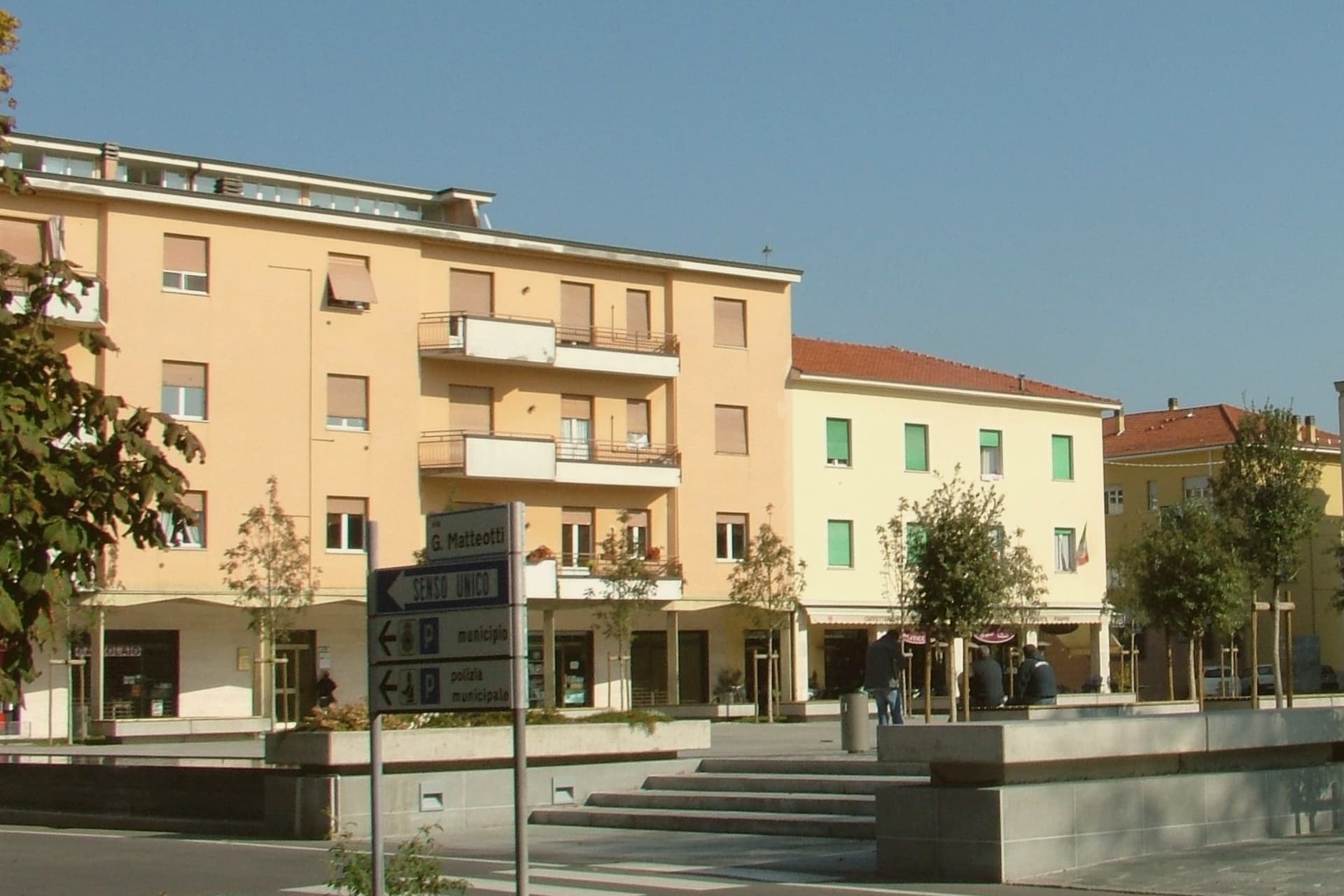
Why visit Collecchio
Collecchio sits at 112 meters on the right bank of the Taro, thirteen kilometers southwest of Parma, where the Via Emilia and the Via Francigena run together. In medieval documents the town appears as Colliculum, a possession of the bishops of Parma.
The centro lies on the flat valley floor, with the parish church set apart on the hill above it, and the two industrial sites, the dairy headquarters and the football training ground, occupying the built-up town rather than the countryside around it. The southern half of the municipality is given over to parkland: a municipal riverside park along the Taro and, further out, the wooded former hunting reserve of the Dukes of Parma.
A town shaped by a bishop's holding and a pilgrim road has ended up defined by a milk company and a football club, with its church and its woods left to mark what came before.
We confirmed you can reach this one by train.
What to see in Collecchio
- Pieve di San Prospero. The three-nave interior is reached by climbing the hill above the centro; the walls show the masonry seams of construction stretched across two centuries.
- Via Francigena. The Taro variant is marked with waystones through the centro, following the line pilgrims once walked toward the Cisa pass.
- Parco Boschi di Carrega. Wooded grounds once reserved for ducal hunting, now open with trails through the trees across the southern municipality.
How to get to Collecchio
There is a railway station in the town, so you can arrive without a car and never need one while you are here. Parma is roughly 18 minutes away by road.
Our tip
April through June and September through October are the working months on the Parma plain. The Taro valley is green in spring and dry-gold in autumn, the months when the Via Francigena fills with pilgrims walking the Parma to Fornovo stage. July and August touch thirty-five degrees with high humidity, and the centro empties between two and five.
Sasso Marconi
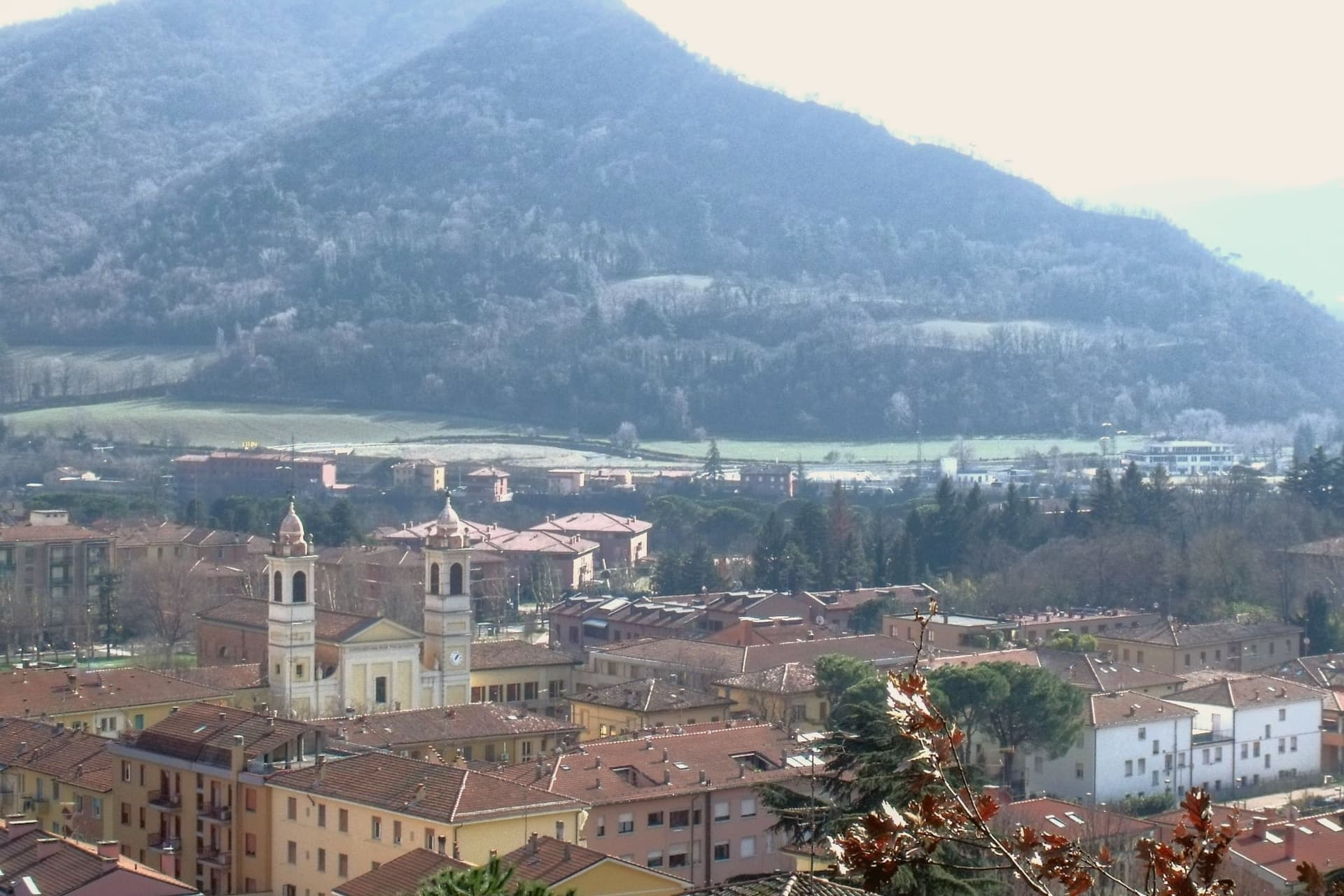
Why visit Sasso Marconi
The Setta and Reno rivers meet below the rock that gives the town its name, at the point where the pre-Apennine hills begin their climb south of Bologna. The Sasso della Glosina dominates the bend, a Pliocene formation old enough to have shaped how the crossing below it was used long before the valley took its modern name.
The town itself was called Sasso Bolognese until 1938, when it was renamed for the family whose estate lies in the frazione of Pontecchio, on the valley floor rather than on the rock itself. The territory reaches from that river confluence up into the Apennine slopes, and the change in elevation shows in what the land produces: white truffle from the valley floor near the Reno, and vineyards on the hills around Pieve del Pino and Mongardino, recognition earned on two different registers of the same ground.
The lower town, built around the rivers and the old road to Pistoia, and the upper slopes, given to woods and terraced vines, read as one territory doing two different kinds of work.
We confirmed you can reach this one by train.
What to see in Sasso Marconi
- Villa Griffone - Museo Marconi. Marconi family villa in the frazione of Pontecchio. The mausoleum sits alongside the attic laboratory, and the museum holds working reproductions of his early apparatus.
- Sasso della Glosina. The rock rises directly over the river bend, its bulk visible from the crossing below and from much of the surrounding valley.
- Confluenza Setta-Reno. Meeting of the two valleys at the foot of the rock, with the historic crossing of the Via Porrettana toward Pistoia.
How to get to Sasso Marconi
There is a railway station in the town, so you can arrive without a car and never need one while you are here. Bologna is roughly 26 minutes away by road.
Our tip
April through October is the working season in Sasso Marconi. Spring and early autumn are best on the Reno valley trails and at Villa Griffone, with mild temperatures and the Apennine foothills green or autumn-coloured. July and August can touch thirty-five degrees in the valley, though the higher frazioni stay cooler; many visitors come up from Bologna for a day on a weekend. Fira di Sdaz di Sasso Marconi falls in September.
Vignola
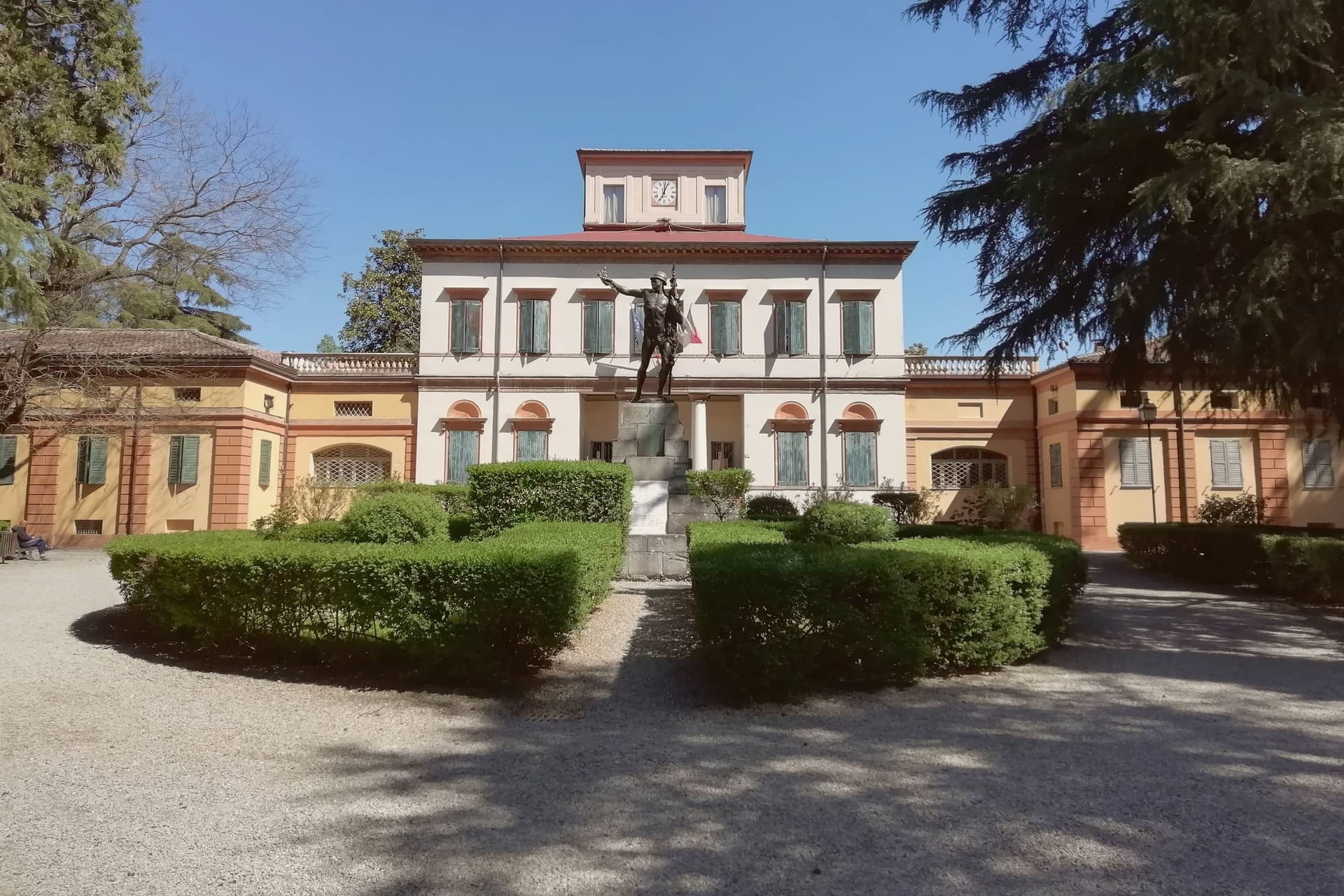
Why visit Vignola
Vignola sits at 125 meters on the right bank of the Panaro, twenty-five kilometers south of Bologna and twenty east of Modena, where the Modenese plain meets the Apennine foothills. The fortress there is documented from the eighth century, raised by the Abbot of Nonantola to guard the abbey's lands before the Contrari family rebuilt it in the fifteenth century as a fortified residence; in 1577 it passed to the Boncompagni-Ludovisi, who held it until 1965.
The palace beside it takes its second name from the family that acquired it, and from the architect born in the town in 1507, who died in 1573 after a career among the leading figures of late Renaissance architecture. The cherries that carry the town's name upriver and down are IGP-protected across twenty-eight communes stretching from Modena to Bologna, and the blossom that precedes the fruit each spring fills the Panaro valley below the walls.
A disused railway, now a greenway, threads through the same ground on its way between Mirandola and Bologna. The town's identity rests on this pairing of a fortified height above the river and an agricultural valley beneath it, one lineage of stone, one of orchards, both still legible in the place today.
We confirmed you can reach this one by train.
What to see in Vignola
- Rocca di Vignola. Eighth-century origin, built to guard the lands of an abbey and later rebuilt as a fortified residence. The frescoed interiors and four corner towers stand over the river much as the rebuilding left them.
- Scala a Chiocciola di Palazzo Barozzi. The 106 steps rise with no central support, an engineering feat as much as a decorative one, tucked inside the palace next to the fortress.
- Palazzo Boncompagni. The palace passed to the family that gives it its name in the late sixteenth century and held the fortress until 1965. Its reception rooms carry frescoes alongside the staircase it is best known for.
How to get to Vignola
There is a railway station in the town, so you can arrive without a car and never need one while you are here. Modena is roughly 34 minutes away by road.
Our tip
April through June and September through October are the working months on the Panaro foothills. The first two weekends of April fill the centro with the Festa dei Ciliegi in Fiore, when the orchards along the river bloom. June brings cherries to market and the Panaro at high water.
Parma
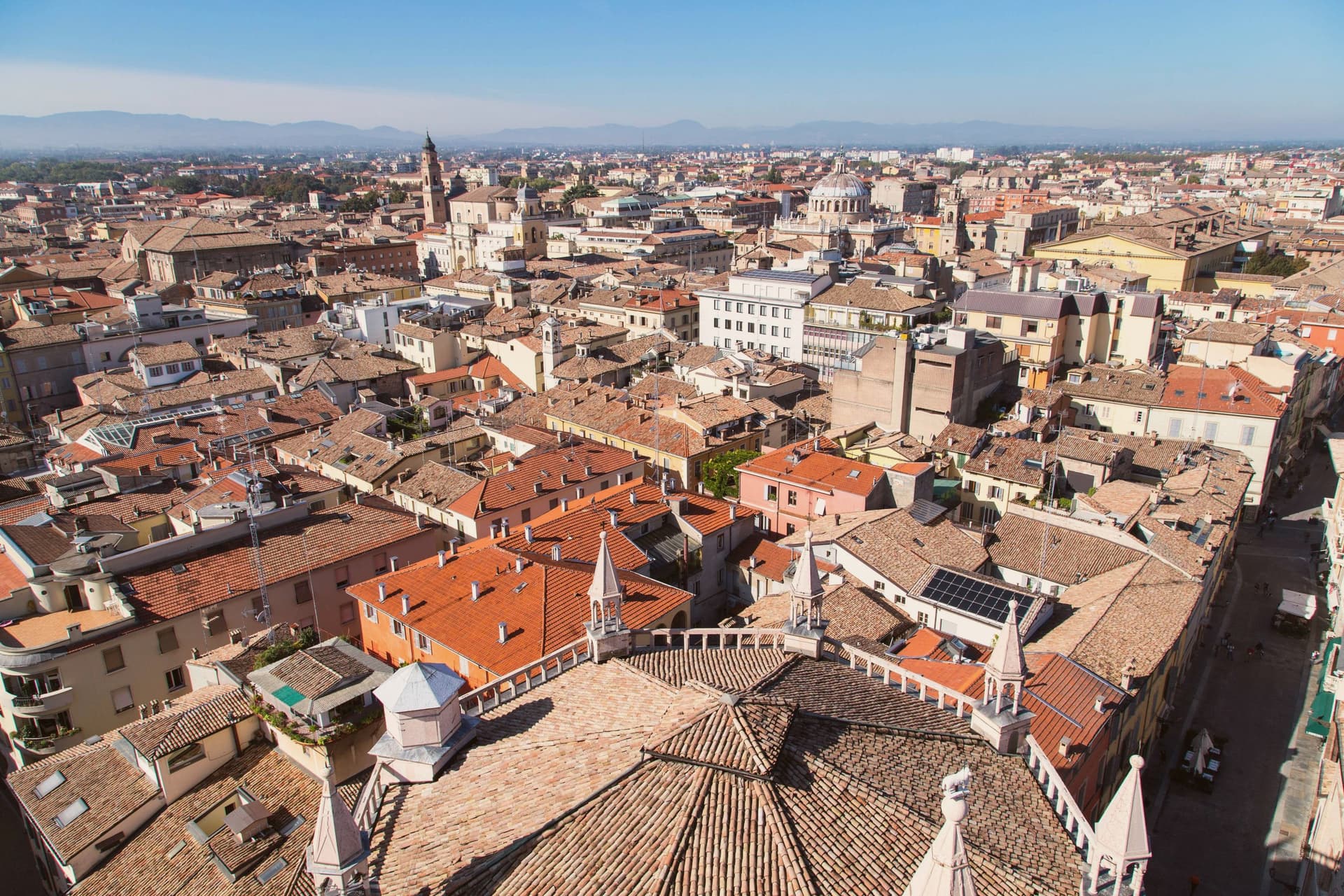
Why visit Parma
Parma sits on the Via Emilia at 57 meters, halfway between Bologna and Piacenza, the Po Valley reaching north and the Apennine foothills closing in fifteen kilometers south. Under the Farnese in the sixteenth century and Marie Louise of Habsburg in the nineteenth, the city ran its own duchy and built the institutions that still define it: the Palazzo della Pilotta, the Teatro Farnese, the Teatro Regio of 1829.
The Cathedral of Santa Maria Assunta, consecrated in 1106, holds Correggio's Assumption fresco in the dome, painted between 1526 and 1530 with a vortex of figures that read as a single rotating body. The Battistero, octagonal in pink Veronese marble, was designed and carved by Benedetto Antelami from 1196.
Arturo Toscanini was born here in 1867; the Teatro Regio still treats his recordings as house standard. The city's two food appellations, Parmigiano Reggiano and Prosciutto di Parma, carry European protected status; UNESCO named the city a Creative City of Gastronomy in 2015.
The population is 196,764.
We confirmed you can reach this one by train.
What to see in Parma
- Duomo di Parma. Cathedral consecrated 1106, holding Correggio's Assumption fresco in the dome, painted 1526 to 1530 as a single rotating vortex of figures.
- Battistero. Octagonal baptistery in pink Veronese marble, 35 meters tall, designed and sculpted by Benedetto Antelami from 1196, completed in 1270.
- Palazzo della Pilotta. Sixteenth-century Farnese palace housing the National Gallery, the Archaeological Museum and the wooden Teatro Farnese of 1618.
How to get to Parma
There is a railway station in the town, so you can arrive without a car and never need one while you are here. Parma is roughly 4 minutes away by road.
Our tip
April through June and September through October are the working months in Parma. The Po Valley clears, the colonnaded streets behind the Pilotta hold their light, and the food calendar lines up: asparagus in May, prosciutto festivals in June, Parmigiano openings into the autumn. July and August bring thirty-five degrees and the humidity that comes with the plain; the city empties in the second half of August. Palio di Parma falls in September.
More from Anywhere Italy
- The best hidden towns you can reach by train in Emilia-Romagna
 The best hill towns within 75 minutes of Parma
- The best hill towns you can reach by train in Emilia-Romagna
 The best towns known for what they grow within 75 minutes of Parma
 The best towns that cure their own meat within two hours of Parma
 The best towns that eat well within 75 minutes of Parma