
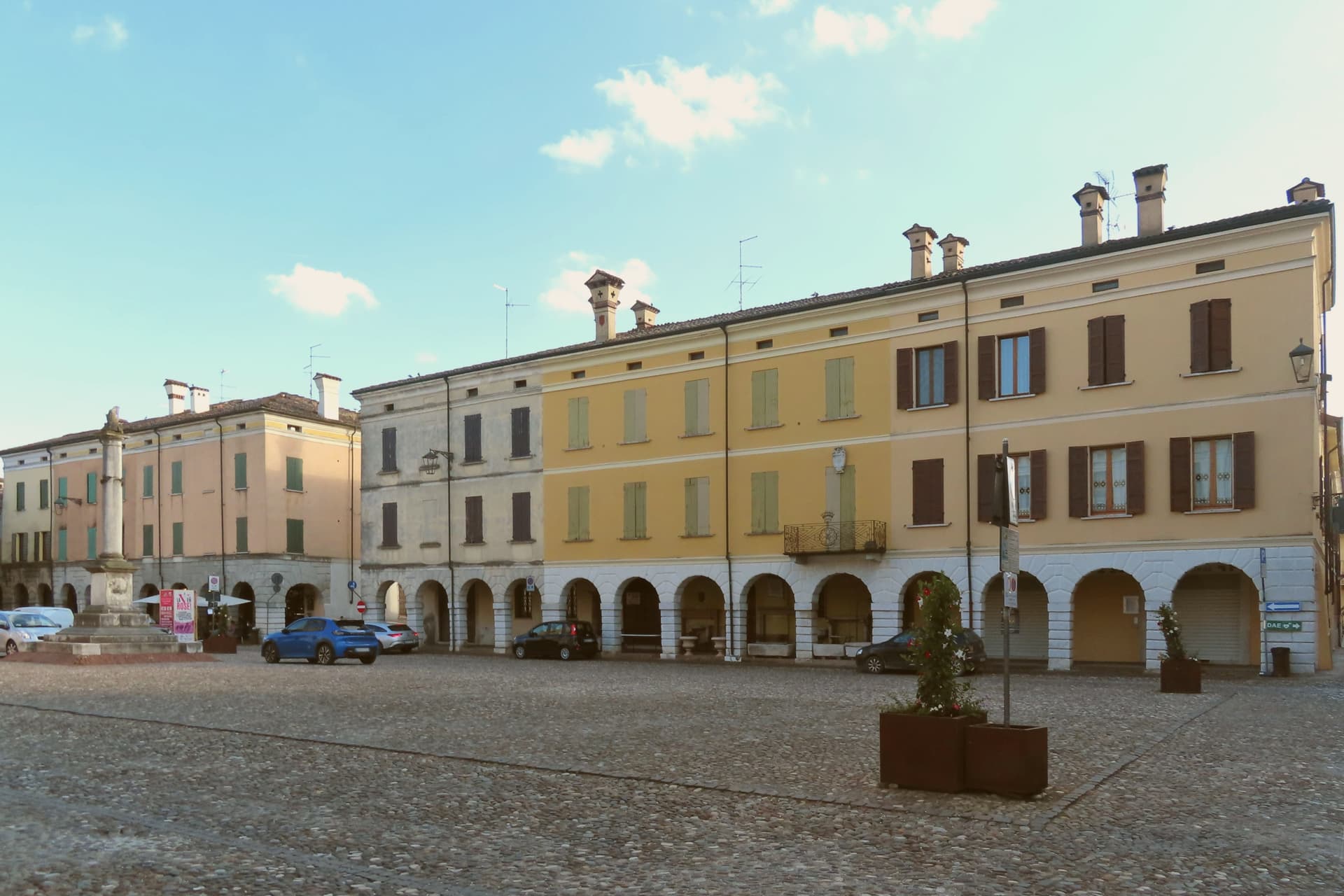

Lombardy · Mantova
Sabbioneta
A Renaissance ideal city on the Po, built in thirty years by Vespasiano I Gonzaga and laid out as a six-pointed star.
- Best time
- Apr–Jun, Sep–Oct
- By car
- 40 min from Parma
- Population
- 4,096
Known for
IDEAL CITY
Renaissance new town built in just over thirty years by Vespasiano I Gonzaga, laid out on an orthogonal grid inside hexagonal star walls.
TEATRO ALL'ANTICA
First free-standing purpose-built theatre in the modern world, designed by Vincenzo Scamozzi in 1588-90 for the Gonzaga court.
UNESCO 2008
Inscribed in 2008 together with Mantua as a twin demonstration of Renaissance urbanism: the organic city and the planned one.
IGP ZONES
The commune lies inside the Melone Mantovano and Pera mantovana IGP production zones.
When to visit
Best · Apr–Jun, Sep–Oct
- J8°
- F12°
- M15°
- A19°
- M23°
- J29°
- J32°
- A31°
- S26°
- O20°
- N13°
- D8°
- Best
- Hot or crowded
- Quiet
- Mostly closed
Daytime averages, 2020–2024. Weather data by Open-Meteo.com.
The festa: San Sebastiano, 20 January
Why come
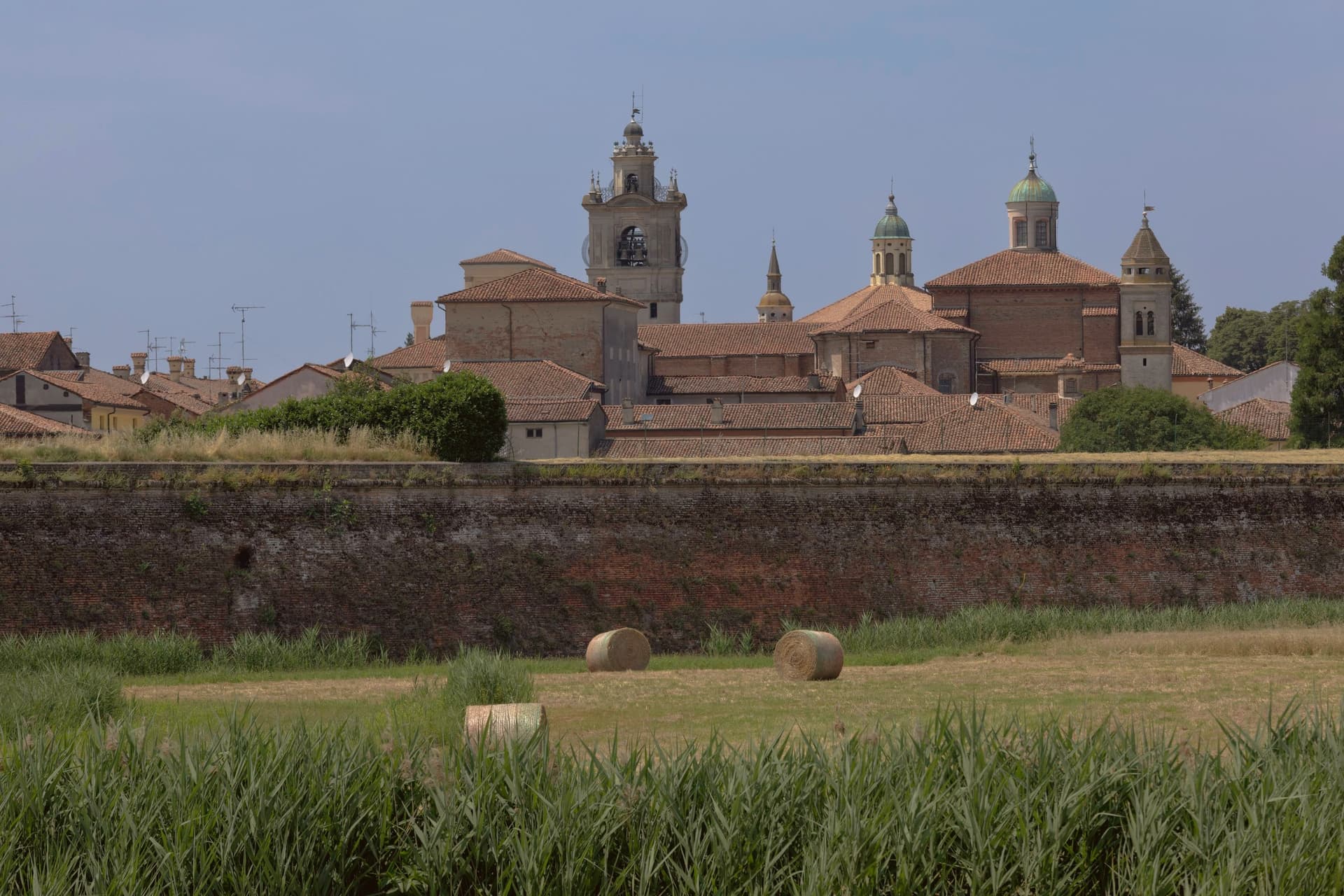
Sabbioneta sits at about 25 meters on a sandy bank of the Po, north of Parma and southwest of Mantova. Vespasiano I Gonzaga, a cadet of the Mantuan line, founded it in the late sixteenth century along the Roman Via Vitelliana as his personal fortress and ducal seat, built almost in one campaign between 1554 and 1591. The town is organized around two main axes and two squares, with the star walls set at a fixed distance from that grid so the fortification and the street plan read as a single design rather than a wall added to an existing settlement.
Vespasiano commissioned the theatre, the gallery, and the two palaces in sequence, each filling a distinct role in the ducal seat: a residence, a pleasure palace, a display case for his marbles, a place for performance. The church holds his tomb, closing the set with a mausoleum built to the same scale as everything else he raised. What results is a town where every set piece was planned as part of one court rather than accumulated over generations, which is the quality that put it alongside Mantua as the planned counterpart to the organic city.
The Sunday letter
Sabbioneta is on our list. Its letter is still to come.
We are writing about all 1,000 of these towns, one at a time, in a free letter every Sunday: the photo, the food, the festa. That is our mission. Sign up and you will be there when Sabbioneta comes up. By Peter & Sophia, from Pietrasanta.
Read on
Sabbioneta in our articles
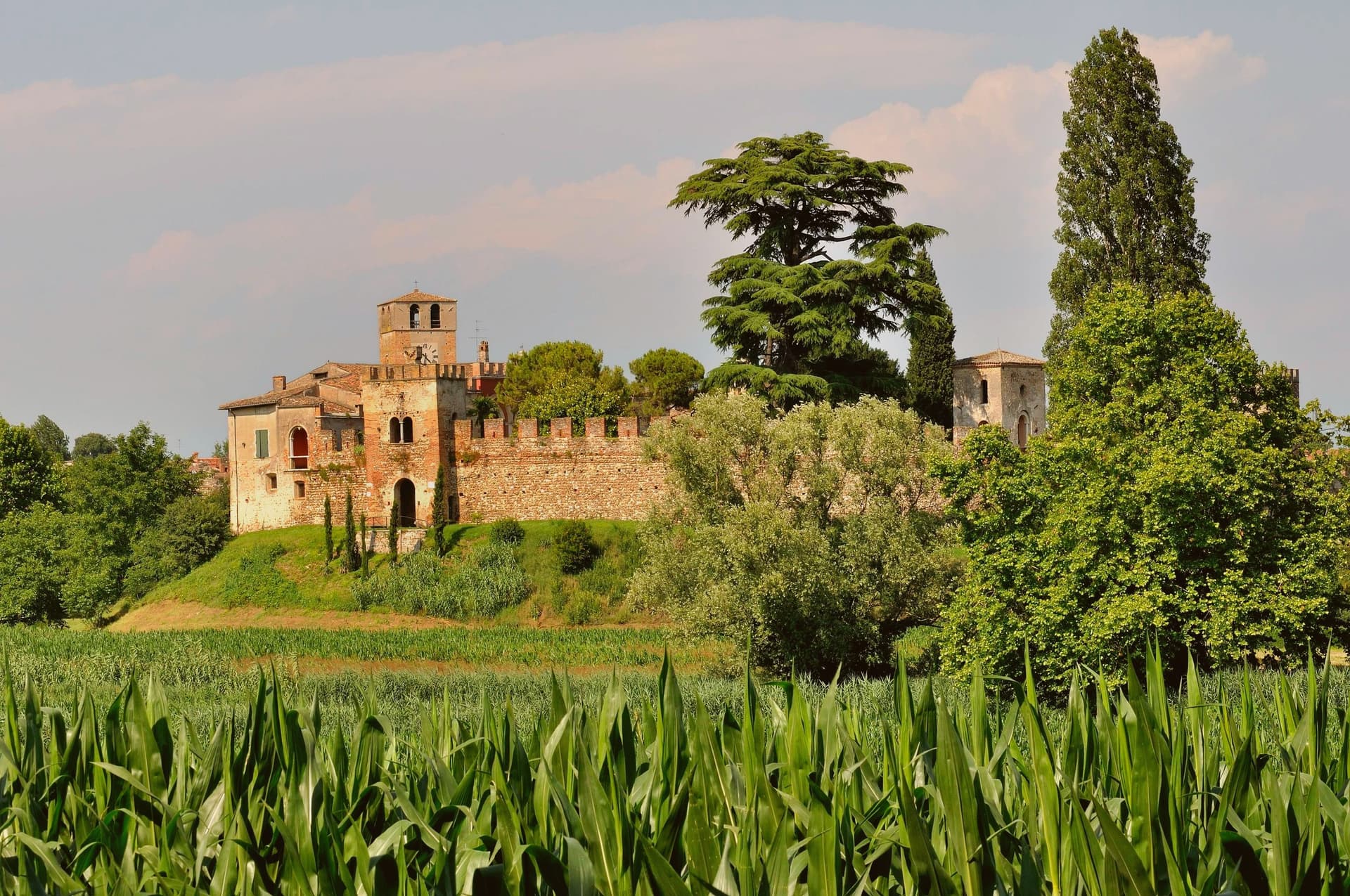 The 6 prettiest villages in the province of Mantova6 towns, Sabbioneta among them.
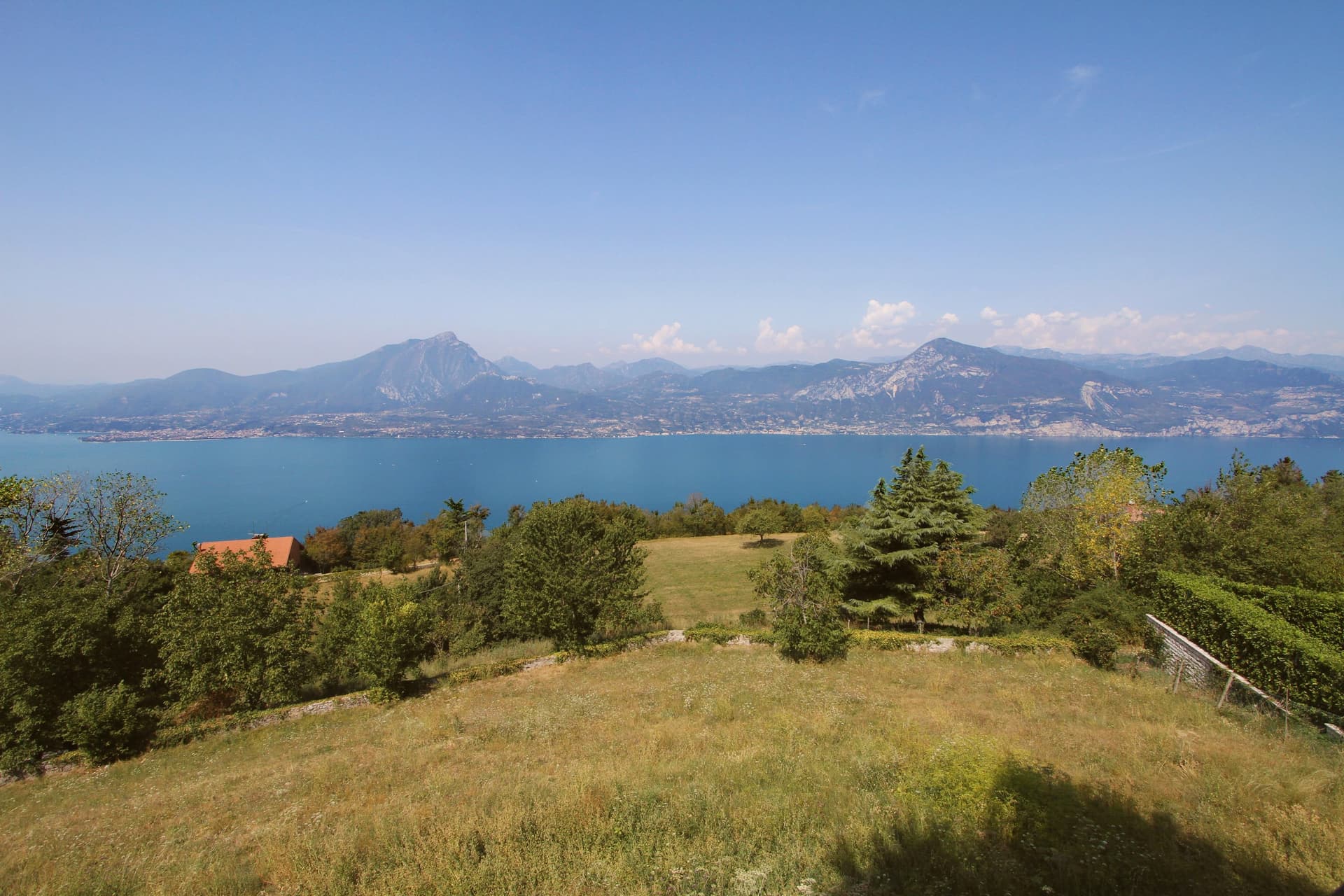 The best towns known for what they grow within 90 minutes of Brescia6 towns, Sabbioneta among them.
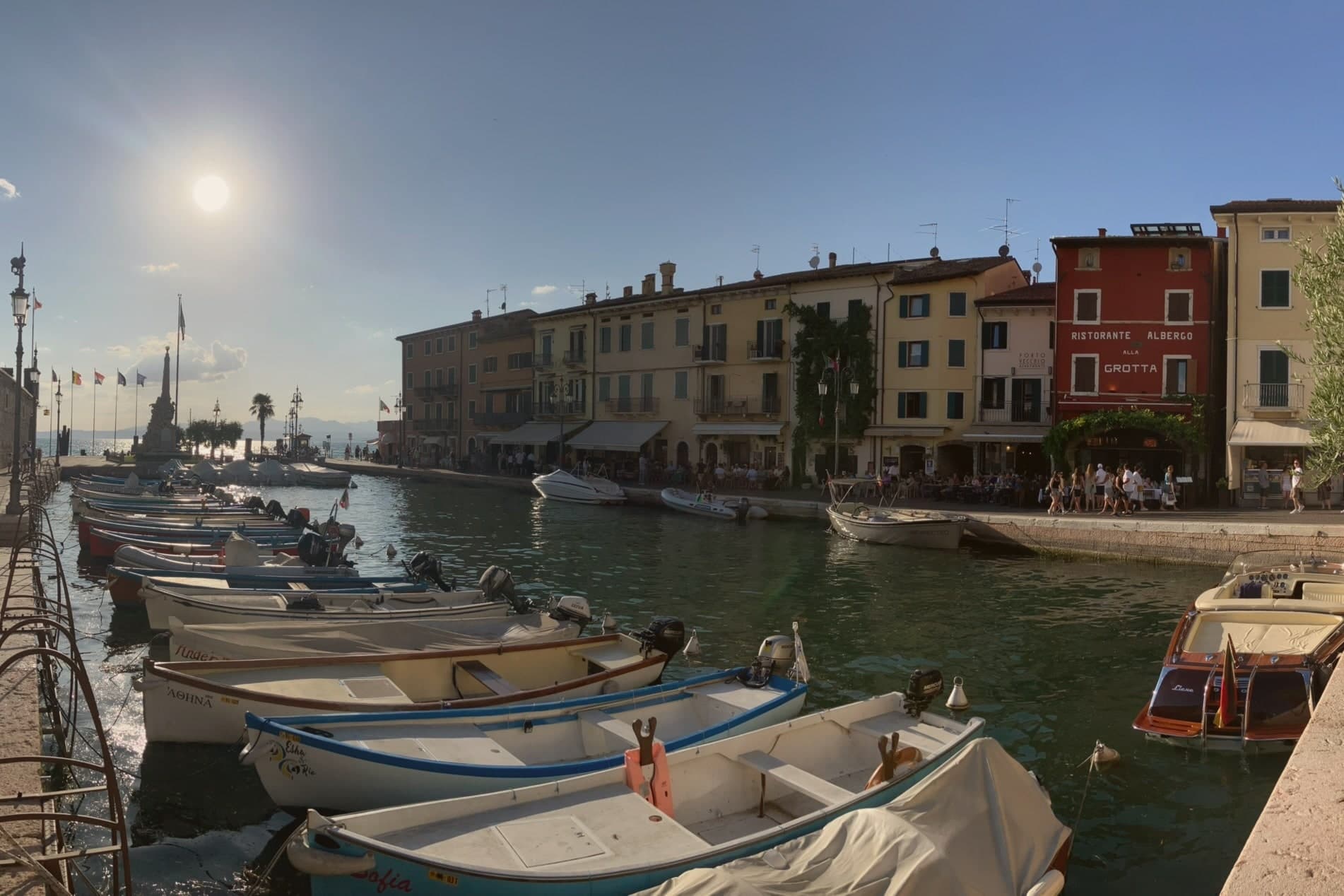 The best towns known for what they grow within two hours of Milan6 towns, Sabbioneta among them.
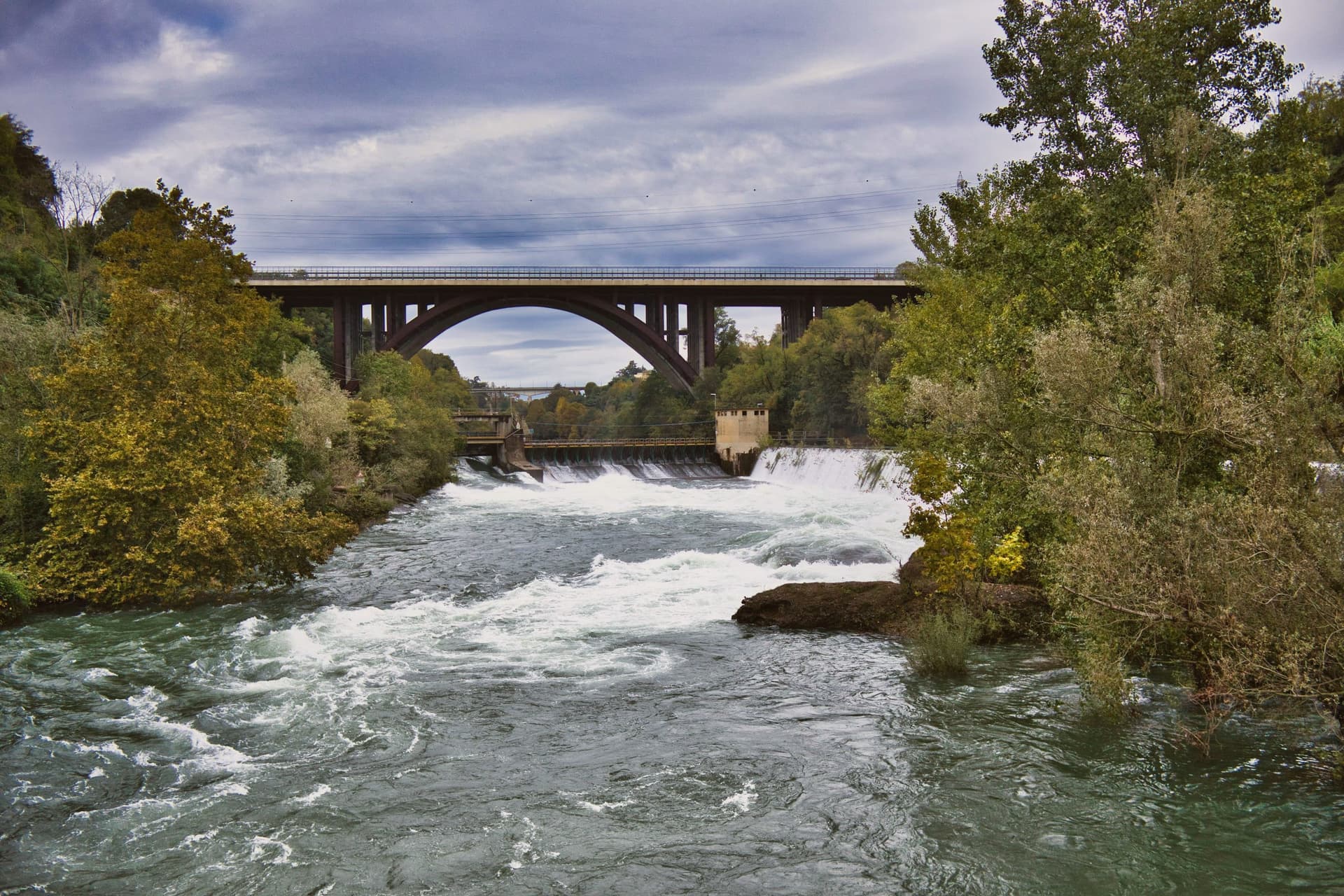 The best towns with a World Heritage site within 90 minutes of Brescia6 towns, Sabbioneta among them.
How to get there
From Verona (VRN), about 1h 14m by car.
Bologna (BLQ) is about 1h 28m away.
By car from the centre of Parma 40 minutes or Brescia 1h 26m.
Coming by train into Parma? Sabbioneta is about 37 minutes away by road.
What to see
Teatro all'Antica
Designed by Vincenzo Scamozzi with a raked wooden cavea and a painted false loggia opening onto a sky that never changes. It still stands as it was built for the Gonzaga court.
Galleria degli Antichi
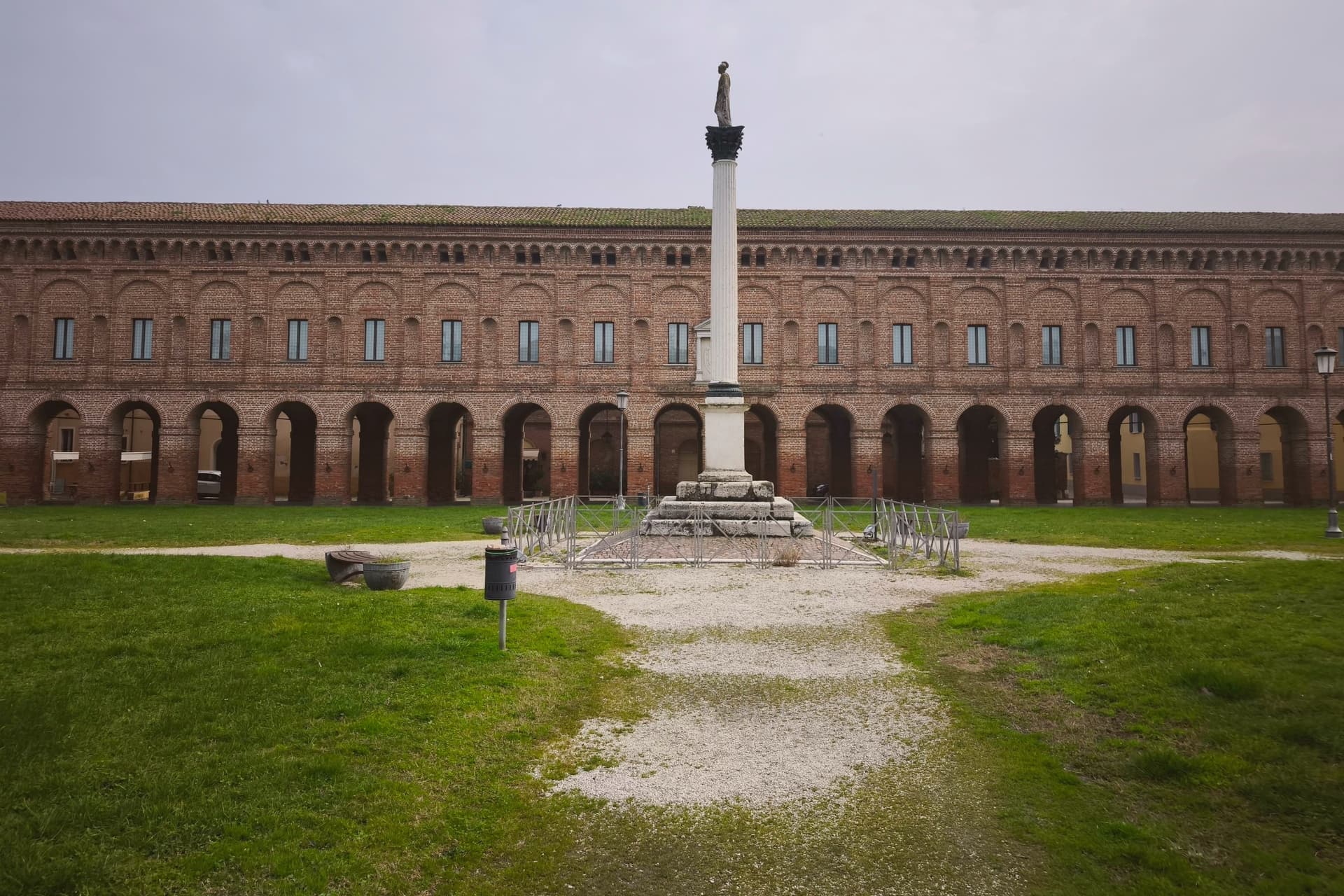
97-meter arcaded gallery built to display Vespasiano's collection of ancient marbles, the longest such gallery of its period. The arcade runs in a single unbroken line, a corridor meant to be walked past statues rather than stood in.
Palazzo Ducale
Vespasiano's main residence on Piazza Ducale, with frescoed rooms, wooden equestrian statues of the Gonzaga ancestors and gilded ceilings.
Palazzo del Giardino
Suburban pleasure palace inside the walls, frescoed by Bernardino Campi and Bernardino Curti, with the Galleria degli Antichi attached.
Mura stellari
Hexagonal star-shaped walls and gates of the late sixteenth century, ringing the orthogonal street grid that defines the ideal city.
Chiesa dell'Incoronata
Octagonal church of 1586-1588 with the tomb of Vespasiano I Gonzaga, designed as a small Renaissance mausoleum.
The slow-trip planner
Building a trip? Find where Sabbioneta fits in a slow Italy circuit.
Answer five questions. We will shape a geographically coherent slow trip from the 1,000 Italian towns most travelers skip. Yours to save and share.
Living here
- Population 4,096
- In-betweeni
- Pharmacy in town
- High school within a 30-minute drive
- Nearest airport Verona, 1 h 14 min drive
- Regional capital Milano, 1 h 57 min drive
Common questions
- What is Sabbioneta known for?
- Sabbioneta is a Renaissance ideal city on the Po, built in thirty years by Vespasiano I Gonzaga and laid out as a six-pointed star.
- Where is Sabbioneta?
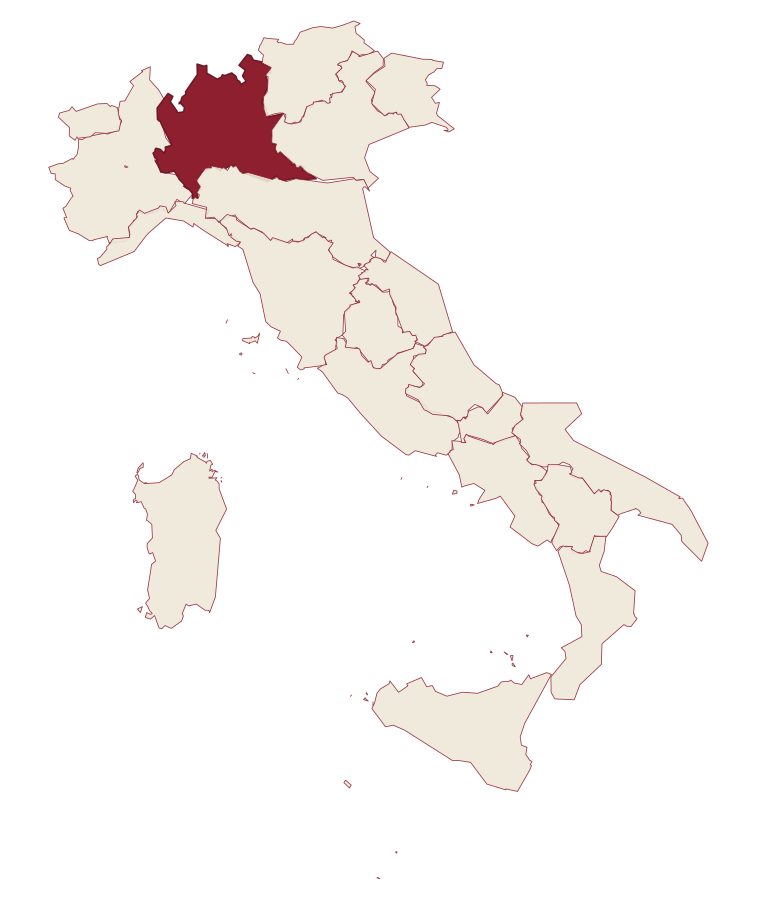
- Sabbioneta is a comune in the province of Mantova, in Lombardy, at 25 meters above sea level.
- What is the nearest airport to Sabbioneta?
- Verona (VRN), about 1h 14m by car.
- How long is the drive from Parma to Sabbioneta?
- About 40 minutes by car.
- When is the best time to visit Sabbioneta?
- Best in Apr–Jun, Sep–Oct. July is the warmest month, averaging 32 degrees, and May the wettest, with about 14 rain days.
- Is there a sagra or a festival in Sabbioneta?
- The town keeps its patron saint's day: San Sebastiano, 20 January.
- Which other towns are like Sabbioneta?
- San Benedetto Po, Gualtieri and Volta Mantovana.
- How many people live in Sabbioneta?
- 4,096 at the 2023 count.
Tags & datadesignations · numbers · sources
Recognised as
The numbers
- Elevation: 25 m
- Population: 4,096
- Surface area: 37.27 km²
These figures were compiled from public directories: ISTAT, OpenStreetMap and Wikidata, and from the official listings of the guides named on this page. Town details change; verify with official sources before you travel.
Similar
Towns like Sabbioneta
San Benedetto Po
Province: Mantova
both in the Po valley · both between 3,000 and 10,000 people
Gualtieri
Province: Reggio nell'Emilia
both in the Po valley · both between 3,000 and 10,000 people
Volta Mantovana
Province: Mantova
both in the Po valley · both between 3,000 and 10,000 people
Soave
Province: Verona
both in the Po valley · both between 3,000 and 10,000 people
Montagnana
Province: Padova
both in the Po valley · both between 3,000 and 10,000 people
Pizzighettone
Province: Cremona
both in the Po valley · both between 3,000 and 10,000 people
🎨 Borghi più belli d'Italia
More Borghi più belli d'Italia towns in Lombardy
Bagolino
Province: Brescia
A mountain village at 778 meters in the Valle del Caffaro, with a three-day February carnival of masked dancers and violins.
Bellano
Province: Lecco
An eastern shore town where the Pioverna cut a gorge through fifteen million years of rock before reaching the water.
Bienno
Province: Brescia
A medieval ironworking village where water hammers driven by the Grigna stream have shaped wrought iron since the 1200s.
Cassinetta di Lugagnano
Province: Milano
A commune west of Milan with fifteen surviving ville di delizia and Italy's first zero-growth urban plan, adopted in 2007.
Castellaro Lagusello
Province: Mantova
A walled medieval borgo south of Lake Garda, ringed by 13th-century stone walls and overlooking a small heart-shaped natural lake that gives the village its second name and most-photographed silhouette.