
Veneto · Padova
Padova
The university town that gave Giotto a chapel and the world a science of plants, with two UNESCO inscriptions inside one set of walls.
- Best time
- Apr–Jun, Sep–Oct
- By car
- 3 min from Padua
- By train
- Station in the comune
- Population
- 206,496
Known for
GIOTTO'S SCROVEGNI
The fresco cycle that started the Renaissance. UNESCO 2021. Timed-entry, books out weeks ahead.
WORLD'S FIRST BOTANICAL GARDEN
Founded 1545, UNESCO 1997. Still on its original walled circular plan.
1222 UNIVERSITY
Galileo taught here. Vesalius dissected here. The world's first woman PhD graduated here in 1678. Palazzo Bo and its Teatro Anatomico still operate.
BASILICA OF ST ANTHONY
Third-largest pilgrimage church in Catholicism. Donatello's Gattamelata stands outside, the first equestrian bronze since antiquity.
When to visit
Best · Apr–Jun, Sep–Oct
- J8°
- F12°
- M15°
- A18°
- M22°
- J28°
- J30°
- A31°
- S26°
- O20°
- N13°
- D9°
- Best
- Hot or crowded
- Quiet
- Mostly closed
Daytime averages, 2020–2024. Weather data by Open-Meteo.com.
The festa: Antonio di Padova, 13 June
Why come
The Università degli Studi di Padova was founded in 1222 by scholars who had left Bologna in search of academic freedom, and for half a millennium it supplied the Veneto with its doctors and lawyers. Galileo lectured on physics here between 1592 and 1610. Copernicus studied here.
Elena Cornaro Piscopia became, in 1678, the first woman anywhere to receive a university doctorate. The teaching happened in the same rooms tourists now walk through, which is part of what makes the university feel less like a monument and more like a machine that has never stopped running. The city's older story predates the university by centuries in spirit if not in stone: in 1303 Enrico Scrovegni commissioned a fresco cycle for his family chapel, an act of atonement for his father's usury, and the result changed what painting could do.
Separately, and for entirely different reasons, the city's botanical garden preserves a walled circular plan laid down in the sixteenth century, the layout that made it the template for every university garden that followed. Away from these two, the Basilica di Sant'Antonio draws pilgrims to a reliquary and a bronze outside its doors, the Palazzo della Ragione holds an astrological fresco hall and a two-hundred-year-old wooden horse, and a historic caffè has served coffee since 1831 in a neoclassical room that once served as Risorgimento headquarters. The kitchen runs to bigoli with duck ragù, baccalà mantecato, risi e bisi in spring, and white asparagus from the Piazza delle Erbe market in May. What holds the city together is the university's habit of making its past into working infrastructure: a lecture hall still gives lectures, a dissection theatre still stands where it was built, a garden still grows on its original beds.
The Sunday letter
Padova is on our list. Its letter is still to come.
We are writing about all 1,000 of these towns, one at a time, in a free letter every Sunday: the photo, the food, the festa. That is our mission. Sign up and you will be there when Padova comes up. By Peter & Sophia, from Pietrasanta.
Read on
Padova in our articles
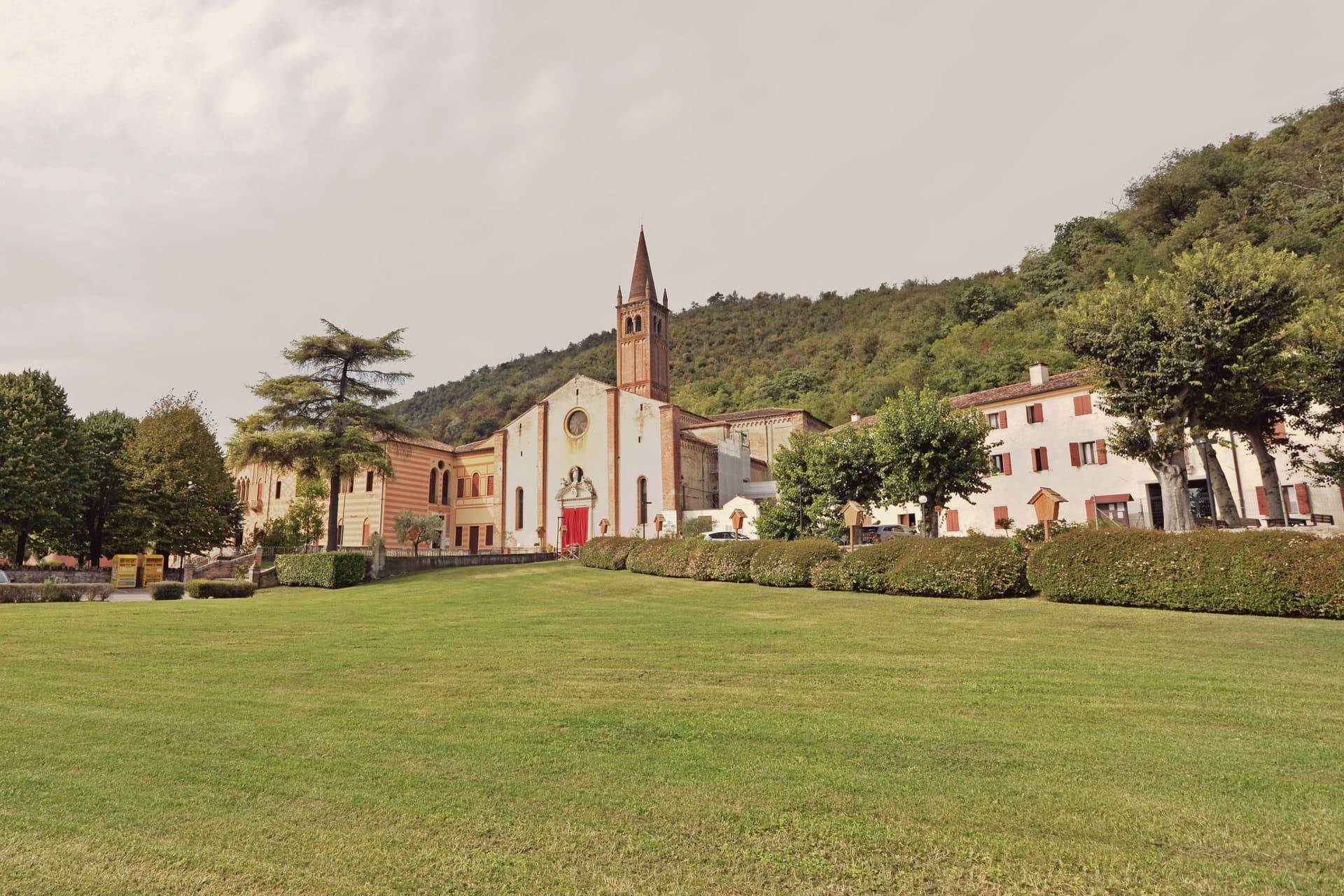
 The best towns that eat well within an hour of Padua6 towns, Padova among them.
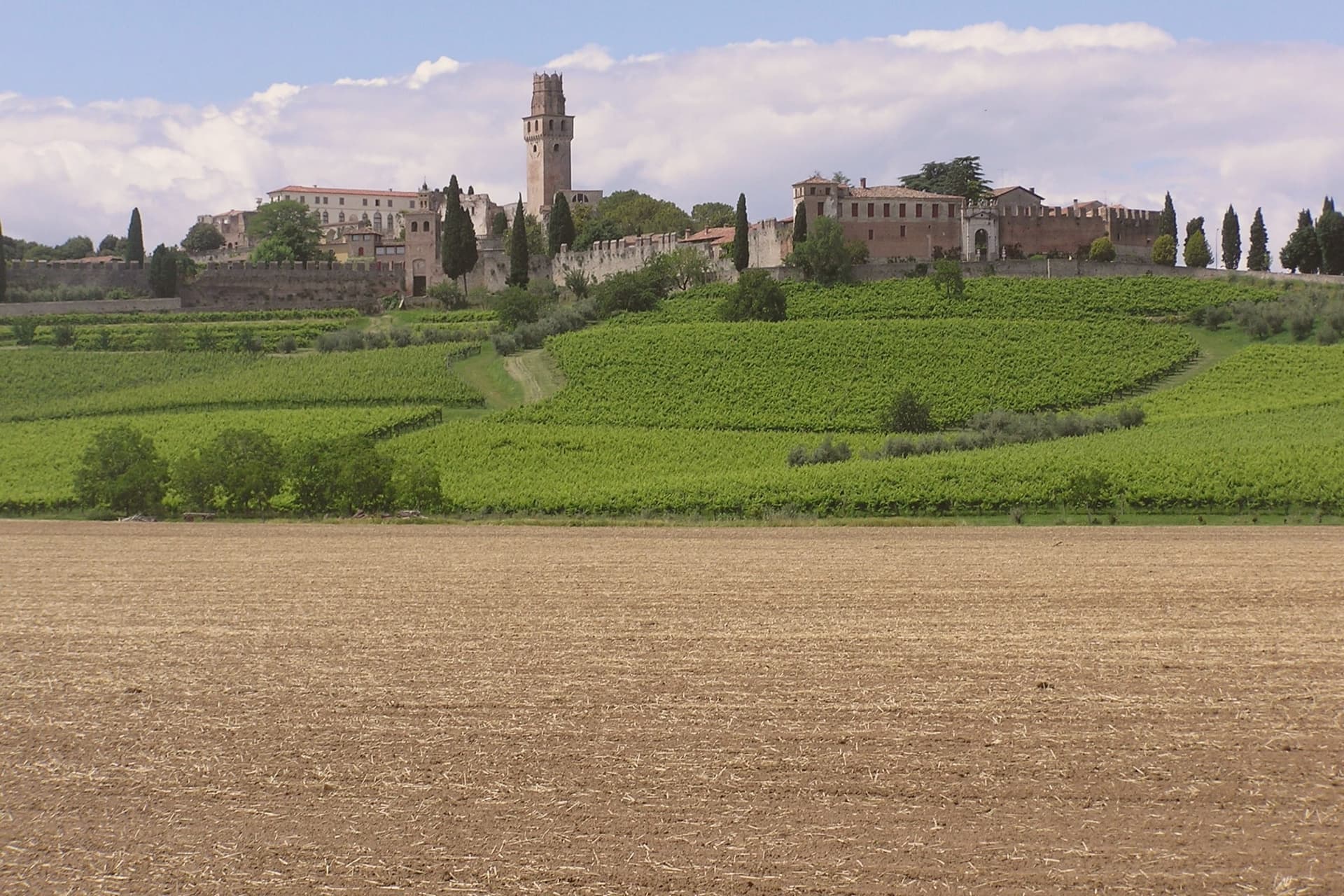
 The best towns that eat well within an hour of Venice6 towns, Padova among them.
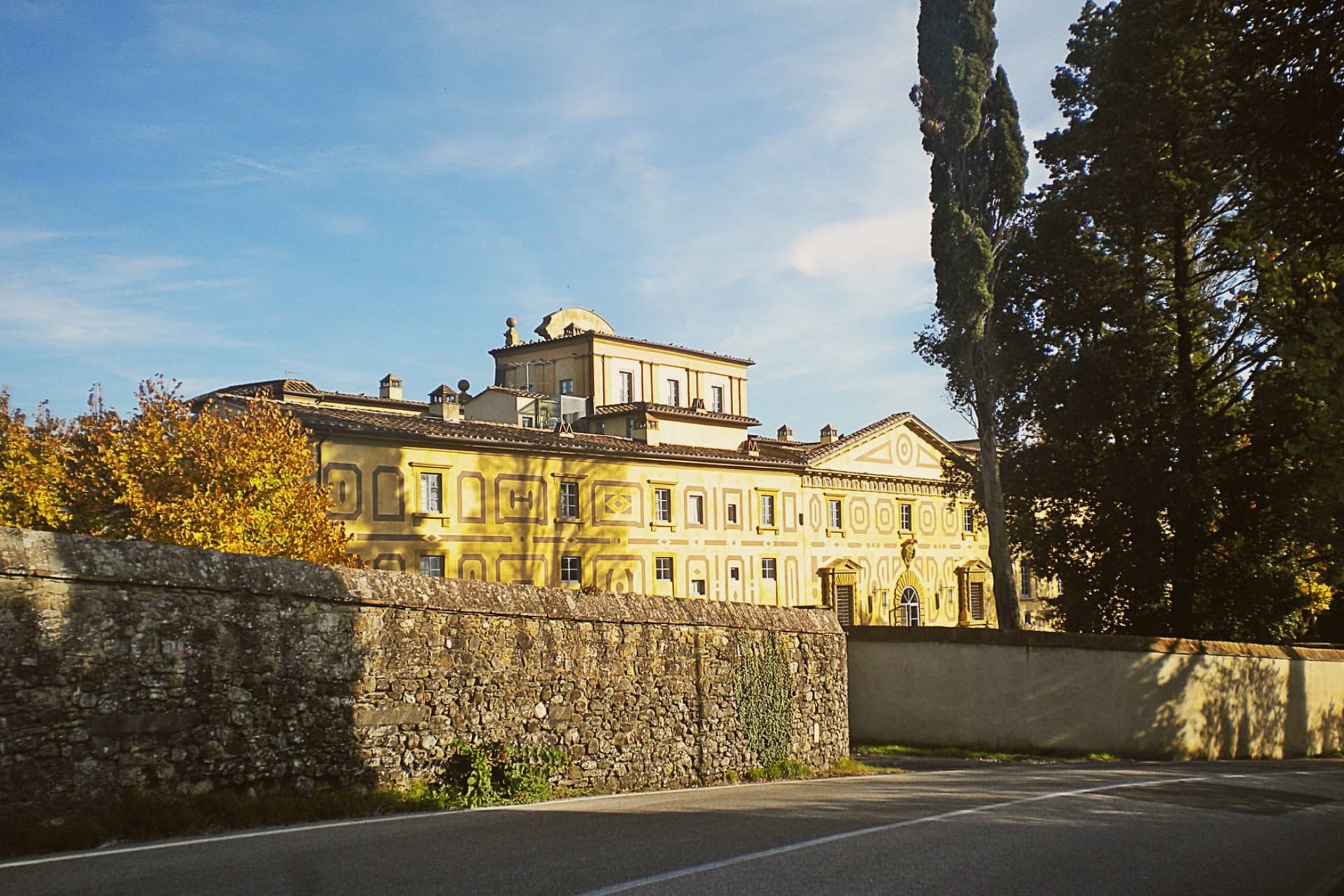
 The best towns with a World Heritage site within 75 minutes of Padua6 towns, Padova among them.
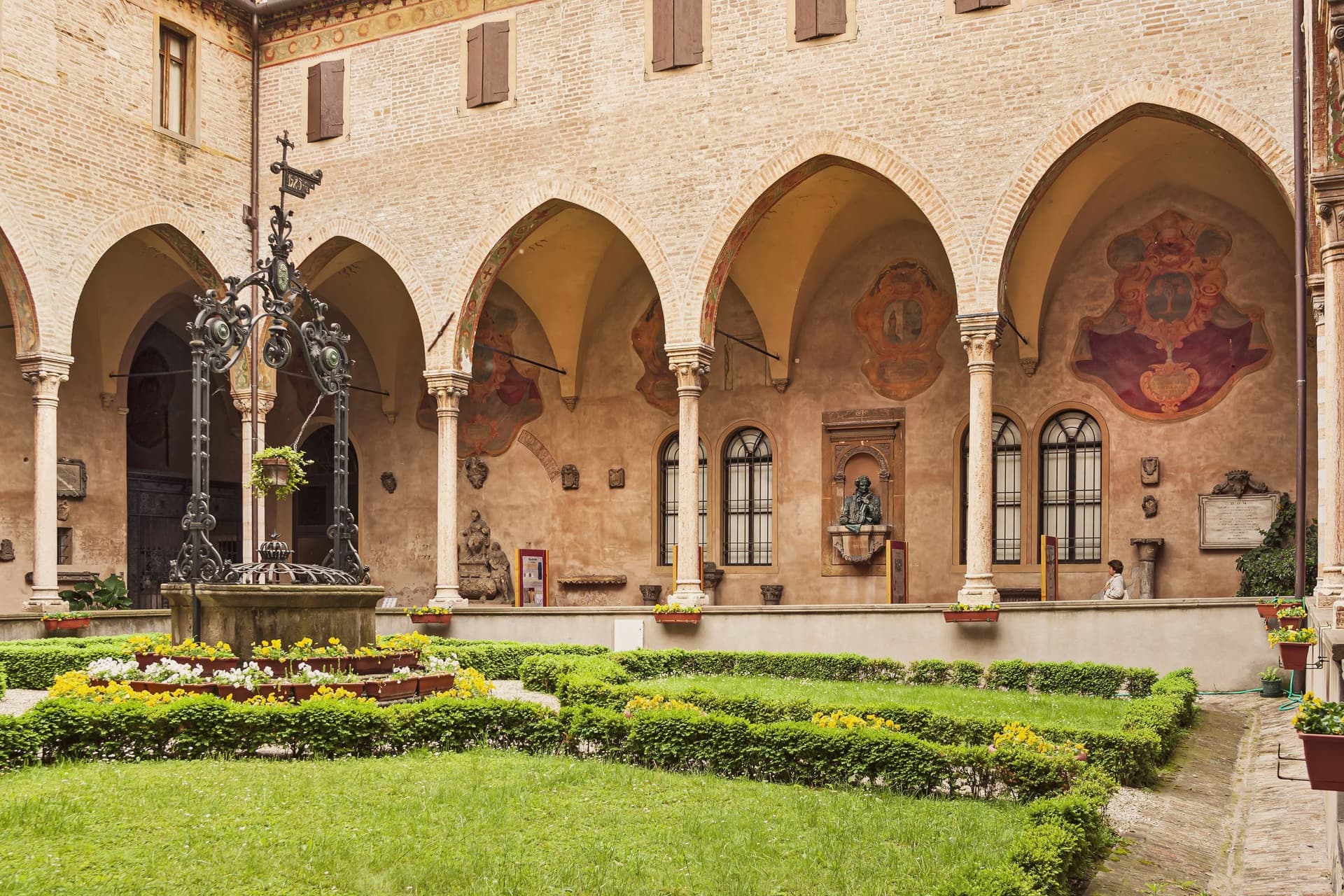
 The best towns with a World Heritage site within 90 minutes of Bologna6 towns, Padova among them.
How to get there
From Venice (TSF), about 48 minutes by car.
Bologna (BLQ) is about 1h 19m away.
By car from the centre of Padua 3 minutes or Verona 1 hour.
Driving in is restricted: there is a limited traffic zone here (ZTL Zona A e B). Check the signs and the times before you drive into the centre.
There is a railway station in the comune, so you can arrive without a car.
Coming from Venice, Verona or Bologna?
Coming by train into Padova? Padova is about 6 minutes away by road.
What to see
Cappella degli Scrovegni (Giotto, 1303–1305)
38 scenes from the life of Christ and Mary, painted directly onto the plaster of a single chapel. The air-handling required to keep the pigment stable is why entry is capped at 15 minutes and 25 people at a time.
Orto Botanico (1545, UNESCO)
A walled circular garden, laid out on its founding plan and unchanged in shape since. Goethe stood among its beds. A modern biodiversity greenhouse has been added alongside the historic plot.
Prato della Valle
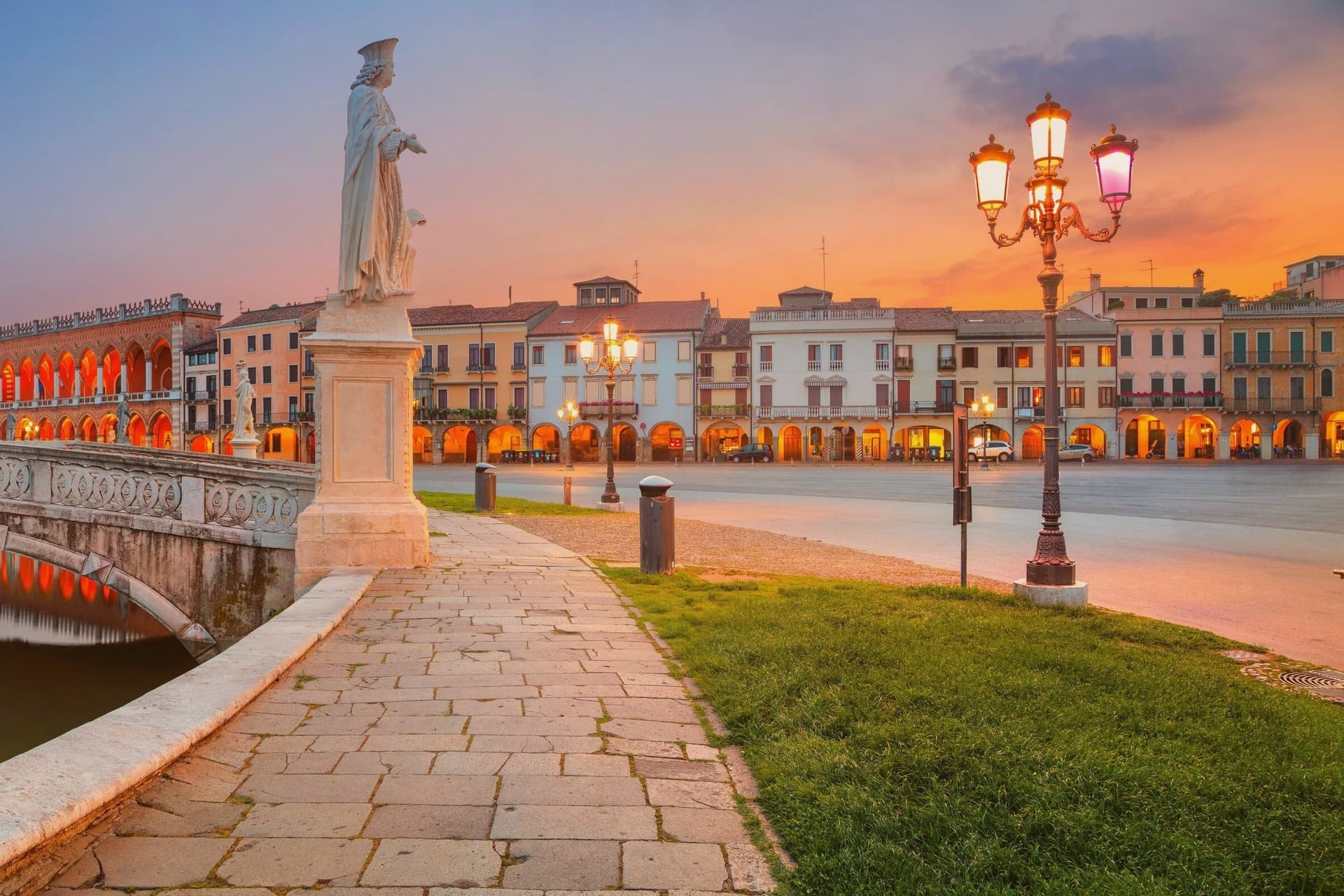
An elliptical canal ringed by 78 statues of Padovan worthies, enclosing a central island and facing the Basilica of Santa Giustina. At 88,000 square metres it is the largest piazza in Italy.
Basilica di Sant'Antonio
The Saint's tongue and chin are kept in the reliquary inside. Outside stands Donatello's Gattamelata, cast in 1453, the first equestrian bronze made since antiquity.
Caffè Pedrocchi + Palazzo Bo
The 1831 'caffè without doors', open around the clock until the war years and still serving. Across the street, Palazzo Bo holds Galileo's old lecture hall and the 1594 Teatro Anatomico, the oldest surviving anatomy theatre.
The slow-trip planner
Building a trip? Find where Padova fits in a slow Italy circuit.
Answer five questions. We will shape a geographically coherent slow trip from the 1,000 Italian towns most travelers skip. Yours to save and share.
We recommend
Where to eat
Not our picks, but places the guides put their name to: a Michelin star, a Gambero Rosso fork, a Slow Food snail, a Michelin Key for the hotels. Worth a table, a counter, or a night when you pass through.
Ai Porteghi BistrotBistrot
Two Gambero Rosso tables for Ai Porteghi Bistrot, and a spot in the Michelin Guide.
Enotavola PinoBistrot
Enotavola Pino holds a Gambero Rosso listing and a spot in the Michelin Guide.
ExforoRistorante
Exforo holds one Gambero Rosso fork (77/100) and a spot in the Michelin Guide.
Tola RasaRistorante
Tola Rasa holds a Gambero Rosso listing and a spot in the Michelin Guide.
A Banda del BusoTrattoria
A Banda del Buso has two Gambero Rosso prawns to its name.
Belle PartiRistorante
A spot in the Michelin Guide, at Belle Parti.
Caffè PedrocchiCaffè
Caffè Pedrocchi has a place on Italy's historic-locali register to its name.
Da Nane della GiuliaTrattoria
Two Gambero Rosso prawns, at Da Nane della Giulia.
Osteria TestamattaRistorante
Osteria Testamatta holds one Gambero Rosso fork (77/100).
Stefano Mocellin al PadovaninoRistorante
Stefano Mocellin al Padovanino holds a spot in the Michelin Guide.
Trattoria da CrakTrattoria
Trattoria da Crak carries a Gambero Rosso listing.
UvaBistrot
Two Gambero Rosso tables, at Uva.
Living here
- Population 206,496
- A local hubi
- Pharmacy in town
- High school within a 30-minute drive
- Train station in the comune
- Nearest airport Venice, 48 min drive
- Regional capital Venezia, 34 min drive
Common questions
- What is Padova known for?
- Padova is the university town that gave Giotto a chapel and the world a science of plants, with two UNESCO inscriptions inside one set of walls.
- Where is Padova?
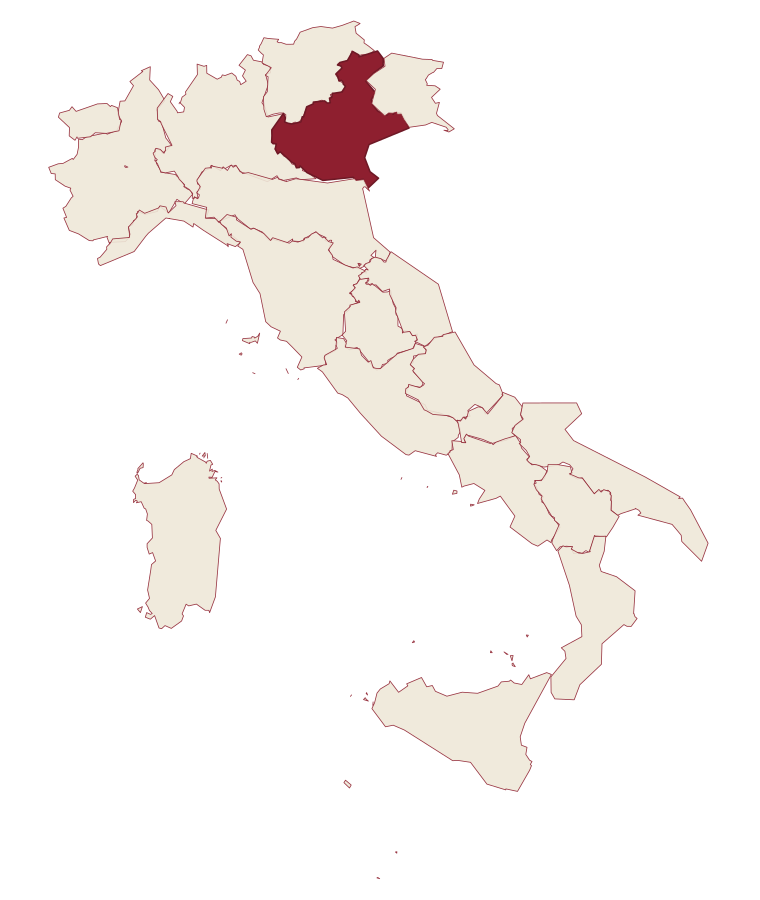
- Padova is a comune in the province of Padova, in Veneto, at 12 meters above sea level.
- What is the nearest airport to Padova?
- Venice (TSF), about 48 minutes by car.
- Can you get to Padova without a car?
- Yes. There is a railway station in the comune, so you can arrive by train.
- How long is the drive from Padua to Padova?
- About 3 minutes by car.
- When is the best time to visit Padova?
- Best in Apr–Jun, Sep–Oct. August is the warmest month, averaging 31 degrees, and May the wettest, with about 15 rain days.
- Is there a sagra or a festival in Padova?
- The town keeps its patron saint's day: Antonio di Padova, 13 June.
- Which other towns are like Padova?
- Vicenza, Treviso and Bassano del Grappa.
- How many people live in Padova?
- 206,496 at the 2023 count.
Tags & datadesignations · numbers · sources
Recognised as
The numbers
- Elevation: 12 m
- Population: 206,496
- Surface area: 93.03 km²
These figures were compiled from public directories: ISTAT, OpenStreetMap and Wikidata, and from the official listings of the guides named on this page. Town details change; verify with official sources before you travel.
Similar
Towns like Padova
Vicenza
Province: Vicenza
both on the Veneto plain · both over 10,000 people
Treviso
Province: Treviso
both over 10,000 people · both near sea level
Bassano del Grappa
Province: Vicenza
both over 10,000 people · both near sea level
Conegliano
Province: Treviso
both over 10,000 people · both near sea level
Trieste
Province: Trieste
both over 10,000 people · both near sea level
Udine
Province: Udine
both over 10,000 people · both near sea level
🏛️ UNESCO
More UNESCO towns in Veneto
Cison di Valmarino
Province: Treviso
A Prosecco hills borgo at 261 meters under the dolomite rock of CastelBrando, the largest inhabited castle complex in Europe.
Conegliano
Province: Treviso
The Prosecco capital at 65 meters, birthplace of the painter Cima and home of Italy's first oenology school, opened in 1876.
Farra di Soligo
Province: Treviso
An 8,477-resident comune in the Conegliano-Valdobbiadene DOCG zone, with the three medieval Torri di Credazzo crowning a hilltop above its vineyards and Cittaslow plus Città del Vino status alongside it.
Follina
Province: Treviso
A Prosecco-hills borgo at 191 meters around the Cistercian Abbey of Santa Maria, with a cloister finished in 1268.
Peschiera del Garda
Province: Verona
The Venetian fortress town on a Mincio island at the southern outlet of Lake Garda.