
Themed picks · Venice · Art
10 art towns near Venice
10 comuni · within 90 minutes of Venezia · drive times OSRM-computed
The Veneto's art is not Venice's art alone. Padua holds the Scrovegni Chapel's Giotto cycle, the work that changed Western painting. Vicenza is a single architect's open-air museum (Palladio designed nineteen buildings inside the centro plus another twenty-four villas in the surrounding hills). Treviso's fourteenth-century frescoes are at San Nicolò and Santa Caterina, both intact. And the smaller comuni hold further work that the bigger names skip: the Castelfranco Madonna by Giorgione, the Asolo cathedral's Bassano, the Cima da Conegliano in Conegliano.
Venice is the right base for this trip because the regional rail line runs the spine of the Veneto and puts every major art town inside an hour. Padua is 25 minutes from Santa Lucia. Vicenza is 45. Treviso is 30. The smaller towns (Castelfranco, Asolo, Marostica, Conegliano) need a car or a bus from those rail hubs, but the road network is dense and traffic is light once you are off the A4.
We picked ten towns with a deliberate weight toward the comuni outside the famous trio, on the principle that one day each in Padua, Vicenza and Treviso plus four days fanning out into the hill towns is a richer week than three days in Venice. Drive times below are OSRM-computed from Venice by car; for the rail-served towns we flag the train option on the individual page.
 1
1Treviso · Veneto · 57 min from Venezia
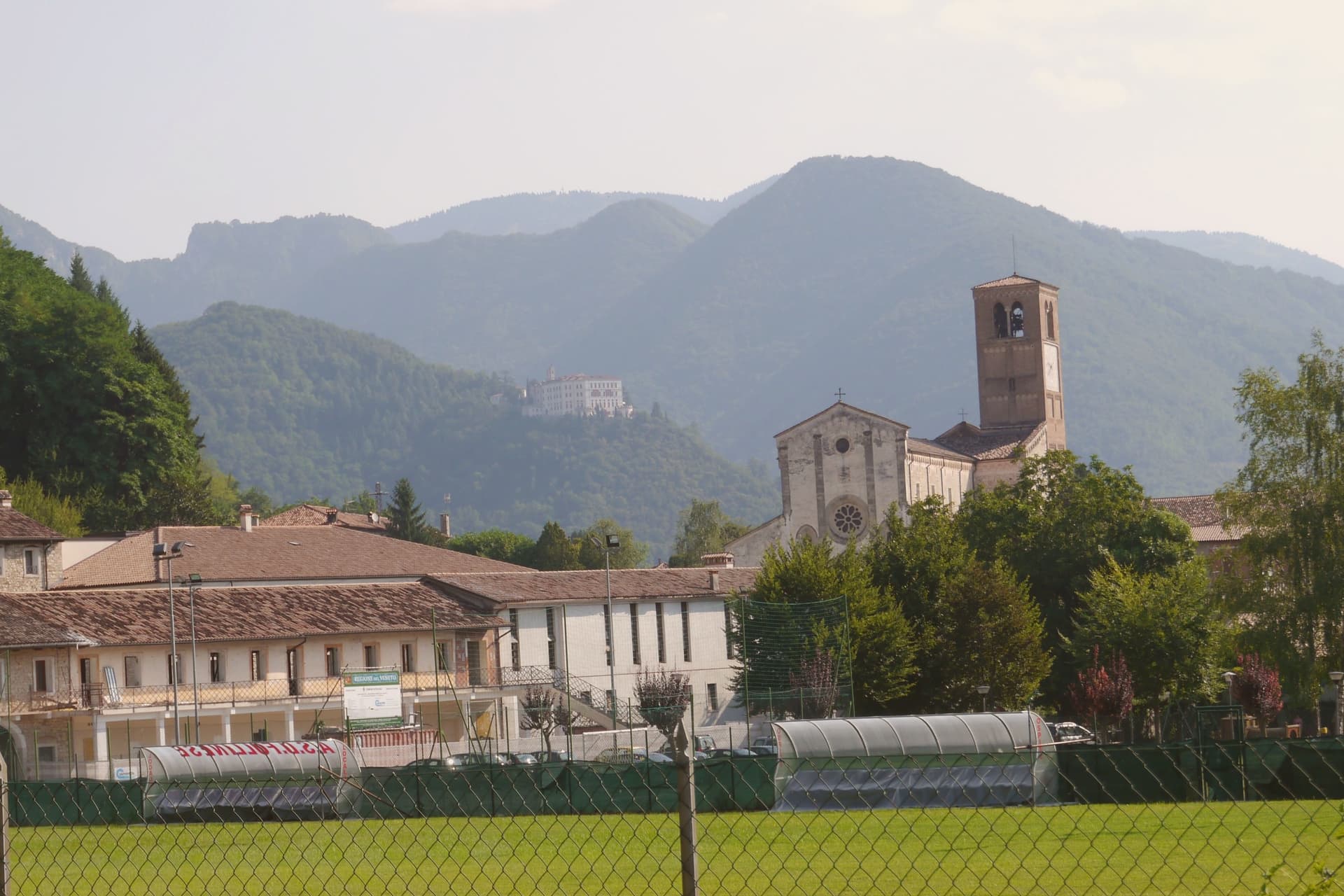
Follina
A Prosecco-hills borgo at 191 meters around the Cistercian Abbey of Santa Maria, with a cloister finished in 1268.
Santa Maria built from 1170, cloister finished 1268, minor basilica and national monument since 1921.
UNESCO-listed.
 2
2Treviso · Veneto · 50 min from Venezia
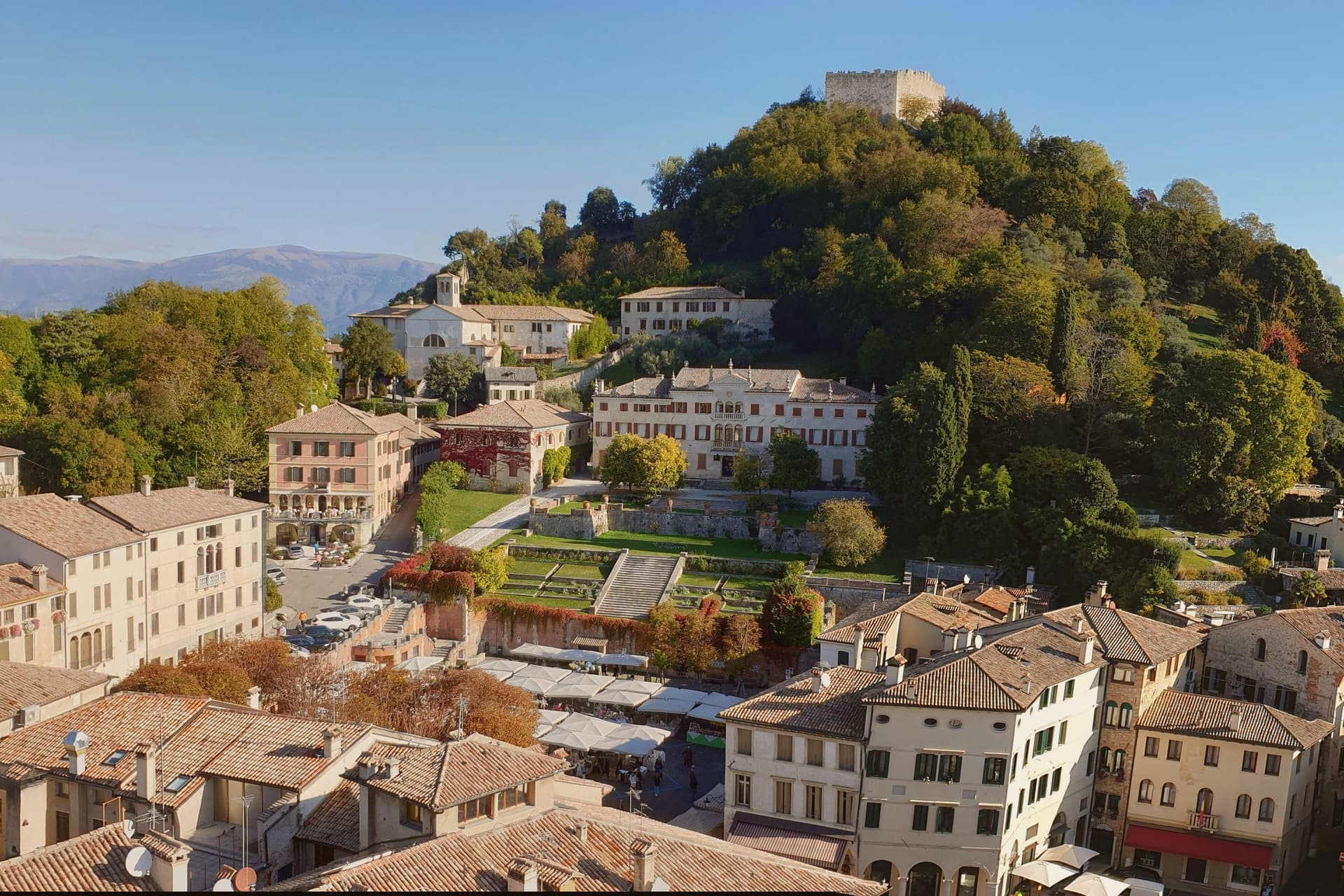
Asolo
A walled hill town at 205 meters that Caterina Cornaro ran as her court after trading Cyprus to Venice in 1489.
Queen of Cyprus traded her island to Venice for Asolo in 1489 and held court here until 1509, drawing Bellini and Bembo.
Listed in I Borghi più belli d'Italia.
 3
3Treviso · Veneto · 69 min from Venezia
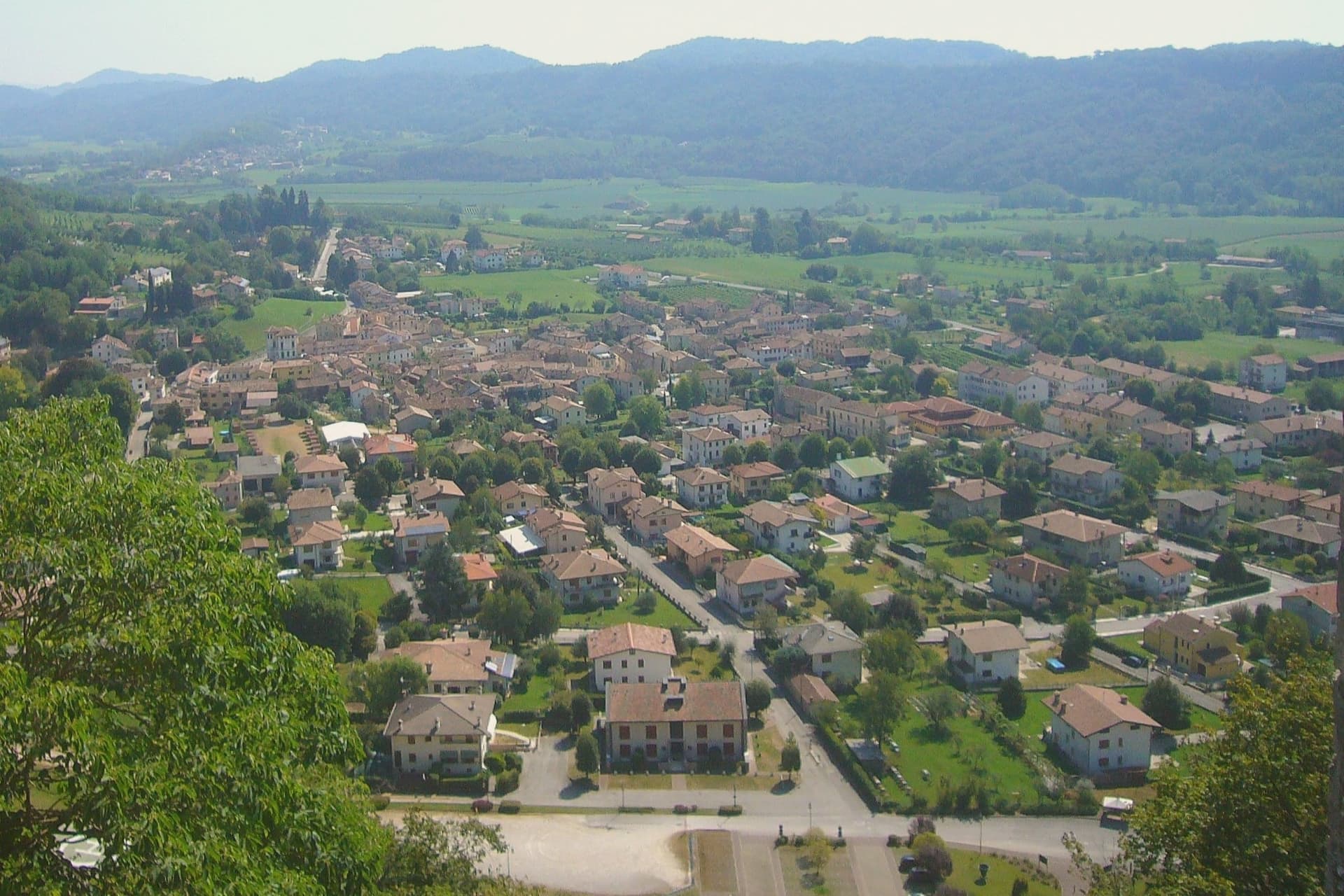
Cison di Valmarino
A Prosecco hills borgo at 261 meters under the dolomite rock of CastelBrando, the largest inhabited castle complex in Europe.
Among the largest inhabited castles in Europe, dolomite-rock fortress with Roman origins and continuous occupation, now hotel and conference complex.
 4
4Treviso · Veneto · 52 min from Venezia
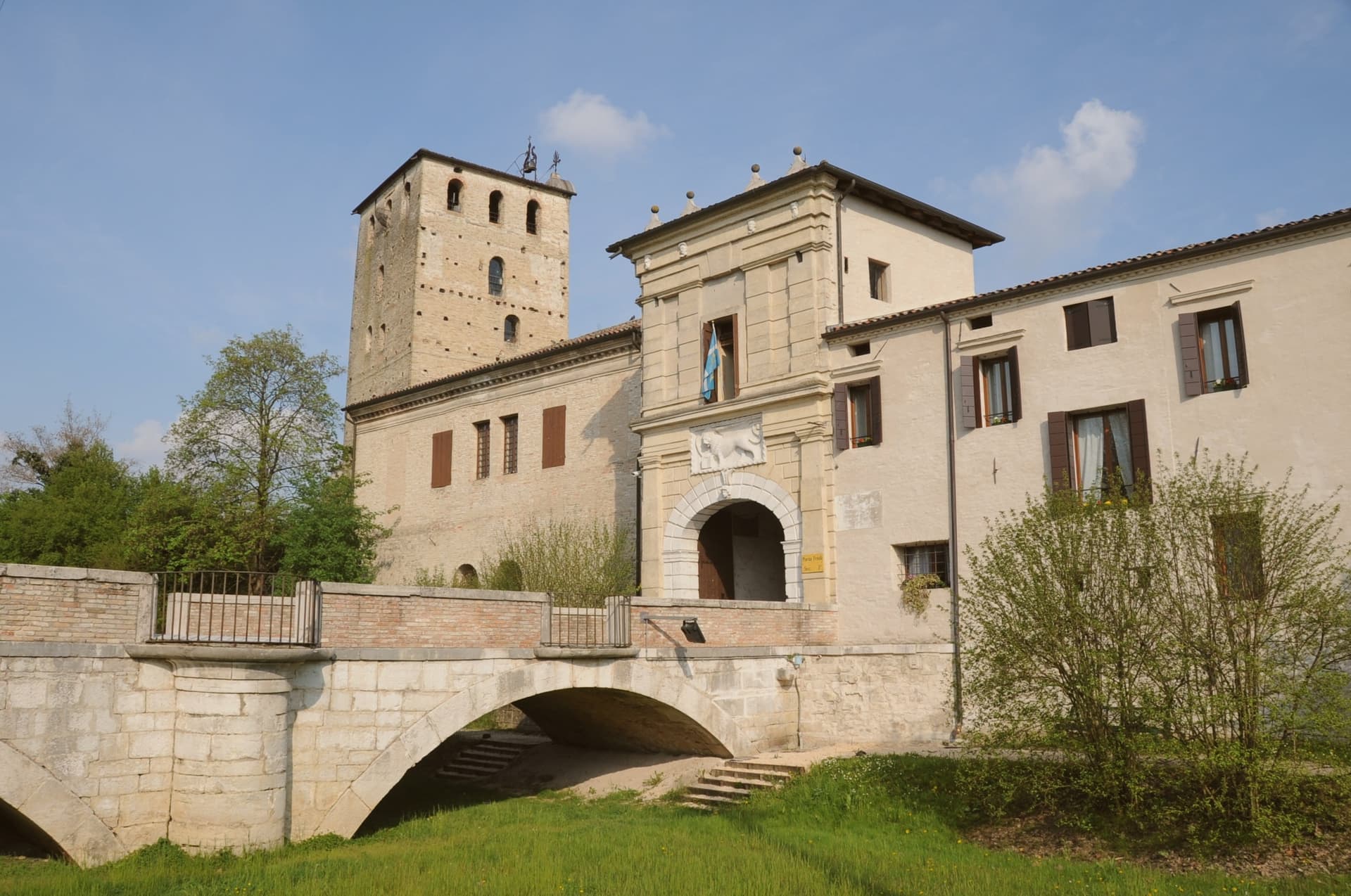
Portobuffolè
The smallest commune in the Treviso province, a Livenza river port centered on the fourteenth-century home of the poet Gaia da Camino.
Late-thirteenth-century poet cited by Dante in Purgatorio XVI; her family home survives as the centerpiece of the centro storico.
 5
5Treviso · Veneto · 41 min from Venezia
Susegana
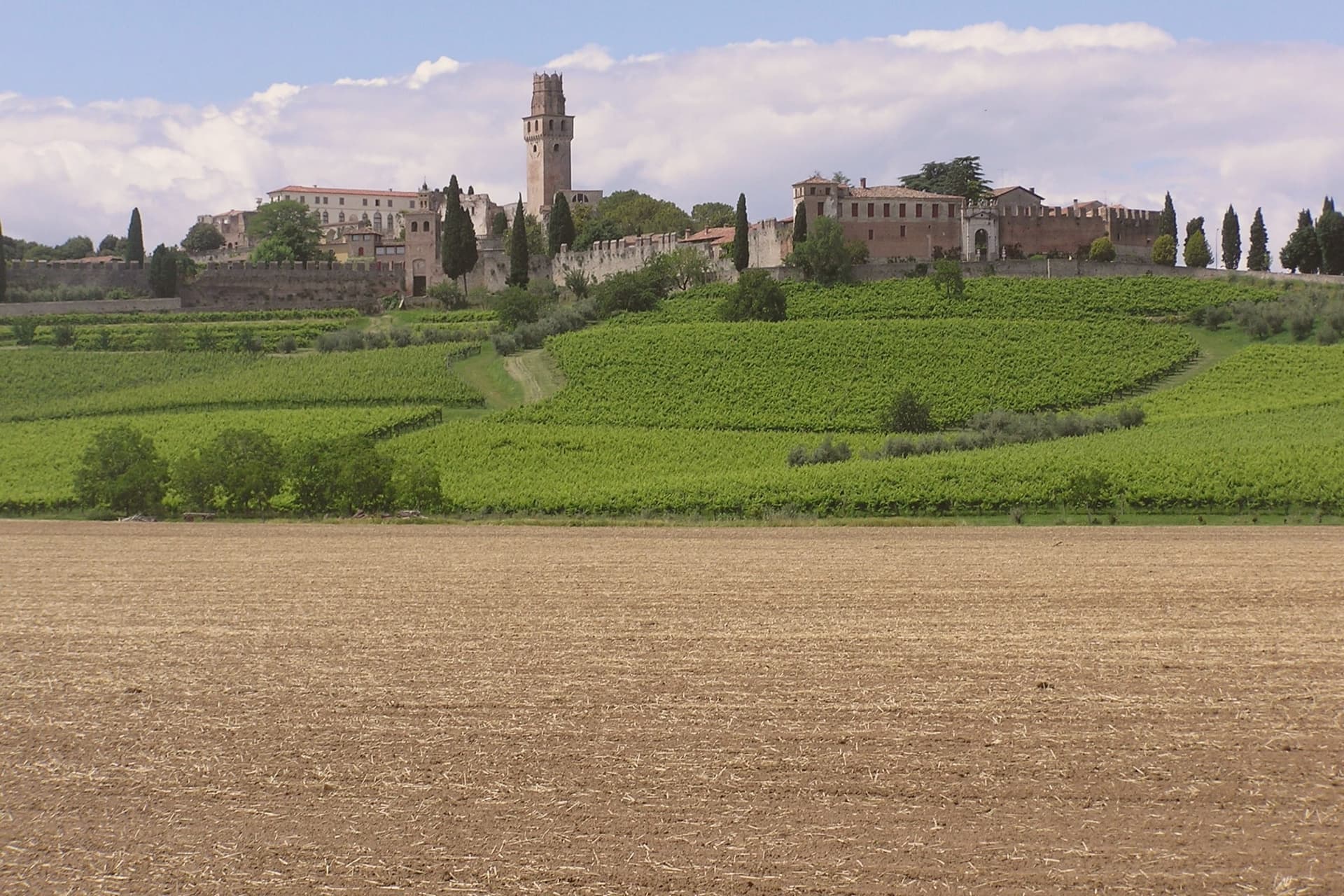
The Collalto castle town at 76 meters on the left bank of the Piave, holding one of the largest medieval fortresses in northern Italy.
One of the largest castles in northern Italy, 32,000 square meters of double walls begun in 1323 and still in Collalto hands.
The slow-trip planner
Building a trip? Find where Venice fits in a slow Italy circuit.
Answer five questions. We will shape a geographically coherent slow trip from the 1,000 Italian towns most travelers skip. Yours to save and share.
 6
6Treviso · Veneto · 45 min from Venezia
Conegliano
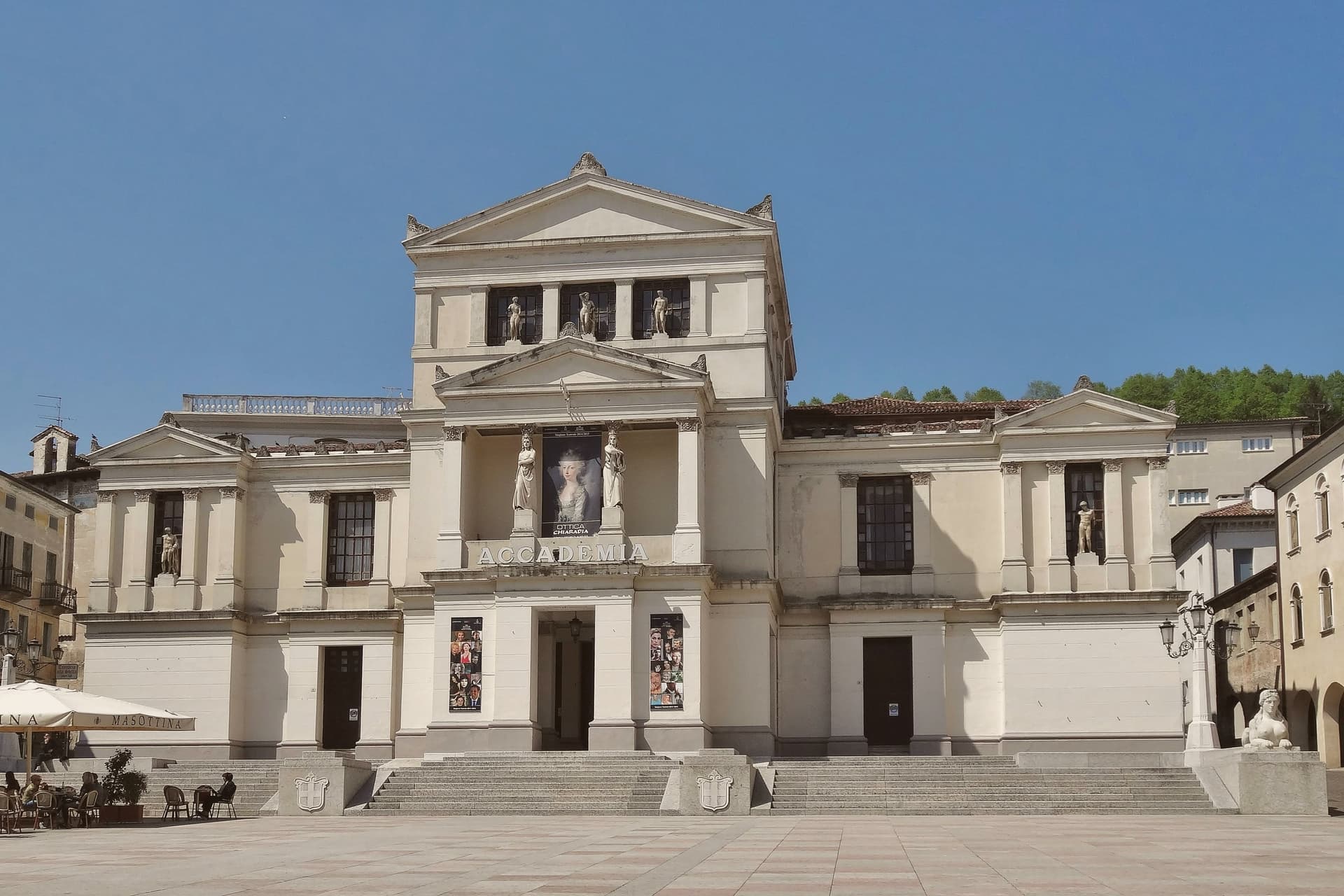
The Prosecco capital at 65 meters, birthplace of the painter Cima and home of Italy's first oenology school, opened in 1876.
The historic core of Prosecco; the hills between Conegliano and Valdobbiadene are a UNESCO World Heritage landscape.
 7
7Padova · Veneto · 64 min from Venezia
Arquà Petrarca
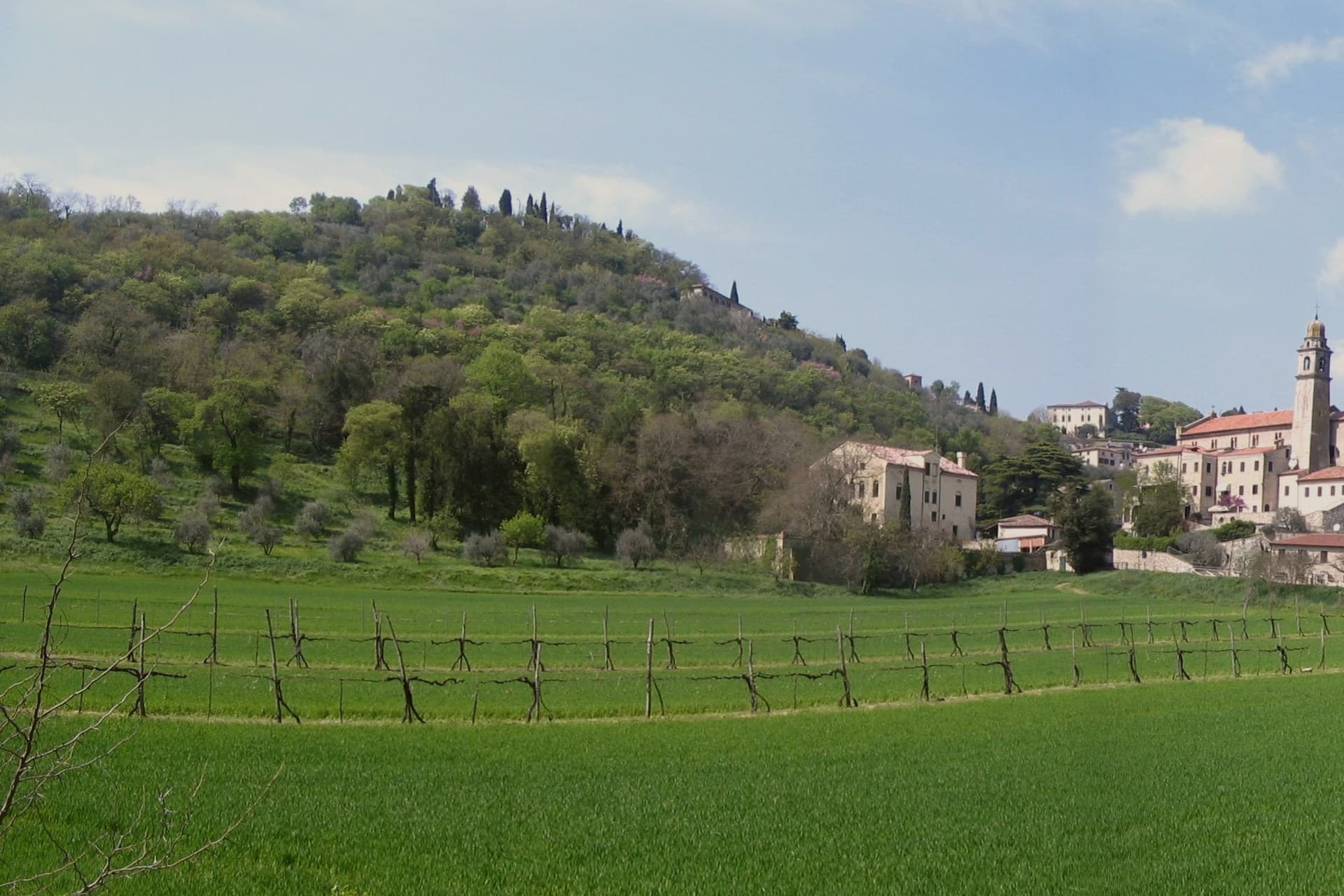
The Euganean Hills village where Francesco Petrarca spent his last four years and died in 1374, renamed in his honor in 1868.
Francesco Petrarca lived his last four years here, died at his desk in 1374, and is buried in the churchyard below his house.
 8
8Padova · Veneto · 48 min from Venezia
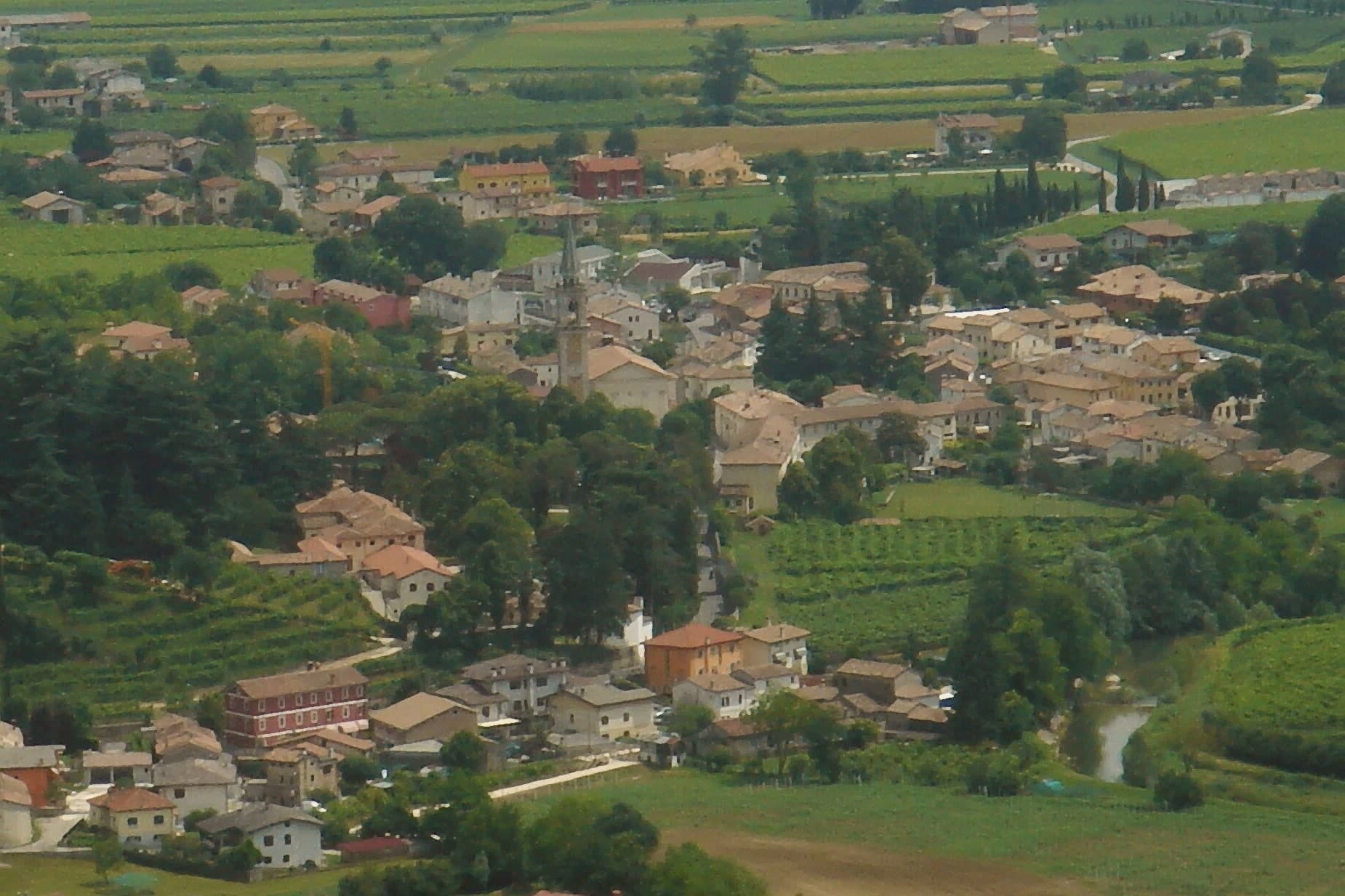
Padova
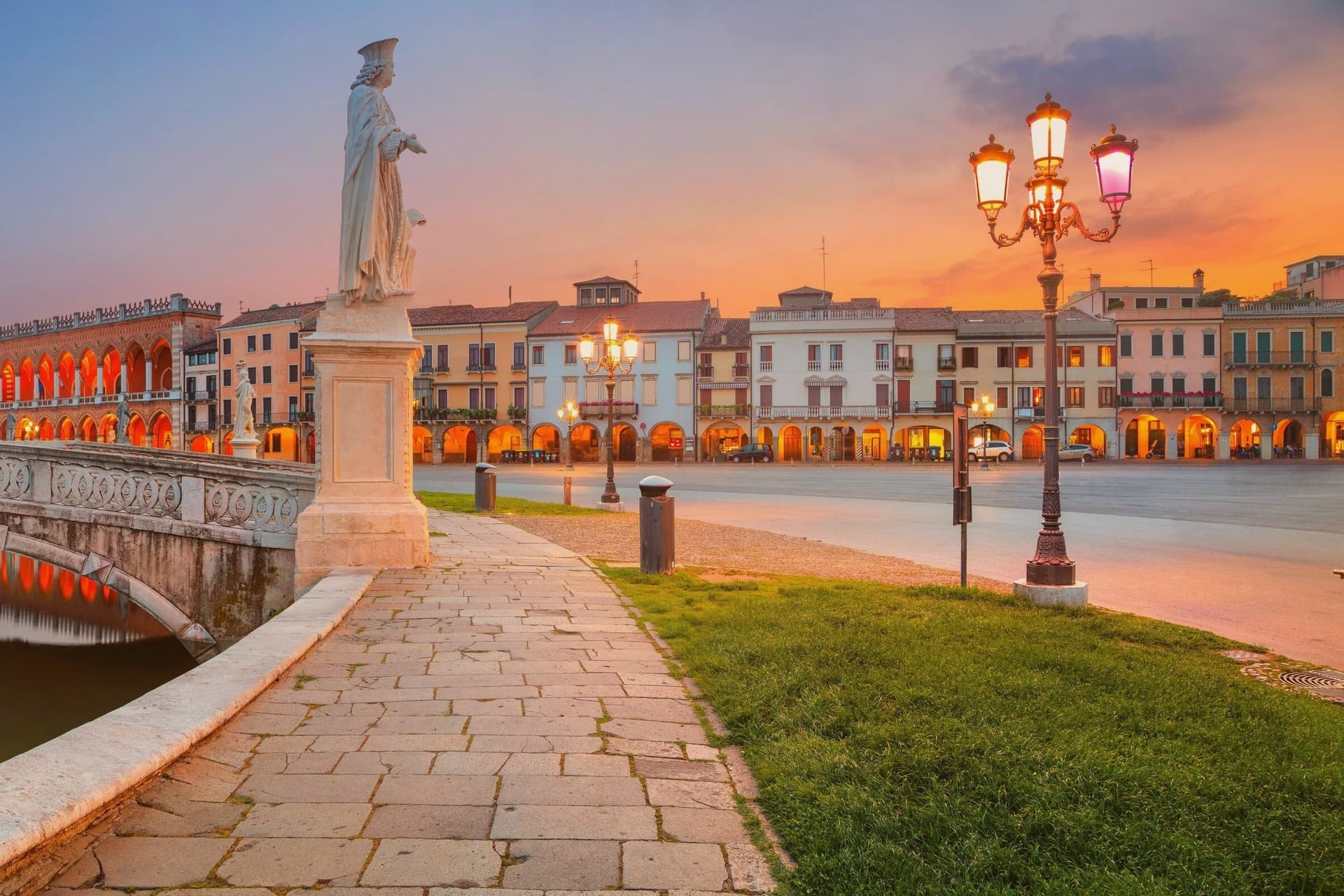
The university town that gave Giotto a chapel and the world a science of plants, with two UNESCO inscriptions inside one set of walls.
The fresco cycle that started the Renaissance. UNESCO 2021. Timed-entry, books out weeks ahead.
 9
9Treviso · Veneto · 48 min from Venezia
Pieve di Soligo
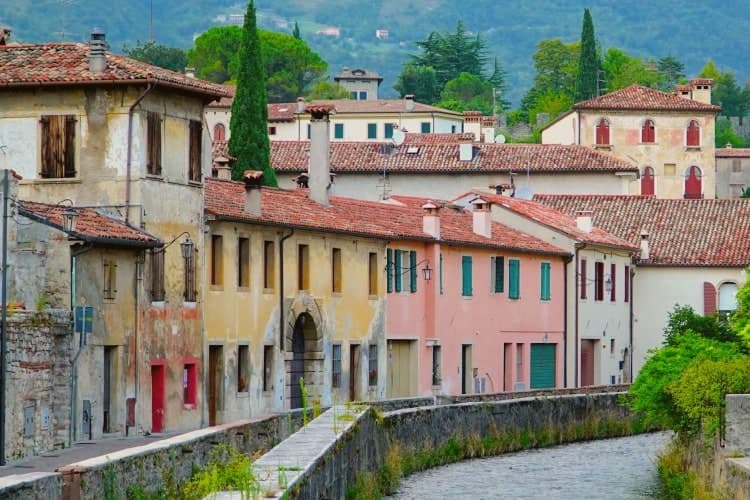
The market town between the Soligo and Lierza rivers in the Prosecco UNESCO zone, birthplace of the twentieth-century poet Andrea Zanzotto.
The poet born here in 1921 and died in 2011, one of the major Italian voices of the twentieth century; the town runs the annual Premio Pieve Zanzotto.
 10
10Treviso · Veneto · 51 min from Venezia
Vittorio Veneto
Two old towns fused at 138 meters under the Cansiglio, where the October 1918 battle ended the First World War on the Italian front.
October 1918 offensive that broke the Austro-Hungarian line; the Armistice of Villa Giusti took effect 4 November and the town was renamed in 1923.
We write about towns like these every Sunday, one town a week, with the photo, the food, the festa. Free, from Pietrasanta.
Why Venezia is the base
Venice is the only Italian city that doubles as an art capital and a transit centre. The Biennale grounds, the Accademia, the Frari, the Salute, plus the contemporary collections at Punta della Dogana and Palazzo Grassi. Once you have walked through those, the regional rail spine (Mestre to Verona, Mestre to Trieste) puts another century of work inside the daily radius. The base in Venice itself is dense enough that you do not need to leave the city to fill a day if the weather closes in.
When to go
April through June and September through October. The Biennale (alternating years, opens late April or early May) draws crowds into Venice itself but pulls them away from the surrounding cities; Padua and Vicenza are calmer during a Biennale than during August. Winter is the quiet season; the smaller frescoed churches keep shorter hours but the museum halls are nearly empty. Avoid August.
Questions people ask
- Can I see the Scrovegni Chapel as a day trip from Venice?
- Yes. Book the timed entry slot in advance (it sells out weeks ahead in season). The chapel is 15 minutes' walk from Padua's station, which is 25 minutes from Venice Santa Lucia. Plan two to three hours in Padua minimum.
- Where are the Palladio villas?
- Inside Vicenza for the urban buildings (Palazzo Chiericati, Loggia del Capitaniato, Teatro Olimpico). Outside, the villas spread across the surrounding hills: Villa Almerico Capra ('La Rotonda') is on Vicenza's edge; Villa Barbaro is at Maser; Villa Emo is at Fanzolo. Most are open by appointment.
- Is Verona inside this radius?
- Yes, just. Verona Porta Nuova is about 90 minutes from Venice by Frecciabianca and 110 minutes by regional. Worth a full day for the Roman arena, the Castelvecchio museum, and the Romeo-and-Juliet circuit (skippable).
- Which smaller Veneto town has the strongest art on its own?
- Castelfranco Veneto, for Giorgione's Madonna in the cathedral. The painting alone justifies the day trip; the walled town around it is small but coherent.
How we picked these · We filtered every town within 90 minutes of Venice (33 candidates), kept those with UNESCO listing, Borgo più bello status, or Bandiera Arancione, and ranked by signal density plus the presence of a named art-historical landmark in the known_for_items field. The three big art cities (Padua, Vicenza, Verona) anchor the list; the smaller Treviso-area and Conegliano comuni round it out.
From elsewhere in Italy
Five more towns to discover
Visso
Province: Macerata
The northern Sibillini gate at 607 meters where the Nera meets the Ussita, holding one of two surviving manuscripts of Leopardi's L'Infinito.
Goriano Sicoli
Province: L'Aquila
At 720 meters in the Subequana valley, a medieval village drawn by M.C. Escher in 1929 keeps a May ritual folklorists trace to Demeter.
Ugento
Province: Lecce
A Messapian-Roman town five kilometers from the Ionian, where a Baroque castle sits on the walls of the ancient city of Ozan.
Fontanellato
Province: Parma
A Parma-plain town built around the Rocca Sanvitale, the moated fortress at its center.
Pescina
Province: L'Aquila
A Marsica town at 735 meters, on the rim of the drained Fucino basin, that lost five thousand of six thousand people in a single morning in 1915.