
Trentino-South Tyrol · Trento
Luserna
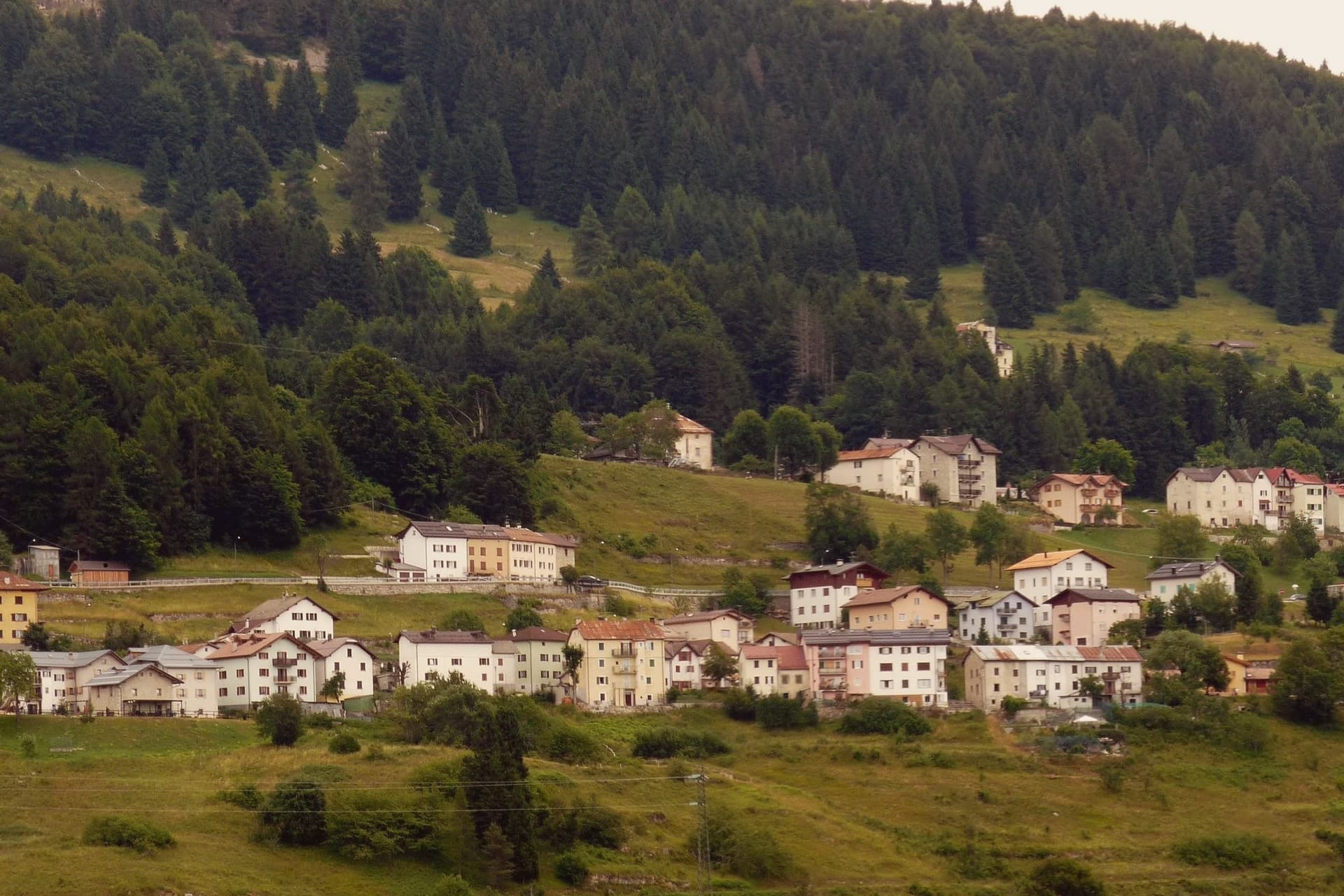
A Cimbrian island at 1,333 metres on the Alpe Cimbra plateau, the last village in Italy where the medieval Bavarian dialect is still spoken at home.
- Best time
- Jun–Sep, Dec–Mar
- By car
- 51 min from Trento
- Population
- 267
Known for
CIMBRIAN LANGUAGE
Last enclave in Italy where the medieval Bavarian dialect of Cimbrian is spoken at home by roughly 90 per cent of residents.
DOCUMENTATION CENTRE
Lusérn museum complex covering the Cimbrian community, the Great War fortifications, prehistoric metallurgy and bobbin lace, with around 12,000 visitors a year.
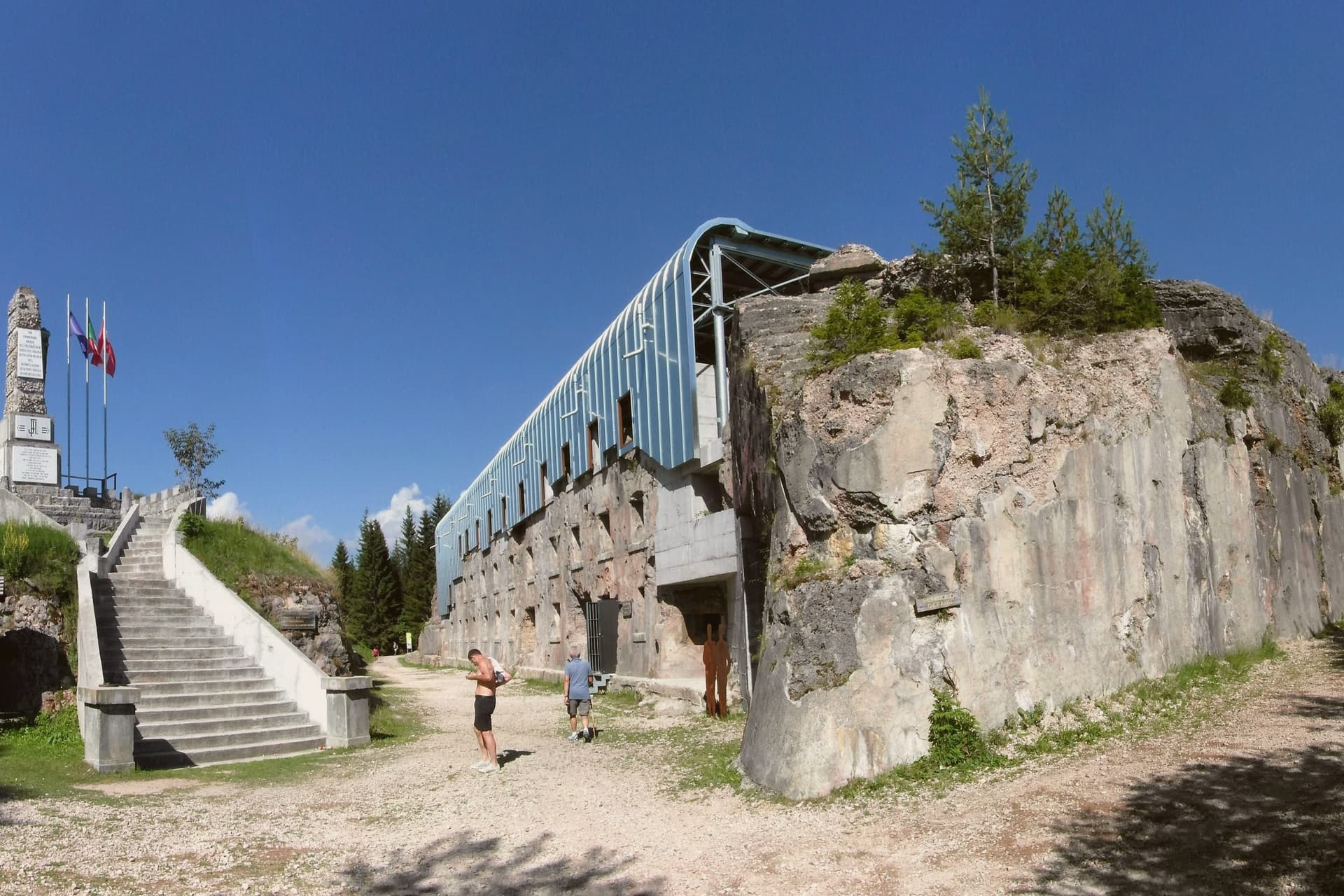
WERK LUSÉRN
Austro-Hungarian frontier fort heavily shelled in 1915, part of the Alpe Cimbra Great War fortification circuit with Forte Belvedere and Forte delle Benne.
When to visit
Best · Jun–Sep, Dec–Mar
- J2°
- F5°
- M6°
- A10°
- M14°
- J19°
- J21°
- A21°
- S16°
- O13°
- N7°
- D3°
- Best
- Hot or crowded
- Quiet
- Mostly closed
Daytime averages, 2020–2024. Weather data by Open-Meteo.com.
Why come
Luserna sits on the northwestern edge of the Folgaria plateau, four kilometres south of Lavarone and forty kilometres southeast of Trento. The village was founded around 1400 by Bavarian-Cimbrian colonists who moved up from nearby Lavarone, and the dialect they carried is classed by linguists as the oldest peripheral language of the German domain and the southernmost surviving in the Alps. It was protected after the Second World War by the Gruber-De Gasperi Agreement and officially recognised in 2001 under Trentino's minority law, a legal history that runs a full half-century behind the community's own persistence in speaking the language at home.
The village itself holds 267 residents, small enough that the museum complex, the restored peasant house, the old fort and the stone-and-wood core all sit within reach of each other rather than spread across a larger settlement. What holds the place together is less any single building than the fact that the colonists' original tongue outlasted the empire whose frontier fort now stands as a museum piece nearby: the language, not the fortification, is what makes the plateau edge worth the four kilometres from Lavarone.
The Sunday letter
Luserna is on our list. Its letter is still to come.
We are writing about all 1,000 of these towns, one at a time, in a free letter every Sunday: the photo, the food, the festa. That is our mission. Sign up and you will be there when Luserna comes up. By Peter & Sophia, from Pietrasanta.
Read on
Luserna in our articles
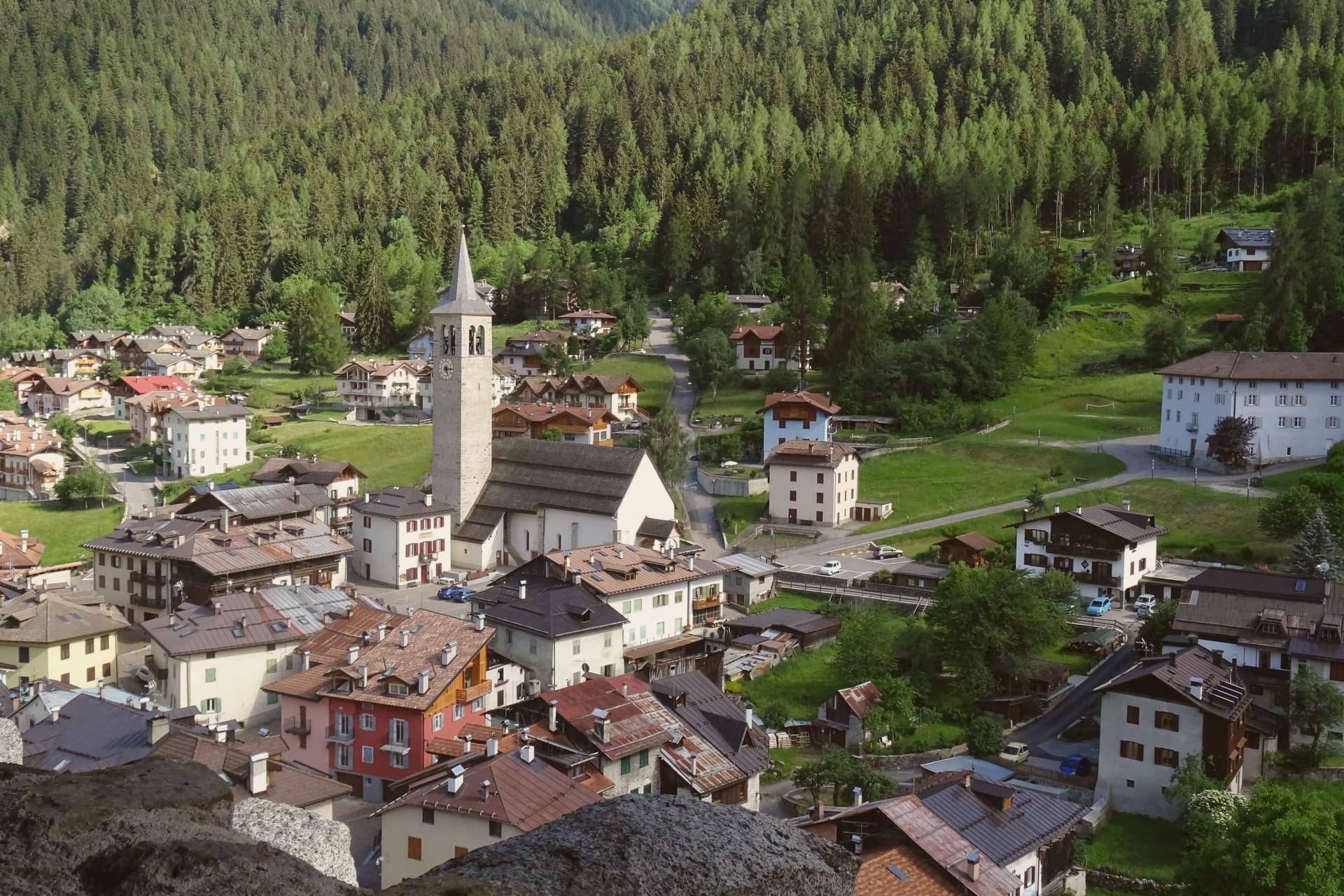
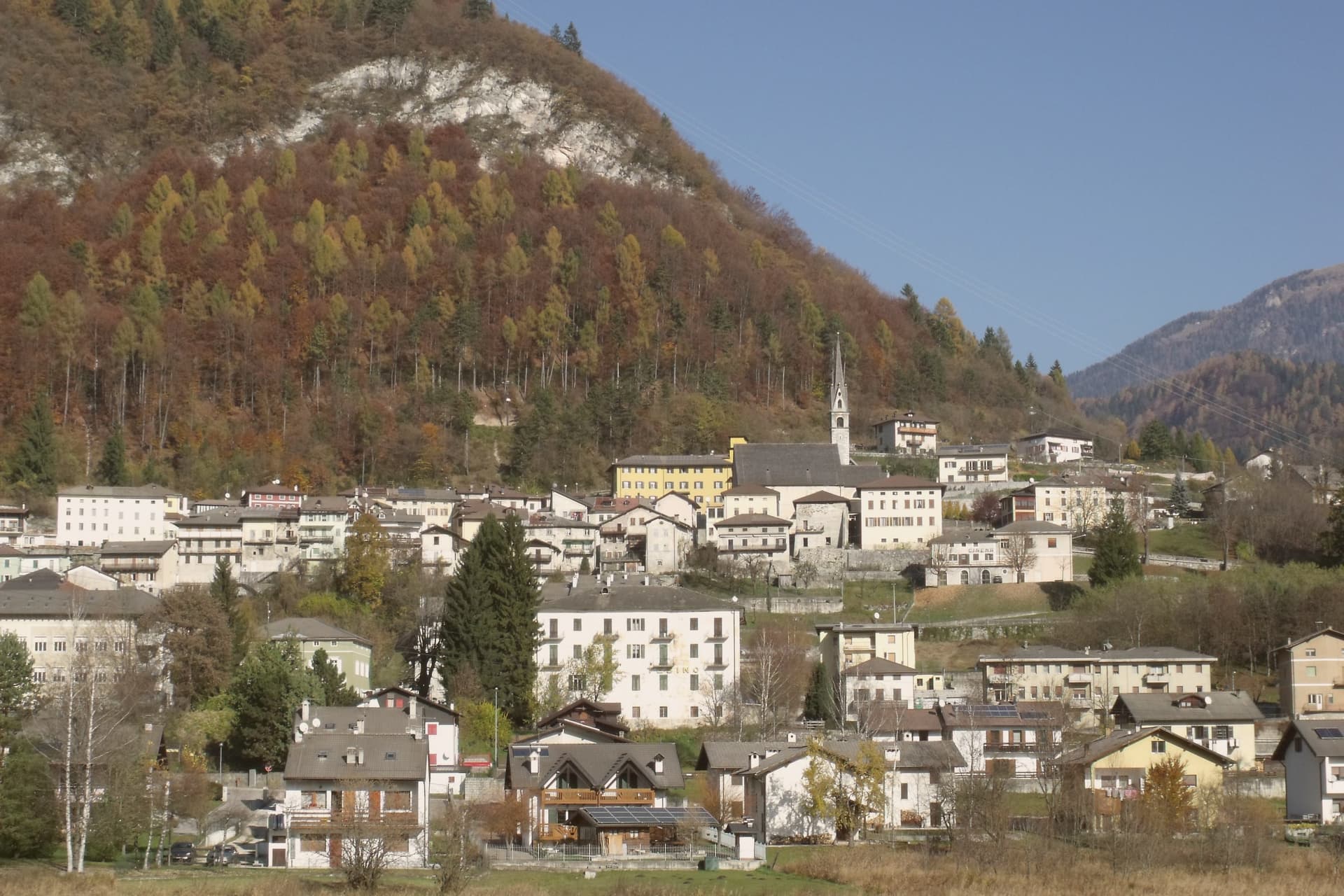 The best small high-altitude villages within 90 minutes of Trento6 towns, Luserna among them.
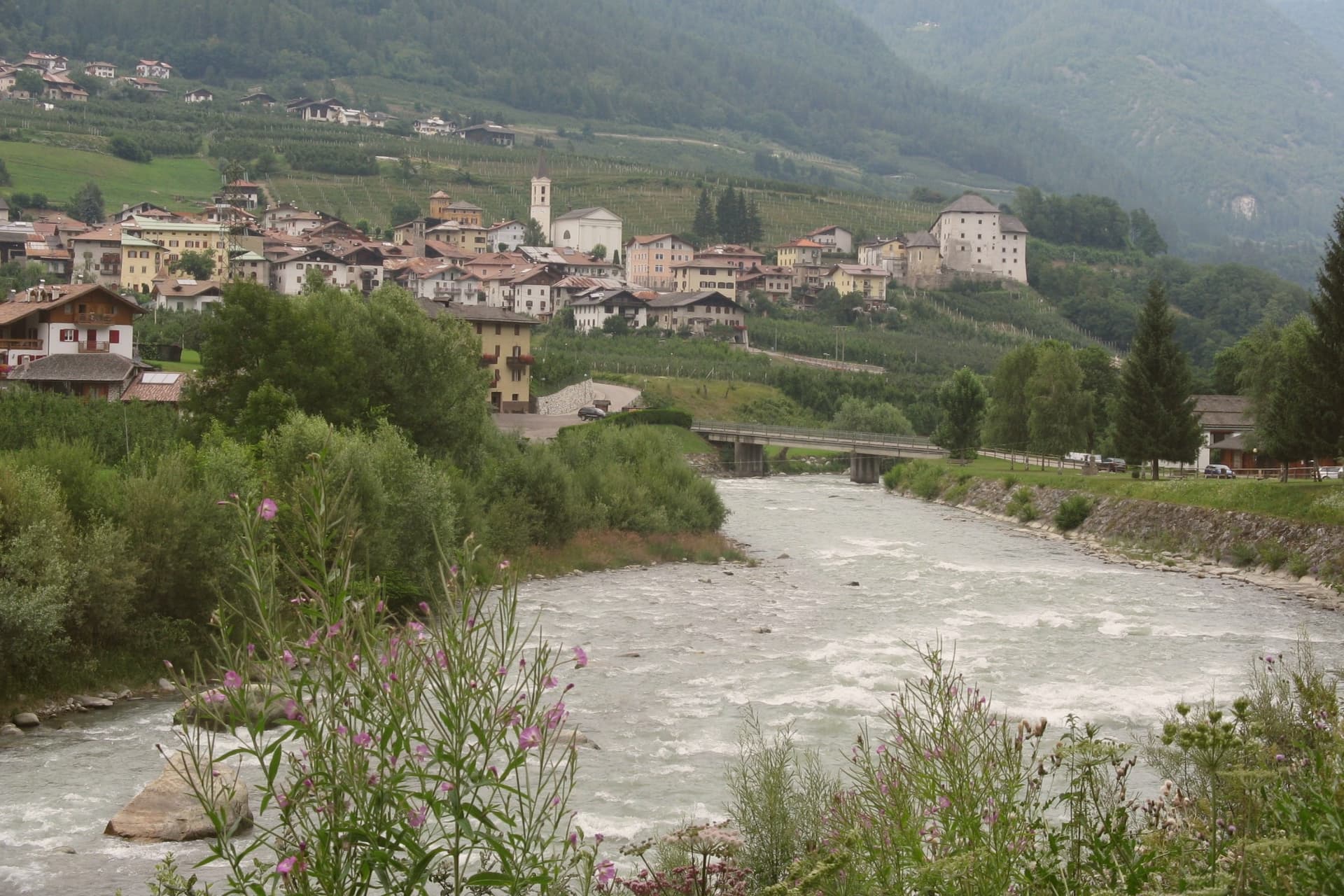
 The best small towns that eat well in the province of Trento7 towns, Luserna among them.
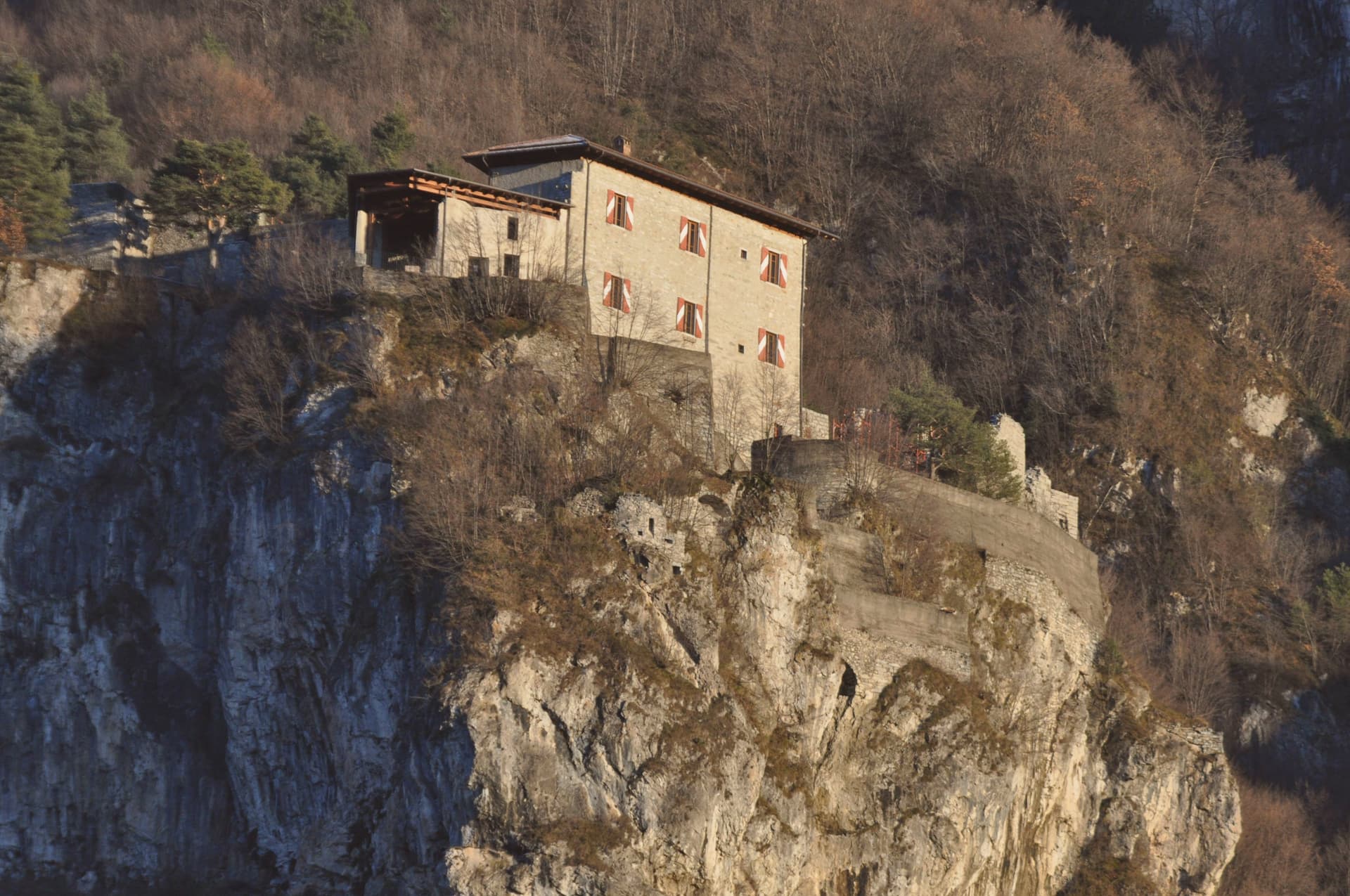
 The prettiest small villages within 90 minutes of Trento8 towns, Luserna among them.
 The prettiest villages in the province of Trento8 towns, Luserna among them.
How to get there
From Verona (VRN), about 2 hours by car.
Venice (TSF) is about 2h 14m away.
By car from the centre of Trento 51 minutes, Bolzano 1h 26m or Padua 1h 43m.
Coming by train into Trento? Luserna is about 55 minutes away by road.
What to see
Centro Documentazione Lusérn
Documentation Centre with permanent exhibitions on the Cimbrian community, the Great War on the plateaus, prehistoric metallurgy, and Cimbrian bobbin lace.
Casa Museo Haus von Prükk
House museum in a restored nineteenth-century Cimbrian peasant dwelling, presented by guides who explain the dialect and the traditions of plateau life.
Werk Lusérn
Austro-Hungarian Great War fortress on the imperial frontier with Italy, heavily shelled in 1915 and now part of the plateau's fortification museum circuit.
Cimbrian village core
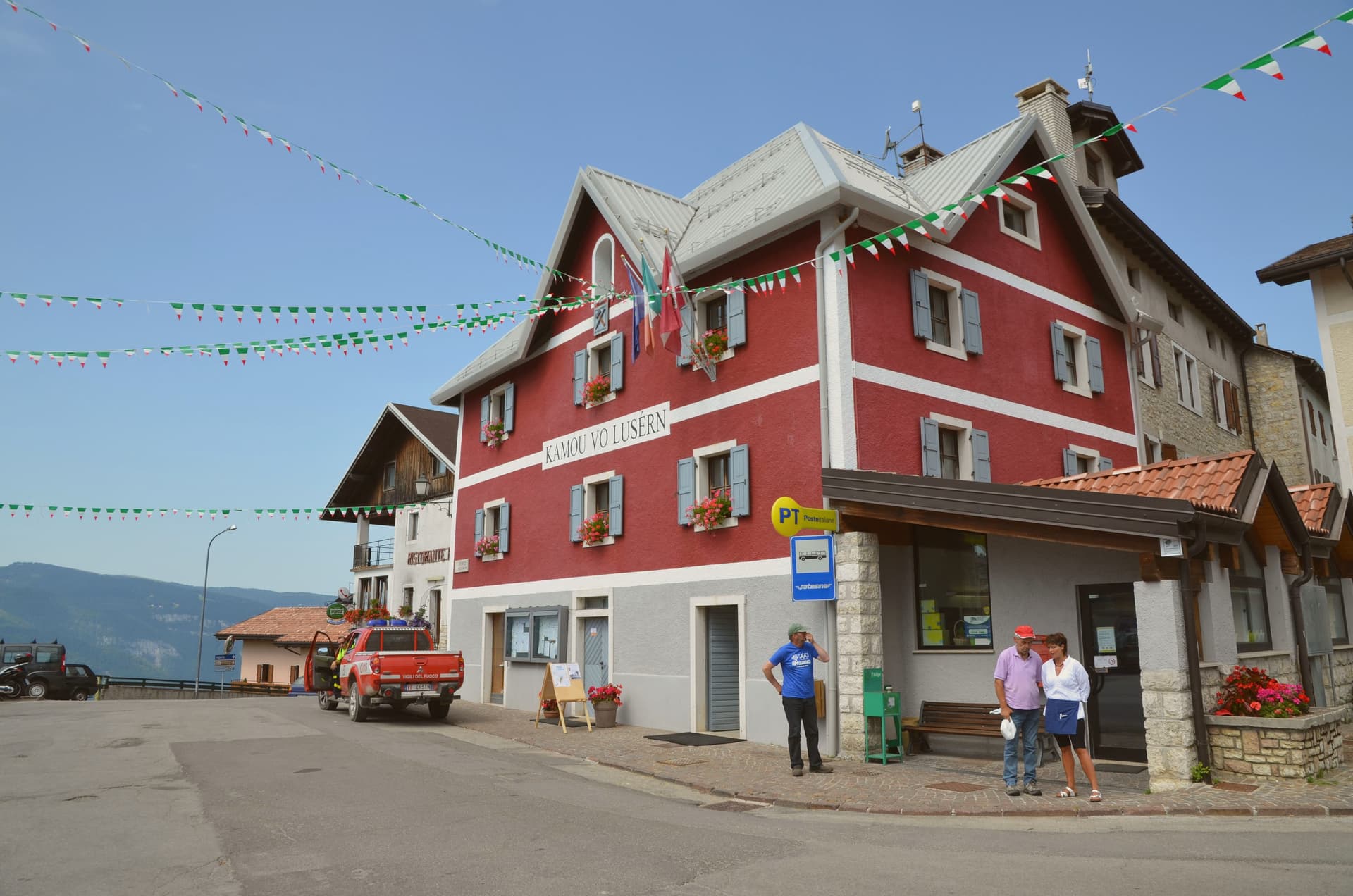
Cluster of stone and wood houses on the plateau edge, the centre of the Cimbrian-speaking community and one of the Borghi più Belli d'Italia.
Pinacoteca Rheo Martin Pedrazza
Picture gallery dedicated to the Luserna-born painter Rheo Martin Pedrazza, with work from the Cimbrian artistic tradition of the twentieth century.
The slow-trip planner
Building a trip? Find where Luserna fits in a slow Italy circuit.
Answer five questions. We will shape a geographically coherent slow trip from the 1,000 Italian towns most travelers skip. Yours to save and share.
We recommend
Where to eat
Not our picks, but places the guides put their name to: a Michelin star, a Gambero Rosso fork, a Slow Food snail, a Michelin Key for the hotels. Worth a table, a counter, or a night when you pass through.
LusernarhofRistorante
A Slow Food snail, at Lusernarhof.
Living here
- Population 267
- Remotei
- Pharmacy: none mapped
- High school within a 30-minute drive
- Nearest airport Verona, 1 h 56 min drive
- Regional capital Trento, 51 min drive
Common questions
- What is Luserna known for?
- Luserna is a Cimbrian island at 1,333 metres on the Alpe Cimbra plateau, the last village in Italy where the medieval Bavarian dialect is still spoken at home.
- Where is Luserna?
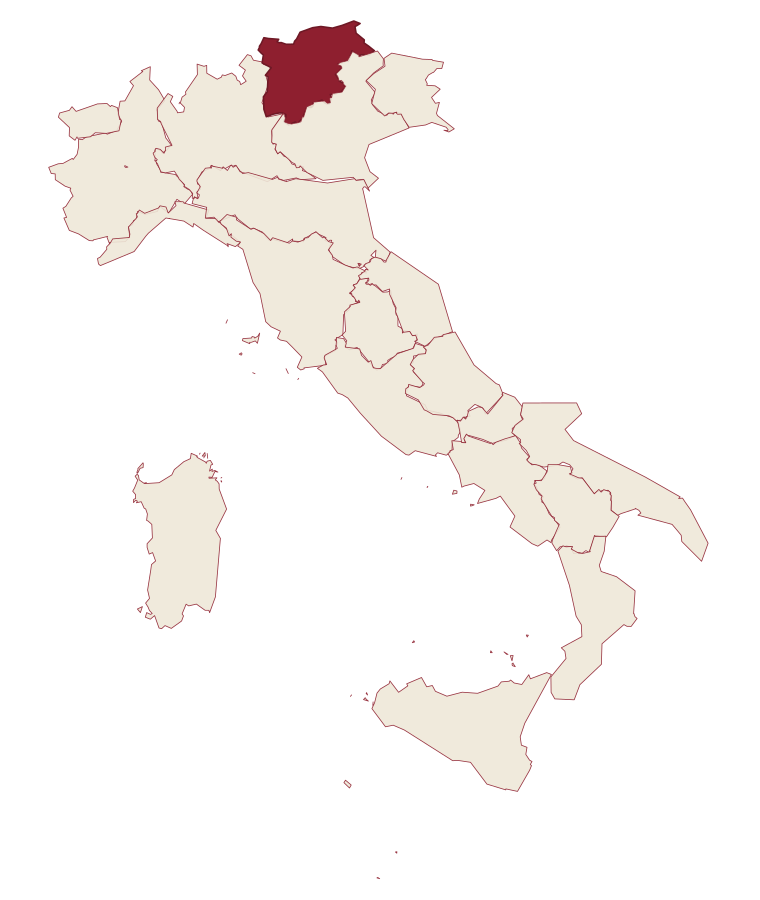
- Luserna is a comune in the province of Trento, in Trentino-Alto Adige/Südtirol, at 1333 meters above sea level.
- What is the nearest airport to Luserna?
- Verona (VRN), about 2 hours by car.
- How long is the drive from Trento to Luserna?
- About 51 minutes by car.
- When is the best time to visit Luserna?
- Best in Jun–Sep, Dec–Mar. July is the warmest month, averaging 21 degrees, and May the wettest, with about 25 rain days.
- Which other towns are like Luserna?
- Castel del Monte, Usseaux and Macugnaga.
- How many people live in Luserna?
- 267 at the 2023 count.
Tags & datadesignations · numbers · sources
Recognised as
The numbers
- Elevation: 1333 m
- Population: 267
- Surface area: 8.2 km²
These figures were compiled from public directories: ISTAT, OpenStreetMap and Wikidata, and from the official listings of the guides named on this page. Town details change; verify with official sources before you travel.
Similar
Towns like Luserna
Castel del Monte
Province: L'Aquila
both high in the mountains · both under 1,000 people
Usseaux
Province: Torino
both high in the mountains · both under 1,000 people
Macugnaga
Province: Verbano-Cusio-Ossola
both high in the mountains · both under 1,000 people
Fenestrelle
Province: Torino
both high in the mountains · both under 1,000 people
Gressoney-Saint-Jean
Province: Aosta Valley
both high in the mountains · both under 1,000 people
La Thuile
Province: Aosta Valley
both high in the mountains · both under 1,000 people
🎨 Borghi più belli d'Italia
More Borghi più belli d'Italia towns in Trentino-Alto Adige/Südtirol
Bleggio Superiore
Province: Trento
A scattered Giudicarie commune whose hilltop hamlet of Rango holds the Christmas markets, with a Slow Food walnut grown on the terraces below.
Bondone
Province: Trento
A two-village commune above Lake Idro at the Lombard border, with a Lodron castle on the cliff between them.
Borgo Valsugana
Province: Trento
The valley town built on both banks of the Brenta in lower Valsugana, with a hilltop castle above and a contemporary art project in the side valley.
Caldes
Province: Trento
A scattered commune on the Noce, six hamlets gathered around a thirteenth-century tower-house castle that once belonged to the Thun family.
Kastelruth
Province: Bolzano
South Tyrolean village on a shelf below the Sciliar, eighty-two-metre bell tower over the square, home of the Kastelruther Spatzen.