
Piedmont · Cuneo
Ostana
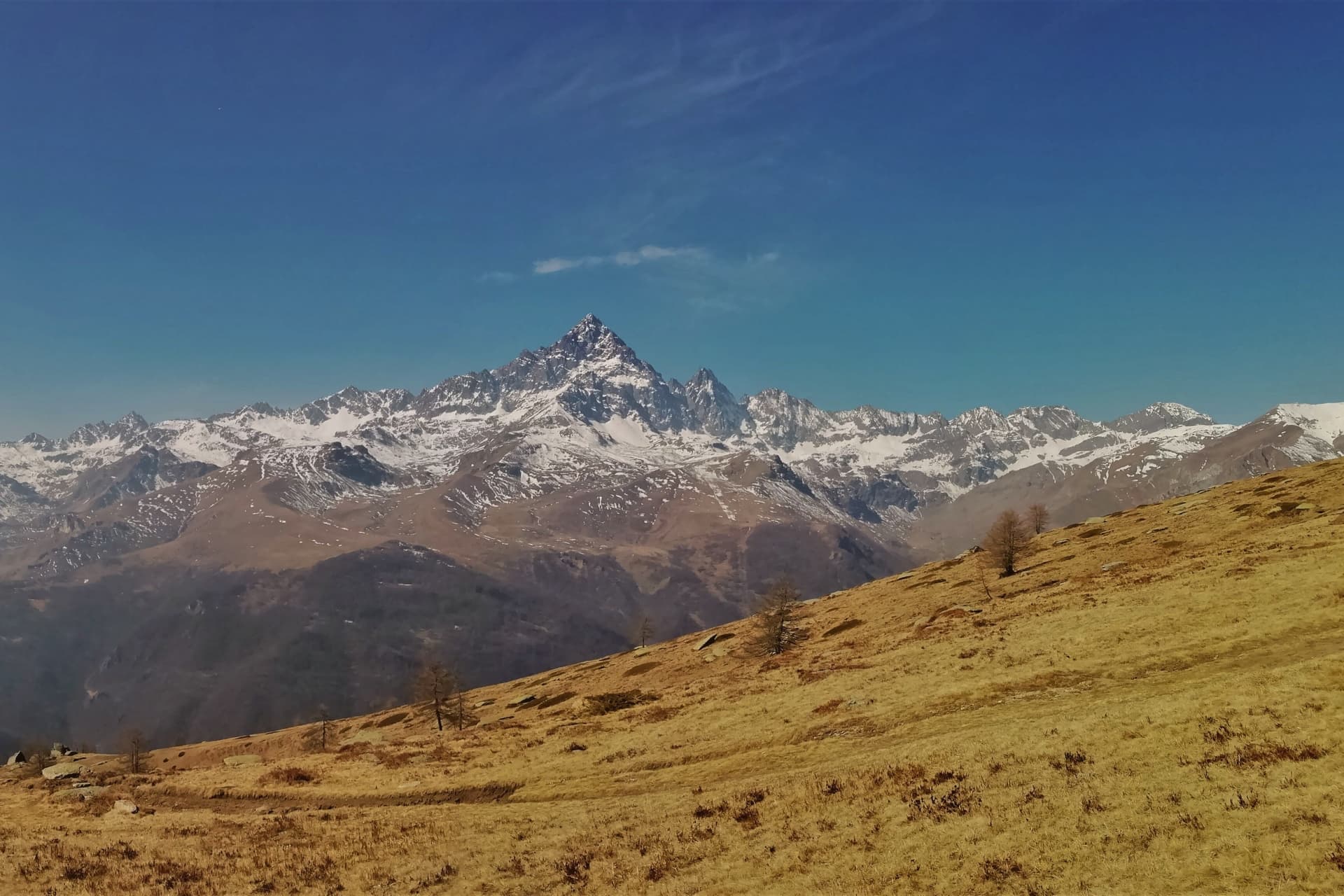
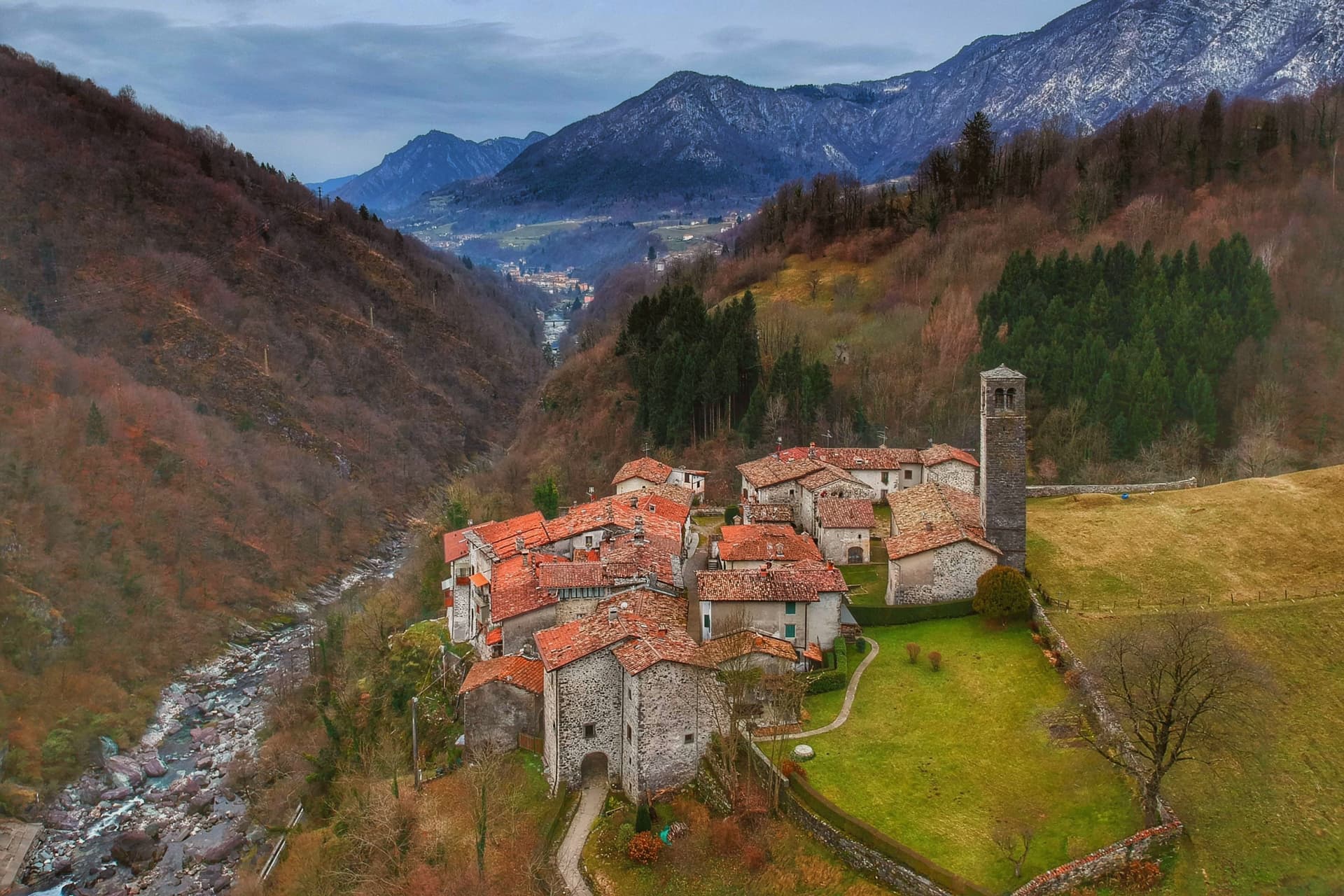
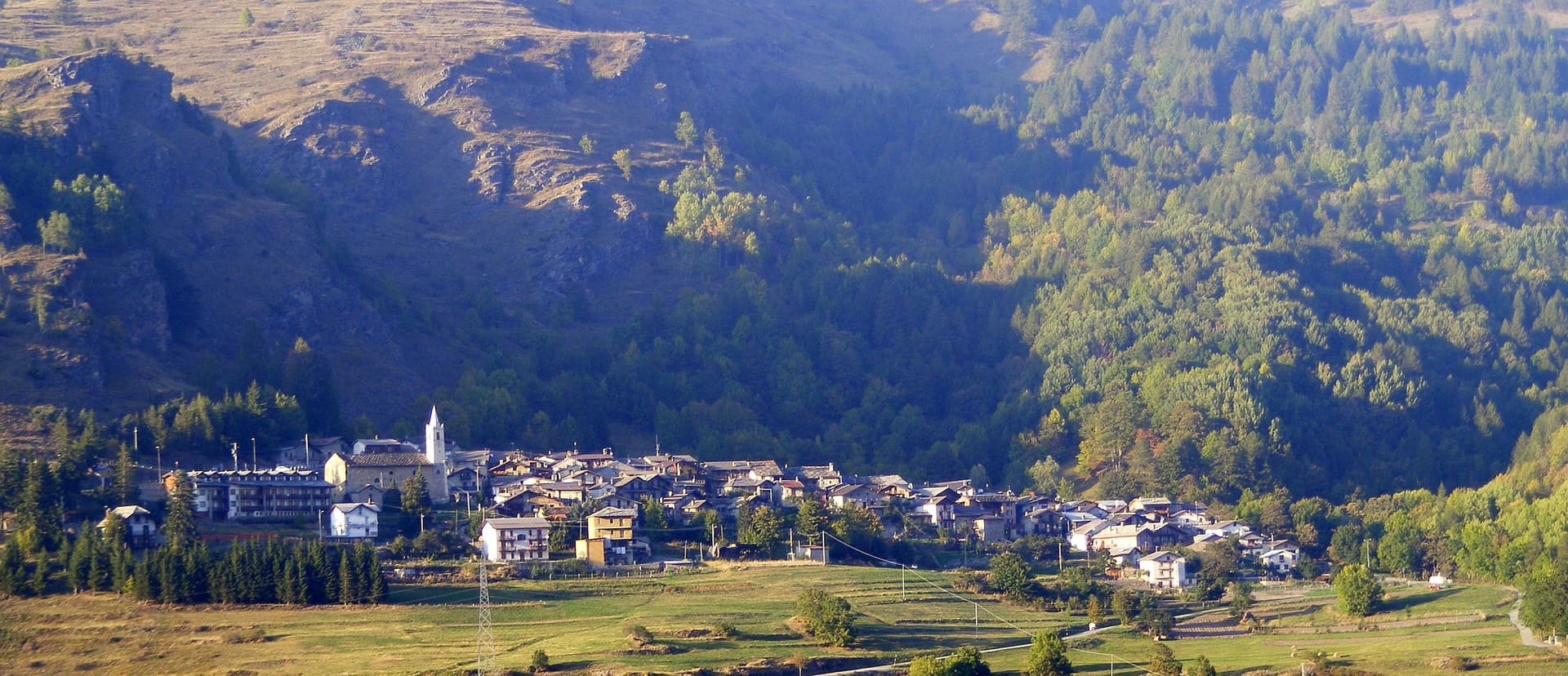
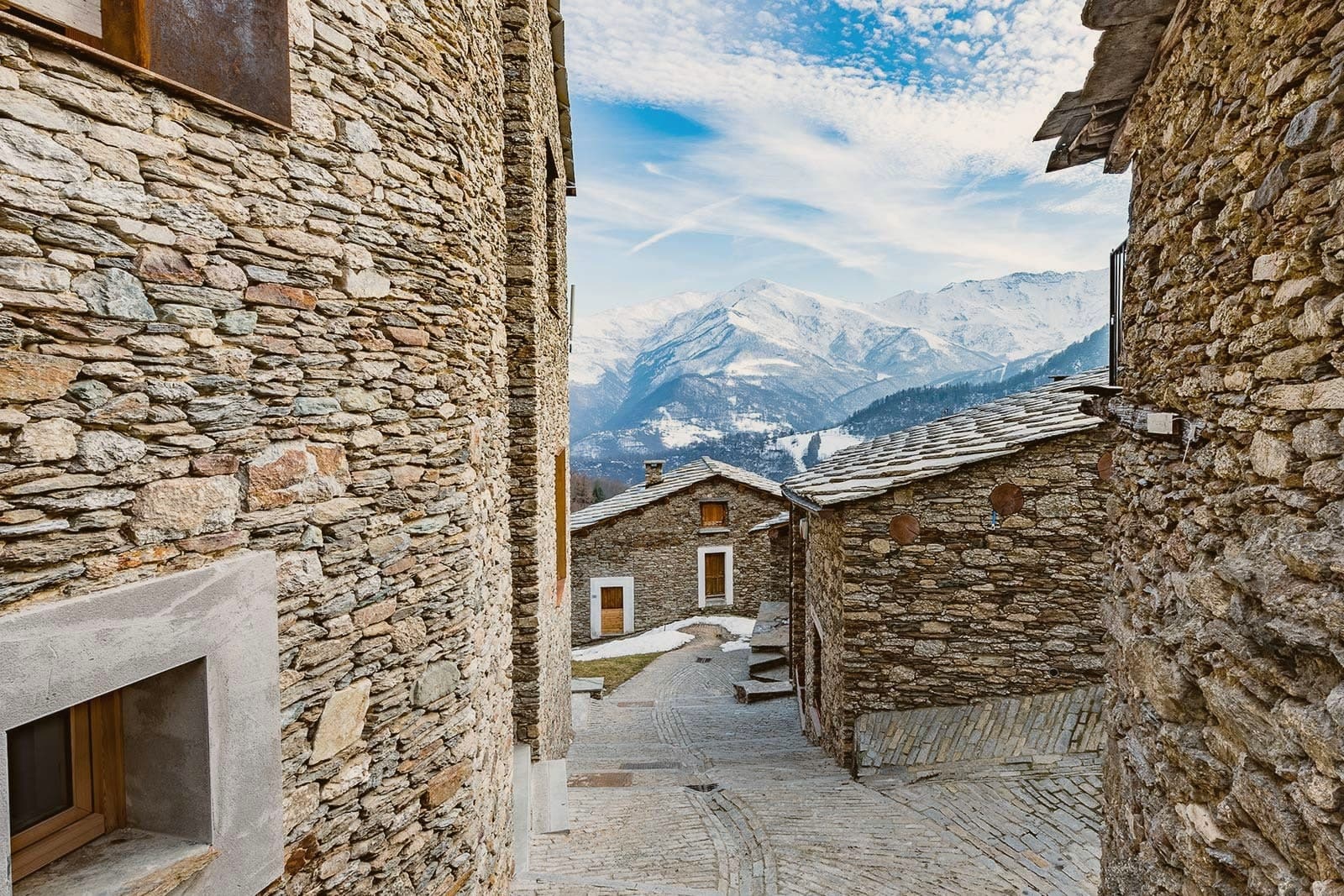
An 85-resident Occitan-speaking alpine borgo at 1,280m in the upper Po valley, rebuilt from near-abandonment into an architecturally celebrated mountain village with a direct frontal view of Monviso.
- Best time
- Jun–Sep
- By car
- 1 h 34 min from Turin
- Population
- 85
Known for
MONVISO VIEW
The most spectacular Italian-village head-on view of Monviso (3,841m, source of the Po). Picture-postcard angle from every village terrace.
ALPINE VILLAGE REBIRTH MODEL
1985 masterplan rebuilt 60+ ruined houses in traditional style with Class A insulation. Architectural press across Europe cites Ostana as the alpine rebirth template.
OCCITAN CULTURAL CENTRE
Italian Occitan linguistic island. Premio Ostana, Scritture in Lingua Madre, international minority-language literary prize, 15th year.
GTA + PO SOURCE
The Grande Traversata delle Alpi trail crosses the village. Po source at Pian del Re 12 km west. The Monviso massif trail network.
When to visit
Best · Jun–Sep
- J5°
- F7°
- M7°
- A10°
- M14°
- J18°
- J21°
- A21°
- S16°
- O13°
- N8°
- D5°
- Best
- Hot or crowded
- Quiet
- Mostly closed
Daytime averages, 2020–2024. Weather data by Open-Meteo.com.
Why come
Ostana sits at 1,280m on the south-facing slope of the upper Po valley, in the Occitan linguistic island that runs across the upper valleys of Cuneo and Torino provinces, a dialect still spoken by maybe 50,000 people. In 1921 the village had 1,200 residents working rye, pasture and chestnut at altitude; by 1985 that had fallen to 25, with over 60 houses in ruin and the village close to abandoned, near-officially so.
The reversal began in 1985 when the newly elected mayor, an architect named Giacomo Lombardo, set a 30-year masterplan in motion: rebuild the ruined houses in their original 17th-19th-century stone-and-larch style, draw in residents through Occitan culture, and reposition the village as both an alpine architecture showcase and a cultural centre for that language. It worked on its own terms. By 2024 the population had climbed back to 85, still small but stable, the demographic curve reversed rather than merely slowed, and the 60-plus restored houses carry insulation modern enough to meet Class A energy ratings behind their traditional stone and larch. The cultural centre, combining library, restaurant and events space, has anchored the new community life since 2012. The village holds the Borghi piu belli d'Italia inscription despite its tiny population, and architectural press across Europe has taken to citing the case as a model for alpine village rebirth generally.
The upper village of restored houses and the lower functions of trail junction and literary festival now depend on each other: walkers on the long-distance trail that crosses the village, and on the former royal hunting trail alongside it, pass through a place that would have had nothing to offer them forty years ago, and the writers who come each year for the minority-language literary prize, now in its fifteenth year and drawing entrants from Occitan to Sardinian to Maori to Welsh, stay in houses that were rubble within living memory.
The food is Occitan-alpine: gnocchi con bagna cauda, cunsa di bietole, raviolas di rapa, raclette and fontina mountain cheese, with Barolo and Barbaresco from the Langhe 60 km east. Like other alpine villages, Ostana goes quiet in winter, its high season running June to September. What the demographic curve and the rebuilding record show together is a village that did not simply survive its emptying out but rebuilt itself around the very things, language and landscape, that might otherwise have been lost with it.
The Sunday letter
Ostana is on our list. Its letter is still to come.
We are writing about all 1,000 of these towns, one at a time, in a free letter every Sunday: the photo, the food, the festa. That is our mission. Sign up and you will be there when Ostana comes up. By Peter & Sophia, from Pietrasanta.
Read on
Ostana in our articles
How to get there
From Turin (TRN), about 1h 43m by car.
Genoa (GOA) is about 2h 52m away.
By car from the centre of Milan 3 hours.
Coming by train into Torino Porta Susa? Ostana is about 1h 27m away by road.
What to see
Monviso direct view (3,841m)
Belvedere terraces across the centro line up on the pyramid face-on, the angle that made the village's postcard reputation.
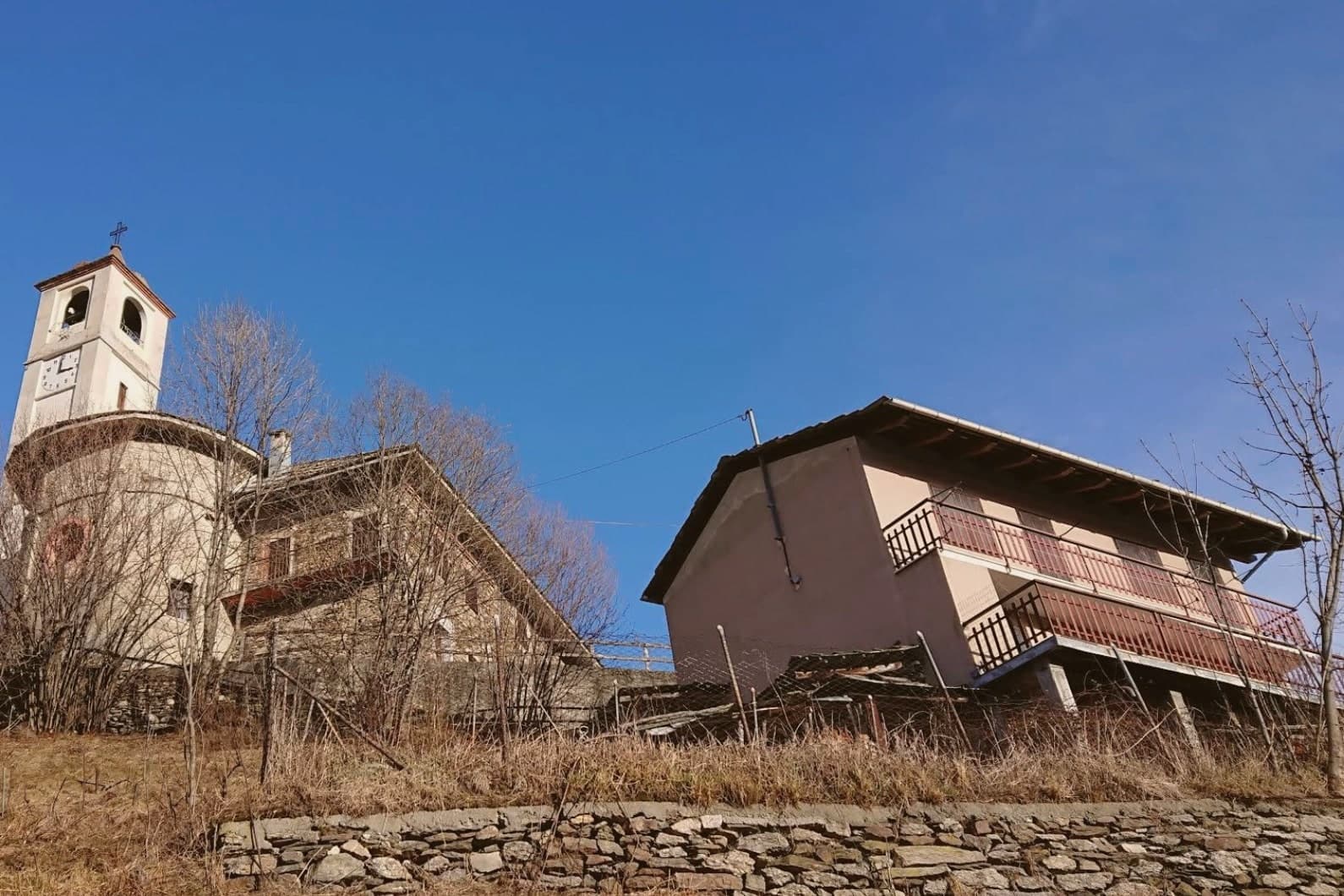
Restored 17th-19th-c stone borgo
Larch-and-stone houses standing where ruins stood a generation ago, the insulation invisible behind old materials. Streets built for a population many times the current one, now filled in more slowly.
Occitan culture + Premio Ostana
The Occitan dialect is audible in the village rather than archived, and the Premio Ostana, Scritture in Lingua Madre, brings minority-language writers here once a year.
Lou Pourtoun (cultural centre)
Restored building combining library, restaurant, and cultural events space. Anchor of the village's new community life since 2012.
GTA + Sentiero del Re + Pian del Re
The Sentiero del Re, a former royal hunting trail, joins the GTA route through the village. Pian del Re, the Po's source, lies 12 km west, reachable on the same network of paths.
The slow-trip planner
Building a trip? Find where Ostana fits in a slow Italy circuit.
Answer five questions. We will shape a geographically coherent slow trip from the 1,000 Italian towns most travelers skip. Yours to save and share.
Living here
- Population 85
- Remotei
- Pharmacy: none mapped
- Nearest high school over ~30 minutes away
- Nearest airport Turin, 1 h 43 min drive
- Regional capital Torino, 1 h 34 min drive
Common questions
- What is Ostana known for?
- Ostana is an 85-resident Occitan-speaking alpine borgo at 1,280m in the upper Po valley, rebuilt from near-abandonment into an architecturally celebrated mountain village with a direct frontal view of Monviso.
- Where is Ostana?
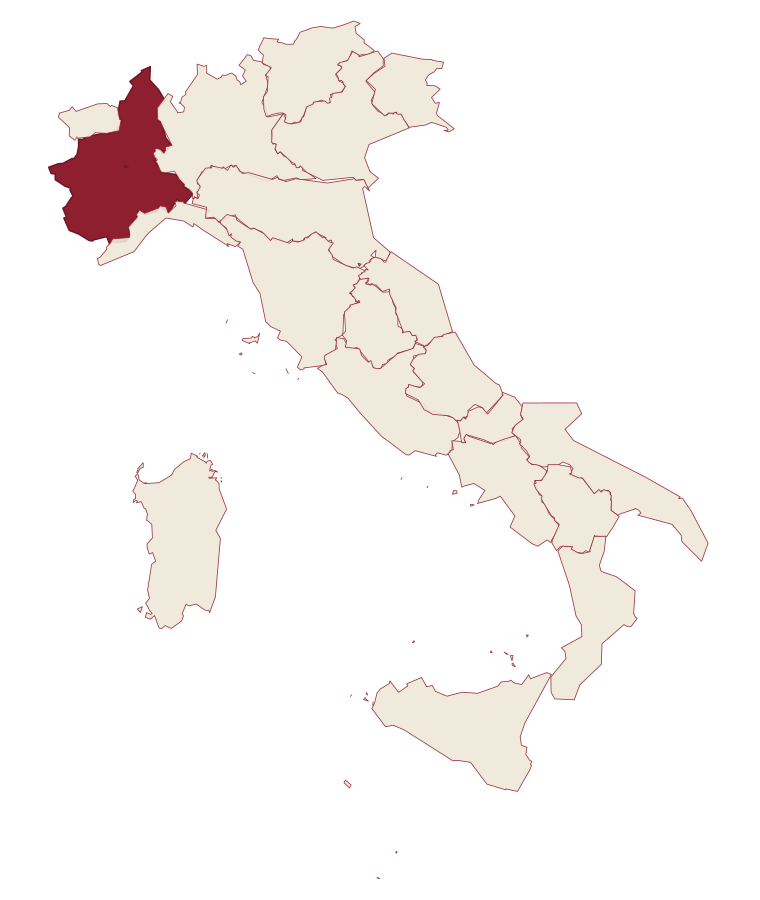
- Ostana is a comune in the province of Cuneo, in Piedmont, at 1280 meters above sea level.
- What is the nearest airport to Ostana?
- Turin (TRN), about 1h 43m by car.
- How long is the drive from Milan to Ostana?
- About 3 hours by car.
- When is the best time to visit Ostana?
- Best in Jun–Sep. July is the warmest month, averaging 21 degrees, and July the wettest, with about 26 rain days.
- Which other towns are like Ostana?
- Usseaux, Fenestrelle and Gressoney-Saint-Jean.
- How many people live in Ostana?
- 85 at the 2023 count.
Tags & datadesignations · numbers · sources
Recognised as
The numbers
- Elevation: 1280 m
- Population: 85
- Surface area: 14.09 km²
These figures were compiled from public directories: ISTAT, OpenStreetMap and Wikidata, and from the official listings of the guides named on this page. Town details change; verify with official sources before you travel.
Similar
Towns like Ostana
Usseaux
Province: Torino
both under 1,000 people · both mountain towns above 1,000 metres
Fenestrelle
Province: Torino
both under 1,000 people · both mountain towns above 1,000 metres
Gressoney-Saint-Jean
Province: Aosta Valley
both under 1,000 people · both mountain towns above 1,000 metres
La Thuile
Province: Aosta Valley
both under 1,000 people · both mountain towns above 1,000 metres
Macugnaga
Province: Verbano-Cusio-Ossola
both under 1,000 people · both mountain towns above 1,000 metres
Luserna
Province: Trento
both under 1,000 people · both mountain towns above 1,000 metres
🎨 Borghi più belli d'Italia
More Borghi più belli d'Italia towns in Piedmont
Barolo
Province: Cuneo
A Langhe borgo at 301 meters whose Castello Falletti gave its name to the wine the Marchesi turned dry in the 1830s with Cavour's help.
Biella
Province: Biella
A wool city at 417 meters in the Alpine foothills, where the medieval Piazzo sits above the modern Piano, connected by a funicular since 1885.
Candelo
Province: Biella
A Biellese commune at 350 meters whose Ricetto, a 13th-century fortified shelter of two hundred stone cellule, is the best-preserved in Piedmont.
Castagnole delle Lanze
Province: Asti
An Asti hill town at 298 meters between Langhe and Monferrato, with two Baroque churches and a nineteenth-century astronomical tower.
Cella Monte
Province: Alessandria
A 465-person Monferrato Casalese borgo at 268 meters, built entirely from a sandstone found only here, riddled underneath with cellars carved into the same stone.