
Apulia · Lecce
Lecce
The Baroque capital of the Salento, ninety-four thousand people on the Lecce-stone plain, carving its façades in honey limestone since 1500.
- Best time
- Apr–Oct
- By car
- 1 h 59 min from Bari
- By train
- Station in the comune
- Population
- 94,517
Known for
BAROCCO LECCESE
The densest Baroque carved ornament in Italy, worked into the soft Lecce stone by Zimbalo and Penna across Santa Croce, the Duomo and the Sedile.
LECCE STONE
Pietra leccese, the soft golden limestone that carves like butter and hardens in air, the material that made the Baroque city possible.
ROMAN AMPHITHEATER
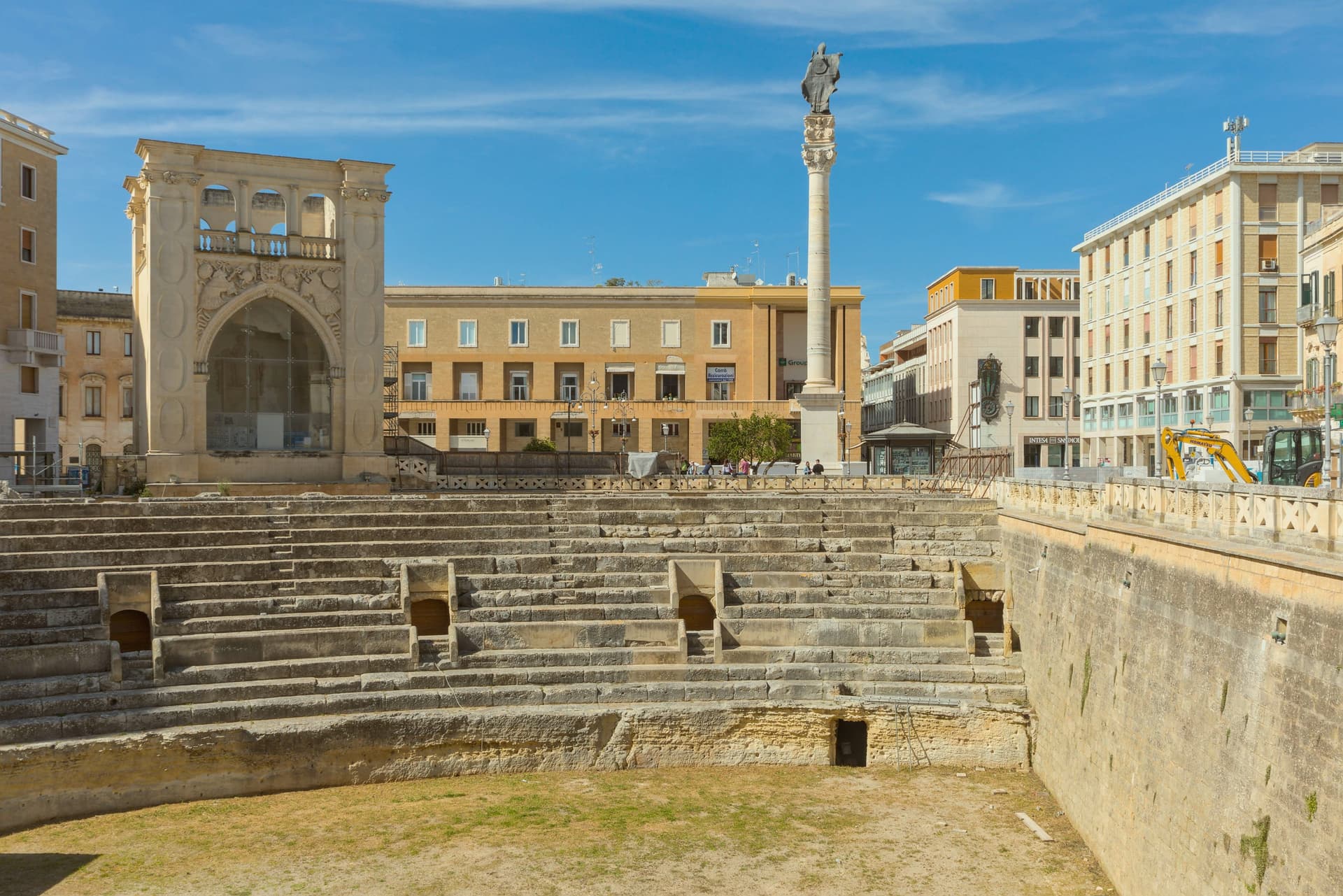
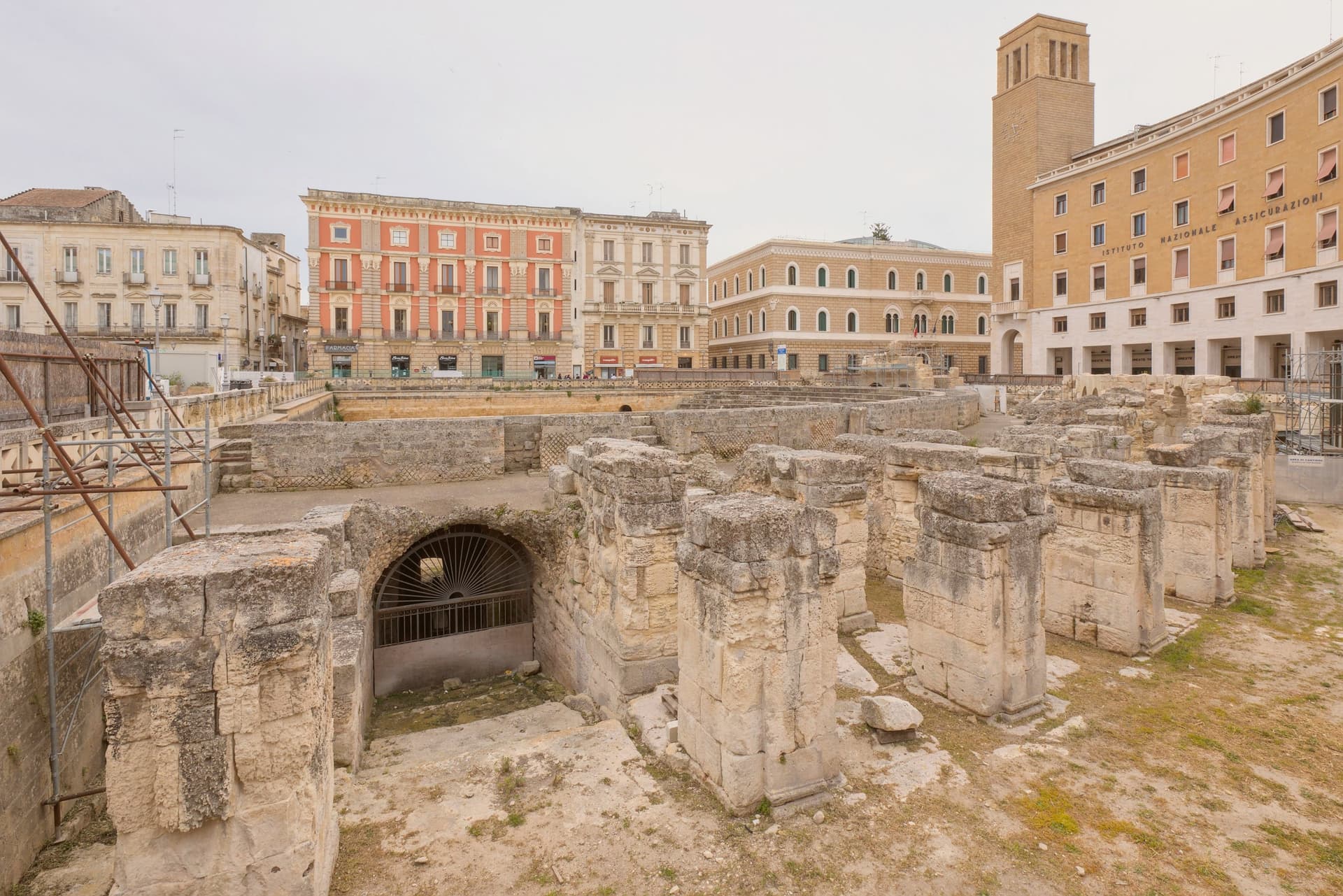
First-century BC amphitheater with a 25,000-seat capacity, uncovered in 1929 and visible at street level in the floor of Piazza Sant'Oronzo.
When to visit
Best · Apr–Oct
- J14°
- F15°
- M16°
- A19°
- M24°
- J30°
- J33°
- A32°
- S28°
- O23°
- N19°
- D15°
- Best
- Hot or crowded
- Quiet
- Mostly closed
Daytime averages, 2020–2024. Weather data by Open-Meteo.com.
The festa: Sant'Oronzo, 26 August
Why come
Lecce sits on the Salento plain, twelve kilometers inland from the Adriatic, the provincial capital. The Messapian settlement of Lupiae stood on this site by the eighth century BC. Rome took it in the third century BC, and Hadrian later moved the settlement three kilometers away and renamed it Licea, so the modern city occupies a site distinct from either of its named predecessors.
The walled centro storico is ringed by Charles V's fortifications, entered from the north through the Porta Napoli arch and anchored on its eastern edge by his castle, built over older Norman foundations. Within those walls the Baroque churches and squares sit close together, the cathedral square closed in on three sides while the amphitheater lies open and half-sunk in the middle of the newer square that formed around it. The University runs a strong humanities program, and the seafront at San Cataldo, some distance from the old center, carries Lecce's Bandiera Blu. What holds the town together is the stone itself: soft enough to carve finely, hard enough once cut to last, so that a Messapian and Roman settlement site became, centuries later, the surface on which the south's most elaborate Baroque was cut.
The Sunday letter
Lecce is on our list. Its letter is still to come.
We are writing about all 1,000 of these towns, one at a time, in a free letter every Sunday: the photo, the food, the festa. That is our mission. Sign up and you will be there when Lecce comes up. By Peter & Sophia, from Pietrasanta.
Read on
Lecce in our articles
 The best beach towns worth staying overnight in Puglia6 towns, Lecce among them.
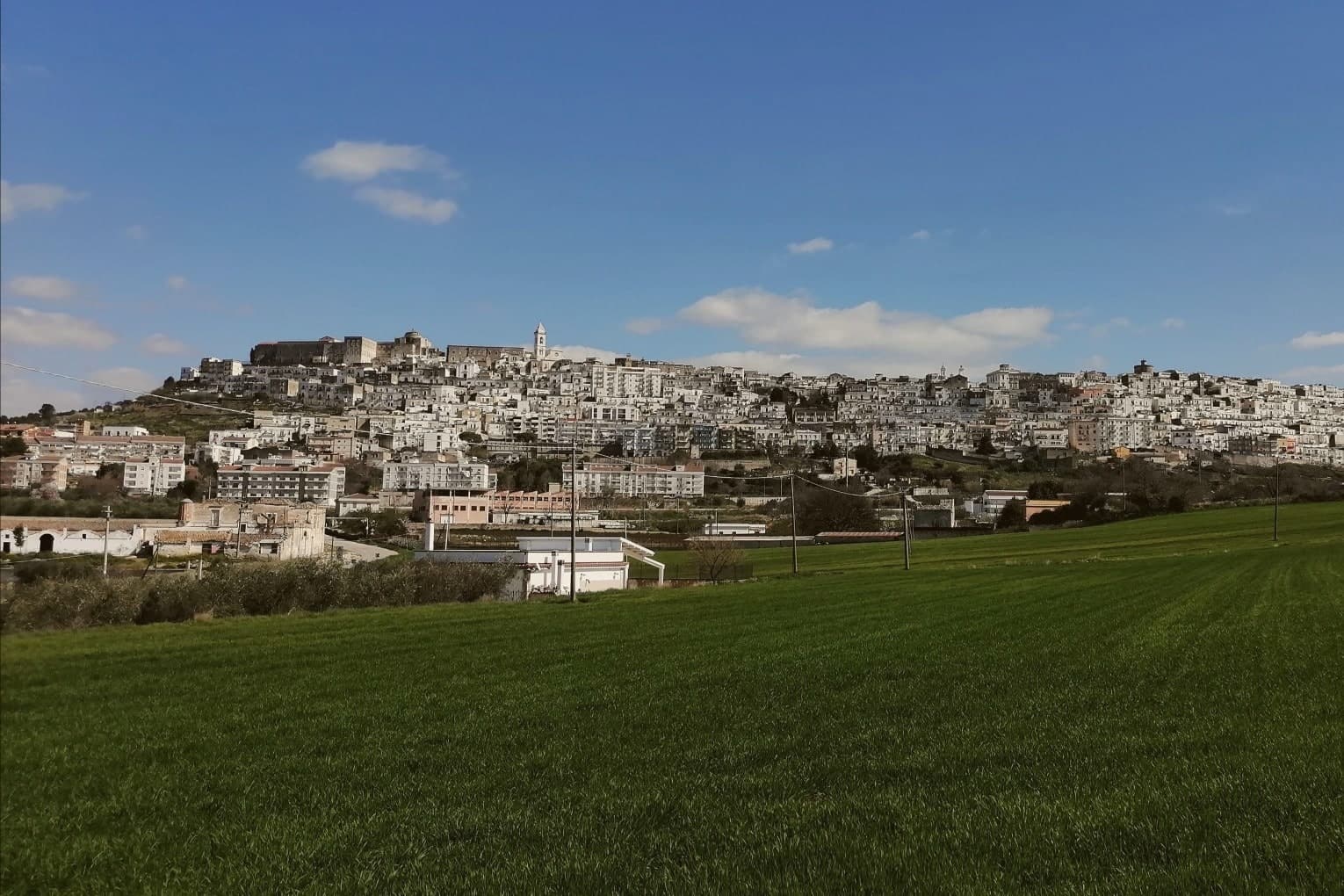 The best hill towns inside a nature park in Puglia6 towns, Lecce among them.
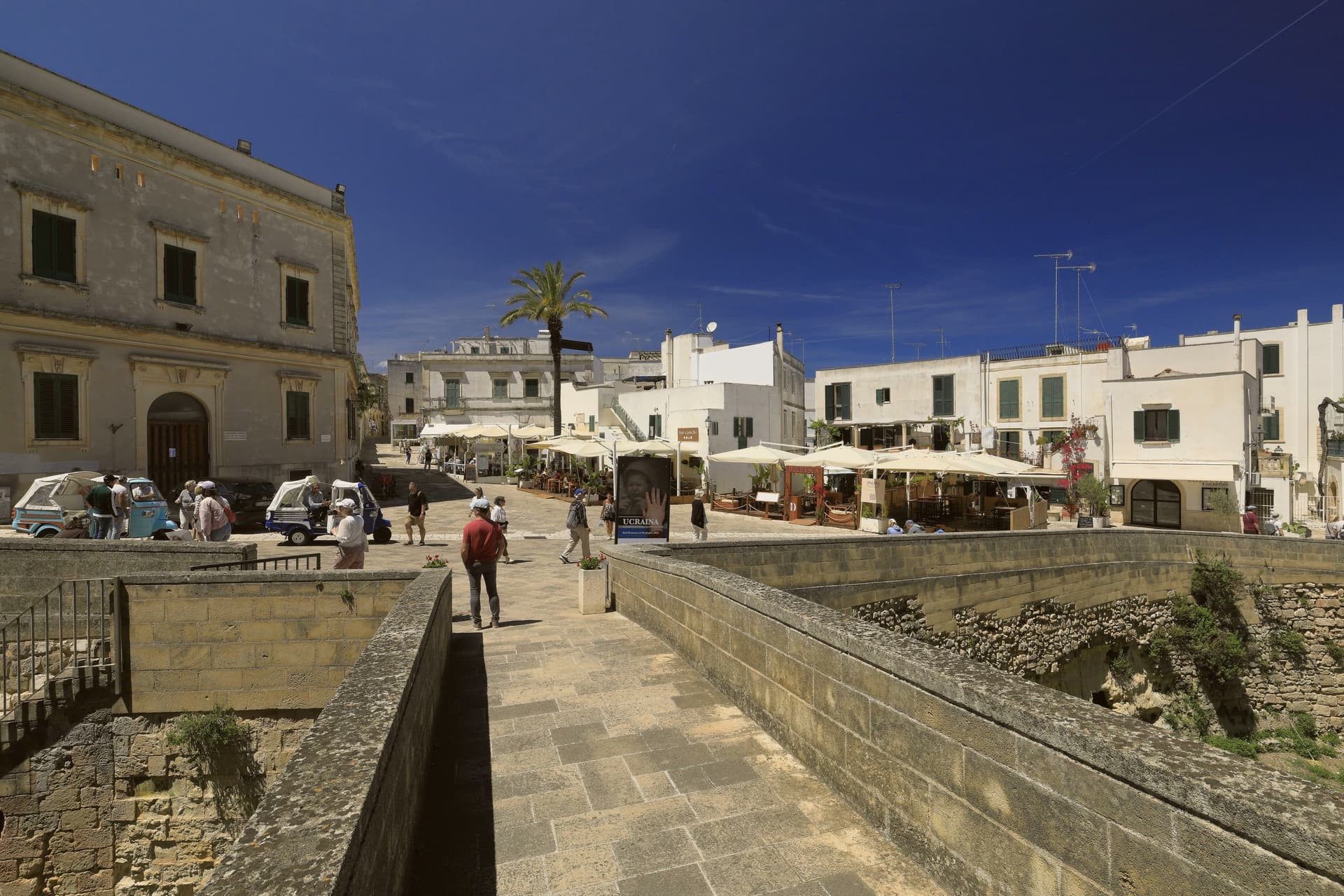 The best towns with a serious restaurant that sit inside a nature park in Puglia6 towns, Lecce among them.
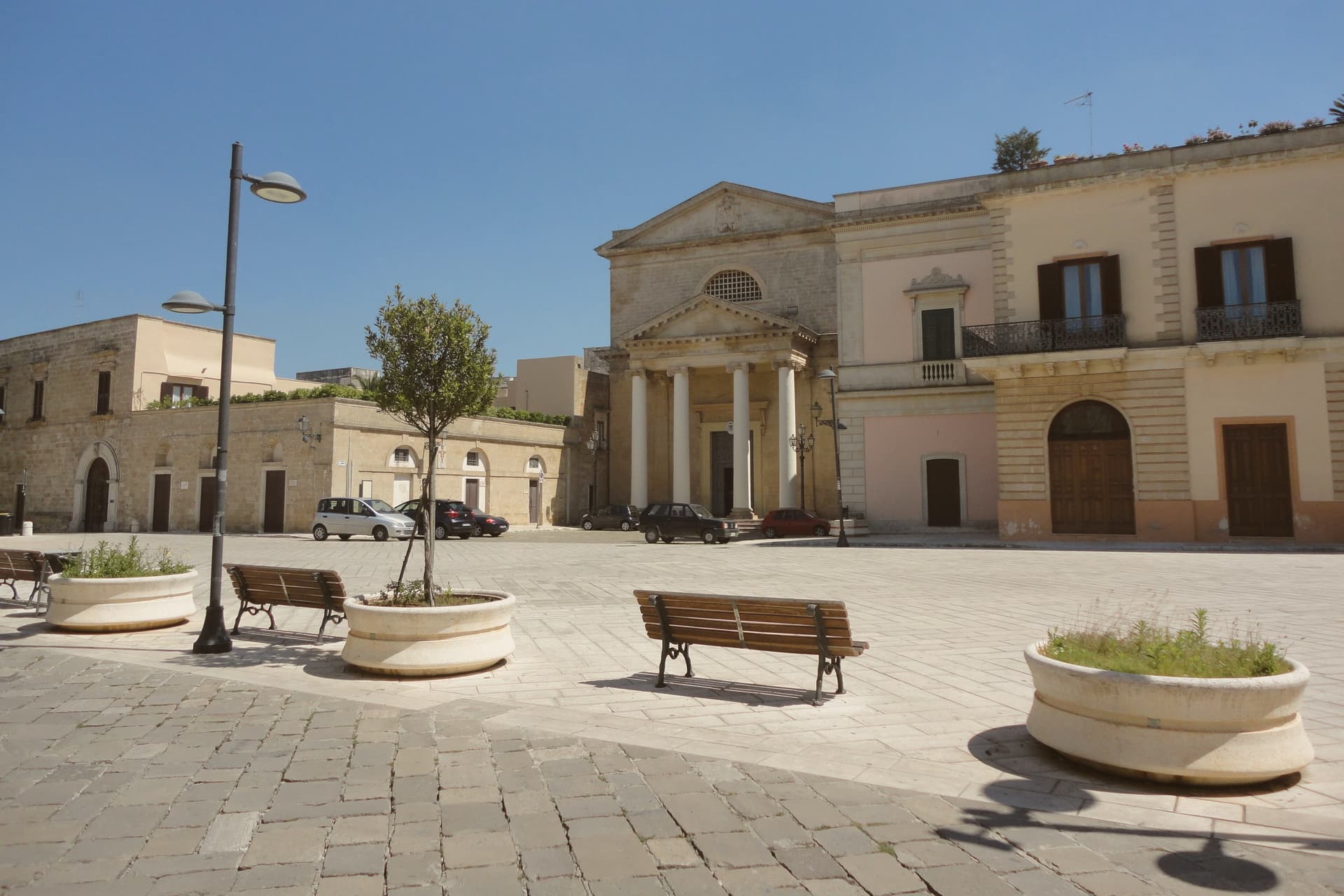 The 7 best beach towns inside a nature park in Puglia7 towns, Lecce among them.
How to get there
From Bari / Brindisi (BRI), about 2h 11m by car.
Naples / Salerno (NAP) is about 5 hours away.
By car from the centre of Bari 2 hours or Salerno 4h 46m.
There is a railway station in the comune, so you can arrive without a car.
Coming from Bari?
What to see
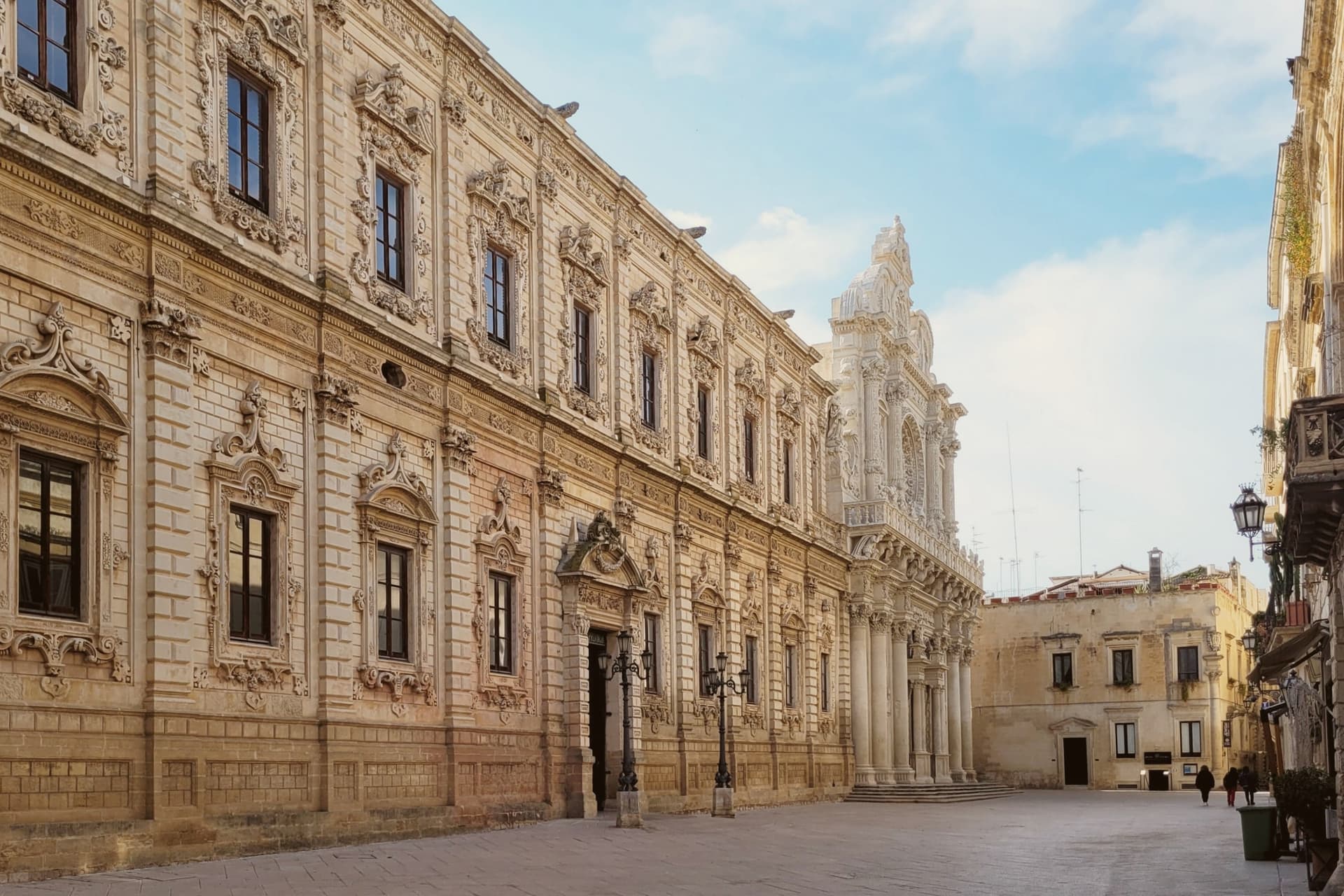
Basilica di Santa Croce
Worked for nearly two hundred years to completion in 1695, the façade carved with cherubs, monsters and allegories layered so densely that the wall surface almost disappears beneath them.
Piazza del Duomo
Closed on three sides, the only enclosed cathedral square of its kind in Puglia, gathering the Duomo, Campanile, Bishop's Palace and Seminary into one shared courtyard rather than an open street front.
Piazza Sant'Oronzo
The city's central square, built around a column brought from the Appian Way to honor the patron saint, with the excavated amphitheater floor sitting below street level at its edge.
Anfiteatro Romano
Built under Augustus, the curve of seating is still legible where it has been cut into, sunk below the modern square that grew up around and over it.
Porta Napoli
Raised on the site of the older Porta San Giusto, the main northern gate through the walled centro storico, its arch still standing as the approach into the old town.
Castello di Carlo V
Quadrangular and built over Norman foundations, the larger of the city's fortifications, holding down the eastern edge of the walled center.
The slow-trip planner
Building a trip? Find where Lecce fits in a slow Italy circuit.
Answer five questions. We will shape a geographically coherent slow trip from the 1,000 Italian towns most travelers skip. Yours to save and share.
We recommend
Where to eat and stay
Not our picks, but places the guides put their name to: a Michelin star, a Gambero Rosso fork, a Slow Food snail, a Michelin Key for the hotels. Worth a table, a counter, or a night when you pass through.
Duo RistoranteRistorante
Duo Ristorante carries one Gambero Rosso fork (78/100), plus a spot in the Michelin Guide.
Gimmi RestaurantRistorante
Two Gambero Rosso forks (82/100) for Gimmi Restaurant, and a spot in the Michelin Guide.
Primo RestaurantRistorante
Primo Restaurant holds one Michelin star and two Gambero Rosso forks (84/100).
3 Rane RistoroRistorante
3 Rane Ristoro carries two Gambero Rosso forks (80/100).
300milaBistrot
300mila holds two Gambero Rosso tables.
AlexRistorante
Alex has two Gambero Rosso forks (82/100) to its name.
Classé - La Dogana RestaurantRistorante
Classé - La Dogana Restaurant holds two Gambero Rosso forks (81/100).
FrànRistorante
Fràn has two Gambero Rosso forks (82/100) to its name.
La cucina di Mamma ElviraBistrot
Two Gambero Rosso tables, at La cucina di Mamma Elvira.
Le Zie-Cucina CasarecciaRistorante
Le Zie-Cucina Casareccia has a Slow Food snail to its name.
Mezzo Quinto OsteriaTrattoria
Mezzo Quinto Osteria has two Gambero Rosso prawns to its name.
Osteria degli SpiritiTrattoria
Osteria degli Spiriti holds two Gambero Rosso prawns.
santavogliaRistorante
santavoglia carries one Gambero Rosso fork (77/100).
Zéphyr Restaurant - La Fiermontina Luxury HomeRistorante
One Gambero Rosso fork (77/100), at Zéphyr Restaurant - La Fiermontina Luxury Home.
La Fiermontina Luxury HomeHotel
La Fiermontina Luxury Home carries one Michelin Key.
La Fiermontina Palazzo Bozzi CorsoHotel
La Fiermontina Palazzo Bozzi Corso holds two Michelin Keys.
Masseria TrapanaHotel
Masseria Trapana holds a place in the Michelin hotel guide.
Palazzo de NohaHotel
Palazzo de Noha has a place in the Michelin hotel guide to its name.
Palazzo Maresgallo Suites & SPAHotel
A place in the Michelin hotel guide, at Palazzo Maresgallo Suites & SPA.
Patria PalaceHotel
One Michelin Key, at Patria Palace.
Through the year
What happens here
Feasts and festivals that come back year after year. We give the month rather than the date, because the date moves and the month rarely does. Check with the source before you plan a journey around one.
Festa di Sant'Oronzopatron saint's feast
usually held in August. La Terra di Puglia - Eventi in Puglia (guida mensile)
Living here
- Population 94,517
- A local hubi
- Pharmacy in town
- High school within a 30-minute drive
- Train station in the comune
- Nearest airport Bari / Brindisi, 2 h 11 min drive
- Market day Monday and Friday
- Regional capital Bari, 1 h 59 min drive
Common questions
- What is Lecce known for?
- Lecce is the Baroque capital of the Salento, ninety-four thousand people on the Lecce-stone plain, carving its façades in honey limestone since 1500.
- Where is Lecce?
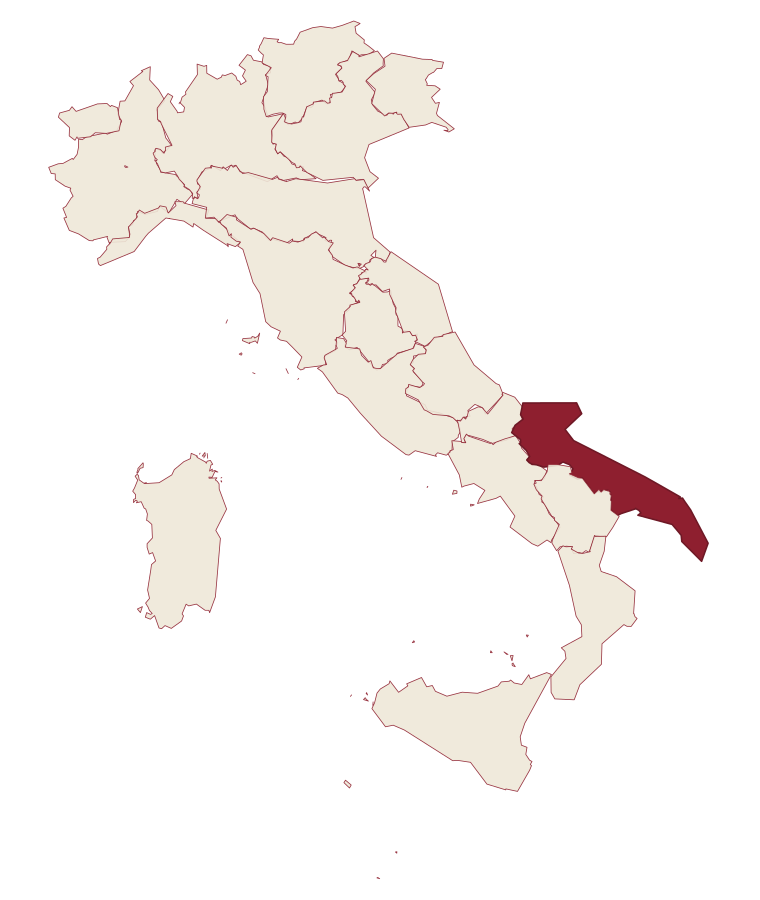
- Lecce is a comune in the province of Lecce, in Apulia, at 49 meters above sea level.
- What is the nearest airport to Lecce?
- Bari / Brindisi (BRI), about 2h 11m by car.
- Can you get to Lecce without a car?
- Yes. There is a railway station in the comune, so you can arrive by train.
- How long is the drive from Bari to Lecce?
- About 2 hours by car.
- When is the best time to visit Lecce?
- Best in Apr–Oct. July is the warmest month, averaging 33 degrees, and November the wettest, with about 11 rain days.
- Is there a sagra or a festival in Lecce?
- Yes. Festa di Sant'Oronzo. August is when the first of them falls.
- Which other towns are like Lecce?
- Caserta, Benevento and Nola.
- How many people live in Lecce?
- 94,517 at the 2023 count.
Tags & datadesignations · numbers · sources
The numbers
- Elevation: 49 m
- Population: 94,517
- Surface area: 241 km²
These figures were compiled from public directories: ISTAT, OpenStreetMap and Wikidata, and from the official listings of the guides named on this page. Town details change; verify with official sources before you travel.
Similar
Towns like Lecce
Caserta
Province: Caserta
both inland, away from the coast · both over 10,000 people
Benevento
Province: Benevento
both inland, away from the coast · both over 10,000 people
Nola
Province: Napoli
both inland, away from the coast · both over 10,000 people
Andria
Province: Barletta-Andria-Trani
both inland, away from the coast · both over 10,000 people
San Severo
Province: Foggia
both inland, away from the coast · both over 10,000 people
Nardò
Province: Lecce
both inland, away from the coast · both over 10,000 people
🟦 Bandiera Blu
More Bandiera Blu towns in Apulia
Bisceglie
Province: Barletta-Andria-Trani
An Adriatic port town between Trani and Molfetta, named for Roman watchtowers, with five dolmens around it and a Norman cathedral begun in 1073.
Carovigno
Province: Brindisi
An upper Salento hill town between Brindisi and Ostuni, with a marine reserve on its coast.
Castellaneta
Province: Taranto
A cliff-edge Murge town at 235 meters above the Gravina Grande canyon, birthplace of Rudolph Valentino in 1895, with a Bandiera Blu Ionian marina.
Fasano
Province: Brindisi
A Brindisi-province town running from the Adriatic up to the Itria escarpment, holding a Roman coastal city, a wooded highpoint, and Europe's second-largest safari park.
Gallipoli
Province: Lecce
The Ionian beach city on a limestone island, Greek Kallipolis meaning beautiful city, tied to the mainland by a seventeenth-century bridge.