
Known for
TONNARA FLORIO
1859 industrial tuna fishery built by Ignazio Florio, once the Mediterranean's largest. Mattanza ended 2007; complex is now a museum.
CALCARENITE
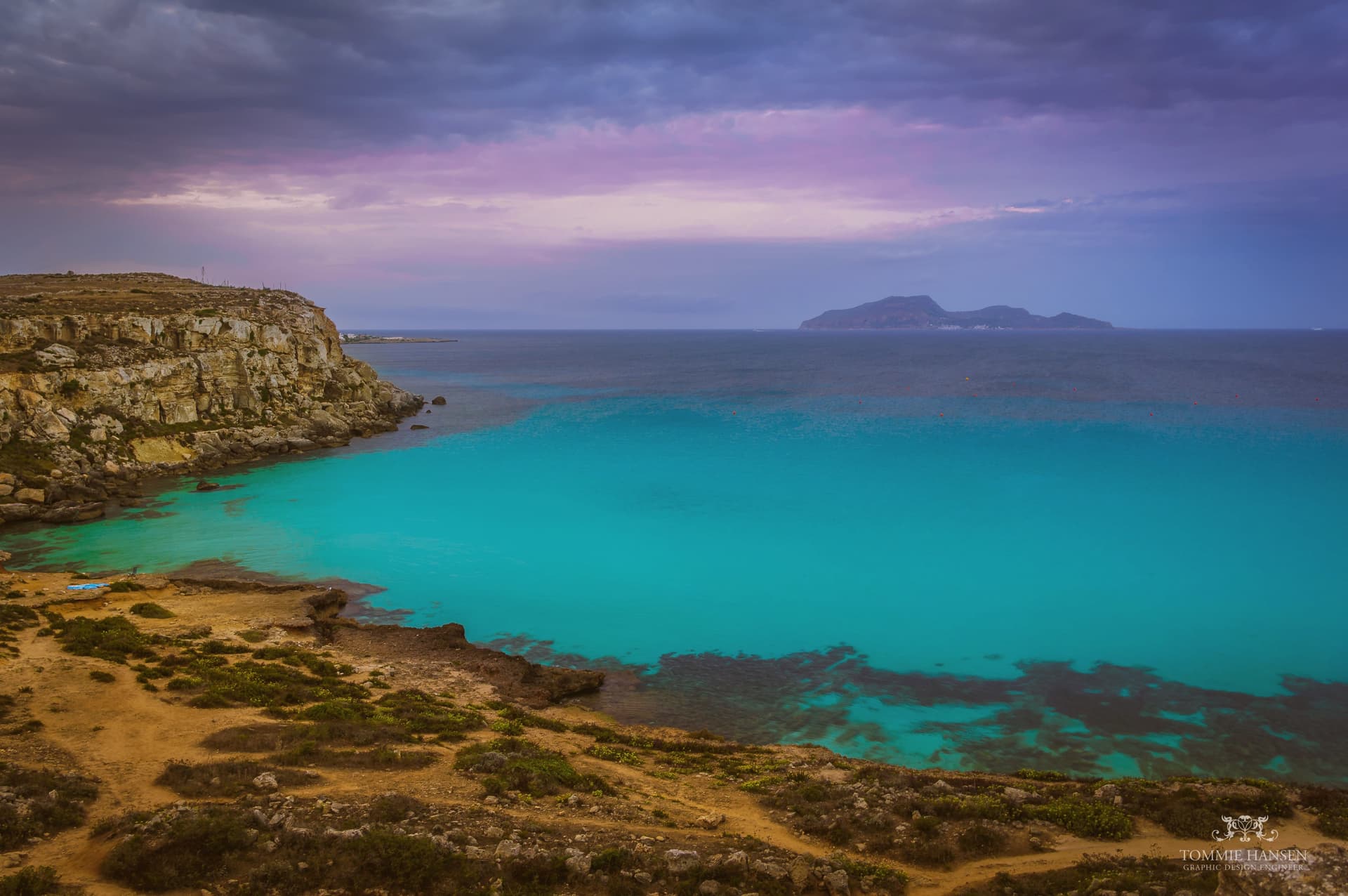
Soft cream-coloured limestone quarried locally for centuries. The defunct quarries, Cala Rossa and Bue Marino among them, are now the island's swimming spots.
FLAT BIKE-ABLE
Flat 19-km perimeter, the standard way to circle the island. Bike rentals at the harbour for a half-day.
When to visit
Best · Apr–Oct
- J15°
- F15°
- M15°
- A16°
- M19°
- J23°
- J26°
- A27°
- S25°
- O22°
- N20°
- D17°
- Best
- Hot or crowded
- Quiet
- Mostly closed
Daytime averages, 2020–2024. The sea is warmest in August at 27° and coldest in February at 16°. Weather data by Open-Meteo.com.
Why come
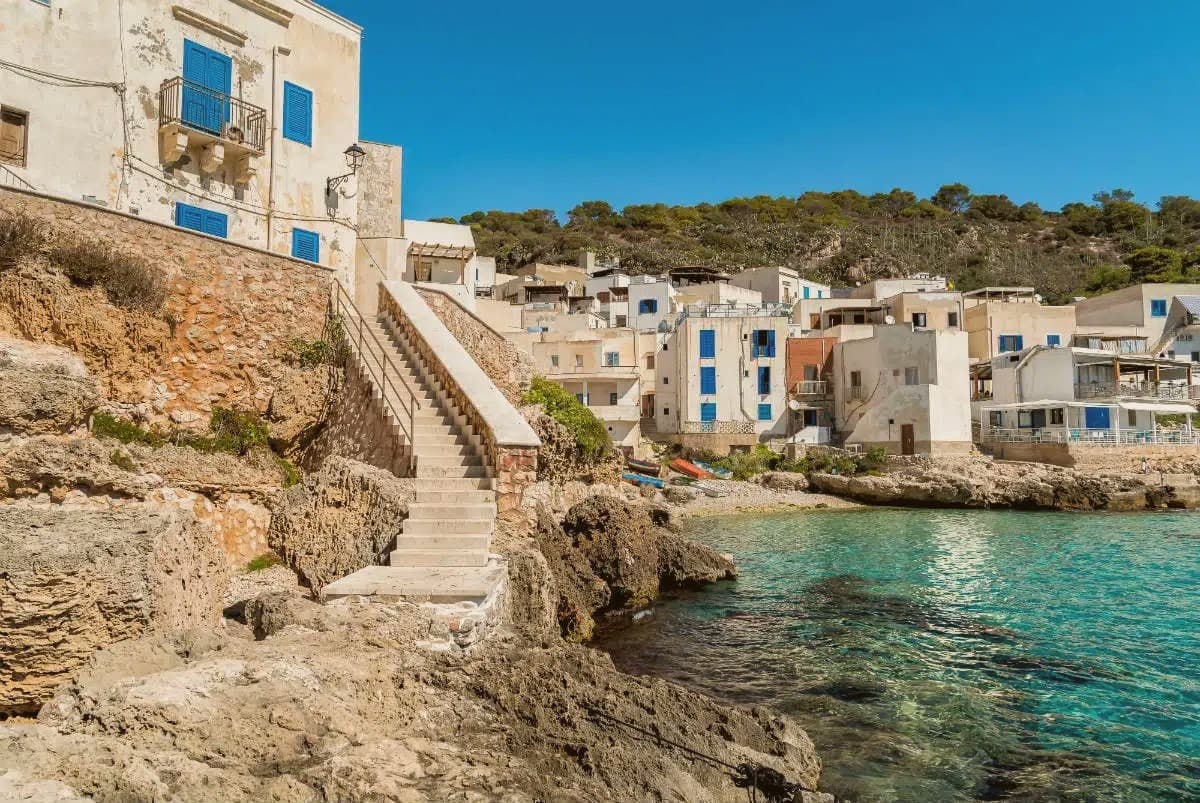
Favignana is 15 km by ferry from Trapani. The island is shaped like a butterfly, with Punta Marsala forming one wing and Punta Sottile the other, and it is built on calcarenite, the soft cream-coloured limestone that supplied stock material for churches and palazzi across Sicily for centuries. Quarrying left rectangular pits across the coastline, and the sea has since filled them: Cala Rossa and Bue Marino are the best known, turquoise water sitting at the bottom of vertical limestone walls where the rock was cut away.
The town itself sits at the center, organized around the Stabilimento Florio delle Tonnare, the industrial complex that once ran the mattanza and now holds the record of it. The fort above town looks out over both: the flat bikeable body of the island below, and the sea beyond it toward Marettimo and Levanzo. What Favignana offers is this pairing of an extracted landscape, quarried hollow and then reclaimed by the water, with an extracted economy, fished hard and then closed and preserved as memory.
The Sunday letter
Favignana is on our list. Its letter is still to come.
We are writing about all 1,000 of these towns, one at a time, in a free letter every Sunday: the photo, the food, the festa. That is our mission. Sign up and you will be there when Favignana comes up. By Peter & Sophia, from Pietrasanta.
Read on
Favignana in our articles
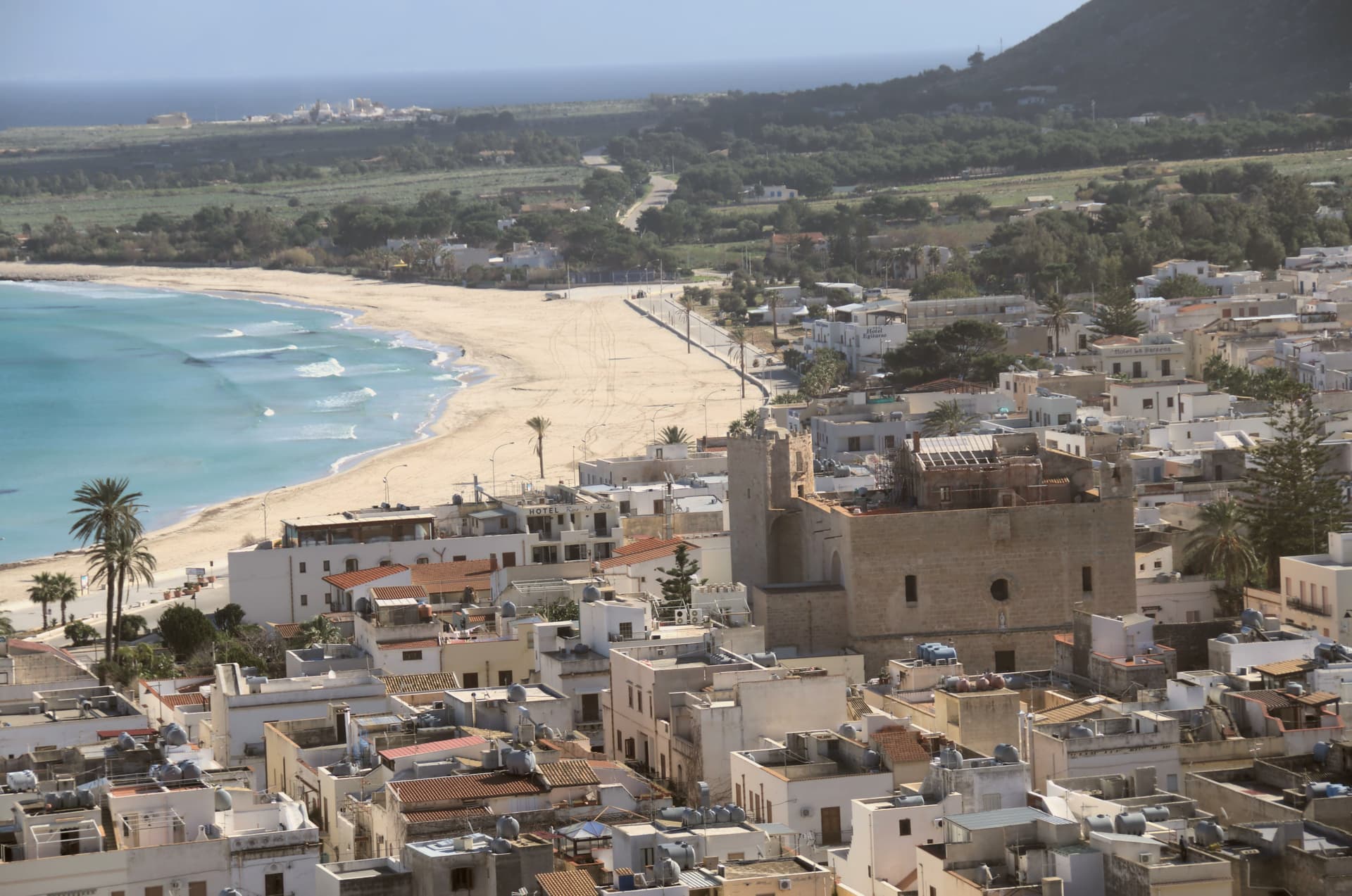
 The best small coastal towns in Sicilia8 towns, Favignana among them.
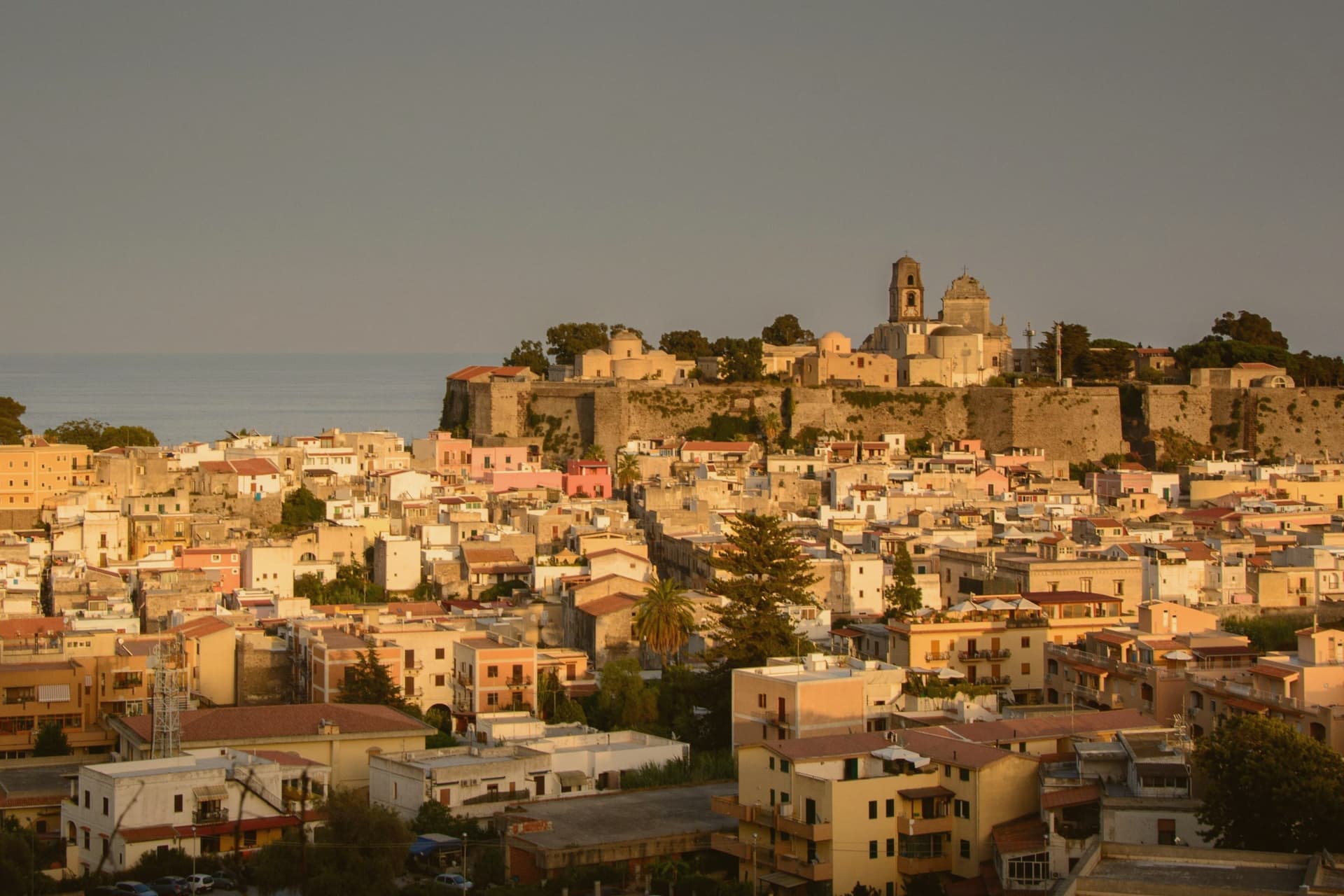
 The best hidden coastal towns that eat well in Sicilia9 towns, Favignana among them.
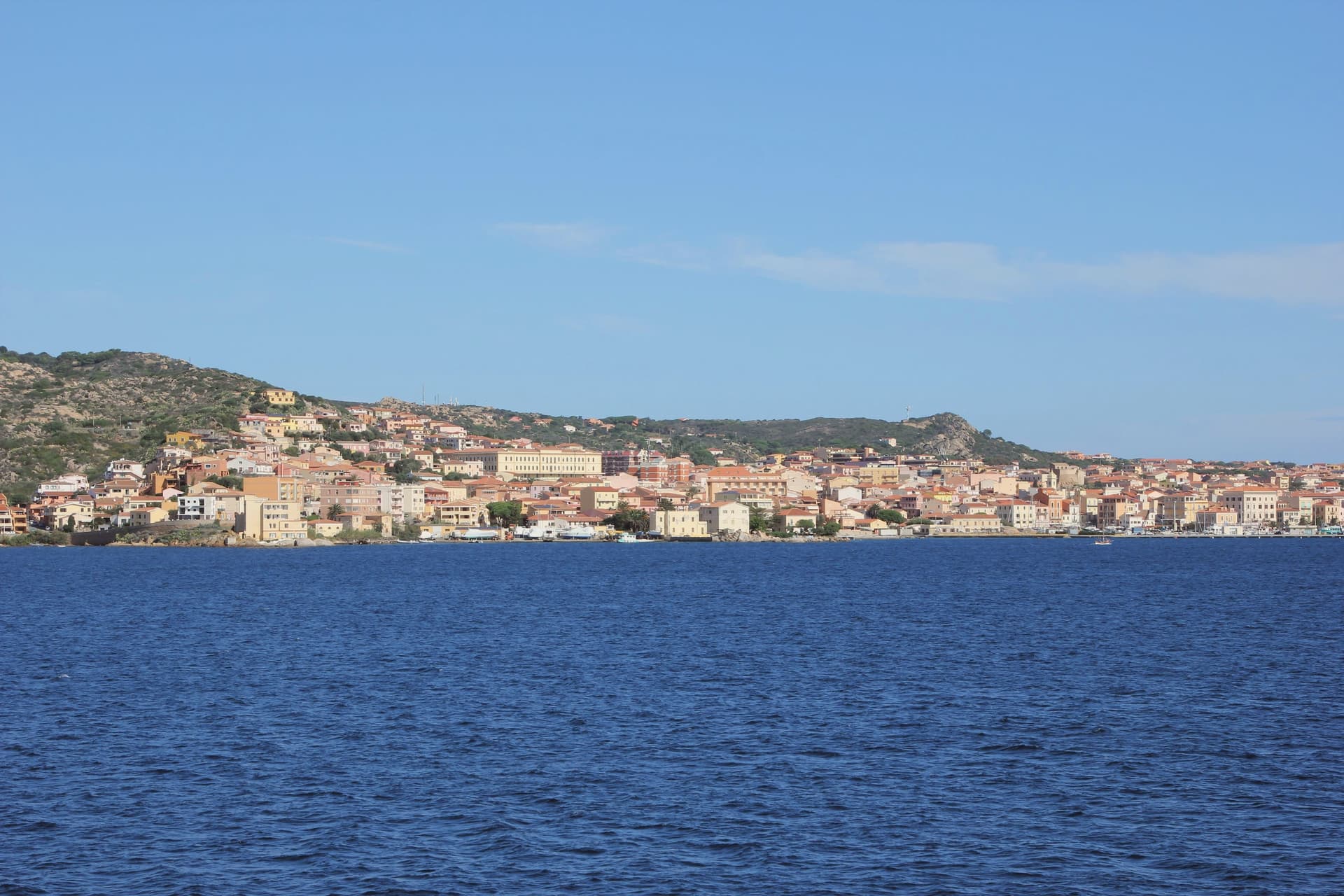
 Alternatives to Taormina: every coastal town in Sicily, in one list14 towns, Favignana among them.
 Alternatives to Capri: every island town in Italy, in one list16 towns, Favignana among them.
How to get there
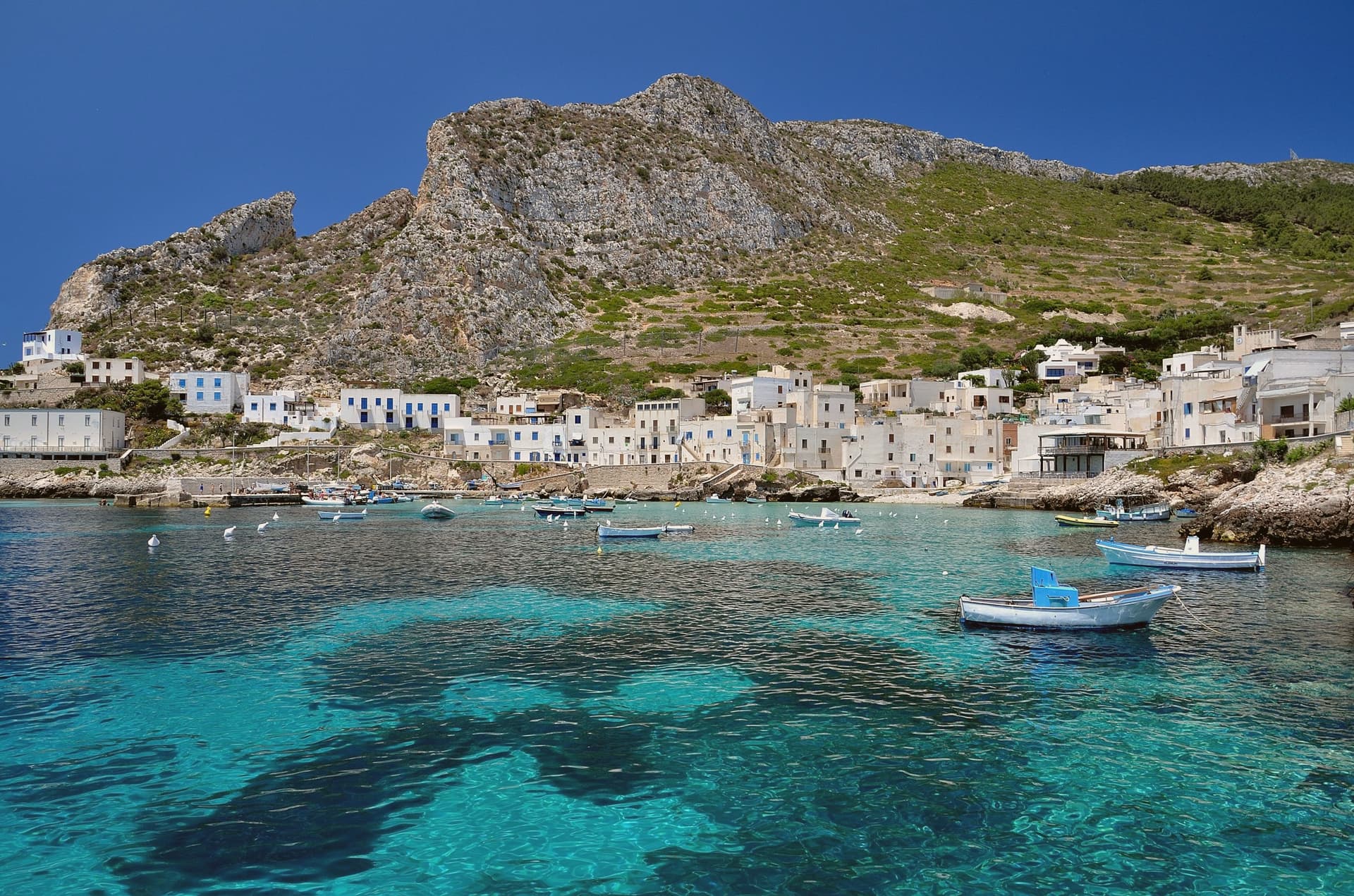
Favignana is on an island and is reached by ferry.
What to see
Cala Rossa
The flooded quarry on the east coast, cliffs dropping straight to the water. Sicily's most-photographed swimming spot, cliff-jumping discouraged but practiced anyway.
Stabilimento Florio delle Tonnare
The tonnara dominates the town centre. Original equipment inside traces the mattanza ritual and the company history of the Florio dynasty who built it.
Forte di Santa Caterina
12th-century Aragonese fort on the highest point of the island, over 300 m up, with views to Marettimo and Levanzo across the Egadi archipelago.
Giro dell'isola in bici
The loop takes in the perimeter's contrast of coastline: quarry pools, cliff edges, and the flat interior in between.
Cave di tufo
The abandoned quarries that shaped the island's coastline, several reachable on foot or by boat, with geometric rock formations and turquoise pools.
The slow-trip planner
Building a trip? Find where Favignana fits in a slow Italy circuit.
Answer five questions. We will shape a geographically coherent slow trip from the 1,000 Italian towns most travelers skip. Yours to save and share.
We recommend
Where to eat
Not our picks, but places the guides put their name to: a Michelin star, a Gambero Rosso fork, a Slow Food snail, a Michelin Key for the hotels. Worth a table, a counter, or a night when you pass through.
Sotto SaleRistorante
A Gambero Rosso listing, at Sotto Sale.
Through the year
What happens here
Feasts and festivals that come back year after year. We give the month rather than the date, because the date moves and the month rarely does. Check with the source before you plan a journey around one.
FishTuna a Favignanafood festival
usually held in September. EnjoySicilia — Sagre, Feste ed Eventi in Sicilia
Living here
- Population 4,525
- Remotei
- Pharmacy in town
- Nearest high school over ~30 minutes away
- Regional capital Palermo, 2 h 15 min drive
Common questions
- What is Favignana known for?
- Favignana is the largest of the Egadi Islands off western Sicily, ringed by calcarenite cliffs and flooded quarries in place of beaches, with a 19th-century tuna fishery at its center.
- Where is Favignana?
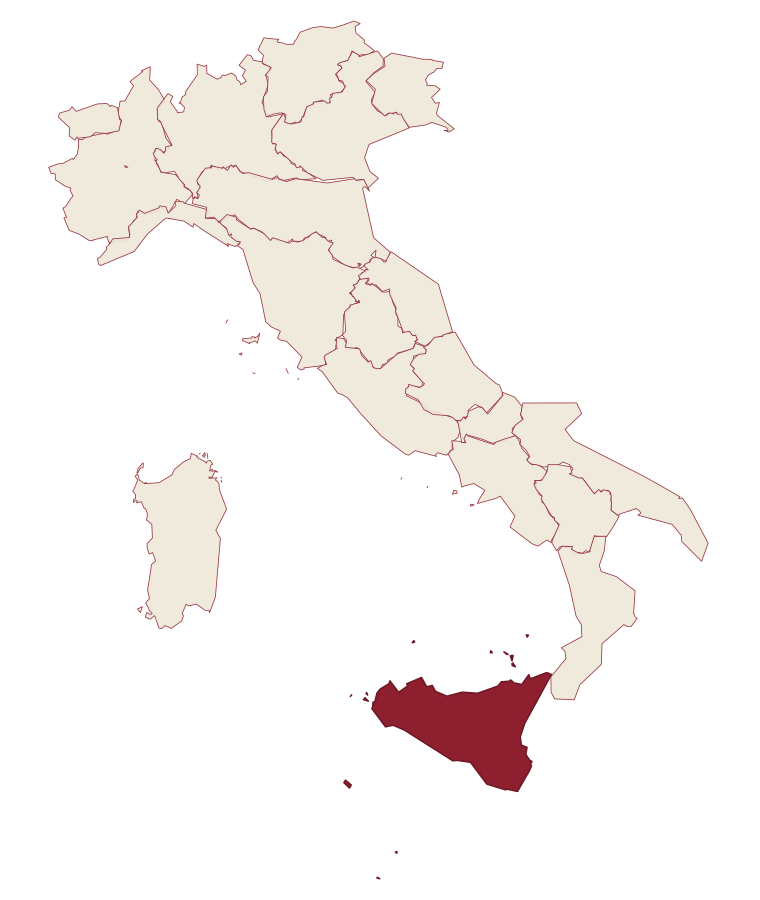
- Favignana is a comune in the province of Trapani, in Sicily, at 6 meters above sea level.
- How do you get to Favignana?
- Favignana is on an island and is reached by ferry.
- When is the best time to visit Favignana?
- Best in Apr–Oct. August is the warmest month, averaging 27 degrees, and November the wettest, with about 13 rain days.
- Is there a sagra or a festival in Favignana?
- Yes. FishTuna a Favignana. September is when the first of them falls.
- Which other towns are like Favignana?
- Capri, Carloforte and Casamicciola Terme.
- How many people live in Favignana?
- 4,525 at the 2023 count.
Tags & datadesignations · numbers · sources
The numbers
- Elevation: 6 m
- Population: 4,525
- Surface area: 38.32 km²
On the map
These figures were compiled from public directories: ISTAT, OpenStreetMap and Wikidata, and from the official listings of the guides named on this page. Town details change; verify with official sources before you travel.
Similar
Towns like Favignana
Capri
Province: Napoli
both between 3,000 and 10,000 people · both near sea level
Carloforte
Province: Sud Sardegna
both between 3,000 and 10,000 people · both near sea level
Casamicciola Terme
Province: Napoli
both between 3,000 and 10,000 people · both near sea level
Lampedusa e Linosa
Province: Agrigento
both between 3,000 and 10,000 people · both near sea level
Pantelleria
Province: Trapani
both between 3,000 and 10,000 people · both near sea level
Anacapri
Province: Napoli
both between 3,000 and 10,000 people · both islands, reached by ferry