
Friuli-Venezia Giulia · Udine
Fagagna
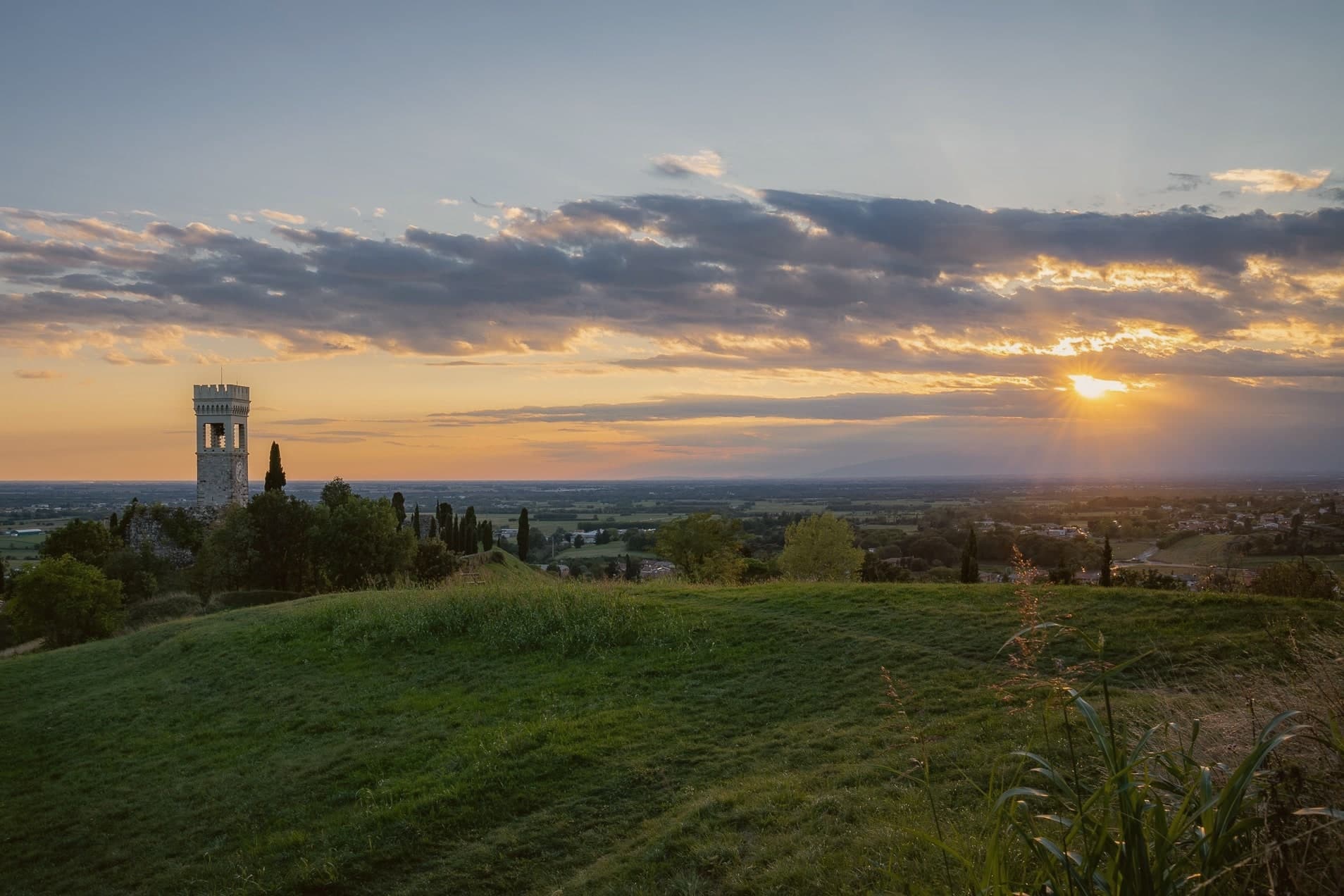
A 177-meter Friulian hill town northwest of Udine, fortified by Otto II in 983 and racing donkeys in the piazza since 1891.
- Best time
- Apr–Oct
- By car
- 20 min from Udine
- Population
- 5,980
Known for
CORSA DEGLI ASINI
Donkey race run every first Sunday of September since 1891 between the four boroughs of Centro, Palûd, Pic, and Riul.
NORTHERN BALD IBIS
Oasi dei Quadris reserve breeds the critically endangered Waldrapp; 37 captive-bred birds were released for migration in 2014.
OTTO II'S CASTLE
One of five Friulian castles donated by Emperor Otto II to the Patriarch of Aquileia in 983, oldest stones from the 11th century.
When to visit
Best · Apr–Oct
- J8°
- F11°
- M13°
- A17°
- M21°
- J26°
- J29°
- A29°
- S24°
- O19°
- N13°
- D9°
- Best
- Hot or crowded
- Quiet
- Mostly closed
Daytime averages, 2020–2024. Weather data by Open-Meteo.com.
The festa: Giacomo il Maggiore, 25 July
Why come
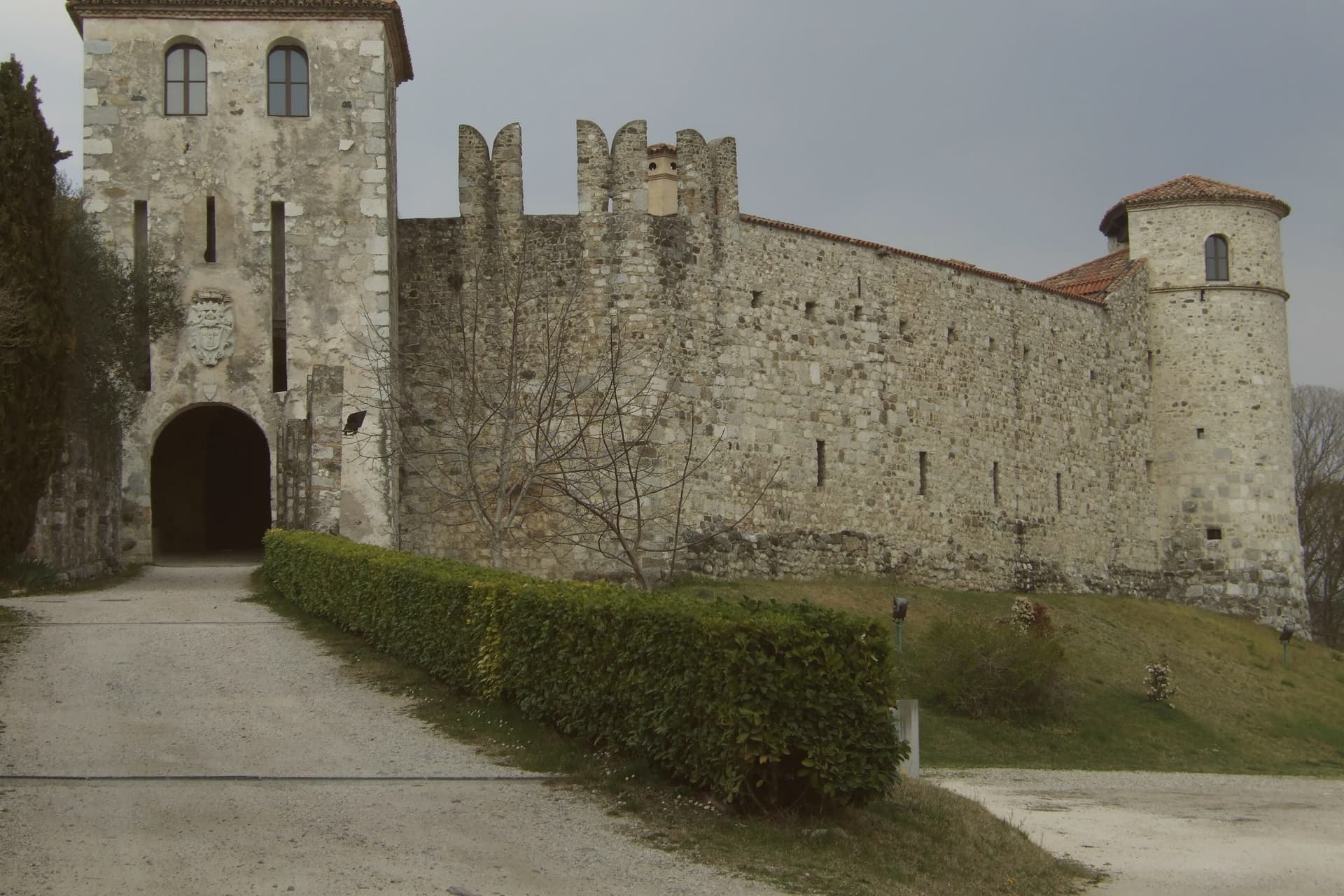
Fagagna, Friulian Feagne, sits on the morainic hills thirteen kilometers northwest of Udine. The hill has been strategic since Roman times, and the castle passed to the Patriarch Rodoaldus as part of the 983 donation. What remains today is scattered rather than whole: a stretch of wall, the Borgo gate, the clock-tower converted into a bell tower, the ruined keep, a fourteenth-century house, and the small church tucked inside the old walls.
The four boroughs, Centro, Palûd, Pic, and Riul, each keep a colour and a stake in the town's identity that surfaces once a year in the piazza, and otherwise define the town's internal geography more than its street plan does. A regional nature reserve on the edge of town gives Fagagna a second, unrelated distinction alongside its medieval fragments. The town has been a member of Borghi più belli d'Italia since 2007. Between the broken castle, the annual race, and the ibis reserve, the town reads less as one attraction than as several small, unconnected reasons to stop, each surviving on its own terms.
The Sunday letter
Fagagna is on our list. Its letter is still to come.
We are writing about all 1,000 of these towns, one at a time, in a free letter every Sunday: the photo, the food, the festa. That is our mission. Sign up and you will be there when Fagagna comes up. By Peter & Sophia, from Pietrasanta.
Read on
Fagagna in our articles
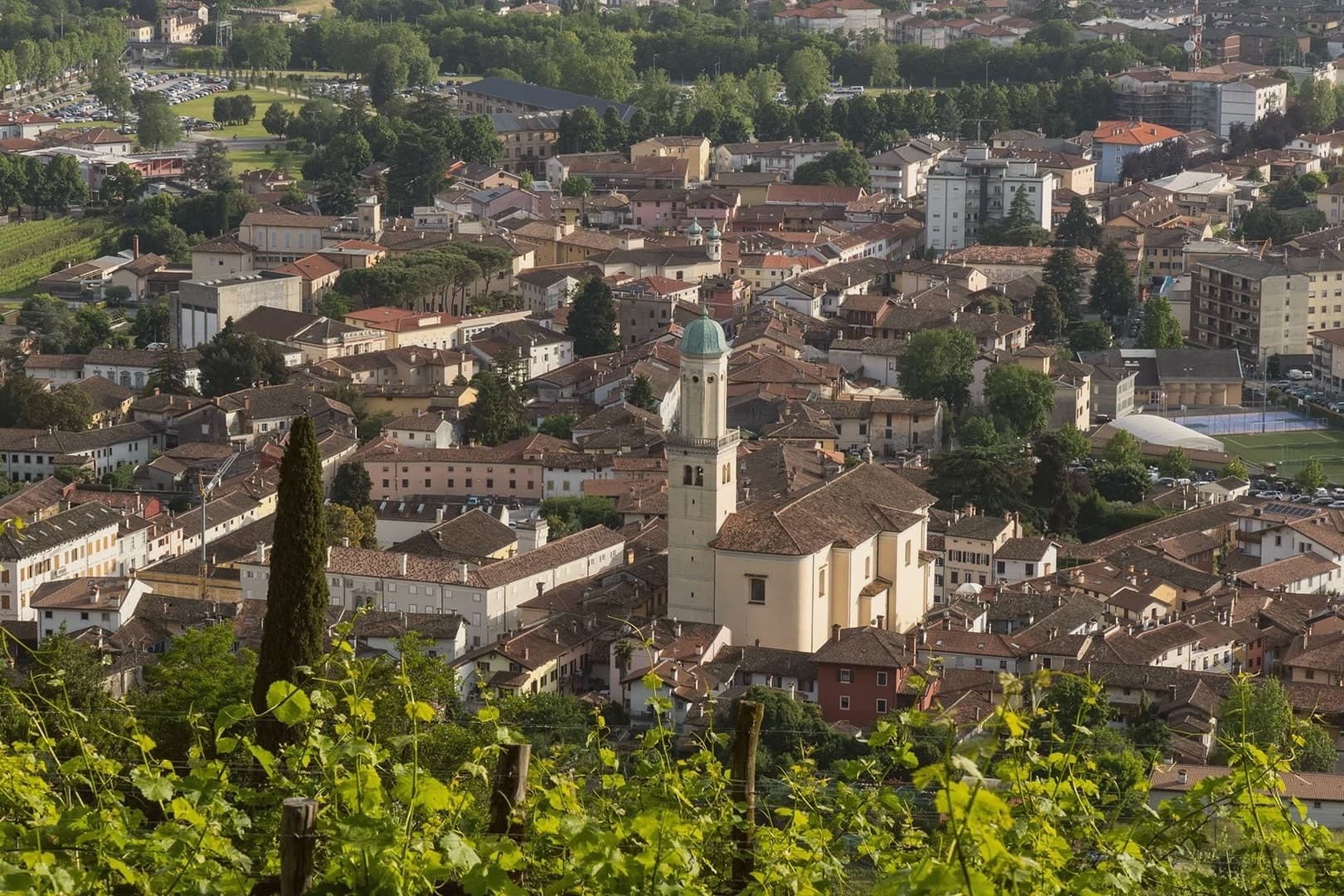
 The best hill towns that eat well in Friuli-Venezia Giulia6 towns, Fagagna among them.
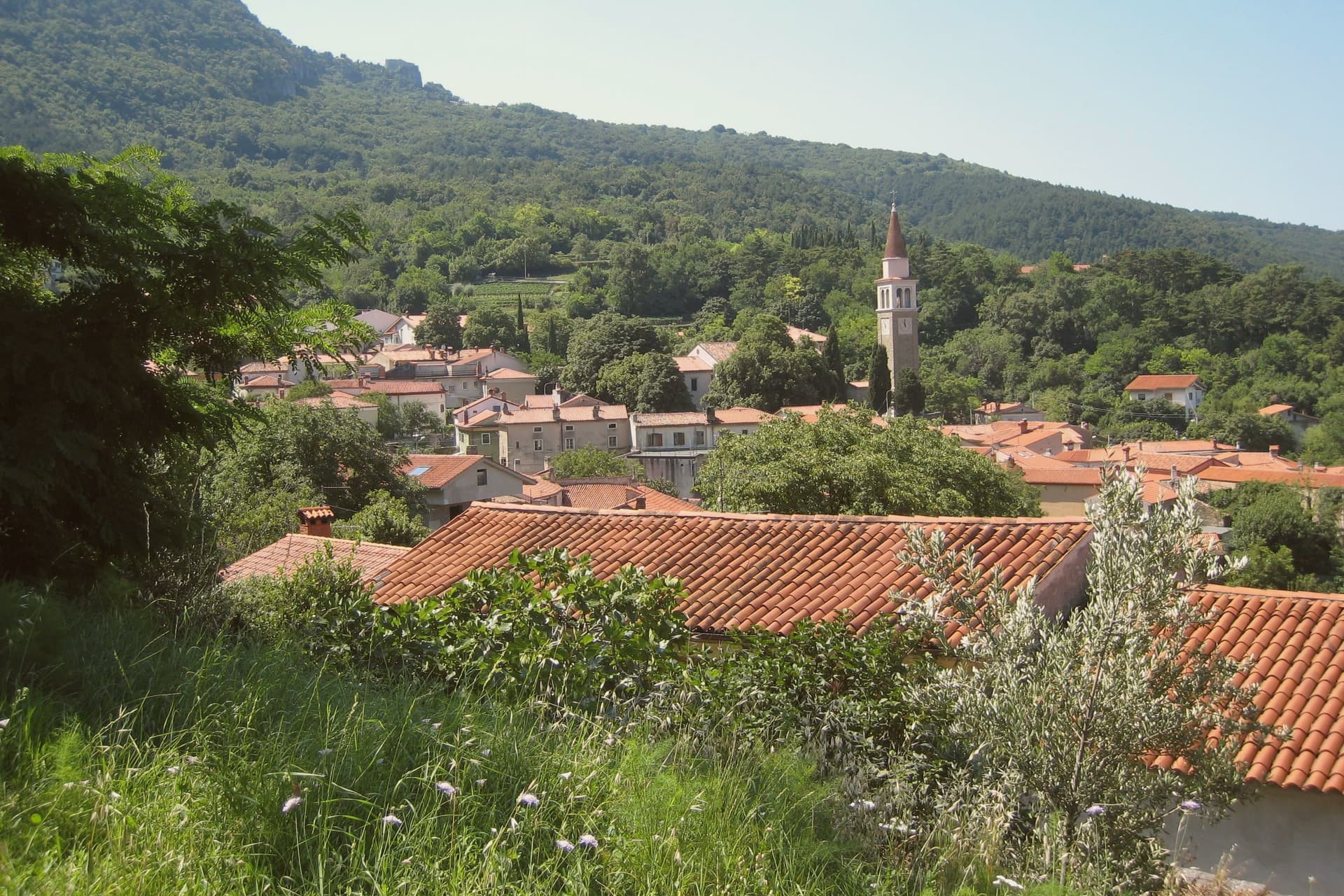
 The best hill towns within 45 minutes of Udine6 towns, Fagagna among them.
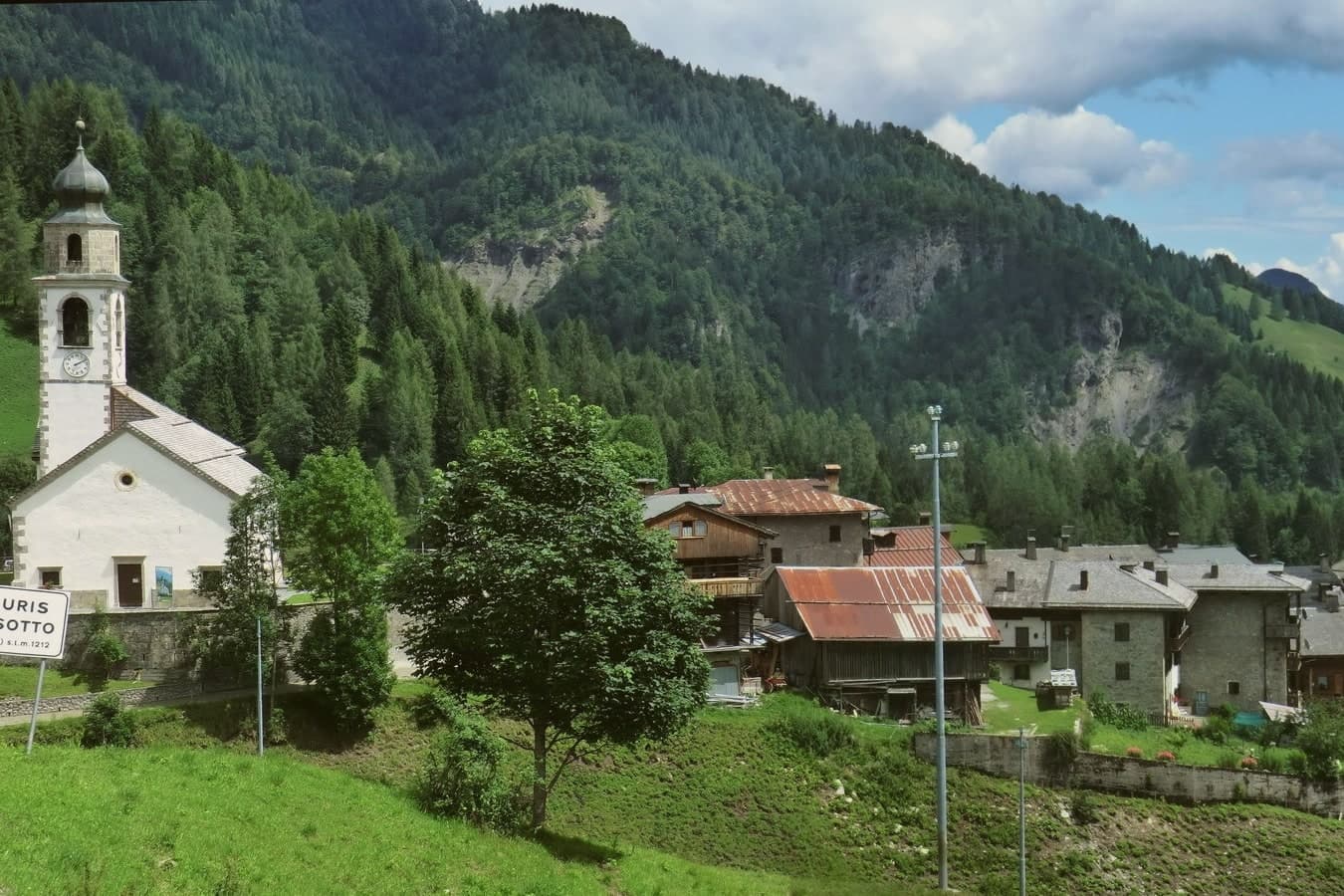
 The best hill towns within 90 minutes of Trieste6 towns, Fagagna among them.
 The best towns that eat well in the province of Udine6 towns, Fagagna among them.
How to get there
From Venice (TSF), about 1h 43m by car.
Verona (VRN) is about 3 hours away.
By car from the centre of Udine 20 minutes or Trieste 1h 16m.
Coming by train into Trieste Centrale? Fagagna is about 1h 14m away by road.
What to see
Castello di Fagagna
What survives is fragmentary: wall fragments, the Borgo gate, and the clock-tower, the visible remnant of the donated fortress.
Chiesa di San Michele Arcangelo
Small castle chapel inside the original walls, one of the surviving medieval structures from the patriarchal period.
Oasi dei Quadris
Regional wetland reserve where the ibis colony nests and feeds, set in the countryside outside the built-up center.
Castello di Villalta
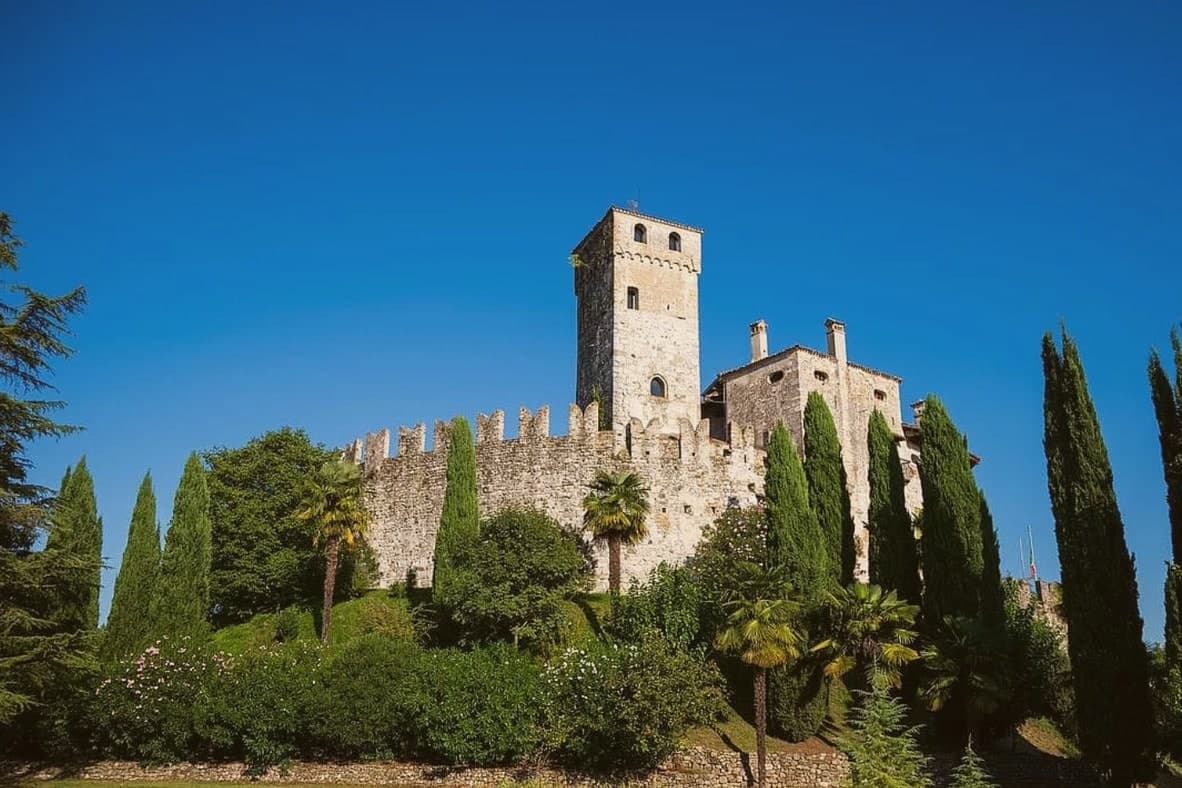
Tower and walls from 1216 in the surrounding countryside, one of the largest surviving feudal complexes in Friuli.
Piazza dell'Asino
Main square where the four boroughs run the Palio dei Mussi every first Sunday of September, a tradition unbroken since 1891.
The slow-trip planner
Building a trip? Find where Fagagna fits in a slow Italy circuit.
Answer five questions. We will shape a geographically coherent slow trip from the 1,000 Italian towns most travelers skip. Yours to save and share.
We recommend
Where to eat
Not our picks, but places the guides put their name to: a Michelin star, a Gambero Rosso fork, a Slow Food snail, a Michelin Key for the hotels. Worth a table, a counter, or a night when you pass through.
San MicheleRistorante
San Michele holds a Gambero Rosso listing and a spot in the Michelin Guide.
Through the year
What happens here
Feasts and festivals that come back year after year. We give the month rather than the date, because the date moves and the month rarely does. Check with the source before you plan a journey around one.
Sagrute di Vilaltefood festival
usually held in July. TrovaSagre
Festeggiamenti Settembrinifood festival
usually held in September. Sagre FVG (Uolli)
Living here
- Population 5,980
- Commuter belti
- Pharmacy in town
- High school within a 30-minute drive
- Nearest airport Venice, 1 h 43 min drive
- Regional capital Trieste, 1 h 16 min drive
Common questions
- What is Fagagna known for?
- Fagagna is a 177-meter Friulian hill town northwest of Udine, fortified by Otto II in 983 and racing donkeys in the piazza since 1891.
- Where is Fagagna?
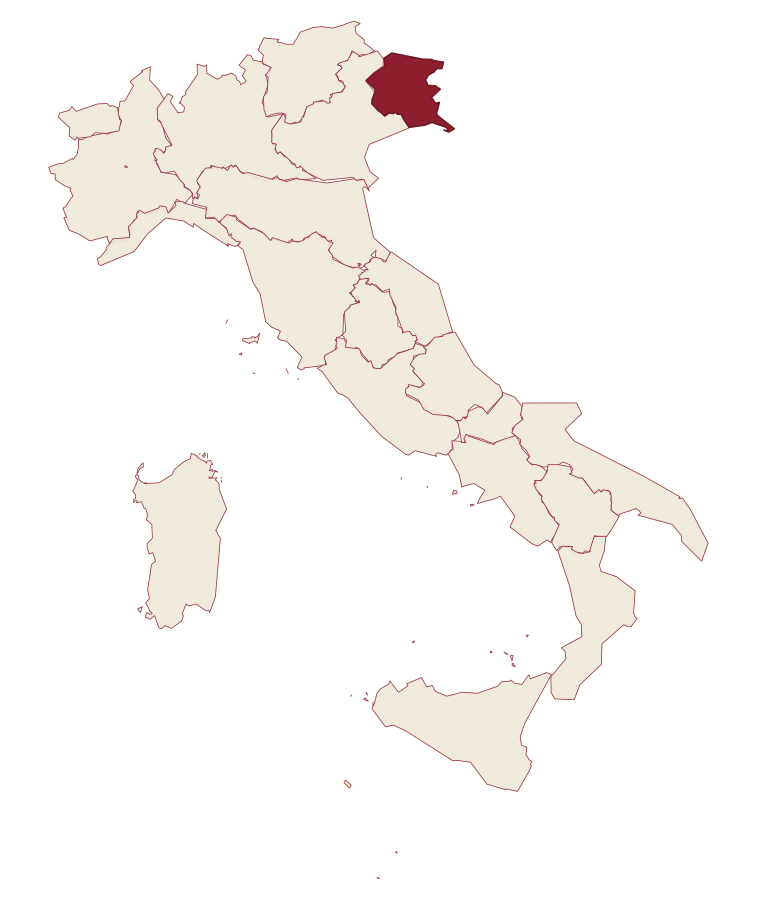
- Fagagna is a comune in the province of Udine, in Friuli-Venezia Giulia, at 177 meters above sea level.
- What is the nearest airport to Fagagna?
- Venice (TSF), about 1h 43m by car.
- How long is the drive from Udine to Fagagna?
- About 20 minutes by car.
- When is the best time to visit Fagagna?
- Best in Apr–Oct. July is the warmest month, averaging 29 degrees, and May the wettest, with about 17 rain days.
- Is there a sagra or a festival in Fagagna?
- Yes. Sagrute di Vilalte and Festeggiamenti Settembrini. July is when the first of them falls.
- Which other towns are like Fagagna?
- San Dorligo della Valle-Dolina, Cormons and Polcenigo.
- How many people live in Fagagna?
- 5,980 at the 2023 count.
Tags & datadesignations · numbers · sources
Recognised as
The numbers
- Elevation: 177 m
- Population: 5,980
- Surface area: 37.19 km²
These figures were compiled from public directories: ISTAT, OpenStreetMap and Wikidata, and from the official listings of the guides named on this page. Town details change; verify with official sources before you travel.
Similar
Towns like Fagagna
San Dorligo della Valle-Dolina
Province: Trieste
both inland, away from the coast · both between 3,000 and 10,000 people
Cormons
Province: Gorizia
both inland, away from the coast · both between 3,000 and 10,000 people
Polcenigo
Province: Pordenone
both inland, away from the coast · both between 3,000 and 10,000 people
Follina
Province: Treviso
both inland, away from the coast · both between 3,000 and 10,000 people
Montecassiano
Province: Macerata
both inland, away from the coast · both between 3,000 and 10,000 people
Peccioli
Province: Pisa
both inland, away from the coast · both between 3,000 and 10,000 people
🎨 Borghi più belli d'Italia
More Borghi più belli d'Italia towns in Friuli-Venezia Giulia
Cervignano del Friuli
Province: Udine
The capital of Bassa Friulana on the Ausa river, an inland river port for Aquileia in 181 BC and a railway junction since 1860.
Cividale del Friuli
Province: Udine
The Lombard capital on the Natisone, founded as Forum Iulii by Julius Caesar, where an eighth-century chapel still holds six stucco saints.
Cordovado
Province: Pordenone
A 15-meter Friulian village in the Pordenone plain, fortified by the bishops of Concordia as their summer seat and described in Ippolito Nievo's Confessions.
Frisanco
Province: Pordenone
A 572-resident commune in the Val Colvera whose frazione Poffabro, at 525 meters, became a model of Prealpine stone-and-wood vernacular architecture.
Gradisca d'Isonzo
Province: Gorizia
A 1479 Venetian bastion on the right bank of the Isonzo, with seven towers, twenty-meter walls, and a Habsburg court inside.