
The best towns you can reach by train that sit inside a national park in Abruzzo
Abruzzo is the greenest corner of the Italian mainland, and much of it is protected: national park land runs from the bare limestone of the Maiella across to the beech woods of the Gran Sasso, with bears, wolves and chamois inside the boundary. The towns built into it are made of pale local stone, stacked on slopes above valleys that fill with cloud in autumn. Winter brings snow deep enough for skiing at the higher settlements, while summer means confetti from Sulmona, saffron from the Navelli plain, arrosticini grilled over long narrow braziers and pecorino aged in the mountain villages. The railway climbs through all of it, which is the part travellers tend not to expect.
The park most people book is the Parco Nazionale d'Abruzzo, Lazio e Molise in the south, where Pescasseroli and Civitella Alfedena fill up every August and again over the Christmas ski weeks. Coach parties come for the bear-watching trails and the wildlife centres, car parks overflow at the trailheads, and the same handful of villages absorb most of the region's visitors. It is a fine park. It is also the one everyone has already chosen.
The protected land does not stop there. The Maiella and the Gran Sasso hold their own villages, their own high pastures and their own food, and several of them sit on working railway lines, including the slow route that crosses the mountains between Sulmona and the Molise border. The towns here are the ones inside a national park that you can reach on a timetable rather than a hire car.
Of the 73 communes we have mapped in Abruzzo, 8 qualify as towns you can reach by train inside a national park: we have confirmed each is reachable without a car, and each sits inside a national park. The smallest, Roccacasale, has 597 residents.
Elsewhere in the catalogue: The best hill towns you can reach by train in Abruzzo and The best small hill towns inside a national park in Abruzzo.
Roccacasale
Why visit Roccacasale
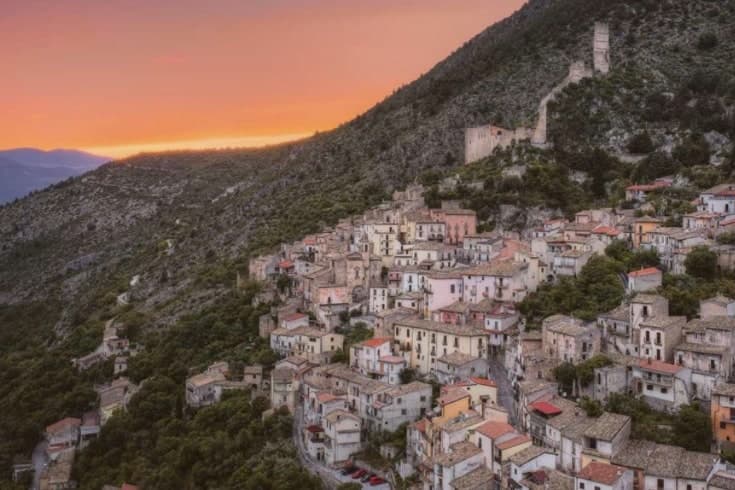
Roccacasale sits at 450 meters, overlooking the Peligna valley and the town of Sulmona below. The settlement coalesced as a defensive borgo on the slopes directly under a rocca built before the year 1000 to guard the entrance to the Sangro valley and the Cinquemiglia plain against Saracen and Byzantine raids.
In 1318 part of the territory passed to Giacomo Cantelmo. The Cantelmo family held the castle through the Renaissance, then in the late sixteenth century it passed to the barons whose name it still carries.
In 1803, in the wake of the Napoleonic wars, the French army destroyed it. The terraced houses of the borgo and the hilltop ruin above them still trace that original relationship, defended village below, stronghold above, unchanged in plan since the medieval period.
The commune lies inside the Maiella National Park, its territory reaching from the valley floor up the ridge toward hermitage sites once occupied by a hermit pope. What remains is a settlement whose whole layout, from the walled church to the terraces to the shattered walls on the hill, still reads as a single defensive idea built to watch two valleys at once.
We confirmed you can reach this one by train.
What to see in Roccacasale
- Castello De Sanctis. Ruins standing directly above the borgo, reachable by the path climbing from the terraced houses to the hilltop where the walls still crown the slope.
- Chiesa di Sant'Michele Arcangelo. Parish church inside the ancient walls, consecrated 1579, with a baroque interior restored in the nineteenth century.
- Borgo medievale. Stone houses arranged on terraces directly below the ruined castle, original medieval plan preserved.
How to get to Roccacasale
There is a railway station in the town, so you can arrive without a car and never need one while you are here. Pescara is roughly 52 minutes away by road.
Our tip
April through June and September through October are the best windows. The Morrone trails open in late spring and the slopes above the village hold wildflowers through June. October brings the Peligna valley harvest and clear light on the castle ruins.
Campo di Giove
Why visit Campo di Giove
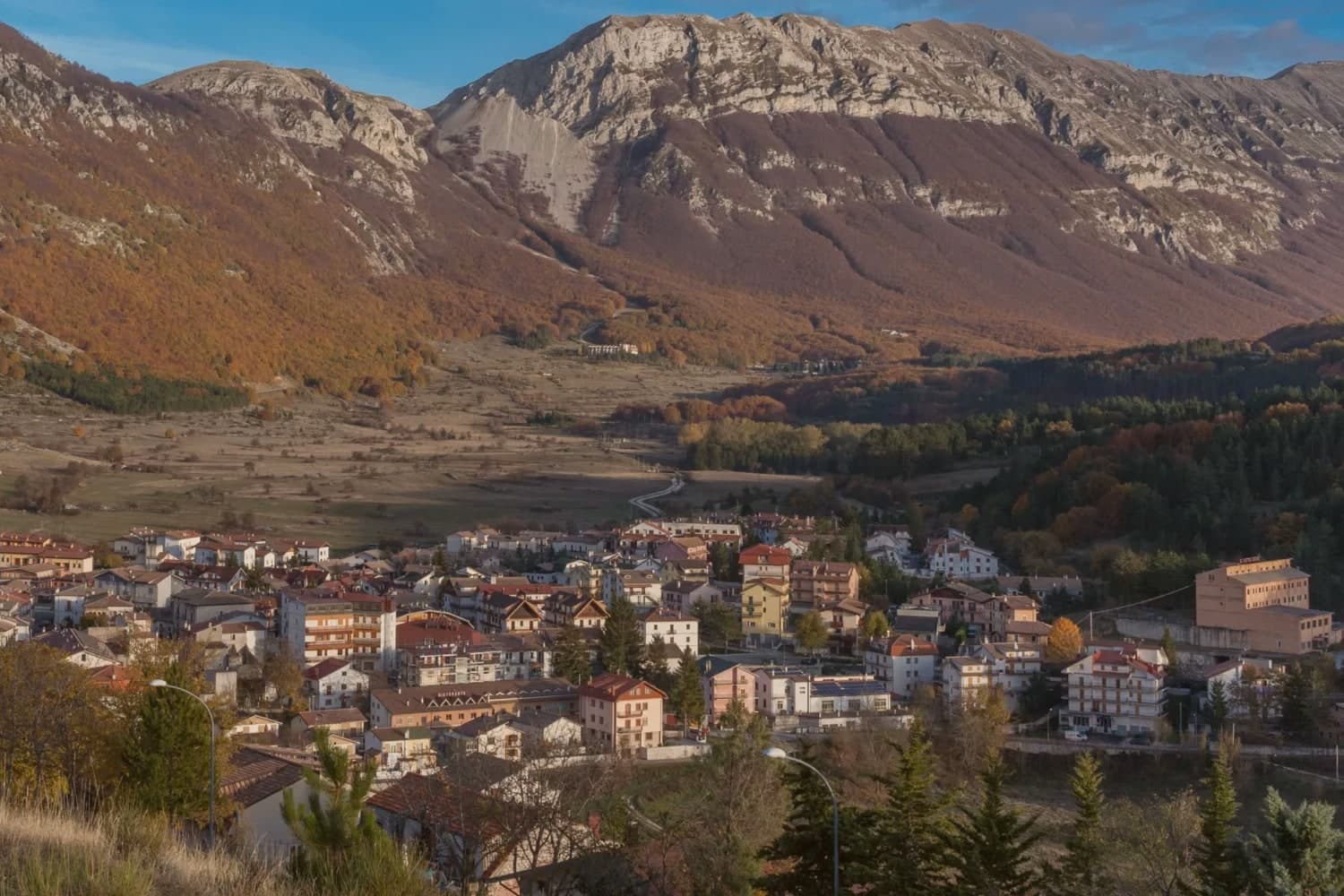
Campo di Giove sits at 1,064 meters at the foot of the southwestern Maiella, the highest commune inside the Maiella National Park. The name is documented as Campo Jovis from the 4th century AD, with local tradition claiming a Roman temple to Jupiter on the site after a victory over the Paeligni.
A villager called Odorisio appears in a document from January 1136. In the 14th century the village was a Cantelmo stronghold; it then passed to the Caldora, the Belprato, the Pignatelli, and finally the Recupito.
Above the village, the ski station operates between 1,150 and 2,360 meters, the highest piste in Abruzzo. The mother church of Sant'Eustachio holds the statue of the patron saint.
Sant'Antonino was one of the sixteen convents founded by Fra Pietro da Morrone, the hermit who would become Pope Celestine V. The Master of Campo di Giove, an anonymous 15th-century painter named for the polyptych he made for the village church, is on display at the Museo Nazionale d'Abruzzo in L'Aquila.
We confirmed you can reach this one by train.
What to see in Campo di Giove
- Chiesa Madre di Sant'Eustachio. Parish church of the village patron, with the statue of Sant'Eustachio, the saint celebrated each September with the village feast.
- Convento di Sant'Antonino. One of the sixteen convents founded by Fra Pietro da Morrone, the hermit who became Pope Celestine V, documented in a 1274 papal bull.
- Palazzo delle Logge. 16th-century palazzo with arched loggia on the main piazza, one of several Renaissance buildings from the Caldora and Pignatelli periods.
How to get to Campo di Giove
There is a railway station in the town, so you can arrive without a car and never need one while you are here. Pescara is roughly 82 minutes away by road.
Our tip
Campo di Giove runs on two seasons. December through March, the Maiella ski lifts run from the village edge to 2,360 meters, the highest piste in Abruzzo. June through September is the second season: temperatures stay below 25 even in August at 1,064 meters, and the Sentiero della Libertà hike, retracing the WWII escape route over the Maiella, draws walkers.
Roccaraso
Why visit Roccaraso
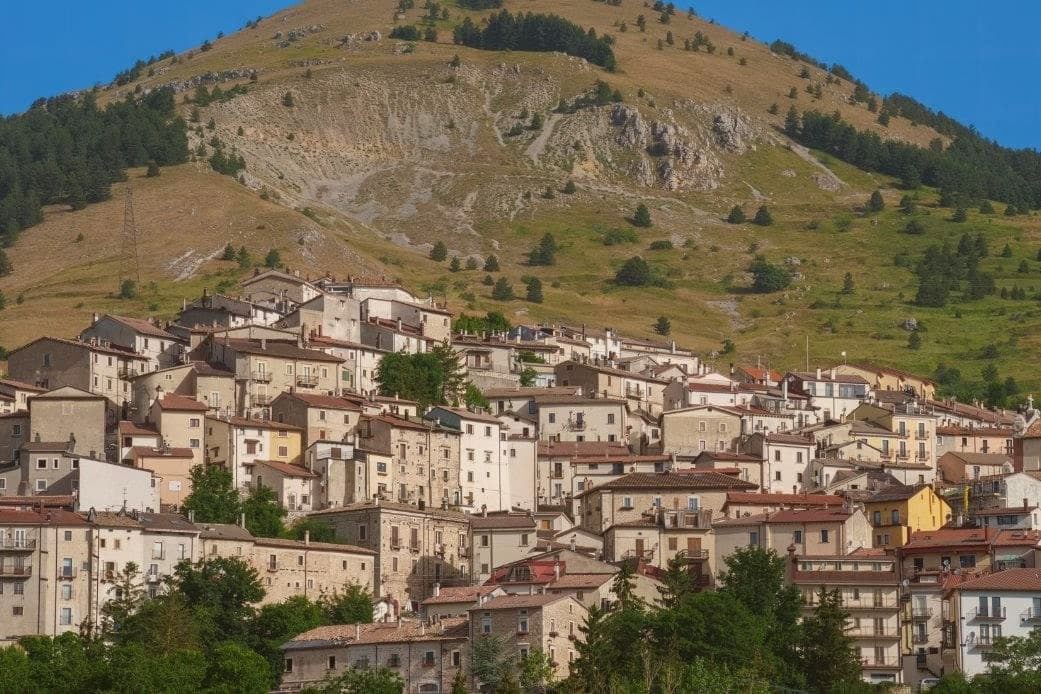
The town sits where the plateaus of Aremogna and Pizzalto meet the higher ground toward Monte Greco, the peak that anchors the whole range at 2,283 meters. The two plateaus are joined by lift, grazed and hiked in summer, cut into pistes in winter: the same trails serve both seasons under different cover.
Four kilometers uphill sits the older, smaller settlement, a medieval frazione that took the weight of the war the valley town below did not escape either. The Germans dug into the Gustav Line where it crossed through here, the Allies bombed in response, and the town below was leveled along with it.
What stands in Roccaraso now was rebuilt after that, stone by stone, from what the bombing left. The first ski lift on Monte Zurrone went up in 1936, years before any of it, and skiing resumed after the rebuilding and never really stopped.
The area has held its place as the south's ski capital since, though the snow line keeps rising: in January 2024 only twenty of Abruzzo's 122 pistes were open. A resort built twice, once by engineers before the war and once by survivors after it, still runs on the same slopes either way.
We confirmed you can reach this one by train.
What to see in Roccaraso
- Chiesa di Santa Maria Assunta. Baroque travertine façade, gilded walnut pulpit in the shape of a Greek cross, painted and gilded wooden organs.
- Pietransieri. Medieval frazione where the Limmari Massacre took place; the Gold Medal of Military Valour recognizes what its people lost that winter.
- Piano Aremogna. High pasture and ski terrain at 1,650 meters, the eastern flank of the Alto Sangro ski domain.
How to get to Roccaraso
There is a railway station in the town, so you can arrive without a car and never need one while you are here. Pescara is roughly 94 minutes away by road.
Our tip
December through March is the season Roccaraso was built for. The Alto Sangro lifts open, the slopes fill, and the town doubles on weekends. June through September is the second season: 1,236 meters means temperatures rarely cross 23 degrees even in August, and the same plateaus that hold the lifts become hiking and pasture country.
Tocco da Casauria
Why visit Tocco da Casauria
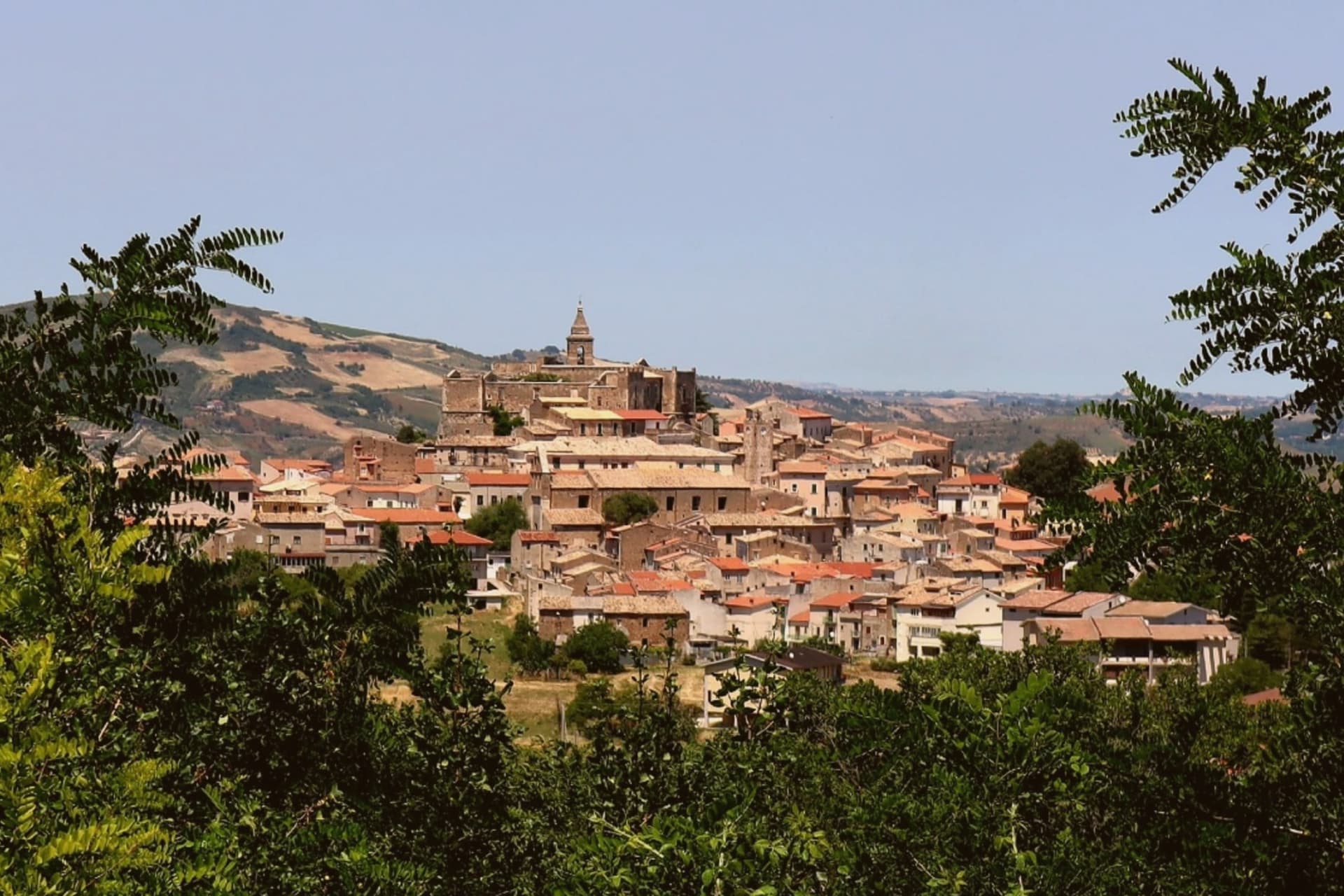
Tocco sits on a hill at 356 meters between the Pescara river and the Arolle stream, with the Maiella massif behind it. The town was founded around 872 under the authority of the abbey nearby, established in fulfilment of a vow made during an imprisonment in Benevento.
The abbey held the relics of Pope Clement I. The town was simply Tocco until 1861, when da Casauria was added to honour the abbey it grew up beside.
The centro storico is dominated by the Caracciolo Castle, rebuilt in Renaissance style after the 1456 earthquake, while the lower slopes toward the Pescara valley carry olive groves and Montepulciano vines, the produce that earned the town its place among the Città dell'Olio and Città del Vino. Centerba, the high-proof liqueur made from a hundred Maiella herbs, has been distilled here since the mid-19th century by the Toro family.
What holds the town together is the relationship between the abbey below and the settlement on the hill: a monastic foundation that gave the place its name, its early authority, and, centuries later, its liqueur trade and vineyards grew up in the valley it once governed.
We confirmed you can reach this one by train.
What to see in Tocco da Casauria
- Abbazia di San Clemente a Casauria. A national monument since 1894, standing just outside the commune in Castiglione. Founded by Louis II, its bronze doors and their 72 panels remain the reason to make the detour.
- Castello Caracciolo. Built between 1187 and 1220 under Frederick II, destroyed by the 1456 earthquake and rebuilt in Renaissance style, dominating the centro storico.
- Chiesa di Sant'Eustachio. Main church of Tocco, built in the 18th century and named for the town's patron, with the statue of the saint inside.
How to get to Tocco da Casauria
There is a railway station in the town, so you can arrive without a car and never need one while you are here. Pescara is roughly 47 minutes away by road.
Our tip
April through October works best in Tocco. The hill catches breeze off the Maiella even in July, and the olive harvest in October fills the lower terraces with activity. Spring opens the abbey grounds and the Pescara valley vineyards.
Manoppello
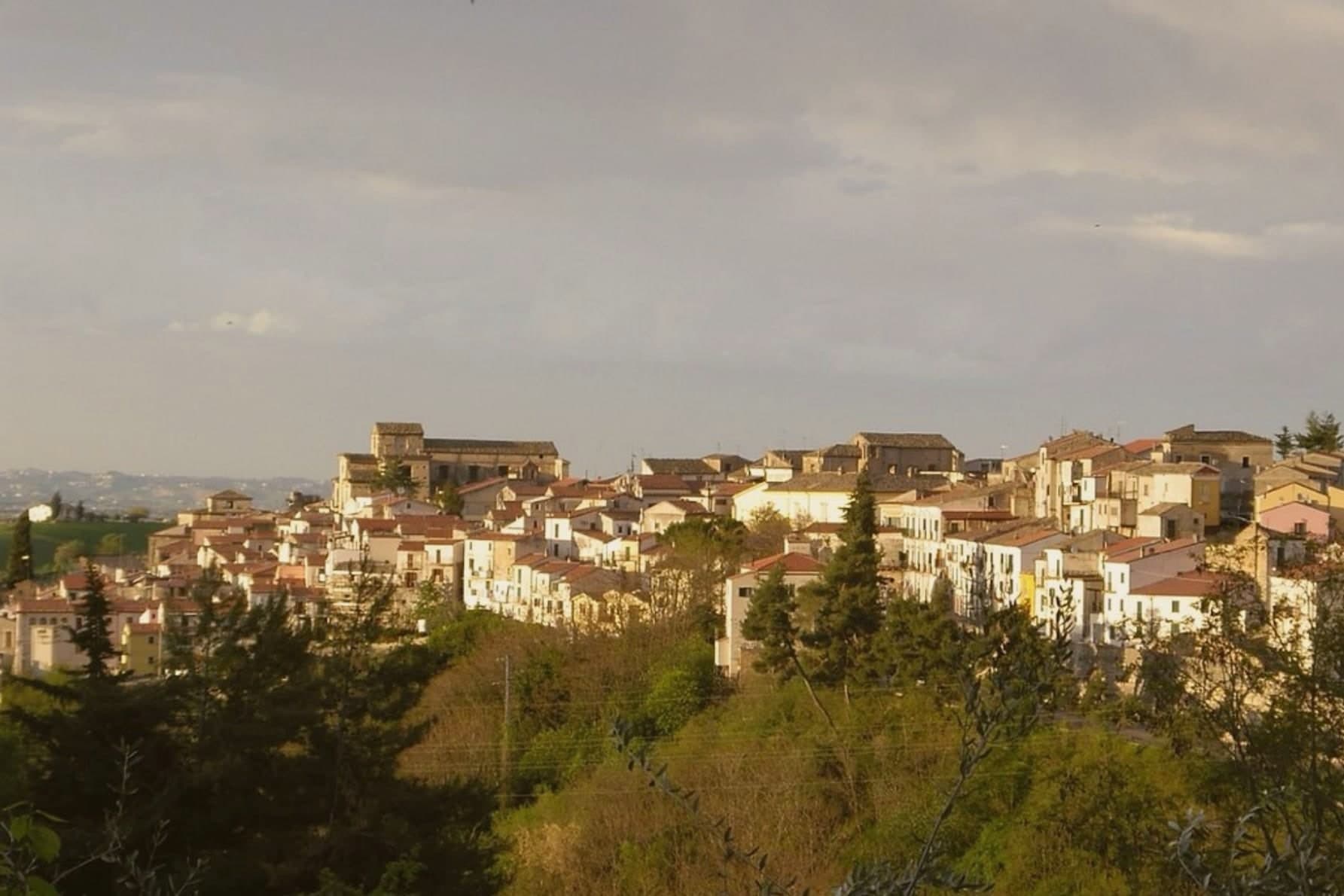
Why visit Manoppello
Manoppello sits on a hill on the right bank of the Pescara river, fifteen kilometers from the city of Pescara and at the foot of the Maiella massif. The old center holds the river's edge while the abbey stands apart from it, outside the town proper, on ground that carried a Roman temple before it carried a church.
The relic that gives the hill above the town its name arrived at the Capuchin convent in 1620, brought by the notary Donato Antonio de Fabritiis. The countryside around both church and abbey shares a building tradition, earth rammed into walls, common enough across the valley to have earned the commune its place in a network built to recognize it.
The town's geography is therefore layered rather than single: a river-bank settlement, a devotional site on the hill above it, an abbey standing separate on former Roman ground, and a farming countryside that built in earth rather than stone. Each part answers to a different age, and together they show a place that grew by accretion rather than around one center.
We confirmed you can reach this one by train.
What to see in Manoppello
- Basilica del Volto Santo. Capuchin basilica on the hill above town, holding the veil reputed to be the Veil of Veronica, a translucent cloth bearing a faint image of a human face.
- Abbazia di Santa Maria Arabona. Cistercian abbey founded in 1197, standing outside the town on ground once occupied by a temple to Bona Dea, its choir carrying frescoes by Antonio Martini di Atri.
- Centro Storico. Medieval core on the right bank of the Pescara, built in the rammed-earth technique of the surrounding countryside.
How to get to Manoppello
There is a railway station in the town, so you can arrive without a car and never need one while you are here. Pescara is roughly 32 minutes away by road.
Our tip
April through June and September through October are the calm months in Manoppello, when the basilica is open without the high pilgrimage flow and the Maiella foothills turn green. July and August bring heat and the largest pilgrim numbers, especially around the August feast of the Volto Santo. November through March is quiet.
Guardiagrele
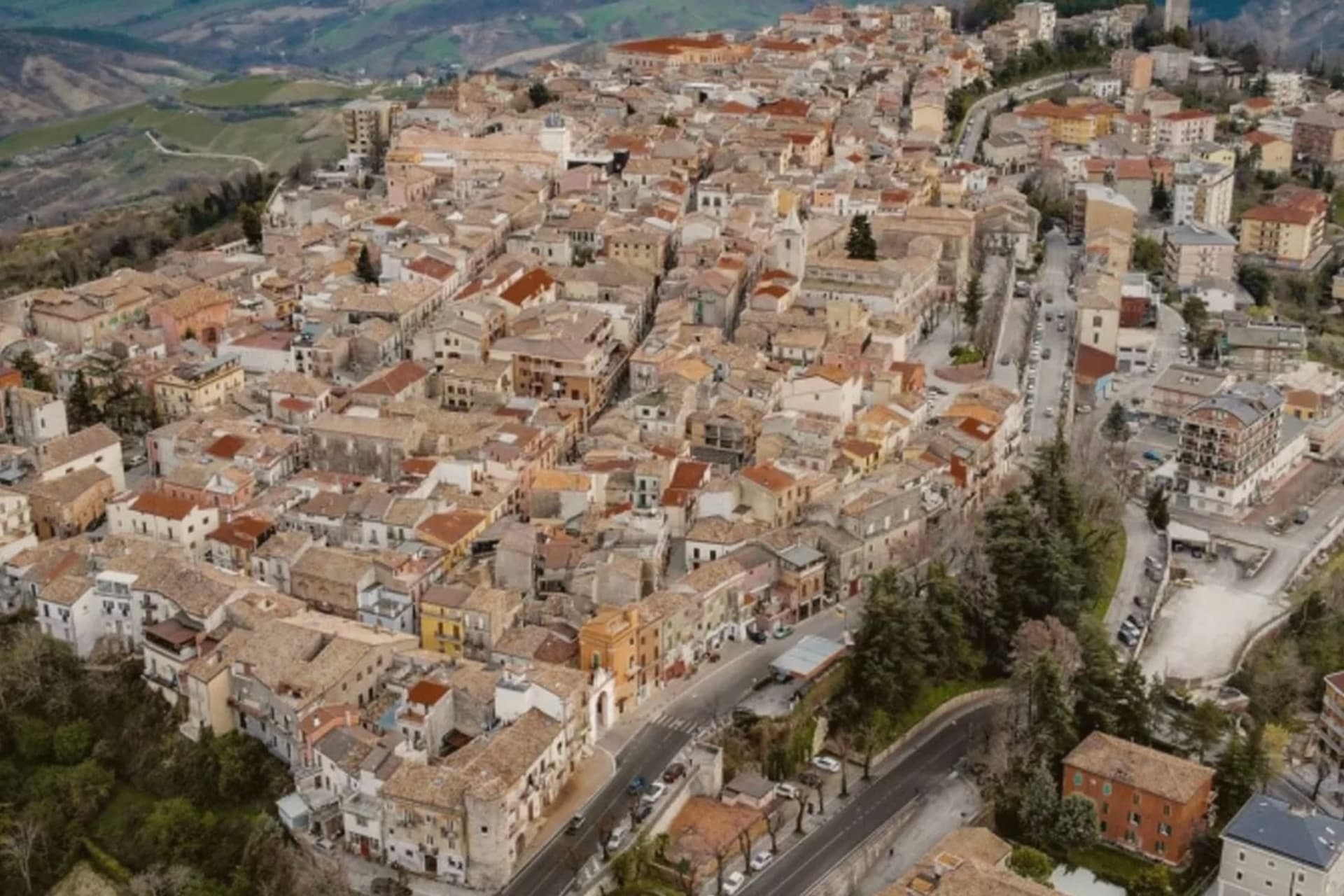
Why visit Guardiagrele
Guardiagrele sits at 576 meters on the eastern Majella foothills, thirty kilometers from Pescara. Gabriele D'Annunzio called it the terrazza d'Abruzzo for the views over the mountains and valleys from its piazzas.
Documented in an eleventh-century papal bull as a villa named Grele, the town grew through the fourteenth and fifteenth centuries as a stronghold of the Kingdom of Naples, with permission from the king to mint coins. It produced the late medieval goldsmith Nicola Gallucci, known as Nicola da Guardiagrele (c.1385-c.1462), trained on Gothic and Tuscan models including Lorenzo Ghiberti, who left work in cathedrals across Abruzzo.
The collegiate church of Santa Maria Maggiore, built at the start of the thirteenth century outside the walls and absorbed into the town in the centuries after, carries a fifteenth-century portal with a Coronation of the Virgin lunette by Nicola, now in the Duomo museum. Wrought-iron, copper and gold work still operate from workshops in the centro storico.
We confirmed you can reach this one by train.
What to see in Guardiagrele
- Collegiata di Santa Maria Maggiore. Thirteenth-century collegiate church with a massive bell tower, fifteenth-century portal, and the Nicola da Guardiagrele Coronation lunette in its museum.
- Museo del Duomo. Cathedral museum holding Nicola da Guardiagrele's marble lunette, his goldwork, and liturgical objects from the surrounding Majella churches.
- Botteghe del rame e del ferro battuto. Active copper and wrought-iron workshops in the centro storico, the surviving craft tradition that produced Nicola Gallucci in the late fourteenth century.
How to get to Guardiagrele
There is a railway station in the town, so you can arrive without a car and never need one while you are here. Pescara is roughly 48 minutes away by road.
Our tip
April through October is the open season. May and September are the best months on the terrazza, with the Majella valleys in clear light and the copper workshops at full pace. July and August are warm but the elevation keeps the centro storico cooler than the coast.
Sulmona
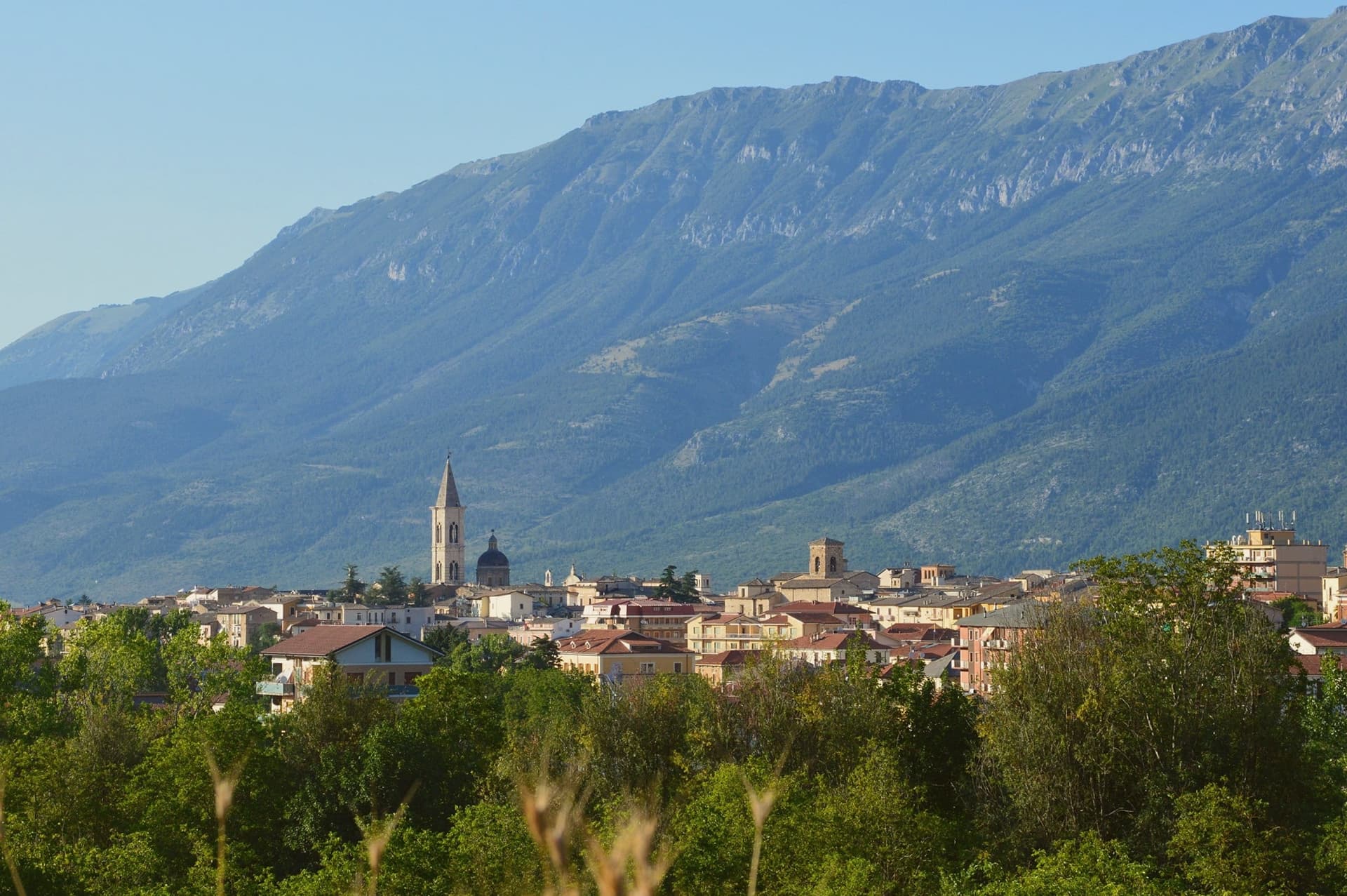
Why visit Sulmona
Sulmona sits at 405 meters in the Valle Peligna, at the confluence of the Gizio and Vella rivers, ringed by the Maiella, the Morrone and the Genzana ranges. The Roman poet Ovid was born here in 43 BC and never stopped writing about the salubrity of its water, a claim still made by the town.
Under Frederick II in the 13th century, Sulmona became the capital of the imperial province of Abruzzo and got the aqueduct of Manfred of Swabia, which still defines the long side of Piazza Garibaldi. The town survived two earthquakes, in 1349 and 1456, and emerged as the home of confetti, the sugared-almond confection given at weddings and baptisms.
Confetti Pelino, the best-known house, has been producing in town since 1783. Every July, the Giostra Cavalleresca brings out the city's seven boroughs in Renaissance procession from the Cathedral of San Panfilo, ending in a ring-jousting tournament in Piazza Garibaldi.
We confirmed you can reach this one by train.
What to see in Sulmona
- Piazza Garibaldi. The town's main piazza, dominated on its long side by the 13th-century aqueduct of Manfred of Swabia, host of the July Giostra Cavalleresca.
- Cattedrale di San Panfilo. Cathedral of the city's patron, the oldest church in Sulmona, starting point of the Giostra historical procession.
- Palazzo dell'Annunziata. Late-Gothic and Renaissance palace on Corso Ovidio with three different facade phases visible, now housing the civic museum.
How to get to Sulmona
There is a railway station in the town, so you can arrive without a car and never need one while you are here. Pescara is roughly 57 minutes away by road.
Our tip
April through June is the green season in the Valle Peligna, when the Maiella above the town still holds snow. The last week of July brings the Giostra Cavalleresca, the town's biggest annual gathering. August is hot, mid-thirties at midday, and the centro storico empties between two and six.
L'Aquila
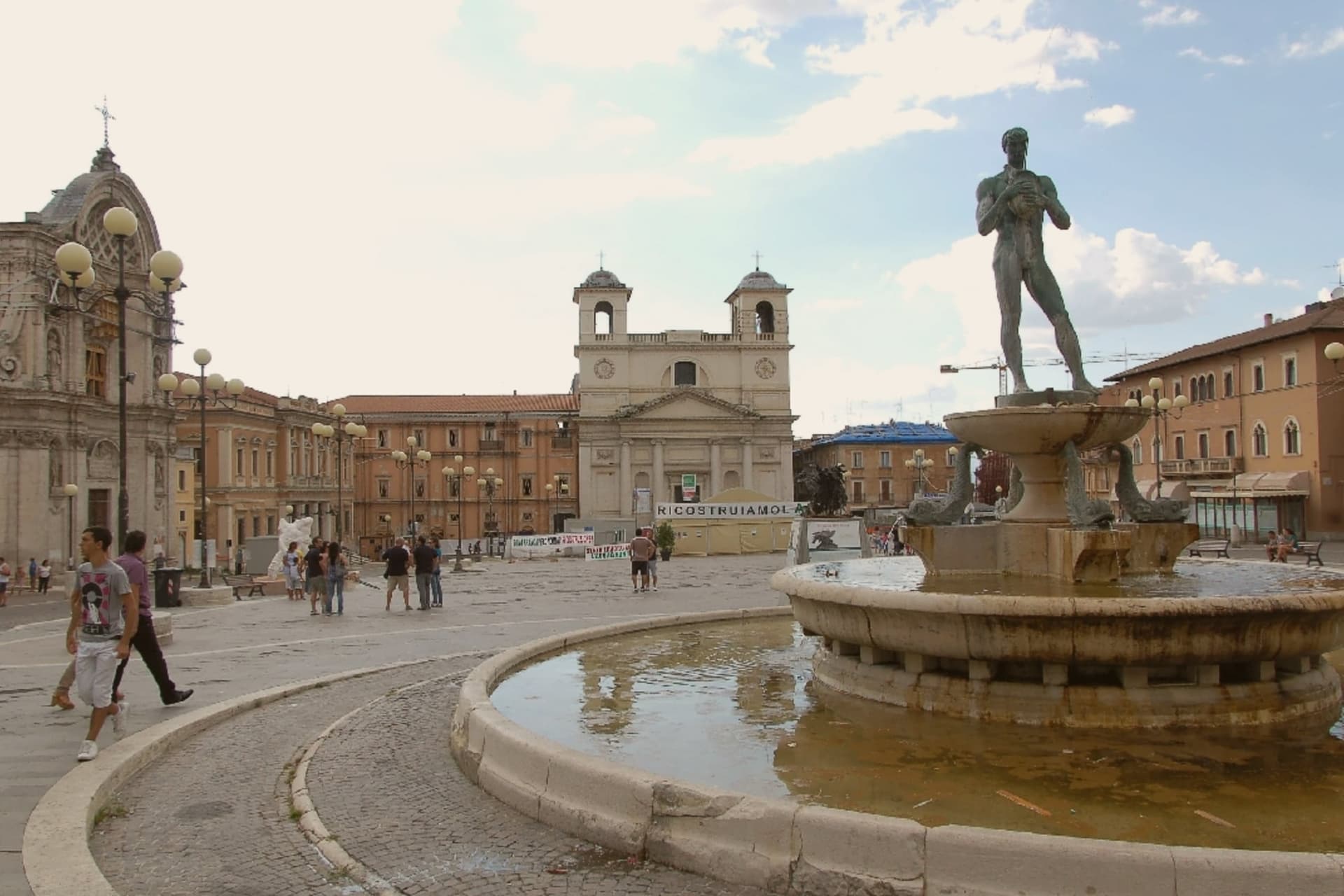
Why visit L'Aquila
L'Aquila sits at 721 meters in a high plain between the Gran Sasso and the Velino-Sirente massifs, the regional capital of Abruzzo with 69,558 residents. The two ranges frame the city on opposite sides, so the plain reads as a corridor of settlement between mountains rather than a valley floor with one clear edge.
The founding myth ties the city's shape to its origins: people from 99 castles in the surrounding valley are said to have each built a piazza, a church and houses inside the new walls, so the old town is less a single design than a patchwork of neighborhoods stitched together at the point of founding. That patchwork still organizes the upper town, where the fortress on the highest ground, the civic squares, and the older parish churches sit at angles to each other rather than along one axis.
Reconstruction after the earthquake has proceeded unevenly across this patchwork: some quarters and monuments are finished and open, others still show scaffolding, and by early 2025 work stood at 88 percent of projects complete. The city today is best read as a medieval plan of independent parts, still being reassembled piece by piece rather than restored as a whole.
We confirmed you can reach this one by train.
What to see in L'Aquila
- Basilica di Santa Maria di Collemaggio. Romanesque-Gothic facade in stripes of pink and white stone, standing apart from the rest of the centro storico; the interior reopened to visitors in 2017.
- Fontana delle 99 Cannelle. A civic fountain built into an angle of two walls, water running from 99 carved spouts of varying faces, tucked at the edge of the old town rather than in a central square.
- Forte Spagnolo (Castello Cinquecentesco). A squat, star-shaped fortress with a deep dry moat, occupying the highest ground of the upper town and visible above the rooftops from much of the city.
How to get to L'Aquila
There is a railway station in the town, so you can arrive without a car and never need one while you are here. Roma is roughly 89 minutes away by road.
Our tip
May through October is the working window at 721 meters under the Gran Sasso. The Perdonanza Celestiniana opens at Collemaggio on 28-29 August. The university semesters from October frame the cultural calendar.
More from Anywhere Italy
- The best hill towns you can reach by train in Abruzzo
 The best small hill towns inside a national park in Abruzzo
- The best hidden towns you can reach by train that have a serious restaurant in Abruzzo
- The best small hill towns you can reach by train in Abruzzo
 The best towns that eat well in the province of L'Aquila
 The best mountain towns inside a national park within 90 minutes of Pescara