
The best hill towns you can reach by train in Abruzzo
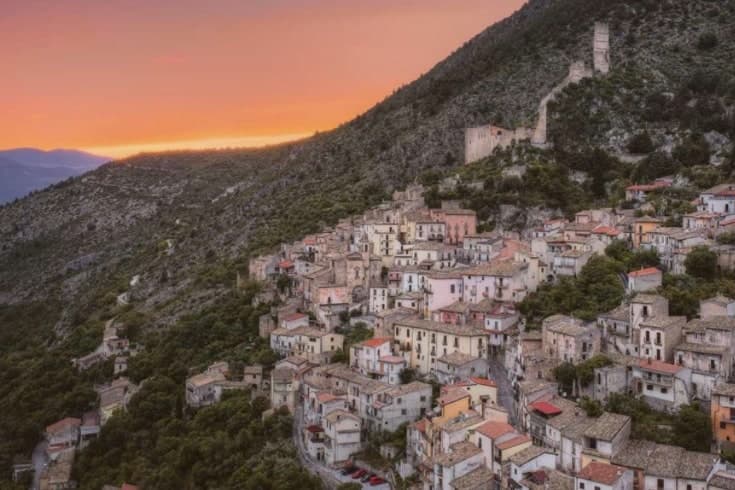
Abruzzo inland is a landscape of pale limestone and packed hill villages, built up ridges above valleys of olive and vine, with the Maiella and the Gran Sasso holding snow into late spring. The food is mountain food that never got fussy: skewers of mutton grilled over long narrow braziers, chitarra pasta cut on a wire frame, pecorino, saffron from the Navelli plateau, lamb roasted with rosemary. Autumn brings grape harvest and mushrooms, and the towns smell of woodsmoke by late October. The houses are stone and rendered brick, the streets steep, the piazzas small and shaded.
Most visitors to Abruzzo point their hire car at the national parks, and the Parco Nazionale d'Abruzzo, Lazio e Molise takes the bulk of them, along with the coast road running down from Pescara to Vasto. Both deserve the attention. Both are also busy in August, and both assume you are driving, which is how a region with a perfectly serviceable regional rail network came to be described as impossible without a car. The valley lines are quiet, cheap and slow in the way that suits this landscape.
The same hills carry on either side of those routes, and the trains run through them. The Rome to Pescara line threads the Peligna basin and the Aterno valley, the Sangritana and the Adriatic branches reach up into the Chieti and Teramo hills, and the towns on this list sit within reach of a station without needing to hire anything. Fewer people go, which is chiefly a matter of how they were told to travel.
Of the 73 communes we have mapped in Abruzzo, 10 qualify as hill towns you can reach by train: each is an inland hill settlement, and we have confirmed each is reachable without a car. The smallest, Roccacasale, has 597 residents.
If you are still choosing, we have also written The best small hill towns you can reach by train in Abruzzo and The best towns you can reach by train that sit inside a national park in Abruzzo.
Roccacasale
Why visit Roccacasale
Roccacasale sits at 450 meters, overlooking the Peligna valley and the town of Sulmona below. The settlement coalesced as a defensive borgo on the slopes directly under a rocca built before the year 1000 to guard the entrance to the Sangro valley and the Cinquemiglia plain against Saracen and Byzantine raids.
In 1318 part of the territory passed to Giacomo Cantelmo. The Cantelmo family held the castle through the Renaissance, then in the late sixteenth century it passed to the barons whose name it still carries.
In 1803, in the wake of the Napoleonic wars, the French army destroyed it. The terraced houses of the borgo and the hilltop ruin above them still trace that original relationship, defended village below, stronghold above, unchanged in plan since the medieval period.
The commune lies inside the Maiella National Park, its territory reaching from the valley floor up the ridge toward hermitage sites once occupied by a hermit pope. What remains is a settlement whose whole layout, from the walled church to the terraces to the shattered walls on the hill, still reads as a single defensive idea built to watch two valleys at once.
We confirmed you can reach this one by train.
What to see in Roccacasale
- Castello De Sanctis. Ruins standing directly above the borgo, reachable by the path climbing from the terraced houses to the hilltop where the walls still crown the slope.
- Chiesa di Sant'Michele Arcangelo. Parish church inside the ancient walls, consecrated 1579, with a baroque interior restored in the nineteenth century.
- Borgo medievale. Stone houses arranged on terraces directly below the ruined castle, original medieval plan preserved.
How to get to Roccacasale
There is a railway station in the town, so you can arrive without a car and never need one while you are here. Pescara is roughly 52 minutes away by road.
Our tip
April through June and September through October are the best windows. The Morrone trails open in late spring and the slopes above the village hold wildflowers through June. October brings the Peligna valley harvest and clear light on the castle ruins.
Archi
Why visit Archi
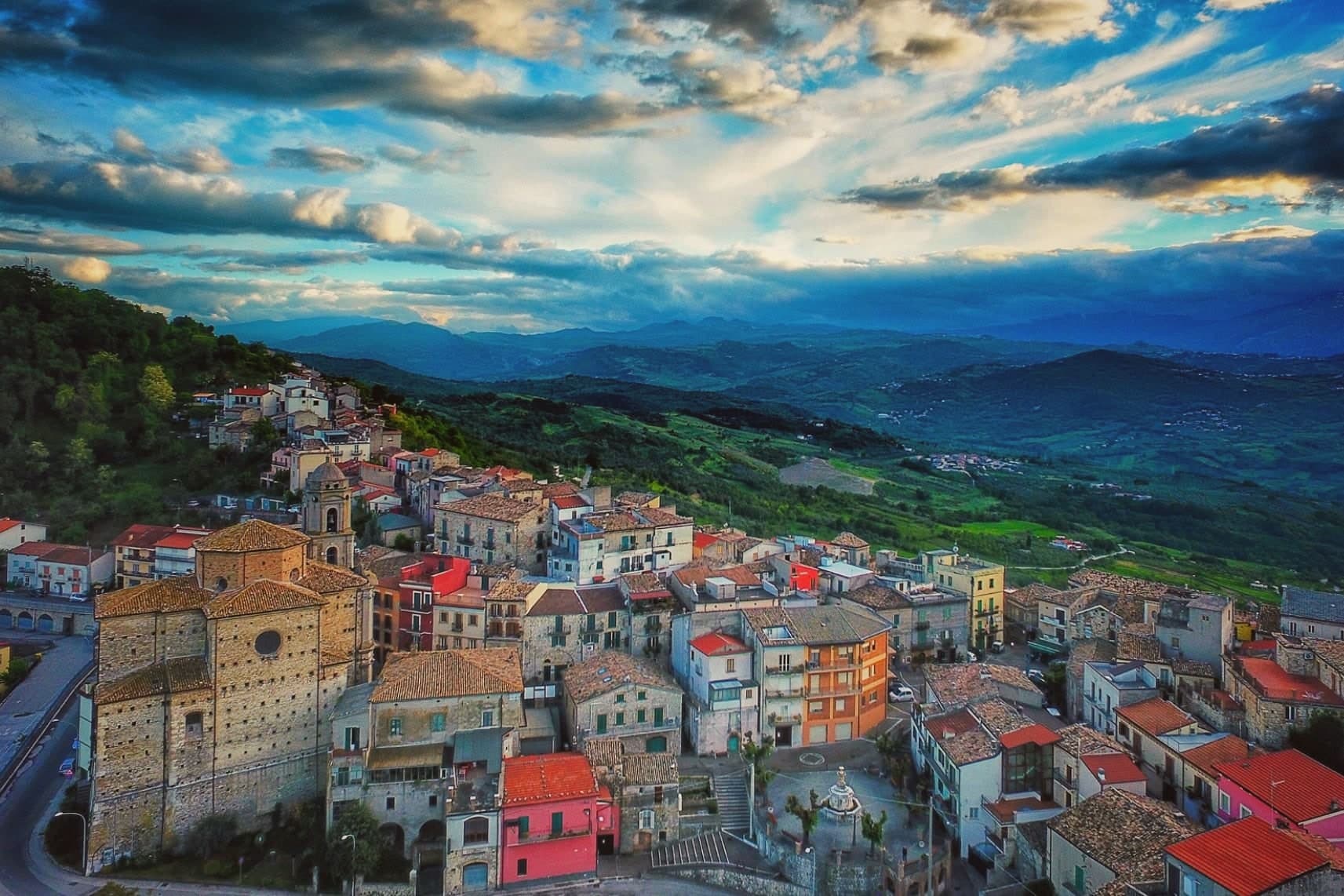
Archi sits at 492 meters on a rocky spur between the Val di Sangro and the Valle dell'Aventino, the geography that earned it the nickname Terrazza sul Sangro. The fortified borough is documented from the eleventh century, and the rocky position made it a stronghold of the Kingdom of Naples until the sixteenth century, held in turn by the del Balzo, Cantelmo, Colonna and Carafa families.
The medieval walls and ruins of the fifteenth-century castle, destroyed in the last war, are still visible at the spur's edge. Seventeenth and eighteenth-century palazzi line the streets between them.
The slopes below produce extra-virgin olive oil and summer truffles: Archi held its first Summer Truffle Trade Show in July 2013, and the network designation followed. Standing on the eastern edge of the centro storico, the view runs uninterrupted down both valleys to the Majella massif rising behind.
We confirmed you can reach this one by train.
What to see in Archi
- Ruderi del Castello. Castle ruins reconstructed in the fifteenth century and destroyed in the Second World War, at the eastern tip of the rocky spur.
- Mura medievali. Sections of medieval city walls preserved along the perimeter of the centro storico, marking the fortified borough's original line.
- Palazzi storici. Seventeenth and eighteenth-century civil architecture along the main streets, the residences of fief-holding families and notables.
How to get to Archi
There is a railway station in the town, so you can arrive without a car and never need one while you are here. Pescara is roughly 58 minutes away by road.
Our tip
April through October is the working calendar. The summer truffle festival lands in July, with degustations under the medieval walls. September and October bring olive harvest and the slopes turn silver-green.
Controguerra
Why visit Controguerra
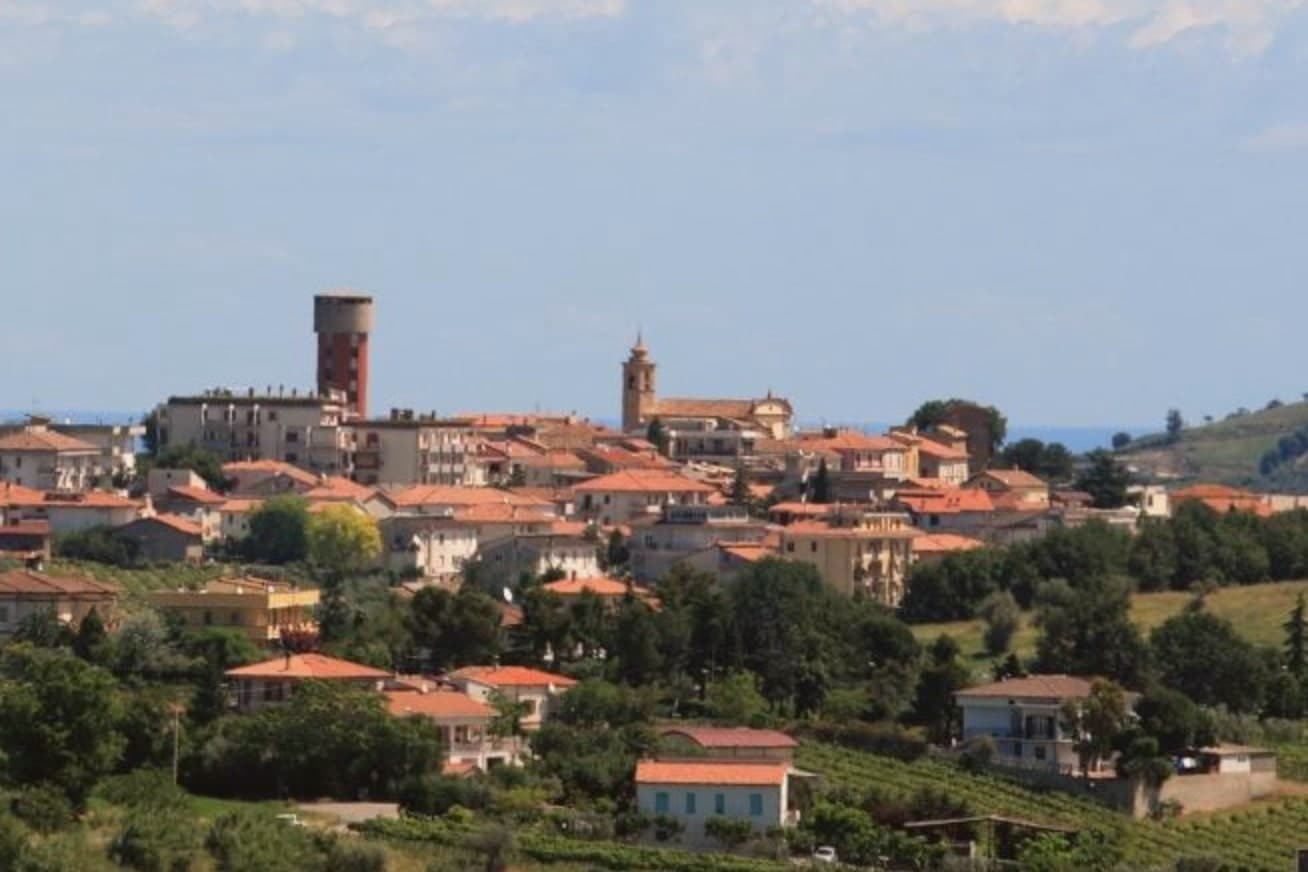
The village sits fifteen kilometers from the Adriatic, at the northern edge of Abruzzo, where the valley bends toward the river and the sea. The wine zone that carries the town's name reaches beyond it, spread across five communes sharing the same elbow of land between river and coast.
The reds run at least sixty percent Montepulciano, with Merlot, Cabernet Franc and Cabernet Sauvignon allowed up to fifteen percent; the whites are sixty percent Trebbiano with at least fifteen percent Passerina; the spumante sets Trebbiano against Chardonnay, Verdicchio and Pecorino. The old center holds to its ridge above the valley while the vines and olive groves that support both the wine and oil designations spread on the slopes below, the same ground doing double duty.
The place works because the name on the bottle and the name on the map are the same thing, a small hilltop settlement whose slow-food charter governs an area small enough that vineyard and piazza are never far apart.
We confirmed you can reach this one by train.
What to see in Controguerra
- Centro storico. Small hilltop medieval centre on a ridge above the valley, with brick palazzi and the parish church on the central piazza.
- Chiesa di San Salvatore. Parish church on the main piazza, the religious anchor of the medieval ridge village, with a rebuilt eighteenth-century interior.
- Cantine del Controguerra DOC. Family cellars open by appointment, pouring Montepulciano-based reds, Trebbiano-Passerina whites and Pecorino spumante from the same slopes the town gives its name to.
How to get to Controguerra
There is a railway station in the town, so you can arrive without a car and never need one while you are here. Pescara is roughly 56 minutes away by road.
Our tip
April through October is the working season for vineyards and oil. May and September are the best months for cellar visits, with mild light and the vineyards in full leaf. July and August can climb into the mid-thirties and the centro empties through the hot afternoon. Controguerra in festa falls in July.
Tocco da Casauria
Why visit Tocco da Casauria
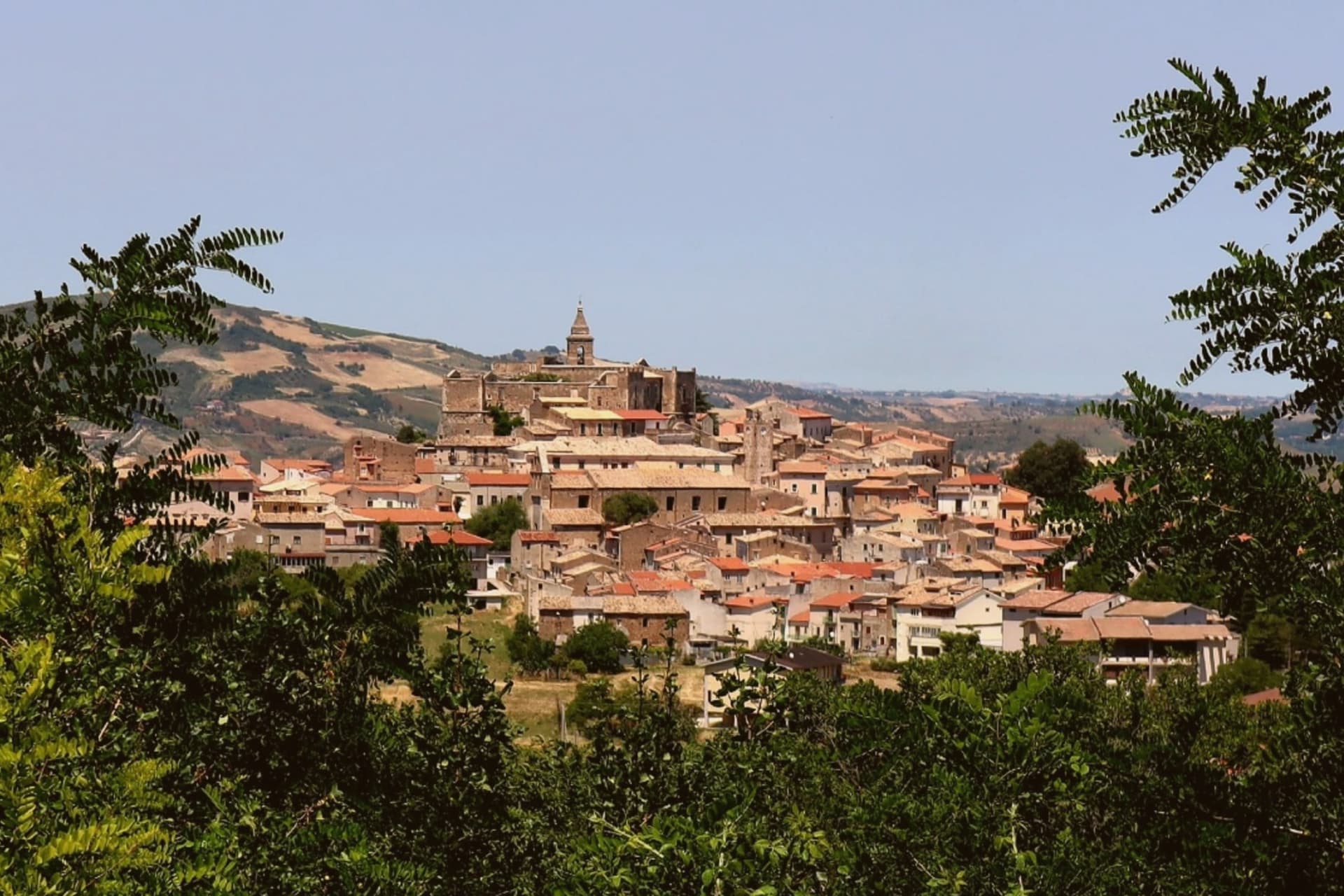
Tocco sits on a hill at 356 meters between the Pescara river and the Arolle stream, with the Maiella massif behind it. The town was founded around 872 under the authority of the abbey nearby, established in fulfilment of a vow made during an imprisonment in Benevento.
The abbey held the relics of Pope Clement I. The town was simply Tocco until 1861, when da Casauria was added to honour the abbey it grew up beside.
The centro storico is dominated by the Caracciolo Castle, rebuilt in Renaissance style after the 1456 earthquake, while the lower slopes toward the Pescara valley carry olive groves and Montepulciano vines, the produce that earned the town its place among the Città dell'Olio and Città del Vino. Centerba, the high-proof liqueur made from a hundred Maiella herbs, has been distilled here since the mid-19th century by the Toro family.
What holds the town together is the relationship between the abbey below and the settlement on the hill: a monastic foundation that gave the place its name, its early authority, and, centuries later, its liqueur trade and vineyards grew up in the valley it once governed.
We confirmed you can reach this one by train.
What to see in Tocco da Casauria
- Abbazia di San Clemente a Casauria. A national monument since 1894, standing just outside the commune in Castiglione. Founded by Louis II, its bronze doors and their 72 panels remain the reason to make the detour.
- Castello Caracciolo. Built between 1187 and 1220 under Frederick II, destroyed by the 1456 earthquake and rebuilt in Renaissance style, dominating the centro storico.
- Chiesa di Sant'Eustachio. Main church of Tocco, built in the 18th century and named for the town's patron, with the statue of the saint inside.
How to get to Tocco da Casauria
There is a railway station in the town, so you can arrive without a car and never need one while you are here. Pescara is roughly 47 minutes away by road.
Our tip
April through October works best in Tocco. The hill catches breeze off the Maiella even in July, and the olive harvest in October fills the lower terraces with activity. Spring opens the abbey grounds and the Pescara valley vineyards.
Crecchio
Why visit Crecchio
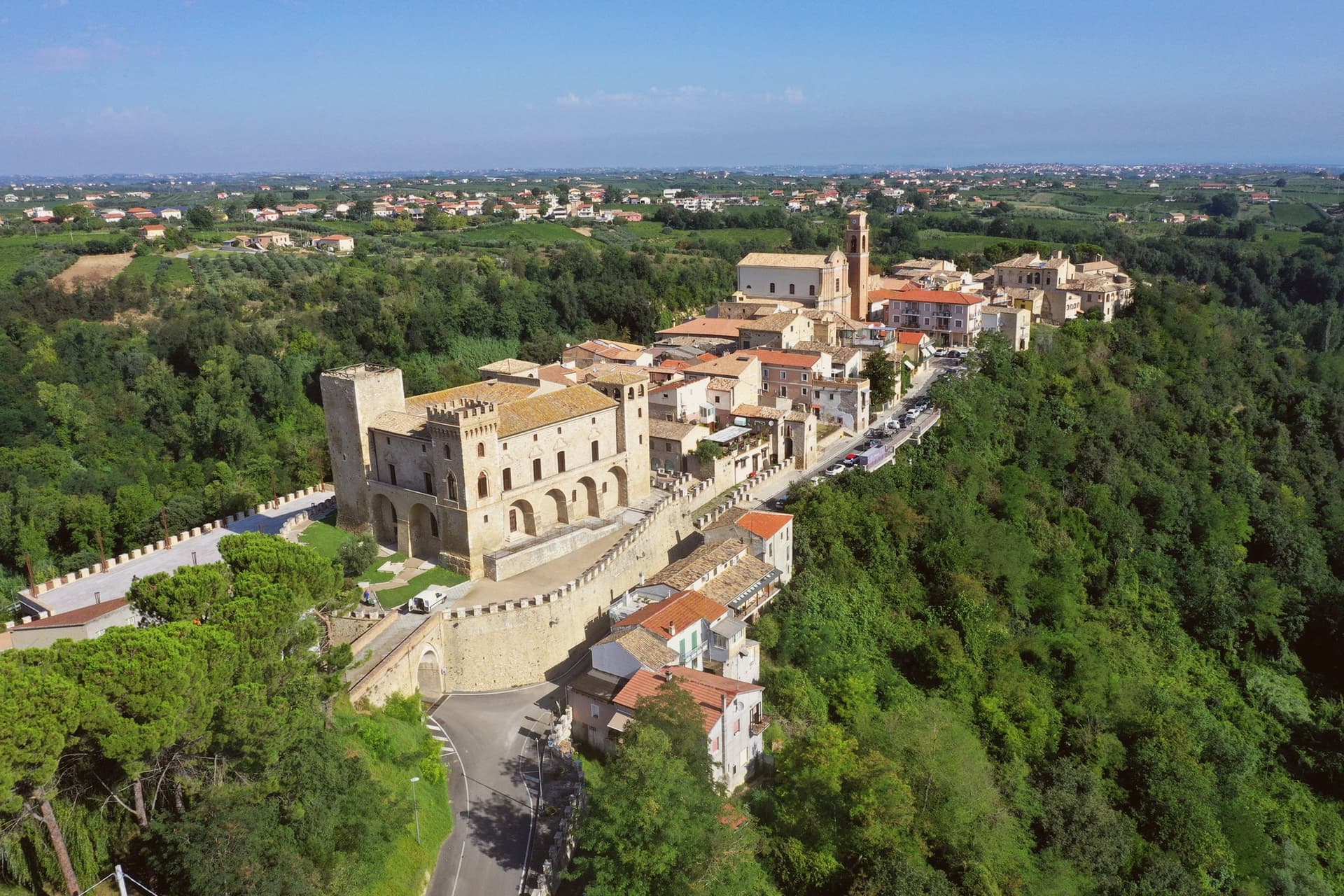
Crecchio is a hill town at 209 meters in the band of low ridges that runs from the Adriatic coast inland to the foothills of the Maiella. The Castello Ducale at its center is the reason it appears in textbooks.
On the night of 9 September 1943, after the armistice with the Allies was announced, King Vittorio Emanuele III, Queen Elena, and Crown Prince Umberto fled Rome and stopped at the De Riseis castle for a single night before reaching the port of Ortona and sailing for Brindisi. For those hours Crecchio was effectively the capital of Italy.
The castle was bombed by the Allies later in the war and reconstructed afterward, respecting its original Lombard, Norman, and Aragonese stratification. It now houses the Museo Archeologico dell'Abruzzo Bizantino e Altomedievale, which collects sixth- and seventh-century material from the surrounding territory.
We confirmed you can reach this one by train.
What to see in Crecchio
- Castello Ducale De Riseis-D'Aragona. Lombard core from the eighth century, Norman and Aragonese reworkings, four corner towers, host to the fleeing royal family on 9 September 1943.
- Museo Archeologico dell'Abruzzo Bizantino e Altomedievale. Inside the castle, displays Lombard and Byzantine grave goods, ceramics, and weapons from the sixth and seventh centuries.
- Centro storico. Medieval walled core preserved around the castle, narrow lanes and stone houses descending toward the open valley.
How to get to Crecchio
There is a railway station in the town, so you can arrive without a car and never need one while you are here. Pescara is roughly 40 minutes away by road.
Our tip
April through June and September through October are the months that work. The hill catches breezes off the Adriatic twenty kilometers east, vineyards are green or coloring, and the castle terrace is comfortable late into the day. July and August are hot, with afternoon temperatures pushing thirty-five degrees on the valley floor below, though Crecchio's elevation gives some relief.
Balsorano
Why visit Balsorano
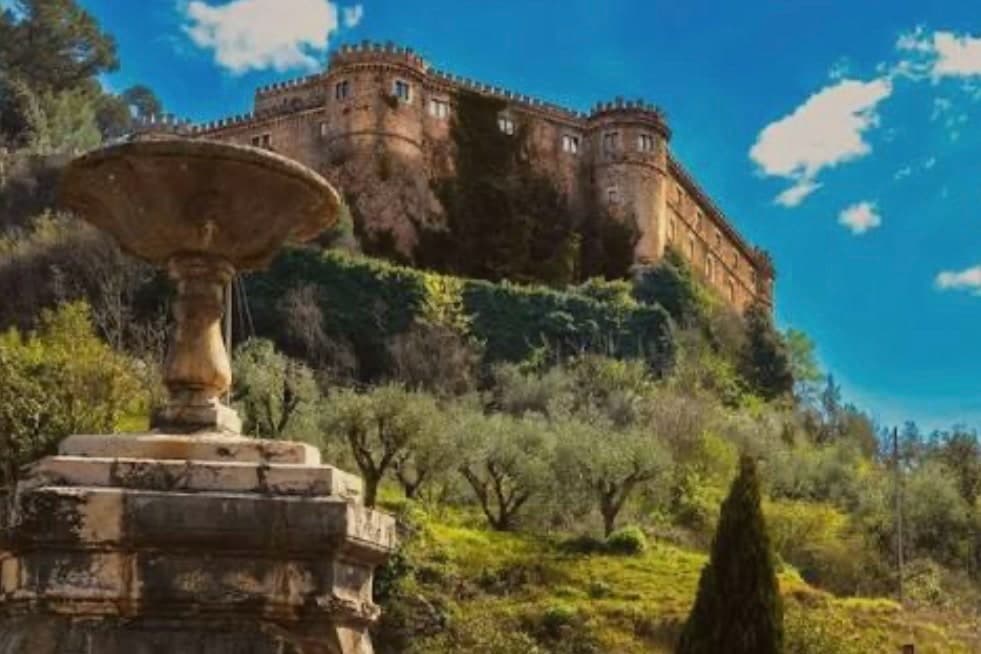
Balsorano sits along the Liri river at the southern edge of Marsica, first documented in the 10th century. Through the Middle Ages and into the early modern period it was held by the Piccolomini barons, whose fortress still stands on the ridge above the town.
The valley running south from it toward Lazio is the lower stretch of a longer stretch of river country, its floor given over to chestnuts and olives and crossed by the highway that follows the water south. The town itself is really two places.
The old village, gathered below the castle since the Middle Ages, was flattened by the 1915 earthquake and left as ruins on the slope. What functions as Balsorano today was built a kilometer north afterward, a plain reconstruction with none of the older settlement's history.
The castle above them both survived the quake that leveled everything around it, which is the plainest fact about the place: the fortress outlasted the town it once ruled, and the town that replaced the old one had to start over at a distance from where the barons had put it.
We confirmed you can reach this one by train.
What to see in Balsorano
- Castello Piccolomini. Irregular fortress with circular corner towers, built by Antonio Piccolomini, nephew of Pope Pius II, on a ridge over the valley. The rooms now serve as a hotel.
- Balsorano Vecchio. Ruins of the medieval village on the slope below the castle, left standing since the earthquake and visible from the fortress walls.
- Balsorano Nuovo. The rebuilt center where the comune's population now lives, its streets laid out fresh rather than following the old village's plan.
How to get to Balsorano
There is a railway station in the town, so you can arrive without a car and never need one while you are here. Latina is roughly 101 minutes away by road.
Our tip
April through October is the workable window. The valley warms early, the chestnut groves around the castle hold their leaves into late October, and the hotel inside Castello Piccolomini runs full season. July and August are hot in the Liri valley and can push past 35 degrees on the lower ridges.
Manoppello
Why visit Manoppello
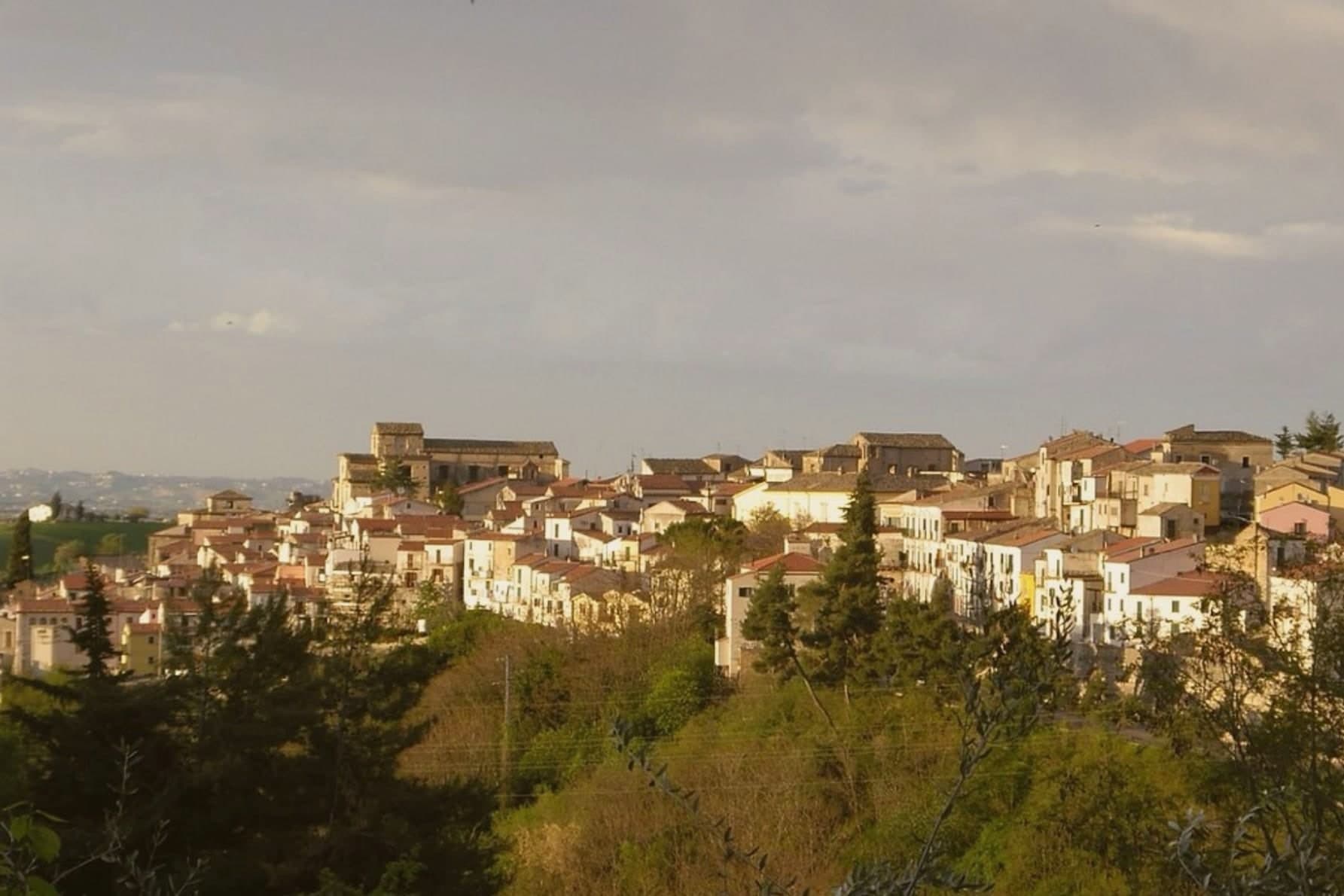
Manoppello sits on a hill on the right bank of the Pescara river, fifteen kilometers from the city of Pescara and at the foot of the Maiella massif. The old center holds the river's edge while the abbey stands apart from it, outside the town proper, on ground that carried a Roman temple before it carried a church.
The relic that gives the hill above the town its name arrived at the Capuchin convent in 1620, brought by the notary Donato Antonio de Fabritiis. The countryside around both church and abbey shares a building tradition, earth rammed into walls, common enough across the valley to have earned the commune its place in a network built to recognize it.
The town's geography is therefore layered rather than single: a river-bank settlement, a devotional site on the hill above it, an abbey standing separate on former Roman ground, and a farming countryside that built in earth rather than stone. Each part answers to a different age, and together they show a place that grew by accretion rather than around one center.
We confirmed you can reach this one by train.
What to see in Manoppello
- Basilica del Volto Santo. Capuchin basilica on the hill above town, holding the veil reputed to be the Veil of Veronica, a translucent cloth bearing a faint image of a human face.
- Abbazia di Santa Maria Arabona. Cistercian abbey founded in 1197, standing outside the town on ground once occupied by a temple to Bona Dea, its choir carrying frescoes by Antonio Martini di Atri.
- Centro Storico. Medieval core on the right bank of the Pescara, built in the rammed-earth technique of the surrounding countryside.
How to get to Manoppello
There is a railway station in the town, so you can arrive without a car and never need one while you are here. Pescara is roughly 32 minutes away by road.
Our tip
April through June and September through October are the calm months in Manoppello, when the basilica is open without the high pilgrimage flow and the Maiella foothills turn green. July and August bring heat and the largest pilgrim numbers, especially around the August feast of the Volto Santo. November through March is quiet.
Loreto Aprutino
Why visit Loreto Aprutino
Loreto Aprutino sits at 290 meters on a hill twenty kilometers inland from Pescara, in the so-called Golden Triangle of Abruzzo olive oil that it shares with Pianella and Moscufo. Pre-Roman necropoleis at Colle-Fiorano and Farina-Cardito show a settlement long before the medieval town.
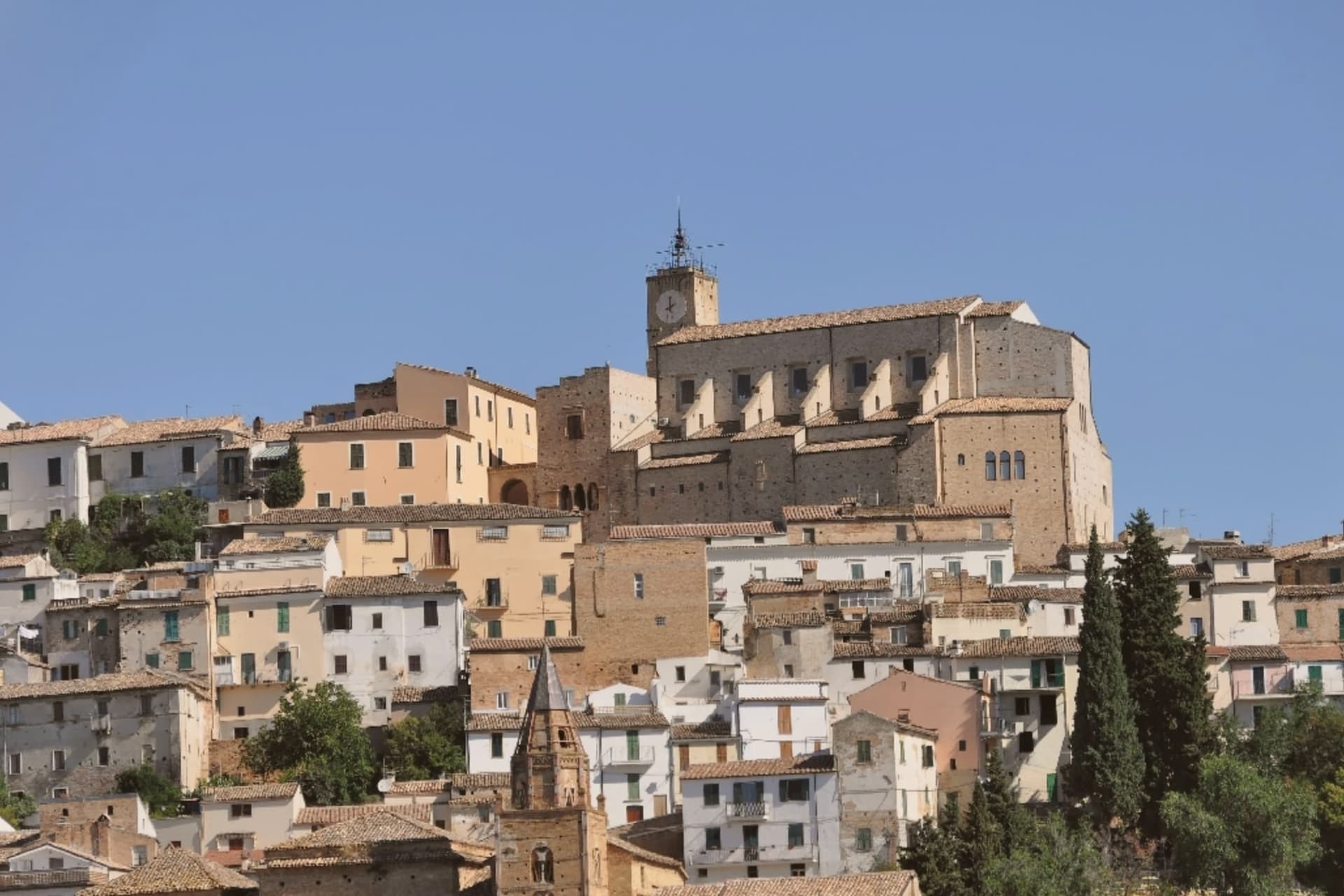
The Romanesque-Gothic church of Santa Maria in Piano, built around 1280, holds the Giudizio particolare delle anime, a wall fresco in encaustic technique that shows souls crossing a bridge thin as a human hair, falling into a river of boiling pitch if not saved; the Aquinas family commissioned the cycle. Castello Chiola dominates the ridge above the town, restored after Italian unification in 1863.
The olive-oil tradition runs to the fourth century BC; the local DOP is Aprutino Pescarese, and the town's Museo dell'Olio explains the chain from grove to bottle. The Acerbo Castelli ceramics collection covers majolica from the fifteenth to the nineteenth century.
We confirmed you can reach this one by train.
What to see in Loreto Aprutino
- Chiesa di Santa Maria in Piano. Church from 1280 with the encaustic fresco Giudizio particolare delle anime, the bridge-of-hair Judgment commissioned by the Aquinas family.
- Castello Chiola. Medieval castle on the highest point of the ridge, restored after 1863, now a hotel and still the dominant skyline feature.
- Museo Acerbo delle Ceramiche di Castelli. Collection of Castelli majolica from the fifteenth to nineteenth century, the most prestigious ceramic tradition of Abruzzo.
How to get to Loreto Aprutino
There is a railway station in the town, so you can arrive without a car and never need one while you are here. Pescara is roughly 38 minutes away by road.
Our tip
April through June is the green window in the Aprutino hills, with mild evenings and active olive groves. September and October bring the harvest and the new-oil season; tasting tours run through both months. July and August are hot at 290 meters, and visitors usually move between the cool nave of Santa Maria in Piano and the shaded courtyards of the centro.
Guardiagrele
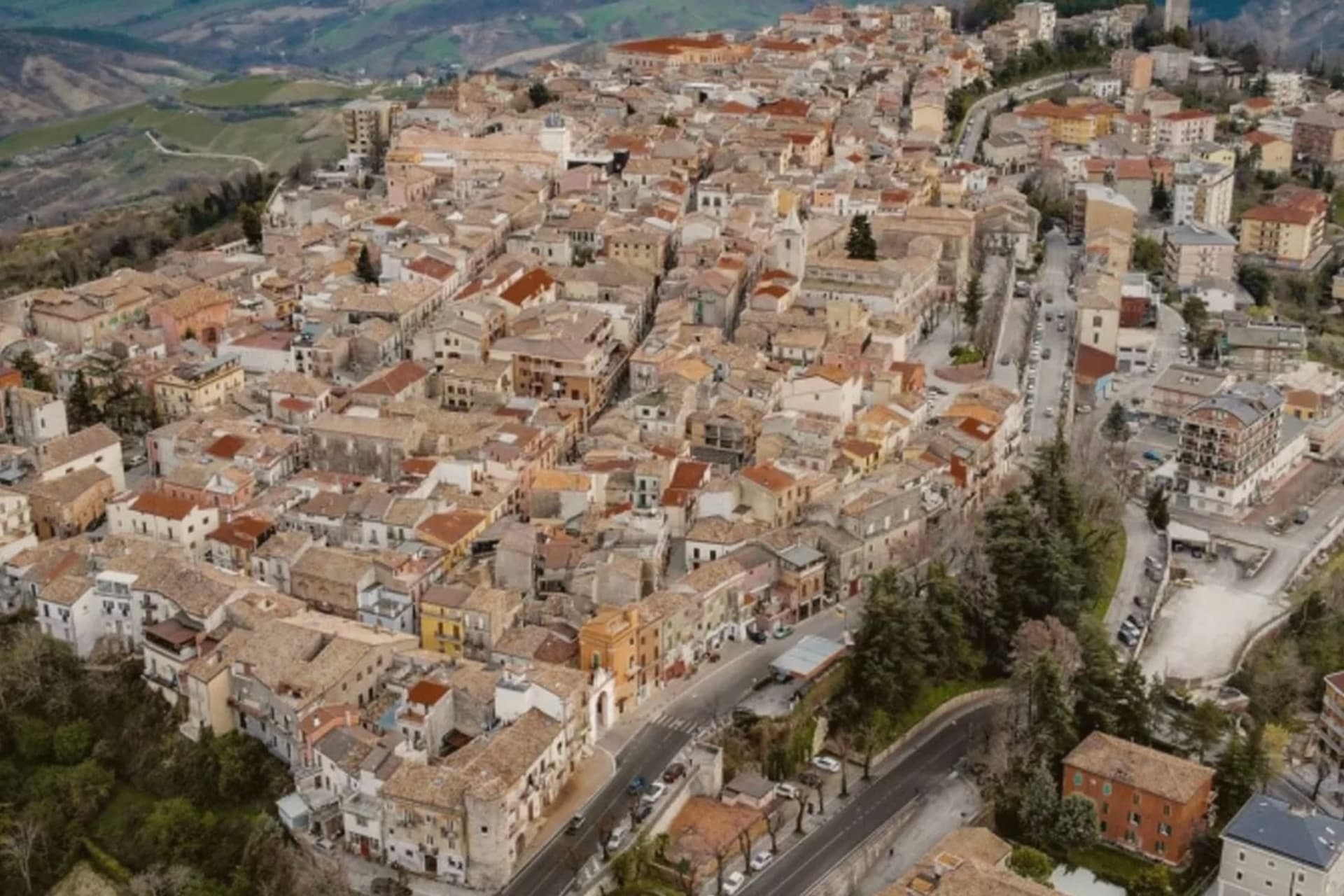
Why visit Guardiagrele
Guardiagrele sits at 576 meters on the eastern Majella foothills, thirty kilometers from Pescara. Gabriele D'Annunzio called it the terrazza d'Abruzzo for the views over the mountains and valleys from its piazzas.
Documented in an eleventh-century papal bull as a villa named Grele, the town grew through the fourteenth and fifteenth centuries as a stronghold of the Kingdom of Naples, with permission from the king to mint coins. It produced the late medieval goldsmith Nicola Gallucci, known as Nicola da Guardiagrele (c.1385-c.1462), trained on Gothic and Tuscan models including Lorenzo Ghiberti, who left work in cathedrals across Abruzzo.
The collegiate church of Santa Maria Maggiore, built at the start of the thirteenth century outside the walls and absorbed into the town in the centuries after, carries a fifteenth-century portal with a Coronation of the Virgin lunette by Nicola, now in the Duomo museum. Wrought-iron, copper and gold work still operate from workshops in the centro storico.
We confirmed you can reach this one by train.
What to see in Guardiagrele
- Collegiata di Santa Maria Maggiore. Thirteenth-century collegiate church with a massive bell tower, fifteenth-century portal, and the Nicola da Guardiagrele Coronation lunette in its museum.
- Museo del Duomo. Cathedral museum holding Nicola da Guardiagrele's marble lunette, his goldwork, and liturgical objects from the surrounding Majella churches.
- Botteghe del rame e del ferro battuto. Active copper and wrought-iron workshops in the centro storico, the surviving craft tradition that produced Nicola Gallucci in the late fourteenth century.
How to get to Guardiagrele
There is a railway station in the town, so you can arrive without a car and never need one while you are here. Pescara is roughly 48 minutes away by road.
Our tip
April through October is the open season. May and September are the best months on the terrazza, with the Majella valleys in clear light and the copper workshops at full pace. July and August are warm but the elevation keeps the centro storico cooler than the coast.
Sulmona
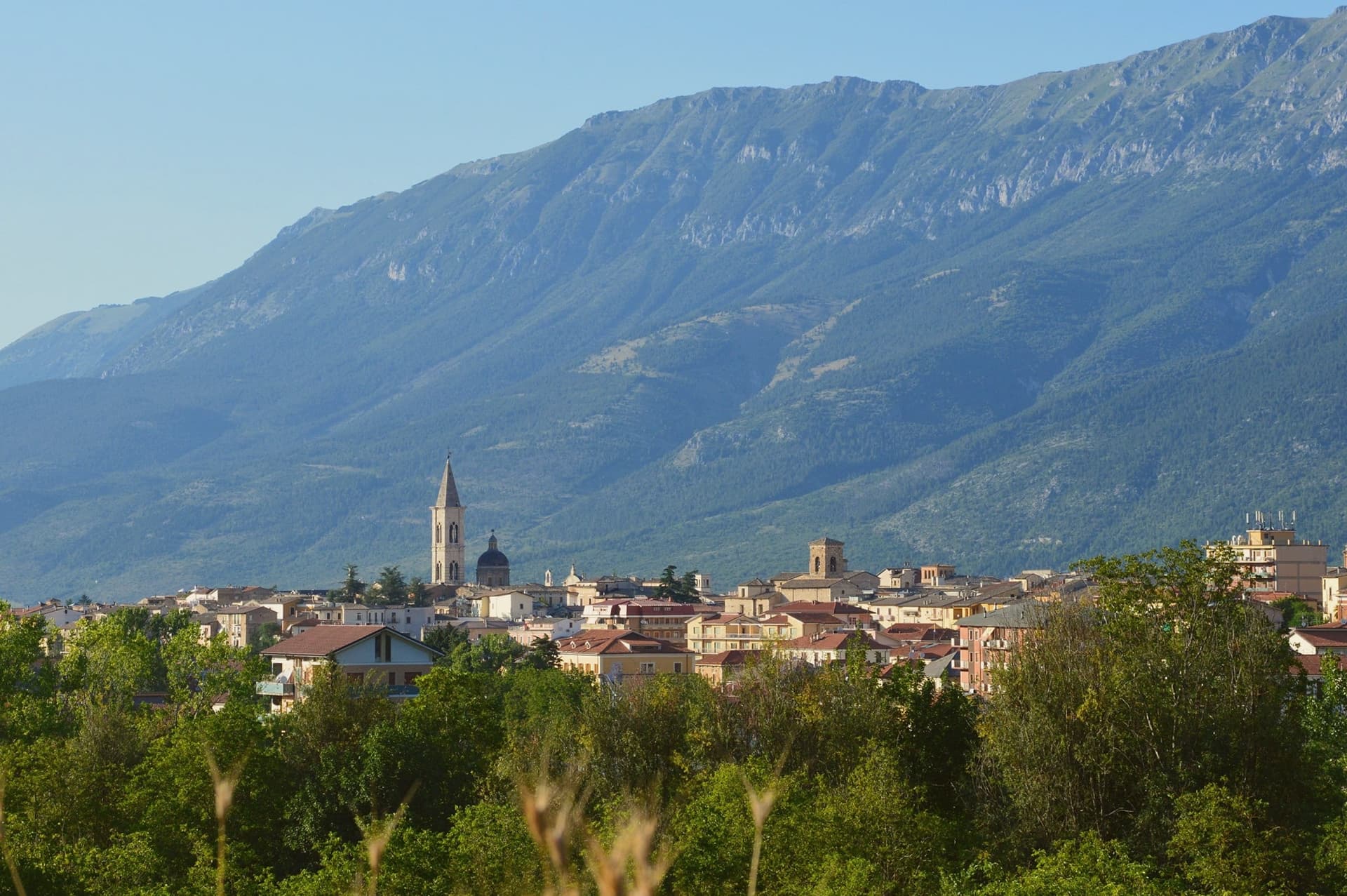
Why visit Sulmona
Sulmona sits at 405 meters in the Valle Peligna, at the confluence of the Gizio and Vella rivers, ringed by the Maiella, the Morrone and the Genzana ranges. The Roman poet Ovid was born here in 43 BC and never stopped writing about the salubrity of its water, a claim still made by the town.
Under Frederick II in the 13th century, Sulmona became the capital of the imperial province of Abruzzo and got the aqueduct of Manfred of Swabia, which still defines the long side of Piazza Garibaldi. The town survived two earthquakes, in 1349 and 1456, and emerged as the home of confetti, the sugared-almond confection given at weddings and baptisms.
Confetti Pelino, the best-known house, has been producing in town since 1783. Every July, the Giostra Cavalleresca brings out the city's seven boroughs in Renaissance procession from the Cathedral of San Panfilo, ending in a ring-jousting tournament in Piazza Garibaldi.
We confirmed you can reach this one by train.
What to see in Sulmona
- Piazza Garibaldi. The town's main piazza, dominated on its long side by the 13th-century aqueduct of Manfred of Swabia, host of the July Giostra Cavalleresca.
- Cattedrale di San Panfilo. Cathedral of the city's patron, the oldest church in Sulmona, starting point of the Giostra historical procession.
- Palazzo dell'Annunziata. Late-Gothic and Renaissance palace on Corso Ovidio with three different facade phases visible, now housing the civic museum.
How to get to Sulmona
There is a railway station in the town, so you can arrive without a car and never need one while you are here. Pescara is roughly 57 minutes away by road.
Our tip
April through June is the green season in the Valle Peligna, when the Maiella above the town still holds snow. The last week of July brings the Giostra Cavalleresca, the town's biggest annual gathering. August is hot, mid-thirties at midday, and the centro storico empties between two and six.
More from Anywhere Italy
- The best small hill towns you can reach by train in Abruzzo
- The best towns you can reach by train that sit inside a national park in Abruzzo
 The best wine towns in Abruzzo
- The 8 best wine towns you can reach by train within 90 minutes of Pescara
 The 6 best hill towns in the province of Chieti
- The best hill towns in the province of L'Aquila