
The best towns you can reach by train in the province of Campobasso
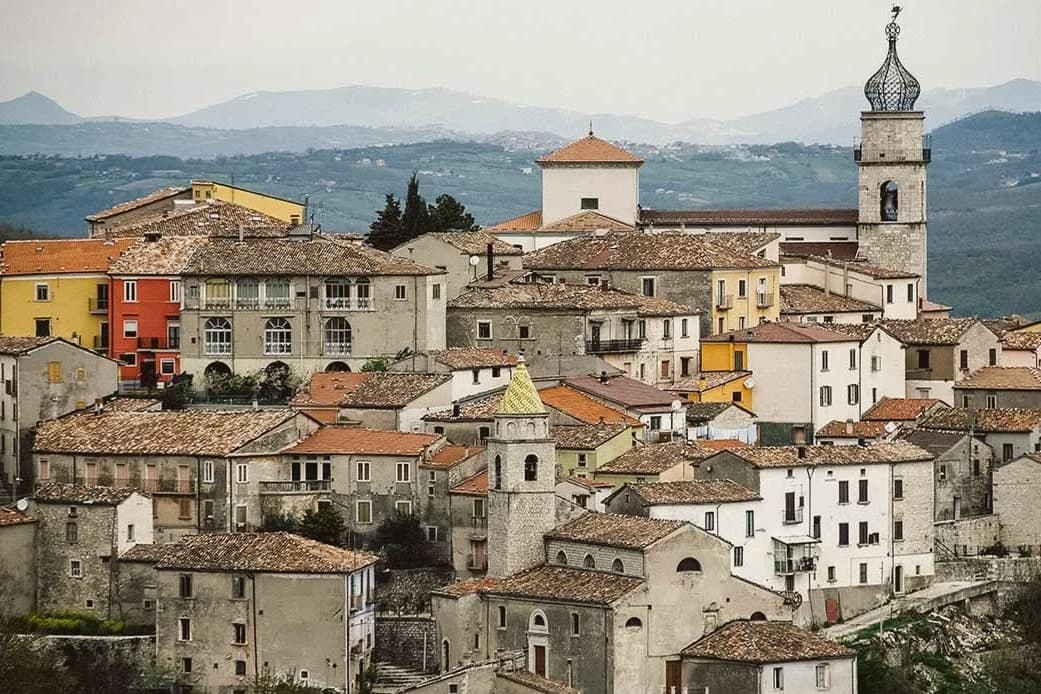
Molise is limestone, sheep tracks and wind. The province of Campobasso runs from a short stretch of Adriatic sand up into hills of pale stone houses, olive terraces and oak scrub, and the change happens over the course of a single morning. Food here is cheap and old: cavatelli with lamb ragù, pallotte cacio e ova, brodetto of Adriatic fish with green peppers, caciocavallo hung in cellars, tintilia wine from vines few outside the region have heard of. Late spring, when the tratturi are green and the sea is warm enough for lunch outdoors, is the best of it. Winter is the season of pig, bean soup and empty streets.
Most travellers who reach this coast are on their way somewhere else. The Adriatic railway carries them past towards Vasto and the Trabocchi coast in Abruzzo, or south to Puglia and the Gargano, and the beaches there in August are booked out months ahead, loud with parasols and sold on postcards. Molise gets treated as the bit of the map you cross between the two. The result is a region with a functioning railway and far fewer people using it.
The same line that runs to those famous beaches stops here first, and the same hills that make Abruzzo photogenic carry on south past the provincial border. From the coastal stations, branch lines and connecting buses climb inland towards market towns with cathedral façades, Roman gates standing in fields, and Saturday produce markets that are for locals rather than visitors. Each of the towns below can be reached without a car, which is unusual for inland Molise and worth planning around. Fewer people go, and the trains are quiet even in August.
Of the 13 communes we have mapped in the province of Campobasso, 7 qualify as towns you can reach by train: we have confirmed each is reachable without a car. The smallest, Sepino, has 1,798 residents.
Elsewhere in the catalogue: The best towns in Molise you can reach without a car and The best olive oil towns in the province of Campobasso.
Sepino
Why visit Sepino
Sepino sits at 698 meters on a slope of the Matese in southern Molise, the modern village two kilometers above the Roman Saepinum-Altilia on the plain. Saepinum was Samnite first, captured by Rome in 293 BC, and given its surviving walls by Tiberius between 2 BC and 4 AD.
Twelve hectares of forum, basilica, baths, theatre and four monumental gates are still standing, immersed in the open countryside at the foot of the Matese; recent excavations in 2023 uncovered a monumental domus on the decumanus maximus. The Pescasseroli-Candela tratturo, the 211-kilometer transhumance route that once moved sheep flocks from Abruzzo to Puglia, ran through the Roman town and shaped its street grid.
The modern Sepino, above on the hillside, is a Borghi più belli; the archaeological park below is one of the best-preserved Roman cities in central Italy and one of the few in continuous open-air access.
We confirmed you can reach this one by train.
What to see in Sepino
- Saepinum-Altilia. Twelve-hectare Roman city on the plain below the modern village, with walls built by Tiberius and forum, basilica, baths and theatre still standing.
- Teatro di Saepinum. Roman theatre at the south end of the archaeological park, partly absorbed into a later farm complex that grew up around its arc.
- Tratturo Pescasseroli-Candela. Ancient sheep-track from Abruzzo to Puglia that ran straight through Saepinum and shaped its street grid; still walkable across the site.
How to get to Sepino
There is a railway station in the town, so you can arrive without a car and never need one while you are here. Foggia is roughly 112 minutes away by road.
Our tip
May through October is the open season for Sepino. The archaeological park of Saepinum on the plain is open year-round but its best months are May, June, September and October, when the light is long, the heat is bearable and the Matese is green behind the columns. July and August cross thirty degrees on the plain and the ruins are crowded with summer school trips.
Petacciato
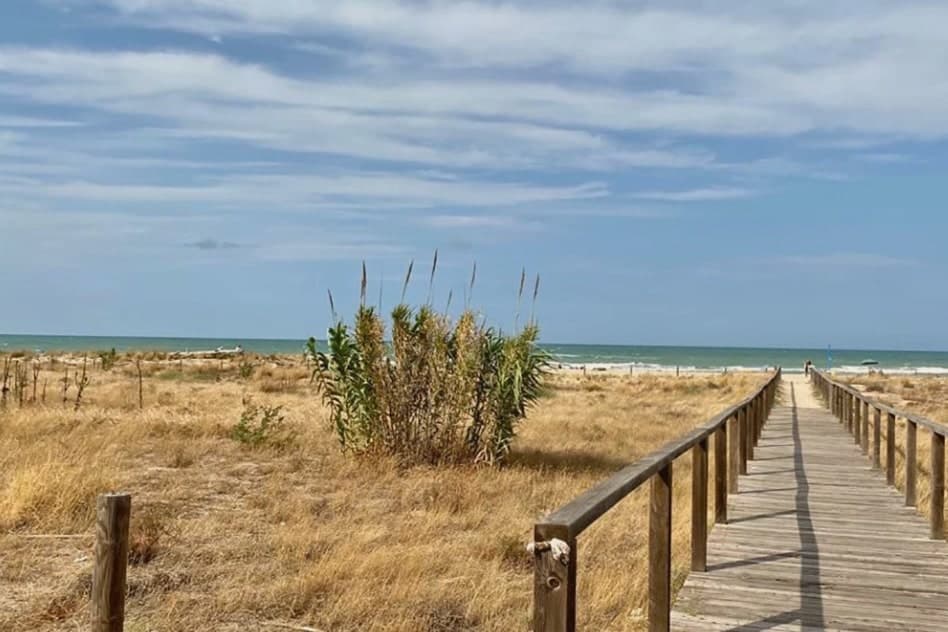
Why visit Petacciato
Petacciato stands at 225 meters on the last ridge before the Adriatic, with the Tremiti islands offshore and the Maiella visible to the north and the Gargano to the south on clear days. The centro storico keeps its medieval shape around the Chiesa di Santa Maria, built in tuff and sandstone between the eleventh and thirteenth centuries, originally dedicated to San Rocco and still holding three naves with three altars.
The Marina di Petacciato, a few kilometers below the village, runs a long sand beach lined with pine, with low dunes and shallow water that draws Italian families in July and August. The hills above produce the olive oil that earned the Città dell'Olio designation.
Petacciato was one of the lower-Molise villages Serafino Razzi listed in his sixteenth-century chronicle of Slav-founded communities, though the visible record today is Italian Romanesque and twentieth-century coastal.
We confirmed you can reach this one by train.
What to see in Petacciato
- Chiesa di Santa Maria (già San Rocco). Romanesque church in tuff and sandstone, built between the eleventh and thirteenth centuries, with three naves and three altars.
- Centro storico. Medieval ridge village around the old church, with stone houses and the long Adriatic view east.
- Marina di Petacciato. Long sand beach below the village, pine-backed and low-duned, the main summer draw.
How to get to Petacciato
There is a railway station in the town, so you can arrive without a car and never need one while you are here. Pescara is roughly 83 minutes away by road.
Our tip
May through September is the working coast. June gives the cleanest water before the families arrive; July and August fill the Marina di Petacciato with the lower Adriatic crowd. The ridge village above stays a few degrees cooler than the beach and is the night-time refuge in August.
Guglionesi
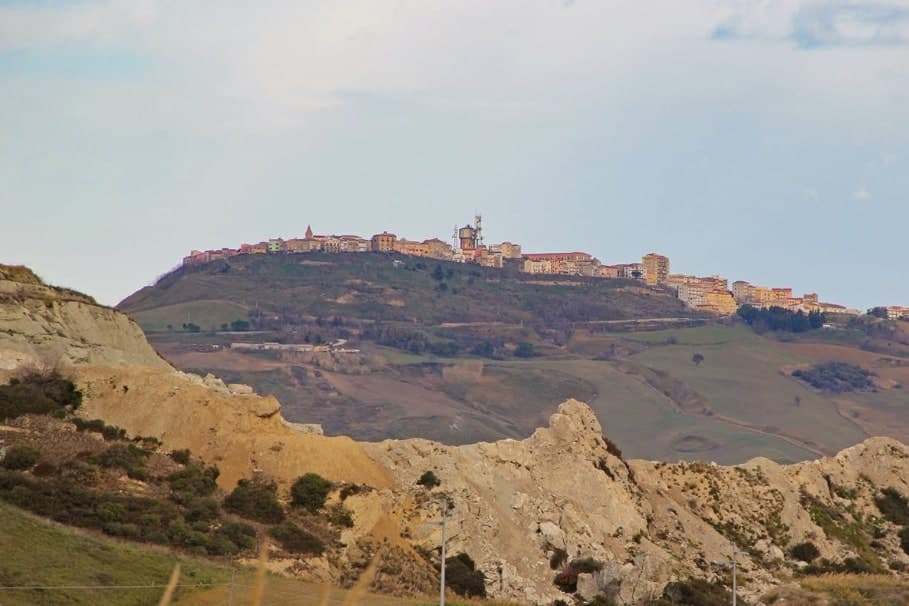
Why visit Guglionesi
Guglionesi sits on a 369-meter ridge between the Biferno and Trigno valleys, halfway between the Adriatic coast and the inland hills of Molise. The Frentani founded the place in the fifth century BC, under the name Uscosium, and it was one of their principal centres before Rome absorbed the confederation.
In the sixteenth century the Dominican Serafino Razzi listed Guglionesi alongside the Slav-founded villages of lower Molise; he also recorded that Brother Serafino led the local defence against an Ottoman raid led by Sulayman at the city walls. The Romanesque Chiesa di San Nicola di Bari and the Collegiata di Santa Maria Maggiore are the medieval anchors of the centro storico; the latter goes back to the twelfth century and holds the relics of the abate Sant'Adamo.
The hills produce olive oil good enough for the Città dell'Olio designation, and on a clear afternoon you can see the Tremiti islands offshore.
We confirmed you can reach this one by train.
What to see in Guglionesi
- Collegiata di Santa Maria Maggiore. Collegiate church with twelfth-century origins, reworked in the eighteenth century in Baroque style; holds the relics of Sant'Adamo Abate.
- Chiesa di San Nicola di Bari. Romanesque church in the centro storico, the oldest documented religious building in the town.
- Centro storico. Stone old town along the ridge, with city walls Brother Serafino is recorded as defending against an Ottoman raid in the sixteenth century.
How to get to Guglionesi
There is a railway station in the town, so you can arrive without a car and never need one while you are here. Foggia is roughly 82 minutes away by road.
Our tip
April through October is the working window. Spring greens the valleys and brings the long Adriatic views back into focus. June and September are the calmest months for the centro storico.
Montenero di Bisaccia
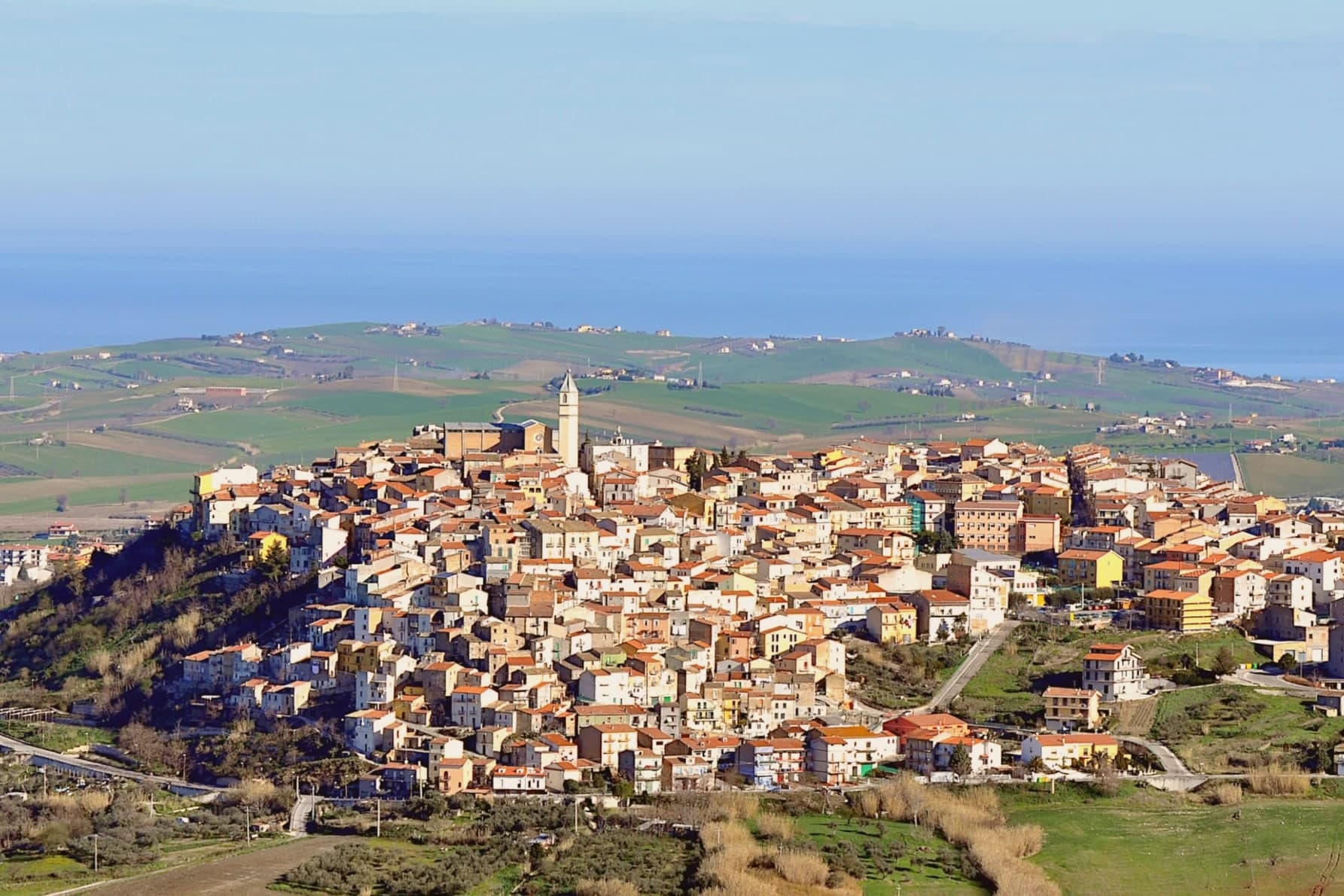
Why visit Montenero di Bisaccia
Montenero di Bisaccia sits on a tufa relief at 273 meters, on the northern edge of Molise where the region meets Abruzzo. The Chiesa di San Matteo Apostolo crowns the rock, its bell tower visible from the coast road below.
The Costa Verde beach, six kilometers down from the village, gives the commune its summer draw, with low dunes and pine groves backing the sand. Antonio Di Pietro, the magistrate who prosecuted the Mani Pulite cases of the 1990s and went on to lead Italia dei Valori, was born and farms here; after politics he returned to a 24-hectare family holding inherited from his father and now produces olive oil and wine with his son Cristiano.
The Città del Vino designation tracks that wine tradition. The hills around the village were also recorded by Serafino Razzi in 1576 as one of the Slav-influenced settlements of lower Molise.
We confirmed you can reach this one by train.
What to see in Montenero di Bisaccia
- Chiesa di San Matteo Apostolo. Parish church on the tufa rock at the top of the village, its bell tower the visible marker from the coast.
- Centro storico. Stone old town spread along the tufa ridge, with narrow streets and views east to the Adriatic.
- Costa Verde. Long sand beach six kilometers below the village, backed by pine groves and low dunes.
How to get to Montenero di Bisaccia
There is a railway station in the town, so you can arrive without a car and never need one while you are here. Pescara is roughly 70 minutes away by road.
Our tip
May through September works on the coast. June and September give the cleanest sea and the longest evenings without the August crowd. July and August fill the Costa Verde with Italian families and the ridge village stays a few degrees cooler at 273 meters.
Larino
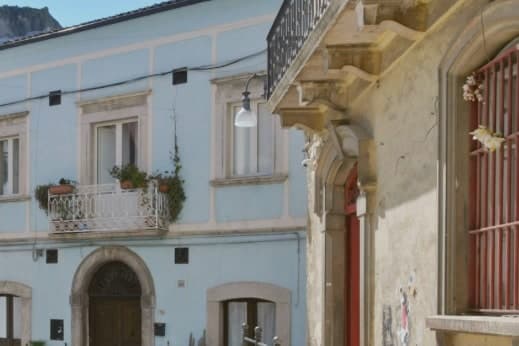
Why visit Larino
Larino sits at 341 meters in the lower Biferno valley, twenty kilometers inland from Termoli. The Frentani held the place before Rome and minted bronze coins here in the third century BC; the wool trade made it a regional centre.
The orator Cicero defended a Larino-born equestrian, Aulus Cluentius Habitus, in his Pro Cluentio of 66 BC, a case that ties the town to the wider world of the capital beyond its own remains. The old town runs along the ridge above the ancient city, so the medieval borgo and the old street plan sit in view of each other rather than layered one on top of the other.
The cathedral stands at one end of this arrangement, the arena and forum fragments at the level below. Every 25 to 27 May the streets carry the Carrese di San Pardo, a three-day procession of oxen and flower-decked carts that retraces the eleventh-century translation of the patron's relics from Daunia, linking the medieval town's religious life to the same ground the Frentani and the arena's builders had already used.
The surrounding hills carry the Città dell'Olio mark. What holds the town together, across the Frentani coinage, the law case, the arena, and the May procession, is that each layer used the same ridge and valley without erasing what came before it.
We confirmed you can reach this one by train.
What to see in Larino
- Anfiteatro Romano. Elliptical arena, 100 by 80 meters, built by a Larinum citizen who made his fortune in Rome. It stands within walking distance of the old town, its outline still legible against the surrounding streets.
- Cattedrale di San Pardo. The portal is the work to look at closely, carved by Francesco Petrini of Lanciano, its stone figures still sharp against the facade's plainer masonry.
- Centro storico (borgo). Medieval old town stretched along the ridge above the Roman remains, with Renaissance palazzi and narrow stone streets.
How to get to Larino
There is a railway station in the town, so you can arrive without a car and never need one while you are here. Foggia is roughly 82 minutes away by road.
Our tip
April through October is the working season. May is the month most travellers come for: the three-day Carrese di San Pardo runs 25 to 27 May, with around 130 flower-decked ox carts moving through the town. June and September keep the Roman amphitheatre and cathedral comfortable to walk.
Termoli
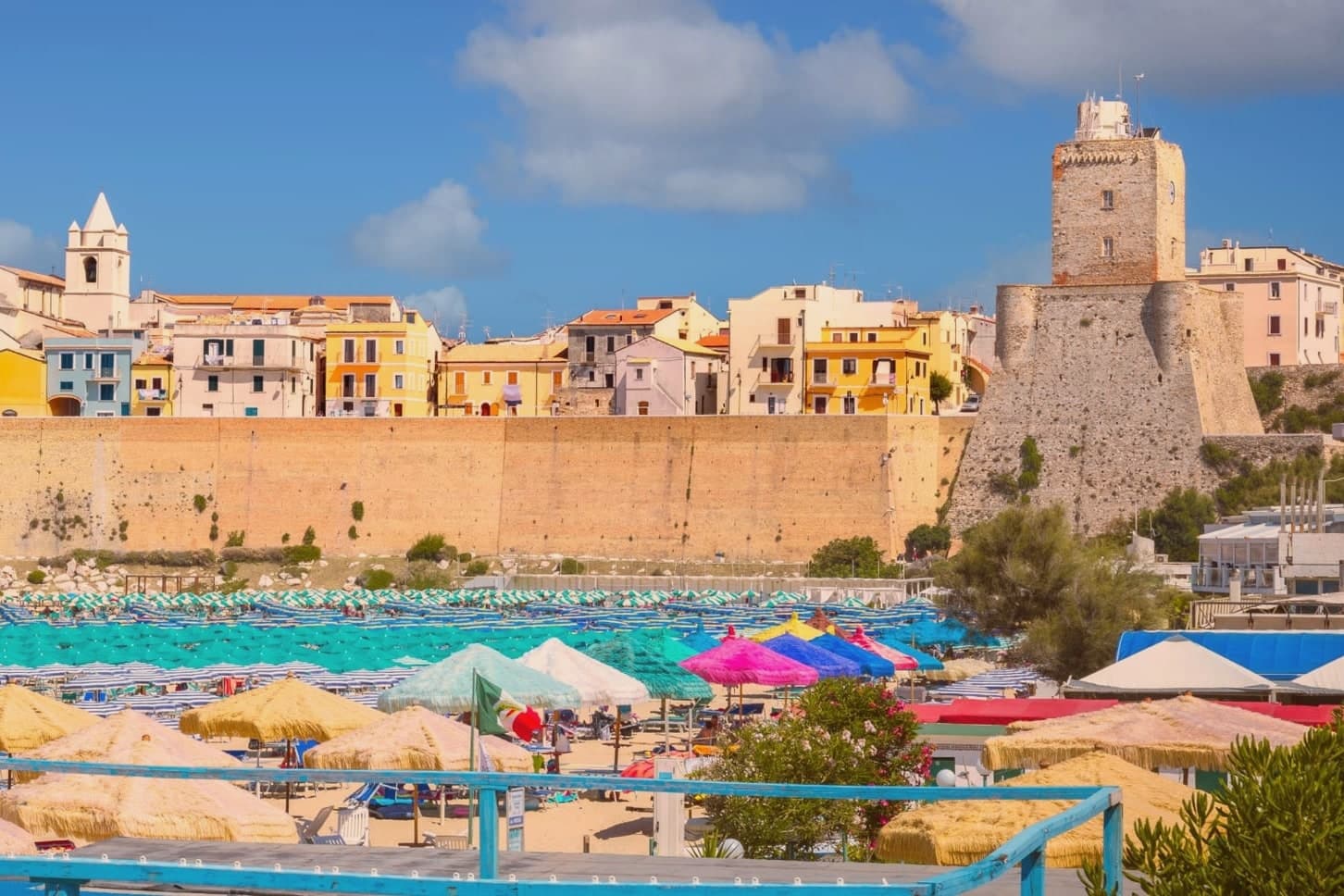
Why visit Termoli
Termoli sits on a promontory pushing into the Adriatic between two beaches, the only seaside town and the only port in Molise. The walled quarter occupies the tip of the promontory itself: a maze of narrow lanes lined with low white and ochre houses, built for fishermen and still laid out as they left it, with the castle anchoring one end and the cathedral square at the center.
Outside the walls, the coast runs east and west with the wooden trabucchi platforms still worked from the rocks on calm days, while the newer town extends inland from the old core. One of the largest tank battles of the 1943 Italian campaign was fought through these streets between 2 and 6 October.
What holds the town together is the promontory itself: a small fortified point that has had to serve as harbor, defense, parish and battlefield in turn, with the rest of Termoli built up around it rather than the other way round.
We confirmed you can reach this one by train.
What to see in Termoli
- Castello Svevo. The fortress Frederick II rebuilt stands as the visual anchor of the borgo antico, its walls facing the sea rather than the town it once defended.
- Cattedrale di Santa Maria della Purificazione. Apulian Romanesque cathedral from the twelfth and thirteenth centuries, holding the relics of San Basso and San Timoteo, patrons of the city.
- Borgo antico. Walled fishermen's quarter on the promontory, a maze of low white and colored houses, narrow lanes and small piazzas above the sea.
How to get to Termoli
There is a railway station in the town, so you can arrive without a car and never need one while you are here. Foggia is roughly 69 minutes away by road.
Our tip
May through September is the season Termoli was built for: hot dry days, Adriatic light, the beaches working at full capacity, and the ferry to the Tremiti islands running daily. July and August fill with Italian families on holiday and the lungomare becomes hard to walk in the evening. April and October are the shoulder months; the borgo antico opens again to people who actually want to walk it, and the cathedral piazza is quiet. Sagra del pesce falls in the season.
Campobasso
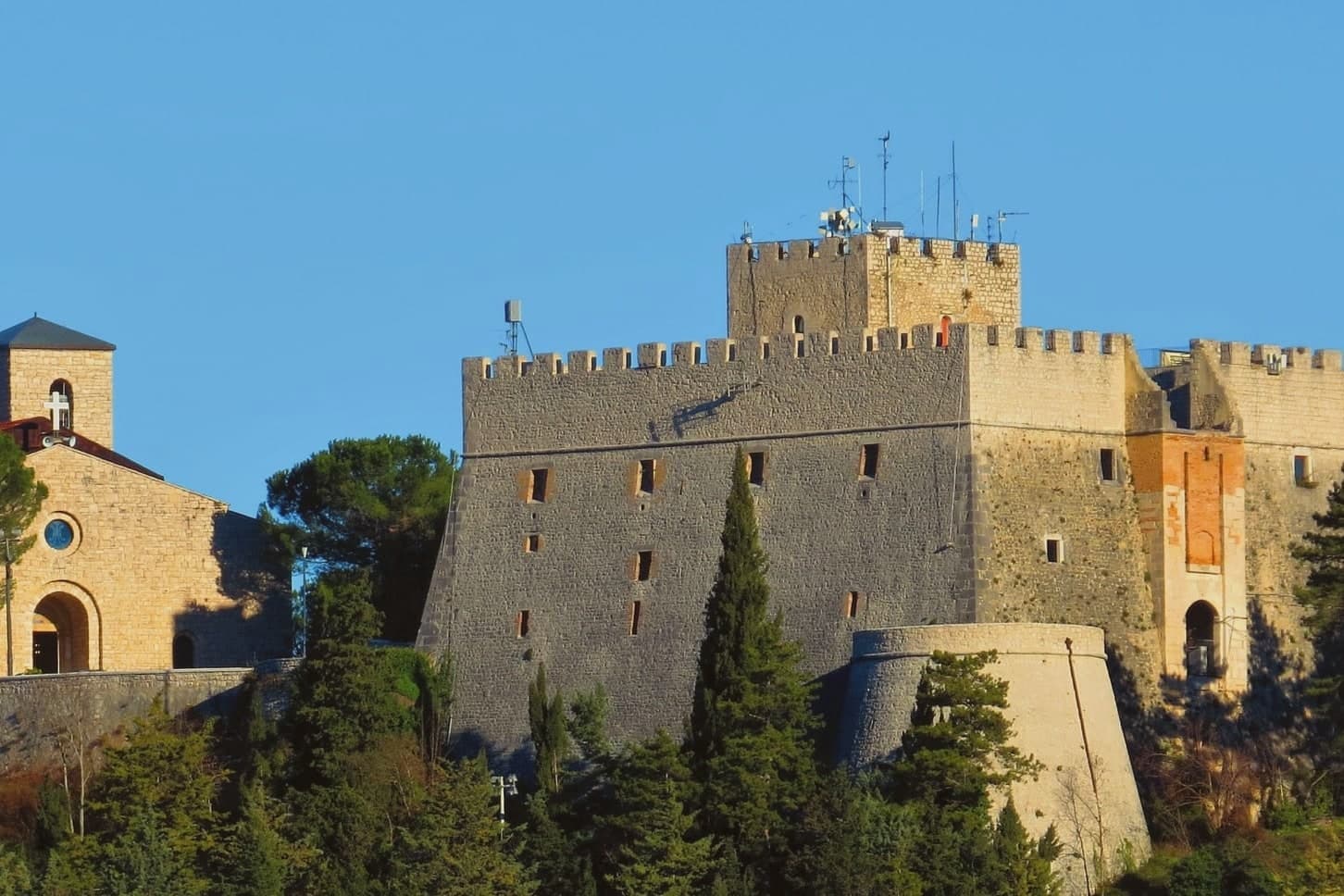
Why visit Campobasso
Campobasso is Italy's smallest regional capital, 47,075 residents and the political and administrative centre of Molise, the second-smallest Italian region by area. The city sits at 701m on a wooded Apennine ridge, with the fortress crowning the summit and the centro storico cascading down the hillside in stone-paved switchback streets.
From the fortress terrace on a clear day: the entire Sannio, the central Molise plateaux, Mount Vesuvius 90 km southwest, and on the rarest days the Adriatic 50 km east. So the upper town is defensive and medieval in layout, while the lower streets hold the Romanesque churches, the cathedral, and the everyday city.
The set-piece event is the Corpus Domini procession: every year on Corpus Domini Sunday, in May or June, large iron-and-wire frames carry child-actors costumed as saints and angels through the streets, suspended in mid-air on hidden iron harnesses, a tradition designed by Paolo Saverio Di Zinno in 1740 and inscribed on the UNESCO Representative List of Intangible Cultural Heritage of Italy. The 'mysteries' refer to allegorical religious scenes, the Last Judgment, the Immaculate Conception, the Assumption, and the Saverian engineering that holds the children airborne with hidden harnesses is the technical reason the tradition survived.
Beyond that procession: the Cattedrale della Santissima Trinità is early-19th-century neoclassical, rebuilt after the 1805 earthquake, a mark of a hillside town remade more than once. The Romanesque Chiesa di San Bartolomeo and San Giorgio stand in the upper old town, the Museo Sannitico holds Samnite and Roman material from across Molise, and the Villa Comunale gives the lower town its open ground.
The food is Molisan: pampanella, caciocavallo and treccia stretched cheeses, pasta alla chitarra with wild boar or lamb ragù, picellati at Christmas, the local Tintilia red. The city anchors all of Molise: the borghi to the north, Civitacampomarano and Bagnoli del Trigno among them, and the Adriatic coast at Termoli are each 30 to 45 minutes away.
A ridge-top capital, small enough to hold its whole history within walking distance and central enough to put the region's coast and inland villages within an hour.
We confirmed you can reach this one by train.
What to see in Campobasso
- Castello Monforte. Lombard-Norman origins, rebuilt by the Monforte family. The terrace gives a panorama across the Sannio plateaux, with Vesuvius visible and, rarely, the Adriatic.
- Sagra dei Misteri (Corpus Domini). Large iron-and-wire 'Ingegni' carry 76 child-actors airborne through the streets on hidden frames, costumed as saints and angels for scenes like the Last Judgment and the Assumption. Held on Corpus Domini Sunday, May or June.
- Museo Sannitico. Regional archaeological museum, Samnite warrior gear, Roman material from Saepinum (just 20 km south), Lombard finds from across the Molise plateaux.
How to get to Campobasso
There is a railway station in the town, so you can arrive without a car and never need one while you are here. Foggia is roughly 92 minutes away by road.
Our tip
Campobasso is best May through October — at 701m the summer is cooler than the Adriatic coast 50 km east, and the Sagra dei Misteri (Corpus Domini Sunday, May or June) is the year's headline event with national TV coverage. October has chestnut + porcini festivals across the Sannio. Winter is cold and snow is possible; the city stays accessible but the upland borghi (Civitacampomarano, Bagnoli del Trigno) need 4WD. La Sagra Del Baccalà E Friarielli A Campobasso falls in June.
More from Anywhere Italy
 The best towns in Molise you can reach without a car
 The best olive oil towns in the province of Campobasso
- The 8 best olive oil towns you can reach by train within 90 minutes of Foggia
- The best hidden olive oil towns in Molise
 The best hill towns you can reach by train within 90 minutes of Foggia
 The best towns you can reach by train that eat well within 90 minutes of Foggia