
Molise · Campobasso
Guglionesi
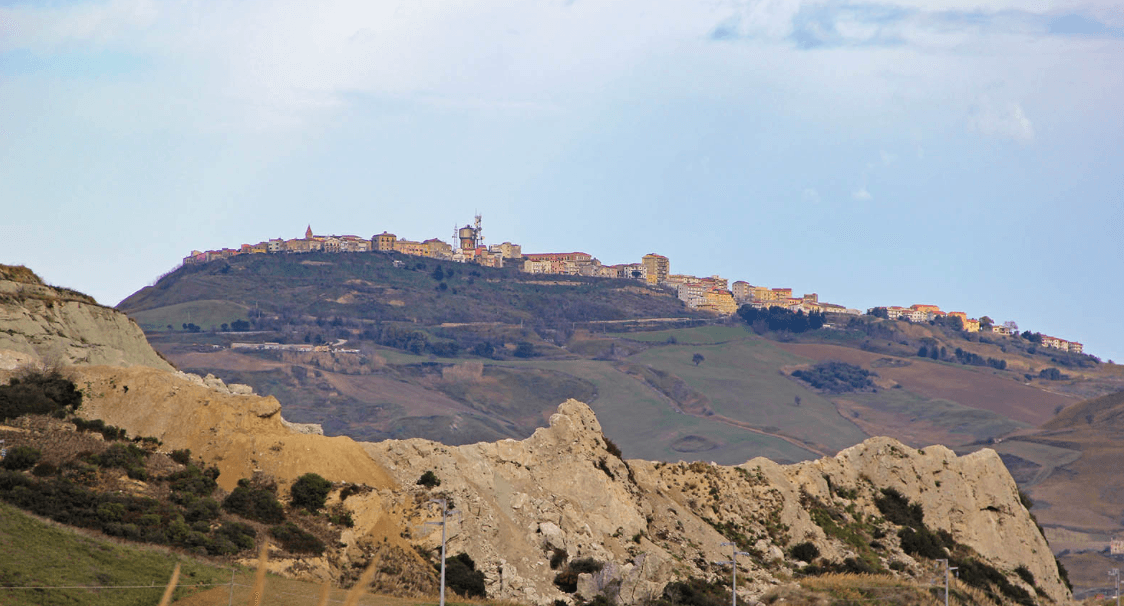
A 369-meter hill town between the Biferno and Trigno valleys, founded by the Frentani in the fifth century BC and looking out toward the Adriatic.
Known for
FRENTANI ORIGINS
Founded as Uscosium in the fifth century BC, one of the principal centres of the Frentani before Rome.
SANTA MARIA MAGGIORE
Twelfth-century collegiate church holding the relics of Sant'Adamo Abate, reworked in eighteenth-century Baroque.
OLIVE OIL
Extra virgin olive oil from the hills above the Adriatic, the basis of the Città dell'Olio designation.
When to visit
Best · Apr–Oct
- J11°
- F13°
- M13°
- A16°
- M22°
- J27°
- J30°
- A30°
- S25°
- O21°
- N16°
- D12°
- Best
- Hot or crowded
- Quiet
- Mostly closed
Daytime averages, 2020–2024. Weather data by Open-Meteo.com.
The festa: Adamo abate, 3 June
Why come
Guglionesi sits on a 369-meter ridge between the Biferno and Trigno valleys, halfway between the Adriatic coast and the inland hills of Molise. The Frentani founded the place in the fifth century BC, under the name Uscosium, and it was one of their principal centres before Rome absorbed the confederation. In the sixteenth century the Dominican Serafino Razzi listed Guglionesi alongside the Slav-founded villages of lower Molise; he also recorded that Brother Serafino led the local defence against an Ottoman raid led by Sulayman at the city walls.
The Romanesque Chiesa di San Nicola di Bari and the Collegiata di Santa Maria Maggiore are the medieval anchors of the centro storico; the latter goes back to the twelfth century and holds the relics of the abate Sant'Adamo. The hills produce olive oil good enough for the Città dell'Olio designation, and on a clear afternoon you can see the Tremiti islands offshore.
The Sunday letter
We haven’t written Guglionesi’s letter yet.
One town every Sunday, with the photo, the food, the festa. Be there when this one comes up. Free, by Peter & Sophia from Pietrasanta.
How to get there
From Bari / Brindisi (BRI), about 2h 28m by car.
Naples / Salerno (NAP) is about 3 hours away.
By car from the centre of Pescara 1h 30m, Bari 2h 32m or Ancona 3 hours.
There is a railway station in the comune, so you can arrive without a car.
Coming by train into Foggia? Guglionesi is about 1h 21m away by road.
What to see
Collegiata di Santa Maria Maggiore
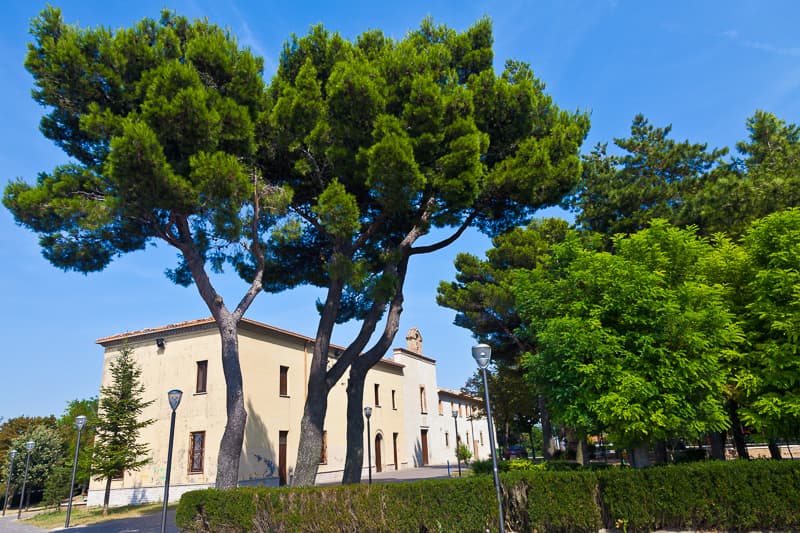
Collegiate church with twelfth-century origins, reworked in the eighteenth century in Baroque style; holds the relics of Sant'Adamo Abate.
Chiesa di San Nicola di Bari
Romanesque church in the centro storico, the oldest documented religious building in the town.
Centro storico
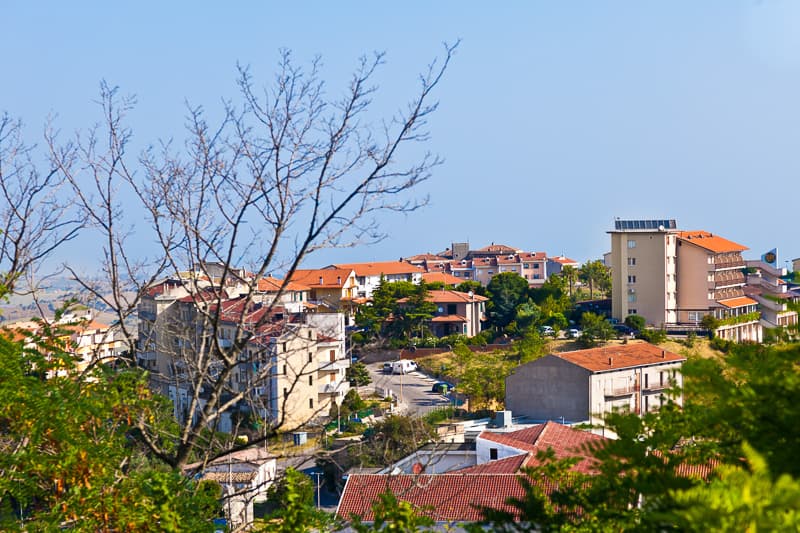
Stone old town along the ridge, with city walls Brother Serafino is recorded as defending against an Ottoman raid in the sixteenth century.
Belvedere
Panorama over the Biferno valley and east toward the Adriatic, with the Tremiti islands visible on clear days.
The slow-trip planner
Building a trip? Find where Guglionesi fits in a slow Italy circuit.
Answer five questions. We will shape a geographically coherent slow trip from the 1,000 Italian towns most travelers skip. Yours to save and share.
Living here
- Population 4,881
- Off the beaten pathi
- Pharmacy in town
- High school within a 30-minute drive
- Train station in the comune
- Nearest airport Bari / Brindisi, 2 h 28 min drive
- Market day Monday
- Regional capital Campobasso, 1 h 6 min drive
Common questions
- What is Guglionesi known for?
- Guglionesi is a 369-meter hill town between the Biferno and Trigno valleys, founded by the Frentani in the fifth century BC and looking out toward the Adriatic.
- Where is Guglionesi?
- Guglionesi is a comune in the province of Campobasso, in Molise, at 369 meters above sea level.
- What is the nearest airport to Guglionesi?
- Bari / Brindisi (BRI), about 2h 28m by car.
- Can you get to Guglionesi without a car?
- Yes. There is a railway station in the comune, so you can arrive by train.
- How long is the drive from Pescara to Guglionesi?
- About 1h 30m by car.
- When is the best time to visit Guglionesi?
- Best in Apr–Oct. July is the warmest month, averaging 30 degrees, and November the wettest, with about 13 rain days.
- Is there a sagra or a festival in Guglionesi?
- The town keeps its patron saint's day: Adamo abate, 3 June.
- Which other towns are like Guglionesi?
- Larino, Irsina and Borgo Val di Taro.
- How many people live in Guglionesi?
- 4,881 at the 2023 count.
Tags & datadesignations · numbers · sources
Recognised as
The numbers
- Elevation: 369 m
- Population: 4,881
- Surface area: 100.95 km²
These figures were compiled from public directories: ISTAT, OpenStreetMap and Wikidata, and from the official listings of the guides named on this page. Town details change; verify with official sources before you travel.
Similar
Towns like Guglionesi
Larino
Province: Campobasso
both inland, away from the coast · both between 3,000 and 10,000 people
Irsina
Province: Matera
both inland, away from the coast · both between 3,000 and 10,000 people
Borgo Val di Taro
Province: Parma
both inland, away from the coast · both between 3,000 and 10,000 people
Calitri
Province: Avellino
both inland, away from the coast · both between 3,000 and 10,000 people
Sammichele di Bari
Province: Bari
both inland, away from the coast · both between 3,000 and 10,000 people
Vico del Gargano
Province: Foggia
both inland, away from the coast · both between 3,000 and 10,000 people
🫒 Città dell'Olio
More Città dell'Olio towns in Molise
Ferrazzano
Province: Campobasso
A hilltop borgo at 872 meters above Campobasso, called the Sentinel of Molise, where Robert De Niro's great-grandparents lived before sailing in 1887.
Fornelli
Province: Isernia
A walled medieval borgo at 530 meters with seven towers and the birthplace of Nancy Pelosi's mother, eight kilometers west of Isernia.
Guardialfiera
Province: Campobasso
A hilltop village at 285 meters above the largest artificial lake in Molise.
Larino
Province: Campobasso
A Frentani and Roman town of 341 meters in the lower Biferno valley, where a Roman arena and a Gothic cathedral stand a short walk apart.
Petacciato
Province: Campobasso
A hilltop village at 225 meters on the Adriatic, with a Romanesque church in tuff and sandstone and a long sand beach below.