
The best olive oil towns in the province of Campobasso
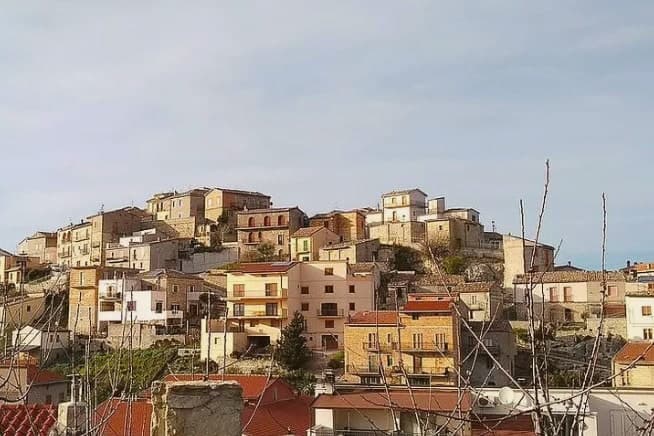
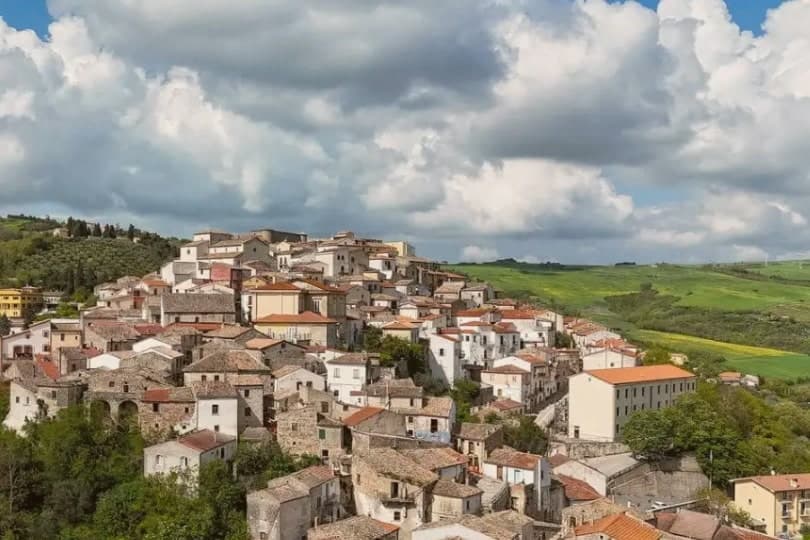
Olive harvest in the province of Campobasso runs from late October into December, and the smell of it gets into everything: the mills on the valley roads, the crates stacked outside cooperative doors, the raw grassy oil poured over bruschetta in bars that also sell cigarettes. The trees here climb from the Adriatic plain up the Biferno and Trigno valleys, Gentile di Larino above all, plus Aurina and Leccino on the higher slopes. Towns sit on limestone ridges with the sea on one horizon and the Matese on the other, houses in pale local stone, streets pitched steeply enough that cars give up. Winter food follows the oil, cardone soup at Christmas, lamb, pasta with beans, all of it dressed at the table rather than in the pan.
Molise has spent decades as the region people cannot place on a map, and the traffic that does arrive mostly heads for the coast road and the beach resorts around Vasto and Pescara, north over the Abruzzo border, or inland to the Roman ruins of Saepinum on a coach day trip from Naples. Those are the recognised names, and in August the Adriatic strip fills accordingly. The olive country in between gets driven through at speed by people aiming for somewhere with a bigger reputation.
The trees do not stop where the guidebooks do. The same groves continue up the Biferno, around the reservoir, along the ridges above Larino's Roman amphitheatre and down towards the Trigno, and the towns holding them press, sell and eat their own oil without much ceremony. Fewer people go, and mills in November will usually show a visitor the press if asked. These are the places in the province that have committed to that, formally, as members of the national olive-oil towns association.
Of the 13 communes we have mapped in the province of Campobasso, 7 qualify as olive oil towns: each belongs to the national association of olive-oil towns. The smallest, Roccavivara, has 622 residents.
If you are still choosing, we have also written The best hidden olive oil towns in Molise and The best towns you can reach by train in the province of Campobasso.
Roccavivara
Why visit Roccavivara
Roccavivara sits at 652 meters above the Trigno river in northern Molise, 30 kilometers north of Campobasso. Its name has two competing etymologies — either from Rocca Bonnarii, after a founder named Bonnario, or from the nearby Vivara contrada that still borders the commune.
The lower valley holds Roman-era remains from both republican and imperial periods, including a villa with a megalithic substructure at the San Fabiano locality. From 1268 the village was a feudo of Gualtiero di Vollers, later passing through the Cantelmo, Sangro, Carafa and Coppola families until the abolition of feudalism.
Today Roccavivara's anchor is the Santuario della Madonna del Canneto, a Romanesque sanctuary on the Trigno first documented in 706 AD when Duke Gisulfo I of Benevento donated it to the Benedictines of San Vincenzo al Volturno; by 1097 the church had passed to Montecassino. The current 11th-12th century building holds a rare 1223 ambone with six high-relief Benedictine monks and a 14th-century gothic statue known as the Madonna del Sorriso.
The town belongs to the Città dell'Olio network on the strength of its olive groves along the warm Trigno slopes.
What to see in Roccavivara
- Santuario della Madonna del Canneto. Romanesque sanctuary on the Trigno river, first mentioned in 706 AD. Holds a rare 1223 ambone with six Benedictine reliefs and a 14th-century gothic Madonna statue known as the Vergine del Sorriso.
- Chiesa di San Michele Arcangelo. 13th-century parish church in Largo Chiesa with a gothic pointed-arch portal, baroque interior altars added after 1575, and a Neapolitan late-baroque bell tower with curvilinear cuspid.
- Villa romana di San Fabiano. Roman villa from the 1st century AD with a megalithic substructure, in the lower valley of the Trigno where the agro shows continuous occupation from the republican to the imperial period.
How to get to Roccavivara
Pescara is roughly 89 minutes away by road.
Our tip
April through October is the open season in the Trigno valley: warm spring and autumn days, hot summers tempered by the river breeze, and the olive harvest running from late October through November. May and June bring wildflowers along the river and processions to the sanctuary. July and August are warmer but the elevation keeps evenings cool; mid-August often hosts patronal feasts in the village.
Guardialfiera
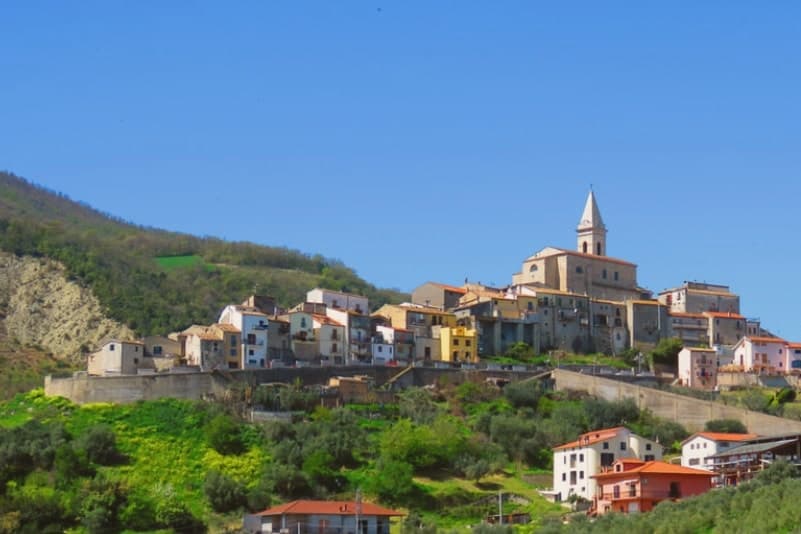
Why visit Guardialfiera
Guardialfiera sits on a 285-meter ridge above the Biferno valley. The town has been inhabited since at least the eleventh century, with a Roman tower visible on the western edge until the tenth.
Roger II conquered it in 1130; the Soliaco and Marzano families held it through the fourteenth century; a 1688 earthquake levelled it and forced the rebuild whose stone streets still climb the ridge today. Pope Alexander II established the Diocese of Guardialfiera in 1061; it was suppressed in 1818 and survives as a titular see.
The river below was dammed in 1976, and the valley the town once overlooked became the lake it now overlooks, the largest in Molise. The hills that climb away from that water are the same ones that produce the oil good enough for the Città dell'Olio mark, and the same ones a native writer used as the settings for his fiction.
A ridge town, a drowned valley, and a diocese reduced to a title: Guardialfiera is a place that has been remade more than once and kept climbing back up its own hill each time.
What to see in Guardialfiera
- Concattedrale di Santa Maria Assunta. Co-cathedral with origins in the eleventh century, incorporating ancient stones carved with seventh and eighth-century pagan and early Christian iconography.
- Lago di Guardialfiera. Stone piers of an older, submerged bridge surface in the shallows during dry summers, the only visible trace of the valley the reservoir replaced.
- Parco Letterario Francesco Jovine. Literary park dedicated to the writer, laid out through the hills that furnished the settings of his novels.
How to get to Guardialfiera
Foggia is roughly 95 minutes away by road.
Our tip
April through October is the open window. Spring sets the lake into its full reach and the hills above into colour. June and September give the steadiest light for the long view from the village.
Ferrazzano
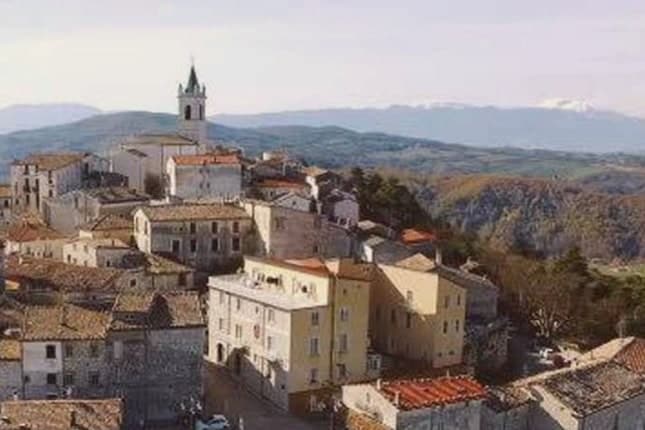
Why visit Ferrazzano
Ferrazzano sits on a ridge at 872 meters, five kilometers south of Campobasso, with a long view over the Biferno valley that gave it the nickname Sentinella del Molise. The Samnites lived on this hill before Rome, and Sulla's troops built a garrison here during the Social Wars; houses rose around it and the medieval village took shape.
By the twelfth century the fief belonged to Riccardo Camarda, then to the Giniaco and Sangro families, finally to the Carafa, who built the stone castle with two round towers in the sixteenth century. The De Niro family of Hollywood comes from these fieldstone row houses: Giovanni Di Niro and Angelina Mercurio sailed from Ferrazzano in 1887 and the immigration office at Ellis Island recorded their name as De Niro.
The hills around the village have produced olive oil long enough that the commune carries the Città dell'Olio mark.
What to see in Ferrazzano
- Castello Carafa. Sixteenth-century Carafa castle with two round towers at the top of the village, later owned by the family of the actor Totò.
- Chiesa di Santa Maria Assunta. Parish church on the main square, the religious centre of the medieval village.
- Centro storico. Stone row houses with clay-tile roofs along the ridge, the Sentinel-of-Molise quarter that grew up around the Sulla-era garrison.
How to get to Ferrazzano
Foggia is roughly 94 minutes away by road.
Our tip
May through October works best at 872 meters. The ridge stays cooler than Campobasso below, the olive groves move through flowering and fruit, and the long view from the belvedere clears most afternoons. June and September are the gold months.
Petacciato
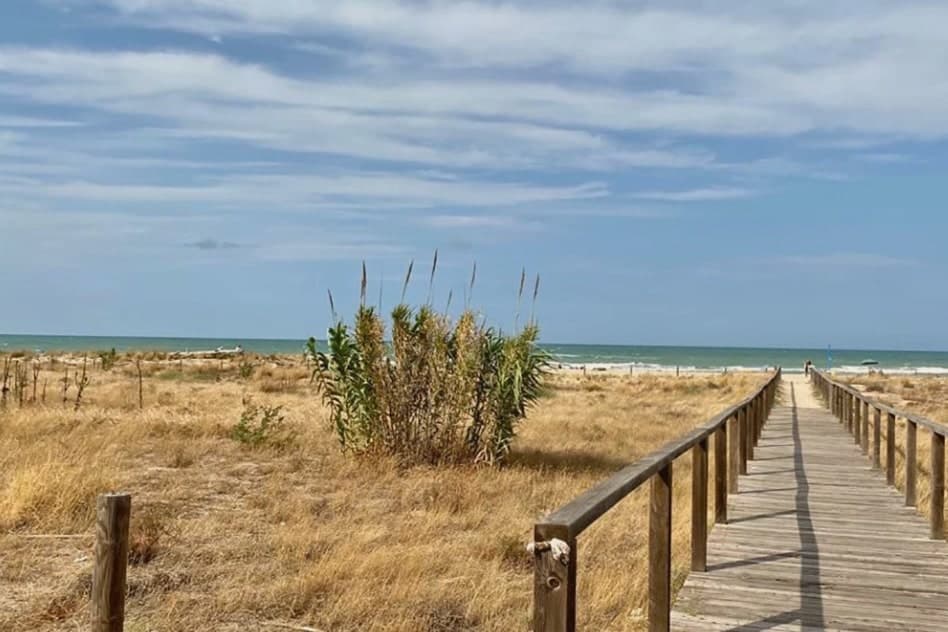
Why visit Petacciato
Petacciato stands at 225 meters on the last ridge before the Adriatic, with the Tremiti islands offshore and the Maiella visible to the north and the Gargano to the south on clear days. The centro storico keeps its medieval shape around the Chiesa di Santa Maria, built in tuff and sandstone between the eleventh and thirteenth centuries, originally dedicated to San Rocco and still holding three naves with three altars.
The Marina di Petacciato, a few kilometers below the village, runs a long sand beach lined with pine, with low dunes and shallow water that draws Italian families in July and August. The hills above produce the olive oil that earned the Città dell'Olio designation.
Petacciato was one of the lower-Molise villages Serafino Razzi listed in his sixteenth-century chronicle of Slav-founded communities, though the visible record today is Italian Romanesque and twentieth-century coastal.
What to see in Petacciato
- Chiesa di Santa Maria (già San Rocco). Romanesque church in tuff and sandstone, built between the eleventh and thirteenth centuries, with three naves and three altars.
- Centro storico. Medieval ridge village around the old church, with stone houses and the long Adriatic view east.
- Marina di Petacciato. Long sand beach below the village, pine-backed and low-duned, the main summer draw.
How to get to Petacciato
There is a railway station in the town, so you can arrive without a car and never need one while you are here. Pescara is roughly 83 minutes away by road.
Our tip
May through September is the working coast. June gives the cleanest water before the families arrive; July and August fill the Marina di Petacciato with the lower Adriatic crowd. The ridge village above stays a few degrees cooler than the beach and is the night-time refuge in August.
Guglionesi
Why visit Guglionesi
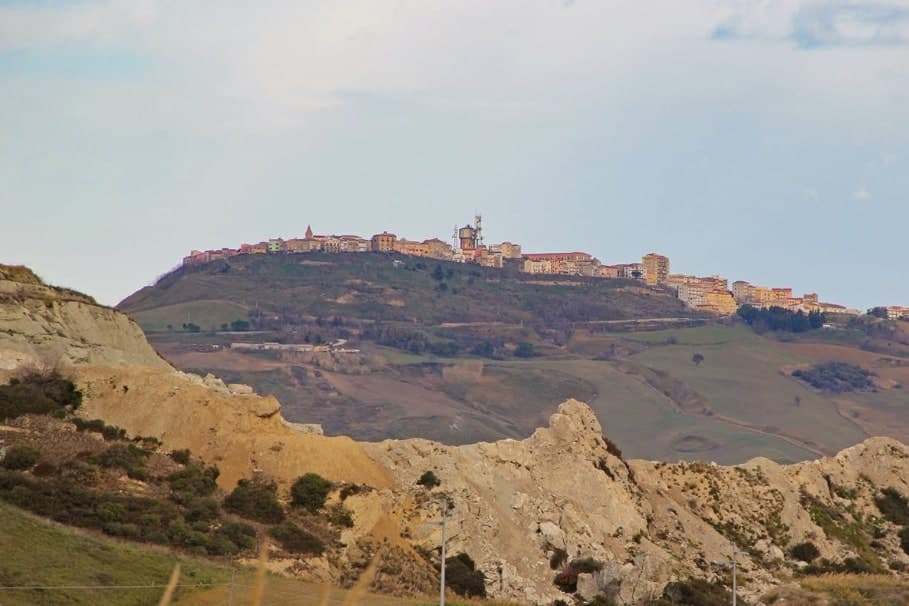
Guglionesi sits on a 369-meter ridge between the Biferno and Trigno valleys, halfway between the Adriatic coast and the inland hills of Molise. The Frentani founded the place in the fifth century BC, under the name Uscosium, and it was one of their principal centres before Rome absorbed the confederation.
In the sixteenth century the Dominican Serafino Razzi listed Guglionesi alongside the Slav-founded villages of lower Molise; he also recorded that Brother Serafino led the local defence against an Ottoman raid led by Sulayman at the city walls. The Romanesque Chiesa di San Nicola di Bari and the Collegiata di Santa Maria Maggiore are the medieval anchors of the centro storico; the latter goes back to the twelfth century and holds the relics of the abate Sant'Adamo.
The hills produce olive oil good enough for the Città dell'Olio designation, and on a clear afternoon you can see the Tremiti islands offshore.
What to see in Guglionesi
- Collegiata di Santa Maria Maggiore. Collegiate church with twelfth-century origins, reworked in the eighteenth century in Baroque style; holds the relics of Sant'Adamo Abate.
- Chiesa di San Nicola di Bari. Romanesque church in the centro storico, the oldest documented religious building in the town.
- Centro storico. Stone old town along the ridge, with city walls Brother Serafino is recorded as defending against an Ottoman raid in the sixteenth century.
How to get to Guglionesi
There is a railway station in the town, so you can arrive without a car and never need one while you are here. Foggia is roughly 82 minutes away by road.
Our tip
April through October is the working window. Spring greens the valleys and brings the long Adriatic views back into focus. June and September are the calmest months for the centro storico.
Larino
Why visit Larino
Larino sits at 341 meters in the lower Biferno valley, twenty kilometers inland from Termoli. The Frentani held the place before Rome and minted bronze coins here in the third century BC; the wool trade made it a regional centre.
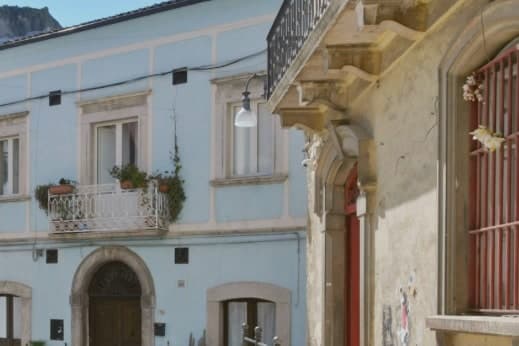
The orator Cicero defended a Larino-born equestrian, Aulus Cluentius Habitus, in his Pro Cluentio of 66 BC, a case that ties the town to the wider world of the capital beyond its own remains. The old town runs along the ridge above the ancient city, so the medieval borgo and the old street plan sit in view of each other rather than layered one on top of the other.
The cathedral stands at one end of this arrangement, the arena and forum fragments at the level below. Every 25 to 27 May the streets carry the Carrese di San Pardo, a three-day procession of oxen and flower-decked carts that retraces the eleventh-century translation of the patron's relics from Daunia, linking the medieval town's religious life to the same ground the Frentani and the arena's builders had already used.
The surrounding hills carry the Città dell'Olio mark. What holds the town together, across the Frentani coinage, the law case, the arena, and the May procession, is that each layer used the same ridge and valley without erasing what came before it.
Osteria del Borgo, Ciafi dal 1976 have been named by a guide.
What to see in Larino
- Anfiteatro Romano. Elliptical arena, 100 by 80 meters, built by a Larinum citizen who made his fortune in Rome. It stands within walking distance of the old town, its outline still legible against the surrounding streets.
- Cattedrale di San Pardo. The portal is the work to look at closely, carved by Francesco Petrini of Lanciano, its stone figures still sharp against the facade's plainer masonry.
- Centro storico (borgo). Medieval old town stretched along the ridge above the Roman remains, with Renaissance palazzi and narrow stone streets.
How to get to Larino
There is a railway station in the town, so you can arrive without a car and never need one while you are here. Foggia is roughly 82 minutes away by road.
Our tip
April through October is the working season. May is the month most travellers come for: the three-day Carrese di San Pardo runs 25 to 27 May, with around 130 flower-decked ox carts moving through the town. June and September keep the Roman amphitheatre and cathedral comfortable to walk.
Termoli
Why visit Termoli
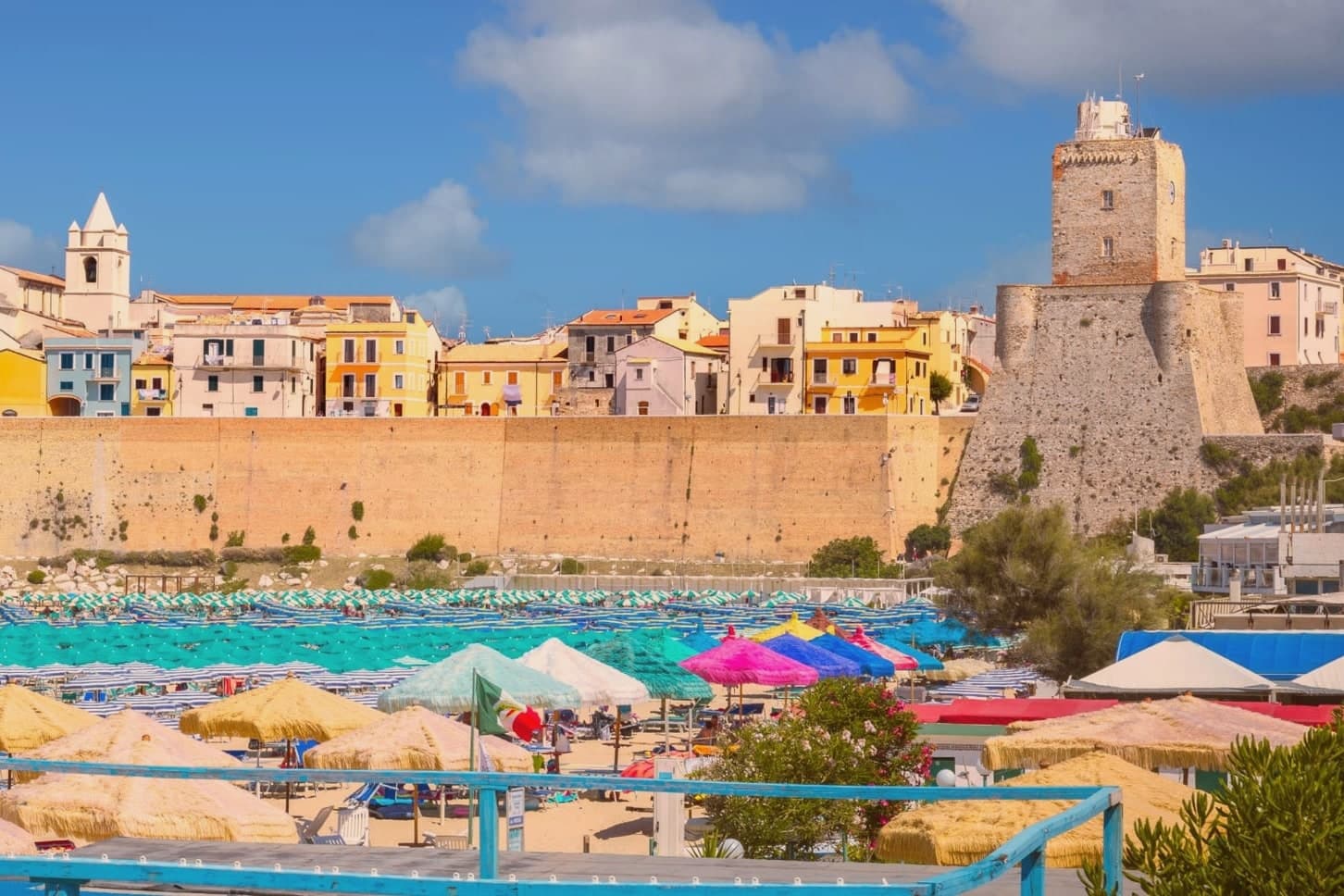
Termoli sits on a promontory pushing into the Adriatic between two beaches, the only seaside town and the only port in Molise. The walled quarter occupies the tip of the promontory itself: a maze of narrow lanes lined with low white and ochre houses, built for fishermen and still laid out as they left it, with the castle anchoring one end and the cathedral square at the center.
Outside the walls, the coast runs east and west with the wooden trabucchi platforms still worked from the rocks on calm days, while the newer town extends inland from the old core. One of the largest tank battles of the 1943 Italian campaign was fought through these streets between 2 and 6 October.
What holds the town together is the promontory itself: a small fortified point that has had to serve as harbor, defense, parish and battlefield in turn, with the rest of Termoli built up around it rather than the other way round.
Federico II, Svevia, Don Giovanni Steak House and 2 more have been named by a guide.
What to see in Termoli
- Castello Svevo. The fortress Frederick II rebuilt stands as the visual anchor of the borgo antico, its walls facing the sea rather than the town it once defended.
- Cattedrale di Santa Maria della Purificazione. Apulian Romanesque cathedral from the twelfth and thirteenth centuries, holding the relics of San Basso and San Timoteo, patrons of the city.
- Borgo antico. Walled fishermen's quarter on the promontory, a maze of low white and colored houses, narrow lanes and small piazzas above the sea.
How to get to Termoli
There is a railway station in the town, so you can arrive without a car and never need one while you are here. Foggia is roughly 69 minutes away by road.
Our tip
May through September is the season Termoli was built for: hot dry days, Adriatic light, the beaches working at full capacity, and the ferry to the Tremiti islands running daily. July and August fill with Italian families on holiday and the lungomare becomes hard to walk in the evening. April and October are the shoulder months; the borgo antico opens again to people who actually want to walk it, and the cathedral piazza is quiet. Sagra del pesce falls in the season.
More from Anywhere Italy
- The best hidden olive oil towns in Molise
 The best towns you can reach by train in the province of Campobasso
- The 8 best olive oil towns you can reach by train within 90 minutes of Foggia
- The best hill towns in Molise
 The best hidden olive oil towns within 90 minutes of Foggia
 The best olive oil towns that eat well within 90 minutes of Foggia