The best towns with a food festival that eat well in Marche
Marche cooking is built on things that keep. Olives all'ascolana, green and stuffed with three meats and fried in breadcrumbs, ciauscolo soft enough to spread on bread, brodetto simmered along the Adriatic with a different recipe in every port. Inland the hills run to vines, verdicchio on the limestone slopes and sagrantino-adjacent reds further south, and the towns above them are brick and travertine, tight-planned, warm-coloured in late light. The festival season stretches from the truffle weekends of autumn through to the summer sagre held in a single piazza with trestle tables and a queue.
People who come to Marche for food tend to go to Urbino, and reasonably so. The Palazzo Ducale is one of the great buildings in Italy and the restaurants around it know it, which means booking ahead in high summer and eating alongside other visitors doing the same. It is a fine day and a crowded one, and it accounts for a large share of what most travellers see of the region.
The same hills and the same recipes continue well past it. These towns hold recurring festivals built around one local ingredient, and each has a table that a dining guide has named, which is a useful pair of facts to have about a place before you drive an hour to it. Fewer people go. The food does not get worse for it.
Of the 63 communes we have mapped in Marche, 10 qualify as towns with a food festival that eat well: each holds a recurring food festival built around one local ingredient, and a dining guide has named a table in each. The smallest, Staffolo, has 2,087 residents.
Two more lists worth reading alongside this one: The 10 best hill towns that eat well within 90 minutes of Ancona and The 8 prettiest villages that eat well in Marche.
Staffolo
Why visit Staffolo
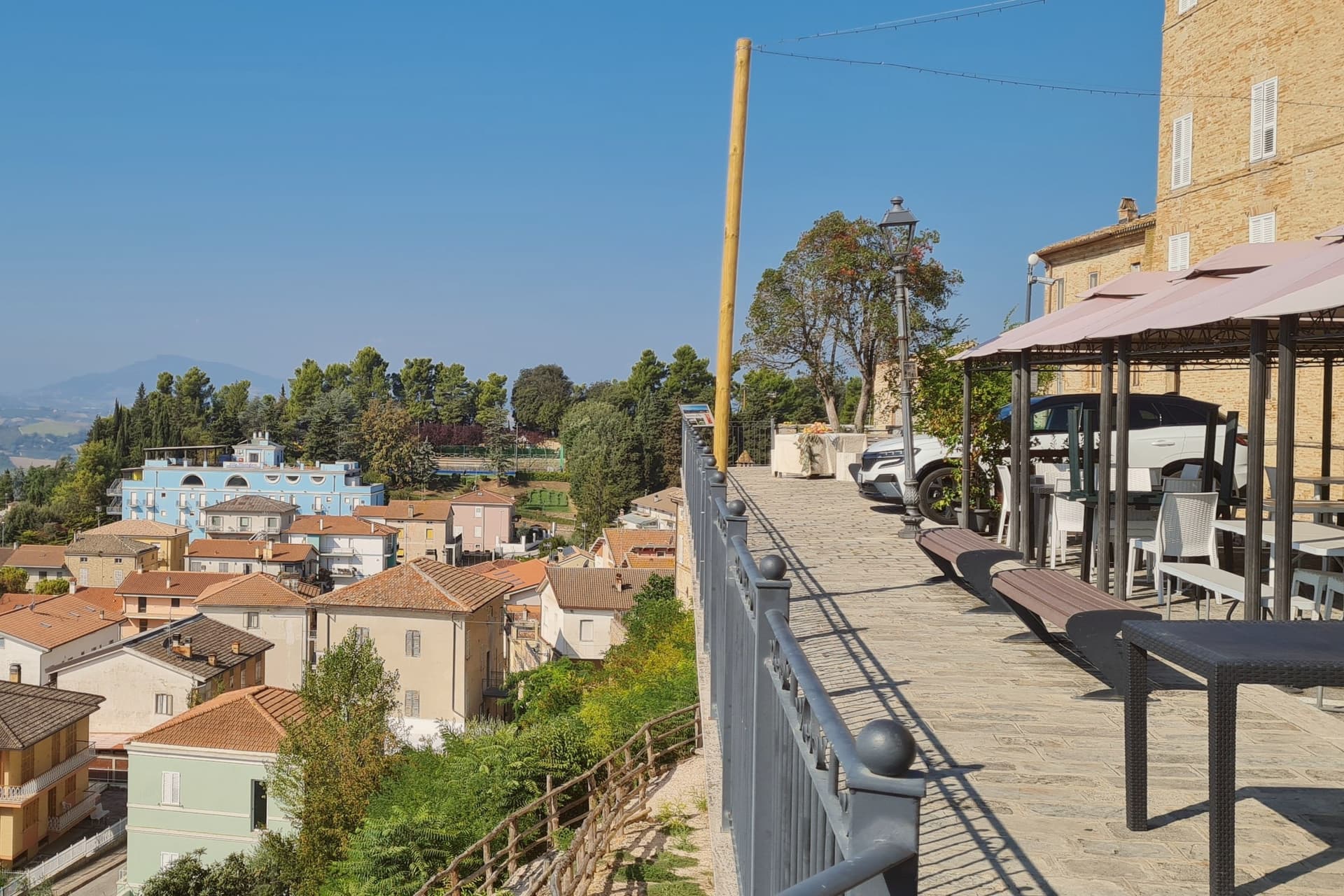
Staffolo rises to 442 meters on a hill between the Esino, Misa and Musone valleys, thirty-five kilometers from Ancona. The town calls itself the Balcone della Vallesina for the panoramic ridge it stands on, and Colle del Verdicchio for the vines that cover the south-facing slopes around it.
Verdicchio cultivation here is documented from 1569; the surrounding Castelli di Jesi DOCG zone draws from south-facing parcels between 220 and 500 meters of altitude. The centro storico is almost circular, walled with partly original ramparts and entered through two opposing gates; the fourteenth-century Albornoz tower rises above the walls.
The Museo dell'Arte del Vino, carved into rooms inside the walls themselves, holds an oak press from 1695 and the working tools of the local cellars, with an enoteca attached. Three churches anchor the village: Sant'Egidio with a fifteenth-century Master of Staffolo polyptych, San Francesco with a 1769 Callido organ, and the baroque Santa Maria di Castellaretta built by survivors of the Battle of Lepanto.
Osteria Vino e Cucina have been named by a guide.
What to see in Staffolo
- Centro storico. Almost circular walled medieval nucleus with partly original ramparts, two opposing gates and the fourteenth-century Torre Albornoz rising above the circuit.
- Museo dell'Arte del Vino. Wine museum carved into rooms inside the walls themselves, holding an oak grape press from 1695 and the working tools of the Staffolo cellars, with attached enoteca.
- Chiesa di Sant'Egidio. Parish church on the ridge, holding a fifteenth-century polyptych by the anonymous Master of Staffolo of the Fabrianese school.
How to get to Staffolo
Ancona is roughly 42 minutes away by road.
Our tip
April through June and September into October are the best months for Staffolo. The ridge stays cooler than the valleys below, the vineyards turn green by April and gold from late September, and the views to the Adriatic and the Apennines run cleanest in the dry weeks. July and August can touch the high twenties at 442 meters, but the breeze along the Vallesina ridge moves through town most afternoons. Verdicchio Festival falls in August.
Ripatransone
Why visit Ripatransone
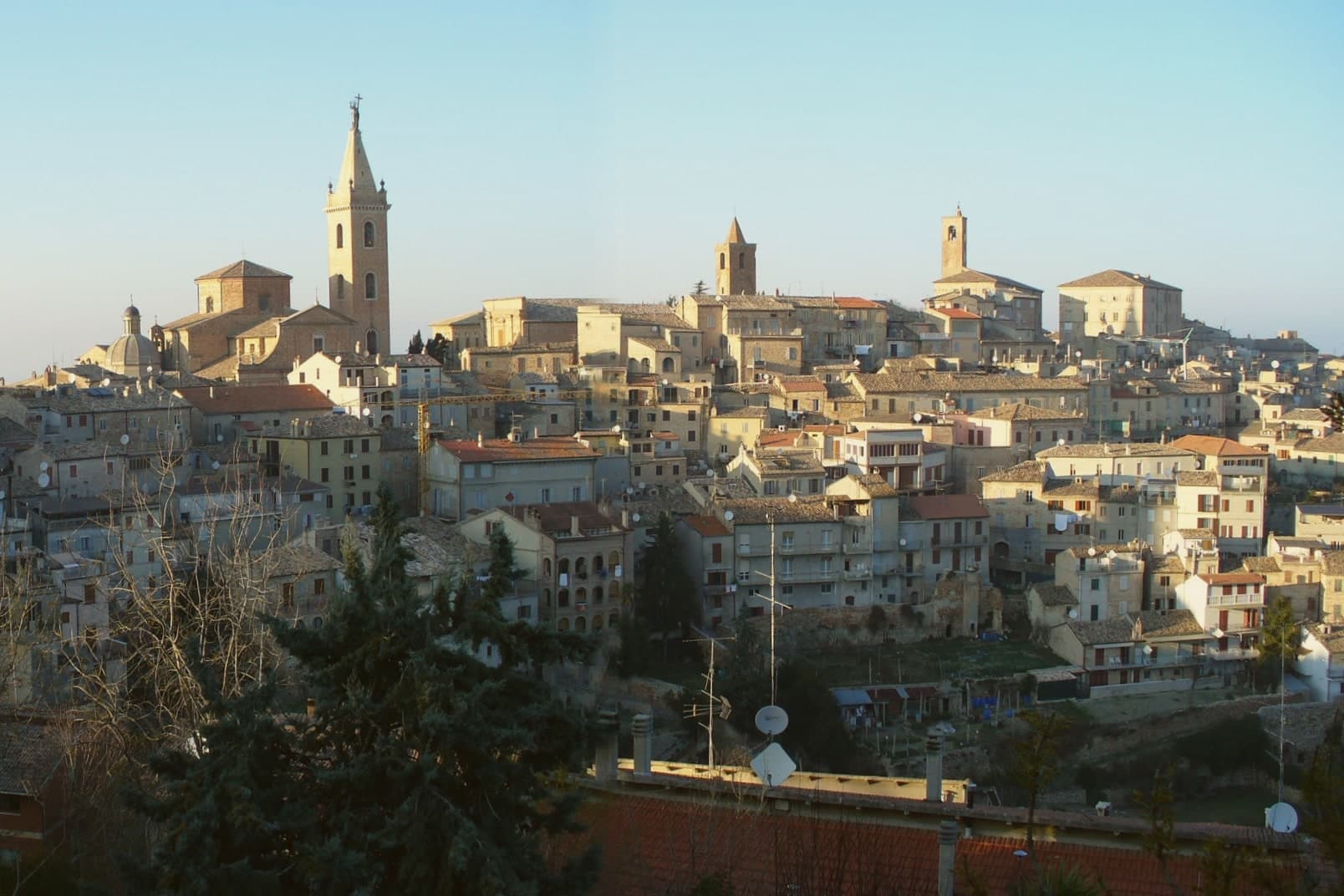
Ripatransone sits at 494 meters on a ridge between the Tesino and Menocchia valleys, twenty kilometers from Ascoli Piceno and seven from the Adriatic, with views from the Sibillini and Gran Sasso to the coast that earned it the nickname Belvedere del Piceno. The hill has been inhabited since prehistory and was settled by the Umbri and then the Piceni; after centuries of Roman quiet a medieval town grew here from a circle of castles unified in 1096.
Pope Pius V raised it to City and diocesan see in 1571. The name combines ripa, cliff, with Transone, the first feudal lord.
The Vicolo più stretto d'Italia, the narrowest alley in Italy at 43 centimeters and 32 at its tightest point, runs between two stone houses near Via Margherita: shoulders go sideways. The Cavallo di Fuoco, a wooden horse covered in fireworks that gallops across the main piazza on the Sunday after Easter, has run since 1682.
Iervasciò, Trattoria da Rita have been named by a guide.
What to see in Ripatransone
- Vicolo più stretto d'Italia. The narrowest alley in Italy, 43 centimeters wide and 32 at its tightest point, between two stone houses near Via Margherita.
- Piazza XX Settembre. The main square of the centro storico, with the Palazzo del Podestà, the Cathedral of San Gregorio Magno and the medieval Torre Civica.
- Cattedrale di San Gregorio Magno. Cathedral built between the seventeenth and eighteenth centuries on the site of an earlier church, raised to cathedral status by Pope Pius V in 1571.
How to get to Ripatransone
Pescara is roughly 70 minutes away by road.
Our tip
April through June and September into October are the working months for Ripatransone. The Tesino and Menocchia valleys turn green from April, the Cavallo di Fuoco runs on the Sunday after Easter, and the autumn light brings the clearest views from the ridge across to the Sibillini and the sea. July and August touch the low thirties; the ridge breeze keeps the centro storico cooler than the coastal plain seven kilometers below. Festival Frittella di Zia Maria falls in September.
Offida
Why visit Offida
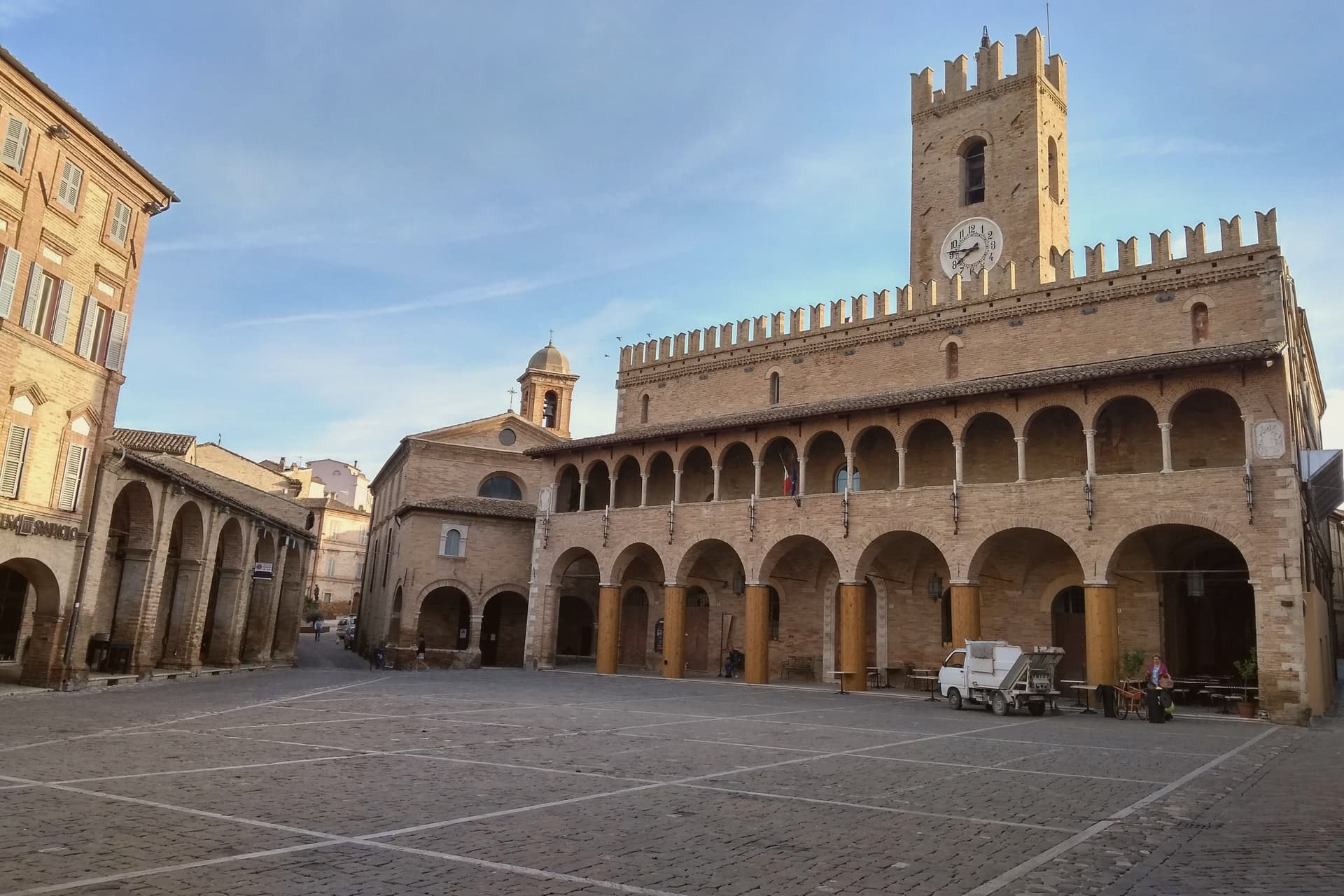
Offida sits at 293 meters on a cliff between the Tesino and Tronto valleys, twenty-three kilometers from Ascoli Piceno. The Chiesa di Santa Maria della Rocca rises on a rock spur at the western edge of the village, surrounded on three sides by cliffs that drop into two valleys: a Romanesque-Gothic temple in brick and travertine, raised by Master Albertino in 1330 on an older Benedictine foundation, with a double row of trilobed arches around the apse.
Inside, the apse and transept hold the fresco cycle of the Master of Offida, an anonymous monk painter who carried Giotto's lesson through the Rimini school, with the Marriage of Saint Catherine and Saint Christopher dated by inscription to 1367. Bobbin lace, merletto a tombolo, has been worked in town since the fifteenth century; the Museo del Merletto in Palazzo De Castellotti holds the collection.
The Carnevale Storico, with the Bove finto run and the Vlurd fire bundles, dates from before Lent in early February.
Osteria Ophis, Blob Caffè & Ristorante have been named by a guide.
What to see in Offida
- Chiesa di Santa Maria della Rocca. Romanesque-Gothic brick-and-travertine church raised in 1330 by Master Albertino on a rock spur west of town, with the Master of Offida fresco cycle dated 1367 in the transept.
- Museo del Merletto a Tombolo. Inside Palazzo De Castellotti, with the lace collection, tools, historical documents and demonstrations of the bobbin-lace work practiced in town since the fifteenth century.
- Palazzo Comunale. Civic palace on the long Piazza del Popolo, with a portico, the Teatro Serpente Aureo and the access to the Museo del Merletto and the archaeological museum.
How to get to Offida
Pescara is roughly 74 minutes away by road.
Our tip
April through June and September into October are the best months for Offida. The hills around the town turn green by April and gold through the September harvest, the wine cellars run open tastings between vendemmia and St. Martin, and the Pecorino and Passerina vineyards stand out along the ridges. Sagra del Chichìripieno falls in August.
Montecosaro
Why visit Montecosaro
Montecosaro sits at 267 meters on a hill above the lower Chienti valley, fifteen kilometers from Macerata and inland from the Adriatic at Civitanova. The first record of a monastery in the river plain dates to 936, when the abbot Ildebrando received the church of Santa Maria from Farfa.
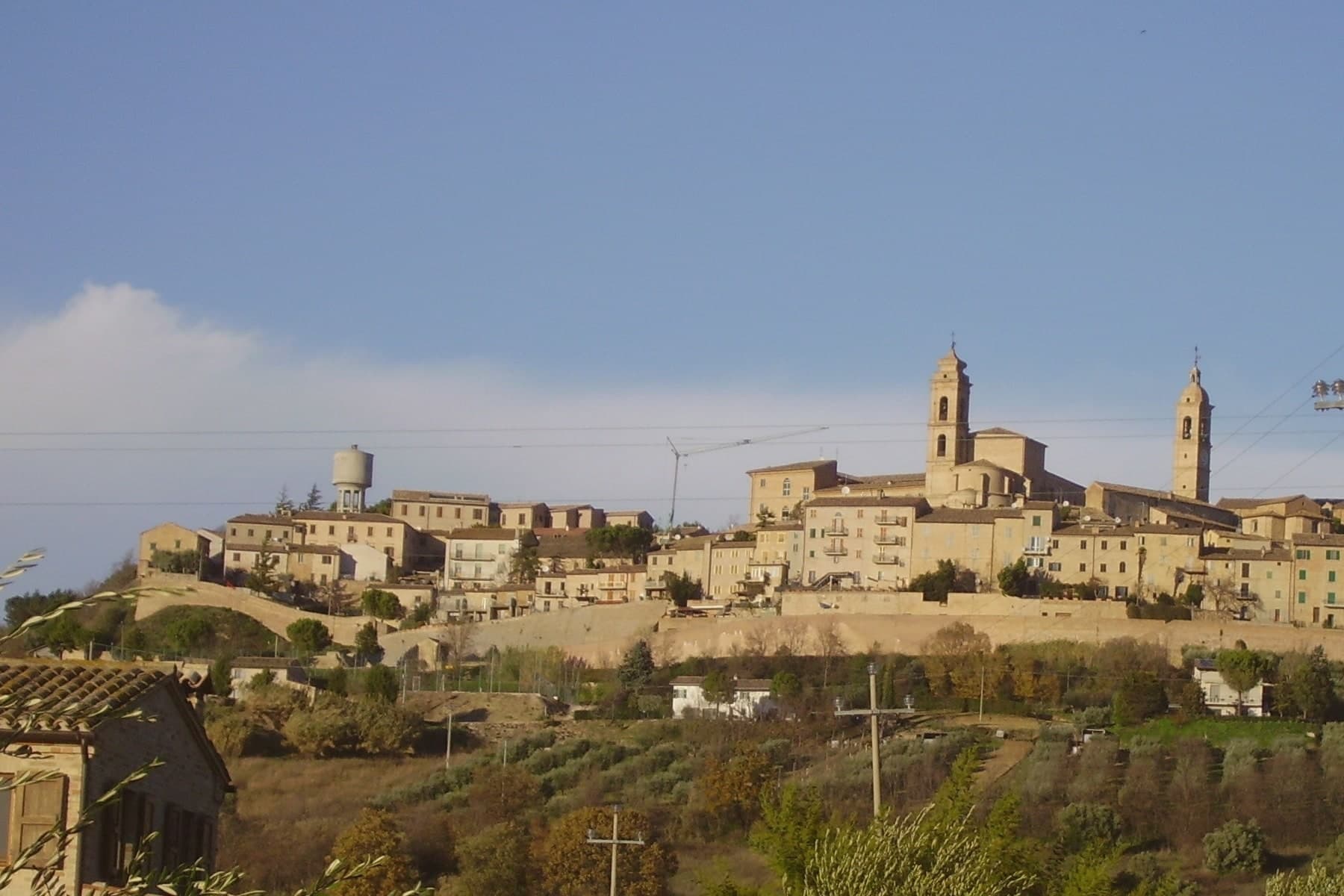
The current Basilica di Santa Maria a Piè di Chienti was raised in 1125 by the Lombard abbot Agenolfo, on the left bank a few kilometers from the river mouth: a three-nave Romanesque church with a raised presbytery and a ring of apsidioles, holding among the strongest Cluniac architecture in central Italy. The hilltop borgo above grew from a medieval castle after 1200, walled in the fourteenth century inside an oval that culminates at the Cassero, the former fortress now a public garden.
The Augustinian convent and the church of Sant'Agostino in the upper town date from the same century, rebuilt in the late eighteenth.
Due Cigni Ristorante have been named by a guide.
What to see in Montecosaro
- Basilica di Santa Maria a Piè di Chienti. Romanesque church rebuilt in 1125 by the Lombard abbot Agenolfo on a Farfa monastic foundation of 936, three naves with raised presbytery and apsidioles.
- Centro storico. Oval-walled medieval centro storico on the hill, with fourteenth-century walls and concentric streets climbing toward the Cassero.
- Cassero. Highest point of the walled borgo, where the medieval fortress once stood, now a public garden with views over the Chienti valley.
How to get to Montecosaro
There is a railway station in the town, so you can arrive without a car and never need one while you are here. Ancona is roughly 46 minutes away by road.
Our tip
April through June and September into October are the best months for Montecosaro. The Chienti valley turns green in spring and gold through the autumn harvest weeks, with mild afternoons on the hilltop and long views from the Cassero across to the Sibillini. July and August touch the low thirties; the hill catches more breeze than the river plain below, and the Basilica di Santa Maria stays cool through the day. Contesa dei Cento Ducati falls in August.
Treia
Why visit Treia
Treia stands at 342 meters in the hills between the Potenza and Chienti valleys, thirty-five kilometers from Ancona. The Roman town of Trea lay on the plateau below, a municipium founded shortly after 49 BC that flourished between Augustus and Antoninus Pius.
Around the year 1000 the population moved up to the more defensible hilltop of Montecchio, and the older site emptied. The new town stayed under the name Montecchio until 1790, when Pope Pius VI raised it to the rank of città and restored its Roman name.
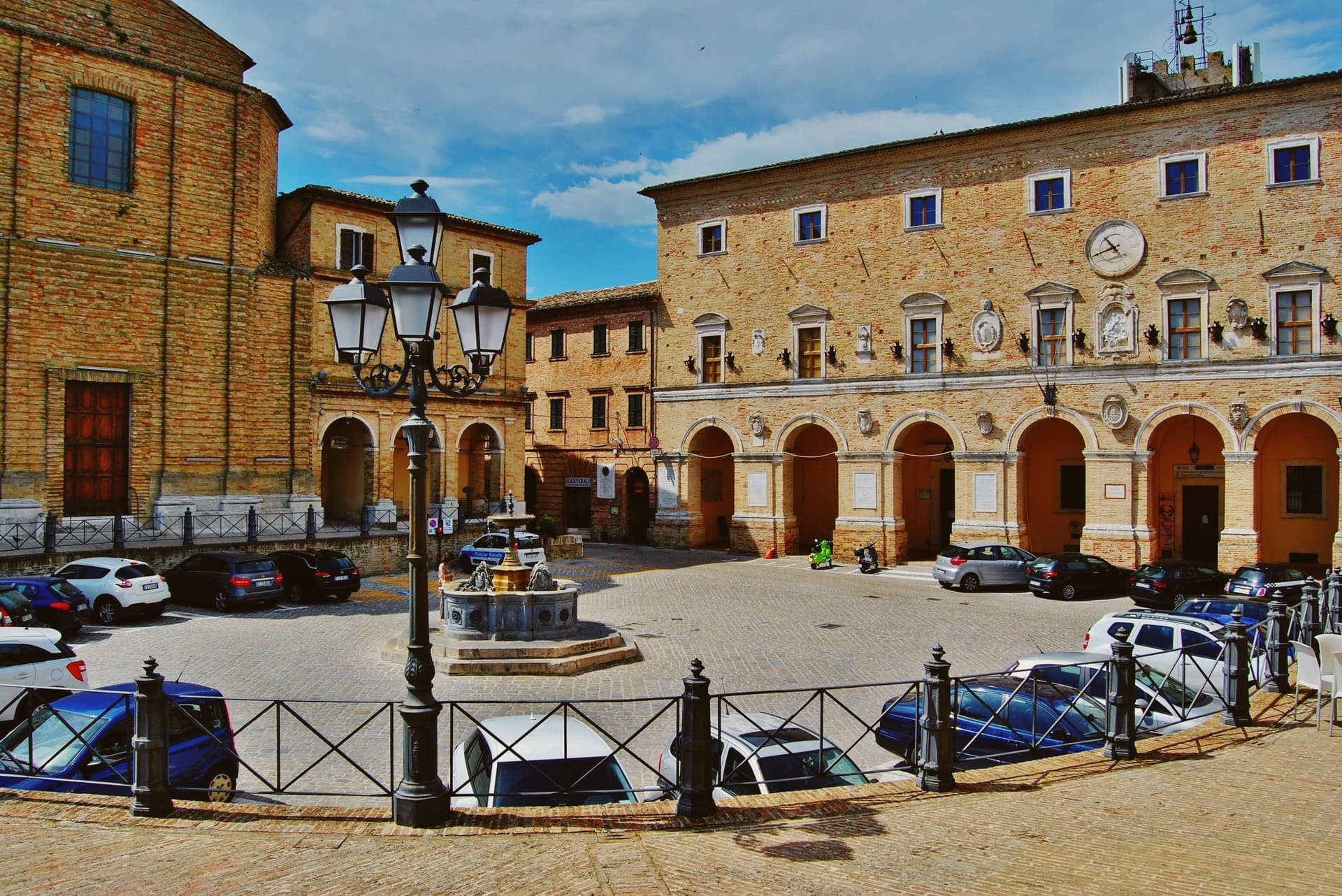
The Piazza della Repubblica, on the highest point of the ridge, is closed at one end by the Cattedrale della Santissima Annunziata and at the other by Giuseppe Valadier's small Accademia Georgica, the eighteenth-century home of an agronomic academy founded in the fifteenth as the Accademia dei Sollevati. The Disfida del Bracciale, an Ottocento street-game in which four contrade compete, has filled the centro storico every first Sunday of August since 1978.
Il Casolare dei Segreti have been named by a guide.
What to see in Treia
- Piazza della Repubblica. Belvedere piazza on the highest point of the ridge, closed by the Cattedrale della Santissima Annunziata at one end and the Accademia Georgica at the other.
- Accademia Georgica. Eighteenth-century Giuseppe Valadier building housing an academy founded in the 1400s, with 1,196 parchments of the municipal archive and over 15,000 volumes.
- Santuario del Santissimo Crocifisso. Cesare Bazzani sanctuary completed in the early twentieth century on the site of an older parish church, holding a sixteenth-century Umbrian fresco and a thirteenth-century crucifix.
How to get to Treia
Ancona is roughly 58 minutes away by road.
Our tip
April through June and September into October are the best months for Treia. The hills between the Potenza and Chienti turn green in spring, the wheat ripens through June, and the autumn light on the long ridge runs gold through October. July and August touch the low thirties; the high point of the centro storico catches a breeze most afternoons, and the Disfida del Bracciale on the first Sunday of August is the busiest weekend of the year. Disfida del Bracciale falls in July.
Morrovalle
Why visit Morrovalle
Morrovalle sits eleven kilometers east of Macerata, on a hill above the lower Chienti valley. The Roman municipality of Pausolae stood nearby, but the present town grew in the early Middle Ages from a ministerium de Valle dependent on the bishop of Fermo, with a castle called Mor-ro on the hilltop that gradually freed itself from episcopal control.
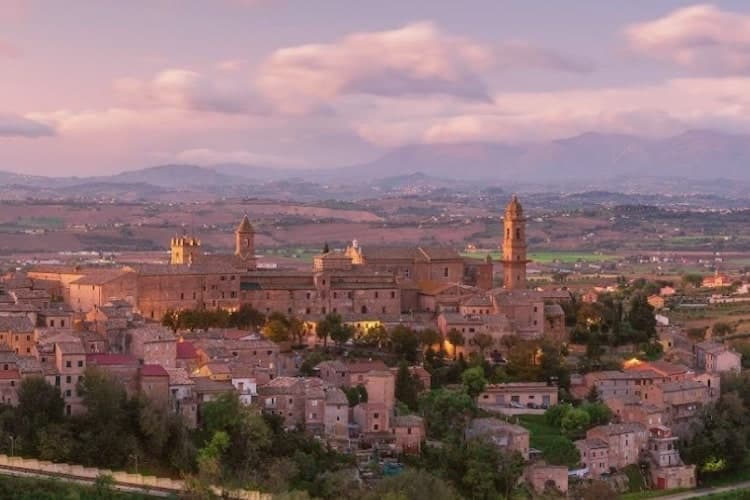
That castle is the origin of the walled centro storico that still occupies the hilltop today, its layout and signage now recognized as an orange flag town. Just outside those walls stands the former convent, founded around 1290 and now serving as an auditorium.
On the night between 16 and 17 April 1560 a fire destroyed its conventual church, and clearing the high altar on 27 April revealed a consecrated host and a silver pyx intact in a wall cavity, an event a pope authenticated by bull that September. Works recovered from the burned church were later moved to the parish church in the centro storico, tying the hilltop town to the convent below it.
Below both, the slopes descend toward the Chienti, where the same hills that gave the town its defensive position now carry the vineyards of the surrounding wine commune.
Agriturismo Ponterosa have been named by a guide.
What to see in Morrovalle
- Ex Convento di San Francesco (Auditorium Borgo Marconi). Franciscan convent founded around 1290 just outside the walls, its conventual church the site of the fire that produced the Eucharistic Miracle. The building now serves as the municipal auditorium.
- Centro storico. Walled medieval hilltop layout with the signage and visitor route that earned the Bandiera Arancione recognition.
- Palazzo Lazzarini. Noble palace on Piazza Vittorio Emanuele, with a brick facade and a portal that frames the civic centre of the medieval borgo.
How to get to Morrovalle
There is a railway station in the town, so you can arrive without a car and never need one while you are here. Ancona is roughly 50 minutes away by road.
Our tip
April through June and September into October are the best months for Morrovalle. The Chienti valley turns green by late April and gold through August, the hilltop catches Adriatic breezes from the coast eighteen kilometers east, and the Sibillini stay visible on clear afternoons. July and August touch the low thirties, with the centro storico quietest between three and seven. Calici di Stelle falls in August.
Fermo
Why visit Fermo
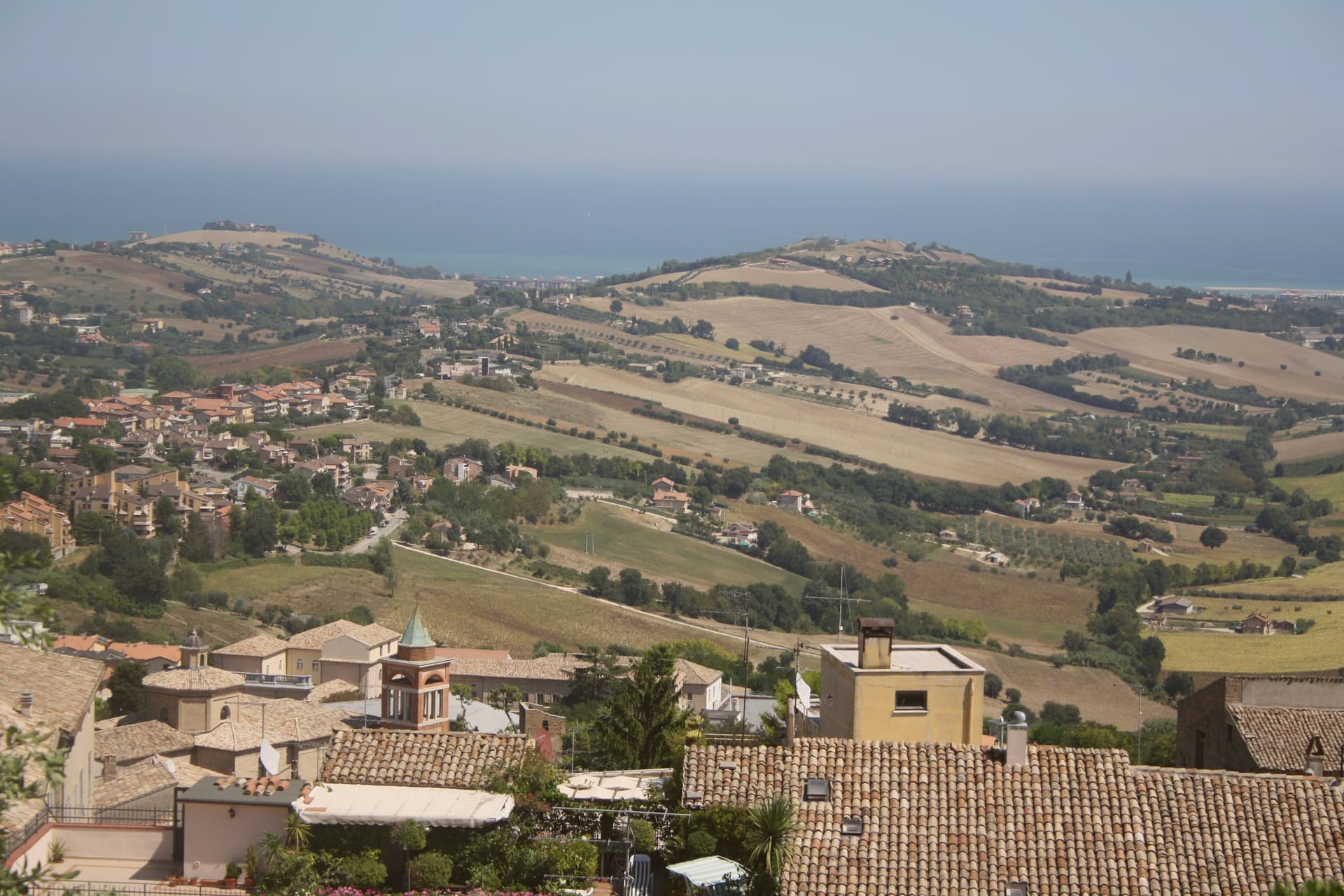
Fermo sits eight kilometers inland from the Adriatic and from the seaside frazione of Lido di Fermo, which holds the commune's Bandiera Blu: a hill town with its own beach attached at a distance, the two connected by the same municipal boundary but separated in character and elevation. The Roman colony of Firmum Picenum was founded on the hilltop in 264 BC after the conquest of the Picentes, with six thousand Latin colonists settled there.
In the tenth century the town became the capital of the Marchia Firmana, the territorial label that eventually gave the region its name. The historic center still reads as a hilltop capital looking down toward a coast it administers rather than touches.
What began as a Latin colony on high ground, gained a name that outgrew it and spread to the whole region, and kept its port at arm's length: the distance between the hill and the shore is not incidental but the shape of how Fermo has always held its territory.
Emilio, L'Enoteca Bar a Vino have been named by a guide.
What to see in Fermo
- Cisterne Romane. Thirty barrel-vaulted rooms in three parallel rows under the historic center, opus signinum waterproofing still in place, built to hold 15,000 cubic meters of water.
- Piazza del Popolo. The porticoes meet at the head of the square where the Palazzo dei Priori stands, the arrangement that has organized the civic center since the medieval period.
- Palazzo dei Priori. Built in 1296 by joining a thirteenth-century palace and a church, housing the Pinacoteca Civica, the Sala del Mappamondo and the Sixtus V bronze statue.
How to get to Fermo
Ancona is roughly 60 minutes away by road.
Our tip
April through June and September into October are the months for Fermo. The hilltop catches Adriatic light without coastal humidity, the Sabulo's wide views across the Aso and Tenna valleys run clear, and Lido di Fermo's beach eight kilometers below holds its Bandiera Blu status from May. July and August touch the low thirties in the valley but the centro storico stays cooler at 319 meters; the Cavalcata dell'Assunta on August 15 fills the streets with the historic medieval procession dating to 1182. Cavalcata dell'Assunta falls in August.
Macerata
Why visit Macerata
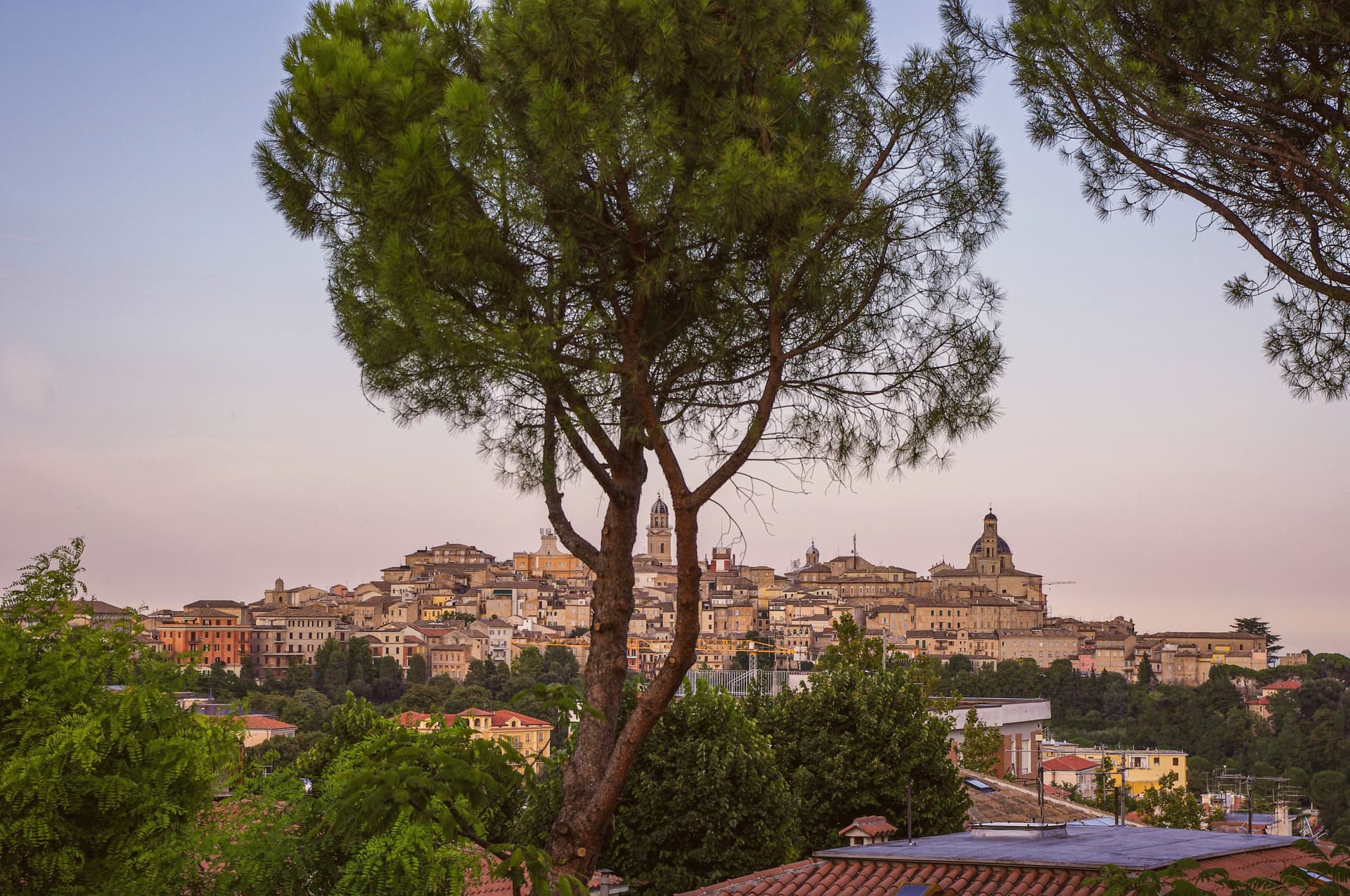
Macerata sits at 315 meters on a hilltop between the Chienti and Potenza valleys, thirty-five kilometers south of Ancona. The Roman Helvia Recina stood on the plain below; after the city was destroyed by the Goths the survivors moved up to the present site, where the town grew into the provincial capital.
The University, founded in 1290, is one of the oldest in continuous operation in Europe. The Sferisterio, the city's signature monument, is a 100-meter neoclassical arena designed by Ireneo Aleandri in 1823, originally built for pallone col bracciale, the bracelet-ball game once played across central Italy.
From 1921, when Verdi's Aida was first staged there, it became one of Italy's principal open-air opera venues. The Macerata Opera Festival runs through July and August.
The provincial museum holds works by Carlo Crivelli, Lorenzo Lotto and Antonio Canova. The 2016 earthquakes damaged outlying frazioni but the centro storico held.
Signore te ne ringrazi have been named by a guide.
What to see in Macerata
- Sferisterio. Neoclassical 100-meter open-air arena designed by Ireneo Aleandri in 1823, originally built for pallone col bracciale, now seat of the Macerata Opera Festival since 1921.
- Università di Macerata. Founded in 1290, one of the oldest continuously operating universities in Europe, with its main rectorate on Piazza della Libertà.
- Piazza della Libertà. Main square of the centro storico, holds the Loggia dei Mercanti, the Palazzo del Comune and the Torre dei Tempi with its astronomical clock.
How to get to Macerata
There is a railway station in the town, so you can arrive without a car and never need one while you are here. Ancona is roughly 58 minutes away by road.
Our tip
April through June and September into October are the best months for Macerata. The Chienti and Potenza valleys hold green from April, the centro storico runs cool in the morning and the surrounding hills toward Montelupone and Treia are open for walking. July and August anchor the Macerata Opera Festival at the Sferisterio, with three major productions across roughly six weeks; nights stay warm but the open arena keeps moving air. Rievocazione storica della Trebbiatura - Degustazione dell'oca falls in June.
Senigallia
Why visit Senigallia
Senigallia sits at the mouth of the Misa river on the Adriatic, twenty-five kilometers north of Ancona. The centro storico gathers along the river's right bank, where the arcades face the water, while the fortress stands apart as the town's layered military record, built up over two centuries by successive rulers rather than in one campaign.
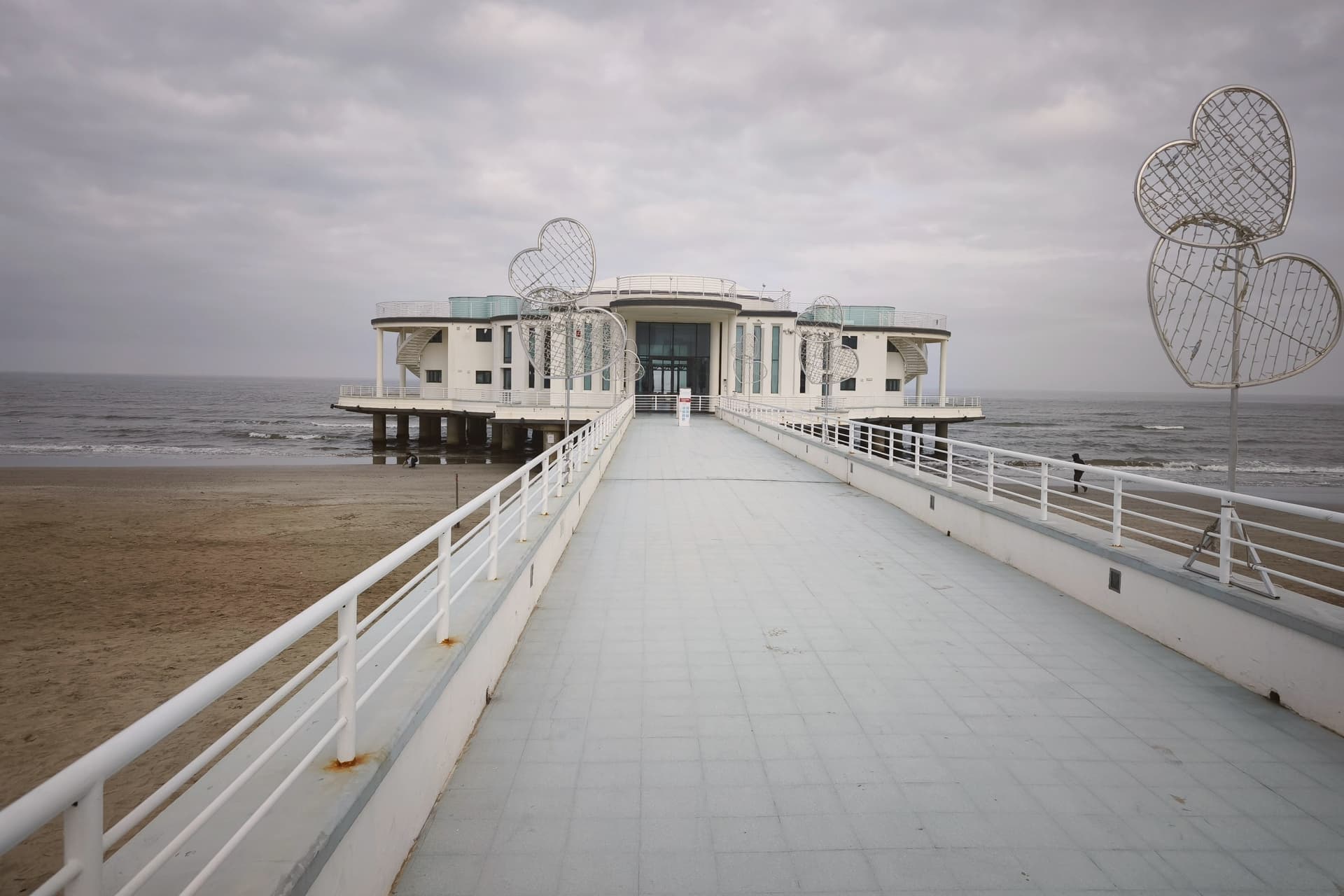
The beach runs south from this old core as a separate register of the town entirely, thirteen kilometers of it, with the pier pavilion marking the center of that beachfront and the restaurant anchoring its southern end. The photographer worked in the town all his life, and the permanent section of his prints sits inland in the Palazzo del Duca rather than anywhere near the coast he might have photographed.
The market arcade, built in the nineteenth century, still does the ordinary work of feeding the town between the historic river frontage and the modern beach economy. Senigallia reads, then, as three towns joined at the river mouth: a fortified old center, a nineteenth-century civic one, and a twentieth-century coastline, each still doing the job it was built for.
Uliassi, Madonnina del Pescatore, Cuoco di Bordo and 4 more have been named by a guide.
What to see in Senigallia
- Spiaggia di Velluto. The Bandiera Blu beach, working spine of the town's summer, its sand fine enough underfoot to explain the name.
- Rocca Roveresca. Layered fortress combining Albornoz's fourteenth-century Rocchetta, the 1450 Malatesta keep and the Della Rovere completion by Laurana and Pontelli.
- Rotonda a Mare. Art-deco pier pavilion completed 1933, set on iron piles above the water at the center of the beachfront, restored and used for exhibitions and weddings.
How to get to Senigallia
There is a railway station in the town, so you can arrive without a car and never need one while you are here. Ancona is roughly 41 minutes away by road.
Our tip
May through September is the Senigallia window: the beach bagni open from late May, the Caterraduno radio festival fills late June, the Summer Jamboree rockabilly week runs through early August, and the September sea stays warm through the start of school. July and August touch the high twenties with humid Adriatic evenings; the Velvet Beach and the Rotonda a Mare passeggiata pull the largest crowds of the year. April, May and October are quieter, cooler months for the Rocca Roveresca tours and the Giacomelli rooms at Palazzo del Duca. Festa Castellana falls in August.
Ascoli Piceno
Why visit Ascoli Piceno
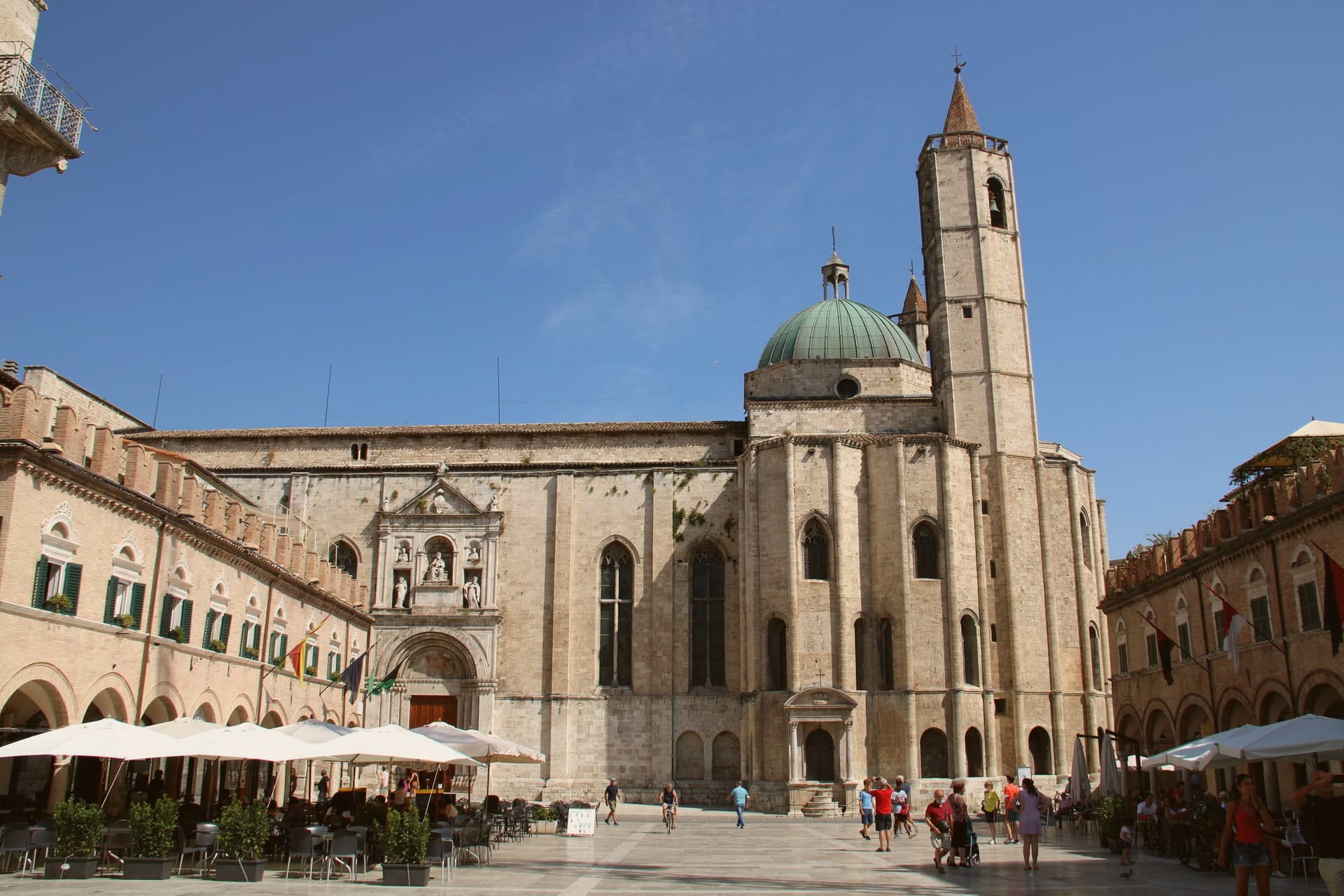
Ascoli Piceno sits at 154 meters at the confluence of the Tronto and the Castellano, the historic capital of the Piceni who held this part of the Marche before Rome. The town is built almost entirely from local travertine, which gives the centro storico its luminous pale surface and its mirror behavior under rain: Piazza del Popolo, paved in polished travertine slabs, is one of the most photographed squares in Italy.
In 91 BC the Ascolani killed the Roman delegation in their forum and triggered the Social War; the city was razed and rebuilt by Rome and the present grid still follows the Roman layout. The Quintana, run in costume in July and August, is a joust between the six sestieri, the city districts, the knight on horseback charging an effigy of an Arab warrior.
Anisetta Meletti, the local aniseed liqueur invented in 1907, is poured at the Caffè Meletti on the piazza.
Caffè Meletti, Tetsu have been named by a guide.
What to see in Ascoli Piceno
- Piazza del Popolo. Paved in polished travertine slabs and lined by Renaissance porticoes, the Palazzo dei Capitani and the Loggia dei Mercanti, one of the most photographed squares in Italy.
- Chiesa di San Francesco. Gothic basilica begun in the thirteenth century, three travertine portals, two bell-towers, the largest Marchigiana example of the Franciscan order's architecture.
- Cattedrale di Sant'Emidio. Cathedral on Piazza Arringo, with a fifth-century crypt holding the relics of Sant'Emidio, patron saint invoked against earthquakes.
How to get to Ascoli Piceno
There is a railway station in the town, so you can arrive without a car and never need one while you are here. Pescara is roughly 72 minutes away by road.
Our tip
April through June and September into October are the best months for Ascoli Piceno. The travertine is dry, the surrounding olive groves turn through the Ascolana tenera harvest from October, and the Tronto and Castellano walks along the city's south edge are open every day. July and August touch the mid-thirties; the centro storico empties between three and six in the afternoon but the Quintana weekends fill it again. Ascoliva Festival falls in August.