
The best wine towns in Marche
Marche makes wine in the folds between the Apennines and the sea, and the geography shows up in the glass. Verdicchio comes off pale clay and limestone slopes around Jesi and Matelica, taut and almondy, ageing better than its reputation suggests. Further south the whites turn to Pecorino and Passerina, the reds to Montepulciano and Sangiovese blended into Rosso Piceno, poured in brick-and-travertine hill towns where lunch runs to olive all'ascolana, hand-rolled maccheroncini and a tray of anise ciambelline. Autumn is the season, when the vendemmia is in and the cellars open their doors, and the fog sits in the valleys until mid-morning.
Most wine travellers heading for central Italy still point the car at Tuscany, at Montalcino and Montepulciano and the Chianti road between Florence and Siena. The tasting rooms there are excellent and the queues are the price of that. Coaches park below the walls, the enoteche take bookings weeks out, and a cellar visit can feel like a scheduled appointment rather than a conversation with whoever made the wine. Marche sits one range of hills east of all that, and the coast crowds too, at Senigallia and the Riviera del Conero in August.
The vines do not stop where the crowds do. They climb the interior of Marche in ordered rows, past small comuni that have been growing and pressing for centuries and that recognise themselves as wine towns in the formal sense, each one a member of the national association of wine-producing communes. Fewer people go, which mostly means the cellars are family-run, the tastings are unhurried and the trattoria at the top of the town is full of people who live there. These are the towns worth the detour.
Of the 63 communes we have mapped in Marche, 6 qualify as wine towns: each belongs to the national association of wine-producing towns. The smallest, Morro d'Alba, has 1,798 residents.
Elsewhere in the catalogue: The best towns with a food festival that eat well in Marche and The 6 best small hill towns that eat well in Marche.
Morro d'Alba
Why visit Morro d'Alba
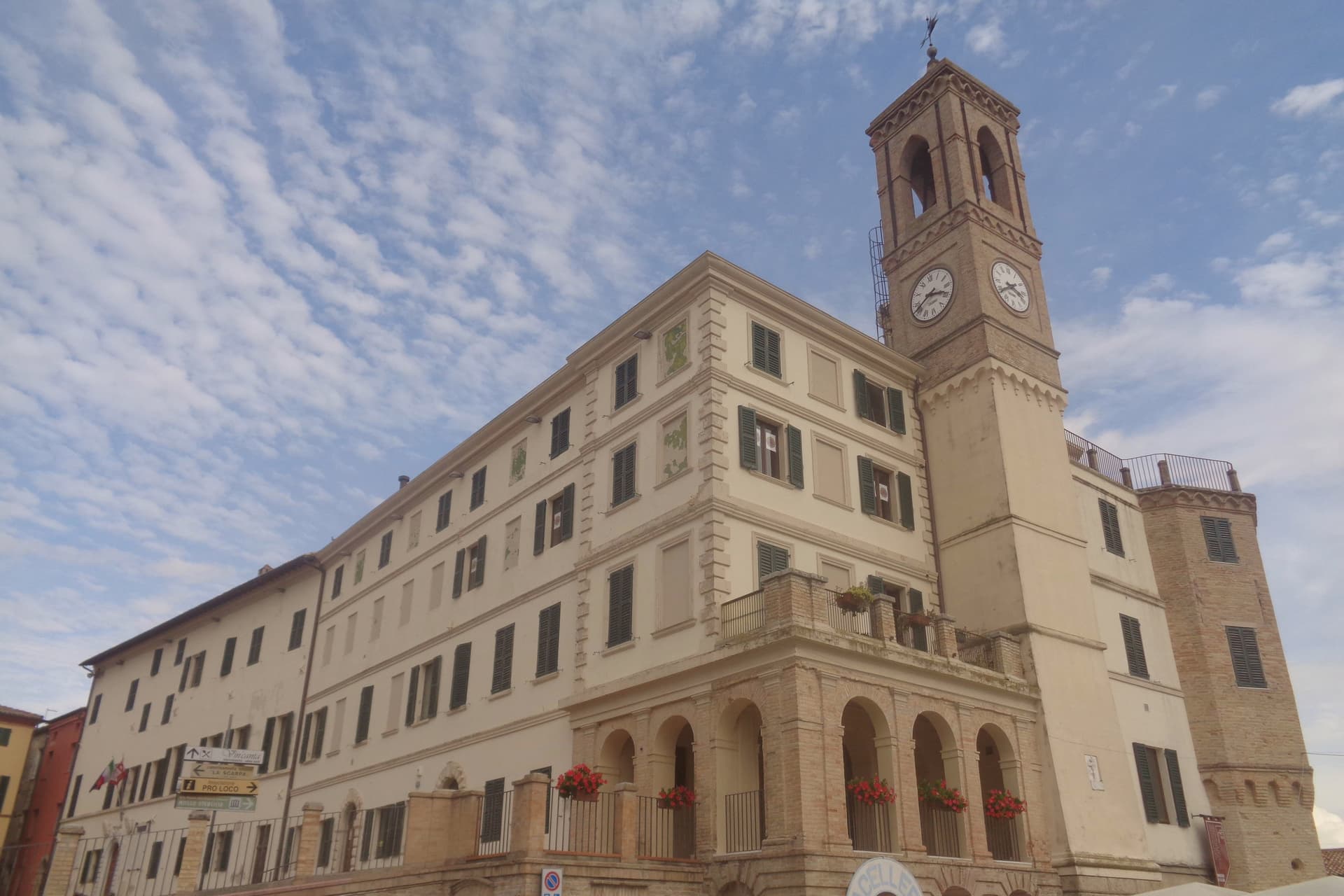
Morro d'Alba sits on a hill twelve kilometers northwest of Jesi, one of the Castelli that ring the lower Esino valley. The walled village is built around La Scarpa, the covered ring walkway that runs the full perimeter of the medieval walls; a 1654 municipal decision authorized residents to build dwellings directly onto the fortifications, and those houses still open onto the walkway today, which is why it is covered rather than open like a typical wall-walk.
The piazza at the center of the borgo, flanked by the parish church and the town hall, gives onto the stairs that climb to La Scarpa, so the civic life of the village and its defensive ring are joined at a single point of access. The grape that carries the town's name beyond the valley, Lacrima, was first mentioned in a chronicle the same year Frederick Barbarossa took the castle as his residence during the siege of Ancona, though the vine itself was only recovered as a distinct variety in recent decades.
A small hill village, then, whose walls turned into houses and whose grape turned into a wine, both taking centuries to be reclaimed as what they are now known for.
The comune belongs to the national association of wine-producing towns.
What to see in Morro d'Alba
- La Scarpa. Flanked by arcades along its full length, the walkway offers views across the surrounding hills to the Sibillini and to the Conero on clear days, the houses built into the fortifications visible from below.
- Piazza Romagnoli. Central piazza of the walled borgo, flanked by the parish church and the municipal palace, opening onto the access stairs to the walkway above.
- Chiesa di San Gaudenzio. Parish church on the main piazza, of medieval origin, rebuilt across the centuries inside the walled circuit of the Castello di Jesi.
How to get to Morro d'Alba
Ancona is roughly 42 minutes away by road.
Our tip
April through June and September into October are the best months for Morro d'Alba. The Verdicchio and Lacrima vineyards turn from leaf-green in spring to deep red and copper through the autumn harvest, and the walls catch warm light from the long western horizon. July and August touch the low thirties on the hill, with La Scarpa offering shade through the long afternoons.
Staffolo
Why visit Staffolo
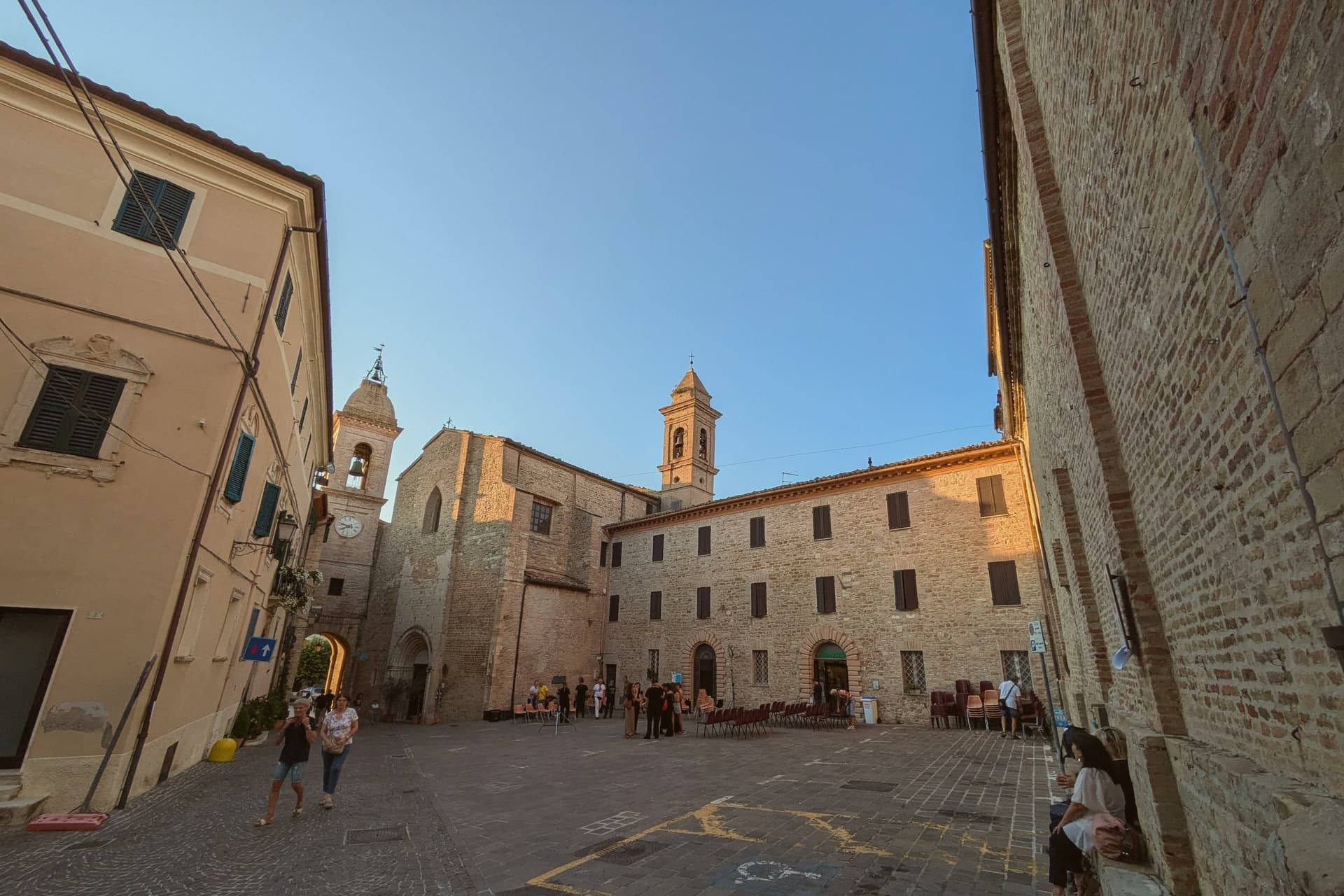
Staffolo rises to 442 meters on a hill between the Esino, Misa and Musone valleys, thirty-five kilometers from Ancona. The town calls itself the Balcone della Vallesina for the panoramic ridge it stands on, and Colle del Verdicchio for the vines that cover the south-facing slopes around it.
Verdicchio cultivation here is documented from 1569; the surrounding Castelli di Jesi DOCG zone draws from south-facing parcels between 220 and 500 meters of altitude. The centro storico is almost circular, walled with partly original ramparts and entered through two opposing gates; the fourteenth-century Albornoz tower rises above the walls.
The Museo dell'Arte del Vino, carved into rooms inside the walls themselves, holds an oak press from 1695 and the working tools of the local cellars, with an enoteca attached. Three churches anchor the village: Sant'Egidio with a fifteenth-century Master of Staffolo polyptych, San Francesco with a 1769 Callido organ, and the baroque Santa Maria di Castellaretta built by survivors of the Battle of Lepanto.
The comune belongs to the national association of wine-producing towns.
What to see in Staffolo
- Centro storico. Almost circular walled medieval nucleus with partly original ramparts, two opposing gates and the fourteenth-century Torre Albornoz rising above the circuit.
- Museo dell'Arte del Vino. Wine museum carved into rooms inside the walls themselves, holding an oak grape press from 1695 and the working tools of the Staffolo cellars, with attached enoteca.
- Chiesa di Sant'Egidio. Parish church on the ridge, holding a fifteenth-century polyptych by the anonymous Master of Staffolo of the Fabrianese school.
How to get to Staffolo
Ancona is roughly 42 minutes away by road.
Our tip
April through June and September into October are the best months for Staffolo. The ridge stays cooler than the valleys below, the vineyards turn green by April and gold from late September, and the views to the Adriatic and the Apennines run cleanest in the dry weeks. July and August can touch the high twenties at 442 meters, but the breeze along the Vallesina ridge moves through town most afternoons. Verdicchio Festival falls in August.
Ripatransone
Why visit Ripatransone
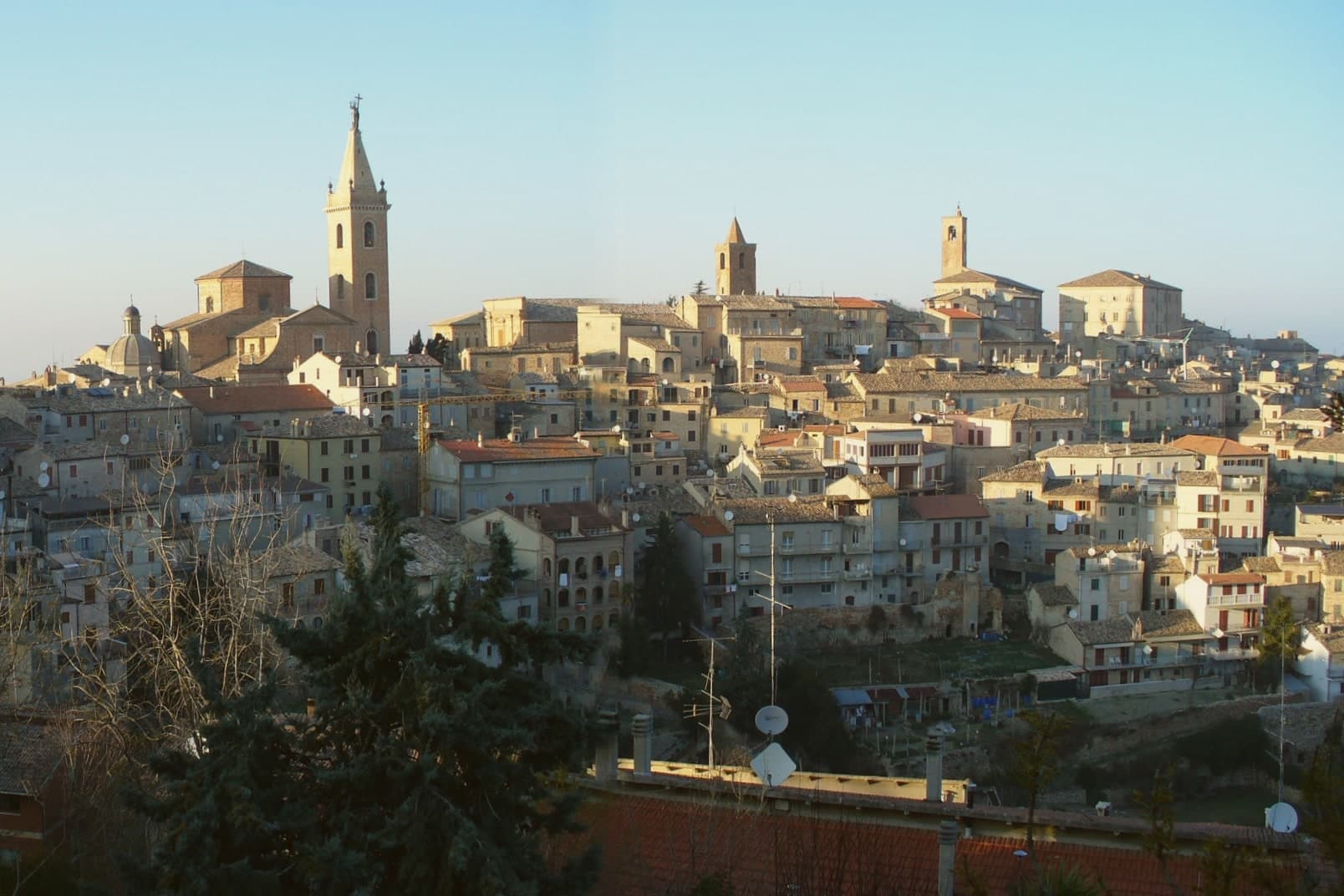
Ripatransone sits at 494 meters on a ridge between the Tesino and Menocchia valleys, twenty kilometers from Ascoli Piceno and seven from the Adriatic, with views from the Sibillini and Gran Sasso to the coast that earned it the nickname Belvedere del Piceno. The hill has been inhabited since prehistory and was settled by the Umbri and then the Piceni; after centuries of Roman quiet a medieval town grew here from a circle of castles unified in 1096.
Pope Pius V raised it to City and diocesan see in 1571. The name combines ripa, cliff, with Transone, the first feudal lord.
The Vicolo più stretto d'Italia, the narrowest alley in Italy at 43 centimeters and 32 at its tightest point, runs between two stone houses near Via Margherita: shoulders go sideways. The Cavallo di Fuoco, a wooden horse covered in fireworks that gallops across the main piazza on the Sunday after Easter, has run since 1682.
The comune belongs to the national association of wine-producing towns.
What to see in Ripatransone
- Vicolo più stretto d'Italia. The narrowest alley in Italy, 43 centimeters wide and 32 at its tightest point, between two stone houses near Via Margherita.
- Piazza XX Settembre. The main square of the centro storico, with the Palazzo del Podestà, the Cathedral of San Gregorio Magno and the medieval Torre Civica.
- Cattedrale di San Gregorio Magno. Cathedral built between the seventeenth and eighteenth centuries on the site of an earlier church, raised to cathedral status by Pope Pius V in 1571.
How to get to Ripatransone
Pescara is roughly 70 minutes away by road.
Our tip
April through June and September into October are the working months for Ripatransone. The Tesino and Menocchia valleys turn green from April, the Cavallo di Fuoco runs on the Sunday after Easter, and the autumn light brings the clearest views from the ridge across to the Sibillini and the sea. July and August touch the low thirties; the ridge breeze keeps the centro storico cooler than the coastal plain seven kilometers below. Festival Frittella di Zia Maria falls in September.
Offida
Why visit Offida
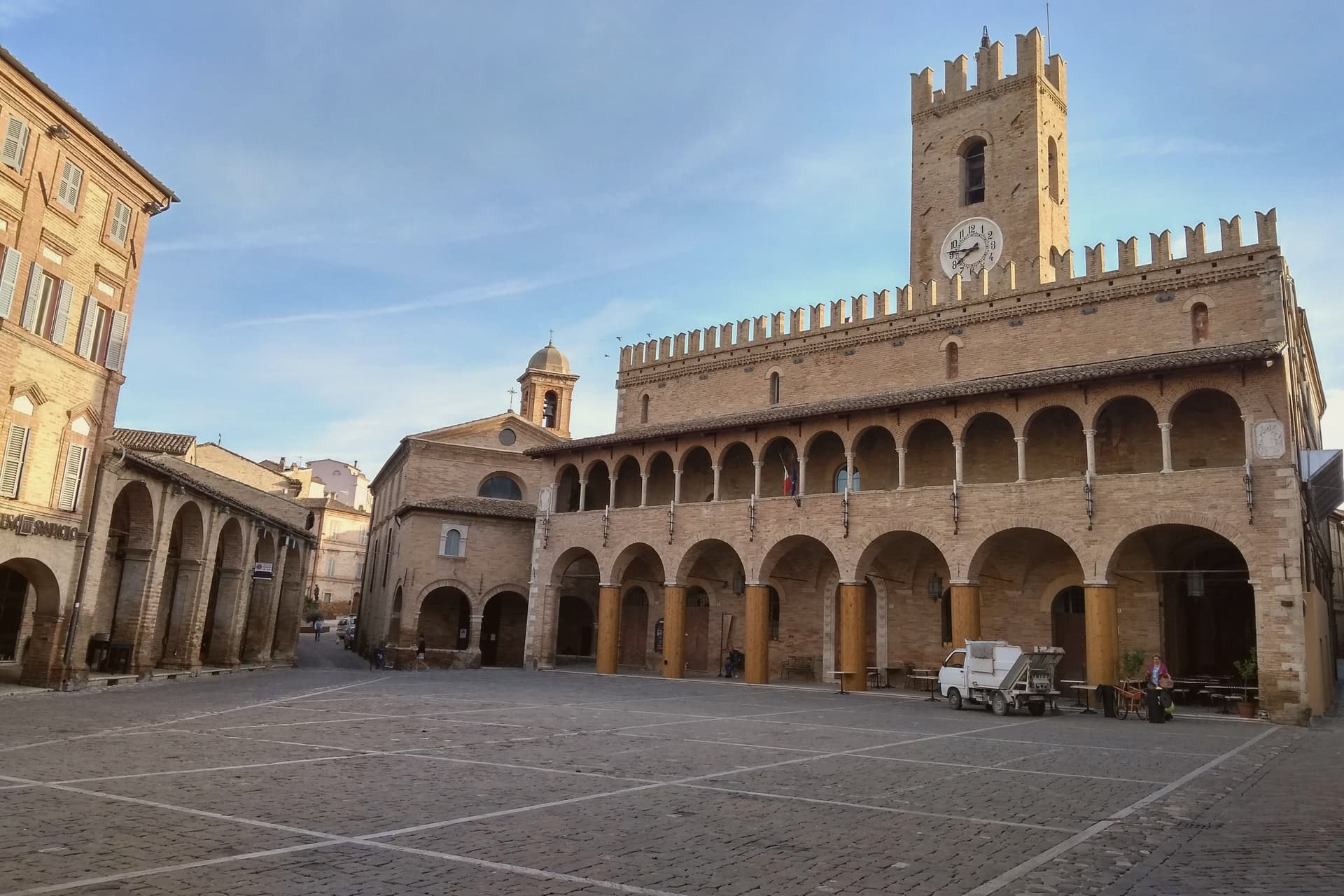
Offida sits at 293 meters on a cliff between the Tesino and Tronto valleys, twenty-three kilometers from Ascoli Piceno. The Chiesa di Santa Maria della Rocca rises on a rock spur at the western edge of the village, surrounded on three sides by cliffs that drop into two valleys: a Romanesque-Gothic temple in brick and travertine, raised by Master Albertino in 1330 on an older Benedictine foundation, with a double row of trilobed arches around the apse.
Inside, the apse and transept hold the fresco cycle of the Master of Offida, an anonymous monk painter who carried Giotto's lesson through the Rimini school, with the Marriage of Saint Catherine and Saint Christopher dated by inscription to 1367. Bobbin lace, merletto a tombolo, has been worked in town since the fifteenth century; the Museo del Merletto in Palazzo De Castellotti holds the collection.
The Carnevale Storico, with the Bove finto run and the Vlurd fire bundles, dates from before Lent in early February.
The comune belongs to the national association of wine-producing towns.
What to see in Offida
- Chiesa di Santa Maria della Rocca. Romanesque-Gothic brick-and-travertine church raised in 1330 by Master Albertino on a rock spur west of town, with the Master of Offida fresco cycle dated 1367 in the transept.
- Museo del Merletto a Tombolo. Inside Palazzo De Castellotti, with the lace collection, tools, historical documents and demonstrations of the bobbin-lace work practiced in town since the fifteenth century.
- Palazzo Comunale. Civic palace on the long Piazza del Popolo, with a portico, the Teatro Serpente Aureo and the access to the Museo del Merletto and the archaeological museum.
How to get to Offida
Pescara is roughly 74 minutes away by road.
Our tip
April through June and September into October are the best months for Offida. The hills around the town turn green by April and gold through the September harvest, the wine cellars run open tastings between vendemmia and St. Martin, and the Pecorino and Passerina vineyards stand out along the ridges. Sagra del Chichìripieno falls in August.
Matelica
Why visit Matelica
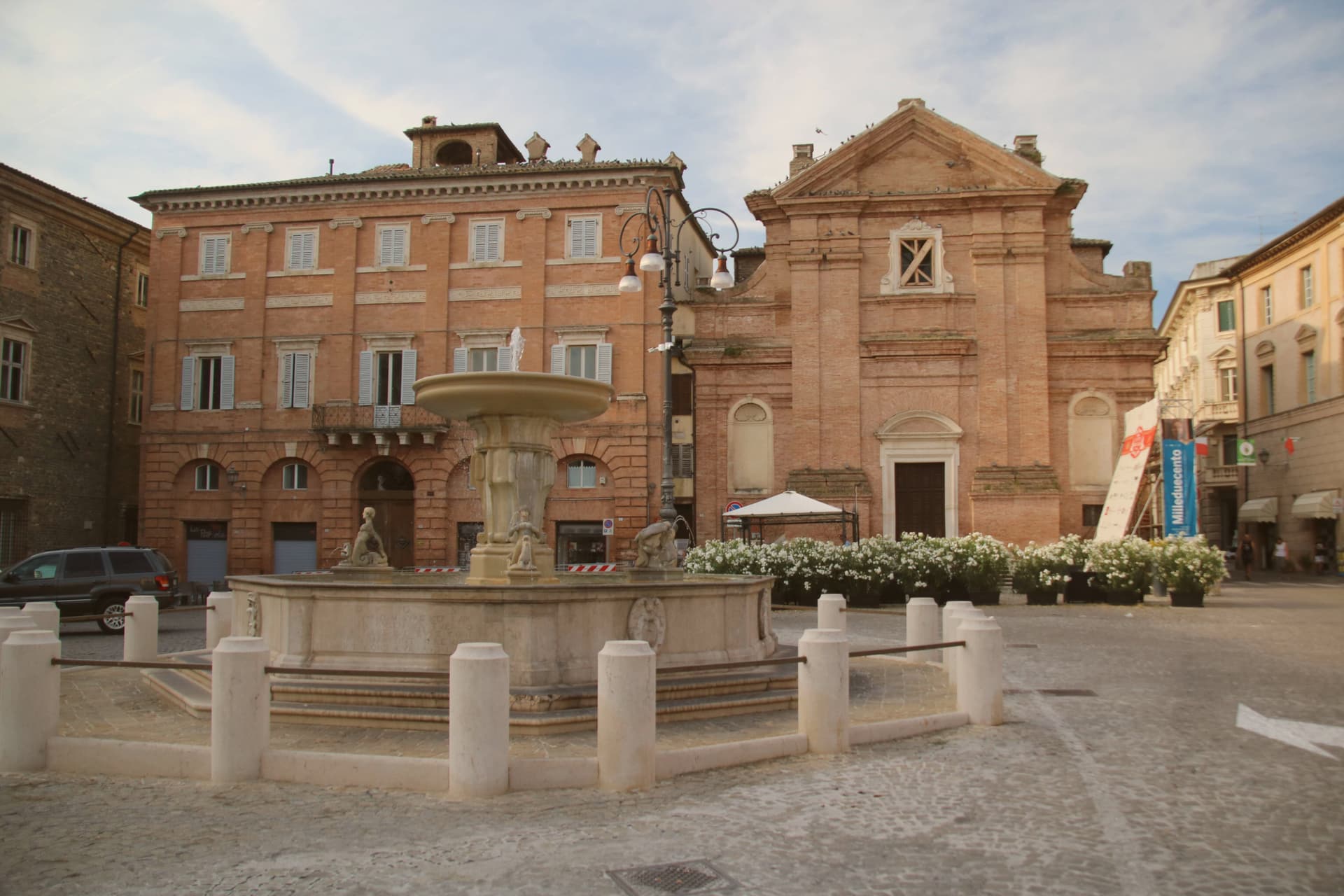
Matelica sits at 354 meters in the upper Esino valley between Monte San Vicino at 1,479 meters to the west and Monte Gemmo at 719 meters to the east. The Picentes and Umbri settled here in the first millennium BC; Rome turned the town into a municipium around 70 BC under the name Matilica.
After the Lombard sack of 578 AD Matelica re-emerged as a free commune by 1160 under its bishop. Verdicchio di Matelica, DOC since 1967, is the smaller and higher-altitude of the two Verdicchio appellations: the closed mountain valley gives the wine a sharper mineral profile than the Castelli di Jesi version closer to the coast.
The Museo Civico Archeologico holds the Globo di Matelica, a thirty-centimeter Roman marble sphere from the second century AD, engraved with lines that may have been used for a sundial. Palazzo Ottoni, built in 1472 on the main piazza, and the Museo Piersanti, the collection of the eighteenth-century papal master of ceremonies, anchor the centro storico.
The comune belongs to the national association of wine-producing towns.
What to see in Matelica
- Museo Civico Archeologico. Civic archaeology collection holding the Globo di Matelica, a Roman marble sphere of the second century AD engraved with reference lines, possibly a sundial.
- Palazzo Ottoni. Renaissance palazzo built in 1472 by the Ottoni family on the main piazza, now part of the civic administration.
- Museo Piersanti. Late fifteenth-century palazzo holding the collection of Monsignor Venanzio Filippo Piersanti, papal master of ceremonies from 1718 to 1761, with works by Bellini, Salvator Rosa and Carlo Maratta.
How to get to Matelica
There is a railway station in the town, so you can arrive without a car and never need one while you are here. Ancona is roughly 71 minutes away by road.
Our tip
April through October is the working window for Matelica. The Esino valley turns green from April, the Verdicchio vineyards at 400 meters on the surrounding slopes flower in June and color from late August, and the harvest runs through September. June through August touches the low thirties in the valley; the mountain breeze between Monte San Vicino and Monte Gemmo keeps the centro storico cooler than the lowland and the cellars below town hold their constant cellar temperature. Festa del Quartiere Regina Pacis falls in August.
Morrovalle
Why visit Morrovalle
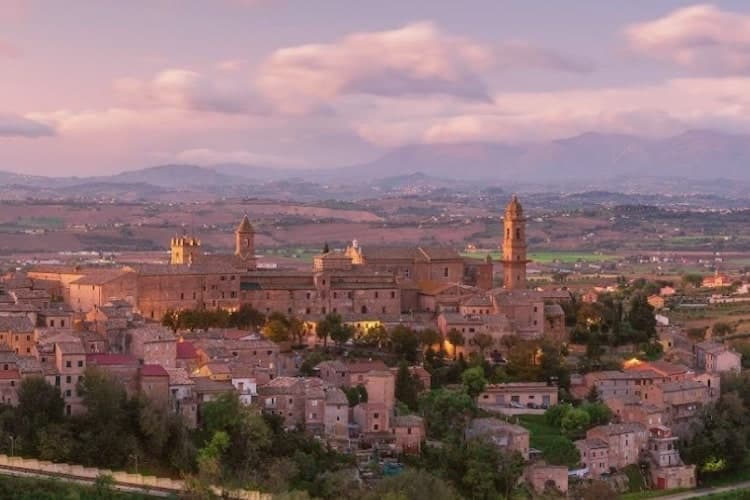
Morrovalle sits eleven kilometers east of Macerata, on a hill above the lower Chienti valley. The Roman municipality of Pausolae stood nearby, but the present town grew in the early Middle Ages from a ministerium de Valle dependent on the bishop of Fermo, with a castle called Mor-ro on the hilltop that gradually freed itself from episcopal control.
That castle is the origin of the walled centro storico that still occupies the hilltop today, its layout and signage now recognized as an orange flag town. Just outside those walls stands the former convent, founded around 1290 and now serving as an auditorium.
On the night between 16 and 17 April 1560 a fire destroyed its conventual church, and clearing the high altar on 27 April revealed a consecrated host and a silver pyx intact in a wall cavity, an event a pope authenticated by bull that September. Works recovered from the burned church were later moved to the parish church in the centro storico, tying the hilltop town to the convent below it.
Below both, the slopes descend toward the Chienti, where the same hills that gave the town its defensive position now carry the vineyards of the surrounding wine commune.
The comune belongs to the national association of wine-producing towns.
What to see in Morrovalle
- Ex Convento di San Francesco (Auditorium Borgo Marconi). Franciscan convent founded around 1290 just outside the walls, its conventual church the site of the fire that produced the Eucharistic Miracle. The building now serves as the municipal auditorium.
- Centro storico. Walled medieval hilltop layout with the signage and visitor route that earned the Bandiera Arancione recognition.
- Palazzo Lazzarini. Noble palace on Piazza Vittorio Emanuele, with a brick facade and a portal that frames the civic centre of the medieval borgo.
How to get to Morrovalle
There is a railway station in the town, so you can arrive without a car and never need one while you are here. Ancona is roughly 50 minutes away by road.
Our tip
April through June and September into October are the best months for Morrovalle. The Chienti valley turns green by late April and gold through August, the hilltop catches Adriatic breezes from the coast eighteen kilometers east, and the Sibillini stay visible on clear afternoons. July and August touch the low thirties, with the centro storico quietest between three and seven. Calici di Stelle falls in August.
More from Anywhere Italy
- The best towns with a food festival that eat well in Marche
 The 6 best small hill towns that eat well in Marche
 The best small towns that eat well in Marche
 The best hidden hill towns you can reach by train in Marche
 The 8 prettiest villages that eat well in Marche
 The prettiest villages with a food festival in Marche