
The best hill towns in the province of Ascoli Piceno
The southern Marche rises fast. Leave the coast road and within half an hour the land folds into ridges of clay and sandstone, vineyards on the shoulders, olives on the terraces, and towns that had nowhere to grow except upwards. The building material tells you where you are: pale travertine quarried from the Tronto valley in the west, warm brick further north, both of them going gold in late afternoon. Kitchens here fry stuffed olives, serve maccheroncini and anisetta, and pour Pecorino and Passerina from vines a short walk downhill. Spring and early autumn are the seasons for it, when the Sibillini still hold snow and the hill roads are clear.
Most people arriving in this corner of Italy in summer stop at the Adriatic instead, at San Benedetto del Tronto and Grottammare, where the palm-lined promenades, the rows of bathing establishments and the fish restaurants absorb the great majority of visitors between June and September. It is a good coast and an easy holiday, which is precisely why the beaches fill and the car parks behind them fill faster. The hills sit in plain sight from the sand, a few kilometres inland, and stay largely unvisited.
The same wine, the same olives and the same travertine continue up those valleys, and that is where these towns are. Some are ringed by walls with a fortress on the highest point, some are strung along a single ridge street with the countryside dropping away on both sides, and one keeps a tradition of bobbin lace worked in doorways. Fewer people go, which mostly means you can park, eat without booking and hear the bells.
Of the 9 communes we have mapped in the province of Ascoli Piceno, 6 qualify as hill towns: each is an inland hill settlement built on ground too steep to spread. The smallest, Montefiore dell'Aso, has 1,986 residents.
Elsewhere in the catalogue: The 8 best hill towns that eat well within 90 minutes of Pescara and The prettiest villages with a food festival in Marche.
Montefiore dell'Aso
Why visit Montefiore dell'Aso
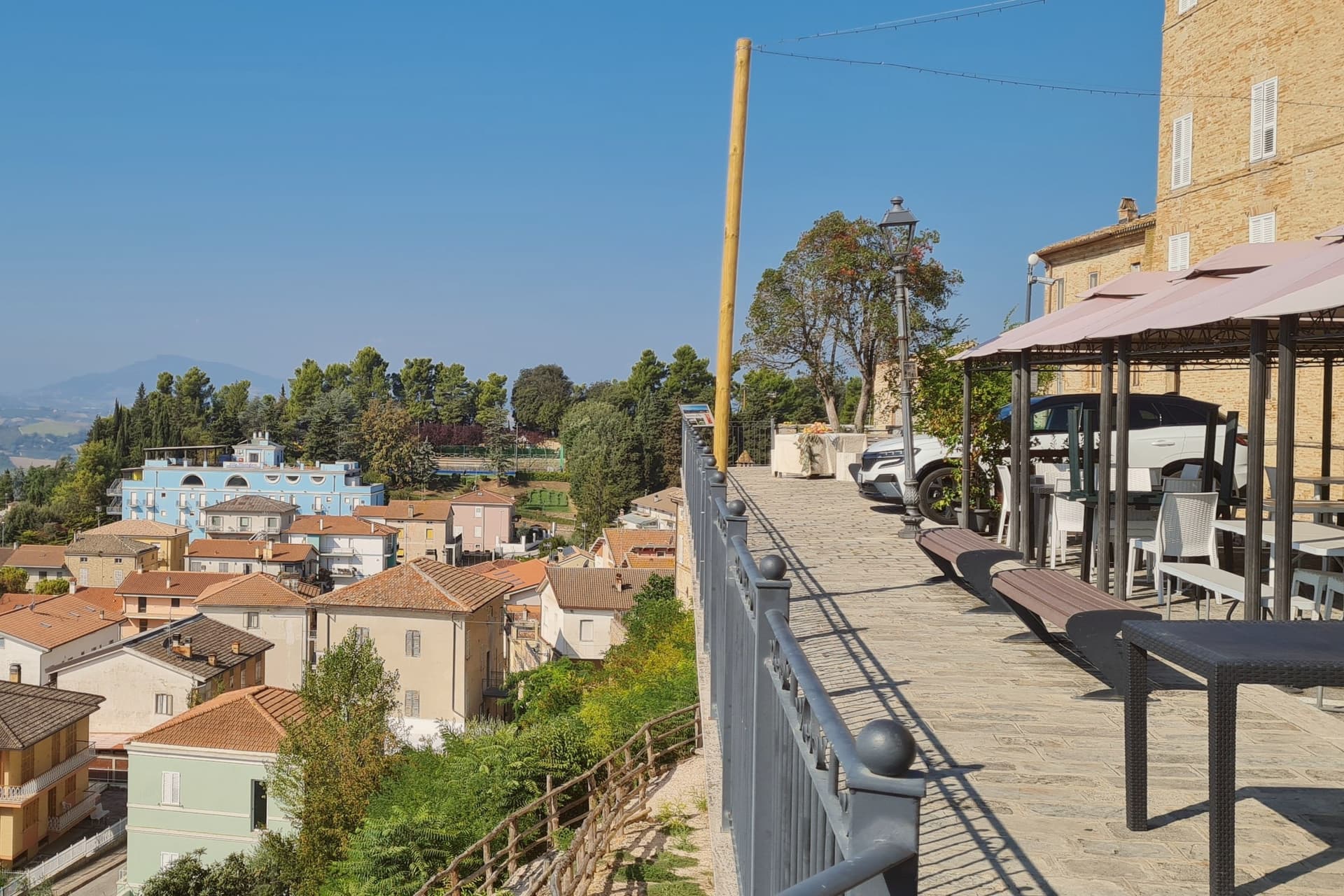
The ridge lies twenty-five kilometers from Ascoli Piceno and eleven from the Adriatic, the divide between the Aso and Menocchia valleys giving the town its double outlook, sea one way, the Sibillini the other. The territory was settled in the Neolithic and developed under the Piceni, with Roman necropolises dated to the first and second centuries BC.
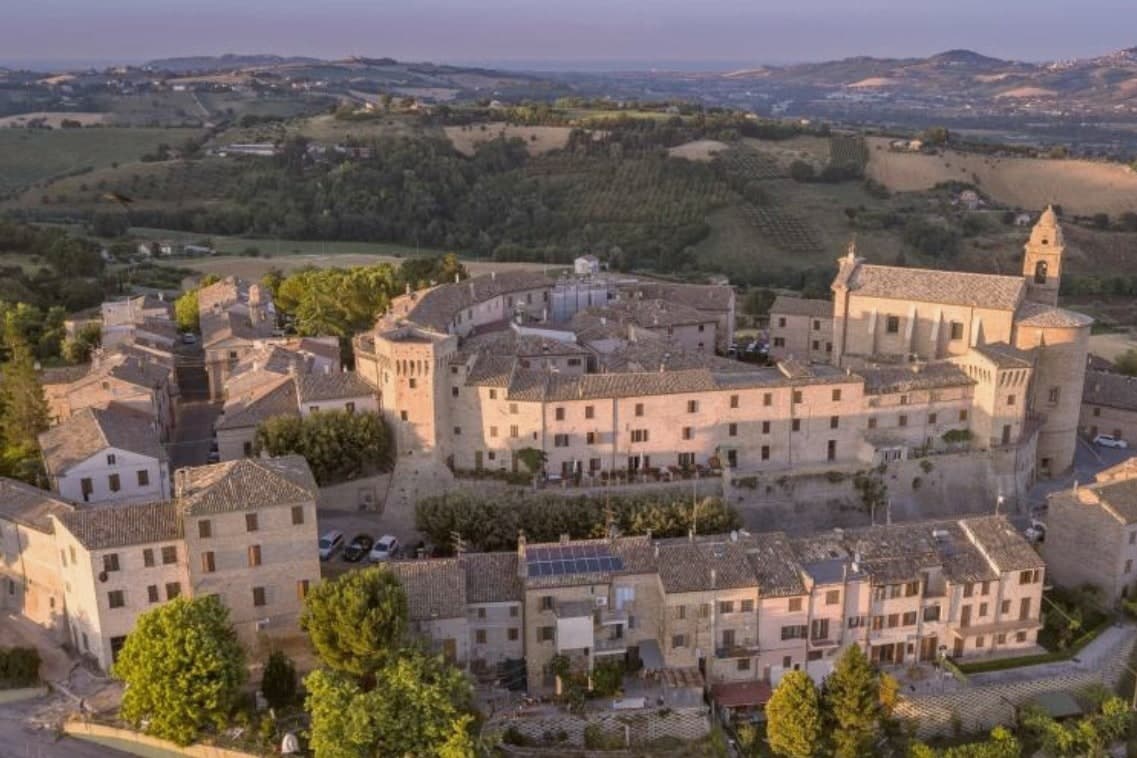
Two earlier castles, Montefiore and Aspramonte, stood separately before merging in 1178 into a single walled town that grew into a free commune, the union of two settlements still legible in the shape of the centro storico on its ridge. The former Franciscan convent, built between 1247 and 1303, now gathers the town's separate histories under one roof: the recovered polyptych panels, the De Carolis paintings, the record of peasant life.
A hill town shaped by the fusion of two older ones, its museum performs the same act of reassembly on a smaller scale, holding together what was once scattered or separate.
What to see in Montefiore dell'Aso
- Polo Museale di San Francesco. Former Franciscan convent of 1247-1303, now a museum complex with the Crivelli room, the De Carolis museum and the Museum of Peasant Civilization.
- Polittico di Carlo Crivelli. The panels sit reassembled in the museum's dedicated room, the surviving remnant of a work broken apart and scattered on the antique market before recovery.
- Museo Adolfo De Carolis. Around five hundred works by the Montefiore-born symbolist artist, with sixty-nine oil sketches for the Salone dei Quattromila frescoes in Bologna's Palazzo del Podestà.
How to get to Montefiore dell'Aso
Ancona is roughly 64 minutes away by road.
Our tip
April through June and September into October are the best months for Montefiore dell'Aso. The Aso valley turns green by May, the ridge catches sea breezes from the Adriatic eleven kilometers east, and the Sibillini stand visible on clear afternoons. July and August touch the high twenties; the centro storico at 412 meters stays cooler than the river valleys below and the museum rooms hold steady through midday. Maialata in Piazza falls in August.
Acquaviva Picena
Why visit Acquaviva Picena
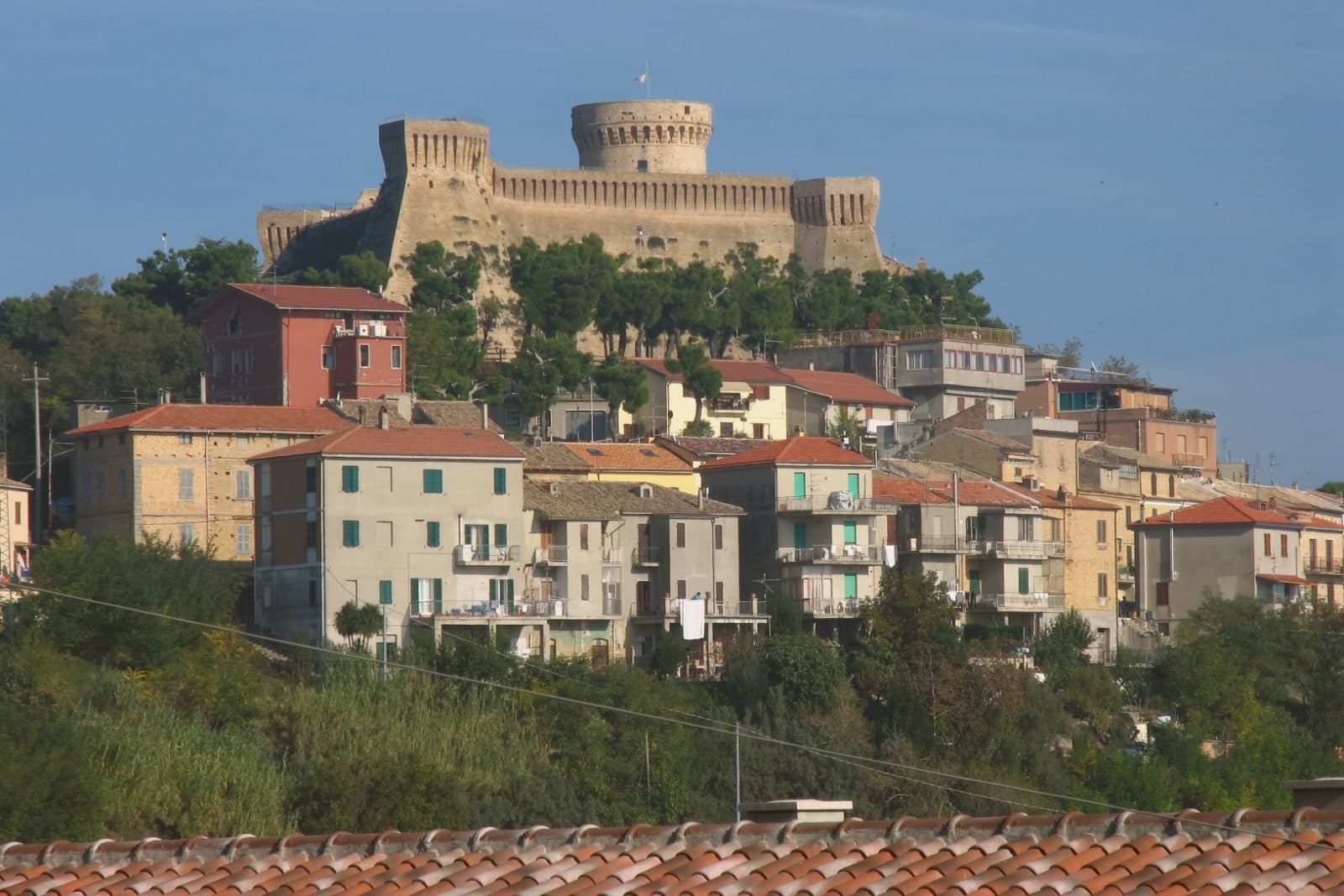
The hill stands six kilometers from the Adriatic, with the Sibillini, Gran Sasso and Majella visible on clear days: a position that put the fortress at the center of the town's identity long before any tourist arrived. The Rocca was first built by the Acquaviva family in the fourteenth century and rebuilt in 1474 by Baccio Pontelli, the Florentine architect who also worked on the Palazzo Ducale in Camerino and the Sistine Chapel walls.
Inside its walls, two museums sit side by side: one holding the family's medieval and renaissance weapons, the other preserving the wheat-straw baskets that women of the town wove by hand, passing the technique mother to daughter across generations. Outside the fortress, the walled center keeps its stone gates and stepped streets, recognized with a Bandiera Arancione by the Italian Touring Club.
Once a year the Palio del Duca turns those same streets into a contest ground, with neighborhood teams competing in archery and crossbow. The fortress explains why the town exists on this hill; the basket and the palio explain what its people have done with the centuries since.
What to see in Acquaviva Picena
- Rocca di Acquaviva Picena. Largest preserved fortress in the Marche, an irregular quadrilateral standing over the hilltop. Baccio Pontelli's rebuilding gave it the cylindrical keep that still dominates the walls.
- Museo delle Armi Antiche. Inside the Rocca, holding the medieval and renaissance weapon collection of the Acquaviva family and later additions.
- Museo della Pajarola. Dedicated to the wheat-straw baskets and the women who wove them, with everyday utensils, dolls and reconstructed working rooms.
How to get to Acquaviva Picena
Pescara is roughly 65 minutes away by road.
Our tip
April through June and September into October are the best months for Acquaviva Picena. The hilltop catches Adriatic breezes, the wheat fields below turn green then gold, and the views to the Sibillini and Gran Sasso run clearest in the dry weeks. July and August touch the low thirties; the inland position means less coastal humidity than at the beach six kilometers down the road.
Ripatransone
Why visit Ripatransone
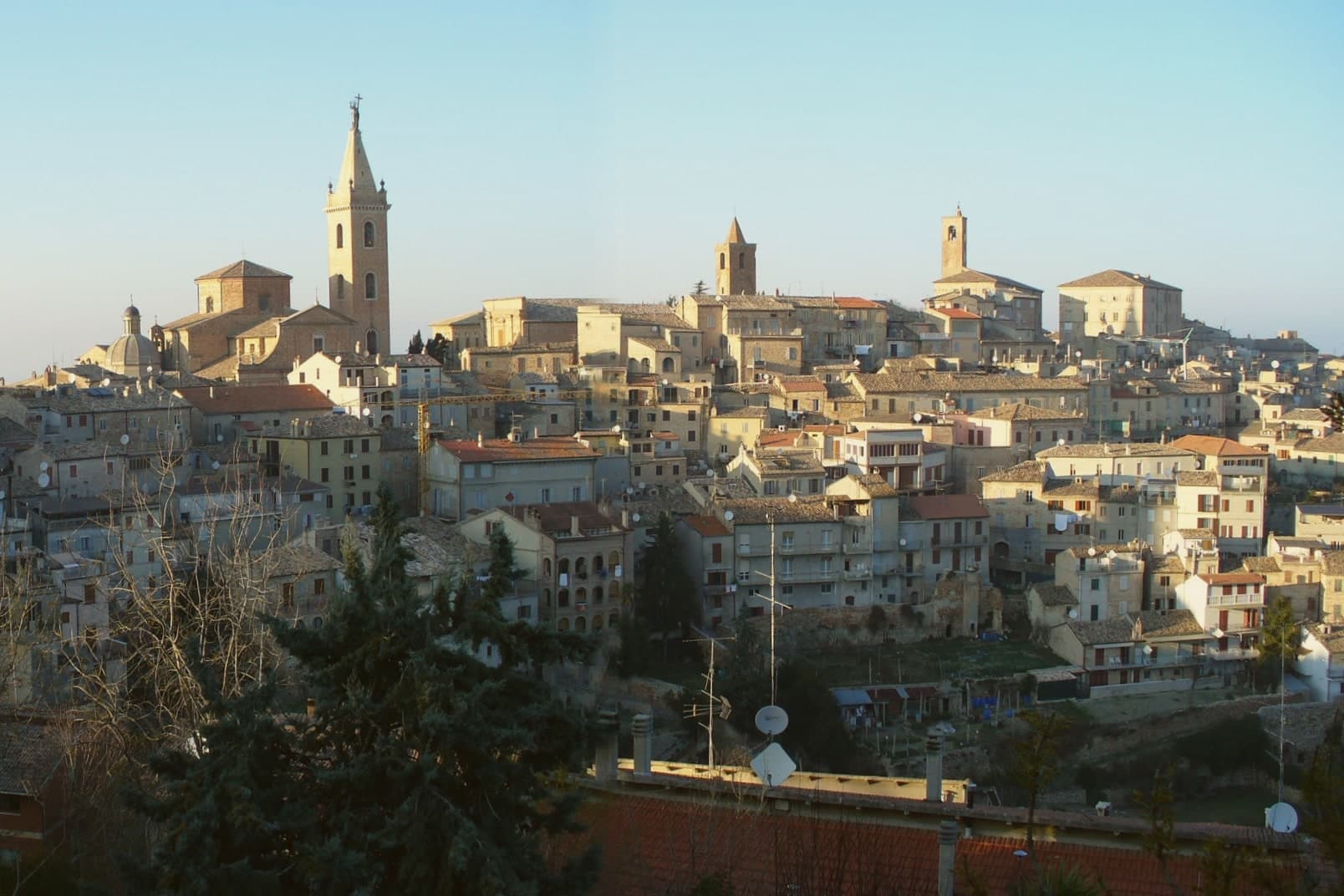
Ripatransone sits at 494 meters on a ridge between the Tesino and Menocchia valleys, twenty kilometers from Ascoli Piceno and seven from the Adriatic, with views from the Sibillini and Gran Sasso to the coast that earned it the nickname Belvedere del Piceno. The hill has been inhabited since prehistory and was settled by the Umbri and then the Piceni; after centuries of Roman quiet a medieval town grew here from a circle of castles unified in 1096.
Pope Pius V raised it to City and diocesan see in 1571. The name combines ripa, cliff, with Transone, the first feudal lord.
The Vicolo più stretto d'Italia, the narrowest alley in Italy at 43 centimeters and 32 at its tightest point, runs between two stone houses near Via Margherita: shoulders go sideways. The Cavallo di Fuoco, a wooden horse covered in fireworks that gallops across the main piazza on the Sunday after Easter, has run since 1682.
What to see in Ripatransone
- Vicolo più stretto d'Italia. The narrowest alley in Italy, 43 centimeters wide and 32 at its tightest point, between two stone houses near Via Margherita.
- Piazza XX Settembre. The main square of the centro storico, with the Palazzo del Podestà, the Cathedral of San Gregorio Magno and the medieval Torre Civica.
- Cattedrale di San Gregorio Magno. Cathedral built between the seventeenth and eighteenth centuries on the site of an earlier church, raised to cathedral status by Pope Pius V in 1571.
How to get to Ripatransone
Pescara is roughly 70 minutes away by road.
Our tip
April through June and September into October are the working months for Ripatransone. The Tesino and Menocchia valleys turn green from April, the Cavallo di Fuoco runs on the Sunday after Easter, and the autumn light brings the clearest views from the ridge across to the Sibillini and the sea. July and August touch the low thirties; the ridge breeze keeps the centro storico cooler than the coastal plain seven kilometers below. Festival Frittella di Zia Maria falls in September.
Offida
Why visit Offida
Offida sits at 293 meters on a cliff between the Tesino and Tronto valleys, twenty-three kilometers from Ascoli Piceno. The Chiesa di Santa Maria della Rocca rises on a rock spur at the western edge of the village, surrounded on three sides by cliffs that drop into two valleys: a Romanesque-Gothic temple in brick and travertine, raised by Master Albertino in 1330 on an older Benedictine foundation, with a double row of trilobed arches around the apse.
Inside, the apse and transept hold the fresco cycle of the Master of Offida, an anonymous monk painter who carried Giotto's lesson through the Rimini school, with the Marriage of Saint Catherine and Saint Christopher dated by inscription to 1367. Bobbin lace, merletto a tombolo, has been worked in town since the fifteenth century; the Museo del Merletto in Palazzo De Castellotti holds the collection.
The Carnevale Storico, with the Bove finto run and the Vlurd fire bundles, dates from before Lent in early February.
What to see in Offida
- Chiesa di Santa Maria della Rocca. Romanesque-Gothic brick-and-travertine church raised in 1330 by Master Albertino on a rock spur west of town, with the Master of Offida fresco cycle dated 1367 in the transept.
- Museo del Merletto a Tombolo. Inside Palazzo De Castellotti, with the lace collection, tools, historical documents and demonstrations of the bobbin-lace work practiced in town since the fifteenth century.
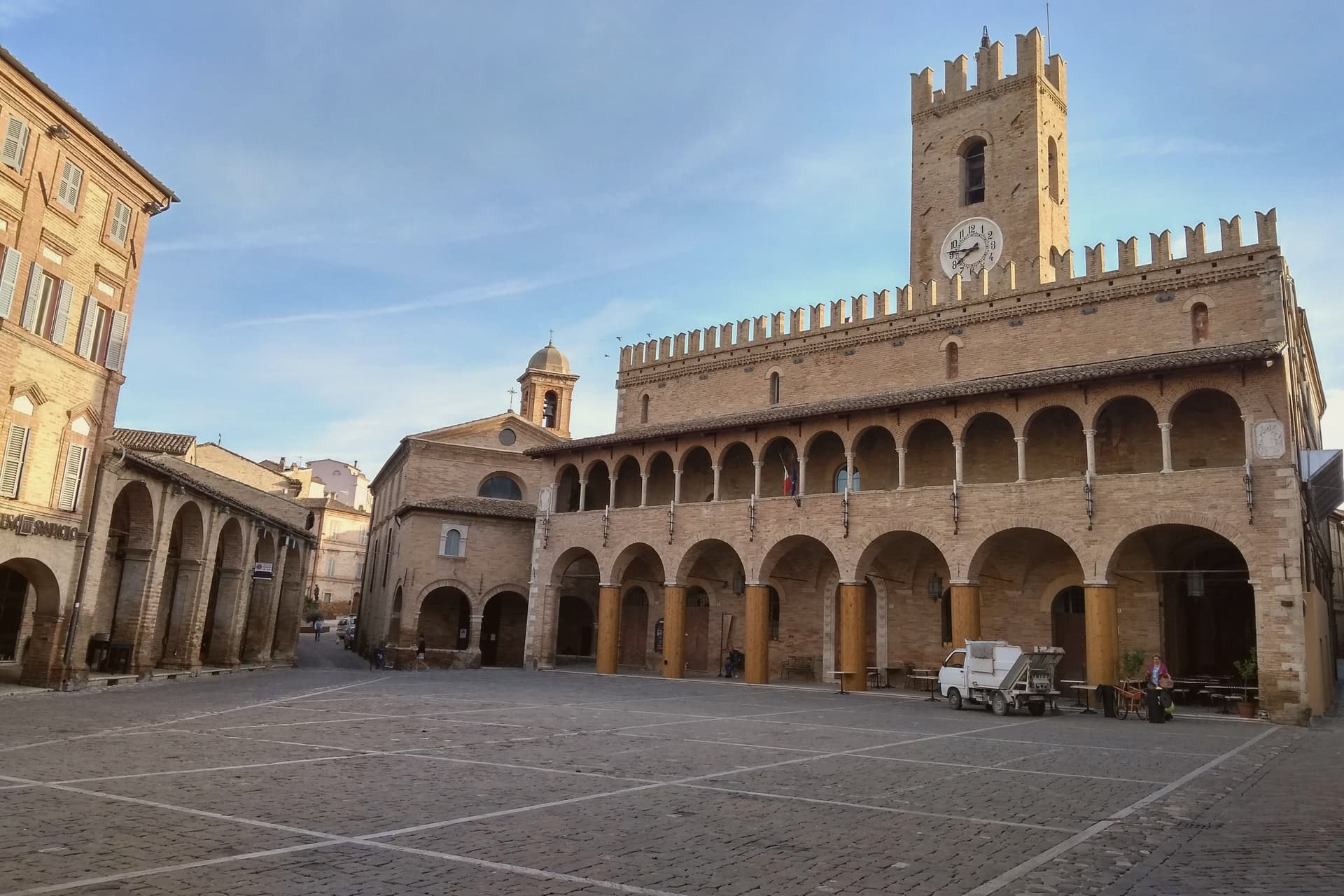
- Palazzo Comunale. Civic palace on the long Piazza del Popolo, with a portico, the Teatro Serpente Aureo and the access to the Museo del Merletto and the archaeological museum.
How to get to Offida
Pescara is roughly 74 minutes away by road.
Our tip
April through June and September into October are the best months for Offida. The hills around the town turn green by April and gold through the September harvest, the wine cellars run open tastings between vendemmia and St. Martin, and the Pecorino and Passerina vineyards stand out along the ridges. Sagra del Chichìripieno falls in August.
Monteprandone
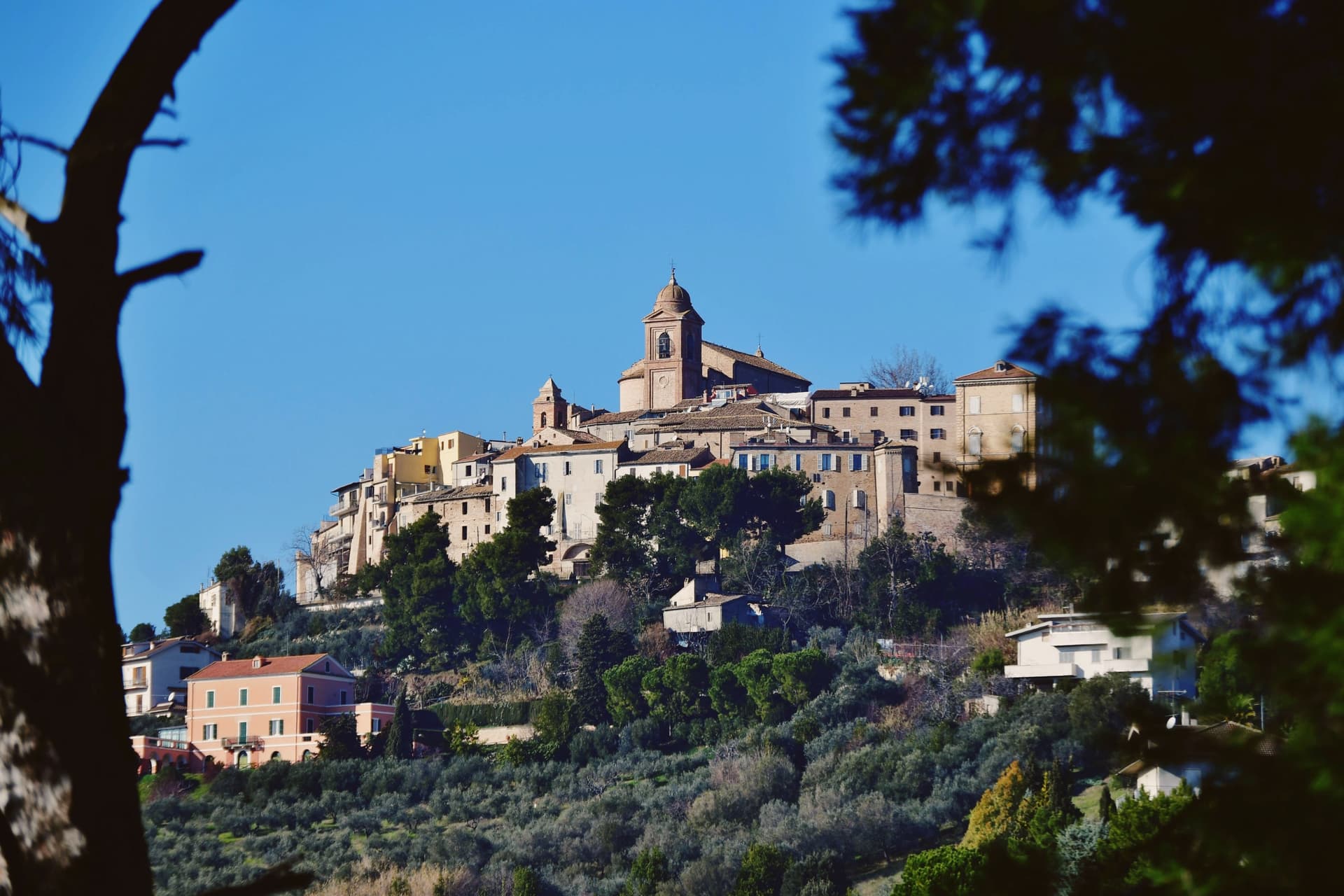
Why visit Monteprandone
Monteprandone sits at 266 meters on a hill above the left bank of the lower Tronto valley, twenty kilometers northeast of Ascoli Piceno and five from the Adriatic at San Benedetto. Tradition traces the founding to the ninth century and a knight from Charlemagne's court named Prandone, who built the first castle.
A papal bull of 13 May 1323 granted the village in perpetual fief to Ascoli Piceno. The walled center still shows this layered history: gates and stepped streets rise from the valley floor toward the summit, where the parish church stands over the plain and the sea beyond it.
The convent that anchors the town's fame sits within reach of that same climb, and the manuscripts once written for its friars now rest in a museum built to hold them. Upper and lower, castle-born and papally governed, the town's shape still traces the fief it became in 1323 and the hill it was built to defend.
What to see in Monteprandone
- Santuario di Santa Maria delle Grazie e San Giacomo della Marca. The convent stands where its founder placed it, the body brought back in 2001 kept within walls that also hold paintings by Vincenzo Pagani and Cola dell'Amatrice.
- Museo Civico dei Codici di San Giacomo della Marca. The volumes are shelved together in the civic museum, pages once meant for the friars and scholars of the convent now under glass for anyone to see.
- Centro storico di Monteprandone. Walled hill village above the Tronto valley, with surviving gates and stepped streets that climb to the church of San Nicolò di Bari at the summit.
How to get to Monteprandone
There is a railway station in the town, so you can arrive without a car and never need one while you are here. Pescara is roughly 59 minutes away by road.
Our tip
April through June and September into October are the best months for Monteprandone. The lower Tronto valley turns green by spring and dry gold through the summer wheat harvest, with the Adriatic visible on clear afternoons and the Sibillini on the inland horizon. July and August touch the low thirties on the hill, with the centro storico quietest in the early afternoon. Festa di Sant'Anna e Sagra degli Spinosini falls in August.
Ascoli Piceno
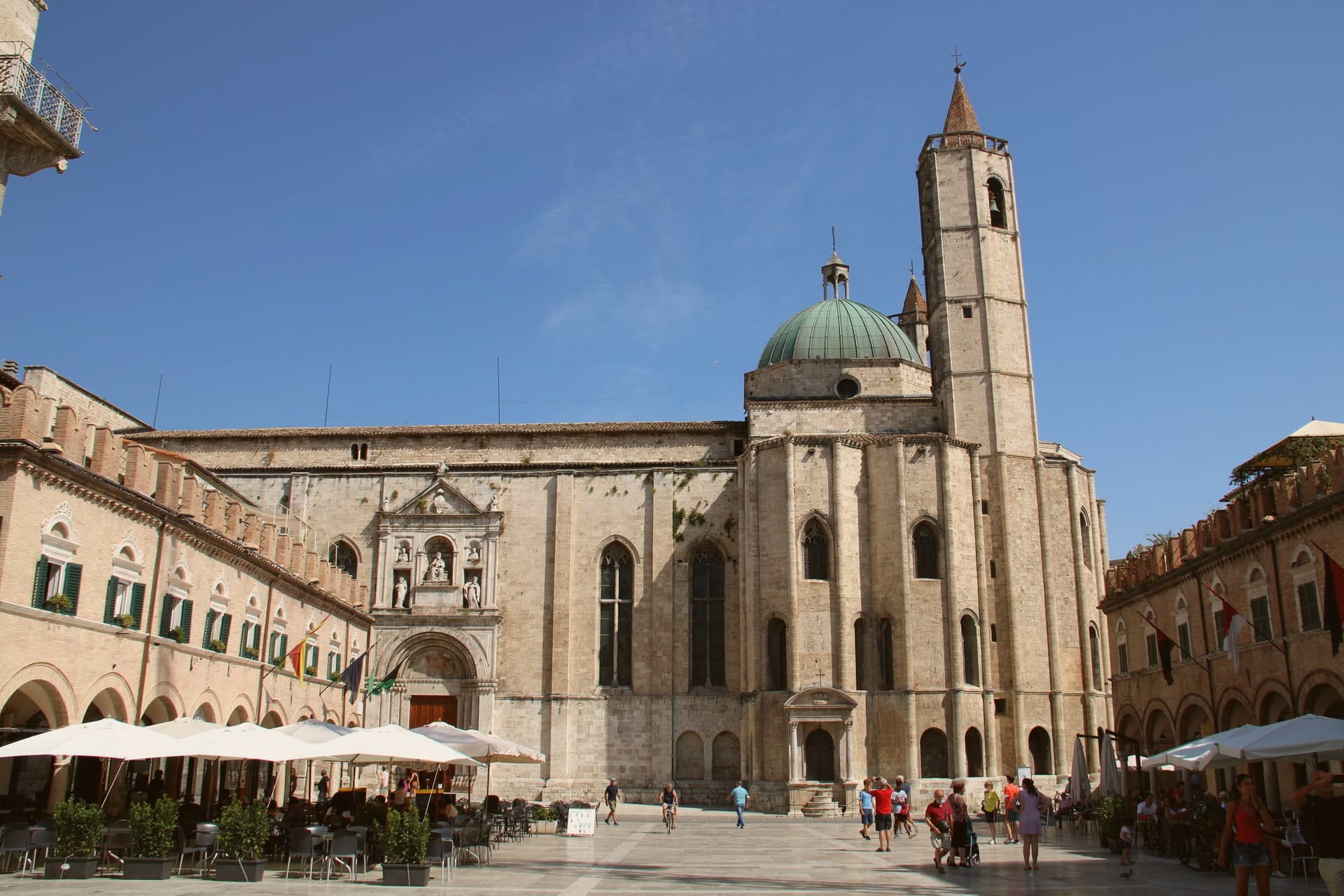
Why visit Ascoli Piceno
Ascoli Piceno sits at 154 meters at the confluence of the Tronto and the Castellano, the historic capital of the Piceni who held this part of the Marche before Rome. The town is built almost entirely from local travertine, which gives the centro storico its luminous pale surface and its mirror behavior under rain: Piazza del Popolo, paved in polished travertine slabs, is one of the most photographed squares in Italy.
In 91 BC the Ascolani killed the Roman delegation in their forum and triggered the Social War; the city was razed and rebuilt by Rome and the present grid still follows the Roman layout. The Quintana, run in costume in July and August, is a joust between the six sestieri, the city districts, the knight on horseback charging an effigy of an Arab warrior.
Anisetta Meletti, the local aniseed liqueur invented in 1907, is poured at the Caffè Meletti on the piazza.
What to see in Ascoli Piceno
- Piazza del Popolo. Paved in polished travertine slabs and lined by Renaissance porticoes, the Palazzo dei Capitani and the Loggia dei Mercanti, one of the most photographed squares in Italy.
- Chiesa di San Francesco. Gothic basilica begun in the thirteenth century, three travertine portals, two bell-towers, the largest Marchigiana example of the Franciscan order's architecture.
- Cattedrale di Sant'Emidio. Cathedral on Piazza Arringo, with a fifth-century crypt holding the relics of Sant'Emidio, patron saint invoked against earthquakes.
How to get to Ascoli Piceno
There is a railway station in the town, so you can arrive without a car and never need one while you are here. Pescara is roughly 72 minutes away by road.
Our tip
April through June and September into October are the best months for Ascoli Piceno. The travertine is dry, the surrounding olive groves turn through the Ascolana tenera harvest from October, and the Tronto and Castellano walks along the city's south edge are open every day. July and August touch the mid-thirties; the centro storico empties between three and six in the afternoon but the Quintana weekends fill it again. Ascoliva Festival falls in August.
More from Anywhere Italy
- The 8 best hill towns that eat well within 90 minutes of Pescara
- The prettiest villages with a food festival in Marche
 The best towns with a food festival that eat well in Marche
 The best hill towns with a serious restaurant in Marche
 The 6 best small hill towns that eat well in Marche
 The best olive oil towns in Marche