
The best towns with a food festival in Sicilia
Sicilian cooking is regional down to the level of the single town, and the sagra is where that shows. On the western coast it means couscous steamed with fish broth, a dish that arrived by sea and stayed. In the Iblei, where the houses are cut from pale limestone and the baroque façades hold the heat, it means chocolate ground cold with sugar that stays granular on the tongue. Inland, in the Madonie, the season turns on ricotta, sheep's cheese, bread baked in wood ovens and the hazelnuts and mushrooms of autumn. Late summer and early autumn are when most of these festivals fall, when the evenings finally cool enough to eat outside.
Most people arrive into Palermo and eat very well there, and the street food of the Palermo markets, Ballarò and the Vucciria, deserves the reputation it has. Taormina fills its terraces from Easter until October. The Valley of the Temples at Agrigento moves coach parties through all year. These are the fixed points of a Sicilian itinerary, and the eating around them is priced and paced for people passing through rather than for the town itself.
The same ingredients continue past the famous stops, and inland they belong to towns that cook for their own. A hill town in the Madonie holding a cheese festival in autumn is feeding its own valley first. A coastal town with a couscous week is settling an argument about how it should be made. Fewer people go to these places, and the food is closer to the source in all of them.
Of the 61 communes we have mapped in Sicilia, 21 qualify as towns with a food festival: each holds a recurring food festival built around one local ingredient. This list is 10 of them. The smallest, Novara di Sicilia, has 1,174 residents.
Elsewhere in the catalogue: The best coastal towns you can reach by train in Sicilia and The best hidden coastal towns that eat well in Sicilia.
Novara di Sicilia
Why visit Novara di Sicilia
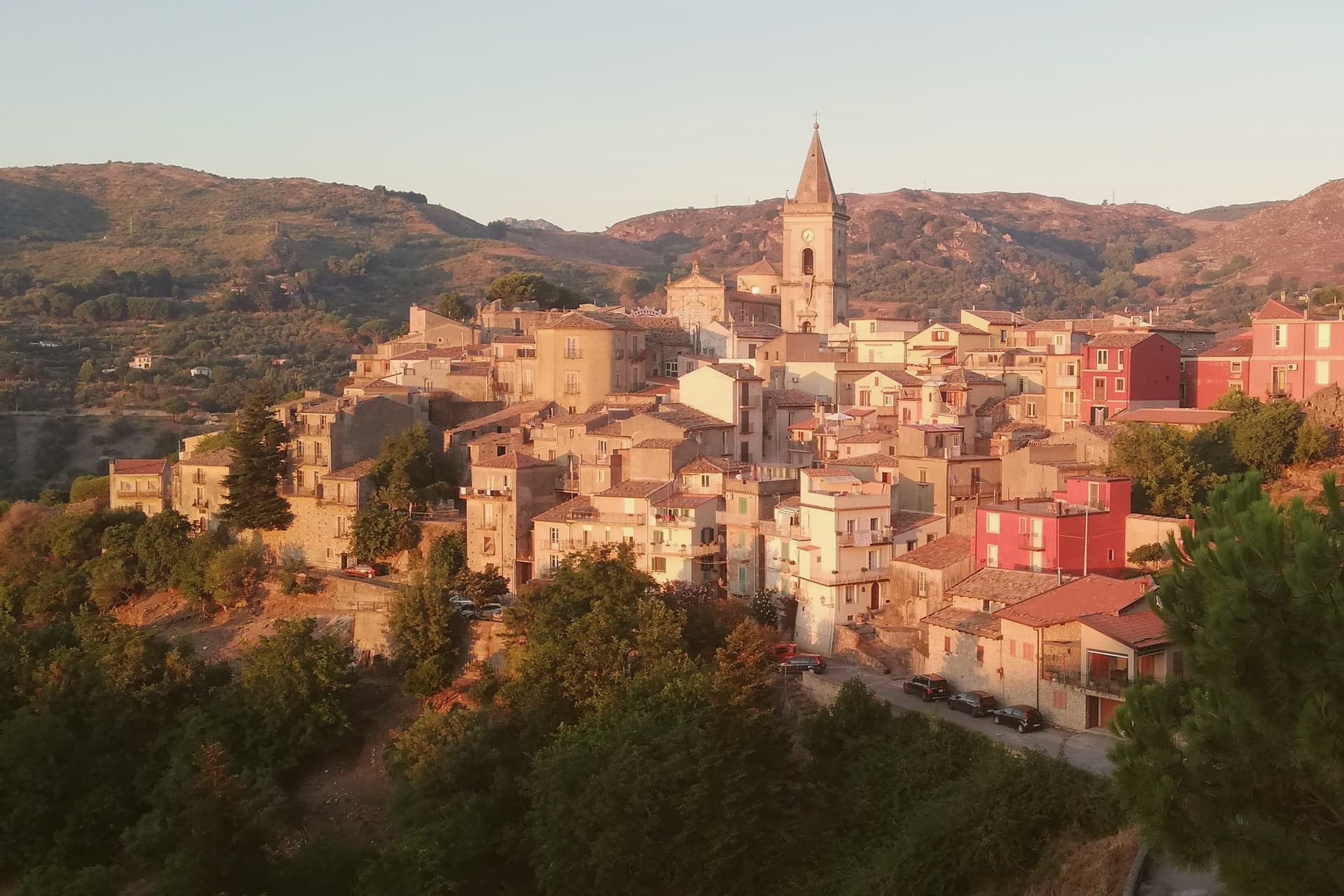
Novara di Sicilia sits at 650 meters at the point where the Peloritani and Nebrodi ranges meet, with the pointed limestone Rocca Salvatesta rising to 1,340 meters behind it. Lombards from northern Italy settled here between 1061 and 1072 under the Norman conquest, and a Gallo-Italic dialect from that migration is still spoken in the village.
Roger of Lauria built a castle here in the thirteenth century. The Duomo di Santa Maria Assunta dates from the sixteenth, a sandstone Renaissance building above the medieval lanes.
Every Carnival the village hosts the Lancio del Maiorchino, recognized by UNESCO as intangible heritage: teams roll 10-to-18-kilogram wheels of aged pecorino cheese two kilometers downhill from Via Duomo to Piano Don Michele, a contest that dates from the early 1600s when shepherds tested the maturation of their cheese on these same stones.
What to see in Novara di Sicilia
- Duomo di Santa Maria Assunta. Sixteenth-century cathedral in sandstone, the main building of the historic center with a Renaissance façade overlooking the village.
- Rocca Salvatesta. Pointed limestone peak of 1,340 meters behind the village, called the Matterhorn of Sicily for its shape and dominating the Peloritani-Nebrodi divide.
- Centro storico. Medieval stone village of arched lanes and decorated façades on the slopes of Rocca Salvatesta, listed among the Borghi più belli d'Italia.
How to get to Novara di Sicilia
Messina is roughly 64 minutes away by road.
Our tip
April through June and September through November are the months for Novara. The 650-meter altitude keeps temperatures manageable when the coast bakes, and the trail up Rocca Salvatesta is best in dry weather. July and August are warm but the Peloritani forests above town stay cool; the village empties between two and six in the afternoon. Festino dell'Assunta e di S. Ugo a Novara di Sicilia falls in August.
Petralia Soprana
Why visit Petralia Soprana
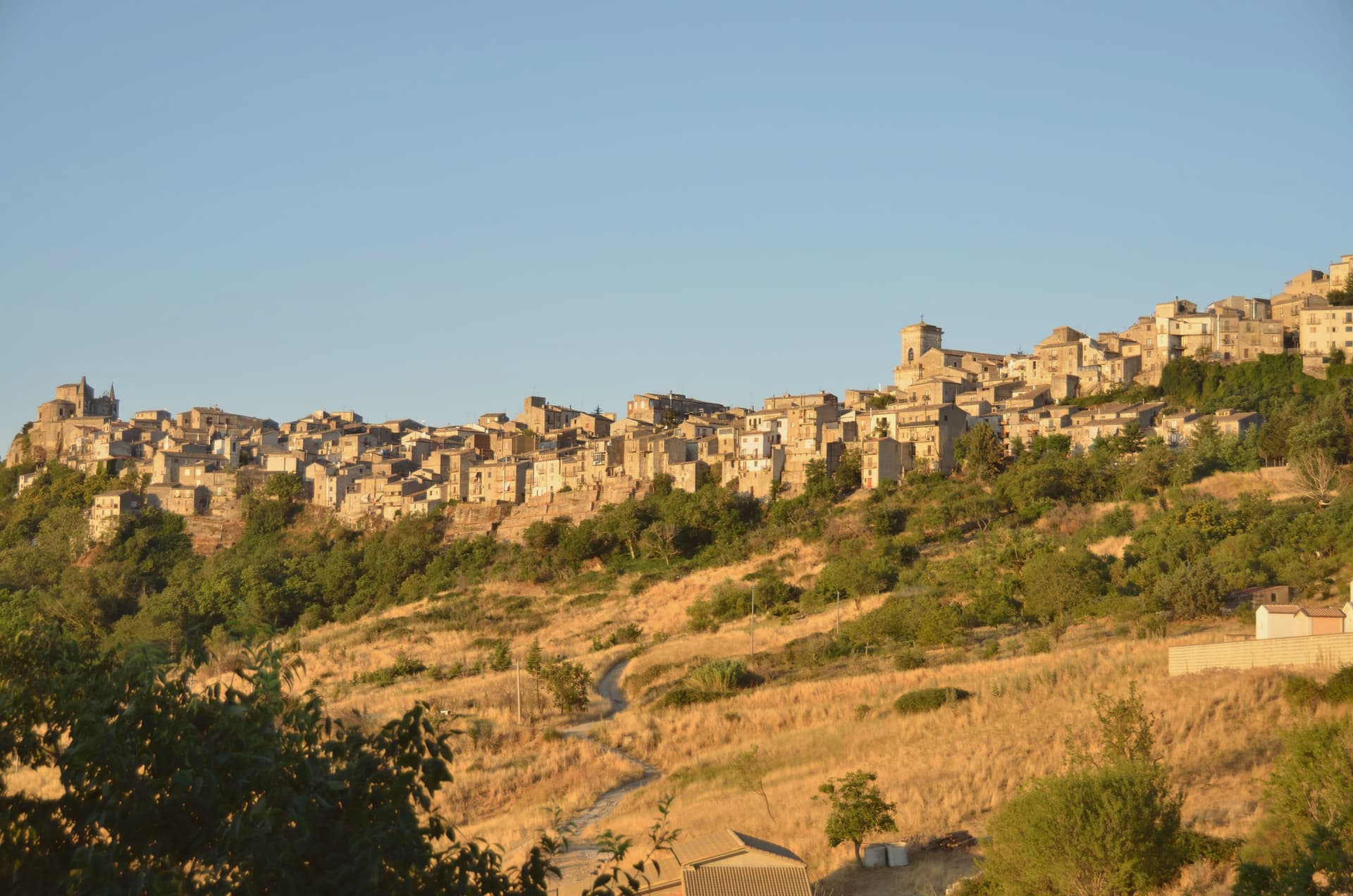
Petralia Soprana sits at 1,147 meters at the heart of the Madonie Natural Park, the highest commune in the range. The town and its lower twin Petralia Sottana grew from the Roman Petra, then took its current form under the Normans, who fortified the ridge.
The Chiesa Madre, dedicated to Saints Peter and Paul, dates to the fifteenth century and faces Piazza Duomo with a clear view across the Madonie. Below the village, the Raffo salt mine runs 80 kilometers of tunnels through one of the largest salt deposits in Europe, mined since at least the fourteenth century; the active mine now hosts MACSS, a contemporary art museum carved into the salt, one of a kind worldwide.
RAI named Petralia Soprana Borgo dei Borghi in 2018, the year of the salt mine's wider opening to the public. The stone streets, the mountain air at 1,147 meters, and the salt below the floor are the three things the village trades on.
What to see in Petralia Soprana
- Chiesa Madre (Santi Pietro e Paolo). Fifteenth-century mother church on Piazza Duomo, central monument of the village, with a baroque interior added after the 1693 earthquake.
- Miniera di Sale di Raffo. Active salt mine below the village with 80 km of tunnels in one of Europe's largest salt deposits, worked since the fourteenth century.
- MACSS — Museo Arte Contemporanea Sotto Sale. Contemporary art museum inside the active Raffo salt mine, sculptures cut directly into rock salt walls, the only museum of its kind worldwide.
How to get to Petralia Soprana
Palermo is roughly 88 minutes away by road.
Our tip
June through September brings dry mountain weather, ridge trails open across the Madonie, and temperatures stay below twenty-five even when Palermo touches forty. The salt mine and MACSS run all year, lit and warm inside. December through March catches snow at 1,147 meters and the village fills briefly with day-trippers from Cefalù coming up to see white roofs. Sagra del Grano a Pianello - Petralia Soprana falls in August.
San Vito Lo Capo
Why visit San Vito Lo Capo
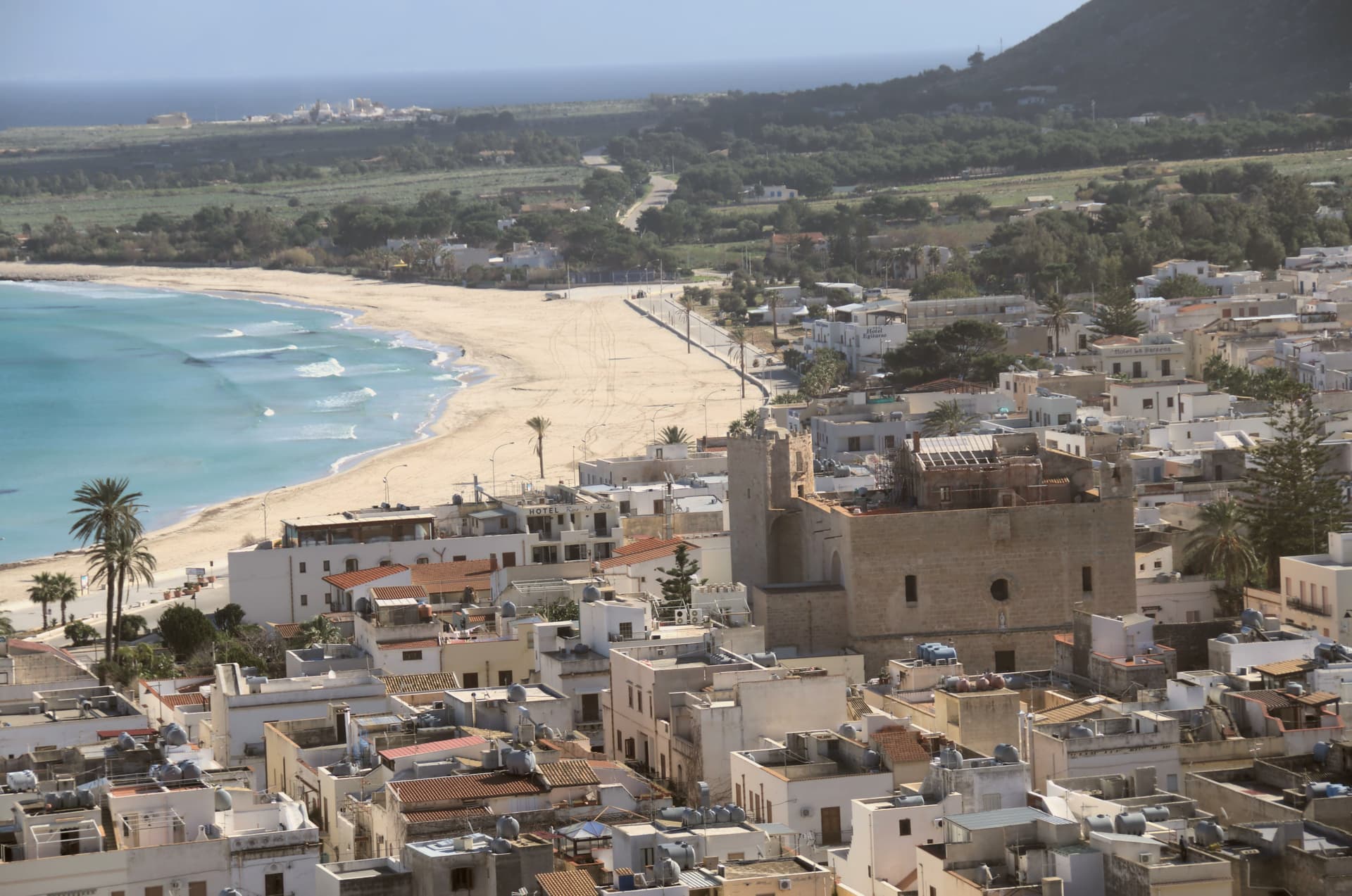
San Vito Lo Capo sits at the tip of a cape on Sicily's northwest coast, between two mountains, fifty-five kilometers from Palermo. The commune was administered from Erice until 1952, when the Sicily Region recognized it as its own municipality, so the fishing village at the foot of the peak is a relatively recent administrative entity even where the sanctuary at its center dates to the fifteenth century.
The old town gathers along Via Savona around the fortress-church, while the shoreline it faces has become the reason the wider world knows the name, a four-thousand-person town whose September festival now draws North African and Sicilian cooks to compete on the same dish. The protected coast begins seven kilometers down the shore, untouched by road, closing off the cape's undeveloped end the way the mountains close it at the back.
A small administrative history, a fortified sanctuary, and an uninterrupted stretch of coast: together they explain a place that stayed a village while becoming a destination.
What to see in San Vito Lo Capo
- Spiaggia di San Vito Lo Capo. Sheltered bay water clear enough to have earned the beach a Caribbean comparison, framed by the peak rising directly behind it.
- Santuario di San Vito Martire. Fortress-sanctuary with Arab-Norman walls dedicated to the patron, standing on Via Savona at the heart of the centro storico.
- Monte Monaco. Limestone peak of just over 500 meters rising directly behind the town, with views over the bay and Capo San Vito.
How to get to San Vito Lo Capo
Palermo is roughly 129 minutes away by road.
Our tip
May through October is the season the town is built for. The bay warms early and stays swimmable into November on a good year. July and August are full, the sand crowded, parking tight, restaurants booked. Cous Cous Fest falls in September.
Salemi
Why visit Salemi
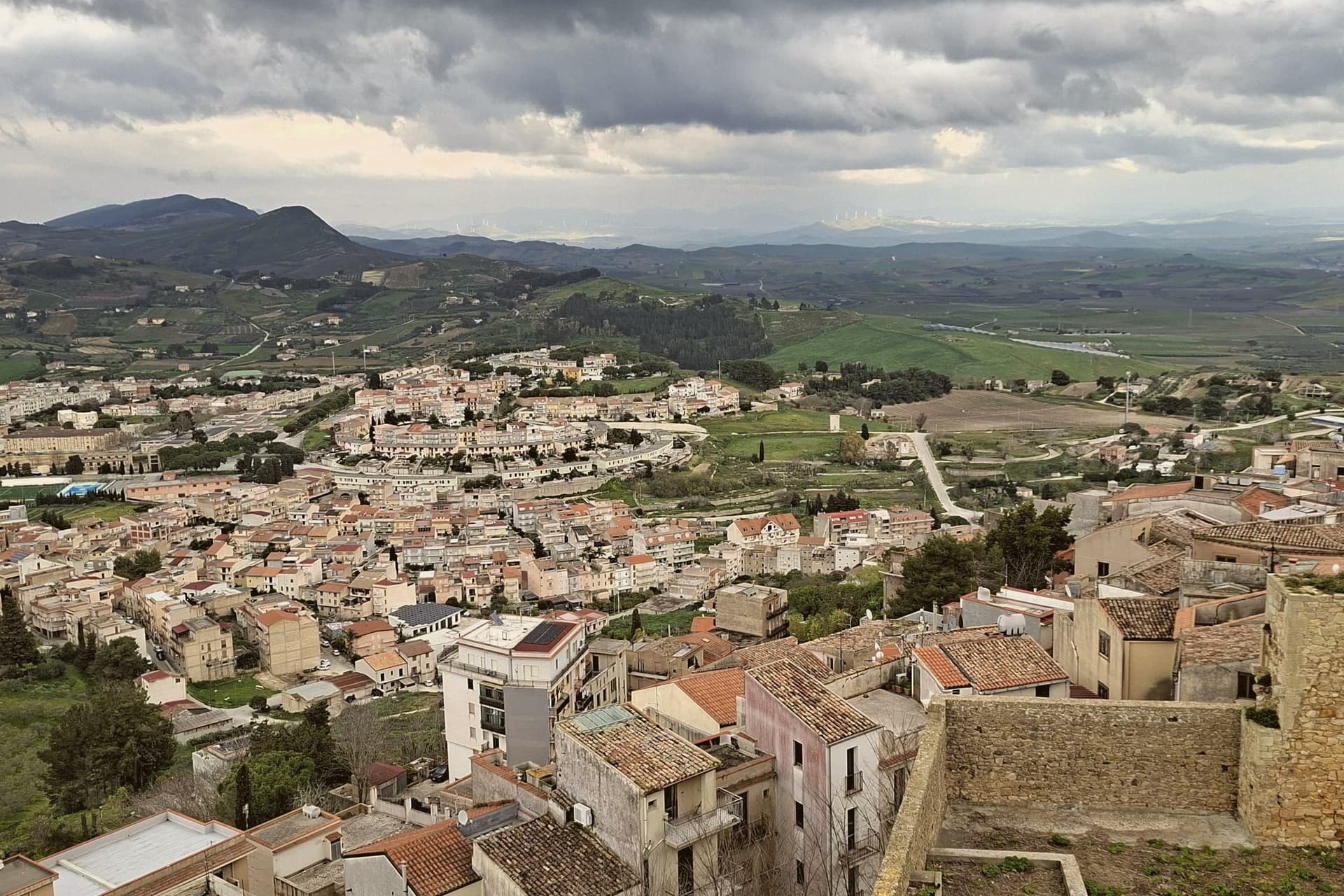
Salemi sits at 446 meters above the valley in the Trapani interior, on the ridge of Monte delle Rose between two rivers. The Elymians built the city of Halyciae here, conquered by Rome in 272 BC and granted freedom from taxes for its voluntary submission.
Two days after landing at Marsala with the Thousand, Garibaldi prepared his march on Calatafimi and Palermo from this ridge, which is why the town held its title for only a matter of days rather than longer. The centro storico groups around the castle and the ruined church beside it, built in Campanella stone.
Below and outside this core lies the former Jewish and Arab quarter, its low stone houses and narrow lanes still standing though damaged by the earthquake. Outside the commune altogether, on its own, stands the region's oldest surviving religious building, an early Christian basilica with sixth-century mosaic fragments predating everything else in the town by centuries.
What survives, then, is layered rather than continuous: an ancient foundation, a medieval center broken by the 1968 quake, and an older Christian outlier that the disaster never touched.
What to see in Salemi
- Castello Normanno-Svevo. Hilltop castle built by Roger I in 1077 on Greek-Roman foundations, rebuilt by Frederick II, where Garibaldi raised the Italian tricolor on 14 May 1860.
- Basilica di San Miceli. Early Christian basilica on the edge of the commune, the oldest surviving religious building in the area with sixth-century mosaic fragments.
- Rabato. Former Jewish and Arab quarter of low stone houses and narrow lanes, partly damaged by the 1968 Belice earthquake.
How to get to Salemi
Palermo is roughly 90 minutes away by road.
Our tip
April through June and September through November are the months for Salemi. The Belice Valley is green in spring and gold in October, the wind from the Egadi keeps the ridge cooler than the Marsala coast, and the castle terrace offers the clearest panoramas. July and August push past thirty-eight degrees; the Campanella stone of the centro storico holds heat into the evening and the streets empty between two and six. Sagra della Busiata a Salemi falls in August.
Menfi
Why visit Menfi
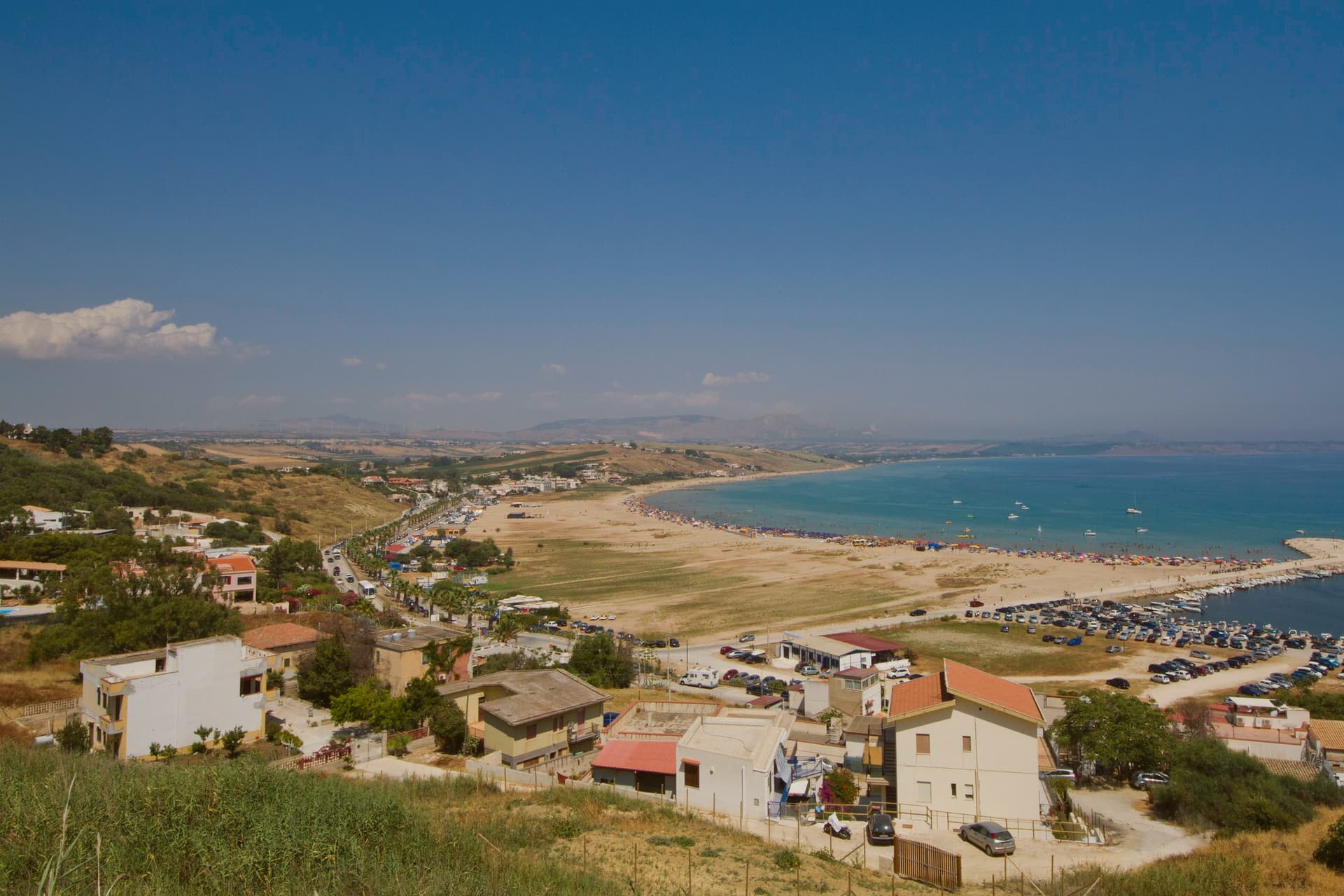
Menfi is an 11,814-resident town on the western Agrigento coast, and its geography frames everything else about it. The town sits at 119 metres on a low limestone ridge between the Belice and Carboj rivers, four kilometres inland from the coast, where a nine-kilometre arc of fine sandy beach runs at Porto Palo di Menfi, backed by a protected dune system of 1,100 hectares, the most important loggerhead turtle nesting site on the southern Sicilian coast.
That gap between ridge and shore is the shape of the whole place: the historic centro on the high ground, the beach and reserve down below, the vineyard and olive plateaux spreading out behind and above the town. The town itself was founded in 1638 by the Tagliavia d'Aragona Pignatelli family on the site of an earlier castello belonging to Federico II.
Nothing from that medieval phase survived the re-foundation except a single surviving tower, the only structure left from before the seventeenth-century rebuilding. Above the town, the plateaux produce the two products that give Menfi the rest of its quality-mark trifecta alongside the beach: a cooperative cellar founded in 1958 that draws on 2,000 grower-members farming 6,000 hectares to produce 50 million bottles a year, the volume that makes it Italy's largest winery, and an olive oil, Nocellara del Belice DOP, grown across the same micro-region that produces the Castelvetrano table olive.
That range of production is what earns the town its Città del Vino status alongside its oil and its beach. Beyond the town, Selinunte's Greek temple site lies 25 km west and the Scala dei Turchi limestone cliff sits 50 km east toward Agrigento, the two standard day trips.
The food is Sicilian-coastal: pasta con le sarde, busiate with Trapani-style pesto, bluefin tuna from one of the last traditional fisheries on the island, couscous showing the same Trapani influence reaching this far along the coast, cassata and cannoli, and the local Grillo or Nero d'Avola poured alongside all of it. What holds the place together is that ridge-to-shore, town-to-plateau layout: a working wine and olive town that happens to sit a short drive from its own protected beach, rather than a beach resort with agriculture as an afterthought.
What to see in Menfi
- Porto Palo di Menfi (Bandiera Blu). Fine sandy beach below the town, backed by dune wetland where loggerhead turtles nest. The sand runs long enough that the crowd thins fast once you walk past the first stretch.
- Cantine Settesoli + Mandrarossa. Visits and tastings at the cooperative cellar in town: Nero d'Avola, Grillo, Inzolia, Syrah poured where they are made rather than at a distributor's counter.
- Nocellara del Belice DOP olive oil. The local olive oil, from the same micro-region as the Castelvetrano table olives. Several small frantoi in town offer tastings, worth setting alongside the wine visit rather than instead of it.
How to get to Menfi
Palermo is roughly 83 minutes away by road.
Our tip
Menfi is best May–June and September–October — the beach is swimmable May–October, summer crowds peak August. The Inycon Wine & Jazz festival in late June is the year's headline event. October is harvest at Cantine Settesoli and the surrounding cellars. Inycon, la Festa del Vino a Menfi falls in October.
Aci Castello
Why visit Aci Castello
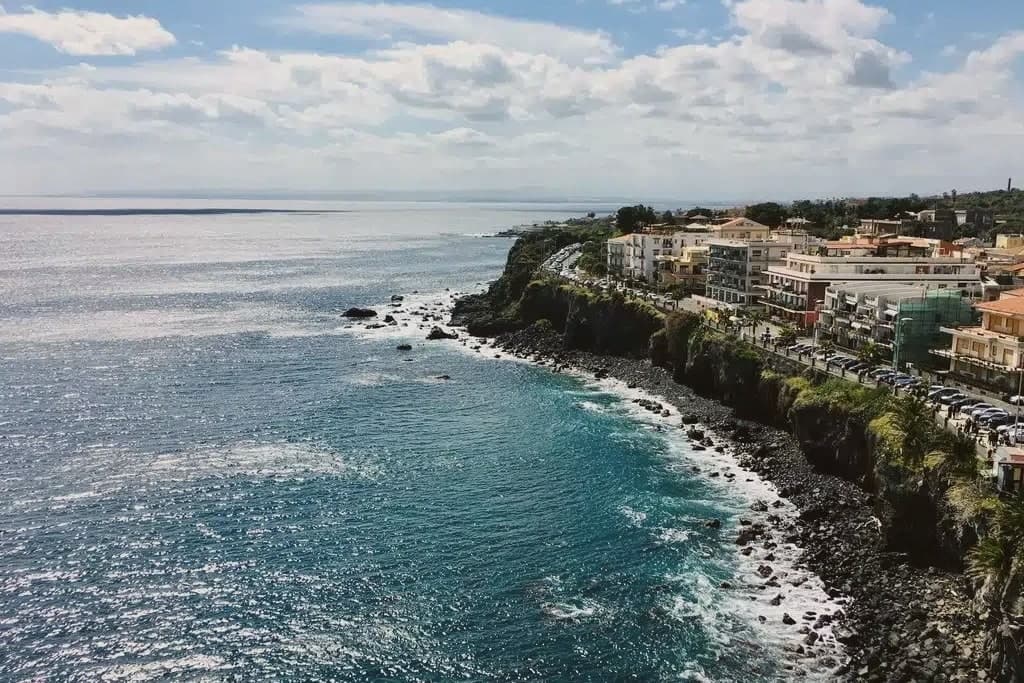
Aci Castello sits ten kilometres north of Catania on the Riviera dei Ciclopi, where the lava-black basalt coast meets the Ionian Sea. The town's anchor is the Castello Normanno (Castello d'Aci), built in 1076 by Roger I of Sicily on a basalt sea-stack thrown up by an underwater Etna eruption around 25,000 BC; the Aragonese expanded it in the 14th century and it now houses the Civic Museum of Aci Castello.
Just offshore stand the Isole dei Ciclopi — the seven basalt sea-stacks that Homer identified as the rocks Polyphemus the Cyclops hurled at Odysseus's ship in Book IX of the Odyssey, and which are now a protected marine reserve. The frazione of Aci Trezza (the larger fishing village south of the castle) is where Giovanni Verga set I Malavoglia (The House by the Medlar Tree, 1881), the founding novel of Italian verismo.
The coastline between Castello and Trezza is a single black-pebble swimming front, with the dramatic profile of Etna rising behind.
What to see in Aci Castello
- Castello Normanno di Aci. 1076 Norman castle on a basalt sea-stack thrown up by an underwater Etna eruption c. 25,000 BC. Aragonese expansion 14th c. Houses the Civic Museum with the stratigraphic and natural-history collections.
- Isole dei Ciclopi. Seven basalt sea-stacks offshore — Homer's Cyclopean rocks from Odyssey Book IX. Now a protected marine reserve (AMP Isole Ciclopi), with snorkelling tours from Aci Trezza.
- Aci Trezza — terra di Verga. Fishing-village frazione where Giovanni Verga set I Malavoglia (1881), the founding novel of Italian verismo. The old harbour and Casa del Nespolo museum trace the literary setting.
How to get to Aci Castello
There is a railway station in the town, so you can arrive without a car and never need one while you are here. Catania is roughly 12 minutes away by road.
Our tip
April through October is the season on the Ionian coast. May and September are the best months: warm Mediterranean sea, lava-rock swimming comfortable, the castle museum at full hours. June brings the patronal feast of San Mauro. Arancino Festival falls in September.
Pachino
Why visit Pachino
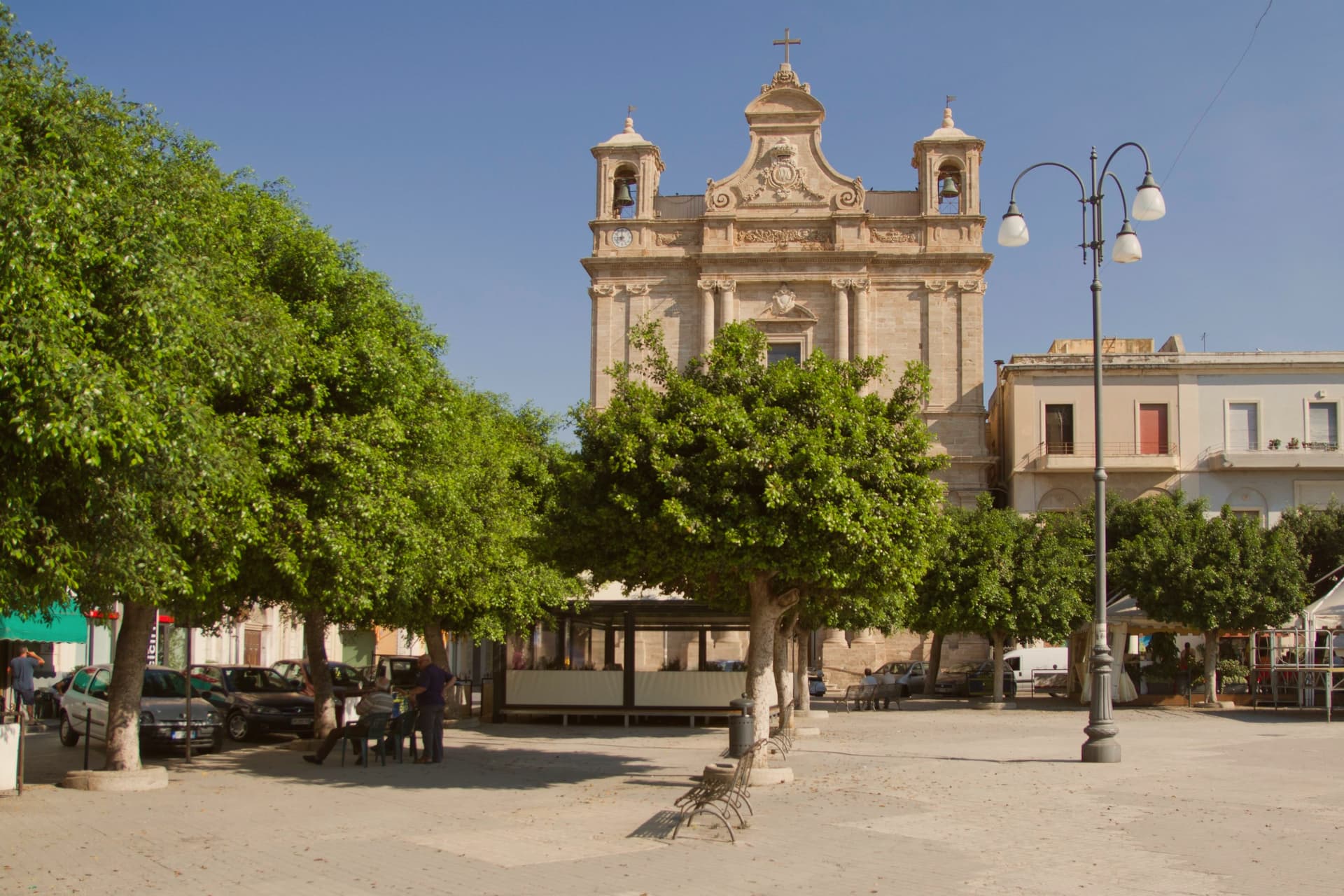
Pachino sits at 36°41' N, a hundred kilometres closer to Africa than to Rome. The town was founded in 1758 by the Starrabba princes of Giardinelli to consolidate the scattered agricultural workers of the southern Val di Noto, and the grid still shows that planned origin: straight streets laid out at once rather than grown over centuries.
The town's geography is split between the inland grid and the coast it built its economy on. To the south, the land runs down to the cape and its rocky shore; the wine and tomato country lies along that same southern strip, in soil described as salty and calcareous.
To the north, past the vineyards and greenhouses, the coastline opens into wetland before reaching the reserve. What ties the town together is a plan of orderly land laid out to work the farmland at its doorstep, and the farmland has since outgrown the plan: a inland grid built to organise labourers now sits behind the two products, tomato and wine, that carry the town's name well beyond it.
What to see in Pachino
- Capo Passero. The cape carries a small offshore island, Isola di Capo Passero, with a 17th-century Spanish fort and a Madonna chapel. Reachable by short ferry; on clear days the view runs south toward Malta.
- Pomodoro di Pachino PGI. Grown in the salty calcareous soil of the southern coast. The local fattorie run tasting visits.
- Nero d'Avola territory. The Marina di Modica DOC overlaps the southern Pachino vineyards. Several wineries run tastings.
How to get to Pachino
Siracusa is roughly 49 minutes away by road.
Our tip
April through October is the season on the southern Sicilian coast. May and June are ideal: the Nero d'Avola vineyards green, the tomato harvest starting in greenhouses (PGI tomatoes appear in markets from June onward), the sea warm and the Vendicari reserve at peak bird count. July and August are very hot and the inland villages around Pachino bake at 38°C+; Capo Passero stays workable thanks to the constant sea breeze. Artieri Mercato Creativo A Marzamemi falls in August.
Giarre
Why visit Giarre
Giarre sits on the lower eastern slope of Etna at eighty metres, thirty kilometres north of Catania and three from the sea at Riposto. From the late sixteenth century until 1815 it was a village of the county of Mascali; it separated after the abolition of feudalism and built itself a town centre in the decades that followed.
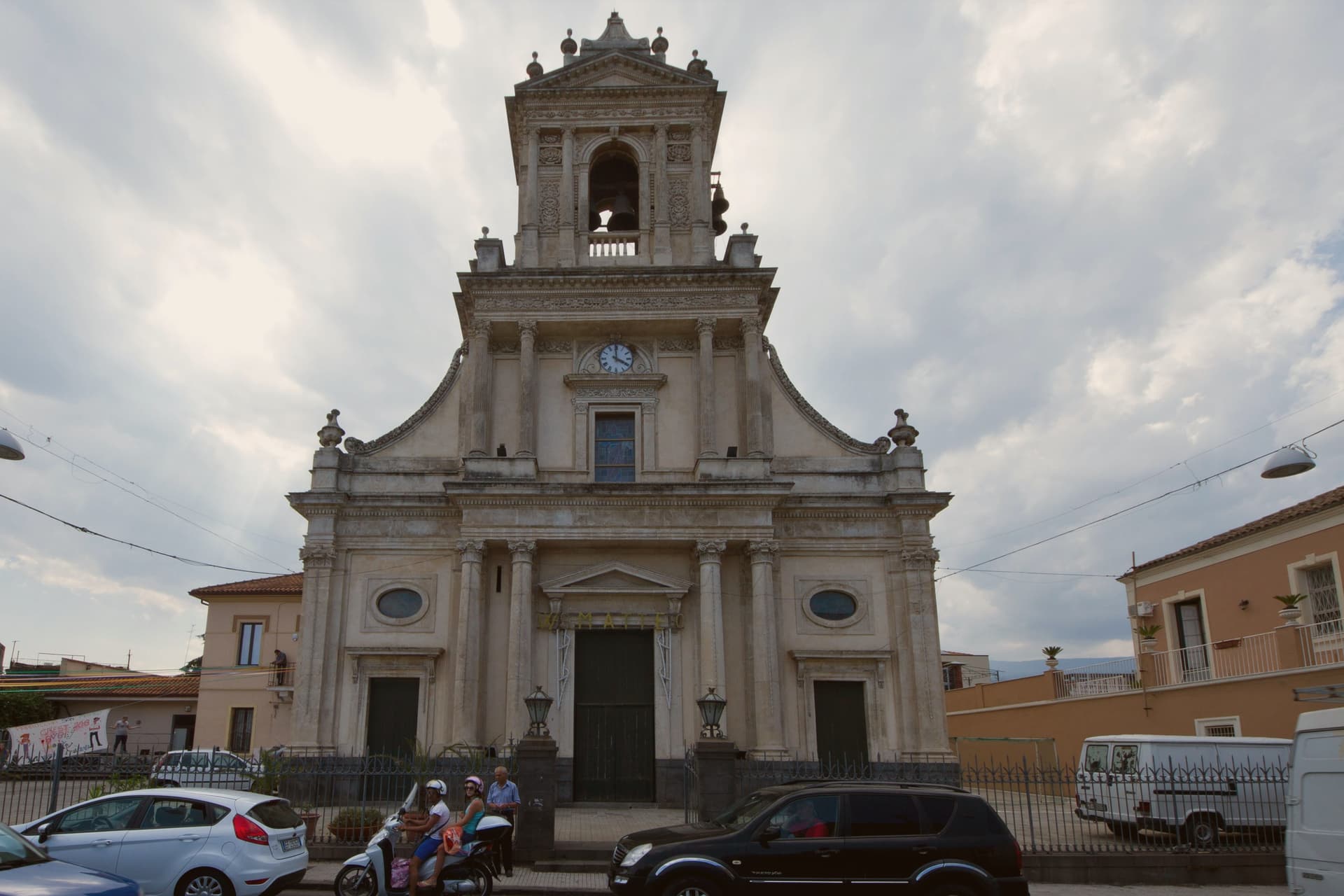
The Duomo di Sant'Isidoro Agricola, begun in 1794 and opened for worship in 1818, is the result: a neoclassical mother church in white stone, with a large central nave, two lateral naves, a transept, and a dome with lantern. The two bell towers, designed by the Neapolitan architect Pietro Valente, were begun in 1859 and finished only in 1890.
Inside, the church holds one of the most substantial collections of sacred silverware in eastern Sicily. From 1939 to 1945 Giarre was merged with Riposto under the fascist name Jonia.
The two towns still form a single conurbation along the coast.
What to see in Giarre
- Duomo di Sant'Isidoro Agricola. Neoclassical mother church begun in 1794, two bell towers by Pietro Valente, and one of eastern Sicily's largest collections of sacred silverware.
- Piazza Duomo. The main square at the centre of the historic grid, with the duomo facing the foothill of Etna to the west.
- Corso Italia. The principal axis of the town, running between the duomo and the open country towards Riposto and the sea.
How to get to Giarre
There is a railway station in the town, so you can arrive without a car and never need one while you are here. Catania is roughly 26 minutes away by road.
Our tip
April through June, then September and October, are when Giarre is at its best: clear views of Etna from the duomo square, citrus blossom on the slopes above town, and the coast at Riposto still calm. July and August are hot and crowded along the seafront, though the upper town keeps cooler at eighty metres. November through March is the quiet season, with rain off the Ionian and snow on the volcano. Festival Etneo del Porcino falls in September.
Monreale
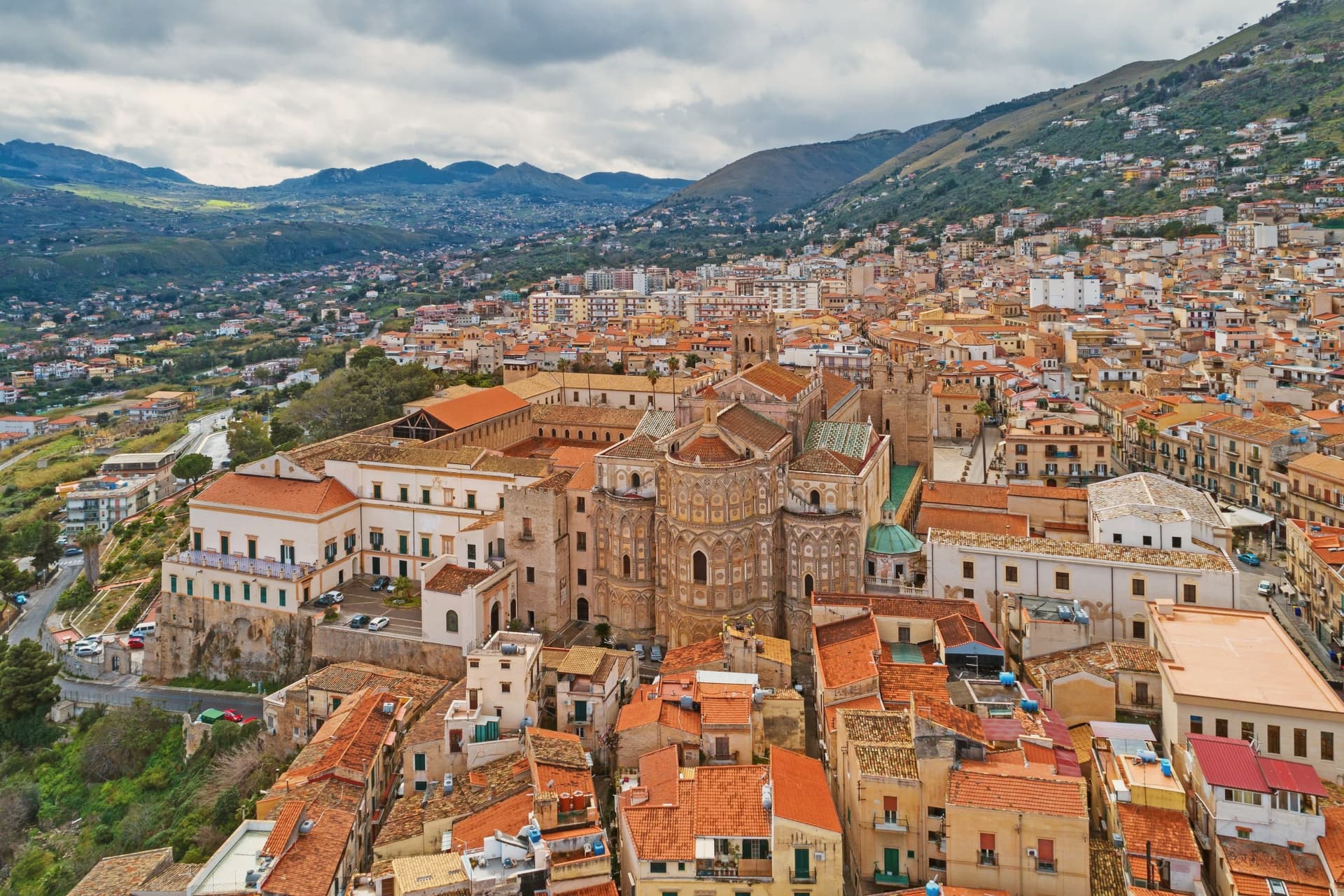
Why visit Monreale
Monreale sits at 310 meters on the southwestern slope of Monte Caputo, eight kilometers from Palermo, looking down across the Conca d'Oro toward the Tyrrhenian. William II of Sicily founded the Benedictine abbey here in 1174 and the cathedral, Santa Maria Nuova, was elevated to metropolitan rank in 1182.
The mosaics inside cover 6,340 square meters, the largest surviving Byzantine cycle in Italy, executed in coloured glass on a gold ground by masters William brought from Constantinople and Venice. The cloister, 2,200 square meters of pointed arches and 216 paired marble columns, is one of the most complete Romanesque cloisters in Europe, with no two capitals carved alike.
The cathedral and cloister joined the UNESCO Arab-Norman Palermo inscription in 2015. The town carries the Città della Ceramica title for the workshops that grew up around the cathedral.
Below the Duomo, the streets fall steeply toward the Conca d'Oro and back up to Palermo.
The re-enactment here is Rievocazione storica Monreale - Nel segno di Guglielmo, usually held in September.
What to see in Monreale
- Duomo di Monreale (Santa Maria Nuova). Cathedral begun in 1174 under William II, 6,340 m² of Byzantine mosaics in coloured glass on gold ground, the largest surviving Norman mosaic cycle in Italy.
- Chiostro dei Benedettini. Romanesque cloister of 2,200 m² with 216 paired marble columns, each capital carved differently in foliage, biblical scenes and allegory; among Europe's finest.
- Palazzo Reale di Monreale. Twelfth-century Norman royal residence next to the cathedral, partly preserved within the seminary buildings; the rooms William II used during construction of the Duomo.
How to get to Monreale
There is a railway station in the town, so you can arrive without a car and never need one while you are here. Palermo is roughly 44 minutes away by road.
Our tip
April through June and September through November are the right windows. The cathedral is open all year, but the climb from Palermo and the walk down to the Conca d'Oro are easier outside the heat. July and August push past thirty-three in the lower town and fill the cloister queue past two hours; arrive at opening or wait until late afternoon. Grisi' in Festa falls in August.
Modica
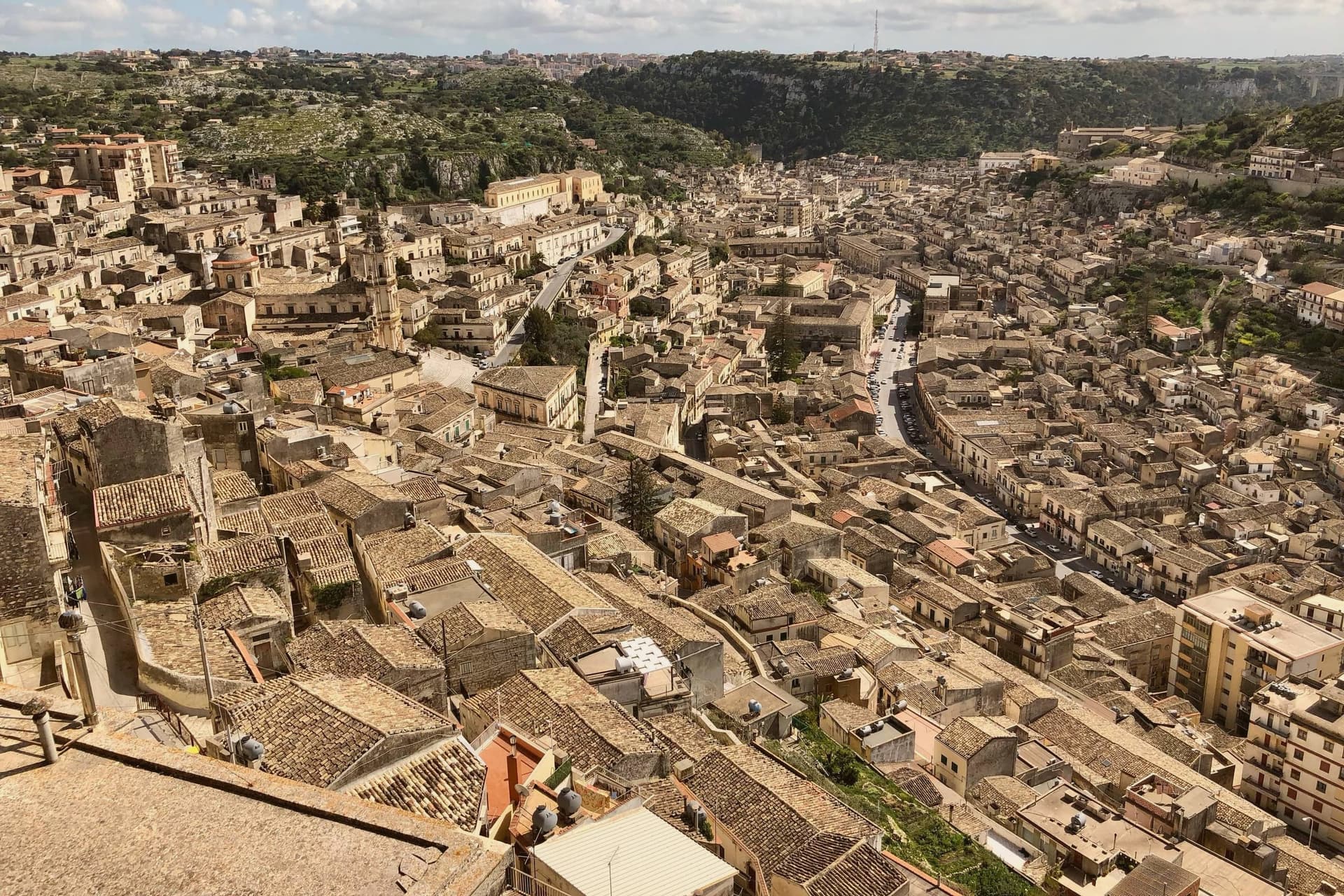
Why visit Modica
Modica sits at 296 meters on the southern flank of the Hyblean Mountains, threaded through two gorges that split the town into Modica Alta on the ridge and Modica Bassa in the valley below. The 1693 earthquake killed roughly three thousand people here and erased the medieval town.
What stands today was built across the eighteenth century by a generation of architects, Rosario Gagliardi above all, who designed the Duomo di San Giorgio at the top of its 250-step staircase. The Duomo di San Pietro answers it from the lower town.
Both are part of the Late Baroque Towns of the Val di Noto, listed by UNESCO in 2002. The other Modica export is older.
Cioccolato di Modica is still made by the cold-working method Spanish settlers learned from the Aztecs, the cocoa mass never melted past forty degrees, the sugar crystals left grainy. It is the only chocolate in Europe with a PGI mark.
What to see in Modica
- Duomo di San Giorgio. Rosario Gagliardi's Baroque cathedral in Modica Alta, three-tiered façade rising above a 250-step staircase, built between 1702 and 1738.
- Duomo di San Pietro. Mother church of Modica Bassa, fourteenth-century foundation rebuilt in Baroque after the 1693 earthquake, twelve statues of the Apostles on the entrance stair.
- Modica Alta and Modica Bassa. Two halves of the old town, upper ridge and lower valley, connected by stairways and the long Corso Umberto I that follows the former riverbed.
How to get to Modica
There is a railway station in the town, so you can arrive without a car and never need one while you are here. Siracusa is roughly 62 minutes away by road.
Our tip
April through June and September through November are the dry, walkable months in Modica, when the staircases of Modica Alta can be climbed without the July heat. The Hyblean inland sits hotter than the Ragusa coast; afternoons above thirty-five degrees are normal between mid-June and late August, and the chocolate shops on Corso Umberto run cooler than the streets. October pulls back the temperature and the cruise-ship day-trippers; the Duomo staircases empty. ChocoModica falls in October.
More from Anywhere Italy
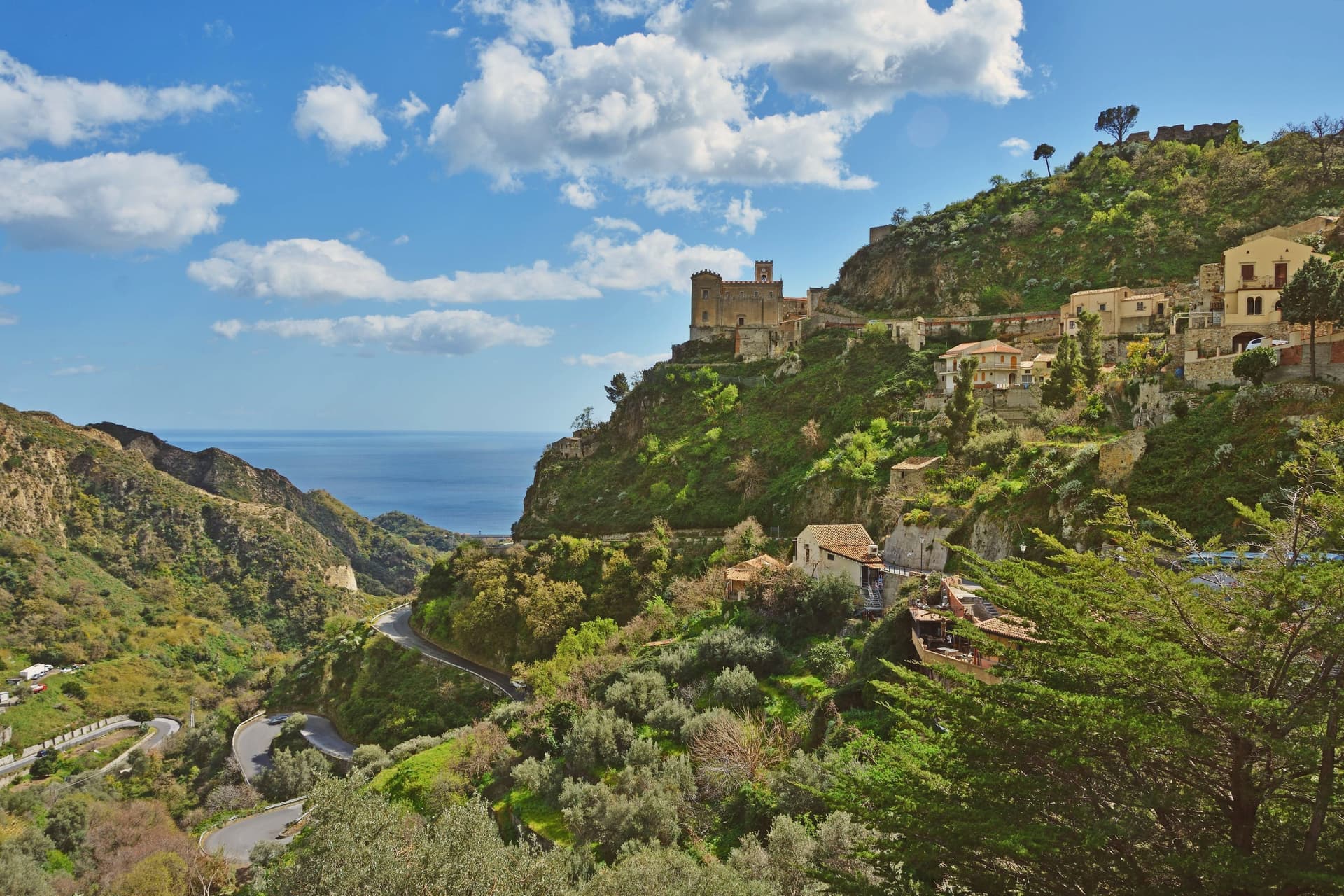 The best coastal towns you can reach by train in Sicilia
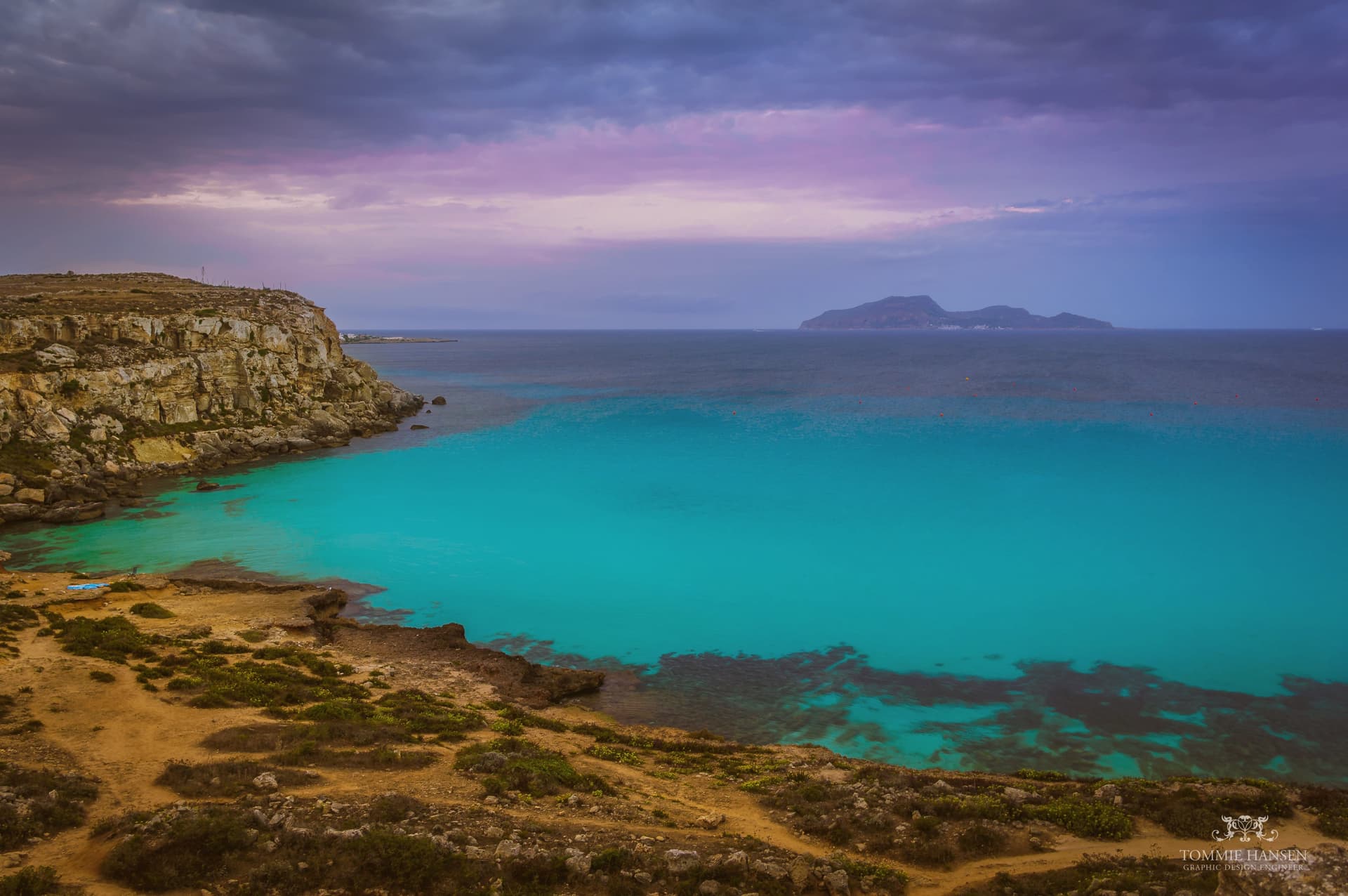 The best hidden coastal towns that eat well in Sicilia
 The 6 best hill towns with a serious restaurant in Sicilia
 The best hill towns with a World Heritage site in Sicilia
 The best olive oil towns in Sicilia
- The best coastal towns within an hour of Catania