
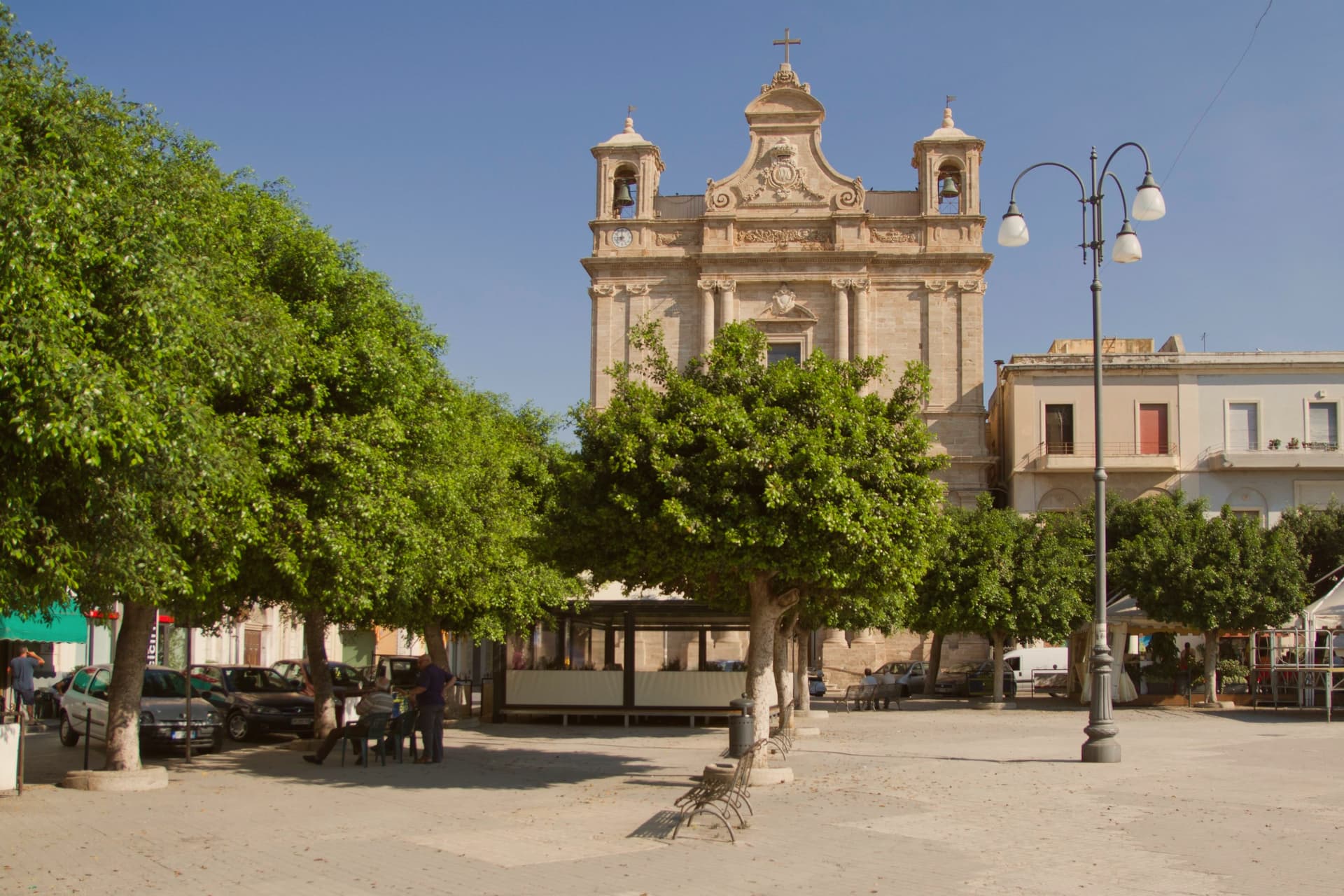
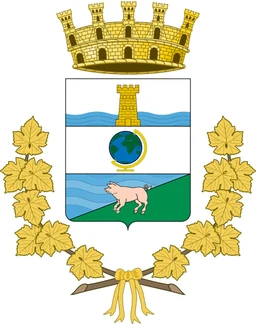
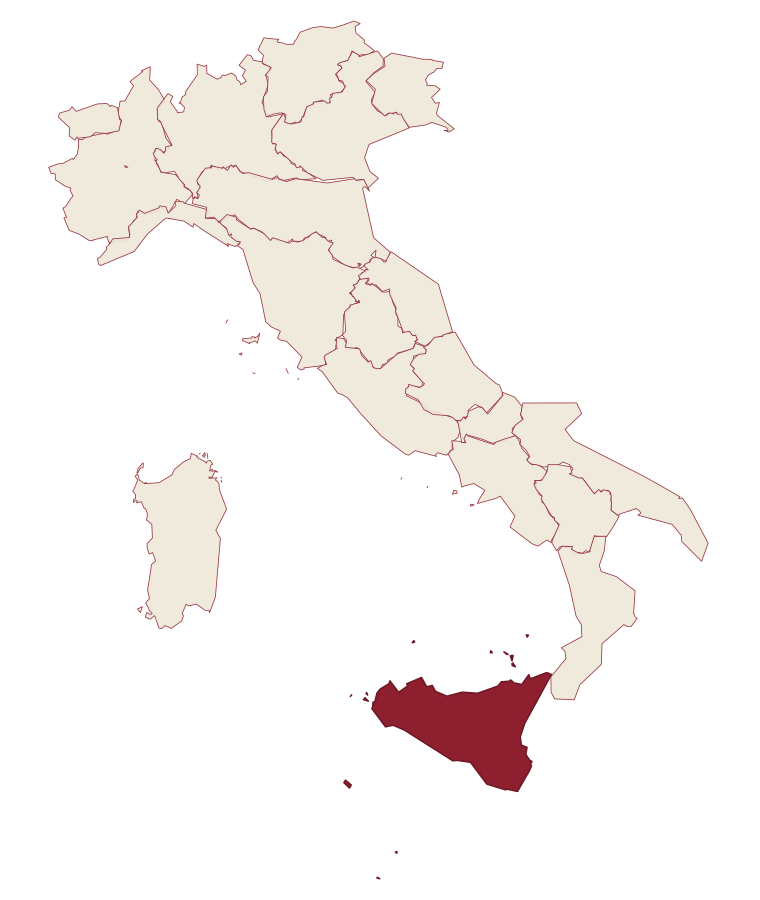
Sicily · Siracusa
Pachino
Sicily's southernmost town, on the Capo Passero promontory, and the name behind the Pomodoro di Pachino PGI cherry tomato.
- Best time
- Apr–Oct
- By car
- 1 h 29 min from Catania
- Population
- 21,714
Known for
POMODORO PGI
The PGI Pomodoro di Pachino cherry tomato, protected since 2003, the small intensely-flavoured variety that made the town's name a supermarket label across Italy.
NERO D'AVOLA
Historic terroir for Sicily's most-planted red grape; Marina di Modica DOC vineyards on the southern coast.
SOUTHERNMOST
Capo Passero is the southernmost point of Sicily mainland, further south than Tunis.
MONTI IBLEI
The commune also lies inside the Monti Iblei DOP production zone.
When to visit
Best · Apr–Oct
- J15°
- F16°
- M16°
- A19°
- M23°
- J28°
- J32°
- A32°
- S28°
- O24°
- N20°
- D17°
- Best
- Hot or crowded
- Quiet
- Mostly closed
Daytime averages, 2020–2024. The sea is warmest in August at 29° and coldest in February at 15°. Weather data by Open-Meteo.com.
Why come
Pachino sits at 36°41' N, a hundred kilometres closer to Africa than to Rome. The town was founded in 1758 by the Starrabba princes of Giardinelli to consolidate the scattered agricultural workers of the southern Val di Noto, and the grid still shows that planned origin: straight streets laid out at once rather than grown over centuries. The town's geography is split between the inland grid and the coast it built its economy on.
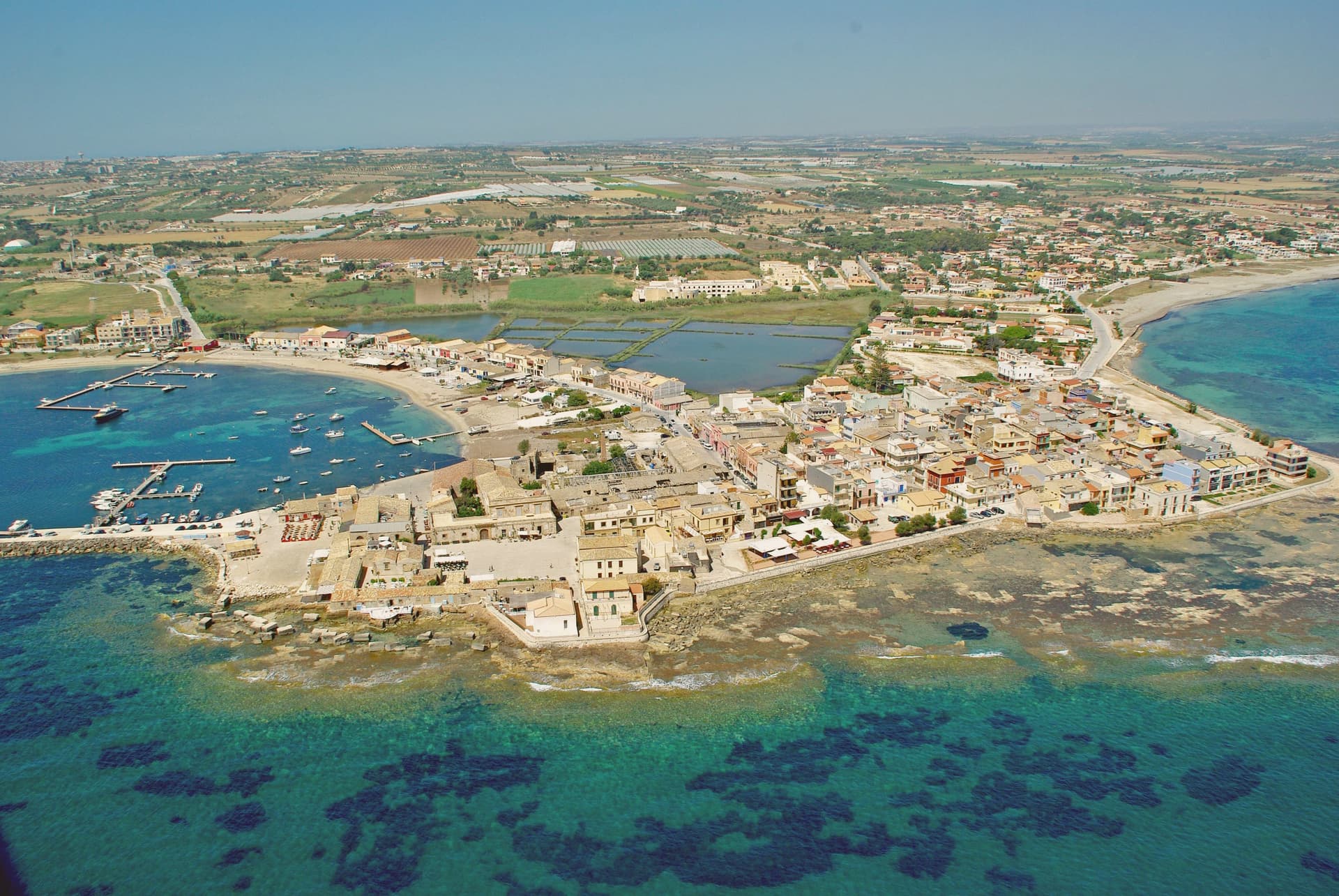
To the south, the land runs down to the cape and its rocky shore; the wine and tomato country lies along that same southern strip, in soil described as salty and calcareous. To the north, past the vineyards and greenhouses, the coastline opens into wetland before reaching the reserve. What ties the town together is a plan of orderly land laid out to work the farmland at its doorstep, and the farmland has since outgrown the plan: a inland grid built to organise labourers now sits behind the two products, tomato and wine, that carry the town's name well beyond it.
The Sunday letter
Pachino is on our list. Its letter is still to come.
We are writing about all 1,000 of these towns, one at a time, in a free letter every Sunday: the photo, the food, the festa. That is our mission. Sign up and you will be there when Pachino comes up. By Peter & Sophia, from Pietrasanta.
Read on
Pachino in our articles
How to get there
From Catania (CTA), about 1h 27m by car.
By car from the centre of Palermo 3h 49m.
Coming by train into Siracusa? Pachino is about 48 minutes away by road.
What to see
Capo Passero
The cape carries a small offshore island, Isola di Capo Passero, with a 17th-century Spanish fort and a Madonna chapel. Reachable by short ferry; on clear days the view runs south toward Malta.
Pomodoro di Pachino PGI
Grown in the salty calcareous soil of the southern coast. The local fattorie run tasting visits.
Nero d'Avola territory
The Marina di Modica DOC overlaps the southern Pachino vineyards. Several wineries run tastings.
Riserva Naturale Vendicari
Coastal wetland reserve 20 km north: flamingos, herons, and one of Sicily's longest unbuilt beaches, stretching past the ruined tonnara of Vendicari.
Centro storico planificato
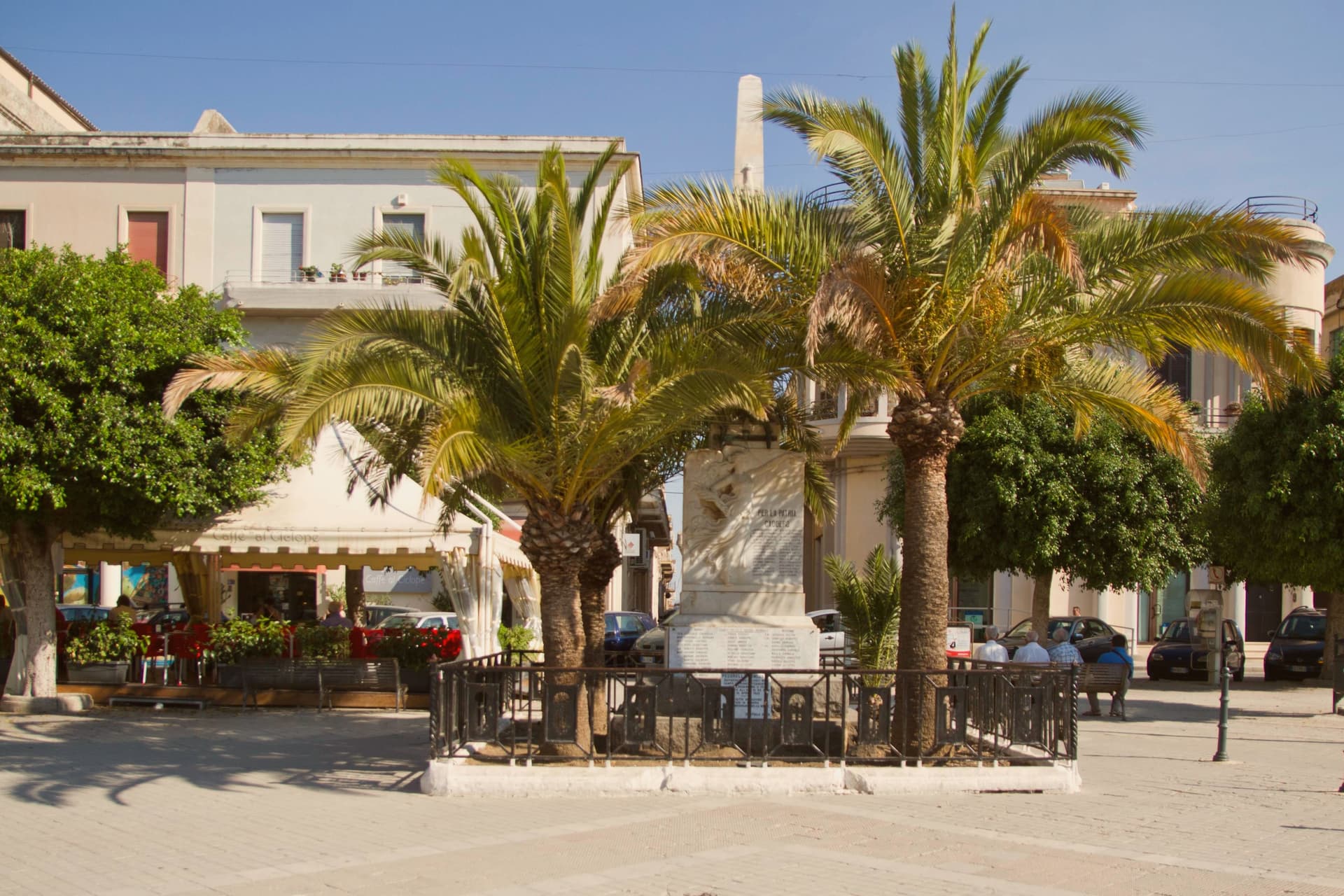
Rectilinear grid laid down in 1758 by the Starrabba princes of Giardinelli, one of southern Italy's earliest planned new towns.
The slow-trip planner
Building a trip? Find where Pachino fits in a slow Italy circuit.
Answer five questions. We will shape a geographically coherent slow trip from the 1,000 Italian towns most travelers skip. Yours to save and share.
We recommend
Where to eat
Not our picks, but places the guides put their name to: a Michelin star, a Gambero Rosso fork, a Slow Food snail, a Michelin Key for the hotels. Worth a table, a counter, or a night when you pass through.
Cortile AraboRistorante
One Gambero Rosso fork (76/100), at Cortile Arabo.
La CialomaTrattoria
La Cialoma carries two Gambero Rosso prawns.
Through the year
What happens here
Feasts and festivals that come back year after year. We give the month rather than the date, because the date moves and the month rarely does. Check with the source before you plan a journey around one.
Artieri Mercato Creativo A Marzamemimarket
usually held in August. eventiesagre.it
Festa della Vedemmia a Pachinofood festival
usually held in September. EnjoySicilia — Sagre, Feste ed Eventi in Sicilia
Living here
- Population 21,714
- Remotei
- Pharmacy in town
- High school within a 30-minute drive
- Nearest airport Catania, 1 h 27 min drive
- Regional capital Palermo, 3 h 49 min drive
Common questions
- What is Pachino known for?
- Sicily's southernmost town, on the Capo Passero promontory, and the name behind the Pomodoro di Pachino PGI cherry tomato.
- Where is Pachino?
- Pachino is a comune in the province of Siracusa, in Sicily, at 65 meters above sea level.
- What is the nearest airport to Pachino?
- Catania (CTA), about 1h 27m by car.
- How long is the drive from Palermo to Pachino?
- About 3h 49m by car.
- When is the best time to visit Pachino?
- Best in Apr–Oct. July is the warmest month, averaging 32 degrees, and November the wettest, with about 8 rain days.
- Is there a sagra or a festival in Pachino?
- Yes. Artieri Mercato Creativo A Marzamemi and Festa della Vedemmia a Pachino. August is when the first of them falls.
- Which other towns are like Pachino?
- Aci Castello, Siracusa and Catania.
- How many people live in Pachino?
- 21,714 at the 2023 count.
Tags & datadesignations · numbers · sources
Recognised as
The numbers
- Elevation: 65 m
- Population: 21,714
- Surface area: 50.98 km²
These figures were compiled from public directories: ISTAT, OpenStreetMap and Wikidata, and from the official listings of the guides named on this page. Town details change; verify with official sources before you travel.
Similar
Towns like Pachino
Aci Castello
Province: Catania
both on the Sicilian coast · both over 10,000 people
Siracusa
Province: Siracusa
both on the Sicilian coast · both over 10,000 people
Catania
Province: Catania
both on the Sicilian coast · both over 10,000 people
Favignana
Province: Trapani
both on the Sicilian coast · both near sea level
Agropoli
Province: Salerno
both over 10,000 people · both near sea level
Policoro
Province: Matera
both over 10,000 people · both near sea level
🌿 Riserva Naturale
More Riserva Naturale towns in Sicily
Aci Castello
Province: Catania
A coastal town just north of Catania on the Riviera dei Ciclopi, where the basalt headland holds the 1076 Norman Castello d'Aci and the seven volcanic Faraglioni dei Ciclopi rise from the sea, the rocks the Cyclops threw at Odysseus in Homer's Odyssey.
Caltagirone
Province: Catania
Sicily's ceramic capital at 611 meters on the Erei ridge, 142 majolica-tiled steps to Santa Maria del Monte and a Val di Noto UNESCO baroque rebuild.
Cammarata
Province: Agrigento
A Sicani town at 700 meters on the northeast slope of the peak that gives the comune its name and shape.
Castelvetrano
Province: Trapani
The Belice valley town that owns Selinunte, the largest archaeological park in Europe, and bakes black bread from grain found in its tombs.
Catania
Province: Catania
Sicily's second city and the cultural anchor of the Ionian coast, a UNESCO late-Baroque centro storico rebuilt in lava-black stone after the 1693 earthquake, sitting at the foot of Etna with a 17th-century elephant fountain (U Liotru) as its civic symbol.