
Sicily · Trapani
Salemi
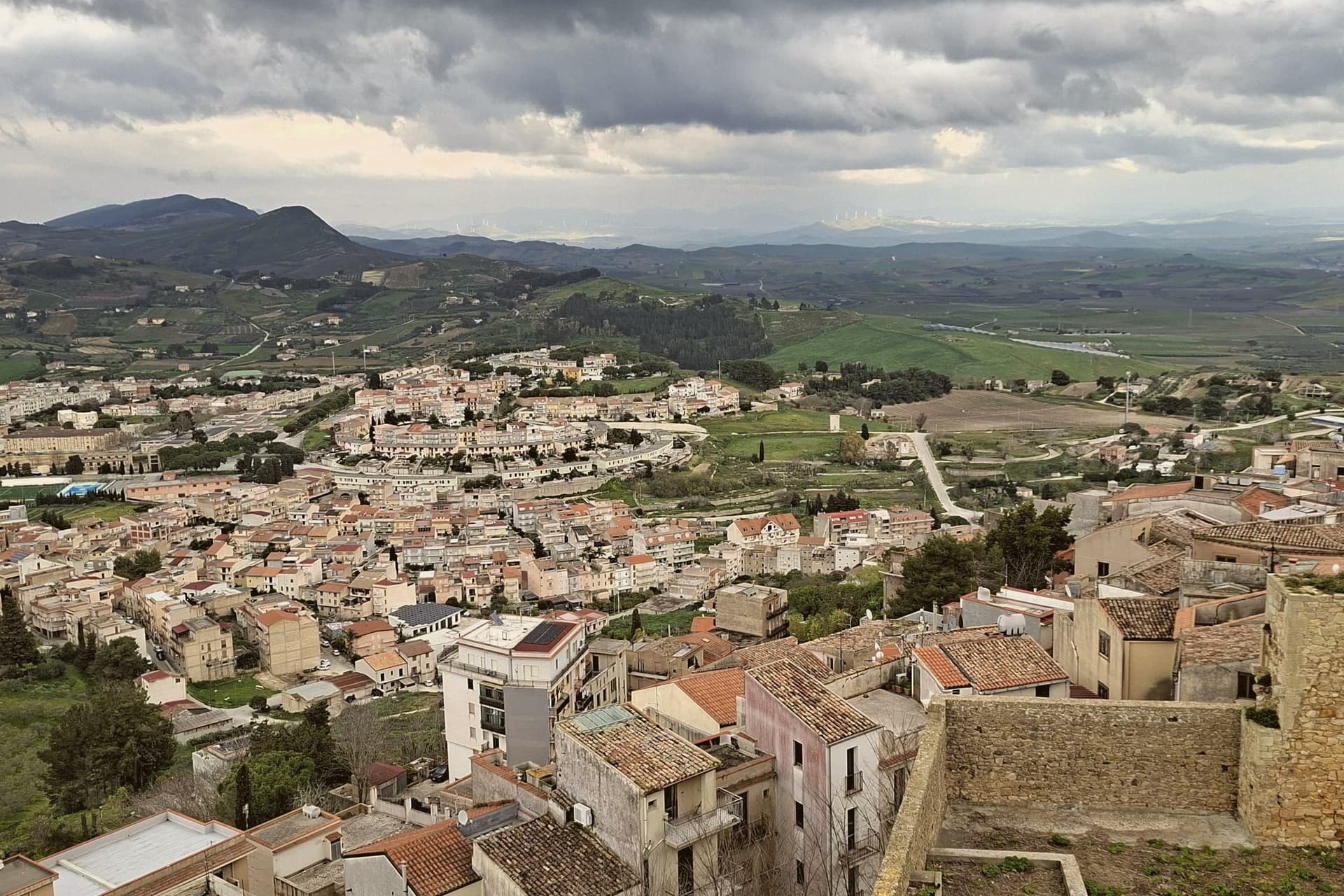
The Trapani hill town where Garibaldi raised the tricolor on 14 May 1860 and proclaimed Salemi the capital of Italy for a day.
- Best time
- Apr–Jun, Sep–Nov
- By car
- 1 h 30 min from Palermo
- Population
- 9,986
Known for
CAPITAL FOR A DAY
On 14 May 1860, Garibaldi raised the tricolor on the castle and proclaimed Salemi the capital of the new Italy, holding the title for less than two weeks.
NORMAN CASTLE
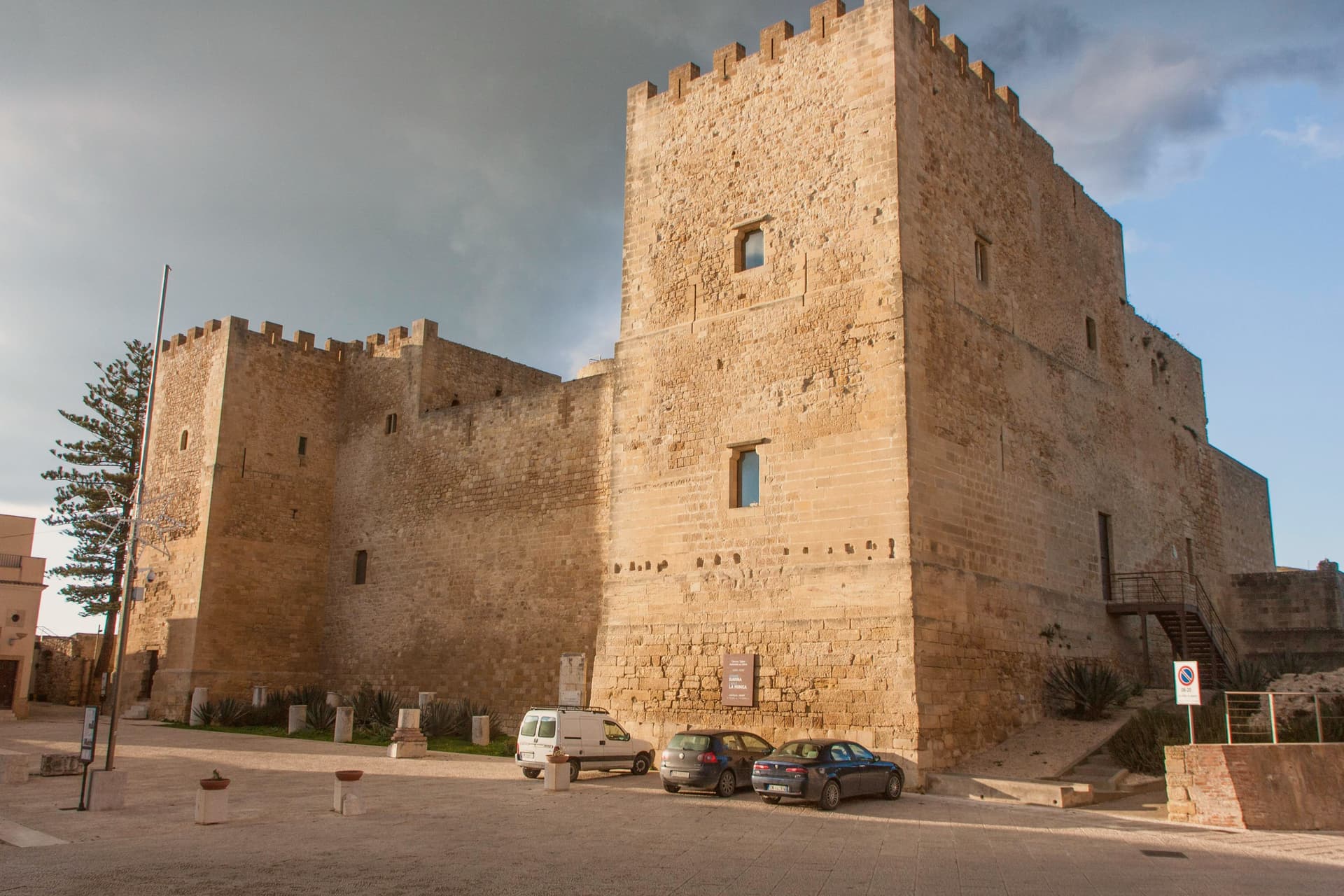
Built by Roger I in 1077 on Greek-Roman foundations, rebuilt by Frederick II, the round tower still dominates the Belice Valley.
1968 BELICE
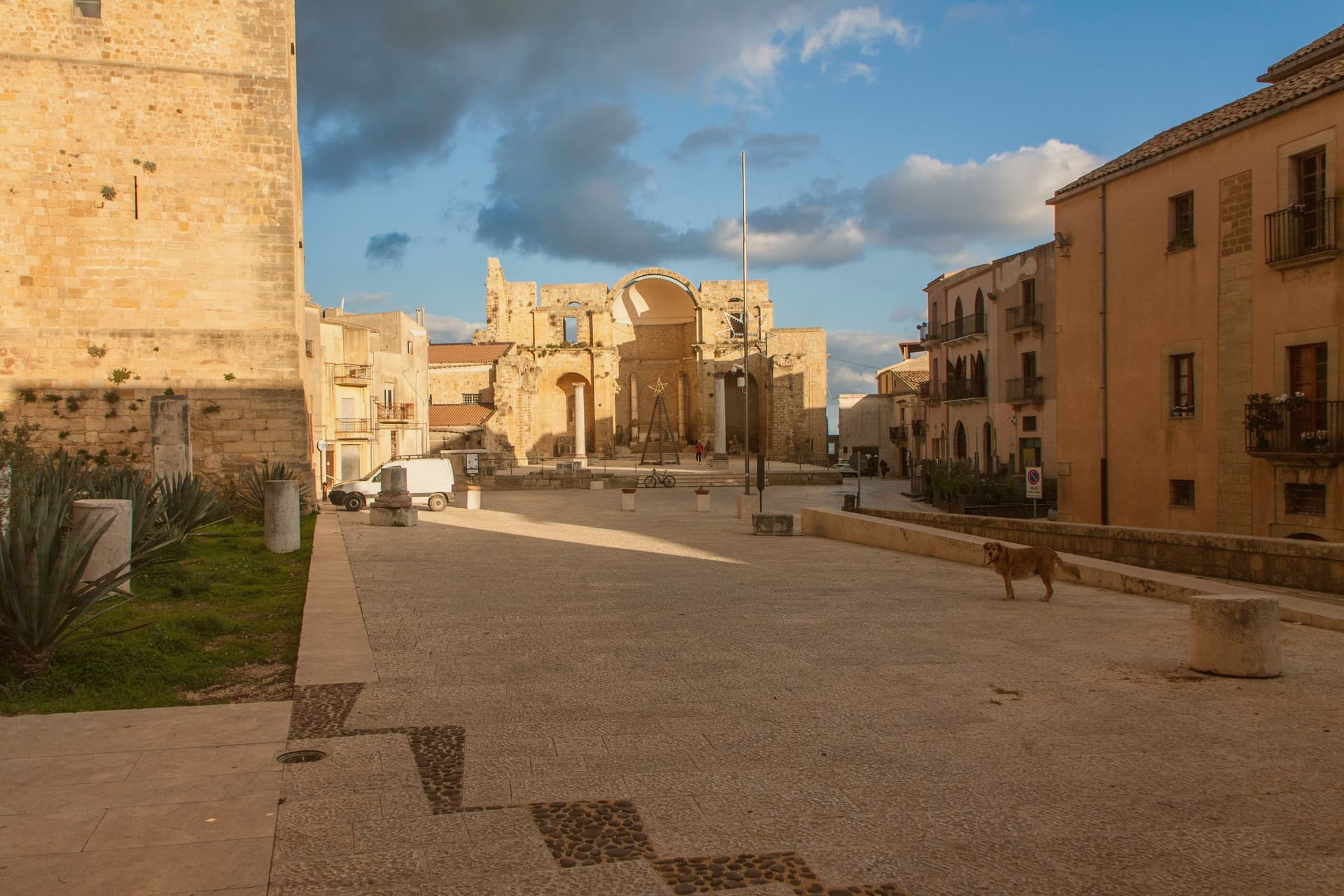
The January 1968 earthquake destroyed the medieval Mother Church and parts of the Rabato quarter, marked today by stabilized ruins and memorial squares.
When to visit
Best · Apr–Jun, Sep–Nov
- J12°
- F13°
- M14°
- A17°
- M22°
- J28°
- J32°
- A31°
- S27°
- O22°
- N17°
- D13°
- Best
- Hot or crowded
- Quiet
- Mostly closed
Daytime averages, 2020–2024. Weather data by Open-Meteo.com.
The festa: Nicola di Bari, 6 December
Why come
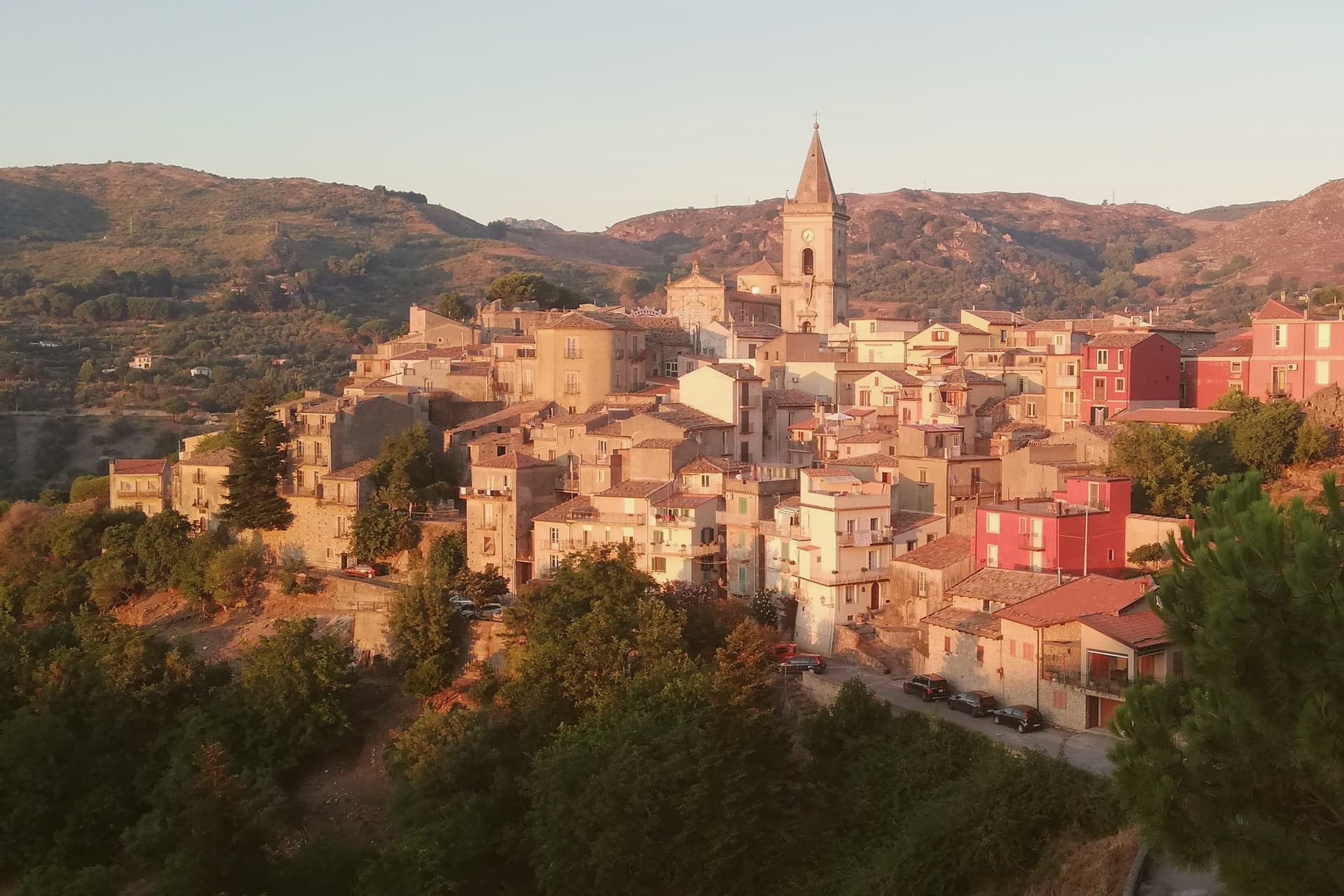
Salemi sits above the valley in the Trapani interior, on the ridge of Monte delle Rose between two rivers. The Elymians built the city of Halyciae here, conquered by Rome in 272 BC and granted freedom from taxes for its voluntary submission. Two days after landing at Marsala with the Thousand, Garibaldi prepared his march on Calatafimi and Palermo from this ridge, which is why the town held its title for only a matter of days rather than longer.
The centro storico groups around the castle and the ruined church beside it, built in Campanella stone. Below and outside this core lies the former Jewish and Arab quarter, its low stone houses and narrow lanes still standing though damaged by the earthquake. Outside the commune altogether, on its own, stands the region's oldest surviving religious building, an early Christian basilica with sixth-century mosaic fragments predating everything else in the town by centuries. What survives, then, is layered rather than continuous: an ancient foundation, a medieval center broken by the 1968 quake, and an older Christian outlier that the disaster never touched.
The Sunday letter
Salemi is on our list. Its letter is still to come.
We are writing about all 1,000 of these towns, one at a time, in a free letter every Sunday: the photo, the food, the festa. That is our mission. Sign up and you will be there when Salemi comes up. By Peter & Sophia, from Pietrasanta.
How to get there
From Catania (CTA), about 4 hours by car.
By car from the centre of Palermo 1h 30m.
Coming by train into Palermo Centrale? Salemi is about 1h 30m away by road.
What to see
Castello Normanno-Svevo
Hilltop castle built by Roger I in 1077 on Greek-Roman foundations, rebuilt by Frederick II, where Garibaldi raised the Italian tricolor on 14 May 1860.
Basilica di San Miceli
Early Christian basilica on the edge of the commune, the oldest surviving religious building in the area with sixth-century mosaic fragments.
Rabato
Former Jewish and Arab quarter of low stone houses and narrow lanes, partly damaged by the 1968 Belice earthquake.
Ruderi della Chiesa Madre
Stabilized ruins of the seventeenth-century Mother Church beside the castle, demolished after the 1968 earthquake and kept as a memorial.
Piazza Alicia
Main piazza of the centro storico in Campanella stone, with a panorama over the Belice Valley and the Egadi islands on a clear day.
The slow-trip planner
Building a trip? Find where Salemi fits in a slow Italy circuit.
Answer five questions. We will shape a geographically coherent slow trip from the 1,000 Italian towns most travelers skip. Yours to save and share.
Through the year
What happens here
Feasts and festivals that come back year after year. We give the month rather than the date, because the date moves and the month rarely does. Check with the source before you plan a journey around one.
Sagra della Busiata a Salemifood festival
usually held in August. Sicilia in Festa
Living here
- Population 9,986
- In-betweeni
- Pharmacy in town
- High school within a 30-minute drive
- Nearest airport Catania, 4 h 2 min drive
- Regional capital Palermo, 1 h 30 min drive
Common questions
- What is Salemi known for?
- Salemi is the Trapani hill town where Garibaldi raised the tricolor on 14 May 1860 and proclaimed Salemi the capital of Italy for a day.
- Where is Salemi?
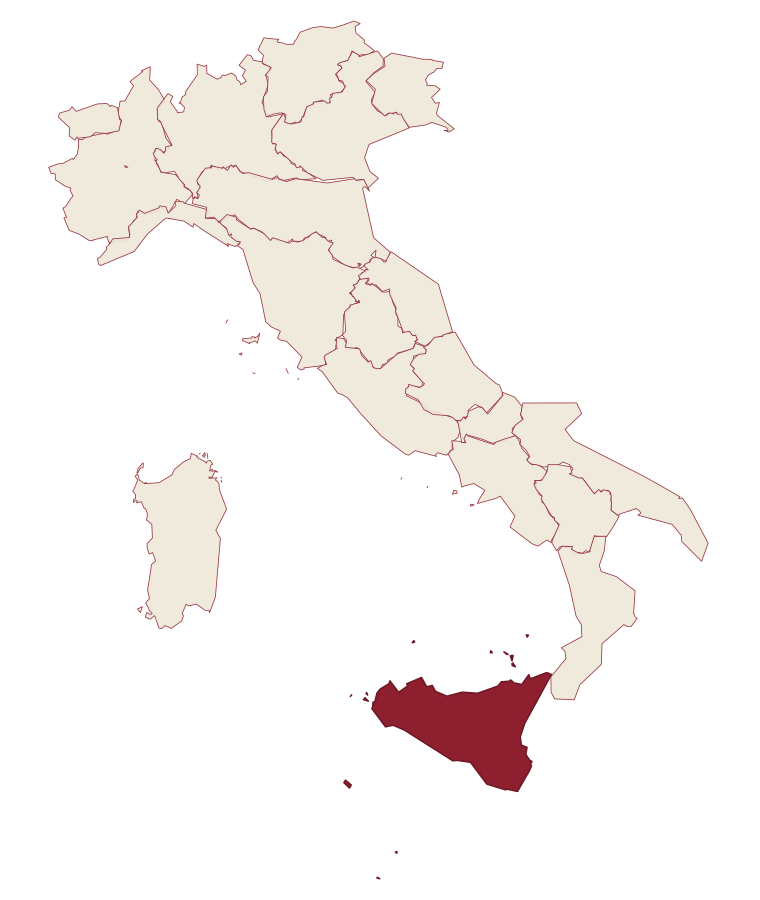
- Salemi is a comune in the province of Trapani, in Sicily, at 446 meters above sea level.
- What is the nearest airport to Salemi?
- Catania (CTA), about 4 hours by car.
- How long is the drive from Palermo to Salemi?
- About 1h 30m by car.
- When is the best time to visit Salemi?
- Best in Apr–Jun, Sep–Nov. July is the warmest month, averaging 32 degrees, and November the wettest, with about 15 rain days.
- Is there a sagra or a festival in Salemi?
- Yes. Sagra della Busiata a Salemi. August is when the first of them falls.
- Which other towns are like Salemi?
- Sortino, Castelbuono and Sambuca di Sicilia.
- How many people live in Salemi?
- 9,986 at the 2023 count.
Tags & datadesignations · numbers · sources
Recognised as
The numbers
- Elevation: 446 m
- Population: 9,986
- Surface area: 182.42 km²
These figures were compiled from public directories: ISTAT, OpenStreetMap and Wikidata, and from the official listings of the guides named on this page. Town details change; verify with official sources before you travel.
Similar
Towns like Salemi
Sortino
Province: Siracusa
both inland in Sicily · both between 3,000 and 10,000 people
Castelbuono
Province: Palermo
both inland in Sicily · both between 3,000 and 10,000 people
Sambuca di Sicilia
Province: Agrigento
both inland in Sicily · both between 3,000 and 10,000 people
Calascibetta
Province: Enna
both inland in Sicily · both between 3,000 and 10,000 people
Atri
Province: Teramo
both between 3,000 and 10,000 people · both hill towns
Tirano
Province: Sondrio
both between 3,000 and 10,000 people · both hill towns
🎨 Borghi più belli d'Italia
More Borghi più belli d'Italia towns in Sicily
Agira
Province: Enna
Birthplace of the Greek historian Diodorus Siculus and burial site of 490 Canadian soldiers of the 1943 campaign.
Buccheri
Province: Siracusa
The highest village in the province of Syracuse, world capital of Tonda Iblea olive oil at the 2015 Sol d'Oro.
Calascibetta
Province: Enna
A promontory town at 691 meters facing Enna across a ravine, founded in the ninth century as a Muslim camp to besiege Byzantine Henna.
Castelmola
Province: Messina
A rock village at 529 meters directly above Taormina, the upper acropolis of ancient Tauromenium with a Norman castle and a 1947 almond-wine bar.
Castiglione di Sicilia
Province: Catania
A hill town on the north flank of Etna at 621 meters, base camp for the Alcantara valley and the volcano's most serious red wines.