
The best towns that eat well in the province of Foggia
Northern Puglia cooks with wheat, stone and salt. The Tavoliere grows the durum that becomes troccoli and orecchiette, rolled by hand and dressed with lamb ragù or turnip tops; up on the Gargano, podolica cattle give a caciocavallo that tastes of scrub pasture, and the ovens turn out paposcia, a soft flat bread split and filled while still hot. The coast brings anchovies, cuttlefish, sea urchins in spring, and eels from the lagoons at Lesina and Varano. Houses here are built of the local limestone, white in the sun and cold in the shade, and the province drinks its own Nero di Troia and Bombino alongside olive oil pressed from trees that are older than most of the churches.
Most people who eat in Puglia eat further south. Alberobello and the Valle d'Itria absorb the coaches, the trullo restaurants and the tasting menus, and Polignano a Mare fills every table above the water from Easter until October. The reasons are real enough: the landscape photographs well and the road from Bari airport is short. But it means a great deal of the region's reputation for eating rests on a narrow strip, and prices and waiting lists follow the crowd.
The wheat, the sheep, the oil and the sea do not stop at the province line. They continue north through Foggia, up the Daunian hills and onto the Gargano promontory, where the cooking is older and less adapted to visitors. Fewer people eat here, which is why the tables in these towns still cost what they should and still serve what the surrounding land actually produces.
Of the 15 communes we have mapped in the province of Foggia, 7 qualify as towns that eat well: a national or international dining guide has named a table in each. The smallest, Bovino, has 2,973 residents.
Two more lists worth reading alongside this one: The 7 best towns inside a national park that eat well in Puglia and The best towns inside a national park in the province of Foggia.
Bovino
Why visit Bovino
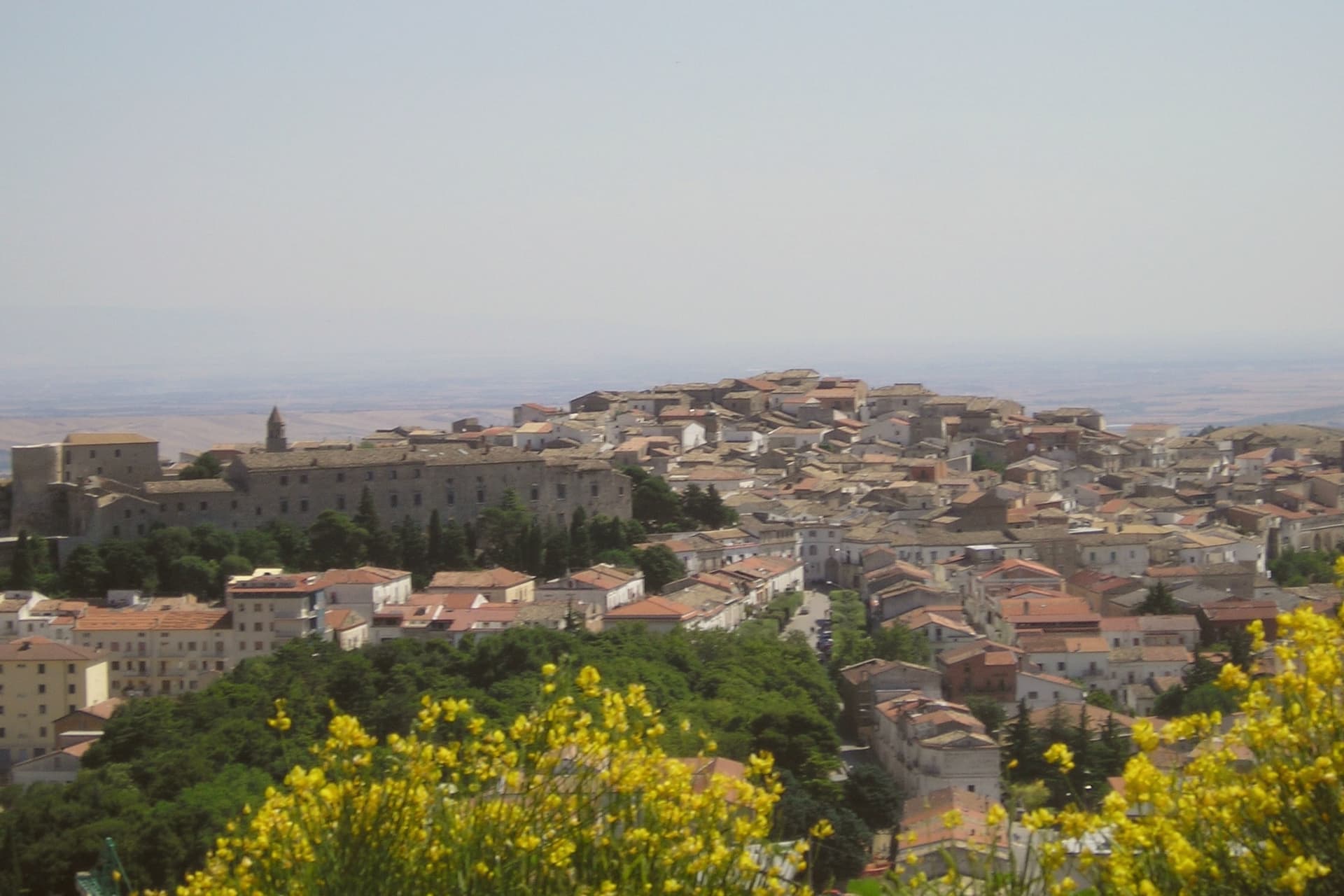
Bovino sits at 646 meters on a terrace of the Monti Dauni above the Cervaro valley, thirty-five kilometers southwest of Foggia. The Roman name Vibinum is recorded by Pliny and Polybius; in 323 BC the town fought the Samnite Wars on the Roman side.
The Norman count Drogo built the castle in the eleventh century, Frederick II expanded it in the thirteenth, and the Guevara dukes turned it into a residential palace in the seventeenth century, inhabited by the family until 1961. The coffered ceilings and the hanging garden hosted Torquato Tasso, Giovan Battista Marino, Maria Theresa of Austria, and Pope Benedict XIII.
The concattedrale of Santa Maria Assunta, originally built in 1231 in Apulian Romanesque style, was destroyed by the 1930 Irpinia earthquake and reconsecrated in 1936. Eight hundred sculpted stone portals across the centro storico are the work of local masters; the town carries both Borghi più belli and Bandiera Arancione signals.
Agriturismo Piana della Mandrie have been named by a guide.
What to see in Bovino
- Castello Ducale (Palazzo dei Guevara). Norman castle built by Count Drogo, expanded by Frederick II, turned into a Guevara ducal palace in the seventeenth century and inhabited until 1961.
- Concattedrale di Santa Maria Assunta. Romanesque cathedral of 1231, destroyed by the 1930 Irpinia earthquake and reconsecrated in 1936, co-cathedral of the Archdiocese of Foggia-Bovino.
- Centro storico. Medieval hilltop village with eight hundred sculpted stone portals carved by local masters, ringed by the surviving walls of the castrum.
How to get to Bovino
There is a railway station in the town, so you can arrive without a car and never need one while you are here. Foggia is roughly 34 minutes away by road.
Our tip
May through October is the workable season at 646 meters. June through August stay around twenty-six to twenty-eight degrees on the ridge while Foggia bakes thirty kilometers below. September is the start of the chestnut and olive work.
Peschici
Why visit Peschici
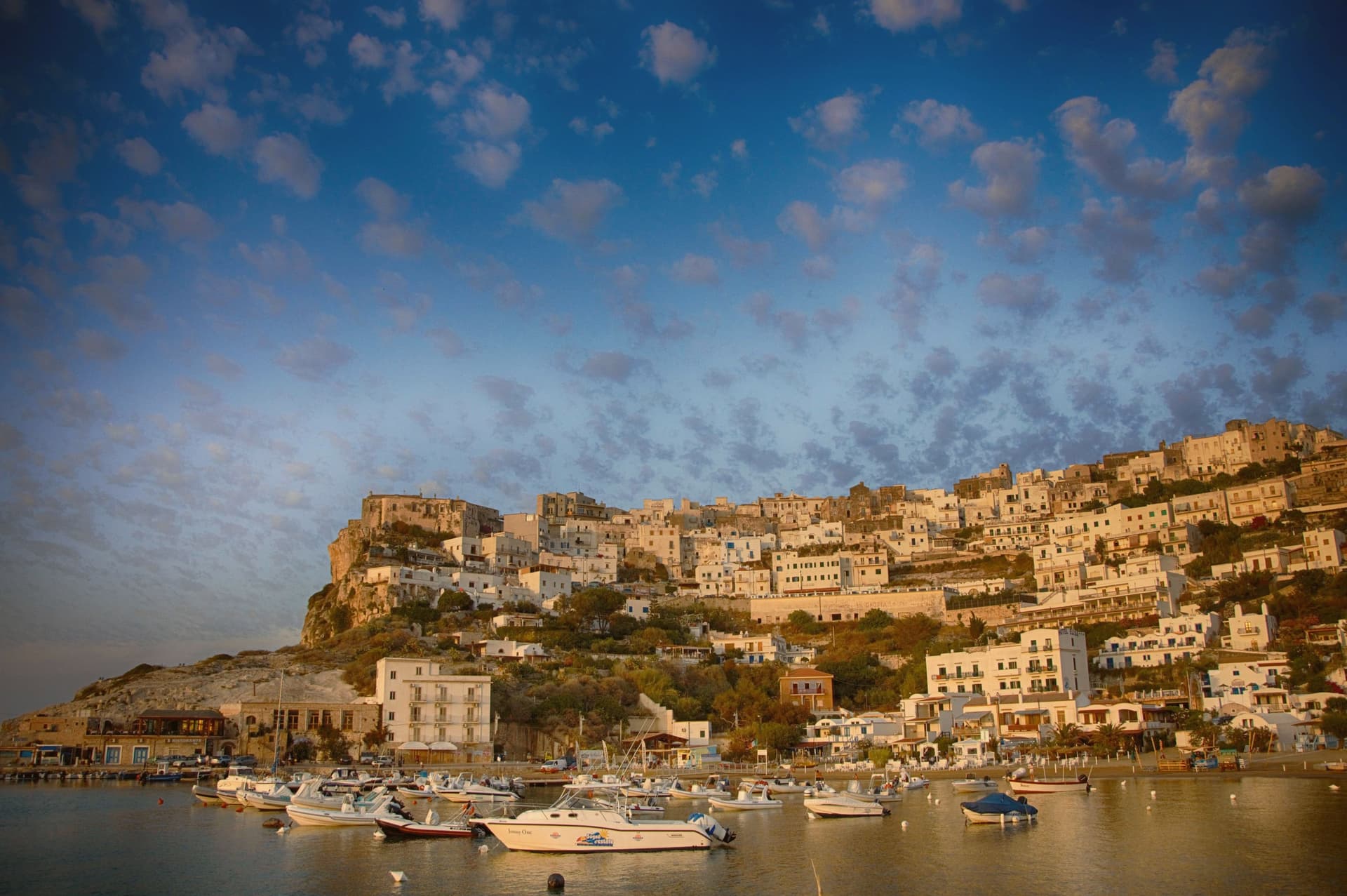
Peschici sits on a karst spur on the northeastern Gargano, 91 meters above the Adriatic, nine kilometers east of San Menaio and nineteen kilometers west of Vieste. The town was founded by the Daunians and later taken by the Romans, and the present village grew up around its cliff-top castle overlooking the small port below.
The municipal territory splits between the built village on its spur and the inland half, which falls within Gargano National Park: karst pine forest and limestone gorges running back from the coast. The coastline itself alternates sandy bays between limestone headlands with cliff sections reachable only from the sea, and the fishing platforms that work this stretch of Adriatic sit on the headlands at both ends of town, timber and rope structures fixed into the rock rather than built up from a harbor.
What holds the place together is the contrast between the white crown of the village, unusual on this coast for its flat and shallow-domed roofs, and the working coast beneath it: a fixed settlement on high ground looking down over a shoreline still worked by hand.
Porta di Basso, Eden, Al Trabucco da Mimì have been named by a guide.
What to see in Peschici
- Castello Normanno-Svevo. Expanded by the Swabians after its Norman origin, the castle stands over the port and is visible from the sea and from inland well before the village itself comes into view.
- Centro storico. White cliff-top village of small whitewashed houses with flat or shallow-domed roofs, unusual on the Gargano, terraced down the karst spur toward the sea.
- Baia di San Nicola. Sandy bay west of the village beneath limestone cliffs, with the small medieval monastery of San Nicola on the headland above the beach.
How to get to Peschici
Foggia is roughly 115 minutes away by road.
Our tip
May through September is the working season, Adriatic water warm enough to swim by late May and the cliff village operational until late. July and August fill the small headland with families from Foggia, Naples and Rome; the town's population multiplies several times and the karst spur runs out of parking by mid-morning. June and September are the sane choices, mild evenings and the same beaches without the crush.
Mattinata
Why visit Mattinata
Mattinata sits at seventy-five meters on the eastern Gargano. The Iapyges, immigrants from Greece and the Balkans, settled the surrounding hills from the fifth century BC; the Roman port of Matinum, on the modern seafront, gave the town its name.
The current settlement is younger than most Garganic centers: it was administered as part of Monte Sant'Angelo until 1955, when it became an independent comune. The town proper sits below the mountain that watches over it, the two bound by the same limestone that runs from the abbey ruins down to the coast.
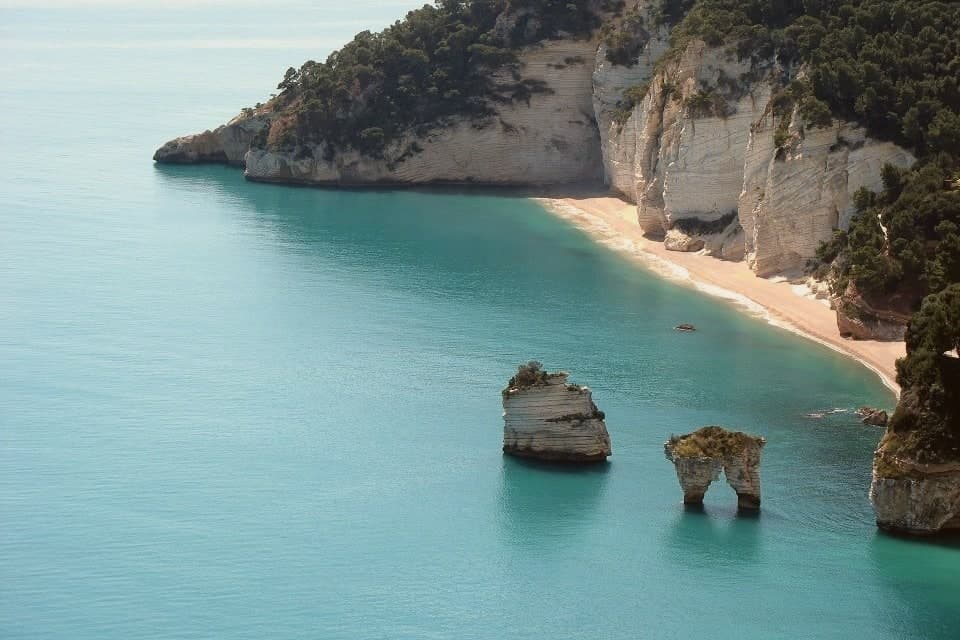
South of town the shoreline drops toward the sea stacks and, ten kilometers further on, the pebble crescent and cliffs of Baia di Vignanotica. The national park covers all of it, mountain, coast and town alike.
A settlement younger than its neighbors, built on ground far older: the Roman port beneath the seafront, the settled hills behind it, the abbey above it, all folded into a comune that has only carried its own name since the middle of the last century.
La Locanda del Maniscalco have been named by a guide.
What to see in Mattinata
- Baia delle Zagare. Bay south of town with two iconic limestone sea stacks, the arch-shaped Arco di Diomede and the scissor-shaped Le Forbici.
- Baia di Vignanotica. Pebble crescent under tall limestone cliffs, reached on foot from the Sentiero dell'Amore from Baia dei Mergoli.
- Monte Sacro and Abbazia della Santissima Trinità. Ruined abbey standing where Benedictine monks raised it to abbey status in 1138, after annexation to the abbey of Siponto brought its abandonment.
How to get to Mattinata
Foggia is roughly 72 minutes away by road.
Our tip
May through September is the season Mattinata runs at full strength. The Adriatic water at Vignanotica and Baia delle Zagare is swimmable from late May, the Monte Sacro trail is at its best when the orchids flower in May and June, and the coastal cliffs catch a long evening light through the summer. July and August push past thirty degrees and fill the beaches; the boat shuttle to the faraglioni is the easier access.
Vico del Gargano
Why visit Vico del Gargano
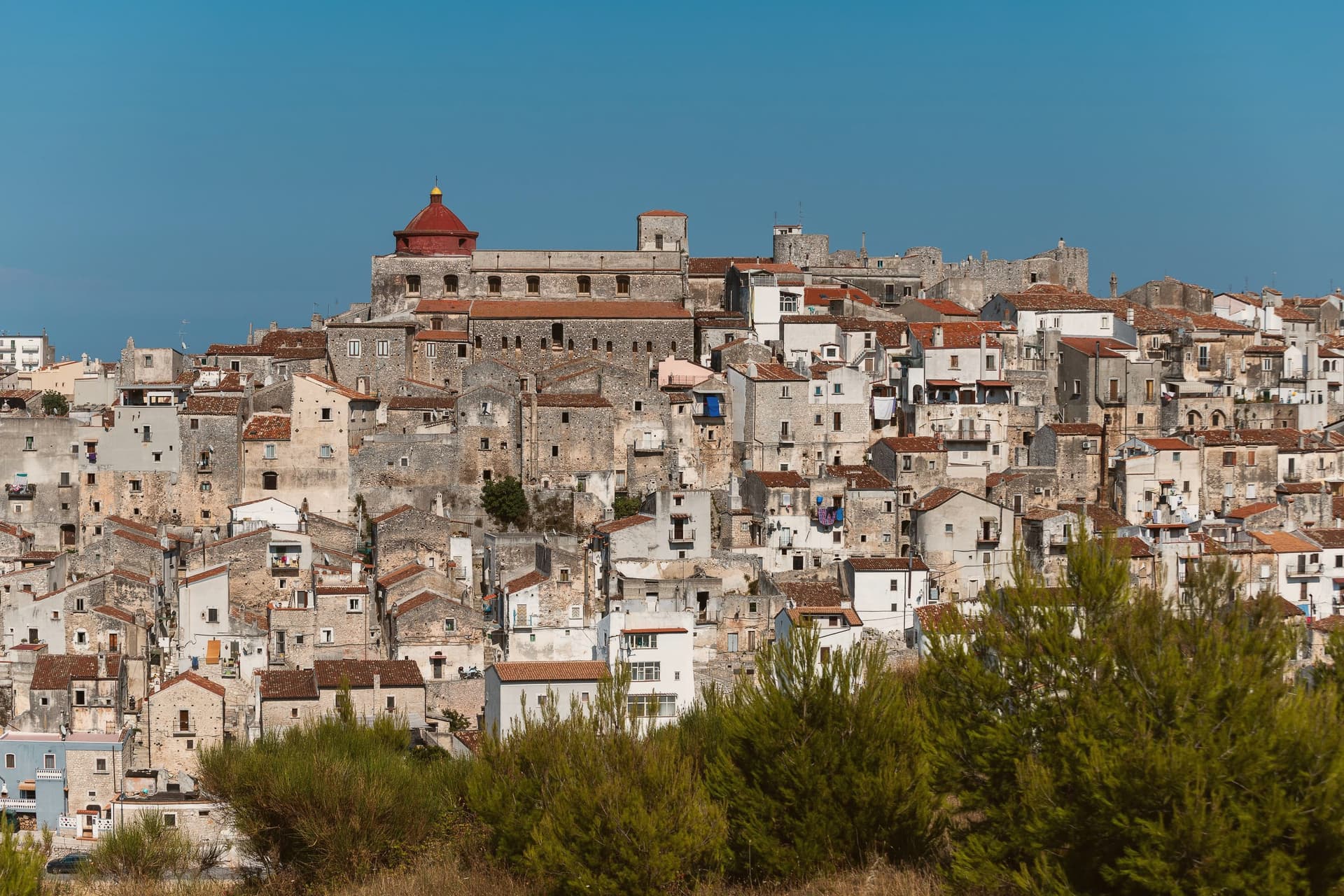
The town sits at 445 meters on a rocky promontory, with the territory falling from the 782-meter heights of the forest above to the beaches of the coastal frazioni below. The first urban core, called Vicus, was founded around 970 by Sueripolo of the Slavonians on land granted by Byzantine authorities, the seed from which the hill town and its later defenses grew.
The upper town, walled and towered, holds the historic center and its churches close around the castle, while the citrus terraces step down from that core toward the sea, and the coastal frazioni mark where the descent ends at the Adriatic. Inland forest, hill town, and coast form one continuous drop in elevation rather than three separate places.
What holds this together is the shape of the ground itself: a settlement founded on a promontory has simply grown downward over the centuries, from Byzantine grant to Norman wall to citrus terrace to shoreline, each layer sitting on the one before it.
Eco del Mare have been named by a guide.
What to see in Vico del Gargano
- Castello Normanno-Svevo. Eleventh-century Norman castle enlarged in 1240 by Frederick II and again in 1292, the anchor of the medieval defensive system of twenty towers and walls.
- Centro storico e Vicolo del Bacio. Medieval old town of about thirteen churches and chapels, with the Kiss Alley, a passage so narrow that walking it touching is the local prescription for lasting love. The survival of this core and the density of the olive mills below it earned the town a place among the Borghi più belli d'Italia.
- Foresta Umbra. Beech and oak ancient forest of Gargano National Park, reaching 830 meters within the municipal territory, with trails to centuries-old turkey oaks.
How to get to Vico del Gargano
There is a railway station in the town, so you can arrive without a car and never need one while you are here. Foggia is roughly 99 minutes away by road.
Our tip
April through June and September through October are the months Vico is at its best: the citrus groves in flower or in fruit, the Foresta Umbra in green or autumn rust, and the centro storico mild at 445 meters while the coast below stays swimmable. July and August are hot on the coast and busy at San Menaio; the centro keeps a few degrees cooler than the beach. The Saint Valentine feast on February 14 turns the village into a pilgrimage and a wedding stage.
Monte Sant'Angelo
Why visit Monte Sant'Angelo
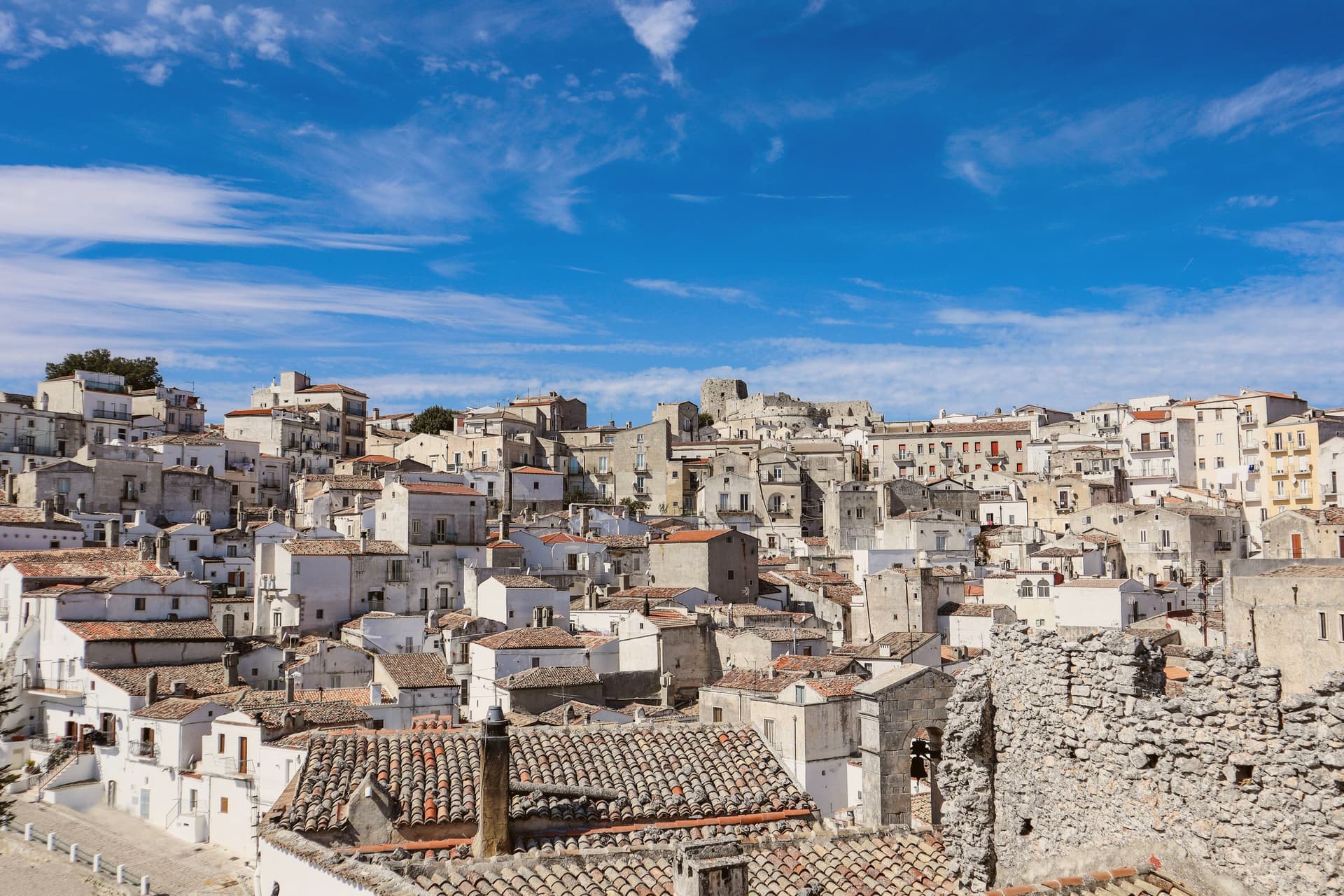
The town sits at 843 meters on the southern slope of the Gargano promontory, the highest inhabited settlement in the massif, with the Adriatic visible to the east on clear days. It is built around a cave where, according to tradition, the Archangel Michael appeared to the bishop of Siponto in 490.
A first sanctuary was raised over the cave in 493, and by the seventh century the Lombards of the Duchy of Benevento had made it the principal Michaeline shrine in the West and a fixed stop on the pilgrimage route to Jerusalem now called the Via Sacra Langobardorum. UNESCO inscribed the site in 2011 as one of seven sites in the serial property 'Longobards in Italy: Places of Power (568-774 A.D.)'.
The town itself steps down from the castle at its highest point through the sanctuary at its center to Rione Junno below, the old pilgrim quarter of stepped alleys and single-pitch roofs that housed the people who served the shrine. Beyond the commune, beech and oak forest of the Gargano National Park closes in on all sides.
What stands today is a settlement shaped entirely around one act of devotion, its layers of castle, cave, and quarter marking who came to guard, worship, and house the pilgrimage rather than any separate reason for a town to exist here at all.
Li Jalantuùmene, Casa li Jalantuùmene, Il Rifugio dell'Elda Hotel have been named by a guide.
What to see in Monte Sant'Angelo
- Santuario di San Michele Arcangelo. The cave sits at the heart of town, reached by descending stone stairs into rock that has been a shrine since the fifth century. Archangel Michael is said to have appeared here, and the sanctuary that grew around the site remains the town's core.
- Castello di Monte Sant'Angelo. Norman-Swabian-Aragonese castle above the sanctuary, expanded over five centuries on the highest point of the town, with views across the Gargano.
- Tomba di Rotari. Twelfth-century baptistery near the sanctuary, long misidentified as the tomb of the Lombard king Rotari, a fragment of the older religious complex.
How to get to Monte Sant'Angelo
Foggia is roughly 73 minutes away by road.
Our tip
May through October is the working season at 843 meters: cool mornings, dry afternoons, the sanctuary cave naturally cold year-round. June through August stay around twenty-six to twenty-nine degrees in town while Foggia bakes at thirty-eight on the Tavoliere below. The Festa di San Michele on 29 September is the patronal day and the busiest moment in the sanctuary calendar; pilgrims walk the final stretch of the Via Sacra from Siponto.
Vieste
Why visit Vieste
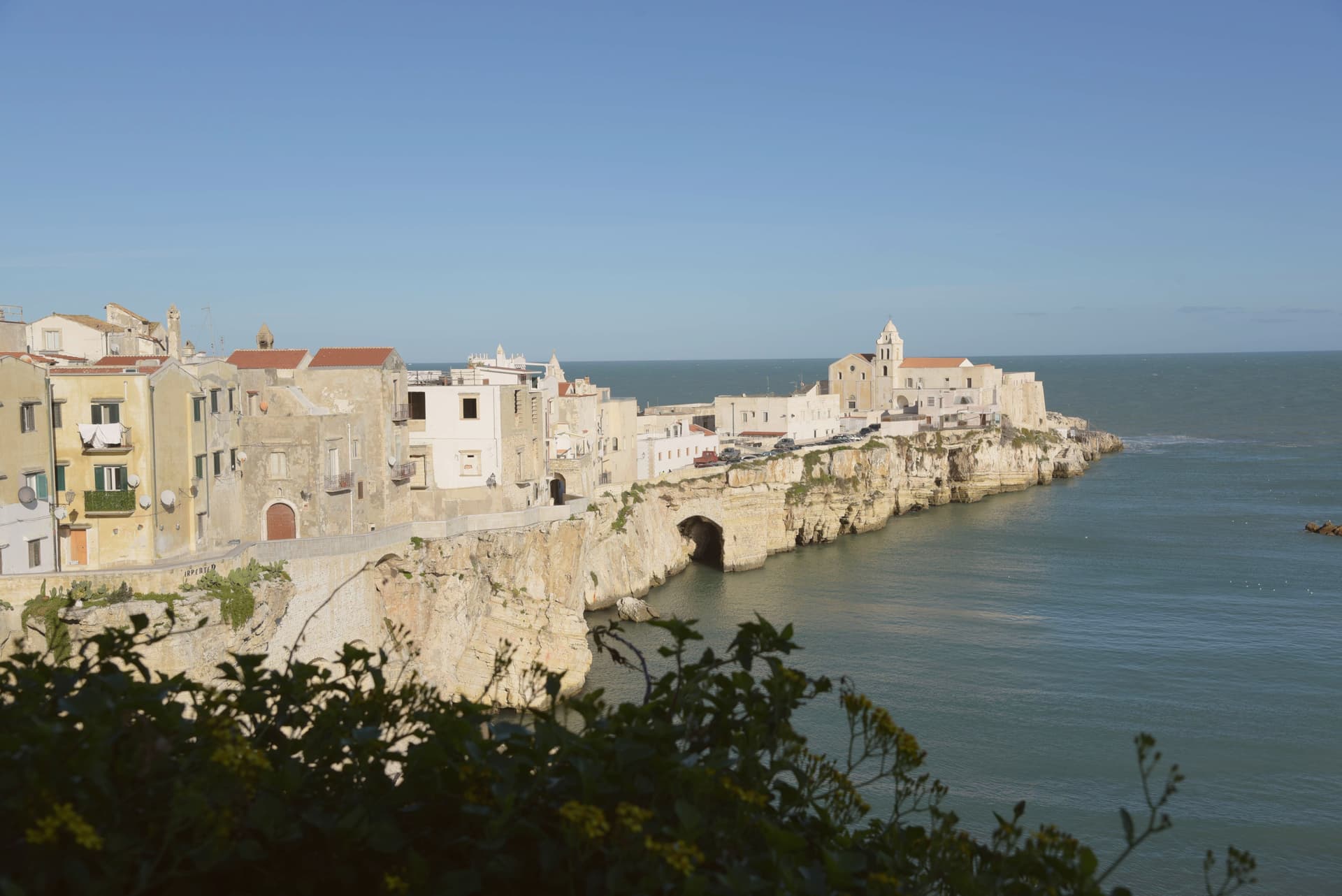
Vieste sits at the eastern tip of the Gargano promontory inside Gargano National Park, a medieval town on a white limestone cliff dropping straight into the Adriatic. The Cathedral was begun in the second half of the eleventh century in Apulian Romanesque, with three naves on two rows of six columns and capitals carved in oriental floral and animal motifs.
The Norman castle of the eleventh century was rebuilt by Frederick II in 1242 as part of a coastal fortification line; the trapezoidal block of 1242 still anchors the headland. On July 18-21, 1554, the Ottoman corsair Dragut sacked the town and executed roughly 5,000 inhabitants on the slab of stone now known as the Chianca Amara, the bitter stone, set into the lane that carries the memory.
Pizzomunno, the 26.6-meter limestone sea stack on Spiaggia del Castello, is the symbol of the Gargano and the centerpiece of a local legend about a fisherman whose lover was taken by sirens. The Bandiera Blu marks the water at Pizzomunno, Scialmarino and Lungomare Mattei.
Al Dragone, Donlù, La Ripa and 1 more have been named by a guide.
What to see in Vieste
- Cattedrale di Santa Maria Assunta. Eleventh-century Apulian Romanesque cathedral, three naves on two rows of six columns, with Corinthian and cubic capitals carved in zoomorphic and floral motifs.
- Castello Svevo. Norman fortress rebuilt by Frederick II in 1242 on the headland above the sea, part of the Hohenstaufen Adriatic defensive line, still anchoring the old town.
- Pizzomunno. Limestone sea stack 26.6 meters high on Spiaggia del Castello, the symbol of Vieste and the Gargano, attached to the legend of the fisherman and his stolen lover.
How to get to Vieste
Foggia is roughly 109 minutes away by road.
Our tip
May, June, September and the first half of October are the windows when Vieste works without the heat or the August crowd: warm Adriatic, breezy headland, the centro storico walkable in afternoon as well as evening. July and August are very hot and crowded, with the Bandiera Blu beaches at capacity and rates at peak; the centro storico empties between two and five and refills after sunset for the passeggiata. October still holds for swimming on the south-facing beaches.
San Severo
Why visit San Severo
San Severo sits at 86 meters on the Tavoliere delle Puglie, north of Foggia and inland from the Gargano. The town was founded in the eleventh century around a small church built by Benedictine monks from Montecassino, and grew through the medieval period into the capital of the upper Daunia.
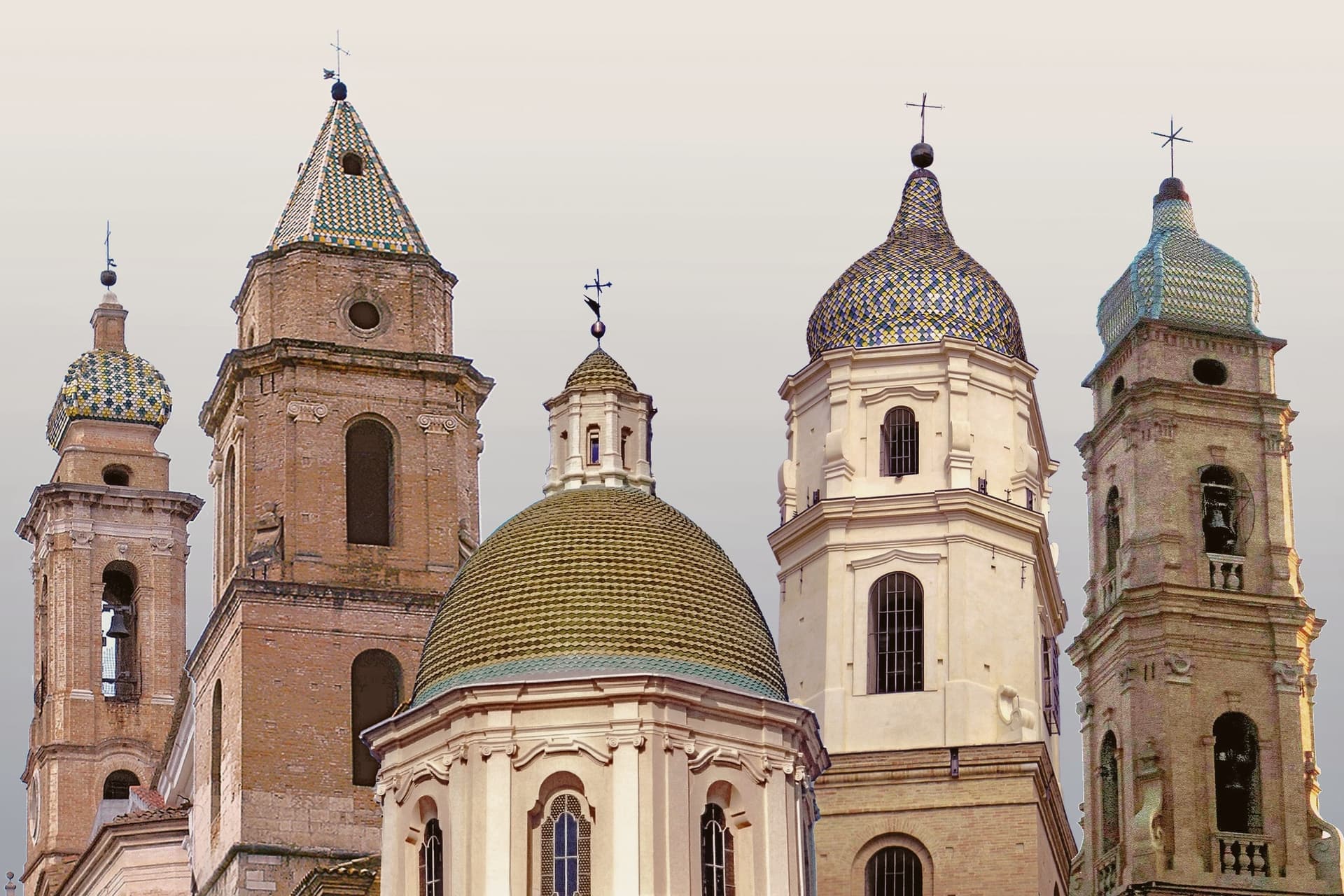
The 1627 earthquake almost levelled it, killing eight hundred inhabitants and pulling reconstruction into the late seventeenth century after a plague epidemic in 1656 added three thousand more deaths. The Cattedrale di Santa Maria Assunta, originally late-medieval, was rebuilt in Baroque after the quake.
San Severo is best known nationally for its wine: the San Severo DOC, approved on 19 April 1968 by presidential decree, was the first protected designation in Puglia, with 2,000 hectares of red, white, rosé and the occasional spumante across San Severo, Torremaggiore, San Paolo di Civitate, Apricena, Lucera and Lesina. The annual Carnevale, with its rolling fanoia firework blasts, is one of the loudest in southern Italy.
La Fossa del Grano have been named by a guide.
What to see in San Severo
- Cattedrale di Santa Maria Assunta. Late-medieval cathedral rebuilt in Baroque style after the 1627 earthquake, the principal religious monument of the Daunia.
- Chiesa di San Severino Abate. Baroque basilica dedicated to the patron saint, built over the eleventh-century Benedictine foundation that gave the town its name.
- Palazzi Baroque. Eighteenth-century noble palazzi built in the post-earthquake reconstruction, lining the streets of the centro storico.
How to get to San Severo
There is a railway station in the town, so you can arrive without a car and never need one while you are here. Foggia is roughly 31 minutes away by road.
Our tip
April through June and September through October are the workable months on the Tavoliere. The vineyards of the San Severo DOC are in leaf by April and in harvest from late August through September. July and August push past thirty-eight degrees on the open plain and the centro storico empties between two and five; the Tavoliere is one of the hottest places in Puglia. Festa di San Rocco falls in August.
More from Anywhere Italy
- The 7 best towns inside a national park that eat well in Puglia
 The best towns inside a national park in the province of Foggia
- The best hidden coastal towns that eat well in Puglia
- The best hidden olive oil towns that eat well in Puglia
- The best olive oil towns that eat well within 90 minutes of Foggia
 The best towns with a serious restaurant that eat well within 90 minutes of Foggia