
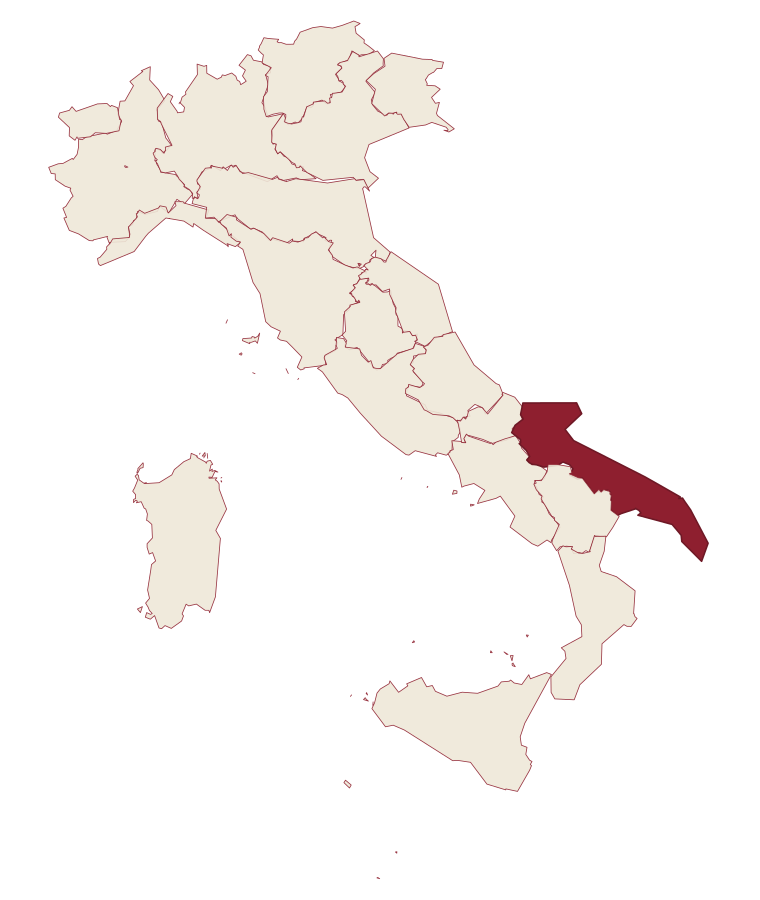
Apulia · Foggia
Vico del Gargano
A Gargano hill town where a Norman castle, a kiss alley, and DOP citrus terraces step down toward the Adriatic.
- Best time
- Apr–Oct
- By car
- 2 h 30 min from Pescara
- By train
- Station in the comune
- Population
- 7,290
Known for
PAESE DELL'AMORE
The Village of Love, patroned by Saint Valentine since the early seventeenth century, with the Vicolo del Bacio as its public emblem.
AGRUMI DEL GARGANO
DOP Gargano citrus, lemons and oranges grown on terraces stepping down toward the coast, a Slow Food Presidium grove and the signature crop since the nineteenth century.
FORESTA UMBRA
Ancient beech and oak forest of Gargano National Park, with stretches inscribed by UNESCO as part of the Ancient and Primeval Beech Forests.
When to visit
Best · Apr–Oct
- J10°
- F12°
- M13°
- A16°
- M21°
- J26°
- J29°
- A29°
- S24°
- O20°
- N15°
- D12°
- Best
- Hot or crowded
- Quiet
- Mostly closed
Daytime averages, 2020–2024. Weather data by Open-Meteo.com.
The festa: San Valentino, 14 February
Why come
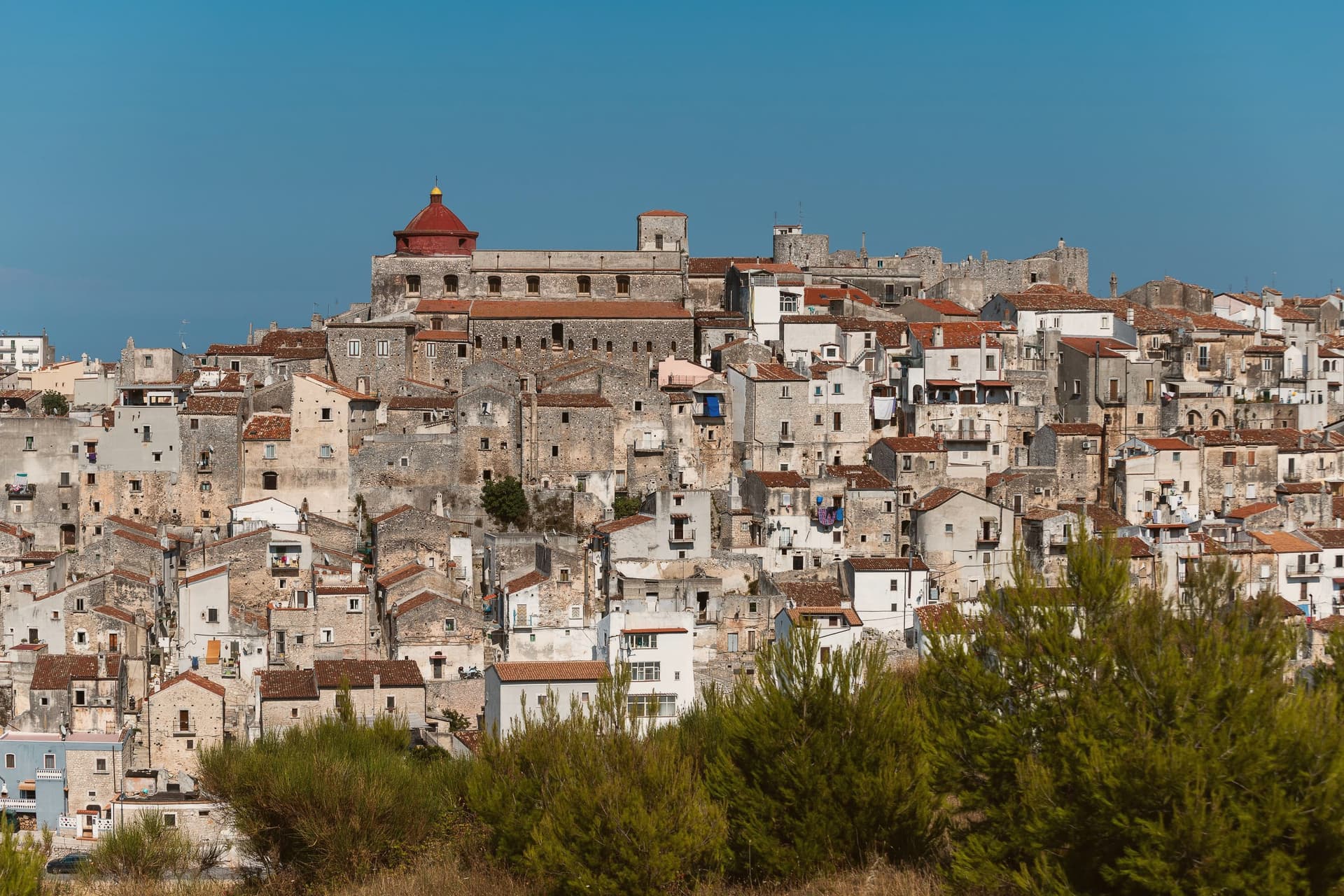
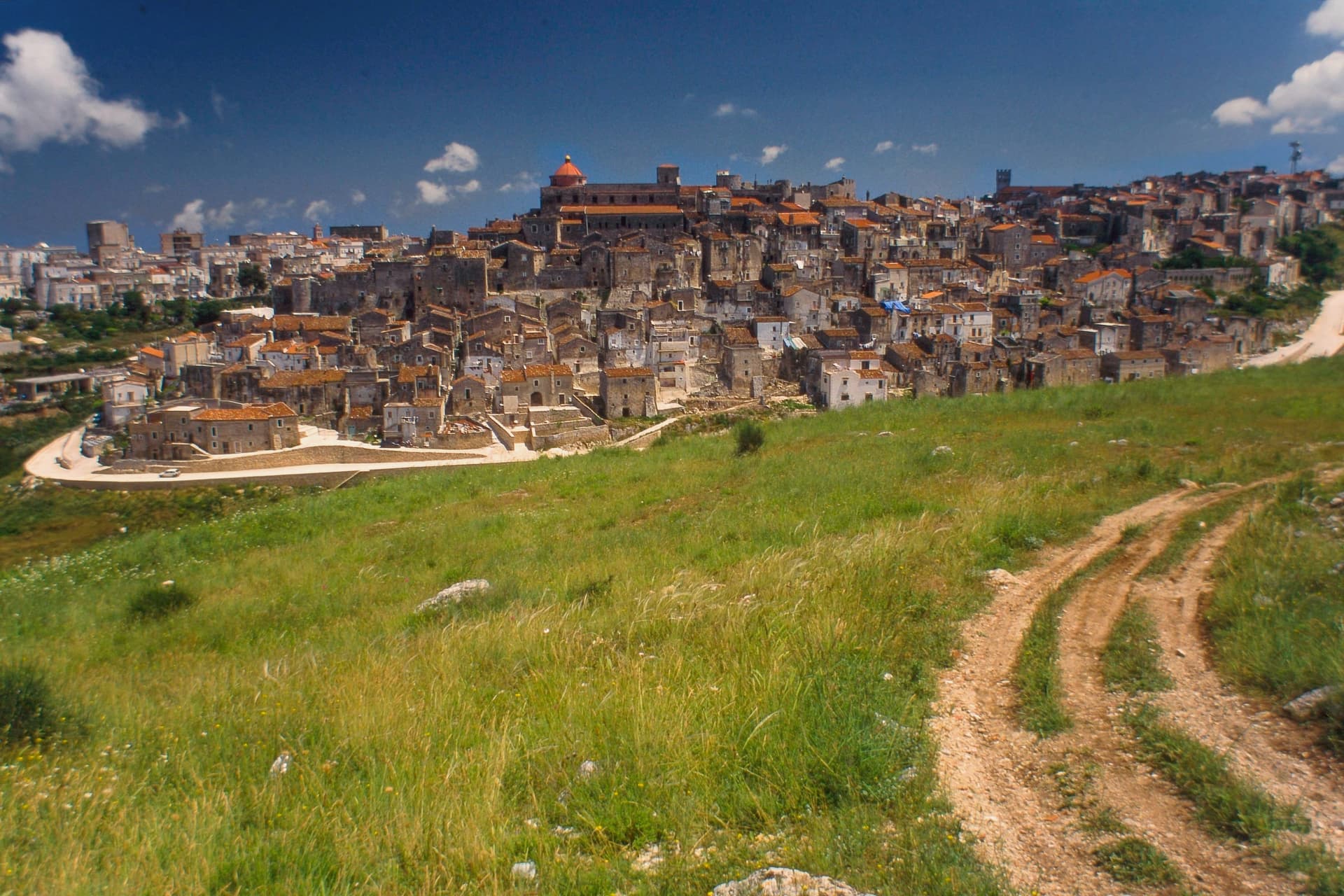
The town sits on a rocky promontory, with the territory falling from the 782-meter heights of the forest above to the beaches of the coastal frazioni below. The first urban core, called Vicus, was founded around 970 by Sueripolo of the Slavonians on land granted by Byzantine authorities, the seed from which the hill town and its later defenses grew. The upper town, walled and towered, holds the historic center and its churches close around the castle, while the citrus terraces step down from that core toward the sea, and the coastal frazioni mark where the descent ends at the Adriatic.
Inland forest, hill town, and coast form one continuous drop in elevation rather than three separate places. What holds this together is the shape of the ground itself: a settlement founded on a promontory has simply grown downward over the centuries, from Byzantine grant to Norman wall to citrus terrace to shoreline, each layer sitting on the one before it.
The Sunday letter
Vico del Gargano is on our list. Its letter is still to come.
We are writing about all 1,000 of these towns, one at a time, in a free letter every Sunday: the photo, the food, the festa. That is our mission. Sign up and you will be there when Vico del Gargano comes up. By Peter & Sophia, from Pietrasanta.
Read on
Vico del Gargano in our articles
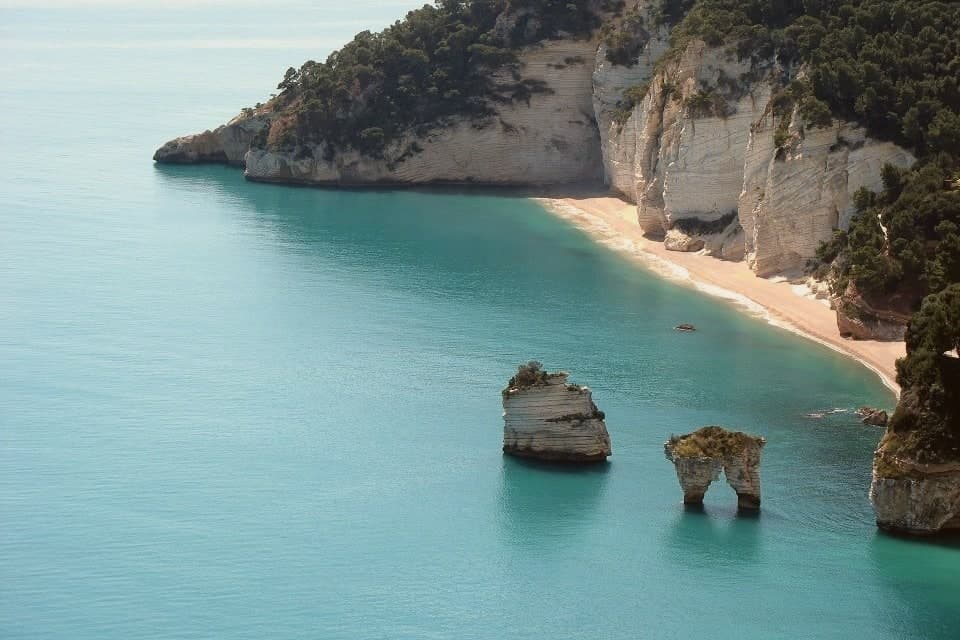
 The best hidden hill towns that eat well in Puglia6 towns, Vico del Gargano among them.
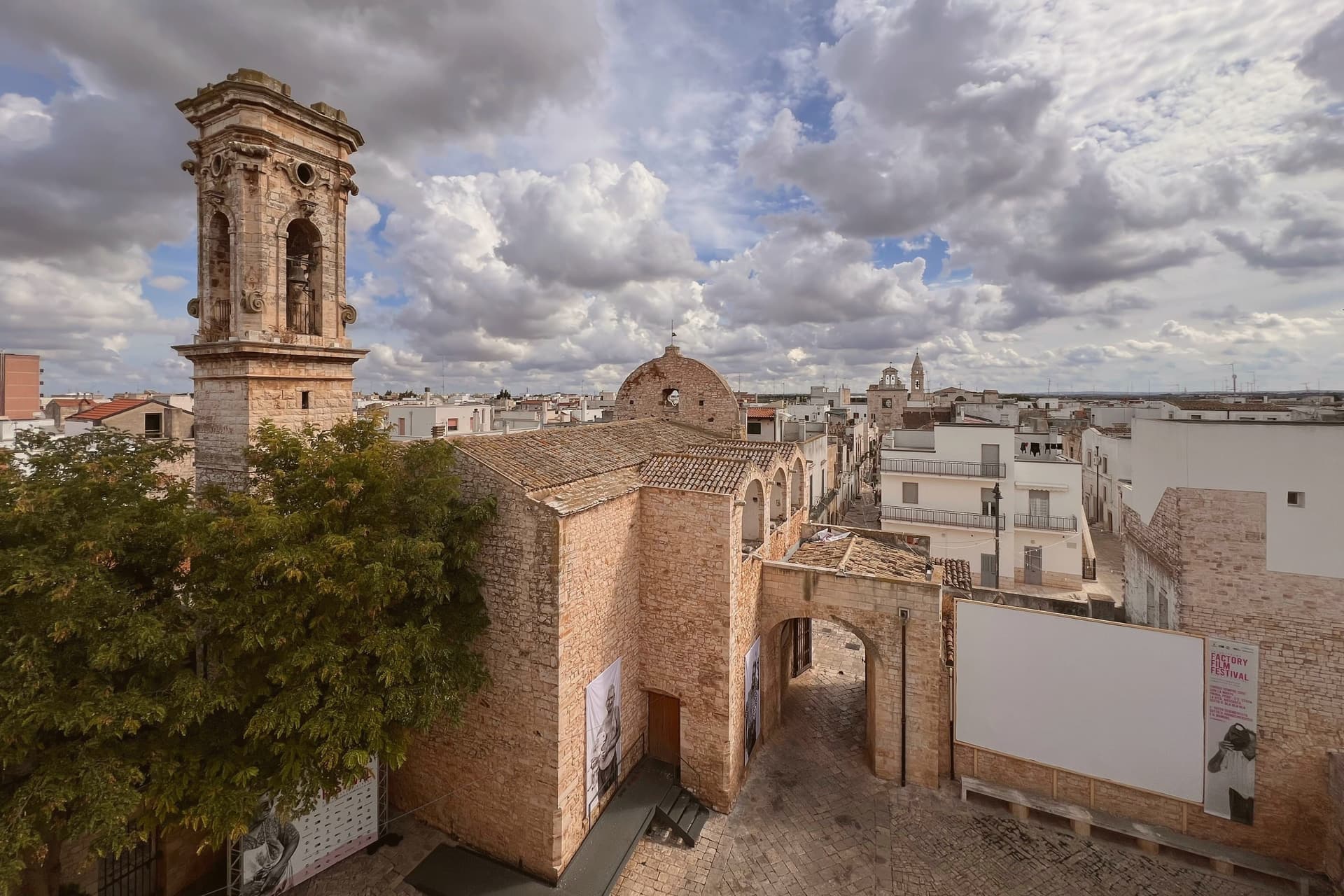
 The best hidden olive oil towns that eat well in Puglia6 towns, Vico del Gargano among them.
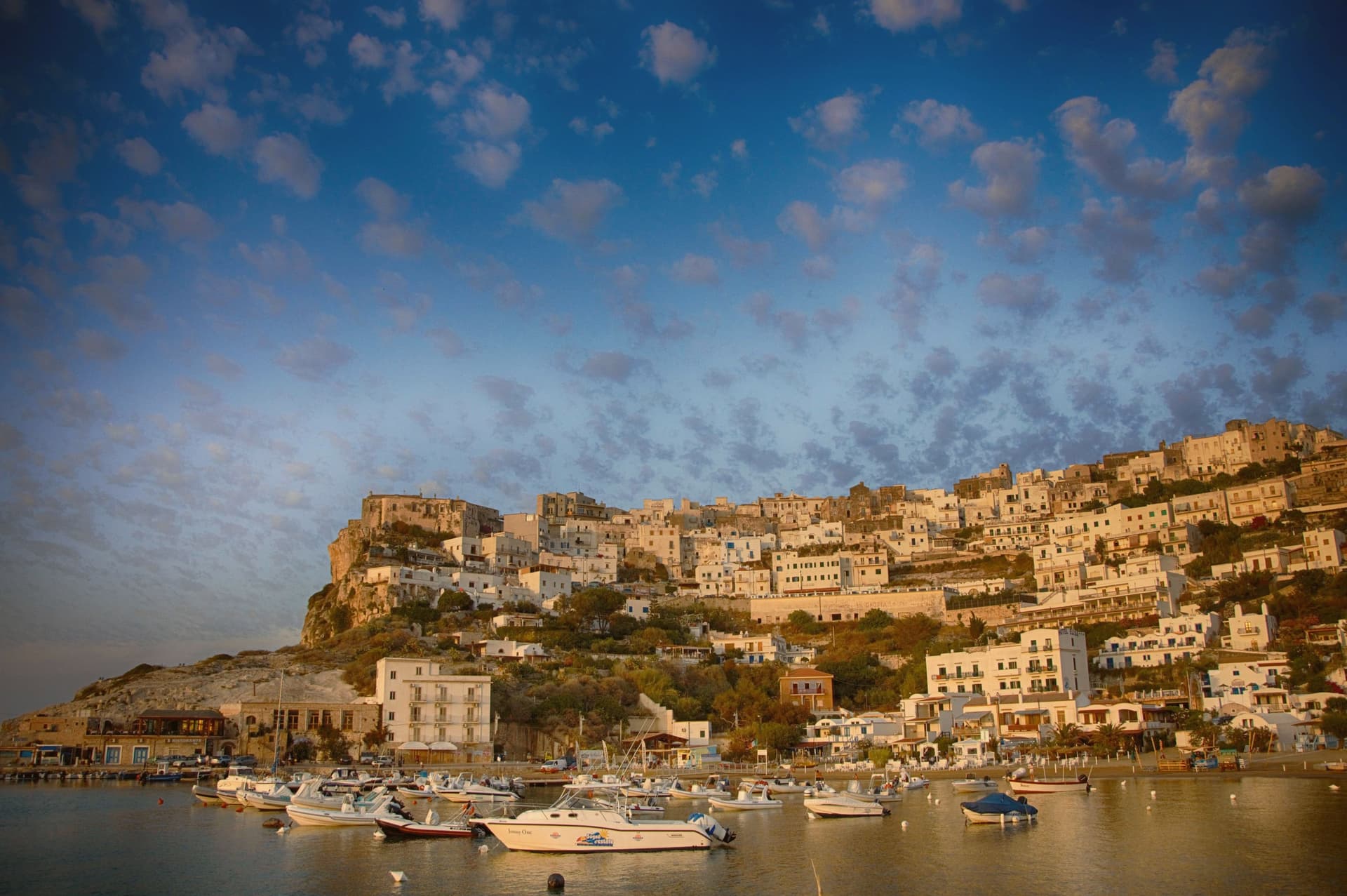
 The best hidden olive oil towns you can reach by train in Puglia6 towns, Vico del Gargano among them.
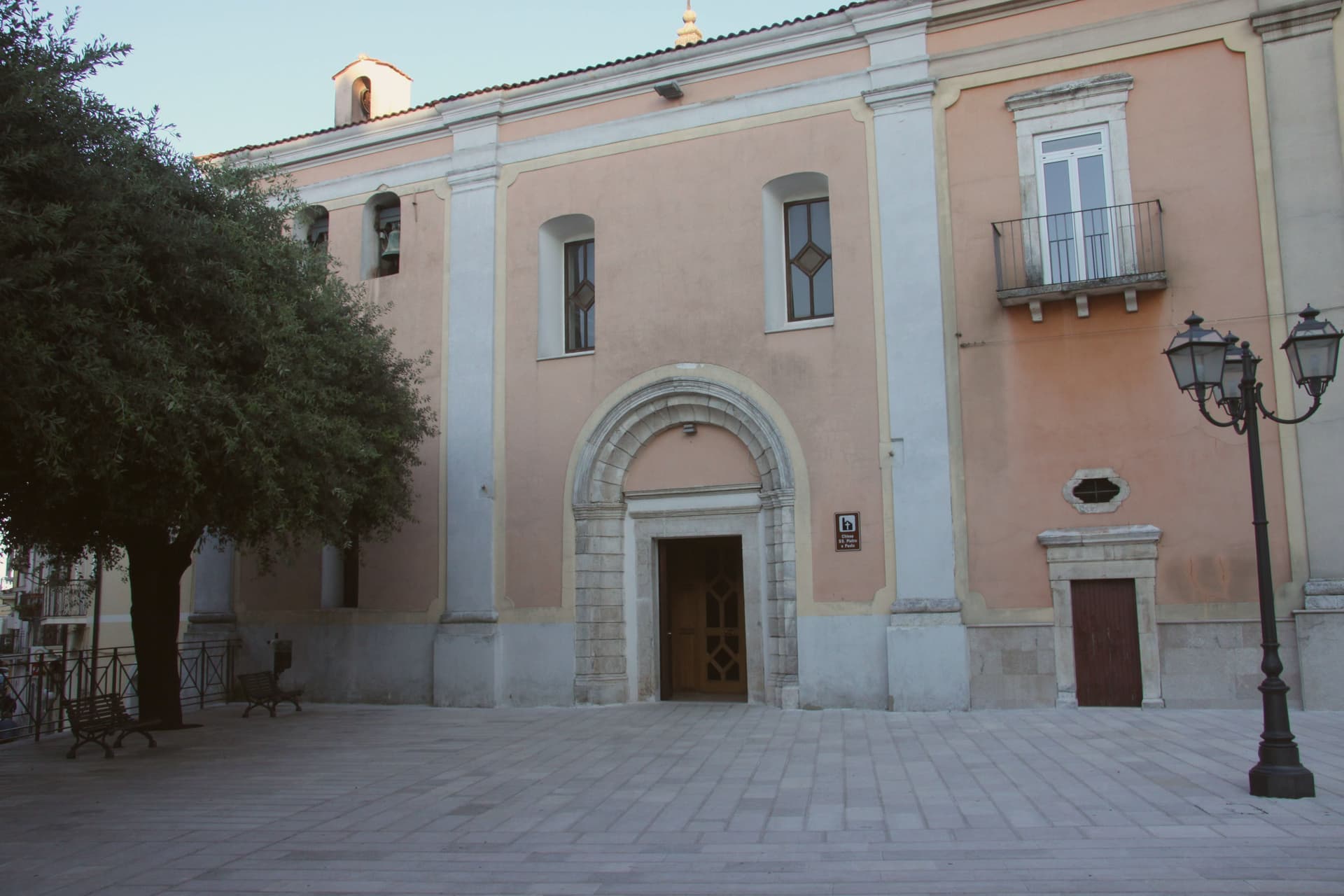
 The 7 best towns inside a national park that eat well in Puglia7 towns, Vico del Gargano among them.
How to get there
From Bari / Brindisi (BRI), about 2h 46m by car.
Naples / Salerno (NAP) is about 4 hours away.
By car from the centre of Pescara 2h 30m, Bari 2h 50m or Ancona 4 hours.
There is a railway station in the comune, so you can arrive without a car.
What to see
Castello Normanno-Svevo
Eleventh-century Norman castle enlarged in 1240 by Frederick II and again in 1292, the anchor of the medieval defensive system of twenty towers and walls.
Centro storico e Vicolo del Bacio
Medieval old town of about thirteen churches and chapels, with the Kiss Alley, a passage so narrow that walking it touching is the local prescription for lasting love. The survival of this core and the density of the olive mills below it earned the town a place among the Borghi più belli d'Italia.
Foresta Umbra
Beech and oak ancient forest of Gargano National Park, reaching 830 meters within the municipal territory, with trails to centuries-old turkey oaks.
Trappeti ipogei
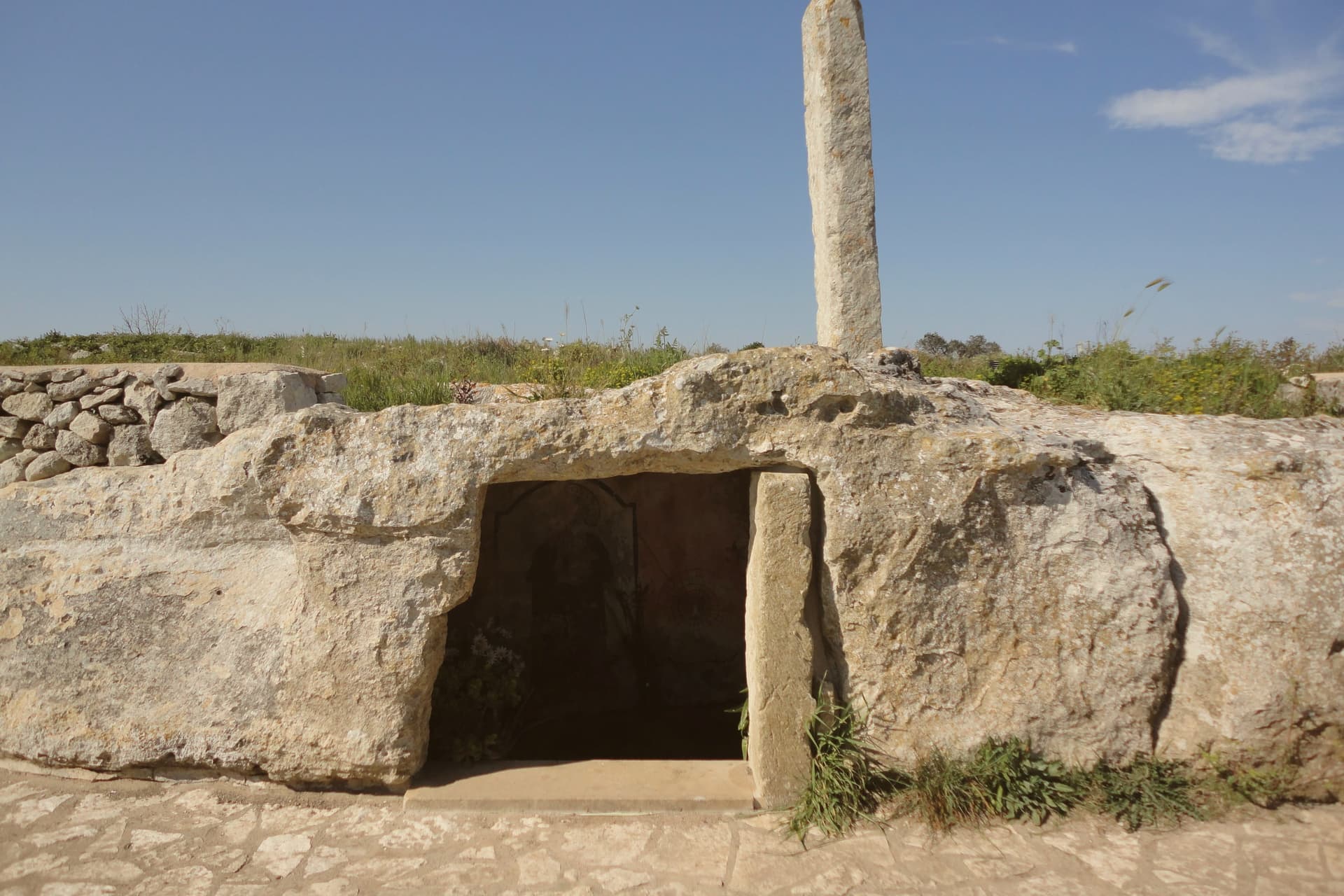
Underground olive mills carved into the rock under the historic center, used to press the Gargano harvest from the late Middle Ages through the nineteenth century.
San Menaio e Calenella
Coastal frazioni of the commune, with sand beaches, pine groves and the Adriatic line at the foot of the Gargano cliffs.
The slow-trip planner
Building a trip? Find where Vico del Gargano fits in a slow Italy circuit.
Answer five questions. We will shape a geographically coherent slow trip from the 1,000 Italian towns most travelers skip. Yours to save and share.
We recommend
Where to eat
Not our picks, but places the guides put their name to: a Michelin star, a Gambero Rosso fork, a Slow Food snail, a Michelin Key for the hotels. Worth a table, a counter, or a night when you pass through.
Eco del MareTrattoria
Eco del Mare holds one Gambero Rosso prawn.
Living here
- Population 7,290
- Very remotei
- Pharmacy in town
- High school within a 30-minute drive
- Train station in the comune
- Nearest airport Bari / Brindisi, 2 h 46 min drive
- Regional capital Bari, 2 h 50 min drive
Common questions
- What is Vico del Gargano known for?
- Vico del Gargano is a Gargano hill town at 445 meters where a Norman castle, a kiss alley, and DOP citrus terraces step down toward the Adriatic.
- Where is Vico del Gargano?
- Vico del Gargano is a comune in the province of Foggia, in Apulia.
- What is the nearest airport to Vico del Gargano?
- Bari / Brindisi (BRI), about 2h 46m by car.
- Can you get to Vico del Gargano without a car?
- Yes. There is a railway station in the comune, so you can arrive by train.
- How long is the drive from Pescara to Vico del Gargano?
- About 2h 30m by car.
- When is the best time to visit Vico del Gargano?
- Best in Apr–Oct. July is the warmest month, averaging 29 degrees, and November the wettest, with about 13 rain days.
- Is there a sagra or a festival in Vico del Gargano?
- The town keeps its patron saint's day: San Valentino, 14 February.
- Which other towns are like Vico del Gargano?
- Minervino Murge, Sammichele di Bari and Larino.
- How many people live in Vico del Gargano?
- 7,290 at the 2023 count.
Tags & datadesignations · numbers · sources
The numbers
- Elevation: 445 m
- Population: 7,290
- Surface area: 111.08 km²
These figures were compiled from public directories: ISTAT, OpenStreetMap and Wikidata, and from the official listings of the guides named on this page. Town details change; verify with official sources before you travel.
Similar
Towns like Vico del Gargano
Minervino Murge
Province: Barletta-Andria-Trani
both inland, away from the coast · both between 3,000 and 10,000 people
Sammichele di Bari
Province: Bari
both inland, away from the coast · both between 3,000 and 10,000 people
Larino
Province: Campobasso
both inland, away from the coast · both between 3,000 and 10,000 people
Guglionesi
Province: Campobasso
both inland, away from the coast · both between 3,000 and 10,000 people
Irsina
Province: Matera
both inland, away from the coast · both between 3,000 and 10,000 people
Borgo Val di Taro
Province: Parma
both inland, away from the coast · both between 3,000 and 10,000 people
🎨 Borghi più belli d'Italia
More Borghi più belli d'Italia towns in Apulia
Bovino
Province: Foggia
A Daunian Mountains hill town at 646 meters above the Cervaro valley, Roman Vibinum, with a Norman-Swabian castle later turned into a Guevara ducal palace.
Cisternino
Province: Brindisi
An Itria valley borgo on the southern Murgia at 394 meters, whitewashed and looking down over drystone walls and trulli.
Gravina in Puglia
Province: Bari
Puglia's deepest gravina: a Bari-province town of 42,700 built on the lip of a 100m-deep limestone canyon, its cliffs threaded with rupestrian cave churches.
Locorotondo
Province: Bari
The round white town on the Itria valley ridge at 410 meters, with cummerse roofs the rest of Puglia does not have.
Maruggio
Province: Taranto
A fortified Borghi più Belli borgo on a low Ionian hill in Taranto province, built around a Knights of Malta commanderie that ran the Order's southern Italian affairs for six centuries.