
The prettiest villages you can reach by train within 90 minutes of Pescara
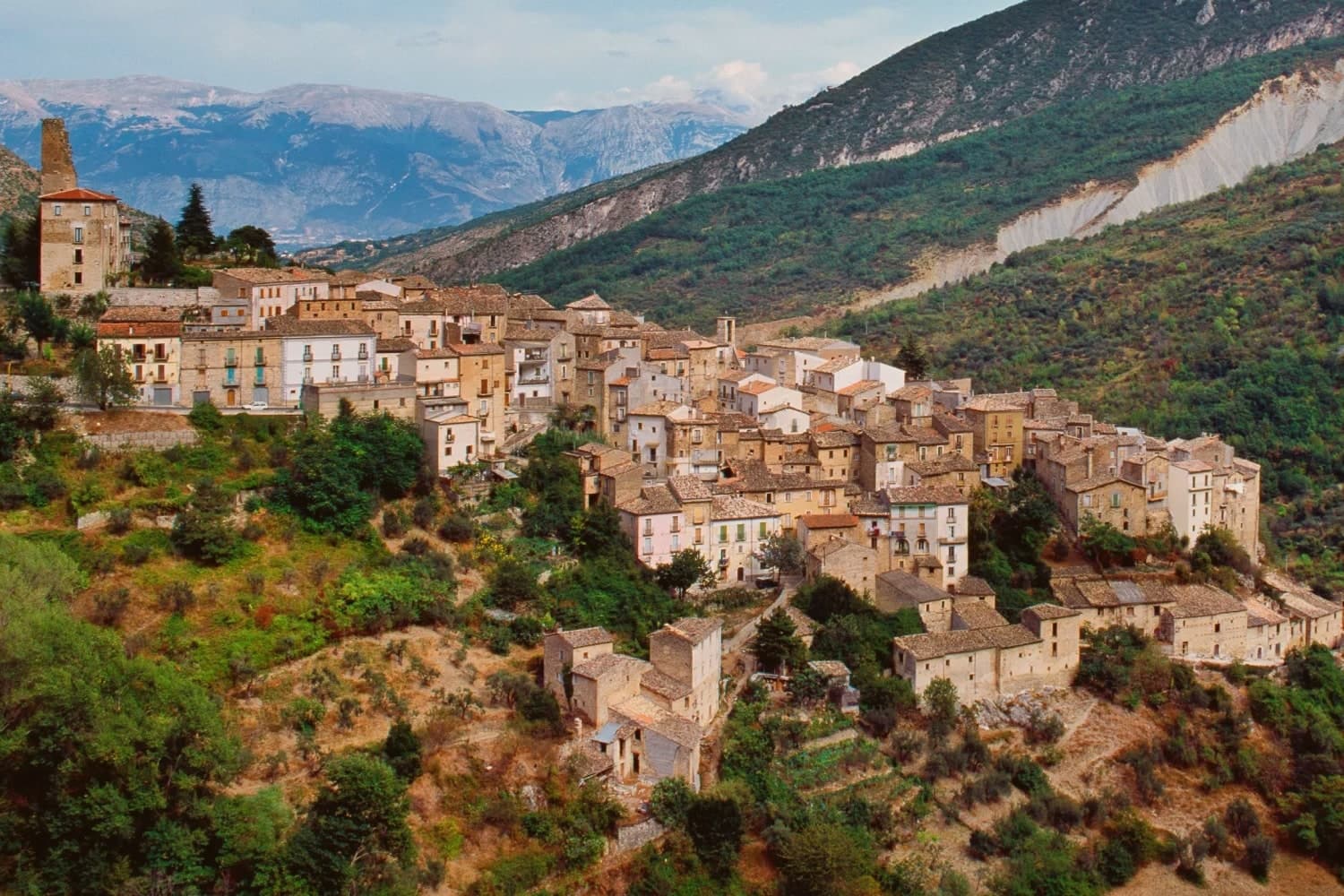
Abruzzo changes character fast once you leave the shoreline. The land climbs from sand and pine into limestone hills where the villages are built from pale local stone, roofed in terracotta, and stacked tight against wind coming off the Maiella. Spring brings wild orchids on the slopes and lamb on the grill, arrosticini turned over long troughs of embers, and in autumn the ventricina and the new oil arrive together. The regional trains out of Pescara run the coast in both directions and inland along the Pescara valley, so a village morning is a genuine possibility without hiring anything.
Most visitors stay on the strand. Pescara's own beachfront and the resorts either side of it fill through July and August with Italian families who have come for years, and the coastal road backs up accordingly. Further south, the Trabocchi coast has become the region's calling card, its fishing platforms photographed from every angle and its cycle path busy from morning. The seafood is good and the water is clean, but the crowd is concentrated into a narrow strip of sand and asphalt.
The same hills that make that coast dramatic keep going inland, and the same railway that serves the beaches also stops at towns few visitors bother to get off at. These are the smaller places: villages assessed against the national standard for Italy's most beautiful, each one confirmed reachable without a car. Some sit above the Adriatic with the sea still in view, others are up the valley towards the gorges and the beech woods. Fewer people go, and the walk from the station is usually uphill.
Of the 61 communes we have mapped within 90 minutes of Pescara, 6 qualify as prettiest villages you can reach by train: each has passed the national assessment of Italy's most beautiful villages, and we have confirmed each is reachable without a car. The smallest, Anversa degli Abruzzi, has 312 residents.
Elsewhere in the catalogue: The 6 prettiest villages with a serious restaurant within 90 minutes of Pescara and The best towns with a serious restaurant that you can reach by train within 90 minutes of Pescara.
Anversa degli Abruzzi
Why visit Anversa degli Abruzzi
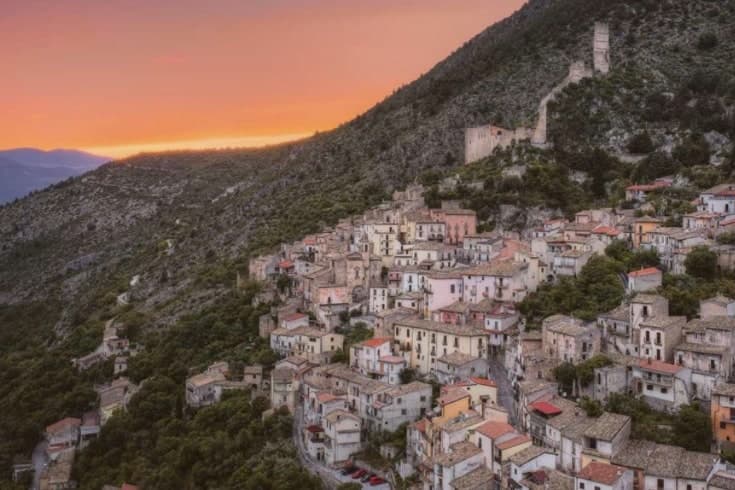
Anversa degli Abruzzi occupies a spur in the upper Sagittario valley, between the Peligna plain and the national park, with the gorges falling away directly beneath the walls. The Normans built here to hold the southern approach to the plain, and the Counts of Sangro controlled the site from the mid-1100s until the 1400s, when Antonio di Sangro gave the fortification its present form.
That same family supplied the material Gabriele D'Annunzio drew on for La Fiaccola sotto il moggio, written in the village in 1905. The borgo itself is compact: an outer ring of houses built into the cliff functions as the town wall, stone alleys thread through it on Norman-era foundations, and the church of Santa Maria delle Grazie, with its 1540 portal, sits as the principal religious building above.
Below, the 400-hectare reserve protects the limestone canyons cut by the river, sheltering wolves and Marsican bears where the village drops toward the water. Population has fallen from 1,934 in 1901 to about 300, and the ceramic tradition, the pignata and the cucù, persists as one of the few threads still tying the present village to the working town the Sangro family once ruled.
A place built for defense, held long enough to enter literature, and now sustained mainly by what it once was.
We confirmed you can reach this one by train.
What to see in Anversa degli Abruzzi
- Castello Normanno. Rebuilt in the 15th century by Antonio di Sangro on the site of the original Norman fortification, perched on cliffs above the village.
- Gole del Sagittario. The reserve's canyons lie directly below the village walls, home to wolves, Marsican bears, dormice, hawks and owls.
- Chiesa di Santa Maria delle Grazie. Late medieval church with a Renaissance portal dated 1540, the principal religious building in the upper borgo.
How to get to Anversa degli Abruzzi
There is a railway station in the town, so you can arrive without a car and never need one while you are here. Pescara is roughly 65 minutes away by road.
Our tip
May through October is the open season for Anversa. The gorges reserve runs guided walks, the upper village stays warm enough in the evening to eat outside, and the D'Annunzio literary trail is fully marked. July and August are hot in the canyon and busy on weekends with day visitors from Pescara and Sulmona.
Rocca San Giovanni
Why visit Rocca San Giovanni
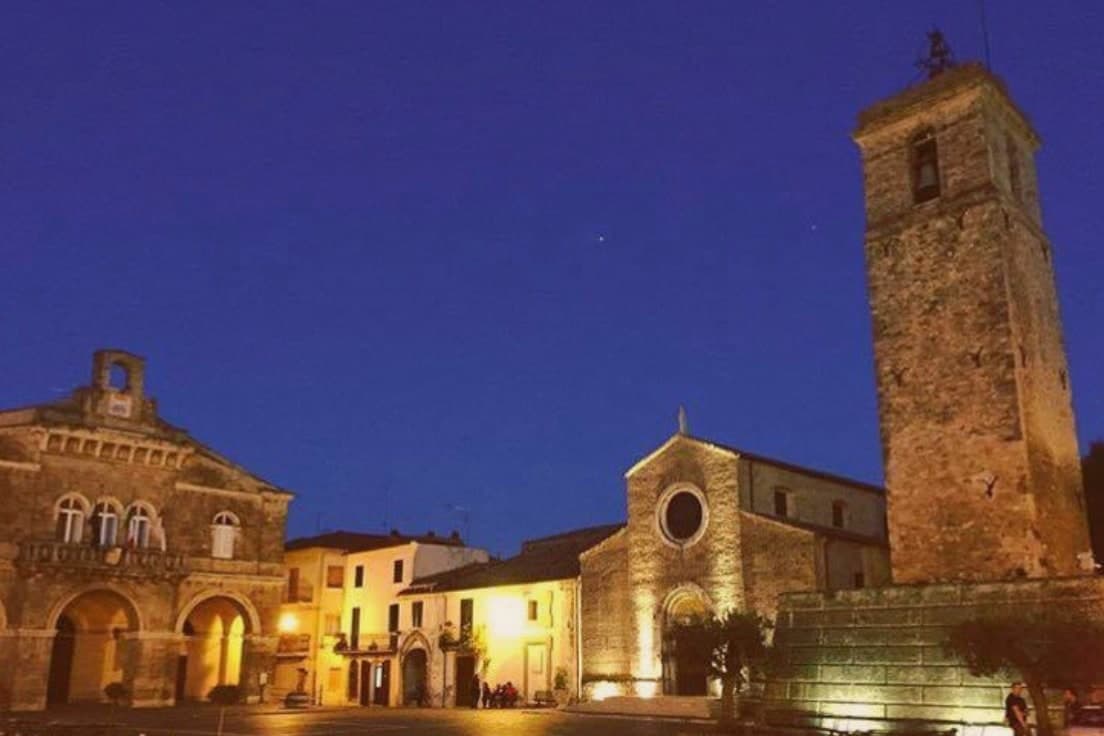
Rocca San Giovanni stands on a rocky hill above the Adriatic between the mouths of the Sangro and Feltrino rivers. The village was founded by Oderisius I, abbot of the nearby abbey, who feared Norman advances on Chieti and built a fortified settlement as a defensive outpost for his monastery.
The relationship between the two places is vertical: the abbey holds the lower slope toward the water, three kilometers down, while the fortified village occupies the high ground it was built to defend, the walls still tracing that original defensive purpose. The coast beneath both is fished from timber platforms that give the shoreline its name, and the old railway bed that once ran along that shore has become a path connecting the beach, the abbey, and the hill town in a single line of movement.
The vineyards run the other direction, down from the hill toward the sea, so the whole territory reads as a set of descending bands: castle, monastery, rail line, water, each built to serve or watch the one below it.
We confirmed you can reach this one by train.
What to see in Rocca San Giovanni
- Abbazia di San Giovanni in Venere. The abbey sits on a panoramic terrace above the Adriatic, one of Abruzzo's major religious sites, its Romanesque stone visible from the slope above long before the village walls come into view.
- Centro storico. The walled medieval core is listed among the Borghi più belli d'Italia, its streets narrow and contained within the old fortified perimeter built to watch the coast below.
- Chiesa di San Matteo Apostolo. Three-nave Romanesque parish church inside the walls, restored multiple times, with a nineteenth-century classical town hall alongside.
How to get to Rocca San Giovanni
There is a railway station in the town, so you can arrive without a car and never need one while you are here. Pescara is roughly 44 minutes away by road.
Our tip
May through September is the coastal season. The beaches below the village fill in July and August, but the centro storico above stays quieter. June and September are the best balance, when sea temperatures are good but the crowds thinner.
Crecchio
Why visit Crecchio
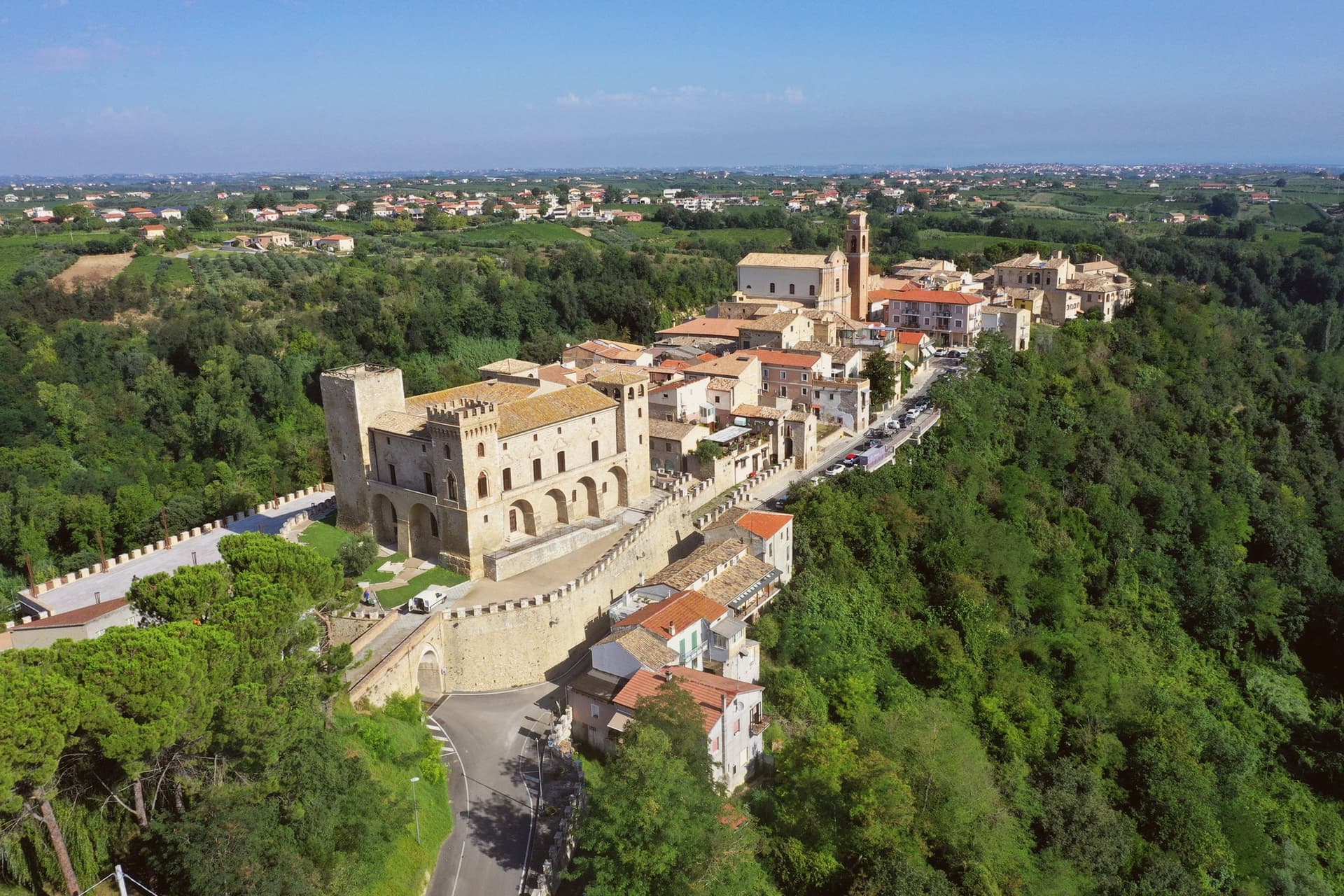
Crecchio is a hill town at 209 meters in the band of low ridges that runs from the Adriatic coast inland to the foothills of the Maiella. The Castello Ducale at its center is the reason it appears in textbooks.
On the night of 9 September 1943, after the armistice with the Allies was announced, King Vittorio Emanuele III, Queen Elena, and Crown Prince Umberto fled Rome and stopped at the De Riseis castle for a single night before reaching the port of Ortona and sailing for Brindisi. For those hours Crecchio was effectively the capital of Italy.
The castle was bombed by the Allies later in the war and reconstructed afterward, respecting its original Lombard, Norman, and Aragonese stratification. It now houses the Museo Archeologico dell'Abruzzo Bizantino e Altomedievale, which collects sixth- and seventh-century material from the surrounding territory.
We confirmed you can reach this one by train.
What to see in Crecchio
- Castello Ducale De Riseis-D'Aragona. Lombard core from the eighth century, Norman and Aragonese reworkings, four corner towers, host to the fleeing royal family on 9 September 1943.
- Museo Archeologico dell'Abruzzo Bizantino e Altomedievale. Inside the castle, displays Lombard and Byzantine grave goods, ceramics, and weapons from the sixth and seventh centuries.
- Centro storico. Medieval walled core preserved around the castle, narrow lanes and stone houses descending toward the open valley.
How to get to Crecchio
There is a railway station in the town, so you can arrive without a car and never need one while you are here. Pescara is roughly 40 minutes away by road.
Our tip
April through June and September through October are the months that work. The hill catches breezes off the Adriatic twenty kilometers east, vineyards are green or coloring, and the castle terrace is comfortable late into the day. July and August are hot, with afternoon temperatures pushing thirty-five degrees on the valley floor below, though Crecchio's elevation gives some relief.
Guardiagrele
Why visit Guardiagrele
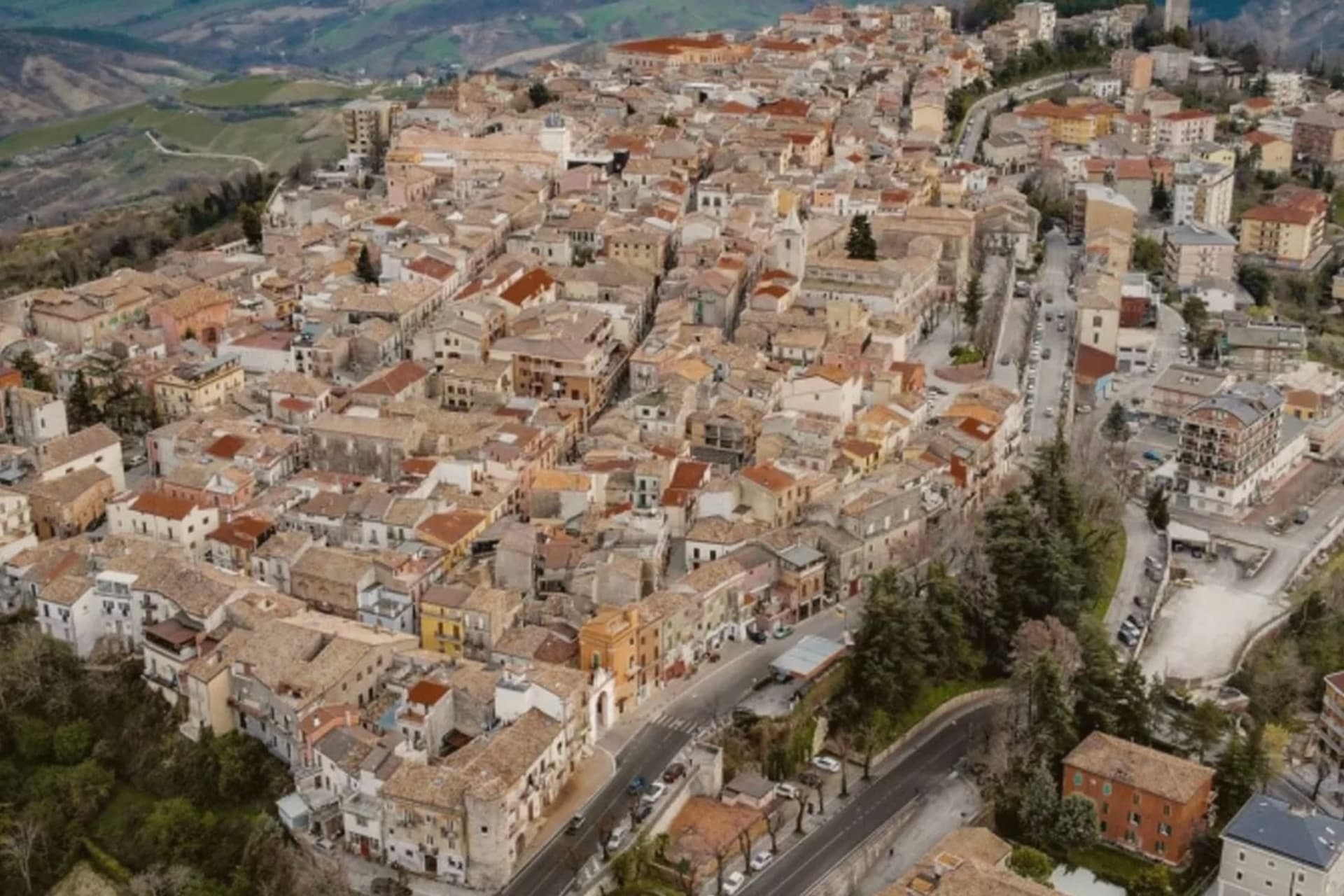
Guardiagrele sits at 576 meters on the eastern Majella foothills, thirty kilometers from Pescara. Gabriele D'Annunzio called it the terrazza d'Abruzzo for the views over the mountains and valleys from its piazzas.
Documented in an eleventh-century papal bull as a villa named Grele, the town grew through the fourteenth and fifteenth centuries as a stronghold of the Kingdom of Naples, with permission from the king to mint coins. It produced the late medieval goldsmith Nicola Gallucci, known as Nicola da Guardiagrele (c.1385-c.1462), trained on Gothic and Tuscan models including Lorenzo Ghiberti, who left work in cathedrals across Abruzzo.
The collegiate church of Santa Maria Maggiore, built at the start of the thirteenth century outside the walls and absorbed into the town in the centuries after, carries a fifteenth-century portal with a Coronation of the Virgin lunette by Nicola, now in the Duomo museum. Wrought-iron, copper and gold work still operate from workshops in the centro storico.
We confirmed you can reach this one by train.
What to see in Guardiagrele
- Collegiata di Santa Maria Maggiore. Thirteenth-century collegiate church with a massive bell tower, fifteenth-century portal, and the Nicola da Guardiagrele Coronation lunette in its museum.
- Museo del Duomo. Cathedral museum holding Nicola da Guardiagrele's marble lunette, his goldwork, and liturgical objects from the surrounding Majella churches.
- Botteghe del rame e del ferro battuto. Active copper and wrought-iron workshops in the centro storico, the surviving craft tradition that produced Nicola Gallucci in the late fourteenth century.
How to get to Guardiagrele
There is a railway station in the town, so you can arrive without a car and never need one while you are here. Pescara is roughly 48 minutes away by road.
Our tip
April through October is the open season. May and September are the best months on the terrazza, with the Majella valleys in clear light and the copper workshops at full pace. July and August are warm but the elevation keeps the centro storico cooler than the coast.
Monteprandone
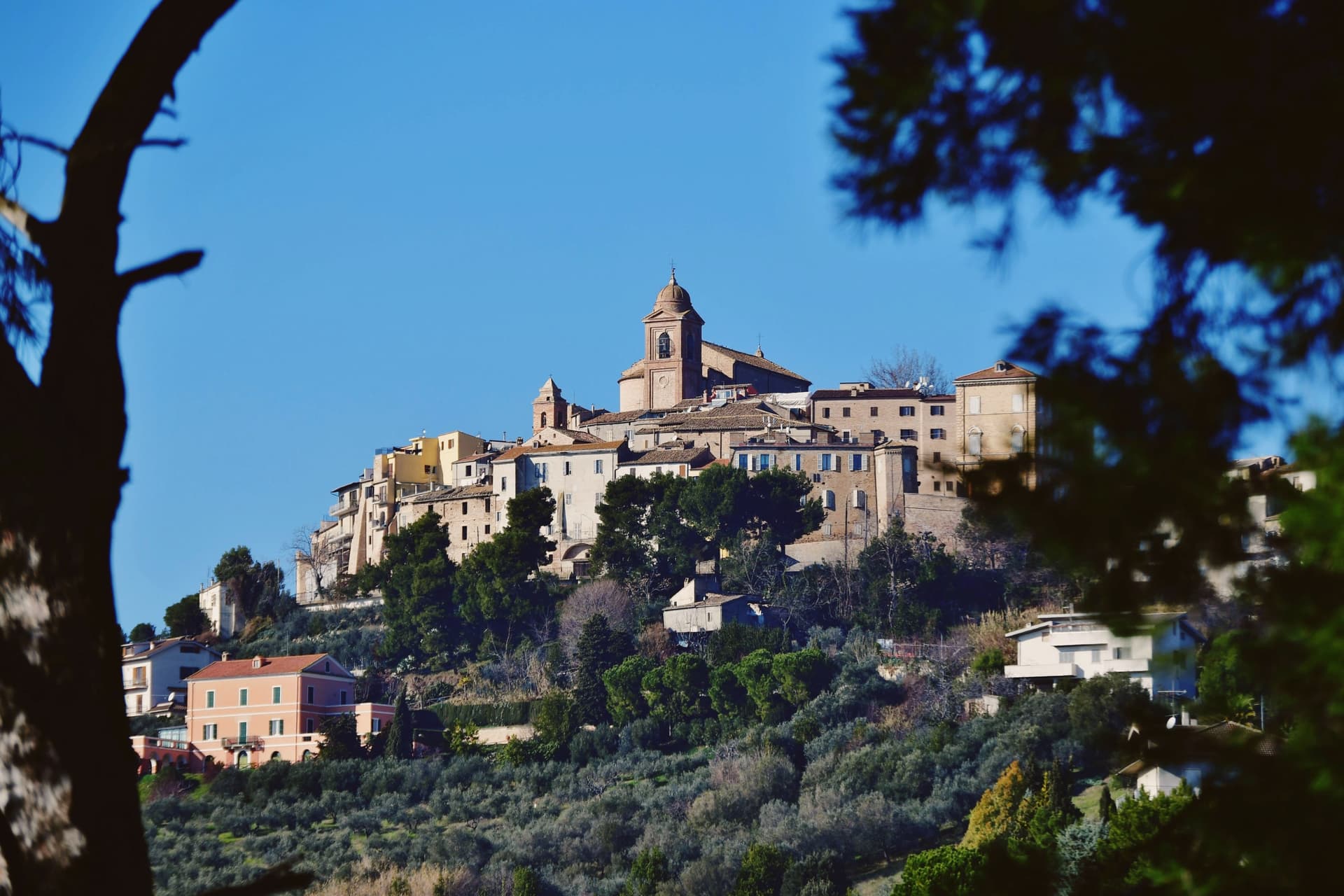
Why visit Monteprandone
Monteprandone sits at 266 meters on a hill above the left bank of the lower Tronto valley, twenty kilometers northeast of Ascoli Piceno and five from the Adriatic at San Benedetto. Tradition traces the founding to the ninth century and a knight from Charlemagne's court named Prandone, who built the first castle.
A papal bull of 13 May 1323 granted the village in perpetual fief to Ascoli Piceno. The walled center still shows this layered history: gates and stepped streets rise from the valley floor toward the summit, where the parish church stands over the plain and the sea beyond it.
The convent that anchors the town's fame sits within reach of that same climb, and the manuscripts once written for its friars now rest in a museum built to hold them. Upper and lower, castle-born and papally governed, the town's shape still traces the fief it became in 1323 and the hill it was built to defend.
We confirmed you can reach this one by train.
What to see in Monteprandone
- Santuario di Santa Maria delle Grazie e San Giacomo della Marca. The convent stands where its founder placed it, the body brought back in 2001 kept within walls that also hold paintings by Vincenzo Pagani and Cola dell'Amatrice.
- Museo Civico dei Codici di San Giacomo della Marca. The volumes are shelved together in the civic museum, pages once meant for the friars and scholars of the convent now under glass for anyone to see.
- Centro storico di Monteprandone. Walled hill village above the Tronto valley, with surviving gates and stepped streets that climb to the church of San Nicolò di Bari at the summit.
How to get to Monteprandone
There is a railway station in the town, so you can arrive without a car and never need one while you are here. Pescara is roughly 59 minutes away by road.
Our tip
April through June and September into October are the best months for Monteprandone. The lower Tronto valley turns green by spring and dry gold through the summer wheat harvest, with the Adriatic visible on clear afternoons and the Sibillini on the inland horizon. July and August touch the low thirties on the hill, with the centro storico quietest in the early afternoon. Festa di Sant'Anna e Sagra degli Spinosini falls in August.
Grottammare
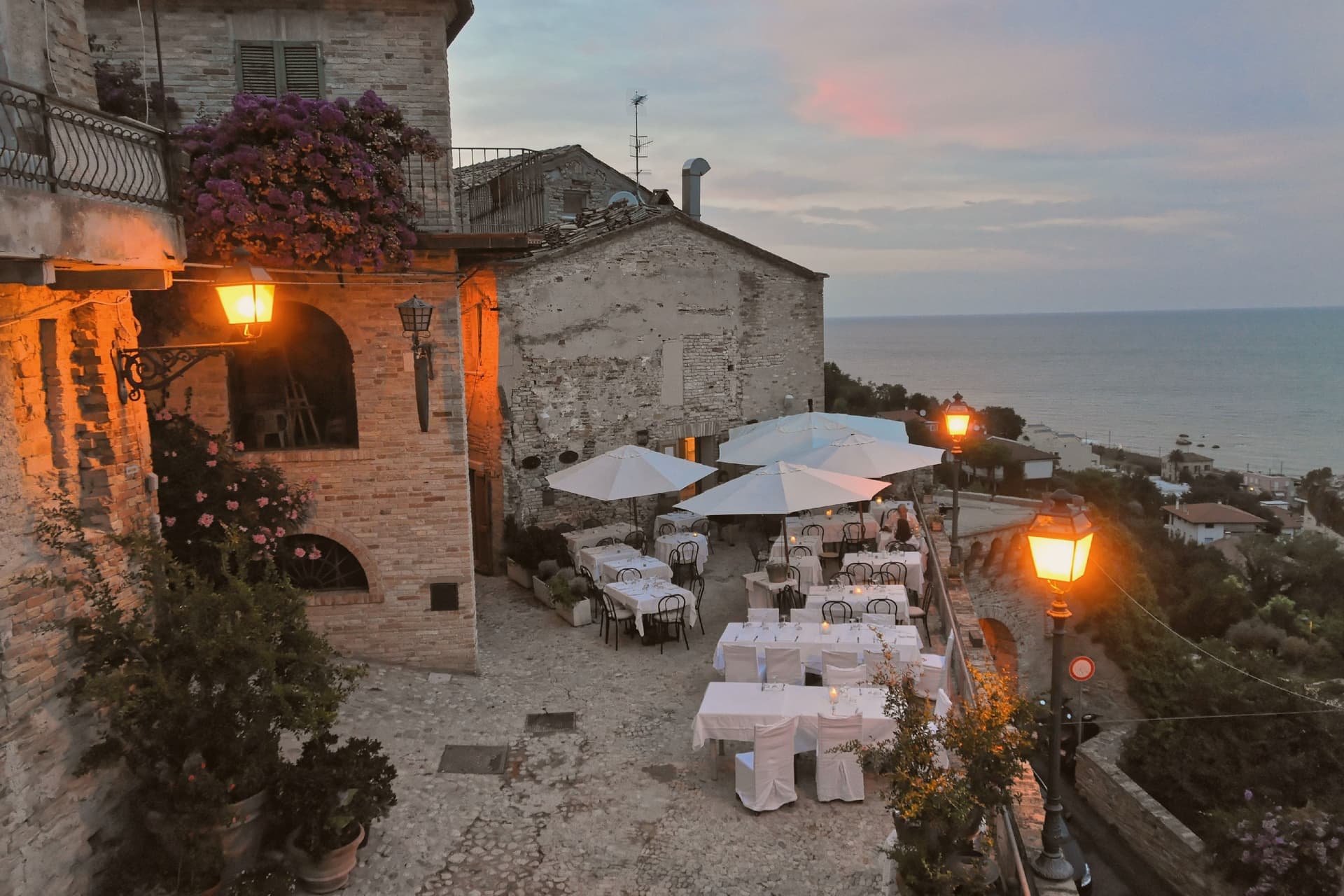
Why visit Grottammare
Grottammare sits on the Ascoli Piceno coast at the mouth of the Tesino. The town splits into two nuclei that never merged: a lungomare on the Adriatic, laid out with palms and Liberty villas in the late nineteenth century, and an older settlement on the hill above, reached by climbing away from the water rather than along it.
Felice Peretti was born in that upper settlement on 13 December 1521, in a house on what became the borgo's central square. He left, rose through the church, and returned as Pope Sixtus V only in monument: two churches he commissioned for his birthplace after 1585, one built beside the house itself and one now holding the collection of objects he sent back from Rome.
The upper town still carries its eleventh-century walls and the traces of an earlier fortress on the Incasato spur, and it has been named among the Borghi più belli d'Italia. The coast below has its own separate recognitions, for water quality and for the management of the hills behind it.
The two halves read as a single biography split in space: the hill holds the birth and the memory, the shore holds the later invention of the town as a seaside resort, and neither nucleus explains itself without the other.
We confirmed you can reach this one by train.
What to see in Grottammare
- Paese Alto (Borgo Antico). Brick lanes climb the Incasato hill inside the eleventh-century walls, past the remains of a fortified spur that looks down over the seafront below.
- Chiesa di Santa Lucia. On the central square of the upper town, next to the house of Peretti's birth, a plain sixteenth-century commission from a native son grown powerful.
- Museo Sistino. Inside the Chiesa di San Giovanni Battista, the liturgical objects on display came back to the town only after the local boy had become pope.
How to get to Grottammare
There is a railway station in the town, so you can arrive without a car and never need one while you are here. Pescara is roughly 60 minutes away by road.
Our tip
May through September is the main window for Grottammare. The Bandiera Blu seafront is open from late spring, the palms on Lungomare De Gasperi catch full light from June, and the Paese Alto stays a few degrees cooler than the beach. July and August touch the low thirties on the coast; the upper town shaded lanes are the cool retreat. La Fiera di San Martino falls in November.
More from Anywhere Italy
 The 6 prettiest villages with a serious restaurant within 90 minutes of Pescara
- The best towns with a serious restaurant that you can reach by train within 90 minutes of Pescara
 The 8 best wine towns you can reach by train within 90 minutes of Pescara
- The best coastal towns that eat well within 90 minutes of Pescara
 The best hill towns you can reach by train in Abruzzo
- The prettiest small villages that eat well within 90 minutes of Pescara