
The 8 best wine towns you can reach by train within 90 minutes of Pescara
Abruzzo's wine country starts almost at the beach and climbs fast. Behind the Pescara seafront the land folds into clay hills planted with Montepulciano and Trebbiano, with Pecorino and Passerina on the cooler slopes towards Teramo, and olive groves filling the gaps. The towns up there are built of pale stone and brick, with cellars cut under the houses and a bar on the piazza that opens early for the men coming back from the vines. Autumn is the season people picture, grapes in the trailers and new oil in November, but spring on these ridges is quieter and the tasting rooms have time for you.
Most visitors treat Pescara as a beach and Vasto as the day out, and in July the Costa dei Trabocchi and the old town above Vasto Marina take the full weight of the Adriatic summer. It makes sense: the sea is warm, the fish is good, the trains along the coast are frequent. It also means the crowd stays within sight of the water and moves in the same direction at the same hours, and the wine gets drunk in beach restaurants rather than where it was made.
The vines carry on past all that, inland along the Pescara valley towards Sulmona, north towards the Tronto, south into the Molise borderlands. Regional trains and the connecting buses reach a surprising number of these places, which means a cellar visit is a morning out rather than a car hire and a decision about who is driving. The towns here are smaller, they belong to the national association of Italian wine towns, and we have confirmed each can be reached without a car.
Of the 63 communes we have mapped within 90 minutes of Pescara, 8 qualify as wine towns you can reach by train: each belongs to the national association of wine towns, and we have confirmed each is reachable without a car. The smallest, Controguerra, has 2,192 residents.
Elsewhere in the catalogue: The best wine towns in Abruzzo and The best hill towns you can reach by train in Abruzzo.
Controguerra
Why visit Controguerra
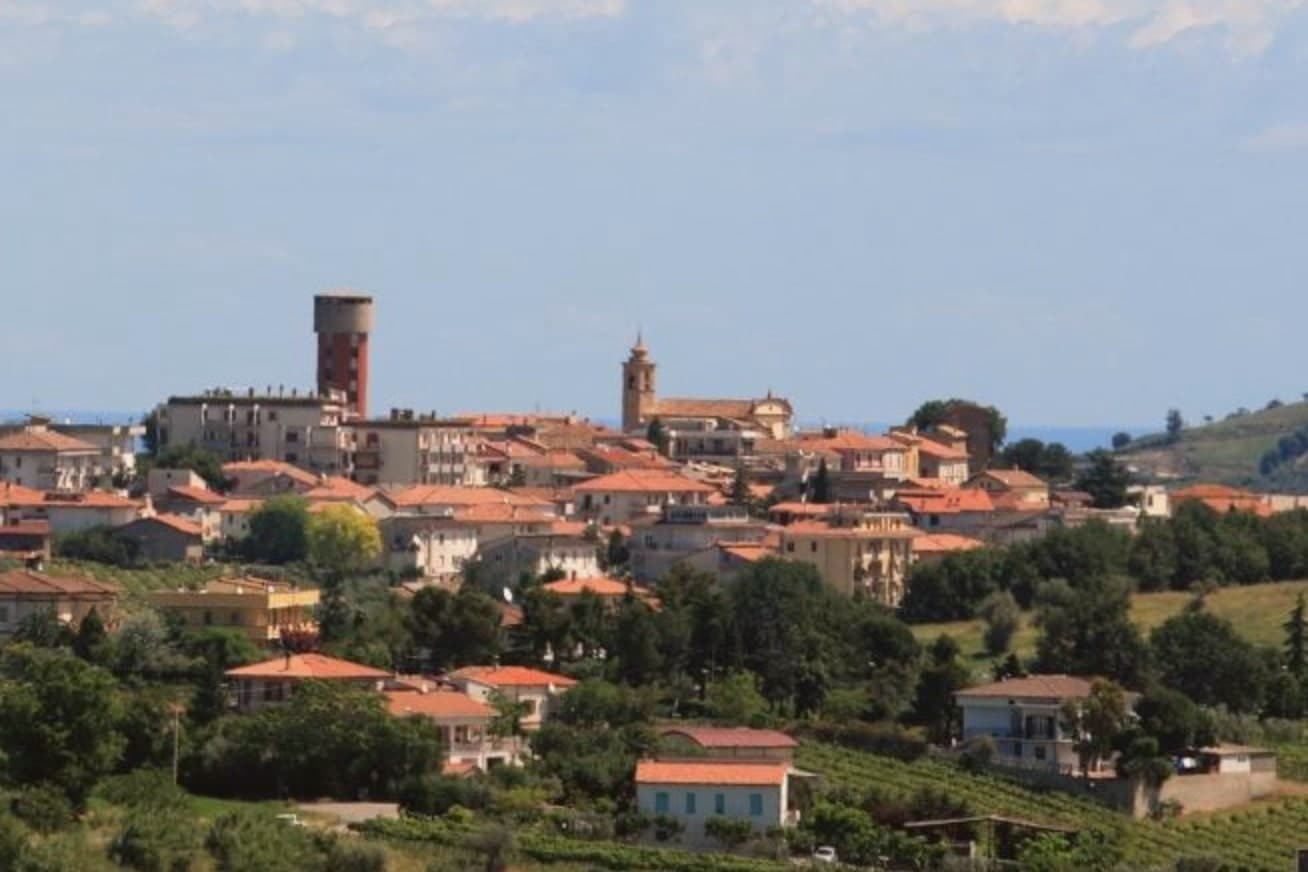
The village sits fifteen kilometers from the Adriatic, at the northern edge of Abruzzo, where the valley bends toward the river and the sea. The wine zone that carries the town's name reaches beyond it, spread across five communes sharing the same elbow of land between river and coast.
The reds run at least sixty percent Montepulciano, with Merlot, Cabernet Franc and Cabernet Sauvignon allowed up to fifteen percent; the whites are sixty percent Trebbiano with at least fifteen percent Passerina; the spumante sets Trebbiano against Chardonnay, Verdicchio and Pecorino. The old center holds to its ridge above the valley while the vines and olive groves that support both the wine and oil designations spread on the slopes below, the same ground doing double duty.
The place works because the name on the bottle and the name on the map are the same thing, a small hilltop settlement whose slow-food charter governs an area small enough that vineyard and piazza are never far apart.
We confirmed you can reach this one by train.
What to see in Controguerra
- Centro storico. Small hilltop medieval centre on a ridge above the valley, with brick palazzi and the parish church on the central piazza.
- Chiesa di San Salvatore. Parish church on the main piazza, the religious anchor of the medieval ridge village, with a rebuilt eighteenth-century interior.
- Cantine del Controguerra DOC. Family cellars open by appointment, pouring Montepulciano-based reds, Trebbiano-Passerina whites and Pecorino spumante from the same slopes the town gives its name to.
How to get to Controguerra
There is a railway station in the town, so you can arrive without a car and never need one while you are here. Pescara is roughly 56 minutes away by road.
Our tip
April through October is the working season for vineyards and oil. May and September are the best months for cellar visits, with mild light and the vineyards in full leaf. July and August can climb into the mid-thirties and the centro empties through the hot afternoon. Controguerra in festa falls in July.
Rocca San Giovanni
Why visit Rocca San Giovanni
Rocca San Giovanni stands on a rocky hill above the Adriatic between the mouths of the Sangro and Feltrino rivers. The village was founded by Oderisius I, abbot of the nearby abbey, who feared Norman advances on Chieti and built a fortified settlement as a defensive outpost for his monastery.
The relationship between the two places is vertical: the abbey holds the lower slope toward the water, three kilometers down, while the fortified village occupies the high ground it was built to defend, the walls still tracing that original defensive purpose. The coast beneath both is fished from timber platforms that give the shoreline its name, and the old railway bed that once ran along that shore has become a path connecting the beach, the abbey, and the hill town in a single line of movement.
The vineyards run the other direction, down from the hill toward the sea, so the whole territory reads as a set of descending bands: castle, monastery, rail line, water, each built to serve or watch the one below it.
We confirmed you can reach this one by train.
What to see in Rocca San Giovanni
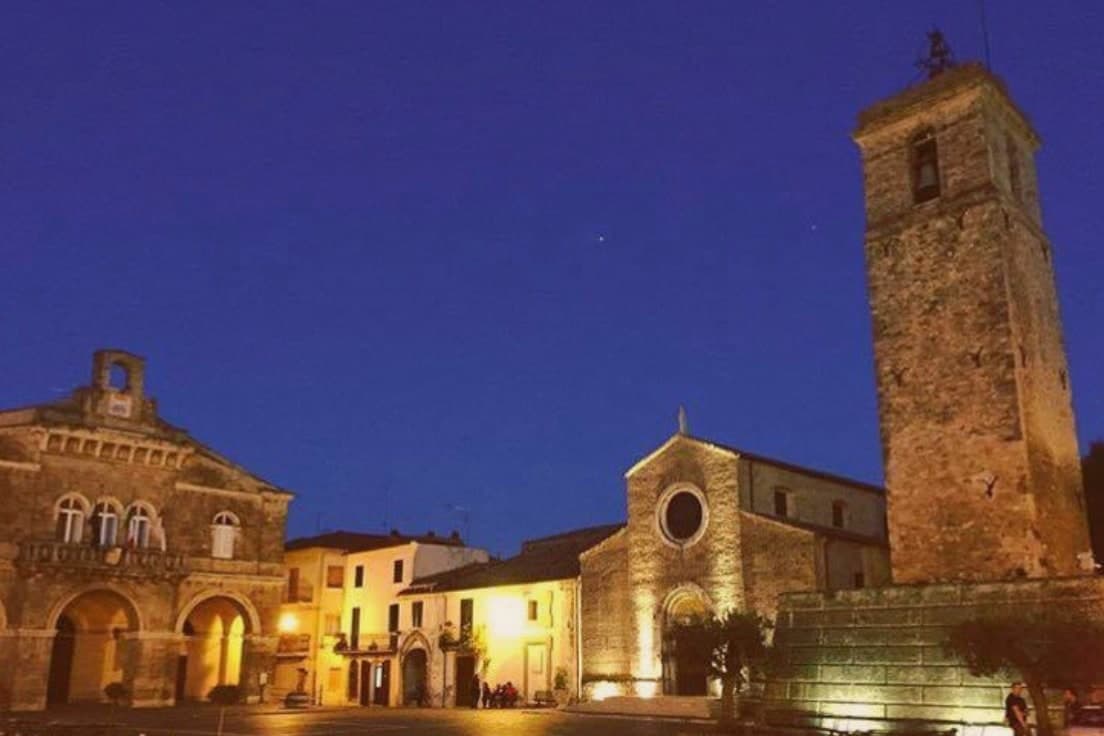
- Abbazia di San Giovanni in Venere. The abbey sits on a panoramic terrace above the Adriatic, one of Abruzzo's major religious sites, its Romanesque stone visible from the slope above long before the village walls come into view.
- Centro storico. The walled medieval core is listed among the Borghi più belli d'Italia, its streets narrow and contained within the old fortified perimeter built to watch the coast below.
- Chiesa di San Matteo Apostolo. Three-nave Romanesque parish church inside the walls, restored multiple times, with a nineteenth-century classical town hall alongside.
How to get to Rocca San Giovanni
There is a railway station in the town, so you can arrive without a car and never need one while you are here. Pescara is roughly 44 minutes away by road.
Our tip
May through September is the coastal season. The beaches below the village fill in July and August, but the centro storico above stays quieter. June and September are the best balance, when sea temperatures are good but the crowds thinner.
Tocco da Casauria
Why visit Tocco da Casauria
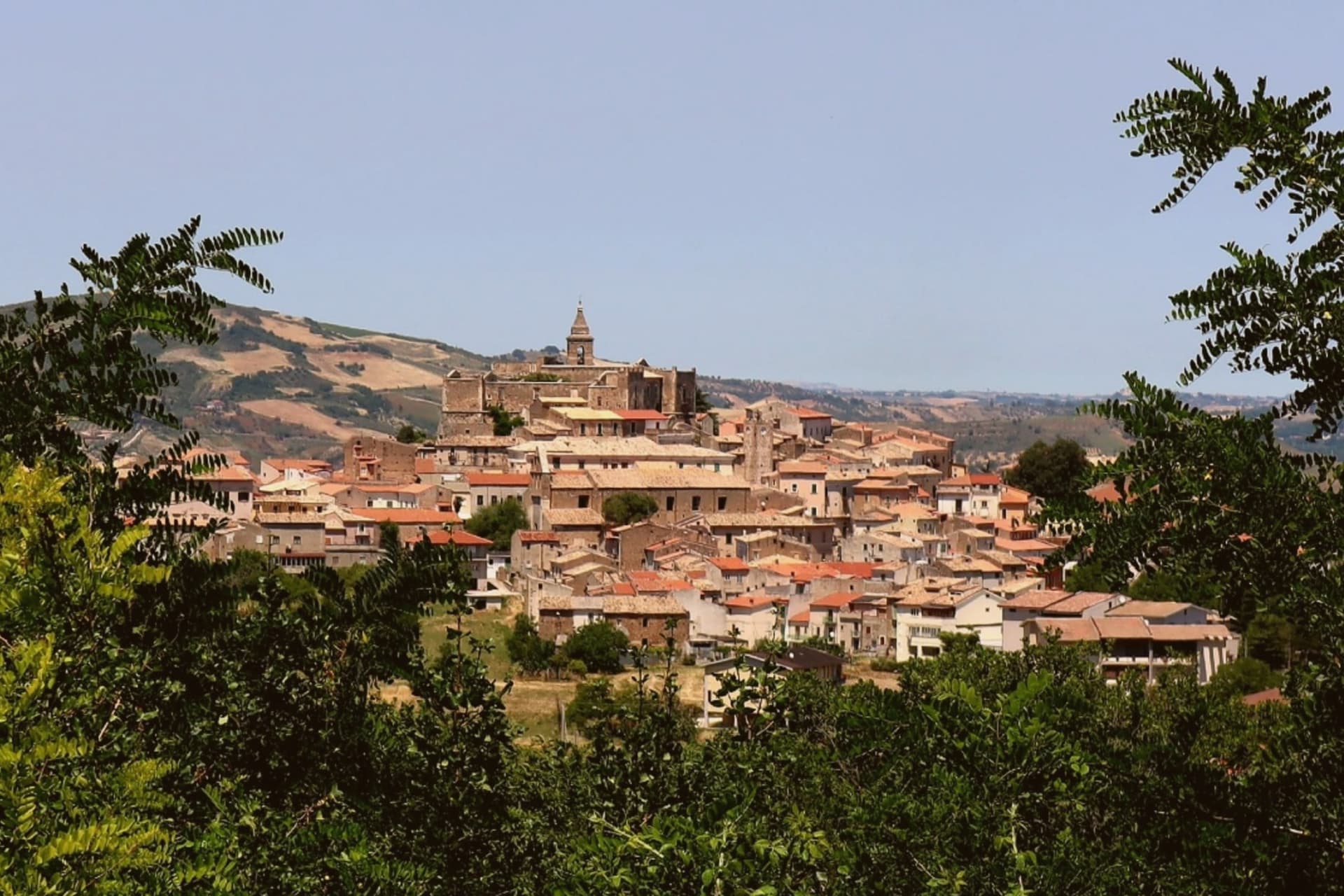
Tocco sits on a hill at 356 meters between the Pescara river and the Arolle stream, with the Maiella massif behind it. The town was founded around 872 under the authority of the abbey nearby, established in fulfilment of a vow made during an imprisonment in Benevento.
The abbey held the relics of Pope Clement I. The town was simply Tocco until 1861, when da Casauria was added to honour the abbey it grew up beside.
The centro storico is dominated by the Caracciolo Castle, rebuilt in Renaissance style after the 1456 earthquake, while the lower slopes toward the Pescara valley carry olive groves and Montepulciano vines, the produce that earned the town its place among the Città dell'Olio and Città del Vino. Centerba, the high-proof liqueur made from a hundred Maiella herbs, has been distilled here since the mid-19th century by the Toro family.
What holds the town together is the relationship between the abbey below and the settlement on the hill: a monastic foundation that gave the place its name, its early authority, and, centuries later, its liqueur trade and vineyards grew up in the valley it once governed.
We confirmed you can reach this one by train.
What to see in Tocco da Casauria
- Abbazia di San Clemente a Casauria. A national monument since 1894, standing just outside the commune in Castiglione. Founded by Louis II, its bronze doors and their 72 panels remain the reason to make the detour.
- Castello Caracciolo. Built between 1187 and 1220 under Frederick II, destroyed by the 1456 earthquake and rebuilt in Renaissance style, dominating the centro storico.
- Chiesa di Sant'Eustachio. Main church of Tocco, built in the 18th century and named for the town's patron, with the statue of the saint inside.
How to get to Tocco da Casauria
There is a railway station in the town, so you can arrive without a car and never need one while you are here. Pescara is roughly 47 minutes away by road.
Our tip
April through October works best in Tocco. The hill catches breeze off the Maiella even in July, and the olive harvest in October fills the lower terraces with activity. Spring opens the abbey grounds and the Pescara valley vineyards.
Crecchio
Why visit Crecchio
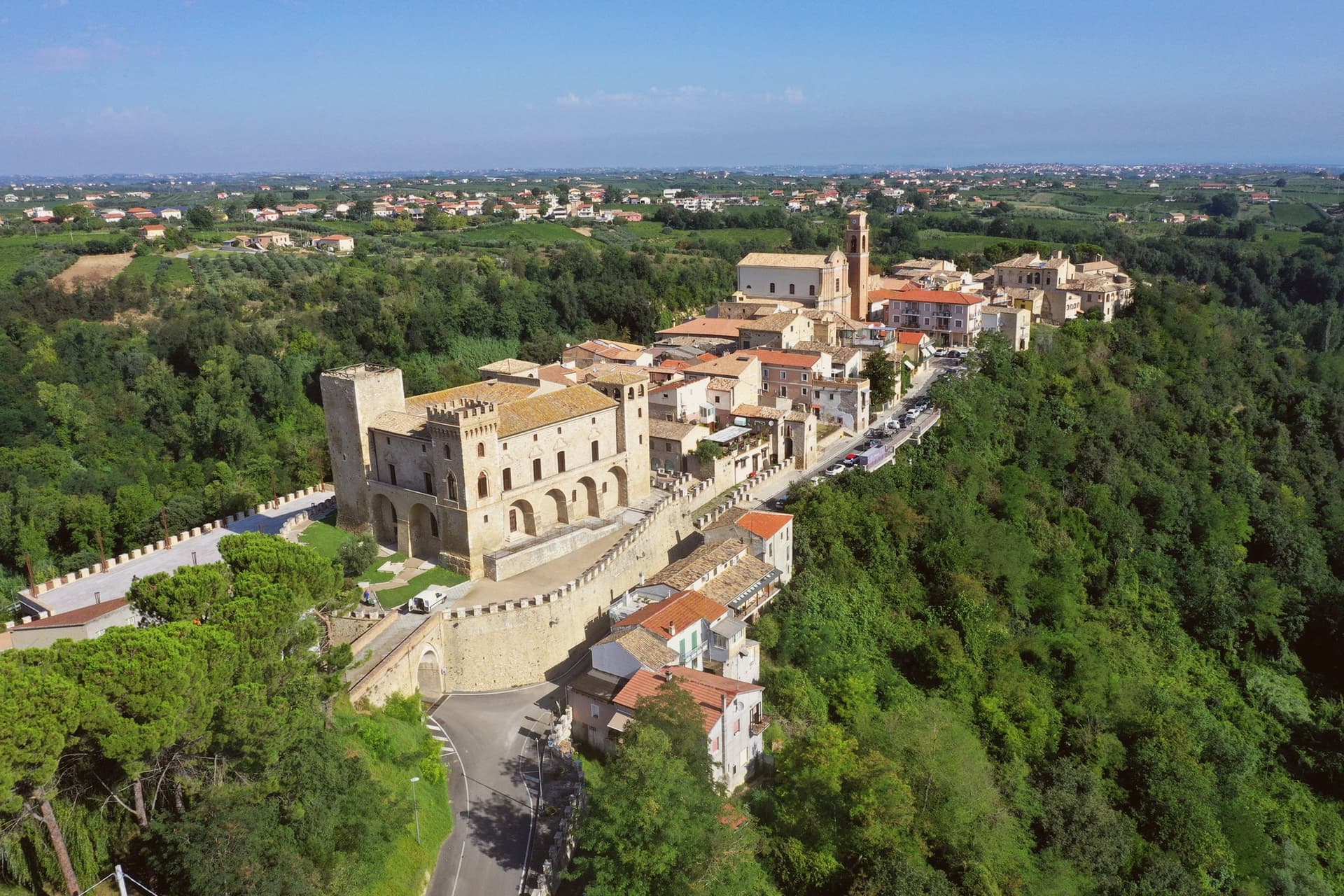
Crecchio is a hill town at 209 meters in the band of low ridges that runs from the Adriatic coast inland to the foothills of the Maiella. The Castello Ducale at its center is the reason it appears in textbooks.
On the night of 9 September 1943, after the armistice with the Allies was announced, King Vittorio Emanuele III, Queen Elena, and Crown Prince Umberto fled Rome and stopped at the De Riseis castle for a single night before reaching the port of Ortona and sailing for Brindisi. For those hours Crecchio was effectively the capital of Italy.
The castle was bombed by the Allies later in the war and reconstructed afterward, respecting its original Lombard, Norman, and Aragonese stratification. It now houses the Museo Archeologico dell'Abruzzo Bizantino e Altomedievale, which collects sixth- and seventh-century material from the surrounding territory.
We confirmed you can reach this one by train.
What to see in Crecchio
- Castello Ducale De Riseis-D'Aragona. Lombard core from the eighth century, Norman and Aragonese reworkings, four corner towers, host to the fleeing royal family on 9 September 1943.
- Museo Archeologico dell'Abruzzo Bizantino e Altomedievale. Inside the castle, displays Lombard and Byzantine grave goods, ceramics, and weapons from the sixth and seventh centuries.
- Centro storico. Medieval walled core preserved around the castle, narrow lanes and stone houses descending toward the open valley.
How to get to Crecchio
There is a railway station in the town, so you can arrive without a car and never need one while you are here. Pescara is roughly 40 minutes away by road.
Our tip
April through June and September through October are the months that work. The hill catches breezes off the Adriatic twenty kilometers east, vineyards are green or coloring, and the castle terrace is comfortable late into the day. July and August are hot, with afternoon temperatures pushing thirty-five degrees on the valley floor below, though Crecchio's elevation gives some relief.
Montenero di Bisaccia
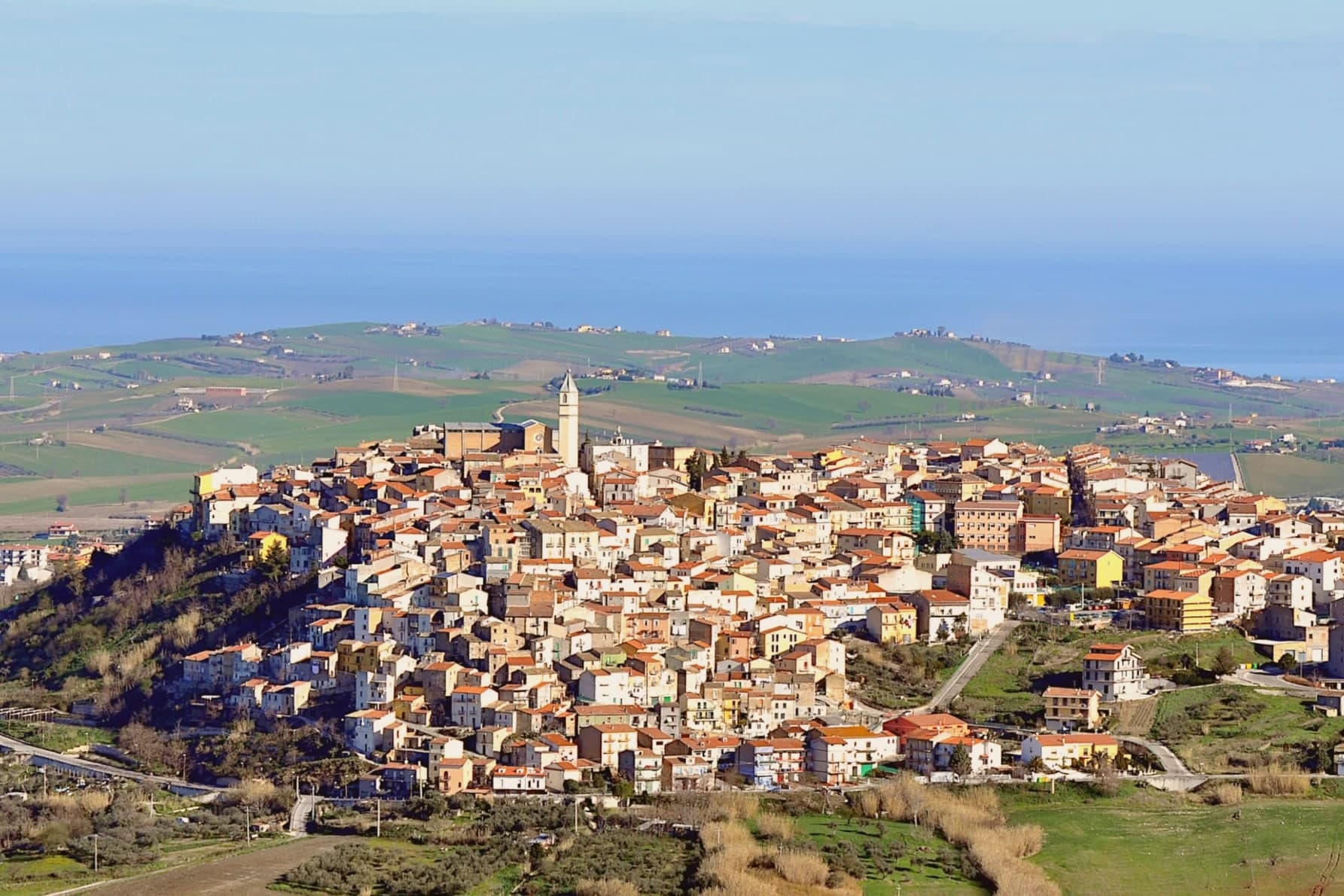
Why visit Montenero di Bisaccia
Montenero di Bisaccia sits on a tufa relief at 273 meters, on the northern edge of Molise where the region meets Abruzzo. The Chiesa di San Matteo Apostolo crowns the rock, its bell tower visible from the coast road below.
The Costa Verde beach, six kilometers down from the village, gives the commune its summer draw, with low dunes and pine groves backing the sand. Antonio Di Pietro, the magistrate who prosecuted the Mani Pulite cases of the 1990s and went on to lead Italia dei Valori, was born and farms here; after politics he returned to a 24-hectare family holding inherited from his father and now produces olive oil and wine with his son Cristiano.
The Città del Vino designation tracks that wine tradition. The hills around the village were also recorded by Serafino Razzi in 1576 as one of the Slav-influenced settlements of lower Molise.
We confirmed you can reach this one by train.
What to see in Montenero di Bisaccia
- Chiesa di San Matteo Apostolo. Parish church on the tufa rock at the top of the village, its bell tower the visible marker from the coast.
- Centro storico. Stone old town spread along the tufa ridge, with narrow streets and views east to the Adriatic.
- Costa Verde. Long sand beach six kilometers below the village, backed by pine groves and low dunes.
How to get to Montenero di Bisaccia
There is a railway station in the town, so you can arrive without a car and never need one while you are here. Pescara is roughly 70 minutes away by road.
Our tip
May through September works on the coast. June and September give the cleanest sea and the longest evenings without the August crowd. July and August fill the Costa Verde with Italian families and the ridge village stays a few degrees cooler at 273 meters.
Fossacesia
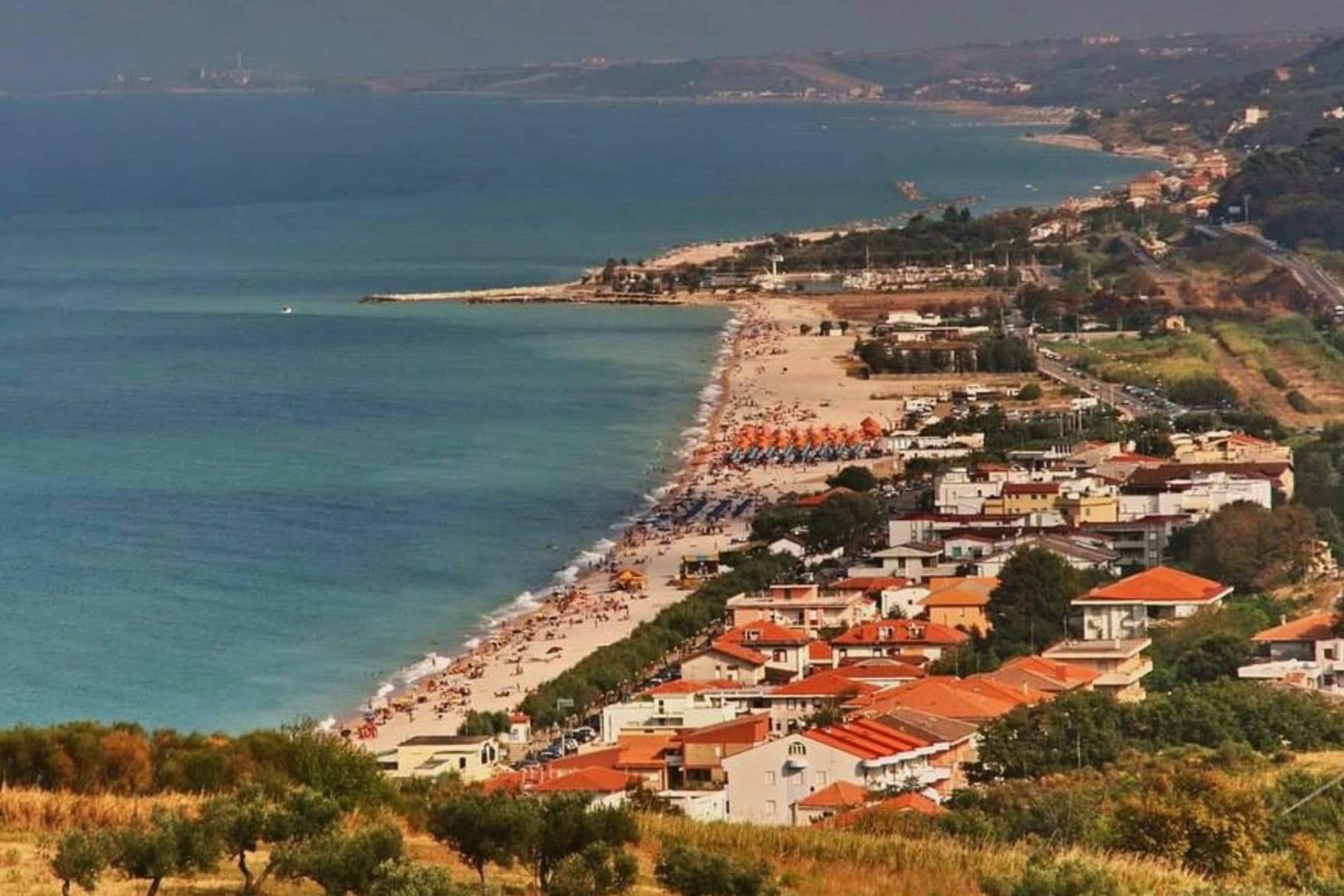
Why visit Fossacesia
Most people arrive at Fossacesia for the abbey and stay for the coast underneath it. San Giovanni in Venere was rebuilt in the twelfth century on ground that had held a temple to Venus, which is where the name comes from, and it sits on a shoulder of hill with the Adriatic laid out below and olive groves on every side.
Down at sea level, Fossacesia Marina is the northern end of the Via Verde, the cycle path laid along the route of the old coastal railway, and the trabocchi themselves stand out over the water on their wooden legs.
We confirmed you can reach this one by train.
What to see in Fossacesia
- Abbazia di San Giovanni in Venere. The Benedictine abbey above the coast, rebuilt in the twelfth century on the site of a Roman temple. The carved portal and the crypt are the reasons to climb up.
- Via Verde della Costa dei Trabocchi. The coastal cycle path on the old railway line. Fossacesia Marina is its northern trailhead.
- The trabocchi. The timber fishing platforms built out over the water along this stretch of coast. Several are still worked and a few serve dinner.
How to get to Fossacesia
There is a railway station in the town, so you can arrive without a car and never need one while you are here. Pescara is roughly 44 minutes away by road.
Our tip
May, June and September are the best of it. The abbey is worth the trip in any month, but the coast below only works when the sea is warm and the path is not baking. August is busy at the marina and quiet up at the abbey.
Loreto Aprutino
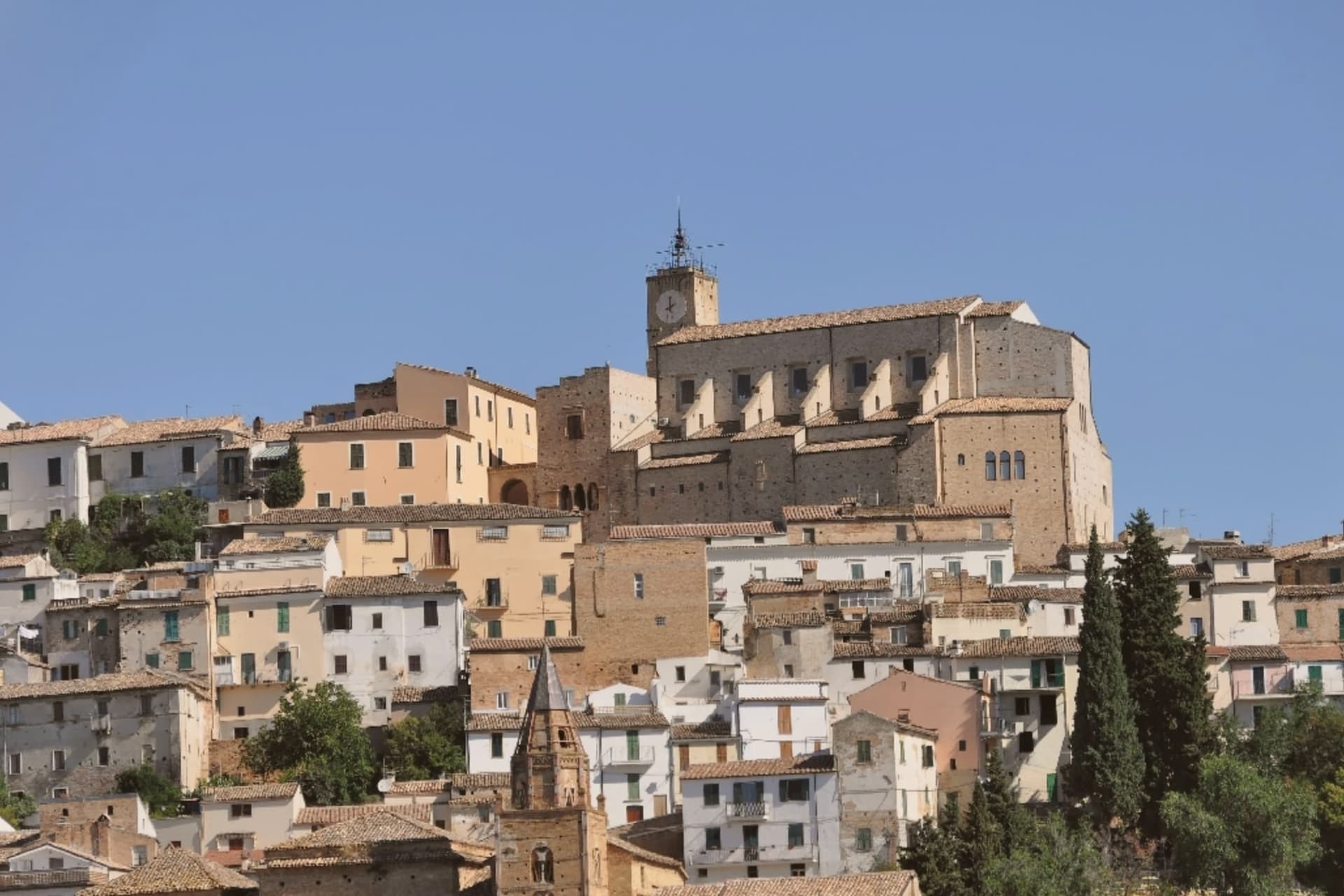
Why visit Loreto Aprutino
Loreto Aprutino sits at 290 meters on a hill twenty kilometers inland from Pescara, in the so-called Golden Triangle of Abruzzo olive oil that it shares with Pianella and Moscufo. Pre-Roman necropoleis at Colle-Fiorano and Farina-Cardito show a settlement long before the medieval town.
The Romanesque-Gothic church of Santa Maria in Piano, built around 1280, holds the Giudizio particolare delle anime, a wall fresco in encaustic technique that shows souls crossing a bridge thin as a human hair, falling into a river of boiling pitch if not saved; the Aquinas family commissioned the cycle. Castello Chiola dominates the ridge above the town, restored after Italian unification in 1863.
The olive-oil tradition runs to the fourth century BC; the local DOP is Aprutino Pescarese, and the town's Museo dell'Olio explains the chain from grove to bottle. The Acerbo Castelli ceramics collection covers majolica from the fifteenth to the nineteenth century.
We confirmed you can reach this one by train.
What to see in Loreto Aprutino
- Chiesa di Santa Maria in Piano. Church from 1280 with the encaustic fresco Giudizio particolare delle anime, the bridge-of-hair Judgment commissioned by the Aquinas family.
- Castello Chiola. Medieval castle on the highest point of the ridge, restored after 1863, now a hotel and still the dominant skyline feature.
- Museo Acerbo delle Ceramiche di Castelli. Collection of Castelli majolica from the fifteenth to nineteenth century, the most prestigious ceramic tradition of Abruzzo.
How to get to Loreto Aprutino
There is a railway station in the town, so you can arrive without a car and never need one while you are here. Pescara is roughly 38 minutes away by road.
Our tip
April through June is the green window in the Aprutino hills, with mild evenings and active olive groves. September and October bring the harvest and the new-oil season; tasting tours run through both months. July and August are hot at 290 meters, and visitors usually move between the cool nave of Santa Maria in Piano and the shaded courtyards of the centro.
Ortona
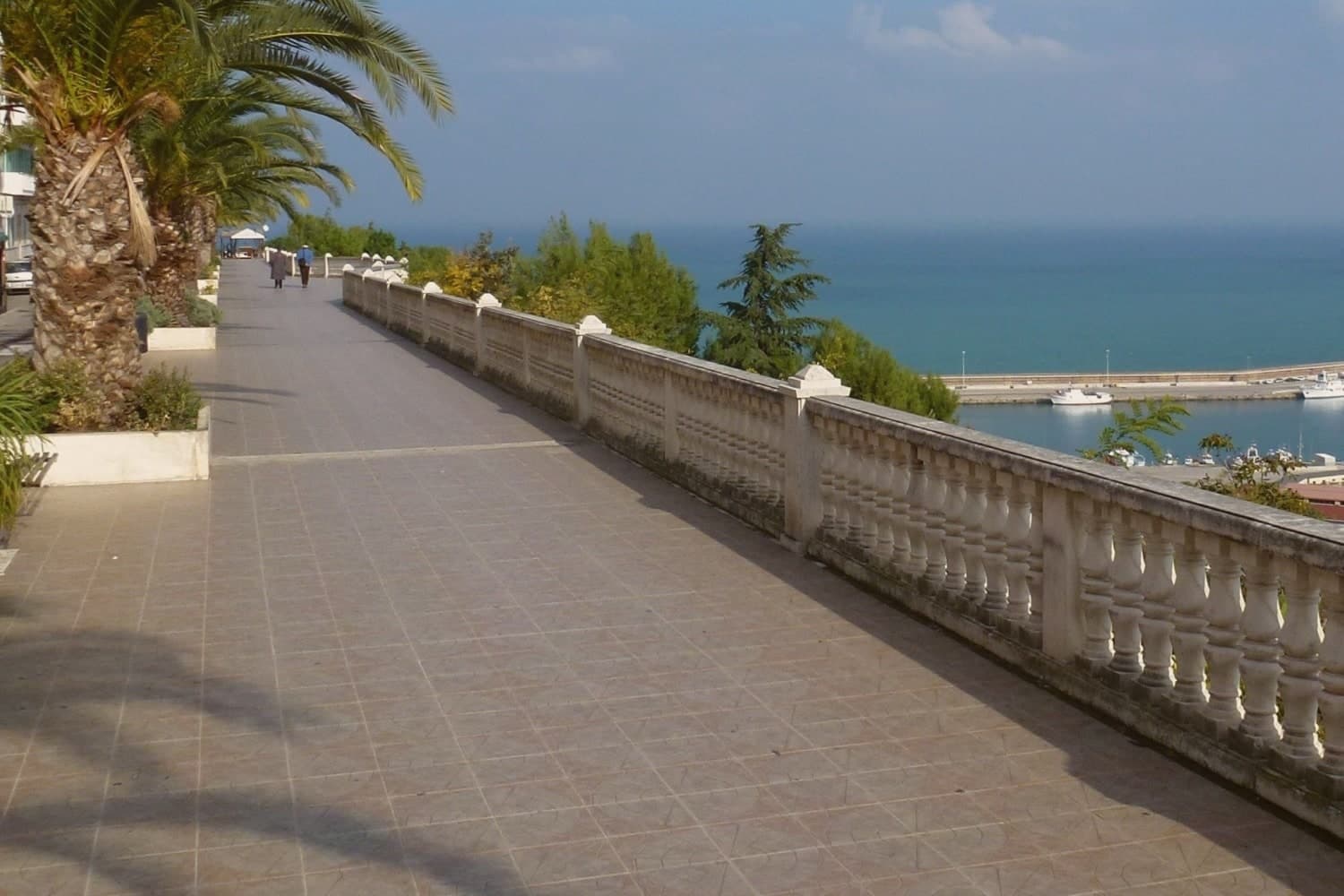
Why visit Ortona
Ortona is the largest town on the Costa dei Trabocchi and the least postcard-like. It has a real harbour with real boats in it, a castle on the cliff edge that the sea is slowly taking back, and a cathedral that has drawn pilgrims since 1258, when the relics were carried here from Chios.
It is also a war town. Over eight days at the end of 1943 Canadian and German troops fought through these streets house by house, and the town that stands now was largely rebuilt afterwards.
The Moro River cemetery on the edge of town is where most visitors end up going quiet.
We confirmed you can reach this one by train.
What to see in Ortona
- Castello Aragonese. The fifteenth-century castle on the cliff above the port, open to walk around. Coastal erosion has taken part of it, which is visible from the seaward side.
- Basilica di San Tommaso Apostolo. The cathedral holding relics venerated as those of the apostle Thomas, brought from the island of Chios in 1258.
- Passeggiata Orientale. The belvedere walk along the cliff edge, looking north up the coast toward Pescara.
How to get to Ortona
There is a railway station in the town, so you can arrive without a car and never need one while you are here. Pescara is roughly 33 minutes away by road.
Our tip
May to September is the season, and the sea is warm from late June. July and August fill the beaches south of the harbour with Italian families rather than foreign coaches. The Via Verde is best in May or September, when the path is not hot. Sagra della Triglia e del Pesce Fritto falls in August.
More from Anywhere Italy
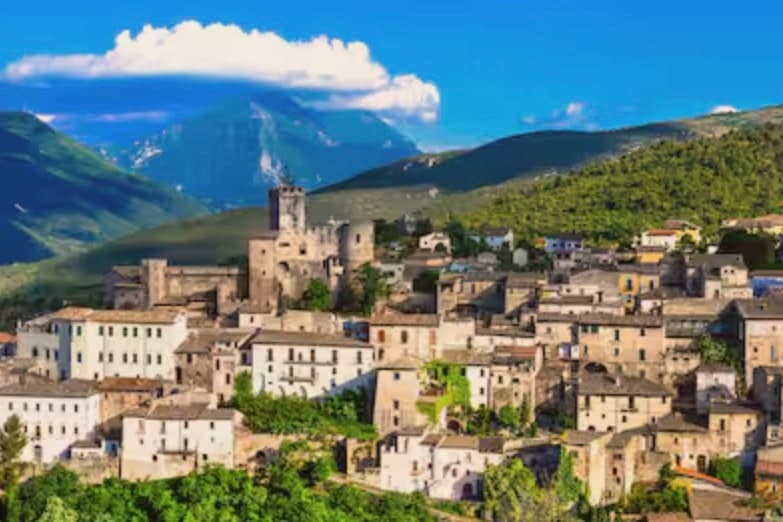 The best wine towns in Abruzzo
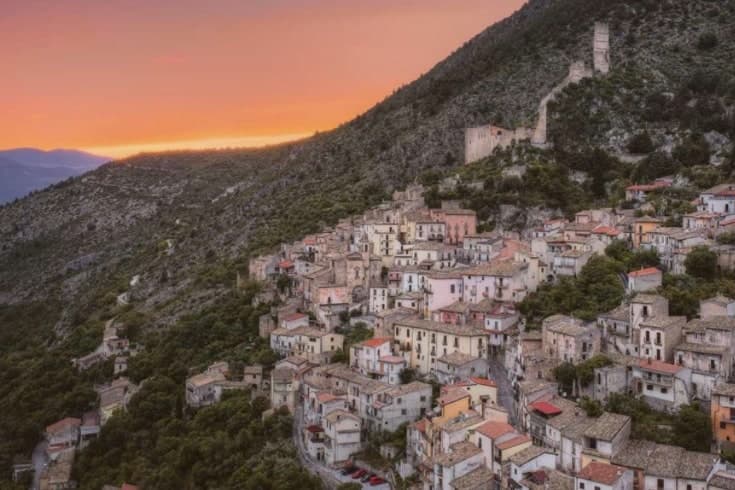 The best hill towns you can reach by train in Abruzzo
- The best hidden coastal towns within 90 minutes of Pescara
- The best small hill towns you can reach by train in Abruzzo
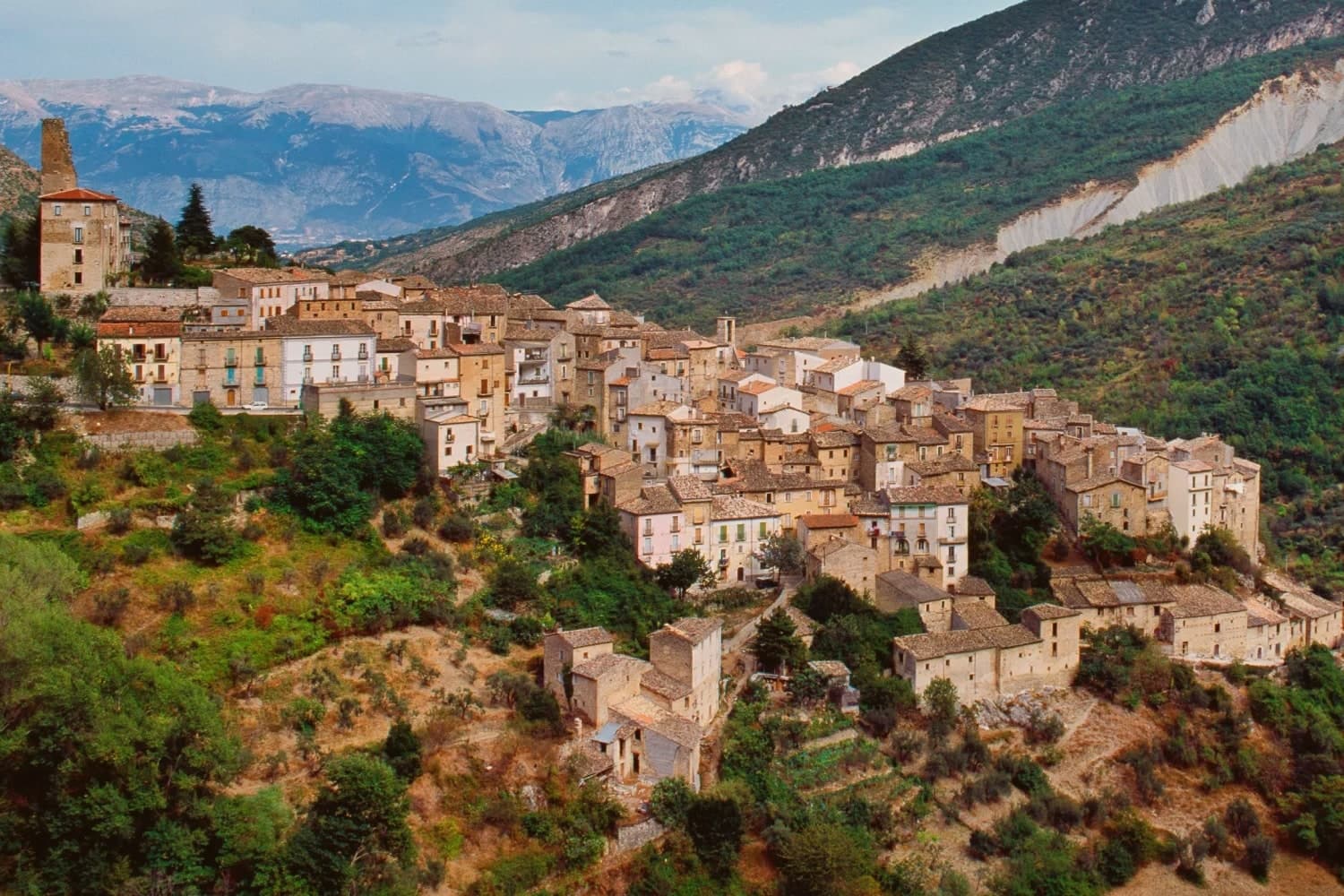 The prettiest villages you can reach by train within 90 minutes of Pescara
- The best coastal towns in Abruzzo