
The best small towns you can reach by train that have a serious restaurant in Piemonte
Piemonte is a region of long lunches and short winter days, of tajarin cut thin as thread, vitello tonnato served cold in the heat of late summer, agnolotti del plin pinched by hand, and bagna cauda that arrives on the table over a flame when the fog settles into the valleys. The materials change as you move: granite and slate in the Ossola, stucco and wrought iron on the lake fronts, brick and stone in the Langhe villages that look south towards the vineyards. Autumn is the season everything points at, with white truffles from Alba, hazelnuts from the Alta Langa, and the first Nebbiolo talk in the cellars. Spring on the lakes is quieter and greener, camellias out, water still cold. The railway threads through all of it, which is the useful part.
The obvious move is Turin, and Turin deserves the attention it gets: the arcades, the historic cafés, the Egyptian collection, the Mole. It is also where almost every visitor to Piemonte begins and, often enough, ends, and the good tables in the centre book out weeks ahead on a Saturday. Alba in truffle season is the other pressure point, with the fair filling every room in the Langhe and pushing prices up across the province. Both are worth the trip. Neither is quiet.
The same tracks keep going. North to Maggiore and the Ossola valleys, west into the Maritime Alps, south towards the vineyards, past the famous stops and into towns small enough to walk end to end in a morning, where the kitchen the guides have singled out is a few minutes from the station. Fewer people get off at these platforms. That is most of the point.
Of the 65 communes we have mapped in Piemonte, 18 qualify as towns you can reach by train with a serious restaurant: we have confirmed each is reachable without a car, and each holds a restaurant listed by the most demanding of the guides. This list is the small ones, 6 in all, ordered smallest first. The smallest, Verduno, has 567 residents.
If you are still choosing, we have also written The best lake towns you can reach by train in Piemonte and The best small lake towns in Piemonte.
Verduno
Why visit Verduno
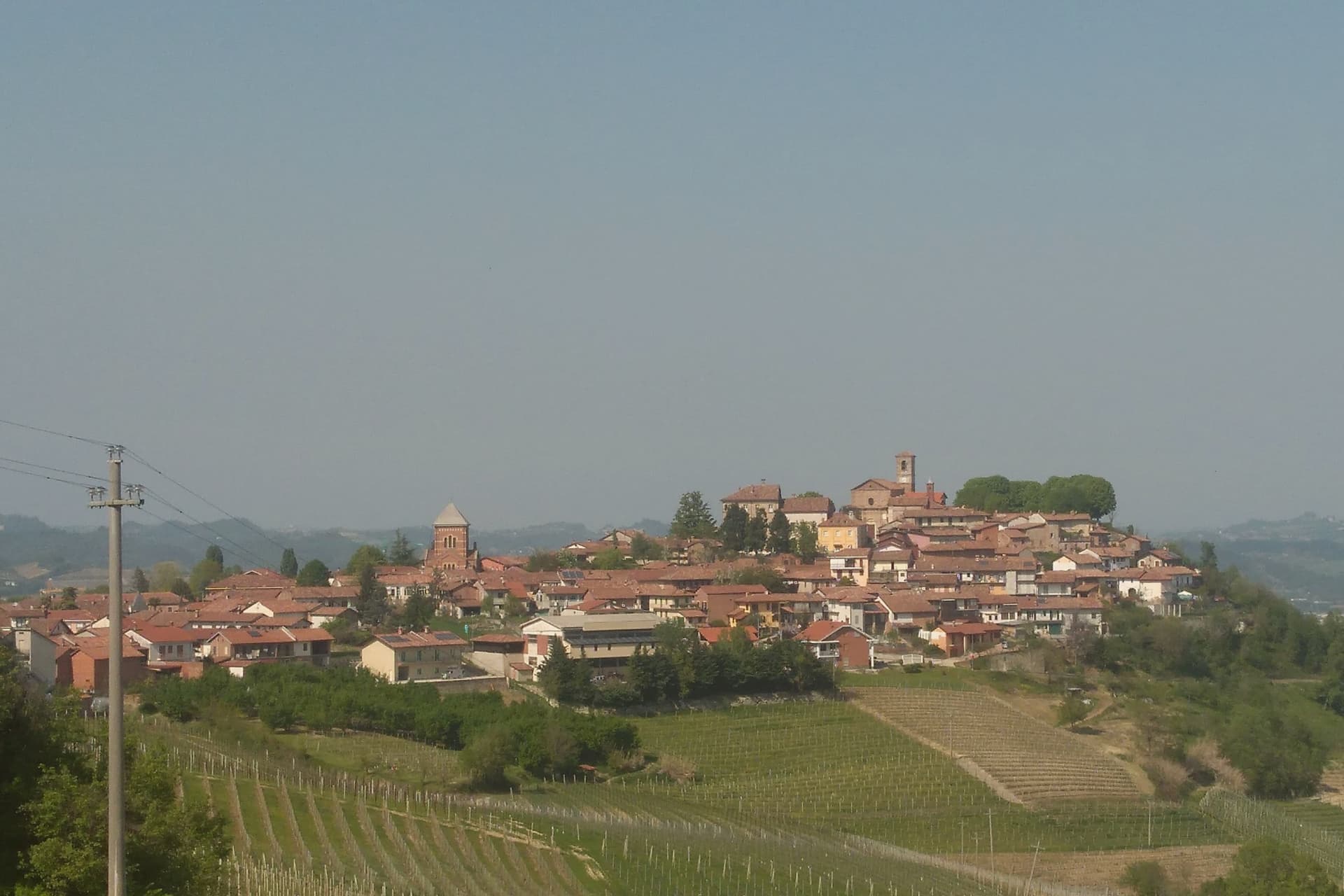
Verduno sits fifty kilometers south of Torino on a Langhe ridge above the Tanaro, its vineyards the only ones among the eleven Barolo communes to lean partly toward the river plain rather than folding back into the hills. That position, facing the water and the Alps beyond it, sets the village apart from the rest of the DOCG even before the wine is considered.
The other thing that sets it apart is Pelaverga Piccolo, a native black grape cultivated commercially in only three Langhe communes: Verduno, La Morra and Roddi. It yields a light ruby red with strawberry, rose and a distinct white-pepper finish, and the first single-variety Pelaverga vineyard on these slopes was planted in 1972.
Between the castle on the ridge and the vine on the plain-facing slope, Verduno holds two things most of its neighbors do not: a wine that is Barolo's own, structurally, and a wine that belongs to almost nowhere else.
La Sbornia a Verduno, Real Castello have been named by a guide.
What to see in Verduno
- Castello di Verduno. The castle stands on the Langhe ridge and passed to the Burlotto family in 1909, who still work it as a winery producing Barolo and Pelaverga.
- Centro storico. Small hilltop village arranged around the castle and the parish church, with views across the Tanaro and the northern Barolo vineyards.
- Vigneti di Pelaverga. Indigenous Pelaverga Piccolo plantings on the Verduno slopes, including the first single-variety Pelaverga vineyard planted in 1972.
How to get to Verduno
There is a railway station in the town, so you can arrive without a car and never need one while you are here. Torino is roughly 60 minutes away by road.
Our tip
April through June is the green window in the Langhe, hillsides striped between Nebbiolo and Pelaverga vines, mild evenings on the Verduno ridge. September and October are the harvest months: Pelaverga first, Nebbiolo last, with the surrounding cantine open for tastings and walking through the rows possible without crowds. July and August touch the low thirties on the hills; the centro storico thins after lunch and the cellar tastings move under stone vaults to stay cool.
Orta San Giulio
Why visit Orta San Giulio
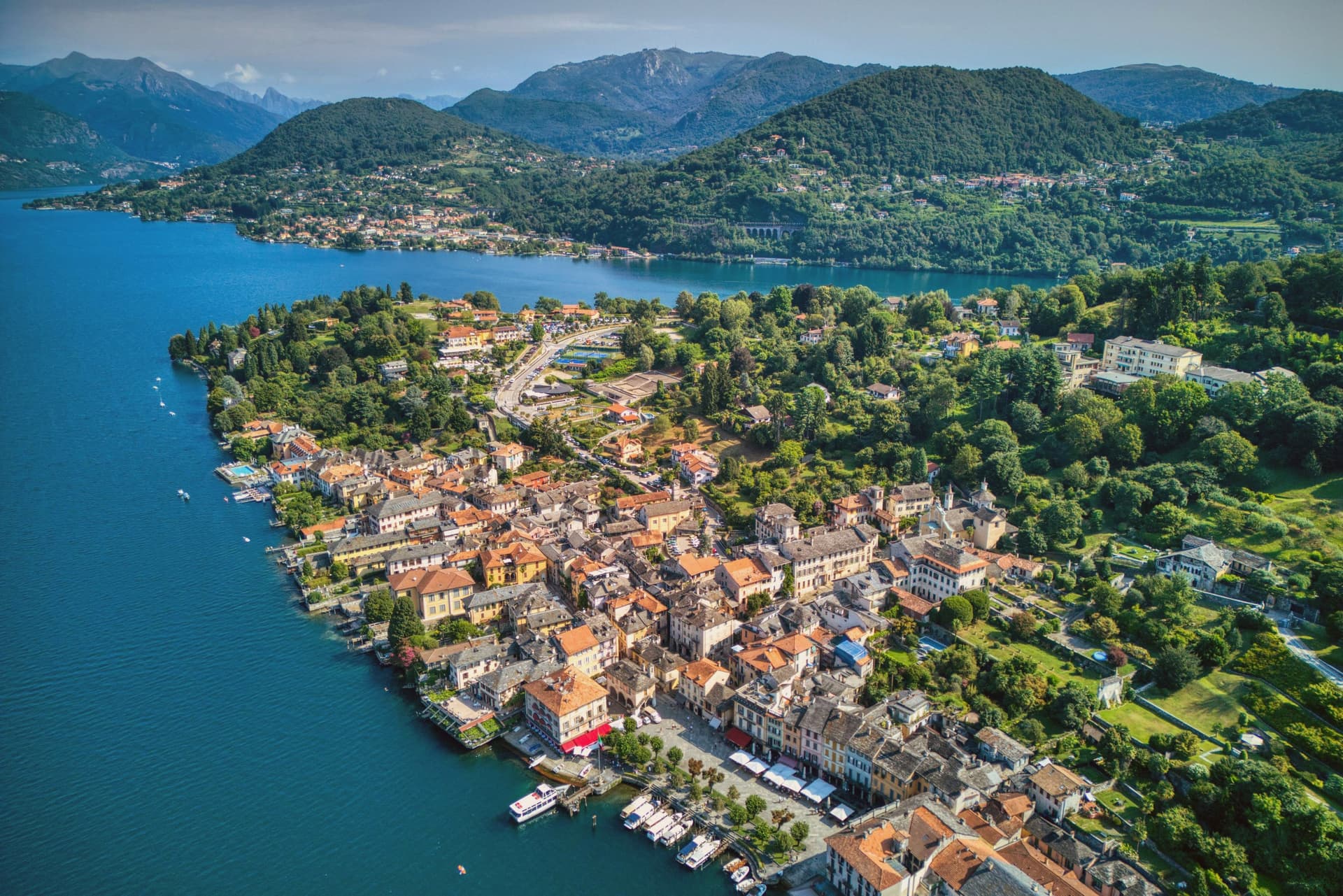
The town occupies a promontory pushed into the eastern shore of the lake, facing the small island 275 meters long and 140 meters wide. The two are close enough that the island reads as an extension of the town rather than a separate place, and a five-minute motorboat from the piazza is the only way across.
The old town holds three Tier-A signals at once: Borghi più belli, Bandiera Arancione, and the UNESCO inscription of 2003. The relationship between the three parts of the town explains how it works: the waterfront square and its lanes sit at lake level, facing the island directly across the water, while the hill above holds the devotional complex, reached by climbing away from the shore rather than along it.
Piazza Motta was also the seat of the Comunità della Riviera di San Giulio, an autonomous federation of lake towns that survived from the Middle Ages to the mid-eighteenth century, which is why the square, not the hill or the island, was built as a civic center. What results is a town in three registers at once: civic life at the water's edge, monastic life offshore, and devotional life on the hill above, each occupying its own ground and visible from the others.
Villa Crespi, Andrea Monesi - Locanda di Orta have been named by a guide.
What to see in Orta San Giulio
- Basilica di San Giulio. Serpentine ambo inside and a silver shrine dated 1697. Reached by boat, the basilica stands close to the water's edge, the focal point of the view from every point on the promontory.
- Piazza Motta and Palazzo della Comunità. The broletto's arcades face the water directly, and the square narrows toward the boat landing where the crossing to the island begins.
- Sacro Monte di Orta. The chapels climb the wooded hillside in sequence, each framing a scene, with the town and the lake opening up in views between them as the path gains height.
How to get to Orta San Giulio
There is a railway station in the town, so you can arrive without a car and never need one while you are here. Novara is roughly 46 minutes away by road.
Our tip
April through June brings the Sacro Monte chapels into the chestnut shade and the lake water warm enough for the open-air bars on Piazza Motta. July and August fill the ferry to the island and the piazza turns over by the hour; the centro pedestrian zone slows to a queue at lunch. September and October are the clearest window: low light on the basilica across the water, fewer day-trippers from Milano, and the Sacro Monte path almost empty after eleven.
Limone Piemonte
Why visit Limone Piemonte
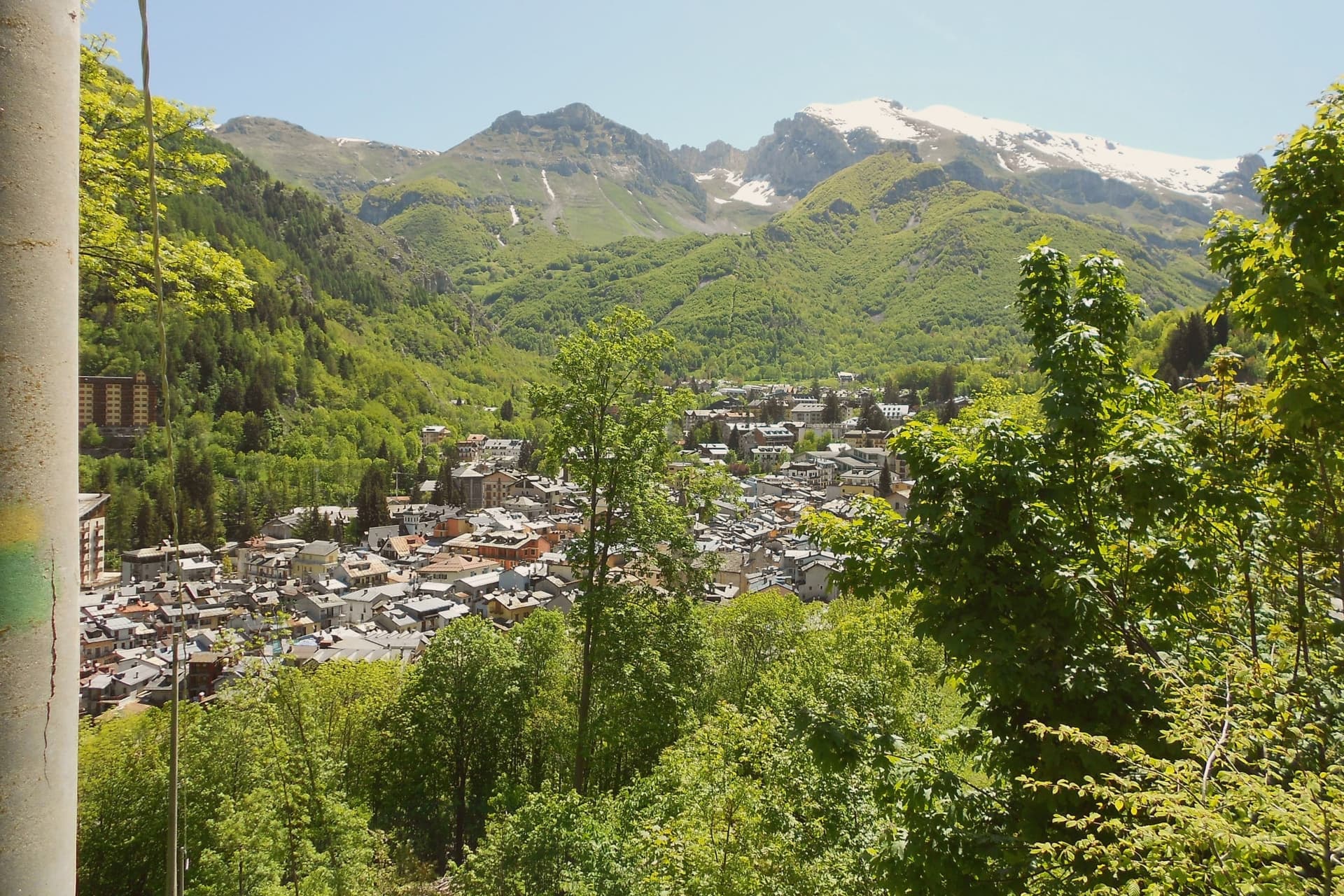
Limone Piemonte sits at 1,000 meters in the Vermenagna valley, twenty kilometers from Cuneo and fourteen from the Colle di Tenda, the historic pass into France. The Riserva Bianca ski domain rises behind the village from 1,050 to 2,085 meters, with eighty kilometers of pistes served by one gondola, ten chairlifts and three drag lifts.
The Cuneo-Ventimiglia railway, opened across this valley in 1900, runs ninety kilometers from the plain to the sea with thirty-three tunnels and twenty-seven bridges, one of the steepest mountain lines in Europe. In the village center, Piazza del Municipio holds a 16th-century stone fountain and the Gothic parish church of San Pietro in Vincoli, with elements of Romanesque and Gothic stonework from the 14th and 15th centuries.
The town empties between seasons and fills twice a year, for the ski months and for the alpine summer.
Osteria Il Bagatto, White Restaurant have been named by a guide.
What to see in Limone Piemonte
- Chiesa di San Pietro in Vincoli. Gothic parish church on Piazza del Municipio, built between the 14th and 15th centuries on Romanesque foundations.
- Riserva Bianca. Ski domain rising from 1,050 to 2,085 meters with 80 km of pistes, the main winter draw of the southern Piemonte Alps.
- Centro storico. Stone village core around Piazza del Municipio, with a 16th-century fountain and a Gothic-Romanesque parish church.
How to get to Limone Piemonte
There is a railway station in the town, so you can arrive without a car and never need one while you are here. Torino is roughly 132 minutes away by road.
Our tip
December through March is the ski season the village was rebuilt for: the Riserva Bianca lifts open, the centro fills on weekends and the railway carries day-trippers up from the plain. June through September brings the second peak, when the same ridges become hiking, grazing and via ferrata country and the Tenda border roads draw cyclists. April, May, October and November are quiet between the two seasons.
Mergozzo
Why visit Mergozzo
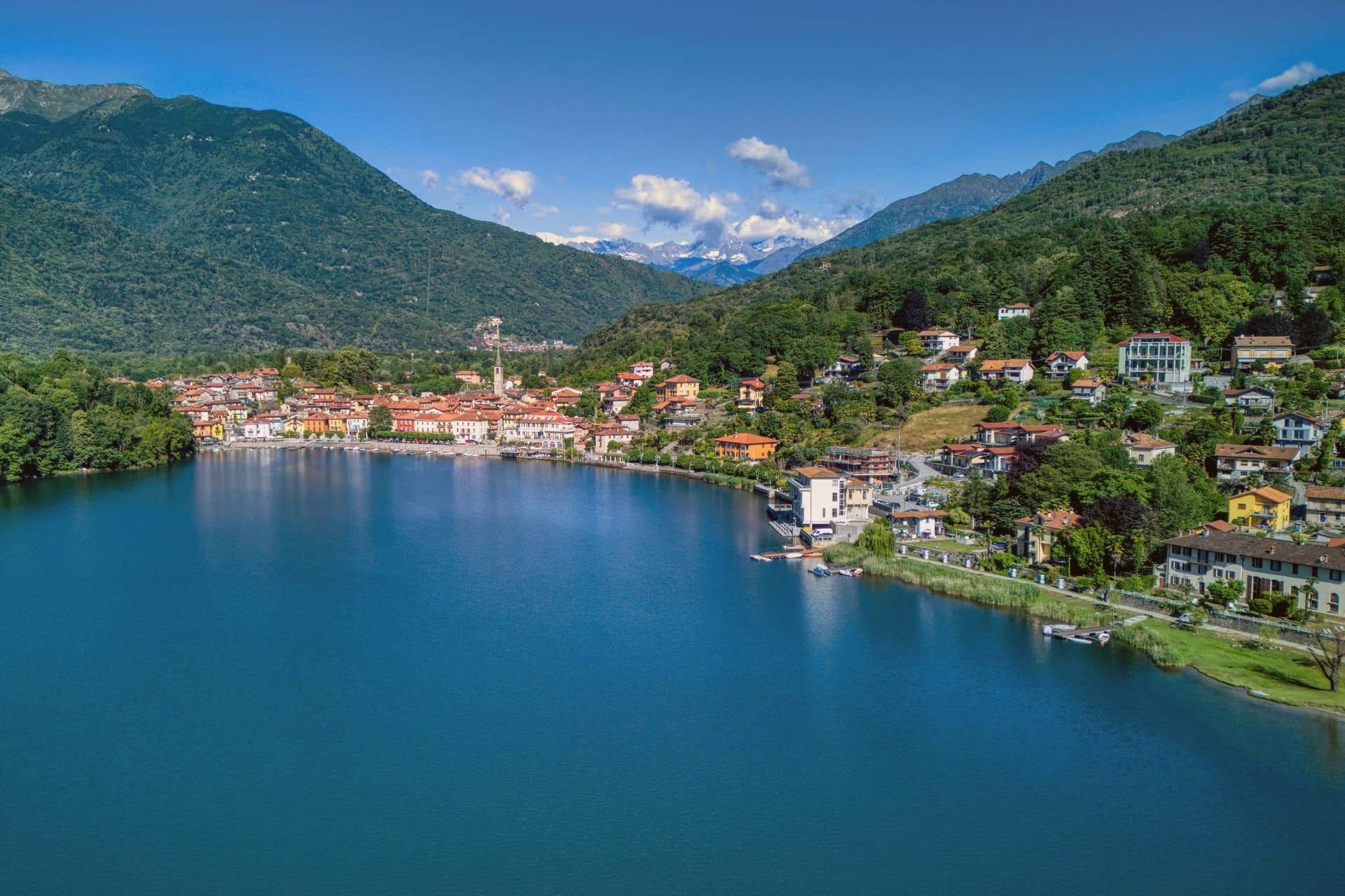
The lake is 74 meters deep and sits at 204 meters, separated in antiquity from its larger neighbor when sediment from the Toce river closed the channel between them. The village faces the water from the western shore, folded behind a lakefront piazza where the parish church holds a painting from 1623 already showing the elm that gives the square its character.
Behind the piazza, narrow stone-paved lanes called strece climb toward terraced gardens, the houses built of the same granite quarried on neighboring Montorfano hill. Stone has long been the local economy, tying Mergozzo to the wider region: the same quarries that cut the lanes' paving supplied material used in Rome and across northern Italy.
Trailheads above the village lead into Val Grande, so the same slopes that shelter the piazza from behind also open, higher up, onto one of the wildest valley systems in the Alps. What holds the place together is this stacking of scales: a small, closed-off lake at the bottom, a worked hillside of stone above it, and beyond that, wilderness.
La Fugascina Ristorante, La Quartina have been named by a guide.
What to see in Mergozzo
- L'Olmo di Mergozzo. Hollow-trunked field elm on the lakefront piazza, still standing and shading the square it has watched over for generations.
- Lago di Mergozzo. 2.5 km lake separated from Lago Maggiore by Toce sediment, motorboat-free and ranked among Europe's cleanest waters.
- Centro storico. Stone-paved lanes (strece) and granite houses climbing the slope behind the lakefront piazza.
How to get to Mergozzo
There is a railway station in the town, so you can arrive without a car and never need one while you are here. Novara is roughly 67 minutes away by road.
Our tip
April through June and September into October are the months the lakefront works best: mild water, open trattorie and Val Grande trails clear of snow but cool enough to walk. July and August fill the small beach and the parking lots, though Mergozzo never reaches the volume of nearby Stresa on Maggiore. November through March is quiet.
Stresa
Why visit Stresa
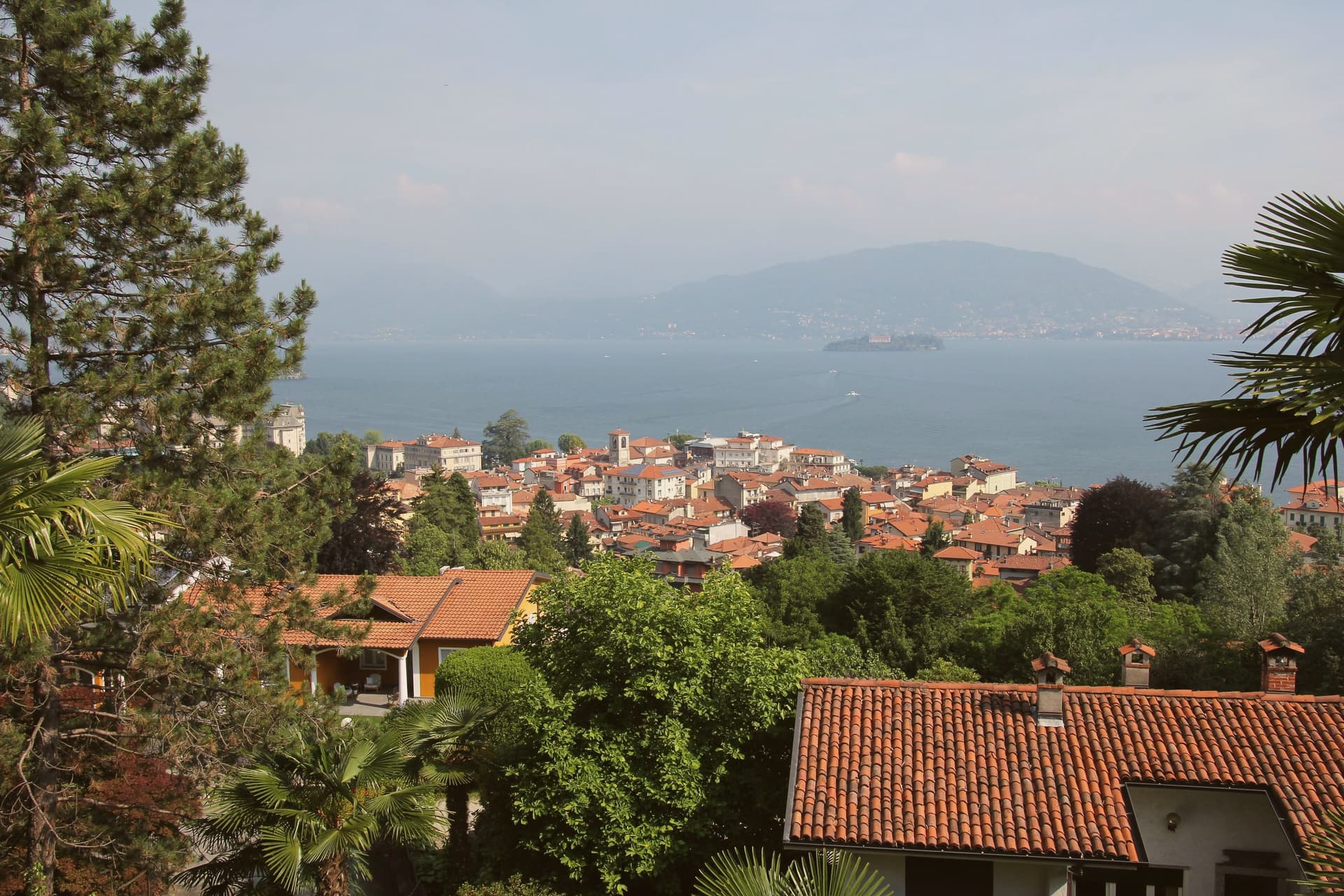
Stresa sits at 200 meters on the western shore of Lake Maggiore, ninety kilometers north of Milano on the line of the Simplon railway. The town first appears in documents in 998, as Strixsya.
From the seventeenth century the lake stage here belonged to the Borromeo family: the palazzo on what had been called l'isola inferiore was begun in 1632, the island renamed after its patron's wife. The other two islands of the group lie 400 meters offshore alongside it, reached by regular ferry from the two town piers, one still inhabited, one given to its park.
Villa Pallavicino, established 1855, sits apart from this cluster on the southern edge of town, its own botanical and wildlife ground answering the islands' gardens without belonging to the same estate. The town's other identity, as a resort, dates to 1863 and the lakefront hotel building that opened international tourism here, later drawing the festival that has filled the town each late summer since 1962.
What Stresa amounts to is a small lake shore town organized almost entirely around water it faces rather than land it occupies: the islands offshore, the piers that reach them, and a lakefront built for arrival rather than settlement.
La Botte, Lo Stornello, Osteria Mercato and 5 more have been named by a guide.
What to see in Stresa
- Isola Bella. The island sits close to the town piers, its terraced Baroque gardens rising in tiers above the water and the palazzo facing the lakefront directly.
- Isola Madre. The largest of the group, given over almost entirely to its park: paths through subtropical planting and glimpses of the villa between the trees.
- Isola dei Pescatori. The one island still lived in year-round, its lanes narrow between the houses and the trattorie facing the water where the fishing boats once worked.
How to get to Stresa
There is a railway station in the town, so you can arrive without a car and never need one while you are here. Novara is roughly 57 minutes away by road.
Our tip
April through June is the green window on Lake Maggiore: Isola Bella's terraced gardens in flower, the ferries running full timetable, and the lakefront promenade open without the August press. July and August are warm and crowded; the centro empties between two and four in the afternoon heat, and the islands fill on day trips from Milano. The Settimane Musicali run from late August into September, the busiest cultural weeks of the year.
Baveno
Why visit Baveno
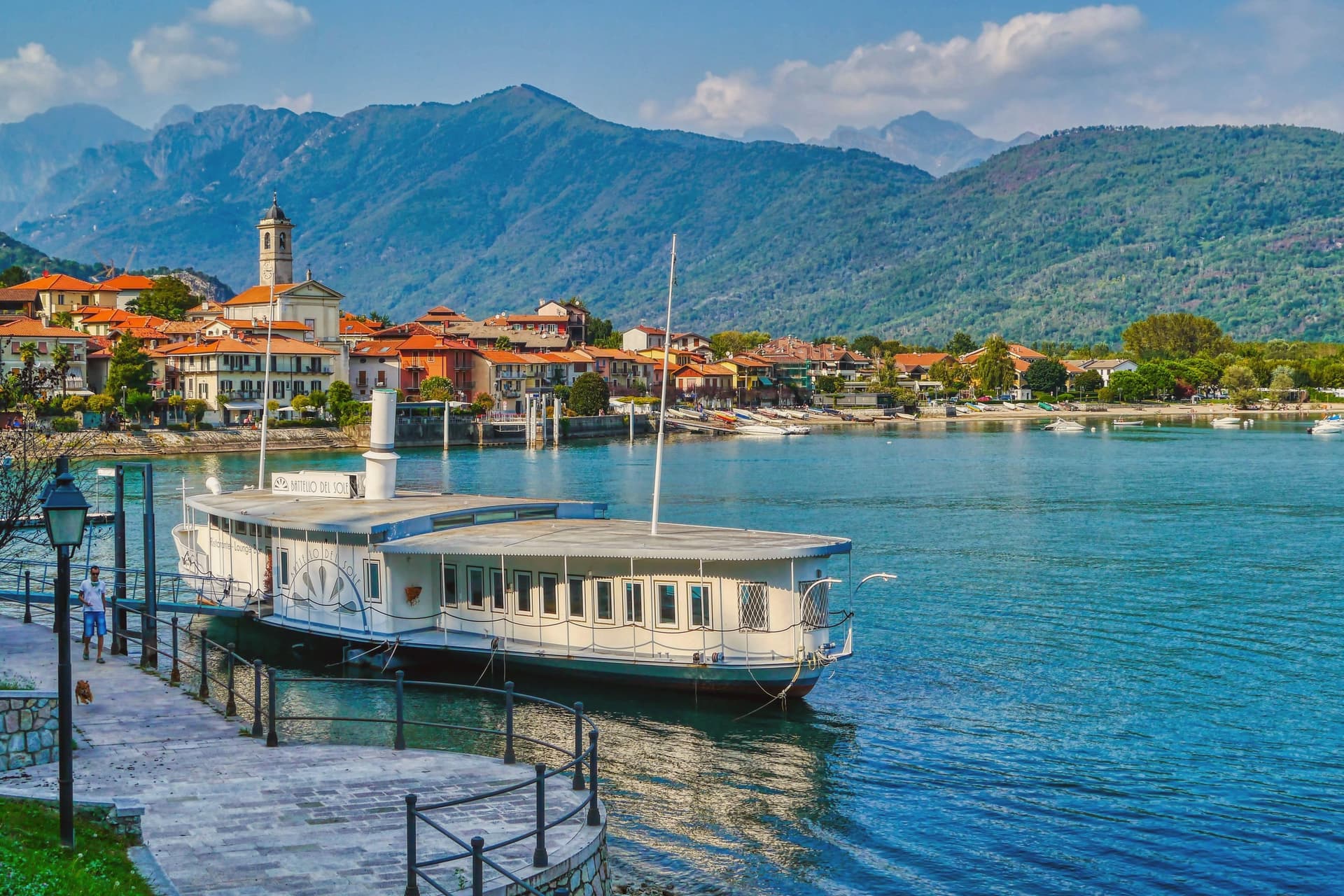
Baveno sits at 205 meters on the west shore of the lake, twenty-one kilometers north-west of Arona. The town was occupied in the Iron Age by the Lepontii, a tribe of the Ligures, before the Romans reached the lake, and its historic core still gathers around the raised church and its baptistery above the shore road.
To the north-west, the granite quarries have cut into the hillside since the early sixteenth century, and the stone they produced left Baveno for Milan and Rome, built into a cathedral, a basilica, and a shopping gallery. Along the water, a line of nineteenth-century villas marks the period when Lake Maggiore became a fixed point on the European Grand Tour, and from that same shore the Isole Borromee sit a ten-minute ferry away, close enough that the gulf reads as one continuous view rather than a lake and its islands.
The town's quarries built landmarks elsewhere while its own shore stayed a place people came to look at the water.
SottoSopra have been named by a guide.
What to see in Baveno
- Chiesa dei Santi Gervasio e Protasio. The two Romanesque buildings, church and baptistery, form the religious centre of the historic core, raised above the road that runs along the water.
- Cave di Granito Rosa. The quarries lie north-west of town, cut into the hillside, the source of stone that traveled to two large churches and a shopping gallery.
- Golfo Borromeo. The gulf opens out between Baveno and Stresa, the water broken by three islands, Isola Bella, Isola dei Pescatori and Isola Madre, each reachable within minutes.
How to get to Baveno
There is a railway station in the town, so you can arrive without a car and never need one while you are here. Novara is roughly 55 minutes away by road.
Our tip
April through June and September into October are the best months on the Borromean Gulf. The lake stays cool, the ferries to Isola Bella run a full timetable, and the lakeside promenade carries traffic without congestion. July and August are warm and crowded: full hotels, restaurant queues, and ferry decks pressed shoulder to shoulder on the short hop from Stresa.
More from Anywhere Italy
 The best lake towns you can reach by train in Piemonte
- The best small lake towns in Piemonte
- The best towns with a serious restaurant that eat well within 90 minutes of Novara
- The best lake towns that eat well within 90 minutes of Novara
- The best lake towns within two hours of Turin
 The best small towns with a serious restaurant in the province of Cuneo