
The best small towns with a serious restaurant in the province of Cuneo
The province of Cuneo eats better than almost anywhere in Italy, and it does so in villages you could walk across before your coffee cools. Vineyards fall away from ridge-top clusters of brick houses and squat stone towers, and the cellars underneath them hold Barolo, Barbaresco, Dolcetto and Moscato. Autumn brings fog in the valleys, white truffle on the tajarin, veal dressed in nothing but oil and lemon, hazelnuts in everything sweet. Further south the hills turn into the Maritime Alps, where the cooking gets heavier and the winters are long.
The default plan is Alba. It has the truffle fair, the best-known restaurant addresses, the train from Turin, and in October it has queues that snake around the piazza and hotel rates that behave accordingly. Bra and the Slow Food circuit pull the same crowd for the same weeks. None of this is undeserved, but a table booked months ahead in a town full of people who also booked months ahead is a particular kind of evening.
The hills do not stop at the edge of Alba. The same slopes, the same growers, the same guide-rated kitchens continue through the ridge villages of the Langhe and on into the mountain valleys towards France, and that is where the towns on this list are. Fewer people go, the dining rooms are smaller, and the wine list is often a family's own. Each of these towns holds a restaurant listed by the most demanding of the dining guides.
Of the 23 communes we have mapped in the province of Cuneo, 13 qualify as towns with a serious restaurant: each holds a restaurant listed by the most demanding of the dining guides. This list is the small ones, 10 in all, ordered smallest first. The smallest, Serralunga d'Alba, has 527 residents.
Elsewhere in the catalogue: The 7 best small wine towns with a serious restaurant in Piemonte and The best small wine towns within 90 minutes of Torino.
Serralunga d'Alba
Why visit Serralunga d'Alba
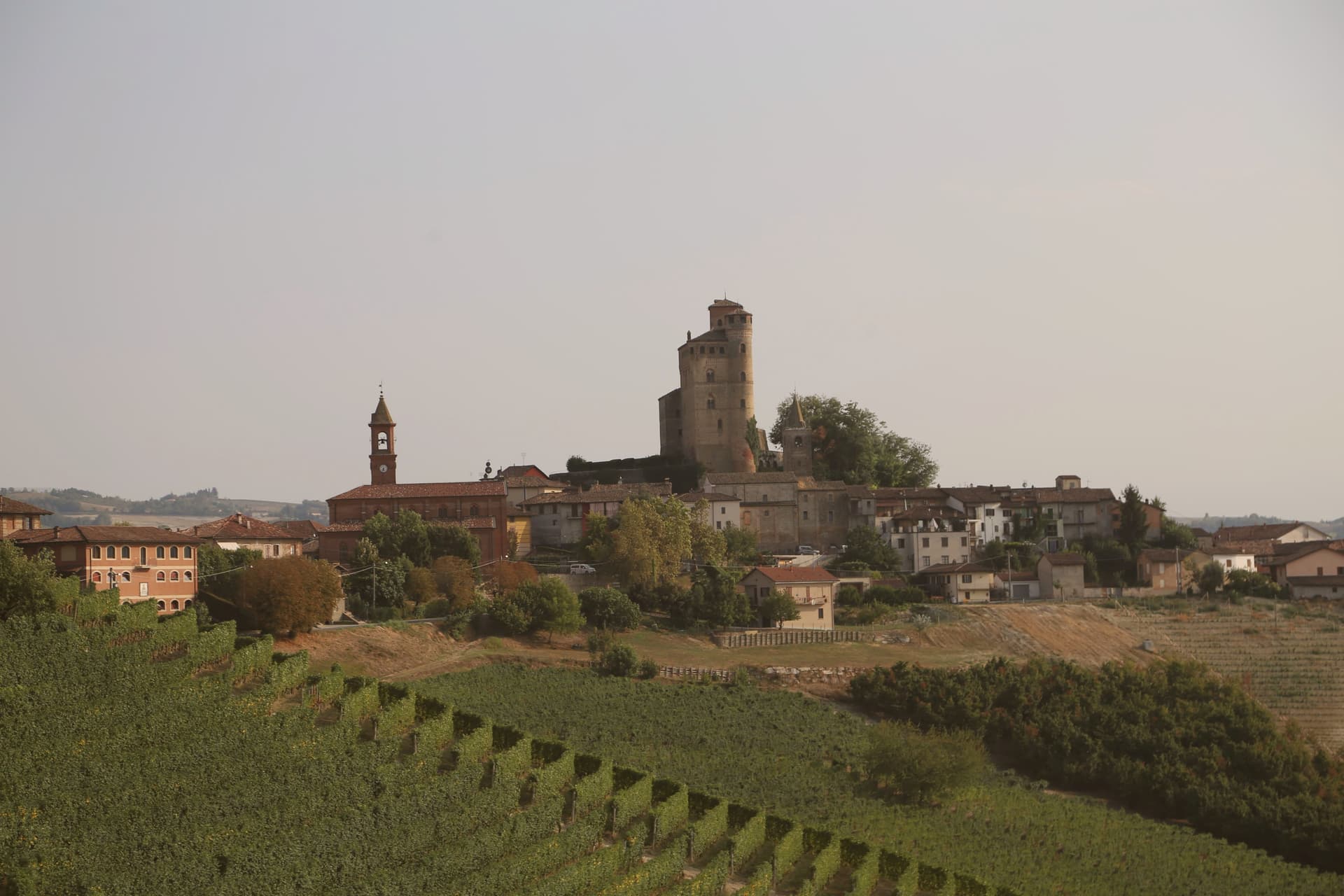
Serralunga d'Alba sits fifty-five kilometers southeast of Torino, in the centre of the Barolo DOCG, on a ridge so long and thin that the village is built as a single file along it. The Falletti family of Asti, merchants and bankers rather than warriors, acquired the territory and rebuilt the castle between 1340 and 1357 under Pietrino and his son Goffredo II, demolishing an earlier tower to put up the donjon in its place.
The choice of plan mattered: a French-style tower was unusual for Italy, and its narrowness was a statement of control over the productive land below rather than a defensive necessity. The layout of the borgo follows from this.
Houses run in a line along the crinale from the castle down to the parish church, so the two structures anchor the settlement at either end, administrative power at one point, religious life at the other, with the village strung between them. The vineyards that surround the ridge on all sides are what the castle was built to oversee, and what later brought international recognition to the same slopes.
A defensive tower repurposed as a counting house, a village laid out to serve it, and vineyards inscribed for the same landscape they were always part of: the place reads as one continuous arrangement rather than three separate attractions.
La Rei Natura by Michelangelo Mammoliti, Guidoristorante, La Rei Natura - Il Boscareto Resort & Spa and 3 more have been named by a guide.
What to see in Serralunga d'Alba
- Castello di Serralunga d'Alba. Vertical and slim above the ridge, the donjon plan reads at a distance rather than up close, a design meant for administrative control of the land rather than for defense.
- Borgo lungo il crinale. Linear village of stone houses along the narrow Langhe ridge, with a single main street running from the castle to the parish church.
- Parrocchiale di San Sebastiano. Parish church on the ridge below the castle, with a baroque interior on a simpler medieval plan, the religious centre of the borgo.
How to get to Serralunga d'Alba
Torino is roughly 64 minutes away by road.
Our tip
April through June is the green window across the Barolo ridges: vines in leaf, mild evenings, the castle terrace open onto a clear line of cru. July and August touch the mid-thirties on the south-facing slopes; the borgo thins between two and five and the cantine close in the afternoon heat. September and October are the Nebbiolo harvest, when Serralunga's narrow main street fills with tractors and pickers and the wineries open their doors.
Verduno
Why visit Verduno
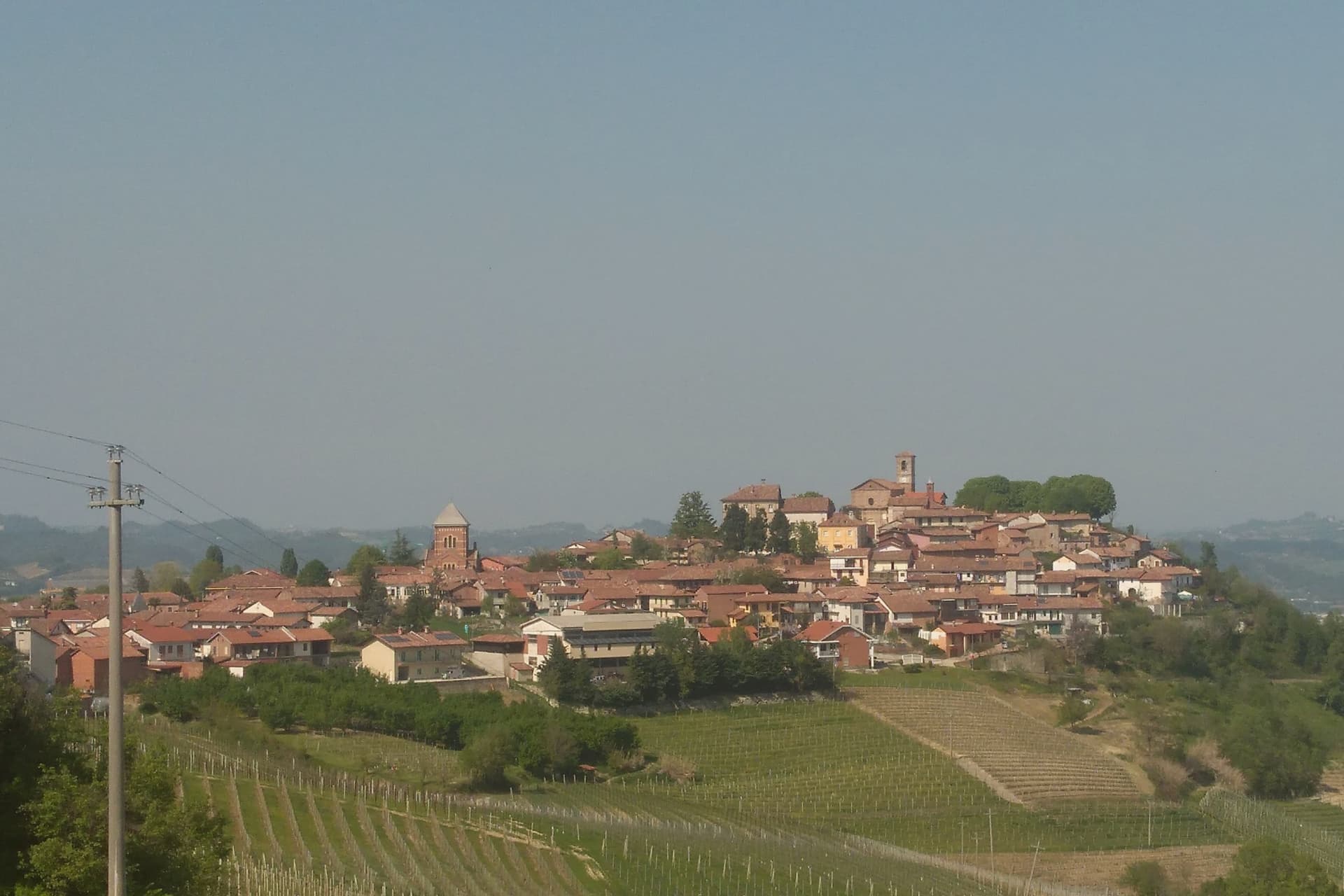
Verduno sits fifty kilometers south of Torino on a Langhe ridge above the Tanaro, its vineyards the only ones among the eleven Barolo communes to lean partly toward the river plain rather than folding back into the hills. That position, facing the water and the Alps beyond it, sets the village apart from the rest of the DOCG even before the wine is considered.
The other thing that sets it apart is Pelaverga Piccolo, a native black grape cultivated commercially in only three Langhe communes: Verduno, La Morra and Roddi. It yields a light ruby red with strawberry, rose and a distinct white-pepper finish, and the first single-variety Pelaverga vineyard on these slopes was planted in 1972.
Between the castle on the ridge and the vine on the plain-facing slope, Verduno holds two things most of its neighbors do not: a wine that is Barolo's own, structurally, and a wine that belongs to almost nowhere else.
La Sbornia a Verduno, Real Castello have been named by a guide.
What to see in Verduno
- Castello di Verduno. The castle stands on the Langhe ridge and passed to the Burlotto family in 1909, who still work it as a winery producing Barolo and Pelaverga.
- Centro storico. Small hilltop village arranged around the castle and the parish church, with views across the Tanaro and the northern Barolo vineyards.
- Vigneti di Pelaverga. Indigenous Pelaverga Piccolo plantings on the Verduno slopes, including the first single-variety Pelaverga vineyard planted in 1972.
How to get to Verduno
There is a railway station in the town, so you can arrive without a car and never need one while you are here. Torino is roughly 60 minutes away by road.
Our tip
April through June is the green window in the Langhe, hillsides striped between Nebbiolo and Pelaverga vines, mild evenings on the Verduno ridge. September and October are the harvest months: Pelaverga first, Nebbiolo last, with the surrounding cantine open for tastings and walking through the rows possible without crowds. July and August touch the low thirties on the hills; the centro storico thins after lunch and the cellar tastings move under stone vaults to stay cool.
Castiglione Falletto
Why visit Castiglione Falletto
The commune sits at 350 meters on a Langhe ridge between the towns of Barolo and Serralunga d'Alba, its 672 inhabitants and its whole territory inside the DOCG zone and the UNESCO Vineyard Landscape. The written record starts on July 31, 1001, when Emperor Otto III granted the castle to the Marquis Olderigo Manfredi, Count of Torino.
In the twelfth century it passed by the will of Bonifacio del Vasto to the Saluzzo. The Falletti family arrived in 1300 and gave the castle its present form, adding outer walls and corner turrets around the older core.
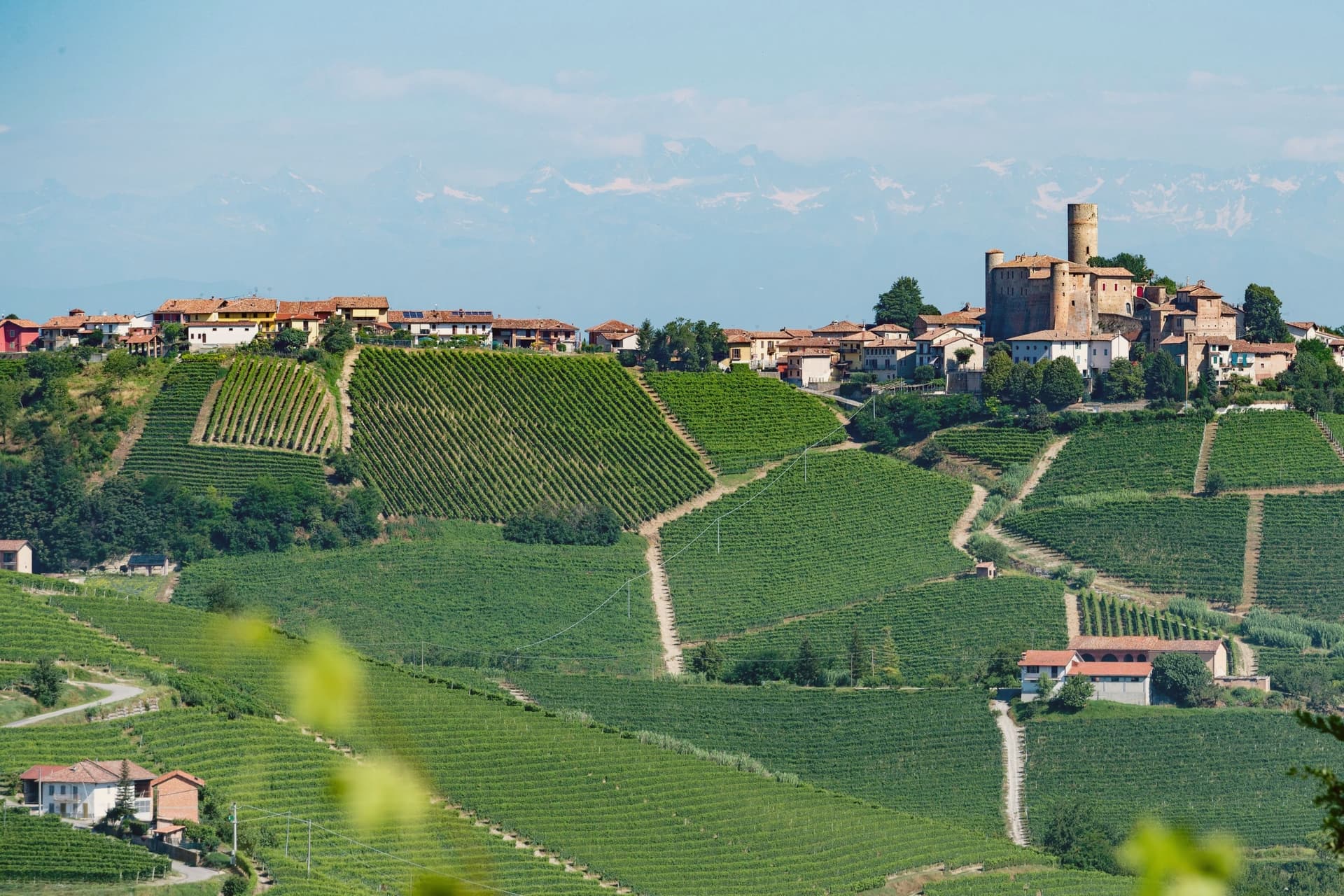
The village itself is small, built along the ridge around the castle, stone houses with vineyards dropping away on either side. Below the castle, the parish church looks east across the valley to the castle at Serralunga d'Alba on the next hilltop, a reminder that this ridge is one of several such promontories facing each other across the surrounding wine country.
The castle is closed inside, privately held, but its garden opens on event days for a full view over the vines. Successive owners, from an imperial grant through the Saluzzo to the Falletti, have left their mark mostly in the walls and turrets added around the tower, while the tower itself, older and stranger in shape than its neighbors, has outlasted all of them.
L'Argaj, Argaj have been named by a guide.
What to see in Castiglione Falletto
- Castello di Castiglione Falletto. Privately owned castle with two corner round towers and an eighteenth-century staircase around the circular keep; outer walls and turrets date to the Falletti reworking after the family settled here in 1300. The garden opens on event days for a 360-degree view over the Barolo Langa.
- Centro storico. Small Langhe hilltop village around the castle, with stone houses on the ridge and vineyards falling away on both sides.
- Chiesa di San Lorenzo. Parish church on the ridge below the castle, with views down to the Serralunga d'Alba castle on the next hilltop east.
How to get to Castiglione Falletto
Torino is roughly 64 minutes away by road.
Our tip
April through June brings the Barolo vineyards into leaf and the ridge into mild evenings, the best window for walking the cru of Rocche and Villero. September and October are the high season: harvest in early October, gold light on the hill, and the castle garden often open for tasting events. July and August get hot on the south-facing slopes; mornings on the ridge and evenings under the church wall are the cool hours.
Limone Piemonte
Why visit Limone Piemonte
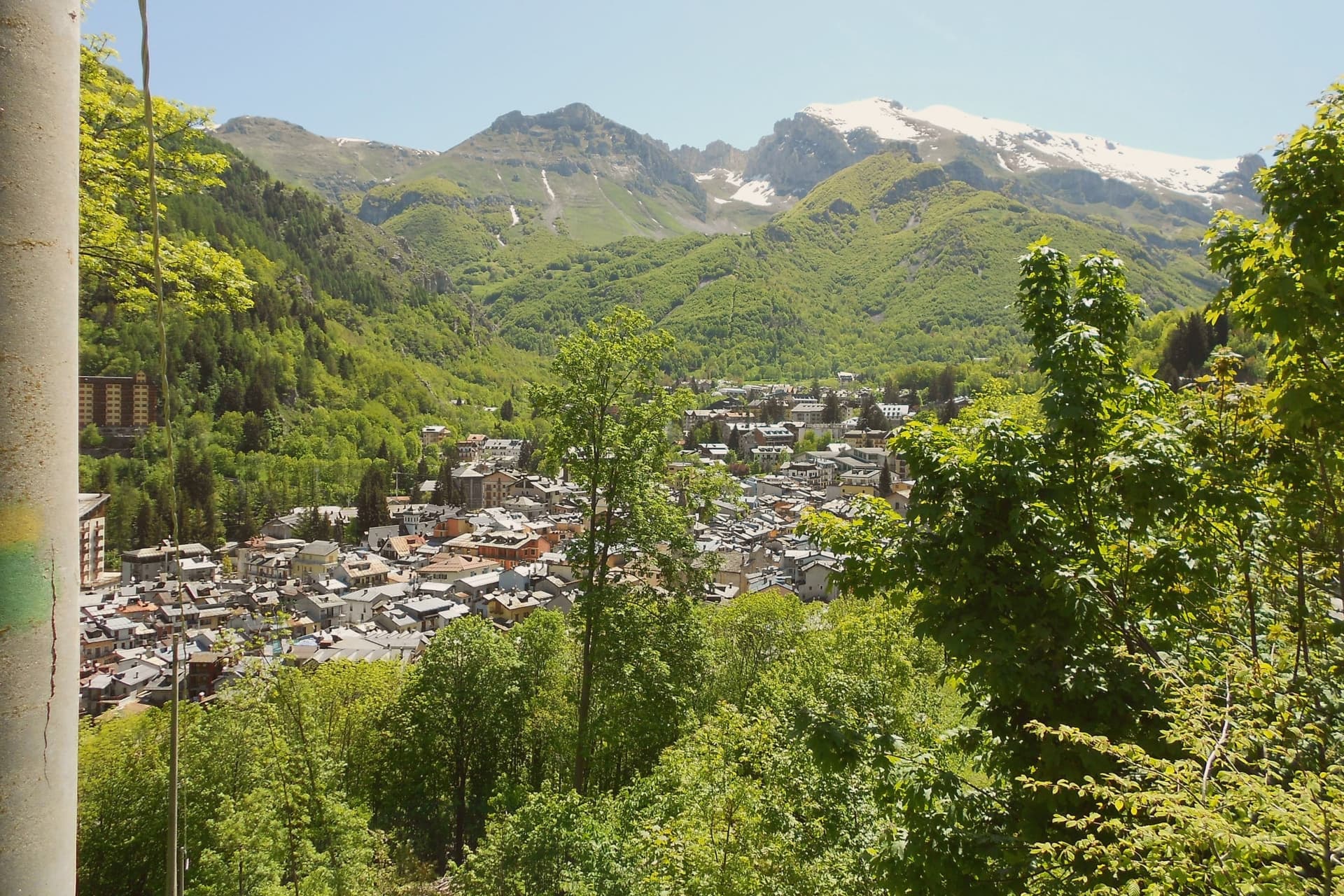
Limone Piemonte sits at 1,000 meters in the Vermenagna valley, twenty kilometers from Cuneo and fourteen from the Colle di Tenda, the historic pass into France. The Riserva Bianca ski domain rises behind the village from 1,050 to 2,085 meters, with eighty kilometers of pistes served by one gondola, ten chairlifts and three drag lifts.
The Cuneo-Ventimiglia railway, opened across this valley in 1900, runs ninety kilometers from the plain to the sea with thirty-three tunnels and twenty-seven bridges, one of the steepest mountain lines in Europe. In the village center, Piazza del Municipio holds a 16th-century stone fountain and the Gothic parish church of San Pietro in Vincoli, with elements of Romanesque and Gothic stonework from the 14th and 15th centuries.
The town empties between seasons and fills twice a year, for the ski months and for the alpine summer.
Osteria Il Bagatto, White Restaurant have been named by a guide.
What to see in Limone Piemonte
- Chiesa di San Pietro in Vincoli. Gothic parish church on Piazza del Municipio, built between the 14th and 15th centuries on Romanesque foundations.
- Riserva Bianca. Ski domain rising from 1,050 to 2,085 meters with 80 km of pistes, the main winter draw of the southern Piemonte Alps.
- Centro storico. Stone village core around Piazza del Municipio, with a 16th-century fountain and a Gothic-Romanesque parish church.
How to get to Limone Piemonte
There is a railway station in the town, so you can arrive without a car and never need one while you are here. Torino is roughly 132 minutes away by road.
Our tip
December through March is the ski season the village was rebuilt for: the Riserva Bianca lifts open, the centro fills on weekends and the railway carries day-trippers up from the plain. June through September brings the second peak, when the same ridges become hiking, grazing and via ferrata country and the Tenda border roads draw cyclists. April, May, October and November are quiet between the two seasons.
Monforte d'Alba
Why visit Monforte d'Alba
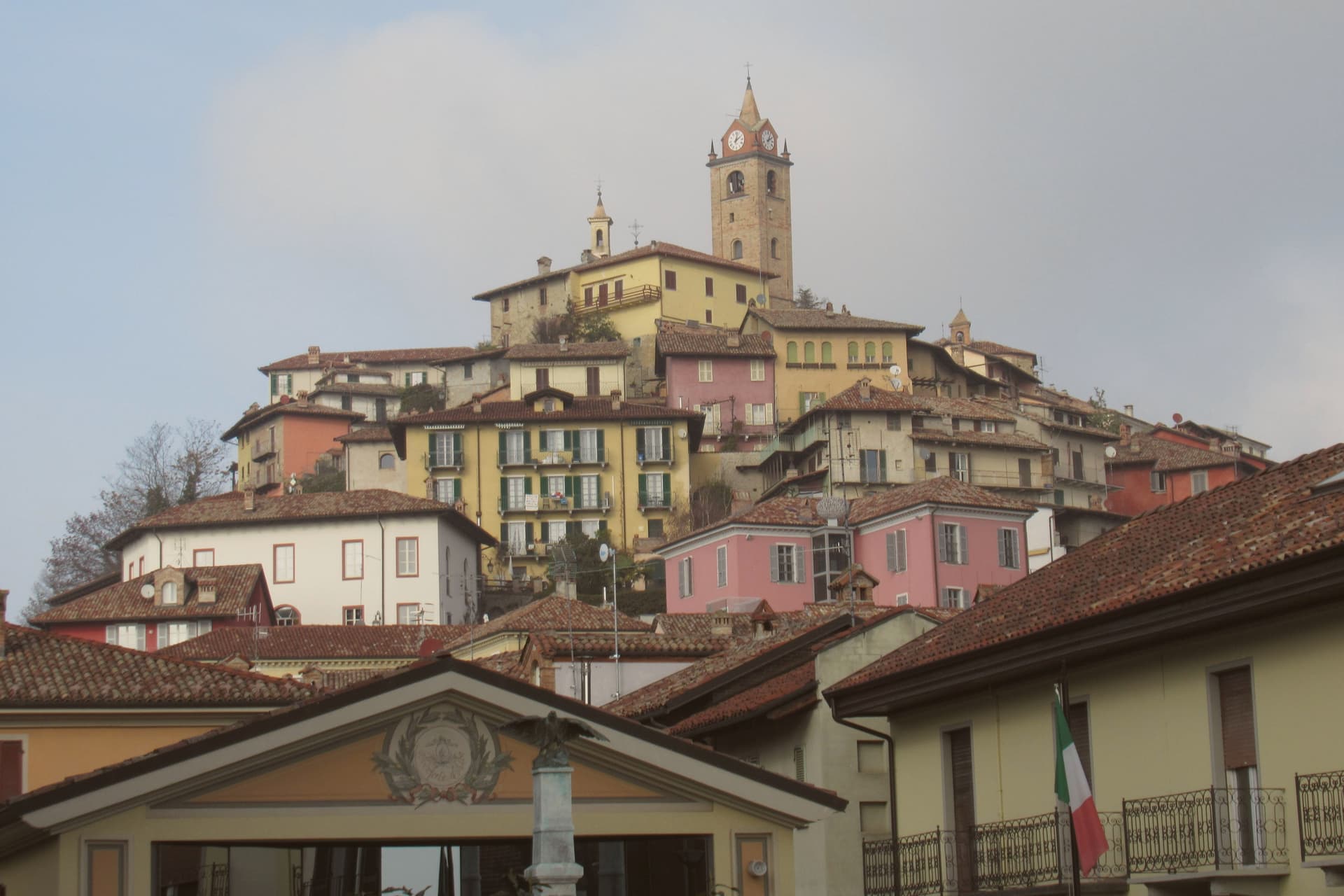
Monforte d'Alba sits at 480 meters in the southeastern corner of the Barolo zone, sixty kilometers from Torino. The name is from Latin mons fortis, fortified hill, and the medieval village climbed steep enough to make it nearly impregnable.
In 1028, Archbishop Ariberto d'Intimiano of Milan had the inhabitants of a heretical community here, later identified as Cathars, captured and burned in Milan to halt the spread of their teaching. Monforte is one of the eleven Barolo communes and accounts for some of the most structured, tannic wines in the zone, particularly from the Bussia and Ginestra crus.
At the top of the village, the Auditorium Horszowski occupies what was once the main square: an open-air natural amphitheater of 800 seats named for the pianist Mieczysław Horszowski, who opened it with a concert in 1986. The Monfortinjazz festival has run here every summer since 1976.
Borgo Sant'Anna, FRE, Trattoria della Posta and 8 more have been named by a guide.
What to see in Monforte d'Alba
- Auditorium Horszowski. Open-air amphitheater for 800 carved into the old village square in 1986, named for the pianist who opened it that year.
- Centro storico. Steep medieval village climbing to the old piazza, with Renaissance palazzi and the surviving bell tower of Sant'Agostino.
- Chiesa di Santa Elisabetta. Baroque oratory beside the Palazzo Scarampi at the top of the village, framing the back wall of the Horszowski stage.
How to get to Monforte d'Alba
Torino is roughly 68 minutes away by road.
Our tip
April through June bring green vines and mild evenings, with the Horszowski programming a few early concerts before the main season. July and August are Monfortinjazz, when the amphitheater fills and the centro stays busy past midnight; daytime heat pushes past thirty degrees but the elevation cools the nights. September and October are harvest and truffle weeks, with Alba twenty kilometers north pulling buyers across the zone.
Grinzane Cavour
Why visit Grinzane Cavour
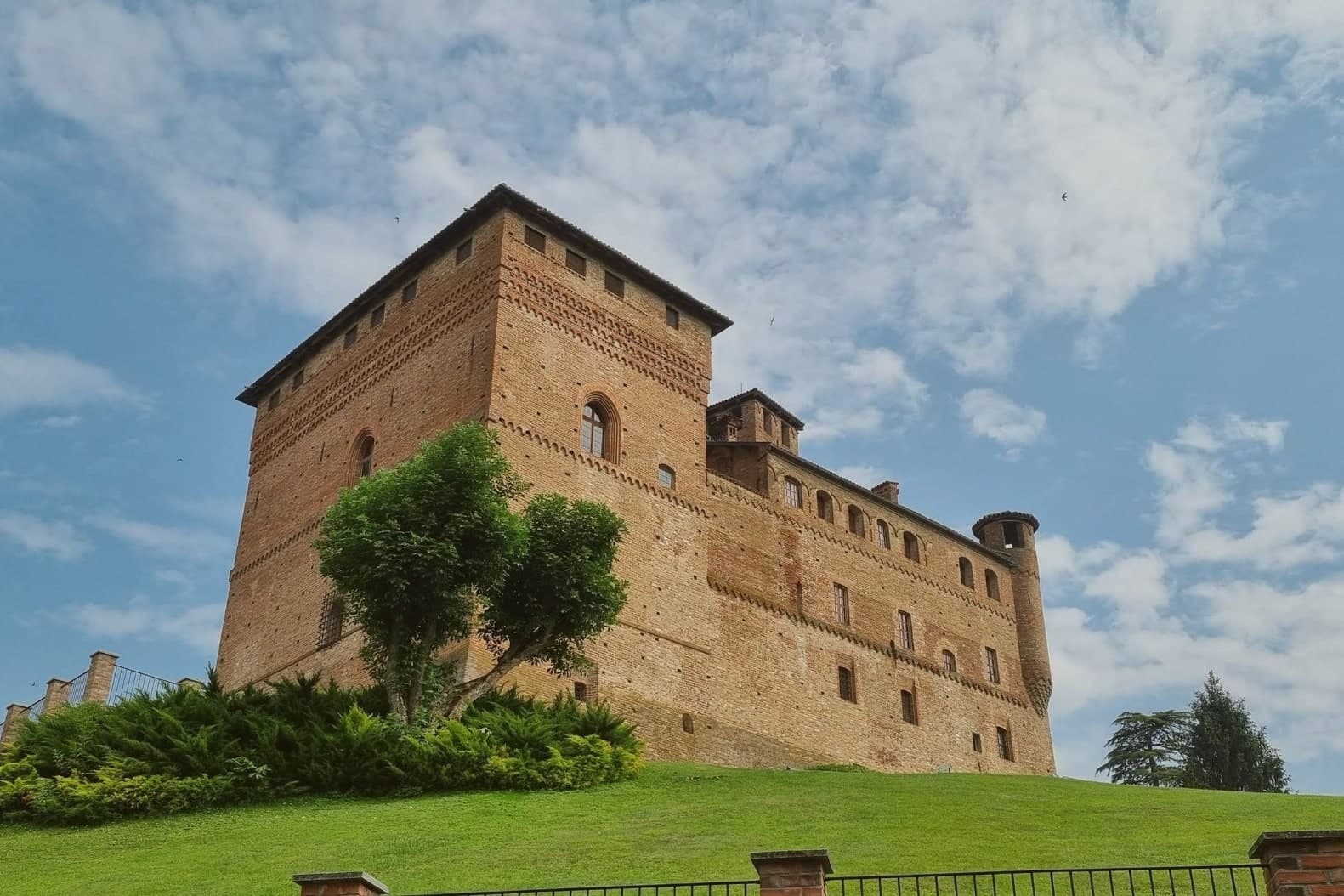
Grinzane Cavour sits at 195 meters on a hill in the Langhe, four kilometers from Alba. The castle on top is eleventh-century in its oldest part, the central tower, with later expansions.
Camillo Benso, Count of Cavour, the Risorgimento statesman who engineered Italian unification, lived here and served as mayor from 1832 to 1849, seventeen years that gave the village its modern name. He used the castle as his agricultural laboratory, experimenting with vinification techniques that helped turn Barolo from a sweet local wine into the dry red it is today.
In 2014 the castle was added to the Vineyard Landscape of Piedmont UNESCO site. Inside the castle: the Enoteca Regionale Piemontese Cavour, founded 1967 as the first regional wine showcase in Piemonte, plus the Langhe Museum and Cavour family heirlooms.
The November Alba White Truffle World Auction is held here, with truffle lots and large-format Barolo and Barbaresco bottles sold to bidders in Hong Kong, New York, and London by simultaneous video link.
Alessandro Mecca al Castello di Grinzane Cavour have been named by a guide.
What to see in Grinzane Cavour
- Castello di Grinzane Cavour. Eleventh-century castle, UNESCO World Heritage since 2014, Cavour's mayoral seat 1832-1849 and his agricultural laboratory.
- Enoteca Regionale Piemontese Cavour. Founded 1967 inside the castle, the first regional wine showcase in Piemonte, focused on Barolo, Barbaresco, Nebbiolo, and Langhe-Roero reds.
- Museo delle Langhe. Inside the castle, rooms dedicated to the wine and rural history of the Langhe, with Cavour family heirlooms and period furniture.
How to get to Grinzane Cavour
Torino is roughly 64 minutes away by road.
Our tip
April through October is the season. May and June green the Nebbiolo rows and the hill turns striped. September and October bring the harvest and the first cool nights; the road from Alba fills with wine tourists.
La Morra
Why visit La Morra
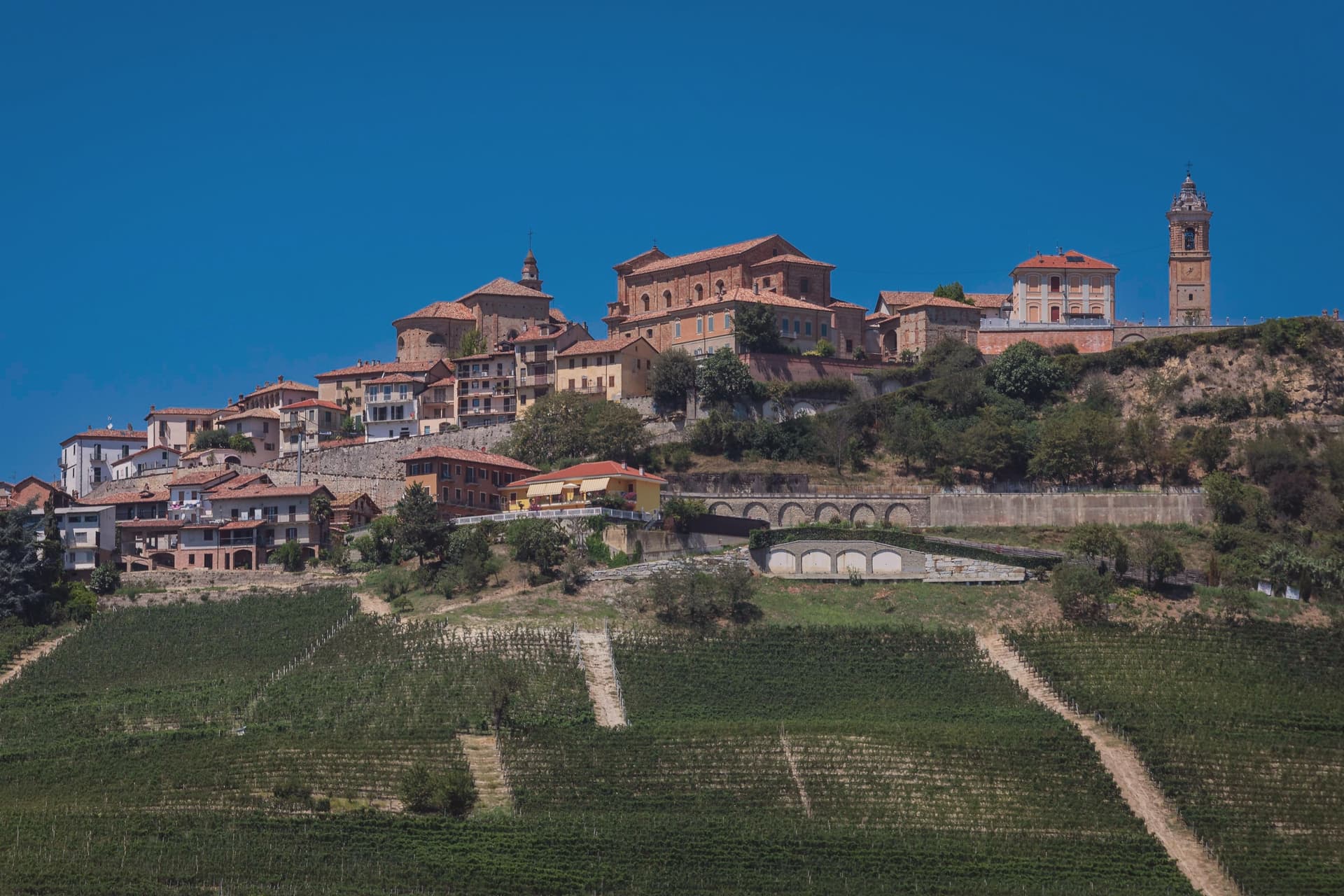
La Morra sits at 513 meters on the western edge of the Barolo zone, fifty kilometers southeast of Torino, the highest of the eleven communes and the one with the widest view over the rest of them. The village itself gathers around the square and the tower; the working part of it, the crus, spreads downhill and outward, Brunate and Cerequio among them, with the Cantina Comunale pouring producers from across that spread under one roof in the old Marchesi di Barolo cellars.
A kilometer outside the centro, below the village, the former abbey sits in the Marcenasco cru with its wine museum, and Renato Ratti bought his first parcel near it in 1965, drawing the first cru map of the zone a decade later. The village is compact and fixed in place; the vineyards around it are what the whole zone is measured against.
Osteria Veglio, Coltivare, Osteria Arborina and 5 more have been named by a guide.
What to see in La Morra
- Belvedere di Piazza Castello. The highest point of the village, with the 18th-century bell tower rising above the terrace.
- Cappella del Barolo (Cappella delle Brunate). A small vineyard chapel among the vine rows of the cru, its two faces given over entirely to the artists' repainting, interior and exterior alike.
- Cantina Comunale di La Morra. Municipal wine cellar founded 1973 in the 18th-century palace of the Marchesi di Barolo, pouring 70+ local producers.
How to get to La Morra
Torino is roughly 59 minutes away by road.
Our tip
April through June bring green vines, mild evenings and the long views the Belvedere is built for. September and October are harvest, when the cellars open and the hills turn copper. July and August push past thirty degrees and the centro thins between two and six, though the elevation keeps nights cooler than Alba.
Guarene
Why visit Guarene
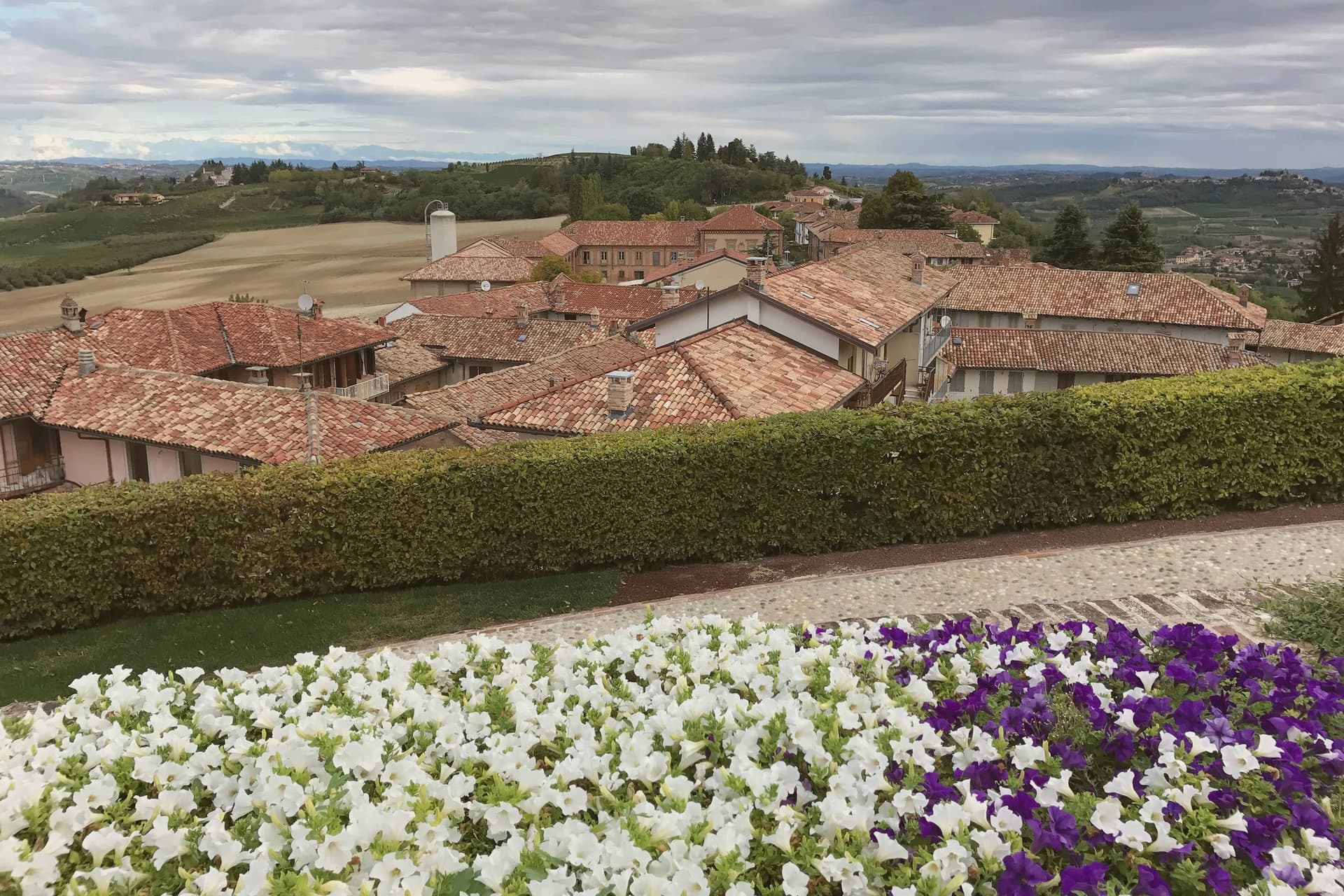
Guarene sits at 360 meters on the left bank of the Tanaro, the last hill of the Roero before the river crosses to Alba and the Langhe. The Roero family, powerful Asti bankers, took the village in 1379 and held it until the line ended with Count Alessandro in 1899.
Count Carlo Giacinto Roero rebuilt the medieval fortress between 1726 and his death, turning it into a baroque summer residence; his sons completed the work and hosted the king and queen of Sardinia here in 1773. The castle is now a Relais & Châteaux hotel with a small museum.
On the slope below the village, the Fondazione Sandretto Re Rebaudengo opened Palazzo Re Rebaudengo in 1997 as its first contemporary art space; the foundation added an open-air sculpture park in 2019 with works by Carsten Höller, Marguerite Humeau, and Paul Kneale set among pear orchards and Nebbiolo rows. The hill carries four institutional signals at once, the highest density of any Roero commune.
Io e Luna, Limonaia del Castello di Guarene, Pico Bistrot in Madernassa have been named by a guide.
What to see in Guarene
- Castello di Guarene. Eighteenth-century baroque castle rebuilt 1726 by Count Carlo Giacinto Roero from a medieval fortress, now a Relais & Châteaux hotel.
- Palazzo Re Rebaudengo. Fondazione Sandretto Re Rebaudengo's first contemporary art space, opened 1997 in an eighteenth-century palazzo in the village.
- Parco d'arte Sandretto Re Rebaudengo. Open-air sculpture park opened 2019 with works by Carsten Höller, Marguerite Humeau, and Paul Kneale among Nebbiolo rows and pear orchards.
How to get to Guarene
Torino is roughly 62 minutes away by road.
Our tip
April through October is the season. May and June green the Roero hills and the castle gardens open. September and October bring the harvest and Arneis bottling; the Tartufo Bianco d'Alba fair in October fills the surrounding villages.
Santo Stefano Belbo
Why visit Santo Stefano Belbo
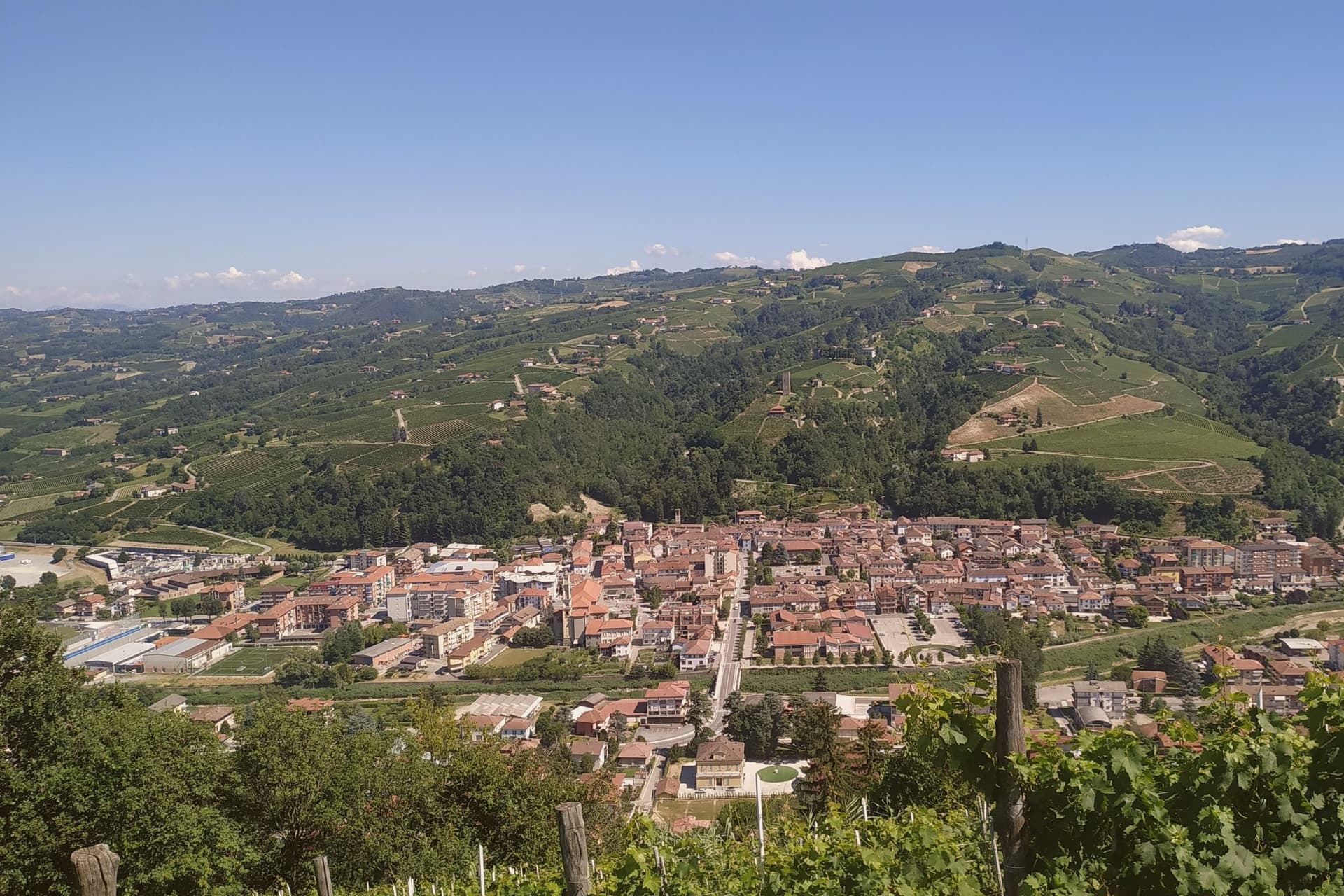
Santo Stefano Belbo sits at 175 meters on the Belbo, sixty kilometers southeast of Torino, on the seam between the Langhe and the Asti hills. Cesare Pavese was born here on 9 September 1908; his father came from the village and the family returned every summer.
The hills around the town gave him the setting for La luna e i falò and most of his late prose; his birthplace house and the Fondazione Cesare Pavese in the centre keep the manuscripts, photographs and the schoolroom of his early years. The commune is the largest producer of Moscato d'Asti and Asti Spumante in the DOCG, with close to 80,000 hectoliters of wine made each year, 93 percent of it Moscato.
A ruined medieval tower above the town once controlled the Belbo valley road. The recognitions stack up around what the commune actually does: Spighe Verdi for sustainable rural management, Città del Vino for Moscato, Città della Nocciola for the Tonda Gentile hazelnut of the surrounding slopes.
Il Ristorante di Guido da Costigliole, Guido da Costigliole have been named by a guide.
What to see in Santo Stefano Belbo
- Casa natale e Fondazione Cesare Pavese. Birthplace of the writer (1908) and the foundation in the centre, with manuscripts, photographs and audiovisual material on his life and work.
- Torre medievale. Ruined medieval watchtower above the village, the surviving fragment of the fortified core that once controlled the Belbo valley road.
- Convento dei Santi Giacomo e Cristoforo. Benedictine convent and church on the hill above town, traditionally said to stand on the foundations of a Roman temple of Jupiter.
How to get to Santo Stefano Belbo
Torino is roughly 81 minutes away by road.
Our tip
April through June is the green window between the Langhe and the Asti hills, with the Moscato vines coming into leaf and the Belbo valley cool in the mornings. July and August touch the mid-thirties; the village empties between two and five, and the cantine open for tastings only by appointment. September brings the Moscato harvest, the noisiest and most photographed month, with grape lorries on every road. Mercatino senza tempo falls in August.
Dogliani
Why visit Dogliani
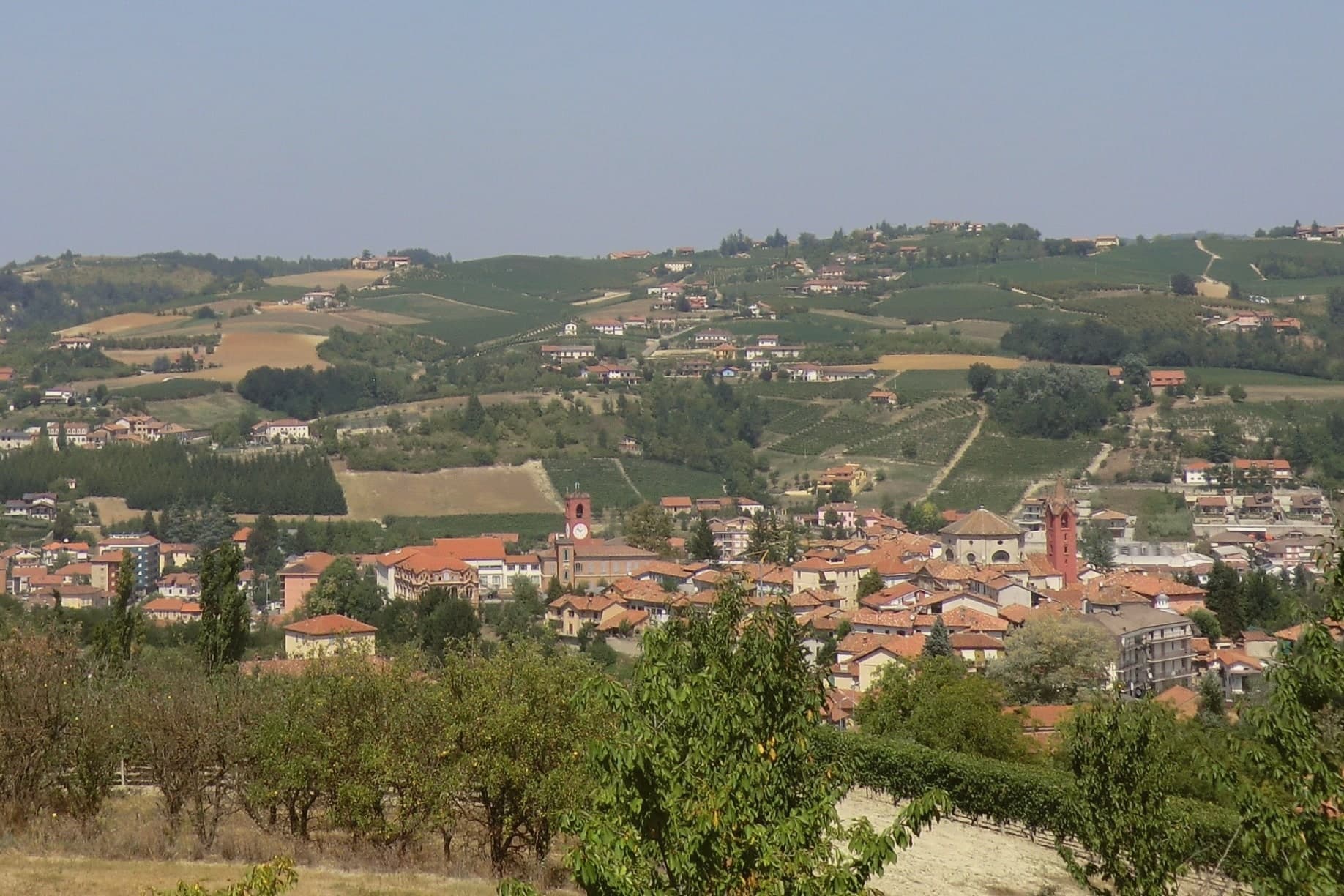
Dogliani sits on the western edge of the Langhe, sixty kilometers southeast of Torino. The town is built in two parts: the Borgo on the valley floor along the Rea stream, and the hill settlement above it that still keeps its medieval shape.
The land around both is planted in Dolcetto, and the vineyards climb from the stream up toward the ridges where the wine cellars sit. The lower town and the upper town read as two different eras occupying one place: the Borgo organized around its parish church and the stream, the hill settlement holding onto a keep and stone houses from an older layout.
A local architect worked mostly in the nineteenth century and left his mark across both parts of town, so the eclectic civic and religious buildings he designed sit alongside the medieval stonework rather than replacing it. A president born here founded a wine estate in the hills above town, and the cellars he started are still producing today, linking the town's political history back to the same slopes that give it its wine.
What holds Dogliani together is that its wine, its architecture and its most famous native son are not separate stories but the same hillside seen from different angles: a small commune whose vines, buildings and history all trace back to the ground between the stream and the hill.
Il Verso del Ghiottone have been named by a guide.
What to see in Dogliani
- Castello di Dogliani. Medieval upper town at 300 meters that gives Dogliani its two-tier silhouette, with stone houses and a surviving castle keep.
- Schellino buildings. Eighteen nineteenth-century structures by Giovanni Battista Schellino, including the cemetery chapel and several neo-Gothic civic buildings.
- Poderi Luigi Einaudi. Cellars founded in 1897 by the second President of the Italian Republic, still producing Dogliani DOCG in the hills above town.
How to get to Dogliani
Torino is roughly 70 minutes away by road.
Our tip
April through June is leaf and flower in the Dolcetto vineyards, mild on the Rea valley floor and slightly cooler in the Castello on the hill. September is harvest month for Dolcetto, the earliest of the three classic Langhe reds; October brings Nebbiolo and the Fiera del Vino. July and August reach the low thirties on the valley floor.
More from Anywhere Italy
- The 7 best small wine towns with a serious restaurant in Piemonte
- The best small wine towns within 90 minutes of Torino
- The best wine towns in the province of Cuneo
- The 10 best hidden wine towns that eat well within 90 minutes of Torino
- The best towns worth staying overnight in Piemonte
- The best small towns you can reach by train that have a serious restaurant in Piemonte