
The best hill towns within 90 minutes of Palermo
Behind Palermo the land goes vertical almost immediately. Limestone crags, cork oak and chestnut, terraces of olives running down to river valleys that flood brown in winter and dry to stone in July. The towns up here are built from the rock they stand on, pale gold blocks stacked around a mother church and a square where the whole of the evening happens. Food follows the altitude: sheep's ricotta, wild fennel, manna tapped from ash trees in the Madonie, pane nero and cheeses that taste of pasture rather than sea. Spring and autumn are the seasons to come, when the hills are green or the grape harvest is in.
Most visitors arriving in Palermo point themselves at the coast instead. Cefalù takes the bulk of it, a Norman cathedral above a curve of sand, and by August the beach and the lanes behind it are packed shoulder to shoulder with day trippers off the Palermo train. It is a fine town and the crowd is not wrong about it. It is simply the one place everybody has already decided to go.
The same Norman churches, the same mountain cheese and the same views over the Tyrrhenian carry on inland, up the switchbacks into the Madonie and west towards the Belice valley. Fewer people make the turn. The towns in this list all sit on high ground within a comfortable drive of the city, close enough for lunch and back, far enough that the square belongs to the people who live on it.
Of the 13 communes we have mapped within 90 minutes of Palermo, 8 qualify as hill towns: each is an inland hill settlement. The smallest, Santa Cristina Gela, has 1,006 residents.
Two more lists worth reading alongside this one: The best towns you can reach by train within 90 minutes of Palermo and The 9 best towns inside a nature park that you can reach by train in Sicilia.
Santa Cristina Gela
Why visit Santa Cristina Gela
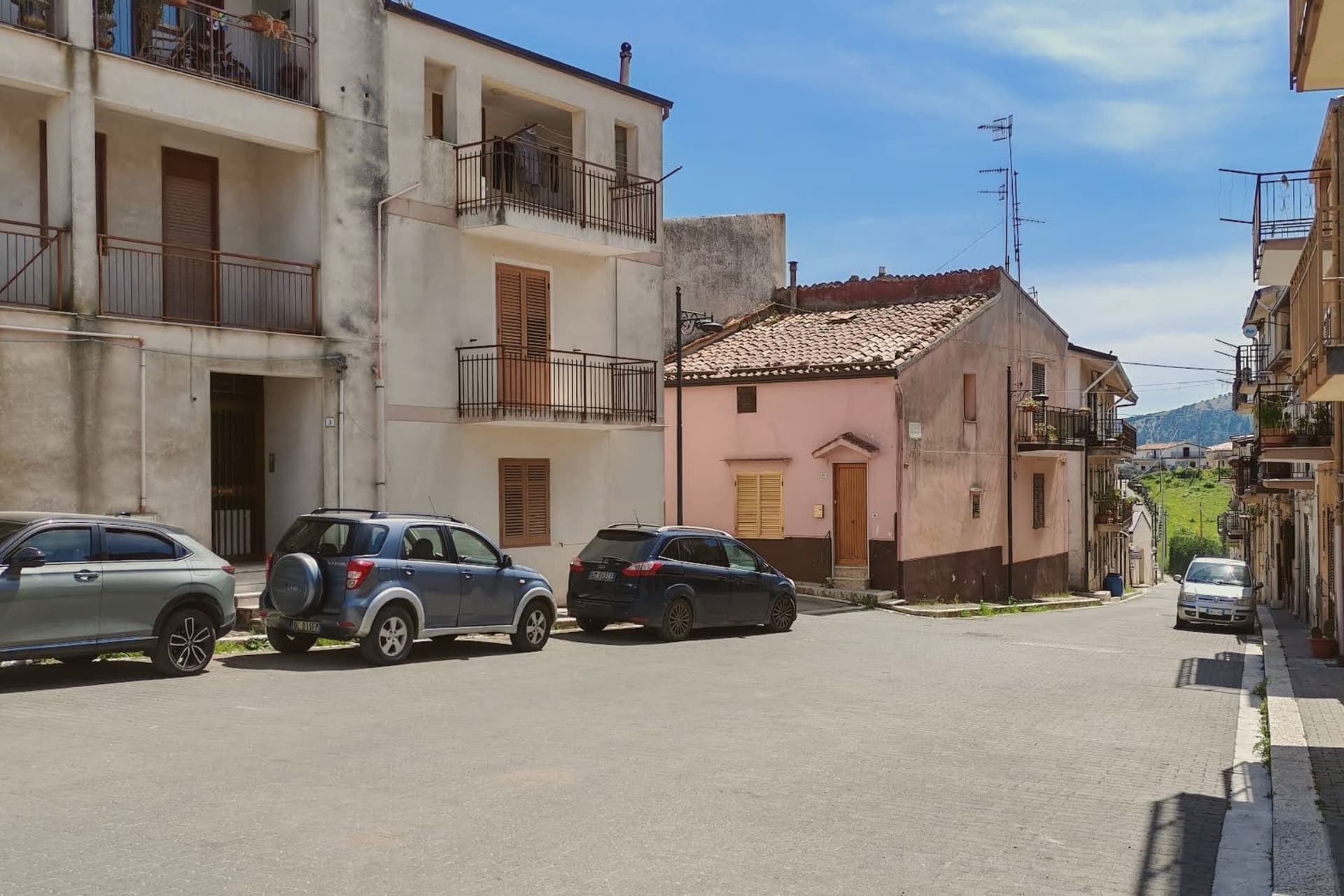
Santa Cristina Gela sits at 692 metres in the hills southwest of Palermo, fifteen kilometres from the city and four from Piana degli Albanesi. It is the smallest and the newest of the three Arbëreshë communities in Sicily, the others being Piana and Contessa Entellina.
On 31 May 1691 the local fiefdom was granted in emphyteusis to eighty-two Arbëreshë colonists from Piana, descendants of the Albanian families who had crossed to Sicily in the fifteenth century to escape the Ottoman advance. Their descendants still translanguage between Arbërisht, Sicilian and Italian.
Ecclesiastically the village belongs to the Byzantine-rite Eparchy of Piana degli Albanesi, though the main church here uses the Latin rite to accommodate residents of non-Albanian origin. The town is the seat of the Union of Albanian Municipalities of Sicily, the BESA.
The patronal feast of Santa Cristina Megalomartire of Bolsena, on 24 July, brings the silver urn from Palermo cathedral up the hill in procession.
What to see in Santa Cristina Gela
- Chiesa di Santa Cristina Vergine e Martire. The Latin-rite parish church on the main square, dedicated to the patron saint celebrated each year on 24 July.
- Centro abitato arbëresh. The compact village core founded in 1691 by the eighty-two Arbëreshë families from Piana degli Albanesi.
- Panorama sui monti. Views over the hills southwest of Palermo and across to Piana degli Albanesi, four kilometres away through the valley.
How to get to Santa Cristina Gela
Palermo is roughly 45 minutes away by road.
Our tip
April through June is the green season in the hills above Palermo, with wildflowers across the high pastures and clear evenings. September through November is the second window, mild and dry once the August heat lifts. July and August are hot and bright at 692 metres, though cooler than the city below; the late-July festival of Santa Cristina is the busiest week of the year.
Mezzojuso
Why visit Mezzojuso
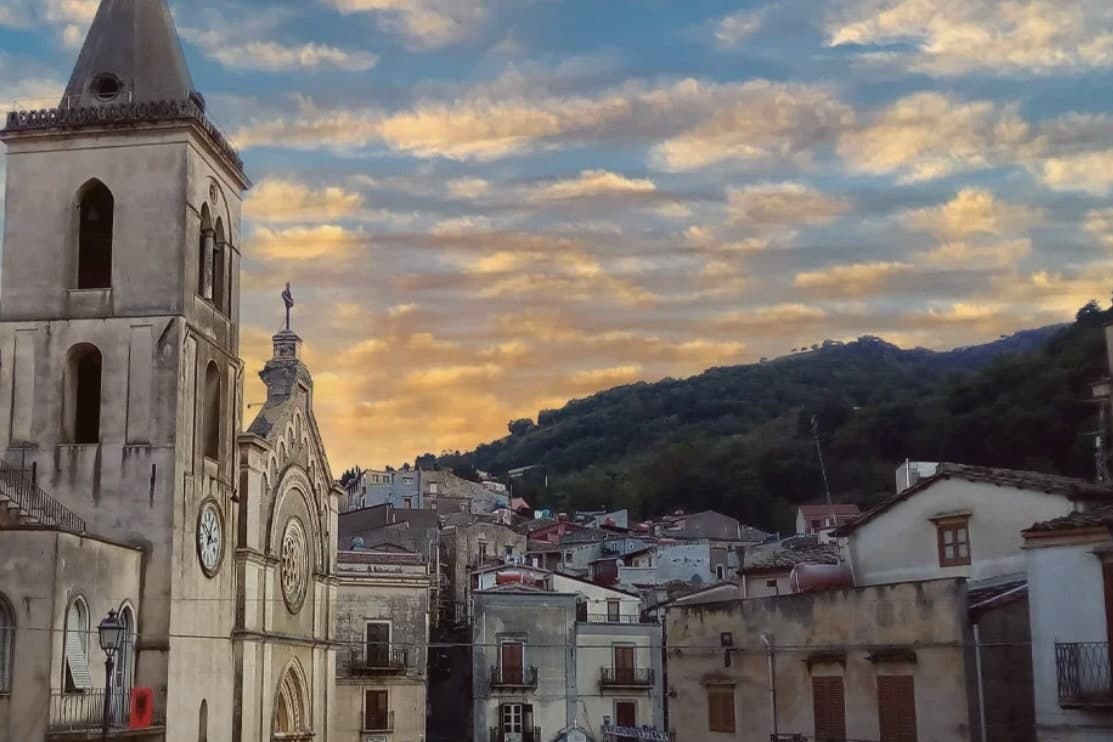
Mezzojuso sits at 534 meters on the lower slope of the massif, forty-five kilometers southeast of Palermo. The Arabic Manzil Yusuf, the houses of Joseph, names a tenth-century Saracen hamlet that passed into Norman hands in 1091.
In 1448 King Alfonso of Aragon granted the depopulated village to an Albanian commander who led three battalions of Arbëreshë soldiers across the Adriatic; in 1501 their community formalised the rebuilding of the church and the use of the Byzantine Greek rite. Today Mezzojuso is one of the Sicilian Arbëreshë communes, alongside Piana degli Albanesi and Palazzo Adriano: the language is mostly gone but the Greek rite holds.
The Latin and Greek parishes sit as two mother churches within the same small town, each still active, each keeping its own liturgy, a division that runs through the community rather than across it. A Basilian monastery, restored in the 1920s, keeps a library of Greek codices and sixteenth-century editions apart from the two parishes, evidence of a religious life that took more than one institutional form.
What survives is not a single rite preserved by isolation but two rites maintained side by side, an arrangement that has held since the fifteenth-century resettlement rather than dissolved into one.
What to see in Mezzojuso
- Chiesa di Santa Maria delle Grazie. Sixteenth-century Greek-rite church with frescoes by Olivio Sozzi from 1752 and an iconostasis of sixteenth-century icons among the most valuable in Sicily.
- Chiesa Maria Santissima Annunziata. On the main piazza, the Latin-rite mother church stands as the parallel parish to the Greek-rite church nearby.
- Chiesa di San Nicolò di Mira. Byzantine liturgy is still celebrated here by priests of the Eparchy of Piana degli Albanesi.
How to get to Mezzojuso
Palermo is roughly 54 minutes away by road.
Our tip
April through June and September through November are the working months on the Rocca Busambra slope. May runs the Festa del Crocifisso, with the Byzantine and Latin parishes processing on different days through the same streets. The chestnut harvest is October.
Sambuca di Sicilia
Why visit Sambuca di Sicilia
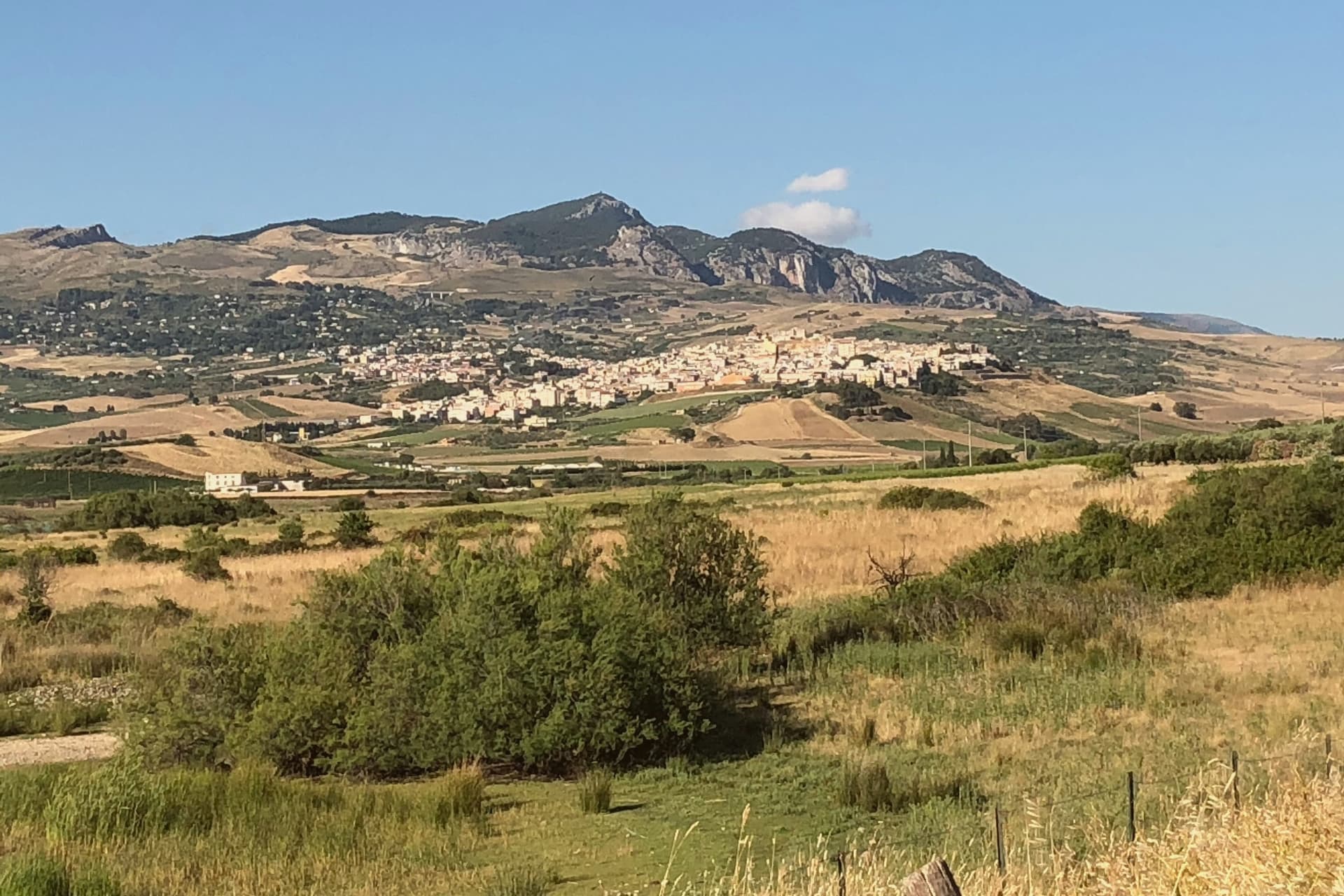
The town sits at 350 meters on a hill above the Belice valley, sixty-eight kilometers southwest of Palermo, overlooking the Sicani hills and the reservoir below. Frederick II conquered the town, then still called Zabut, in the thirteenth century, and it carried that Arab name as Sambuca Zabut until 1923, when the suffix was officially dropped.
The upper town holds the old Arab core, its stone houses and courtyards laid along the alleys founded by the emir, while the lower ground toward the reservoir carries the fortress that once took his name and now stands part underwater, and the vineyards that supply the Menfi DOC. Earthquake damage in 1968 reached the upper town and required rebuilding the mother church on the central piazza.
The name, the water, and the stone all trace back to the same ninth-century founding: a town that took an Arab ruler's name, kept it for over a thousand years, and only shed it in the twentieth century, while the fortress he built still marks the water's edge below.
What to see in Sambuca di Sicilia
- Li Setti Vaneddi. Narrow stone lanes opening into inner courtyards at the core of the Arab quarter, still recognizable underfoot as the same grid laid out by the emir.
- Castello di Mazzallakkar. Square fortress with four corner towers, standing half-submerged at the southern edge of Lake Arancio since the reservoir was filled.
- Lago Arancio. Reservoir fed by the Carboj river, formed in 1952 and used today for sport fishing and irrigation of the surrounding vineyards.
How to get to Sambuca di Sicilia
There is a railway station in the town, so you can arrive without a car and never need one while you are here. Palermo is roughly 81 minutes away by road.
Our tip
April through June and September through November are the right windows for Sambuca. The inland Sicani hills hold dry heat in summer, regularly past thirty-five degrees in July and August, and the centro storico shuts itself down between two and five in the afternoon. October is harvest in the surrounding vineyards and the air clears enough to see Monte Adranone from the upper piazza.
Cammarata
Why visit Cammarata
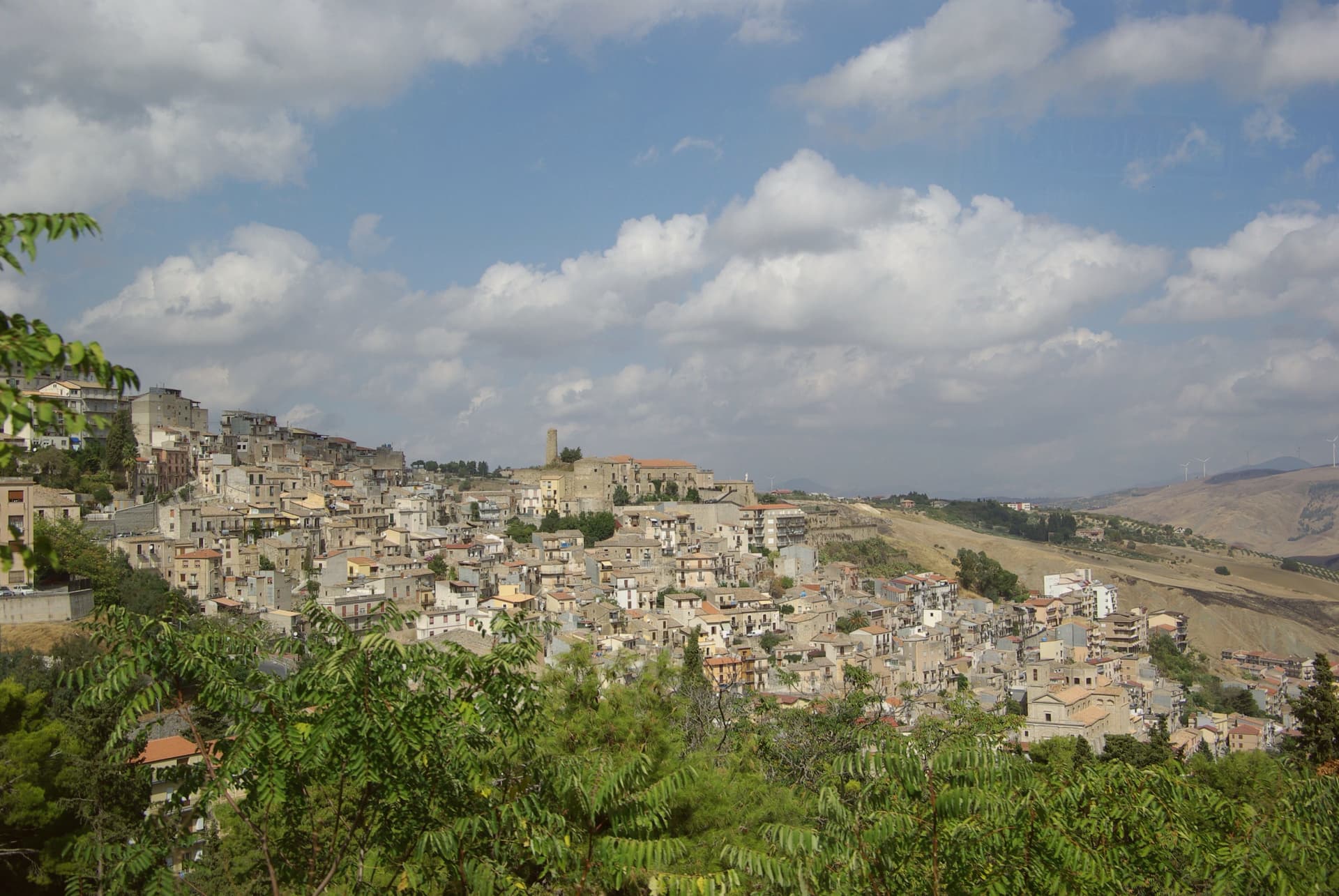
The town sits at 700 meters on the northeastern flank of the mountain, and the name comes from the Greek kàmara, vaulted room, after the limestone caves that perforate the slopes. That geology sits under a settlement built up the incline in stepped lanes, so the town and the peak above it read as one continuous rise rather than two separate things.
King Roger I laid siege in 1087 and gave the conquered town to his relative Lucy of Hauteville, who took the title Lucia di Cammarata. The Chiesa Madre, rebuilt in the seventeenth century on twelfth-century foundations, holds a Madonna della Catena by Pietro D'Asaro and a sixteenth-century organ, and the mountain itself carries a regional nature reserve of downy oak and holm oak forest, golden eagles, and ridge trails to the summit.
Cammarata is paired physically with San Giovanni Gemini next door. The two towns share the mountain as a watershed, a saint, and a working economy of grain, oil and sheep, which means the peak is not scenery at the edge of town but the shared resource that organizes both places, their water, their pasture, and their names.
What to see in Cammarata
- Chiesa Madre di San Nicolò di Bari. Seventeenth-century mother church on twelfth-century foundations, with a Madonna della Catena by Pietro D'Asaro and a sixteenth-century organ.
- Monte Cammarata. Downy oak and holm oak cover the slopes below the summit, with ridge trails running up through the reserve and views over the Sicani range.
- Ruderi del Castello. Remains of the medieval fortification on the rock above the centro storico, taken by Roger I in 1087.
How to get to Cammarata
There is a railway station in the town, so you can arrive without a car and never need one while you are here. Palermo is roughly 88 minutes away by road.
Our tip
April through June and September into November are the months that work on the Sicani slopes. Wildflowers in spring, dry gold in autumn, and the air at 700 meters stays cool while Agrigento on the coast burns. July and August routinely cross thirty-four degrees and the centro storico empties between noon and five.
Castelbuono
Why visit Castelbuono
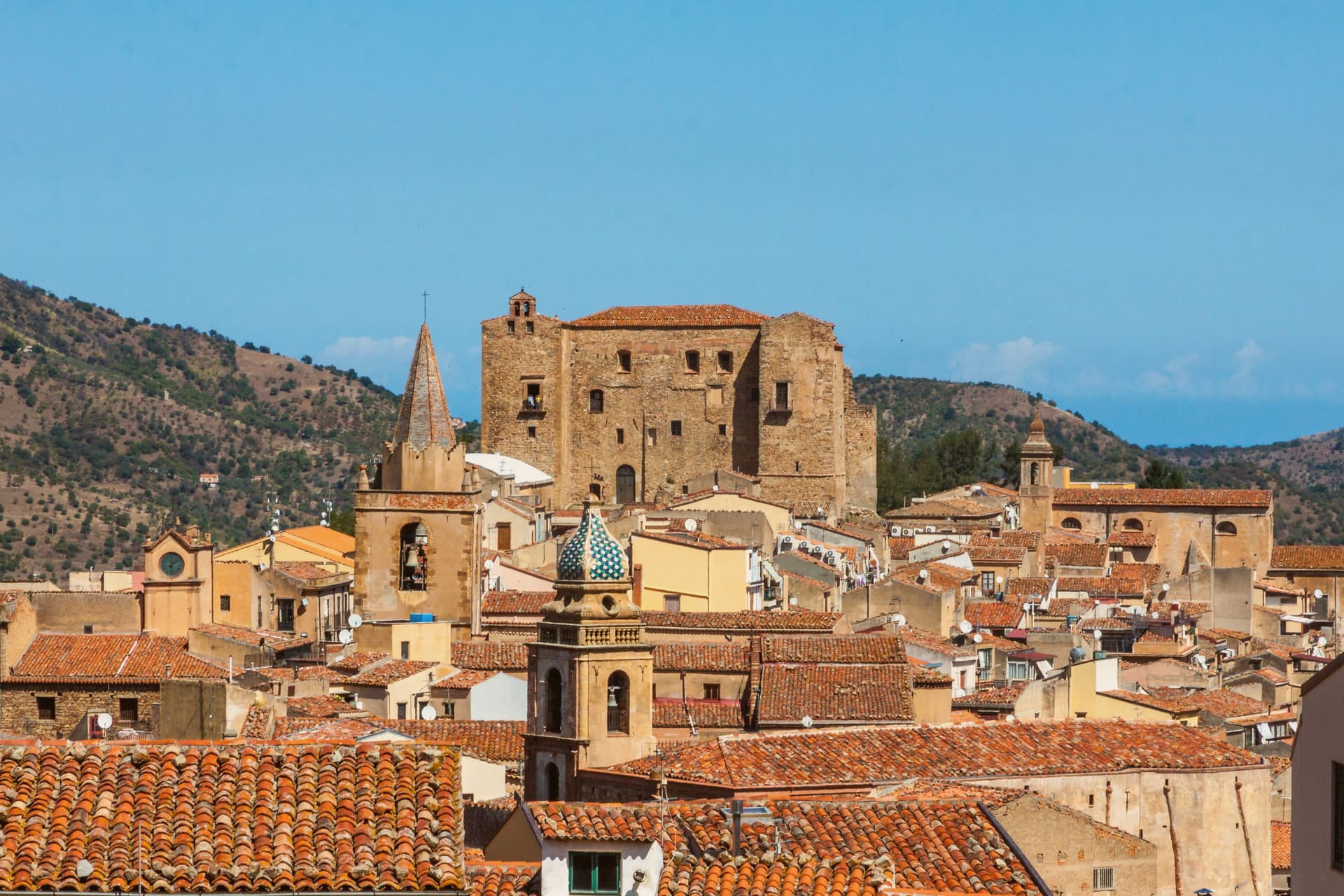
Castelbuono sits at 423 meters on the northern slope of the Madonie, an hour inland from Cefalù and the Tyrrhenian coast. The town developed in the fourteenth century around the castle built by Count Francesco I Ventimiglia in 1317 on a pre-existing twelfth-century watchtower; the Ventimiglia were among the most influential families in medieval Sicily, and their court held here for generations.
The castle today houses the Museo Civico Francesco Minà Palumbo, with natural history, sacred art and archaeology from the Madonie territory. The Matrice Vecchia, the old mother church begun in 1362 under Francesco II Ventimiglia, mixes Roman-Gothic, Catalan-Gothic and Chiaramontane elements, with a 1520 polyptych attributed to Antonello De Saliba (nephew of Antonello da Messina) on the main altar and a fully frescoed crypt below the presbytery.
The town keeps the last working manna industry in Europe, the sweet sap collected by cutting Madonie ash trees in summer. Pasticceria Fiasconaro, founded here in 1953, now ships panettone and Ypsigro lines worldwide and opened a flagship in Manhattan in 2025.
In August the village runs the Ypsigrock indie festival, one of Italy's longest-running.
What to see in Castelbuono
- Castello dei Ventimiglia. Fourteenth-century castle built in 1317 by Francesco I Ventimiglia on a twelfth-century watchtower, now home to the Museo Civico Francesco Minà Palumbo.
- Chiesa Matrice Vecchia. Mother church begun in 1362, mixing Roman-Gothic, Catalan-Gothic and Chiaramontane styles, with a 1520 polyptych by Antonello De Saliba.
- Cripta della Matrice Vecchia. Crypt under the presbytery of the old mother church, walls fully frescoed with the life, Passion and Resurrection of Christ.
How to get to Castelbuono
There is a railway station in the town, so you can arrive without a car and never need one while you are here. Palermo is roughly 74 minutes away by road.
Our tip
April through June and September through November are the working months in Castelbuono. The chestnut and beech woods of the Madonie turn in October. The Ypsigrock indie festival fills the centro for four days in mid-August, the only week the town runs at coastal capacity. Festeggiamenti in onore di Sant'Anna a Castelbuono falls in July.
Salemi
Why visit Salemi
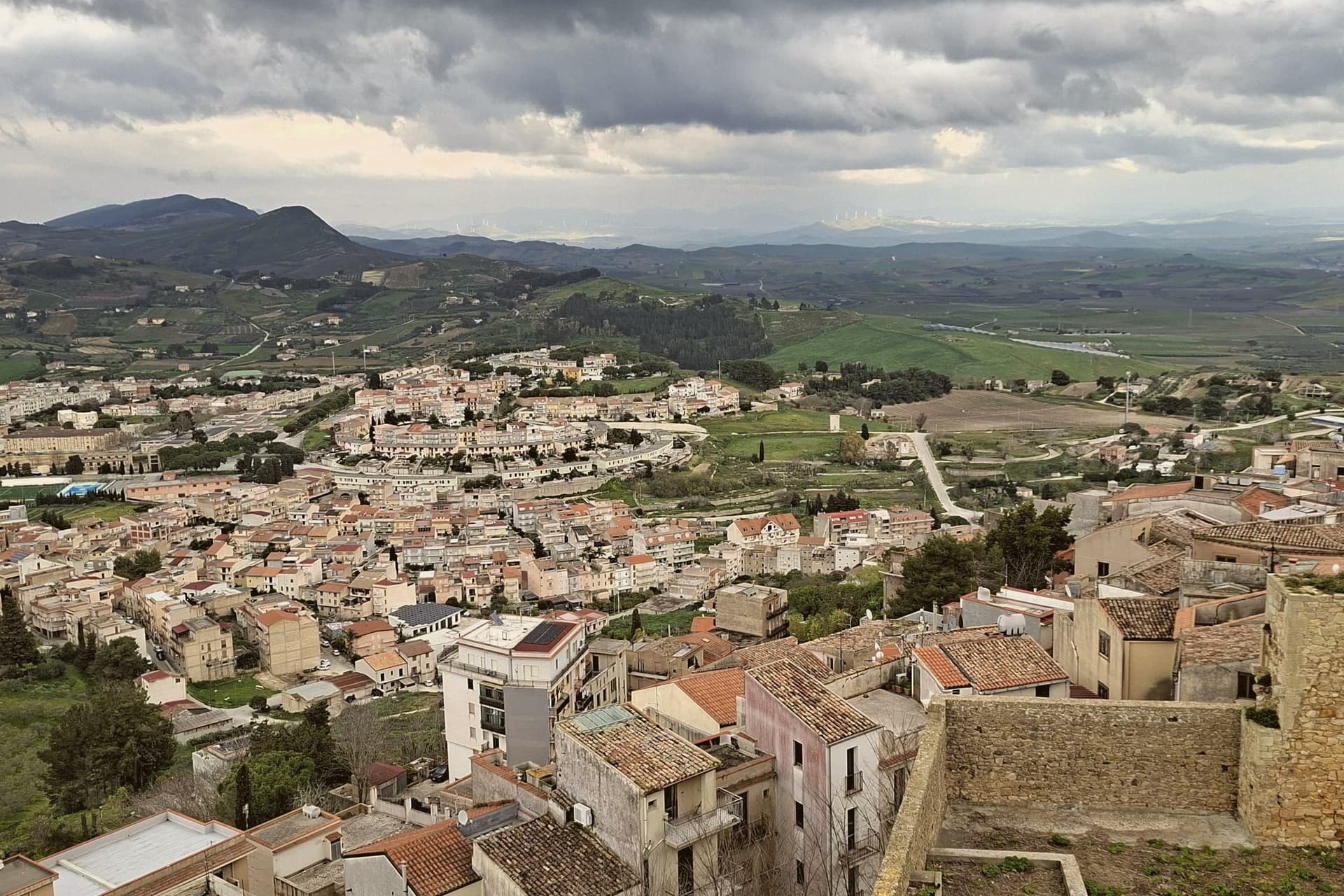
Salemi sits at 446 meters above the valley in the Trapani interior, on the ridge of Monte delle Rose between two rivers. The Elymians built the city of Halyciae here, conquered by Rome in 272 BC and granted freedom from taxes for its voluntary submission.
Two days after landing at Marsala with the Thousand, Garibaldi prepared his march on Calatafimi and Palermo from this ridge, which is why the town held its title for only a matter of days rather than longer. The centro storico groups around the castle and the ruined church beside it, built in Campanella stone.
Below and outside this core lies the former Jewish and Arab quarter, its low stone houses and narrow lanes still standing though damaged by the earthquake. Outside the commune altogether, on its own, stands the region's oldest surviving religious building, an early Christian basilica with sixth-century mosaic fragments predating everything else in the town by centuries.
What survives, then, is layered rather than continuous: an ancient foundation, a medieval center broken by the 1968 quake, and an older Christian outlier that the disaster never touched.
What to see in Salemi
- Castello Normanno-Svevo. Hilltop castle built by Roger I in 1077 on Greek-Roman foundations, rebuilt by Frederick II, where Garibaldi raised the Italian tricolor on 14 May 1860.
- Basilica di San Miceli. Early Christian basilica on the edge of the commune, the oldest surviving religious building in the area with sixth-century mosaic fragments.
- Rabato. Former Jewish and Arab quarter of low stone houses and narrow lanes, partly damaged by the 1968 Belice earthquake.
How to get to Salemi
Palermo is roughly 90 minutes away by road.
Our tip
April through June and September through November are the months for Salemi. The Belice Valley is green in spring and gold in October, the wind from the Egadi keeps the ridge cooler than the Marsala coast, and the castle terrace offers the clearest panoramas. July and August push past thirty-eight degrees; the Campanella stone of the centro storico holds heat into the evening and the streets empty between two and six. Sagra della Busiata a Salemi falls in August.
Corleone
Why visit Corleone
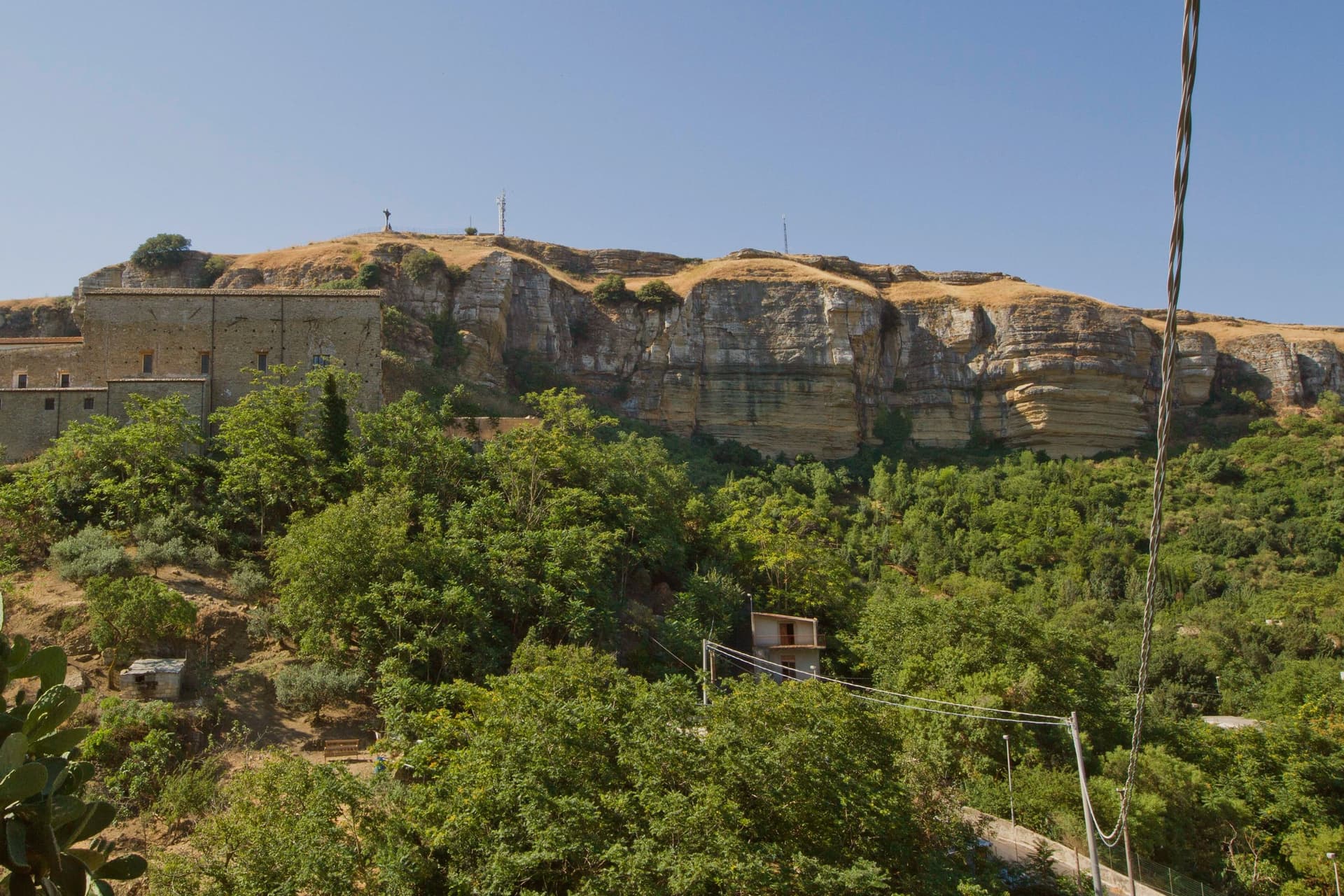
Corleone sits at 542 meters on the inner hills of Palermo province, thirty-five kilometers south of the capital, between the Castello Soprano and Castello Sottano that the Arabs and then the Normans held above the town. The name Qurliyūn appears in ninth-century Arab sources; the Hohenstaufen made it a military centre, and a settlement at nearby Contrada Stretto has been dated to the sixth millennium BC.
The town carries two reputations. The first is Mario Puzo's, who borrowed the name in 1969 for Don Vito of The Godfather.
The second is the one that grew out of the 1980s Corleonesi war: Corleone became the operating base of Cosa Nostra's most violent faction. The CIDMA, the Centro Internazionale di Documentazione sulla Mafia e del Movimento Antimafia, opened in 2000 in the historic centre and is now Italy's primary antimafia archive.
The Cascate delle Due Rocche run year-round through a canyon behind the town.
What to see in Corleone
- CIDMA - Centro Internazionale di Documentazione sulla Mafia e del Movimento Antimafia. Italy's primary antimafia archive and museum, opened 12 December 2000, holding case files, photographs and the testimony of victims.
- Cascate delle Due Rocche. Year-round waterfall on the San Leonardo river in a canyon behind the town, with a medieval aqueduct, two old mills and the small Chiesa Madonna delle Due Rocche.
- Castello Soprano e Castello Sottano. Two Arab-Norman fortifications from the tenth to thirteenth centuries on rock outcrops above the town, the visual frame of Corleone.
How to get to Corleone
There is a railway station in the town, so you can arrive without a car and never need one while you are here. Palermo is roughly 70 minutes away by road.
Our tip
April through June and September into November are the months the inland hills handle. The Sicani edge is green in spring, gold in autumn, and the waterfall at Due Rocche runs hardest after the winter rains. July and August cross thirty-five degrees and the corso empties between noon and five.
Monreale
Why visit Monreale
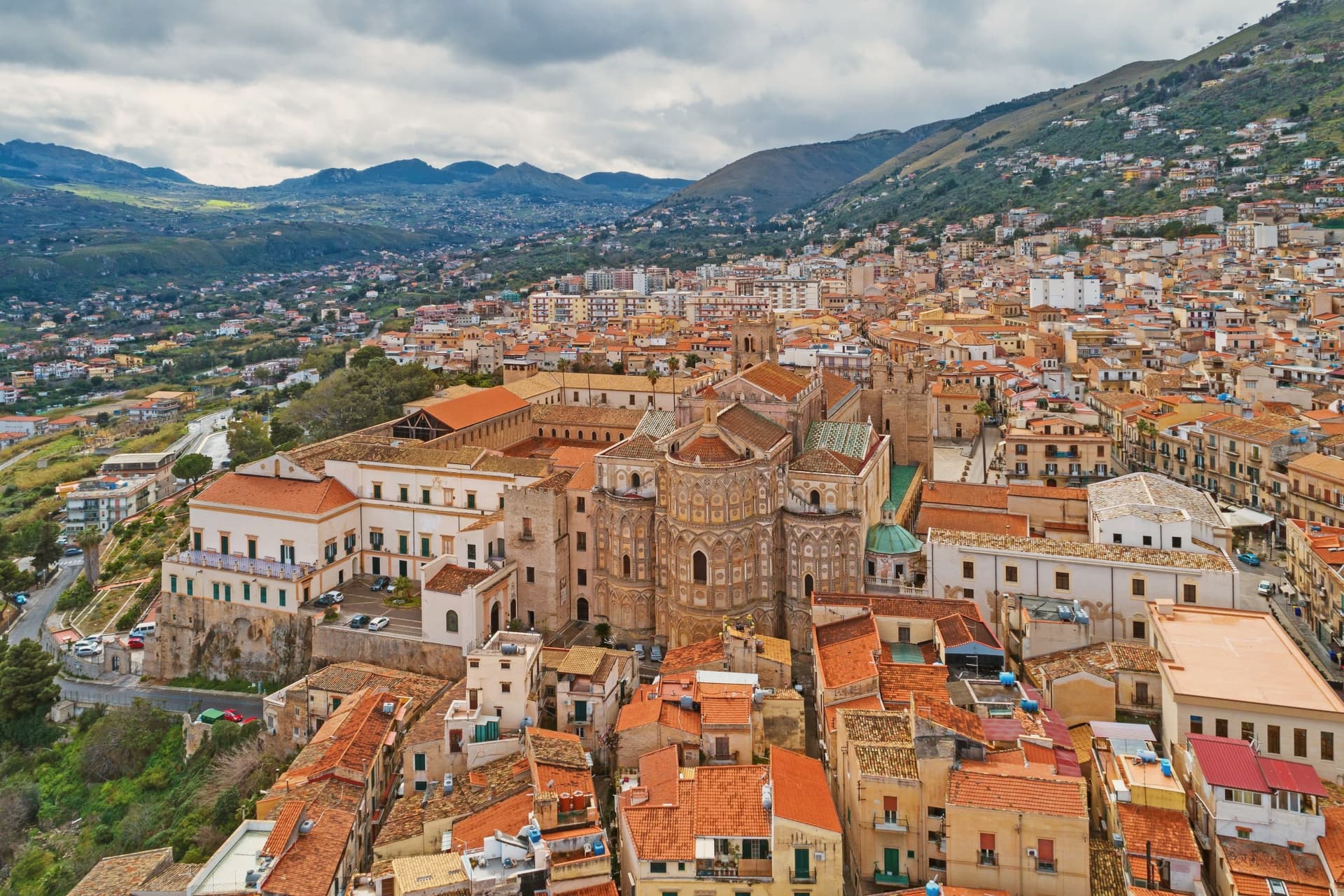
Monreale sits at 310 meters on the southwestern slope of Monte Caputo, eight kilometers from Palermo, looking down across the Conca d'Oro toward the Tyrrhenian. William II of Sicily founded the Benedictine abbey here in 1174 and the cathedral, Santa Maria Nuova, was elevated to metropolitan rank in 1182.
The mosaics inside cover 6,340 square meters, the largest surviving Byzantine cycle in Italy, executed in coloured glass on a gold ground by masters William brought from Constantinople and Venice. The cloister, 2,200 square meters of pointed arches and 216 paired marble columns, is one of the most complete Romanesque cloisters in Europe, with no two capitals carved alike.
The cathedral and cloister joined the UNESCO Arab-Norman Palermo inscription in 2015. The town carries the Città della Ceramica title for the workshops that grew up around the cathedral.
Below the Duomo, the streets fall steeply toward the Conca d'Oro and back up to Palermo.
What to see in Monreale
- Duomo di Monreale (Santa Maria Nuova). Cathedral begun in 1174 under William II, 6,340 m² of Byzantine mosaics in coloured glass on gold ground, the largest surviving Norman mosaic cycle in Italy.
- Chiostro dei Benedettini. Romanesque cloister of 2,200 m² with 216 paired marble columns, each capital carved differently in foliage, biblical scenes and allegory; among Europe's finest.
- Palazzo Reale di Monreale. Twelfth-century Norman royal residence next to the cathedral, partly preserved within the seminary buildings; the rooms William II used during construction of the Duomo.
How to get to Monreale
There is a railway station in the town, so you can arrive without a car and never need one while you are here. Palermo is roughly 44 minutes away by road.
Our tip
April through June and September through November are the right windows. The cathedral is open all year, but the climb from Palermo and the walk down to the Conca d'Oro are easier outside the heat. July and August push past thirty-three in the lower town and fill the cloister queue past two hours; arrive at opening or wait until late afternoon. Grisi' in Festa falls in August.
More from Anywhere Italy
- The best towns you can reach by train within 90 minutes of Palermo
 The 9 best towns inside a nature park that you can reach by train in Sicilia
- The 6 best hill towns with a serious restaurant in Sicilia
 The best small hill towns in Sicilia
 The best towns that eat well within two hours of Palermo
 The best towns with a food festival in Sicilia