
The best towns inside a nature park in the province of Palermo
The Madonie change the temperature of Sicily. Above the coast road the land climbs into holly oak and beech, into pasture grazed by black pigs and sheep, into villages built of grey limestone with roofs pitched for snow rather than sun. Autumn is mushroom and chestnut season, winter brings frost to the higher squares, and the local kitchens run on ricotta, wild fennel, aged pecorino and the manna tapped from ash trees on the northern slopes. It is the kind of upland Sicily that surprises people who came for beaches.
Most visitors to the province of Palermo stay on the flat: the markets of Palermo itself, then the cathedral at Monreale for the mosaics, a day trip that fills the coaches by mid-morning and empties the hill towns of anyone who might have driven up instead. The route is understandable. It is also fixed, and the cars queue for the same car parks in the same hours.
The same limestone continues south and east past all of that, and the park boundary encloses a set of towns where fewer people go: mountain comuni with Norman castles, ducal courtyards, bread baked in wood ovens and paths leading into the beech forest above. This list covers those, the ones inside the park rather than beneath it.
Of the 13 communes we have mapped in the province of Palermo, 6 qualify as towns inside a nature park: each sits inside a regional nature park. The smallest, Geraci Siculo, has 1,702 residents.
Two more lists worth reading alongside this one: The best mountain towns inside a nature park in Sicilia and The best small towns inside a nature park in Sicilia.
Geraci Siculo
Why visit Geraci Siculo
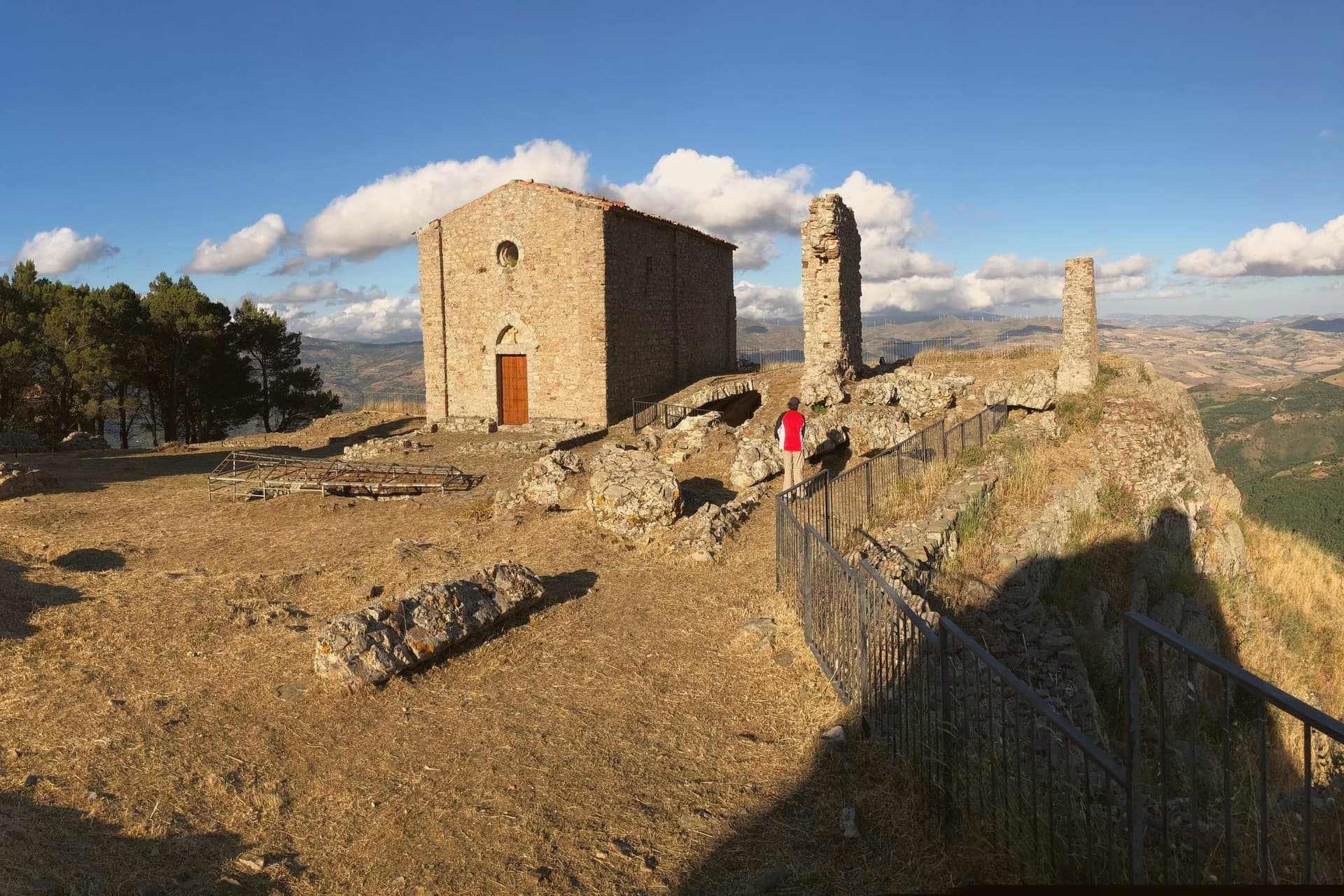
Geraci Siculo sits at 1,077 meters on a sandstone ridge in the Madonie, the highest borgo of the Parco delle Madonie and one of the highest in Sicily. The first fortified nucleus dates to the mid-eighth century, when Byzantines retreated inland to escape Arab raids.
After the Norman conquest Roger I of Hauteville created the County of Geraci in 1072 and gave it to the Ventimiglia family; in 1258 the county was elevated to the first marquisate granted in Sicily. The Castello dei Ventimiglia, on the massive sandstone rock above the village, reached its definitive form in the early fourteenth century and still dominates the skyline.
From the ridge the view runs from Etna in the southeast to the Aeolian Islands in the north. The Madonie pasture economy underwrites the local cheese, particularly provola dei Nebrodi and ricotta from sheep flocks on the surrounding peaks.
The village placed third in the national Borgo dei Borghi competition.
What to see in Geraci Siculo
- Castello dei Ventimiglia. Fourteenth-century castle on a sandstone outcrop above the village, the high point of the marquisate of Geraci from 1258.
- Chiesa Madre di Santa Maria Maggiore. Mother church at the centre of the village, with Renaissance and Baroque elements and works recovered from the Ventimiglia chapel.
- Centro storico. Medieval Madonie layout of stone houses on the ridge, with stepped lanes and narrow piazzas oriented to the castle rock.
How to get to Geraci Siculo
Palermo is roughly 106 minutes away by road.
Our tip
Geraci Siculo runs on alpine seasons: June through September is the summer window, when the ridge stays cool, the wildflowers cover the high pasture, and Etna is visible from the castle. December through March is the winter window, when snow falls on the Madonie peaks and the village turns to its cheese and slow-cooked food. April, May, October and November are quiet shoulder months, with fog rolling in off Pizzo Carbonara and many trattorie shut. Giostra dei Ventimiglia a Geraci Siculo falls in August.
Petralia Sottana
Why visit Petralia Sottana
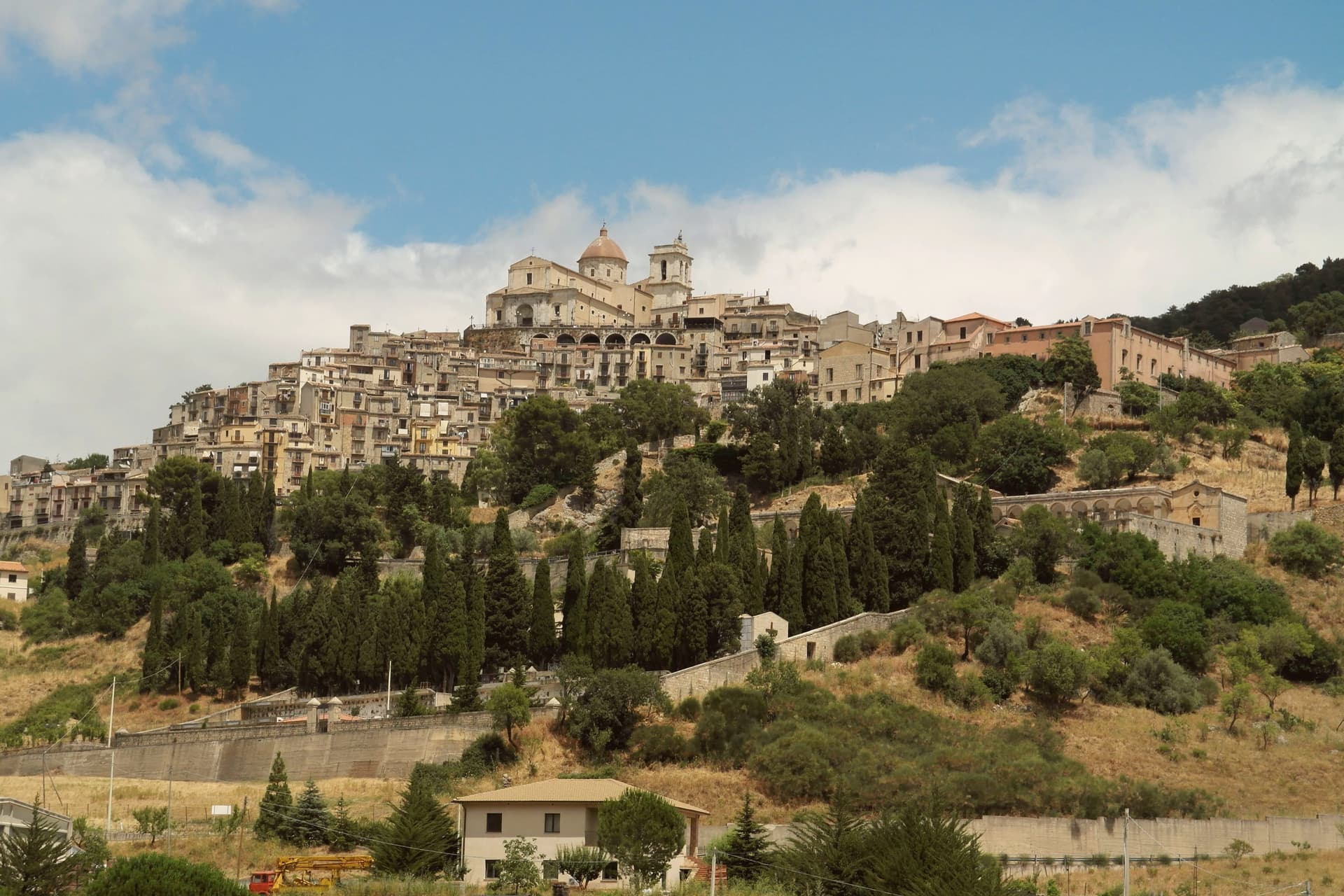
Petralia Sottana sits at 1,000 meters in the heart of the Madonie, the second-highest range in Sicily after Etna. The town is the only commune in Sicily to hold a Bandiera Arancione from the Italian Touring Club, and the headquarters of the Parco delle Madonie are inside its territory.
The two Petralie, Sottana and Soprana, share a Roman and Byzantine origin and were rebuilt under the Normans on opposite slopes of the same ridge; Sottana, the lower of the two, became the administrative centre of the surrounding mountain villages. The Chiesa Madre, also known as the Chiesa Maria Santissima Assunta, is the largest place of worship in the Madonie, seventeenth-century and rebuilt around an earlier core in the Pusterna district.
The Chiesa di Santa Maria di Loreto, founded in 1484 and remade in the seventeenth century, has majolica spires that mark the south end of the centro. Piazza del Popolo holds the Neo-Gothic Palazzo Pottino, the marble Quattro Cannoli fountain of Billiemi stone, and the Oratorio delle Anime Purganti.
What to see in Petralia Sottana
- Chiesa Madre (Maria Santissima Assunta). Seventeenth-century mother church on Piazza Umberto, the largest place of worship in the Madonie, in the ancient Pusterna district.
- Chiesa di Santa Maria di Loreto. Church founded in 1484 and rebuilt in the seventeenth century, with majolica spires and a marble altarpiece attributed to Giandomenico Gagini.
- Piazza del Popolo. Central square with the Neo-Gothic Palazzo Pottino of the Marquises of Eschifaldo, the Oratorio delle Anime Purganti and the Quattro Cannoli fountain.
How to get to Petralia Sottana
There is a railway station in the town, so you can arrive without a car and never need one while you are here. Palermo is roughly 104 minutes away by road.
Our tip
June through September are the Madonie hiking months. Pizzo Carbonara stays cool above 1,500 meters even in August, and the trails radiate from Petralia Sottana into the beech and holm-oak woods of the park. December through March is the second season: at 1,000 meters the town gets reliable snow, and the Piano Battaglia ski station above the village runs the only working lifts in western Sicily. Ballo Pantomima della Cordella a Petralia Sottana falls in August.
Polizzi Generosa
Why visit Polizzi Generosa
The name Polizzi is thought to derive from the Greek Polis Isis, City of Isis, and archaeological finds attest continuous settlement since at least the sixth century BC, including coins from the nearby Greek colony of Himera. The Normans rebuilt the hilltop settlement, and Frederick II later added the epithet generosa.
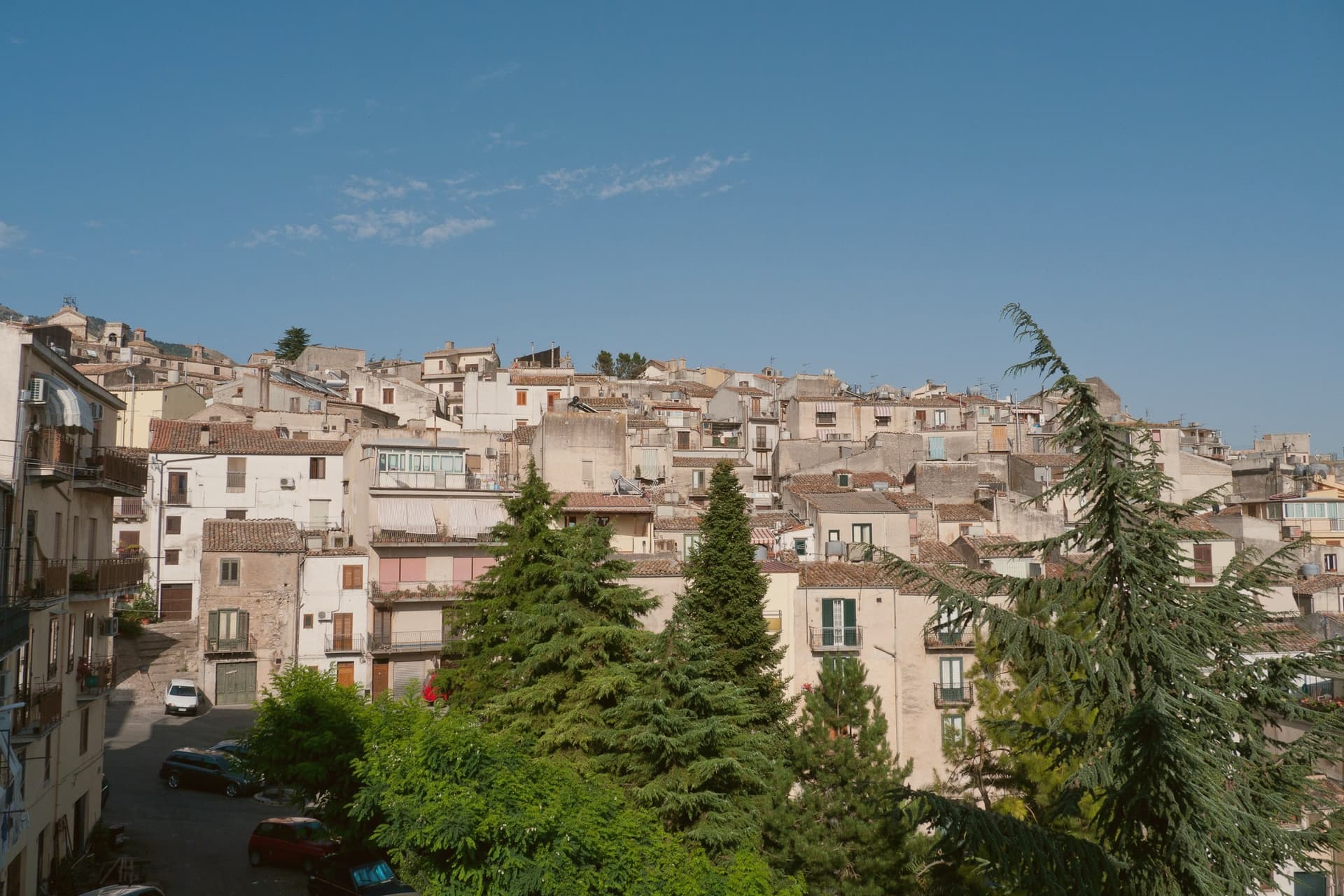
The old town climbs the ridge in stone houses, convents and churches, with the church and its twin bell towers at the summit, while the surrounding limestone massif, now protected as part of a UNESCO Global Geopark, supplies the slopes where hazelnuts are grown and where the town's convents once produced the sfoglio still made today. Domenico Dolce of Dolce & Gabbana was born here in 1958.
Giuseppe Antonio Borgese, the novelist who refused the Fascist loyalty oath in 1931 and emigrated to the United States, came from the same town. A settlement old enough to trace its name to Greek colonists, remade by Normans and by an emperor, still produces the same hazelnuts and the same pastry its convents made centuries ago, and still sends its people beyond the mountain.
What to see in Polizzi Generosa
- Chiesa Madre di Polizzi Generosa. Norman foundation rebuilt in Baroque style in the seventeenth century, with twin bell towers, a clock and a grand staircase at the top of the town.
- Museo Archeologico di Himera. Civic museum with finds from the area's continuous settlement, including coins and amphorae linked to the Greek colony of Himera on the coast.
- Parco delle Madonie. Regional natural park and UNESCO Global Geopark since 2015, covering the limestone massif that rises around the town.
How to get to Polizzi Generosa
Palermo is roughly 72 minutes away by road.
Our tip
May through October is the open season. At 917 meters the summer stays well below the coastal heat, the Madonie holds its forests through August, and the hazelnut harvest comes in late August and September. October fills the woods with mushrooms and turning beech.
Petralia Soprana
Why visit Petralia Soprana
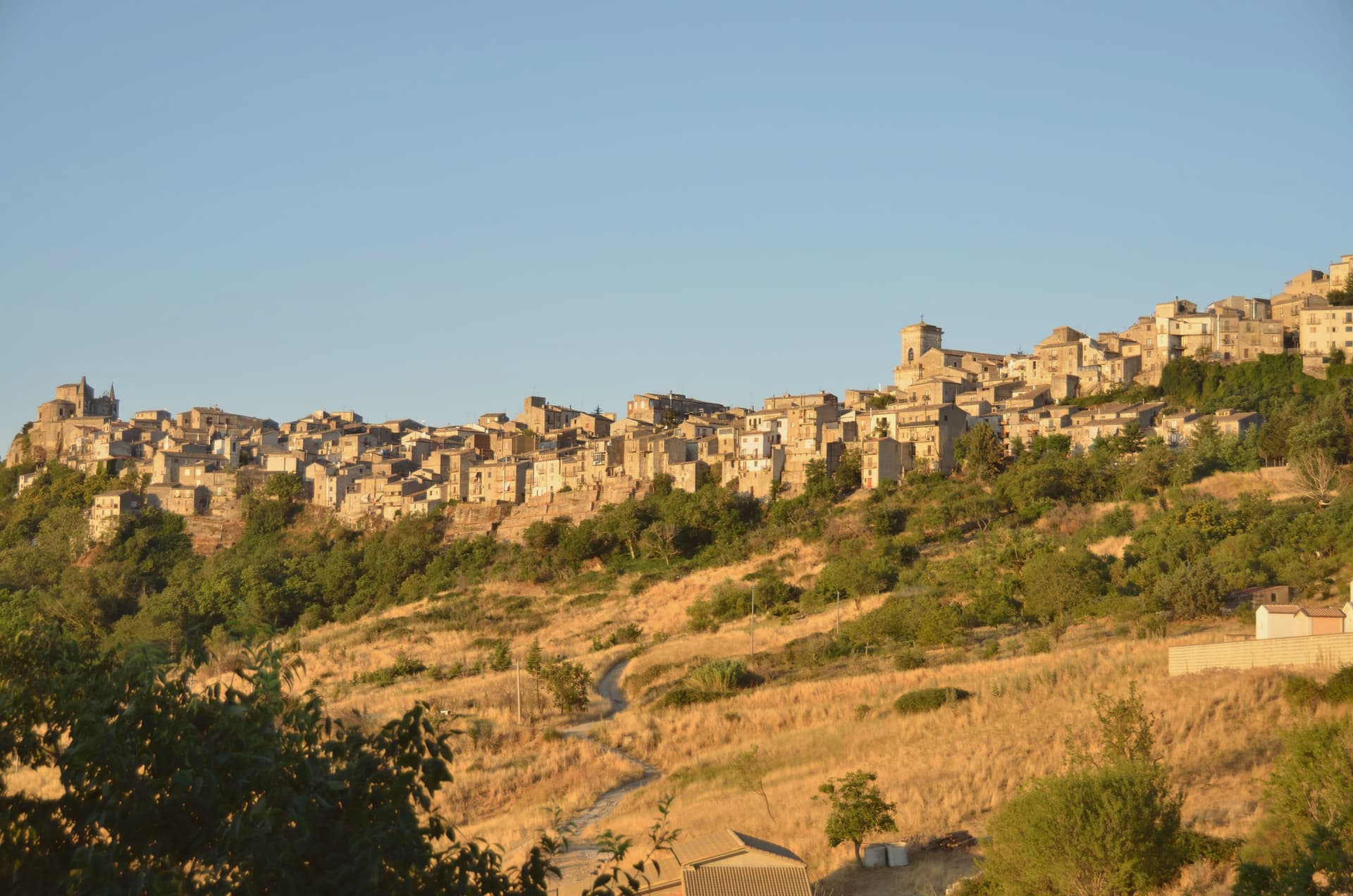
Petralia Soprana sits at 1,147 meters at the heart of the Madonie Natural Park, the highest commune in the range. The town and its lower twin Petralia Sottana grew from the Roman Petra, then took its current form under the Normans, who fortified the ridge.
The Chiesa Madre, dedicated to Saints Peter and Paul, dates to the fifteenth century and faces Piazza Duomo with a clear view across the Madonie. Below the village, the Raffo salt mine runs 80 kilometers of tunnels through one of the largest salt deposits in Europe, mined since at least the fourteenth century; the active mine now hosts MACSS, a contemporary art museum carved into the salt, one of a kind worldwide.
RAI named Petralia Soprana Borgo dei Borghi in 2018, the year of the salt mine's wider opening to the public. The stone streets, the mountain air at 1,147 meters, and the salt below the floor are the three things the village trades on.
What to see in Petralia Soprana
- Chiesa Madre (Santi Pietro e Paolo). Fifteenth-century mother church on Piazza Duomo, central monument of the village, with a baroque interior added after the 1693 earthquake.
- Miniera di Sale di Raffo. Active salt mine below the village with 80 km of tunnels in one of Europe's largest salt deposits, worked since the fourteenth century.
- MACSS — Museo Arte Contemporanea Sotto Sale. Contemporary art museum inside the active Raffo salt mine, sculptures cut directly into rock salt walls, the only museum of its kind worldwide.
How to get to Petralia Soprana
Palermo is roughly 88 minutes away by road.
Our tip
June through September brings dry mountain weather, ridge trails open across the Madonie, and temperatures stay below twenty-five even when Palermo touches forty. The salt mine and MACSS run all year, lit and warm inside. December through March catches snow at 1,147 meters and the village fills briefly with day-trippers from Cefalù coming up to see white roofs. Sagra del Grano a Pianello - Petralia Soprana falls in August.
Castelbuono
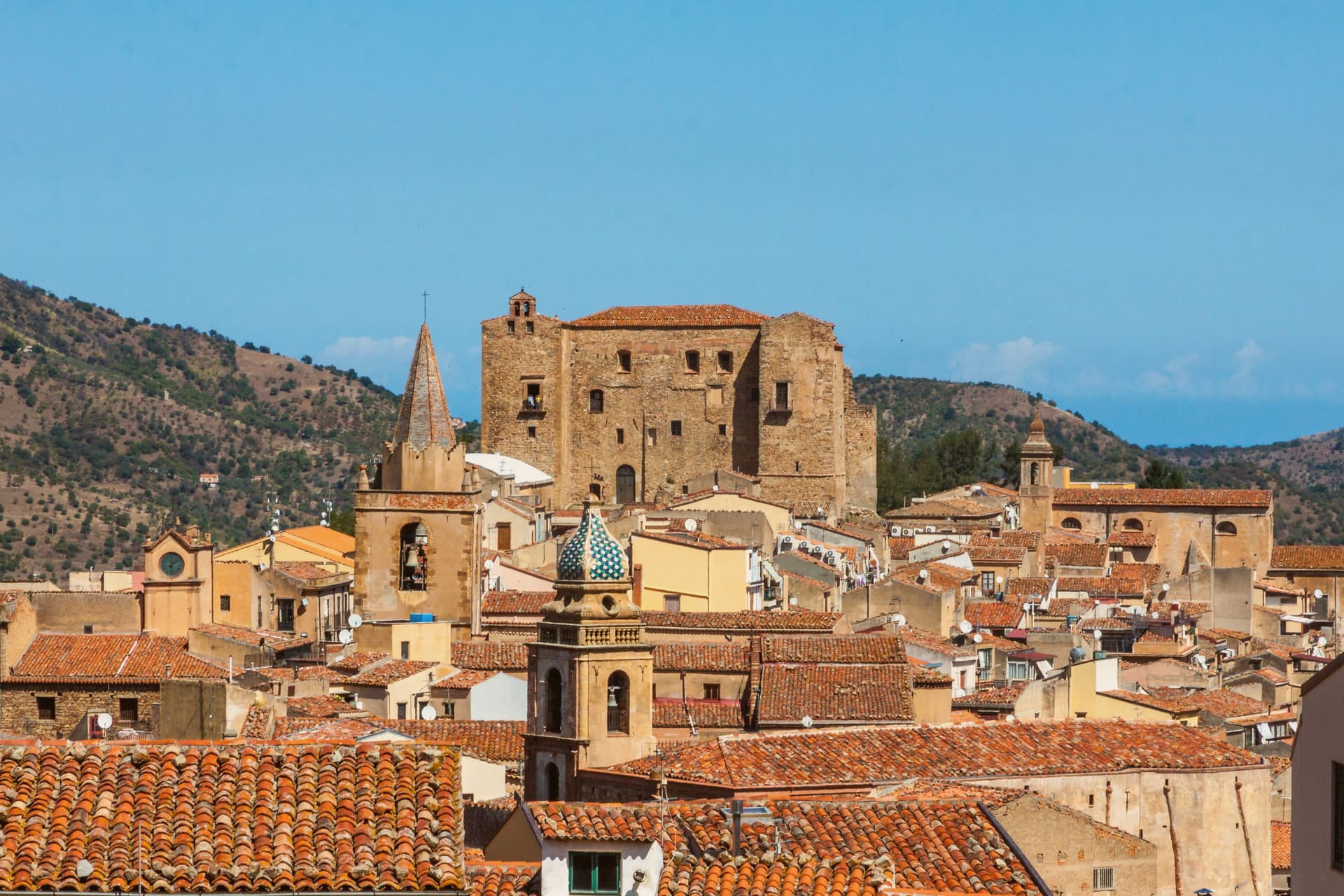
Why visit Castelbuono
Castelbuono sits at 423 meters on the northern slope of the Madonie, an hour inland from Cefalù and the Tyrrhenian coast. The town developed in the fourteenth century around the castle built by Count Francesco I Ventimiglia in 1317 on a pre-existing twelfth-century watchtower; the Ventimiglia were among the most influential families in medieval Sicily, and their court held here for generations.
The castle today houses the Museo Civico Francesco Minà Palumbo, with natural history, sacred art and archaeology from the Madonie territory. The Matrice Vecchia, the old mother church begun in 1362 under Francesco II Ventimiglia, mixes Roman-Gothic, Catalan-Gothic and Chiaramontane elements, with a 1520 polyptych attributed to Antonello De Saliba (nephew of Antonello da Messina) on the main altar and a fully frescoed crypt below the presbytery.
The town keeps the last working manna industry in Europe, the sweet sap collected by cutting Madonie ash trees in summer. Pasticceria Fiasconaro, founded here in 1953, now ships panettone and Ypsigro lines worldwide and opened a flagship in Manhattan in 2025.
In August the village runs the Ypsigrock indie festival, one of Italy's longest-running.
What to see in Castelbuono
- Castello dei Ventimiglia. Fourteenth-century castle built in 1317 by Francesco I Ventimiglia on a twelfth-century watchtower, now home to the Museo Civico Francesco Minà Palumbo.
- Chiesa Matrice Vecchia. Mother church begun in 1362, mixing Roman-Gothic, Catalan-Gothic and Chiaramontane styles, with a 1520 polyptych by Antonello De Saliba.
- Cripta della Matrice Vecchia. Crypt under the presbytery of the old mother church, walls fully frescoed with the life, Passion and Resurrection of Christ.
How to get to Castelbuono
There is a railway station in the town, so you can arrive without a car and never need one while you are here. Palermo is roughly 74 minutes away by road.
Our tip
April through June and September through November are the working months in Castelbuono. The chestnut and beech woods of the Madonie turn in October. The Ypsigrock indie festival fills the centro for four days in mid-August, the only week the town runs at coastal capacity. Festeggiamenti in onore di Sant'Anna a Castelbuono falls in July.
Cefalù
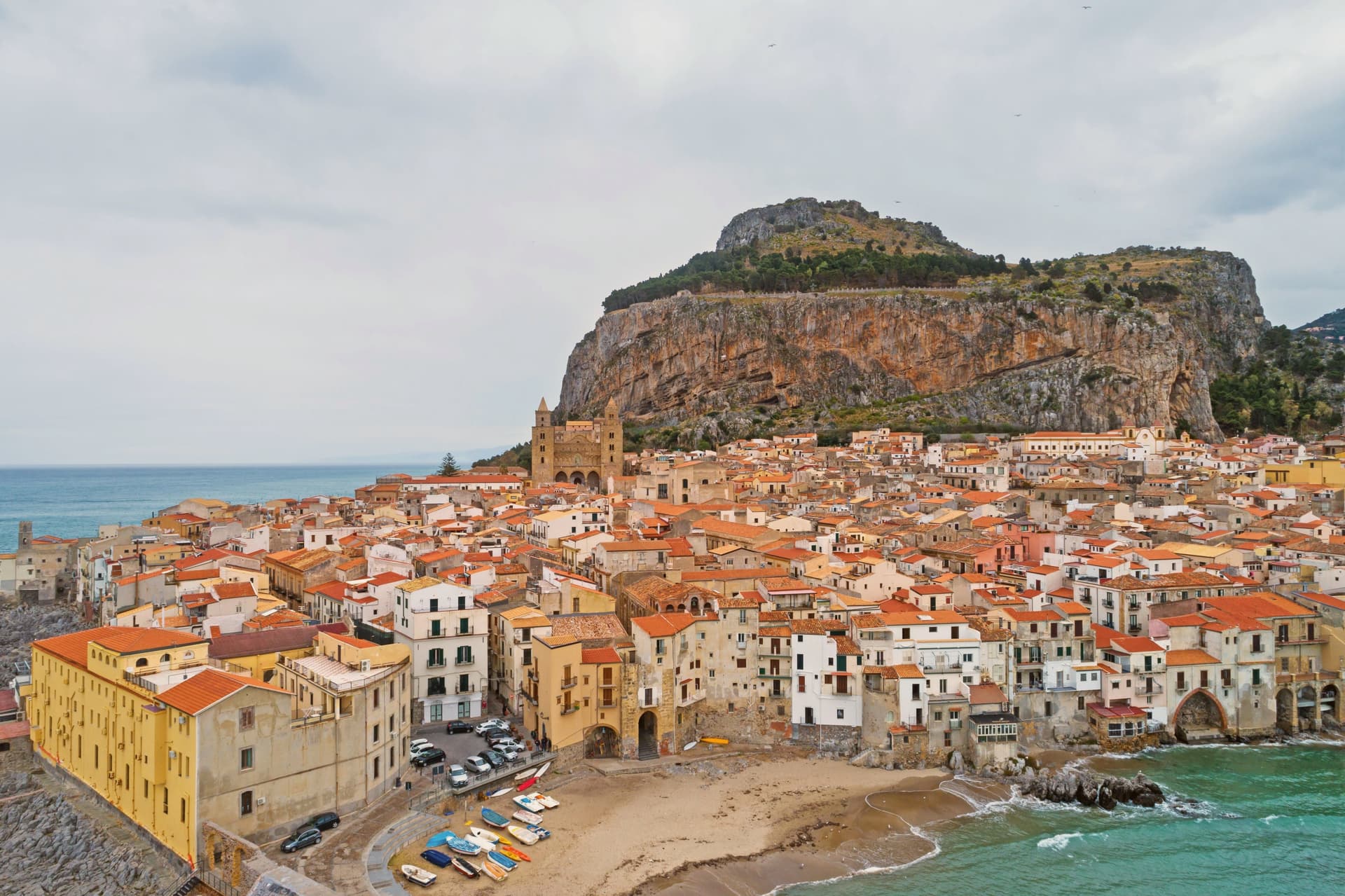
Why visit Cefalù
Cefalù sits 70 kilometers east of Palermo where the Madonie meet the Tyrrhenian, the old town built on a strip of land between the sea and the headland that gave the place its name. The Greeks called it Kephaloidion in the fourth century BC.
Roger II refounded the town at the foot of the rock in 1131 and began the cathedral the same year; tradition holds he vowed to build it after surviving a storm offshore. Its mosaics were executed by masters he brought from Constantinople.
The old town keeps the cathedral, the museum, and the working port within the same short walk, the stone lanes running straight down from the Duomo's square to the sea and the lavatoio fed by its own spring along the way. The beach runs below on one side, the rock rises behind on the other, and the harbor still works at the foot of it.
A small coastal town, built once by the Greeks and refounded by a Norman king against the same rock, still reads as one place rather than several eras stacked on top of each other.
What to see in Cefalù
- Duomo di Cefalù. Twin-towered cathedral built by Roger II, its west front facing a narrow square hemmed by the old town. Inside, the mosaic apse is reached down a nave still laid out to Norman proportions, the Arab-Norman UNESCO listing covering both the fabric and the decoration.
- La Rocca. The trail switchbacks up bare limestone above the roofs, past the megalithic sanctuary walls before reaching the castle ruins, where the town, the harbor, and the coastline in both directions open out below.
- Museo Mandralisca. Private nineteenth-century collection in an eighteenth-century palazzo, holding the Portrait of an Unknown Sailor and Greek vases from Lipari.
How to get to Cefalù
There is a railway station in the town, so you can arrive without a car and never need one while you are here. Palermo is roughly 63 minutes away by road.
Our tip
May, June, September and October are the windows for Cefalù. The Tyrrhenian is warm enough to swim from mid-May, the cathedral and the climb up La Rocca are bearable in the morning, and the town isn't yet at full crowd. July and August fill the beach and the lungomare past capacity, with Palermo and northern European holidaymakers; the cathedral keeps its mosaics behind a steady queue. Festa SS. Salvatore a Cefalù falls in August.
More from Anywhere Italy
- The best mountain towns inside a nature park in Sicilia
 The best small towns inside a nature park in Sicilia
- The prettiest villages inside a nature park in Sicilia
- The 9 best towns inside a nature park that you can reach by train in Sicilia
- The 6 best mountain towns in the province of Palermo
- The 8 best high-altitude villages in Sicilia