
The best towns that eat well within two hours of Palermo
The kitchens of western Sicily run on things grown within sight of the pot. Wild fennel and ricotta in the Madonie, tuna and busiate on the coast towards Trapani, aubergine and mint in the plain, cannoli filled to order because the shell goes soft if it waits. Houses here are built of the local limestone and tufa, warm gold in late afternoon, and in autumn the courtyards smell of grapes, olives being pressed and mushrooms brought down from the Nebrodi. Spring and October are the honest seasons: the sea is still swimmable, the tables are not full, and the produce is at its best.
Most visitors eat in Palermo and stop there, which is not unreasonable. The markets of Ballarò and Capo, the panelle and the spleen sandwiches, the baroque churches and the granita queues make a strong case, and the city has absorbed the great majority of the island's restaurant attention. The result is that the best-known addresses now book out weeks ahead, the street-food tours move in convoy, and lunch in high summer means standing in the sun.
The cooking does not stop at the city limits. The same ingredients, the same Arab-Norman inheritance of almonds, saffron and sweet-savoury sauces, carry inland through the Madonie and along the coast in both directions, into towns where the dining room seats fewer people and the owner cooks. Fewer travellers go, and the tables here have still been named in the guides.
Of the 23 communes we have mapped in a 120-minute drive of Palermo, 7 qualify as towns that eat well: each holds a table a guide put its name to. The smallest, San Marco d'Alunzio, has 1,778 residents.
Two more lists worth reading alongside this one: The best towns inside a nature park that eat well in Sicilia and The best towns you can reach by train within 90 minutes of Palermo.
San Marco d'Alunzio
Why visit San Marco d'Alunzio
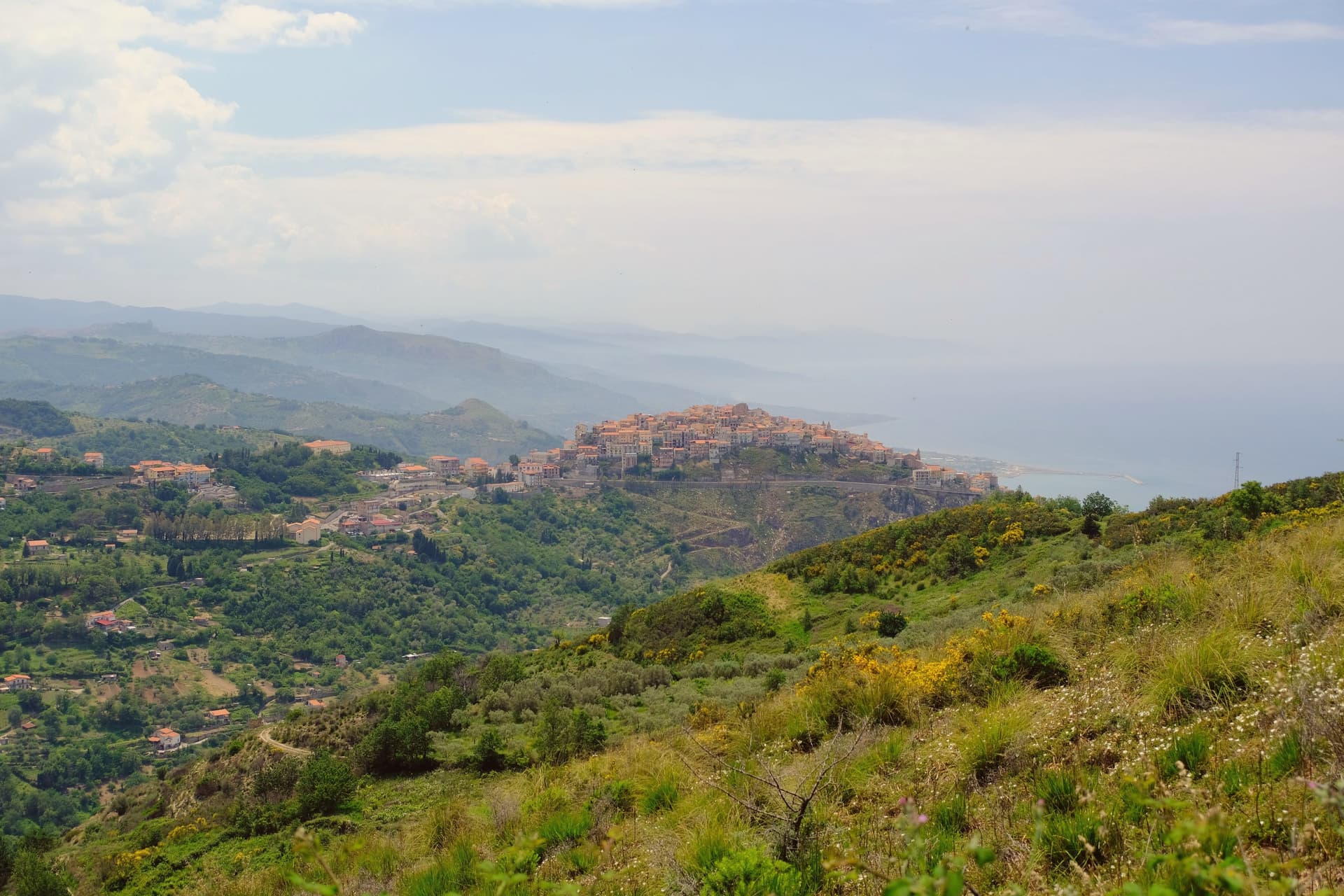
The borgo sits on Mt. Castro, five kilometers from the Tyrrhenian coast.
The Greeks founded it as Alontion, prosperous enough to mint its own currency, and the settlement they built has never fully left: what they raised became the base for what came after, layer on layer, rather than being cleared away for it. The upper town holds the ruins on Monte Rotondo, the lookout that gave the Normans command of the coast below.
The historic center, walled and compact, holds twenty-two churches and is listed among the Borghi più belli d'Italia. Through all of it runs the same pink stone, quarried on the surrounding hills, cut for church interiors, piazza fountains and, beyond the town itself, for the interior of the Messina town hall.
A place built repeatedly from its own ground: Greek temple, Norman stronghold and marble borgo standing on the same hill in the same rose-colored rock.
Demenna Luogo di Ristoro have been named by a guide.
What to see in San Marco d'Alunzio
- Tempio di Ercole. The foundations sit beneath the Chiesa di San Marco, making it the oldest visible structure in the borgo, its stones absorbed into the later church above.
- Ruderi del Castello Normanno. Ruins on Monte Rotondo above the village, standing as the lookout point over the Tyrrhenian coast.
- Chiesa di Santa Maria delle Grazie (Aracoeli). Renaissance church built entirely in the local rose-colored stone, with elaborate marble carvings inside the chapel.
How to get to San Marco d'Alunzio
Messina is roughly 85 minutes away by road.
Our tip
April through June and September through November are the best months. The 540-meter ridge stays cooler than the Tyrrhenian below, the pink Aluntina stone catches the afternoon light, and the climb up to the Norman castle ruins is easy in dry weather. July and August are hot but the centro storico shaded streets give shelter.
Castelbuono
Why visit Castelbuono
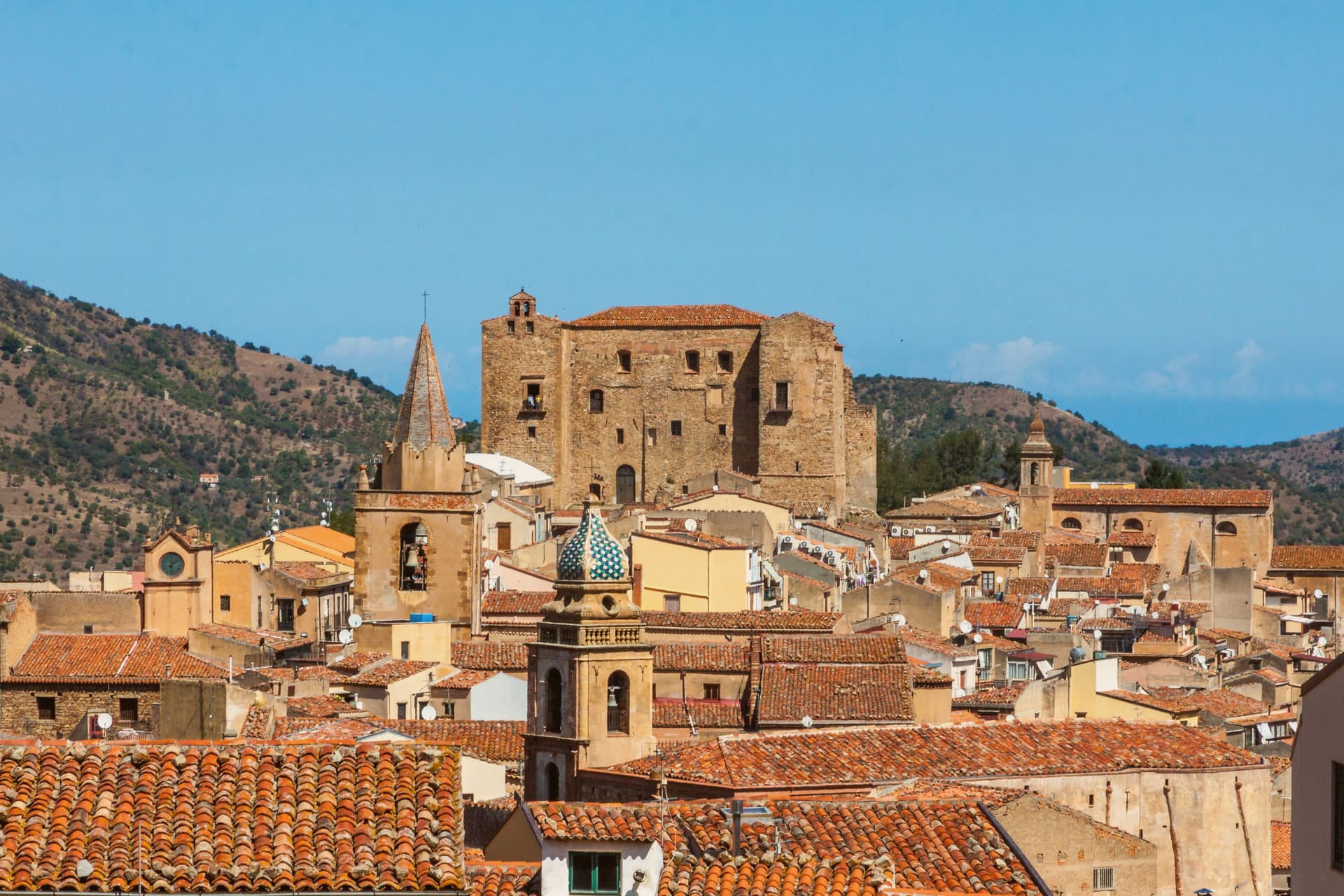
Castelbuono sits at 423 meters on the northern slope of the Madonie, an hour inland from Cefalù and the Tyrrhenian coast. The town developed in the fourteenth century around the castle built by Count Francesco I Ventimiglia in 1317 on a pre-existing twelfth-century watchtower; the Ventimiglia were among the most influential families in medieval Sicily, and their court held here for generations.
The castle today houses the Museo Civico Francesco Minà Palumbo, with natural history, sacred art and archaeology from the Madonie territory. The Matrice Vecchia, the old mother church begun in 1362 under Francesco II Ventimiglia, mixes Roman-Gothic, Catalan-Gothic and Chiaramontane elements, with a 1520 polyptych attributed to Antonello De Saliba (nephew of Antonello da Messina) on the main altar and a fully frescoed crypt below the presbytery.
The town keeps the last working manna industry in Europe, the sweet sap collected by cutting Madonie ash trees in summer. Pasticceria Fiasconaro, founded here in 1953, now ships panettone and Ypsigro lines worldwide and opened a flagship in Manhattan in 2025.
In August the village runs the Ypsigrock indie festival, one of Italy's longest-running.
Nangalarruni, Palazzaccio have been named by a guide.
What to see in Castelbuono
- Castello dei Ventimiglia. Fourteenth-century castle built in 1317 by Francesco I Ventimiglia on a twelfth-century watchtower, now home to the Museo Civico Francesco Minà Palumbo.
- Chiesa Matrice Vecchia. Mother church begun in 1362, mixing Roman-Gothic, Catalan-Gothic and Chiaramontane styles, with a 1520 polyptych by Antonello De Saliba.
- Cripta della Matrice Vecchia. Crypt under the presbytery of the old mother church, walls fully frescoed with the life, Passion and Resurrection of Christ.
How to get to Castelbuono
There is a railway station in the town, so you can arrive without a car and never need one while you are here. Palermo is roughly 74 minutes away by road.
Our tip
April through June and September through November are the working months in Castelbuono. The chestnut and beech woods of the Madonie turn in October. The Ypsigrock indie festival fills the centro for four days in mid-August, the only week the town runs at coastal capacity. Festeggiamenti in onore di Sant'Anna a Castelbuono falls in July.
Menfi
Why visit Menfi
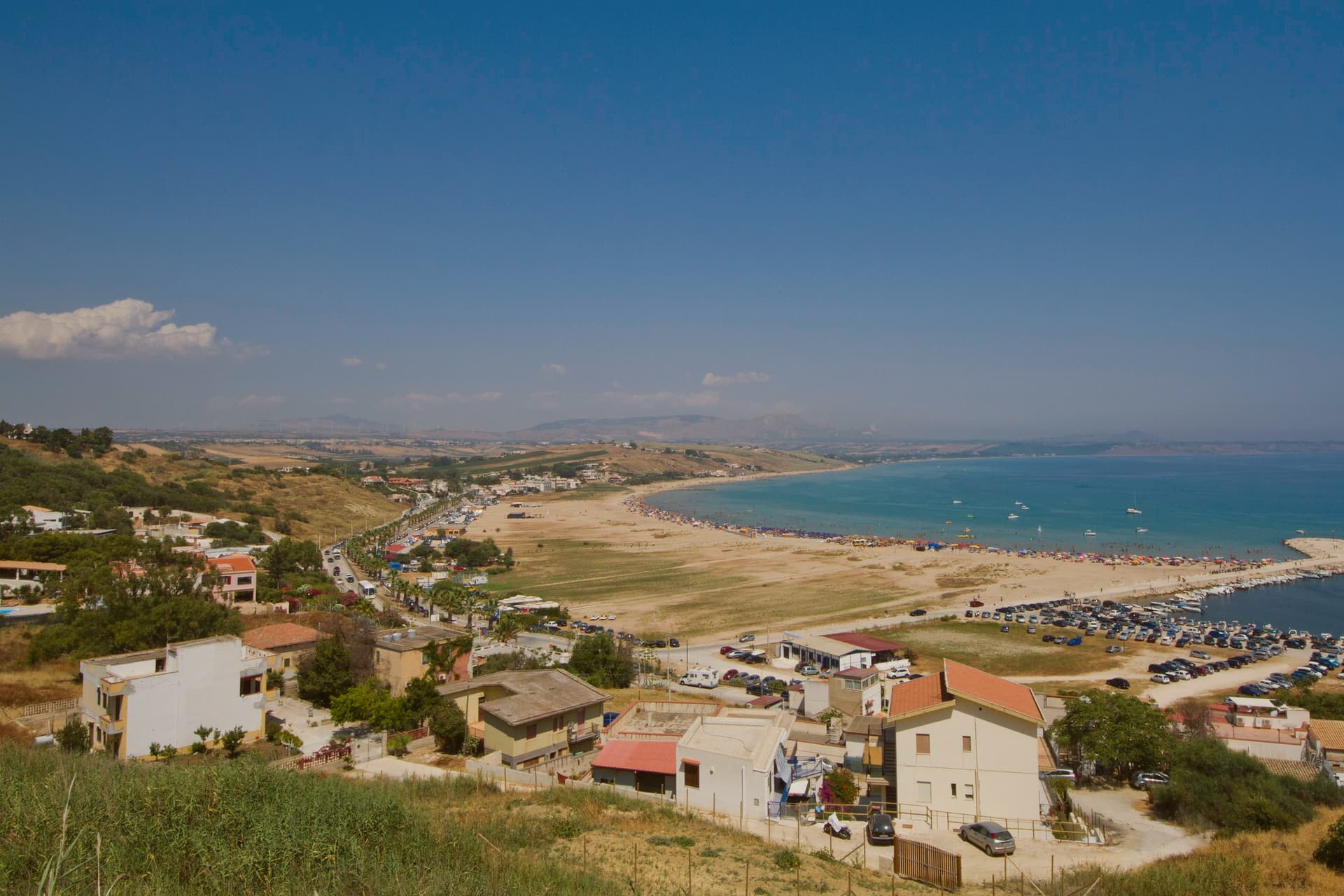
Menfi is an 11,814-resident town on the western Agrigento coast, and its geography frames everything else about it. The town sits at 119 metres on a low limestone ridge between the Belice and Carboj rivers, four kilometres inland from the coast, where a nine-kilometre arc of fine sandy beach runs at Porto Palo di Menfi, backed by a protected dune system of 1,100 hectares, the most important loggerhead turtle nesting site on the southern Sicilian coast.
That gap between ridge and shore is the shape of the whole place: the historic centro on the high ground, the beach and reserve down below, the vineyard and olive plateaux spreading out behind and above the town. The town itself was founded in 1638 by the Tagliavia d'Aragona Pignatelli family on the site of an earlier castello belonging to Federico II.
Nothing from that medieval phase survived the re-foundation except a single surviving tower, the only structure left from before the seventeenth-century rebuilding. Above the town, the plateaux produce the two products that give Menfi the rest of its quality-mark trifecta alongside the beach: a cooperative cellar founded in 1958 that draws on 2,000 grower-members farming 6,000 hectares to produce 50 million bottles a year, the volume that makes it Italy's largest winery, and an olive oil, Nocellara del Belice DOP, grown across the same micro-region that produces the Castelvetrano table olive.
That range of production is what earns the town its Città del Vino status alongside its oil and its beach. Beyond the town, Selinunte's Greek temple site lies 25 km west and the Scala dei Turchi limestone cliff sits 50 km east toward Agrigento, the two standard day trips.
The food is Sicilian-coastal: pasta con le sarde, busiate with Trapani-style pesto, bluefin tuna from one of the last traditional fisheries on the island, couscous showing the same Trapani influence reaching this far along the coast, cassata and cannoli, and the local Grillo or Nero d'Avola poured alongside all of it. What holds the place together is that ridge-to-shore, town-to-plateau layout: a working wine and olive town that happens to sit a short drive from its own protected beach, rather than a beach resort with agriculture as an afterthought.
La Foresteria, Salisà, Il Vigneto have been named by a guide.
What to see in Menfi
- Porto Palo di Menfi (Bandiera Blu). Fine sandy beach below the town, backed by dune wetland where loggerhead turtles nest. The sand runs long enough that the crowd thins fast once you walk past the first stretch.
- Cantine Settesoli + Mandrarossa. Visits and tastings at the cooperative cellar in town: Nero d'Avola, Grillo, Inzolia, Syrah poured where they are made rather than at a distributor's counter.
- Nocellara del Belice DOP olive oil. The local olive oil, from the same micro-region as the Castelvetrano table olives. Several small frantoi in town offer tastings, worth setting alongside the wine visit rather than instead of it.
How to get to Menfi
Palermo is roughly 83 minutes away by road.
Our tip
Menfi is best May–June and September–October — the beach is swimmable May–October, summer crowds peak August. The Inycon Wine & Jazz festival in late June is the year's headline event. October is harvest at Cantine Settesoli and the surrounding cellars. Inycon, la Festa del Vino a Menfi falls in October.
Cefalù
Why visit Cefalù
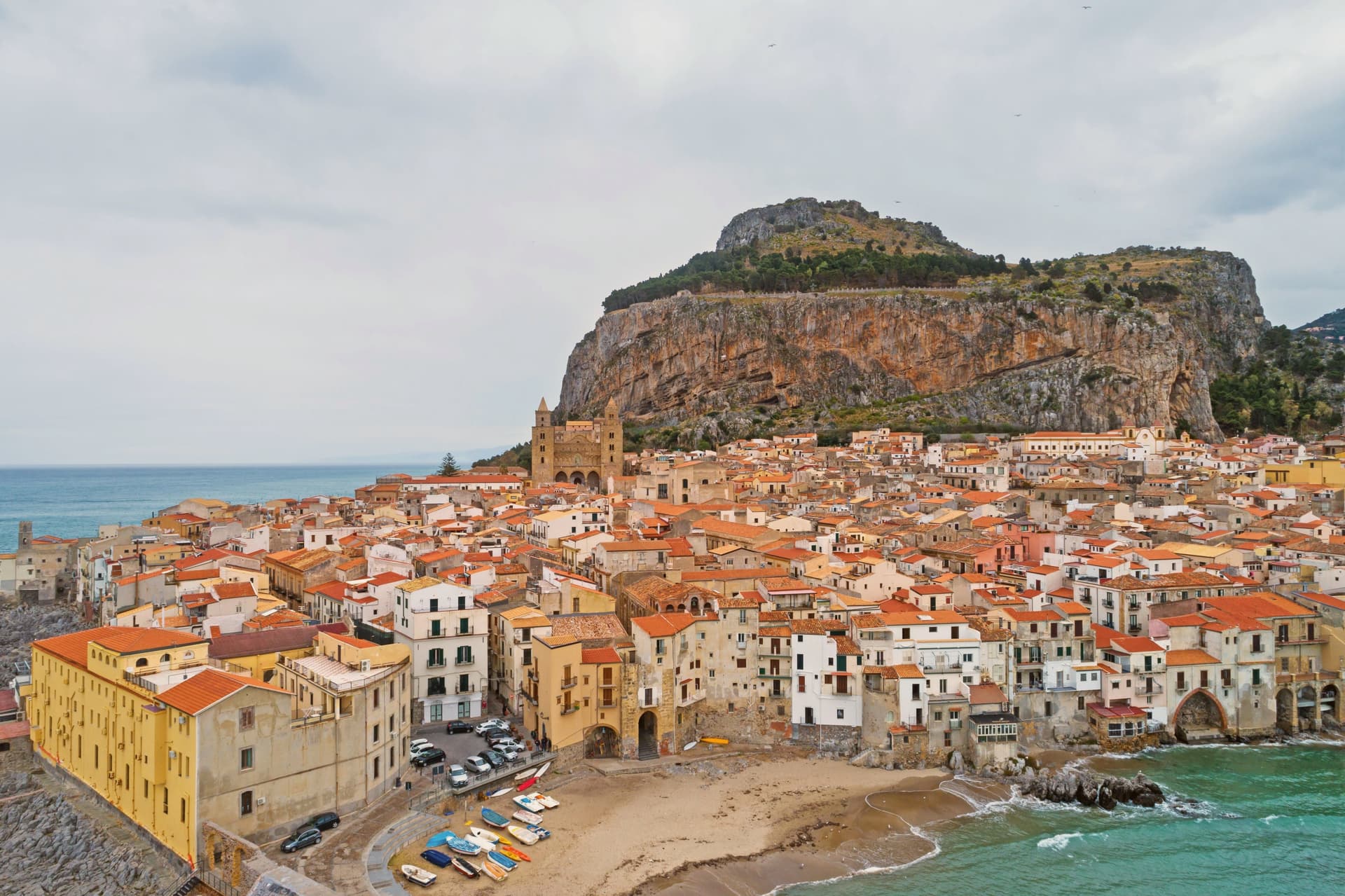
Cefalù sits 70 kilometers east of Palermo where the Madonie meet the Tyrrhenian, the old town built on a strip of land between the sea and the headland that gave the place its name. The Greeks called it Kephaloidion in the fourth century BC.
Roger II refounded the town at the foot of the rock in 1131 and began the cathedral the same year; tradition holds he vowed to build it after surviving a storm offshore. Its mosaics were executed by masters he brought from Constantinople.
The old town keeps the cathedral, the museum, and the working port within the same short walk, the stone lanes running straight down from the Duomo's square to the sea and the lavatoio fed by its own spring along the way. The beach runs below on one side, the rock rises behind on the other, and the harbor still works at the foot of it.
A small coastal town, built once by the Greeks and refounded by a Norman king against the same rock, still reads as one place rather than several eras stacked on top of each other.
Locanda del Marinaio, Cortile Pepe, Cala Luna and 1 more have been named by a guide.
What to see in Cefalù
- Duomo di Cefalù. Twin-towered cathedral built by Roger II, its west front facing a narrow square hemmed by the old town. Inside, the mosaic apse is reached down a nave still laid out to Norman proportions, the Arab-Norman UNESCO listing covering both the fabric and the decoration.
- La Rocca. The trail switchbacks up bare limestone above the roofs, past the megalithic sanctuary walls before reaching the castle ruins, where the town, the harbor, and the coastline in both directions open out below.
- Museo Mandralisca. Private nineteenth-century collection in an eighteenth-century palazzo, holding the Portrait of an Unknown Sailor and Greek vases from Lipari.
How to get to Cefalù
There is a railway station in the town, so you can arrive without a car and never need one while you are here. Palermo is roughly 63 minutes away by road.
Our tip
May, June, September and October are the windows for Cefalù. The Tyrrhenian is warm enough to swim from mid-May, the cathedral and the climb up La Rocca are bearable in the morning, and the town isn't yet at full crowd. July and August fill the beach and the lungomare past capacity, with Palermo and northern European holidaymakers; the cathedral keeps its mosaics behind a steady queue. Festa SS. Salvatore a Cefalù falls in August.
Monreale
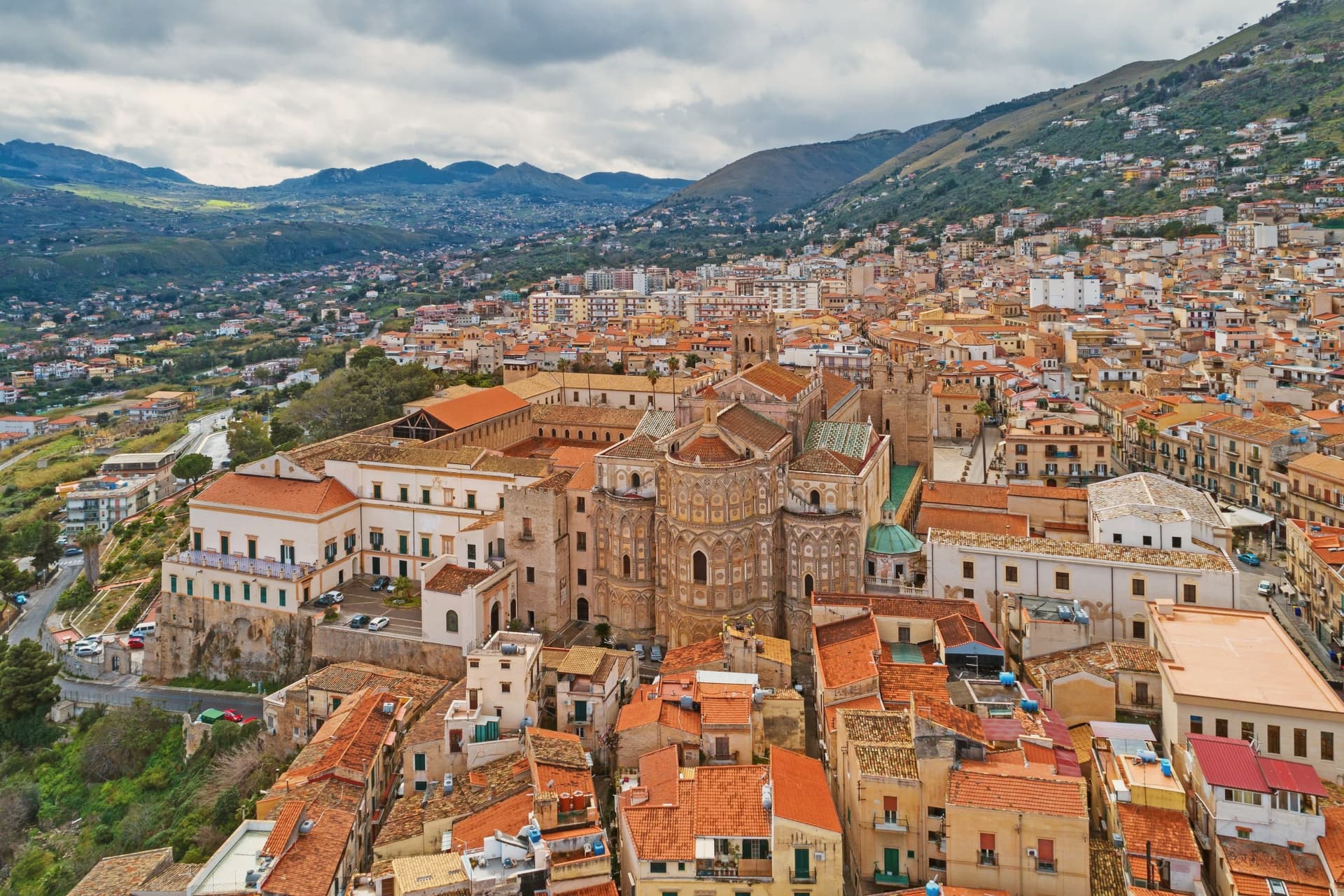
Why visit Monreale
Monreale sits at 310 meters on the southwestern slope of Monte Caputo, eight kilometers from Palermo, looking down across the Conca d'Oro toward the Tyrrhenian. William II of Sicily founded the Benedictine abbey here in 1174 and the cathedral, Santa Maria Nuova, was elevated to metropolitan rank in 1182.
The mosaics inside cover 6,340 square meters, the largest surviving Byzantine cycle in Italy, executed in coloured glass on a gold ground by masters William brought from Constantinople and Venice. The cloister, 2,200 square meters of pointed arches and 216 paired marble columns, is one of the most complete Romanesque cloisters in Europe, with no two capitals carved alike.
The cathedral and cloister joined the UNESCO Arab-Norman Palermo inscription in 2015. The town carries the Città della Ceramica title for the workshops that grew up around the cathedral.
Below the Duomo, the streets fall steeply toward the Conca d'Oro and back up to Palermo.
Ristorante La Botte, Ciambra have been named by a guide.
What to see in Monreale
- Duomo di Monreale (Santa Maria Nuova). Cathedral begun in 1174 under William II, 6,340 m² of Byzantine mosaics in coloured glass on gold ground, the largest surviving Norman mosaic cycle in Italy.
- Chiostro dei Benedettini. Romanesque cloister of 2,200 m² with 216 paired marble columns, each capital carved differently in foliage, biblical scenes and allegory; among Europe's finest.
- Palazzo Reale di Monreale. Twelfth-century Norman royal residence next to the cathedral, partly preserved within the seminary buildings; the rooms William II used during construction of the Duomo.
How to get to Monreale
There is a railway station in the town, so you can arrive without a car and never need one while you are here. Palermo is roughly 44 minutes away by road.
Our tip
April through June and September through November are the right windows. The cathedral is open all year, but the climb from Palermo and the walk down to the Conca d'Oro are easier outside the heat. July and August push past thirty-three in the lower town and fill the cloister queue past two hours; arrive at opening or wait until late afternoon. Grisi' in Festa falls in August.
Sciacca
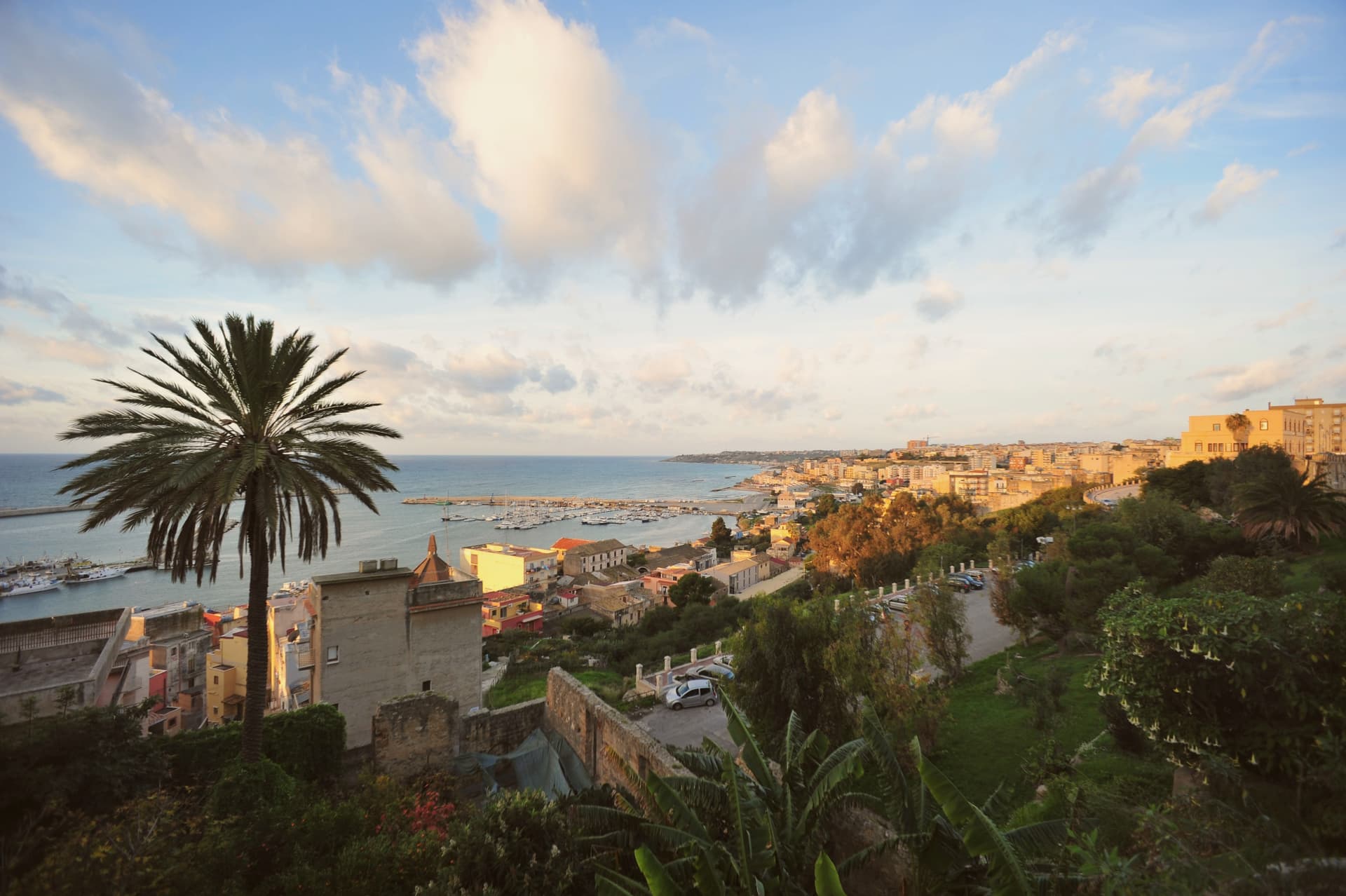
Why visit Sciacca
Sciacca sits on terraces above its harbor on the southwestern coast of Sicily, between Selinunte and Agrigento. The mountain that rises 386 meters behind the town still vents steam into rock chambers where the sulfurous springs draw the same spa use that began in antiquity.
The Arabs renamed the town Xacca, water; the present name comes from that. Sciacca is the second-largest commune in the Agrigento province after the capital, with about 39,000 inhabitants, and one of the great fishing harbors of southern Sicily.
The town's layout still carries its origins: a medieval core divided between fishermen's and artisans' quarters, terraced on the cliff, with the harbor below and the mountain and its steam caves behind. Two industries have grown out of that position, one drawing on the clay and craft tradition of the province, the other filling the calendar each year with a Carnival whose roots reach back to Roman festival.
What the springs began as a cure, the town turned into an identity: water gave Sciacca its name, its baths, and eventually the industries that keep it going.
Hostaria del Vicolo, La Lampara have been named by a guide.
What to see in Sciacca
- Palazzo Steripinto. 1501 palazzo with a diamond-pointed ashlar façade, one of the finest examples of Gothic-Renaissance Plateresque art in Sicily.
- Stufe di San Calogero. Natural steam caves on Monte Kronio with temperatures of 40-45 degrees, reached through rock chambers that still vent into the cave walls.
- Castello Incantato. Open-air museum on the outskirts with hundreds of stone heads carved into the rock by the artist Filippo Bentivegna in the early twentieth century.
How to get to Sciacca
Palermo is roughly 99 minutes away by road.
Our tip
May through October are the months Sciacca is at full pace. The harbor stays open, the beaches west and east of town fill, and the centro storico stays usable into October. July and August push past thirty-five degrees and the centro storico empties between two and six.
Marsala
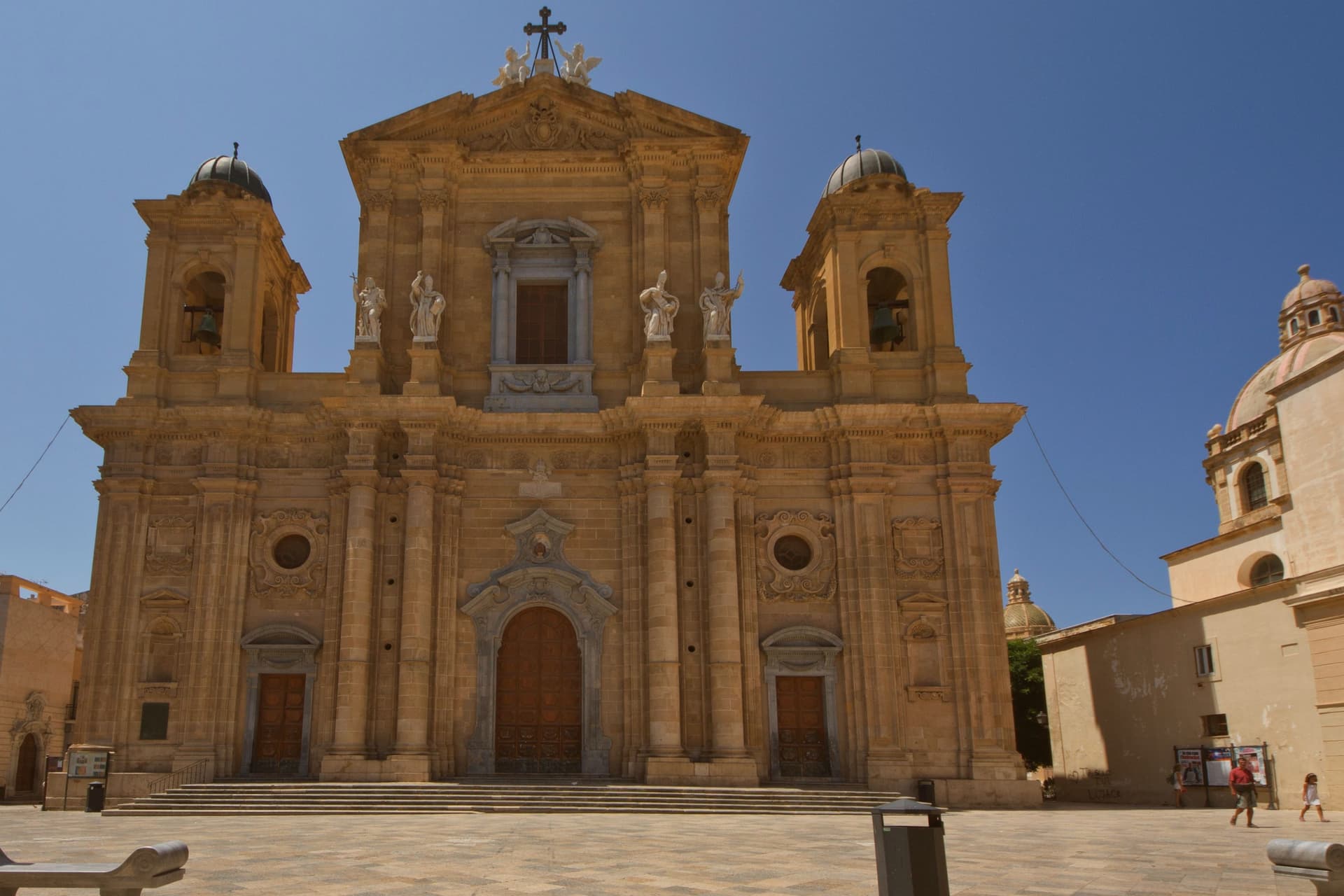
Why visit Marsala
Marsala sits on the westernmost point of Sicily, at sea level on the strait facing Tunisia. The Phoenicians of Mozia, on the small island just off the Stagnone lagoon to the north, founded Lilibeo on the mainland after Dionysius of Syracuse razed Mozia in 397 BC; the modern city sits on that ground.
The Arabs renamed it Marsa Ali or Marsa Allah, the harbor of God, in the ninth century. On 11 May 1860 Giuseppe Garibaldi landed at the port with the Mille and began the campaign that ended the Bourbon kingdom.
Large-scale wine production began in 1773 when the English trader John Woodhouse added grape spirit to local wines to keep them through the sea voyage to England, and the fortified Marsala became a global product. The historic cellars (Florio, Pellegrino, Rallo, Donnafugata) still operate in the city.
The Saline della Laguna and the Stagnone, with Mozia at its center, lie a few kilometers north along a low coastal road of windmills and salt mounds.
Parrinello Pescheria e Cucina have been named by a guide.
What to see in Marsala
- Parco archeologico di Lilibeo. Phoenician-Punic and Roman site at Capo Boeo on the western tip of the city, with the Baglio Anselmi museum and the third-century BC Punic warship.
- Riserva dello Stagnone e Mozia. Two-thousand-hectare coastal lagoon with the island of Mozia at its center, holding the Phoenician walls and the Kothon harbor basin.
- Saline della Laguna. Working salt pans along the Stagnone with Dutch-style windmills and pyramidal salt mounds, in production since Phoenician times.
How to get to Marsala
There is a railway station in the town, so you can arrive without a car and never need one while you are here. Palermo is roughly 111 minutes away by road.
Our tip
May, June, September and October are the months for the Stagnone and the salt pans. July and August are hot and busy at Mozia, and the salt-pan reflections that give the lagoon its colour are best caught at sunset, when the temperature drops. November is the new wine on the Marsala cellars' floors. A Fera di Strasatti a Marsala falls in August.
More from Anywhere Italy
- The best towns inside a nature park that eat well in Sicilia
 The best towns you can reach by train within 90 minutes of Palermo
 The best hidden coastal towns that eat well in Sicilia
 The best hidden towns you can reach by train that eat well in Sicilia
 The best hill towns within 90 minutes of Palermo
 The best towns inside a nature park in the province of Palermo