
The best hill towns that live slowly in Umbria
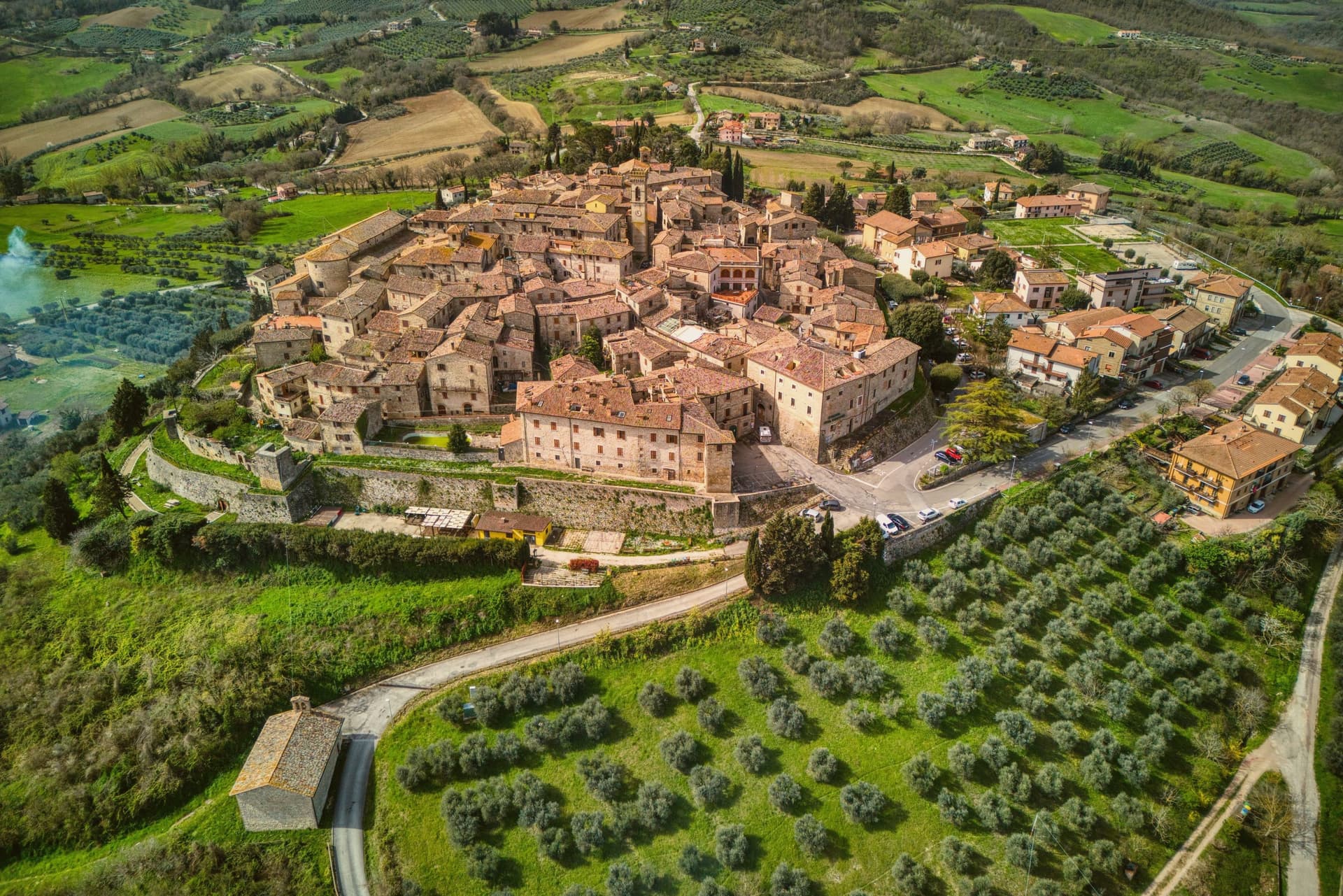
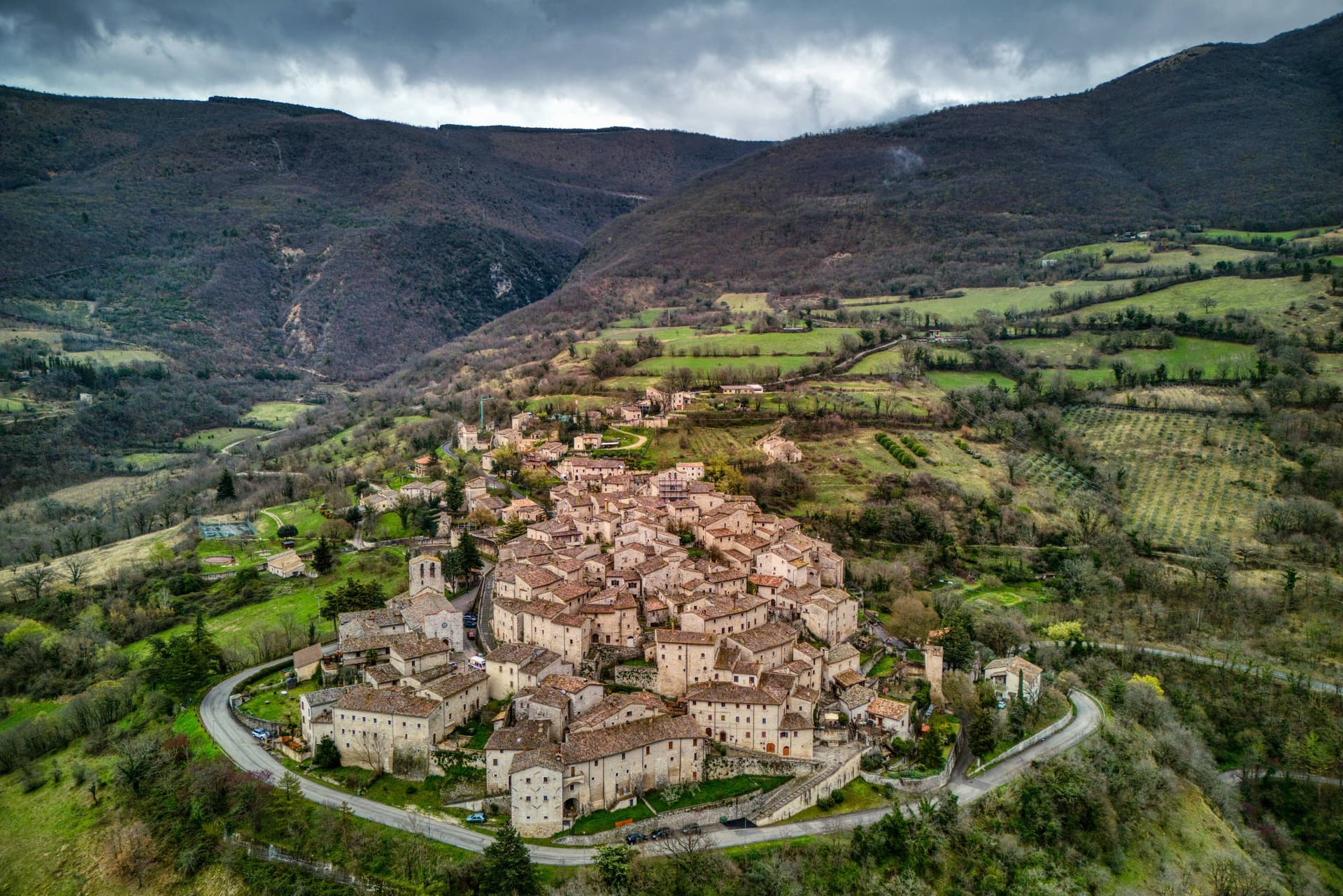
Umbria is the part of central Italy that sits above its own valleys. The towns are stacked on ridges of travertine and tufa, walled in stone the colour of wet ash or faded rose, and the roads up to them switch back through olive terraces that stay silver-green all winter. Autumn is the season the region organises itself around: the frantoi pressing new oil, black truffle shaved over strangozzi, lentils from the high plains cooked with sausage, Sagrantino coming out of the cellars thick and tannic. Spring brings the other Umbria, wildflowers on the Piano Grande and the valleys below the walls filling with green.
Most visitors arrive on the Assisi road. The basilica and the Giotto frescos are among the most visited sights in central Italy, and the coach parks below the town fill early from March onwards, feeding a main street of ceramic shops and pilgrim souvenirs. It is one of the great buildings in Europe, and worth the queue. But the crowd concentrates in a few hundred metres of paving, and by midday the town belongs to the day trips rather than to anyone living in it.
The same ridges continue in every direction past that one hill. The olive terraces run south through the Valle Umbra, the truffle country climbs east into the Sibillini, and the wine hills roll west towards the Tiber and the Lazio border. The towns along them keep the same stone, the same food and the same view, with fewer people looking at it. Each of these has formally committed to the international slow-living charter, which in practice means limits on traffic in the centre, protection for local producers, and a working town rather than a set.
Of the 47 communes we have mapped in Umbria, 8 qualify as hill towns that live slowly: each is an inland hill settlement, and each has signed the international slow-living charter. The smallest, Monte Castello di Vibio, has 1,429 residents.
Elsewhere in the catalogue: The best towns that live slowly in the province of Perugia and The best hill towns that live slowly within 90 minutes of Perugia.
Monte Castello di Vibio
Why visit Monte Castello di Vibio
Monte Castello di Vibio sits at 422 meters on a ridge above the Tiber valley, eight kilometers north of Todi and thirty south of Perugia. The town is a walled fifteenth-century borgo on a slope of cultivated Umbrian hills, and its later name carries the trace of an old Perugian Roman family, the Vibii, attached to it in 1863 to distinguish the place from other Monte Castello communes.
The Teatro della Concordia, built in 1808 by nine wealthy families in the spirit of the French Revolution's ideals of liberty, equality and fraternity, is the smallest theatre all'italiana in the world: 99 seats, 62 in four tiers of boxes and 37 in the stalls, an auditorium of 68 square meters in a bell-shaped plan, a stage of 50. The theatre closed in 1951 after wartime damage and reopened in 1993 after restoration.
The Chiesa dei Santi Filippo e Giacomo, built in 1851 on the main square, replaced an older parish on the same footprint. The Madonna delle Grazie, an older stone church from 1505, holds frescoed walls.
What to see in Monte Castello di Vibio
- Teatro della Concordia. The smallest all'italiana theatre in the world: 99 seats, built in 1808 in a bell-shaped plan, closed in 1951 and reopened in 1993.
- Chiesa dei Santi Filippo e Giacomo. Main parish church on the central square, built in 1851 on the footprint of an earlier and smaller church.
- Madonna delle Grazie. Stone church of 1505 on the edge of the borgo, with frescoed interior walls dating to the early sixteenth century.
How to get to Monte Castello di Vibio
Perugia is roughly 50 minutes away by road.
Our tip
April through June and September into October are the months the borgo opens. The Teatro della Concordia runs a season of opera, concerts and theatre from spring through autumn, with extra performances around the August holidays. July and August are warm, and visitors thin in midafternoon; the centro storico is small enough that the heat passes quickly with a glass of water in the main square.
Norcia
Why visit Norcia
Norcia sits at 604 meters on a high plateau on the Umbrian side of the Monti Sibillini, ancient Nursia of the Sabines, fortified in the 3rd century BC by Rome. Saints Benedict and his twin sister Scholastica were born here in 480; the Benedictine Order and the Ora et Labora motto that shaped Western monasticism began on this piazza.
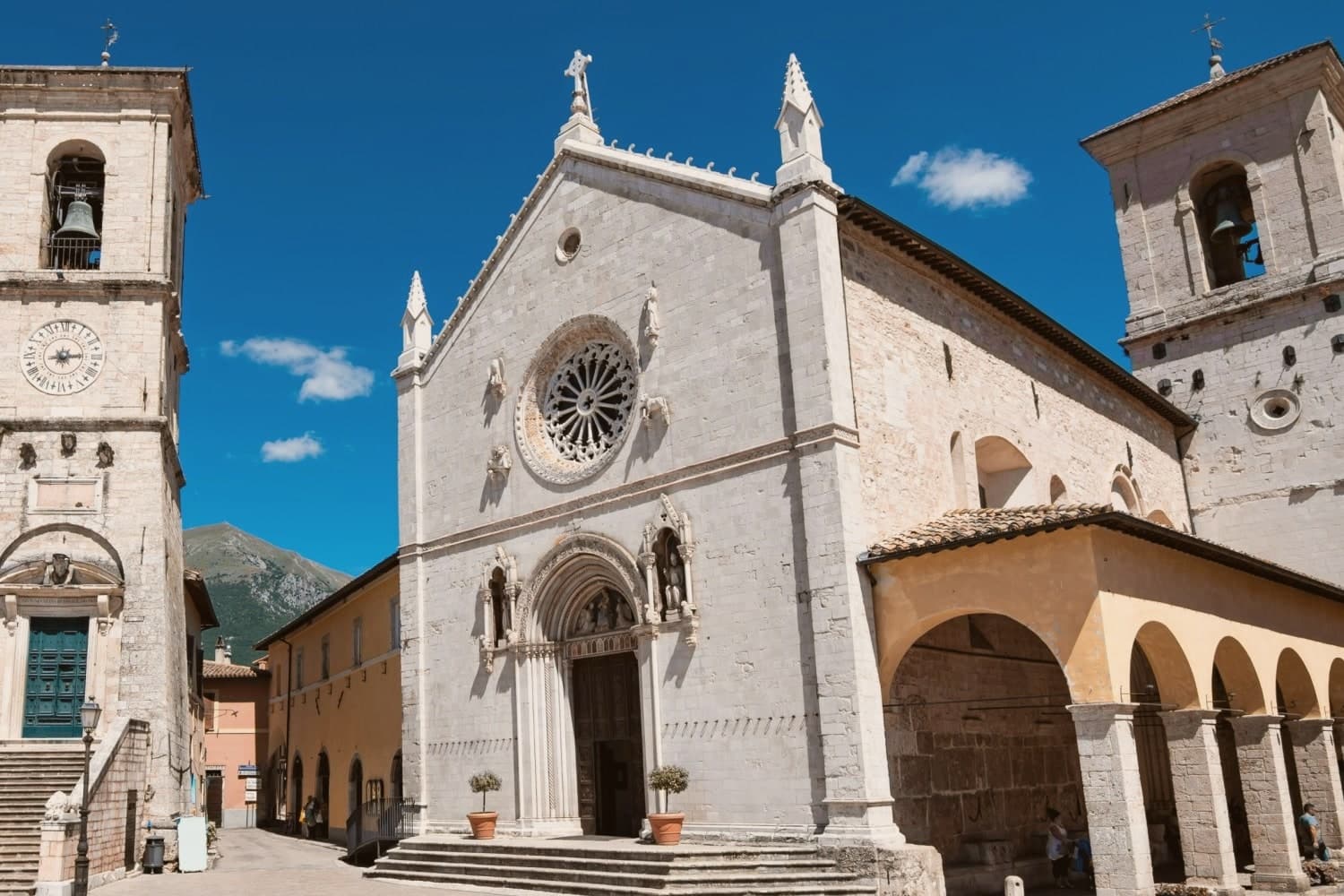
The Basilica di San Benedetto rises on the traditional birthplace, built between 1290 and 1338 over a pre-existing crypt. On 30 October 2016 a magnitude 6.5 earthquake destroyed the nave; only the façade was left standing.
Reconstruction completed on 30 October 2025, nine years to the day, with the original stones and earthquake-resistant technology. The town gave its name to norcineria, the Italian word for quality pork delicatessen, after centuries of Norcia butchers specializing in wild boar and pork.
Black truffle from the Valnerina, lentils from Castelluccio, and ricotta from the high pastures complete the table.
What to see in Norcia
- Basilica di San Benedetto. Built 1290-1338 over the traditional birthplace of Saints Benedict and Scholastica, rebuilt with original stones after 2016, reopened 30 October 2025.
- Castellina. Fortified papal stronghold designed by Jacopo Barozzi da Vignola in 1554, on Piazza San Benedetto, now the Museo Civico e Diocesano.
- Piazza San Benedetto. Civic and religious heart of the centro storico, with the Palazzo Comunale, the basilica, the Castellina and the statue of Benedict at the center.
How to get to Norcia
Terni is roughly 93 minutes away by road.
Our tip
April through June and September into October are the months for Norcia. The plateau holds its color, the lentil fields of Castelluccio bloom from mid-June into July, and the high pastures are open for hiking. July and August stay cooler than the Umbrian valleys at 604 meters, but the town fills with festival crowds for the Mostra Mercato del Tartufo Nero on the last weekend of February and again for sagras through the summer.
Montefalco
Why visit Montefalco
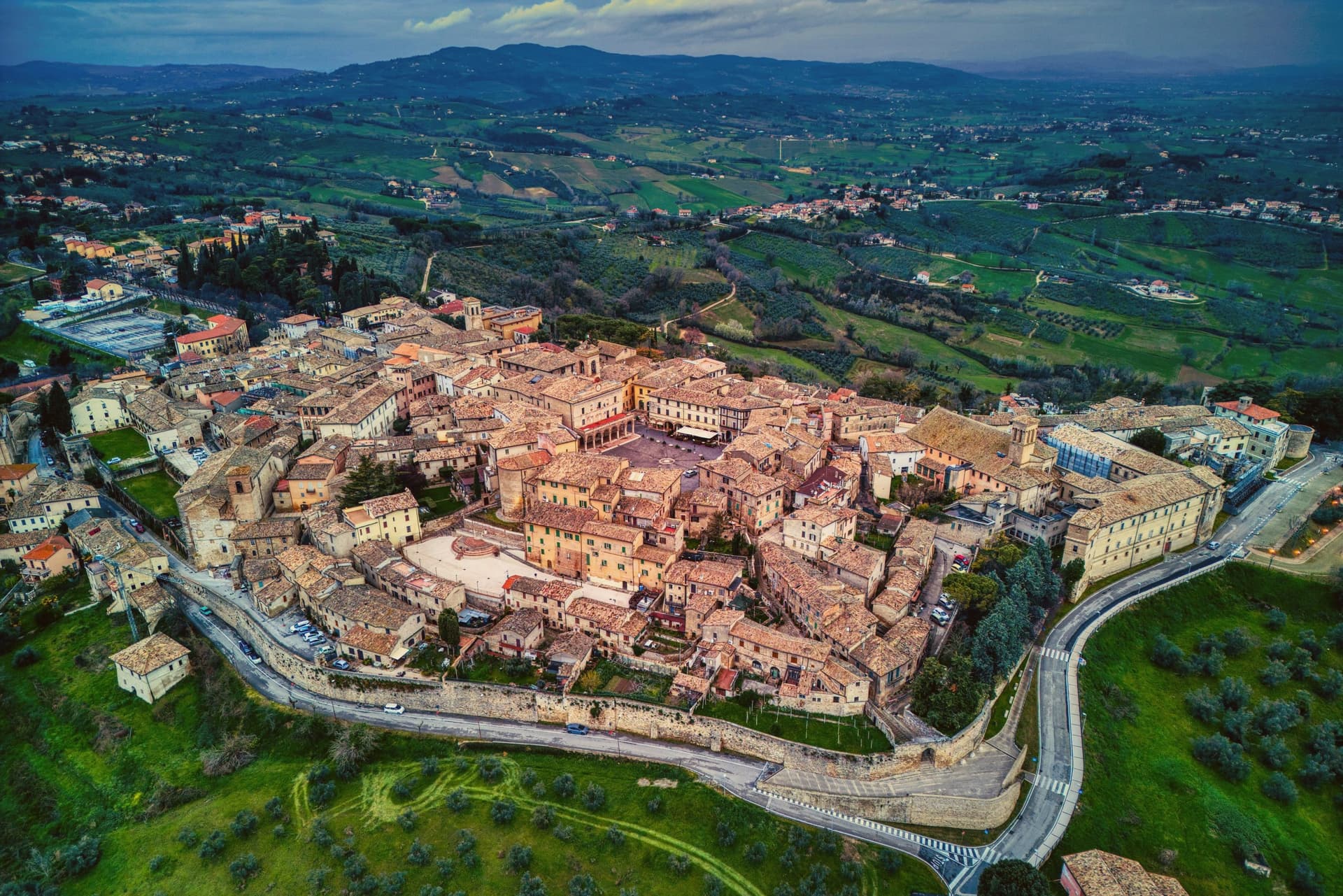
Montefalco sits on a hill above the Umbrian valley, its walls laid out in two concentric medieval circuits with five gates, the inner ring still complete and the outer ring added in the 14th century by the Trinci. At the top, the circular Piazza del Comune gathers four converging streets around the Palazzo Comunale, the high point from which the rest of the town falls away toward the walls and the vineyards beyond them.
The name Sagrantino belongs to the slopes right around those walls, where the grape has been traced back to the 1st century AD, and three of the largest producers, Caprai, Antonelli and Adanti, keep cellars within four kilometers of the centro storico. The harvest runs late September into October.
The fresco cycle Gozzoli painted in the apse of the former church of San Francesco is counted among his most complete surviving works, and the town's own name for itself, the railing of Umbria, describes the same eastern walls where the belvedere gathers seven hill towns into one view. Wine on the slopes, frescoes in the old church, a view of the valley from the walls: a hill town whose economy, art and setting all sit within walking distance of each other.
What to see in Montefalco
- Museo Civico di San Francesco. Former Franciscan church holding Benozzo Gozzoli's fresco cycle, plus works of the Umbrian school, in a building that has stood as the town's museum since deconsecration.
- Piazza del Comune. Circular medieval square at the top of the hill, ringed by the Palazzo Comunale, the Oratorio di Santa Maria di Piazza and four converging streets.
- Belvedere of Umbria. Panoramic walk on the eastern walls that takes in Perugia, Assisi, Spello, Foligno, Trevi, Spoleto and Todi from a single viewpoint.
How to get to Montefalco
Perugia is roughly 54 minutes away by road.
Our tip
April through June and September into October are the months for Montefalco. The vineyards run their full work cycle, the harvest of Sagrantino starts in the last week of September, and the railing belvedere holds the long Umbrian light. Settimana Enologica in mid-September brings producers from across the territory onto Piazza del Comune. Enologica Montefalco falls in September.
Città della Pieve
Why visit Città della Pieve
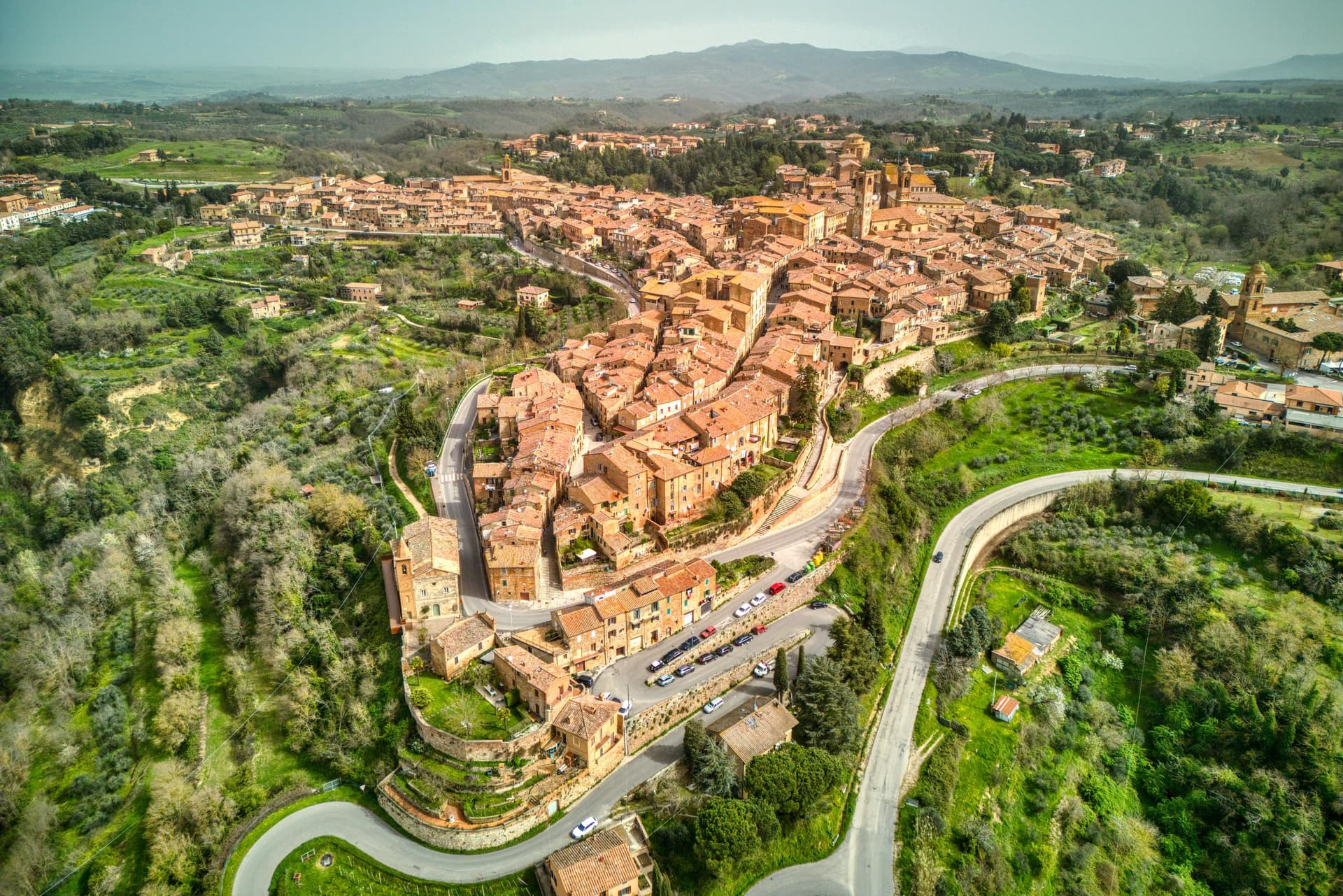
Città della Pieve sits on a hill at 508 meters between Umbria and Tuscany, about 260 meters above the Valdichiana and within sight of Lake Trasimeno. The town is built almost entirely of the local red brick that has been fired here since the Middle Ages, which gives the centro storico a uniform terracotta color.
Pietro Vannucci, known as Perugino, was born here around 1448 and returned in 1504 to fresco the Adoration of the Magi inside the Oratorio di Santa Maria dei Bianchi, one of the largest works he ever painted. The Cathedral of San Gervasio holds two more Perugino panels from 1510 and 1514.
Pope Clement VIII elevated the town from Castel della Pieve in 1600, restoring its episcopal seat. Vicolo Baciadonne, eighty centimeters wide, threads between two brick walls and is regularly cited as the narrowest alley in Italy.
What to see in Città della Pieve
- Cattedrale dei Santi Gervasio e Protasio. Cathedral on the main piazza with two Perugino panels, the Madonna and Child with Saints of 1514 and the Baptism of Christ of 1510.
- Oratorio di Santa Maria dei Bianchi. Confraternity oratory holding Perugino's Adoration of the Magi, frescoed in 1504 and considered one of his largest single works.
- Torre del Pubblico. Twelfth-century civic tower in Lombard Romanesque style, thirty-nine meters tall, set next to the cathedral on Piazza Plebiscito.
How to get to Città della Pieve
There is a railway station in the town, so you can arrive without a car and never need one while you are here. Perugia is roughly 47 minutes away by road.
Our tip
April through June and September into October are the months locals prefer. The Valdichiana below stays green or gold depending on the half, and the brick of the centro storico holds the late light well. The Infiorata in June covers the main streets in petal carpets for Corpus Domini, drawing the year's largest crowd. Palio dei Terzieri falls in August.
Trevi
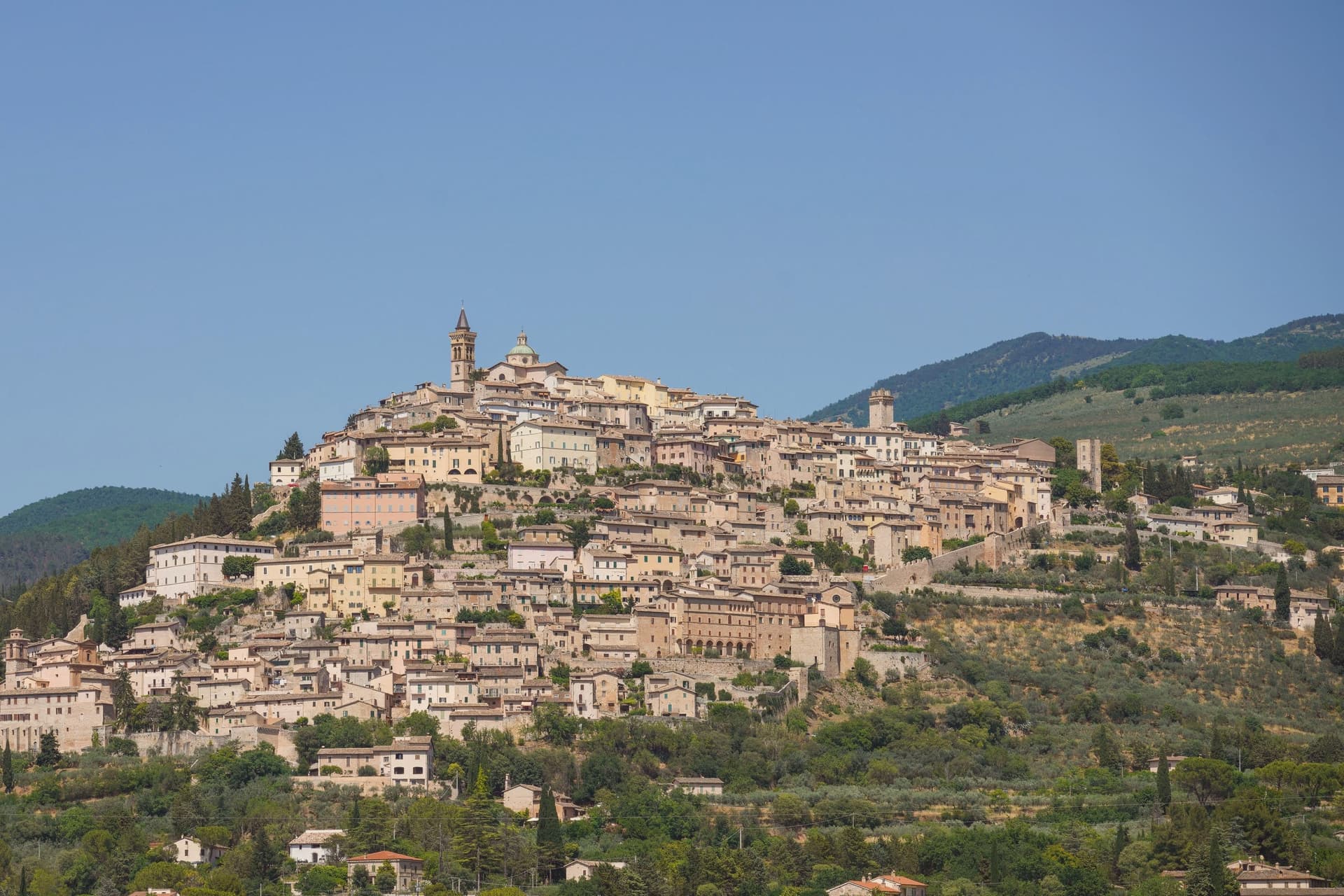
Why visit Trevi
Trevi sits at 412 meters on a conical hill above the Spoleto valley, the centro storico still inside the Roman walls of the 1st century BC. The town stood on the Via Flaminia, the consular road from Rome to the Adriatic, and grew into a Guelph commune by the 12th century.
Olive oil is what people come for. Over 200,000 trees blanket the slopes below the walls on near-ideal calcareous, well-drained soils, and the Olivo di Sant'Emiliano near the abbey of the same name is about 1,700 years old, identified with the tree the bishop of Trevi was tied to in 304 before his martyrdom.
The Santuario della Madonna delle Lacrime, built in 1487 to mark a miracle, holds a fresco by Pietro Perugino. The centro storico runs in concentric rings up the hill, each ring older than the last, with the Palazzo Comunale and the Pinacoteca holding works by Lo Spagna at the top.
What to see in Trevi
- Santuario della Madonna delle Lacrime. Built in 1487 after a Marian apparition wept tears of blood in 1485, with a fresco by Perugino in the Cappella dell'Adorazione.
- Chiesa di Sant'Emiliano. Romanesque parish church at the top of the centro storico, dedicated to the bishop martyred in 304, the patron saint of the town.
- Olivo di Sant'Emiliano. About 1,700-year-old olive tree near the eponymous church, nine meters tall, traditionally the tree to which the bishop was tied before martyrdom.
How to get to Trevi
There is a railway station in the town, so you can arrive without a car and never need one while you are here. Perugia is roughly 47 minutes away by road.
Our tip
April through June and September into October are the months for Trevi. The olive groves are in leaf or in harvest, the hill is green or silver-gold depending on the half, and the valley below holds the morning light. The Festa di Sant'Emiliano runs the last week of January with the Palio dei Terzieri, when the three quarters of the town compete.
Amelia
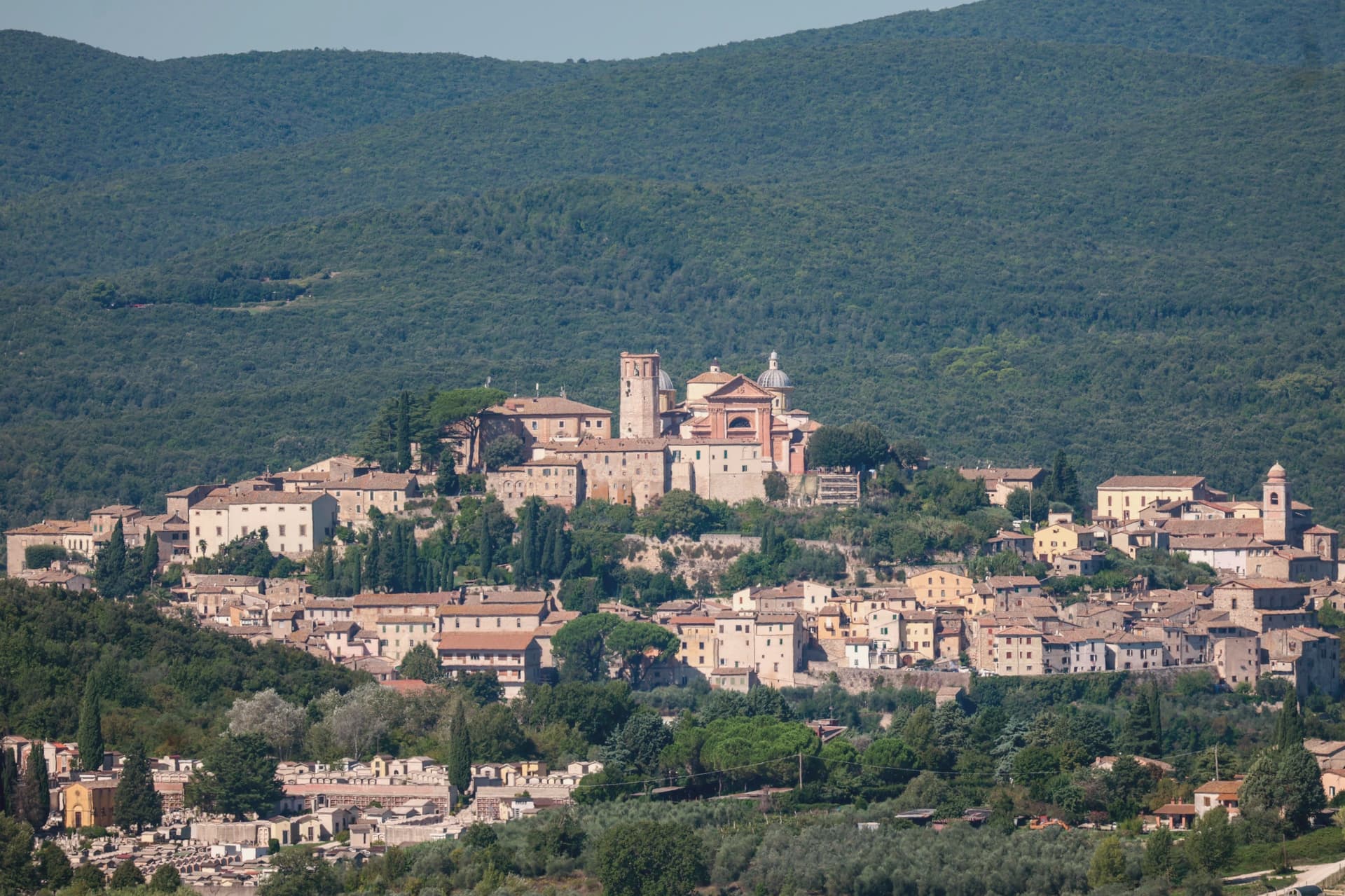
Why visit Amelia
Amelia sits on a hill between the Tiber and the Nera, sixty kilometers south of Perugia and close to the Lazio border. The walls that ring the town predate the Roman conquest, and when Amelia later became a Roman municipium, the town built outward and downward at once: terraces and roads above ground, and below the main square, a system of parallel cisterns cut to hold the settlement's water.
The gate on the old Via Amerina still marks the approach from outside, its current travertine form the result of sixteenth-century rework. Just beyond it, a bronze cuirassed general over two meters tall lay buried until 1963, when it surfaced and was moved into the town's archaeological museum.
The cathedral at the upper end of the centro storico carries its own layer of history, re-dedicated in the ninth century under a pope, and stands apart from the defensive and civic works that dominate the rest of the town's fabric. Amelia joined the Cittaslow network in 2004, and each summer the chamber-music festival founded in 1968 turns the town's attention outward to a different country's repertoire.
The town's layers sit on top of each other rather than beside each other: pre-Roman defense, Roman engineering, medieval faith, and a modern festival calendar all occupying the same small hill in sequence.
What to see in Amelia
- Mura poligonali. Up to 6 meters high in places, the blocks fitted without mortar along the line that still defines the edge of the old town.
- Cisterne romane. The chambers measure 57.5 by 19.6 meters and sit directly beneath the paving of Piazza Matteotti, invisible from the square above.
- Duomo di Santa Firmina. Cathedral re-dedicated to Saint Firmina around 872 under Pope Adrian II, at the upper end of the centro storico.
How to get to Amelia
Terni is roughly 33 minutes away by road.
Our tip
April through June and September into October are the working months: dry air, light on the polygonal walls, evenings on the Cittaslow corso. The Festival delle Nazioni runs late August into early September and draws audiences from Rome and beyond. July and August reach the mid-thirties; at 406 meters the centro storico breathes better than the Terni basin but afternoons still empty. Palio dei Colombi falls in July.
Todi
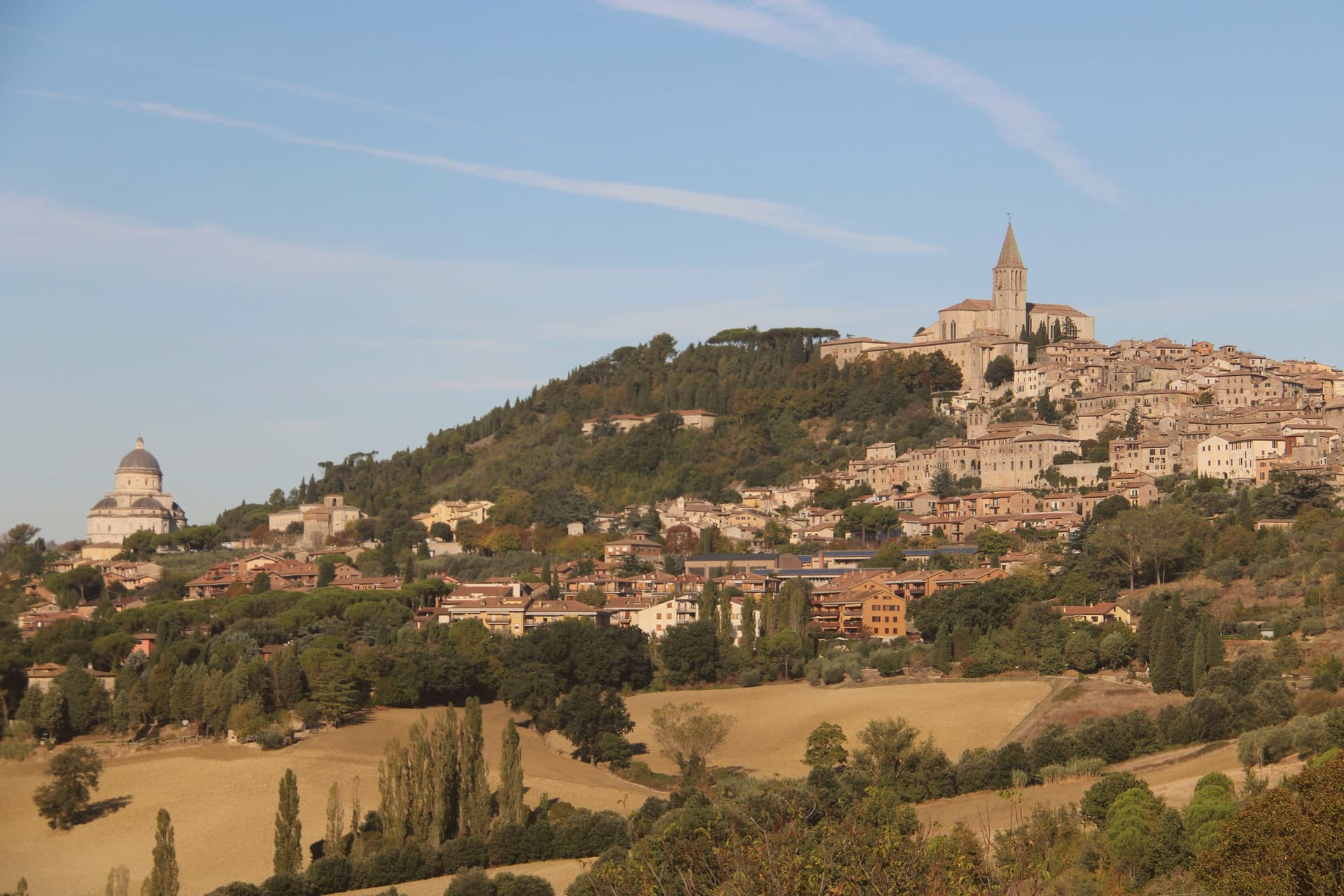
Why visit Todi
The hill the town occupies, Colle Nidoli, rises above the middle Tiber, and the settlement is built as three concentric ring walls rather than one: Etruscan and Roman courses at the base, a medieval circuit at the summit, the whole sequence readable from the hills around it. The square at the top sits directly over a Roman forum, and the cisterns cut beneath that forum still carry water and drainage for the town today, so the working infrastructure underfoot is as old as anything visible above ground.
The building on the square with the triple window keeps that window from the thirteenth century. The lower ground beyond the medieval walls holds the Roman niches, the surviving wall of a first-century BC public building, set at the foot of the town rather than within its defended core, a reminder that the settlement's Roman life extended past what the medieval walls later enclosed.
Outside the walls in the other direction stands the Renaissance temple, built over a century between 1508 and 1607, deliberately separated from the dense center it complements. Todi's layout is less a single town than a stack of settlements, Etruscan, Roman, medieval, Renaissance, each occupying its own ring or its own ground beyond the walls, none erasing what came before it.
What to see in Todi
- Piazza del Popolo. Square on the highest point of Colle Nidoli, built over Roman cisterns still in use, ringed by cathedral, Palazzo dei Priori, and Palazzo del Capitano.
- Cattedrale della Santissima Annunziata. Twelfth-century cathedral on the site of a Roman temple, north end of Piazza del Popolo, Gothic rose window and a fresco of the Last Judgment by Faenzone inside.
- Tempio di Santa Maria della Consolazione. Outside the walls rather than within the medieval fabric of the center, its dome fifty meters high, a solitary geometric mass against the surrounding hillside.
How to get to Todi
There is a railway station in the town, so you can arrive without a car and never need one while you are here. Terni is roughly 37 minutes away by road.
Our tip
April through June and September into October are the months locals prefer. The Tiber valley below stays green or gold depending on the half, and the upper terraces hold light into the evening. Todi Festival runs in late August with concerts and theater in the centro storico.
Orvieto
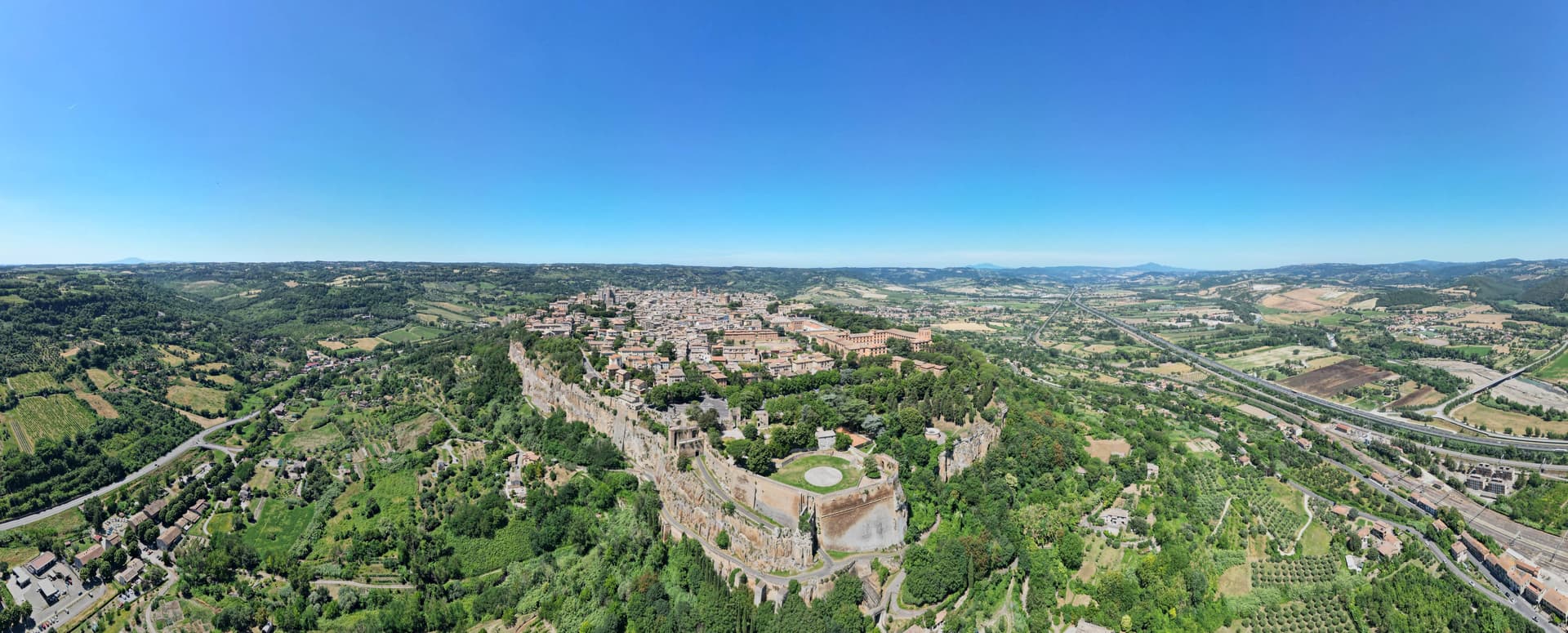
Why visit Orvieto
Orvieto sits on a flat-topped butte of volcanic tuff at 325 meters, the cliffs 195 meters above the surrounding plain. The town began as Velzna, a flourishing Etruscan metropolis, and the Romans destroyed it in 264 BC.
The medieval town that replaced it on the same plateau became a papal refuge in the 13th century, when popes left Rome for the safety of the height. The town's layers sit one below the other rather than side by side: the cliff face is honeycombed with Etruscan and medieval cavities, cisterns and pigeon roosts cut into the same tuff that the necropolis at its foot was carved into during the 6th century BC, while the cathedral and its chapel occupy the surface above, and the well descends back down through the rock to reach water.
What looks from a distance like a single stone crown is in fact three towns stacked in the same column of tuff: the dead below, the popes and their cathedral on top, and a passage cut straight through the middle to keep the town supplied.
What to see in Orvieto
- Duomo di Orvieto. The polychrome marble façade rises in tiers of mosaic and sculpture, the decorative Gothic worked into bands of color rather than left plain stone.
- Cappella di San Brizio. The Last Judgment fills the chapel wall to wall, figures twisting and falling across the vault and lunettes inside the cathedral.
- Pozzo di San Patrizio. Sunk for Pope Clement VII, the shaft drops 53 meters, lit by windows cut into the walls of the two ramps so the descent is never dark. Antonio da Sangallo the Younger designed it to move water and mules at once, without either crossing the other's path.
How to get to Orvieto
There is a railway station in the town, so you can arrive without a car and never need one while you are here. Terni is roughly 56 minutes away by road.
Our tip
April through June and September into October are the months for Orvieto. The plateau holds the long light, the Paglia valley below is green or gold, and the white wine of the surrounding vineyards is poured at every osteria. Umbria Jazz Winter runs around New Year and fills the Teatro Mancinelli; the Corpus Domini procession on the second Sunday after Pentecost is the most concentrated religious event of the year. Sagra del Bosco falls in September.
More from Anywhere Italy
 The best towns that live slowly in the province of Perugia
- The best hill towns that live slowly within 90 minutes of Perugia
 The best hill towns with a serious restaurant in the province of Perugia
 The best hill towns with a serious restaurant within 90 minutes of Terni
 The best wine towns in the province of Perugia
 The best hidden hill towns you can reach by train in the province of Perugia