
The best hidden wine towns you can reach by train in the province of Siena
The province of Siena grows Sangiovese on clay and galestro, and the towns that live off it are built from the same ground: brick the colour of dried blood, travertine quarried nearby, streets that climb to a fortress and a cellar door below it. Autumn is the season the region organises itself around, when the harvest brings pickers into the vineyards and the enoteche pour young wine alongside pici with garlic, ragù of Cinta Senese pork, pecorino aged under ash. The Crete Senesi to the east is bare and rolling, almost treeless, and the vine country to the south turns dense again around Monte Amiata. Regional trains run through most of it, along the Valdichiana line and the Siena branch, which means a wine trip here does not require a hire car.
This is Chianti Classico country as well as Brunello country, and the demand shows. Siena itself absorbs most of the arrivals, and the black rooster road between Siena and Florence carries coach traffic all summer, past estates with tasting rooms geared to the schedule of a tour bus. San Gimignano, an hour west, takes visitors in numbers its walls were never sized for. Both are worth seeing. Neither leaves much room to sit at a bar with a glass of Vernaccia and be ignored.
The vines do not stop where the crowds thin out. The same slopes carry on east towards the Valdichiana, south towards the Val d'Orcia, and north-east into the thermal country around the Rapolano travertine quarries, and the towns along those roads make serious wine with far fewer people at the counter. Each of the towns below belongs to the national association of wine towns, and we have confirmed each can be reached without a car.
Of the 20 communes we have mapped in the province of Siena, 7 qualify as wine towns you can reach by train: each belongs to the national association of wine towns, and we have confirmed each is reachable without a car. This list is the hidden ones, 6 in all, ordered smallest first. The smallest, Murlo, has 2,423 residents.
If you are still choosing, we have also written The best towns you can reach by train in the province of Siena and The best hidden hot spring towns you can reach by train in Toscana.
Murlo
Why visit Murlo
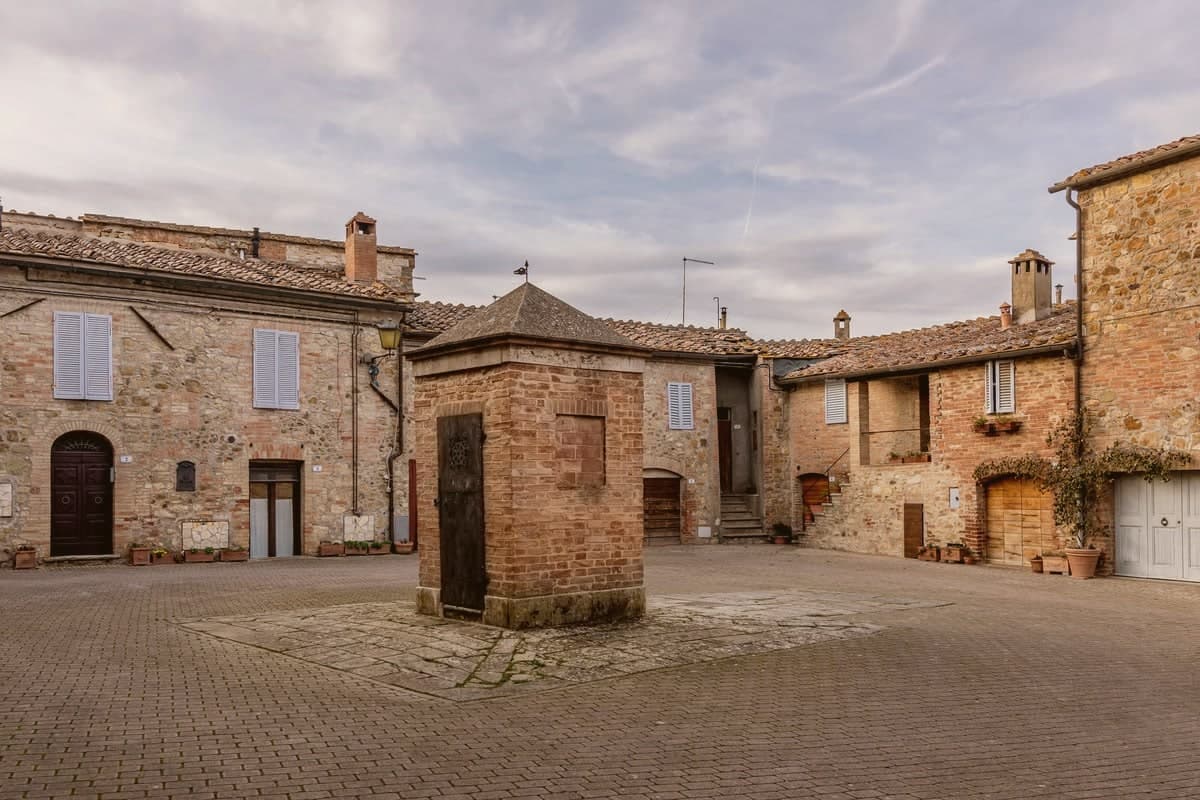
Murlo sits at 314 meters on a wooded ridge above the Crevole river, twenty kilometers south of Siena. The comune is scattered.
The town hall is in Vescovado, the modern center down on the valley road; the medieval castle of Murlo, walled and tower-anchored, is a kilometer up on the hill, mostly empty and given over to tourism. The bishops of Siena held this ground as a feudal lordship for centuries, which kept it outside the Sienese republic and gave it the unusual status of an episcopal fief.
The defining find is older. On Poggio Civitate, three kilometers north, archaeologists from 1966 onward uncovered an Etruscan princely palace of the seventh and sixth centuries BC, one of the most important Etruscan settlement complexes ever excavated.
The terracotta acroteria from the roof line included the Cappellone, a seated bearded male wearing a wide-brimmed hat, sixth century BC, now the symbol of the Antiquarium museum housed in the old Episcopal Palace at the center of the borgo.
We confirmed you can reach this one by train.
What to see in Murlo
- Antiquarium di Poggio Civitate. Archaeological museum in the medieval Palazzo Vescovile at the center of Murlo, holding the Cappellone and other finds from the Etruscan settlement on Poggio Civitate.
- Poggio Civitate. Etruscan princely palace complex of the seventh and sixth centuries BC, three kilometers north of the borgo, one of the most important sites in Etruria.
- Castello di Murlo. Twelfth-century walled village, the medieval seat of the bishops of Siena, with narrow streets converging on the Palazzo Vescovile.
How to get to Murlo
There is a railway station in the town, so you can arrive without a car and never need one while you are here. Firenze is roughly 104 minutes away by road.
Our tip
April through June and September into October are the months when the Crete Senesi south of Murlo sit at their gold-and-green best. The Antiquarium is open year-round but limited in winter hours. July and August push past thirty-three degrees and the castle empties between two and six.
Rapolano Terme
Why visit Rapolano Terme
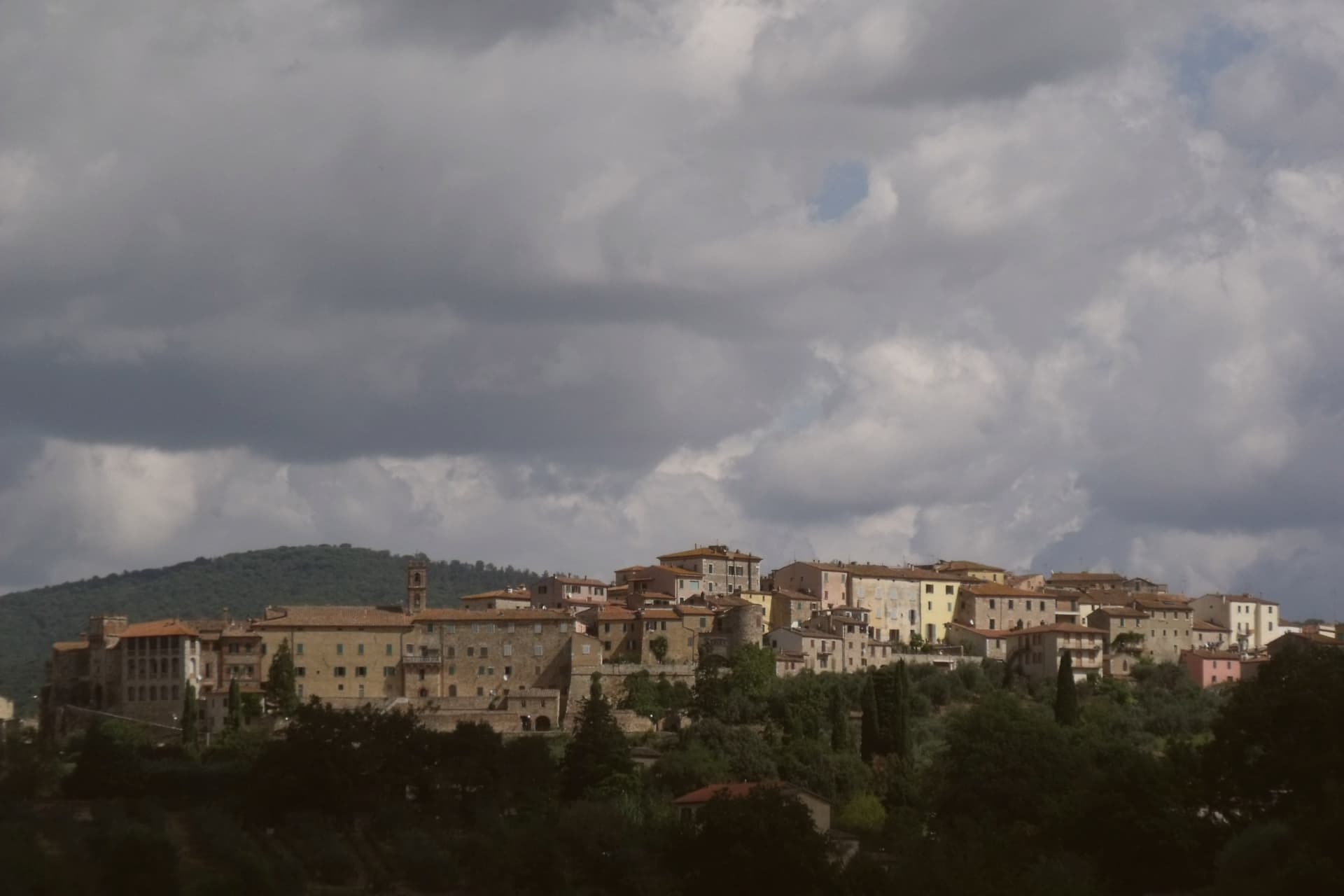
The comune sits at 334 meters on the eastern edge of the clay hills, twenty kilometers east of Siena. It was called simply Rapolano until 1949, when the spa industry pushed the name change, a shift that marks how thoroughly the waters came to define the place.
The thermal facilities and the quarry sit at some distance from each other within the comune: the springs rise near the centro and to its south, while the travertine beds lie in the Serre frazione three kilometers further out, a separate settlement built around the stone rather than the water. The medieval centro storico, meanwhile, holds no thermal or mineral history at all: a fortified perimeter, a Sienese-period castello on the highest point, and a parish church founded in the eleventh century, all predating the spa industry by centuries.
The clay-hill landscape spreads north and west of the comune, and draws most visitors past the spa itself. What emerges is a town built on two extractive industries, water and stone, wrapped around an older walled settlement that has little to do with either.
We confirmed you can reach this one by train.
What to see in Rapolano Terme
- Terme Antica Querciolaia. Six outdoor pools at 38 degrees, the older of the two facilities and the one tied to a general's convalescence.
- Terme San Giovanni. Thermal complex south of the centro among the clay hills of the Crete Senesi, with outdoor pools facing vineyards and olive groves.
- Cave di travertino di Serre. Active quarries in the Serre di Rapolano frazione three kilometers south, the source of the stone behind the Pienza Duomo's façade.
How to get to Rapolano Terme
There is a railway station in the town, so you can arrive without a car and never need one while you are here. Perugia is roughly 63 minutes away by road.
Our tip
Thermal towns work year-round and Rapolano is the rare Sienese commune where winter is a season. The pools at Antica Querciolaia and San Giovanni stay open through the cold months and the steam off the 38-degree water against the December clay hills is the postcard the spa industry sells. April through June and September into October are the wider best months, with the Crete Senesi at full color and the surrounding wine and olive harvests pulling traffic through the centro.
Chiusi
Why visit Chiusi
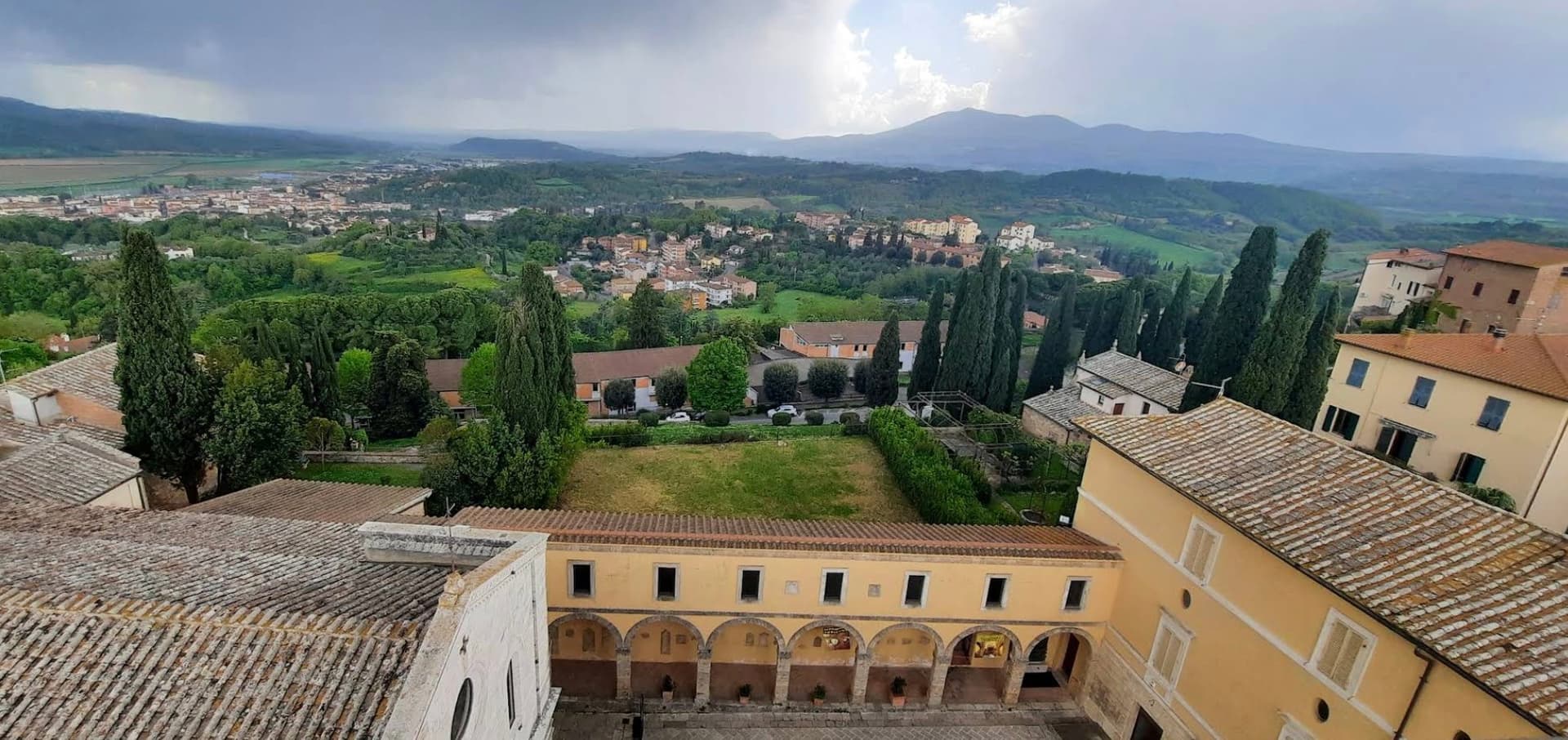
The hilltop stands above the Val di Chiana, the valley floor visible from the town at a height that made it defensible and gave it command of the surrounding farmland. The cathedral, the museums and the tunnel network are close enough to walk between within the old center, while the painted necropolis and the lake lie outside it, a few kilometers apart in different directions, one inland toward the tombs and the other north toward open water.
The tunnels themselves connect the upper town to what lies beneath it: built as drainage, later folded into legend by Pliny the Elder, who took them for part of a king's tomb. The cathedral's own columns, lifted from earlier Roman buildings, make the same point in stone that the tombs make in paint and the museum makes in bucchero and alabaster: this is a town built repeatedly on top of itself, each layer reusing what the last one left behind.
We confirmed you can reach this one by train.
What to see in Chiusi
- Museo Nazionale Etrusco. Holds canopic urns, alabaster sarcophagi, bucchero pottery and grave goods pulled from the necropolises around the town.
- Duomo di San Secondiano. Cathedral built around 560 AD over an earlier basilica, renovated in the thirteenth century, nave and two aisles on antique marble columns from Roman buildings.
- Labirinto di Porsenna. Visited from the Museo della Cattedrale, the tunnels run beneath the streets at a scale that still reads as engineering rather than legend, whatever Pliny made of them.
How to get to Chiusi
There is a railway station in the town, so you can arrive without a car and never need one while you are here. Perugia is roughly 58 minutes away by road.
Our tip
April through June and September into October are the working months on the Val di Chiana edge: mild days, evening light over the lake, the wine and olive cycles below town. The Frittellata of San Giuseppe in mid-March and the Festa di San Mustiola in early June fill the centro storico with traditional kitchens. July and August push past thirty degrees and the basin below town holds the heat; the museums and the Labirinto stay cool. Tria Turris Medioevo e Palio delle Torri di Chiusi falls in June.
Montalcino
Why visit Montalcino
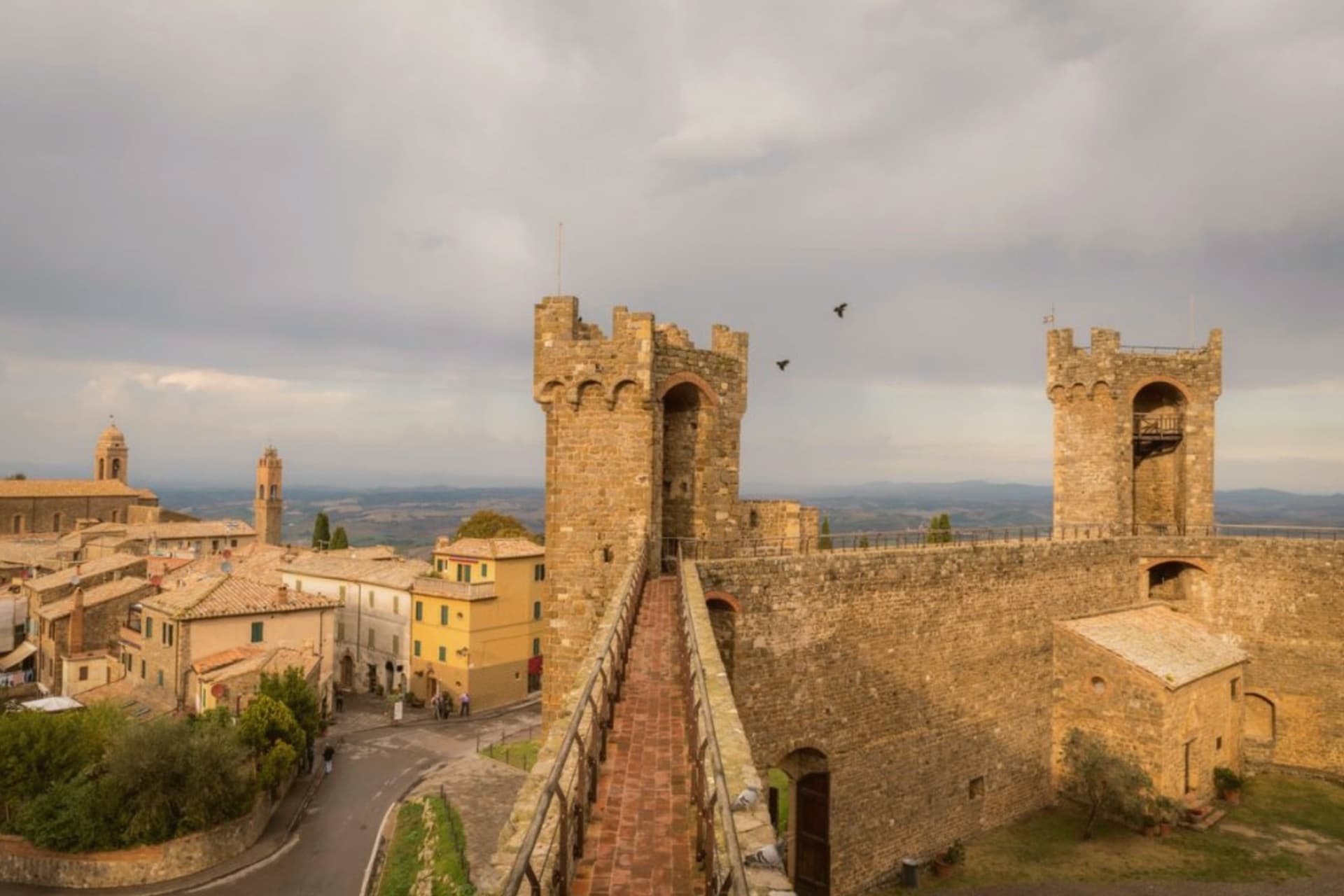
Montalcino sits at 564 meters on a hill south of Siena, the centro storico ringed by walls and crowned by a pentagonal fortress built in 1361. When Florence took Siena in 1555, the Sienese exiles regrouped here and held out for almost four years; the Rocca itself never fell.
That date matters less to most visitors than 1980, when Brunello di Montalcino was named one of the first four Italian wines to receive DOCG status. The vineyards run from the town at 600 meters down to plots at 200, on stony galestro soils that ripen Sangiovese Grosso into a wine that ages for decades.
The Abbey of Sant'Antimo, ten kilometers south, is a Romanesque church first documented in 814 and tied by local legend to a vow by Charlemagne. The town also produces miele, olio, and the white truffles of the surrounding woods.
It carries seven institutional signals at once, more than any other commune in this batch.
We confirmed you can reach this one by train.
What to see in Montalcino
- Rocca di Montalcino. Pentagonal fortress built in 1361 by Sienese architects Mino Foresi and Domenico di Feo, refuge of the Sienese Republic after 1555.
- Abbazia di Sant'Antimo. Romanesque abbey ten kilometers south, first documented in 814, set among olive groves below the town with Gregorian chant still sung.
- Palazzo dei Priori. Thirteenth-century town hall on Piazza del Popolo, slender tower attached, civic seat of the medieval commune.
How to get to Montalcino
There is a railway station in the town, so you can arrive without a car and never need one while you are here. Perugia is roughly 105 minutes away by road.
✷ We have written about Montalcino
“When the film industry needed a picture of heaven, of the fields a dead hero walks home to, they came and shot it here, and that is the truest thing anyone has ever said about the Val d'Orcia. It is not a place. It is the afterlife as imagined by people who lived in cities. It is how the country looks to men who never spent an hour in it, dreamed up by Florentine bankers five hundred years ago and maintained, beautifully, ever since.”
Read our piece on Montalcino →Val d'Orcia | The Postcard Is Constructed
Our tip
April through June and September into October are the months locals prefer. The hills are green or gold depending on the half, and the vineyards run their full work cycle. The Sagra del Tordo, a medieval archery contest between the four quarters of the town, takes place the last Sunday of October. Sagra del Cinghiale di Montalcino falls in the season.
Castelnuovo Berardenga
Why visit Castelnuovo Berardenga
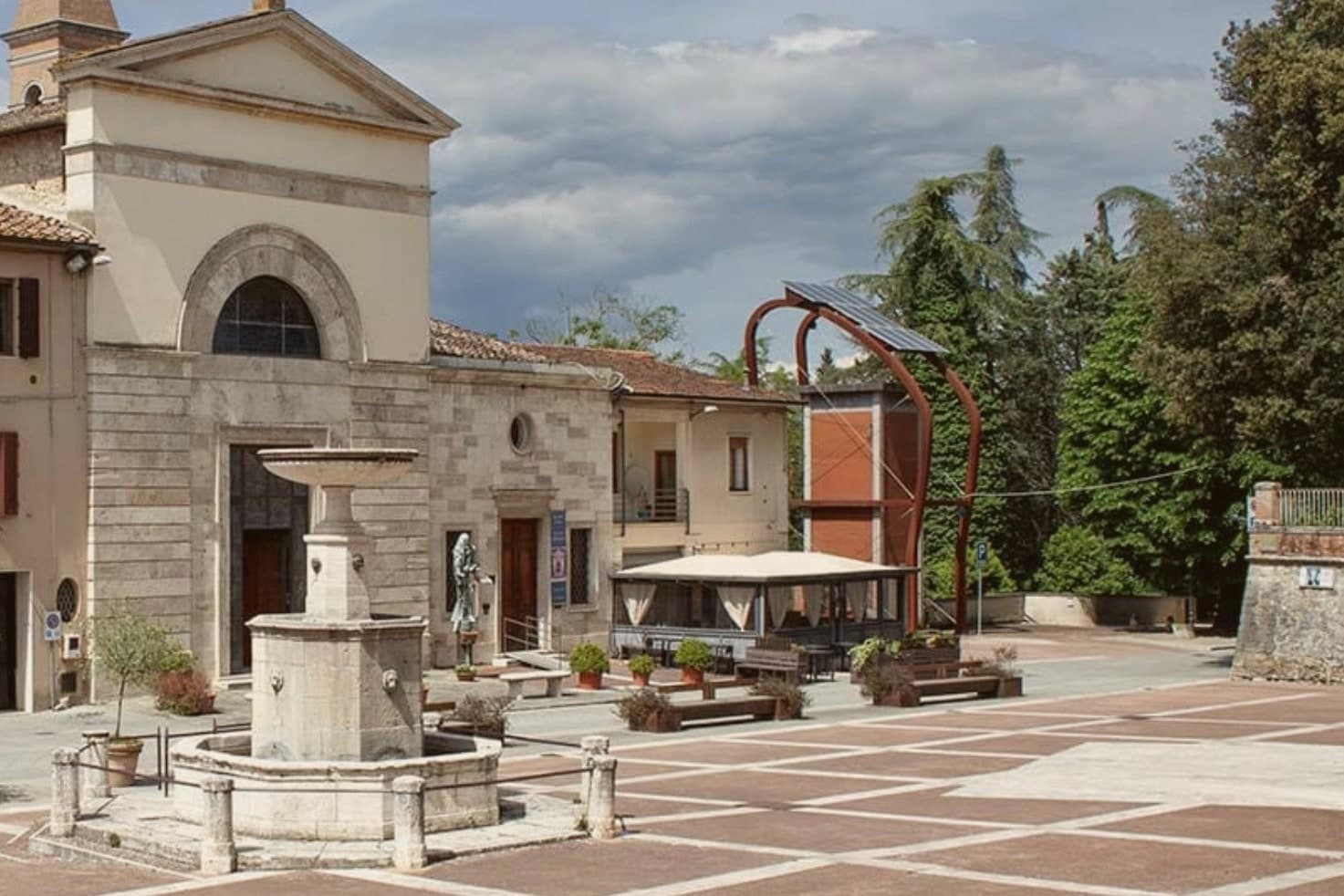
The commune sits east of Siena, where the hills give way to the clay swells of the Crete Senesi. The name comes from the Terra Berardinga, the area controlled in the tenth century by a Frankish nobleman named Berardo, and the borgo grew up around the castle walls the Sienese Republic raised against Florence.
The centro storico, the villa and gardens at its heart, and the surrounding zone of vineyards form one continuous pattern rather than separate parts: fortress town above, wine country falling away below it toward the clay hills. Across the wider territory, 13 castles, 70 churches and 200 farms record the medieval pattern of the Sienese contado, a scatter of small fortified points and parish churches administering land rather than one dominant center.
The place reads as a border post that outlived its military purpose and settled into agriculture and the arts, its castle now a clock tower, its noble villa now a music foundation, its walls now overlooking rows of Sangiovese.
We confirmed you can reach this one by train.
What to see in Castelnuovo Berardenga
- Villa Chigi Saracini. Eighteenth-century villa and Italian garden inside the centro storico, its park designed by the Sienese composer Guido Chigi Saracini, whose family foundation still runs the Accademia Musicale Chigiana in Siena.
- Torre dell'Orologio. Surviving tower of the fortress, now bearing the civic clock, the highest visible point of the centro storico.
- Chiesa dei Santi Giusto e Clemente. Eighteenth-century parish church with a neoclassical façade, built on the site of an earlier Romanesque pieve.
How to get to Castelnuovo Berardenga
There is a railway station in the town, so you can arrive without a car and never need one while you are here. Firenze is roughly 77 minutes away by road.
✷ We have written about Castelnuovo Berardenga
“The wine is the whole economy of these hills, every village with its own, the region’s name stamped on the most famous red in Italy. Tuscan food runs to cured and roasted meat, so the wine ran red to meet it, lighter than you expect, almost fruity, easy, made to sit beside a steak and not to be lectured about. Here is the only wine knowledge you need on this road: it is all good.”
Read our piece on Castelnuovo Berardenga →Road to Siena | The Long Way Is the Better Way
Our tip
April through June and September into October are the months Chianti Classico shows best, the green hills moving toward the gold of harvest. The Sagra del Vino runs the second weekend of September. July and August push past thirty and the centro storico empties between two and six; the cellars on the surrounding hills offer cool tastings and longer rentals.
Montepulciano
Why visit Montepulciano
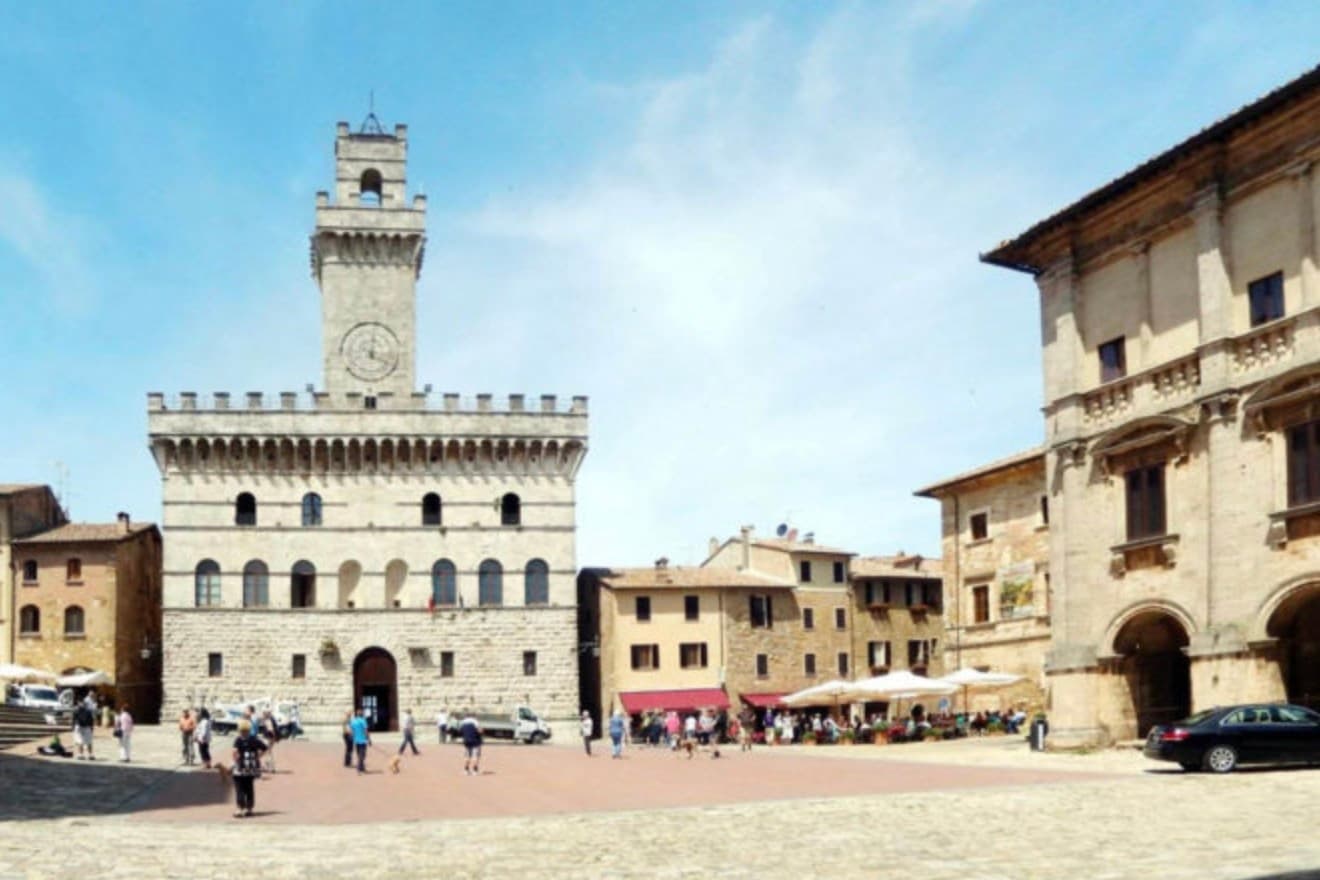
The ridge runs between the Val di Chiana and the Val d'Orcia, 70 kilometers southeast of Siena, and the town follows its spine uphill: streets climb from the gates toward the high point, where the main square sits ringed by the buildings that define the skyline from below. The origin predates the Renaissance fabric by centuries.
Etruscan tombs survive in the surrounding hills, though almost nothing of that period shows in the centro storico itself, which was rebuilt wholesale in the fifteenth and sixteenth centuries over whatever came before. The wine and the festival both use the climb as their setting rather than their subject: the cellars are cut into the rock beneath the palazzi, keeping a constant temperature for aging, and the barrel race each August sends two men from each of the eight contrade hauling an eighty-kilogram cask up the same gradient that every visitor covers on foot, only slower.
The steepness that shaped the defensive site nine centuries ago is still what a person feels first, in the legs, before the buildings register at all.
We confirmed you can reach this one by train.
What to see in Montepulciano
- Tempio di San Biagio. A 13-meter dome and travertine façade standing alone outside the walls, the ground falling away below it so the building reads as a single volume against the hillside.
- Piazza Grande. The high piazza at the top of the ridge, ringed by the Duomo, the Palazzo Comunale and the Palazzo Tarugi, all rebuilt in the fifteenth and sixteenth centuries.
- Palazzo Comunale. Town hall designed by Michelozzo in the fifteenth century, its tower offering a view over the Val di Chiana and Val d'Orcia.
How to get to Montepulciano
There is a railway station in the town, so you can arrive without a car and never need one while you are here. Perugia is roughly 57 minutes away by road.
Our tip
April through June and September into October are the working months on the ridge: vine work in the surrounding hills, mild days, evening light that lingers over the Val d'Orcia. July and August push into the low thirties and the climb to Piazza Grande slows even the residents. The Bravìo delle Botti runs the last Sunday of August and fills the town. Calici di Stelle falls in July.
More from Anywhere Italy
 The best towns you can reach by train in the province of Siena
- The best hidden hot spring towns you can reach by train in Toscana
- The best hidden olive oil towns you can reach by train within 90 minutes of Perugia
- The 6 best hidden towns with a serious restaurant that you can reach by train within 90 minutes of Perugia
- The best hidden towns you can reach by train that eat well within 90 minutes of Perugia
 The best hidden wine towns with a medieval festival in Toscana